
EY46A5 - Multitools PANASONIC - Free user manual and instructions
Find the device manual for free EY46A5 PANASONIC in PDF.
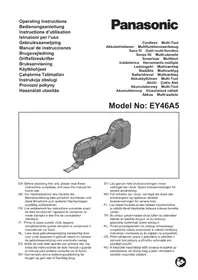


| Brand | Panasonic |
| Model | EY46A5 |
| Product type | Cordless oscillating multi-tool |
| Motor voltage | 18 V DC |
| Oscillation speed (no load) | 6000 - 20000 min⁻¹ |
| Oscillation angle | 3 degrees |
| Blade type | OIS / STARLOCK |
| Total length (without battery) | 261 mm |
| Weight (with battery) | 1.75 kg (battery EY9L52) |
| Battery type | Rechargeable lithium-ion 18 V |
| Compatible charger | EY0L82 |
| Features | Speed variator (6 positions from 6000 to 20000 min⁻¹), LED lighting, safety lock, overheat protection, low battery indicator, tool-free blade change |
| Care and cleaning | Clean with a dry, clean cloth. Do not use water, solvent, or volatile product. |
| Safety | Only use accessories recommended by Panasonic. Do not expose to moisture or explosive atmospheres. Use genuine Panasonic batteries. |
| Spare parts and repairability | Have repairs done by an authorized center using identical spare parts. The warranty does not cover wear due to intensive use. |
| General information | Manual available in multiple languages. Recycling of batteries and used appliances according to European directives. |
Frequently Asked Questions - EY46A5 PANASONIC
User questions about EY46A5 PANASONIC
0 question about this device. Answer the ones you know or ask your own.
Ask a new question about this device
Download the instructions for your Multitools in PDF format for free! Find your manual EY46A5 - PANASONIC and take your electronic device back in hand. On this page are published all the documents necessary for the use of your device. EY46A5 by PANASONIC.
USER MANUAL EY46A5 PANASONIC
Operating Instructions
Operating Instructions
Original instructions: English. Translation of the original instructions: Other languages.
Read the "Safety Instructions" booklet and the following before using.
I. GENERAL SAFETY WARNINGS
Save all warnings and instructions for future reference.
1) Do not operate this unit in explosive atmospheres, such as in the presence of flammable liquids, gases or dust. 2) Do not expose this unit to rain or wet conditions.
Water entering this unit will increase the risk of electric shock.
3) Do not overreach. Keep proper footing and balance at all times.
This enables better control of this unit in unexpected situations.
4) Have your unit serviced by a qualified repair person using only identical replacement parts.
This will ensure that the safety of this unit is maintained.
| Symbol | Meaning |
| V | Volts |
| --- | Direct current |
| n0 | No load speed |
| ... min-1 | Revolutions or reciprocations per minutes |
| Ah | Electrical capacity of battery pack |
| To reduce the risk of injury, user must read and understand instruction manual. | |
| For indoor use only. |
II. ADDITIONAL SAFETY WARNINGS
1) Hold the power tool by insulated gripping surfaces only, when performing an operation where the cutting tool may contact hidden wiring. Contact with a "live" wire will also make exposed metal parts of the power tool "live" and could give the operator an electric shock. 2) Do not use accessories which are not specifically designed and recommended by the tool manufacturer. Just because the accessory can be attached to your power tool, it does not assure safe operation. 3) Accessories that do not match the mounting hardware of the power tool will run out of balance, vibrate excessively and may cause loss of control. 4) Do not use a damaged accessory. 5) Wear personal protective equipment. Depending on application, use face shield, safety goggles or safety glasses. As appropriate, wear dust mask, hearing protectors, gloves and workshop apron capable of stopping small abrasive or workpiece fragments. The eye protection must be capable of stopping flying debris generated by various operations.
The dust mask or respirator must be capable of filtering particles generated by your operation. Prolonged exposure to high intensity noise may cause hearing loss.
6) Keep bystanders a safe distance away from the work area. Anyone entering the work area must wear personal protective equipment.
Fragments of the workpiece or of a broken accessory may fly away and cause injury beyond the immediate area of operation.
7) Do not run the power tool while carrying it at your side.
Accidental contact with the spinning accessory could snag your clothing, pulling the accessory into your body.
8) Do not operate the power tool near flammable materials.
Sparks could ignite these materials.
9) Do not use accessories that require liquid coolants.
Using water or other liquid coolants may result in electrocution or shock.

WARNING for charger and battery pack
- Do not use other than the Panasonic battery packs that are designed for use with this unit.
- Panasonic is not responsible for any damage or accident caused by the use of the recycled battery pack and the counterfeit battery pack.
- Do not dispose of the battery pack in a fire, or expose it to excessive heat.
- Do not drive the likes of nails into the battery pack, subject it to shocks, dismantle it, or attempt to modify it.
- Do not allow metal objects to touch the battery pack terminals.
- Do not carry or store the battery pack in the same container as nails or similar metal objects.
- Do not charge the battery pack in a high-temperature location, such as next to a fire or in direct sunlight. Otherwise, the battery may overheat, catch fire, or explode.
- Never use other than the dedicated charger to charge the battery pack. Otherwise, the battery may leak, overheat, or explode.
- After removing the battery pack from this product or the charger, always reattach the pack cover. Otherwise, the battery contacts could be shorted, leading to a risk of fire.
- When the battery pack has deteriorated, replace it with a new one. Continued use of a damaged battery pack may result in heat generation, ignition or battery rupture.
- If you detect any abnormalities, discontinue use immediately and contact the retailer from which you purchased this product.
- Do not use the Li-ion battery pack with its temperature below 0°C or above 40°C. It may lead to the cause of malfunction of main unit. Leave the battery pack at room temperature for more than one hour for adjusting its temperature.
- Do not store the tool and battery pack in locations where the temperature may reach or exceed 50°C (such as a metal tool shed, or a car in the summer), which can lead to deterioration of the storage battery.
III. ASSEMBLY
CAUTION
- When attaching or removing blades, disconnect battery pack from main unit.
Attaching Blade
- Raise the blade release lever and pull out the fixing bolt. [Fig.1]
- Make sure that the blade release lever is in front of the main unit and parallel to the main unit.
① Raise the blade release lever. ② Since the operation becomes heavy from here, firmly hold down the blade release lever until it is parallel to the main unit. ③ Remove the fixing bolt.
NOTE:
- If it is difficult to pull out, grasp the fixing bolt and rattle left and right.
- With the blade mounting section facing up, insert the blade and fix bolt into the blade mounting section in order.
[Fig.2]
- Align the hole of the blade with the convex part of the blade mounting part and attach it.
- Insert the fixing bolt firmly all the way in.
- Fix the blade by tilting the blade release lever to the switch side. [Fig.3] Firmly return the lever to its original position.
Make sure the blade is secure.
CAUTION
- Be careful not to get your fingers caught.
Removing Blade
- Raise the blade release lever. [Fig.1 ① ②]
- Remove the fixing bolt and blade in this order. [Fig.1 ③]
CAUTION
- Do not touch the blade immediately after operation. It may be hot and could burn your skin.
- Grab the fixing bolt and rattle it from side to side.
If it still does not come out, insert a flathead screwdriver between the fixing bolt and blade mounting part and pry it out.
Attaching or Removing Battery pack
- To attach the battery pack:
[Fig.4]
Align the highlighted marker points and attach battery pack.
Slide the battery pack until it locks into position.
- To remove the battery pack:
[Fig.4]
Push the button and slide the battery pack forward.
IV. OPERATION
[Main unit]
NOTE:
- Be aware that this tool is always in an operating condition, since it does not have to be plugged into an electrical outlet.
Power switch operation
CAUTION
- Before inserting the battery pack into the tool, always make sure that the power switch operates properly and returns to the "OFF" position when the rear of the power switch is depressed.
- Power switch can be locked in "ON" position. Stay alert when locking tool in "ON" position and grasp the tool firmly.
- To start operation, press and slide the power switch toward the "ON" position. [Fig.5 ①]
- Lightly attach the blade to the target and move the main unit in the cutting direction.
- To stop the tool, press the rear of the power switch, then it returns to the "OFF" position. [Fig.6]
- For continuous operation, press the front of the power switch to lock it.
[Fig.5 ②]
- To stop the tool, press the rear of the power switch, then it returns to the "OFF" position. [Fig.6]
LED light
Illuminates while depressing the power switch.
CAUTION
- Do not use it as a substitute for a regular flashlight, since it does not have enough brightness.
CAUTION: DO NOT STARE INTO BEAM.
Use of controls or adjustments or performance of procedures other than those specified herein may result in hazardous radiation exposure.
Frequency adjustment
- By turning the frequency adjustment dial (E), the frequency can be switched freely between 6000 min⁻¹ and 20000 min⁻¹.
- There are 1 to 6 dials, and the frequency increases as the number increases.
- Set the frequency by turning the dial according to the work purpose.
- Turn the frequency adjustment dial to adjust the frequency according to the work application.
Also, be sure to check that the frequency can be adjusted by turning the frequency adjustment dial with the switch on before starting work.
Indicator lamp for On lock start prevention function
This unit will not start when the battery pack is inserted with the switch at the "ON" position (switch lever at "ON").
The warning lamp will flash at this time to indicate that the "On lock start prevention function" has operated. [Fig.9]
- Press the switch to the "OFF" position (switch lever at "OFF") and then press it
back to the "ON" position (switch lever at "ON") to start this unit. [Fig.9]
NOTE:
- If the battery level is extremely low, the warning lamp may not blink.
Overheat warning lamp
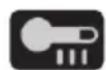

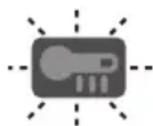
Off (normal operation)
- Flashing: Overheat
- Indicates operation has been halted due to battery overheating.
To protect the battery, be sure to note the following when carrying out this operation.
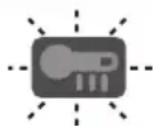
- If the battery becomes hot, the protection function will be activated and the motor or battery will stop operating. The overheat warning lamp on the control panel illuminates or flashes when this feature is active.
- If the overheating protection feature activates, allow the tool to cool thoroughly (at least 30 minutes). The tool is ready for use when the overheat warning lamp goes out.
- Avoid using the tool in a way that causes the overheating protection feature to activate repeatedly.
- If the tool is operated continuously under high-load conditions or if it is used in hot-temperature conditions (such as during summer), the overheating protection feature may activate frequently.
- If the tool is used in cold-temperature conditions (such as during winter) or if it is frequently stopped during use, the overheating protection feature may not activate. The performance of the EY9L42 deteriorates significantly at and below 10°C due to work conditions and other factors.
Low battery warning lamp

Off (normal operation)

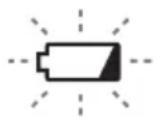
Flashing (No charge) Battery protection feature active
Excessive (complete) discharging of lithium ion batteries shortens their service life dramatically. The tool includes a battery protection feature designed to prevent excessive discharging of the battery pack.
- The battery protection feature activates immediately before the battery loses its charge, causing the low battery warning lamp to flash.
- If you notice the low battery warning lamp flashing, charge the battery pack immediately.
- If it is started with too little battery power remaining, the tool may stop operating without the low battery warning lamp flashing first. This indicates that there is too little battery power remaining to use the tool, and the battery pack should be charged before further use.
- If the tool is subject to a sudden load during use that causes the motor to lock up, the overdischarge prevention sensor may be triggered, and the low battery warning lamp may flash. The lamp will stop flashing once you address the cause of the motor's locking up and cycle the trigger.
[Battery Pack]
For Appropriate Use of Battery Pack [Fig.10]
- The rechargeable batteries have a limited life.
- Do not use the battery pack soaked in conductors like water.
- For optimum battery life, store the Li-ion battery pack following use without charging it.
- When operating the battery pack, make sure the work place is well ventilated.
For safe use
- The battery pack is designed to be installed by proceeding two steps for safety. Make sure the battery pack is installed properly to the main unit before use.
- If the battery pack is not connected firmly when the switch is switched on, the overheat warning lamp and the battery low warning lamp will flash to indicate that safe operation is not possible, and the main unit will not rotate normally. Connect the battery pack into the unit of the tool until the red or yellow label disappears.
- Only use rechargeable battery packs for Panasonic rechargeable tools. Do not use modified battery packs (including battery packs which have been disassembled and parts replaced).
- Do not use deteriorated battery packs. There is a risk of the generation of heat, ignition and explosion.
- If a battery pack leaks fluid, cease use, keep away from open flames, and return it to the store immediately.
- Attach the battery pack by sliding until the yellow and red labels are no longer visible, and check that it does not fall out of place.
- Failure to do so may result in scalding.
- The usage temperature range for lithium ion battery packs is 0 to 40 degrees.
- Use of battery packs cooled to below zero, such as in colder northern areas, may result in abnormal operation of the device. In such cases, leave the battery pack in a location of 10 degrees or more for one hour or more before use, and only use the device after the battery pack has warmed up.
[Battery Charger]
Charging
CAUTION
1) If the temperature of the battery pack falls approximately below -10°C, charging will automatically stop to prevent degradation of the battery. 2) The ambient temperature range is between 0°C and 40°C. If the battery pack is used when the battery temperature is below 0°C, the tool may fail to function properly. 3) Use the charger at temperatures between 0°C and 40°C, and charge the battery at a temperature similar to that of the battery itself. (There should be no more than a 15°C difference between the temperatures of the battery and the charging location.) 4) When charging a cool battery pack (below 0°C) in a warm place, leave the battery pack at the place and wait for more than one hour to warm up the battery to the level of the ambient temperature. 5) Cool down the charger when charging more than two battery packs consecutively. 6) Do not insert your fingers into contact hole, when holding charger or any other occasions. 7) Unplug the charger when not in use.
8) Store the charger between 0 and 40 degrees, and charge the battery pack at a temperature close to the storage temperature.
- If the battery pack is charged while at a temperature below 0 degrees, a full charge will give only around 50% of a normal charge. Commence charging after 1 hour or more at the prescribed temperature. 9) Do not charge in a poorly ventilated place. 10) Do not cover the battery pack or charger with a cloth or the like while charging is in progress.
NOTE:
- Your battery pack is not fully charged at the time of purchase. Be sure to charge the battery before use.
How to charge
- Plug the charger into the AC outlet.
NOTE:
- Sparks may be produced when the plug is inserted into the AC power supply, but this is not a problem in terms of safety.
- Connect the battery pack firmly into the charger.
(1) Line up the alignment marks and place the battery onto the dock on the charger.
NOTE:
- Not all battery packs display the alignment marks. [Fig.11]
(2) Slide forward in the direction of the arrow. [Fig.11]
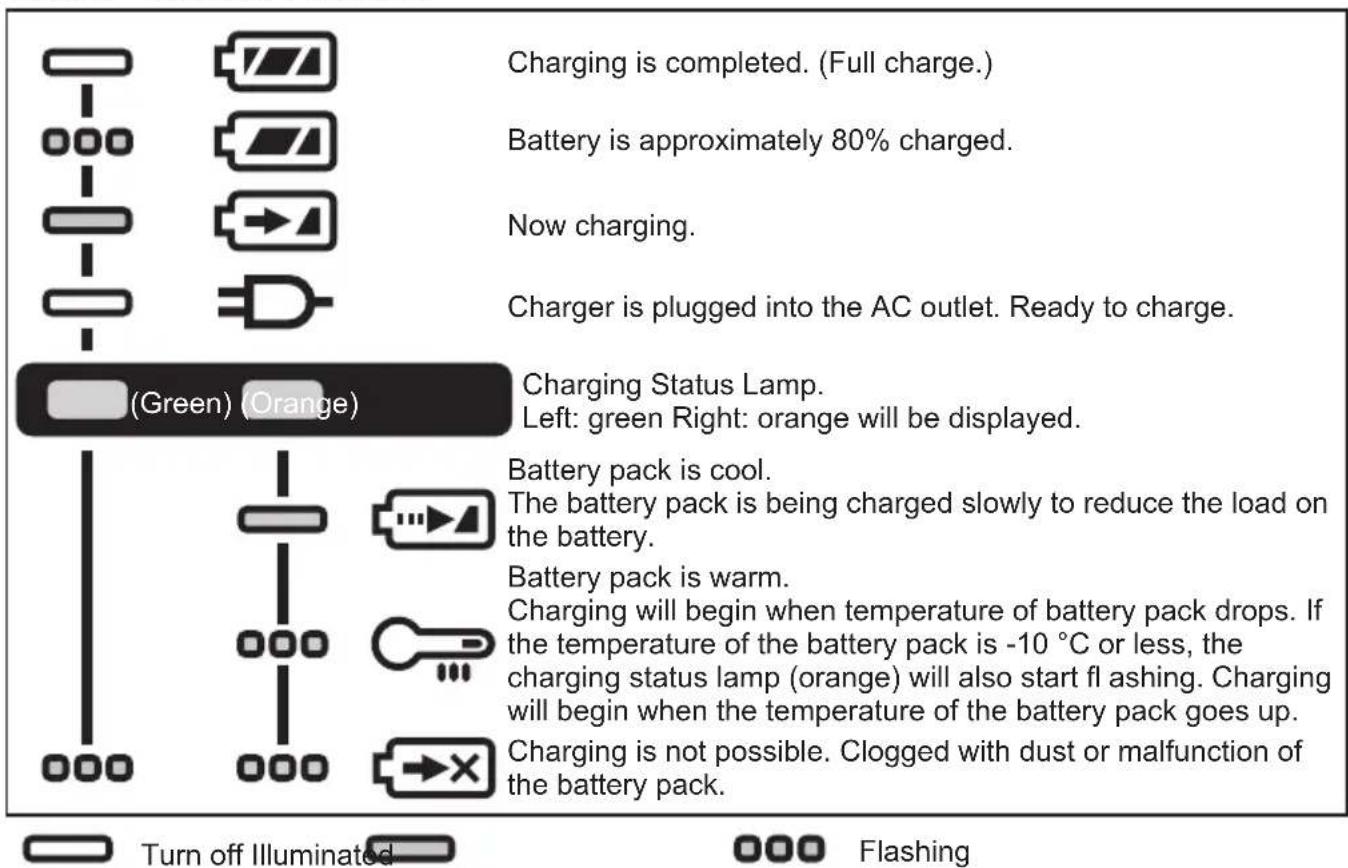
- During charging, the charging lamp will be lit. When charging is completed, an internal electronic switch will automatically be triggered to prevent overcharging.
- Charging will not start if the battery pack is hot (for example, immediately after heavy-duty operation). The orange standby lamp will be flashing until the battery cools down. Charging will then begin automatically.
- The charge lamp (green) will flash slowly once the battery is approximately 80% charged.
- When charging is completed, the green charging lamp will turn off.
- If the temperature of the battery pack is 0°C or less, charging takes longer to fully charge the battery pack than the standard charging time.
Even when the battery is fully charged, it will have approximately 50% of the power of a fully charged battery at normal operating temperature.
- Consult an authorized dealer if the green charging lamp does not turn off.
- If a fully charged battery pack is inserted into the charger again, the charging lamp lights up. After several minutes, the green charging lamp will turn off.
- Remove the battery pack while holding up the battery pack release button. [Fig.11]
LAMP INDICATIONS
Battery Recycling
ATTENTION:
For environmental protection and recycling of materials, be sure that it is disposed of at an officially assigned location, if there is one in your country.
Information for Users on Collection and Disposal of Old Equipment and used Batteries

These symbols on the products, packaging, and/or accompanying documents mean that used electrical and electronic products and batteries should not be mixed with general household waste.
For proper treatment, recovery and recycling of old products and used batteries, please take them to applicable collection points, in accordance with your national legislation and the Directives 2012/19/EU and 2006/66/EC.
By disposing of these products and batteries correctly, you will help to save valuable resources and prevent any potential negative effects on human health and the environment which could otherwise arise from inappropriate waste handling.
For more information about collection and recycling of old products and batteries, please contact your local municipality, your waste disposal service or the point of sale where you purchased the items.
Penalties may be applicable for incorrect disposal of this waste, in accordance with national legislation.
[For business users in the European Union]
If you wish to discard electrical and electronic equipment, please contact your dealer or supplier for further information.
[Information on Disposal in other Countries outside the European Union]
These symbols are only valid in the European Union. If you wish to discard these items, please contact your local authorities or dealer and ask for the correct method of disposal.
V. MAINTENANCE
- Use only a dry, soft cloth for wiping the unit.
Do not use a damp cloth, thinner, benzine, or other volatile solvents for cleaning.
- In the event that the inside of the tool or battery pack is exposed to water, drain and allow to dry as soon as possible. Carefully remove any dust or iron filings that collect inside the tool. If you experience any problems operating the tool, consult with a repair shop.
VI. OPTIONAL ACCESSORIES
CAUTION
- To prevent the risk of injury, only use accessory or attachment for its stated purpose.
Battery Pack
See the Specification.
Battery Charger
See the Specification.
NOTE:
- If you need any assistance for more details regarding these accessories, ask your local service centre.
VII. SPECIFICATIONS
NOTE:
Weight indication
Greater than or equal to 1 kg: indicated by 0.05 kg
Less than 1 kg: indicated by 0.01 kg
- This chart may include models that are not available in your area.
Please refer to the latest general catalogue.
[Main unit]
| Model No. EY46A5 | |||
| Motor voltage 14.4 V DC 18 V DC | |||
| Oscillation speed (No load) 6000 | -1 | 6000 - 20000 min-1 | |
| Oscillation angle 3 degrees | |||
| Applicable Blade type | OIS / STARLOCK | ||
| Overall length 261 mm (Main unit only) | |||
| Weight | EY9L45 | 1.85 kg— | |
| With battery pack: | EY9L47 | 1.65 kg— | |
| EY9L51 | -2.00 kg | ||
| EY9L52 | -1.75 kg | ||
| EY9L53 | -1.75 kg | ||
| EY9L54 | -2.00 kg | ||
| Noise, Vibration See the included sheet | |||
[Battery Pack]
See the included sheet.
Use a battery pack adapted motor voltage of main unit.
[Battery Charger]
| Model No. EY0L82 | |
| Electrical rating See the rating plate on the bottom of the charger | |
| Weight 0.93 kg | |
VIII. APPENDIX
WARRANTY SUPPLEMENT
- The breakdown and damage caused by usage consistent for a long time (e.g.: factory work on the assembly line, etc.) is out of warranty.
- Damage or failure caused by use of accessories that are not specified in this manual will not be covered by warranty.
IX. CAUTION FOR AC MAINS LEAD
FOR YOUR SAFETY, PLEASE READ THE FOLLOWING TEXT CAREFULLY
This appliance is supplied with a moulded three pin mains plug for your safety and convenience. A 5 amp fuse is fitted in this plug.
Should the fuse need to be replaced please ensure that the replacement fuse has a rating of 5 amp and that it is approved by ASTA or BSI to BS1362.
Check for the ASTA mark or the BSI mark on the body of the fuse.
If the plug contains a removable fuse cover you must ensure that it is refitted when the fuse is replaced.
If you lose the fuse cover the plug must not be used until a replacement cover is obtained.
A replacement fuse cover can be purchased from your local Panasonic Dealer.
CAUTION:
IF THE FITTED MOULDED PLUG IS UNSUITABLE FOR THE SOCKET OUTLET IN YOUR HOME THEN THE FUSE SHOULD BE REMOVED AND THE PLUG CUT OFF AND DISPOSED OF SAFELY. THERE IS A DANGER OF SEVERE ELECTRICAL SHOCK IF THE CUT OFF PLUG IS INSERTED INTO ANY 13 AMP SOCKET.
How to replace the fuse
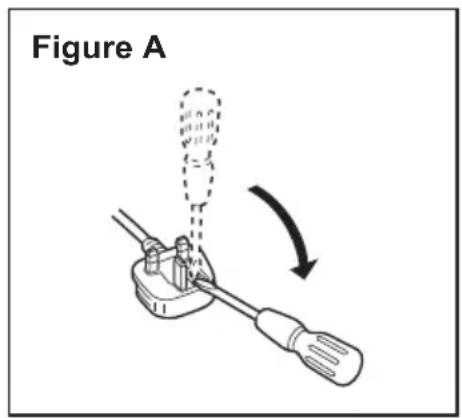
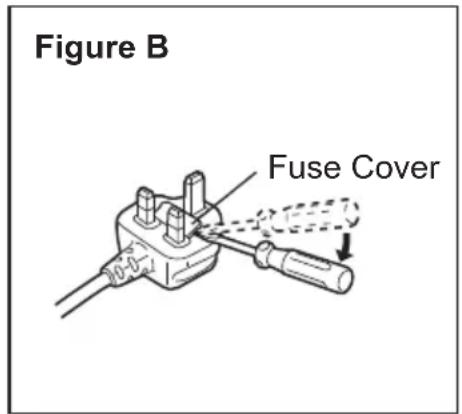
The location of the fuse differs according to the type of AC mains plug (figures A and B).
Confirm the AC mains plug fitted and follow the instructions below. Illustrations may differ from actual AC mains plug.
Open the fuse cover with a screwdriver and replace the fuse and close or attach the fuse cover.
I. GENERAL SAFETY WARNINGS
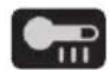
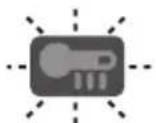
Overheating warning light
Off (normal operation)

Overheating warning light
Off
(normal operation)

Importer for Turkey:
Panasonic Life Solutions Elektrik Sanayi ve Ticaret Anonim Sirketi
Abdurrahmangazi Mah. Ebubekir Cad. No: 44
34887 Sancaktepe Istanbul/Turkiye
Panasonic Testing Centre
Panasonic Marketing Europe GmbH
Winsberging 15, 22525 Hamburg,
Germany
Panasonic Corporation
1006, Oaza Kadoma, Kadoma-shi, Osaka 571-8501, Japan
https://www.panasonic.com
EN. DE. FR. IT. NL. ES. DA. SV. NO. FI. TR. PL. CS. HU.
EY971046A501 2019.09 S Printed in Japan
- GENERAL SAFETY WARNINGS
- ADDITIONAL SAFETY WARNINGS
- WARNING FOR CHARGER AND BATTERY PACK
- ASSEMBLY
- CAUTION
- ATTACHING BLADE
- NOTE
- [FIG.2]
- REMOVING BLADE
- ATTACHING OR REMOVING BATTERY PACK
- [FIG.4]
- OPERATION
- [MAIN UNIT]
- POWER SWITCH OPERATION
- LED LIGHT
- CAUTION: DO NOT STARE INTO BEAM
- FREQUENCY ADJUSTMENT
- INDICATOR LAMP FOR ON LOCK START PREVENTION FUNCTION
- OVERHEAT WARNING LAMP
- LOW BATTERY WARNING LAMP
- [BATTERY PACK]
- FOR APPROPRIATE USE OF BATTERY PACK [FIG.10]
- FOR SAFE USE
- [BATTERY CHARGER]
- CHARGING
- HOW TO CHARGE
- LAMP INDICATIONS
- BATTERY RECYCLING
- ATTENTION
- INFORMATION FOR USERS ON COLLECTION AND DISPOSAL OF OLD EQUIPMENT AND USED BATTERIES
- [FOR BUSINESS USERS IN THE EUROPEAN UNION]
- [INFORMATION ON DISPOSAL IN OTHER COUNTRIES OUTSIDE THE EUROPEAN UNION]
- MAINTENANCE
- OPTIONAL ACCESSORIES
- BATTERY PACK
- BATTERY CHARGER
- SPECIFICATIONS
- APPENDIX
- WARRANTY SUPPLEMENT
- CAUTION FOR AC MAINS LEAD
- FOR YOUR SAFETY, PLEASE READ THE FOLLOWING TEXT CAREFULLY
- HOW TO REPLACE THE FUSE
- OVERHEATING WARNING LIGHT
- PANASONIC CORPORATION
Brand : PANASONIC
Model : EY46A5
Category : Multitools