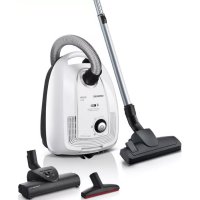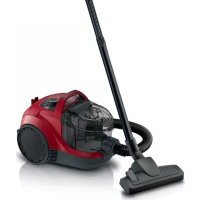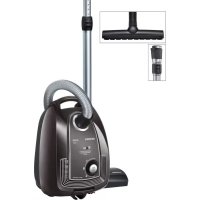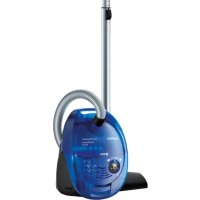
VS06G208GB - Vacuum Cleaner SIEMENS - Free user manual and instructions
Find the device manual for free VS06G208GB SIEMENS in PDF.



User questions about VS06G208GB SIEMENS
0 question about this device. Answer the ones you know or ask your own.
Ask a new question about this device
Download the instructions for your Vacuum Cleaner in PDF format for free! Find your manual VS06G208GB - SIEMENS and take your electronic device back in hand. On this page are published all the documents necessary for the use of your device. VS06G208GB by SIEMENS.
USER MANUAL VS06G208GB SIEMENS
Please keep this instruction manual. When passing the vacuum cleaner on to a third party, please also pass on this instruction manual.
Intended use
This appliance is intended for domestic use only. This appliance is intended for use up to a maximum height of 2000 metres above sea level. Only use this vacuum cleaner in accordance with the instructions in this instruction manual.
In order to prevent injuries and damage, the vacuum cleaner must not be used for:
Vacuum-cleaning persons or animals
Vacuuming up:
- hazardous, sharp-edged, hot or glowing substances.
-damp or liquid substances. - highly flammable or explosive substances and gases.
- ash, soot from tiled stoves and central heating systems.
- toner dust from printers and copiers.
Spare parts, accessories, dust bags
Our original spare parts, original (special) accessories and original dust bags are designed to work with the features and requirements of our vacuum cleaners. We therefore recommend that you only use our original spare parts, original (special) accessories and original dust bags. This will ensure that your vacuum cleaner has a long service life and that the quality of its cleaning performance will remain consistently high throughout.
Please note:
- Using unsuitable or inferior-quality spare parts, (special) accessories and dust bags can damage your vacuum cleaner. Damage caused by the use of such products is not covered by our guarantee.
Safety information
This vacuum cleaner complies with the recognised rules of technology and the relevant safety regulations.
The appliance may be used by children over the age of 8 years and by persons with reduced physical, sensory or mental capacity or by persons with a lack of experience or knowledge if they are supervised or have been instructed on the safe use of the appliance and the have understood the potential dangers of using the appliance.
Children must never play with the appliance.
- Cleaning and user maintenance must never be carried out by children without supervision.
- Plastic bags and films must be kept out of the reach of children before disposal.
>= Risk of suffocation.
Proper use
Only connect and use the vacuum cleaner in accordance with the specifications on the rating plate.
- Never vacuum without the dust bag or dust container, motor protection or exhaust filter.
>= This may damage the vacuum cleaner.
Always keep the vacuum cleaner away from your head when using nozzles and tubes.
> This could cause injury!
- When vacuuming stairs, the appliance must always be positioned below the user.
- Do not use the power cord or the hose to carry or transport the vacuum cleaner.
For safety reasons, if this appliance's mains power cable becomes damaged, it must be replaced by the manufacturer, their after-sales service department or a similarly qualified person.
If using the appliance for longer than 30 minutes, pull out the power cord completely.
- When disconnecting the appliance from the mains, pull on the plug itself to remove it; do not pull on the power cord.
- Do not pull the power cord over sharp edges or allow it to become trapped.
- When the cable is being automatically rewound, ensure that the mains plug is not thrown towards persons, body parts, animals or objects.
>= Use the mains plug to guide the power cord.
Pull out the mains plug before carrying out any work on the vacuum cleaner.
- Do not operate the vacuum cleaner if it is damaged. Unplug the appliance from the mains if a fault is detected.
For safety reasons, only authorised after-sales service personnel are permitted to carry out repairs and fit replacement parts to the vacuum cleaner.
- Protect the vacuum cleaner from the weather, moisture and sources of heat.
- Do not pour flammable substances or substances containing alcohol onto the filters (dust bag, motor protection filter, exhaust filter, etc.).
The vacuum cleaner is not suitable for use on construction sites.
>= Vacuuming up building rubble could damage the appliance.
- When not in use, switch off the appliance and pull out the mains plug.
At the end of its life, the appliance should immediately be rendered unusable, then disposed of in an appropriate manner.
Please note
The mains socket must be protected by at least a 16 amp circuit breaker.
If a circuit breaker is tripped when you switch on the vacuum cleaner, this may be because other electrical appliances which have a high current draw are connected to the same power circuit.
To prevent the circuit breaker from tripping, select the lowest power setting before switching the appliance on, and increase the power only once it is running.
Disposal information
Packaging
The packaging is designed to protect the vacuum cleaner from being damaged during transportation. It is made of environmentally friendly materials and can therefore be recycled. Dispose of packaging that is no longer required at an appropriate recycling point.
Old appliance
Old appliances still contain many valuable materials. Therefore, please take appliances that have reached the end of their service life to your retailer or recycling centre so that they can be recycled. For current disposal methods, please enquire at a retailer or your local council.
Disposal of filters and dust bags
Filters and dust bags are manufactured from environmentally friendly materials. Provided they do not contain substances that are not permitted in household waste, you can dispose of them with your normal household waste.
Notes on the energy label
This vacuum cleaner is a general purpose vacuum cleaner with a primary hose.
These appliances can be operated with either a dust bag or a dust box in the dust compartment. The stated values refer to the appliance when used with a dust bag.
To achieve the declared energy efficiency and cleaning performance class on carpet and hard floor, please use the interchangeable universal nozzle.
These calculations are based on the Commission Delegated Regulation (EU) No. 665/2013 of 3rd May 2013 supplementing Directive 2010/30/EU.
Unless otherwise stated, all the procedures referred to in these instructions were carried out in accordance with the EN 60312-1:2017* standard.
*As the motor service test is carried out with the dust collector empty, the stated motor service life must be increased by 10% for tests with the dust collector half filled.
fr
gduo 100000000000000000000000000000000000000000
sU 1000000000000000000000000000000000000000000
y
2013/665
.EU/30/2010 2013 3
a 1
aalwai aalgai jauoailu s pi
.*1:2017-EN 60312
g Lai d aal g jyj yj 1
1 1
.10 1
Aisally Jibj
jglpSlllalllaalallgeIaIyplll
jill jao
y
jill jao
Aikall Jie gab Juiu, guiy Chuee jj juy juii
dall
3j jll 1
a a a a a a a a a a a a a a a a a a a
- jiall aaiall 3jally dll iq
1
1
3y 1
a a a a a a a a a a a a a a a a a a a a a
JbI 1
aee
(1)
Aaaii aaii iiaai aiai iaiai la y jbi
y 1
4.2.1.2.2.1
Caiyaoill yiball 12
jai 1
2000 1
algal plagj g aigall j aiiall j aally oaiial algal
Aaalw,laabla
,0jaiall j Jaiy 1 ay j y sl gll jil
aJSSall aRill,ayssll sall sall
ysslll lslgclalall jn yll
a 1
aalal lalal, aalal y alal siil liiaLo, aalal li jie gba
aaiiaaa aaiiaai
pIiJil Jaiyli yaiyii liyuiill wlll lll
Gc
1.2 1
yj 1ae jai jll
.
45^ 90^
y
a
i
J 1
aaiiie 100
aalil 1j0g
LgaiwJnJcIyJb
y
i 1
g/9 1
Congratulations on your purchase of a Siemens VS06 vacuum cleaner.
This instruction manual describes various VS06 models, which means that some of the equipment features and functions described may not be available on your model.
You should only use original Siemens accessories, which have been specially developed for your vacuum cleaner to achieve the best possible vacuuming results.
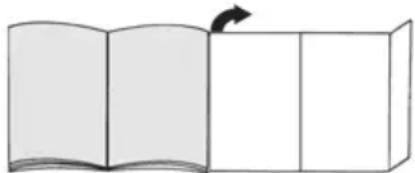
Fold out picture pages.
Your vacuum cleaner
1 Adjustable floor tool
2 Hard-floor brush
3 Polymatic hard floor nozzle
4 Pet hair tool
5 Telescopic tube
6 Sliding switch
7 Suction hose
8 Handle
9 Hose
10 Upholstery nozzle
11 Crevice nozzle
12 Multi-purpose nozzle
13 Parking aid
14 Power cord
15 Exhaust filter
16 On/off button with electronic suction regulator
17 Dust container OR
18 Dust bag
19 Motor protection filter, washable
20 Storage aid (on underside of vacuum cleaner)
21 Dust compartment cover
22 Carrying handles (on the front and back)
23 Exhaust grille
24 Dust bag change indicator*
Replacement parts and accessories
A Replacement filter pack
Filter type PowerProtect
(Spare part no.: VZ41FGALL)
"For high suction power"/"for top performance and excellent cleaning quality")
Contents:
- 4 dust bags with fasteners
- 1 micro-hygiene filter
We therefore recommend that you only use our original dust bags.
Your appliance is a highly efficient vacuum cleaner that achieves excellent cleaning results when used with high-quality dust bags.
Only by using high-quality dust bags (such as Siemens original dust bags) can you ensure that your vacuum cleaner is working at the energy efficiency class, dust pick-up rate and dust retention capacity listed on its EU energy label.
The use of inferior-quality dust bags (e.g. paper bags) can have a negative effect on the service life and performance of your appliance.
Using unsuitable or inferior-quality dust bags can also damage your vacuum cleaner. Such damage is not covered by our guarantee.
You can find more information about this at www.siemens-home.bsh-group.com/dust-bag
You can order our original vacuum cleaner bags here.
B Textile filters (permanent filters) VZ10TFG
Reusable bag with Velcro(R) fastener.
C Hepa filter VZ153HFB
Additional filter for cleaner exhaust air.
Recommended for allergy sufferers. Replace once a year.
D Micro-active carbon filter VZ192MAF
Combination of micro filter and active carbon filter. Combats unpleasant odours. Replace twice a year.
Replace carbon filter frame with micro filter frame.
Please note! It is not possible to combine a Hepa filter and a Micro-active carbon filter.
E Hard-floor brush VZ123HD
For vacuuming hard floors (parquet flooring, tiles, terracotta, etc.) do not pour any flammable substances or substances containing alcohol onto the filters (filter bag, motor protective filter, exhaust filter, etc.).
Before using for the first time
Figure 1\*
Push the handle onto the flexible tube and until it engages.
Figure 2\*
Push the crevice nozzle and upholstery nozzle back into the accessories holder as illustrated.
Setting up
Figure 3
a) Push the flexible hose adapter into the air intake opening on the vacuum cleaner lid until it engages.
b) To remove the flexible hose, press the two lugs together and pull the tube out.
Figure 4\*
Push the handle into the suction pipe/telescopic tube.
To remove it, turn the handle slightly and pull it off the tube.
Figure 5\*
Insert the suction pipe/telescopic tube into the adapter of the floor tool.
To remove it, turn the tube slightly and pull it out of the floor tool.
Figure 6\*
a) Connect the suction pipes together, or
b) Unlock the telescopic tube to adjust its length by moving the sliding switch in the direction of the arrow.
Figure 7
- Holding the power cord by the plug, pull out the required length and plug it into the mains socket.
Figure 8
Press the on/off button in the direction of the arrow to switch your vacuum cleaner on/off.
Controlling the suction level
Figure 9
Set the suction level by turning the On/Off button in the direction of the arrow.
The suction level can be infinitely adjusted to the level required by turning the control knob in the direction of the arrow.
Low power range

For vacuuming delicate materials, e.g. delicate upholstery, curtains, etc.

Medium power range

For daily vacuuming of lightly soiled floors.


High power range
For vacuuming durable floor coverings, hard floors and heavily soiled floors.
Vacuuming
Figure 10
Adjusting the floor tool:
Rugs and carpets


Hard floors


Please note:
Floor tools are subject to a certain amount of wear, depending on the type of hard floors you have (e.g. rough, rustic tiles). You must therefore check the underside of the floor tool at regular intervals.
Worn undersides of floor tools may have sharp edges that can damage delicate hard floors, such as parquet or linoleum. The manufacturer does not accept any responsibility for damage caused by worn floor tools.
Figure 11
Remove the upholstery nozzle and crevice nozzle from the accessories holder as illustrated.
Vacuuming with accessories
Figure 12
Attach the nozzles to the suction pipe or handle as required:
a) Crevice nozzle for vacuuming crevices and corners, etc.
b) Upholstery nozzle for vacuuming upholstered furniture,curtains,etc.
c) Furniture brush
For cleaning window frames, cabinets, mouldings, etc.
d) Hard-floor brush
For vacuuming hard floor coverings (tiles, parquet flooring, etc.)
Figure 13
After use, push the crevice nozzle and upholstery nozzle back into the accessories holder as indicated.
Pet hair tool
Figure 14
Floor tool for easy and thorough vacuuming of pet hair.
To clean the nozzle, simply vacuum it using the suction pipe/telescopic tube
Figure 15
You can use the parking aid on the side of the vacuum cleaner if you wish to stop vacuuming for a short time.
Once you have switched off the vacuum cleaner, slide the catch on the floor tool into the groove on the side of the appliance.
Figure 16
The appliance can also be carried using one of the two handles when vacuuming steps, for example.
When the work is done
Figure 17
Unplug the vacuum cleaner.
-ug the power cord briefly and let go. The cable then rewinds automatically.
Figure 18
To store or transport the vacuum cleaner, use the storage aid on the underside of the vacuum cleaner.
Stand the vacuum cleaner up on its end. Slide the catch on the floor tool into the groove on the underside of the appliance.
You have purchased a floor vacuum cleaner which can vacuum up any type of dry dirt using the dust container or dust bag.
We recommend that you use:
- the dust container, in particular for your hobbies, e.g. to vacuum up wood shavings, etc.
- the dust bag principally for everyday household cleaning.
Using the dust container
Caution: The dust bag change indicator only works in conjunction with a dust bag.
Figure 19
Set the power setting to maximum for the best results when vacuuming.
We recommend that you reduce the setting only when vacuuming very delicate materials.
Emptying the dust filter
To achieve an optimal result when vacuuming, the dust container should be emptied each time the vacuum cleaner is used.
Figure 20
Turn the dust compartment locking lever in the direction of the arrow to open the dust compartment cover.
Figure 21
Remove the dust container from the appliance.
Figure 22
Release the two snap locks on the bottom flap in the direction of the arrow, open the flap until it clicks into the stop position and the container will then empty the dirt in a downwards direction.
If the bottom flap is very dirty, (thick dirt) clean it before closing, by vacuuming it with the crevice nozzle, for example. (You must fit the dust bag in the vacuum cleaner when you do this - Figure 27)
Close the bottom flap so that it can be heard snapping into position.
Figure 23
Put the dust bag back into the vacuum cleaner and close the dust bag compartment lid.
Caution: The inside of the dust container may become scratched with use and start to look opaque. This does not, however, affect the performance of the vacuum cleaner in any way, i.e. it will continue to function as normal.
Cleaning the permanent filters and micro filters in the dust container
The filters must be cleaned:
After any operating malfunctions, i.e. after a blockage is cleared.
At least every six months.
Figure 24
Press the fastener on the rear side of the container and remove the micro filter from the bottom of the container.
Remove the permanent filter from the bottom plate of the container.
Figure 25
Wash the micro- and permanent filters.
The filter must then be left to dry for at least 24 hours.
After cleaning, place the permanent filter on the bottom plate of the container.
Put the micro filter onto the container and fix it in place by pushing in the direction of the arrow. You will hear the flap snap shut.
Blockages
Removing a blockage in the dust container.
Figure 26
Empty the container (Figure 22)
Loosen the blockage, e.g. with a screwdriver, and tap or vacuum it out. (You must fit a dust bag in the vacuum cleaner before vacuuming it out - Figure 27)
Close the bottom flap so that it can be heard snapping into position.
Caution: The micro- and permanent filters must be cleaned following any operating problem (Figure 24 and Figure 25).
Using dust bags
If desired, a dust bag may be used instead of the dust container.
Figure 27
Open the dust bag compartment lid.
Remove the dust container and insert a dust bag.
Close the vacuum cleaner lid.
You have bought an extremely powerful device.
The highest suction setting is therefore only recommended for heavily soiled, short-pile carpets and hard floors.
The required suction power can be selected by adjusting the suction regulator (Figure 9).
Low power range

For vacuuming delicate materials, e.g. delicate upholstery, curtains, etc.

Medium power range
For daily vacuuming of lightly soiled floors.

High power range
For vacuuming durable floor coverings, hard floors and heavily soiled floors.
Replacing the dust bag
Figure 28
If the dust bag change indicator in the lid is filled completely when the floor tool is lifted from the floor with the highest suction level selected, the dust bag must be changed, even though it may not yet be full. Even if the dust bag is not full, it may still need changing, due to the type of dust which has been vacuumed. First check that the nozzle, suction pipe and flexible hose are not blocked, as this would also lead to the dust bag change indicator being triggered.
Figure 29
Open the lid by moving the locking lever in the direction of the arrow.
Figure 30
a) Seal the dust bag by pulling the sealing strip and then remove it.
b) Slide the new dust bag into the holder to the stop.
Caution: The lid can only be closed when a dust bag
has been inserted.
Cleaning the motor protection filter
The motor protection filter should be cleaned regularly by knocking out the dirt and rinsing.
Figure 31
Open the dust bag compartment lid (Figure 20).
Pull out the motor protection filter in the direction of the arrow.
Clean the motor protection filter by tapping it.
if it is very dirty, the motor protection filter should be rinsed.
Now leave the filter to dry for at least 24 hours.
After cleaning, slide the motor protection filter into the vacuum cleaner and close the dust bag compartment lid.
Caution: The vacuum cleaner must not be operated
- without the motor protection filter.
Replacing the micro-hygiene filter
When should you change the micro-hygiene filter?
when starting a newpack of bags
Figure 32
Open the dust bag compartment lid (Figure 20).
Release the filter holder by moving the locking lever in the direction of the arrow.
Remove the micro-hygiene filter. Insert the new microhygiene filter into the vacuum cleaner.
Reinsert the filter holder and clip into place.
Replacing the micro active carbon filter
If your vacuum cleaner is equipped with a micro active carbon filter, this should be replaced every six months.
Figure 33
Open the dust bag compartment lid (Figure 20).
Release the filter holder by moving the locking lever in the direction of the arrow.
Remove the micro active carbon filter.
Insert the new micro active carbon filter.
Reinsert the filter holder and clip into place.
Replacing the Hepa filter
If your vacuum cleaner is equipped with a Hepa filter, this should be replaced once a year.
Figure 34
Open the dust bag compartment lid (Figure 20).
Release the Hepa filter by moving the locking lever in the direction of the arrow and remove it from the vacuum cleaner.
Insert the new Hepa filter and clip into place.
If you have used the vacuum cleaner for fine dust particles, clean the motor protection filter and, if necessary, replace the micro active carbon filter or Hepa filter.
Care
Always switch off the vacuum cleaner and disconnect the power cord from the mains before cleaning the appliance.
The vacuum cleaner and plastic accessories can be cleaned with a commercial plastic cleaner.
Do not use a scourer, glass-cleaning agent or
- multipurpose cleaning product. Never immerse the vacuum cleaner in water.
The dust compartment can, if necessary, be cleaned with a second vacuum cleaner or simply wiped with a dry cloth or dusting brush.
Subject to technical modifications
fr
www.siemens-home.bsh-group.com/dust-bag
Der er der ogsa mulighed for at bestille vores origina- le stovsugerposer.
B Tekstilfilter (fast filter) VZ10TFG
Genanvendeligt filter med burrelukning.
C HEPA-filter VZ153HFB
Feil under stovsugingen
www.siemens-home.bsh-group.com/dust-bag.
Dar kan du aven bestalla dammsugarpasar som ar original.
B Textildammsugarpase (permanentpase) VZ10TFG
www.siemens-home.bsh-group.com/dust-bag.
a jai ll jjie Hepa jil
A
Hepa j
aaii iiaaa aiee eae
pall jilj g jdall gann jll jllgll
Hepa jla j. 3d l
aL
yj j j j j j j j j j j j j j j j j j j j j j j j j j j j j j j j j j j j j j j j j j j j
ailll lal 1
daiyall jiaicinaall 10
g 1 g 1 1 1 1 1 1 1 1 1 1
gjcljy aolz ciaia y g aiaa 10ga poaa
aaii dai aia iia jia jia
m = 311
a
15
(2)
13
i1i i 1
J
3
3
a
a 100
j
*4
aagwll / baiill aegwlo
yda aall a yraal all jaaaall al
jll 8ssall jaojol
*5
a
a 2
J 1
wJ 4j1j3, j1j3 oJgWll all j1j3 pJgWll
1
*6
jullll aullll lglal jlll aullll lolll
all
IaJgiooJzjglb
aaii iaiy
品 国 <=
aai 203 215
a
aall
aolal aasll
ar
y
PowerProtect
(VZ41FGALL:
("i1
4:ss
j1
aaii aaiiaai iaiie
Saaiae aie jae aljagalai Jds jaoaaiai ai
1
Jia aaiil aille ay jy1 ysi plsiuol Dja ba
aallll llll llll llll llll
aueae aee eeuue EUe
yj jolal oles, yj jolb, jolll
()
www.siemens-home.bsh-group.com/dust-bag
aalalal aalal alalal alalal alalal alalal alalal
i
VZ10TFG()
y jia yjao pssaiyaley jali
VZ154HFB HEPA
jll jil 1
Lgivw ojssi pi y wluall jy Iaal
VZ192MAF
aegaae aee
jIb! jIiw J5 oJooji pi. iIgbl oJol aCjoll
jill jll l, y.
1
Hepa jia jay
VZ123HD aalll yai jie E
1bX11,4Sj11) 1waii
(....LsS1j1)
JgJLaaiy
*1 3
aagaae aee
*2 3
-
212sill clllall g -cgo gLoS
Siemens 5j Jia jia jia jia jia jia jia jia jia jia
.VS06
a
1 1111111111111111111111111
y 1
Gaii duiuai uayas yuyai a 4Siemns
A
aallll lllllll

[{j}_{4} = {211}\;{3\omega }\mathrm{g}]
1
2
*Polymatic 3
4
a 5
6
7
8
9
*tlll 10
gaaa 11
a 12
aill g jle lal 13
14
jali 15
*16
17
jL
山
*jll 18
Lue jScy. ydl aylo jil 19
(aikai jai) 1yI yie aalw 20
21
(gallaoaal)Jaaal 22
23
*jll 24
www siemens-home.bsh-group.com/dk
EE Eesti, Estonia
SIMSON OÜ
Turi tn.5
11313 Tallinn
Tel.: 0627 8730
Fax: 0627 8733
mailto:servicenet@servicenet.ee
www.simson.ee
Renerki Kaubanduse OÜ
Tammsaare tee 134B
(Euronici kaupluses)
12918 Tallinn
Tel.: 0651 2222
Tel.: 05167171
mailto klienditeeindus@renerk.ee
www.renerk.ee
Eliser OÜ
Mustamae tee 24
10621 Tallinn
Tel.: 0665 0090
mailto:hooldus@eliser.ee
www.kodumasinate-remont.ee
ES España, Spain
BSH Electrodomesticos Espana S.A.
www.siemens-home.bsh-group.es
FI Suomi, Finland
BSH Kodinkoneet Oy
Italahdenkatu 18 A
PL 123
00201 Helsinki
Tel.: 0207 510 700
Fax: 0207 510 780
mailto:Siemens-Service-Fl@bshg.com
www.siemens-home.bsh-group.com/fi
www.siemens-home.bsh-group.fr
GB Great Britain
BSH Home Appliances Ltd.
Grand Union House
Old Wolverton Road
Wolverton
Milton Keynes MK12 5PT
To arrange an engineer visit, to order spare parts and accessories or for product advice please visit
www.siemens-home.bsh-group.uk or call Tel.: 0344 892 8999*
*Calls are charged at the basic rate, please check with your telephone service provider for exact charges
GR Greece, EAAAC
BSH Ikiakes Siskeves A.B.E.
Central Branch Service
17 km E.O. Athinon-Lamias &
Potamou 20
14564 Kifisia
www.siemens-home.bsh-group.com/gr
HK Hong Kong港
BSH Home Appliances Limited
Unit 1 & 2, 3rd Floor, North Block,
Skyway House, 3 Sham Mong Road
Tai Kok Tsui, Kowloon
Hong Kong
Tel.: 2565 6151
Fax: 2565 6681
mailto:siemens.hk.service@bshg.com
www.siemens-home.bsh-group.com/hk
HR Hrvatska, Croatia
BSH kučni uredaji d.o.o.
Kneza Branimira 22
10000 Zagreb
Tel.: 015520999
Fax: 01 640 36 03
mailto:informacije.servis-hr@bshg.com
www.siemens-home.bsh-group.com/hr
HU Magyarorszag, Hungary
www.siemens-home.bsh-group.com/hu
IE Republic of Ireland
BSH Home Appliances Ltd.
Unit F4, Ballymount Drive
Ballymount Industrial Estate
Walkinstown
Dublin 12
Service Requests, Spares and
Accessories
Tel.: 01450 2655*
Fax: 01450 2520
www.siemens-home.bsh-group.ie
*0.03 € per minute at peak.
Off peak 0.0088 € per minute.
IL Israel,
C/S/B/ Home Appliance Ltd.
1, Hamasger St.
North Industrial Park
Lod, 7129801
Tel.: 08 9777 222
Fax: 089777245
mailto:csb-serv@csb-ltd.co.il
www.siemens-home.bsh-group.com/ill
IN India, Bharat,
BSH Household Appliances
Mfg. Pvt. Ltd.
Arena House,
Main Bldg, 2nd Floor,
Plot No. 103, Road No. 12
MIDC, Andheri East
Mumbai 400 093
Toll Free 1800 209 1850*
www.siemens-home.bsh-group.com/in
Mo-Sa: 8.00am to 8.00pm
(exclude public holidays)
IS Iceland
Smith & Norland hf.
Noatuni 4
105 Reykjavik
Tel.: 05203000
Fax:05203
www.sminor.is
IT Italia, Italy
www.siemens-home.bsh-group.com/it
KZ Kazakhstan, Ka3aKCTAH
IP Turebekov Yerzhan Nurmanovich
Jangeldina str. 15
Shimkent 160018
Tel.: 0252 31 00 06
mailto:evrika_kz@mail.ru
LB Lebanon,

Tehaco s.a.r.l
Boulevard Dora 4043 Beyrouth
P.O.Box 90449
Jdeideh, 1202 2040
Tel: 01 255211
mailto:Info@Teheni-Hana.com
LT Lietuva, Lithuania
Senuku prekybos centras UAB
Jonavos g.62
44192 Kaunas
Tel.: 037 212 146
Fax: 037212165
www.senukai.lt
UAB "AG Service"
R.Kalantos g.32
52494 Kaunas
Tel.: 070055655
Fax: 0373 313 63
mailto:servias@agservice.It
www.agservice.lt
Baltic Continent Ltd.
Lukso g.23
09132 Vilnius
Tel.: 052741788
Fax: 05 274 1722
mailto:info@balticcontinent.It
www.balticcontinent.It
LU Luxembourg
www.siemens-home.bsh-group.com/lu
LV Latvija, Latvia
SIA "General Serviss"
Bulli iela 70c
1067 Riga
Tel.: 067425232
mailto:info@serviscentrs.lv
www.serviscentrs.lv
Elkor Serviss
Brivibas gatte 201
1039 Riga
Tel.: 067 0705 20; -36
Fax: 067 070 524
mailto:info@elkorserviss.lv
www.elnkorserviss.lv
Sia Elektronika-Serviss
Tadaiku iela 4
1004 Riga
Tel.: 067 717 060
Fax:067601235
mailto:serviss@elektronika.lv
www.elektronika.lv
MD Moldova
S.R.L. "Rialto-Studio"
yn.LyceBa,98
2012 KIINHeB
TeJ./ΦaKc:022 23 81 80
MK Macedonia,Makeonna
GORENEC
Jane Sandanski 69 lok.3
1000 Skopje
Tel.: 022 454 600
Mobil: 070 697 463
mailto:gorenec@yahoo.com
MT Malta
Aplan Limited
The Atrium
Mriehel by Pass
BKR3000 Birkirkara
Tel.: 025 495 122
Fax: 021 480 598
mailto:lapap@aplan.com.mt
NL Nederlande, Netherlands
www.siemens-home.bsh-group.nl
NO Norge, Norway
www.siemens-home.bsh-group.com/no
NZ New Zealand
BSH Home Appliances Ltd.
Unit F 2, 4 Orbit Drive
Mairangi Bay
Auckland 0632
Tel.: 0800 245 700*
Fax:0800256535
mailto:repairaction.nz@bshg.com
- Mo-Fr: 8.30am to 4.00pm
(exclude public holidays)
PL Polska, Poland
www.siemens-home.bsh-group.pl
PT Portugal
BSHP Electrodomésticos,
www.siemens-home.bsh-group.com/pt
RO Romania, Romania
BSH Electrocasnice srl.
Sos. Bucuresti-Ploiesti,
nr. 19-21, sect.1
13682 Bucuresti
Tel.: 021 203 9748
Fax: 021 203 9733
mailto:service.romania@bshg.com
www.siemens-home.bsh-group.com/ro
RU Russia, Poccn
OOO“BCXБbITOBaTexHnKa"
CepBnC OT npOn3BODnteTne
Mana Kanyekka 19/1
119071 MockBa
Ten.: 495 737 2962
mailto:mok-kdhl@bshg.com
www.siemens-home.bsh-group.ru
SE Sverige, Sweden
BSH Home Appliances AB
Landsvagen 32
169 29 Solna
Tel.: 0771 11 22 77 local rate
mailto:Siemens-Service-SE@bshg.com
www.siemens-home.bsh-group.com/se
SG Singapore, 新加坡
BSH Home Appliances Pte. Ltd.
Block 4012, Ang Mo Kio Avenue 10
01-01 Techplace 1
Singapore 569628
Tel.: 6751 5000*
Fax: 6751 5005
mailto:bshsgp.service@bshg.com
- Mo-Fr: 8.30am to 7.00pm, Sa: 8.30am to 5.30pm
(exclude public holidays)
SI Slovenija, Slovenia
BSH Hišni aparati d.o.o.
Litostrojska 48
1000 Ljubljana
Tel.: 015830701
Fax: 01 583 08 89
mailto:informacije.servis@bshg.com
www.siemens-home.bsh-group.com/si
SK Slovensko, Slovakia
www siemens-home.bsh-group.com/sk
TR Türkiye, Turkey
BSH Ev Aletleri Sanavi
ve Ticaret A.S.
Fatih Sultan Mehmet Mahallesi
Balkan Caddesi No: 51
34771 Umraniye, Istanbul
Tel.: 02164446688*
Fax: 0 216 528 9188*
mailto:careline.turkey@bshg.com
www.siemens-home.bsh-group.com/tr
www.siemens-home.bsh-group.com/ua
US United States of America
BSH Home Appliances Corporation
1901 Main Street, Suite 600
Irvine, CA, 92614
Tel.: 866 447 4363 toll-free
Fax: 949 437 7000
mailto:siemens-usa-questions@
bshg.com
www.siemens-home.bsh-group.com/us
KK Kosovo
SERVICE-GENERAL SH.P.K.
Rruga Mag Prishtine-Ferizaj
70000 Ferizaj
Tel.: 0290 321 434
Tel.: 0290 330 723
mailto:a_service@
gama-electronics.com
XS Srbija, Serbia
BSH Kučni aparati d.o.o.
Milutina Milankovica 11a
11070 Novi Beograd
Tel.: 011 353 70 09
Fax: 011 205 23 89
mailto:informacije.servis-sr@bshg.com
www.siemens-home.bsh-group.com/rs
ZA South Africa
BSH Home Appliances (Pty) Ltd.
15th Road Randjespark
Private Bag X36, Randjespark
1685 Midrand-Johannesburg
Tel.: 086 002 6724
Fax: 086 617 1780
mailto:applianceserviceza@bshg.com
www.siemens-home.bsh-group.com/zai


de
This appliance is labelled in accordance with European Directive 2012/19/EU concerning used electrical and electronic appliances (waste electrical and electronic equipment - WEEE). The guideline determines the framework for the return and recycling of used appliances as applicable throughout the EU.
fr
GB Conditions of guarantee
For this appliance the guarantee conditions as set out by our representatives in the country of sale apply. Details regarding same may be obtained from the dealer from whom the appliance was purchased. For claims under guarantee the sales receipt must be produced.
FR Conditions de garantie
www.siemens-home.com/tr
www.siemens-yetkiliservisi.com
Faks :0216.528.91.88
E-posta : siemenscagrimerkezi@bshg.com.
Yetkilinin imzasi :
SATICI FIRMANIN
Unvani :
Adresi
Telefonu:
Faks
E-posta :
BSH Group is a Trademark Licensee of Siemens AG
Carl-Wery-Straße 34
81739 München, GERMANY