ManualGo.com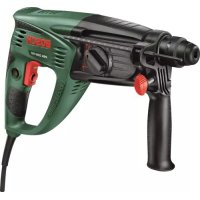
PBH 2900 RE - Drill BOSCH - Free user manual and instructions
Find the device manual for free PBH 2900 RE BOSCH in PDF.



Download the instructions for your Drill in PDF format for free! Find your manual PBH 2900 RE - BOSCH and take your electronic device back in hand. On this page are published all the documents necessary for the use of your device. PBH 2900 RE by BOSCH.
USER MANUAL PBH 2900 RE BOSCH
(triax vector sum) and uncertainty K determined according to EN 60745: Hammer drilling into concrete: a
Drilling in metal: a
Screwdriving without impact: a
(triax vector sum) and uncertainty K determined according to EN 60745: Hammer drilling into concrete: a
Drilling in metal: a
Screwdriving without impact: a
PBH 3000 FRE Set/PBH 3000-2 FRE: The vibration level given in this information sheet has been measured in accordance with a standardised test given in EN 60745 and may be used to compare one tool with anoth- er. It may be used for a preliminary assessment of exposure. The declared vibration emission level represents the main ap- plications of the tool. However if the tool is used for different applications, with different accessories or insertion tools or is poorly maintained, the vibration emission may differ. This may significantly increase the exposure level over the total working period. An estimation of the level of exposure to vibration should also take into account the times when the tool is switched off or when it is running but not actually doing the job. This may sig- nificantly reduce the exposure level over the total working period. Identify additional safety measures to protect the operator from the effects of vibration such as: maintain the tool and the accessories, keep the hands warm, organisation of work pat- terns. OBJ_BUCH-318-007.book Page 16 Tuesday, November 10, 2015 5:05 PMEnglish | 17 Bosch Power Tools 1 609 92A 1LU | (23.5.18) Technical Data Declaration of Conformity We declare under our sole responsibility that the product de- scribed under “Technical Data” is in conformity with the fol- lowing standards or standardization documents: EN 60745, EN 50581:2012 according to the provisions of the directives 2011/65/EU, 2014/30/EU, 2006/42/EG. Technical file (2006/42/EC) at: Robert Bosch Power Tools GmbH, PT/ETM9, 70538 Stuttgart, GERMANY Robert Bosch Power Tools GmbH 70538 Stuttgart, GERMANY Stuttgart, 01.01.2017 Assembly Before any work on the machine itself, pull the mains plug. Auxiliary Handle
Operate your machine only with the auxiliary handle 17. Changing the position of the auxiliary handle (see figure A) The auxiliary handle 17 can be set to any position for a secure and low-fatigue working posture. – Turn the wing bolt for adjustment of the auxiliary handle 16 in anticlockwise direction and set the auxiliary handle 17 to the required position. Then tighten the wing bolt 16 again in clockwise direction. Adjusting the Drilling Depth (see figure B) The required drilling depth
can be set with the depth stop
– Press the button for the depth stop adjustment 15 and in- sert the depth stop into the auxiliary handle 17. The knurled surface of the depth stop 18 must face down- ward. – Insert the SDS-plus drilling tool to the stop into the SDS-plus tool holder
Delivery Scope – Keyless drill chuck
Rated power input W 720 730 730 750 750 Impact frequency at rated speed min
Impact energy per stroke according to EPTA-Procedure 05/2009 J2.62.7 2.7 2.8 2.8 Rated speed min
No-load speed –1st gear –2nd gear min
0–1450 0–3000 Tool holder SDS-plus SDS-plus SDS-plus SDS-plus SDS-plus Spindle collar diameter mm 43 43 43 43 43 Drilling diameter, max.: –Concrete – Brickwork (with core bit) – Steel – Wood
Weight according to EPTA-Procedure 01:2014 kg 3.0 3.0 3.0 3.0 3.3 Protection class / II / II / II / II / II The values given are valid for a nominal voltage [U] of 230 V. For different voltages and models for specific countries, these values can vary. Henk Becker Executive Vice President Engineering Helmut Heinzelmann Head of Product Certification PT/ETM9 OBJ_BUCH-318-007.book Page 17 Tuesday, November 10, 2015 5:05 PM18 | English 1 609 92A 1LU | (23.5.18) Bosch Power Tools – Pull out the depth stop until the distance between the tip of the drill bit and the tip of the depth stop correspond with the desired drilling depth X. Selecting Drill Chucks and Tools For hammer drilling and chiselling, SDS-plus tools are re- quired that are inserted in the SDS-plus drill chuck. For drilling without impact in wood, metal, ceramic and plas- tic as well as for screwdriving, tools without SDS-plus are used (e.g., drills with cylindrical shank). For these tools, a keyless chuck or a key type drill chuck are required. PBH 3000-2 FRE: The SDS-plus quick change chuck
can easily be replaced against the quick change keyless chuck
provided. Replacing the Drill Chuck
(PBH 2800 RE/PBH 2900RE/PBH 2900 FRE/
PBH 3000 FRE Set) To work with drilling tools without SDS-plus (e. g., drill bits with cylindrical shank), the key type drill chuck or the keyless chuck must be mounted. Mounting the Key Type Drill Chuck (Accessory) (PBH 2800 RE/PBH 2900 RE) (see figure C) – Screw the SDS-plus adapter shank 22 into a key type drill chuck 21. Secure the key type drill chuck 21 with the se- curing screw 20. Please observe that the securing screw has a left-hand thread. Inserting the Key Type Drill Chuck or the Keyless Chuck (see figure D) – Clean the shank end of the adapter shank and apply a light coat of grease. – Insert the key type drill chuck 21 or the keyless chuck 23 with the adapter shank into the tool holder with a turning motion until it automatically locks. – Check the locking effect by pulling the key type drill chuck or the keyless chuck. Removing the Key Type Drill Chuck or the Keyless Chuck – Push the locking sleeve 5 toward the rear and pull out the key type drill chuck 21 or the keyless chuck 23. Removing/Inserting the Quick Change Chuck (PBH 3000-2 FRE) Removing the Quick Change Chuck (see figure E) – Grasp the lock ring of the quick change chuck 6 and pull it firmly in the direction of the arrow. The quick change chuck is released and can be removed toward the front. – After removing, protect the replacement chuck against contamination. Inserting the Quick Change Chuck (see figure F) – Before inserting, clean the quick change chuck and apply a light coat of grease to the shank end. – Grasp the SDS-plus quick change chuck 2 or the quick change keyless chuck 1 completely with your hand. Slide the quick change chuck with a turning motion onto the drill chuck mounting 24 until a distinct latching noise is heard. – The quick change chuck is automatically locked. Check the locking effect by pulling the quick change chuck. Changing the Tool The dust protection cap 4 largely prevents the entry of drilling dust into the tool holder during operation. When inserting the tool, take care that the dust protection cap 4 is not damaged. A damaged dust protection cap should be changed im- mediately. We recommend having this carried out by an after-sales service. Inserting SDS-plus Drilling Tools (see figure G) The SDS-plus drill chuck allows for simple and convenient changing of drilling tools without the use of additional tools. – PBH 3000-2 FRE: Insert the SDS-plus quick change chuck
– Clean and lightly grease the shank end of the tool. – Insert the tool in a twisting manner into the tool holder until it latches itself. – Check the latching by pulling the tool. As a requirement of the system, the SDS-plus drilling tool can move freely. This causes a certain radial run-out at no-load, which has no effect on the accuracy of the drill hole, as the drill bit centres itself upon drilling. Removing SDS-plus Drilling Tools (see figure H) – Push back the locking sleeve 5 and remove the tool. Inserting Drilling Tools without SDS-plus into the Key Type Drill Chuck (PBH 2800 RE/PBH 2900 RE) Note: Do not use tools without SDS-plus for hammer drilling or chiselling! Tools without SDS-plus and their drill chucks are damaged by hammer drilling or chiselling. – Insert the key type drill chuck 21. – Open the key type drill chuck 21 by turning until the tool can be inserted. Insert the tool. – Insert the chuck key into the corresponding holes of the key type drill chuck 21 and clamp the tool uniformly. – Turn the mode selector switch 12 to the “drilling” position. Removing Drilling Tools without SDS-plus from the Key Type Drill Chuck (PBH 2800 RE/PBH 2900 RE) – Turn the sleeve of the key type drill chuck 21 with the drill chuck key in anticlockwise direction until the drilling tool can be removed. Inserting Drilling Tools without SDS-plus into the Keyless Chuck (PBH 2900 FRE/PBH 3000 FRE Set/PBH 3000-2 FRE) (see figure I) Note: Do not use tools without SDS-plus for hammer drilling or chiselling! Tools without SDS-plus and their drill chucks are damaged by hammer drilling or chiselling. – PBH 2900 FRE/PBH 3000 FRE Set: Insert the keyless chuck 23. – PBH 3000-2 FRE: Insert the quick change keyless chuck
– Hold the rear sleeve 26 of the keyless chuck 23 and turn the front sleeve 25 in anticlockwise direction until until the tool can be inserted. Insert the tool. – Tightly hold the rear sleeve of the keyless chuck 23 and firmly turn the front sleeve clockwise by hand until the locking action is no longer heard. This automatically locks the drill chuck. – Check the tight seating by pulling the tool. OBJ_BUCH-318-007.book Page 18 Tuesday, November 10, 2015 5:05 PMEnglish | 19 Bosch Power Tools 1 609 92A 1LU | (23.5.18) Note: If the tool holder was opened to the stop, then a latching noise possibly may be heard while closing the tool holder and the tool holder will not close. In this case, turn the front sleeve
once in anticlockwise di- rection. Afterwards, the tool holder can be closed (tightened). – Turn the mode selector switch 12 to the “drilling” position. Removing Drilling Tools without SDS-plus from the Key- less Chuck (PBH 2900 FRE/PBH 3000 FRE Set/PBH 3000-2 FRE) (see figure J) – Firmly hold the rear sleeve 26 of the keyless chuck and turn the front sleeve 25 of the keyless chuck in anticlock- wise direction until the drilling tool can be removed. Dust Extraction with the Dust Extraction Attach- ment (Accessory) Dusts from materials such as lead-containing coatings, some wood types, minerals and metal can be harmful to one’s health. Touching or breathing-in the dusts can cause allergic reactions and/or lead to respiratory infections of the user or bystanders. Certain dusts, such as oak or beech dust, are considered as carcinogenic, especially in connection with wood-treat- ment additives (chromate, wood preservative). Materials containing asbestos may only be worked by specialists. – As far as possible, use a dust extraction system suitable for the material. – Provide for good ventilation of the working place. – It is recommended to wear a P2 filter-class respirator. Observe the relevant regulations in your country for the mate- rials to be worked. Prevent dust accumulation at the workplace. Dusts can easily ignite. Mounting the Dust Extraction Attachment (see figure K) For dust extraction, the dust extraction attachment (accesso- ry) is required. When drilling, the dust extraction attachment retracts so that the attachment head is always close to the surface at the drill hole. – Press the button for depth stop adjustment 15 and remove the depth stop 18. Press button 15 again and insert the dust extraction attachment into the auxiliary handle 17 from the front. – Connect an extraction hose (diameter 19 mm, accessory) to the extraction sleeve
of the dust extraction attachment. The vacuum cleaner must be suitable for the material being worked. When vacuuming dry dust that is especially detrimental to health or carcinogenic, use a special vacuum cleaner. Adjusting the Drilling Depth on the Dust Extraction At- tachment (see figure L) The required drilling depth X can also be adjusted when the dust extraction attachment is mounted. – Insert the SDS-plus drilling tool to the stop into the SDS- plus tool holder 3. Otherwise, the movability of the SDS- plus drilling tool can lead to incorrect adjustment of the drilling depth. – Loosen the wing bolt 31 on the dust extraction attach- ment. – Without switching the power tool on, apply it firmly to the drilling location. The SDS-plus drilling tool must face against the surface. – Position the the guide pipe 32 of the dust extraction at- tachment in its holding fixture in such a manner that the head of the dust extraction attachment faces against the surface to be drilled. Do not slide the guide pipe 32 further over the telescopic pipe 30 of the dust extraction attach- ment than required, so that as much as possible of the scale 30 on the telescopic pipe remains visible. – Retighten the wing bolt
again. Loosen the clamping screw
on the depth stop of the dust extraction attachment. – Move the depth stop 29 on the telescopic pipe 30 in such a manner that the clearance X shown in the figure corre- sponds with the required drilling depth. – Tighten the clamping screw 28 in this position. Operation Starting Operation Observe correct mains voltage! The voltage of the pow- er source must agree with the voltage specified on the nameplate of the machine. Power tools marked with 230 V can also be operated with 220 V. Setting the operating mode The operating mode of the power tool is selected with the mode selector switch 12. Note: Change the operating mode only when the machine is switched off! Otherwise, the machine can be damaged. – To change the operating mode, push the release button 11 and turn the mode selector switch 12 to the requested po- sition until it can be heard to latch.
PBH 2800 RE/PBH 2900 RE/PBH 2900 FRE/
PBH 3000 FRE Set Position for drilling without impact in wood, metal, ceramic and plastic as well as for screwdriving and thread cutting Position for hammer drilling in concrete or stone Vario-Lock position for adjustment of the chiselling position The mode selector switch 12 does not latch in this position. Position for chiselling OBJ_BUCH-318-007.book Page 19 Tuesday, November 10, 2015 5:05 PM20 | English 1 609 92A 1LU | (23.5.18) Bosch Power Tools Reversing the rotational direction (see figure M) The rotational direction switch 10 is used to reverse the rota- tional direction of the machine. However, this is not possible with the On/Off switch 8 actuated. Right rotation: Push the rotational direction switch 10 rightward to the stop. Left rotation: Push the rotational direction switch 10 leftward to the stop. Set the direction of rotation for hammer drilling, drilling and chiselling always to right rotation. Switching On and Off –To start the machine, press the On/Off switch 8. –To lock the On/Off switch, keep it pressed and additionally push the lock-on button 7. –To switch off the machine, release the On/Off switch 8. When the On/Off switch 8 is locked, press it first and then release it. To save energy, only switch the power tool on when using it. Setting the Speed/Impact Rate The speed/impact rate of the switched on power tool can be variably adjusted, depending on how far the On/Off switch 8 is pressed. Light pressure on the On/Off switch 8 results in low speed/im- pact rate. Further pressure on the switch increases the speed/impact rate. Preselecting the Speed/Impact Frequency The required speed can be preselected with the thumbwheel 9 (also while running). Due to the limitation, the On/Off switch 8 can only be pulled through to the preset limit. Gear selection, mechanical (PBH 3000-2 FRE) Two speed ranges can be preselected with the gear selector
1st gear: Low speed range; for hammer drilling, chiselling, drilling with large drilling diameter, screwdriving and thread cutting. 2nd gear: High speed range; for drilling with small drilling diameter. – To change gear, push the release button 11 on the mode selector switch 12 and turn the mode selector switch to the “drilling” position. Then push the release button 14 on the gear selector 13 and turn the gear selector to 2nd gear. Note: The mode selector switch 12 may only be turned when the machine is switched off. The machine should also be switched off when turning the gear selector 13. Hammer drilling and chiselling is possible only in 1st gear. In these operating modes, the special shape of the gear selector 13 and mode selector switch 12 do not allow switching to 2nd gear. Before changing the operating mode from drilling to hammer drilling, Vario-Lock or chiselling, the gear selector 13 must be set back to 1st gear. Safety Clutch If the tool insert becomes caught or jammed, the drive to the drill spindle is interrupted. Because of the forces that occur, always hold the power tool firmly with both hands and provide for a secure stance. If the power tool jams, switch the machine off and loos- en the tool insert. When switching the machine on with the drilling tool jammed, high reaction torques can oc- cur. Working Advice Rotation Direction for Chiselling For chiselling, always set the rotation direction to right rota- tion. This prevents increased wear of the carbon brushes. Changing the Chiselling Position (Vario-Lock) The chisel can be locked in 36 positions. In this manner, the optimum working position can be set for each application. – Insert the chisel into the tool holder. – Turn the mode selector switch 12 to the “Vario-Lock” posi- tion (see “Setting the operating mode”, page 19). – Turn the tool holder to the desired chiselling position. – Turn the mode selector switch 12 to the “chiselling” posi- tion. The tool holder is now locked. – For chiselling, set the rotation direction to right rotation. Inserting Screwdriver Bits (see figure N) Apply the power tool to the screw/nut only when it is switched off. Rotating tool inserts can slip off. To work with screwdriver bits, a universal bit holder 33 with SDS-plus shank (accessory) is required. – Clean the shank end of the adapter shank and apply a light coat of grease. – Insert the universal bit holder with a turning motion into the tool holder until it automatically locks.
OBJ_BUCH-318-007.book Page 112 Tuesday, November 10, 2015 5:05 PM