PA18AS - Screwdriver Pattfield - Free user manual and instructions
Find the device manual for free PA18AS Pattfield in PDF.


| Product Type | Cordless Drill Driver |
| Brand | Pattfield |
| Model | PA18AS |
| Rated Voltage | 18 V |
| Battery Type | Lithium-ion (Li-ion) |
| Battery Capacity | 1500 mAh |
| Chuck Size | 2 - 13 mm |
| No-Load Speed (1st gear) | 0 - 400 rpm |
| No-Load Speed (2nd gear) | 0 - 1500 rpm |
| Max Torque | 25 Nm (ISO 5393) |
| Torque Adjustment | 20 positions + drilling |
| Max Screw Diameter | 8 mm |
| Drilling Capacity - Steel | 10 mm |
| Drilling Capacity - Wood | 30 mm |
| Charger - Input | 100-240 V~ / 50-60 Hz |
| Charger - Output | 12 V⎓ / 2 A |
| Charging Time | Approx. 1 hour |
| Sound Pressure Level (LpA) | 69.3 dB(A), K=3 dB(A) |
| Sound Power Level (LWA) | 80.3 dB(A), K=3 dB(A) |
| Vibration Emission (ahd) | 0.569 m/s², K=1.5 m/s² |
| Protection Class | II (double insulation) |
| Package Contents | 1x drill driver, 1x battery, 1x charger, 1x battery adapter, 1x battery seat, 1x drill bit, 1x magnetic drill bit holder |
| Functions | LED lighting, variable speed, forward/reverse, spindle lock, electronic battery protection (ECP) |
| Maintenance | Clean with a soft damp cloth; lubricate moving parts; store in a dry place |
| Warranty | 3 years (excluding wear parts and professional use) |
Frequently Asked Questions - PA18AS Pattfield
User questions about PA18AS Pattfield
0 question about this device. Answer the ones you know or ask your own.
Ask a new question about this device
Download the instructions for your Screwdriver in PDF format for free! Find your manual PA18AS - Pattfield and take your electronic device back in hand. On this page are published all the documents necessary for the use of your device. PA18AS by Pattfield.
USER MANUAL PA18AS Pattfield
Formula boorkop 2-13 mm
Torsie-installing 20 + boor
Geluidsdrukniveau (L_pA)
Geluidsvermögensniveau (L_WA)
Max. vibratie.emissie (a_hd)
BEZPECNOSTNI POKNY TYKAJICI SE NABIJECKY
12V= = /2 A
1 hodiny
Hluk a vibrate
Hodnoty uvedene v toto navodu byly zmere-ny v souladu se standardnimi postupy mereni specifikovanymi v norme EN 60745 a Ize je pouzivat k porovnavani naradi.
Informati despite accumulator
We are convinced that this tool will exceed your expectations and wish you joy while using it.
Please read this user manual completely and observe the safety instructions.
Scope of delivery
1x Drill driver
1x Battery
1x Battery adaptor
1x Battery seat
1x Bit
1x Magnetic bit holder
If any parts are missing or damaged, please contact your HORNBACH Store.
Table of content
Scope of delivery 97
Symbols 97
Safety instructions 98
Declaration of Conformity 103
Product overview 104
Using the tool 104
Intended use 104
Battery power 104
Adjustments 105
Technical Data 106
Noise & Vibration 106
Battery information 106
Care & Maintenance 107
Disposal 107
Warranty 108
Symbols

Please read this user manual carefully and keep it for further reference.

Wear hearing protection for protection of your ears.

Please read this user manual carefully and keep it for further reference.

Wear dust mask for protection of your respiratory tract.

Warning of accident and injury to persons and serious damage to property.

Do not use the tool outdoors or in damp environments.

Wear safety glasses for protection of your eyes.

Protection Class II
Safety Instructions
GENERAL POWER TOOL SAFETY WARNINGS

WARNING Read all safety warnings and all instructions. Failure to follow
the warnings and instructions may result in electric shock, fire and/or serious injury.
Save all warnings and instructions for future reference.
The term „power tool“ in the warnings refers to your mains-operated (corded) power tool or battery-operated (cordless) power tool.
1 WORK AREA SAFETY
a) Keep work area clean and well lit. Cluttered or dark areas invite accidents.
b) Do not operate power tools in explosive atmospheres, such as in the presence of flammable liquids, gases or dust. Power tools create sparks which may ignite the dust or fumes.
c) Keep children and bystanders away while operating a power tool. Distractions can cause you to lose control.
2 ELECTRICAL SAFETY
a) Power tool plugs must match the outlet. Never modify the plug in any way. Do not use any adapter plugs with earthed (grounded) power tools. Unmodified plugs and matching outlets will reduce risk of electric shock.
b) Avoid body contact with earthed or grounded surfaces, such as pipes, radiators, ranges and refrigerators. There is an increased risk of electric shock if your body is earthed or grounded.
c) Do not expose power tools to rain or wet conditions. Water entering a power tool will increase the risk of electric shock.
d) Do not abuse the cord. Never use the cord for carrying, pulling or unplugging the power tool. Keep cord away from heat, oil, sharp edges or moving parts. Damaged or entangled cords increase the risk of electric shock.
e) When operating a power tool outdoors, use an extension cord suitable for outdoor use. Use of a cord suitable for outdoor use reduces the risk of electric shock.
f) If operating a power tool in a damp location is unavoidable, use a residual current device (RCD) protected supply. Use of an RCD reduces the risk of electric shock.
3 PERSONAL SAFETY
a) Stay alert, watch what you are doing and use common sense when operating a power tool. Do not use a power tool while you are tired or under the influence of drugs, alcohol or medication. A moment of inattention while operating power tools may result in serious personal injury.
b) Use personal protective equipment. Always wear eye protection. Protective equipment such as dust mask, non-skid safety shoes, hard hat, or hearing protection used for appropriate conditions will reduce personal injuries.
c) Prevent unintentional starting. Ensure the switch is in the off-position before connecting to power source and/or battery pack, picking up or carrying the tool. Carrying power tools with your finger on the switch or energising power tools that have the switch on invites accidents.
d) Remove any adjusting key or wrench before turning the power tool on. A wrench or a key left attached to a rotating part of the power tool may result in personal injury.
e) Do not overreach. Keep proper footing and balance at all times. This enables better control of the power tool in unexpected situations.
f) Dress properly. Do not wear loose clothing or jewellery. Keep your hair, clothing and gloves away from moving parts. Loose clothes, jewellery or long hair can be caught in moving parts.
g) If devices are provided for the connection of dust extraction and collection facilities, ensure these are connected and properly used. Use of dust collection can reduce dust-related hazards.
4 POWER TOOL USE AND CARE
a) Do not force the power tool. Use the correct power tool for your application. The correct power tool will do the job better and safer at the rate for which it was designed.
b) Do not use the power tool if the switch does not turn it on and off. Any power tool that cannot be controlled with the switch is dangerous and must be repaired.
c) Disconnect the plug from the power source and/or the battery pack from the power tool before making any adjustments, changing accessories, or storing power tools. Such preventive safety measures reduce the risk of starting the power tool accidentally.
d) Store idle power tools out of the reach of children and do not allow persons unfamiliar with the power tool or these instructions to operate the power tool. Power tools are dangerous in the hands of untrained users.
e) Maintain power tools. Check for misalignment or binding of moving parts, breakage of parts and any other condition that may affect the power tool's operation. If damaged, have the power tool repaired before use. Many accidents are caused by poorly maintained power tools.
f) Keep cutting tools sharp and clean. Properly maintained cutting tools with sharp cutting edges are less likely to bind and are easier to control.
g) Use the power tool, accessories and tool bits etc. in accordance with these instructions, taking into account the working conditions and the work to be performed. Use of the power tool for operations different from those intended could result in a hazardous situation.
5 BATTERY TOOL USE AND CARE
a) Recharge only with the charger specified by the manufacturer. A charger that is suitable for one type of battery pack may create a risk of fire when used with another battery pack.
b) Use power tools only with specifically designated battery packs. Use of any other battery packs may create a risk of injury and fire.
c) When battery pack is not in use, keep it away from other metal objects, like paper clips, coins, keys, nails, screws or other small metal objects, that can make a connection from one terminal to another. Shorting the battery terminals together may cause burns or a fire.
d) Under abusive conditions, liquid may be ejected from the battery; avoid contact. If contact accidentally occurs, flush with water. If liquid contacts eyes, additionally seek medical help. Liquid ejected from the battery may cause irritation or burns.
6 SERVICE
a) Have your power tool serviced by a qualified repair person using only identical replacement parts. This will ensure that the safety of the power tool is maintained.
b) Never service damaged battery packs. Service of battery packs should only be performed by the manufacturer or authorized service providers.
ADDITIONAL SAFETY INSTRUCTIONS FOR BATTERY OPERATED DRILL AND DRIVER
a) Hold power tool by insulated gripping surfaces, when performing an operation where the cutting accessory or fastener may contact hidden wiring. Cutting accessory or fasteners contacting a "live" wire may make exposed metal parts of the power tool "live" and could give the operator an electric shock.
b) Secure the workpiece. A workpiece clamped with clamping devices or in a vice is held more secure than by hand.
c) Take protective measures when dust can develop during working that is harmful to one's health, combustible or explosive. Example: Some dusts are regarded as carcinogenic. Wear a dust mask and work with dust/chip extraction when connectable.
d) Before any work on the machine (e.g., maintenance, tool change, etc.) as well as during transport and storage, set the rotational direction switch to the centre position. Unintentional actuation of the On/Off switch can lead to injuries.
e) Hold the machine with a firm grip. High reaction torque can briefly occur while driving in and loosening screws.
f) Switch off the power tool immediately when the tool inserted jams. Be prepared for high reaction torque that can cause kickback. The tool insert jams when:
- the power tool is subject to overload or
- it becomes wedged in the work piece.
g) Use a metal detector to determine if there are gas or water pipes hidden in the work area or call the local utility company for assistance before beginning the operation. Striking or cutting into a gas line will result in explosion. Water entering an electrical device may cause electrocution.
SAFETY INSTRUCTIONS FOR BATTERY CHARGER
- This charger is not intended for use by children and persons with physical, sensory or mental limitations or a lack of experience or knowledge.
- This charger can be used by children aged 8 or older and by persons who have physical, sensory or mental limitations or a lack of experience or knowledge if they have been supervised or instructed in the safe operation of the charger and understand the associated dangers. Otherwise, there is a danger of operating errors and injuries.
- Supervise children. This will ensure that children do not play with the charger.
- Cleaning and user maintenance of the battery charger shall not be
made by children without supervision.
- Keep the battery charger away from rain or moisture. Penetration of water in the battery charger increases the risk of an electric shock.
- Keep the battery charger clean. Contamination can lead to danger of an electric shock.
- Before each use, check the battery charger, cable, plug and battery. If damage is detected, do not use the battery charger. Never open the battery charger yourself.
- Repairs may be carried out only by an authorised customer service centre, only using original spare parts. Damaged battery chargers, cables and plugs increase the risk of an electric shock.
- Do not place any objects on the battery charger and do not place the battery charger on soft surfaces. There is a risk of fire.
- Always check that the mains voltage matches the voltage indicated on the rating plate of the battery charger.
- Never use the charger if cable, plug or the unit itself has been damaged by external influences. Take the charger to the nearest service centre.
- Never open the battery charger. If the battery charger is defective, take it to a service centre.
- Never use this charger to charge non-rechargeable batteries.
- Ensure that the work area is clean and well lit.
-
Modification of the charger or tampering with its parts is not permissible.
-
Do not operate the charger in explosive atmospheres such as in the presence of flammable liquids, gases or dust.
- Keep children and other persons away from the working area while the charger is in use.
- The plug of the power cable must match the outlet. Never modify the plug in any way.
- Avoid body contact with earth or grounded surface such as pipes, radiators, ranges and refrigerators.
- Do not abuse the power cable.
- Never use the power cable to carry, pull or unplug the charger.
- Keep the cable away from heat, oil, sharp edges and moving parts.
- Do not wear jewellery such as rings and chains when operating the charger.
- Ensure that the charger is standing in a steady, secure position.
- Avoid touching the contacts.
- Use the charger only to charge the specified batteries.
- When not in use, keep the charger away from paper-clips, coins, keys, nails, screws, or other small metal objects, that can cause a short-circuit at the charging contacts.
SAFETY INSTRUCTIONS FOR BATTERY
- Never use a damaged battery.
- Do not open the battery. There is a risk of a short-circuit.
- Protect the battery from heat, e.g. from continuous exposure to sunlight, fire, water and humidity. There is a risk of explosion.
- In case of damage and improper use of the battery, vapours may be emitted. Ventilate the area and seek medical help in case of complaints.
The vapours can irritate the respiratory system.
- Under abusive conditions, liquid may be ejected from the battery; avoid contact. If contact accidentally occurs, flush with water. If liquid contacts eyes, additionally seek medical help. Liquid ejected from the battery may cause irritation or burns.
- Use only original batteries with the voltage indicated on the rating plate of your electric power tool. If other batteries are used, e.g. imitations, reconditioned batteries or third-party products, there is a risk of injuries as well as damage caused by exploding batteries.
- The battery voltage must match the battery charging voltage of the battery charger. Otherwise there is a risk of fire and explosion.
- Recharge only with the charger specified by the manufacturer. A charger that is suitable for one type of battery pack may create a risk of fire when used with another battery pack.
- Pointed objects, such as nails or screwdrivers, or external forces may damage the battery. This may cause an internal short-circuit and the battery to burn, smoke, explode or overheat.
- When not in use, keep the battery away from paper-clips, coins, keys, nails, screws, or other small metal objects, that can cause a short-circuit at the charging contacts.
- Used batteries must be disposed of safely and correctly.
Declaration of conformity


We declare, that the product described in Technical Data:

18 V Cordless drill PE-AS18Li
manufactured for:
is in conformity with the following directives:
Screwdriver:
Machinery Directive 2006/42/EC
EMC Directive 2014/30/EU
Charger:
LVD Directive 2014/35/EU
EMC Directive 2014/30/EU
and in accordance to the following applicable harmonized standards:
EN 60745-1:2009+A11
EN 60745-2-1:2010
EN 60745-2-2:2010
EN 55014-1:2011+A2
EN 55014-2:2015+A2
EN 60335-1:2012+A11
EN 60335-2-29:2004+A2
EN 61000-3-2:2014
EN 61000-3-3:2013
iA. Juaa
Andreas Back
Head of Quality Management, environment & CSR
Person authorised to compile the technical file
1 Chuck
2 Chuck ring
3 LED
4 On/Off switch
5 Battery release switch
6 Battery power check
7 Torque ring
8 Rotation direction switch
9 Battery
10 Gear selector
11 Soft grip
Using the tool
- Set the desired rotation speed on the gear selector 10.
1st gear Screw driving /
Larger diameter drilling
2nd gear Smaller diameter drilling
- To switch on the tool, press the on / off switch 4. The deeper the on / off switch 4 is pressed, the faster the drill driver rotates.
- Make sure your workpiece can not slip. Start working, while holding the tool firmly.
- To switch off the tool, release the on / off switch 4.

Caution! If the drill driver is not in use, centre the rotation direction
switch, in order to lock the drill driver.
Intended use
The tool is intended for driving in and loosening screws as well as for drilling in wood, metal, ceramic and plastic. The tool is not intended for commercial use.
Any other use or modification to the tool is considered as improper use and could cause considerable dangers.
Battery power
Press the battery power check button 6 to check the remaining battery power:
Red,Green,Green,Green 80-100%
Red, Green, Green 40-79%
Red, Green 0-39%
Red
CHARGER SET-UP
Plug the battery adaptor plug into the battery seat.
2

der to
Caution! Only use the provided battery adaptor and battery seat in or-charge the battery.
CHARGE BATTERY
1 Slide the battery seat onto the battery 9. Plug in the battery adaptor and check its LED:
Green Before charging
Red During charging
Green Fully charged
2 Once the battery 9 is fully charged, press the battery release switch 5 and slide it off the battery seat.
ATTACH BATTERY
Slide the drill driver onto the battery 9.
2 To release the battery 9, press the battery release switch 5 and slide it off the drill driver.

Caution! Only use the provided battery with the drill driver.
FIT BIT
1 Open the chuck ring 2 until the bit fits into the chuck.
2 Fit the bit into the chuck 1 and tighten the chuck ring 2 securely. Set the desired torque at the torque ring 7.

Caution! Before changing bits, centre the rotation direction switch, in to lock the drill driver.
Remove the bit by opening the chuck ring 2.
FIT DRILL
1 Open the chuck ring 2 until the drill fits into the chuck and set the torque ring 7 to drill
2 Fit the drill into the chuck 1 and tighten the chuck ring 2 securely.

Caution! Before changing drills, centre the rotation direction switch, er to lock the drill driver.
Remove the drill by opening the chuck ring 2.
ROTATION DIRECTION
To Toosnesicorewsebrtdlptadhedetation direction switch 8 to
2 rection switch 8 to

Caution! If the drill driver is not in use, centre the rotation direction, in order to lock the drill driver.
Technical Data
Nominal voltage 18 V
Chuck size 2-13 mm
No-load speed (n_0) 1
Max. torque 25 Nm (ISO 5393)
Max. screw diameter 8 mm
Max. drilling capacity Steel 10 mm
Torque setting
Sound pressure level (L_)
Sound power level (L_WA)
Max. vibration emission (a_hd)
Battery capacity
Battery charger input
Battery charger output
Charging time
Noise & Vibration
The values given in these instructions have been measured in accordance with a standardized measurement procedure specified in EN 60745 and can be used to compare tools. It may be used for a preliminary assessment of exposure. The declared vibration data represents the main applications of the tool, but different uses of the tool or poor maintenance can result in different vibration data. This may significantly increase the vibration level over the total working period.
An estimation of the vibration level should also take into account the intervening periods, when the tool is switched off or it running but is not actually in use. This can result in a much lower vibration load over the whole working period.
Additional safety measure can be taken to protect the user from effects of vibration: Maintain the tool and its accessories, keep the hands warm and organize work patterns.

st Gear 0-400/min
2nd Gear 0-1500/min
Wood 30mm
20 + drill
69.3 dB(A) / Uncertainty K = 3 dB(A)
80.3 dB(A) / Uncertainty K = 3 dB(A)
0.569 m/s² / Uncertainty K = 1.5 m/s²
1500 mAh
100-240 V / 50-60 Hz
12V= /2A
1 hours
Battery information
The battery is supplied partially charged. Completely charge the battery before using the tool for the first time. The lithium ion battery can be charged at any time without reducing its service life. Interrupting the charging procedure does not damage the battery.
The battery is protected against deep discharging by the "Electronic Cell Protection (ECP)". When the battery is empty, the tool is switched off by means of a protective circuit.
Therefore do not press the on / off switch 4 after the machine has switched off automatically. The battery can be damaged.
Due to the NTC temperature control, the battery can only be charged at temperatures between 0^ and 45^ .
If the temperature exceeds 70^ during operation the three battery power check 6 LEDs will flash rapidly and the tool is switched off by means of a protective circuit. Once the temperature is between -10^ and 70^ , the tool can be operated normally.
Care & Maintenance

Caution! Make sure the battery is removed from the tool.
- Always keep the tool clean, dry and free of oil or grease.
- Wear safety glasses to protect your eyes whilst cleaning.
- For safe and proper working, always keep the machine and ventilation slots clean.
- Regularly check to see if any dust or foreign matter has entered the grills near the motor and around the on/off switch. Use a soft brush to remove any accumulated dust.
- If the body of the tool needs cleaning, wipe it with a soft damp cloth. A mild detergent can be used but nothing like alcohol, petrol or other cleaning agent.
- Never use caustic agents to clean plastic parts.
- Lubricate all moving parts at regular intervals.
- Periodically check all fixings. These could become loose with time due to vibration.
Disposal
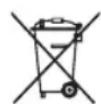
The crossed-out wheeled bin logo requires the separate collection of waste electric and electronic equipment (WEEE). Such equipment may
contain dangerous and hazardous substances. These tools must be returned to a designated collection point for the recycling of WEEE and must not be disposed as unsorted municipal waste. By doing so, you will help to conserve resources and protect the environment. Contact your local authorities for more information.
Children must not play with plastic bags and packaging material, due to possible injury or danger of suffocation. Store such material safely or dispose of environmentally friendly.
Used batteries must be disposed of properly. Battery selling stores and municipal collection points offer special containers for battery disposal.
Warranty
This Pattfield item has been produced according to state-of-the-art production methods and is subject to ongoing strict quality control. Hornbach Baumarkt AG, Hornbachstrasse 11, 76879 Bornheim, Germany, guarantees the quality of the machines according to the following terms and conditions.
1. Warranty Period
The warranty period is 3 years. The warranty period starts on the date of purchase. Please retain the original receipt or invoice in order to be able to furnish evidence of the date of purchase.
2. Warranty Scope
The warranty applies exclusively to production or material defects. The warranty applies only in the case of private use of the item.
The warranty does not apply to defects resulting from
misuse or improper use,
- use of force or external influences,
- damage due to failure to observe the installation instructions or instructions for use,
- connecting to an incorrect grid voltage or current type,
- unprofessional installation,
- overloading the device,
- use of non-approved attachments or accessories,
- failure to observe the maintenance and safety instructions,
- entry of foreign matter into the device,
- wear and tear due to normal use or
- commercial use.
Furthermore, the warranty does not cover damage to parts subject to wear and tear, which is caused by normal wear and tear. The warranty does not comprise any collateral or consequential damage or possible installation and dismantling costs in the event of a warranty incident.
3. Warranty Services
During the warranty period, the warrantor will inspect the defective item in order to determine whether a warranty incident is on hand. If a warranty incident is on hand, the warrantor will repair or replace the item at his own expense. If the item is no longer available at the time of the warranty incident, the warrantor may replace the item with a similar product. The replaced item or part shall become property of the warrantor.
Warranty services (repair or replacement) do not extend the warranty period. Warranty services do not result in any new warranty.
4. Warranty Claims
For warranty claims, please contact the nearest HORNBACH DIY store.
You can find it at www.hornbach.com.
Warranty claims will only be accepted if the original receipt or invoice is produced.
5. Statutory Rights
The warranty does not restrict your statutory rights regarding warranty and product liability.