ASP 4 N - Log splitter ATIKA - Free user manual and instructions
Find the device manual for free ASP 4 N ATIKA in PDF.


| Product type | Firewood splitter |
| Brand | ATIKA |
| Model | ASP 4 N |
| Splitting force | 40 kN (4 t) |
| System pressure | 16 MPa |
| Maximum log length | 370 mm |
| Log diameter | 50 to 250 mm |
| Max. splitting stroke | 290 mm |
| Piston rod diameter | 30 mm |
| Hydraulic oil capacity | 2.5 litres |
| Recommended hydraulic oil | Shell Tellus T 22, Aral Vitam Gf 22, BP Energol HLP 22 or equivalent |
| Electric motor power | 1500 W (S1) |
| Power supply | 230 V ~ 50 Hz |
| Recommended fuse | 10 A |
| Dimensions (L x W x H) | 765 x 260 x 460 mm |
| Weight | approx. 38 kg |
| Recommended worktable height | 60 to 75 cm |
| First oil change | After 50 hours of service |
| Subsequent oil change | Every 250 hours |
| Warranty | Warranty declaration enclosed |
Frequently Asked Questions - ASP 4 N ATIKA
User questions about ASP 4 N ATIKA
0 question about this device. Answer the ones you know or ask your own.
Ask a new question about this device
Download the instructions for your Log splitter in PDF format for free! Find your manual ASP 4 N - ATIKA and take your electronic device back in hand. On this page are published all the documents necessary for the use of your device. ASP 4 N by ATIKA.
USER MANUAL ASP 4 N ATIKA
Original instructions - Safety instructions - Spare parts
Do not operate machine before having read the operating instructions, understood all the notes and assembly the machine as described here.
Keep the instructions in a safe place for future use.
Contents
| Extent of delivery 10 | |
| Symbols machine / operating manual 10 | |
| Proper use 10 | |
| Residual risks 11 | |
| Safe working 11 | |
| Description of device 12 | |
| Positioning | 12 |
| Start-up | 12 |
| Working with the log splitter 13 | |
| Maintenance and care 14 | |
| Spare parts 15 / 119 | |
| Possible problems 16 | |
| Technical data 16 | |
| Guarantee | 16 |
| Declaration of Conformity 117 | |
Extent of delivery
After unpacking, check the contents of the box
That it is complete
Check for possible transport damage
Report any damage or missing items to your dealer, supplier or the manufacturer immediately. Complaints made at a later date will not be acknowledged.
1 device unit
1 terms of guarantee
1 operating manual
Symbols machine

Read the operating and safety instructions thoroughly before commissioning the machine.
Wear safety shoes when working with the machine to protect the feet from falling logs.
Wear safety gloves when working with the machine to protect the hands from chips and splinters.
Wear safety goggles when working with the machine to protect the eyes from chips and splinters.
Do not remove or modify any protection or safety devices.

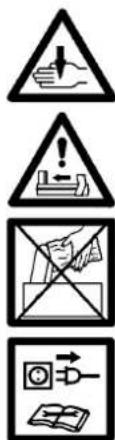
Nobody else should be in the working area of the machine other than the operator. Keep other persons or animals out of the danger area (minimum distance 5 m).
Danger of being cut or trapped; never touch any dangerous parts when the splitting wedge is in motion.
Caution!
Always note when the log ram is in motion.
Caution!
Never remove a log jammed against the wedge by hand.
Caution!
Before starting any repair, maintenance or cleaning work, always switch off the motor and remove the plug from the socket.
Stop!
Follow the operating instructions.
Open the bleed screw.
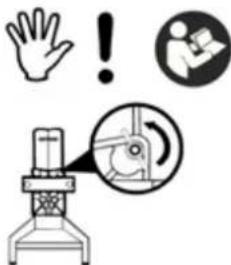
Bleeding
Page 13
Symbols operating manual
Threatened hazard or hazardous situation. Not observing this instruction can lead to injuries or cause damage to property.
Important information on proper handling. Not observing this instruction can lead to faults.
User information. This information helps you to use all the functions optimally.
Assembly, operation and servicing. Here you are explained exactly what to do.
Symbol machine / packaging
Electrical devices do not go into the domestic rubbish. Give devices, accessories and packaging to an ecofriendly recycling.
According to the European Directive 2002/96/EC on electrical and electronic scrap, electrical devices that are no longer serviceable must be separately collected and brought to a facility for an environmentally compatible recycling.
Proper use
The log splitter must only be used for splitting logs.
The log splitter is only applicable for the private utilization in the field of house and hobby.
- Only straight-cut logs are suitable for use with the log splitter.
- Metal parts (nails, wire etc.) must be removed from logs before splitting.
- Every other form of use is considered improper use. The manufacturer accepts no liability for any damages resulting from improper use, and any risk is in this case borne solely by the user.
Residual risks
Even if used properly, residual risks can exist even if the relevant safety regulations are complied with due to the design determined by the intended purpose.
Residual risks can be minimised if the "Safety information" and the "Intended usage" as well as the whole of the operating instructions are observed.
Observing these instructions, and taking proper care, will reduce the risk of personal injury or damage to the equipment.
- Failure to observe the safety precautions can lead to injury to the operator or damage to property.
- Risk from electricity, by using non-standard electrical connections.
- Touching live parts of opened electrical components.
- Risk of fire and slipping by leaking hydraulic fluid.
In addition, in spite of all the precautionary measures taken, non-obvious residual risks can still exist.
Safe working
Before commissioning this product, read and keep to the following advice. Also observe the preventive regulations of your professional association and the safety provisions applicable in the respective country, in order to protect yourself and others from possible injury.
Pass the safety instructions on to all persons who work with the machine.
Keep these safety instructions in a safe place.
- Make yourself familiar with the equipment before using it, by reading and understanding the operating instructions.
- Do not use the machine for unsuitable purposes (see "Normal intended use" and "Working with the log splitter").
- Ensure that you have stand in a secure standing position and maintain your balance at all times.
- Take a working position, which is behind the slide of the area of the operating lever. Never stand in the splitting wedge's zone.
- Never stand on top of the machine.
- Pay attention at all times. Take care with what you are doing, and approach the work sensibly. Do not use the machine:
when you are tired.
under the influence of drugs, alcohol or medications that may impair your powers of judgement.
-
When working with the machine, always wear
-
protective goggles or face mask
- safety gloves
-
ear protection, if necessary
-
safety shoes with steel toe-caps
-
Wear suitable work clothing:
- do not wear any loose-fitting clothing or jewellery, since these may be caught or trapped by moving parts
- Within his area of work the operator is responsible for third parties.
- The machine may not be operated by children or young people under the age of 18.
- Keep children away from machine.
- Never operate the machine if other persons are in the immediate vicinity.
- Never leave the saw unattended.
- Keep your workplace in an orderly condition! Untidiness can result in accidents.
- Do not overload the machine! You work better and safer in the given performance range.
- Only operate the machine with complete and correctly attached safety equipment and do not alter anything on the machine that could impair the safety.
- Faulty or damaged parts in the device must be replaced immediately.
- Do not spray machine with water (this is hazardous due to live components).
- Do not leave the machine standing in the rain or use when raining.
- Store the unused machine in a dry locked place away from the reach of children.
- Switch the machine off and remove the mains plug from the socket when
carrying out repair works
- carrying out servicing and repair works, removal of faults
-Transporting
- leaving unattended (even during short interruptions)
- Check the machine for possible damage
Before continuing to use the machine, the protective devices must be inspected to ensure that they work perfectly and with their intended function
- Check whether the parts are damaged. All parts must be correctly installed and fulfil all conditions to ensure perfect operation of the saw
- Damaged guards and parts must be properly repaired or exchanged by a recognized, specialist workshop; insofar as nothing else is stated in the instructions for use.
- Damaged or illegible safety warning labels should be replaced immediately.
Electrical safety
- Electrical connections must conform to IEC 60245 (H 07 RN-F) with a cable cross-section of at least 1.5mm^2 for a maximum cable length of up to 10m
- Never use the machine with a power supply cable of over 10 m in length. Longer power supply cables will cause a drop in voltage. The motor will not be able to provide its maximum performance and the operation of the machine will be impaired.
- When laying the connecting attachments, be sure that they do get crushed or bent, and that the plug-and-socket connection does not get wet.
-
Do not use the cable for purposes for which it is not meant. Protect the cable against heat, oil and sharp edges. Do not use the cable to pull the plug from the socket.
-
Regularly check the extension cables and replace them if they are damaged.
- Do not use any defective connection cables.
- When working outdoors, only use extension cables especially approved and appropriately labelled for outdoor use.
- Do not set up any provisional electrical connections.
- Never bypass protective devices or deactivate them.
The electrical connection or repairs to electrical parts of the machine must be carried out by a certified electrician or one of our customer service points. Local regulations - especially regarding protective measures - must be observed.
Repairs to other parts of the machine must be carried out by the manufacturer or one of his customer service points.
Use only original spare parts, accessories and special accessory parts. Accidents can arise for the user through the use of other spare parts. The manufacturer is not liable for any damage or injury resulting from such action.
Description of device
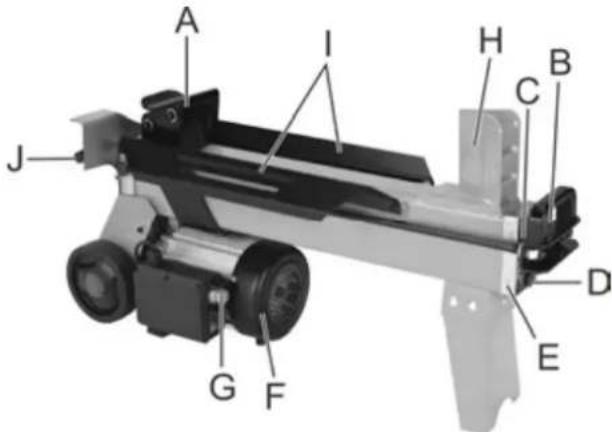
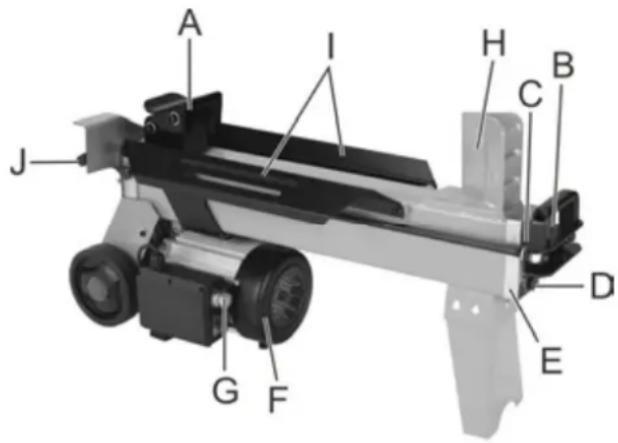
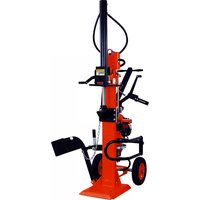
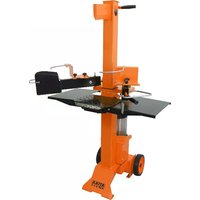
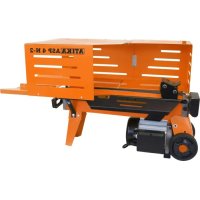
Fig.1 ASP 4 N
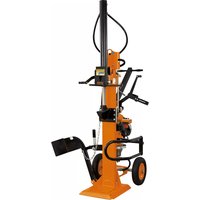
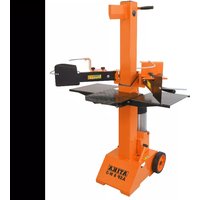
Fig.2 ASP5N
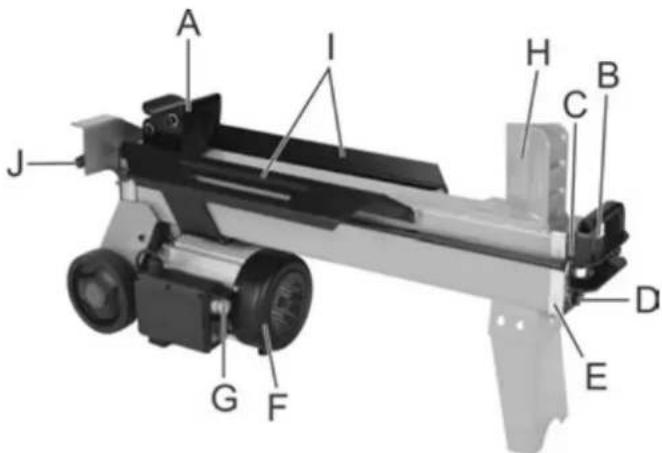
A Llogram F Electric motor
B Bleed screw G Operating pushbutton
C Piston rod H Splitting wedge
D Dipstick | Log guide plates
E cylinder cover J Operating lever
Positioning
Position the log splitter on a work surface at a height of about 60 - 75cm , this will create an comfortable working position.
Place chocks under the wheels to prevent the machine rolling during operation.
Ensure that the working area meets the following conditions:
- no danger of slipping
level - free of obstacles
sufficiently well lit
Do not operate the machine in the direct vicinity of gas or petrol pipes or containers, or any other easily inflammable materials.
Start-up
- Check that the machine is completely and correctly assembled.
Before using the shredder, make sure each time that there are no faulty connections (tears, cuts, etc.)
there are no damage at the machine
all screws are tight - check the hydraulic system for any possible leaks
Mains connection
- Compare the voltage given on the machine model plate e.g. 230V with the mains voltage and connect the machine to the relevant and properly earthed plug.
- Only use connection cables with sufficient diameters.
- Connect the machine via a 30mA fault current safety switch.
① Fuse protection: 10 A

Operating pushbutton
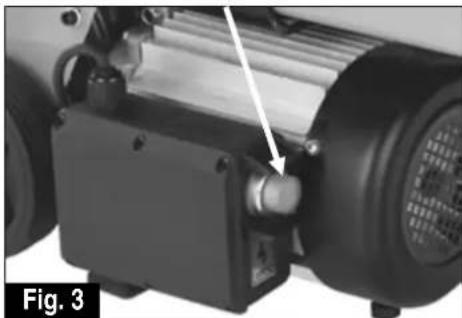
Switching on
Push the green button. The motor is running as long as the green button remains pushed.
Switching off
Stop pushing the green button.
Do not use any device where the operating pushbutton does not work properly. Repair or replace damaged pushbuttons immediately.

Hydraulics
- Never operate the machine in the event of any possible danger from hydraulic fluid.
- Ensure that the machine and working area are clean and free of oil.
Danger of slippage or fire! - Check the hydraulic reservoir regularly to ensure that it contains enough hydraulic oil (see "Care and maintenance")
Capacity: 2.5 litres ASP 4 N
3,0 litres
Working with the log splitter

additional SAFETY INSTRUCTIONS
The log splitter may only be operated by a single person.
- The machine may only be operated by persons over the age of 18 years, and who have read and understood these operating instructions.
- Wear protective equipment (safety goggles/mask, gloves, safety shoes) to protect yourself from possible injury.
- Never try to split logs containing nails, wire or other similar objects.
- Already split wood and wood chips create a dangerous working area. The operator may stumble, slip or fall. Always keep the working area neat and tidy.
- Never place the hands on or near any moving parts of the machine when it is switched on. Maintain a safe distance from the log, the ram and the wedge in order to protect your hands from injury.
- Split only timber which corresponds to the maximal length to be worked with.

What type of logs can I split?
Size of logs
| ASP 4 N ASP 5 N | ||
| Length max. 370 mm | max. 520 mm | |
| Diameter 50 – 250 mm | ||
The log diameter is a recommended guideline figure, because:
thin logs can be difficult to split if they contain knots or if the fibres are too strong.
Do not try to split green logs. Dry logs are much easier to split, and do not cause jams as often as green (damp) wood.

Hardwood tend to bursting: Exercise utmost caution!

Operation

Special instructions for splitting logs:
Preparations:
The logs to be split should be cut to the maximum dimensions (370 or 520 mm long, 50 - 250mm ). Ensure also that the logs are cut straight and square.
Place the log properly on the log splitter, so as not to cause any risk of stumbling or falling to the operator.
Bleeding
Open the bleed screw 3-4 complete turns - Fig. 4. Close the bleed screw again when you are finished splitting logs.
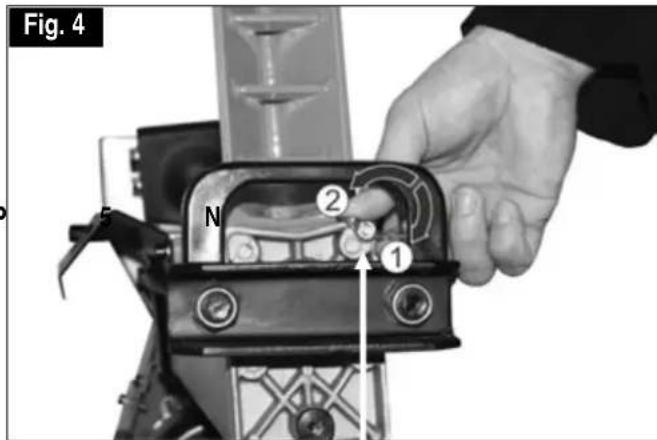
Bleed screw

tighten

open (bleeding)
Two-hand operation
- Press the operating pushbutton on the electric motor - Fig. 3. Wait a few moments until the motor has reached its operating revolutions and the required pressure has been built up in the hydraulic pump.
- Press the operating lever down simultaneously - Fig. 5. The log ram pushes the log against the splitting wedge, and the log will be split.
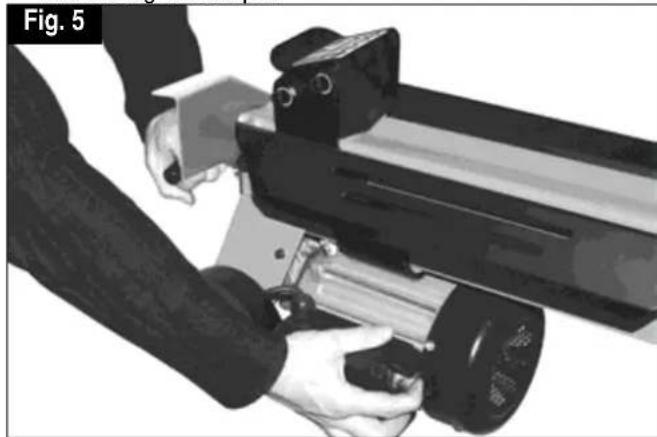
- Release the operating lever as well as the operating pushbutton. The log ram will now return to its original starting position - Fig. 6.
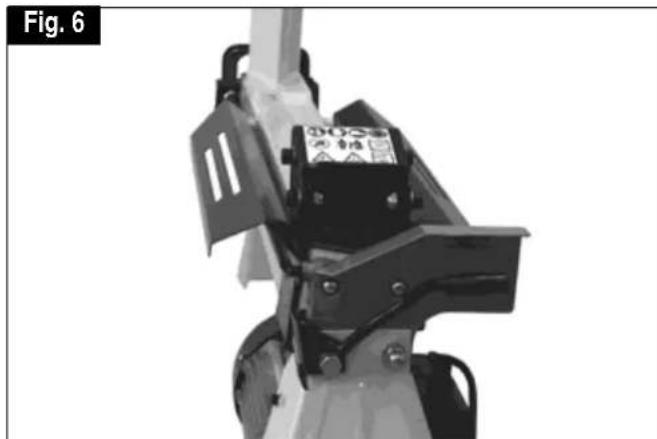
- Splitting logs:
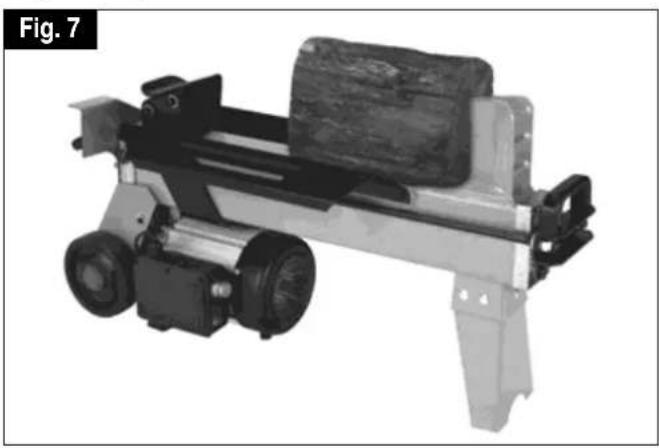
Always place the logs lengthwise and flat on the main frame of the log splitter. The log must be enclosed by the log guide plates. Fig. 7
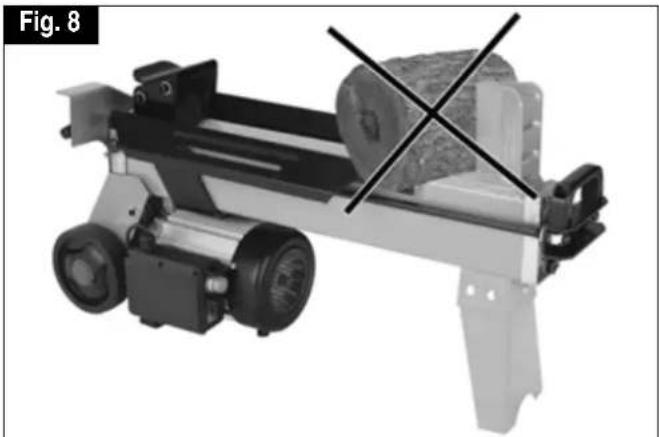
Never place the log on the frame at an angle. Fig. 8
Always ensure that the splitting wedge and the log ram contact the ends of the log at right-angles.
Never try to split two logs at once.
Never try to remove or replace the log during the splitting process.
Never try to force the splitting of the log by maintaining the pressure for several seconds. This can lead to damage to the machine.
Reposition the log on the main frame and repeat the splitting process, or put the log to one side.
How to release a jammed log?
-
Loose the operating lever as well as the operating pushbutton that the log ram can go back.
-
Place a triangular wooden chock under the log, then move the log ram forward so that it pushes the chock under the jammed log.
-
If the log is not released, keep repeating this procedure, using larger chocks, until the log is released.
Never use a hammer to release a jammed log, and keep your hands away from the log.
Do not enlist the aid of a second person - this is a one-man job.
Do not try to release the log by using a hammer, since this may break the motor block.
Finishing work:
Attend to that the log ram has gone back to its basic position.
Then remove the plug from the power socket.
Close the bleed screw. Fig. 4
Follow the care and maintenance instructions.
Care and maintenance

Remove the plug from the power socket before starting any maintenance or cleaning work.
Wear protective gloves in order to avoid injury to the hands.
Observe the following in order to keep the log splitter in good working order:
- Clean the machine thoroughly after you have finished using it.
- Remove any resin remains on the machine.
- Oil the piston rod (Fig. 1 / 2) regularly with an environmentally friendly spray oil.
- Check the oil level and change the oil as necessary.
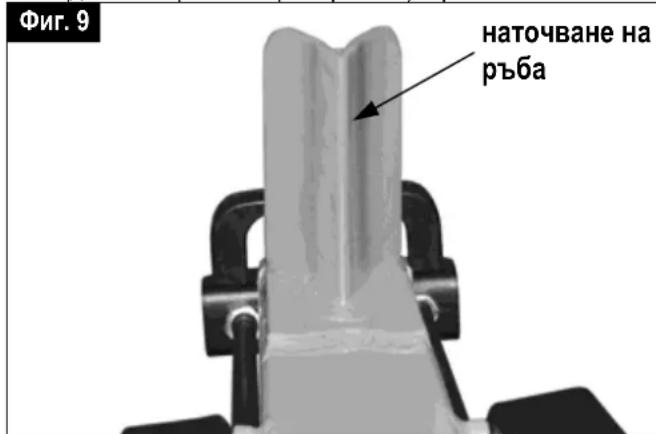
Sharpening the splitting wedge
After extended periods of use, or if the splitting performance is reduced, sharpen the splitting wedge with a file (and remove any burrs). Fig. 9
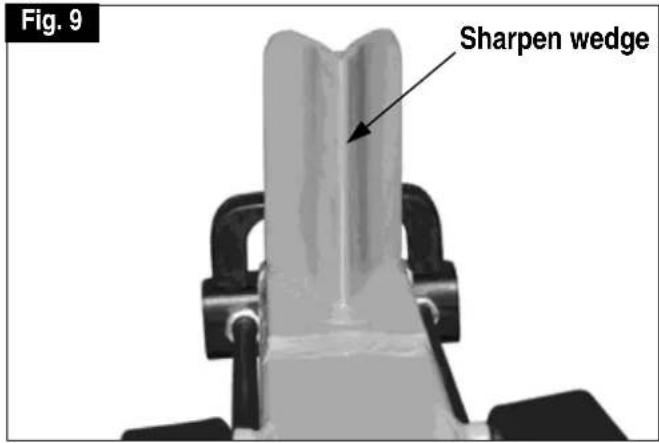
How do I check the oil level?
- The log ram must be in its starting position.
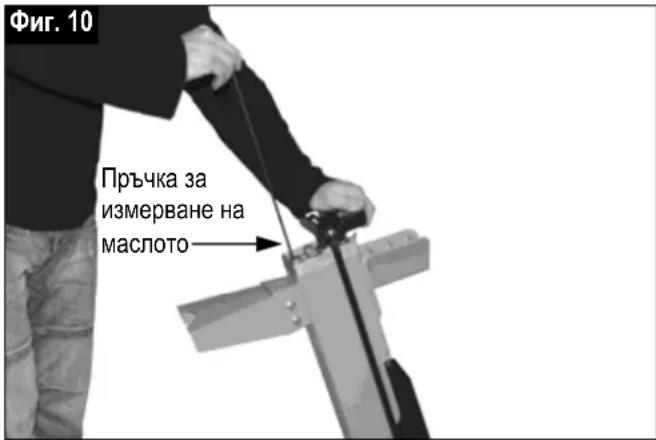
- Stand the log splitter on end, with the filler opening at the top. Fig. 10.
A second person will be required to up-end and hold the log splitter. - Unscrew the dipstick - Fig. 10. Do not drop or lose the oil seal when removing the dipstick.
- Clean the dipstick and the oil seal.
- Replace the dipstick fully into the oil reservoir.
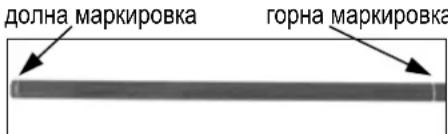
- Now remove the dipstick again, and read off the oil level. If the oil level is between the two marking on the dipstick, there is sufficient oil in the reservoir.
If the oil level is below the lower marking, more oil should be added with the aid of a clean funnel.
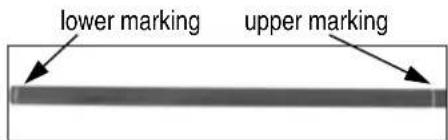
- Check the oil seal and replace it if it is damaged in any way.
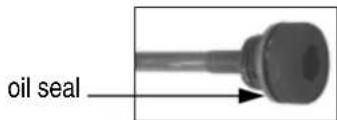
- Replace the dipstick and screw it firmly into place. Caution! Do not tighten the screw too tightly, since this may damage the oil seal or the thread in the cylinder cover.
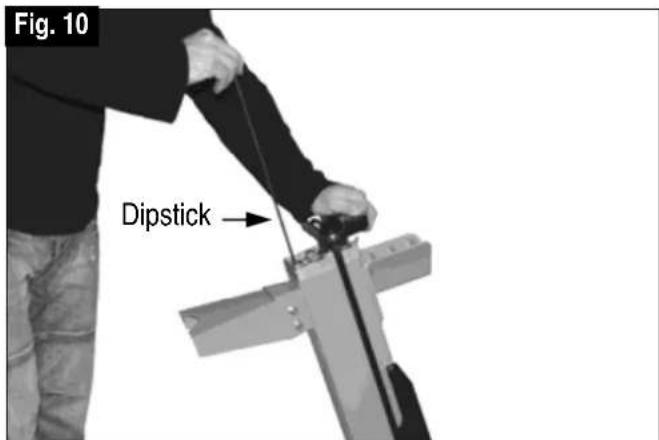

When should I change the oil?
The first oil change should be carried out after 50 operating hours, and then every 250 operating hours.
Changing the oil:
- The log ram must be in its starting position.
- Place a container under the log splitter to catch the old oil. The container should have a capacity of at least 4 litres.
- Unscrew the dipstick. Do not drop or lose the oil seal when removing the dipstick.
- Now tip the machine to empty the oil into the container.
- Stand the log splitter on end, with the filler opening at the top. Fig 10.
A second person will be required to up-end and hold the log splitter.
- Pour in the new hydraulic oil (2.5 or 3.0 litres) using a clean funnel.
- Clean the dipstick and the oil seal.
- Check the oil seal and replace it if it is damaged in any way.
- Replace the dipstick and screw it firmly into place. Caution! Do not tighten the screw too tightly, since this may damage the oil seal or the thread in the cylinder cover.
Dispose of the old oil properly (local oil disposal point). The old oil must not be poured into the ground or drainage system, or mixed with other waste.
i Hydraulic oil
We recommend the following hydraulic oils for the hydraulic cylinder:
Shell Tellus T 22
Aral Vitam Gf 22
BP Energol HLP 22 order no. 400142 (1 litre)
Mobil DTE 11
or equivalent
Do not use any other types of oil. The use of any other type of oil will adversely affect the operation of the log splitter.
Spare parts
Please refer to the drawing for spare parts.
Ordering spare parts:
- available from the manufacturer
-
orders must quote the following information:
-
spare parts no.
- quantity required
model
name of the model
Example: 360348, 1, Log splitter, ASP 4 N
Possible problems
| problem | possible | cause |
| Logs are not being split properly (insufficient splitting performance) | ⇒ The log is not positioned correctly ⇒ The log exceeds the maximum dimensions or the wood is too hard for the performance of the machine ⇒ The splitting wedge is not working properly ⇒ Oil leak ⇒ Hydraulic pressure too low ⇒ Incorrect connecting lead (longer than 10 m or too small cable cross-section) | ⇒ Reposition the log correctly ⇒ Cut the log to the required dimensions ⇒ Sharpen the splitting wedge, and check for any burrs or notches ⇒ Place a sheet of cardboard under the log splitter in order to locate the leak. To correct the problem, refer to the manufacturer. ⇒ Check the oil level and add more oil if necessary. If the problem cannot be rectified, refer to the manufacturer. ⇒ Use the correct connecting lead |
| Log ram travels out jerkily or under heavy vibration | ⇒ Air in the circuit | ⇒ Open the bleed screw ⇒ Check the oil level and add more oil if necessary. If the problem cannot be rectified, refer to the manufacturer. |
| Log ram will not move out | ⇒ Hydraulic pump defective | ⇒ To correct the problem, refer to the manufacturer. |
| Motor will not start | ⇒ No electrical power ⇒ Connection cable defective ⇒ Electric motor defective | ⇒ Check the fuse (10 A) ⇒ Replace the connection cable or have it checked by an electrician. ⇒ To correct the problem, refer to the manufacturer. |
| Oil leak at the dipstick | ⇒ Oil seal at the dipstick not sealing | ⇒ Replace the oil seal. |
Technical data
| Model / Type ASP 4 N ASP 5 N | ||
| Year of construction see last page | ||
| Splitting force 40 kN (4 t) 50 kN (5 t) | ||
| System pressure | 16 MPa 20 MPa | |
| Log length 370 mm 520 mm | ||
| Log diameter | 50 - 250 mm | |
| Stroke | max. 290 mm | max. 370 mm |
| Piston rod diameter | 30 mm | |
| Hydraulic oil (max.) | 2.5 litres | 3.0 litres |
| Electric motor performance | P1= 1500 W (S1) | |
| Power supply | 230 V ~ 50 Hz | |
| Dimensions (Length x Width x Height) | 765 x 260 x 460 mm | 925 x 260 x 460 mm |
| Weight | approx.. 38 kg | approx.. 43 kg |
| Guarantee | ||
Please observe the enclosed terms of guarantee.

Bbnpekn Bcnykn npednpnetm Mepkn Morat da cbjcctByBat OCTaTbHN pNCKOB, KOnTO He ca OyeBNH.
CnpyphocT npn pa6ota
3aTOBa npOyeTe n B3eMeTe NOB BHMaHHe CNeHnTe yka3AHn H pa3nope6n 3a npedOTbpaTBAHe Ha 3lONONYKn Ha BaWeTo npOpeCNoHaJIHa opraHn3aun, peCneKTHBHO BAHNHTe B CbOTBeTHata DbpXkAba ONpeDeJeHn 3a 6e3oNaCHOCT npdN pYcKaHTo B EKcnnoataun Ha To3n npOyKT, 3a da npedna3nTe ce6e cn N dpyrnte OT Bb3MOxHn HapaHbAHn.
I IpeoctabrYe kza3aHnra 3a 6e30naCHOCT Ha BCNU Knua, KOnto pa6OraT Cypeda.
CbxpaHbaiTe do6pe yka3aHnraTa 3a 6e3oNaCHOCT.
- Ppeiynynoptpe6a ce 3ana03HaTe c ypea c nOMOuTa Ha pbkoBOIDCTBOTO 3a ekCnIIOataun.
He n3noJI3BaIe Te ypeDa 3a ceHn, 3a KOInTo He e npedHa3NaueH (nOrJeHN ,YNoTpe6a No npedHa3NaueHne" Pa6oTa CypeDa 3a HaenBaHe HaDbpBa 3a ropHe ).
-ДрьхTe TЯЛоТСВ CTaБинHo NOLOXKeHne N BbB BCEKN MOMENT Na3eTe paBHOBeCne.
3aemepepaOtha cToKa, KOrTO ce HAMnpa 3a nn6bpa B oBnactTHa pBcoXBaTkata 3a 06cJyKBaHe. HNKora He Tp8Ba Da CTOnTE B oBnactTa Ha pa3eNbaun KInH.
Hnkora He cToIe Bbpxy MaunHaTata.
-Бьдete BHMaTeJIHn. BHMaBaIte KaKBO npaBHTe. Ioxdaite pa3ymHo KbM pa6oTata. He n3no3BaIte ypeDa, aKO cTe yMOpEn HnCt Pe NOD BInrHHeTo Ha hapKOTnU, aIKOXON nIN MeDnKAmEHTN. MomeHTOto HeBHMaHne pRn n3No3BaHe Ha ypeDa MoKe da DoBeDe do cepNo3Hn HapaHbAHn..
- Ppi pa6oTa Hocete
- PpeDnA3H OUHa UIN PpeDnA3eH Bn3bOp
- PpeDna3Hn pBkKaBnu
- PnHneo6xoJIMOCT npedna3nteIa cnyxa
- PpeDn3Hn 6yBk nCbC CTOMaHeHa KaNaKa
Hocete noxoxrao paobto o6neko:
- Ha He ce Hocr Twnpoko 6bnKno nn ykpaewn (Te MOrat da 6bDat 3axBaHaTn OT NOBvNKnHne Yactn)
- 06cnykbaaoto nue e otrobopno B paobthata oblact Ha MaunHaTc npraMo TpeTu nua.
- Deua mnaedexn no18 He moXe da o6cnykBaT MaunHaTa.
-ДрькTe DeuaTa HacTpahn Otypea.
He n3no3BaIe HIKORA ypeJa,doKaTo B 6JIn3OCT IMa JNuca, KOITo HE B3IMAT yAcTne.
He octabryte ypeHaHKora 6e3 Ha3Op. - PoiDbpxKaIte nopeDeHa Bawata pa6oTHa 06nact! Be3peJeTe MoKe Da mMa 3a nocneCTBne 3IonoNyKn.
He npetobapbaTe ypea! 1e pa6oTne no-dObe n noCnrypHO BdaenHna Oxbat Ha MoUHocTt. - N3noJ3BaIte ypeDa cAmO C KOMnJIeKCHN n npaBnHNOocTaBeHn 3auTHn npncnoc6JeHn HHe npomeHnTe HnIO BypeDa, KoETo 6b OrpaHmUIO 6e3OnacHocCTTa.
He n3MeHnTe ypeDa, cboTBeTHo Yactnte Ha ypeDa.
Hikora He octabraye ypeda BkHouey, KORato e noctabeH ha eHa cTpHa. YpeBt e 6nI npoeKtnpaH eHNCTBeHO 3a pa6ota B n3npabeHo noJIOKeHne.
He npbckaIte ypeDa c BODa (N3TOUHnK Ha ONaCHOCT e eNEKTPnueeCKnTOK). (N3TOUHnK Ha ONaCHOCT eNEKTPnueeCKn TOK).
MaunHata Da He ce octaBn Ha DbXn nn da ce pa6oTn npn DbXn.
Ja ce cxbpaHraBa eINHCTBeHO Ha cyxo MRCTO 3BbH oIaTtHa DocTbn Ha deua.
He npbckaaiTe ypeDa c BODa (n3TOUHk Ha onaCHOCT e eNEKTPnuueCKnTOK). (n3TOUHk Ha onaCHOCT eNEKTPnuueCKn TOK). - N3knIoueTe ypeDa n 3BaJeTe uencena 3a eJektpnueckata Mpeka OT KOHTaKTA npi:
peMOHTn pa60tn
- TexHnuecka IopIpbXka NIOuNCTBaHe
OTCTpaHraBaHe Ha HEn3PpABHOCTN
IpoBepka,daJIa3axpaHbAuTeKa6eN ca onIteHNnIOBpeDeH
TpaHcnpT
HanyckaHe Ha ypeDa (cbio n npn KpaTKOBpeMeHHn ppeKbCBAHNA).
HeoBnKHOBeHn UyMoBe N Bn6paCnN
- PpOBePraBae ypeDa 3a eBeHTyaJIHn nobpeDn:

IpeHn no-HataTbShaHa ynoTppe6a Ha ypeDa cneBa da 6bDat npOBepHn npEpa3HNte ycTpoCTBa nO tHOwEHHe Ha TxHOTo 6e3ynpueHo DeiCTBne, Cbo6pa3Ho npEHa3HaueHHeTo MM.
- PpOBepeTe 3a HAnuHMeTo Ha NOBpeDeHn HnN HEn3npabHn Yactn.
NoBpeHn npEpaHn npncnoc6JeHH nCneBa da 6bDat nonpaBeHH nN 3aMeHeHH cnopeH n3NCBAHnraT aOT OTOpHn3npaHa CneuaHn3npaHa cepBn3Ha cnYk6a, aKOB pBkoBOdCTBOTo 3a NoJ3BaHe He nocOueHo dpyro.
IobpeDeHnTe nn HeeTnBn IeneHc C yka3aHna 3a 6e3oNaCHOCT Tp86Ba da ce CMeHnT.

EneKtpnuecka 6e3onacnoct
- N3πbIhHeHne Ha eJIeKtpnueckKaTa cBeeINHtEnHa JINHnB CbOTBeTCTBnE c IEC 60245 (H 07 RN-F) c pa3pe3 Ha Ka6eHNHTe KJNa OT MmHMaHNO 1,5 mm² npn dJIiKHa Ha Ka6eJIte do 10 m
-Да He ce n3noI3BaT HnKOra npCbeEINHITeJIHnpOBoHNuHa 10 m. No-ДbIgN npCbeEINHITeJIH npOBoHNuIpeiN3BnKBat cnaD ha HnPexKeHTo. DBirataJIrT Beue He DOCTIrA MaKcMaJHata cn MoUHOCT,ФyHKUra Ta Ha MaUnHaTa ce HaMaJIraBa. - Pn noIarHeTo Ha npncbEduHHteJIHHn Tp6Ba Da 6bDe o6bpHato BHMaHne Ha TOBa, Te Da He 6bDat npITnCKaHI, npeBbaHn IeNCeHNHO TcBeDuHHeNe Da He 6bJe HAMOKpeHo.
He n3non3baIte ka6ena 3a uei, 3a konTo ToH e npedHa3nayeh. 3auNTe Ka6ena ot 3arpBaHe, Macno n ocTpi pb6oBe. He n3non3baIte ka6ena, 3a da n3ternite uencena oKoHTakTa. - KoHTpOJInpaIte peoBHO yIbJnxNtEHNITe Ka6eHn n 3ameHnTe, KOrato ca nobpeHn.
He n3non3BaIte deeKTHn 3axpaHbau n Ka6eJn.
Ha otkpnto nontbaite ca mo ydbjnxteHn Ka6en, KOITO pa pa3pehen 3a TOBn IMat Cb0TBHTO 060haeHne.
He n3noJ3BaIe BpeMeHHn eJIeKTPnueCKn Bp3KN.
Hnkora He uHTnpaTe 3aunTHnTe yCTpOcTba H He m 3BExJaTe OT eKcnIIOaTaUra.

EneKtpueckTo npCbeHnHaBepecn. peMOHTte Ha eNEKtpueckn qactn Ha ypeDa Tp6Ba Da 6bDat N3BbpWBAHOT KOHcEsOnHpaN CneuAInCT NO eNEKtpoTeXnIKA IIN OT HAKOI OT HAaHTe CepBn3Hn CEHTPOBE 3a KIneHTN. Tp6Ba Da ce Cna3BaT MeCTHnTe pa3NopeDm Hai-BeYe Te3N, KOnTO Ca CBbp3AHn Cbc 3aunTHnTe MepKn.

Pemontte Ha npyn qactn Ha ypea Tp6ba Da 6bdat N3BbpwbaHr OCTpaHa Ha npo3BODHTeIpecn.OT HAKO OT HEROBITE CepBn3HN CEHTPOBE 3a KIneHTN.

Ia ce n3noJ3BaT cAmO opuHnHaHn pe3epBn Yactn.
N3noJ3BaHeTo Ha npytn pe3epBn Yactn MoKe Da
doBeDe Do 3noJnyKn C noJ3BaTeJIe. 3a npoJ3TuAunTe
OT TOBa UeTI npOJ3BOJNTeJIr He HOC OTROBOPHOCT.
OnicahneHa ypeda
Φnr.1 ASP 4 N
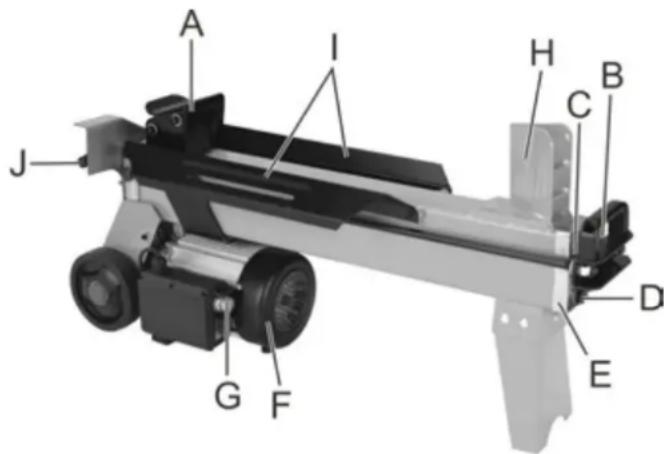
Φn.r.2 ASP5N
A | Пиьзага 3a CTBOJNOBete
B O6e3b3dyuHTeJIEN BnHT
C MoTOBUNIka
D | Пьчka 3a Измерваху МасноTO
E Kanak Ha cnInnBpa
F EJIeKtpoDnBnraTeI
G Byton 3a o6cnyXbahe
H Paanopeh KINH
I HanpaBlaBauu lamapuHn 3a CTBOJOBETe
J PboKoXBaTKa 3a o6cnyXbaHe
NoctabRHe
3a da 3aemete ydo6ha cToiKa 3a pa60ta, noCTaBeTe ypeDa 3a ceene He Ha IbpaHa ha pa6oTHa NOBbpxHocT C BncoUHa 60-75 cm.
БлokраиTe kOJIeIa Tc KInHObe, 3aДa n36eHHe TpBΓBaH e NO BpeMe Ha pa60Ta.
ObpheTe BHMaHne Ha TOBa, pa6oTHaTa 0bnaCT da OTROBapra Ha cIeHNHe ycNoBN:
Ja e 3aunTeHa OT NOxJb3BaHe
- da ce paBha
- da e cB6oDHa OT onaCHOCTn 3a nOxNb3BaHe
-DOCTaTbHcOBcETJIHa.
Aa He ce ekcnnoatnpa MaunHata B 6n30ct Do ra3, 6eH3nHOBn KaHnn nn Dpynn IecHo TropmM MATEpnaJn.
Пускан eкплобатая
- y6eTe ce, ye ypeIbT e MOHTnpaH N3cINo N B CboTBETCTBnC npeDncaHnraTa.
-
Ppei BcKaO noJ3BaHe npoBepeTe CneHTo:
-
npncbeHnHTeHNHe Ka6eHn - 3a DepeKTHMeCTa (nykHaTnH, cpe3OBe Hn DpyrN PNO6Hn); He n3NoJ3BaIte DepeKTHn Ka6eHn
- ypea - 3a eBentyaHn noBpeu (norneHn 6e3onacHa pa6ota)
-ДаПИ BCNCHI BINTOBI CbeDINHeHnI Ca 3aTeHaTIN 3dpaBO
XINPABNIIKaTa3aTeOBe
!dOnbHnTeHHYKA3AHN83A6E3OnACHOCT
- YpeIbT 3a HauenBaHe Ha IbPba MoKe Da 6bJe 06cIyKBAH OT eEDHO eINHCTBeHo JInCe.
- Camo liuca haad 18 roDHH, KOHTo ca npOeHN pa36paHn pBkoBOdCTBOTO 3a ekCnIIOaTaun, MoRa T da n3NoJ3BaT MaHHaTa.
Hocete npedna3n npucno6neHn (npedna3e H Bu3bop, pKabu, npedna3n 0byBk), 3a da ce npedna3nte O T Bb3MOxHn HapaHaBaHn.
Hikora da He ce HacenBat CTBOJOBe, KONTO cbIbpxaT npoHN, TeN IIN Dpyn npedmetn. - Beue haueeneta IbpbBecnHa n CtbprotHInTe cb3daBat onacha obnaCT 3a pa6oTa. CbIeCTByBa onacHOCT OT cnbaHe, noXlb3BaHe nn naDaHe. BnHar noDlbpxKaIte peB bpa60Thata obnaCT.
Hnkora He nocTabrnte pBcTe Bbpy NOBnKnHn Yactn Ha MaunHaTApn BkNoyeHaMaunHa. POnDbpKaaTe 6e3oNaCHO pa3CTOarHne OT CTBOJa, nIb3raa npa3npn H KInH, 3a Da npedna3nte pBcTe CNOT HapaHbAHn.
HaenBaIe eINHCTBeHO IbPBeCnHa, KOrTO OTROBApHa MaKcImaJIHATA DblJxNHa 3a o6pa6oTbaHe.
KakBO Mora da HaçenBam?
TolemnHa hCTBOJOBete, KOnTo Tp8Ba Da ce pa3enBaT
BnHaHn O6pb7aIte BnHMaHne Ha ToBa, pa3nopHnT KInH nIb3raVa Ha CTBoNa Da MoRat Da 06XbaIaT KpaNzata Ha CTb6NaTBePTNKaHNo.
HnKora He NaueBaiTe DBA CTBOJIa B eINH pa6oTeH xOJ.
HnKora He donbIbae Te nIc MceHae TepBpBeHa no BpeMa ha pa6oTHn npoc.
1 Da He ce npedn3BnKb HnKora HaueenBaHe Ha CTBoNa nocpeDCTBOM NOIbPkaHE Ha IINb3raHeto B IpOdbJxKeHne Ha HnKOJIco CekyHn. ToBa MoKe Da DOBeDe Do nobpeHn Ha MaunHata.
HarnaceTe CTbOa OTHOBbpxy rnaBHaTa paMKn n nobTopeTe npocca Ha HauenBaHe N OCTabeTe CTbOa HactpaHn.
Kak ce ocbo6oxdaBa 3akJeunio ce cTe6no?
- Pnychepe pbkoxbaTka 3a obcnykBaHe n 6yToHa 3a obcnykBaHe, 3a da MoKe nnb3raHa Ha CTBOJa da ce npuDbNKn 6paTHo..
- NocTaBeTe DbPBeH KInn NoCTBOna, 3aDbNkTe Tb3raHa 3a CTBoA, 3a Da MoKe ToJ Da HATNCHe KInHa NoD 3akNeueHTo CTe6No.
- B cnyau, ye cTBoJa He ce ocBO6Ou, da ce noBtOpn npoueca C BCE NO-ROJEMN KInHOBE.
!PnOCBO6OxJaBaHeTo HIKORA He NOyKBAe Te Bbpxy 3aKneHcHOTo CTe6No Hne cnaAte pBcTe 6n30 Do CTBona. He Monete BTOPO Jnue 3a NoKnpeNa.
He ce onntbaTe da n3BaNTe CTB0na nocpeCTBOM ydpnHe c HnCTpymEnT. Toba moKe da IOBePe Do NOBpExdahe Ha ypeDa.
KpaHa pa6oTaTa:
O6bphete BHMaHHe Ha TOBa nIb3raYbT Ha CTBOJa da ce npuBnKnU 6paTHo Do n3XoJHOTo CN NOJKeHne.
CneToBaI3BaTe Te IeNceJa 3a MpeKaTa OT KOHTaKaTa.
3aBHTeTe OTHOBO 063Bb3DyWHTeHHBAHNT-ΦnT.4.
da ce cna3BaT yka3aHnra 3a noDpBjKKa n rpnK.
TexHnuecka noDpBjKka
IpeNi BcKa pa6ota no noDpBxKkata nNouchTbaHeto: -da 6bde n3KnIOueH ypeDa
-Да ce ИЗВади Урсени 3a eNEKtpuYeckaT a Мрека
! Da ce HocrT npedna3Hn pbkabu, 3a da ce npedotbpaTBAH HapaHbAHn Ha pbute.
Cna3BaIte CneHTo, 3a Da 3ana3nTe roDHOCTTa Ha ypeDa 3a HauenBaHe Ha DbPba:
- Почисте осовьно Maшинота след по Кюва на paбota.
OTCTpaHTe OTlaRaHnO TcMoJa. - HamacnBaIte peoBHO MOTOBnKata (Hr. 1 / 2) c ekOIOuHMoCnO3a npbCKaHe.
- Поверяваite НВОТо Ha MacNTo pecn. CmeHЯITE MACNTo.
HaToUBaHe Ha KInHa
CneI npOdbJnKTeJIHa ekCIIoatauHn nn npn HamaJIeH KanaaHTet Ha NaeBHe Da ce N3nn Pa3npHnKaINH C fHnA nna (da ce otctpaHrT ocptne p6oBe) -fir.9.
Kak Da IIpoBepa HnBOTO Ha MacJIoT?
1.Пьзraчта CTBona Tpr6Ba Da ce e Bbphan B n3XoHOTO cn NOIOXJEHNE.
2.Obbphete ypea 3a HaenBaHe Na DpbBecnHa Taka, Ye OTbOpBt 3a HnblBaHTo da Noka3Ba Harope -fnr.10.
3a nnpabraHe nDbpxaHe Ha ypeHa 3a uehe Ha DpbBa e Heo6xOIM BToPn YoBeK.
- Pa3BnHTe Te npbUkata 3a n3MepBaHe Ha MacNoTo - fnr. 10. Pn CHEMaHTo BHNMaBaIte 3a yNtBtHeHNeTo 3a MacNoTo.
4.Почирете npьчкata 3a ИЗмерван Ha MacLOTO n yIJIbTHEHnTo 3a MacLOTO. -
NocTabeTe npbukata 3a n3MepBaHe OTHOBO OTBOPa Do ynop.
-
I3BaTe OTHOBO npbUkata 3a I3MepBaHe Ha MacIIOTO.
B cnyuay, ye HnBOTO Ha MacNoTo e Mexy DBeTe MapKnupOBKn, TO B pe3epBoapa IMa DoCTaTbUHO YacNo.
B cnya, ye HnBOTo Ha MacNoTo e NOD OJHaTa MapKnipOBka Tp6Ba Da 6bDe DOnbJIHeHO MacNo B NOMOHTa Ha YIcTa φyHnY.
- Поверете уньтэнcopeу 3a macnoTo.To trpaBa da 6bde CMeHeHO npn nobpeuN.
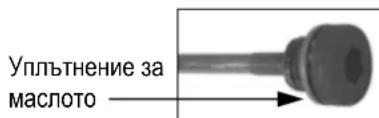
- 3aBnHTeTe OTHOBnpbUkata 3a H3MepBaHe Ha MacNoTO. BnMaHe! He 3aTgAitE npekaneHo 3dpabo BVHTa, 3a da ce npedOTbpaTbAT nobpeHn Ha yNtBTHEHnTo 3a MacNoTO n pe3bTa Ha kanaHa uINnHbpa.
Kora da cmeHa macnoTo?
PbPa CMHa Ha MacNoTo cJe 50 Yaca ekcnnoataa, cJeTOBa Ha BCEK 250 Yaca ekcnnoataa.
CMHa:
1.Пьзraчbt3a cTBOna TpЯбBaДа ce e npiДВиЖиДо n3XODHOTOCn NOJIOKeHne.
2. NocTaBeTe pe3epBoap, KOITo MoKe Da MoEe MmHmAnHO 4 IITpa MaCNo, POn yPeDa 3a HaenBaHe Ha DpbBecnHa.
3. Pa3BnHTe Te npbUkata 3a n3MepBaHe Ha MacNoTo. Ipn N3BaxKaHrTO BnIMaBaTe 3a yNtBTHEnrTO 3a MacNoTo.
4. CnToba oBpHeTe MaunHaTa, 3a Da n3CnPeTe MacNTo B pe3epBoapa.
5. Cnéi TOBa Taka o6bPHeTe ypeDa 3a HauenBaHe Ha IbPBeCnHa, Ye OTBOpBT 3a HAnbIbAHe Da e o6bPHT Harope -fir.10.
3a n3npabRHe n DbpxHa He Ha ypeHa 3a uehe Ha dbpBa e Heo6xOdM BToPn YOBek.
- HanbHHeTe HOBOTo XnDpaBnUHcMo MacNo (2,5/3,0 nHTpa) c NOMOuTa Ha YnCTa yHnIa.
- Nocntete npbukata 3a n3MepBaHe Ha Macnoto ynnbTHEHTo 3a Macnoto.
-
Nounctete ynlbTHHeHneto 3a macnoTo. Pnp nobpeDn To Tp6Ba da 6bde Cmeheno.
-
3aBnHTeTe OTHOBIpbUkata 3a n3MepeBaHTo Ha MacIto. BHIMAHHe! Da He ce 3aBnHTBa ppeKaJeHO cTeHaTO BnHTa, 3a Da Ce npedOTbPaTaBt NOBpeDN Ha yNtBtHeHneTo 3a MacIoTO u B pe36aTa Ha KaNaKa Ha UININHDbpa.
OCTpaHbAte OTPa6oTeHO MacNo B CbOTBeTCTBHe c peDa (cHTbp 3a Cb6nPaHe Ha OTPa6oTeH MacNo Ha MxCTo). 3a6paHcHo e, da ce H3CNBa OTPa6oTeHO MacNo B noyBata nn da ce cmecBa c 6oknyka.
① XnDpaBnHNo MacNo
3a ypeda 3a HaueBaHe Na IbPBeCnHa Hne npenOpBvAmcneHnTe XuIpaBnHn Macna:
Shell Tellus T 22
Aral Vitam Gf 22
BP Energol HLP 22 → Πορυκα-N. 400142 (1 Liter)
Mobil DTE 11
IMIpaBHOCTOINHO
Ia He ce H3non3BaT dpyrn BnOBe MacNo. H3non3BaHeTo Ha dpyrn BnOBe MacNo OKa3Ba BInrHne Ha yHKuYra Ta Haypei 3a HaenBaHe Ha dbpBa.
Pe3epBn yactn
BnKTe pe3epBNHTe YacTn Ha YepTeKa.
IopbUbaHe Ha pe3epBn Yactn:
I3ToCHNKbT 3a nOlyuYaBaHe e npOn3BODInTeJIa
Heo6xoDnMn daHHn npn nopBvBaHTo:
pe3epBHa yact - No.
-KeJaan6pOi
ypei
- 0603HaueHne Ha MoDeJa
Hapnmep: 360348, 1, ypei 3a haueBae Ha IbpbecnHa 3a ropeHe, ASP 4 N
Bb3MOxHn Hen3npaBHOCTN
| ПюбLEM | Възможн р comprона | Остраимьанe |
| Съюльт He ce haçеньba(Tьврде НSCKa мошост Ha haценьbae) | → Съюльт He e noctabevho правлино→ Съюльт Надишава дочустимпеспаимери ил дървescinhata e пекаленotьрда 3a мошостта на машинатa | → Пюstавete OTHOBO CTBona→ Otrpeжete CTBona до дочустимпente pa3мери |
| → Рэпорниот Клин He haценьba | → Да ce haToCH pashopnria Klinn, da ce пюberрпаoctrpvrspb6obveипсякii | |
| → Истунаhe Na Maclo | → Пюstавete napчekар.TКДУЕЗДAhaценьbaeHa nbPbBecnHa, 3a da otkprte Me3tucaneto.3aOTCTpanjabeHa npoБлмeMa ce obpHete KbM npOn3BODITeYi. | |
| → Хidравлино To haJraHne e пекаленo HNCKO | → Дa ce пюberрпНВOTO Ha macIoTO; priHNoE6XODIMOCT Da ce doptlbvma macIO. | |
| → Гoleшen prinscbeDNHTeHep npoBoDnIK (no-Дьлг ot 10 m ил пекаленo MaJIbK DnAmETbR Na JxilOTO) | → Пюstавete HeMaye Da sbYe ot cTpaHEn, moJЯобрпete CE KbM npOn3BODITeYi. | |
| Пюьагчт 3a CTBOJa ceДвЖи Люевские ce iлс CBС силни Вибраци | → Вьздух в сикьla | → Дa ce OTBOPrObe3BZdUShTeHINBA BINT. |
| → Дa ce пюberрпНВOTO Ha macIoTO; priHNoE6XODIMOCT DA ce doptlbvma macIO. | ||
| → Сьединеловят кабел e deФeКТeH | → Пюstavt HeMaye Da sbYe ot cTpaHEn, moJЯобрпete CE KbM npOn3BODITeYi. | |
| Пюьагчт 3a CTBOJa He ceДвЖи | → Xidrablinhata nomna e DeΦeKTHa | → 3a OTcTpaHaNBaHe Na pO6LmEpMa ce obpHete KbM npOn3BODITeYi. |
| Двигаел�т He trpьгы | → ЛincsBa HapexeHme B eIeKTPuYeckata mpeka (пркьсвае на eIeKTPoCnHa6dЯBaHeto) | → Дa ce пюberрпPreednazITeYl (10 A) |
| → Дa ce smehi kabena, pecn. da ce octabn da sbYeпюberрп Kabena (cpezmaInCT noelKTPoTeXnika) | ||
| → Сьединеловят кабел e deФeKTeH | ΔdeФeKTHe TcKebNi Da he sb.YdAT n3Pon3BaHIn nobueye | |
| → DeФeKTHpAl Dvigratel niI npEbnOChBaTeI | → 3a OTcTpaHaNBaHTo Na pO6LmEpMa ce obpHete KbM npOn3BODITeYi NII KbM hAzOBaHa OT Hero Фирma(BWK cnIsbK C cepBn3Hite ueHTPOBE 3a KMInenti) | |
| Изтуане Na MacNo Na npbYckata 3a Измерванe Na Macloto | → УлTBнEHnETo 3a MacNoTo Na npbYckata 3a Измерванe Na MacNoTo He e IyltHo | → Дa ce smehi улTBнEHnETo 3a MacNoTo |
TexHnueckn daHHN
Symbol apparatus / emballage
is conform with the above mentioned EC directive as well as with the provisions of the guidelines below: 2004/108/EC, 2006/95/EC
Bc Dekaipame Ha CBOA OTROBOPHOCT,Ye npOyKTbT
Ype3aHaenBaHeHaIbPb3aRopeHe ASP4N,CepnHOMep:000001-020000
Ype3a HaenBaHe HaIbPb3a ropeHe ASP 5 N, CepneH Homep: 000001 - 020000
CbOTBeTCTBa Ha pa3nopeiBte Ha ropeNoceHte DnpeKtBn Ha EO, KaKTo n Ha n3nCKBaHnra Ta Ha dpynte, OTHacrTe ce 3a Hero DnpeKtBn: 2004/108/EO, 2006/95/EO
Following harmonized standards have been applied:
- Keep the instructions in a safe place for future use.
- Contents
- Extent of delivery
- Symbols machine
- Symbols operating manual
- Symbol machine / packaging
- Proper use
- Residual risks
- Safe working
- Electrical safety
- Description of device
- Positioning
- Start-up
- Mains connection
- ① Fuse protection: 10 A
- Operating pushbutton
- Switching on
- Switching off
- Hydraulics
- Working with the log splitter
- additional SAFETY INSTRUCTIONS
- What type of logs can I split?
- Size of logs
- Operation
- Special instructions for splitting logs:
- Preparations:
- Bleeding
- Two-hand operation
- - Splitting logs:
- How to release a jammed log?
- Finishing work:
- Care and maintenance
- Sharpening the splitting wedge
- How do I check the oil level?
- When should I change the oil?
- Changing the oil:
- i Hydraulic oil
- Spare parts
- Possible problems
- Technical data
- CnpyphocT npn pa6ota
- EneKtpnuecka 6e3onacnoct
- OnicahneHa ypeda
- NoctabRHe
- Пускан eкплобатая
- !dOnbHnTeHHYKA3AHN83A6E3OnACHOCT
- KakBO Mora da HaçenBam?
- Kak ce ocbo6oxdaBa 3akJeunio ce cTe6no?
- KpaHa pa6oTaTa:
- TexHnuecka noDpBjKka
- HaToUBaHe Ha KInHa
- Kak Da IIpoBepa HnBOTO Ha MacJIoT?
- Kora da cmeHa macnoTo?
- CMHa:
- ① XnDpaBnHNo MacNo
- Pe3epBn yactn
- BnKTe pe3epBNHTe YacTn Ha YepTeKa.
- Bb3MOxHn Hen3npaBHOCTN
- Symbol apparatus / emballage
Brand : ATIKA
Model : ASP 4 N
Category : Log splitter