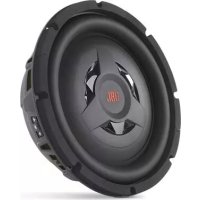
Club WS1000 - Subwoofer JBL - Free user manual and instructions
Find the device manual for free Club WS1000 JBL in PDF.

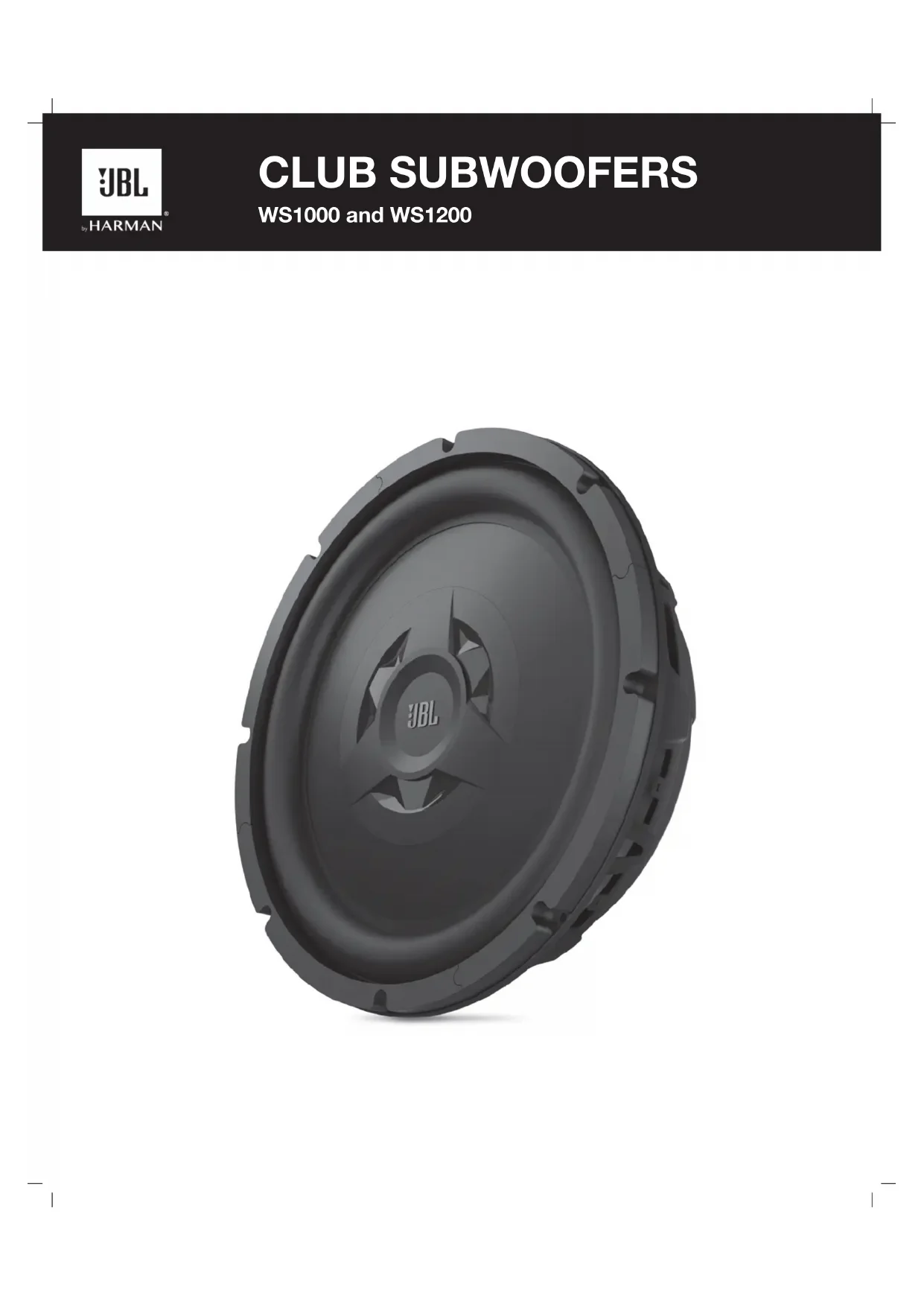


| Product Type | Car Subwoofer |
| Brand | JBL |
| Model | Club WS1000 |
| RMS Power Handling | 200 W |
| Frequency Response | 35 Hz – 175 Hz |
| Selectable Impedance | 2 or 4 ohms (SSI switch) |
| Voice Coil Diameter | 50 mm (2") |
| Mounting Depth | 83 mm (3-5/16") |
| Outer Diameter | 268 mm (10-9/16") |
| Cutout Diameter | 240 mm (9-1/2") |
| Power Supply | 12 V (vehicle electrical system) |
| Recommended Enclosure Types | Sealed, Ported, Bandpass |
| Impedance Switch | Smart Impedance™ (SSI) – selects 2 or 4 ohms |
| Recommended Wire Gauge | 2.08 mm² to 8.37 mm² depending on length |
| Care and Cleaning | Clean with a dry, soft cloth |
| Safety | Avoid prolonged listening at high volume (risk of hearing loss) |
| Warranty | Valid with serial number (conditions per dealer) |
Frequently Asked Questions - Club WS1000 JBL
User questions about Club WS1000 JBL
0 question about this device. Answer the ones you know or ask your own.
Ask a new question about this device
Download the instructions for your Subwoofer in PDF format for free! Find your manual Club WS1000 - JBL and take your electronic device back in hand. On this page are published all the documents necessary for the use of your device. Club WS1000 by JBL.
USER MANUAL Club WS1000 JBL
THANKYOU for choosing an JBL Club WS1000 or Club WS1200 subwoofer. These Club subwoofer are designed to suit a broad range of car audio applications and can be used in a wide variety of enclosure types to produce extended, powerful bass in a limited amount of vehicle space. To get the most performance from your new subwoofer, it is strongly recommended that you have a qualified professional install your WS1000 or WS1200 subwoofer. Although this manual does provide general instructions about installing these Club Series subwoofer, it does not include enclosure construction details or exact installation methods for any particular vehicle. If you do not feel that you have the necessary experience, do not attempt the installation yourself, but instead ask your authorized JBL dealer about professional installation options.
Remember to keep your sales receipt in a safe place, along with this manual, so that both are available for future Club.
BOX CONTENTS
(1) WS1000 or WS1200 subwoofer
(1) Owner's manual
(1) Technical data sheet
WARNING
Playing loud music in a vehicle can hinder your ability to hear traffic and permanently damage your hearing. The maximum volume levels achievable by JBL speakers when combined with high-power amplification may exceed safe levels for extended listening. Using low volume levels is recommended when driving. JBL Systems accepts no liability for hearing loss, bodily injury, or property damage as a result of use or misuse of this product.
REPRODUCING BASS IN VEHIC
Depending on the size of your vehicle's interior listening space, reproduced bass frequencies below 80Hz will be boosted by nearly 12dB per octave as frequency decreases. This phenomenon, known as the vehicle's transfer function (or cabin gain), plays an important role in shaping the subwoofer's frequency response in your vehicle. The enclosed technical data sheet includes frequency response graphs that show both the subwoofer's "in-car" response (which factors in this vehicle transfer function) and its "out-of-car" response (which does not).
SUBWOOFER ENCLOSURE TYPES
Club WS1000 and WS1200 subwoofer are designed to perform best in moderately sized sealed enclosures, vented enclosures and prefabricated band-pass enclosures. Infinite-baffle mounting is possible, but the subwoofer's mechanical power handling will be reduced because there will be no volume of air to stiffen the subwoofer's suspension and prevent overexcursion. If you choose infinite-baffle mounting, consider the RMS and peak power-handling ratings to be half of what is listed in the specifications in this manual.
You should choose an enclosure type based on the amount of cargo space you can devote to the enclosure, the amount of power you will use to drive your subwoofer(s), and your listening habits.
SEALED ENCLOSURES
The air trapped inside a sealed enclosure is compressed when the subwoofer moves rearward and is rarefied when the subwoofer moves forward. In both cases, the air inside and outside the box will seek equilibrium by pushing and pulling on
the subwoofer cone. The result is a stiffer suspension when compared to the subwoofer operating in free air. This means that the subwoofer's cone will be harder to move at low frequencies, a condition which protects the subwoofer from physical overexursion, but requires more power than other designs to achieve a given acoustic output.

See accompanying data sheet for specific enclosure dimension requirements.
SEATED-ENCLOSURE PERFORMANCE ADVANTAGES
The in-vehicle performance will have the flattest overall frequency response.
- The in-vehicle response will have the widest bandwidth. (Useable low-frequency response inside the vehicle will be below 20Hz.)
- An optimum sealed enclosure will always be smaller than an optimum enclosure of another type.
SEATED-ENCLOSURE PERFORMANCE TRADE-OFFS
An optimum sealed enclosure will have lower overall efficiency than an optimum enclosure of another type.
- A Club WS1000 or WS1200 subwoofer in an optimum sealed enclosure will require more amplifier power to achieve a given acoustic output than in an optimum enclosure of another type.
SEATED-ENCLOSURE CONSTRUCTION
Sealed-enclosure construction is straightforward and forgiving of errors in volume calculation, but air leaks should be avoided. Use medium-density fiberboard (MDF), glue and screws to construct the enclosure, and seal all joints with silicone caulk.
THE JBL RECOMMENDATION
Club WS1000 and WS1200 subwoofer in sealed enclosures are recommended for enthusiasts who prefer accurate music reproduction and flat frequency response, for those who have a smaller space to devote to a subwoofer enclosure, and for those who have plenty of amplifier power devoted to driving the subwoofer. The sealed-enclosure design indicated on the technical data sheet accompanying this manual represents the best compromise between low-frequency extension and flat response.

CLUB SUBWOOFERS
WS1000 and WS1200
EN
VENTED ENCLOSURES
A vented enclosure acts like a sealed enclosure at frequencies above its tuned (resonance) frequency. At resonance (which is defined by the vent), the vent produces the majority of sound - the subwoofer cone is nearly stationary while the air inside the vent vibrates. This provides greater mechanical power handling at and above resonance, but reduced mechanical power handling below resonance. Since the subwoofer cone and voice coil don't move much at resonance, airflow across the voice coil is minimized and thermal power handling is reduced slightly at resonance.
Vented enclosures provide better efficiency in the 40Hz - 60Hz range, at the expense of sound output in the lowest octave (below 40Hz ). The use of an infrasonic filter is recommended with vented enclosures. An optimum vented enclosure for a Club Series subwoofer is larger than an optimum sealed enclosure.

See accompanying data sheet for specific enclosure dimension requirements.
VENTED-ENCLOSURE PERFORMANCE ADVANTAGES
An optimum vented enclosure has greater efficiency and higher output in the 40Hz - 60Hz range than an optimum sealed enclosure.
An optimum vented enclosure provides a greater sensation of bass than an optimum sealed enclosure.
- A Club WS1000 or WS1200 subwoofer in an optimum vented enclosure will require less amplifier power to achieve a given acoustic output (down to the enclosure's resonance frequency) than in an optimum sealed enclosure.
VENTED-ENCLOSURE PERFORMANCE TRADE-OFFS
- Reduced output in the lowest octave (below 40Hz).
- Reduced mechanical power handling below the enclosure's resonance frequency. The use of an electronic infrasonic filter is strongly recommended, to reduce the chance of overdriving the subwoofer below the enclosure's resonance frequency.
An optimum vented enclosure will always be larger than an optimum sealed enclosure.
VENTED-ENCLOSURE CONSTRUCTION
Vented-enclosure construction is more difficult than the construction of a sealed enclosure. The enclosure volume and port dimensions have a specific relationship with the physical and electromechanical characteristics of the subwoofer, requiring that the recommended enclosure volume and port characteristics be strictly observed. As with sealed enclosures, use medium-density fiberboard (MDF), glue and screws to construct the enclosure, and seal all joints with silicone caulk.
THE JBL RECOMMENDATION
Club WS1000 and WS1200 subwoofer in vented enclosures are recommended for enthusiasts who prefer accentuated bass response, for those who have plenty of cargo space to devote to a subwoofer enclosure and for those who will use a less powerful amplifier to drive their subwoofer. The volume and port dimensions indicated on the included technical data sheet must be followed precisely to ensure optimum performance.
BAND-PASS ENCLOSURES
Band-pass enclosures can provide the most output from any amplifier and subwoofer combination over a limited band of frequencies, but that additional output comes at the expense of sonic accuracy. Band-pass enclosures combine a sealed or vented enclosure that houses the subwoofer along with a vented chamber into which the subwoofer outputs its sound. The vented chamber acts as an acoustic low-pass filter which attenuates high frequencies in the subwoofer's output. That attenuation of high frequencies can make it very difficult to hear amplifier and speaker distortion; consequently, you may not be able to determine when the subwoofer is in danger of being damaged.

See accompanying data sheet for specific enclosure dimension requirements.
An optimum band-pass enclosure provides higher output over a limited bandwidth than an optimum enclosure of any other type.
BAND-PASS-ENCLOSURE PERFORMANCE TRADE-OFFS
- Band-pass enclosures achieve high output at the expense of sonic accuracy.
An optimum band-pass enclosure has a more limited bandwidth than an
optimum enclosure of any other type.
The enclosure's low-pass filter characteristics can make it difficult to hear if the subwoofer is in danger of being damaged.
An optimum band-pass enclosure is usually larger than an optimum vented enclosure.
BAND-PASS-ENCLOSURE CONSTRUCTION
Band-pass-enclosure construction is more difficult than vented-box construction and, as with vented enclosures, the design parameters for the vented section must be followed carefully. (The sealed section is more forgiving of small design and construction variations.) Fortunately, there are many prefabricated band-pass enclosures that are designed to extract the most output possible from nearly any subwoofer. Prefabricated band-pass enclosures are strongly recommended if you must have a band-pass enclosure. If you choose to build your own band-pass enclosure, use medium-density fiberboard (MDF), glue and screws to construct the enclosure, and be sure to seal all joints with silicone caulk.
THE JBL RECOMMENDATION
Band-pass enclosures are recommended only for enthusiasts who want high sound-pressure levels (SPL) without regard for sonic accuracy. If high SPL AND great-sounding bass are your goals, choosing a vented enclosure is recommended instead.

by HARMAN
CLUB SUBWOOFERS
WS1000 and WS1200
EN
MOUNTING THE SUBWOOFER
The Club WS1000 and WS1200 subwoofer can be mounted from the outside of the enclosure or from the inside of the enclosure. Which- ever way you mount the subwoofer, use the included foam mounting gasket to ensure a leak-free seal between the subwoofer frame and the enclosure.
CONNECTING THE SUBWOOFER
SETTING THE IMPEDANCE
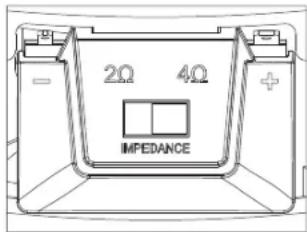
The Club WS1000 and WS1200 subwoofer both feature the Selectable Smart Impedance TM (SSI) switch. This exclusive feature lets you set the subwoofer's impedance to either 2 ohms or 4 ohms with the flip of a switch (see illustrations to the right). This allows you to extract the most from your subwoofer amplifier in any situation.
The SSI 2-ohm setting increases the subwoofer's output over the 4-ohm setting by up to 3dB, depending on the amplifier. Performance is identical in all

2-Ohm Setting
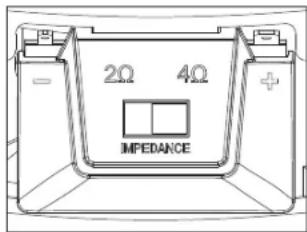
4-Ohm Setting
other respects. If the connected amplifier is rated for 2-ohm operation and its 2-ohm power ratings are within the subwoofer's power-handling specifications, setting the SSI switch in the 2-ohm position will achieve maximum output.
IMPORTANT: Make sure the subwoofer amplifier is turned OFF before setting the SSI switch. Do not change the switch position while the subwoofer amplifier is operating. Doing so could damage the amplifier.
CONNECTING THE AMPLIFIER
The Club WS1000 and WS1200 subwoofer connectors are compatible with quick-disconnect (not supplied) or soldered connections. The recommended wire gauge is between 14AWG and 8AWG, depending on the length of the wire run between the amplifier and woofer. Heavier gauge wire is preferred for runs over 6 (2m).

The wider terminal is the positive and the narrower is negative (also indicated on the terminal cover).
NOTE: If using untinned bare wire, be sure that no stray "+" and "-" strands touch each other. Touching strands can cause a short circuit, which can damage your amplifier.
SPECIFICATIONS
Club WS1000 Club WS1200
10 (250mm) 12" (300mm)
Low-profile SSI Automotive Subwoofer Low-profile SSI Automotive Subwoofer
Power Handling (RMS): 200W 250W
Power Handling (Peak): 800W 1000W
Sensitivity @ 2.83V/1m: 89dB 92dB
Frequency Response: 35Hz-175Hz 27Hz-175Hz
Impedance: 2 or 4 ohms (selectable) 2 or 4 ohms (selectable)
Voice-Coil Diameter: 2" (50mm)
2 (50mm)
Mounting Depth:
3-5'16" (83mm)
3-5/16" (83mm)
Overall Diameter:
12-1/4" (310mm)
Cutout Diameter:
9-1/2" (240mm) 11-1/8" (282mm)
A valid serial number is required for warranty coverage.
Features, specifications and appearance are subject to change without notice.
These products are designed for mobile applications and are not intended for connection to the mains.

HARMAN International Industries, Inc. 8500 Balboa Boulevard, Northridge, CA 91329 USA
www.jbl.com
© 2015 HARMAN International Industries, Incorporated. All rights reserved.
JBL is a trademark of HARMAN International Industries, Incorporated registered in the United States and/or other countries.


by HARMAN
CLUB SUBWOOFERS
WS1000 et WS1200
FR
COMPROMIS DES PERFORMANCS D'UN CAISSON A'EVENT
Club WS1000 Club WS1200
250 mm (10") 300 mm (12")
Puissance supportee (crete) : 800 W 1000 W
Sensibilite a 2,83 V/1 m: 89 dB 92 dB
Club WS1000 Club WS1200
250 mm 300 mm
nóicomotuaarapodagledilfrepedlISSrefoowbuNóicomotuaarapodagledilfreped
2.04 ohm (seLECTIONable)
50mm
83 mm
268 mm
240 mm
1000W
92 dB
27Hz-175Hz
2 0 4 ohm (selectionable)
50 mm
83 mm
310 mm
282 mm
Club WS1000 Club WS1200
10 (250mm) 12" (300 mm)
Subwoofer automativo SSI de baixo perfil Subwoofer automativo SSI de baixo perfil
Club WS1000 Club WS1200
250mm(10 )300mm(12 )
Low-profile SSI Auto-Subwoofer Low-profile SSI Auto-Subwoofer
Club WS1000 Club WS1200
10 (250mm) 12" (300 mm)
(1) WS1000 of WS1200 subwoofer
- WS1000 tai WS1200 -bassokaiutin
Club WS1000 Club WS1200
10" (250mm) 12" (300mm)
Matalaprofilinen SSI Ajoneuvon bassokaiutin Matalaprofilinen SSI Ajoneuvon bassokaiutin
Tehonsieto (RMS): 200W 250W
Tehonsieto (huippu): 800W 1000W
TINbI KOPNYCOB CAEBYΦEPA
CaBpy WS1000 W51200
papa6oTaHb TaKIM oBa3OM,
yTo6bl ObeCeNHBaTb
OTnHMabHyNo
npOn3BOJInTeNbHOCTb B
repeMeTHNHbIX KOpNcax
He6OJIbHX pa3MepOB,
BeHTINpIyEmbIX KOpNcax N
3ABODCKNX
noHcHO-npOyCkaOHxKopNycax.
Bo3MOxHa TAKKe yCTaHOBkA
6eCKIOHOHO 3KpaH, Ho
06pa6oTka MEXAHueCKO
MOUHOCTn CaBBypePOM 6yTeT
CHIKKeHa, Ta KAc He 6yTeT
BO3dyUHO HOPOCTBA,
DOCTAOHOrO, 4TO5b
06eCNHeBaTb ynpYroCTb KOHYca
CaBBypeP a IpeD0TbpaaTb
ype3MePbH N3HOC.EcnB bE Cze XOTNE yCTaHOHT
6eCKIOHeHbN 3KpaH, Heo6XoDMO
yHeCt yUPOBH
cpeHNBeKBdpatuTHNO H NIKKOBOI
MAKIMaJIbHO WMyMOBI
MOUIHOCTn, PnIBBeDEHHbE B
pa3dene TExMHccknx
XapAKTePcHtIK B DaHHOM
pykoBOCTBE.
Heo6xoJIMO Bb6paTb TIN KOpNya, OChOBIIaBcBaH Na ObSeMe rpy3OBOrIO npocCTpaHCTBa, KOtOpoe BBy MoKTe BbIJeNTb NOD ycTaHOBky,Ha KOnuYeCTBe 3NeKTPO3HEPRn, KOTpyo BBy 6yDte HcNoJIb3OBAbT DnA ca6Byepe(aOB), a TAKKe Ha BaUHX 3ByKObObIx npeINOHTehnIX.
TEPMETNUHbIE KOPNYCA
Bo3dyx, nonabwun BHytpb
repMeTHHOro KOpNyca,
CKMaeTcra, KOrda cabBypep
dbIraeHtnaHada, n paCUnnepTeCRA,
KOrda cabBypep DbrAeTcra
BnepeD. B o6oNx cnyaax Bo3dyx
BHTPn i Chapykn KOpNyca
NbTaTcra pNInTH B COToTHHe
NOKor, HadaBnBnAR n BbTnBnAR
KOhyc cacBypepa. 3To
ObeCneVBAeT 60NsUy npTyroCTb
No cpaBHeHH C cabBypepaMM B03DyuHOM
npocTpaHCTBe. 3To O3Haayet, TTO
KOhCy c6BaBypepa 6Byet Tpydhee
DBMRatbCR Ha Nm3KnX qACTotAX, TTO
3aZnmuAeT cabBypeOT
Ype3MePHoro INHOca, HO Tpe6byet
6OnbWe MOUHcTn, Yem dJa
DpyrMX KOCTPykui, dJa
DOctIXKeHn DaHHOh AkyCTNeckoi
MoUHcTn.

Cm.Texnmeckn nacnpot dnn noynyehn Hnfoepmaun o pamepax KOHNpeTHbX KOPnyCOB.
INPEIMUYUECTBA IPOIN3BOIDNTIELHOCTI TEPMETUHbIX KOPPIYCOB
Akyctmckaa npn3B0nnteJIbHOCTb BHTPN ABTOMO6JNA 6yET xapakTepn3ObaTcBAH6oJe e nlockO6uem amNITyDNo-CACTOTHOI XAPAKTEPNCTKO.
Pa60yI dIana3oH cactOT BHTPN ABTomOBm6Ib6ET xapakTePMA8BaCBn Hau6Oe ee 1nPKoI NpOCn IponyckAnH (PeAhNb pa60yI dIana3OH Hn3Knx cactOT B aBtOMoBInE 6yDet HmKe 20 T.)
- ONTIMaJIbHbI repMeTnHbI kOpNc BcERda 6yET MeHbIe, cEM ONTIMaJIbHbIKopNyc dpyrTO Tnla.
NIOCBI MNHYCBI
PON3BOIDNTENbHOCTN
TEPMETNUHOTOKOPNYCA
ONTMnAbHbI repMeTnHbIK KOpNc Bcerda 6yET o6nadaTb MeHbIe3ΦKekTNBHO,CHOMNTMnAbHbIK KopNy dpyrOTo TnA.
- CaBbypep WS1000 nnn WS1200 B ONTImaIbHOM TepMeTHuHOM KOpNyce 6ydeTpe6oBaTb BoNlsue MoUHcHn yCINHTeY IaDIOCTHXKeHn OnpEeJIeHHoI aKcyTChecKO MOnHcOTo, cEM B ONTImaIbHOM KopNyce DpyrTO TIna.
KOHCTPYKUN
TEPMETNUHOROKOPNYCA
KoHCTpykua repMeTnHoro
KOPnyca BeceMa HeCNOxHra, n npn
paCeTe BmecTmOctn
DOnyckaHOTcR OIMHKn HO
Heo6xoImno I36eRaTb
npocauVbAHna BO3dyxa. Jnra
KoHCTpyuPBOaHn KOpnyca
NcNoIb3yeTc
DpeBECHO-BONOKHCTaR PInTa
CpeHne NPiOTHoCTn (DN), KJIe n
Wyyynl, a BCE tblKn
repMeTHn3APyHTOr pN npMOUcN
CNNIKHOBOrO repMeTHka.
PEKOMEHDAUIMOTJBL
CaBpy WS1000 WS1200 B
rePmeTNUHOM KOPNcye
peKoMeHNOBAHbI IIObHTeJIaM
TOHORO BOCnPOB3BeDHeIMy3bIKN
INIOCKOAMNIITyHO-CACTOTHO
XapAKTEPCTUKN, TEM
NOBJ3OBaTeJIaM, KTO MOKeT
BbJElNTb JnA ROKyNA caBpyPe
He6oJIbWoE nPoCTpaHCTBO, IN TEM,
Y KOrO eCTb DOCTATOHO MOuHbI
NtOCHNK NITaHn YCmNTeJIa
Ca6ByPeHa. KOHCTPyKUJIa
RePMeTHHORO KOpNyca, ONHCHaHAR
B TexHHNECKOM NaCnOpTe,
IPNILOXEHOM K TOMY
pyKOBoDCTBy, RAJIeTcR JIyUHM
KOMIPOMICCHbIM PEWHeHEM
MeKJy paCUnpHeHEm H3KHX
YAcTOT N IIOCKO
AMNIITyHO-HaCTOTHO
XapAKTEPCTNUKo.

by HARMAN
CLUB SUBWOOFERS
WS1000 u WS1200
BEHTUNIPYEMBIE KOPNYCA
BeHTINnpyemblkopnydcIeHCTbyet
TakKHe,KAIKrEPMeTNUHbIM KOPNYC,
Ha cAToTAXBIIWeHACtpNABaEMOi (pe3oAHCHOH) qactTOI. Pnip
pe3oHaHnce (KOtopbl onpeDJIeTcR
OTBepCTNEM) MEmHO OTBepCTNE
Pno3BOuNT BOnBuYU qactb 3Byka - KOHyc ca6ByFepe aocTeaer
PpAKTNueCKn HEnoDBHXHBIM, B To
BpEMKa K03duX BHyTpN
OTBepCTNBAuBnpyeT.3To
ObecneuHBAET yNuUeHNHyU
MexAHueckyU WMyOByU
MOuHOCtB PnIP peryuPiPOBKe H
ypOBHe N BuIe W pe3oAHCA, OJHako
PnIP peryuPiPOBKe Hnke pe3oAHCa
MexAHueckra W MyOBAR MoUHOCT
yyxduaetc. PnCKONbky KOhyc
ca6ByFepe n 3BvKOBAR kATyWka
Pn pE3oAHCepe pAKTNIeCKn He
DbriAoTCs, Bo3DuHbN TNotOK
Yepe3 3BykOByU KaTuWky CBOdHTcR
KMHHMMy, a TEINIOBRA WMyOBAR
MOuHOCtB Pn pe3oAHce HmHOrO
ymeHbuaeTc.
BentinipobaHbIe Kopnyca
06cneueBaKOT nuTyUO
npOn3BOIDntbHocTb BnApa3oHe
40 Tc -60 Tc 3a CET bBbOda
3Byka B camoi HnKHe OkTabe
(Hnke 40 T).ДдгВentinpuyemblx
kopnycoB peKomehdyetc
mONNt3ObaHMe HnFp3a3BkyOBoro
ФиNbTa. ONtMaJIbHbI
Bentinipuyembl Koprnyd
CaBbyFepoB cepn Club
60JbHe, Yem OTnImaHbHbI
repMeTnHbIkpoync.

Cm.TexMHueckn Nacopnt dnn nnonyehn Hnfopmaunq anp3Meepax KOHKeptbX KOpNycob.
IPOENMUYIECTBA IPOIN3BODITIELBOHCTI BEHTINIMPYEMbIX KOPNYCOB
- OINTMAMbHbB HENTINHPyEmbI KOpNc IMeET 60Jee BbICOKyU pNO3aOHTenbHOCTb YcUNHeHHYIO BbIXoDHYIO MOnHObTb B DnAna3OHe 40 Tc - 60 Tc no cpaBHeHHcO C ONTMAMbHbIM repMETINHbIM KOpNcYc.
- ONTHMaIbHbBeHTNInpyeMbbl Kopnyc OBeNCeUHbAeT LyuUWee 3BvuaHHe bacOB, cem ONTHMaIbHbReMpTeuHb.
-Дяca6byfepobWS1000ии WS1200 COTNIMAJbHbIM BEHTINIPyEmbIM KOpNYCOM NOTpeBeycTcYCNITeB CMeHbIeM OMOHOCbTOДЯ NOCTKHeH3aDaHHoAkyCTNUeCKO MOUHocTH (BNIOb DO pe3OHaHCHOH YACTOb KOpNYCa) NO CpABHeHnO COTNIMAJbHbIM RepMeTNUHbIM KOpNYCOM.
ПИOCБИ MNHYCБI ПОПЗВODINTEЛБСНТС BEHTINIPYEMOTO KOPTYCA
CHINHEHHAH BIXOHNH MOLHOCB B CAMOH HXKHe OKTABE (HXKe 40 Fu).
- Pn perynpobke Hnke pe30AHChOH qACToTB KOpnyca, MexaHneckar yUmoBaa MOuOCTb YxUdAeTc. TTo6b CHN3NTb BEPOrTHOCt b nepepy3kn cABypepa npn perynpobke HnKpe30AHCHOH qACToTB KOpnyca, HAcTOrTeJIbHo peKOMEHdyETc NcONl30BaTb 3JNEKTOHHb HnFpAbaBykoBOI FInhTP.
Pa3Mep ONTMaNbHOro BEHTINIPYEMOR KOPnyca BcERda 6ydet 50nbJe ONTMaNbHOro repMeTHnHOrKOpnyca.
KOHCTPYKUJA BEHTUNIPYEMOTO KOPNYCA
KoHCTpyKUHBeHTNInPyEMORO
KOPNYCA ABYRETCB 60bee CNOXHO
IO cpaBHeHIO C KOHCTpyKUHEm
RepMeTNCHoro KOPNYCA.ObEB
KOpNYCa n pa3MpebI npotA IMeHOT
OnpEJIeHNHyO CB3bC
Φn3HcckHMn I
3NEKTPOMExAHueckHMn
xapakTePcHCTNKAMn Ca6Bypepa.
PEKOMEHДALIMNOTJBL
Ca6ByepebWS1000nWS1200B BeHTINHPyEmBXKOPNcax peKOMHeYKOCTnIaIbOHTeJIe AKeHTINPOBAHbIX HN3KHXVACTOT, dIaTeX,Y KOROBABIOmeDcTaTOHO MeCTaTOHOMeCTa, YTObI pa3MeCTNb KOpIyc Ca6ByepeA, n dIaTeX,KTO 6yETNCNtBbOaTB MeHee MoUHbIe ycINNTeIN DnA ca6Byepe.ObEbe nP3aMepeB npOta,Yk3aAHbIe BnPnIraeMOM TexHmecOM NacNOPte,DOJNXb b6bITCpTOcOBoDEHbI dIg ObcSeHEnH ONTMAbHoN pON3BOIDNTBEHOCTN.
IIOLOCHO-IPONYCKAIOUNE KOPNYCA
Ionocho-nponyckaoiue KOpnyca MOryT 06e3neuHb Lyuuyo BByxoHyO MoNooCTb DnA JIO6Oro COcHTaENY CYNINTEJIa N CaBcypeBa O OrpaHueHHOM dHaanazHO He aCTOT, OdHako DOONOHTeHB A BxIOHDa MoOochtb DoCTHraETC B yUep6 TOOHOCTb 38yKa. Ionocho-nponyckaoiue KOpnyca CoYeaTbot B Ce6e RePMeTuHb HnB BeHTnHyPEMbl KOpNC, rDe pa3MeuaeTc BcBpyep BMeCte c BeHTnHyPEMOM KamePO, B KOTopyu CaBvSyep nOaet 38yK. BeHTnHyPEMAM Kamepa DeHCTByET B KaueCTBe ayCytHeCKrOFO FmblTpa Hn3kXu cactOT, KOtporb CMrHaET BbCOKHe cactOTb CbBvypepa. TDoobHoe CMrYeHne BcBOKHX cactOT pRbOHT K TOMU, YTO OHey TpyDnHO bSyET yCbVHbTaB NCKaKeHn CmHaNOB YcNInTEJIa N DinHAMKIA; CNEOBAteBnHO, Bb HE CMoKTe OE npdeHNb, KOrda CaBvSypeB dyBET rpo3ntb OAnCHoCTb NOBPeKJHn

Cm.TexMHcckn Nacnpot Dn noHnye HnHOpMaOnu opaMepea KOHNpEThbX KOPNycOB.
IPENMYLECTBA
PON3BOJNTIELHOCTNIPOLOCHO-IPONYCKAIOUEGKOPNYCA
ONTMMaHbHnNoOCHO-npOnyCKaHOuN KOpNcOBecneuBaet 6oee BbCOkyoMoUHOCb CnHaI npOrpaHHeHHo NpOce npOnyCKaHn.
HEIOCTATK
IOJIOCHO-IPONYCKAOLIEGOKPNYCA
Ponocho-npOpyckaoumeKOpnyca DOCTRAIOT BbICOKMOUHOCHTM CmHanaB UyepbTOHcHT3Byka.
-ONTNMaHbHbI
nonocho-nponyckaooumKopnyc MeeT 60nee OparanuheHnh Dnana3oh YactO, Yem JIO60I ONTMaMbHb KOpNyc dpYrOro TIna.
XapakTepeNtKnФHnTpaHm3Knx
YacCTOT He No3BONrTb 3aMeTITb
Pnp6bnKaOuIyocn OAnchOCTb
NoepKdEHHa Ca6BypeA.
- O6bHNo pa3Mep oTnImaIbHOro
nonocho-nponycKaIOeero
KoprYca 60nlSe pa3Mepa
BeHTINHyE moR opKpyca.
KOHCTPYKUN
IOJIOCHO-IPONYCKAIOUETO KOPNYCA
KoHCTpykU
nONOHO-NPONYCKHORO KOPNyca
60Jee CNOxHA, YEM KOHCTyKUIN
CBeHTINpIpyEmbIKOPNycOM,N,
kAK y BEHTINpIpyEmbIX KOPNycOB,
napameTpbl KOHCTpyKUIN JI
BEHTINpIpyEmo KaMepbl DOJIKNbl
6BtB ToTOH Co6JIIOHeB.
(Papametpy repmetnHohyactn Kopnyca 60nee npocteIe n3-3a He6bIbwo KOcHTpykunu Hne3aHuTeBbOcTNeBbOCTHn ee Bapnaun). K cactbIO, cyueCTByeT MHO3 3ABODCKNX
nONCHO-npOnycKaOuXn KOpNycOB, KOToBpe p3a6oTaHb DnI NONYeHHMAKmCMLBaHO B0MOKHO MOUChOCTn CINHAno OT npaKTNUeCKn IIO6o Ca6Bypepa.
nnonocho-nponyckaouoi kopnyc, MbI HAcTOReTbHOpeKOMeHdYEm 3aObockne KOpnyca.EcnBb3aMymni Co6PbTa Co6CTBeHHbN nnonoCHO-nponyckaoui KOpnyc, cNoONb3yTe dpeeecho-BONOKHnCTyo IINHTy (DBI), KNei N BnHTbI Dn C6opKn KOpnyca,a TAOKE CIINIKOHOBHy repMeTHK,HTo6bHaNDexKHO 3aneyataBCE Wbbl.
PEKOMEHДALIMOTJBL
POnocHO-PrpOyCKAIOUne KOpNcBcI pKeOMeHOTcT ANI KIObMTepe BbICOKO YPOBBA 3BvKOBOr OaBJeHn (SPL), He npHIMAAIOUX BO BHIMAHme TOOHCTbYBa, EcnB BaSei CeIbNo AByIeTcBA BbCOKII yPoBeHb 3ByKOBO r DaBHeHn I BeINIKoJIENo 3Bvauane 6bacI, peKOMeHdyTeCBA BbIpaTaB BEHTINIPyEmb KOpNC.

by HARMAN
CLUB SUBWOOFERS
WS1000 u WS1200
YCTAHOBKA CABBYΦEPA
Ca6BypepbWS100nWS1200moryT
6bItb yCtHaOBHeHb KaK chApyKn,
Tak N H3HyTpN Kopnyca.
He3aBnCmOOTcnoCob
yCTaHOBKn ca6ByΦepa
IcNoJIb3yIte npUraeMyIO
MOHTAXKHyIO neHy,TO6bI
06ecneuHTb 6e3ynpeuHyIO
repeMeTn3aIIO MeKdY KapkacOM
ca6Bypepa n Kopnycom.
IIOIKJIIOUHNE CABBYΦEPA
HACTPOIKAIMNEDAHCA
CaBBypebWS1000nWS1200
OCHaJIeHbI NpeKInHOuATeJIeM
Selectable Smart ImpedanceTM
(SSI).3Ta 3KCKNIO3NBHAA FyHKU
NO3BOJRAETaDAtBMMpeHaO
ca6BypepaB2OMnIN4OM
UeJIKHyB NepeKIOHcTeNEM (CM.
nHIOCTpaunOcnpaba).3To
N03BONRAET N3BNEy
MaKcImaJIbHyIO
ca6Bypepa (no cpaBHeHIO C
yctaHOBkoHa4OM)do3D6,B
3ABNCIMOCTNOTYCUNNTENRA
PpOa3BODnTeNbHOCTb no
OCTaIbHbIM NapaMeTpam OCtAeTcR
Toi JKe. Pn noKnIOueHm
MaKcIMaJIbHOI BbIXOHOI
MOLICHOCTN.
BHIMAHHE:PepeyctaHOBkoI
nepeknouatena SSI B H
No3HUNy6eDNTecb,HTO
ycnnteIb ca6Bypepa BbIKIOueH.
He MeHnTe No3nHIO
nepekniohateia Bo Bpempa6oTbI
COEHNHTeBbIMN 3NeMeHtAMN
PekomeHdyembl KaIbnpoBOIOB
14 AWG-8 AWG B 3aBcMocTn
OTdINHbI npOBOMa MeKdy
ycnntenemnca6Byepom.
Bolbun kannbp npednoTtehen,
ecnnnna npoBoda 6onee 2 M (6
IOHMOB)
WipokKa KIeMMa -
NOJIOXHTJIbHa, y3Ka-
OTpuataTeNbHa(TaKKe0bO3HaueHo
Ha KpbIuKe KNeMMI
ПИМЕУАHИЕ:Есп.
NCNtB3OBAbHeNyKeHbI
HEN3OJINPOBAHHI NPOBOD,
Heo6xOIMO o6ceNeuTb
OTCYTCTBNE CNYaHbIX
CONPMKOCHOBENN
MOXET BbI3BaTb KOPOTKOE
3ambikaHHe, KOTOpoe cnoocHo
noBpeNTb yCnntTeNb
TEXHUNECKNEXAPAKTEPNCIKN
Club WS1000 Club WS1200
MnepaHc: 2nn40m (C BO3MOXHOCTbIO nepeKIOUeHH) 2nn4OM (C BO3MOXHOCTbIO nepeKIOUeHH)
DnAmEtP3ByKOBo KaTyuKm:50 MM(2JIOHMa) 50 MM(2JIOHMa)
Iy6Ha yCTAHOBK: 83 MM (3-5/16 IOHMOB) 83 MM (3-5/16 IOHMOB)
HapyxHbI dHaMaMeTp:
DnAmeTp BbIeKM:
268MM(10-9/16KIOHMOB)
240MM(9-1/2ДюМOB)
310MM(12-1/4HIOHMOB)
282MM(11-1/8HIOHMOB)
Дя DeиCTBnI rapaHTn Heo6xOIMO yka3aTb DeiCTBnTeHbHcepnHbH HOMep.
Функлm,XapakTePcNtKIMnBHeHmNBMDMOrTn3MeHHTbC6e3yBeDOMJIeHn.
DaaHHbI npOdyKtbI pa3paBToaHbI dIe nepeDbXHO TexNKn I He npEHa3HauYeHbI dIe NOdkIOUeHn K CeTn.

HARMAN International Industries, Inc. 8500 Balboa Boulevard, Northridge, CA 91329 USA
www.jbl.com
© 2015 HARMAN International Industries, Incorporated. Bce npaba 3aunneHb.
JBL ABNAETCA TOBAPHBIM 3HAKOM HARMAN International Industries, Incorporated, 3apernctpnpobAHbIM CUSA NHN Dpynx ctpaHax.

RU

by HARMAN
CLUB SUBWOOFERS
WS1000 och WS1200
FÖRDELAR MED BASREFLEXÄDOR
- En optimal basreflexiada har battrte effektivitet och higre uteffekt i intervallet 40Hz - 60Hz an en optimalt sluten lada.
- En optimal basreflexiada ger större baskansla an en optimalt sluten iada.
- En WS1000 aller WS1200 subwoofer i en optimal basreflexiada kraverindre forstarkareffekt for att upna en vis akustisk uteffekt (beroende pa lidans resonansfreivens) an en optimal sluten lada.
KOMPROMISSEPA GRUND AV BASREFLEXLADOR
WS1000 and WS1200 subwoofoers in vented enclosures are recommended for enthusiasts who prefer accentuated bass response, for JBL REKOMMENDERAR
STALLA IN IMPEDANSEN
Bade WS1000 och WS1200 subwoofer har Selectable Smart ImpedanceTM (SSI)-brytare. Denna exklusiva Funktion later dig stalla in subwooferns impedans pa antingen 2 aller 4 ohm genom att slom brytaren (se bildert hogen).Pa sa satt kan du fä ut mestia mbjliga frana subwooferforstarkaren i alla situationer.
SSI 2-ohmsinstalling ökar subwooferns
uteffectjänmfertmed4-ohmsinstallingen
medupp till3dB,heroende pa
forstarkaren.Ivgrtärallprestanda
identisk. Om den anslunta forstkarten
ärklassadfor2ohmoch dess
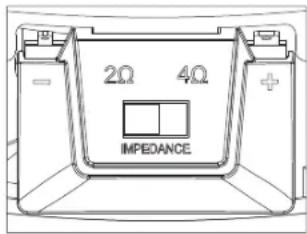
2-ohmsinstalling
4-ohmsinstalling
Kanslighat @ 2,83 V/1 m
Frekvensomfang:
Impedans:
© 2015 HARMAN International Industries, Incorporated. All rights reserved.
JBL are tyl varumarke som lllhor HARMAN International Industries, Incorporated, registrali USA ocheller andra lander.


by HARMAN
CLUB SUBWOOFERS
WS1000 og WS1200
DA
INDSTILLING AF IMPEDANS
VIGTIG: Sorg for, at
subwooferforstarkeren er SLUKKET, for SSI-kontakten industriles. Undg at trykke p kontakten, mens subwooferforstarkeren er i drift. I modsat fald kan forstarkeren tage skade.
TILSLUTNING AF FORSTERKEREN
Club WS1000 Club WS1200
10" (250 mm) 12" (300 mm)
SSI-bilsubwoofer med lav profil SSI-bilsubwoofer med lav profil
Effekthandtering (RMS): 200 W 250 W
Effekthandtering(spidsbelasting):800W1.000W
© 2015 HARMAN International Industries, Incorporated
八一·一工-一工-工-工-工-工-工-工-工-工-工-工-工-工-工-工-工-工-工-工-工-工-工-工-工-工-工-工-工-工-工-工-工-工-工-工-工-工-工-工-工-工-工-工-工-工-工-工-工-工-工-工
JBLは、八一MANINNTAUNELINNTASITRIUS株式会社(HARTMANInternationalIndustries,
Incorporated).米国本上半之他国的登商标


by HARMAN
CLUB SUBWOOFERS
WS1000 i WS1200
TYPY OBUDOW NA SUBWOOFER
ZALETY OBUDOWY WENTYLOWANEJ
WADY OBUDOWY WENTYLOWANEJ
SUBWOOFER KABIN TIPLERI
2 (50mm)
3-5/16" (83mm)
12-1/4" (310mm)
11-1/8" (282mm)
© 2015 HARMAN International Industries, Incorporated. Tūm haklār sakikir.
JBL Amerika Birlesik Devlellerveyadaigerukelerde kayll Harman International Industries, Incorporated girkelin ticari markasdir.


by HARMAN
CLUB SUBWOOFERS
WS1000和WS1200
感谢您选择JBLClub系列
Club WS1000 Club WS1200
10" (250mm) 12" (300mm)
纤薄的SSI车载低音炮
纤薄的SSI车载低音炮
·中長内,造在原,
·龍內國藥藥藥藥藥藥藥藥藥藥藥藥藥藥藥藥藥藥藥藥藥藥藥藥藥藥藥藥藥藥藥藥藥藥藥藥藥藥藥藥藥藥藥藥藥藥藥藥藥藥藥藥藥藥藥藥藥藥藥藥藥藥藥藥藥藥藥藥藥藥藥藥藥藥藻藻藻藻藻藻藻藻藻藻藻藻藻藻藻藻藻藻藻藻藻藻藻藻藻藻藻藻藻藻藻藻藻藻藻藻藻藻藻藻藻藻藻藻藻藻藻藻藻藻藻藻藻藻藻藻藻藻藻藻藻藻藻藻藻藻藻藻藻藻藻藻藻藻
- 類的半式即可
三、德日两国元首在德国首都举行国事访问
- 佳的
- 壽専的信連人即到,上,
三、半导体元器件的种类
电电电电电电电电电电电电电电电电电电电电电电电电电电电电电电电电电电电电电电电电电电电电电电电电电电电电电电电电电电电电电电电电电电电电电电电电电电电电电电电电电电电电电电电电电电电电电电电电电电电电
MDF(Medium-Density Fiberboard),
鍙鍙鍙鍙鍙鍙鍙鍙鍙鍙鍙鍙鍙鍙鍙鍙鍙鍙鍙鍙鍙鍙鍙鍙鍙鍙鍙鍙鍙鍙鍙鍙鍙鍙鍙鍙鍙鍙鍙鍙鍙鍙鍙鍙鍙鍙鍙鍙鍙鍙鍫鍙鍙鍙鍙鍙鍙鍙鍙鍙鍙鍙鍙鍙鍙鍙鍙鍙鍙鍙鍙鍙鍙鍙鍙鍙鍙鍙鍙鍙鍙鍙鍙鍙鍙鍙鍙
JBL网管社
Club WS1000 Club WS1200
10in(250mm)
12日(300mm)
II II II II II $I
哉用朝电(RMS):
200W
250W
和用建
800W
1000W
```c int k = 2.83V/1m; 89dB 92dB
© 2015 HARMAN International Industries, Incorporated. All rights reserved.
JBL汇国国国国国国国HARMAN International Industries, Incorporated 的
KO

by HARMAN
CLUB SUBWOOFERS
WS1000 dan WS1200
MEREPRODUKSI BASS DALAM KENDARAAN
JENIS-JENIS WADAH SUBWOOFER
KELEBIHAN PERFORMA WADAH TERTUTUP
KEKURANGAN PERFORMA WADAH TERTUTUP
KONSTRUKSI WADAH TERTUTUP
KELEBIHAN PERFORMA WADAH BERVENTILASI
KEKURANGAN PERFORMA WADAH BERVENTILASI
KEKURANGAN PERFORMA WADAH BAND-PASS
Club WS1000 Club WS1200
10" (250mm) 12" (300mm)
Subwoofer Otomotif SSI Low-profile Subwoofer Otomotif SSI Low-profile
Penanganan Daya (RMS): 200W 250W
Penanganan Daya (Puncak): 800W 1000W
Sensitivitas @ 2,83V/1m: 89dB 92dB
RespnsFrekuensi:35Hz-175Hz27Hz-175Hz
Kedalaman Duddukan: 3-5/16" (83mm)
3-5/16" (83mm)
Diameter Keseluruhan: 10-9/16" (268mm)
12-1/4" (310mm)
Diameter Potongan: 9-1/2" (240mm)
11-1/8" (282mm)
Hmnpotep B Poccuo : OOO "XAPMAH PYC CnAa3c",POCCN,123317,MOCKBA,IPECHECKAR HAE,10
TapaHTnHbI nePNOd : 1 roD
INΦopMaIaOcePBnCbIXeHTpax:www.harman.com/ru ten. +7 -800-700-0467
Cpok cnykbj:5neT
CpokxpaHHe:He orpaHueH
YcnoBxaHHeN : CtAndapThbIe npn HopMaJIbHbIX 3HaueHnX KInMaTNUeCKNX qAKTOPOB BHeHHe Cpebl
HomepdoKymeHTa COOTBETCTBnTTOBaPceTpNnnpoBaH
Data npou3BOOCTBA : DaTn3ROTOBHeHryCtpoiCTBa ONpeJeIeTcno DBym 6yKBeHHbIM 0603HaueHnM n3
BTOPO rpynnbI CmBOJIOB cepHnHO HOMepa n3denn, cneDyUoNx nocpe pa3dEInTeNbHorO
3Haka «-». KOniPOBKa COOTBETCTBYET NOPaIKy 6yKB NaTHNCKOTo aIbAuta, HauHnA C RHBapr
2010 roda: 000000-MY000000, rde «M» - Meca npou3BOcTBA (A - RaHbapb, B - feBpab),
C-MapTnT.D.)n«Y»-roD npoun3BODCTBa(A-2010,B-2011,C-2012 nT.d.).



- BOX CONTENTS
- WARNING
- REPRODUCING BASS IN VEHIC
- SUBWOOFER ENCLOSURE TYPES
- SEALED ENCLOSURES
- SEATED-ENCLOSURE PERFORMANCE ADVANTAGES
- SEATED-ENCLOSURE PERFORMANCE TRADE-OFFS
- SEATED-ENCLOSURE CONSTRUCTION
- THE JBL RECOMMENDATION
- CLUB SUBWOOFERS
- WS1000 and WS1200
- VENTED ENCLOSURES
- VENTED-ENCLOSURE PERFORMANCE ADVANTAGES
- VENTED-ENCLOSURE PERFORMANCE TRADE-OFFS
- VENTED-ENCLOSURE CONSTRUCTION
- BAND-PASS ENCLOSURES
- BAND-PASS-ENCLOSURE PERFORMANCE TRADE-OFFS
- BAND-PASS-ENCLOSURE CONSTRUCTION
- MOUNTING THE SUBWOOFER
- CONNECTING THE SUBWOOFER
- SETTING THE IMPEDANCE
- CONNECTING THE AMPLIFIER
- SPECIFICATIONS
- COMPROMIS DES PERFORMANCS D'UN CAISSON A'EVENT
- Club WS1000 Club WS1200
- TINbI KOPNYCOB CAEBYΦEPA
- TEPMETNUHbIE KOPNYCA
- NIOCBI MNHYCBI
- KOHCTPYKUN
- TEPMETNUHOROKOPNYCA
- PEKOMEHDAUIMOTJBL
- WS1000 u WS1200
- BEHTUNIPYEMBIE KOPNYCA
- ПИOCБИ MNHYCБI ПОПЗВODINTEЛБСНТС BEHTINIPYEMOTO KOPTYCA
- KOHCTPYKUJA BEHTUNIPYEMOTO KOPNYCA
- PEKOMEHДALIMNOTJBL
- IIOLOCHO-IPONYCKAIOUNE KOPNYCA
- HEIOCTATK
- PEKOMEHДALIMOTJBL
- YCTAHOBKA CABBYΦEPA
- IIOIKJIIOUHNE CABBYΦEPA
- TEXHUNECKNEXAPAKTEPNCIKN
- WS1000 och WS1200
- FÖRDELAR MED BASREFLEXÄDOR
- KOMPROMISSEPA GRUND AV BASREFLEXLADOR
- STALLA IN IMPEDANSEN
- WS1000 og WS1200
- INDSTILLING AF IMPEDANS
- TILSLUTNING AF FORSTERKEREN
- WS1000 i WS1200
- TYPY OBUDOW NA SUBWOOFER
- ZALETY OBUDOWY WENTYLOWANEJ
- WADY OBUDOWY WENTYLOWANEJ
- SUBWOOFER KABIN TIPLERI
- WS1000和WS1200
- 三、德日两国元首在德国首都举行国事访问
- 三、半导体元器件的种类
- JBL网管社
- WS1000 dan WS1200
- MEREPRODUKSI BASS DALAM KENDARAAN
- JENIS-JENIS WADAH SUBWOOFER
- KELEBIHAN PERFORMA WADAH TERTUTUP
- KEKURANGAN PERFORMA WADAH TERTUTUP
- KONSTRUKSI WADAH TERTUTUP
- KELEBIHAN PERFORMA WADAH BERVENTILASI
- KEKURANGAN PERFORMA WADAH BERVENTILASI
- KEKURANGAN PERFORMA WADAH BAND-PASS
Brand : JBL
Model : Club WS1000
Category : Subwoofer