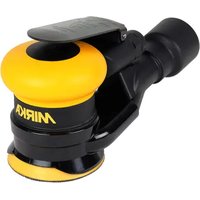
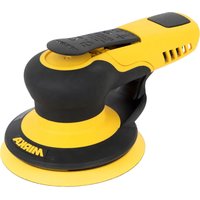
RPS 300CV - Sander Mirka - Free user manual and instructions
Find the device manual for free RPS 300CV Mirka in PDF.


| Product Type | Rotary Sander |
| Brand | Mirka |
| Model | RPS 300CV |
| Pad Diameter | 77 mm (3 inches) |
| No-Load Speed | 3000 rpm |
| Net Weight | 0.63 kg (1.37 lbs) |
| Height | 89.0 mm |
| Length | 186.2 mm |
| Power | 209 W (0.28 HP) |
| Air Consumption | 481 l/min (17 scfm) |
| Maximum Air Pressure | 6.2 bar (90 psig) |
| Suction Type | Central |
| Noise Level | 78 dBA |
| Vibration Level | 5 m/s² |
| Power Supply | Compressed air (lubricated and filtered) |
| Compatible Materials | Metal, wood, stone, plastic |
| Required Protective Equipment | Safety glasses, mask, gloves, hearing protection |
| Maintenance | Daily lubrication, cleaning of filter and silencer |
| Spare Parts | Vanes, bearings, o-ring, backing pad |
| Repairability | Contact an authorized Mirka center |
Frequently Asked Questions - RPS 300CV Mirka
User questions about RPS 300CV Mirka
0 question about this device. Answer the ones you know or ask your own.
Ask a new question about this device
Download the instructions for your Sander in PDF format for free! Find your manual RPS 300CV - Mirka and take your electronic device back in hand. On this page are published all the documents necessary for the use of your device. RPS 300CV by Mirka.
USER MANUAL RPS 300CV Mirka
natural_image
Close-up of a black and gray industrial machine with a handle and lever mechanism (no visible text or symbols)
natural_image
Stylized illustration of a bulldog in aggressive posture (no text or symbols)Mirka® Rotary Polisher & Sander
77 mm (3")
UK Operating instructions.... 124-124
Parts Page
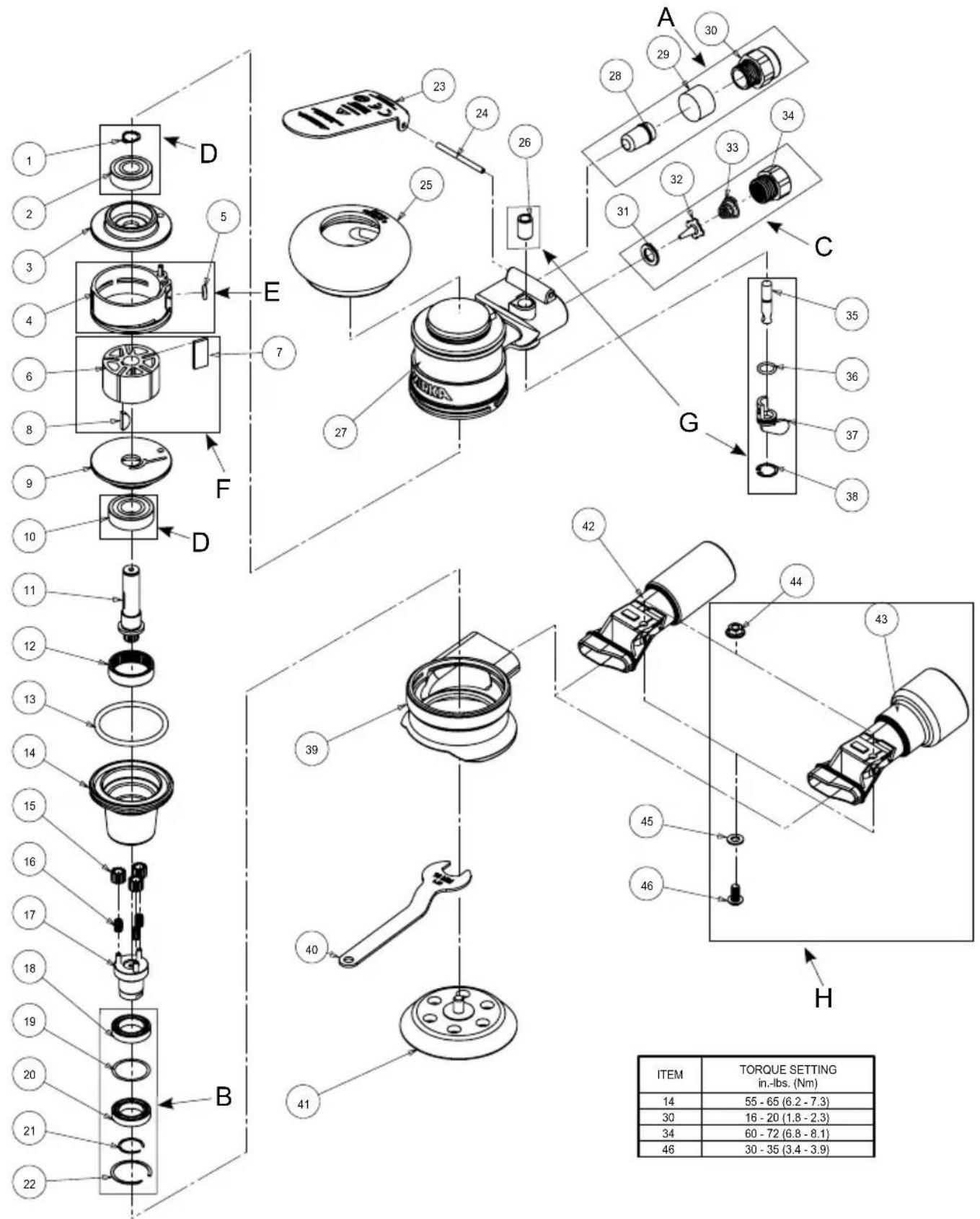
Parts List
| ITEM NO. | DESCRIPTION Qty. | |
| D ENDPLATE BEARING KIT | ||
| 1 EXTERNAL RETAINING RING 1 | ||
| 2 BEARING 1 | ||
| 3 REAR ENDPLATE 1 | ||
| E CYLINDER & O-RING KIT | ||
| 4 CYLINDER ASSEMBLY 1 | ||
| 5 O-RING 1 | ||
| F ROTOR, VANES & KEY KIT | ||
| 6 ROTOR 1 | ||
| 7 VANE 5 | ||
| 8 KEY 1 | ||
| 9 FRONT ENDPLATE 1 | ||
| D ENDPLATE BEARING KIT | ||
| 10 BEARING 1 | ||
| 11 MOTOR SHAFT ASSEMBLY 1 | ||
| 12 RING GEAR | 1 | |
| 13 O-RING 1 | ||
| 14 SPINDLE HOUSING | 1 | |
| 15 PLANET GEAR | 3 | |
| 16 NEEDLE BEARING | 3 | |
| 17 ASSEMBLY FOR PLANETARY SPINDLE ( 1/4-20 UNC-2B ) | 1 | |
| B PLANETARY SPINDLE BEARING KIT | ||
| 18 BEARING | 1 | |
| 19 SPACER | 1 | |
| 20 BEARING | 1 | |
| 21 RETAINING RING | 1 | |
| 22 RETAINING RING | 1 | |
| 23 THROTTLE LEVER | 1 | |
| 24 LEVER SPRING PIN | 1 | |
| 25 | GRIP 65mm (2 1/2 in.) | OPT |
| GRIP 70mm (2 3/4 in.) | OPT | |
| GRIP 75mm (3 in.) | 1 | |
| G SPEED VALVE KIT | ||
| 26 VALVE SLEEVE | 1 | |
| 27 HOUS NG | 1 | |
| A MUFFLER KIT | ||
| 28 INTERNAL MUFFLER | 1 | |
| 29 MUFFLER INSERT | 1 | |
| 30 MUFFLER HOUSING | 1 | |
| C AIR INLET KIT | ||
| 31 VALVE SEAT | 1 | |
| 32 VALVE | 1 | |
| 33 VALVE SPRING | 1 | |
| 34 INLET BUSHING ASSEMBLY | 1 | |
| G SPEED VALVE KIT | ||
| 35 | VALVE STEM ASSEMBLY | 1 |
| 36 O-RING 1 | ||
| 37 SPEED CONTROL | 1 | |
| 38 INTERNAL RETAINING RING | 1 | |
| 39 3 in. SuperVAC SHROUD | 1 | |
| 40 | 13 mm WRENCH | 1 |
| 41 BACKING PAD 77mm 1/4" GRIP 6H MEDIUM | 1 | |
| 42 ROS SuperVAC CV 3/4 in. SWIVEL EXHAUST ASSEMBLY | OPT | |
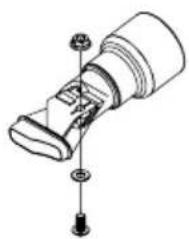
| H CV SWIVEL FITTING KIT | ||
| 43 ROS SuperVACTM CV 1 in./28 mm SWIVEL EXHAUST ASSEMBLY | 1 | |
| 44 NUT | 1 | |
| 45 WASHER | 1 | |
| 46 SCREW | 1 | |
Spare Parts Kits
natural_image
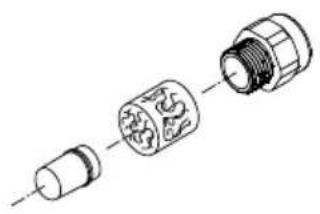
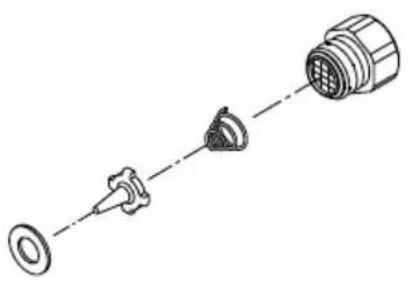
Exploded view diagram of a mechanical component with cylindrical and threaded parts (no text or symbols)A MPA0797 Muffler Kit Code: 8993017311
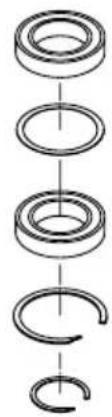
B MPA2226 Planetary Spindle Bearing Kit Code: 8994222711
natural_image
Exploded view diagram of a mechanical component showing internal parts and assembly (no text or labels)C MPA0798 Air Inlet Kit Code: 8993018811
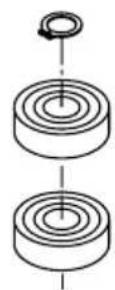
D MPA0799 Endplate Bearing Kit
Code: 8993019811
natural_image
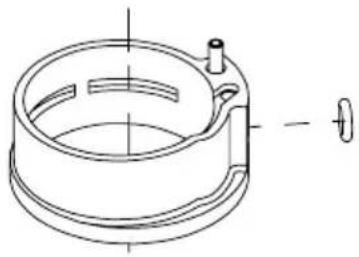
Technical line drawing of a mechanical component with no visible text or symbolsE MPA0994 Cylinder & O-ring Kit Code: 8993009211
natural_image
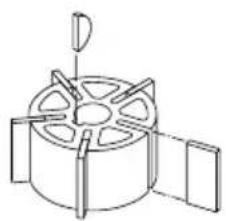
Technical line drawing of a mechanical component with no visible text or symbolsF MPA0801 Rotor, Vanes & Key Kit Code: 8993017711

G MPA0800 Speed Valve Kit
Code: 8993019011
natural_image
Technical line drawing of a mechanical component with mounting holes and a cylindrical shaft (no text or symbols)H MPA0988 CV Swivel Fitting Kit Code: 8993006611
Fl-66850 Jeppo, Finland
Declaration of conformity
Mirka Ltd.
Fl-66850 Jeppo, Finland
declare on our sole responsibility that the product 77 mm (3") 3,000 rpm Rotary Polisher & Sander (see "Product Configuration/Specifications" table for particular model) to which this declaration relates is in conformity with the following standard(s) or other normative document(s): EN ISO 12100:2010, EN ISO 11148-8:2011, EN ISO 15744:2008 & EN ISO 28927-3:2009 in accordance with the regulation 2006/42/EC.
Jeppo 04.06.2020
MIRKA
Place and date of issue Company Stefan Sjöberg, CEO
Operator Instructions
Includes – Please Read and Comply with, Proper Use of Tool, Work Stations, Putting the Tool Into Service, Operating Instructions, Product Configuration/Specifications Tables, Parts Page, Parts List, Spare Parts Kits, Troubleshooting Guide
Important
Read these instructions carefully before installing, operating, servicing or repairing this tool. Keep these instructions in a safe accessible location.

Manufacturer/Supplier
Mirka Ltd.
FI-66850 Jeppo
Finland
Tel: +358 20 760 2111

Required Personal Safety Equipment
Safety Glasses Breathing Masks
Safety Gloves Ear Protection

WARNING
Always wear required personal safety protection in accordance with manufacturer's instructions and local/national standards while using this tool.
- Do not use a power tool if you are tired or under the influence of drugs, alcohol or medication.
- Read the Materials Safety Data Sheet (MSDS) for the working surface.
- Use the tool with dust extraction. A suitable dust extraction unit will reduce hazardous dust.
- Do not overreach. Keep proper footing and balance at all times.
- Do not wear loose clothing or jewellery. Keep your hair, clothing and gloves away from moving parts.
Loose clothes, jewellery or long hair can be caught in moving parts. - If any physical hand/wrist discomfort is experienced, stop working and seek medical attention.
Hand, wrist and arm injury may result from repetitive work, motion and overexposure to vibrations. - Do not operate power tools in explosive atmospheres, such as in the presence of flammable liquids, gases or dust.
• The tool is not electrically insulated. Check work area for live electricity, gas pipes, etc. before operation.

CAUTION
• Prevent unintentional starting.
- Remove pad wrench before connecting the tool to the air supply.
- Keep work area clean and well lit.
• Always ensure that the work piece to be sanded is firmly fixed.
- Before changing abrasive always disconnect the air supply.

ditional safety warnings
- Read all instructions before using this tool. All operators must be fully trained in usage and safety of this tool.
- All maintenance must be carried out by trained personnel. For service, contact Mirka authorized service centre!
• Always wear required safety equipment (see warnings) - The operator must be in a secure position and have a firm grip and footing on a solid floor.
• Always ensure that the work piece to be sanded is firmly fixed. - Check tool, backing pad, hose and fittings regularly for wear.
• Always take care to ensure your safety at work; never carry, store or leave the tool unattended with the air supply connected.
• Vacuum unit dust collection bag should be cleaned or replaced daily. Dust can be highly combustible.
Cleaning or replacing of bag also assures optimum performance. - Do not exceed maximum recommended air pressure of 6.2 bar (90 psi).
• Take care to avoid entanglement of the moving parts of the tool with clothing, ties, hair, cleaning rags, etc. - Keep hands clear of the spinning pad during use.
- If the tool appears to malfunction, remove from use immediately and arrange for service and repair.
- Before changing abrasive always disconnect the air supply. Take care to properly attach and centre the abrasive on the backing pad.
Please Read and Comply with
1) General Industry Safety & Health Regulations, Part 1910, OSHA 2206, available from: Superintendent of Documents; Government Printing Office; Washington DC 20402.
2) Safety Code for Portable Air Tools, ANSI B186.1 available from: American National Standards Institute, Inc.; 1430 Broadway, New York, New York 10018.
3) State and Local Regulations.
Proper Use of Tool
This tool is designed for use on all types of materials i.e. metals, wood, stone, plastics, etc. using abrasive designed for this purpose. Do not use this tool for any other purpose than that specified without consulting the manufacturer or the manufacturer's authorized supplier. Do not use backing pads that have a working speed less than 3,000 rpm free speed.
Work Stations
The tool is intended to be operated as a hand-held tool. It is always recommended that the tool be used when standing on a solid floor. It can be used in any position but before any such use, the operator must be in a secure position and have a firm grip and footing, and be aware that the tool can develop a torque reaction. See the section "Operating Instructions".
Putting the Tool into Service
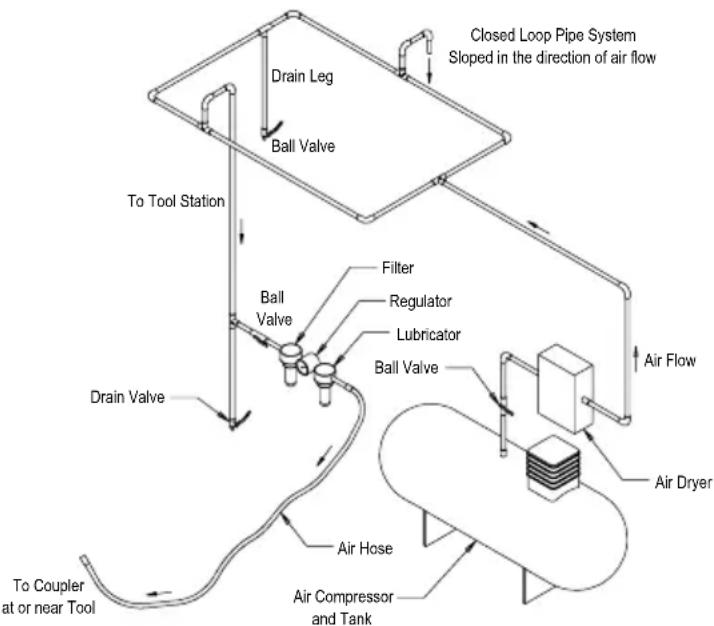
Use a clean lubricated air supply that will give a measured air pressure at the tool of 6.2 bar (90 psig) bar when the tool is running with the lever fully depressed. It is recommended to use an approved 10 mm (3/8 in.) x 8 m (25 ft) maximum length airline. It is recommended that the tool be connected to the air supply as shown in Figure 1.
Do not connect the tool to the airline system without incorporating an easy to reach and operate air shut-off valve. The air supply should be lubricated. It is strongly recommended that an air filter, regulator and lubricator (FRL) be used as shown in Figure 1 as this will supply clean, lubricated air at the correct pressure to the tool. Details of such equipment can be obtained from your supplier. If such equipment is not used then the tool should be manually lubricated.
To manually lubricate the tool, disconnect the airline and put 2 to 3 drops of suitable pneumatic motor lubricating oil such as Fuji Kosan FK-20, Mobil ALMO 525 or Shell TORCULA® 32 into the hose end (inlet) of the machine. Reconnect the tool to the air supply and run the tool slowly for a few seconds to allow air to circulate the oil. If the tool is used frequently, lubricate it on a daily basis or lubricate it if the tool starts to slow or lose power.
It is recommended that the air pressure at the tool is 6.2 bar (90 psig) while the tool is running. The tool can run at lower pressures but never higher than 6.2 bar (90 psig).
Operating Instructions
1) Read all instructions before using this tool. All operators must be fully trained in its use and be aware of these safety rules. All servicing and repairs must be carried out by trained personnel.
2) Make sure the tool is disconnected from the air supply. Select a suitable abrasive and secure it to the backing pad. Take care to center the abrasive on the backing pad.
3) Always wear the required safety equipment when using this tool.
4) When sanding always place the tool on the work then start the tool. Always remove the tool from the work before stopping. This will prevent gouging of the work due to excess speed of the abrasive.
5) Always disconnect the air supply from the tool before fitting, adjusting or removing the abrasive or backing pad.
6) Always adopt a firm footing and/or position and be aware of the torque reaction developed by the tool.
7) Use only correct spare parts.
8) Always ensure that the material to be sanded is firmly fixed to prevent its movement.
9) Check the hose and fittings regularly for wear. Do not carry the tool by its hose; always be careful to prevent the tool from being started when carrying the tool with the air supply connected.
10) Do not exceed the maximum recommended air pressure. Use safety equipment as recommended.
11) The tool is not electrically insulated. Do not use where there is a possibility of coming into contact with live electricity, gas pipes, water pipes, etc. Check the worki
12) Take care to avoid entanglement of the moving parts of the tool with clothing, ties, hair, cleaning rags, etc. If entangled, it will cause the body to be pulled towards the work and moving parts of the machine, which can be very dangerous.
13) Keep hands clear of the spinning pad during use.
14) If the tool appears to malfunction, remove from use immediately and arrange for servicing and repair.
15) Do not allow the tool to free-speed without taking precautions to protect any persons or objects from the loss of the abrasive or pad.
flowchart
graph TD
    A["Air Compressor and Tank"] --> B["Air Hose"]
    B --> C["Drain Valve"]
    C --> D["Ball Valve"]
    D --> E["Filter"]
    E --> F["Lubricator"]
    F --> G["Regulator"]
    G --> H["Blower"]
    H --> I["Bladder"]
    I --> J["To Tool Station"]
    J --> K["Drain Leg"]
    K --> L["Blail Valve"]
    L --> M["Sloped in the direction of air flow"]
    M --> N["Close Loop Pipe System"]
    N --> O["Air Dryer"]
    O --> P["Air Flow"]
    P --> Q["To Coupler at or near Tool"]
Figure 1
Technical data
| Mirka® RPS 300CV | |
| Recommended Airline Size - Minimum 10 mm 3/8 in | |
| Recommend Maximum Hose Length 8 meters 25 feet | |
| Air Pressure - Maximum Working Pressure 6.2 bar 90 psig | |
| Air Pressure - Recommended Minimum NA |
Product Configuration/Specifications: Mirka RPS 300CV 3,000 rpm
| Vacuum Type | Pad Size mm (in.) | Model Number | Product Net Weight kg (pounds) | Height mm (in.) | Length mm (in.) | Power watts (hp) | Air Consumption LPM (scfm) | *Noise Level dBA | *Vibration Level m/s2 | *Uncertainty Km/s2 |
| Central Vacuum | 77 mm (3 in.) | RPS 300CV | 0.63 (1.37) | 89.0 (3.50) | 186.2 (7.30) | 209 (0.28) | 481 (17) 78.5 | 2.86 0.78 | ||
| The noise test is carried out in accordance with EN ISO 15744:2008 – Hand-held non-electric power tools – Noise measurement code – Engineering method (grade 2) and EN ISO 11203:2009 Acoustics – Noise emitted by machinery and equipment – Determination of emission sound pressure levels at a work station and other specified positions from the sound power level.The vibration test is carried out in accordance with EN ISO 28927-3, Hand-held portable power tools – Test method for evaluation of vibration emission – Part 3: Polishers and rotary , orbital and random orbital sanders. | ||||||||||
Specifications subject to change without prior notice.
*The values stated in the table are from laboratory testing in conformity with stated codes and standards, and are not sufficient for risk evaluation. Values measured in a particular work place may be higher than the declared values. The actual exposure values and amount of risk or harm experienced by an individual are unique to each situation and depend upon the surrounding environment, the way in which the individual works, the particular material being worked, work station design as well as upon the exposure time and the physical condition of the user. Mirka Ltd. cannot be held responsible for the consequences of using declared values instead of actual exposure values for any individual risk assessment.
Further occupational health and safety information can be obtained from the following websites:
https://osha.europa.eu/en (Europe)
http://www.osha.gov (USA)
Troubleshooting Guide
| Symptom Possible Cause Solution | ||
| Low power and/or low free speed. | Insufficient air pressure. Check airline pressure | at the inlet of the tool while the tool is running at free speed. It must be 6.2 bar (90 psig/620 kPa). |
| Clogged Muffler(s). The Muffler can be back | flushed with a clean, suitable cleaning solution until all contaminants and obstructions have been removed. If the Muffler cannot be properly cleaned then replace it. | |
| Plugged Inlet Screen. Clean the Inlet Screen | with a clean, suitable cleaning solution. If the Screen cannot be cleaned, replace it. | |
| One or more worn or broken Vanes. Install a | complete set of new Vanes (all vanes must be replaced for proper operation). Coat all vanes with quality pneumatic tool oil. | |
| Internal air leakage in the Motor Housing indicated by higher than normal air consumption and lower than normal speed. | Check for proper Motor alignment and Lock Ring engagement. Check for damaged O-Ring in Lock Ring groove. Remove Motor Assembly and reinstall the Motor Assembly. | |
| Motor parts worn. Overhaul Motor. Contact authorized Mirka Service Center. | ||
| Worn or broken Spindle Bearings. Replace the worn or broken Bearings. | ||
| Air leakage through the Speed Control and/or Valve Stem. | Dirty, broken or bent Valve Spring, Valve or Valve Seat. | Disassemble, inspect and replace worn or damaged parts. |
| Vibration/rough operation. | Incorrect Pad. Only use Pad sizes and weights designed for the machine. | |
| Addition of interface pad or other material. | only use abrasives and/or interfaces designed for the machine. Do not attach anything to the Backing Pad that was not specifically designed to be used with the Pad and tool. | |
| Improper lubrication or buildup of foreign debris. | Disassemble the tool and clean in a suitable cleaning solution. Reassemble the tool. | |
| Worn or broken rear or front Motor Bearing(s). | Replace the worn or broken Bearings. | |
| For vacuum machines it is possible to have too much vacuum while sanding on a flat surface, causing the pad to stick to the sanding surface. | For CV machines reduce vacuum through the vacuum system and/or add extra washer(s) to the pad. | |
https://osha.europa.eu/en (Europe)
http://www.osha.gov (USA)
Vianetsintäohjeet
https://osha.europa.eu/en(유럽)
http://www.osha.gov(미국)
문제 해결 가이드
Fl-66850 Jeppo, Finland
Fl-66850 Jeppo, Finland
Fl-66850 Jeppo, Finland
https://osha.europa.eu/en (Europe)
http://www.osha.gov (USA)
Felsökningsguide
https://osha.europa.eu/en (Avrupa)
http://www.osha.gov (ABD)
Declaration of conformityMirka Ltd.FI-66850 Jeppo, Finlanddeclare on our sole responsibility that the product77 mm (3") 3,000 rpm Rotary Polisher & Sander (see “Product Configuration/Specifications” table for particular model) to which this declaration relates are in conformity with the following standard(s) or other normative document(s): BS EN ISO 12100:2010, BS EN ISO 11148-8:2011, BS EN ISO 15744:2008, andBS EN ISO 28927-3:2009 in accordance with the Supply of Machinery (Safety) Regulations 2008.Jeppo 14.07.2021   | |||
| Place and date of issue Company Stefan Sjöberg, CEO | |||
| Operator InstructionsIncludes – Parts Page, Parts List,Sander Spare Parts Kits, PleaseRead and Comply, Proper Use ofTool, Work Stations, Putting the ToolInto Service, Operating Instructions,Product Configuration/SpecificationsTables,Troubleshooting Guide. | ImportantRead these instruc-tions carefully beforeinstalling, operating,servicing or repairingthis tool. Keep theseinstructions in a safeaccessible location. | Importer InformationMirka (UK) LtdSaxon HouseShirwell CrescentFurzton LakeMilton KeynesMK4 1GATel. +44 (0)1908 866100 | UKCA |
| Manufacturer/SupplierMirka Ltd.FI-66850 Jeppo, FinlandTel: + 358 20 760 2111 | Required Personal Safety EquipmentSafety Glasses Breathing MasksSafety Gloves Ear Protection | ||
This chapter is an addition to the English language chapter of the manual in order to fulfill the UKCA regulation requirements.
Please refer to the English language chapter for more information about your product.

geo
| Location | Marker | | -------- | ------ | | Mirka Ltd | 1 | | Finland | 2 |Mirka Ltd
Finland
Brazil Mirka Brasil Ltda.
Belgium Mirka Belgium Logistics NV
Canada Mirka Canada Inc.
China Mirka Trading Shanghai Co., Ltd
Finland & Baltics Mirka Ltd
France Mirka France Sarl
Germany Mirka GmbH
India Mirka India Pvt Ltd
Russia Mirka Rus LLC
Singapore Mirka Asia Pacific Pte Ltd
Spain Mirka Ibérica S.A.U.
Sweden Mirka Scandinavia AB
Turkey Mirka Turkey Zimpara Ltd Şirketi
United Kingdom Mirka (UK) Ltd
United Arab Emirates Mirka Middle East FZCO
USA Mirka USA Inc.
For contact information,
please visit www.mirka.com
Dedicated to the finish

- Mirka® Rotary Polisher & Sander
- Parts Page
- Spare Parts Kits
- Declaration of conformity
- Operator Instructions
- Important
- Manufacturer/Supplier
- Required Personal Safety Equipment
- WARNING
- CAUTION
- ditional safety warnings
- Please Read and Comply with
- Proper Use of Tool
- Work Stations
- Putting the Tool into Service
- Operating Instructions
Brand : Mirka
Model : RPS 300CV
Category : Sander