WH8IPB14AM6L0 - Dishwasher WHIRLPOOL - Free user manual and instructions
Find the device manual for free WH8IPB14AM6L0 WHIRLPOOL in PDF.


| Product Type | Built-in Dishwasher |
| Brand | Whirlpool |
| Model | WH8IPB14AM6L0 |
| Capacity | 14 standard place settings |
| Programs | Eco, Intensive Auto, Mixed Auto, Rapid Auto, Rapid, Crystal, Silent, Antibacterial, Pre-wash, Self-cleaning |
| Options | Power Clean, Half Load, Extra Dry, Delayed Start, Favorite |
| NaturalDry Drying | Yes, automatic door opening for convection drying |
| Floor Lighting | Yes, LED projected on the floor, can be disabled in settings menu |
| Water Softener System | Integrated, salt regeneration, 5 adjustable hardness levels |
| Rinse Aid Dispenser | Capacity 110 ml, 6 dosage levels |
| Salt Reservoir | Capacity approx. 0.5 kg, with fill indicator |
| Baskets | 3: highest basket, height-adjustable upper basket, lower basket with Power Clean zone |
| Cutlery Basket | Yes, removable, to be placed at the front of the lower basket |
| Power Clean | High-pressure jets in the lower basket for pots and pans |
| Soil Detection | Automatic sensor adjusting duration and consumption |
| Display | Screen with remaining time, salt, rinse aid, descaling, water tap indicators |
| Filter Type | 3-piece filter set: cylindrical, basket, stainless steel plate |
| Spray Arms | 4: upper, intermediate (under upper basket), lower, ceiling |
| Eco Program Consumption | 9.5 L water, 0.64 kWh, duration 4h00 |
| Recommended Maintenance | Monthly filter cleaning, regular descaling, Self-cleaning program |
| Warranty and Repairability | Spare parts available for 7 to 10 years; authorized after-sales service |
Frequently Asked Questions - WH8IPB14AM6L0 WHIRLPOOL
User questions about WH8IPB14AM6L0 WHIRLPOOL
0 question about this device. Answer the ones you know or ask your own.
Ask a new question about this device
Download the instructions for your Dishwasher in PDF format for free! Find your manual WH8IPB14AM6L0 - WHIRLPOOL and take your electronic device back in hand. On this page are published all the documents necessary for the use of your device. WH8IPB14AM6L0 by WHIRLPOOL.
USER MANUAL WH8IPB14AM6L0 WHIRLPOOL
THANK YOU FOR BUYING A WHIRLPOOL PRODUCT.
In order to receive a more complete assistance, please register your appliance on: www.whirlpool.eu/register

Before using the appliance carefully read Safety and Installation Instructions.
After installation, please remember to remove all transport protection parts from the dishwasher.
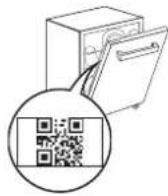
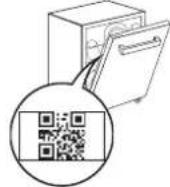
PLEASE SCAN THE
QR CODE ON YOUR
APPLIANCE IN
ORDER TO HAVE
MORE DETAILED
INFORMATION
The control panel of this dishwasher activates pushing by ON/OFF button.
For energy saving the control panel deactivates automatically after 10 minutes if no cycle has started.
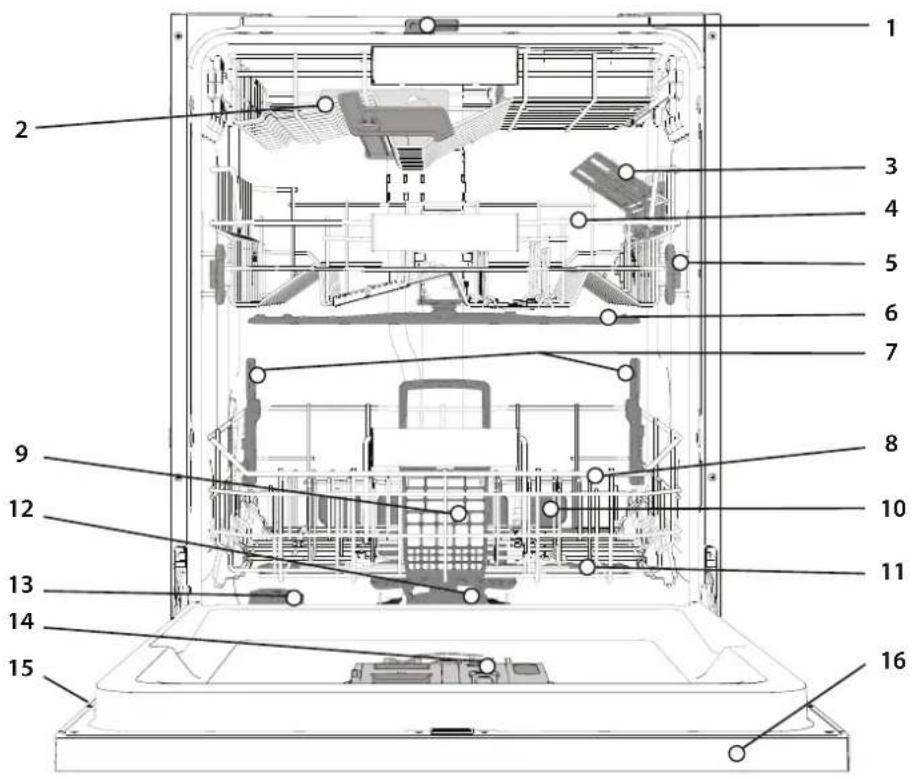
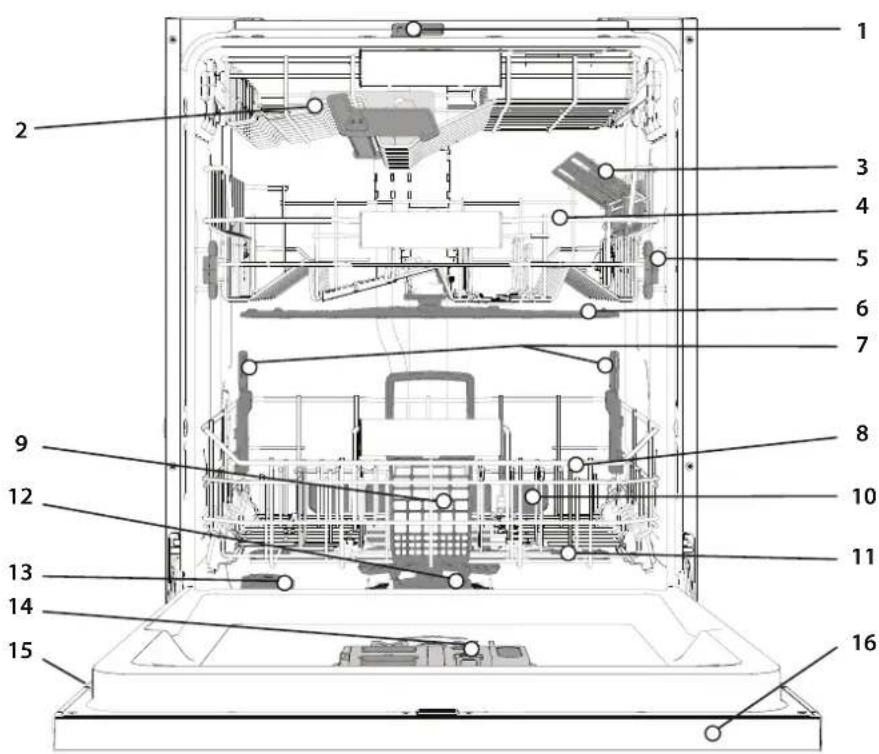
PRODUCT DESCRIPTION
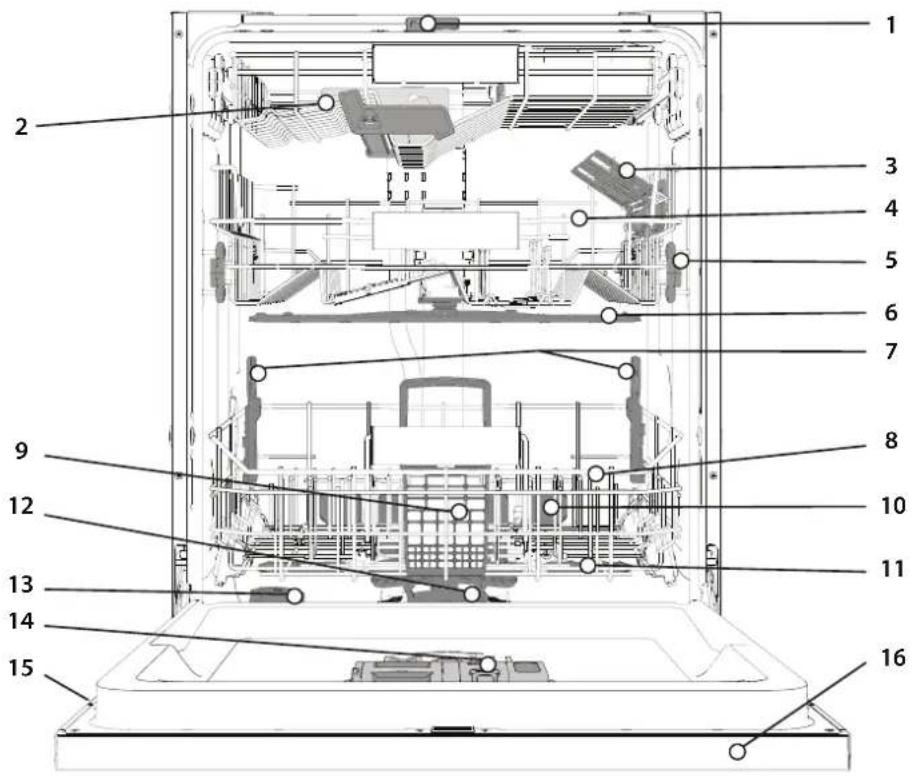
APPLIANCE
- NaturalDry
2.Top rack - Foldable flaps
- Upper rack
- Upper rack height adjuster
- Upper sprayer arm
- Power Clean® support
- Lower rack
- Cutlery basket
- Power Clean
- Lower sprayer arm
- Filter Assembly
- Salt reservoir
- Detergent and Rinse Aid dispensers
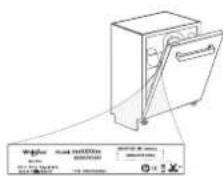
- Rating plate
- Control panel

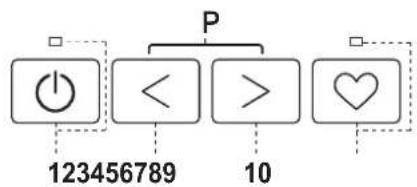
CONTROL PANEL
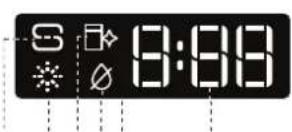
- ON-OFF/Reset button with indicator light
- PREVIOUS program button
- NEXT program button
- FAVOURITE program button with indicator light
- Salt reservoir empty indicator light
- Rinse Aid reservoir empty indicator light
- DESCALE indicator light
- Closed Water Tap indicator light
9. Display
- Program number and remaining time indicator
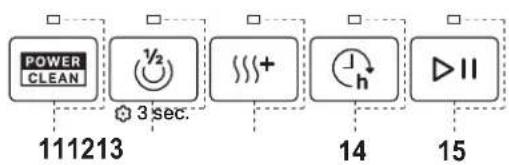
- Power Clean® option button with indicator light
- Half Load option button with indicator light/ Settings - 3 sec. press
- Extra Dry option button with indicator light
- Delay option button with indicator light
- START/Pause button with indicator light
FIRST TIME USE
ADVICE REGARDING THE FIRST TIME USE
After installation, remove the stoppers from the racks and the retaining elastic elements from the upper rack.
SETTING MENU
- Switch on the appliance by pressing the ON-OFF button.
- Hold the Settings (Half Load) button for 3 seconds, until you hear a beep and the display shows "SEt".
- After one second the first available setting (letter will be displayed.
- Press PREVIOUS < / NEXT> to scroll through the list of available settings (see table below), then press START/Pause to view and change the value of the currently selected setting.
- Press PREVIOUS < / NEXT> to change the value, then press START/Pause to save the new value or return to the main menu.
- To change another setting, repeat points 4 and 5.
- Press ON-OFF 品 wait 30 seconds to exit the menu.
| LETTER | SETTING | VALUES(Default - in bold)* |
| - | Cycle Counter - number of washing cycles carried out by the dishwasher. | Eq. 25 cycles: 25;Eq. 13.947 cycles:13.947 (scrolling for 3 times) |
| - | Water Hardness Level (see "SETTING THE WATERTHARDNESS" and "WATER HARDNESS TABLE") | 1 | 2 | 3 | 4 | 5 |
| - | Rinse Aid Level(see "ADJUSTING THE DOSAGE OF RINSE AID") | 0 | 1 | 2 | 3 | 4 | 5 |
| - | NaturalDry (see "OPTIONS AND FUNCTIONS")“1” = On, “0” = Off | 1 | 0 |
| - | Light on the floor (see "OPTIONS AND FUNCTIONS")“1” = On, “0” = Off | 1 | 0 |
| - | Sound“1” = On, “0” = Off | 1 | 0 |
| - | Factory Settings - press START/Pause to re-store to the factory default all the values of the settings included in the settings menu. | - |
*) The default value does not apply to the Cycle Counter.
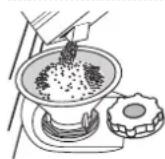
FILLING THE SALT RESERVOIR
The use of salt prevents the formation of LIMESCALE on the dishes and on the machine's functional components. The salt reservoir is located in the lower part of the dishwasher (under the lower rack on the left side).
- It is mandatory that the salt reservoir never be empty.
-
It is important to set the water hardness.
-
Salt must be filled when the SALT REFILL indicator light on the control panel is lit.
- Remove the lower rack and unscrew the reservoir cap (anticlockwise).
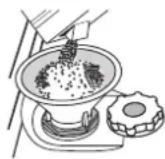
- Position the funnel (see figure) and fill the salt reservoir right up to its edge (approximately 0,5kg ); it is not unusual for a little water to leak out
- Only the first time you do this: fill the salt reservoir with water.
- Remove the funnel and wipe any salt residue away from the opening. Make sure the cap is screwed on tightly so that no detergent can get into the container during the wash program (this could damage the water softener beyond repair).
Whenever you need to add salt, it is mandatory to complete the procedure before the beginning of the washing cycle to avoid corrosion. Residual saline solution or grains of salt can lead to corrosion, irreparably damaging the stainless steel components. The guarantee is not applicable if faults are caused by such circumstances. If the salt container is not filled, the water softener and the heating element may be damaged as a result of limescale accumulation. Using of Salt is recommended with any type of dishwasher detergent.
SETTING THE WATER HARDNESS
To allow the water softener to work in a perfect way, it is essential that the water hardness setting is based on the actual water hardness in your house. This information can be obtained from your local water supplier. The factory setting is "3". See WATER HARDNESS TABLE.
| Water Hardness Table | |||
| Level | °dH German degrees | °fH French degrees | °C Clark English degrees |
| 1 (Soft) | 0 - 6 | 0 - 10 | 0 - 7 |
| 2 (Medium) | 7 - 11 | 11 - 20 | 8 - 14 |
| 3 (Average) | 12 - 16 | 21 - 29 | 15 - 20 |
| 4 (Hard) | 17 - 34 | 30 - 60 | 21 - 42 |
| 5 (Very hard) | 35 - 50 | 61 - 90 | 43 - 62 |
To change, follow instructions in section "SETTING MENU".
Only use salt that has been specifically designed for dishwashers.
After the salt has been poured into the machine, the SALT REFILL indicator light switches off.
If the salt container is not filled, the water softener and the heating element may be damaged as a result of limescale accumulation.
Using of Salt is recommended with any type of dishwasher detergent.
WATER SOFTENING SYSTEM
Water softener automatically reduces water hardness, consequently preventing scale buildup on the heater, contributing also to better cleaning efficiency. This system regenerates itself with salt, therefore it is required to refill the salt container when empty.
The frequency of regeneration depends on the water hardness level setting - regeneration takes place once per 4-6 Eco cycles with the water hardness level set to 3. The regeneration process occurs at the beginning of the cycle with additional fresh water.
- Single regeneration consumes 3 L of water;
- Takes up to 5 additional minutes for the cycle;
Consumes below 0.005kWh of energy.
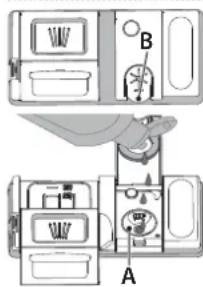
FILLING THE RINSE AID DISPENSER
Rinse aid makes dish DRYING easier. The rinse aid dispenser A should be filled when the RINSE AID REFILL indicator light in the control panel is lit.
- Open the dispenser B by pressing and pulling up the tab on the lid.
- Pour in the rinse aid (max. 110ml ), making sure it does not overflow from the dispenser. If this happens, clean the spill immediately with a dry cloth.
- Press the lid down until you hear a click to close it. NEVER pour the rinse aid directly into the appliance tub.
ADJUSTING THE DOSAGE OF RINSE AID
If you are not completely satisfied with the drying results, you can adjust the quantity of rinse aid used.
To change, follow the instructions in the section "SETTING MENU".
If the rinse aid level is set to ZERO, no rinse aid will be supplied. The LOW RINSE AID indicator light will not be lit if you run out of rinse aid.
A maximum of 6 levels can be set according to the dishwasher model.
If you see bluish streaks on the dishes, set a low number (0-3).
- If there are drops of water or limescale marks on the dishes, set a mid-range number (4-5).
FILLING THE DETERGENT DISPENSER
Only use detergent which has been specifically designed for dishwashers. DO NOT USE washing up liquid.
Using excessive detergent may result in foam residues remaining in the machine after the cycle has ended.
Usage of detergent not designed for dishwashers may cause malfunction or damage to the appliance.
To achieve the best washing and drying results, the combined use of detergent, rinse aid liquid and refined salt is required.
We recommend using detergents that do not contain phosphates or chlorine, as these products are harmful to the environment.
Good washing results also depend on the correct amount of detergent being used.
Exceeding the stated amount does not result in a more effective wash and increases environmental pollution.
The amount can be adjusted to the soil level. In the case of normally soiled items, use approximately either 35g (powder detergent) or 35ml (liquid detergent) and additional tea spoon of detergent directly inside the tub. If tablets are used, one tablet will be enough.
If the crockery is only lightly soiled or if it has been rinsed with water before being placed in the dishwasher, reduce the amount of detergent used accordingly (minimum 25g / ml ) e.g. skip the powder/gel putted inside the tub.
For good washing results also follow the instructions shown on the detergent box.
For further questions please ask the detergent producers.
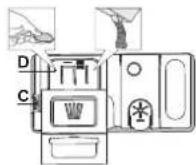
To open the detergent dispenser use the opening device C. Introduce the detergent into the dry dispenser D only. Place the amount of detergent for pre-washing directly inside the tub.
-
When measuring out the detergent refer to the mentioned earlier information to add the proper quantity. Inside the dispenser D, there are indications to help the detergent dosing.
-
Remove detergent residues from the edges of the dispenser and close the cover until it clicks.
-
Close the lid of the detergent dispenser by pulling it up until the closing device is secured in place.
The detergent dispenser automatically opens up at the right time according to the program.
Usage of detergent not designed for dishwashers may cause malfunction or damage to the appliance.
DAILYUSE
1. CHECK WATER CONNECTION
Check that the dishwasher is connected to the water supply and that the tap is open.
2. SWITCH ON THE DISHWASHER
Open the door and press the ON/OFF button.
- LOAD THE RACKS (see LOADING THE RACKS).
4. FILL THE DETERGENT DISPENSER
5. CHOOSE THE PROGRAM AND CUSTOMISE THE CYCLE
Select the most appropriate program in accordance with the type of crockery and its soiling level (see PROGRAMS DESCRIPTION) by pressing the PREVIOUS/NEXT buttons. Select the desired options (see OPTIONS AND FUNCTIONS). Not all options are compatible with all programs.
6. START
Start the wash cycle by pressing START/Pause button (led is lit) and closing the door within 4 sec. When the program starts you hear a single beep. If the door was not closed within 4sec., the alarm sound will be played. In this case, open the door, press START/Pause button and close the door again within 4 sec.
7.END OF WASH CYCLE
The end of the wash cycle is indicated by sound and the display shows END. Open the door and switch off the appliance by pressing the ON/OFF button.
Wait for a few minutes before removing the crockery - to avoid burns. Unload the racks, beginning with the lower one.
The machine will switch off automatically during certain extended periods of inactivity, in order to minimise electricity consumption. If the crockery is only lightly soiled or if it has been rinsed with water before being placed in the dishwasher, reduce the amount of detergent used accordingly.
MODIFYING A RUNNING PROGRAM
If a wrong program was selected, it is possible to change it, provided that it has only just begun. RESET the machine: press and hold the ON/OFF button for more than 3. sec., and the machine will switch off. The dashboard will show "0:01". Close the door and wait until drain cycle ends (around 1 minute). Open the door and switch the machine back on using the ON/OFF button and select the new wash cycle and any desired options. Start the cycle by pressing the START/Pause button and closing the door within 4 sec.
ADDING EXTRA CROCKERY
Without switching off the machine, open the door first slightly to avoid water splashing out (START/Pause led starts blinking) (Caution! Hot steam!) and place the crocckery inside the dishwasher. Press the START/Pause button and close the door within 4 sec., the cycle will resume from the point at which it was interrupted.
ACCIDENTAL INTERRUPTIONS
If the door is opened during the wash cycle, or if there is a power cut, the cycle stops. ONLY IF YOU PRESS the START/Pause button and close the door within 4 sec., the cycle will resume from the point at which it was interrupted.
ADVICE AND TIPS
TIPS
Before loading the baskets, remove all food residues from the crockery and empty the glasses. You do not need to rinse beforehand under running water. Arrange the crockery so that it is held in place firmly and does not tip over; and arrange the containers with the openings facing downwards and the concave/convex parts placed obliquely, thus allowing the water to reach every surface and flow freely.
Warning: lids, handles, trays and frying pans should not prevent the spray- er arms from rotating.
Place any small items in the cutlery basket.
Very soiled dishes and pans should be placed in the lower basket because in this sector the water sprays are stronger and allow a higher washing performance. After loading the appliance, make sure that the sprayer arms can rotate freely.
UNSUITABLE CROCKERY
Wooden crockery and cutlery.
-
Delicately decorated glasses, artistic handicrafts and antique crockery. Their decorations are not resistant.
-
Parts in synthetic material which do not withstand high temperatures.
Copper and tin crockery.
Crockery soiled with ash, wax, lubricating grease or ink.
The colours of glass decorations and aluminium/silver pieces can change and fade during the washing process. Some types of glass (e.g. crystal objects) can become opaque after a number of wash cycles too.
DAMAGE TO GLASS AND CROCKERY
-
Only use glasses and porcelain guaranteed by the manufacturer as dishwasher safe.
-
Use a delicate detergent suitable for crockery
-
Collect glasses and cutlery from the dishwasher as soon as the wash cycle is over.
TIPS ON ENERGY SAVING
-
When the household dishwasher is used according to the manufacturer's instructions, washing tableware in a dishwasher usually consumes less energy and water than hand dishwashing.
-
In order to maximize dishwasher efficiency, it is recommended to initiate the wash cycle once the dishwasher is fully loaded. Loading the household dishwasher up to the capacity indicated by the manufacturer will contribute to energy and water savings. Information on the correct loading of tableware can be found in the Loading chapter. In case of partial loading, it is recommended to use a dedicated wash options if available (Half load/ Zone Wash/ Multizone), filling up only selected racks. Incorrect loading or overloading of the dishwasher may increase resources usage (such as water, energy and time, as well as increase noise level), reducing cleaning and drying performance.
-
Manual pre-rinsing of tableware items leads to increased water and energy consumption and is not recommended.
HYGIENE
To avoid odour and sediment which can be accumulated in the dishwasher please run a high-temperature program at least once a month. Use a teaspoon of detergent and run it without loading to clean your appliance.
RESISTANCE TO FROST
If the appliance is placed in surroundings exposed to the risk of frost, it must be drained completely. Run the Self-Clean cycle to drain the water tank. Turn off the water tap, remove the inlet and outlet hoses, and let all the water drain away. Make sure that the water softener is full of dissolved regeneration salt in the salt container, to protect the appliance from temperatures of up to -20^ .
If the appliance was stored in frost conditions the appliance must remain at an ambient temperature of min. 5^ for at least 24 hours before the first run.
PROGRAMS TABLE
| Program | Programs description | Drying phase NaturalDry | Available options** | Duration of wash program (h:min)*** | Water consumption (litres/cycle) | Energy consumption (kWh/cycle) | |
| P1 Eco | Eco 50°- Program is suitable to clean normally soiled tableware, that for this use, it is the most efficient program in terms of its combined energy and water consumption, and that it is used to assess compliance with the EU Ecodesign legislation. | ✓ | ✓ | POWER CLEAN | 4:00 9.5 | 0.64 | |
| P2 A | Auto Intensive 65°- Automatic program for heavily soiled dishes and pans. | Senses the level of soil-ing on the dishes and adjusts the program accordingly. When the sensor is detecting the soil level an animation appears in the display and the cycle duration is updated. | ✓ | ✓ | POWER CLEAN | 2:25-3:10 | 7.0-25.0 1.30- |
| P3 | Auto Mixed 55°- Automatic program for nor-mally soiled dishes with dried food residues. | ✓ | ✓ | POWER CLEAN | 1:20-3:20 | 7.5-20.5 0.75-1 | |
| P4 | Auto Fast 50°- Automatic program for nor-mally and lightly soiled dishes. The everyday cycle that ensures optimal cleaning and drying performance in a shorter time. | ✓ | ✓ | POWER CLEAN | 1:00-1:50 | 0.0-16.0 0.70-1 | |
| P5 | Rapid 45°- Program is recommended for limited amount of lightly-soiled dishes with no dried food residues. Does not include the drying phase. | - | ✓ | 0:30-0:40 | 0.5-15.0 0.55-0.65 | ||
| P6 | Crystals 45°- Program for delicate items, which are more sensitive to high temperatures, for example, glasses and cups. | ✓ | ✓ | 1:40-1:50 | 1:2.5-17.0 0.95- | 1.20 | |
| P7 | Silent 55°- Suitable for night-time operation of the appliance. Ensures optimal cleaning and drying performance with the lowest noise emission. | ✓ | ✓ | 3:50-4:10 | 1:0.5-14.5 0.80- | 1.15 | |
| P8 | Sanitizing 65°- Normally or heavily soiled crockery, with additional anti-bacterial wash. Can be used to perform maintenance of the dishwasher. | ✓ | - | 1:55-2:10 | 1:2.0-19.0 1.40- | 1.80 | |
| P9 | Prewash - Used to refresh crockery planned to be washed later. No detergent is to be used with this program. | - | ✓ | 0:12 4.5 | 0.10 | ||
| P10 | Self Clean 65°- Program to be used to perform maintenance of the dishwasher, to be carried out only when the dishwasher is EMPTY using specific detergents designed for dishwasher maintenance. | - | - | 1:15 | 12.7 | 1.10 | |
ECO program data is measured under laboratory conditions according to European Standard EN 60436:2020.
Note for Test Laboratories:
For information on comparative EN testing conditions, please send an email to the following address: dw_test_support@europeanappliances.com
Pre-treatment of the dishes is not needed before any of the programs.
*) Door is opened before the programm has been ended. This is to improve the drying efficiency. Wait until the time has reached 00:00 to unload the dishwasher
) Not all options can be used simultaneously.
*) Values given for programs other than the program Eco are indicative only. The actual time may vary depending on many factors such as temperature and pressure of the incoming water, room temperature, amount of detergent, quantity and type of load, load balancing, additional selected options and sensor calibration. The sensor calibration can increase program duration by up to 20 min.
OPTIONS AND FUNCTIONS
OPTIONS can be selected/ deselected, after choosing the program, directly by pressing the corresponding button (if available - the indicator lights up) (see CONTROL PANEL). If an option is not compatible with the selected program (see PROGRAMS TABLE), the corresponding LED flashes rapidly 3 times and beeps will sound. The option will not be enabled. An option can change time or water or energy consumption for the program.
POWER POWER CLEAN - Thanks to the additional power jets this option provides a more intensive and powerful wash in the lower rack, in the specific area. This option is recommended for washing pots and cassetoles (please refer to the Power Clean in loading section).
HALF LOAD - If there are not many dishes to be washed, HALF LOAD is used to save water, electricity or time, depending on the selected program. Remember to reduce the amount of detergent.
+ DRY - The higher temperature during the final rinse and the extended drying phase which allows for improved drying. The EXTRA DRY option results in the lengthening of the wash cycle.
DELAY - The start of the program may be delayed for a period of time between 0:30 and 24 hours.
1. Select the program and any desired options. Press the DELAY button (repeatedly) to delay the start of the program. Adjustable from 0:30 to 24 hours. Once the 24 hours setting is reached, press the DELAY another time to deactivate the DELAY function.
2. Press the START/Pause button and close the door within 4 sec. the timer will begin counting down.
3. Once this time has elapsed, the indicator light switches off and the program begins automatically.
The DELAY function cannot be set once a program has been started.
LIGHT ON THE FLOOR - A LED light projected on the floor indicates that the dishwasher is working. The light goes off at the end of a cycle. This feature is active by default, but it is possible to deactivate it in the " SETTINGS MENU".
NaturalDry - It is a convection drying system which automatically opens the door during/after the drying phase to ensure exceptional drying performance every day. The door opens at a temperature that is safe to your kitchen furniture.
As additional steam protection, specially designed protection foil is added together with the dishwasher.
To see how to mount protection foil please refer to INSTALLATION GUIDE. This feature is active by default, but it is possible to deactivate it in the " SETTINGS MENU".
SENSING - When the sensor is detecting the soil level an animation appears in the display (around 20 min.) and the cycle duration is updated. SENSING is for the level of soiling on the dishes and it is present for all cycles (excepting Eco) adjusting the program accordingly.
WATER TAP CLOSED - Alarm - Flashes when there is no inlet water or water tap is closed.
FAVOURITE PROGRAM - The FAVOURITE program may be saved and will be easily accessible. Find the program using PREVIOUS/NEXT, and then press the FAVOURITE program button for 3 seconds.
DESCALE - Alarm - Limescale accumulation was detected on the internal components of the appliance. Check if the Water Hardness Setting is at the correct value and salt is present in the salt container (see FIRST TIME USE), then use a descending product (WPro brand is recommended) with the Self-Clean program. After a successful descending, the icon will stop being displayed. If the actions above are not performed, product performance will deteriorate. DESCALE warning will start blinking and «dES» alarm will appear on the display. If still no action is taken, the appliance will only allow a certain number of cycles to be started (indicated during «dES» alarm display) and then will be BLOCKED to prevent component damage, with only the Self-Clean program available. Performing a full descending will unblock the product. In the case of extremely high amounts of timescale, descending may have to be performed twice to be efficient.
CYCLE COUNTER - This feature shows the number of cycles the dishwasher has performed. For the number of cycles from 0-999, a fixed number will be displayed.
Example for 25 cycles.
When the cycle number is higher than 1000, the number will scroll in the display. The "_" represents the "", as for instance: 1.000 = 1.000 , 13.947 = 13.947 (the number will scroll for 3 times).
Example for 13.947 cycles:
After the cycle visualization, the display will return to visualize n^D n . NOTE: The dishwasher may have already performed about 30 cycles. This is due to the extended quality process carried out during production. It guarantees higher product quality.
LOADING THE RACKS
CAPACITY: 14 standard place-settings
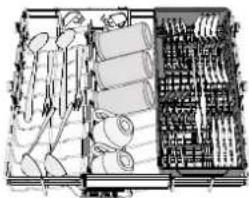
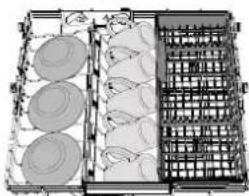
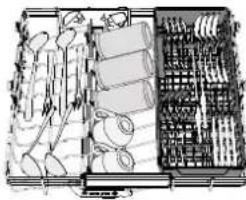
TOP RACK
The top rack provides a targeted cleaning Wash Zone for bowls, mugs, even big plates and cutlery that you'd normally load in the lower racks, making
extra space for the rest of the day's dishes.
A separate arrangement of the cutlery makes collection easier after washing and improves washing and drying performance.
Knives and other utensils with sharp edges must be positioned with the blades facing downwards.
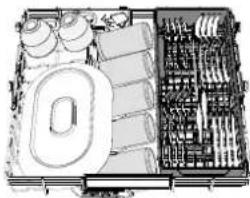
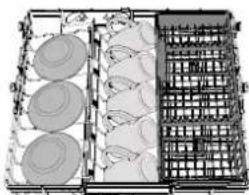
UPPER RACK
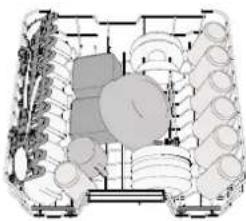
Load delicate and light dishes: glasses, cups, saucers, low salad bowls.
The upper rack has tip-up supports which can be used in a vertical position when arranging tea/ dessert saucers or in a lower position to load bowls and food containers.
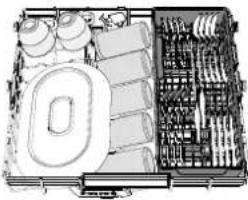
(loading example for the upper rack)
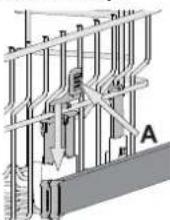
ADJUSTING THE HEIGHT OF THE UPPER RACK
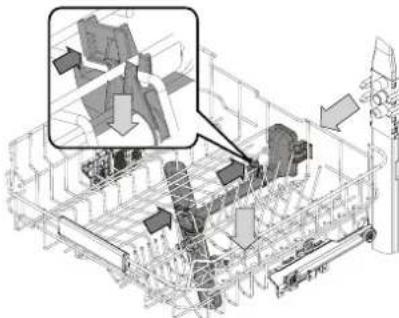
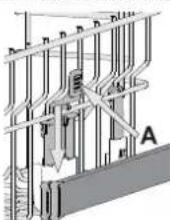
The height of the upper rack can be adjusted: a high position to place bulky crockery in the lower basket and a low position to make the most of the tip-up supports by creating more space upwards and avoiding collision with the items loaded into the lower rack.
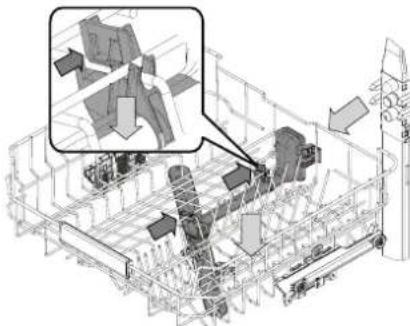
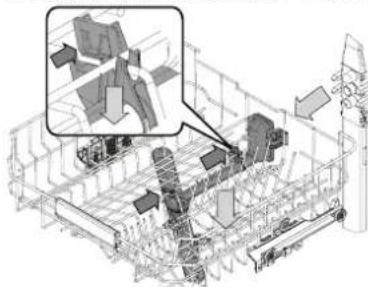
The upper rack is equipped with an Upper Rack height adjuster (see figure), without pressing the levers, lift it up by simply holding the rack sides, as soon as the rack is stable in its upper position. To restore to the lower position, press the levers A at the sides of the rack and downwards.
We strongly recommend that you do not adjust the height of the rack when it is loaded. NEVER raise or lower the basket on one side only.
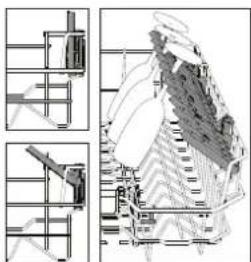
FOLDABLE FLAPS WITH ADJUSTABLE POSITION
The side foldable flaps can be folded or unfolded to optimize the arrangement of crockery inside the rack. Wine glasses can be placed safely in the foldable flaps by inserting the stem of each glass into the corresponding slots. In the case of the high position of the upper rack, flaps cannot remain in the vertical position. Depending on the model:
- to unfold the flap there is needed to slide it up and rotate or release it from the snaps and pull it down.
to fold the flap there is needed to rotate it and slide flap down or pull it up and attach flap to the snaps.
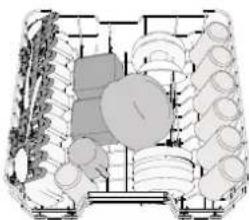
LOWER RACK
For pots, lids, plates, salad bowls, cutlery etc. Large plates and lids should ideally be placed at the sides to avoid interferences with the spray arm. The lower rack has tip-up supports which can be used in a vertical position when arranging plates or in a horizontal position (lower) to load pans and salad bowls easily.
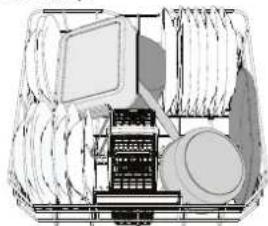
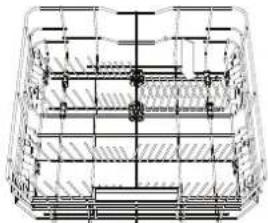
(loading example for the lower rack)
POWER CLEAN
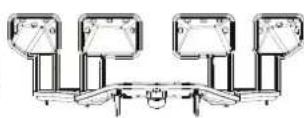
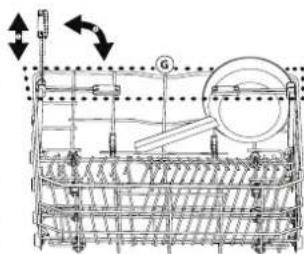
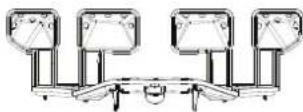
Power Clean uses the special water jets in the rear of cavity to wash more intensively the high dirty items. The lower rack has a Space Zone, a special pull-out support in the rear of the rack that can be used to support frying pans or baking pans in upright position, thus taking up less space. Placing the pots/casseroles faced to the Power Clean component please activate the POWER CLEAN on the panel. How to use the Power Clean:
- Adjust the Power Clean area G folding down the rear plate holders to load pots.
- Load pots and casseroles inclined vertically in the Power Clean area. Pots have to be inclined towards the powerful water jets.
CUTLERY BASKET
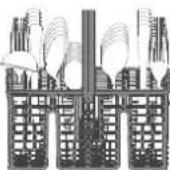
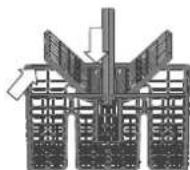
It is fitted with top grids for improved cutlery arrangement. It must only be positioned at the front of the lower rack. Knives and other utensils with sharp edges must be placed in the cutlery basket with the
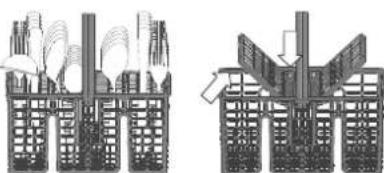
points facing downwards or they must be positioned horizontally in the tip-up compartments on the upper rack.
CARE AND MAINTENANCE
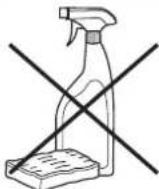
ATTENTION: Always unplug the appliance when cleaning it and when performing maintenance work.Do not use flammable liquids to clean the machine.
CLEANING THE DISHWASHER
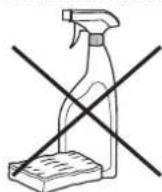
Any marks on the inside of the appliance may be removed using a cloth dampened with water and a little vinegar. The external surfaces of the machine and the control panel can be cleaned using a non-abrasive cloth which has been dampened with water. Do not use solvents or abrasive products.
PREVENTING UNPLEASANT ODOURS
Always keep the door of the appliance ajar in order to avoid moisture from forming and being trapped inside the machine. Clean the seals around the door and detergent dispensers regularly using a damp sponge. This will avoid food becoming trapped in the seals, which is the main cause behind the formation of unpleasant odours.
CHEKING THE WATER SUPPLY HOSE
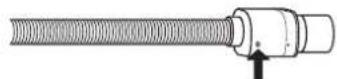
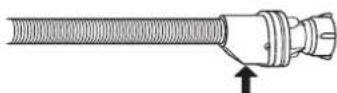
Check the inlet hose regularly for brittleness and cracks. If damaged, replace it by a new hose available through our After-Sales Service or your specialist dealer. Depending on the hose type:
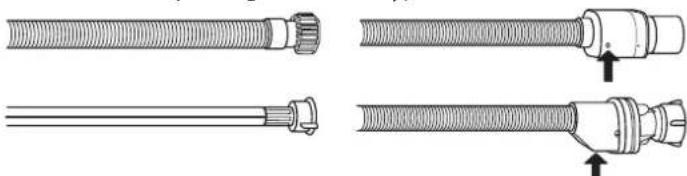
If the inlet hose has a transparent coating, periodically check if the colour intensifies locally. If yes, the hose may have a leak and should be replaced. For water stop hoses: check the small safety valve inspection window (see arrow). If it is red, the water stop function was triggered, and the hose must be replaced by a new one. For unscrewing this hose, press the release button while unscrewing the hose.
CLEANING THE WATER INLET HOSE
If the water hoses are new or have not been used for an extended period of time, let the water run to make sure it is clear and free of impurities before performing the necessary connections. If this precaution is not taken, the water inlet could become blocked and damage the dishwasher.
CLEANING THE FILTER ASSEMBLY
Regularly clean the filter assembly so that the filters do not clog and that the waste water flows away correctly.
Using the dishwasher with clogged filters or foreign objects inside the filtration system or spray arms may cause unit malfunction resulting in loss of performance, noisy work or higher resources usage.
The filter assembly consists of three filters which remove food residues from the washing water and then recirculate the water.
The dishwasher must not be used without filters or if the filter is loose. At least once per month or after every 30 cycles, check the filter assembly and if necessary clean it thoroughly under running water, using a non-metallic brush and following the instructions below:
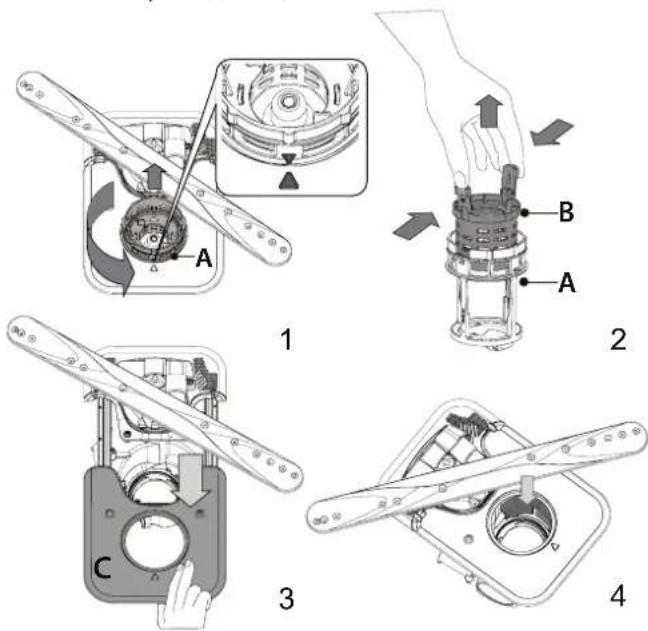
- Turn the cylindrical filter A in an anti-clockwise direction and pull it out (Fig 1). It is important when reinstalling the filter that the two triangles shown on the zoom meet.
- Remove the cup filter B by exerting a slight pressure on the side flaps (Fig 2).
- Slide out the stainless-steel plate filter C (Fig 3).
- In case you find foreign objects (such as broken glass, porcelain, bones, fruit seeds etc.) please remove them carefully.
- Inspect the trap and remove any food residues. NEVER REMOVE the wash-cycle pump protection (shown by an arrow) (Fig 4).
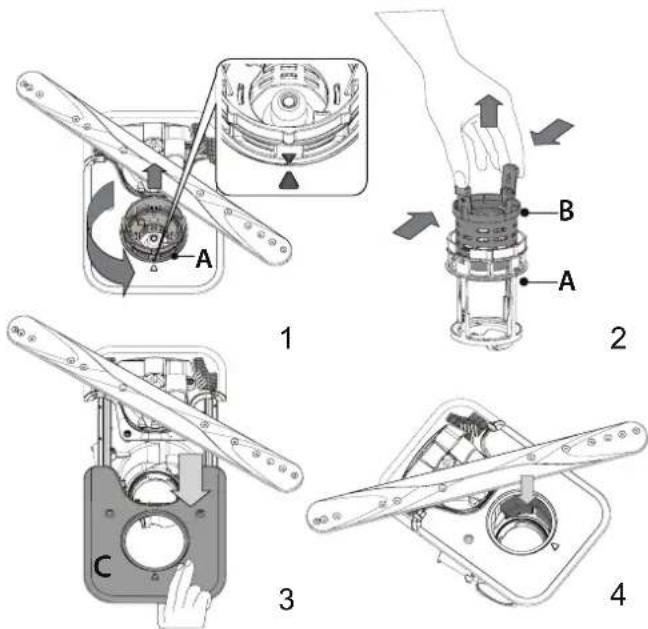
After cleaning the filters, replace the filter assembly and fix it in position correctly; this is essential for maintaining the efficient operation of the dishwasher.
CLEANING THE SPRAY ARMS
On occasions, food residue may become encrusted onto the spray arms and block the holes used to spray the water. It is therefore recommended that you check the arms from time to time and clean them with a small non-metallic brush.
To remove the upper spray you must remove it together with the manifold.
The Top Rack has a fixed wash tube with all the wash nozzles facing upward. To clean it you can slide the rack out and with a tweezer remove items that may be lodged in the nozzles.
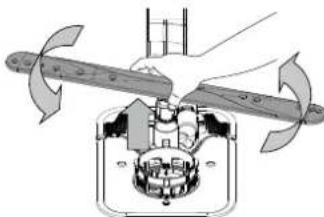
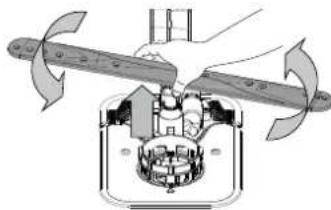
The lower spray arm may be removed by pulling it upwards and rotating it anti-clockwise. Mounting back the spray arm is by pulling it down and rotating it clockwise.
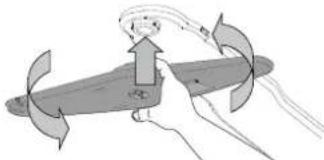
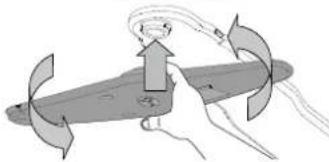
The ceiling spray arm may be removed by pressing it up and then rotating it anti-clockwise. Mounting back the spray arm is by pulling it upwards and rotating it clockwise.
TROUBLESHOOTING
In case your dishwasher doesn't work properly, check if the problem can be solved by going through the following list. For other errors or issues please contact authorized After-sales Service whose contact details can be found in the warranty booklet. Spare parts will be available for a period of either up to 7 or up to 10 years, according to the specific Regulation requirements.
| PROBLEMS POSSIBLE CAUSES SOLUTIONS | ||
| S The salt indicator is lit | Salt reservoir is almost empty. | Refill the reservoir with salt (for more information - see FILLING THE SALT RESERVOIR). Check the water hardness setting if necessary (see WATER HARDNESS TABLE). |
| S The salt indicator is blinking | Salt reservoir is empty. | Refill the reservoir with salt as soon as possible. Using the appliance without salt may cause damage to its internal components. |
| The rinse aid indicator is lit or blinking | Rinse aid dispenser is empty. (After refill the rinse aid indicator may remain lit for a short time). | Refill the dispenser with rinse aid (for more information - see FILLING THE RINSE AID DISPENSER). |
| Denscale indicator is lit or blinking; "DES" alarm is displayed. | Limescale is accumulating on internal components of the appliance. | Descale the appliance immediately using the Self Clean program and a commercially available descaling product (see OPTIONS AND FUNCTIONS). Refill the reservoir with salt. Check the water hardness setting. If the appliance is not descaled, it will stop functioning. |
| The dishwasher won't start or does not respond to commands. | The appliance has not been plugged in properly. | Insert the plug into the socket. |
| Power outage. | For safety reasons, the dishwasher will not restart automatically when power returns. Open dishwasher door, press START/Pause button and close the door within 4 seconds. | |
| The dishwasher door is not closed. NaturalDry pin is not pulled in. | Vigorously push the door until you hear the "click". | |
| A cycle is interrupted by door opening for more than 4 seconds. | Press START/Pause and close the door within 4 seconds. | |
| The control panel does not respond or F6 E1 is displayed. | Switch off the appliance by pressing the ON-OFF/Reset button, switch it back on after approximately one minute and restart the program. If the problem persists, unplug the appliance for 1 minute, then plug it back in. | |
| The dishwasher won't drain. Display shows: F7 E3 or F9 E1 | The filter is clogged with food residues or limescale | Clean the filter and descale the appliance (see CLEANING THE FILTER ASSEMBLY and DESCALE INSTRUCTION). |
| The drain hose is kinked. Check the drain hose is blocked. Clean the sink | (e see INSTALLATION INSTRUCTION). drain pipe. | |
| The dishwasher makes excessive noise. | Dishes are rattling against each other. | Position the crocckery correctly (see LOADING THE RACKS). |
| An excessive amount of foam is present. | The detergent has not been measured out correctly or it is not suitable for use in dishwashers (see FILLING THE DETERGENT DISPENSER). Restart the current cycle by switching OFF the dishwasher, then switch it on again, select a new program, press START/Pause and close the door within 4 seconds. Please do not add any detergent. | |
| Crockery has not been arranged properly. | Arrange the crockery correctly (see LOADING THE RACKS). | |
| The filter is clogged with food residues or limescale. | Clean the filter assembly (see CARE AND MAINTENANCE). | |
| The dishes are not clean. | Crockery has not been arranged properly. | Arrange the crockery correctly (see LOADING THE RACKS). |
| Spray arms cannot rotate freely, being hindered by the dishes. | Arrange the crockery correctly (see LOADING THE RACKS). Check that the upper rack is in the correct position and adjust (lift up) if necessary. | |
| The wash cycle is too gentle. Select an appropriate wash cycle (see PROGRAMS TABLE). | priate wash cycle (see PROGRAMS TABLE). | |
| An excessive amount of foam is present. | The detergent has not been measured out correctly or it is not suitable for use in dishwashers (see FILLING THE DETERGENT DISPENSER). | |
| The cap on the rinse aid compartment has not been closed correctly. | Make sure the cap of the rinse aid dispenser is closed. | |
| The filter is clogged with food residues or limescale. | Clean the filter and descale the appliance (see CLEANING THE FILTER ASSEMBLY). | |
| The salt reservoir is empty. Fill the salt reservoir | ir (see FILLING THE SALT RESERVOIR). | |
| The dishwasher does not fill the water. The display shows: H20 and is lit; acoustic alarm sounds. | No water in the water supply or the tap is closed. | Make sure there is water in the water supply and the water tap is open. |
| The water inlet hose is kinked. | Check the inlet hose (see INSTALLATION). Open dishwasher door, press START/Pause button and close the door within 4 seconds. | |
| The screen in the water inlet hose is clogged; it is necessary to clean it. | Check and clean the screen in the water inlet hose. Open dishwasher door, press START/Pause button and close the door within 4 seconds. | |
| The dishwasher finishes the cycle prematurely. The display shows: F8 E3 | The filter is clogged with food residues or limescale. | Clean the filter and descale the appliance (see CLEANING THE FILTER ASSEMBLY and DESCALE INSTRUCTION). |
| Drain hose positioned too low or siphoning into the home sewage system. | Check if the end of the drain hose is placed at the correct height (see INSTALLATION). Check for siphoning into the home sewage system, and install a siphon breaker/air admittance valve if necessary. | |
| An excessive amount of foam is present. | The detergent has not been measured out correctly or it is not suitable for use in dishwashers (see FILLING THE DETERGENT DISPENSER). | |
| Air in the water supply. Check water supply for leaks or other issues letting air inside. | ||
| The dishes are not dried well. | Rinse aid is not present or the dosage is too low. | Make sure the rinse aid dispenser is filled (see FILLING THE RINSE AID DISPENSER). Multifunctional tablets only will not provide as good drying effects as the actual use of liquid rinse aid. |
| The dishes have been unloaded after the door was opened automatically but before the actual cycle end. | Make sure the cycle has ended before starting to unload the dishes (see DAILY USE). For even better drying results, it is recommended to let the dishes sit inside the dishwasher with the door open for additional 15 minutes after the cycle ends. | |
| The dishes are sitting too flat. | If you notice puddles of water inside cavities of cups, mugs or bowls, try loading the dishes (especially in the upper rack) providing more inclination to let larger amounts of water drip down before drying starts. | |
| The selected cycle does not have the drying phase. | Please check in the PROGRAMS TABLE if the selected program is equipped in the drying phase. A cycle without the drying phase may not deliver desired drying efficiency, so it is recommended to change cycle selection for the one that has the drying phase. | |
| The dishes are made of non-stick or plastic. | Some water drops remaining on this type of material are normal. | |
| Dishes and glasses have blue streaks or bluish tinges. | Rinse aid dosage is excessive. Adjust the dosage to a lower setting. | |
| Dishes and glasses are covered with limescale or a whitish film. | The salt reservoir is empty. | Refill the reservoir with salt as soon as possible. Using the appliance without salt may cause damage to its internal components. |
| The water hardness setting is too low. Increase the setting (see WATER HARDNESS TABLE). | ||
| The cap of the salt reservoir is not properly closed. | Check and close the salt reservoir cap. | |
| The rinse aid reservoir is empty or the rinse aid dosage is insufficient. | Refill the dispenser with rinse aid and check the dosage setting (for more information -see FILLING THE RINSE AID DISPENSER). | |
| The dishwasher shows F8 E5 | Valve is blocked or faulty. Close the water tap, if possible. Do not switch off the power supply. Call the service. | |
| Detergent leaks. | Depends on the liquid detergent used and can be emphasized in case of delay option is activated. | Small leaks will not cause machine malfunction and can be avoided by changing liquid detergent type or using tablets. |
Policies, standard documentation, ordering of spare parts and additional product information can be found by:
-
Using QR code on your product.
-
Visiting our website docs.whirlpool.eu/docs and parts-selfservice.europeanappliances.com
-
Alternatively, contact our After-sales Service (See phone number in the warranty booklet). When contacting our After-sales Service, please state the codes provided on your product's identification plate.
The model information can be retrieved using the QR-Code reported in the energy label.
The label also includes the model identifier that can be used to consult the portal of the registry at https://eprel.ec.europa.eu.

BJIARODAPIM B,NY 3AKYINXTE PPOJyKT HA WHIRLPOOL. 3a da noIyauBaTe No-bnHO cbJeIcTBne, pernctppaTe Baunr ypeHa:: www.whirlpool.eu/register

Ipeyn da n3non3Bate ypeia, npooyTe BHHMaTeHNO yka3aHnraTa 3a 6e3onacnoCT m HCTannpaHe. Cnei nHCTannpaHe He 3abpaBnTe da maxHete BCNUK TpaHCnOpTHn qac- TN OT cbDOMNHaTa.
3A NOJUyABAHHE HA NIO-NOJPOBHA INHOPMAU,MOJI, CKAHINPAIte QR KOJA HA BAUNY UPEI
KoHTpolnHrT naHn Ha Ta3n CbDomnHa MaHnHa ce aKTbnpa c HATNcKaHe Ha 6yToHa 3a BKl./M3KJI. C qen cneCTBaHe Ha eNeKTpoeheprn, KOHTpolnHrT naHn Ce deaKTbnpa aBtOMaTuHo cIe10 MmHytn, aKO HMa CTapTupanu cnKnbl.
Опиcaне HA пpoДуКТА
ypeI
- NaturalDry
- Han-Tophata NocTabka
3.CrBbaemnKanaUN - TopHa KooHnua
- Perynatop 3a BucounHa Ta Ra npHa Kaunu
- TopHo pa3npbckBaio paMo
7.Подпьхka 3a Power Clean(Пауьр Клин)
8.Долнakошницa - KoOhnUka 3a Ппбори
- Power Clean (Palybp KninH)
11.ДонораЗпьсквац paMo
12.ФнгтbpenBb3eN - Pe3epBoap 3a con
14.ДоэториЗа npenapat Иnomоцно cpeCTBO 3a n3nkaKBaHe - Ta6eKc dHaHHN
- KOHTPOJEN naHEn
KOHTPOJEN IANAJI
- BytoH BKI.-N3KJ./ Hympahe CbC CBETnHeHnDnKaTOp
- ByToH 3a INPENEIMUHA nporpama
- ByToH 3a CNEBAUAnporpama
- ByToH 3a JIO6NMA nporpama CbC CBETNIHEH INDINKAtoP
5.CBtINHeH INDkaTOp 3a npa3eH pe3epBoap 3a Con - CBeTInHeH INIINKaTOp 3a npa3eH pe3epBoap 3a Ipenapat 3a N3nnakBaHe
- CBeTInHeH INDnKaTOp 3a OTCTPAHBAHE HA KOTJIeH KAMbK
-
CBeTINHeH INHnKaTOp 3a KpaHbOdaTa 3aTbOpeH
-
INHINKATOp 3a HOMep Ha nporpama u octBaauo BpeMe
- Dmnnnei
- ByToH 3a onu Power Clean CbC CBETnHeH HnDnKaTOp
- ByToH 3a onuN IOnOBnH 3apeKdahe Cbc CBeTINHeH INIkaTop/ HactpoKn -HaTNCHeTe 3a 3ceK
- ByToH 3a onuia DonbIInTeHNO 3cywabane Cbc CBetnHeH HndkaTOp
- ByToH 3a onuHa OtnaraHe CbC CBETnHeH HnDnKaTOp
- ByToH CTAPT/NaIy3a CbC CBeTIINHe HINIMKaTOp
YIOTPE6A 3A IINPBbB NbT
CbBETN3A YNITPPE6A 3A NbPBNUbT
CneMONTaXOTCTpaHete6NOKnpaunTe eIeMeHTNOT KOnHnUte N3aDbpKaunTe NaCTuNOT RopHaTKAoHnua.
MEHIO CHACTPOIKU
- BkHIOUeTe ypeDa, KaTO HaTnCHeTe 6yToHa BKN.-H3KJI
2.3aPbXTe 6yToHa HAcTpoKn (PiOnoBn 3apeJdahe )3a 3ceynHdN,doKaTO yyeTe 3ByKO B CnHn Ha DnCnpe Ce NOKae SET - CnE eHnca cekynda 1e ce nokae npBpBaTa HnUHa HAcToPouKa (6yKba,
- HaTnchHe T PEPNUIE H
3a da npeBbptnte npes CnncBka C HanuHnHaCTpoKn (BnKte Ta6nuaT aNo-dony), cneD ToBa HaTnchHe CTAP/Tay3a >Ba Da Bnnte N Ipomehnte cToHocTTa Ha Tekyuio 136paHata HaCTpoKa. - HaTnCHeTI PEPNIWEH/CNEIBAU, 3a Da IpOMeHNTe CTOHOCCTA, CNeI TOBa HA TnCHeCTAP/Na3a>II, 3a Da 3aNA3HTe HOBATA CTOIHOCCT IIN Da CE BbPHeTe KbM rnaBHOTO MeHIO.
- 3a Da npomehnte pyra Hacptoika, noBtope Tockn 4 n 5.
- HatncheTe BKN.-N3KNI nnu n3yaKaaiTe 30 ckyHn, 3a da n3ne3eTe OT MeHIOTo.
| Б YukВА | HACTPOДКИ | СTOИНОCTИ (По поразабирае - с удобенишрифт) * |
| 10 | Броча Нцклm - Брочицклm на Измьва- He, ИЗвъшени ON сьдомиянота машина. | Hanp. 25 zuкьla: 25; Hanp. 13 947 zuкьla: 13_947 (преьг trade 3a 3 nbtn) |
| 11 | Ново Н Тьърост Na BODATA (Бж. HACTPOДBAHE HA TBьрДОCTHA BODA- TA"u,Тавлица 3A TBьрДОCT Ha BODATA") | 1 | 2 | 3 | 4 | 5 |
| 12 | Ново ИЗллakbaши Пpenapat (Бж. PEGYЛМРАЕ HA ДОЗИРAHETO HA ПЕПAPATA 3A ИЗПЛAKBAHE") | 0 | 1 | 2 | 3 | 4 | 5 |
| 13 | NaturalDry (Бж. OПЛIMN И ФУHKLIMN) "1" = Вкln, "0" = ИЗkn. | 1 | 0 |
| 14 | Сvetлma Na Рда (Бж. OПЛIMN И ФУHKLIMN) "1" = Вкln, "0" = ИЗkn. | 1 | 0 |
| 15 | Звук "1" = Вкln, "0" = ИЗkn. | 1 | 0 |
| 16 | Фабрични Habсторки - Habtисete CTAPT/Па- уза, за вьз_STановITE phабричпite Habстор- КИ по подрабираце на BCИЧКИ сTOИHOCТи на НасторкITE, ВКЛЮчени в MEHIOTО с Habсторки. | - |
*) CToHocTt a no nOpa36npaHe He ce OTHac 3a 6pOraHa ZKInTe.
3APEKDAHE HA PE3EPBOAPA 3A COJ
MnON3BaHeTo Ha cOn npedOBpTaRa 06pa3yBaHeTo Ha KOTJIH KAMbK no cbDObTe n yHKuHOHaHHTe KO mNoHEHT Ha MaunHaTa.
Pe3epBoaPbT 3a CoI ce HaMnPa B DoJHata Yact Ha CbDOMNHaTa MaWnHa (NOJ DoJHata KOWHnCa OT JRAbTaCTpaHa)
3aBnKTeHoepe3epBoapb3a c0n Hkora da He ocTaBa npa3eH.
BaxHo e da 3a aandeTe TBbpDocTtHa BOData.
Korato CBeTINHHNt INHnKaTop 3APEXDAHE HA COI S Ha KOHTponHnnaHnCBETn, Tp6Ba da do6aBnte coJ.
1. OCTpaHHe TOnHnTa KOoHNuIa n pa3BnTe KanaKaTa Ha pe3epBoapa (O6paTHo Ha YacOBHnKOBaTa CTpeJIka).
2. NocTabete yHnraTAt (Bx. fHpypata) n HnblnHepe3epBoapa 3a con do p6a (okono 0,5 kg); He e Heo6uayau Ho da n3teue MaKo Boda.
3.CamnbpBn npT npaBnt ToBa:HaBnHHeTe pe3epBoapa 3a coN C Boga.
4. Otrpahe Te yHnraTa n 3a6bpeTe octaTbUte OT cOJ OT TBopa.
YBepTe Ce, Ye KanaayKaTa e 3aBNTa 3npABO, Taka Ye No BpeMe Ha nporpaMaTa 3a MneHe npenapaTb Ta He MoKe Da BnEe B pe3epBoapa (TOBa MoKe da NOBpeDn HEnonpabNMo OMEKOTnteNa 3a BODa).
Korato e Heo6xOIMO da do6aBnte coJ, e 3aIbIJIHTeHIO da HApBaBNTe TOBa IpeDn 3anOuBaHe Ha zIKbHa Ha N3MnBaHe, 3a Da ce n3-6erHe KOp03n.
OctaHaHnT cOne npaTbOp nn rpaHyn coJ moKe da DOBeMaT do bIb6ka Kopo3na, KaTo NobpeRr HENOpabMOMKOmHOHTNe TO hPckDaema CTOMaHa.
TapaHnraTa He e B Cnna, aKo Hn3npaBHOCTnte ca npedn3BnKaHn OT TaKnBa 06ctOraTeNCTBa.
Ako KOHTeHepb3a con He 6bde HanbHeH, Bb3MOxHO e B pe3yIaT Ha HATpynBaHe Ha BapOBuK da ce NobpeM OMEKOTeJIaT 3a BOa HHarpeBaTeHNrT enEMeH.
I3non3BaHeTo Ha coI e npenopbUHTeHc BcKaKbB TnN MnaJIeH npenapaT.
HACTPOINBAHE HA TBbPIOCT HA BOIDATA
3a da Moke OMEKOTeIa 3a BODa da pa6oTn IdeaIIHO, e Oco6eHO BaXHO HAcTPOJKAta 3a TBbPDOCTTa HA BOATA da ce 6a3uPa Ha peanHata TBbPDOCT HA BOATA B DOMA BN. MoKeTe da NOLyUHTe TAsn INHOpMaUNO t MeCTHN Cn DCtABuNk HA BoDA. Da6pnuHATA HAcTPOJka e "3". Bx ,TAbJIuLA 3A TBbPIOCT HA BOIDATA".
BCEKnDHEBHA yNOTPE6A
1. PPOBEPKA HA BOHATA BPb3KA
YBepeTe Ce, Ye CbDOnMnHnHaMaWnHa e Cbbp3aHa KbM BODOnoDaBaHeTo IN KpaHcyTo e OTBopeHo.
2.BKLOUYETECbDOMNJIHATA MAUNHA
OTbopete BpataHa HATNCHE6yTOHa BKJ./M3KJI.
3. 3APEDET E KOWHNLNTE (BxK 3APEXDAHE HA KOLIHNLNTE)
4. 3APEXDAHE HA IO3ATOPA 3A MMRJIEH IPEIAPAT
5. 136EPETEPPOPTPAMATA INIEPCOHJIN3UPAHTEPOTPAMATA
I36peTe Ha-NOxOJaTa nporpama Cnopei BnDa Ha cBdoBeTe H NHO To HA 3aMbpcaBaHe (8X. ONICAHE HA IPOrPAMITE) Kato HATNCHe 6yToHne IPEdmeH/CEBAU. I36peTe jenaHnte oOnu (6X. OITLIINN DYHKLIIN). He BCnuKOnuONc Ca cbBMeCTmN C BCnuKn pnorpam.
6. CTAPT
CTapTnpaIte uKbI Ha n3MnBaHe, KATO HATncHete 6yToHa CTAPT/NaY3a (CBETOIOIDt CBETBA) n 3aTbOpTE BpATA T B pAMKNTe Ha 4 cekyni. KoRato nporpaMaTc TApTnpA, Ce yBu eHNOkPaTe H CnH.An Ako BpTaTAt He 6bJe 3aTbOpEHa B pAMKNTe Ha 4 cekyni, Ue Ce B3PON3BeDe 3ByKoBA anAPMa. B To3n Cnyau OTBOpTe BpATA T, HATncHete 6yToHa CTAPT/NaY3a N OTHOBO 3aTbOpTe BpATA T B pAMKNTe Ha 4 cek.
7. KPART HA IPOIPOPAMATA
KpaT Ha zukbHa Ha 13MnBaHe ce 06o3Haayaba C KpaTk 3BvKOu CnHaJIn, a Ha dncnner ce 13NcBA END (KPAr).OTbOpTe BpTaTa n N3Knio-yepeJa KaTo HaNTChete 6yToHa BKJ./M3KJI.
I3yakaaiTe HRAKONKO MNHyTu, npEi Da npEmaxHete CbDOBeTe, 3a Da n36BerHeTe I3rapaHn. I3BaDeTe CbDOBeTe, KaTO 3aNoHete OT DOHaTa KOWHua.
MaunHata ce n3knHouBa ABTomauHOn npn onpeJeHn npOdbJnxTeHN nepNoHa HaeKTHBHOCT, 3a Da CBeDe DO MHINYM MOTpe6NeHMeTo Ha eHeprA. Ako cbDoBeTa ca camo IeKo 3AmBpCeH Nm Ako ca mNtNaKHeTc B Oda npEn da Ce NOCTABRT B cbDomnHATA MaunHa, HamaJeTe CbotBeTHO KOJIueCTBOTO N3non3BAH Ipenapat.
MOINΦNUIPAHE HA PABOTEU IPOPTPAMA
Ako e n36paHa rpeuHa nporpama, MoKeTe da a npomeHnte, npu ycNoBne Ye Ta e 3aNoUHnA ToKy-IO. HUNPAHE Ha MaWnHaTa: HaTNCHe N 3adPbXte 6yToHA BKN./N3KKn. 3a NOBEe OTE 3 cek N MaunHATA ce N3KIOUBA. Ta6noTo ue nokaxe "0:01". 3aTOBope T Bpata N u34aKaIte, DOkato QKbIbT Ha n3TOBaHepnKIOUH (OKONO 1 MNHTA). OTBOPete Bpata N BKNIOHETe MaHNATA OTHOB C NMOOHTa Ha 6yToHA BKN./N3KKn. N 36peTe HOB UKKnBa Hn3MnBaHe H BCaKaBn KenaHOniC. CTApTnpaTe UKKnBa n HA TOH CTAPT/Nay3a N 3aTbpAhe Ha BpTaTdo 4 ceKynDn.
IO6ABRHE HA CbDOBE
Be3 da n3KnIOyBaTe MaunHaTa, NpBPO OTBopeTe NeKo BpaTaTa, 3a Da n36BerHeTe n3npbCKBaHc H BA OCTA/PTay3a 3anoBuA da Mna) (BHmAmHe! Ropeza napa!)! NocTabeTe CbIOBete BBB BbTpEwHOCTTA Ha cBdOMnHaTa MaunHa. HatncHete 6yToHa CTAPy3a 3aTbOpeTe Bpata Ta pAMknTe Ha 4 cek, ZIKbIbT Ce Bb306HOBra BA OT MOMeTA, B KOIt o 6nil PpeKbCnat.
CNYAHNI PPEKcBAHNA
Ako Bpata 6bde OToBpeHa No BpeMe Ha nporpaMa 3a MHe He nn pIn PneKcbaHe Ha 3axpaHbAHeTo, nporpaMaTa Cnnpa.CAMO AKO HATNCHE TE 6ytoHa CTAP/Play3u 3aTbpnte Bpata Ta B pAmKeNa He 4 cek, uKkJbT Ce B3o6HOBBa OT MOMHTa, B KOIO To npeKcbchat.
N0JE3HN CbBETN
CbBETN
Ipei Da 3apeKdaTe KooHnUHTe,OTcPaHeTe BCNUKo OCTaTbU OTo xpaHa OT cbOBeTe u nnpa3HETe YaunTe. He e HxKHO da n3nnkBaTe npedBaPMTENHO Cteuaua BODA.
IoppeTe cBIOBeTaka, Ye da ce 3aIbpxKaTIO6pe Ha MxCTO n da He CeobpHa; n IOpeTe cBIOBeTe C OTBOPnTe HApONy n pa3NOJoxeTe Bn6HATe/3NbKHaHnTe YAcTu Taka, Ye BoaTa Da MoKe Da DCOTnHe BCRA Ka NOBpXHOCT N da Teue CBO6OdHo.
PpeynpexdneH: KaanTe, Dpbknte, NodHocTe u TuraHnTe 3a nbpKHe Tp6Ba Da He npeyat Ha BbptHeTo Ha pa3npbckBaunTe pameHe. PocTabete Dpe6hnte apTNKInB KOuHNca 3a np6opn. MHOrO 3aMbpceHnTe CboDBe n TeHkepn CneDBa Da ce NoCTabT B DOHaTa KooHNca, TbKaTO B To3n CeKTop BOHnTe CTpy Ca No-CuHNn N03BOJRAbT NO-dO6pa eFeKTINBnOCT npn MNEe.CneI Kato 3apeHte ypeA, npOBepe Taann Pa3npbckBaunTe pameHe MORa Da c BbPTT CBOODHO.
UNSUITABLE CROCKERY
-Дьреви сбдови npn6opn.
-ДeнkaTHn Yaun C DeKopaun,apTncTuHn PbUHO m3pa6OteHn CbdoBe n aHTNKn. DeKopaunTe NM He ca yToHUNB.
- Yactn OT CHTeTmH MaTePnaH, KOnTO He ca yCTOuHBn Ha BnCOKN Tempepatyn.
MeHnKanaeHcboBe.
3AmbpceHn Cnenen, BocbK, rpec Nnn MaCTNIO CbdoBe. LBeTobete Ha cTBkNeHnTe JeKopaunu N yactnTe OT anyMmHn/Cpe6p Mo ra Da ce npomeHn N da n36neHnert B npoueca Ha MneHe. Hkaon BuObe CTbKnO (HaNP. KpIcTaJnHnTe npedMeTu) Morat Da cTaHaT Henpo3paHn CneH HAKoJKO u3MnBaHn.
IOBPEI NIO YAUNTE IN CbDOBETE
- 3n0n3BaIe CaMo CbKLeH N IopueHaOBu CbIOBe, 3a KOnTO pOON3BODNTJIr rapaHTnpa, Ye ca NoXoJau 3a CbDMnHa MaunHa.
- 3nnon3BaIte deNikateH nouictBaU npenapat, noxoada 3a BaWnte CbdoBe
I3BaJdTe qaHTe n np6OpTE OT CbDMnHaTa MaHnBa BeHa rA cnE KpaHa NporpMaTa 3a MHe.
CbbETN 3A NECTEHE HA EHEPTY
Korato DomaHaTa CbDOMnHa MaHnHa ce n3NON3Ba cbrNaCHO HCTpykUnTe Ha npOM3BOInTe, MmMBaHeTo Ha Nocyda BcDOMnHaOBKnHOBeHO KOHCympa IO-MAJKO EHEPTN IN BODA B cpABHeHne C mueHeTo HA pKa.
3a da MaKcIMM3nPaTe efeKTHNBOCCTHa CbDOMNHaTaMaHHa, npe-nopbYnteH0 e Da CTaptnPate cNKbHa MneHe, CneI KATO MaHNHaTa e 3apeHdOkpaJ. 3apeXdaHETo Ha domAunHata cbDMnHaHa MaUNHa DO KanauTeta, NocOey HOT npOn3BOITeJI, Ie CNOMrHe Da cncTe TE eHepnI B OJa. IVHOpMaun OTHOCHO pabUNHoTo 3apeXdaHe Ha nocyDATA MOKeTe Da HamePte B rnaBa 3APEXDAHE HA KOUHINLITE.
Ipn qactnH0 3apeXdahe e npenopbHTeHIO da n3non3BaTe cneuAnHO npedna3aHeHte Onu (Half load/ Zone Wash/ Multizone), kato HnBnHtE cAmo 36paHHe KOuHnU. HenPabnHToO 3apeXdaHe nnpeNbHaBe Ha CBdOmuaHtA MaunHa MoKc Da yBeneuNOTpe6JeHnEto Ha pecypcn (kato BODa, eepnerN BPeme, KaKTo N da yBeneuN HBOTo Ha Wym), KOETO SE HAJINe efekTINBHOCTTA Ha 3MnBAHe N CYueHe.
- PnpBapntenHOTo 3nnaKbaHe Ha nocydaHa pKa BOn yBeneHo notpe6neHHe Ha BOa n eHepn, 3aTOBa He e npenopbHTenHO.
XUNHEHA
3a da n36erHete Mnpn3Mn ytaKN, KOITo MORaT da ce HaTpynat B cbDOMNHaT MaunHa, MoJ, NyckaIte nporpama npu BuCoka Temnepatypa Hau-Manko Behdk MeceHo. 13non3BaIte cytneHa IbKnua npenapat N pycHe Te ypea 6e3 da 3apeXdaTe cbDoBe, 3a da ro noucntTe.
YCTOUMBOCT HA MPA3
Ako ypeBt e noctabeh Ha MRCTo, n3IOKeHO Ha pNCK OT 3aMpb3BaHe, Toi
paBa da ce H3TOU HnBnHO. 3aTbOpTe KpHa 3a B0Da, OCTpaHete BXO
Iu I N3XoJIIua MapKyu N OCTabe TcnaTa BOda Da N3teye. YbepeTe
ce, ye OMEKOTNTeT 3a B0Da e NbIeH Cpa3TBOpEha perenehpupa acon
B KOHTeHepa 3a con, 3a da npEJa3nte ypea ot TemnpaTyPi Do -20°C. Ako ypeBt e 6nn CxbPaHraHBn Pn yCNOBHa Ha 3aMpb3BaHe, ypeBt Tp86
Ba da octane npn Temnpatya Ha OKoIHATA cpea MIN. 5^ 3a nohe 24
aca npdi NbpBOTo NyckaHe.
TABJIULA HA IPOIPOPAMITE
3APEXDAHE HA KOWHNUITE
BMECTIMOCT:14 cTaNdapTHN KOMnneKTA 3a xpaHe
HAI-TOPHATA NOCTABKA
Ha-n-rohpata noctabka ocunpyraBcneuHnHa 30Ha 3a NoCTBaHe 3a n3MnBaHe Ha Kynu, Yauu, Dopn rOleMn Ynnn np6bOpn 3a XpaHe, KOITOn 06nKHOBeHo 3apexk
DAte B DOHNHT NOCTaBKn, KOEt OCTaBnOblHNTeHNO MCTo 3a OCTaHnTe CbDObe 3a DeHr.OTdNHO TOppeJAne Ha pNbOpnte npBvBa c6bnpaHTo no-NeHeNo CleI MneI nNoD6pBaBa eΦeKTHBHOCTTa Ha MNEHeTo n CyWeHeTo.
HoxOBete n dpyrnte npn6opn c octpn pb60be Tp86ba da ce noctabrt c octpnetata haDony.
TOPHA KOLHINLA
3apepeTe deNkathne n leKn CbdoBe:CTbkNeHN NOpueHaOBN YaHn, HNNKn HNCKn Kynn 3a canata. FopHATA KOHNca NMa pa3rBbaun ce ONOpN, KONTO MOrA t Da ce nON3BaT BvB BepTKKaHNOLOKeHne PnnpoDpeXdaHe Ha nnKNK3a Yau/Decept WnB No-HNcKa PO3uCn 3a NOCTABReH He Kynn N CbdoBe 3a XpaHa.
(npumep3a 3apejxdaneHa zophama kowhuua)
PERYUNPAHE HA BUCOHATA HA TOPHATA KOWHULA
BucouHata Ha rohpata KowHua Moke da ce perynpa: Bucoka NOnuua 3a NoctabRe He Ho oEBMHc bdoBe B DonHaT KoWHa u HNCa NOnuia 3a TbHNoeHHO nON3BaHe Ha KaNaHuaTe Ce onOpN, KaTo ce c3daBA NObee MaTO hoPe n Ce 36Ra CbckBaHe CnDEJIyTA B DonHaT KoWHa.
TropHata KowHnHa e o6opyDbaHa c Perynatop Ha BncouHnHaTa HrOpHata KowHnHa (Bx. fNpypata), 6e3 da HAtnCKaTe IIOCTOBete, NOBmHHe THe Oarope, Kato IpocTo XBAhete KowHnHaTA OCTpaHN BeDhara Cnei KaTO KoHnHaTaCTaHe CTaBnHa B No-BnCOKaTc Cn N03nua.
3a Da Bb3CTaHOBnTE NO-HNCKaTA No3uYra, HATNCHETe NocTobete AOTCTpaHn HA KOHNuTaN I PpeMeCTe KOWHncaTa HaONoY.
CnHNo npenopbVbame da He perylnpate BucOHnHaTa Ha KooHNuata, Korato e 3apeDena. HNKORA He nobduraTe nn cnyckaTKe OoHNuata camo ot edhata cTpana.
CfBBAEMKANAUN C PEGYINPYEMA N03N
CTpaHnHTNE KanaMOraT da ce CbBAt NnPa3FBaT, 3a da ONtUMN3npaNOpeJAneTO Ha cboBeTe B KOuHNcaTa. YaHIne 3a BnHO MoRrTa Da Ce NOCTABRT 6EtonaCHO B CBrBaEMITE KaNaU, KaTO CTOnJIeTo HA BCraKa YauA ce BMkHe BcBoTBTHnI Ppoen. B 3aBNCmOcT OT MOnela: B cnuyaHa BuCOKo NIOXKeHne Ha rOpHna paFT Klannt He MoRa Ta octHaT BbB BepTNKANHO NIOXKeHne.
B 3aBcHMOCT OT MOdela:
3a Da p3bHete KanaiuTHe, e HooDmoMa da rn IaHHe THe Harope n da rna3abPHTne nn da rnOCB6OAnTe OT 3akOnpAnKe NT Ma dN
3a Da CbHete Kaanite, e HeoOxOIMO da rnaBbptITne n da PnBhETe KanaunTe HAnony nn da rnpbNHete Harope n da rna3akauITE 3a KaonuaKNTte.
DOJIHA KOWHNUA
3a TeHdxjepu, Kanaun, YHHN, Kynn 3a Canata nTn. EpnTe YHHN N Kanaun CneBa B HneAHN CNyau Ja ce NoCTaBt OTCTpaHn, 3a Da He Bb3npenATCTBA p3pNbCKBaJIOTO pAMo.
IOnHata KooHnla Nma pa3rBbaun ce onOpu, KOIO MOraT da ce HtON3BaT BbB BepTKaHNOLOKHeNp NiOpoRpeJaHa NHNIN B XOpN3OH TaHNA NO3NUIA 3a NECHO NOCTABHRe Ha Tabn N Kynn 3a CanTa.
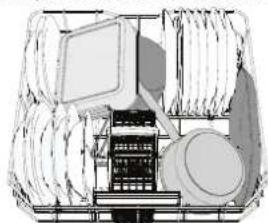
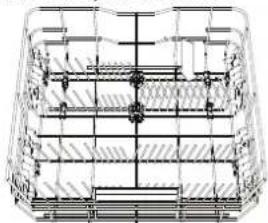
(npumep 3a 3apekdahe Ha donhama Kouhua)
BGKpamkoPkoosodcmoo
POWER CLEAN® (ПАУБРКЛИН)
Power Clean n3non3Ba cneuaannn BODHn CTPyn OT3aHa KXYNHaTa 3a No-INTHe3NBHO n3MBAHe Ha BVCOKn 3aMbpcEHn CbdoBe. DOnnHaT KoUHnca NMa CbO6DnHa 3oHa, CneuJnHa N3DbPnBa7a Ce ONOPa B 3aHnKpKaHa KooHNlCaTa, KOTo MOKe Da ce N3NON3Ba 3a ONOpA 3a TnraHn Nn TaBn B IN3npABeHo NonoXeHne, Taka Ye da 3aE-Mat NO-ManKO MCTo. NocTabe Te HdKe-pnt/OrHeynOpHnTe CbDObe HacOeHn KbM KOMnoHENTa Naybp Knnnn A kTNbpuAte POWER CLEAN Ha naHena.
Kak da n3non3BaTe Power Clean:
- PerynupaTze 3oHa Na Power Clean (G), Kato noBtHeTe 3aDHTne nocTaBkn 3a YHnn, 3a Da 3apeJnC Tc HJxepn.
- 3apejdaTe TeHKeepn KacepoN,Ha-
KIOHOH BepTNKaIHO, B 3OHaTa Ha Power Clean°. TeHJxepnTe Tp6Ba Da Ca HAKIOHEHN KbM MOUHHTe BOHN CTpyN.

KoHHnUKA 3A PnBOPN
O6OpyBaHa e c rOpHn peWetKn 3a no-do6po nOpeXdaHe Ha np6Opnt, Ta Tp8bJa da ce no3uHOHpa caMo ot npedHaTa cTpaHa Ha OJHnTa KOWNuca, HoXobete n Dpytne np6Opnc octPp6Obe Tp8bJa ca NoCTABAT B KOHNkata 3a np6o
pC octpneeta HADONY Nn da ce no3nOHHpat XOpH3oHTaHb HA-KnaHnTe ce OTdeHnHa TropHata KooHnca.
TPNKINIOJDPbXKA
BHIMAHHE: BnHaHn n3KnIOyBaIte ypea ot KOHTaKaT, KORATO noNoCTBaTe N KORATO n3NbINHBAte TexHmecKO 6cnyKbaHe. He n3non3BaTe 3aNaJIMn TeYHOCTn, 3a Da NOCHBaTe MaunHata.
IIOYNCBAHE HA CbDOMNJIHATA MAUNHA
BcNKn neTHa OT bTpeuHaTa cTpaHa Ha MaunHaTa Morat Da ce npEmaxHaT C napaJn, HabnaXHeH C Boga n MAnKo ouet. BbHUnHe T NOBbpxHOCTn Ha MaunHaTa N KOHTpOHNr TaHnE Moar Da ce NoocTBaT C Hea6pa3NBen Napqan, HabnaXHeH C BOHa. He 3nON3BaTe pa3TBOpNTe nn An6pa3NBn npOdyKTn.
PNEJOTBPATRAHE HA HENPIAHTM MUPN3MN
BnHaHn DpBxTe BpaTmukkata Ha ypea Wnpo OToBopeha, 3a Da n36erHete HATpyNBaHETo Ha Bnara N 3aDpbXKaHeTO B MaWnHaTa.
NoCTBaTepeOBHyoBbTHHeHnraOKoNObBpaTnKataIOdo3aTopnte 3a npenapat c BnaXHa r6a.Taka ue n36erHete HATpyNaBeHo Ha xpaHa B yIbTheHnra, KoTo e OCHOBHata pnpuHa 3a o6pa3yBaHeTo Ha HepnA THN MmPn3Mn.
ПОВЕРКА HA MAPKУЧA 3A ПОДABAHE HA BOДA
PObepBaIte peoOBHO BXoJnH MaKpy 3a HanyKBaHn u cenHaTHn. AKe o NobpeH, 3aMeHete ro C HOB MaKpy, pPeIlaRaH OT cepBn3a Hn 3a cJeIPOdaqBeHo 6cbNyKaBaHe nN O TOpun3npaH TbProBeu. B 3abncMocT OT BnDa MaKpy:


Ako MapkyuBt 3a NodaBaHe NMa npOzpaHNo nOKpntne, npOBepraaTe nepoNIOHO 3a loKaHNO ouBeTaBaHe. Ako OTKpIeTe TaKOba, e BB3MOXHO MapKyuBt Da npOTnHa u TpRb6a De Ce CMeHN.
3a cnnpaun BOdaTa Mapkyu: npoBepe Te malkoTo npo3Opue 3a npoBepKa Ha 3auHnTa KLana (BX. CTpeNkata). Ako e cepBeHo, fynKnHTra 3a cnPapHe HA BOtae 3aJeIcTBaHa N MapkyuT Tp6Ba Da ce 3aMeHn C HOB. 3a da pa3BnTe To3n Mapkyu, HaTNCheTe 6yToHa 3a OCBOOxJaBaHe, DOKaTO pa3BnBaTe Mapkyu.
IIOYNCBAHE HA MAPKyua 3A IODABAHE HA BODA
Ako MapkyuTe 3a BOa ca HObN Hn He ca n3NON3BaHn npOdbJnHTeHBOpe, octabeTe BOata Da Teue, 3a Da ce yBepNTe, ye e npO3paHa n 6e33aMbpCpaBAHn, npEIN da N3BbPwTe HxKnTE Bp3Kn. Ako Ta3n npEpnA3HaMPkA He 6Be De B3eTa, BXoDbT 3a BOa MoKe Da ce 6NoKnpa n da NobpeDcBdomnHaTa MaShHa.
NOYNCBAHE HA ΦΠΤbPHNΑ Bb3ΕΙ
TouncBaTe FnntbPhnB B3en peoBHO, Taka He fHnTpTe da He ce 3aNyWBa NTnabHbHaTa BOda Da Ce n3TOyBa npabINHO.
I3no3BaHeTo Ha CbDmNnHaTa MaunHa Cbc 3anyWeHn FInnTpnn BbHNn PpeMeTn BbB FInnTpnpaUta CImTeMa Nn NpBcKaUte PameHa, MoKe Da BLOwn paOToTa Ha yPeDa N da DoBeDe NO HamaJIbaHe Ha pa6oHTne XapaKtepnCTNK, Wym No Bpeme Ha paOta Nn NobuWeHo Notpe6JeHne Ha pecypcn.
ΦnTbPnIaB3eIceCbCTOnOTpNΦnTbpa,KoNTnpeMaxBaOCTaTb- nTeOTxpHaOTBOdAToNTMmBAHeNcIeTOBaPEuNPKvIpATBOdA:T aNoCTrAHe HaHai-dOpBnPezynTaNOT N3MnBaHeToE Heo6xoDmMo Da NoDbPxkTeΦnTpInTeUChNt.
CbDOMnHaTamaunHaHe Tpr6Ba da ce m3non3Ba 6e3 fnntpn nn aKo fntbpTe pa3xa6en.
Hai-malko BeDnBx MeecHo NHa Hs BceKn 30 uKbIa npOpeBaIte fNtBpHn6 bok n npEo6xoImocr ro NouchTe cTaPaTeHNO C TeuaAo Boda, KaTO hIOIOn3BaTE HeMeTaHa YetKa N CLeDbATE INCHyKUInTe NO-DOJIY
- 3aBbptete cunHnpnHnA o6paHo Ha yacOBHKoBaTa CTpeKa n rno3dbpnaTe (Oue.1). BaxHo e, KORato MOHTnPate NOB-TOPO HmTbpa, DBAtATPnBtBNHnKa, NOKa3aHn Ha yBENuEHMeTo, Da Ce cpeHnat.
- CbaneTe fHNTbpa YaWka B, KaTo npNIOXnTE Jek HATnCK BbpxY cTpaHHnHTe Kanau (Oz. 2).
3.ПьзHTe HABHФИТбpa-ПЯСТИнHaOT HepbKJaMa CTOMaHa C(ФИr.3). - B cnuya y HamepuTe BbHnH npEmdTe (Kato Cuyene HcTkna, nop- cenaH, KocTn, CemeHa Ha IIOObe n np.),BHMaTeNHO ITCTpaHeTe.
- InpoBepeTe yIOnBnTeN I npEmaxHeTe ocTaTbUInTe ot XpaHa. HMKORA HE MAXAUTE npEJa3nTeJHa nOmNaTa 3a LKbJa Ha N3MnBaHe (noKa3aHo e CbC tpeNka) (Due.4)
CneI nouCTBaHe ha anntpuite noctabeTbe nntbphnra 6nok oTHOBn rO 3aKpeneT npabNlHO Ha mCTo; TOBa e OT KIOUBO 3HaueHne 3a NoDlbpXae H a eEkeTtBnHaTa pa6Ota H cbDiomnHaTa MaunHa.
IIOYNCBAHE HA PA3NPPCKBAUITE PAMEHE
NoHKORA OCTaTbUHTe OXpHa e Bb3MOxHO Da 3acbXHAT BpyX Pa3npbckBaunite PameHe N da 3anyuWt OTBOPNTa pa3npbckBaHe H BA. CneobatEno Ce npenopOpBa Da npobepBaTe PameHe O BPeme HA BpeMe N da Tn NOuchTBaTe C MaIKA HEmetAnHa Yetka.3a Da n3BaJnte RopHata npbCKaKa, Tpr6Ba Da r n3BaJnte 3aeHc KOKeKTopa. Han-rohata Noctabka ImfKcnpaHa Tpb6a 3a n3MnBaHe C BCnuKN IIO3N 3a n3MnBaHe, O6bpHaTH HArO
pe.3a da ro nouCTnTe,MOKeTe Da nIb3HeTe paTa HABbH c NnHcTeDa npEmaxHeTe pPeDMeTNe, KOTo MOKe Da ca 3aceHaHn B DIO3nTe.
Moxete da cBaInTe DOHOTo pa3npbckBauo pAmO, KaTo ro n3dbpNaTe HArope n r0 3abTpNTe o6paTHo HaacOBHNKOBATA CTpeNka. MoHTnpaHETo O6paTHo Ha p3npbckBAUTo pAmO CTAba Ype3 n3dbpNAHe HADOny N BbPteHoe no acOBHNKOBATA CTpeNka.
PbckaTo pAMo Ha TaBaHa pAMo MoKe Da 6bJe OCTpaHeO, KaTo Ro HaTnChTe HArope n CnE ToBA r3AAbbTpIte o6pA THo Ha yacOBHnKOBaTa CTpeNk.AMOTnPaHeTo 06pAHTo Ha p3nPbCKBaIoTO pAMo CTba Qe3 N3DbpNBaHe HArope n 3aBpTaHe No YacOBHnKOBaTa CTpeNk.
OTCTPAHRAHE HA HEN3INPABHOCTN
B cnuyaaye csbdomnnaHata MaunHa He pa6oTn HopMaHNo, npObepeTe da nnp6neMbt MoKe da 6bJe peweH, KaTo nperrnate CneHN HnCnBcK.3a npyr TpeuKn nn Henn3npabNocTc ce CbPkete C OTdena 3a CneJnpdaX6eHO 06CnyKbaHe, KaTo daHHnTe 3a KOHTAK MOKeTe Da Hamepnte B KHNKKaTa 3a rapaunHa. Pe3epBNHTe Yactn ue 6bDaTn HauuHn 3a nepnoD ot 7nn Do 10 roHn, B cbOTBeTCTBne Cbc CneuH FmHNTe N3MKBaHn Ha parnMaHa
| ПОНБЛЕМВьзMоЖни ПИЧИНРЕSUHIN | |
| S Иndикаторь 3a сол CBETN | Релервоггьт 3a сол e почtenпразен. |
| S Иndикаторь 3a сол мига. | Релервоггьт 3a сол e поразен. |
| S Иndикаторь 3a пrelapа对接а 3a Изллakвае CBETN или мига. | Дотахогьт на пренира 3a иллakвае e празен. (След дOLTыане на пренира 3a иллakвае Индикатогьт можеда оста да CBETN ооче малко). |
| IИndикаторь 3a otstрановае на КOTлен Камьк CBETN или мига; Рokаза ce аberийся сгнализа- ця „dES". | КOTленягьт Камьк се Натуны Вьху Вь- trpeшинete komлонentи на урета. |
| Сыdomин�а Тат мши- ну He CTAPINA и He pearIPA на КOMAHД. | Уретьт He E BKNIOUEN B KOHTAKTA KAKTO TPRбБ. |
| Спирaine на зхарданeto. | |
| Врата на сдоминлaturaе He сатворета. ПиФТ naturalDry He e n3terlen. | |
| Едунцьл се рекьсba OТотваре Na Врата за повесу ot 4 сухнд. | |
| КOTрOLHIT панел He pears IPA Na se показьfa F6 E1. | |
| Сыdomин�а Тат мши- ну He n3tOуВ. | ФИNTBpBt e zanuwen c octatbui ot xpana или кOTлen Kambyk. |
| Дренийл Марку e пereьнat. Прobepete | |
| Трьбata 3a ИЗТоча He MNBKATA e 3anu�eha. | |
| Сыdomин�а Тат мши- ну Идonsperno MHIOro ш汞. | Сыдоминлatura Идздун He mDpyr. Поставетс bcl Има пекомерно кolyuctwo pyra. |
| Сыдоминлatura Идздун He mDpyr. Поставетс bcl Има пекомерно кolyuctwo pyra. | |
| Сыдомин�а He ca nouch- teH. | Сыдомину He ca noudepeni npabunho. Пord Раимьшпгп рамен He morat da ce bpr- TAT CBOSODNo, Ть кato CBDEme He mpechat. |
| Сыдоминлatura Идздун He mDpyr. Поставетс bcl Има пекомерно кolyuctwo pyra. |
| „Сьдомиянatha Маши-па He зарекда вoda." �Н дисney се Изпсь-" �В: H2O _�ETи;" �порозувая звукова anapma." | He ce поава вoda яй кранъ e застор." | Еретe се, чe Вьв ВODОПОВОД мма вoda яй кранът 3a вoda e отувор." | |
| Маркут 3a поаване на вoda e пгьнат. | Проберетe Маркуа 3a поаванe на вoda (ж. ИСТРКЛИЗ 3A MOHTAZ)."Овогете врата, начесенete 6byToHA CTAPT/Пay3a и 3aTboperet e bpaTATA B pamкite Na 4 seskydni. | ||
| Мржигкatable в mapkuya 3a поаванe на вoda e залуша; необхodимо e дя рочUCTITE." | Проберетe и постете мржигкatable на mapkuya 3a поаванe на вoda. >Овогетe врата, начесенete 6byToHA CTAPT/Пay3a и 3aTboperet e bpaTATA B pamкite Na 4 seskydni. | ||
| „Сьдомиянatha Машиа спира циьлă"пөрөдөрөмэнno." �Ha disçпл对象 cе Изпсь-" �В: F8 E3 | Фильтбът e залуше n c ocstыци ot xphaи Или КOTлн KaMbK. | Почстете Фильтba n OTSTРANe KOTLEHЯ KMытк OTуда (Бухшие ПО-"ИСТBAHE HA �ФильтбPNHЯ B63Eл u INСТРСКЛИЗ 3A OTCTPAHЯ BAHE HA KOTLEH KAMbK). | |
| Маркут 3a ИЗTOUBAнe e noctaben TBbpe De NsCKо Ilin BODATA cse ИЗTOUBA в Domauнata �KaHailizazioHNc CnCTeMa. | Проберетe дani Крайн Тэл Маркуа e раел�оженн Ha prabVINHATA BICOUMHIna (ж. ИСТАЛIPARAE)."Прobеретe дani Маркуьт He ce O'TTuH a в Domauнata �KaHailizazioHNc CnCTeMa. i Ак e NeOxOHyMо, MOnTIpaIte Tana 3a сифona / B63duuHa �Клпа. | ||
| Има пөрөмерно калчест BOлЯн. | Проберетe bTy He i ИЗмерen Pravilnoи Ilin e NOXOJaZ 3a IN3PON3BaHae B �СьдOM�ллmaшиin (ж. 3APEXDAHES HA DO3ATOPA 3A MIIJENI IPEAPAT). | ||
| Вьдунь в сsttemа за поаване на вoda. | Проберетe ВODОПОВАЗATA CnCTeMa 3a Teчови iINI dpyru n pro6bemn, nopa-di DOKTOB HЯннувь B63duy. | ||
| „Сьдовете He ca Избх-haли doобpe. | HЯma претаat 3a ИЗПALKBaHе Или Dozatae e TBbprde MaJIka. | Уретe се, чe DoZATOPB 3a Иретарata 3a ИЗПALKBaHae Epbien (ж. 3A-PEKDAHES HA DO3ATOPA 3A IOMOUIHO CPECDSTBO 3A I3ПALKABAHE). Camo MyITIMФUYKUNOHLAHNTE Ta6LteKN HЯma da OCSYRpyr ToKIOBAdo6bp I3CUp-7a-7a-7a-7a-7a-7a-7a-7a-7a-7a-7a-7a-7a-7a-7a-7a-7a-7a-7a-7a-7a-7a-7a-7a-7a-7a-7a-7a-7a-7a-7a-7a-7a-7a -�OZ-7a-7a-7a-7a-7a-7a-7a-7a-7a-7a-7a-7a-7a-7a-7a-7a-7a-7a-7a-7a-7a-7a-7a-7a-7a-7a-7a-7a-7a-7a-7a-7a-7a--7a-7a-7a-7a-7a-7a-7a-7a-7a-7a-7a-7a-7a-7a-7a-7a-7a-7a-7a-7a-7a-7a-7a-7a-7a-7a-7a-7a-7a-7a-7a-7a-7a-10-7a-7a-7a-7a-7a-7a-7a-7a-7a-7a-7a-7a-7a-7a-7a-7a-7a-7a-7a-7a-7a-7a-7a-7a-7a-7a-7a-7a-7a-7a-7a-7a-7a- MakOBETe ca 6blmИЗВадени Спдд AVTO-MATNUHNO T6bIe HbPATA, Ho npedri pealnna Kpai Na HApogpamata. | Ако дамжиту loKBN BODA B OTBOPITe 3a ChAsi, rolemem qasimi nii Kuyin, onitai Te Da ZAPENH O ROPAMITe dani I3BaxJaTe CbOBeTe (ж. BCEKДIHEBH YAOTPEBA). 3a оош no-Dobpi ryрета TANuHa cy ЧИЗБЕТЕ (ж. BCEKДIHEBH YAOTPEBA). 3a оош no-Dobpi ryрета TANuHa cy MOLY, npedri Da ZAPENH AOKLOH, 3a DA OCTBNTBTO TcSTBry B6Trpe B CbOIMYHANu CnTOH TcSTBry B6Trpe B CbOIMYHANu CnTOH TcSTBry B6Trpe B CnTOH TcSTBry B6Trpe B CnTOH TcSTBry B6Trpe B CnTOH TcSTBry B6Trpe B CnTOH TcSTBry B6Trpe B CnTOH TcSTBry B6Trpe B CnTOH TcSTBry B6Trpe B CnTOH TcSTBry B6Trpe B CcTbBry KAYO, npedri Da ZAPENH CnTOH CnTOH CnTOH CnTOH CnTOH CnTOH CnTOH CnTOH CnTOH CnTOH CnTOH CnTOH CnTOH CnTOH CnTOH CnTOH CnTOH CnTOH CnTOH CnTOH CnTOH CnTOH CnTOH CnTOH CnTOH Cn TOH CnTOH CnTOH CnTOH CnTOH CnTOH CnTOH CnTOH CnTOH CnTOH CnTOH CnTOH CnTOH CnTOH CnTOH CnTOH CnTOH CnTOH CnTOH CnTOH CnTOH CnTOH CnTOH CnTOH CnTOH CnTbBry, KAYO ToMIA Pha3a Ha10-7a-7a-7a-7a-7a-7a-7a-7a-7a-7a-7a-7a-7a-7a-7a-7a-7a-7a-7a-7a-7a-7a-7a-7a-7a-7a-7a-7a-7a-7a-7a-7a-8b |
| „Сьдовете И чаше IMAT сини Ивicи Или синкави OTtebci. | Дзота Na претараза 3a ИЗПALBAВанe e пөkanеho rolлма. | Peruginрaite DoZHPOBkata Do No-Hncka Nahtroika. | |
| „Сьдовете И чаше са рокитс с варынк уліьілісьілісьілісьілісьілісьілісьілісьілісьілісьілісьілісьілісьілісьілісьілісьілісьілісьілісьілісьілісьіліcngун. | Pezeрвагьт 3a сол e пазен. | Наьлнete OTHNO BOЗERBOAPA c6t coN b63mJOHn Hai-cskopo. ИзпОзВанeto Na yepda 663 сол може д priuchinnu NobPeda Na B6TrpEshinite My KomIoNeHEn. | |
| Hастрикata 3a TBbDIOCT Na BODATA e TBbprde NsCKa. | Уberчerte Na STPOMKATA (ж. TABILLIZA 3A TBbPDIOCHT HAOBDA). | ||
| Канчakata Na pezeрвogaа 3a сол e Na e T6bPOMHIno. | Проберетe и 3aTbOBoTe kazakca Na peshkoja Na Hoi Ospchua nii InOspMaaци -ж. 3APEXDAHES HA DO3ATOPA 3A IOMOUIHO CPECDSTBO 3A I3ПALBAVBE). | ||
| Pezeрвагьт 3a претаat 3a ИЗПALBAВанe e претаat Na DoZHPOBkata Na претаat Na I3ПALBAVBE e NeOCTaBHy. | Наьлнete OTHNO DOZATOPA c претаat 3a ИЗПALBAVBE nipochet Na StOZHPOBkata (3a DoZHIIHINENHa INHOFOMAци -ж. 3APEXDAHES HA DO3ATOPA 3A IOMOUIHO CPECDSTBO 3A I3ПALBAVBE). | ||
| „Сьдомиянathа пokaz-" �В: F8 E5 | Клалань t e БLOKKИРани Или nobpeden. | Затовете Крана Na BODATA, akо e B63mJOHn Ho. ИзпОзВанeto Na MauHnata moratд Na 3bDat I663eHATNI, kaTo cnpomEn BIVbT Na TchHnne nepinien nipenapat Или Na I3ПOL3BAT Tabletk. | |
| „ИзтунануTo He na deteper-" �В: F8 E5 | Завису OT ИЗПOL3Вани Тучен 德ергentи И може д 6bIe почер.TAO n B cSlya Na akTbИрANA on ONUZAHA. | Малкinte Tocovу Нама д IOdoMeДо Инзправост Na MauHnata mMoratд Na 6bDat I663eHATNI, kaTo cnpomEn BIVbT Na TchHnne nepinien nipenapat Или Na I3ПOL3BAT Tabletk. |
HnpMeHn NOnHTKn,CTaHdpTaHdoKymeHTaun, nopbUka Ha pe3epBn Yactm I donbIHNTeHa HhOpMaun 3a npOyKTmoKeTe da HamePte Ha:
DOPLNENEI DAVKOVACE LESTIDLA
TAK FORDI DU HAR KØBT ET WHIRLPOOL-PRODUKT.
For at modtage en mere komplet assistance, bedes du
register dit apparat pa www.whirlpool.eu/register

5.CVaelG PROGRAM,OG TILPAS PROGRAMMET
2. KYTKE ASTIANPESUKONE PÄÄLLE
ASTIOIDEN LISAAMINEN
LISAVALINNAT JA TOIMINNOT
MERCI D'AVOIR CHOISI UN PRODUIT WHIRLPOOL.
OPTIONS ET FONCTIONS
DEKOJAME, KAD ISIGIJOTE WHIRLPOOL GAMINI.
Kad qalétumète tinkamai pasinaudoti pagalba, užregistruokite
savo prietaisa svetainéje: www.whirlpool.eu/register

- ON-OFF/Reset button with indicator light
- PREVIOUS program button
- NEXT program button
- FAVOURITE program button with indicator light
- Salt reservoir empty indicator light
- Rinse Aid reservoir empty indicator light
- DESCALE indicator light
-
Closed Water Tap indicator light
-
Display
-
Program number and remaining time indicator
- Power Clean option button with indicator light
- Half Load option button with indicator light/ Settings - 3 sec. press
- Extra Dry option button with indicator light
- Delay option button with indicator light
- START/Pause button with indicator light
NAUDOJIMAS PIRMA KARTA
PATARIMAI NAUDOJANT PRIETAISA PIRMA KARTA
Sumontave prietaisa isimkite stabdiklius is lentyneliu ir elastingus tvirtinamuosius elementus is virsutinés lentynelés.
NUSTATYMU MENIU
wascyclus is gestart.
PRODUCTBESCHRIJVING
APPARAAT
- DE AFWASMACHINE INSCHAKELEN
VOORZORGSGMAATREGELEN BJJ VORST
PLEIE OG VEDLIKEHOLD
How to use Power Clean*:
m = 311 ;
m = 311
3
图
3
回
94
94
Exempel for 13-047, Hb
FÖREBYGGANDE AV OBEHAGLIG LUKT
RENGÖRING AV SPOLARMARNA