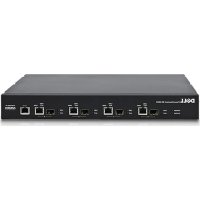
PowerConnect W651 - Controller DELL - Free user manual and instructions
Find the device manual for free PowerConnect W651 DELL in PDF.



User questions about PowerConnect W651 DELL
0 question about this device. Answer the ones you know or ask your own.
Ask a new question about this device
Download the instructions for your Controller in PDF format for free! Find your manual PowerConnect W651 - DELL and take your electronic device back in hand. On this page are published all the documents necessary for the use of your device. PowerConnect W651 by DELL.
USER MANUAL PowerConnect W651 DELL
Dell PowerConnect W-650 Controller
Installation Guide
Copyright
© 2010 Aruba Networks, Inc. AirWave®, Aruba Networks®, Aruba Mobility Management System®, and other registered marks are trademarks of Aruba Networks, Inc. Dell™, the DELL™ logo, and PowerConnect™ are trademarks of Dell Inc.
All rights reserved. Specifications in this manual are subject to change without notice.
Originated in the USA. Any other trademarks appearing in this manual are the property of their respective companies.
Open Source Code
Certain Aruba products include Open Source software code developed by third parties, including software code subject to the GNU General Public License (GPL), GNU Lesser General Public License (LGPL), or other Open Source Licenses. The Open Source code used can be found at this site:
http://www.arubanetworks.com/open_source
Legal Notice
The use of Aruba Networks, Inc. switching platforms and software, by all individuals or corporations, to terminate other vendors' VPN client devices constitutes complete acceptance of liability by that individual or corporation for this action and indemnifies, in full, Aruba Networks, Inc. from any and all legal actions that might be taken against it with respect to infringement of copyright on behalf of those vendors.
Contents
Preface....5
General Overview....5
Related Documentation....5
Contacting Dell 5
Chapter 1 About the W-650 Series Controller....7
Minimum Software Requirements....7
Package Checklist....7
Hardware Model Overview....8
Front View 8
1000Base-X (SFP) Ports 8
10/100/1000Base-T Gigabit Ethernet Ports 8
Serial Console Port 8
Serial Console Port Adaptor....9
USB Ports 9
Media Eject Button 10
Rear View....10
AC Power Socket 10
ExpressCard Slot....11
Antennae Interfaces (W-651 Only)....11
LED Status Indicators 11
Chapter 2 W-650 Series Installation....13
Pre-Installation Requirements 13
For a Telecom Rack:....13
For a Server Rack: 13
Installation in a Telecom Rack 13
Installation in a Server Rack....15
Tabletop Deployment....16
Initial Setup and Network Connectivity .... 16
Removal....16
Appendix A Specifications, Safety, and Compliance....17
Physical Specifications....17
Power Specifications....17
Operating Specifications....17
Storage Specifications....17
Wireless Radio Specifications (W-651 Internal AP)....17
AP type 17
Operating Frequency 17
Available Channels....17
Modulations....17
Transmit Power....18
Association Rates (Mbps)....18
802.11n High-Throughput (HT) Support 18
802.11n Packet Aggregation....18
Antenna (W-651 Internal AP) 18
Safety and Regulatory Compliance 18
FCC Class B Device....18
RF Radiation Exposure Statement 19
W-650....19
W-651....19
NOM Information (Mexico Only)....20
Proper Disposal of Dell Equipment 20
European Union RoHS 20
This preface includes the following information:
• An overview of the contents of this manual
• A list of related documentation for further reading
• Support and service information
General Overview
- Chapter 1, "About the W-650 Series Controller" on page 7 provides a detailed hardware overview of the W-650 Series.
- Chapter 2, "W-650 Series Installation" on page 13 provides rack mounting and installation instructions.
- Appendix A, “Specifications, Safety, and Compliance” on page 17 includes product technical specifications, safety, and regulatory compliance information.
Related Documentation
The following documentation are referred to in this guide and are considered components of the complete documentation set needed for a successful installation and management of a Dell Mobility Controller.
• Dell PowerConnect ArubaOS 5.0 Quick Start Guide
• Dell PowerConnect ArubaOS 5.0 User Guide
• Dell PowerConnect ArubaOS 5.0 Command Line Reference
Contacting Dell
Web Site Support
| Main Site www.dell.com | |
| Support Site support.dell.com | |
| Documentation support.dell.com/manuals | |
| Software https://download.dell-pcw.com |
The Dell PowerConnect W-650 Series controller is an enterprise-class, wireless LAN controller. This controller connects, controls, and integrates wireless Access Points (APs) and Air Montitors (AMs) into a wired LAN system.
- The W-650 is capable of supporting up to 16 external, campus APs.
- The W-651 is capable of supporting up to 16 external, campus APs in addition to its single, internal AP.
Minimum Software Requirements
The W-650 Series controller requires ArubaOS 5.0.2 or later.
Note: The master controller, its redundant master controller, and all of its local controllers must run on the same code of ArubaOS. Once you upgrade your network and install a W-650 Series Mobility Controller into your network, verify that the software version on your controller matches the rest of your network.
Package Checklist
• W-650 Series Mobility Controller
• AC Power Cord (country-specific)
- Rack Mount Brackets
- Rack Mounting Hardware for Server and Telecom Rack Systems
• Left Side Bezel (not installed)
• Right Side Bezel (not installed)
• Rubber Feet (for table top deployments)
• Flat Serial Cable (RJ-45)
- Serial Cable Port Adapter (RJ-45 to DB9)
• Dual-band, High-gain, Omni-directional Detachable Antennae (3x)
• Dell PowerConnect ArubaOS Quick Start Guide
• End User License Agreement (EULA)
• Safety, Environmental, and Regulatory Information (SERI) document
• Warranty and Support Information (WSI) document


Note: Inform your supplier if there are any incorrect, missing, or damaged parts. If possible, retain the carton, including the original packing materials. Use these materials to repack and return the unit to the supplier if needed.
Hardware Model Overview
Front View
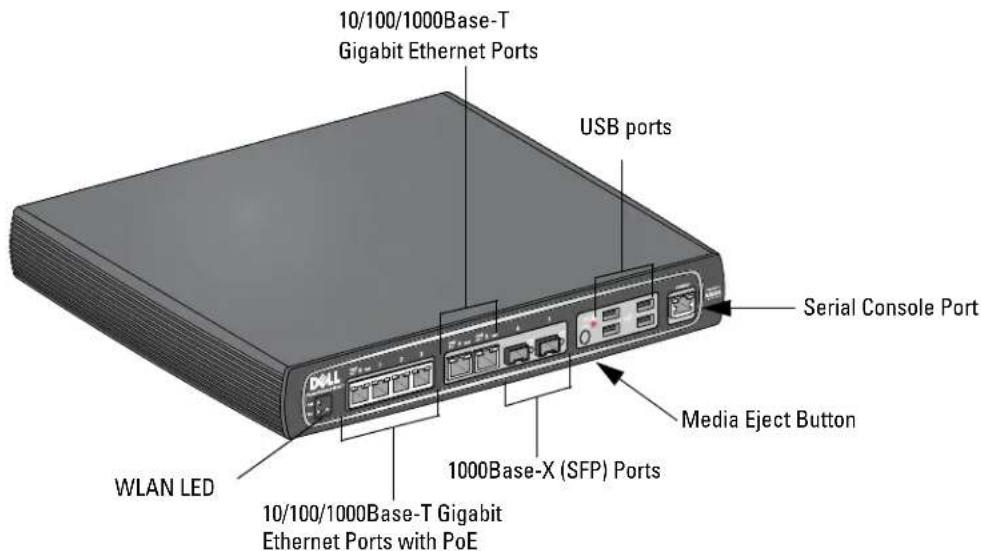
Figure 1 W-650 Series Front View
text_image
10/100/1000Base-T Gigabit Ethernet Ports USB ports Serial Console Port WLAN LED 10/100/1000Base-T Gigabit Ethernet Ports with PoE 1000Base-X (SFP) Ports Media Eject Button1000Base-X (SFP) Ports
There are two 1000Base-X ports for fiber connectivity only and are intended for use with Dell W-Series SFPs (mini-GBICs).
To purchase compatible SFP modules, contact your Dell sales representative for details and assistance.
Note: Dell tests and supports Dell optics within their controller system. Third party optics are not tested or supported; therefore, Dell does not guarantee proper functionality of third party optics when used in a Dell system.
10/100/1000Base-T Gigabit Ethernet Ports
There are six 10/100/1000Base-T Gigabit Ethernet (RJ-45) ports on the W-650 Series. Gigabit Ethernet uses all eight wires and each pair is used in a bi-directional fashion, meaning the same pairs are used for both data transmission and reception. Figure 2 illustrates the CAT-5 pin-out found on an RJ-45 connector. The CAT-5 pin-out pairs the following pins on a 10/100/1000Base-T Gigabit Ethernet port: 1/2, 3/6, 4/5, and 7/8.
Figure 2 Gigabit Ethernet Port Pin-Out
1000Base-T Gigabit Ethernet Port
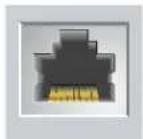
RJ-45 Female Pin-Out

Signal Name
BI DA+
BI_DA-
BI_DB+
BI_DC+
BI_DC-
BI_DB-
B|DD+
BI_DD-
Bi-directional pair +A
Bi-directional pair -A
Bi-directional pair +B
Bi-directional pair +C
Bi-directional pair -C
Bi-directional pair -B
Bi-directional pair +D
Bi-directional pair -D
Function
Serial Console Port
A serial console port is provided for connection to a terminal, allowing for direct local management.
Figure 3 Serial Console Port Pin-Out

text_image
Serial Console Port RJ-45 Female Pin-Out 1 2 3 → TxD 4 → GND 5 → GND 6 ← RxD 7 8 Direction Input ← Output →Communication settings for the serial port are indicated in Table 1.
Table 1 Console Terminal Settings
| Baud Rate | Data Bits | Parity | Stop Bits | Flow Control |
| 9600 8 None 1 None |

Caution: Do not connect an AP to the serial console port. The serial console port is compatible only with RS-232 devices. Non-RS-232 devices, such as APs, are not supported.
Serial Console Port Adaptor
A modular adaptor can be used to convert the RJ-45 (female) connector to a DB9 (male) connector. Refer to Figure 4 for complete details.
Figure 4 RJ-45 (female) to DB9 (male) Modular Adaptor Conversion

text_image
RJ-45 Female Pin-Out 1 2 3 ← TxD 4 5 — GND 6 → RxD 7 8 Direction Input ← Output → Internal Connections RJ-45 DB-9 3 — TxD — 2 4 5 — GND — 5 6 — RxD — 3 DB-9 Male Pin-Out 9 — Ground 8 — RxD 7 — TxD 6 — 1 Direction Input ← Output →USB Ports
The W-650 Series has four USB 2.0 interfaces. These interfaces allow the use of EVDO/IISPDA modem, flash or disk storage devices, or a printer. For more information about configuring and using USB devices with the W-650 Series, see the ArubaOS User Guide.
Media Eject Button
The W-650 Series is equipped with a media eject button, which allows users to eject storage devices safely and place the system in standby. When the button is pushed, the all storage media devices attached to the controller via USB is unmounted. Printers and EVDO devices are unaffected.
Pushing the media eject button changes the state of the W-650 Series; the table below describes the states and LED behaviors associated with use of the media eject button.
Table 2 Media Eject Button LED Behavior
| Initial State | LED State | Action | Status LED | Function | LED Action Completed |
| NAS Media Operational Green-solid Press and hold media eject button for 1 to 5 seconds only | Amber-flashing Un-mount all NAS media | Amber-solid | |||
| NAS Media Unmounted Amber-solid Press and hold media eject button for 1 to 5 seconds only | Amber-flashing Mount all attached NAS device, and return to fully functional operation | Green-solid | |||
| Operational Green-solid Press and hold media eject button for more than 5 seconds only | Red-flashing Controller goes into Standby | Red-solid | |||
| Operating with NAS Media un-mounted | Amber-solid Press and hold media eject button for more than 5 seconds only | Red-flashing Controller goes into Standby | Red-solid | ||
| Standby Red-solid Press media eject button | Amber-flashing Controller wake-up Green-solid | ||||
Rear View
Figure 5 W-650 Series Rear View (651 Shown)

text_image
Antennae Interfaces (651 Only) AC Power Socket ExpressCard SlotAC Power Socket
The W-650 Series supports integrated AC powering and the AC power socket on the rear of the unit is for use with an AC power cord (country-specific). Refer to “Power Specifications” on page 17 for power specification details.
ExpressCard Slot
The W-650 Series is equipped with one ExpressCard slot, which can be used with an EVDO device.
Antennae Interfaces (W-651 Only)
The W-651 is equipped with an internal Access Point (AP). This AP can operate in 2.4 GHz and 5 GHz bands, in a/b/g or n modes. Each appliance has three RP-SMA interfaces to attach the antennas included in this kit.
LED Status Indicators
Table 3 W-650 Series LED Status Indicators
| LED | Label | Function | Indicator | Status |
| Power POWER Input Power Status Indicator On (Solid Green) Power on | ||||
| Off No Power | ||||
| Status STATUS Module Status Indicator | On (Solid Green) Device is operational | |||
| On (Solid Red) | Device failed or is in Standby | |||
| On (Solid Amber) | Device is loading software | |||
| Off No power | ||||
| 1000Base-X Ports (SFP) | LNK/ACT | Link Status Indicator | On (Solid Green) | Link has been established |
| On (Flashing Green) | Port is transmitting or receiving data | |||
| Off No link on port | ||||
| 10/100/1000Base-T Ports | LNK/ACT | Link/Activity Status Indicator | On (Solid Green) | Link has been established |
| On (Flashing Green) | Port is transmitting or receiving data | |||
| Off | No link on port | |||
| 1000 | Interface Speed | On (Solid Green) | 1000 Mbps | |
| Off 10/100 Mbps | ||||
| 10/100/1000Base-T Ports with PoE | LINK/ACT | Link/Activity Status Indicator | On (Solid Green) | Link has been established |
| On (Flashing Green) | Port is transmitting or receiving data | |||
| Off No link on port | ||||
| PoE | PoE Status Indicator | On (Solid Green) | PoE is being provided | |
| On (Solid Amber) | The attached device has requested PoE, but PoE is not being provided by the port | |||
| Off PoE is not being provided | ||||
| 802.11 a/b/g/n AP(W-651 Only) | WLAN | AP Status | On (Solid Amber) | Radio enabled in WLAN mode |
| On (Solid Green) | Radio enabled in 802.11n mode | |||
| On (Flashing Green) | Air monitor mode | |||
| Off Radio is disabled | ||||
Pre-Installation Requirements
The following tools and equipment are required for installation of a W-650 Series controller.
- Rack Mount Bracket (x2, not used for tabletop installation)
• Suitable Screwdrivers
• AC Power Cord (country-specific)
• Left and right side bezels (not used for rack mounting)

Warning: Before performing the following procedure, review the safety instructions that came with the controller.
For a Telecom Rack:
• M3, 6mm x 0.5mm Phillips Head Screws (6x, included)
- 12-24 x 5/8" Phillips Head Screws (4x, included)
For a Server Rack:
• M3, 6mm x 0.5mm Phillips Head Screws (6x, included)
• M6 x 20mm Phillips Head Screws (4x, included)
• M6 Cage Nuts (4x, included) or M6 Cage Clips (4x, included)
Installation in a Telecom Rack
To install a W-650 Series controller into a 19-inch (48.26 cm) Telecom rack system:
- Place a rack mount bracket over the mounting holes on one side of the controller (see Figure 6).
- Secure the bracket to the controller using three M3, 6mm x 0.5mm phillips head screws and a screwdriver.
- Repeat these steps on the opposite side of the controller.
Figure 6 Rack Mount Brackets

text_image
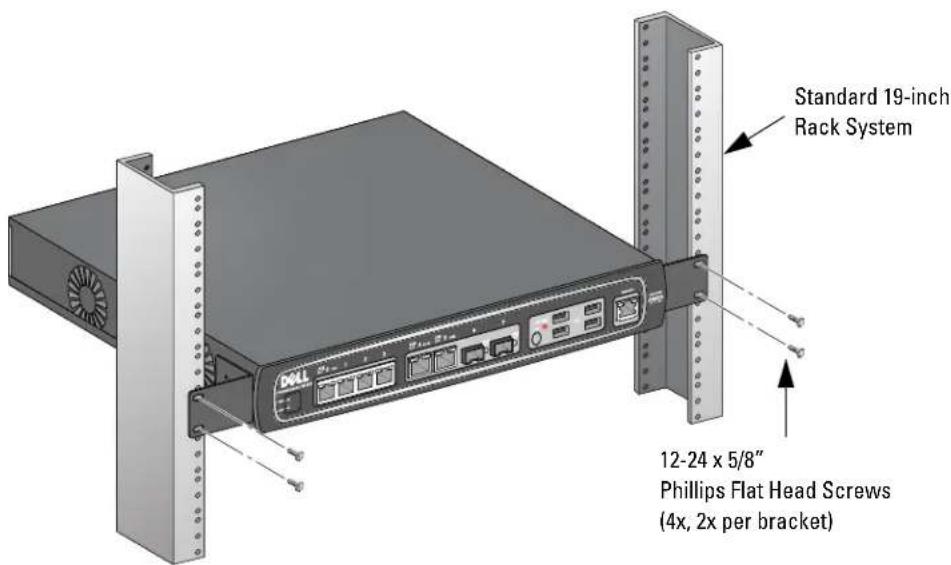
Rack Mount Bracket (2x) 6-32 x 1/4" Phillips Flat Head Screws (6x, 2x per bracket)- Mount the controller within your organization's rack system using four 12-24 x 5/8" phillips head screws and suitable screwdriver (see Figure 7).
Figure 7 Rack Mount Installation
text_image
Standard 19-inch Rack System 12-24 x 5/8" Phillips Flat Head Screws (4x, 2x per bracket)- Leave a minimum of four inches (10cm) of space on the left and right side of the unit for proper air flow and ventilation (see Figure 8).
- Leave additional space in front and back of the unit to access power cords, network cables, and LED status indicators (see Figure 8).
Figure 8 Air Flow Requirements

text_image
Keep Clear for Air Exhaust Keep Open for Easy Access Keep Clear for Air Intake Keep Open for Easy Access-
Connect the AC power cord (country-specific) to the rear of the unit.
-
Plug the opposite end of the power cord into an electrical outlet to power the controller.
Note: W-650 Series controller does not have a switch for turning power to the unit on or off. Power to the unit is controlled by connecting or disconnecting the plug on the power cord to or from an electrical outlet.
Installation in a Server Rack
To install a W-650 Series controller into a 19-inch (48.26 cm) Server rack system:
Note: The following instructions describe the installation of your controller in a rack with unthreaded, square holes. For a rack with unthreaded, round holes, use the provided clip nuts instead.
- Place a rack mount bracket over the mounting holes on one side of the controller (see Figure 6).
- Secure the bracket to the controller using three M3, 6mm x 0.5mm phillips head screws and a suitable screwdriver.
- Repeat these steps on the opposite side of the controller.
- Install the four cage nuts.
To install the cage nut with a cage-nut installation tool:
a. Begin by inserting the lower lip of the cage nut over the bottom of the square opening in the back of the rail.
b. Insert the small end of the cage-nut installation tool through the opening in the rail (from the front), and hook the tool over the top lip of the cage nut.
c. Push the cage nut in towards the rail while rotating the tool up and pulling the tool back toward you until the top lip of the cage nut snaps into position.
To install the cage nut with a flathead screwdriver:
a. Begin by inserting the lower lip of the cage nut over the bottom of the square opening in the back of the rail.
b. Compress the top lip of the cage nut with a flathead screwdriver.
c. With the lip compressed, push the cage nut's lip fully into the opening in the rail.
d. Release the scredriver pressure on the cage nut to lock it into place.
- Mount the controller within your organization's rack system using four M6 x 20mm phillips head screws and suitable screwdriver.
- Leave a minimum of four inches (10cm) of space on the left and right side of the unit for proper air flow and ventilation (see Figure 8).
- Leave additional space in front and back of the unit to access power cords, network cables, and LED status indicators (see Figure 8).
- Connect the AC power cord (country-specific) to the rear of the unit.
- Plug the opposite end of the power cord into an electrical outlet to power the controller.
Note: W-650 Series controller does not have a switch for turning power to the unit on or off. Power to the unit is controlled by connecting or disconnecting the plug on the power cord to or from an electrical outlet.
Tabletop Deployment
To deploy a W-650 Series controller on a flat surface, such as a tabletop:
- Insert the four rubber mounting feet to the bottom of the unit.
- Attach side bezels by snapping them into place.
- Place the unit on a hard flat surface.
Initial Setup and Network Connectivity
Once the physical installation is complete, run the initial setup on the controller to configure the IP address and other basic system information. For complete details and instructions, refer to the ArubaOS Quick Start Guide.
Removal
To remove a W-650 Series controller from a 19-inch (48.26 cm) rack system:
- Disconnect the power to the controller by unplugging the power cord from the electrical outlet.
- Disconnect any other cables or devices attached to the controller.
- Loosen the four rack mount screws securing the controller to your organizations rack system.
- Remove the controller from the rack system.

Physical Specifications
Device Dimensions (without rack mount brackets)
• Height 1.5" (38 mm)
• Width 13.6" (346 mm)
• Depth 8.9" (226 mm)
Power Specifications
• AC Input Voltage: 100-240 V, Universal Input
• AC Input Frequency: 50-60 Hz
• Maximum power consumption: 126 Watts
• Power over Ethernet total capacity: 78 Watts
• Power over Ethernet capacity per port: 19.5 Watts
Operating Specifications
• Operating Temperature Range: 0°C to 40°C (32°F to 104°F)
• Operating Humidity Range: 5% to 95% (RH), non-condensing
Storage Specifications
• Storage Temperature Range: 0°C to 50°C (32°F to 122°F)
• Storage Humidity Range: 5% to 95% (RH), non-condensing
Wireless Radio Specifications (W-651 Internal AP)
AP type
- Single Radio, 3x3 Multiple-In, Multiple-Out (MIMO) providing data rate up to 300 Mbps
Operating Frequency
• 2.4-2.5 GHz or 5.150-5.950 GHz
Available Channels
- Mobility Controller-managed, dependent upon configured regulatory domain
Modulations
• 802.11b: Direct-Sequence Spread-Spectrum (DSSS)
• 802.11a/g: Orthogonal Frequency Division Multiplexing (OFDM)
• 802.11n: 802.11n draft 2.0
Transmit Power
- Configurable in increments of 0.5 dBm
Association Rates (Mbps)
• 802.11b: 11, 5.5, 2, 1 with automatic fallback
• 802.11a/g: 54, 48, 36, 24, 18, 12, 9, 6 with automatic fallback
• 802.11n: MCS0 - MCS15 (6.5Mbps - 300Mbps)
802.11n High-Throughput (HT) Support
HT 20
• IIT 40
802.11n Packet Aggregation
A-MPDU
A-MSDU
Antenna (W-651 Internal AP)
- Three RP-SMA interfaces for external antenna support (supports up to 3x3 MIMO with spatial diversity)
• Three AP-ANT-1B omni-directional dual-band antennas included
Safety and Regulatory Compliance
Dell provides a multi-language document containing country specific restrictions and additional safety and regulatory information for all Dell hardware products. The Dell PowerConnect W-Series Safety, Environmental, and Regulatory Information document is included with this product.
text_image
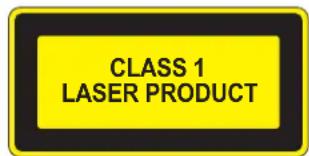
CLASS 1 LASER PRODUCT
Caution: Use of controls or adjustments of performance or procedures other than those specified in this manual may result in hazardous radiation exposure.
This product complies with 21 CFR Chapter 1, Subchapter J, Part 1040.10, and IEC 60825-1: 1993, A1: 1997, A2: 2001, IEC 60825-2: 2000.
For continued compliance with the above laser safety standards, only approved Class 1 modules from our approved vendors should be installed in Dell products.
FCC Class B Device
This equipment has been tested and found to comply with the limits for a Class B digital device, pursuant to part 15 of the FCC Rules. These limits are designed to provide reasonable protection against harmful interference in a residential installation. This equipment generates, uses and can radiate radio frequency energy and, if not installed and used in accordance with the instructions, may cause harmful interference to radio communications. However, there is no guarantee that interference will not occur in a particular installation. If this equipment does
cause harmful interference to radio or television reception, which can be determined by turning the equipment off and on, the user is encouraged to try to correct the interference by one or more of the following measures:
• Reorient or relocate the receiving antenna.
- Increase the separation between the equipment and receiver.
- Connect the equipment into an outlet on a circuit different from that to which the receiver is connected.
- Consult the dealer or an experienced radio/ TV technician for help (we can modify this to advise to seek help of the professional installer).
For a complete list of Country Specific Regulations please speak with your Dell Representative.
RF Radiation Exposure Statement
This equipment complies with FCC RF radiation exposure limits. This equipment should be installed and operated with a minimum distance of 13.78 inches (35 cm) between the radiator and your body for 2.4 GHz and 5 GHz operations. This transmitter must not be co-located or operating in conjunction with any other antenna or transmitter. When operated in the 5.15 to 5.25 GHz frequency range, this device is restricted to indoor use to reduce the potential for harmful interference with co-channel Mobile Satellite Systems.
W-650
• EN 55022 Class B
EN 55024
IEC/EN 60950
- CE Marking
• cTUVus Marked
• CB Scheme Certified
W-651
• FCC 15.247/15.407
• EU R&TTE Directive 1999/5/EC (EN 300 328, EN 301 893, EN 301 489)
• EU LV Directive 2006/95/EC
IEC/EN 60950
CE Marking
• cTUVus Marked
• CB Scheme Certified
For a complete list of Country Specific Regulations please speak with your Dell Representative.
NOM Information (Mexico Only)
The following information is provided on the device described in this document in compliance with the requirements of the official Mexican standards (NOM):
Importer: Dell Inc. de Mexico, S.A. de C.V. Paseo de la Reforma 2620-11° Piso Col. Lomas Atlas 11950 Mexico, D.F.
Model Number: 650/651
• Supply Voltage: 100-240 V AC
• Frequency: 47-63 Hz
• Current consumption: 2.0 A
Proper Disposal of Dell Equipment
For the most current information on Global Environmental Compliance and Dell products please refer to the Dell PowerConnect W-Series Safety, Environmental, and Regulatory Information document is included with this product or see our website at www.dell.com.
European Union RoHS
RoHS
Dell products also comply with the EU Restriction of Hazardous Substances Directive 2002/95/EC (RoIIS). EU RoIIS restricts the use of specific hazardous materials in the manufacture of electrical and electronic equipment. Specifically, restricted materials under the RoHS Directive are Lead (including Solder used in printed circuit assemblies), Cadmium, Mercury, Hexavalent Chromium, and Bromine. Some Dell products are subject to the exemptions listed in RoHS Directive Annex 7 (Lead in solder used in printed circuit assemblies). Products and packaging will be marked with the “RoHS” label shown at the left indicating conformance to this Directive.
Dell PowerConnect W-650 Controller
text_image
KLASSE 1 LASERPRODUKT
Ports Ethernet Gigabit 10/100/1000Base-T 8
Port console série 9
Ports Ethernet Gigabit 10/100/1000Base-T
text_image
CLASSE 1 PRODUIT LASER
Puertos Gigabit Ethernet 10/100/1000Base-T 8
Puerto serie de consola 9
Adaptador de puerto serie de consola....9
Puertos USB 9
Puertos Gigabit Ethernet 10/100/1000Base-T
Antena (AP interno W-651)....18
Antena (AP interno W-651)
text_image
PRODUTO A LASER CLASSE 1
text_image
CLASS 1 LASER PRODUCT
FCC Class B 장치....19
RF 방사선 노출 성명서 19
W-650....19
W-651....19
NOM 정보(멕시코만 해당) 20
Dell 장비의 적절한 폐기 20
EU RoHS 20
Port Ethernet 10/100/1000Base-T Gigabit....8
Port Konsol Serial....9
Adaptor Port Konsol Serial 9
Port USB 9
Port Ethernet 10/100/1000Base-T Gigabit
Ada enam port (RJ-45) Ethernet Gigabit 10/100/1000Base-T pada Seri W-650. Ethernet Gigabit menggunakan kedelapan kawat dan setiap pasangan digunakan secara dua arah, yang berarti pasangan yang sama digunakan baik untuk pengiriman maupun penerimaan data. Gambar 2 menunjukkan pin keluar KAT-5 yang terdapat pada konektor RJ-45. Pin keluar KAT-5 menyandingkan pin berikut ini pada port Ethernet Gigabit 10/100/1000Base-T: 1/2, 3/6, 4/5, dan 7/8.
Gambar 2 Pin Keluar Port Ethernet Gigabit
Port Ethernet Gigabit 1000Base-T

| www.dell.com | |
| support.dell.com | |
| support.dell.com/manuals | |
| https://download.dell-pcw.com |
הכלה, כרְפַרָה, כרְפַרָה, כרְפַרָה, כרְפַרָה, Dell PowerConnect W-650 Series – (AMs - כרְפַרָה) Air Monitors – (APs)
א. W-650 Series Mobility

תְרָה בַרִי הַלְרָה
W-650 Series Mobility
(הכלה) AC
תְרָה בַרִי לְרָה
•
(הכלה (בַרְׁ)
Dell physics. No action is to be seen in the world. The world is not a result of the impact of the global and its implications. Dell optics - is not a result of the global and its implications. Dell physics has been made in the world.

10/100/1000Base-T Gigabit Ethernet nix'
text_image
6-32 x 1/4" Household Windows (7/17 x 2, x6)12-24 x 5/8" ⁴
text_image
12-24 x 5/8" (19 x 19).הכלההוּרָהוּרָהוּרָהוּרָהוּרָהוּרָהוּרָהוּרָהוּרָהוּרָהוּרָהוּרָהוּרָהוּרָהוּרָה
19.5: Power over Ethernet
בַרְשָׁה
802.11a/g: Orthogonal Frequency Division Multiplexing (OFDM)
802.11n: 802.11n draft 2.0
תְרָה בַלְבָם
802.11n Packet Aggregation
A-MPDU
A-MSDU
Dell PowerConnect W-Series Safety, Environmental, and Regulatory
. Information
CLASS 1
LASER PRODUCT
Dell PowerConnect W-Series, Dell PowerConnect W-Series, Dell PowerConnect W-Series, Dell PowerConnect W-Series, Safety, Environmental, and Regulatory Information
.www.dell.com