ManualGo.com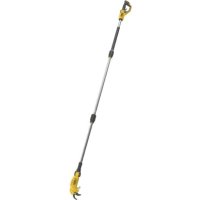
DCMPP569 - Uncategorized DEWALT - Free user manual and instructions
Find the device manual for free DCMPP569 DEWALT in PDF.




Download the instructions for your Uncategorized in PDF format for free! Find your manual DCMPP569 - DEWALT and take your electronic device back in hand. On this page are published all the documents necessary for the use of your device. DCMPP569 by DEWALT.
USER MANUAL DCMPP569 DEWALT
WARNING: Read all safety warnings, instructions,
illustrations, and specifications in this manual, including the battery and charger sections provided in an original tool manual or the separate Batteries and Chargers manual. Manuals can be obtained by contacting Customer Service (refer to the back page of thismanual). Technical Data EC‑Declaration of Conformity Machinery Directive Pole Pruner DCMPP569DeWALT declares that these products described under Technical Data are in compliance with: 2006/42/EC, EN62841-1:2015 +A11:2022, EN ISO 12100:2010.These products also comply with Directive 2014/30/EU and 2011/65/EU. For more information, please contact DeWALT at the following address or refer to the back of themanual.The undersigned is responsible for compilation of the technical file and makes this declaration on behalf ofDeWALT.Markus Rompel Vice-President Engineering, E-Europe DeWALT, Richard-Klinger-Straße 11, 65510, Idstein, Germany 18.11.2024
WARNING: To reduce the risk of injury, read the instructionmanual.
Definitions: Safety Guidelines The definitions below describe the level of severity for each signal word. Please read the manual and pay attention to thesesymbols.
DANGER: Indicates an imminently hazardous situation
which, if not avoided, will result in death or seriousinjury.
WARNING: Indicates a potentially hazardous situation which,
if not avoided, could result in death or seriousinjury.
CAUTION: Indicates a potentially hazardous situation which, if not avoided, may result in minor or moderateinjury. NOTICE: Indicates a practice not related to personal injury which, if not avoided, may result in propertydamage.
Denotes risk of electricshock. Denotes risk offire.
GENERAL POWER TOOL SAFETY WARNINGS
WARNING: Read all safety warnings, instructions, illustrations and specifications provided with this power tool. Failure to follow all instructions listed below may result in electric shock, fire and/or seriousinjury.SAVE ALL WARNINGS AND INSTRUCTIONS FOR FUTUREREFERENCEThe term “power tool” in the warnings refers to your mains-operated (corded) power tool or battery-operated (cordless) powertool.1) Work Area Safetya ) Keep work area clean and well lit. Cluttered or dark areas inviteaccidents.DCMPP569Voltage V
(emission sound pressure level) dB(A) 50 K (uncertainty for the given sound level) dB(A) 3.0
(measured sound power level) dB(A) 67 K (uncertainty for the given sound level) dB(A) 3.0 Vibration emission value a < m/s
The vibration and/or noise emission level given in this information sheet has been measured in accordance with a standardised test given in EN62841-1 and ISO 11680 with no-load condition and may be used to compare one tool with another. It may be used for a preliminary assessment of exposure. WARNING: The declared vibration and/or noise emission level represents the main applications of the tool. However, if the tool is used for different applications, with different accessories or is poorly maintained, the vibration and/or noise emission may differ. This may significantly increase the exposure level over the total workingperiod.An estimation of the level of exposure to vibration and/or noise should also take into account the times when the tool is switched off or when it is running but not actually doing the job. This may significantly reduce the exposure level over the total workingperiod.Identify additional safety measures to protect the operator from the effects of vibration and/or noise such as: maintain the tool and the accessories, keep the hands warm (relevant for vibration), organisation of workpatterns.EnGLIsh
b ) Do not operate power tools in explosive atmospheres, such as in the presence of flammable liquids, gases or dust. Power tools create sparks which may ignite the dust orfumes. c ) Keep children and bystanders away while operating a power tool. Distractions can cause you to losecontrol.
2) Electrical Safety
a ) Power tool plugs must match the outlet. Never modify the plug in any way. Do not use any adapter plugs with earthed (grounded) power tools. Unmodified plugs and matching outlets will reduce risk of electricshock. b ) Avoid body contact with earthed or grounded surfaces, such as pipes, radiators, ranges and refrigerators. There is an increased risk of electric shock if your body is earthed orgrounded. c ) Do not expose power tools to rain or wet conditions. Water entering a power tool will increase the risk of electricshock. d ) Do not abuse the cord. Never use the cord for carrying, pulling or unplugging the power tool. Keep cord away from heat, oil, sharp edges or moving parts. Damaged or entangled cords increase the risk of electricshock. e ) When operating a power tool outdoors, use an extension cord suitable for outdoor use. Use of a cord suitable for outdoor use reduces the risk of electricshock. f ) If operating a power tool in a damp location is unavoidable, use a residual current device (RCD) protected supply. Use of an RCD reduces the risk of electricshock.
a ) Stay alert, watch what you are doing and use common sense when operating a power tool. Do not use a power tool while you are tired or under the influence of drugs, alcohol or medication. A moment of inattention while operating power tools may result in serious personalinjury. b ) Use personal protective equipment. Always wear eye protection. Protective equipment such as a dust mask, non-skid safety shoes, hard hat or hearing protection used for appropriate conditions will reduce personalinjuries. c ) Prevent unintentional starting. Ensure the switch is in the off position before connecting to power source and/or battery pack, picking up or carrying the tool. Carrying power tools with your finger on the switch or energising power tools that have the switch on invitesaccidents. d ) Remove any adjusting key or wrench before turning the power tool on. A wrench or a key left attached to a rotating part of the power tool may result in personalinjury. e ) Do not overreach. Keep proper footing and balance at all times. This enables better control of the power tool in unexpectedsituations. f ) Dress properly. Do not wear loose clothing or jewellery. Keep your hair and clothing away from moving parts. Loose clothes, jewellery or long hair can be caught in movingparts. g ) If devices are provided for the connection of dust extraction and collection facilities, ensure these are connected and properly used. Use of dust collection can reduce dust-relatedhazards. h ) Do not let familiarity gained from frequent use of tools allow you to become complacent and ignore tool safety principles. A careless action can cause severe injury within a fraction of asecond.
4) Power Tool Use and Care
a ) Do not force the power tool. Use the correct power tool for your application. The correct power tool will do the job better and safer at the rate for which it wasdesigned. b ) Do not use the power tool if the switch does not turn it on and off. Any power tool that cannot be controlled with the switch is dangerous and must berepaired. c ) Disconnect the plug from the power source and/or remove the battery pack, if detachable, from the power tool before making any adjustments, changing accessories, or storing power tools. Such preventive safety measures reduce the risk of starting the power toolaccidentally. d ) Store idle power tools out of the reach of children and do not allow persons unfamiliar with the power tool or these instructions to operate the power tool. Power tools are dangerous in the hands of untrainedusers. e ) Maintain power tools and accessories. Check for misalignment or binding of moving parts, breakage of parts and any other condition that may affect the power tool’s operation. If damaged, have the power tool repaired before use. Many accidents are caused by poorly maintained powertools. f ) Keep cutting tools sharp and clean. Properly maintained cutting tools with sharp cutting edges are less likely to bind and are easier tocontrol. g ) Use the power tool, accessories and tool bits, etc. in accordance with these instructions, taking into account the working conditions and the work to be performed. Use of the power tool for operations different from those intended could result in a hazardoussituation. h ) Keep handles and grasping surfaces dry, clean and free from oil and grease. Slippery handles and grasping surfaces do not allow for safe handling and control of the tool in unexpectedsituations.
5) Battery Tool Use and Care
a ) Recharge only with the charger specified by the manufacturer. A charger that is suitable for one type of battery pack may create a risk of fire when used with another batterypack. b ) Use power tools only with specifically designated battery packs. Use of any other battery packs may create a risk of injury andfire. c ) When battery pack is not in use, keep it away from other metal objects, like paper clips, coins, keys, nails, screws or other small metal objects, that can make a connection from one terminal to another. Shorting the battery terminals together may cause burns or afire. d ) Under abusive conditions, liquid may be ejected from the battery; avoid contact. If contact accidentally occurs, flush with water. If liquid contacts eyes, additionally seek medical help. Liquid ejected from the battery may cause irritation orburns. e ) Do not use a battery pack or tool that is damaged or modified. Damaged or modified batteries may exhibit unpredictable behaviour resulting in fire, explosion or risk ofinjury. f ) Do not expose a battery pack or tool to fire or excessive temperature. Exposure to fire or temperature above 130°C may causeexplosion. g ) Follow all charging instructions and do not charge the battery pack or tool outside the temperature range specified in the instructions. Charging improperly or at temperatures outside the specified range may damage the battery and increase the risk offire.EnGLIsh
a ) Have your power tool serviced by a qualified repair person using only identical replacement parts. This will ensure that the safety of the power tool ismaintained. b ) Never service damaged battery packs. Service of battery packs should only be performed by the manufacturer or authorised serviceproviders. lines and ensure that the operating position is safe and secure before operating the polepruner.
WARNING: Always check for electrical wiring which
- For safe operation, read and understand all instructions before using the pole pruner. Follow all safety instructions. Failure to follow all safety instructions listed below, can result in serious personalinjury.
- Watch what you are doing. Use common sense. Do not operate pole pruner when you aretired.
- Use pole pruner for pruning tree branches only. Do not use pole pruner for purposes not intended. Do not use for pruning otheritems.
- Do not use the pole pruner in bad weather conditions, especially when there is a risk of lightning. This decreases the risk of being struck bylightning.
- Only well‑instructed adults should operate pole pruner. Never allow children tooperate.
- Do not allow children or untrained individuals to use thisunit.
- Wear the following safety gear when operating polepruner: ʵ heavy-duty gloves ʵ steel-toed safety footwear with non-skid soles ʵ safety glasses, goggles or face screen ʵ safety hard hat ʵ face or dust mask (if working in dusty areas)
- Wear heavy long pants and boots. Do not wear loose fitting clothing, short pants, jewelry of any kind, or gobarefoot.
- Secure long hair to prevent entanglement in any movingparts.
- Before pruning, always provide the following: ʵ clear work area ʵ secure footing ʵ planned retreat path from falling limbs
- Inspect tree before trimming. Make allowance for branches to fall freely to theground.
- Do not use your pole pruner to fellsaplings. While Operating Pole Pruner
DANGER: To reduce the risk of electric shock do not use on
wet surfaces. Do not expose to rain. Storeindoors.
DANGER: Avoid Unintentional Starting – with battery
installed, do not carry appliance with with finger on switch. Be sure switch is off when installingbattery.
- Hold the tool using only the designated gripping surfaces: one hand on the main handle and one hand on the foamgripper.
- Stay alert. Use common sense while operating theunit.
- Keep work area clean. Cluttered areas inviteinjuries.
- Always remove battery from pole pruner when finished pruning or when leftunattended.
- Keep children, animals and bystanders at least 15m (50') away from pole pruner. Only pole pruner user should be in workarea.
- Do not grasp the exposed pruner cutting blade when picking up or holding the polepruner.
- Keep finger off trigger until ready to makecut.
- Keep all parts of body away from cutting blade when pole pruner isrunning.
PRUNING SHEARS SAFETY WARNINGS
a ) Do not use the pruning shears in bad weather conditions, especially when there is a risk of lightning. This decreases the risk of being struck by lightning. b ) Keep all power cords and cables away from cutting area. Power cords or cables may be hidden and can be accidentally cut by the blade. c ) Hold the pruning shears by insulated gripping surfaces only, because the blade may contact hidden wiring. Blades contacting a "live" wire may make exposed metal parts of the pruning shears "live" and could give the operator an electric shock. d ) Keep all parts of the body away from the blade. A moment of inattention while operating the pruning shears may result in serious personal injury. e ) Always keep proper footing and operate the pruning shears only when standing on the ground. Slippery or unstable surfaces may cause a loss of balance or control of the machine. f ) When cutting a limb that is under tension, be alert for spring back. When the tension in the wood fibres is released, the spring‑loaded limb may strike the operator and cause personal injury. g ) Do not operate pruning shears while climbing in a tree, standing on a ladder or any unstable support. Operation of pruning shears in this manner may result in loss of balance, loss of control and personal injury. h ) When clearing jammed material or servicing the pruning shears, make sure the battery pack is removed or disconnected. Unexpected actuation of the pruning shears while clearing jammed material or servicing may result in serious personal injury. i ) Disable or de‑energize the pruning shears whenever interrupting or finishing work. Disabling or de-energizing pruning shears prevents injuries due to inadvertent operation of the power switch. j ) Carry the pruning shears by the handle with the blade closed and the machine completely switched off. Proper carrying of the pruning shears will decrease the risk of inadvertent starting and resultant personal injury from the blades. k ) Always use two hands when operating extended‑reach pruner shears. Holding the machine with both hands avoids loss of control. l ) To reduce the risk of electrocution, never use the extended‑reach pruning shear near any electrical power lines. Contact with or use near power lines may cause serious injury or electric shock resulting in death.
WARNING: Do not operate near electrical power lines.
The unit has not been designed to provide protection from electric shock in the event of contact with overhead electric lines, Consult local regulations for safe distances from overhead electric powerENGLISH
- Do not force pole pruner while pruning. Apply light pressure. It will do the job better and safer at the rate for which it wasintended.
- Carry pole pruner from one place to another: ʵ with battery removed, ʵ fingers off/away from trigger, ʵ by holding pole at balance point, and ʵ with the cutting blade to rear and with blade coverattached.
- Do not operate in poorlighting.
- Keep firm footing and balance. Do not overreach. Overreaching can result in loss of balance.
- Keep all parts of your body away from any movingpart.
- Do not, under any circumstance, use any attachment or accessory on this product, which was not provided with the product, or identified as appropriate for use with this product in this instructionmanual.
- Inspect pole pruner before each use and after dropping or other impacts. Ensure there are no significant defects ordamage. Do Not Operate Pole Pruner: ʵ while under the influence of alcohol, medication, ordrugs. ʵ in rain or in damp or wetareas. ʵ where highly flammable liquids or gases arepresent. ʵ if pole pruner is damaged, adjusted incorrectly, or not fully and securelyassembled. ʵ if trigger does not turn pole pruner on and off. Cutting blade will open when you release trigger. Have faulty switch replaced by authorised service centre. See Accessories underMaintenance. ʵ while in ahurry. ʵ while in a tree or on aladder. ʵ while on aerial booms, buckets orplatforms. ʵ during high wind or stormingweather.
DANGER: Shock Hazard. Serious injury or death from
electrocution if power lines are contacted. Never use near any electrical source, wires, or overhead powerlines.
For safe operation read and understand the instruction manual. Wear face shield (and/or safety glasses), hearing protection and a hard hat to protect against falling debris.Always have a clear work area, retreat path, and be aware of limb/branch location to avoid falling limbs and debris.Keep bystanders 15m (50') away when operating pruner.To reduce the risk of electric shock do not use on wet surfaces.Do not expose to rain.Storeindoors.
- To protect yourself from falling branches do not stand directly under the branch or limb being cut. This unit should not be held at an angle over 60° from groundlevel.
- Keep the handles dry, clean, and free ofoil. Service
- Tool service must be performed only by qualified repair personnel. Service or maintenance performed by unqualified personnel could result in a risk of injury. Refer to the Maintenance section of thismanual.
- When servicing a tool, use only identical replacement parts. Follow instructions in the Maintenance section of this manual. Use of unauthorized parts or failure to follow maintenance instructions may create a risk of electric shock orinjury. Storage
- Store indoors. The best storage place is one that is cool and dry away from direct sunlight, excess heat or cold and out of the reach ofchildren. Battery Type These battery packs may be used: Battery (kg) Battery (kg)
Refer to the battery/charger manual for moreinformation. Residual Risks In spite of the application of the relevant safety regulations and the implementation of safety devices, certain residual risks cannot be avoided. These are:
- Impairment ofhearing.
- Risk of personal injury due to flyingparticles.
- Risk of burns due to accessories becoming hot duringoperation.
- Risk of personal injury due to prolongeduse. Markings on Tool The following pictograms are shown on the tool: Read instruction manual beforeuse. Always wear head, hearing and eyeprotection. Wear protectivegloves. Wear protective and slip-resistantfootwear. Do not expose the tool to rain or high humidity or leave outdoors while it israining. Keep handsaway from cutting blade. Electrocution hazard. Keep at least 15 m away from overheadpower lines. Keep bystandersaway. Switch the tool off. Before performing any maintenance on the tool, remove the battery from thetool. Date Code Position (Fig.A) The production date code
consists of a 4-digit year followed by a 2-digit week and is extended by a 2-digit factorycode.ENGLISH
WARNING: Never modify the power tool or any part of it.
Damage or personal injury could result.
Battery release button
Included in some packages. NOTE: Check for damage to the tool, parts or accessories which may have occurred during transport. Intended Use Your DeWALT, DCMPP569 pole pruner has been designed for residential trimming applications and is ideal for pruning applications up to 38 mm (1.5") indiameter. This pruner is intended to be used on plant materials only. DO NOT use under wet conditions or in the presence of flammable liquids or gases. This pruner is a professional power tool. DO NOT let children come into contact with the tool. Supervision is required when inexperienced operators use this tool.
- Young children and the infirm. This appliance is not intended for use by young children or infirm persons without supervision.
- This product is not intended for use by persons (including children) suffering from diminished physical, sensory or mental abilities; lack of experience, knowledge or skills unless they are supervised by a person responsible for their safety. Children should never be left alone with this product.
ASSEMBLY AND ADJUSTMENTS
WARNING: To reduce the risk of serious personal injury,
turn tool off and disconnect battery pack before making any adjustments or removing/installing attachments or accessories. An accidental start-up can causeinjury.
Use only DeWALT batteries andchargers. Joining Pruner Assembly to Handle Assembly (Fig. A, D–G)
operation, ensure that battery is disconnected from the handle and that the protective blade cover is in place on the cutting blade before performing the following operations. Failure to do this could result in serious personal injury.
WARNING: Always check to make sure that the sleeve is
completely threaded on and that the threads are no longer visible. Not threading the sleeve completely on could result in the assemblies becoming disconnected creating a hazardous condition. Periodically check the connections to ensure that no red threads arevisible. The three assemblies which make up the pole pruner are keyed to ensure correct assembly. If an assembly does not smoothly attach to another do not force fit. Combining the handle assembly
to the pruner assembly
creates a pole pruner that is approximately 2m (6') in length as shown in Fig. D. To attach the handle assembly to the pruner assembly:
on the outside of the coupling end of the handle assembly
on the inside of the coupling end of the pruner assembly
. Refer to Fig.E. Push the two sections completelytogether. Refer to Fig.F.
2. Slide the threaded sleeve
on the pruner assembly down as far as possible and rotate the sleeve clockwise until it stops and completely covers the threads as shown in Fig.G. Joining Center Extension Pole to Pruner Assembly and Handle Assembly (Fig. A, H)
WARNING: Always check to make sure that the sleeve is
completely threaded on and that the threads are no longer visible. Not threading the sleeve completely on could result in the assemblies becoming disconnected creating a hazardous condition. Periodically check the connections to ensure that no threads arevisible. Adding the center extension pole
to the handle assembly
creates a pole pruner that is approximately 3 m (9') in length as shown in Fig.H. Refer to to Joining Pruner Assembly to HandleAssembly for directions on how to attach the middle assembly to the handle assembly and pruner headassembly. To Remove the Battery Pack from the Tool
1. Press the battery release button
and firmly pull the battery pack out of the toolhandle.
2. Insert battery pack into thecharger.
Fuel Gauge Battery Packs (Fig.C) Some DeWALT battery packs include a fuel gauge
, which consists of three green LED lights that indicate the level of charge remaining in the batterypack. To actuate the fuel gauge, press and hold the fuel gauge button. A combination of the three green LED lights will illuminate, designating the level of charge left. When the level of charge in the battery is below the usable limit, the fuel gauge will not illuminate and the battery will need to berecharged. NOTE: The fuel gauge is only an indication of the charge left on the battery pack. It does not indicate tool functionality and is subject to variation based on product components, temperature and end-userapplication. Inserting and Removing the Battery Pack from the Tool (Fig. B) NOTE: Make sure your battery pack
is fullycharged. To Install the Battery Pack into the ToolHandle
1. Align the battery pack with the rails inside the tool’s
2. Slide it into the handle until the battery pack is firmly seated
in the tool and ensure that you hear the lock snap intoplace.EnGLIsh
WARNING: To reduce the risk of serious personal injury,
WARNING: To reduce the risk of serious personal injury,
ALWAYS hold securely in anticipation of a suddenreaction. Proper hand position requires one hand on the main handle
and one hand on the foam gripper
WARNING: To reduce the risk of serious personal injury,
turn unit off and remove the battery pack before making any adjustments or removing/installing attachments or accessories. An accidental start-up can causeinjury. Detaching Pruner Assembly (Fig. A, I)
operation, ensure that battery is disconnected from the handle and that the protective blade cover is in place on the blade before performing the following operations. Failure to do this could result in serious personal injury. When detaching the assemblies, whether it is in the two assembly or three assembly mode, always detach the pruner assembly
first. To do this, rest the handle assembly
on the ground and grasp the center of the pruner assembly with one hand as shown in Fig.I. Use your other hand to loosen the threaded sleeve
and then pull the two halves apart. Repeat this process if the center extension pole wasattached. Transporting Pole Pruner (Fig. B, J) Always remove the battery pack
from the handle and cover the cutting blade
with the blade cover
should be stored in the hexwrench retainer
from the hexwrench retainer
into the hexwrench retainer
WARNING: Always observe the safety instructions and
applicableregulations.
WARNING: To reduce the risk of serious personal injury,
turn tool off and disconnect battery pack before making any adjustments or removing/installing attachments or accessories. An accidental start-up can causeinjury. Switching On/Off (Fig. A, M)
Keep hands and other body parts away from the blade. Contact with the blade will result in serious personalinjury laceration and amputationhazard.
WARNING: Never attempt to lock a switch in the ONposition.
Always be sure of your footing and with one hand grip the main handle firmly with the other hand on the foam gripper with the thumb and fingers encircling them.
1. Push the lock-off lever
forward, squeeze the trigger switch
will make a cut cycle. Once this cycle is complete you must release the trigger switch
3. To make repeated cuts, continue to hold down the lock-off
and then squeeze the trigger switch
4. To turn the tool off, release the trigger switch
and the lock-off lever
Pivoting the Pruner Head (Fig. N) The pruner head pivots 180° and can be locked into seven different positions within that range. Wear gloves to avoid being pinched, do not grab the blade.
WARNING: REMOVE THE BATTERY before attempting to pivot
the pruner head. Ensure the pruner head is locked intoposition before operating. To Pivot the Pruner Head
1. With one hand firmly gripping the pruner head, use the other
and rotate the motor housing to pivot the prunerhead.
2. Lock the pruner head into one of the seven operating positions
as shown in Fig. N. To lock the pruner head into place, release your grip on the pivot lock button
. Check to make sure that pruner head is locked into position by trying to move the motor housing. If it is not locked, rotate it to the nearest lock position. Branch Removal Hook (Fig. A)
CAUTION: The branch removal hook is not a belt hook. Your pole pruner includes a branch removal hook
for the intended purpose of helping to remove small to moderately sized prunedbranches. Pole Pruner Trimming/Pruning (Fig. A, O)
Keep hands and other body parts away from the blade. Contact with the blade will result in serious personal injury.
WARNING: To guard against injury, observe the following:
- Read instruction manual before using. Save instructionmanual.
- Check the tree and branches for foreign objects such as wires or fences before eachuse.
- Do not use under wetconditions.
CAUTION: Do not use blade to cut branches greater than 38mm (1.5"). Use the pruner only for cutting branches less than 38mm (1.5") in diameter. IMPORTanT: Never operate a pole pruner that is damaged or improperly adjusted or that is not completely and securely assembled. Be sure that the cutting blade
stops moving when the trigger switch is released. Never adjust the cutting blade
when the motor is operating or the battery isattached.
- Never stand directly under the limb you are cutting. Always position yourself out of the path of fallingdebris.
- Always wear head, eye, foot and body protection. Wearing body protection helps reduce the risk of injury when operating this unit.
- Always use two hands when operating the extended reach pruner. Hold the extended reach pruner with both hands to avoid loss of control.
- Never stand on a ladder or other unstable support while using the pole pruner. Always avoid any position which can cause you to loose your balance and cause severeinjury.ENGLISH
- Keep other persons at least 15m (50') from the work area. Distractions can cause you to losecontrol.
- Electrocution Hazard. To prevent shock, do not operate within 15m (50') of overhead electrical lines. Always check surrounding area for hidden electricallines.
- Do not hold pole pruner switch handle above shoulderheight. Working Position (Fig.L) Maintain proper footing and balance and do not overreach. Wear safety goggles, non-skid footwear and gloves when pruning. Hold the tool firmly. Always hold the pruner, as shown in Fig. L. Refer to Proper Hand Position for more information. Never hold the tool by theblades.
1. Position the branch to be cut between the cutting blade
2. Push the lock-off lever
forward, squeeze the trigger switch
will make one cut cycle and cut the branchoff.
4. Release the triggerswitch.
NOTE: If more branches need to be cut, at the same time, the lock-off lever
can be held down and actuate the triggerswitch
as needed. Otherwise, repeat steps1-4. MAINTENANCE Your power tool has been designed to operate over a long period of time with a minimum of maintenance. Continuous satisfactory operation depends upon proper tool care and regularcleaning.
WARNING: To reduce the risk of serious personal injury,
turn tool off and disconnect battery pack before making any adjustments or removing/installing attachments or accessories. An accidental start-up can causeinjury. The charger and battery pack are notserviceable. Please refer to the back page of this manual for service centre contact information, or visit www.2helpU.com. Removing and Installing Blade (Fig. P)
DANGER: To reduce the risk of serious personal
injury, turn unit off, remove battery pack before making any adjustments or removing/installing attachments or accessories. An accidental start-up can causeserious personalinjury.
WARNING: Use gloves and proper eye protection. Be careful
of the sharp edges on theblade. Replacement blades are available from your nearest authorized servicecenter. This pruner requires replacement blade DCMPPRB1-QZ.
1. Remove thebattery.
2. Wear proper eye protection and gloves and be careful not to
3. Place the product on a smooth, levelsurface.
4. Using the supplied hex wrench
5. Flip the product onto its otherside.
6. Using the hex wrench
remove the cutting blade screw
7. Remove the cutting blade
NOTE: Ensure the cutting edge faces toward the fixed cutting blade as shown in Fig.P.
and fixed blade screw
through the cutting blade and screw mount
10. Use the hex wrench to fully tighten the cutting blade
to fully tighten the fixed blade screw
as shown in Fig.P. Blade Maintenance (Fig. Q)
Use gloves and proper eye protection while removing, sharpening, and installingblade. The cutting blades are made from high quality, hardened steel and with normal usage, they will not require resharpening. However, if you accidentally hit a wire fence, stones, glass, or other hard objects, you may put a nick in the blade. There is no need to remove this nick as long as it does not interfere with the movement of the blade. If you drop the trimmer, carefully inspect it for damage. If the blade is bent, housing cracked, handles broken or if you see any other condition that may affect the tool's operation contact your local authorized service center for repairs before putting it back intouse.
1. Remove thebattery.
2. Remove blade from pruner. See instructions for Removing
and InstallingBlade.
3. Wear proper eye protection and gloves and be careful not to
5. Carefully file the cutting edge
of the cutting blade with a fine tooth file
(not included) or sharpening stone (not included), maintaining the angle of the original cuttingedge of the cuttingblade.
6. Inspect the edge of the fixed blade and remove any burrs
with a fine toothfile.
7. Install sharpened cutting blade as described in the
Removing and InstallingBladesection. Blade Lubrication (Fig. A)
1. After use, remove thebattery
2. Carefully apply a resin solvent to the exposedblades.
1. After use, remove thebattery
and install blade cover.
2. Keeping your hands away from the blade, and store in a dry
location, away from the reach ofchildren.ENGLISH
WARNING: Blow dirt and dust out of the main housing with
dry air as often as dirt is seen collecting in and around the air vents. Wear approved eye protection and approved dust mask when performing this procedure.
WARNING: Electrical shock and mechanical hazard. Remove
the battery beforecleaning.
WARNING: To ensure safe and efficient operation, always
keep the electrical appliance and the ventilation slotsclean.
WARNING: Never use solvents or other harsh chemicals for
cleaning the non-metallic parts of the tool. These chemicals may weaken the materials used in these parts. Use a cloth dampened only with water and mild soap. Never let any liquid get inside the tool; never immerse any part of the tool into aliquid. Ventilation slots can be cleaned using a dry, soft non-metallic brush and/or a suitable vacuum cleaner. Do not use water or any cleaning solutions. Wear approved eye protection and an approved dustmask. Optional Accessories
WARNING: Since accessories, other than those offered by
DeWALT, have not been tested with this product, use of such accessories with this tool could be hazardous. To reduce the risk of injury, only DeWALT recommended accessories should be used with thisproduct. Consult your dealer for further information on the appropriateaccessories. An optional shoulder strap is avaivabe for purchase, part number N502343. Protecting the Environment Products/batteries are recyclable, but if marked with the crossed-out bin, they must not be disposed of with normal householdwaste. Run the batteries down completely and separate them, and separate any light sources from the product if possible. It is the user's responsibility to delete personal data from the product. Then take the waste to an official waste collection center or a participating retailer who will often accept it free of charge. Packaging should be discarded based on the marked material code. Operating and safety instructions should only be discarded once the applicable product is no longer inuse. Please check with your local community/municipality for waste management guidance. For further information, visit www.2helpU.com and scan the above QRcode.EsPañOL