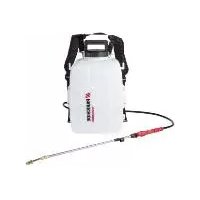
HG08331 - Electric sprayer PARKSIDE - Free user manual and instructions
Find the device manual for free HG08331 PARKSIDE in PDF.



| Product Type | Rechargeable Backpack Sprayer |
| Brand and Model | Parkside HG08331 |
| Tank Capacity | 16 liters |
| Rated Voltage | 20 V |
| Pump Type | Diaphragm Pump |
| Service Pressure | 5 bar / 6 bar (adjustable) |
| Weight (empty, without battery) | Approximately 4 kg |
| Weight (full) | Up to 20 kg |
| Compatible Battery | Parkside X 20 V Team (PAP 20 B1, B3, etc.) |
| Battery Capacity (included) | 4 Ah, 80 Wh (depending on model PAP 20 B3) |
| Estimated Runtime | Up to 60 min at full charge |
| Number of Nozzles Included | 4 nozzles (fan, dual, single, mist) + cone head |
| Lance Material | Stainless steel (telescopic) and plastic |
| Filtration | Filter basket and small filter |
| Flow Rate (depending on nozzle and pressure) | From 114 to 297 l/h |
| Max. Operating Temperature | 40 °C |
| Protection Rating | IPX1 |
| Noise Level | 64.3 dB(A) (sound pressure) |
| Vibrations | < 2.5 m/s² (hand/arm) |
| Package Contents | Sprayer, shoulder strap, lances, nozzles, seals, instruction manual |
| Cleaning and Maintenance | Rinse after each use; clean filters and nozzles regularly |
| Warranty | 5 years (legal conditions) |
Frequently Asked Questions - HG08331 PARKSIDE
User questions about HG08331 PARKSIDE
0 question about this device. Answer the ones you know or ask your own.
Ask a new question about this device
Download the instructions for your Electric sprayer in PDF format for free! Find your manual HG08331 - PARKSIDE and take your electronic device back in hand. On this page are published all the documents necessary for the use of your device. HG08331 by PARKSIDE.
USER MANUAL HG08331 PARKSIDE
Operation and safety notes
Translation of the original instructions
FR BE
PULVÉRISATEUR À DOS RECHARGEABLE 16 L 20 V
Authorised Signatory
Warnings and symbols used 34
Introduction 35
Intended use. 35
Scope of delivery. 36
Parts description. 36
Technical data 37
Safety instructions. 38
General power tool safety warnings. 38
Backpack sprayer safety warnings 42
Vibration and noise reduction. 43
Behaviour in emergency situations. 44
Residual risks 44
Battery charger safety warnings 45
Preparation 46
46
Features. 46
Operating the battery pack. 47
Before use 48
48
48
Adjusting the length of the stainless steel nozzle pipe. 48
Adjusting the cone spray head on the stainless steel nozzle pipe. 48
49
49
49
First steps when somebody gets exposed to pesticides.. 50
Filling the spray tank. 51
Operation. 52
Switching on and off 52
Spraying. 52
Cleaning and care 54
Maintenance . 54
Repair. 54
Cleaning. 54
Storage 56
Transportation 56
Troubleshooting 57
Disposal 58
Warranty 59
Warranty claim procedure. 59
Service 59
EC Declaration of conformity. 60
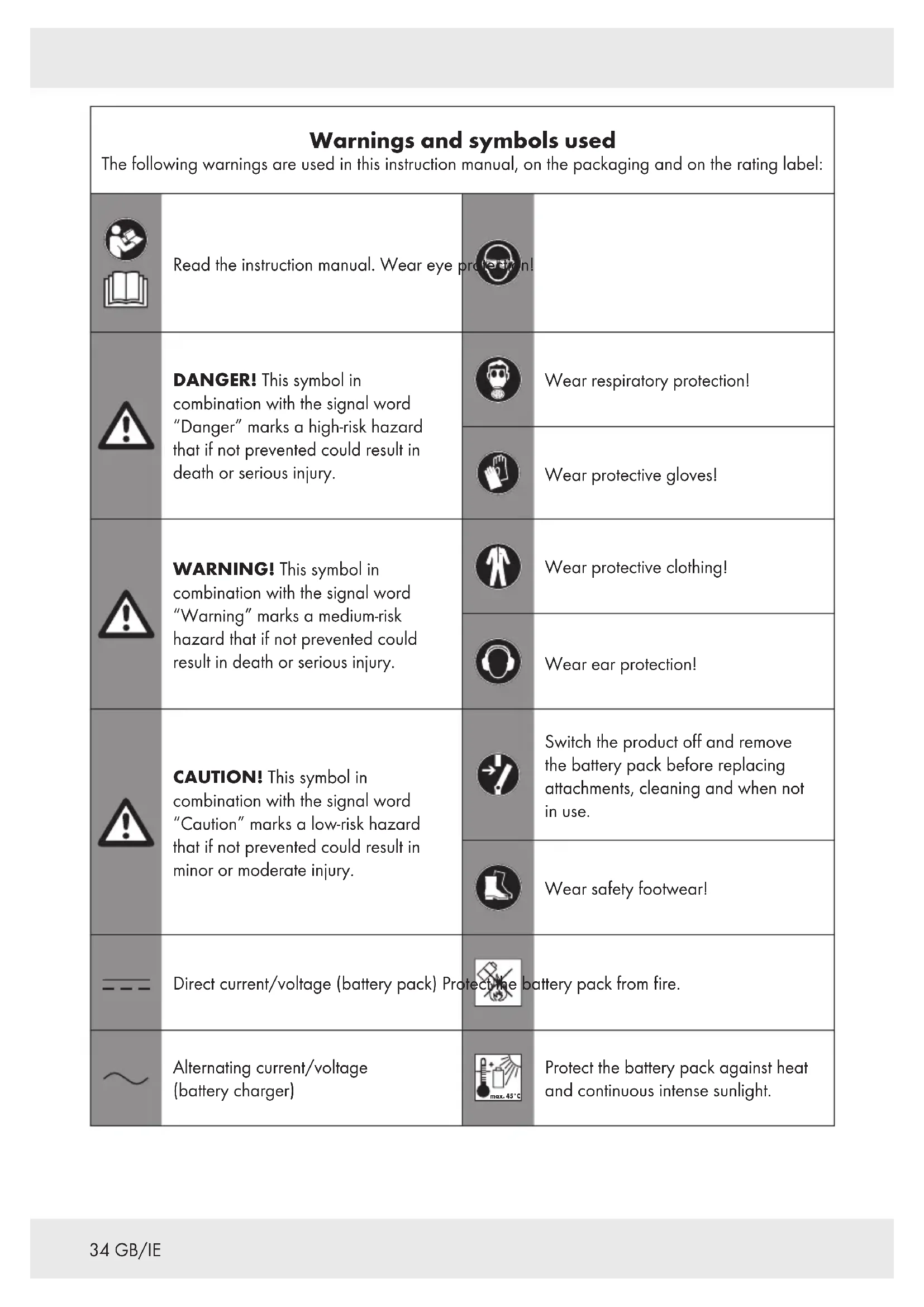
| Warnings and symbols used The following warnings are used in this instruction manual, on the packaging and on the rating label: | |||
| Read the instruction manual. Wear eye protective! | |||
| DANGER! This symbol in combination with the signal word "Danger" marks a high-risk hazard that if not prevented could result in death or serious injury. | Wear respiratory protection! | ||
| Wear protective gloves! | |||
| WARNING! This symbol in combination with the signal word "Warning" marks a medium-risk hazard that if not prevented could result in death or serious injury. | Wear protective clothing! | ||
| Wear ear protection! | |||
| CAUTION! This symbol in combination with the signal word "Caution" marks a low-risk hazard that if not prevented could result in minor or moderate injury. | Switch the product off and remove the battery pack before replacing attachments, cleaning and when not in use. | ||
| Wear safety footwear! | |||
| Direct current/voltage (battery pack) Protect the battery pack from fire. | |||
| ~ | Alternating current/voltage (battery charger) | max. 45°C | Protect the battery pack against heat and continuous intense sunlight. |
| T3.15A | Fuse (battery charger) | Protect the battery pack against water and moisture. | ||
| Use in dry indoor rooms only (battery charger). | CE | CE mark indicates conformity with relevant EU directives applicable for this product. | ||
| Keep bystanders away when spraying. | ||||
CORDLESS 16 L BACKPACK PRESSURE SPRAYER 20 V
Introduction
We congratulate you on the purchase of your new product. You have chosen a high quality product. The instructions for use are part of the product. They contain important information concerning safety, use and disposal. Before using the product, please familiarise yourself with all of the safety information and instructions for use. Only use the product as described and for the specified applications. If you pass the product on to anyone else, please ensure that you also pass on all the documentation with it.
Intended use
This cordless backpack pressure sprayer (hereinafter "product" or "power tool") is intended only for outdoor use in a well-ventilated area.
The product must not be used indoors or in poorly ventilated areas.
The product should be used only in domestic applications by adults who have received adequate training on the hazards and preventative measures to be taken while using the product.
The product is designed for spraying consumer-grade home and garden chemicals, such as:
Insecticides
Fungicides
Weed killers
Fertilizers
The product may also be used to water plants.
Do not use the product for any other purpose.
Always use the correct accessory tools according to the intended use! Observe the technical requirements of this product (see "Technical data") when purchasing and using accessory parts!
Any other use or modification of the product are considered improper use and can result in hazards such as death, life-threatening injuries and damage. The manufacturer is not liable for any damages caused by improper use. The product is not intended for commercial use or for any other use.
Scope of delivery
WARNING!
The product and the packaging are not children's toys! Children must not play with plastic bags, sheets and small parts! There is a danger of choking and suffocation!
1 Cordless backpack pressure sprayer PRDSP 20-Li A1
1 Shoulder strap
1 Stainless steel nozzle pipe
1 Plastic nozzle pipe
1 Fan nozzle
1 Double head nozzle
1 Single head nozzle
1 Mist nozzle
1 Battery pack PAP 20 B3 *
1 Rapid battery charger PLG 20 C3 *
1 Bag with spare parts:
1 Sealant ring on shut-off valve (22.5mm^)
1 Spring gasket on shut-off valve (12 mm)
1 Sealant ring inside the nut of shut-off valve (19mm^)
1 Sealant ring inside the mist nozzle (19.5mm^)
1 Sealant ring inside the fan nozzle (16mm^)
1 Sealant ring inside the cone spray head (9.3mm^)
3 Sealant rings on plastic nozzle pipe and stainless steel nozzle pipe (14.2 mm**)
1 Instruction manual
- Parts description
Fig. A:
Spray tank cover
Spray tank
2aSpray tank pin
3 Hose
4Shoulder strap
4aStrap hook x4
5 Plastic nozzle pipe
6 Stainless steel nozzle pipe
7Hanging hook
8 Shut-off valve
9 Nozzle accessories:
Fan nozzle x1
Double head nozzle x1
Single head nozzle x1
Mist nozzle x1
Fig. B and C:
10|Power button
11 Battery level indicator
12 Battery pack *
13Release button
14LED button
15Charging level LEDs
Fig. D:
16 Battery charger (rapid charger) *
17Power cord with power plug
18Charging control LED - green
19Charging control LED - red
Fig. E to O:
20Basket filter
21Cone spray head
[22]Trigger
23|Lock-on latch
24Small filter
25 Battery cover
26 Battery connector
[27]Eyelets x4
28O-Ring x2
29 Union nut x2
30Security ring X2
31Pipe nut
32Removable handle
- Battery pack and rapid battery charger are not included.
** Outer diameter
Technical data
Cordless 16 L backpack pressure sprayer 20 V PRDSP 20-Li A1
Rated voltage: 20V
一
Pump type: Diaphragm
Tank capacity: 16 l
Working pressure: 5 bar / 6 bar (adjustable)
Max. operating temperature: 40^
Weight (empty): approx. 4 kg
(without battery pack)
Weight (full): 20kg
Residual solution in spray
tank (max.): 250 ml
Ingress protection: IPX1
Dimensions:
Attachment Mesh width
| 20 | Basket filter | 0.25 mm | - |
| 24 | Small filter | 0.18 mm | - |
| 9 | Fan nozzle | - | 2 mm |
| 9 | Single head nozzle | - | 2 mm |
| 9 | Double head nozzle | - | 2 mm |
| 9 | Mist nozzle | - | 0.8 mm |
| 21 | Cone spray head | - | 1.8 mm |
Flow rate (l/h):
| Attachment Setting | I/h | at bar | |
| Fan nozzle | 1 | 86 | 4 |
| 2 | 97 | 5 | |
| Single head nozzle | 1 | 78 | 4 |
| 2 | 86 | 5 | |
| Double head nozzle | 1 | 114 | 2 |
| 2 | 131 | 3 | |
| Mist nozzle | 1 | 114 | 2 |
| 2 | 131 | 3 | |
| Cone spray head (mist) | 1 | 60 | 5 |
| 2 | 72 | 6 | |
| Cone spray head (jet stream) | 1 | 114 | 2 |
| 2 | 125 | 3 |
| Battery pack | PAP 20 B3 * |
| Type: | Lithium-lon |
| Rated voltage: 20 V | --- |
| Capacity: | 4 Ah |
| Energy value: | 80 Wh |
| Number of cells: | 10 |
Rapid battery charger PLG 20 C3 \* Input:
| Rated voltage: 230-240 V | ~ |
| Rated frequency: | 50 Hz |
| Rated power: | 120 W |
| Fuse (internal): | 3.15 A / T3.15A |
Output:
| Rated voltage: 21.5 V | --- |
| Charging current: | 4.5 A |
| Protection class: | II / ☑ |
Charging time:
Battery type PAP 20 B1, 2.0 Ah (available separately): 45 minutes
Battery type PAP 20 B3, 4.0 Ah (available separately): 60 minutes
Recommended ambient temperature:
| While charging: | +4 to +40 °C |
| During operation: | +4 to +40 °C |
| During storage: | +20 to +26 °C |
Noise emission value
The measured values have been determined in accordance with EN 62841. The A-rated noise level of the power tool is typically as follows:
| Sound pressure level LpA: | 64.3 dB(A) |
| Uncertainty KpA: | 3 dB |
| Sound power level LWA: | 75.3 dB(A) |
| Uncertainty KWA: | 3 dB |
Vibration emission value
Vibration total values (triaxial vector sum) determined according to EN 62841:
Hand/arm vibration a_h,D .. < 2.5m / s^2
Uncertainty K: 1.5m / s^2

WARNING!

Wear ear protection!
NOTE
The declared vibration total value and the declared noise emission value have been measured in accordance with a standard test method and may be used for comparing one tool with another.
The declared total vibration value and the declared noise emission value may also be used for a preliminary assessment of exposure.

WARNING!
The vibration and noise emissions during actual use of the power tool can differ from the declared values depending on the manner in which the tool is used, especially what kind of workpiece is processed. Try to minimise exposure to vibration and noise. Examples of measures to reduce vibration include wearing gloves when using the tool and limiting working time. All parts of the operating cycle must be taken into account (e.g. times when the power tool is switched off and when it is running idle in addition to the trigger time).

Safety instructions
- General power tool safety warnings

WARNING!
Read all safety warnings, instructions, illustrations and specifications provided with this power tool. Failure to follow all instructions listed below may result in electric shock, fire and/or serious injury.
Save all warnings and instructions for future reference.
The term "power tool" in the warnings refers to your mains-operated (corded) power tool or battery-operated (cordless) power tool.
Work area safety
1) Keep work area clean and well lit. Cluttered or dark areas invite accidents.
2) Do not operate power tools in explosive atmospheres, such as in the presence of flammable liquids, gases or dust. Power tools create sparks which may ignite the dust or fumes.
3) Keep children and bystanders away while operating a power tool. Distractions can cause you to lose control.
Electrical safety
1) Power tool plugs must match the outlet. Never modify the plug in any way. Do not use any adapter plugs with earthed (grounded) power tools. Unmodified plugs and matching outlets will reduce risk of electric shock.
2) Avoid body contact with earthed or grounded surfaces, such as pipes, radiators, ranges and refrigerators. There is an increased risk of electric shock if your body is earthed or grounded.
3) Do not expose power tools to rain or wet conditions. Water entering a power tool will increase the risk of electric shock.
4) Do not abuse the cord. Never use the cord for carrying, pulling or unplugging the power tool. Keep cord away from heat, oil, sharp edges or moving parts. Damaged or entangled cords increase the risk of electric shock.
5) When operating a power tool outdoors, use an extension cord suitable for outdoor use. Use of a cord suitable for outdoor use reduces the risk of electric shock.
6) If operating a power tool in a damp location is unavoidable, use a residual current device (RCD) protected supply. Use of an RCD reduces the risk of electric shock.
Personal safety
1) Stay alert, watch what you are doing and use common sense when operating a power tool. Do not use a power tool while you are tired or under the influence of drugs, alcohol or medication. A moment of inattention while operating power tools may result in serious personal injury.
2) Use personal protective equipment. Always wear eye protection. Protective equipment such as dust mask, non-skid safety shoes, hard hat, or hearing protection used for appropriate conditions will reduce personal injuries.
3) Prevent unintentional starting. Ensure the switch is in the off-position before connecting to power source and/or battery pack, picking up or carrying the tool. Carrying power tools with your finger on the switch or energising power tools that have the switch on invites accidents.
4) Remove any adjusting key or wrench before turning the power tool on. A wrench or a key left attached to a rotating part of the power tool may result in personal injury.
5) Do not overreach. Keep proper footing and balance at all times. This enables better control of the power tool in unexpected situations.
6) Dress properly. Do not wear loose clothing or jewellery. Keep your hair, clothing and gloves away from moving parts. Loose clothes, jewellery or long hair can be caught in moving parts.
7) If devices are provided for the connection of dust extraction and collection facilities, ensure these are connected and properly used. Use of dust collection can reduce dust-related hazards.
8) Do not let familiarity gained from frequent use of tools allow you to become complacent and ignore tool safety principles. A careless action can cause severe injury within a fraction of a second.
Power tool use and care
1) Do not force the power tool. Use the correct power tool for your application. The correct power tool will do the job better and safer at the rate for which it was designed.
2) Do not use the power tool if the switch does not turn it on and off. Any power tool that cannot be controlled with the switch is dangerous and must be repaired.
3) Disconnect the plug from the power source and / or the battery pack from the power tool before making any adjustments, changing accessories, or storing power tools. Such preventive safety measures reduce the risk of starting the power tool accidentally.
4) Store idle power tools out of the reach of children and do not allow persons unfamiliar with the power tool or these instructions to operate the power tool. Power tools are dangerous in the hands of untrained users.
5) Maintain power tools and accessories. Check for misalignment or binding of moving parts, breakage of parts and any other condition that may affect the power tool's operation. If damaged, have the power tool repaired before use. Many accidents are caused by poorly maintained power tools.
6) Keep cutting tools sharp and clean. Properly maintained cutting tools with sharp cutting edges are less likely to bind and are easier to control.
7) Use the power tool, accessories and tool bits etc. in accordance with these instructions, taking into account the working conditions and the work to be performed. Use of the power tool for operations different from those intended could result in a hazardous situation.
8) Keep handles and grasping surfaces dry, clean and free from oil and grease. Slippery handles and grasping surfaces do not allow for safe handling and control of the tool in unexpected situations.
Battery tool use and care
1) Recharge only with the charger specified by the manufacturer. A charger that is suitable for one type of battery pack may create a risk of fire when used with another battery pack.
2) Use power tools only with specifically designated battery packs. Use of any other battery packs may create a risk of injury and fire.
3) When battery pack is not in use, keep it away from other metal objects, like paper clips, coins, keys, nails, screws or other small metal objects, that can make a connection from one terminal to another. Shorting the battery terminals together may cause burns or a fire.
4) Under abusive conditions, liquid may be ejected from the battery; avoid contact. If contact accidentally occurs, flush with water. If liquid contacts eyes, additionally seek medical help. Liquid ejected from the battery may cause irritation or burns.
5) Do not use a battery pack for tool that is damaged or modified. Damaged or modified batteries exhibit unpredictable behaviour resulting in fire, explosion or risk of injury.
6) Do not expose a battery pack or tool to fire or excessive temperature. Exposure to fire or temperature above 130^ may cause explosion.
7) Follow all charging instruction and do not charge the battery pack or tool outside the temperature range specified in the instruction. Charging improperly or at temperatures outside the specified range may damage the battery and increase the risk of the fire.
Service
1) Have your power tool serviced by a qualified repair person using only identical replacement parts. This will ensure that the safety of the power tool is maintained.
2) Never service damaged battery packs. Service of battery packs should be only be performed by the manufactured or authorized service providers.
- Backpack sprayer safety warnings
The backpack sprayer shall be used only with plant protection products approved by local/national regulatory authorities for plant protection products for use with knapsack sprayers.
- Keep the area clear of all bystanders, children and pets while spraying.
- Be aware of any hazards presented by the spray materials. Before using any pesticide or other spray materials with the product, carefully read the label on the original container and follow instructions.
■ Risk of fire! Do not spray flammable liquids such as gasoline.
Risk of explosion! Do not place in direct sunlight.
Only use the parts supplied or approved by the manufacturer.
Do not spray into wind, water or drinking water source.
Properly tighten the spray tank cover after pouring liquids into the spray tank.
Use only consumer-grade water-based chemicals.
Do not use alkali self-heating or corrosive liquids with the product. These can corrode metal parts or weaken the tank and hose.
- Do not leave residue or spray material in the spray tank after using the product. Clean the product after each use.
Do not add liquids with a temperature of more than 45^ to avoid damaging the hose or spray tank.
Do not overfill the tank.
Do not operate the product in narrow or enclosed spaces. Always spray in a well-ventilated area Do not smoke, eat or drink while using the product.
- Do not smoke in areas where the product is used.
Always wear appropriate personal protection equipment.
- Do not discharge the spray materials directly against skin.
Aim the nozzle directly at the plants or objects intend to spray.
Ensure that the spray materials are directed at an area that will not be damaged by the spray materials.
Electric shock hazard! Do not spray towards electric outlets.
After every use, thoroughly wash your hands and any area where skin has been exposed to the spray materials.
Remove the battery pack from the product before draining, cleaning or storing the product to avoid accidental starting.
Thoroughly inspect both the inside and outside of the product and examine all components before each use.
Check for cracked and deteriorated hoses, leaks, clogged nozzles, and missing or damaged parts.
A damaged hose or loose hose connection can result in accidental contact with the spray solution, causing serious injury or property damage.
If damaged, have the product repaired before use. Many accidents are caused by poorly maintained products.
Do not lift or carry the product by the hose or shut-off valve. Carry the product by the handle and the shoulder strap only.
Never use the product in a room where there is a danger of explosion or in the vicinity of flammable liquids or gases.
- Do not immerse the product in water or other liquids. Do not place the product where it can fall or be pulled into a tub or sink.
Only operate the product when it is in an upright position.
- Do not operate the product with an empty spray tank.
It is necessary to provide the appropriate training in safe operation.
Do not use the product while tired, ill or under the influence of alcohol, drugs or medicaments.
Always carry out a visual inspection before using the product. Do not use the product if it is damaged. If the product is damaged, have it checked by qualified personnel.
Always check the product for leaks. If any are found, correct them before using the product.
When assembling or removing accessories, do not point them towards yourself or other persons.
The product must only be operated by 1 person at a time. Nobody else must be within a radius of 15 metres at the same time.
If there is no spray coming out from the nozzle or the spray amount is decreased, the hose and spray system may be blocked. Rinse and clean all parts of the hose and spray system (shut-off valve, small filter, nozzle pipe, hose, nozzle) with clean water.
After the product has been stored for a long time (e.g. during winter), fill the spray tank 2 with clean water. Carry out a test run to check if there are any leakages or cracks.
- Release the residual pressure in the spray tank after each use and especially before removing the spray tank cover. Do so by pressing the trigger.
Do not modify the product under any circumstance. Modifications may result in serious injury.
All servicing and maintenance, other than the items listed in this instruction manual, should be performed by an authorised service centre.
Only use spare parts and accessories provided by the manufacturer. All other repairs shall only be carried out by an authorised service centre. Improper maintenance, use of non-conforming components and removal of safety devices can lead to a hazardous situation, such as death, life-threatening injuries and damage.
Vibration and noise reduction
To reduce the impact of noise and vibration emission, limit the time of operation, use low-vibration and low-noise operating modes and wear personal protective equipment.
Take the following points into account to minimise the vibration and noise exposure risks:
Only use the product as intended by its design and these instructions.
Ensure that the product is in good condition and well maintained.
- Keep tight grip on the handles/grip surface.
- Maintain this product in accordance with these instructions and keep it well lubricated (where appropriate).
Plan your work schedule to spread any high vibration tool use across a longer period of time.
Behaviour in emergency situations
Familiarise yourself with the use of this product by means of this instruction manual. Memorise the safety warnings and follow them to the letter. This will help to prevent risks and hazards.
Always be alert when using this product, so that you can recognise and handle risks early. Fast intervention can prevent serious injury and damage to property.
- Switch the product off and remove the battery pack if there are malfunctions. Have the product checked by a qualified professional and repaired, if necessary, before you operate it again.
- Keep instructions or label of the spray materials available at all times in order to inform the doctor about the chemical concerned in an emergency. In an emergency, follow the chemical manufacturer's instructions provided or on the label. Observe manufacturer's safety data sheets.
Procedure after accidents: If you have come into contact with the spray solution, switch off the product by switching the power button to O . Release the product immediately by lifting the lower end of the tab on both sides of the shoulder strap (Fig. P).
Danger to health due to contact with plant protection products! Plant protection products may cause damage to health by inhalation, ingestion or absorption through the skin. If symptoms occur or in case of doubt, seek medical advice. Therefore, observe the following safety instructions:
-Observe the safety instructions on the labels of the plant protection products.
-Observe the specified max. concentration.
-Certain liquids require protective goggles, gloves or other protective measures.
- Always request and observe a safety data sheet from the chemical manufacturer.
- Always empty the spray solution when you are safe.
Residual risks
Even if you are operating this product in accordance with all the safety requirements, potential risks of injury and damage remain. The following dangers can arise in connection with the structure and design of this product:
Health defects resulting from vibration emission if the product is being used over long periods of time or not adequately managed and properly maintained.
Danger of injury and property damage caused by flying objects.
NOTE
This product produces an electromagnetic field during operation! This field may under some circumstances interfere with active or passive medical implants! To reduce the risk of serious or fatal injury, we recommend persons with medical implants to consult their doctor and the medical implant manufacturer before operating this product!
Battery charger safety warnings
This appliance can be used by children aged from 8 years and above and persons with reduced physical, sensory or mental capabilities or lack of experience and knowledge if they have been given supervision or instruction concerning use of the appliance in a safe way and understand the hazards involved.
Children shall not play with the appliance.
Cleaning and user maintenance shall not be made by children without supervision.
Do not charge nonrechargeable batteries.
Disregarding this instruction is hazardous.
If the supply cord is damaged, it must be replaced by the manufacturer, its service agent or similarly qualified persons in order to avoid a hazard.
Protect the electrical parts against moisture. Do not immerse such parts in water or other liquids to avoid electrical shock. Never hold the appliance under running water. Pay attention to the instructions provided for cleaning, maintenance and repair.
The appliance is suitable for indoor use only.
ATTENTION! This charger is only designed for charging the battery pack types:
Parkside 20 Vbattery pack
PAP 20 B1 2 Ah 5 cells
PAP 20 B3 4 Ah 10 cells
An up-to-date list of battery compatibility can be found at www.lidl.de/akku.
Preparation
The safe use of this product requires a good understanding of the information on the product and in this instruction manual. The product also requires clear knowledge of the project you are attempting. Before using this product, familiarize yourself with all operating features and safety rules.
First time operators should receive practical use instructions of the product and protective equipment from an experienced operator.
Accessories
To operate this product safely and correctly, the following accessories, i.e. tools and accessory tools, are necessary:
Consumer-grade home and garden chemicals, e.g. insecticides, fungicides, weed killers and fertilizers
Proper personal protective equipment (PPE), e.g.:
-Impermeable clothing, coveralls
-Impermeable safety boots with non-slip sole which are resistant to plant control chemicals
-Impermeable gloves resistant to plant control chemicals
Snug-fitting safety glasses in accordance with European standard EN 166
Suitable respirator
Accessories are available through your authorised dealer. When buying, always consider the technical requirements of this product (see "Technical data").
If you are not certain, ask a qualified specialist and get advice from your trusted dealer.
NOTE
This instruction manual contains information on battery pack and charger. Battery pack and chargers are not included in the delivery (see "Scope of delivery").
Suitable battery packs and chargers
Battery pack: Parkside X 20 V Team
Charger: Parkside X 20 V Team
Features
Spray tank: The capacity of the spray tank 2 is 16 litres.
Trigger: Squeezing the trigger 22 releases a stream of spray solution for spraying consumer-grade home and garden chemicals.
Lock-on latch: The lock-on latch 23 enables continuous spraying without holding down the trigger.
Power button: The power button 10 switches the product on or off and adjusts the spray pressure.
Battery cover: The battery cover 25 protects the battery pack from exposure to liquids.
Filter: The basket filter 20 and the small filter 24 are used for filtering solid substances.
Nozzle: The nozzle accessories 9 and the cone spray head 21 are provided to enable different spray patterns and flow rates.
Battery level indicator: The battery level indicator [11] is used to indicate the charging level of the battery pack [12].
Shoulder strap: In case of emergency, the product can be released from the operator quickly by lifting the lower end of the tab on both sides of the shoulder strap (Fig. P).
- Operating the battery pack

CAUTION! RISK OF INJURY!
Always switch the power button to. This avoids accidental starting before attaching/removing the battery pack 12
Attaching the battery pack
(Fig.1)
Open the battery cover25.
Align the battery pack to the battery connector 26. Slide the battery pack fully into the battery connector.
Removing the battery pack
(Fig.1)
Open the battery cover25 located on the side of the spray tank 2.
Press the release button[13].
Remove the battery pack12.
Checking the battery pack charging level
(Fig. C)
Press the LED button14.
The charging level LEDs15light up.
LED Charging level
Red/orange/green Maximum
Red/orange Medium
Red Low
Charging the battery pack
(Fig. D)
NOTE
The battery pack12 may be charged at any time without reducing battery life.
Interrupting the charging process does not damage the battery pack 12.
Charge the battery pack before operation when the battery pack is at medium or low charging level.
Insert the battery pack12 into the battery charger 16.
Connect the power plug17 with a socketoutlet.
The charging control LEDs (green18and red 19) indicate the status of the battery charger 16 and the battery pack 12.
LED signal Status
Red Battery pack charges
Green Battery pack fully
charged
Green and red flashing Battery pack defective
Red flashing Battery pack too cold
or too warm
Green (while no battery Battery charger ready pack is in the battery charger)
When the battery pack12is fully charged:
-Remove the battery pack 12 from the battery charger 16.
-Disconnect the power plug 17 from the socket-outlet.
Before use
Attaching the shoulder strap (Fig. F)
-
Clip the strap hooks 4a on the shoulder strap 4 to the eyelets 27 on the spray tank 2 .
Adjust the length of the shoulder strap 4. -
Attaching the stainless steel nozzle pipe
(Fig. G)
One end of the stainless steel nozzle pipe 6 has an O-ring 28. Connect this side of the stainless-steel nozzle pipe to the shut-off valve 8.
Push the union nut29 and the security ring 30 towards the thread on the shut-off valve 8.
Turn the union nu29 in a clockwise direction until it is tight.
NOTE
When the stainless steel nozzle pipe 6 is not in use: Optional - attach the stainless steel nozzle pipe to the spray tank pin 2a by the hanging hook 7 for easy carrying.
Adjusting the length of the stainless steel nozzle pipe
(Fig. H)
NOTE
Adjust the length of the stainless steel nozzle pipe to avoid contaminating yourself, bystanders or the environment.
The stainless steel nozzle pipe can be telescoped out.
Extending the stainless steel nozzle pipe: -Turn the pipe nut 31 in an anti-clockwise direction until it is loose.
-Pull out the stainless steel nozzle pipe 6 by the tip until it reaches the desired length.
Turn the pipe nut 31 in a clockwise direction until it is tight.
NOTE
To avoid contamination of environment, operator or bystanders, extend the length of the stainless steel nozzle pipe 6 if necessary.
Adjusting the cone spray head on the stainless steel nozzle pipe
(Fig. J) The cone spray head 21 is pre-installed on the stainless steel nozzle pipe 6.
Adjusting the spray pattern
Coarse: Turn the tip of the cone spray head [21] in an anti-clockwise direction (loosen the cone spray head).
- Fine: Turn the tip of the cone spray head [21] in a clockwise direction (tighten the cone spray head).
NOTE
To prevent over-tightening of the cone spray head [21], tighten it in such a way that the slots of the heads are aligned and cannot be tightened further (= fine spray pattern setting). Changing from fine spray pattern to coarse spray pattern: Turn the tip of the cone spray head anti-clockwise by 1 turn so that the slots on the heads are aligned again.
- Attaching the plastic nozzle pipe
Connect either end of the plastic nozzle pipe 5 to the shut-off valve 8.
Push the O-ring28, security ring 30 and the union nut29towards the thread on the shutoff valve 8.
Turn the union nu[29] in a clockwise direction until it is tight (Fig. G).
- Attaching the nozzle accessories
The nozzle accessories 9 are to be assembled only with the plastic nozzle pipe 5.
The nozzle accessories are not to be assembled with the stainless steel nozzle pipe 6.
Insert the desired nozzle accessory 9 into one end of the plastic nozzle pipe 5.
Push the O-ring28, security ring 30 and the union nut 29 towards the thread on the nozzle accessory 9 (Fig. K).
Turn the union nut 29 in a clockwise direction to tighten it on the thread of the nozzle accessory [Fig. L].
Choosing the suitable nozzle accessory
| Nozzle Application | ||
| Fan nozzle | Uniform spray pattern | |
| Double head nozzle | Spraying large areas Spraying large crops High flow rate | |
| Single head nozzle | Spraying small areas Spraying large crops | |
| Mist nozzle | Spraying mist High flow rate | |
NOTE
Only use the nozzles and filters supplied with the product.
- Mixing the spray solution

WARNING!
- Mix the chemicals strictly in accordance with the manufacturer's instructions. Incorrect mixtures may produce toxic fumes or explosive solutions.
Risk of accidental contact of spray materials with skin and eyes! Always wear appropriate personal protection equipment as instructed by the chemical manufacturer when using, preparing, handling, spraying, or disposing of chemicals. This equipment includes at least goggles, gloves, respiratory protection and protective clothing.
Never spray liquid plant control chemicals undiluted.
Prepare solution and fill the spray tank 2 outdoors only or in well-ventilated locations.
Mix and fill only in areas where spray spills can be easily contained.
Have sufficient spare rags available to adsorb any spills immediately.
Prepare a quantity of solution sufficient only for the job at hand so that nothing is left over.
Do not mix different chemicals unless such mixture is approved by the manufacturer.
Liquids to be sprayed must be as thin as water. Thicker liquids cannot be sprayed properly.
- Avoid contaminating the environment, the water supply and/or public sewer systems with the spraying agent.
Any unused leftovers of spraying agents must always be collected in a suitable container and disposed of by local or national regulatory authorities.
- Avoid any direct contact with spraying agents. In case of contact with sprays, immediately rinse the affected parts of the body with plenty of clean water. Seek medical advice if needed.
- Keep children, pets and toys (including pet toys) away from areas where you mix and apply pesticides for at least the length of time required on the spraying agent's label. If no time is listed on the label, wait until the pesticides have dried before re-entering the area.
Store the spraying agents out of the reach of children and pets, in a locked cabinet or garden shed. Installing child-proof safety latches or padlocks on cupboards and cabinets is a good idea. Safety latches are available at your local hardware store.
Teach children that "pesticides are poisons" - something they should never touch or eat.
- First steps when somebody gets exposed to pesticides
Ingestion:
-Get medical attention.
-A conscious victim should drink a small amount of water to dilute the pesticide.
-Induce vomiting only if a poison centre or physician advises you to do so.
Skin contact:
-Remove contaminated clothing.
- Immediately rinse the affected body parts with plenty of clean water.
-If the skin appears burned, do not apply ointments.
-Get medical attention if necessary.
Inhalation:
-If the victim is outside, move or carry the victim away from the area where pesticides were recently applied.
-If the victim is inside, carry or move the victim to fresh air immediately.
-Loosen the victim's tight clothing. If the victim's skin is blue or the victim has stopped breathing, give artificial respiration (if you know how) and call for help.
Eye contact:
-Hold the eyelids open and immediately begin flushing with clean water.
-Do not use chemicals or drops unless instructed to by a physician or poison control centre.
Cover the eye with a clean piece of cloth and seek medical attention immediately.
Filling the spray tank

WARNING! Risk of accidental contact of spray materials with skin and eye.
Always wear appropriate personal protection equipment as instructed by the chemical manufacturer when using, preparing, handling, spraying, or disposing of chemicals. This equipment includes at least goggles, gloves, respiratory protection and protective clothing.
- Avoid accidental starting. Ensure the power button 10 is switched to and the battery pack 12 is removed from the product.
The maximum volume if the spray tank 2 is 16 litres. Do not overfill the spray tank!
NOTE
Thoroughly clean and rinse measuring containers that are used for filling the spray tank 2 and for pre-mixing spray materials.
The basket filter prevents debris that can clog or damage the pump from entering the spray tank.
Always reinsert the basket filter before reinstalling the spray tank cover 1.
Use only with plant protection products approved by local/national regulatory authorities for plant protection products for use with knapsack sprayers.
Before filling the spray tank 2 with spray solution
- Carry out a test run with fresh water. Check all parts of the product for leaks.
Filling a clean spray tank
Stand the spray tank 2 on a level surface.
Unscrew and remove the spray tank cover 1. Check if the basket filter 20 is correctly placed (Fig. E).
Carefully pour the spray solution into the spray tank 2.
Do not fill the spray tank above the maximum mark.
After filling, fit the spray tank cover 1. Tighten the spray tank cover firmly.
NOTE
Fix a tag on the product to note what chemical is used.

WARNING!
Never attempt to fill the spray tank 2 while carrying it.
Changing the spray material
If any spray material is left in the spray tank 2:
Unscrew the spray tank cover 1 and remove the basket filter 20.
Pour the spray material from the spray tank 2 into a container approved for chemicals. Do not store chemicals in the spray tank for a prolonged period.
Use clean water to clean and rinse the spray tank 2 and accessories. A small amount of mild household detergent may be added.
Pour in the new spray material (see "Filling the tank").
Operation
- Switching on and off
(Fig.B)
Switching the product on sets the product into standby. The product does not spray until the trigger 22 is squeezed while the product is switched on.
Switching on
Switch the power button to I.
Increasing the flow rate
Switch the power button to II.
Switching off
Switch the power button to O.
The product is equipped with a battery level indicator [11]. This indicates the charging level of the battery pack [12] while the battery pack is inserted in the product. When the product is switched on, the battery level indicators light up.
Battery level indicator
Charging level
Red/orange/green Maximum
Red/orange Medium
Red Low
Spraying
WARNING!
Risk of accidental contact of spray materials with skin and eye. Always wear appropriate personal protection equipment as instructed by the chemical manufacturer when using, preparing, handling, spraying, or disposing of chemicals. This equipment includes at least goggles, gloves, respiratory protection and protective clothing.
Before spraying chemicals, you are required to consider how close you are to sensitive areas such as schools, hospitals, sensitive crops, waterways, livestock, farms and bee foraging areas.
Work only in the open or in very wellventilated locations, e.g. open greenhouses.
Do not eat, drink or smoke while working with plant protection chemicals.
If you are interrupted while applying the spray material - by a phone call, for example - be sure to close the spray materials' container properly and put it out of reach of any child who may come into the area while you are gone.
Never blow through nozzles or other components by mouth.
Do not spray in the direction of people or animals. Avoid spraying on windy days. The spray materials can be accidentally blown onto plants or objects that should not be sprayed. Always spray downwind.
Too high or too low a spray pressure or unfavourable weather conditions can result in the wrong solution concentration.
Never spray in the direction of bystanders.
Take special care in slippery conditions - damp, snow, ice, on slopes or uneven ground.
Watch out for obstacles: Be careful of refuse, tree stumps, roots and ditches which could cause you to trip or stumble.
To reduce the risk of accidents, take a break in good time to avoid tiredness or exhaustion.
Work calmly and carefully - in daylight conditions and only when visibility is good. Stay alert so as not to endanger others.
Never work on a ladder or any other insecure support.
- When working in open ground and gardens take special care to avoid harming small animals.
To avoid drifting, different parameters should be taken into account when spraying. Examples:
-Nozzles
Pressure
- Nozzle pipe length
Wind speed
To reduce the risk of electrocution, never work in the vicinity of live wires or power cables.
Always clean the product before filling in a different spray material (see "Cleaning and care").
Do not operate the product at temperatures above +40^ in the shade or in direct sunlight.
Start spraying
Squeeze the trigger down to release a stream of spray solution for spraying consumer grade home and garden chemicals.
Stop spraying
Release the trigger22
Continuous spraying without holding down the trigger
(Fig. M)
Squeeze down the trigger[22].
Push the lock-on latch[23]forward so it is in lock position.
Unlocking the trigger
Squeeze the trigger22 further down.
Fold back the lock-on latch23 under the trigger 22 (Fig. M).
NOTE
During work breaks, do not leave the product in the hot sun or near any heat source.
Overdosing may damage plants and the environment. Underdosing may result in unsuccessful plant treatment.
Cleaning and care

WARNING!
Always switch the product off, remove the battery pack [12] and let the product cool down before performing inspection, maintenance and cleaning work!
Only perform repairs and maintenance work according to these instructions! All other works must be performed by a qualified person!

WARNING!
Risk of chemical exposure!
Always wear appropriate personal protective equipment as instructed by the chemical manufacturer when using, preparing, handling, spraying, or disposing of chemicals. This equipment includes at least goggles, gloves, respiratory protection and protective clothing.
Maintenance
Before and after each use, check the product and accessories (e.g. nozzles) for wear and damage. If required, exchange them for new ones. Observe the technical requirements (see "Technical data").
Periodically check the shoulder strap for fraying. Replace as required.
- Spare parts not listed (such as the charger) can be ordered via our call centres.
Repair
In case leakage is noted, it is likely that there is a broken sealant ring near the source of the leak. The sealant ring can wear over time, which causes cracks and leakage. To replace the sealant ring:
Switch the power button[10] to O
Remove the battery pack12.
Follow the instructions in the "Cleaning" section to clean the parts near the leakage area.
Disassemble the product at the source of the leak. Inspect the sealant ring for any signs of wear or cracks.
If a sealant ring is broken or cracked, replace it with a matching sealant ring from the bag with spare parts. Heed the outer diameter of the sealant ring.
After you replaced any sealant ring, fill the spray tank 2 with clean water. Carry out a test run to check if the leakage has been eliminated.
- Contact an authorised service centre or a similarly qualified person to have the product checked and repaired.
- Cleaning

WARNING! Risk of chemical exposure!
Always wear appropriate personal protection equipment as instructed by chemical manufacturer when using, preparing, handling, spraying, or disposing of chemicals. This equipment includes at least goggles, gloves, respiratory protection and protective clothing.
NOTE
Do not use chemical, alkaline, abrasive or other aggressive detergents or disinfectants to clean this product as they might be harmful to its surfaces.
Prepare a container approved for chemicals. Squeeze down the trigger 22 to spray the residual spray material into the container. Release the trigger once the spray material has been completely emptied.
Switch the power button to
Remove the battery pack12.
Unscrew the shut-off valve 8 from the hose 3.
Unscrew the nut from the shut-off valve to drain residual spray material (Fig. N).
Unscrew the removable handle32 of the shut-off valve 8.
Take out the small filter [24] (Fig. O).
Remove the nozzle accessory. 9
Unscrew the spray tank cover 1 and remove the basket filter 20.
If any spray solution is left in the spray tank 2:
-Pour the spray solution from the spray tank 2 into a container approved for chemicals. Do not store chemicals in the spray tank for a prolonged period.
- Use clean water to clean and rinse the spray tank 2 and accessories. A small amount of mild household detergent may be added.
-Use a damp, lint-free cloth to clean the spray tank 2. Dry the surface with a dry cloth.
The following parts can be detached and cleaned under running water:
- Plastic nozzle pipe
- 6 Stainless steel nozzle pipe
- 9Nozzle accessories
- 20Basket filter
-24Small filter
If the nozzle accessories or the cone spray head are clogged, clean them by pushing a needle through them.
If the basket filter 20 and the small filter 24 cannot be cleaned thoroughly under running water, use a brush to clean.
Clean the individual parts in the following intervals:
| Part Action | Before use | After use | Weekly | Monthly | Every 3 months | |
| Complete product | Visual inspection X - - - - | |||||
| Clean - X - - - | ||||||
| 2 Spray tank | Drain and clean | - X - - - | ||||
| 5 Plastic nozzle pipe | ||||||
| 6 Stainless steel nozzle pipe | Clean - X - - - | |||||
| 8 Shut-off valve | ||||||
| 9 Nozzle accessories | Clean | - X - - - | ||||
| 20 Basket filter | Clean - - - - X | |||||
| 24 Small filter | ||||||
The intervals above apply to normal operating conditions. If your daily working times are longer, adjust the specified intervals accordingly.
Storage
Switch the power button 10 to O.
Remove the battery pack12.
Drain all spray materials from the spray tank 2.
Store the product empty and clean.
Store the product and its accessories in a dark, dry, frost-free and well-ventilated place.
Always store the product in a place inaccessible to children.
The ideal temperature for long term storage (longer than 3 months) is between +20 and +26^ .
Store the chemicals only in secure, approved containers.
- Keep the chemicals out of reach of children and animals.
Battery pack advice
Only store the battery pack12 partially charged. The battery pack should be charged to 40 to 60% (red and orange in the charging level LEDs [15]) before storing for extended periods.
Check the battery pack charge about every 3 months when storing for extended periods. Recharge as necessary.
Transportation
Before transportation: Switch the power button 10 to . Remove the battery pack 12. Drain all spray materials from the spray tank 2.
- Protect the product against shocks and strong vibrations, which occur especially during transport in vehicles.
Secure the product against slipping and tipping.
Troubleshooting

WARNING! Risk of accidental contact of spray materials with skin and eye!
Always wear appropriate personal protection equipment as instructed by the chemical manufacturer when using, preparing, handling, spraying, or disposing of chemicals. This equipment includes at least goggles, gloves, respiratory protection and protective clothing.
Before starting to work with the product, squeeze down the trigger until the pressure has been released completely. If the pressure has not been released beforehand, chemicals may splash out in an uncontrolled manner when working with the product.
After work, carry out a test run with clean water.
Fault Possible cause Solution
| The product can not be switched on. | The battery pack 12 is not inserted properly. | Insert the battery pack 12 properly. |
| The battery pack 12 is empty. | Charge the battery pack 12. | |
| Switch the power button 10 to either I or II position to generate pressure. | ||
| No pressure present. | ||
| No chemicals in the spray tank 2. | Fill the spray tank 2 with chemicals. | |
| Switch off the product, remove the battery pack 12 and release the pressure. | ||
| The product does not spray. | Nozzle accessories 9 or cone spray head 21 are blocked. | Clean the nozzle accessories 9 or the cone spray head 21 by pushing a needle through them (see "Cleaning and care"). |
| Switch off the product, remove the battery pack 12 and release the pressure. | ||
| The small filter 24 is blocked. | Clean the small filter 24 under running water using a brush (see "Cleaning and care"). |
Fault Possible cause Solution
| A leakage occurs. | Related parts are not properly connected. | Switch off the product, remove the battery pack 12 and release the pressure. Connect the related parts properly. |
| The sealant ring is damaged. | Switch off the product, remove the battery pack 12 and release the pressure. Replace the sealant ring. |
Disposal
The packaging is made entirely of recyclable materials, which you may dispose of at local recycling facilities.
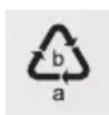
Observe the marking of the packaging materials for waste separation, which are marked with abbreviations (a) and numbers (b) with following meaning: 1-7: plastics / 20-22: paper and fibreboard / 80-98: composite materials.

The product and packaging materials are recyclable, dispose of it separately for better waste treatment. The Triman logo is valid in France only.
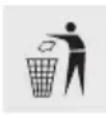
Contact your local refuse disposal authority for more details of how to dispose of your worn-out product.
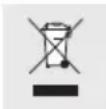
To help protect the environment, please dispose of the product properly when it has reached the end of its useful life and not in the household waste. Information on collection points and their opening hours can be obtained from your local authority.
Faulty or used batteries / rechargeable batteries must be recycled in accordance with Directive 2006/66/EC and its amendments. Please return the batteries / rechargeable batteries and / or the product to the available collection points.
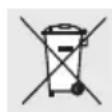
Environmental damage through incorrect disposal of the batteries / rechargeable batteries!
Remove the batteries / battery pack from the product before disposal.
Batteries / rechargeable batteries may not be disposed of with the usual domestic waste. They may contain toxic heavy metals and are subject to hazardous waste treatment rules and regulations. The chemical symbols for heavy metals are as follows: Cd = cadmium, Hg = mercury, Pb = lead. That is why you should dispose of used batteries / rechargeable batteries at a local collection point.
- Dispose of chemicals in accordance with environmental requirements - follow instructions of the chemical's manufacturer.
Never dispose of residual chemicals or contaminated rinsing solutions in waterways, drains, sewers, street gutters or manholes. - Dispose of residual chemicals and used containers in accordance with local waste disposal regulations.
Warranty
The product has been manufactured to strict quality guidelines and meticulously examined before delivery. In the event of product defects you have legal rights against the retailer of this product. Your legal rights are not limited in any way by our warranty detailed below.
The warranty for this product is 5 years from the date of purchase. The warranty period begins on the date of purchase. Please keep the original sales receipt in a safe location. This document is required as your proof of purchase.
Should this product show any fault in materials or manufacture within 5 years from the date of purchase, we will repair or replace it - at our choice - free of charge to you. This warranty becomes void if the product has been damaged, or used or maintained improperly.
The warranty applies to defects in material or manufacture. This warranty does not cover product parts subject to normal wear, thus possibly considered consumables (e.g. batteries) or for damage to fragile parts, e.g. switches, rechargeable batteries or glass parts.
Warranty claim procedure
To ensure quick processing of your case, please observe the following instructions:
Please have the till receipt and the item number (IAN 376264_2104) available as proof of purchase.
You will find the item number on the rating plate, an engraving, on the front page of the instructions for use (bottom left), or as a sticker on the rear or bottom of the product.
If functional or other defects occur, please contact the service department listed either by telephone or by e-mail.
You can return a defective product to us free of charge to the service address that will be provided to you. Ensure that you enclose the proof of purchase (till receipt) and information about what the defect is and when it occurred.
Service
GB Service Great Britain
Tel.: 08000569216
E-Mail: owim@lidl.co.uk
IE Service Ireland
Tel.: 1800200736
E-Mail: owim@lidl.ie
C
EC Declaration of conformity
EC DECLARATION OF CONFORMITY
IAN:376264_2104
Product identification:
"Parkside" Cordless 16L Backpack Pressure Sprayer 20V
Model Number:
HG08331
The object of the declaration described above is in conformity with the relevant Union harmonisation legislation:
Directive 2006/42/EC
Directive 2014/30/EU
References to the relevant harmonised standards used or references to the other technical specifications in relation to which conformity is declared:
| N° / Parts |
| Directive 2006/42/EC |
| EN 62841-1:2015 |
| EN ISO 19932-1:2013 |
| Directive 2014/30/EU |
| EN 55014-1:2017/A11:202C |
| EN 55014-2:2015 |
The object of the declaration described above is in conformity with Directive 2011/65/EU of the European Parliament and of the Council of 8 June 2011 on the restriction of the use of certain hazardous substances in electrical and electronic equipment:
| N° / Parts |
| Directive 2011/65/EU |
| EN IEC 63000:2018 |
Name and address of the manufacturer:
This declaration of conformity is issued under the sole responsibility of the manufacturer.
Original declaration of conformity
Neckarsulm 06.12.2021
Place
Date
Benjamin Steeb
Managing Director
Authorised Signatory
Directive 2006/42/EC
Directive 2014/30/EU
Directive 2006/42/EC
Directive 2014/30/EU
Directive 2006/42/EC
EN62841-1:2015
EN ISO 19932-1:2013
Directive 2014/30/EU
EN55014-1:2017/A11:2020
EN55014-2:2015
Authorised Signatory
NL
| Directive 2006/42/EC |
| Directive 2014/30/EU |
Directive 2006/42/EC
Directive 2014/30/EU
Directive 2006/42/EC
Directive 2014/30/EU
Directive 2006/42/EC
Directive 2014/30/EU
Authorised Signatory
Rd/orange/gron Maksimum
Rd/orange Medium
Rød Lav
Sprouting
ADVARSEL!
Directive 2006/42/EC
Directive 2014/30/EU
Referencer til de relevante anvende harmoniserede standarder, aller til de andere tekniske specifikationer, som der erklarenes overensstemmelse med:
| Nr. / dele |
| Directive 2006/42/EC |
| EN 62841-1:2015 |
| EN ISO 19932-1:2013 |
| Directive 2014/30/EU |
| EN 55014-1:2017/A11:2020 |
| EN 55014-2:2015 |
Authorised Signatory
DK
- PULVÉRISATEUR À DOS RECHARGEABLE 16 L 20 V
- Warnings and symbols used 34
- Introduction 35
- Safety instructions. 38
- Preparation 46
- Features. 46
- Operating the battery pack. 47
- Before use 48
- Operation. 52
- Cleaning and care 54
- Troubleshooting 57
- Disposal 58
- Warranty 59
- Service 59
- EC Declaration of conformity. 60
- CORDLESS 16 L BACKPACK PRESSURE SPRAYER 20 V
- Introduction
- Intended use
- Scope of delivery
- WARNING!
- - Parts description
- Fig. A:
- Fig. B and C:
- Fig. D:
- Fig. E to O:
- Technical data
- Cordless 16 L backpack pressure sprayer 20 V PRDSP 20-Li A1
- Dimensions:
- Rapid battery charger PLG 20 C3 \* Input:
- Output:
- Charging time:
- Recommended ambient temperature:
- Noise emission value
- Vibration emission value
- NOTE
- Safety instructions
- Save all warnings and instructions for future reference.
- Work area safety
- Electrical safety
- Personal safety
- Power tool use and care
- Battery tool use and care
- Service
- Vibration and noise reduction
- Behaviour in emergency situations
- Residual risks
- Battery charger safety warnings
- Parkside 20 Vbattery pack
- Preparation
- Accessories
- Suitable battery packs and chargers
- Features
- - Operating the battery pack
- CAUTION! RISK OF INJURY!
- Attaching the battery pack
- (Fig.1)
- Removing the battery pack
- Checking the battery pack charging level
- (Fig. C)
- LED Charging level
- Charging the battery pack
- LED signal Status
- Before use
- Adjusting the spray pattern
- Choosing the suitable nozzle accessory
- - First steps when somebody gets exposed to pesticides
- Ingestion:
- Skin contact:
- Inhalation:
- Eye contact:
- Filling the spray tank
- WARNING! Risk of accidental contact of spray materials with skin and eye.
- Before filling the spray tank 2 with spray solution
- Filling a clean spray tank
- Changing the spray material
- Operation
- - Switching on and off
- Switching on
- Increasing the flow rate
- Switching off
- Spraying
- Start spraying
- Stop spraying
- Continuous spraying without holding down the trigger
- Unlocking the trigger
- Cleaning and care
- Risk of chemical exposure!
- Maintenance
- Repair
- - Cleaning
- WARNING! Risk of chemical exposure!
- Storage
- Battery pack advice
- Transportation
- Troubleshooting
- WARNING! Risk of accidental contact of spray materials with skin and eye!
- Fault Possible cause Solution
- Disposal
- Environmental damage through incorrect disposal of the batteries / rechargeable batteries!
- Warranty
- Warranty claim procedure
- EC Declaration of conformity
- Sprouting
- ADVARSEL!
Brand : PARKSIDE
Model : HG08331
Category : Electric sprayer