
IB 740 Classic - Steam cleaner Kärcher - Free user manual and instructions
Find the device manual for free IB 740 Classic Kärcher in PDF.
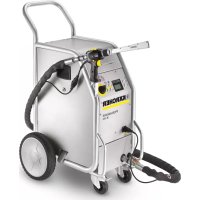



| Product type | Dry ice blaster |
| Brand | Kärcher |
| Model | IB 740 Classic |
| Dimensions (W x D x H) | 510 x 768 x 1096 mm |
| Weight (ready for use) | 93 kg |
| Power supply | 220-240 V ~ 50 Hz, 0.6 kW |
| Protection circuit breaker | 30 mA (type B) |
| Compressed air supply pressure | 0.2 to 1.0 MPa (2 to 10 bar) |
| Compressed air consumption | 0.5 to 3.5 m³/min |
| Jet pressure (max.) | 1.0 MPa (10 bar) |
| Dry ice pellet diameter (max.) | 3 mm |
| Dry ice consumption | 15 to 50 kg/h |
| Dry ice hopper capacity | 15 kg |
| Main functions | Dry ice blasting, adjustable pressure and dosage, emergency stop, statistical function |
| Safety | Emergency stop, electrocution protection, pressure detection, key lock |
| Maintenance | Condensate drainage, filter replacement, hose and cable inspection |
| Included accessories | Long flat jet nozzle, spray gun, hose |
| Optional accessories | Additional nozzles, scrambler, extension, handle, lighting |
| Warranty | According to distributor conditions (material or manufacturing defects) |
Frequently Asked Questions - IB 740 Classic Kärcher
User questions about IB 740 Classic Kärcher
0 question about this device. Answer the ones you know or ask your own.
Ask a new question about this device
Download the instructions for your Steam cleaner in PDF format for free! Find your manual IB 740 Classic - Kärcher and take your electronic device back in hand. On this page are published all the documents necessary for the use of your device. IB 740 Classic by Kärcher.
USER MANUAL IB 740 Classic Kärcher
Czech 159
Slovenian 169
Polish 179
Romanian 190
Slovak 201
Croatian 211
Serbian 221
Bulgarian 231
Estonian 242
Latvian 252
Lithuanian 262
Ukrainian 272
Chinese 283
Arabic 305
⚠Danger
Handle (accessory)
Chairman of the Board of Management
Director Regulatory Affairs & Certification
71364 Winnenden (Germany)
Tel.: +49 7195 14-0
Fax: +49 7195 14-2212
Winnenden, 2021/02/01
Please read and comply with these original instructions prior to the initial operation of your appliance and store them for later use or subsequent owners.
Contents
Environmental protection .. EN .. 1
Safety instructions ..... EN .. 1
Proper use ..... EN .. 2
Function ..... EN .. 2
Control elements..... EN .. 2
Start up.... EN .. 3
Operation ..... EN .. 4
Shutting down..... EN .. 6
Transport..... EN .. 6
Storage ..... EN .. 6
Maintenance and care .... EN .. 6
Troubleshooting ..... EN .. 7
Technical specifications ... EN .. 9
Accessories ..... EN . 10
Warranty ..... EN . 10
EU Declaration of Conformity EN . 10
Declaration of Conformity .. EN . 10
Environmental protection
| The packaging material can be recycled. Please do not place the packaging into the ordinary refuse for disposal, but arrange for the proper recycling. | |
| Old appliances contain valuable materials that can be recycled. Please arrange for the proper recycling of old appliances. Batteries, oil, and similar substances must not enter the environment. Please dispose of your old appliances using appropriate collection systems. |
Notes about the ingredients (REACH)
You will find current information about the ingredients at:
www.kaercher.com/REACH
Safety instructions
The appliance may only be operated by persons who have read and understood the contents of this operating instructions manual. Please ensure that you conform to all the safety instructions and regulations.
This operating instructions manual must be stored in such a way that it can be easily accessed by the operator.
Danger or hazard levels
Danger
Immediate danger that can cause severe injury or even death.
Warning
Possible hazardous situation that could lead to severe injury or even death.
Caution
Possible hazardous situation that could lead to mild injury to persons or damage to property.
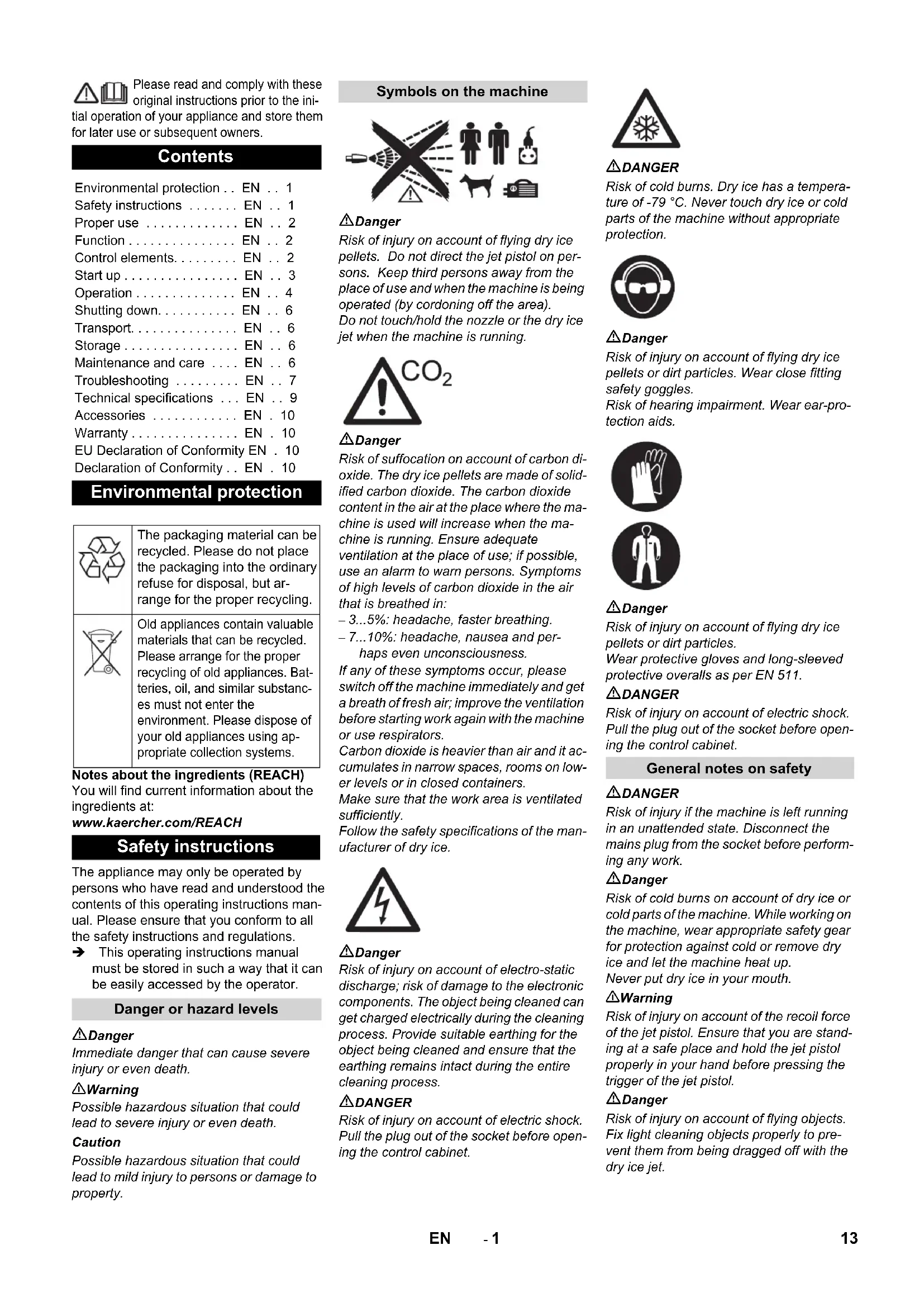
Symbols on the machine
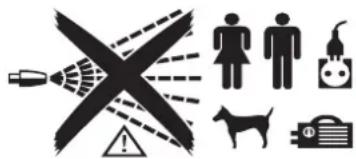
Danger
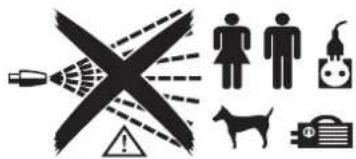
Risk of injury on account of flying dry ice pellets. Do not direct the jet pistol on persons. Keep third persons away from the place of use and when the machine is being operated (by cordoning off the area). Do not touch/hold the nozzle or the dry ice jet when the machine is running.
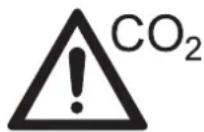
Danger
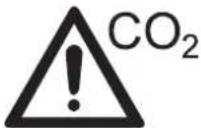
Risk of suffocation on account of carbon dioxide. The dry ice pellets are made of solidified carbon dioxide. The carbon dioxide content in the air at the place where the machine is used will increase when the machine is running. Ensure adequate ventilation at the place of use; if possible, use an alarm to warn persons. Symptoms of high levels of carbon dioxide in the air that is breathed in:
- 3...5%: headache, faster breathing.
- 7...10%: headache, nausea and perhaps even unconsciousness.
If any of these symptoms occur, please switch off the machine immediately and get a breath of fresh air; improve the ventilation before starting work again with the machine or use respirators.
Carbon dioxide is heavier than air and it accumulates in narrow spaces, rooms on lower levels or in closed containers.
Make sure that the work area is ventilated sufficiently.
Follow the safety specifications of the manufacturer of dry ice.
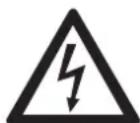
⚠Danger
Risk of injury on account of electro-static discharge; risk of damage to the electronic components. The object being cleaned can get charged electrically during the cleaning process. Provide suitable earthing for the object being cleaned and ensure that the earthing remains intact during the entire cleaning process.
⚠️DANGER
Risk of injury on account of electric shock. Pull the plug out of the socket before opening the control cabinet.

DANGER
Risk of cold burns. Dry ice has a temperature of -79 °C. Never touch dry ice or cold parts of the machine without appropriate protection.

⚠️Danger
Risk of injury on account of flying dry ice pellets or dirt particles. Wear close fitting safety goggles.
Risk of hearing impairment. Wear ear-protection aids.


DANGER
Risk of injury on account of flying dry ice pellets or dirt particles.
Wear protective gloves and long-sleeved protective overalls as per EN 511.
DANGER
Risk of injury on account of electric shock. Pull the plug out of the socket before opening the control cabinet.
General notes on safety
DANGER
Risk of injury if the machine is left running in an unattended state. Disconnect the mains plug from the socket before performing any work.
DANGER
Risk of cold burns on account of dry ice or cold parts of the machine. While working on the machine, wear appropriate safety gear for protection against cold or remove dry ice and let the machine heat up. Never put dry ice in your mouth.
WARNING
Risk of injury on account of the recoil force of the jet pistol. Ensure that you are standing at a safe place and hold the jet pistol properly in your hand before pressing the trigger of the jet pistol.
DANGER
Risk of injury on account of flying objects. Fix light cleaning objects properly to prevent them from being dragged off with the dry ice jet.
WARNING
Do not use the appliance when there are other persons around unless they are also wearing safety equipment.
The appliance must not be used if a connecting line or important parts of the appliance, e.g. safety devices, spray hose, spray gun, are damaged.
Danger of crushing on account of the dosing equipment. Always remove the machine plug from the socket before removing the protective shield of the dry ice container.
Specifications and Guidelines
For the operation of this system the following regulations and directives are applicable in the Federal Republic of Germany (available from Carl Heymanns Verlag KG, Luxemburger Straße 449, 50939 Cologne):
- BGV D 26 Spray jet tasks
- Executing instructions for BGV D 26 – BGR 117 Working in closed rooms
- BGR 189 Using safety gear – BGR 195 Using of safety gloves
- BGR 500 Working with spraying devices – BGI 534 Working in closed rooms
- BGI 836 Gas warner
Safety Devices
Emergency-stop button
If the emergency stop button is pressed, the dry ice dosing is stopped and the air flow from the nozzle is interrupted.
Switch-off in case of emergency
→ Release the trigger of the jet pistol. → Press emergency-stop button.
The dry ice dosing is stopped and the air flow from the nozzle is interrupted.
→ Interrupt the compressed air supply.
Proper use
The machine is used to remove dirt using dry ice pellets that are speeded up using an air jet.
The machine should not be operated in explosive environments.
Use only dry ice pellets as jet medium. Using any other jet medium can cause damage to the machine.
Function
The air pressure reaches the jet pistol via a pressure regulation valve. The valve opens when the trigger of the jet pistol is pressed and the air flow comes out from the jet pistol. Additionally, dry ice pellets are dosaged into the air stream via the dosing device.
With the version "IB 7/40 Advanced" the additional dosing can be switched off at the jet pistol. The dry ice pellets hit the surface to be cleaned and remove the dirt. Additional heat currents are formed between the dirt and the object to be cleaned by the -79 °C cold dry ice pellets; this results in the dirt being loosened. At the same time, dry ice immediately gets coverted into gaseous carbon dioxide on contact and requires 700 times the volume of dry ice. Thus, the dirt penetrated by the dry ice thus gets thrown off.
During the spraying operation through the jet, a vibrator located on the dry ice container ensures continuous sliding of the dry ice pellets.
Control elements
Device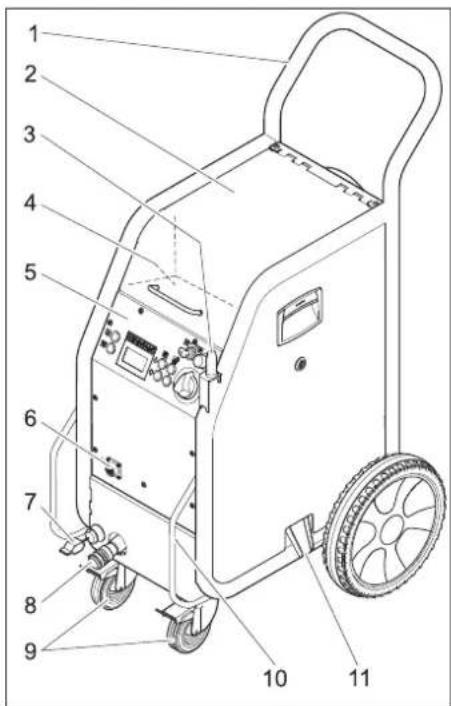
1 Push handle 2 Cover of the dry ice container 3 Holder for jet pistol 4 Storage compartment for accessories 5 Operating field 6 Coupling of the control cable 7 Earthing rope with clamp (only IB 7/40 Advanced, option for IB 7/40 Classic)
8 Coupling spray agent hose
9 Guiding roll with fixed position brake
10 Transport handle, bumper at the rear
11 Dry ice outlet for emptying the container
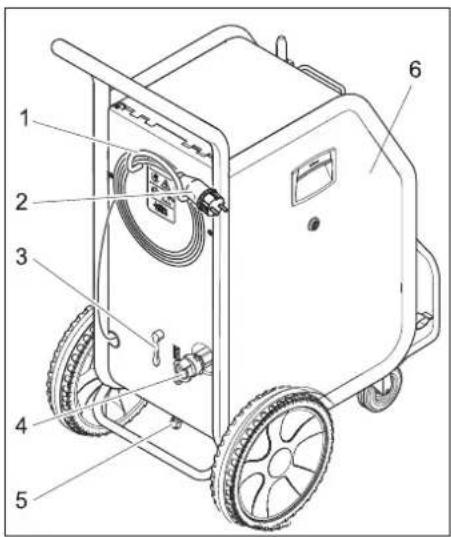
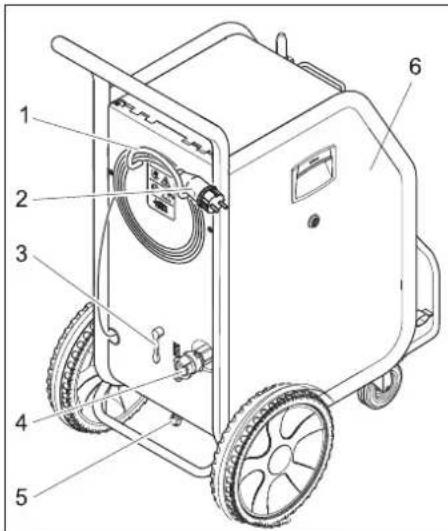
1 Cable clamp 2 Mains cable with mains plug 3 Pressure relief valve, condensate draining of the water separator 4 Compressed air connection 5 Condensate drain-out 6 Fuse F1, below the side panel
Operating field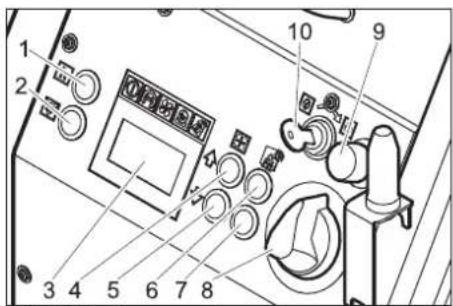
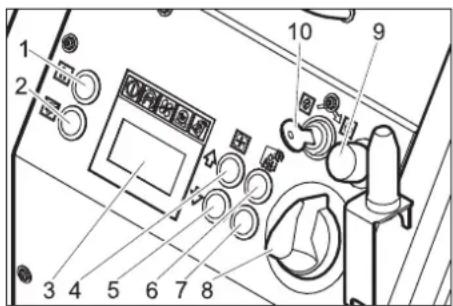
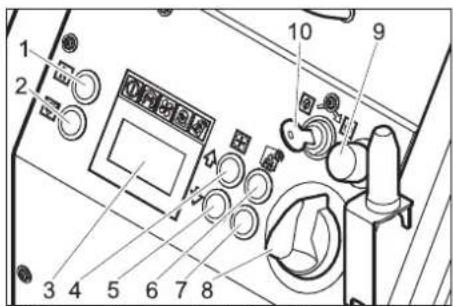
1 Statistics key, reset counter 2 Key to empty the dry ice container 3 Display 4 Key "increase jet pressure" 5 Key "decrease jet pressure" 6 Increase the dry ice dosing 7 Decrease the dry ice dosing 8 Power switch 9 Emergency-stop button 10 Key switch
Display
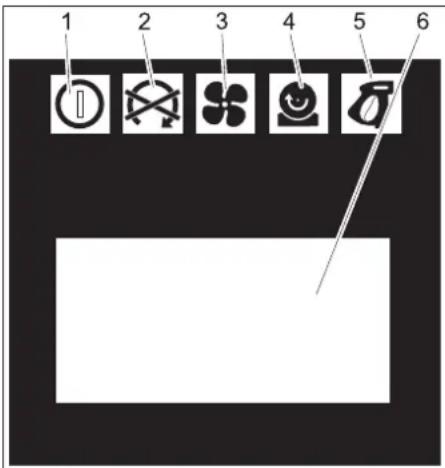
1 Indicator lamp - control voltage green: Control voltage OK red: Control voltage too low yellow: Emptying of dry ice container active 2 Indicator lamp emergency STOP red: Emergency stop button activated green: Emergency stop button not activated 3 Indicator lamp - compressed air green: Pressure OK orange: selected jet pressure not reached red: Pressure too low (below 0.15 MPa/1.5 bar) 4 Indicator lamp – dosing device green: Drive OK red: Error in drive 5 Indicator lamp - jet pistol green: Jet pistol OK orange: The trigger of the jet pistol was activated during the switch-on process red: Jet pistol disconnected or control line damaged 6 Display field
Jet equipment
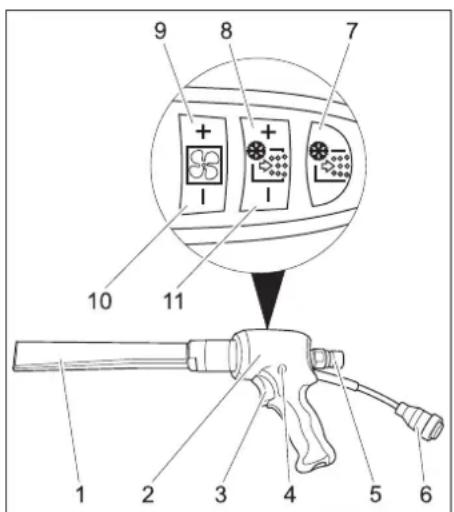
1 Nozzle 2 Jet pistol 3 Trigger 4 Safety button
5 Coupling spray agent hose
6 Coupling of the control cable
Only with IB 7/40 Advanced:
7 Key for the dry ice dosing on/off Illuminates red when the dry ice dosaging is switched off 8 Increase the dry ice dosing 9 Key "increase jet pressure" 10 Key "decrease jet pressure" 11 Decrease the dry ice dosing
Start up
⚠️Danger
Risk of injury on account of flying dry ice pellets.
While preparing the appliance, check and ensure that all components, especially the spray agent hose, are in proper condition. Replace damaged components with defect-free ones.
Clean dirty components and ensure that they are in proper working condition.
→ Place the machine on a horizontal, even surface and block the parking brakes of the steering rollers. → Connect the spray agent hose to the machine and secure it. → Connect the jet pistol to the spray agent hose and secure it. → Connect the control cable to the appliance.
Nozzles
Note
The choice of the nozzle depends on the material of the object to be cleaned and the contamination.
All nozzles can be screwed on top of the threading of the jet pistol without using any tools. The threaded surfaces on the nozzle are to be used to loosen tight nozzles using a spanner.
⚠️ Danger
Risk of injury by the unit starting unintentionally. Switch off the unit before switching the nozzles.
⚠ Warning
Risk of injury by touching the cold nozzle. Warm up the nozzle before touching it or wear protective gloves.
Caution
Risk of cold welding. Smear the enclosed grease on the nozzle threading before installing it.
Stream jets
1 Round jet nozzle, short 2 Round jet nozzle, long 3 Flat stream nozzle, short 4 Flat stream nozzle, long, included in delivery 5 Round stream nozzle, angled, with rubber coat 6 Flat stream nozzle, angled, with rubber coat → Place the nozzle onto the threaded suit port of the jet pistol and tighten it by hand.
Scrambler (accessory)
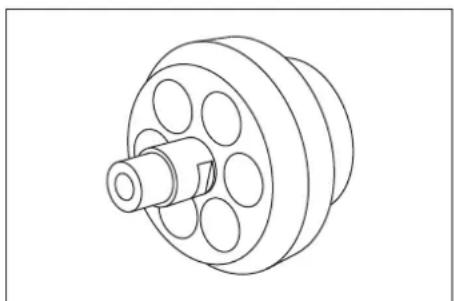
The scrambler crushes the dry ice pellets and is mounted between the jet pistol and the nozzle.
The alignment of the 4 holes plates in the scrambler indicates the degree of comminution.
Select the degree of comminution:
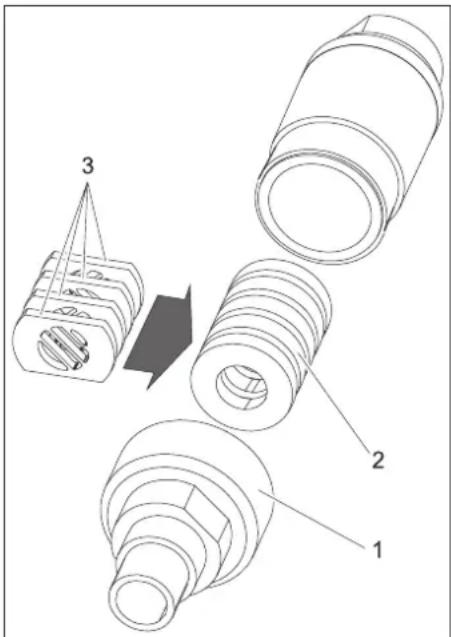
1 Screw connections 2 Magazine 3 Hole plate
→ Remove the screw connection. → Remove the magazine with hole plates.
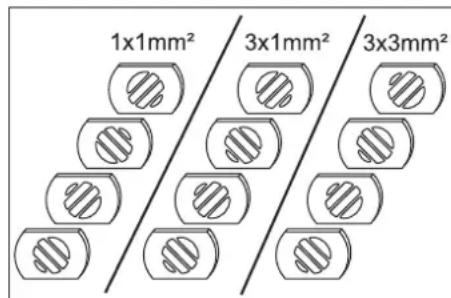
→ Align the hole plates, as shown above, in the magazine (3 possibilities). The above specifications in the illustration refer to the size of the permeation openings. → Insert the magazine with hole plates into the scrambler. → Unscrew the screw connection and tighten it.
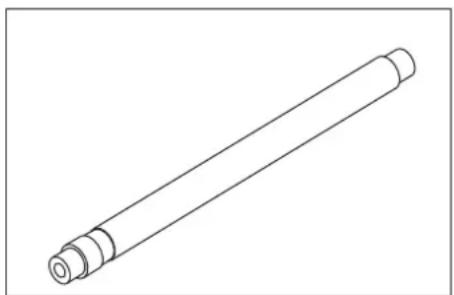
Nozzle extension (accessory)
An extension piece can be inserted between the jet pistol and the nozzle.
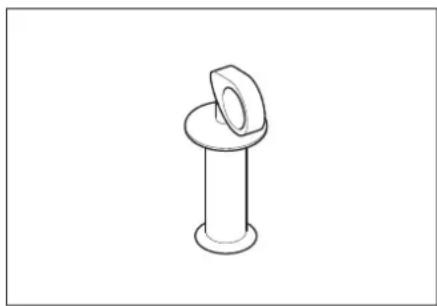
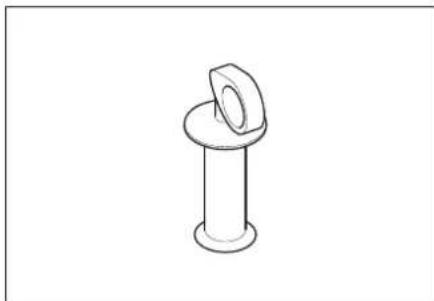
Handle (accessory)
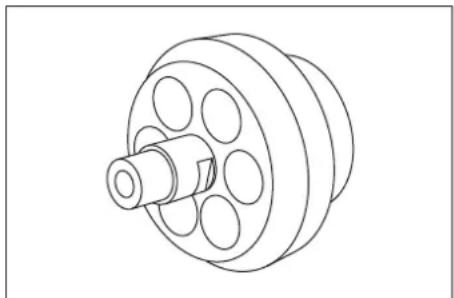
The handle can be fastened on the extension piece.
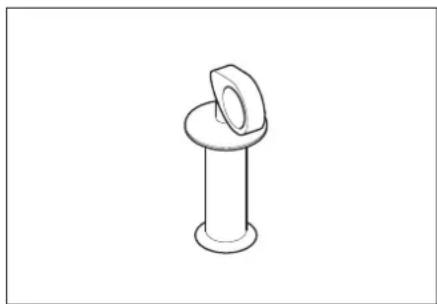
Working light (accessory)
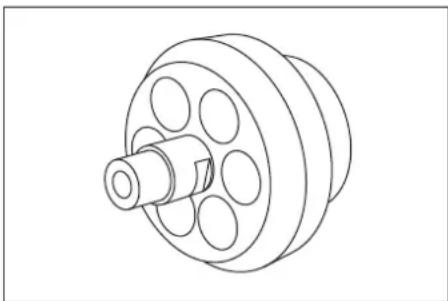
The working light is connected between the jet pistol and the nozzle. Switching on and switching off is described in the chapter "Operation/Basic Settings".
Connect compressed air supply
Note
To ensure smooth functioning of the machine, the compressed air must have a low moisture content (max. 5% relative humidity, dew point below 0°C). The compressed air must also be free from oil, dirt and foreign particles.
The compressed air must be dry and oil-free; at least one aftercooler and a separator must be downstream of the compressor.
→ Close pressure relief valve. → Connect the compressed air inlet pipe to the compressed air connection point of the device.
The maximum permissible supply pressure of 1 MPa (10 bar) must not be exceeded.
Establish mains contact
⚠️ Danger
Risk of electric shock.
The socket to be used must have been installed by an electrician and be compliant with IEC 60364-1.
The appliance may only be connected to an electricity source with proper earthing.
The socket used must be accessible and at a height between 0.6 m and 1.9 m off the floor.
The socket used must be in the viewing area of the operator.
The machine must have an FI fuse of type B, 30 mA.
Check the mains cables of the machine each time before using the machine to see that they are not damaged. Never operate a machine with damaged cables. Get the damaged cables replaced by an electrician. The extension cord must be protected by IPX4 safety mechanism and the cables must at least be compliant with H 07 RN-F 3G1.5.
chine with damaged cables. Get the damaged cables replaced by an electrician. The extension cord must be protected by IPX4 safety mechanism and the cables must at least be compliant with H 07 RN-F 3G1.5.
Insert the mains plug into the socket.
Operation
Filling dry ice
⚠️ Danger
Risk of cold burns. Dry ice has a temperature of -79 °C. Never touch dry ice or cold parts of the machine without appropriate protection. Wear protective gloves and protective overalls.
Open the cover of the dry ice container. Check the dry ice container for presence of foreign particles and condensate, remove them if found. Fill dry ice pellets into the container.
Caution
Risk of damage to the device. Use only dry ice pellets as jet medium. The use of any other spray agent will lead to loss of warranty coverage.
Close the cover of the dry ice container.
Note
To avoid disruptions in operations on account of melted dry ice pellets, it would make sense to fully use up the contents of the dry ice container before adding fresh dry ice. If the machine is to remain idle for a longer time, operate the device until the dry ice container is empty or empty the container via the dry ice emptying function.
Settings
Note
The settings depend on the substances contained in the detergent and the type of dirt.
Release emergency-stop button by turning. Set the appliance switch to "I". Turn the keyswitch in a clockwise direction. Increase/reduce the jet pressure by using the respective keys.
Note
The higher you set the jet pressure, the greater (more aggressive) the cleaning effect will be.
→ Increase/reduce the dry ice dosing by using the respective keys. → Turn the keyswitch counter-clockwise and remove the key.
The automatic closure of the key hole will prevent contamination during operation.
When the key is removed, the device is protected against changes to the settings and resetting the statistics values.
Operation
→ Carry out maintenance jobs "daily before starting work" (see section "Maintenance and Care").
⚠️Danger
Risk of injury on account of flying dry ice pellets. Do not direct the jet pistol on persons. Keep third persons away from the place of use and when the machine is being operated (by cordoning off the area). Do not touch/hold the nozzle opening or the dry ice jet when the machine is running. First stop the compressed air supply before disconnecting the jet gun from the spray agent hose and the spray agent hose from the device; remove all pressure from the system and then pull the plug out of the socket.
→ Cordon off the working area to prevent persons coming close to the machine when it is being operated.
⚠️Danger
Risk of suffocation on account of carbon dioxide. The dry ice pellets are made of solidified carbon dioxide. The carbon dioxide content in the air at the place where the machine is used will increase when the machine is running. Ensure adequate ventilation at the place of use; if possible, use an alarm to warn persons. Symptoms of high levels of carbon dioxide in the air that is breathed in:
- 3...5%: headache, faster breathing.
- 7...10%: headache, nausea and perhaps even unconsciousness.
If any of these symptoms occur, please switch off the machine immediately and get a breath of fresh air; improve the ventilation before starting work again with the machine or use respirators.
Follow the safety specifications of the manufacturer of dry ice.
⚠️Danger
There is a danger because of materials that are hazardous to your health. If dust that is hazardous to your health can be generated, the appropriate safety measures will have to be taken prior to beginning work.
⚠️Danger
Risk of explosion!
Do not work on light metals and iron-containing substances simultaneously. If you alternate between working on light metals and iron-containing parts, the work area and the suction device must be cleaned between work cycles.
→ Ensure adequate ventilation while working in closed rooms in order to keep the carbon dioxide concentration in the atmospheric air in the room below the danger level. → Attach the object to be cleaned if necessary.
⚠️Danger
Risk of injury on account of electrostatic discharge; risk of damage to the electronic components. The object being cleaned can get charged electrically during the cleaning process. Provide suitable earthing for the object being cleaned and ensure that the earthing remains intact during the entire cleaning process.
⚠ Warning
Risk of damage by foreign objects falling into the dry ice container. Keep cover of the dry ice container closed during operation.
→ Connect the grounding rope (with IB 7/40 Advanced only) electrically conductive with the cleaning object or ground the cleaning object in a different way. → Wear safety gear, safety gloves, close fitting safety goggles and ear-protection. → Switch on the compressed air supply. → Release emergency-stop button by turning. → Choose a safe place to stand, assume a secure body stance to avoid being thrown off-balance by the recoil pressure of the jet pistol.
In order to prevent the sudden recoil, a gradual increase of the jet pressure can be set up (see "Operation/Basic Setting", menu item "soft start").
→ Press in the safety knob of the jet pistol. → Activate the dry ice jet by pressing the trigger of the jet pistol and carry out the cleaning operation.
Note
With model IB 7/40 Advanced, the dosing of dry ice pellets can be switched on or off via the key "dry ice dosing on/off" on the jet pistol. When the dosing is turned off, the key illuminates red, and the display shows "ice off".
In addition, with the IB 7/40 Advanced model, the jet pressure and the dry ice volume can be changed on the jet pistol.
⚠ Warning
Risk of damage to the dosing equipment on account of dirt. Keep the lid of the dry ice container closed during the spraying operation to prevent sprayed off dirt from entering it.
Switch-off in case of emergency
→ Release the trigger of the jet pistol. → Press emergency-stop button.
The dry ice dosing is stopped and the air flow from the nozzle is interrupted.
→ Interrupt the compressed air supply.
Switching on after emergency-stop
→ Release emergency-stop button by turning.
Interrupting operation
→ Release the trigger of the jet pistol. → During breaks in operation, you can insert the jet pistol on the holder on the machine.
Note
During longer breaks in operations, the dry ice pellets can melt in the dry ice container. As far as possible, do not interrupt operations for more than 20 minutes. In case of extended interruptions, switch off the engine.
Drain off the condensate.
A water separator cleans the compressed air flowing to the device. This collects condensate in the water separator, which needs to be drained from time to time.
→ Place the collection trough under the condensate drain screw. → Open the pressure relief valve slowly and wait until the condensate has been drained from the device.
Note
Please dispose of condensate in an environmentally friendly manner.
Statistics functions
Retrieving values
→ Set the appliance switch to "I". → Press the Statistics key briefly to display the operating duration. t: Operation duration since the last reset. T: Total operating duration.
→ Press the Statistics key briefly to display the processed dry ice amount. m: Dry ice volume since the last reset. M: Total dry ice volume. → Press the Statistics key briefly to display the average dry ice consumption. q: Average dry ice consumption since the last reset.
Q: Average total dry ice consumption.
Reset values
→ Turn the keyswitch in a clockwise direction. → Press the statistics key for 4 seconds.
Note
The total values cannot be erased.
Basic settings
→ Press the keys to increase and decrease the jet pressure at the same time and hold them, turn the keyswitch clockwise.
In the operating mode basic settings, the keys have the following functions:
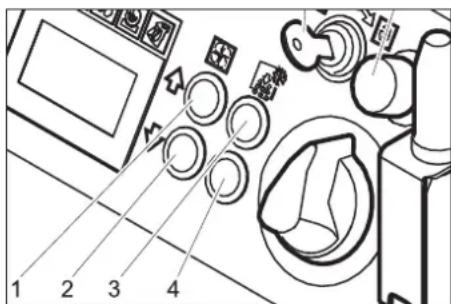
1 Increase value 2 Decrease value 3 Menu point to the top 4 Menu point to the bottom
| Menue point | Setting range | Description |
| Soft start | 0, 1, 2, 3, 4, 5 seconds | Soft start, duration until the selected jet pressure is reached |
| T_Dump | 1, 2, 3, 4, 5 minutes | Duration of the dry ice emptying process |
| Language | metric, imperial | Measurement units metric: kg/h, MPa imperial: lbs, psi |
| Beleuchtung | ON/OFF Switch the nozzle lighting (option) on/off | |
| Demo mode | ON/OFF Demo mode: The operation is simulated, compressed air and dry ice dispensing is locked. | |
Finish the basic settings
→ Turn the keyswitch counter-clockwise.
Shutting down
⚠️Danger
Risk of cold burns. Dry ice has a temperature of -79 °C. Never touch dry ice or cold parts of the machine without appropriate protection. Wear protective gloves and protective overalls.
⚠️Danger
Risk of injury on account of flying dry ice pellets. Do not direct the jet pistol on persons. Keep third persons away from the place of use and when the machine is being operated (by cording off the area).
→ Close the compressed air supply. → Place the collection trough under the condensate drain screw. → Open the pressure relief valve slowly and wait until the condensate and the compressed air have been drained from the device. → Place the collection trough under the dry ice exit. → Press the key to empty the dry ice and wait until the dry ice container is empty. The dry ice emptying stops after the preset time has elapsed (see "Basic Settings"). If needed, press the key to empty the dry ice container several times.
Note
Please dispose of condensate in an environmentally friendly manner.
→ Set the appliance switch to "0/OFF". → Disconnect the machine from the compressed air inlet.
→ Disconnect the main plug from the socket. → Clean and roll up the grounding rope.
Transport
⚠ Danger
Risk of accident on account of dry ice residue in the device. Remove all traces of dry ice before transporting the device in a closed vehicle; otherwise there is a risk of carbon dioxide suffocation to the co-passengers.
Caution
Risk of injury and damage! Observe the weight of the appliance when you transport it.
→ Carry out all the steps listed in the chapter "Shut down" before transporting the device. → Mount the appliance on the transport vehicle. → Lock the brakes of the steering rollers. → Fasten the device to the vehicle using fastening belts.
Storage
Caution
Risk of injury and damage! Note the weight of the appliance in case of storage. This appliance must only be stored in interior rooms.
⚠ Danger
Risk of suffocation due to accumulation of carbon dioxide. Store dry ice pellets only in areas that are well ventilated.
Maintenance and care
Maintenance instructions
The bases of a safe operating of the equipment is the regularly maintenance according to the following maintenance plan. Use exclusively original parts of the manufacturer or those parts recommended by him like
- parts and wearing parts, – accessories parts, – operating materials,
- cleaning agents.
⚠️DANGER
Risk of accident while working on the appliance. Carry out all the steps described in the chapter "Shut down" before starting any work on the device.
⚠️Danger
Risk of cold burns on account of dry ice or cold parts of the machine. While working on the machine, wear appropriate safety gear for protection against cold or remove dry ice and let the machine heat up. Never put dry ice in your mouth.
⚠ Warning
Risk of damage. Do not use solvents, petrol or oil-based cleaners to clean the jet pistol.
Maintenance contract
In order to guarantee a reliable operation of the equipment, we recommend that you sign a maintenance agreement. Please refer to your local Kärcher service department.
Maintenance schedule
Daily before starting operations
→ Check the spray agent hose for damages, bends and other damages. Soft areas in the hose indicate wear on the inner side of the hose. Replace the defective or worn out hose with a new hose. → Check electrical cable and plug for damages. Get defective parts replaced by Customer Service.
Every 100 operating hours
→ Check couplings of the spray agent hose, on the device, at the jet pistol for damages or wear and tear. Get Customer Service to replace the defective hose, defective couplings on the device or jet pistol. → Check dosing equipment for damages or leaks. If you find any damages/leaks, inform Customer Service. → Check the attachment caps of the rear wheels for proper seating.
Every 500 hours or once a year
→ Get the device checked by Customer Service.
Every 2 years
Replace the spray agent hose at least once every 2 years.
Opening the device
The side panels of the device must be removed to access the device for maintenance jobs:
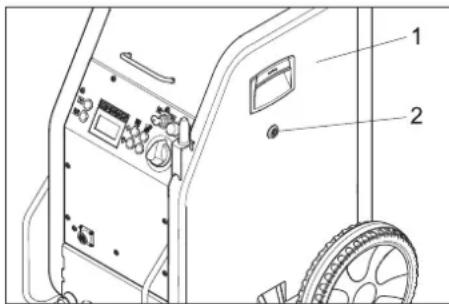
1 Side panels
2 Snap closure
Turn the snap closure counter-clockwise. Remove the side panel.
Maintenance Works
Replace the filter insert in the water separator.
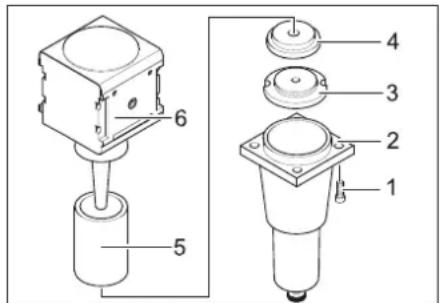
1 Screw
2 Lower part
3 Nut
4 Disc
5 Filter inlay
6 Upper section
→ Loosen 4 screws. → Remove the lower part. → Unscrew the nut. → Remove the disc.
→ Remove the filter inlay and replace it with a new filter inlay. → Reassemble the water separator in the reverse sequence.
Tests
According to the specifications of BDV D 26, the following tests must be conducted by a technical expert. The results of the tests must be documented in a test report. The device operator must carefully store the test report until the next test.
After a working break of more than one year
→ Check the device to see that it is in a proper condition and is functioning well.
After changing the installation site
→ Check the device to see that it is in a proper condition, is functioning well and has been installed properly.
The operational safety of the device can get hampered on account of maintenance jobs or any modifications that have been done.
→ Check the device to see that it is in a proper condition, is functioning well and has been installed properly.
Troubleshooting
⚠️ DANGER
Risk of accident while working on the appliance. Carry out all the steps described in the chapter "Shut down" before starting any work on the device.
Danger
Risk of cold burns on account of dry ice or cold parts of the machine. While working on the machine, wear appropriate safety gear for protection against cold or remove dry ice and let the machine heat up. Never put dry ice in your mouth.
Faults with display
| Display Indicator lamp (KL) | Possible cause Remedy By whom | ||
| E001 KL control voltage glows red | Control voltage too low Turn off | the appliance, wait briefly, turn on the appli-ance once again.Have the socket checked.If this error recurs, please contact the Kärcher cus-tomer service department | Operator |
| E002 KL emergency stop glows red | Emergency-stop button has been pressed. | Release emergency-stop button by turning. Operator | |
| E003 KL compressed air glows red | Pressure of the compressed air supply too low | Increase the pressure.Turn off the appliance, wait briefly, turn on the appli-ance once again. | Operator |
| E004 KL dosing glows red | Interference in the dosing Turn off | If this error recurs, please contact the Kärcher cus-tomer service department | Operator |
| E005 KL jet pistol glows red | Connection between the de-vice and the jet pistol is faulty. | Check for correct connection of the couplings in the control line.Check control cable for damages. | Operator |
| E006 KL jet pistol glows red | Short in jet pistol or control ca-ble | Replace the jet pistol or the jet hose with a control ca-ble. | Operator |
| E007 KL compressed air glows red | Fault in the compressed air regulator valve | Call Customer Service. Operator | |
| E008 KL jet pistol glows orange | The trigger of the jet pistol was activated during the switch-on process or the releasing of the emergency stop key. | Release the trigger of the jet pistol. Operator |
Faults without display on the console
| Fault Possible cause | Remedy By whom | ||
| No display inspite of power switch in position 1 | Mains Plug not connected to the socket. Insert the mains plug into a socket. Operator | ||
| Fuse F1 blown Remove the side panel and unlock the fuse F1 by pressing on it. | Operator | ||
| No compressed air jet despite the trigger being drawn | Compressed air supply has too little pressure | Check pressure level. Operator | |
| Jet pressure is set too low Set the jet pressure to a higher level. Operator | |||
| Power supply has been interrupted Check power supply. Indicator lamp "Device on" must glow green. | Operator | ||
| Emergency-stop button has been pressed. Release emergency-stop button by turning. Indicator lamp "Device on" must glow green. | Operator | ||
| Control cable not connected properly Check connection between control cable and the jet pistol and between the control cable and the device. | Operator | ||
| Control cable is defective Replace spray agent hose. Operator | |||
| Compressed air jet is too weak | Jet pressure is set too low Set the jet pressure to a higher level. Operator | ||
| Compressed air supply has too little pressure or the compressor output is low. | Check pressure and output. | Operator | |
| The filter insert in the water separator is plugged. | Replace the filter inlay in the water separator. | Operator | |
| Spray agent hose or jet pistol is blocked | Let the spray agent hose and jet pistol come to room temperature and remove the blocking. Increase working pressure and / or reduce the dry ice dosing. | Operator | |
| No dry ice pellets in the compressed air jet | Dry ice dosing switched off (IB 7/40 Advanced only), button "Dry ice dosing on/off" on the jet gun lights glows red, display shows "Ice off". | Press the dry ice dosing key on the jet pistol. Operator | |
| Dry ice container is empty | Refill the dry ice container | Operator | |
| Dry ice has melted | Empty the dry ice container and refill it with fresh dry ice pellets. | Operator | |
| Vibrator on the dry ice container is not working | Call Customer Service. | Operator | |
| Drive motor of the dosing equipment is overloaded | Let the dosing thaw | Operator | |
| Compressed air is exiting into the dry ice container | Clean the pressure balance channel in the dosing equipment. | Customer Service | |
| Dosing disc in the dosing unit is defective | Replace the dosing disc. | Customer Service | |
Technical specifications
| Electrical connection | ||
| Voltage V 220...240 | ||
| Current type 1~ | ||
| Frequency Hz 50 | ||
| Connected load kW 0,6 | ||
| Leakage current, typ. mA 7,5 | ||
| FI safety switch delta I in A 0,03 | ||
| Compressed air | ||
| Nominal width of hose Inch 1/2 | ||
| Pressure supply (max.) | MPa (bar) | 1,0 (10) |
| Pressure supply (min.) | MPa (bar) | 0,2 (2) |
| Compressed air consumption | m3/min | 0,5...3,5 |
| Quality of compressed air | * | |
| Performance data | ||
| Jet pressure (max.) | MPa (bar) | 1,0 (10) |
| Diameter of dry ice pellets (max.) | mm | 3 |
| Dry ice consumption | kg/h | 15...50 |
| Dimensions | ||
| Contents of dry ice container | kg | 15 |
| Width | mm | 510 |
| Depth | mm | 768 |
| Height | mm | 1096 |
| Weight of IB 7/40 Classic, ready to operate | kg | 93 |
| Weight of IB 7/40 Advanced, ready to operate | kg | 95 |
| Weight of IB 7/40 Classic, empty, without accessories | kg | 70 |
| Weight of IB 7/40 Advanced, empty, without accessories | kg | 71 |
| Weight of the jet equipment (spray agent hose, spray gun, tool case) | kg | 6,75 |
| Recoil force of hand spray gun (max.) | N | 30 |
| Torque of jet pistol (max.), only with angled nozzle | N | 8 |
| Machine vibrations | ||
| Jet pistol | m/s2 | 1,2 |
| Hose for spraying agent | m/s2 | 1,2 |
| * dry and oil-free, at least one aftercooler and a separator must be downstream of the compressor | ||
Compressed air demand
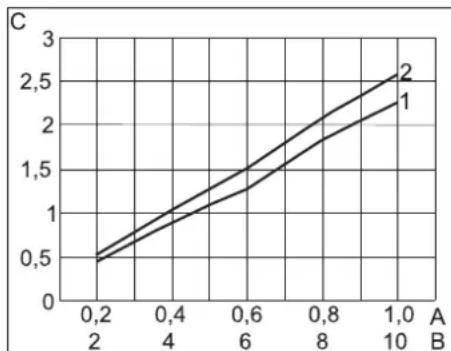
A Pressure in MPa B Pressure in bar C Volume stream in m³/min 1 straight nozzles 2 angled nozzles
Sound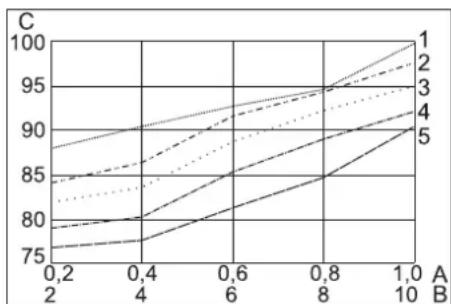
A Pressure in MPa B Pressure in bar C Noise level in dB(A) 1 Round jet nozzle, short 2 Flat stream nozzle, short 3 Flat jet nozzle, angled 4 Round jet nozzle, long 5 Flat stream nozzle, long, included in delivery
Sound power level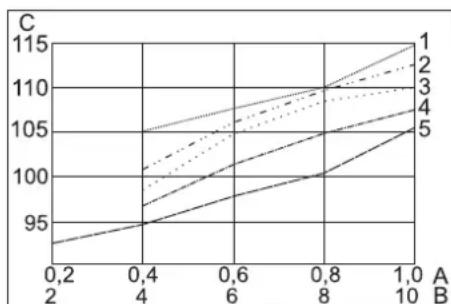
A Pressure in MPa B Pressure in bar C Noise level in dB(A) 1 Round jet nozzle, short 2 Flat stream nozzle, short 3 Flat jet nozzle, angled 4 Round jet nozzle, long 5 Flat stream nozzle, long, included in delivery
Accessories
Protective clothing
Full view protective goggles, anti-condensation, part no.: 6.321-208.0
Cold protection gloves with anti-slip profile, category III as per EN 511, part no.: 6.321-210.0
Ear protection with headgear, part no.: 6.321-207.0
Jet equipment
Round jet nozzle, short
Part no.: 4.321-236.0
Round jet nozzle, long
Part no.: 4.321-234.0
Flat stream nozzle, short
Part no.: 4.321-237.0
Flat stream nozzle, long, included in delivery
Part no.: 4.321-235.0
Round jet nozzle, angled
Part no.: 4.321-249.0
Flat jet nozzle, angled
Part no.: 4.321-250.0
Scrambler
Part no.: 4.110-015.0
Nozzle extension, 300 mm long
Part no.: 5.760-001.0
Handle
Part no.: 4.321-248.0
Working light
Part no.: 2.815-421.0
Warranty
The warranty terms published by our competent sales company are applicable in each country. We will repair potential failures of your appliance within the warranty period free of charge, provided that such failure is caused by faulty material or defects in fabrication. In the event of a warranty claim please contact your dealer or the nearest authorized Customer Service center. Please submit the proof of purchase.
EU Declaration of Conformity
We hereby declare that the machine described below complies with the relevant basic safety and health requirements of the EU Directives, both in its basic design and construction as well as in the version put into circulation by us. This declaration shall cease to be valid if the machine is modified without our prior approval.
Product: Dry ice jet unit
Type: 1.574-xxx
Relevant EU Directives
2011/65/EU
2006/42/EC (+2009/127/EC)
2014/30/EU
2009/125/EG + 2009/1781
Applied harmonized standards
EN 55014-1: 2017 + A11: 2020
EN 55014-2: 2015
EN 60204-1
EN 61000-3-2: 2014
EN 61000-3-3: 2013
EN IEC 63000: 2018
EN 62233: 2008
Applied national standards
GS-STE-13 (based on it)
The undersigned act on behalf and under the power of attorney of the company management.
Chairman of the Board of Management
Director Regulatory Affairs & Certification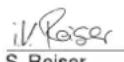
Documentation supervisor:
S. Reiser
Alfred Kärcher SE & Co. KG
71364 Winnenden (Germany)
Tel.: +49 7195 14-0
Fax: +49 7195 14-2212
Winnenden, 2021/02/01
Declaration of Conformity
We hereby declare that the product described below complies with the relevant provisions of the following UK Regulations, both in its basic design and construction as well as in the version put into circulation by us. This declaration shall cease to be valid if the product is modified without our prior approval.
Product: Dry ice jet unit
Type: 1.574-xxx
Currently applicable UK Regulations
S.I. 2012/3032 (as amended)
S.I. 2008/1597 (as amended)
S.I. 2016/1091 (as amended)
2009/125/EC + 2009/1781
Applied designated standards
EN 55014-1: 2017 + A11: 2020
EN 55014-2: 2015
EN 60204-1
EN 61000-3-2: 2014
EN 61000-3-3: 2013
EN IEC 63000: 2018
EN 62233: 2008
Applied national standards
GS-STE-13 (based on it)
The undersigned act on behalf and under the power of attorney of the company management.
Chairman of the Board of Management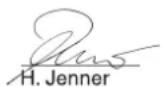
Director Regulatory Affairs & Certification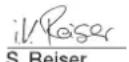
Documentation supervisor:
S. Reiser
Alfred Kärcher SE & Co. KG
71364 Winnenden (Germany)
Tel.: +49 7195 14-0
Fax: +49 7195 14-2212
Winnenden, 2021/02/01
www.kaercher.com/REACH
⚠️Danger
Chairman of the Board of Management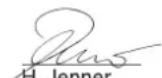
Director Regulatory Affairs & Certification
71364 Winnenden (Germany)
Tel.: +49 7195 14-0
Fax: +49 7195 14-2212
Winnenden, 2021/02/01
www.kaercher.com/REACH
Safety regulations
⚠ Danger
Only for IB 7/40 Advanced:
1 Screw 2 Lower part 3 Nut 4 Disc 5 Filter insert 6 Upper part
A Pressure in MPa
B Pressure in bar
Winnenden, 2021/02/01
www.kaercher.com/REACH
⚠️ Danger
Work light (accessories)
H. Jenner Chairman of the Board of Management
S. Reiser Director Regulatory Affairs & Certification
71364 Winnenden (Germany)
Tel.: +49 7195 14-0
Fax: +49 7195 14-2212
Winnenden, 2021/02/01
www.kaercher.com/REACH
⚠Danger
1 Screw 2 Bottom part 3 Nut 4 Washer 5 Filter cartridge 6 Top part
Winnenden, 2021/02/01
www.kaercher.com/REACH
Safety instructions
⚠️Danger
Handle (accessory)
1 Side cover 2 Quick-release fastener
1 Screw 2 Bottom part 3 Nut 4 Washer 5 Filter element 6 Top part
2006/42/EC (+2009/127/EC)
2014/30/EU
2009/125/EC + 2009/1781
Chairman of the Board of Management
Director Regulatory Affairs & Certification
71364 Winnenden (Germany)
Tel.: +49 7195 14-0
Fax: +49 7195 14-2212
Winnenden, 2021/02/01
www.kaercher.com/REACH
Risk
1 Cable holder 2 Mains cable with mains plug
Handle (accessory)
1 Screw 2 Base 3 Nut 4 Washer 5 Filter insert 6 Top
Part no.: 4.321-235.0
Part no.: 4.321-250.0
Scrambler
Part no.: 4.110-015.0
Part no.: 4.321-248.0
Work light
Order no.: 2.815-421.0
Guaranteed
2006/42/EC (+2009/127/EC)
2014/30/EU
2009/125/EC + 2009/1781
Chairman of the Board of Management
S. Reiser
Director Regulatory Affairs & Certification
71364 Winnenden (Germany)
Tel.: +49 7195 14-0
Fax: +49 7195 14-2212
Winnenden, 2021/02/01
www.kaercher.com/REACH
1 Lifting bracket 2 Cover for dry ice container 3 Holder for spray gun 4 Storage compartment for accessories 5 Control panel 6 Connection for control cable 7 Grounding cable with clamp (only IB 7/40 Advanced, optional for IB 7/40 Classic) 8 Connection for blasting hose 9 Steering roller with parking brake 10 Transport handle, frame protection bracket 11 Dry ice outlet, for emptying the container
1 Nozzle 2 Spray gun 3 Trigger handle 4 Safety button 5 Connection for blasting hose 6 Connection for control cable
Only for H 7/40 Advanced:
1 Round nozzle, short 2 Round nozzle, long 3 Flat nozzle, short 4 Flat nozzle, long, part of the delivery 5 Round nozzle, angled, with rubber reinforcement 6 Flat nozzle, angled, with rubber reinforcement
1 Screw connection 2 Magazine 3 Perforated plate
→ Unscrew the screw connection.
Handle (accessory)
The handle can be attached to the extension.
1 Increase value 2 Decrease value 3 Menu item up 4 Menu item down
| Menypunkt | Regule-ringsom-råde | Beskrivelse |
| Softstart | 0, 1, 2, 3,4, 5 sek-under | Soft-start, tid til det ønskede stråletrykket nås |
| T_Dump | 1, 2, 3, 4,5 minutter | Tid for tørris-uttøm-mingsprosessen |
| Language | metric,imperial | Måleenheter metric: kg/t, MPa imperial: lbs, psi |
| Lighting | ON/OFF Slå på/av dysebelysnin-gen (alternativ) | |
| Demo-Mode | ON/OFF Dø | demonstrasjonsdrift:Betjening blir simulert, trykkluft- og tørrisleve-ring er sperret. |
Exit basic settings
→ Turn the key switch counterclockwise.
Stopping operation
⚠️Danger
Risk of cold injuries (frostbite). Dry ice has a temperature of -79 °C. Do not touch dry ice or cold parts of the device without protection. Use protective gloves and protective clothing with long sleeves.
⚠️Danger
1 Screw
2 Lower part
3 Nut
4 Washer
5 Filter insert
6 Top part
A Pressure in MPa B Pressure in bar C Volume flow in m³/min 1 Straight nozzles 2 Angled nozzles
Sound pressure level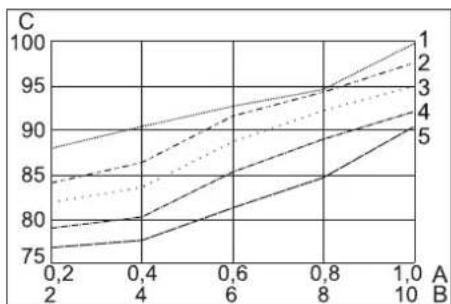
A Pressure in MPa B Pressure in bar C Sound pressure level in dB(A) 1 Round jet nozzle, short 2 Flat jet nozzle, short 3 Flat jet nozzle, angled 4 Round jet nozzle, long 5 Flat jet nozzle, long, part of delivery
Sound power level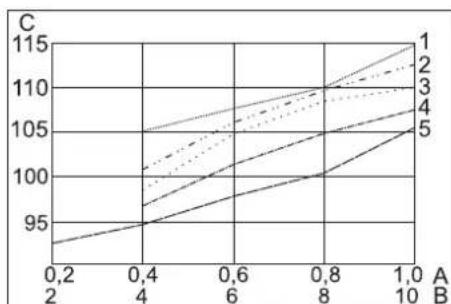
A Pressure in MPa B Pressure in bar C Sound power level in dB(A) 1 Round jet nozzle, short 2 Flat jet nozzle, short 3 Flat jet nozzle, angled 4 Round jet nozzle, long 5 Flat jet nozzle, long, part of delivery
Accessories
Protective suit
Winnenden, 2021/02/01
www.kaercher.com/REACH
⚠️ Danger
1 Nozzle
2 Spray lance
3 Start lever
4 Lock button
5 Coupling with spray hose
Handle (accessory)
1 Increase value
2 Decrease value
3 Menu item up
4 Menu item down
Chairman of the Board of Management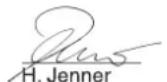
Director Regulatory Affairs & Certification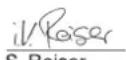
71364 Winnenden (Germany)
Tel.: +49 7195 14-0
Fax: +49 7195 14-2212
Winnenden, 2021/02/01
www.kaercher.com/REACH
Safety instructions
⚠ Danger
1 Side panel
2 Quick fastener
Chairman of the Board of Management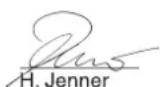
Director Regulatory Affairs & Certification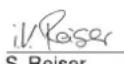
71364 Winnenden (Germany)
Tel.: +49 7195 14-0
Fax: +49 7195 14-2212
Winnenden, 2021/02/01
⚠️ Danger
Chairman of the Board of Management
S. Reiser
Director Regulatory Affairs & Certification
71364 Winnenden (Germany)
Tel.: +49 7195 14-0
Fax: +49 7195 14-2212
Winnenden, 2021/02/01
www.kaercher.com/REACH
Safety warnings
Danger
1 Cable holder
Handle (accessory)
1 Side cover 2 Latch
1 Bolt 2 Bottom part 3 Nut 4 Washer 5 Filter cartridge 6 Top part
Chairman of the Board of Management
Director Regulatory Affairs & Certification
71364 Winnenden (Germany)
Tel.: +49 7195 14-0
Fax: +49 7195 14-2212
Winnenden, 2021/02/01

www.kaercher.com/REACH
⚠️ Danger
A Pressure in MPa
B Pressure in bars
Winnenden, 2021/02/01
www.kaercher.com/REACH
Safety instructions
⚠ Danger
1 Slide bar
1 Cable holder
1 Screw joint
2 Container
3 Perforated plate
Handle (accessory)
Chairman of the Board of Management
Director Regulatory Affairs & Certification
Winnenden, 2021/02/01
www.kaercher.com/REACH
Safety instructions
⚠️Danger
1 Cable holder
Only for IB 7/40 Advanced:
2006/42/EC (+2009/127/EC)
2014/30/EU
2009/125/EC + 2009/1781
Chairman of the Board of Management
S. Reiser
Director Regulatory Affairs & Certification
71364 Winnenden (Germany)
Tel.: +49 7195 14-0
Fax: +49 7195 14-2212
Winnenden, 2021/02/01
www.kaercher.com/REACH
Safety instructions
⚠️ Danger
1 Cable holder 2 Mains cable with mains plug
1 Threaded connection
2 Magazine
3 Perforated plate
Handle (accessory)
1 Side cover 2 Quick-release fastener
→ Open the quick-release fastener counterclockwise.
→ Remove the side cover.
Maintenance
1 Screw 2 Lower part 3 Nut 4 Disc 5 Filter insert 6 Upper part
Unscrew the 4 screws. Remove the lower part. Unscrew the nuts. Remove the coil. Remove the filter element and replace it with a new filter element. Reassemble the water separator in reverse order.
Inspections
In accordance with BGV D 26, the following inspections must be carried out on the device by a specialist. The results of the inspection must be documented in writing in the Inspection Certificate. The operator of the device must keep the Inspection Certificate until the next inspection.
2006/42/EC (+2009/127/EC)
2014/30/EU
2009/125/EC + 2009/1781
Chairman of the Board of Management
Director Regulatory Affairs & Certification
71364 Winnenden (Germany)
Tel.: +49 7195 14-0
Fax: +49 7195 14-2212
Winnenden, 2021/02/01
www.kaercher.com/REACH
⚠ Danger
Handle (accessories)
2006/42/WE (+2009/127/WE)
2014/30/UE
2009/125/EG + 2009/1781
71364 Winnenden (Germany)
Tel.: +49 7195 14-0
Fax: +49 7195 14-2212
Winnenden, 2021/02/01
www.kaercher.com/REACH
Safety measures
⚠️ Danger
Handle (accessory)
1 Increase value 2 Decrease value 3 Previous menu item 4 Next menu item
A Pressure (MPa) B Pressure (bar) C Flow rate (m3/min) 1 Straight nozzles 2 Angled nozzles
Noise level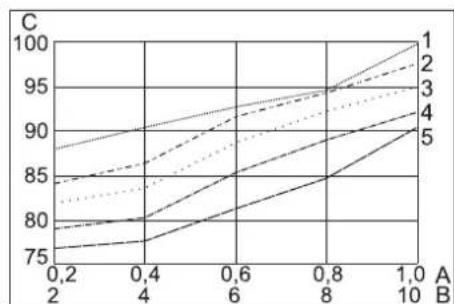
EU directives complied with:
2011/65/EU
2006/42/EC (+2009/127/EC)
2014/30/EU
2009/125/EC + 2009/1781
Harmonized standards used:
EN 55014-1: 2017 + A11: 2020
EN 55014-2: 2015
EN 60204-1
EN 61000-3-2: 2014
EN 61000-3-3: 2013
EN IEC 63000: 2018
EN 62233: 2008
Chairman of the Board of Management
S. Reiser
Director Regulatory Affairs & Certification
71364 Winnenden (Germany)
Tel.: +49 7195 14-0
Fax: +49 7195 14-2212
Winnenden, 2021/02/01
⚠️Danger
Only for IB 7/40 Advanced:
1 Increase value 2 Decrease value 3 Menu item up 4 Menu item down
2006/42/EC (+2009/127/EC)
2014/30/EU
2009/125/EC + 2009/1781
Harmonized standards applied:
EN 55014-1: 2017 + A11: 2020
EN 55014-2: 2015
EN 60204-1
EN 61000-3-2: 2014
EN 61000-3-3: 2013
EN IEC 63000: 2018
EN 62233: 2008
Chairman of the Board of Management
Director Regulatory Affairs & Certification
71364 Winnenden (Germany)
Tel.: +49 7195 14-0
Fax: +49 7195 14-2212
Winnenden, 2021/02/01
Before first use of your device, read these original operating instructions, follow them, and keep them for later use or for the next owner.
Table of contents
www.kaercher.com/REACH
Safety instructions
⚠️ Danger
1 Push handle 2 Dry ice tank cover 3 Spray gun holder 4 Accessory compartment 5 Control panel 6 Control line coupling 7 Grounding wire with clamp (only IB 7/40 Advanced, optional for IB 7/40 Classic) 8 Spray agent hose coupling 9 Caster with position brake 10 Transport handle, impact protection arch 11 Dry ice outlet, for emptying the tank
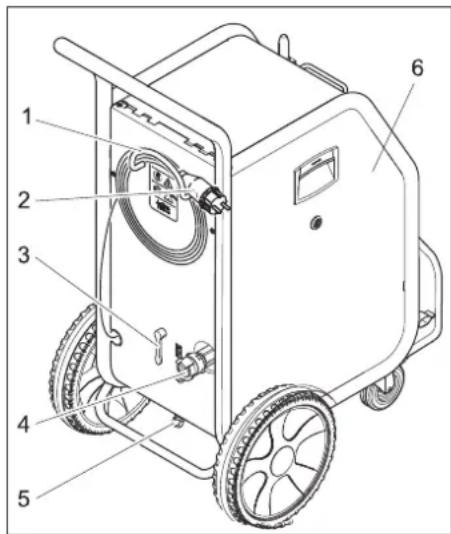
1 Cable holder 2 Power cable with power plug
3 Decompression valve, condensate drain of the condensate separator 4 Compressed air connection 5 Condensate outlet 6 Fuse F1, under the side panel
Control panel
1 Nozzle
2 Spray gun
3 Trigger lever
4 Safety button
5 Hose coupling for spraying agent
1 Screw connection 2 Tank 3 Perforated plate
Handle (accessory)
The handle can be attached to the extension.
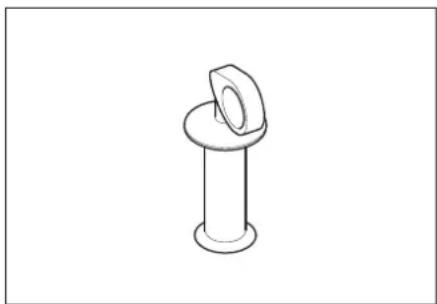
Work light (accessory)
1 Side panel 2 Lock
1 Screw 2 Lower part 3 Nut 4 Plate 5 Filter insert 6 Upper part
→ Unscrew the 4 screws. → Remove the lower part. → Unscrew the nut. → Remove the plate. → Remove the filter insert and replace it with a new filter insert. → Reassemble the water separator in reverse order.
checking
Chairman of the Board of Management
S. Reiser
Director Regulatory Affairs & Certification
71364 Winnenden (Germany)
Tel.: +49 7195 14-0
Fax: +49 7195 14-2212
Winnenden, 2021/02/01
Before first use of your device, read these original operating instructions, follow them, and keep them for later use or for the next owner.
Table of contents
www.kaercher.com/REACH
Safety notes
The device may only be used by persons who have read and understood the operating instructions. All safety notes must be observed.
→ Keep the operating instructions in such a way that they are available to the user at all times.
Hazard levels
⚠️ Danger
Indicates an imminent threat that leads to serious physical injury or death.
Warning
Indicates a potentially dangerous situation that may lead to serious injury or death.
Caution
Indicates a potentially dangerous situation that may lead to minor injury or cause material damage.
Symbols on the device
⚠️ Danger
Risk of injury from flying dry ice pellets. Do not point the jet gun at people. Keep other people away from the work area and keep them away while the machine is in operation (e.g., by restricting access).
Do not touch the nozzle or the dry ice jet during operation.
⚠️ Danger
Risk of poisoning from carbon dioxide. Dry ice pellets consist of solid carbon dioxide. During operation of the device, the amount of carbon dioxide in the air at the workplace increases. Ventilate the workplace sufficiently; if necessary, use a warning device for personnel. Signs of high carbon dioxide concentration in the air:
- 3...5%: Headache, increased breathing rate.
- 7...10%: Headache, vomiting, and possible loss of consciousness.
If these symptoms occur, immediately turn off the device and go out into fresh air; before continuing work, improve ventilation measures or use a breathing apparatus.
Carbon dioxide is heavier than air and accumulates in narrow, low spaces or in closed containers.
Ensure adequate ventilation at the workplace.
1 Control handle 2 Dry ice tank lid 3 Blow gun holder 4 Accessory storage compartment 5 Control panel 6 Control line coupling 7 Grounding wire with clamp (only IB 7/40 Advanced, option for IB 7/40 Classic) 8 Blasting agent hose coupling 9 Wheel with parking brake 10 Transport handle, impact guard 11 Dry ice outlet, for emptying the tank
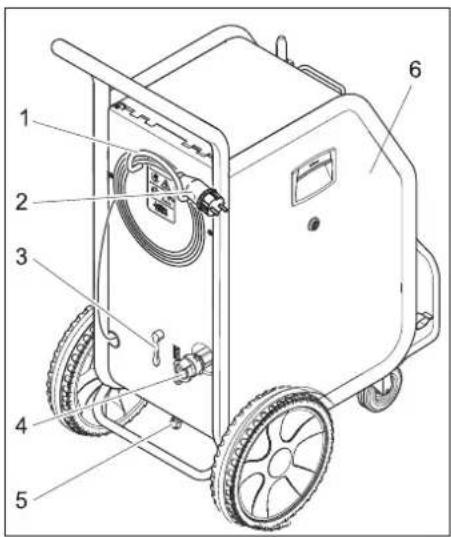
1 Cable holder 2 Power cable with plug 3 Decompression valve, condensate drain from the condensate separator 4 Compressed air connection 5 Condensate outlet 6 Fuse F1, under the side panel
Control panel
1 Nozzle 2 Blow gun 3 Trigger 4 Safety button 5 Blasting agent hose coupling 6 Control line coupling 7 Dry ice dosing button on / off Lights up red when dry ice dosing is off 8 Increase dry ice dosing button. 9 Increase blasting pressure button. 10 Decrease blasting pressure button. 11 Decrease dry ice dosing button.
Only for IB 7/40 Advanced:
Commissioning
⚠️ Danger
1 Screw connection 2 Magazine 3 Perforated plate
Handle (accessory)
The handle can be attached to the extension.
The work light is mounted between the blow gun and the nozzle. Switching on and off is described in the chapter "Operation/Basic settings".
1 Increase value 2 Decrease value 3 Menu item up 4 Menu item down
| Tačka menija | Raspon podešavanja | Opis |
| Soft početak | 0, 1, 2, 3, 4, 5 sekunde | Lagani start, trjanje do dostizanja izabranog pritiska mlaza |
| T_Dump | 1, 2, 3, 4,5 minuta | Trajanje procesa ispražnjavanja suhog leda |
| jezik | metric, imperial | jedinice merenja metric: kg/h, MPa imperial: lbs, psi |
| osvetljenje | Paljenje/ gašenje | Osvetljenje pipe (opcija) upaliti / gasiti |
| Demo-Modus | Paljenje/ gašenje | Pogon za demonstraciju: Upravljanje se simulira, izlaz zraka pod pritiskomi suhog leda se ograničava. |
1 Side panel 2 Lock → Open the lock counterclockwise. → Remove the side panel.
Maintenance work
Replace the filter in the water separator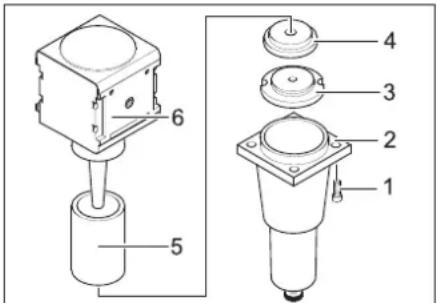
1 Screw 2 Lower part 3 Nut 4 Plate 5 Filter 6 Upper part
→ Unscrew the 4 screws.
→ Remove the lower part.
→ Unscrew the nut
A Pressure in MP B Pressure in bar C Sound pressure level in dB(A)
1 Nozzle for round jet, short 2 Nozzle for flat jet, short 3 Flat jet nozzle, angled 4 Nozzle for round jet, long 5 Nozzle for flat jet, long, included in delivery
Sound power level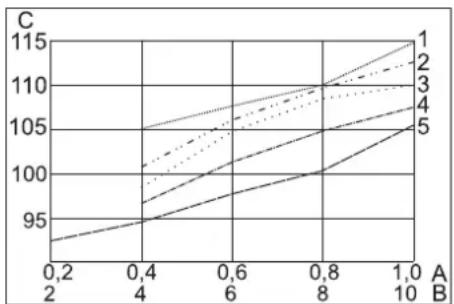
A Pressure in MP B Pressure in bar C Sound pressure level in dB(A)
1 Nozzle for round jet, short 2 Nozzle for flat jet, short 3 Flat jet nozzle, angled 4 Nozzle for round jet, long 5 Nozzle for flat jet, long, included in delivery
Accessories
Protective clothing
Protective goggles for full view, impact resistant, part number: 6.321-208.0 Protective gloves for cold with anti-slip profile, category III according to EN 511, part number: 6.321-210.0 Ear protection with headphones, part number: 6.321-207.0
Spray device
Nozzle for round jet, short
Catalog no.: 4.321-236.0
2006/42/EC (+2009/127/EC)
2014/30/EU
2009/125/EC + 2009/1781
Chairman of the Board of Management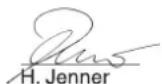
Director Regulatory Affairs & Certification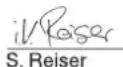
71364 Winnenden (Germany)
Tel.: +49 7195 14-0
Fax: +49 7195 14-2212
Winnenden, 2021/02/01

www.kaercher.com/REACH
⚠️ Danger
1 Screwing 2 Magazine 3 Perforated plate
Chairman of the Board of Management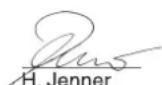
S. Reiser Director Regulatory Affairs & Certification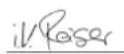
71364 Winnenden (Germany)
Tel.: +49 7195 14-0
Fax: +49 7195 14-2212
Winnenden, 2021/02/01
www.kaercher.com/REACH
Handle (accessories)
1 Side panel 2 Quick-release lock
1 Screw 2 Lower part 3 Nut 4 Washer 5 Filter cartridge 6 Upper part
A Pressure (MPa) B Pressure (bar) C Noise level, dB (A) 1 Round nozzle, short 2 Flat nozzle, short 3 Flat nozzle, angled 4 Round nozzle, long 5 Flat nozzle, long, included in delivery
Accessories
Protective clothing
Chairman of the Board of Management
S. Reiser Director Regulatory Affairs & Certification
71364 Winnenden (Germany)
Tel.: +49 7195 14-0
Fax: +49 7195 14-2212
Winnenden, 2021/02/01
www.kaercher.com/REACH
Safety instructions
⚠ Dangerous
Only IB 7/40 Advanced:
1 Screw
2 Bottom part
3 Nut
4 Washer
5 Filter insert
6 Top part
A Pressure in megapascals (MPa) B Pressure in bars (bar) C Noise pressure level dB(A) 1 Round jet nozzle, short 2 Flat jet nozzle, short 3 Flat jet nozzle, angled 4 Round jet nozzle, long 5 Flat jet nozzle, long, included in delivery
Chairman of the Board of Management
S. Reiser Director Regulatory Affairs & Certification
71364 Winnenden (Germany)
Tel.: +49 7195 14-0
Fax: +49 7195 14-2212
Winnenden, 2021/02/01
www.kaercher.com/REACH
Safety requirements
⚠️Danger
Handle (accessory)
1 Screw
2 Lower part
3 Nut
4 Disc
5 Filter cartridge
6 Upper part
Chairman of the Board of Management
Director Regulatory Affairs & Certification
71364 Winnenden (Germany)
Tel.: +49 7195 14-0
Fax: +49 7195 14-2212
Winnenden, 2021/02/01

Caution!
Handle (accessory)
Winnenden, 2021/02/01
www.kaercher.com/REACH
Safety instructions
Danger
1 Screw connection 2 Hopper 3 Perforated plate
Handle (accessory)
The handle can be attached to the extension.
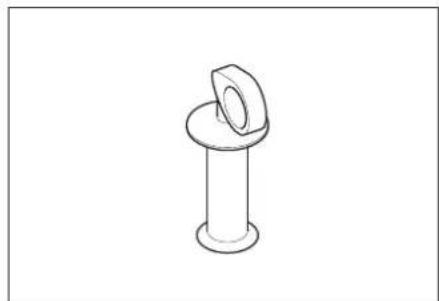
Work light (accessory)
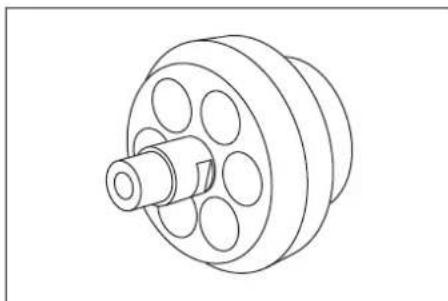
1 Increase value 2 Decrease value 3 Menu item up 4 Menu item down
1 Side panel
2 Quick closure
a(
b(
a(
b(
.1. The screws
.2. The lower part
.3e
.4 U
.1. Side cover
.2. Quick fastening tool
.1 Increase value
Decrease value .2
List item to .3
Top.
List item to 4
Bottom
Warning⚠️
.1 Connection
Currency .2
.3. Cover plate
• Remove the connection
Nozzle
.1. Beam nozzle
Beam nozzle.
- Beam nozzles
.1 .Nozzle
.2 Air flow diverter
Trigger .3
.4 Buttons
.1 Antibacterial holder
.1ä

THANK YOU!
MERCI! DANKE! iGRACIAS!

Register your product and benefit from many advantages.
www.kaercher.com/welcome


Rate your product and tell us your opinion.
www.kaercher.com/dealersearch
Alfred Kärcher SE & Co. KG
Alfred-Kärcher-Str. 28-40
71364 Winnenden (Germany)
Tel.: +49 7195 14-0
Fax: +49 7195 14-2212
- ⚠DANGER
- HANDLE (ACCESSORY)
- CONTENTS
- ENVIRONMENTAL PROTECTION
- NOTES ABOUT THE INGREDIENTS (REACH)
- SAFETY INSTRUCTIONS
- DANGER OR HAZARD LEVELS
- DANGER
- WARNING
- CAUTION
- SYMBOLS ON THE MACHINE
- ⚠️DANGER
- GENERAL NOTES ON SAFETY
- SPECIFICATIONS AND GUIDELINES
- SAFETY DEVICES
- EMERGENCY-STOP BUTTON
- SWITCH-OFF IN CASE OF EMERGENCY
- PROPER USE
- FUNCTION
- CONTROL ELEMENTS
- DISPLAY
- JET EQUIPMENT
- ONLY WITH IB 7/40 ADVANCED
- START UP
- NOZZLES
- NOTE
- ⚠️ DANGER
- ⚠ WARNING
- STREAM JETS
- SCRAMBLER (ACCESSORY)
- NOZZLE EXTENSION (ACCESSORY)
- CONNECT COMPRESSED AIR SUPPLY
- ESTABLISH MAINS CONTACT
- OPERATION
- FILLING DRY ICE
- SETTINGS
- SWITCHING ON AFTER EMERGENCY-STOP
- INTERRUPTING OPERATION
- DRAIN OFF THE CONDENSATE
- STATISTICS FUNCTIONS
- RETRIEVING VALUES
- RESET VALUES
- BASIC SETTINGS
- FINISH THE BASIC SETTINGS
- SHUTTING DOWN
- TRANSPORT
- ⚠ DANGER
- STORAGE
- MAINTENANCE AND CARE
- MAINTENANCE INSTRUCTIONS
- MAINTENANCE CONTRACT
- MAINTENANCE SCHEDULE
- DAILY BEFORE STARTING OPERATIONS
- EVERY 100 OPERATING HOURS
- EVERY 500 HOURS OR ONCE A YEAR
- EVERY 2 YEARS
- OPENING THE DEVICE
- MAINTENANCE WORKS
- TESTS
- AFTER A WORKING BREAK OF MORE THAN ONE YEAR
- AFTER CHANGING THE INSTALLATION SITE
- THE OPERATIONAL SAFETY OF THE DEVICE CAN GET HAMPERED ON ACCOUNT OF MAINTENANCE JOBS OR ANY MODIFICATIONS THAT HAVE BEEN DONE
- TROUBLESHOOTING
- ACCESSORIES
- PROTECTIVE CLOTHING
- WARRANTY
- EU DECLARATION OF CONFORMITY
- DECLARATION OF CONFORMITY
- SAFETY REGULATIONS
- ONLY FOR IB 7/40 ADVANCED
- WORK LIGHT (ACCESSORIES)
- RISK
- GUARANTEED
- ONLY FOR H 7/40 ADVANCED
- EXIT BASIC SETTINGS
- STOPPING OPERATION
- PROTECTIVE SUIT
- SAFETY WARNINGS
- MAINTENANCE
- INSPECTIONS
- HANDLE (ACCESSORIES)
- SAFETY MEASURES
- TABLE OF CONTENTS
- CONTROL PANEL
- CHECKING
- SAFETY NOTES
- HAZARD LEVELS
- SYMBOLS ON THE DEVICE
- COMMISSIONING
- MAINTENANCE WORK
- SPRAY DEVICE
- ⚠ DANGEROUS
- ONLY IB 7/40 ADVANCED
- SAFETY REQUIREMENTS
- WORK LIGHT (ACCESSORY)
- WARNING⚠️
- NOZZLE
- THANK YOU
- MERCI! DANKE! IGRACIAS
Brand : Kärcher
Model : IB 740 Classic
Category : Steam cleaner