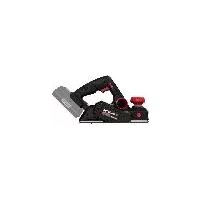
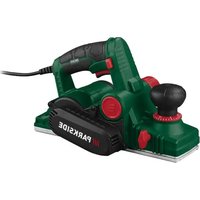
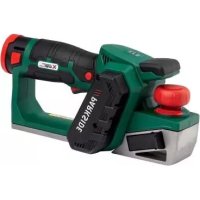
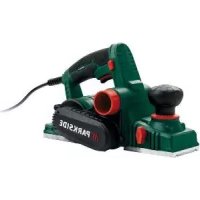
PPHA 20Li A1 - Electric planer PARKSIDE - Free user manual and instructions
Find the device manual for free PPHA 20Li A1 PARKSIDE in PDF.


| Brand | Parkside |
| Model | PPHA 20Li A1 |
| Category | Cordless electric planer |
| Rated voltage | 20 V |
| Battery type | Lithium-ion, Parkside X 20 V TEAM range |
| No-load speed | 14 000 min⁻¹ |
| Weight | Approx. 2.1 kg |
| Planing width | 82 mm |
| Depth of cut | 0 – 2 mm (10 levels, optimal 0 – 1.2 mm) |
| Max. rabbet depth | 17 mm |
| Blade type | 2 reversible double-edged blades |
| Workable materials | Solid wood, planks, beams |
| Sound pressure level (LpA) | 84.4 dB(A) ; KpA = 3 dB |
| Sound power level (LWA) | 95.4 dB(A) ; KWA = 3 dB |
| Vibration (total value) | 4.257 m/s² ; K = 1.5 m/s² |
| Protection rating | IPX0 |
| Operating temperature | -20 °C to 50 °C |
| Storage temperature | 0 °C to 45 °C |
| Charging time (depending on charger) | Approx. 30 to 90 min |
| Included accessories | Dust extraction adapter, flat wrench, Allen key, storage case |
| Warranty | 5 years (France and Belgium) |
| Certifications | CE |
Frequently Asked Questions - PPHA 20Li A1 PARKSIDE
User questions about PPHA 20Li A1 PARKSIDE
0 question about this device. Answer the ones you know or ask your own.
Ask a new question about this device
Download the instructions for your Electric planer in PDF format for free! Find your manual PPHA 20Li A1 - PARKSIDE and take your electronic device back in hand. On this page are published all the documents necessary for the use of your device. PPHA 20Li A1 by PARKSIDE.
USER MANUAL PPHA 20Li A1 PARKSIDE
Translation of the original instructions
NL BE
Accu-schaaf
Before reading, unfold the page containing the illustrations and familiarise yourself with all functions of the device.
FR BE
GB / IE Translation of the original instructions Page
Service-Center....18
Importeur 18
Original-
General description......20
Scope of delivery 20
Description of functions .....20
Overview 20
Technical data....21
Safety information......21
Symbols used in the instructions.....21
Symbols on the device .....22
General Safety Instructions for Power Tools....22
Additional safety instructions for the planer 25
Initial start-up....26
Charging the battery....26
Extracting shavings/dust......26
Mounting the rip fence 26
Operation 27
Setting the cutting depth .....27
Inserting/removing the rechargeable battery .....27
Switching on/off 27
Checking the charge status of the battery....27
Working instructions......28
Planing....28
Chamfering edges....28
Rebates 28
Maintenance and Care ......28
Replacing planer blades....28
Cleaning 29
Storage....30
Disposal/environmental protection ....30
Spare Parts/Accessories......30
Guarantee 31
Repair Service....32
Service-Center....32
Importer 32
Translation of the original EC declaration of conformity...... 137
Exploded Drawing 145
Introduction
Congratulations on the purchase of your new device. With it, you have chosen a high quality product. During production, this equipment has been checked for quality and subjected to a final inspection. The functionality of your equipment is therefore guaranteed.

The operating instructions constitute part of this product. They contain important information on safety, use and disposal. Before using the product, familiarise yourself with all of the operating and safety instructions. Use the product only as described and for the applications speci-
fi ed. Keep this manual safely and in the event that the product is passed on, hand over all documents to the third party.
Proper use
The cordless planer is suitable for machining solid wood materials, such as boards or beams.
The device is part of the Parkside X 20 V TEAM series and can be operated using Parkside X 20 V TEAM series batteries. The batteries may only be charged using chargers from the Parkside X 20 V TEAM series.
The device is intended for use by adults. Children under the age of 16 may not use
GBIE
the device, except under supervision. The device is intended to be used by do-it-yourselfers. It was not designed for commercial use. The warranty is void in the case of commercial use. The manufacturer is not liable for damage caused by improper use or incorrect operation.
General description
An illustration of the most important functional components can be found on the fold-out pages.
Scope of delivery
First, unpack the device and check for completeness.
Dispose of the packaging material properly.
- Cordless Planer
- Suction adapter
- Spanner
- Allen key
- Storage case
- Operating instructions

The spanner and the Allen key are stowed in the tool holder (13) in the device. See the detailed illustration on the fold-out page.

Battery and charger are not included.
Observe the safety information and notes on charging and proper use as shown in the instruction manual for your battery and charger from the Parkside X 20 V Team series. A detailed description of the charging process and further information can be found in the separate operating instructions.
Description of functions
The cordless planer has a rotating planer shaft, which is equipped with two blades. The cordless planer can be used to plane boards and beams.
The cordless planer is also suitable for chamfering edges and creating rebates. Please refer to the descriptions below for information on how the operating elements work.
Overview
1 Controller, cutting depth adjustment
2 Ejection chute
3 Safety switch
4 On/Off switch
5 Rechargeable battery
6 Release button
7 Planer sole
8 Suction adapter, left/right
9 Mounting screws
10 Allen key
11 Spanner
12 Device housing
13 Tool holder
14 Case
B 15 V-groove
B 16 Blade holder, planer blade
B 16.1 Back of blade holder
B 16.2 Front of blade holder
B 17 Hexagon bolt, blade fi xing
B 18 Screw,
blade height adjustment
B 19 Planer blade
B 20 Retractable planer blade guard
B 21 Planer shaft
B 22 Stop guard
optionally available:
D 23 Rip fence
D 24 Retaining screw
Technical data
Cordless Planer.....PPHA 20-Li A1
Nominal voltage U....20 V=
Idle speed n0 14000 min -1
Protection category.....IPXO
Weight...... approx. 2.1 kg
Cutting depth (10-stage)....0 - 2 mm optimal....0 - 1,2 mm
Rebate depth....max. 17 mm
Planer width....82 mm
Sound pressure level (LpA) 84.4 dB(A), KpA = 3 dB
Sound power level ( LWA ) measured .....95.4 dB(A); KWA = 3 dB
Vibration (q) ..... 4.257 m/s²; K=1.5 m/s²
Temperature.....max 50 °C
Charging process....4 - 40 °C
Operation....-20 - 50 °C
Storage....0 - 45 °C

Attention! An up-to-date list of battery compatibility can be found at: www.lidl.de/akku
This device can only be operated with the following rechargeable batteries:
PAP 20 A1, PAP 20 A2, PAP 20 A3, PAP 20 B1, PAP 20 B3.
This type of battery may only be charged with the following chargers: PLG 20 A1, PLG 20 A3, PLG 20 A4, PDSLG 20 A1.
| charging time (min.) | PLG 20 A1PLG 20 A4 | PLG 20 A3PDSLG 20 A1 |
| PAP 20 A1PAP 20 B1 | 60 30 | |
| PAP 20 A2 7 | 5 30 | |
| PAP 20 A3PAP 20 B3 | 90 60 |
Levels of noise and vibration were determined according to the norms and regulations in the declaration of conformity.
The vibration emission value has been measured according to a standardised testing method and may be used for comparison with another power tool.
The indicated vibration emission value may also be used for an introductory assessment of the exposure.

Warning: The vibration emission value whilst actually using the power tool may vary from the given values regardless of the type and way in which the power tool is used.
Try to keep the exposure to vibrations as low as possible. An example of a measure to reduce vibration exposure is limiting the working hours. For this purpose all parts of the operating cycle have to be considered (for example, times when the power tool is switched off and times when it is switched on but running without any load).
Safety information
This section describes the basic safety rules when working with the device.
Symbols used in the instructions

Hazard symbol with information on the prevention of personal injury or property damage.

Hazard symbol with information on damage prevention.

Advisory symbol with information on how to best use the device.
GB IE
Button for the charge level indicator on the battery
Symbols on the device
Attention!
Read the operating instructions carefully before using the device.
Wear safety goggles.
Wear a respiratory mask.
Wear safety gloves.
Scale, cutting depth adjustment
Direction of travel of planer blade
Tool holder
Electrical devices must not be disposed of with domestic waste.
General Safety Instructions for Power Tools
WARNING! Read all safety notices, instructions, illustrations and technical data that have been provided with this power tool. Failure to comply with these and the following instructions may result in electric shock, fire and/or serious injuries.
Save all safety instructions and guidelines for the future.
The term "power tool" used in the safety instructions refers to mains-operated power tools (with a mains cable) and to
battery-operated power tools (without a mains cable).
1) Occupational Safety
a) Keep your work area tidy and well lit. Working in areas that are untidy or without lighting can result in accidents.
b) Do not work with the power tool in a potentially explosive atmosphere where fl ammable liquids, gases or dust are present. Power tools generate sparks that can ignite dust or vapours.
c) Keep children and other persons away from the area while the power tool is in use. Distractions can cause you to lose control of the power tool.
2) Electrical safety
a) The plug of the power tool must fit into the socket. The plug must not be modified in any way. Do not use adapter plugs with power tools that have a protective earth. Unmodified plugs and matching sockets reduce the risk of electric shock.
b) Avoid body contact with earthed surfaces such as pipes, radiators, cookers and refrigerators. There is an increased risk of electric shock if your body is earthed.
c) Do not expose the power tool to rain or wet conditions. The penetration of water into a power tool increases the risk of electric shock.
d) Never use the power cable to carry or hang the power tool or to pull the plug out of the socket. Keep the power cable
away from heat, oil, sharp edges and moving parts. Damaged or untidy power cables increase the risk of electric shock.
e) If you are working outdoors with the power tool, only use extension cables that are suitable for outdoors. Using an extension cable that is suitable for outdoors reduces the risk of electric shock.
f) If operation of the power tool in a damp environment is unavoidable, please use a fault-current circuit breaker (RCD). The use of a fault-current circuit breaker reduces the risk of an electric shock.
3) SAFETY OF PERSONS
a) Pay attention! Be aware of what you are doing and take the utmost care when working with a power tool. Do not use power tools if you are tired or you are under the influence of drugs, alcohol or medication. A moment of inattention whilst using the power tool can result in serious injuries.
b) Wear personal protective equipment and safety goggles at all times. Wearing personal protective equipment such as a dust mask, non-slip safety shoes, hard hat or ear protection, according to the type and use of the power tool, reduces the risk of injury.
c) Avoid starting the power tool unintentionally. Ensure that the power tool is switched off before you connect it to the power supply, pick it up or carry it and/or before you connect the rechargeable battery. Having your finger on the switch of the power
tool while carrying it, or having the power tool switched on when connecting it to the power supply can cause accidents.
d) Remove adjustment tools or spanners away from the area before switching on the power tool. A tool or key located in a rotating piece of equipment can lead to injuries.
e) Avoid an abnormal body posture. Ensure that your footing is secure and keep your balance at all times. This will help you to have better control of the power tool in unexpected situations.
f) Wear suitable clothing. Do not wear loose clothing or jewellery. Keep hair, clothes and gloves away from moving parts. Loose clothing, jewellery or long hair may get caught in moving parts.
g) If dust extraction and collection devices can be installed, make sure that these are connected and used correctly. Using a dust collector can reduce hazards caused by dust.
h) Do not allow yourself to be lulled into a false feeling of security and do not disregard the safety rules for power tools, even if you are familiar with the power tool after using it many times. Careless action can lead to serious injuries within a fraction of a second.
4) USE AND TREATMENT OF THE POWER TOOL
a) Do not overload the power tool. Use the correct power tool
GBIE
for the job in hand. With the right power tool, you can work better and more safely within the specified power range.
b) Do not use the power tool with a damaged cable. A power tool that no longer switches on or off is dangerous and must be repaired.
c) Remove the plug from the wall socket and/or remove the rechargeable battery before you change the device's settings, change accessories or put away the power tool. These safety measures prevent accidentally starting the power tool.
d) Store unused power tools out of reach of children. Do not allow persons to use the power tool who are not familiar with it or who have not read the operating instructions. Power tools can be dangerous if operated by inexperienced persons.
e) Look after the power tool and accessories carefully. Check that the moving parts are working properly and are not becoming jammed and that parts are not broken or damaged in such a way that the functioning of the device is impaired. Have damaged parts repaired before using the power tool. Many accidents are caused by poorly maintained power tools.
f) Keep cutting tools sharp and clean. Carefully maintained cutting tools with sharp cutting edges are less likely to get jammed and are easier to work with.
g) Use the power tool, accessories etc. in accordance with these operating instructions. Take
into account the working conditions and the work to be carried out. Using the power tool for anything other than its intended use can lead to dangerous situations.
h) Keep handles and grip surfaces dry, clean and free from oil and grease. Slippery handles and grip surfaces do not permit safe operation and control over the power tool in unexpected situations.
5) USE AND TREATMENT OF THIS BATTERY-POWERED TOOL
a) Only recharge batteries using chargers recommended by the manufacturer. If a charger that has been designed for a particular type of battery is used to charge other batteries, there is a risk of fire.
b) Only use batteries that are intended for the power tool. The use of other batteries may create a fire hazard and lead to injury.
c) When not in use, keep batteries away from paper clips, coins, keys, nails, screws or other small metal objects that could cause the contacts to be bridged. A short circuit between battery contacts can result in burns or a fire.
d) When misused, fl uid may leak from the battery. Avoid any contact with it. On accidental contact, wash in running water. If the fl uid comes into contact with the eyes, seek medical assistance also. Leaking battery fl uid can cause skin irritation or burns.
e) Do not use damaged or altered batteries. Damaged or altered batteries can be unpredictable and lead to fi re, explosion or risk of injury.
f) Do not expose batteries to fi re or elevated temperatures. Fire or temperatures over 130 °C can cause an explosion.
g) Follow all instructions for charging and never charge the battery or the battery-powered tool outside the temperature range stated in the operating instructions. Incorrect charging or charging outside the permitted temperature range may destroy the battery and increase the risk of fire.
6) SERVICE
a) Only have qualified personnel repair your power tool and only use original spare parts. This ensures the safety of the device is maintained.
b) Never repair damaged batteries. All battery repairs should be carried out by the manufacturer or authorised customer service centres only.
Additional safety instructions for the planer
a) Wait for the blade shaft to come to a stop before putting the power tool down. An exposed rotating blade shaft may snag the surface, causing loss of control and serious injury.
b) Fasten and secure the workpiece by means of clamps or with another method on a stable base. If you hold the workpiece only with your hand or against your own body, it will stay instable and this can lead to a loss of control.
c) Do not reach into the ejection chute with your hands. Risk of injury from the planer blades.
d) Always hold the planer so that it lays fl at on the workpiece when working. The planer could otherwise tilt and cause injury.
e) The planer should only be moved over the workpiece when it is turned on. There is a risk of kick-back if the planer tilts.
f) Only wood may be planed, not metal.
g) Harmful dust can occur when working. Wear a respiratory mask and attach an external dust extraction system.
h) In the case of danger, switch off the planer immediately and remove the battery from the device.
i) Check the blade regularly for damage. Only use sharp, undamaged blades.
k) Ensure that the vents are free of soiling.
I) Remove the battery
- at all times when the user is not in the vicinity of the machine,
- before the removal of blockages,
- before checking, cleaning or working on the machine,
- after touching a foreign body in order to check the machine for damage,
- for an immediate check if the machine begins to vibrate excessively.
m) Do not use any accessories that are not recommended by PARK-SIDE. This can result in electric shock or fie
Initial start-up
We recommend aligning the planer blades before using the machine for the first time to ensure more accurate planing results.
To do this, unscrew the three hexagon bolts (B 17) and follow step 7. - 9. in the chapter "Maintenance and Care - Replacing Planer Blades".
Charging the battery
If warm, allow the battery to cool before charging.
Do not expose the battery to direct sunlight for long periods and do not place it on a radiator (max. 50 °C).
-
- Plug the charger into a socket.
- Slide the battery (5) into the charging slot of the charger.
- Once charging is complete, disconnect the charger from the mains supply.
- Remove the battery (5) from the charger.
Detailed information on how to charge the battery can be found in the instruction manual for your charger.
A Extracting shavings/dust
You can select the direction in which the chips eject by turning the suction adapter to the left or right. An external chip extractor (not included in the scope of delivery) can also be connected to the suction adapter.
Inserting suction adapter & selecting ejection direction
- Place the suction adapter (8) into the ejection chute (2). The lug on the suction adapter (8) must engage in the recess on the device housing (12).
- Push the suction adapter (8) into the device housing (12) up to the stop.
- Turn the suction adapter (8) slightly forwards to lock it, as indicated by the arrow on the device housing.
The suction adapter (8) can be fitted to eject to the left or right.
External dust extraction
The suction adapter (8) can be fitted to eject to the left or right. An external dust extraction unit can be mounted on the suction adapter (8).
- Insert the suction adapter, see paragraph above "Inserting suction adapter & selecting ejection direction".
- Attach an external extraction system. Make sure that the dust extraction system is suitable for the material to be cut. This information can be found in the operating instructions of the external device.
D Mounting the rip fence (optionally available)
The rip fence is available from our online shop (see "Spare parts/Accessories").
The rip fence can be attached to either side of the device.
- Unscrew the mounting screw (9).
- Place the rip fence (23) in the intended position on the device housing (12).
- Fasten the rip fence using the mounting screw.
To dismantle, unscrew the mounting screw and remove the rip fence.
Use the retaining screw (24) to vary the distance at which the rip fence is set.
- Unscrew the retaining screw (24) and set the desired distance.
- Then retighten the retaining screw.
Operation
Setting the cutting depth
The best cutting depth for the cordless planer is between 0 and 1.2 mm (increments 1 to 6).
The cutting depth can be selected by turning the controller (1).
The depth of cut can be adjusted to between 0 and 2 mm in 10 increments.
Inserting/removing the rechargeable battery
Inserting the rechargeable battery:
- Push the battery (5) along the guide rail into the device. You will hear it click into place.
Removing the rechargeable battery:
- To remove the battery (5) from the device, press the release button (6) on the battery and pull the battery out.
Switching on/off
Switching on:
- Press one of the safety switches (3) on the right or left of the handle.
- Press the on/off switch (4).
- You can now release the safety switch (3).
Switching off:
- Release the on/off switch (4).
Checking the charge status of the battery
The charge level indicator on the side of the battery shows the charge status of the battery.

Press the button for the charge level indicator on the battery.
The charge level of the battery is indicated by illumination of the corresponding LED light.
3 LEDs illuminated (red, orange and green): Battery charged
2 LEDs illuminated (red and orange): Battery partially charged
1 LED illuminated (red):
Battery needs to be charged

Detailed information on the battery can be found in the instruction manual for your battery.
Working instructions

Work safely, giving due consideration to the next steps!
Planing

Attention! Risk of kickback! Make sure the planer is swit- ched on before guiding it over the workpiece to be machined.
- Secure the workpiece to be machined.
- Set the desired cutting depth.
- Switch on the device and place it on the workpiece with the planer sole.
- Guide the device with a uniform forward motion over the workpiece to be machined.
Do not press the machine on the workpiece to be processed. - When the planer is placed on the workpiece, the stop guard (22) on the underside of the planer sole prevents the blades from touching the workpiece. The stop guard (22) retracts during the feed.
Chamfering edges
The V-grooves at the front of the planer sole are for chamfering edges.
- Place the planer and the desired V-groove (15) on the edge of the workpiece and guide it along the edge.
- Start with the smallest V-groove. Work your way from the smallest to the largest V-groove.
C Rebates
The retractable blade protection (20) allows you to plane rebates with a maximum depth of 17 mm.
The cutting depth per plane motion is set using the cutting depth adjustment control (1).
- Draw the desired rebate width and rebate depth.
If possible, use a marking gauge to mark the rebate width and depth parallel to the edge of the workpiece. - The first strips of a rebate are easier to plane along a rip fence (not included in delivery). A thin slat of wood, for example, can be helpful. Afterwards, the planed edge serves as a stop. Continuously check that the rebate has a right angle.
- The device does not have a depth stop. You should therefore check regularly whether the desired depth has been achieved. Reduce the cutting depth once the desired depth has almost been achieved.
Maintenance and Care
B Replacing planer blades
Always remove the rechargeable battery before carrying out work on the device. Risk of injury!
Cutting hazard! Do not hold the planer blade (19) by its cutting edges.
Two blades are installed in the planer shaft. The blades have two cutting edges,
which can be turned around. Always use and replace the blades in pairs. Do not attempt to sharpen the blades!

Always change the blades one after the other. In this way, you can use the one that is still installed to guide you during fi tting.

Replacement blades can be purchased from customer service (see 'Spare parts/accessories').
- Unscrew the three hexagon bolts(17) with the spanner (11).
- Lower the planer blade guard (20) and push the blade holder (16) sideways out of the planer shaft (21).
Use a small piece of wood to push it out. - Remove the planer blade (19) from the blade holder.
-
Clean the blade holder (16) if necessary.
-
Insert the turned-over blade or new blade (19) into the blade holder (16). The smooth side of the planer blade (19) must lay against the back of the blade holder (16.1). The groove on the front of the blade holder (16.2) must engage in the groove on the blade (19).
-
Tighten the two hexagon bolts completely into the blade holder (16) and slide the blade holder back into the planer shaft (21) from the side.
The three hexagon bolts (17) must be on the side of the planer sole with groove.
The blade holder (16) must be fl ush with the bottom of the planer shaft (21). Unscrew the hexagonal bolts (17) as far as possible without the blade holder wobbling.
-
Align the planer blade (19).
-
Set the controller (A 1) to the zero position ("0") for alignment;
- Place the planer blade in the centre of the blade holder (16);
- Align the blade holder (16) so that the planer blade (19) is fl ush with the planer sole (7).
By screwing and unscrewing the screws (18), you can adjust the height of the blade holder (16) and thus the planer blade (19).
Always check that the blade is fl ush by placing a small piece of wood over the planer sole with and without the groove. The planer blades must touch the piece of wood evenly.
-
When the planer blade (19) is aligned fl ush with the planer sole, retighten the blade holder (16) in the centre of the planer shaft using the hexagon bolts (17).
-
After tightening the hexagon bolts, check that the blade is fl ush again!
Cleaning

Always remove the rechargeable battery before carrying out work on the device. Risk of injury!
- Clean the housing with a dry cloth or paint brush. Do not clean the blade using water, cleaning agents or sharp objects.
- Clean the ejection chute (2) and the suction adapter (8) regularly using an appropriate tool (e.g. a piece of wood, or using compressed air).
Storage
- Store the device in a dry place, out of reach of children. For storage, preferably stow the device in the case (14).
- Remove the rechargeable battery from the device before storing the device for a long period of time (winter storage).
- Only store the batteries in the partially-charged state. During prolonged storage, 2 to 3 LEDs should be illuminated.
- Check the battery charge status approximately every 3 months during a lengthy storage period and recharge if necessary.
- The ideal storage temperature for the battery is between 0 °C and 45 °C. Avoid extreme cold or heat during storage to ensure the battery output is not adversely affected.
Disposal/environmental protection
Remove the battery from the device and recycle the device, accessories and packaging in an environmentally-friendly manner. Instructions on how to dispose of the rechargeable battery can be found in the separate instruction manual for your battery and charger.
Electrical devices do not belong in domestic waste.
• Take the device to a recycling plant. The plastic and metal parts used on your appliance can be properly sorted according to materials and grades and efficiently recycled. Please contact our service centre for more information.
- We will dispose of any defective devices that you send to us free of charge.
Spare Parts/Accessories
Spare parts and accessories can be obtained at www.grizzlytools-service.eu
If you have issues ordering, please use the contact form. If you have any other questions, contact the "Service-Center" (see page 32).
Position Position
Instruction manual Exploded drawing Designation Order no.
| 8 8 Suction adapter, left/right 91106052 | ||||
| 10 | 52 | Allen key | 91106056 | |
| 11 | 1 | Spanner | 91106054 | |
| B | 19 | 10 | Planer blade | 91106053 |
| D | 23 | - | Rip fence | |
| D | 24 | - | + Retaining screw | 91106097 |
Guarantee
Dear Customer,
This device comes with a 5-year warranty from the date of purchase.
In case of defects, you have statutory rights against the seller of the product. These statutory rights are not restricted by our guarantee presented below.
Terms of Guarantee
The warranty period begins upon the date of purchase. Please retain the original receipt. This documentation will be required as proof of purchase.
If a material or manufacturing defect occurs within fi ve years from the date of purchasing this device, the device by will repaired or replaced free by us – according to our choice. This warranty service requires you to present the defective device and proof of purchase (sales receipt) within fi ve years and describe briefl y in writing the nature of the defect and when it occurred.
If the defect is covered by our warranty, you will receive the repaired device back or a new device. Repair or replacement of the device will not start a new warranty period.
Guarantee Period and Statutory Claims for Defects
The guarantee period is not extended by the guarantee service. This also applies for replaced or repaired parts. Any damages and defects already present at the time of purchase must be reported immediately after unpacking. Repairs arising after expiry of the guarantee period are chargeable.
Guarantee Cover
The equipment has been carefully produced in accordance with strict quality guidelines and conscientiously checked prior to delivery.
The guarantee applies for all material and manufacturing defects. This guarantee does not extend to cover product parts that are subject to normal wear and may therefore be considered as wearing parts (e.g. planer blades) or to cover damage to breakable parts (e.g. switches).
This guarantee shall be invalid if the product has been damaged, used incorrectly or not maintained. Precise adherence to all of the instructions specified in the operating manual is required for proper use of the product. Intended uses and actions against which the operating manual advises or warns must be categorically avoided.
The product is designed only for private and not commercial use. The guarantee will be invalidated in case of misuse or improper handling, use of force, or interventions not undertaken by our authorised service branch.
Processing in Case of Guarantee
To ensure quick handling of you issue, please follow the following directions:
- Please have the receipt and identification number (IAN 361835_2007) ready as proof of purchase for all enquiries. - Please find the item number on the rating plate.
- Should functional errors or other defects occur, please initially contact the service department specified below by telephone or by e-mail. You will then receive further information on the processing of your complaint.
- After consultation with our customer service, a product recorded as defective can be sent postage paid to the service address communicated to you, with the proof of purchase (receipt) and specification of what constitutes the defect and when it occurred. In order to avoid acceptance problems and additional costs,
GBIE
please be sure to use only the address communicated to you. Ensure that the consignment is not sent carriage forward or by bulky goods, express or other special freight. Please send the equipment inc. all accessories supplied at the time of purchase and ensure adequate, safe transport packaging.
Repair Service
For a charge, repairs not covered by the guarantee can be carried out by our service branch, which will be happy to issue a cost estimate for you.
We can handle only equipment that has been sent with adequate packaging and postage.
Attention: Please send your equipment to our service branch in clean condition and with an indication of the defect.
Equipment sent carriage forward or by bulky goods, express or other special freight will not be accepted.
We will dispose of your defective devices free of charge when you send them to us.
Service-Center
GB Service Great Britain Tel.: 0800 404 7657
E-Mail: grizzly@lidl.co.uk
IAN 361835_2007
IE Service Ireland
Tel.: 1890 930 034
(0,08 EUR/Min., (peak))
(0,06 EUR/Min., (off peak))
E-Mail: grizzly@lidl.ie
IAN 361835_2007
Importer
Please note that the following address is not a service address. Please initially contact the service centre specified above.
Service-Center......64
Importeur 64
1 led brandt (rood):
Service-Center....79
Importer 79
Service-Center....93
Dovozce....93
Service-Center....120
Importør 120
Service-Center....135
Importador 135
 |  | |
| We hereby confi rm that the Cordless Planer model PPHA 20-Li A1 Serial number 000001 - 050000 | ||
| conforms with the following applicable relevant version of the EU guidelines: | ||
| 2006/42/EC • 2014/30/EU • 2011/65/EU* • (EU) 2015/863 | ||
| In order to guarantee consistency, the following harmonised standards as well as national standards and stipulations have been applied: | ||
| EN 62841-1:2015 • EN 62841-2-14:2015 EN 55014-1:2017 • EN 55014-2:2015 • EN IEC 63000:2018 | ||
| This declaration of conformity is issued under the sole responsibility of the manufacturer: | ||
 | Grizzly Tools GmbH & Co. KG Stockstädter Straße 20 63762 Großostheim GERMANY 20.03.2021 |  Christian Frank Documentation Representative Christian Frank Documentation Representative |
* The object of the declaration described above satisfies the provisions of Directive 2011/65/EU of the European Parliament and the Council of 8 June 2011 on limiting the use of certain harmful substances in electrical and electronic appliances.

IAN 361835_2007



- Accu-schaaf
- Introduction
- Proper use
- GBIE
- General description
- Scope of delivery
- Description of functions
- Overview
- Technical data
- Cordless Planer.....PPHA 20-Li A1
- Attention! An up-to-date list of battery compatibility can be found at: www.lidl.de/akku
- Safety information
- Symbols used in the instructions
- GB IE
- Symbols on the device
- General Safety Instructions for Power Tools
- Save all safety instructions and guidelines for the future.
- 1) Occupational Safety
- 2) Electrical safety
- Additional safety instructions for the planer
- Initial start-up
- Charging the battery
- A Extracting shavings/dust
- Inserting suction adapter & selecting ejection direction
- External dust extraction
- D Mounting the rip fence (optionally available)
- Operation
- Setting the cutting depth
- Inserting/removing the rechargeable battery
- Inserting the rechargeable battery:
- Removing the rechargeable battery:
- Switching on/off
- Switching on:
- Switching off:
- Checking the charge status of the battery
- Working instructions
- Planing
- Chamfering edges
- C Rebates
- Maintenance and Care
- B Replacing planer blades
- Always remove the rechargeable battery before carrying out work on the device. Risk of injury!
- Cutting hazard! Do not hold the planer blade (19) by its cutting edges.
- Cleaning
- Storage
- Disposal/environmental protection
- Spare Parts/Accessories
- Spare parts and accessories can be obtained at www.grizzlytools-service.eu
- Guarantee
- Terms of Guarantee
- Guarantee Period and Statutory Claims for Defects
- Guarantee Cover
- Processing in Case of Guarantee
- Repair Service
- Service-Center
- Importer
- led brandt (rood):
Brand : PARKSIDE
Model : PPHA 20Li A1
Category : Electric planer