
803S - Speaker BOWERS & WILKINS - Free user manual and instructions
Find the device manual for free 803S BOWERS & WILKINS in PDF.



| Product Type | 3-way passive floorstanding speaker |
| Brand | Bowers & Wilkins |
| Model | 803S |
| Drivers | Woofer: 1 x 165 mm (6.5") with Carbon/Rohacell sandwich cone Midrange: 1 x 100 mm (4") FST Tweeter: 1 x 25 mm (1") aluminium dome |
| Frequency response | 35 Hz – 20 kHz |
| Sensitivity | 88 dB (2.83 V/1 m) |
| Nominal impedance | 8 Ω |
| Minimum impedance | 4.3 Ω |
| Recommended power | 50 – 200 W |
| Dimensions (H x W x D) | 1030 x 200 x 360 mm |
| Weight | 28 kg |
| Finishes | Real wood (several species available) |
| Features | Bi-wire / bi-amp capable, adjustable port with plug, optional adjustable feet |
| Care and cleaning | Soft non-abrasive cloth; do not use chemical products on the drivers; remove grilles before cleaning |
| Safety | Do not touch the tweeter dome; keep a distance > 0.50 m from unshielded CRT screens |
| Spare parts and repairability | Warranty repair by authorized dealer; original B&W parts recommended |
| General information | RoHS and WEEE compliant; break-in period: approximately 15 hours at moderate level |
Frequently Asked Questions - 803S BOWERS & WILKINS
User questions about 803S BOWERS & WILKINS
0 question about this device. Answer the ones you know or ask your own.
Ask a new question about this device
Download the instructions for your Speaker in PDF format for free! Find your manual 803S - BOWERS & WILKINS and take your electronic device back in hand. On this page are published all the documents necessary for the use of your device. 803S by BOWERS & WILKINS.
USER MANUAL 803S BOWERS & WILKINS
Syper's Manual
Limited Warranty.
Francais
Manuel d'utilisation 7
GanntleImee.14
Deutsch
Bertoupsotoc 15
P
Fenvalol
Portugues
Spanish
Maruel de
P
100000000000000000000000000000000000000000000
3.1.1.14
Manual do ult/adpt 31
Garantie imada 37
Italiano
Munipio de inaycn-28
Ganzai 44
Nederlands
Handing 45
Gerenie
EAAnvki
Donyiue xiongs...52
Pnepogueyn
xng 60
Pycckm
P
Orpwnqnnn
TAPSHRA.
Negyar
1987n5 at (m+1)69
Kodlajovallavancia 75
Polski
HsFukoe
uyicnika 75
Covance 82
Cooty
n
20
231293
Svenska
Begaccsdparact 9
Bul60w029
日本语
95
101
A
中义
12
与不等式 107
HUPSecatckn ot
Cerfctn 106
1
0
specifications 110
Owner details
Problems
5677
(一)股东登记方法
- 实验原理
1
Bermudez
600875
Thank you for choosing Bowers & Wilkins.
At B&W, we have always followed John Bowers' original philosophy of combining the art and science of acoustic design to create simply a better product, the objective always being to get the maximum amount of enjoyment and fulfilment from listening to music or watching movies.
The original Nautilus 800 Series contained a raft of new technologies that propelled it to being probably the best selling high-end speaker range in the world.
Since then, our team of research and development engineers have been striving to improve performance still further. Here is a short summary of what you will find new to this Series.
Bass cones throughout now feature a sandwich construction of carbon fibre skins bonded to a Rohacell foam core. Rigid diaphragms are best for reproducing bass frequencies and this new construction allows us to thicken the cone section, without suffering increased mass. The extra thickness makes the cone a more effective barrier to any residual sound generated inside the cabinet, giving tremendous dynamics and timing to the bass, with the secondary effect of cleaning up the midrange.
The FST midrange drive unit receives a new chassis - stronger, yet maintaining the maximum open area behind the diaphragm to minimise reflective obstruction and allow the free flow of air.
The response of all B&W tweeters extends well into the ultrasonic region - important to realise the potential of SACD and DVD-A recordings. Now, the top models in the Series feature diamond dome tweeters. They're difficult and expensive to manufacture, but they take the response all the way to 80kHz in a smooth manner, superior to most so-called supertweeters.
Crossover design - getting the signal to the drivers with the minimum of degradation and blending them seamlessly together - has long been regarded as something of a black art. For this Series, our engineers have taken a sideways look at some of the traditionally held views of filter design and bent the rules a little. The result is imaging with unsurpassed perspective and stability.
These are speakers of the highest calibre and it's worth taking care with the set up of your system, so please take time to study this manual. Further information can be found in the FAQ and Technology sections of our web site www.bowerswilkins.com.
Environmental Information


All B&W products are designed to comply with international directives
on the Restriction of Hazardous Substances (RoHS) in electrical and electronic equipment and the disposal of Waste Electrical and Electronic Equipment (WEEE). These symbols indicate compliance and that the products must be appropriately recycled or processed in accordance with these directives. Consult your local waste disposal authority for guidance.
How to use the manual
This manual covers all the passive speakers in the 800 Series. Even if some of the information does not immediately concern you, having it all in one place will help you in the choice of extra models you may require to expand your system at a later date.
Each of the sections carries an identification number and you will be guided to the relevant sections by navigation instructions. marked with an arrow. Some text, applicable to only certain models, is indicated by a vertical line to the left.
Topic Go to
Check the contents 1
Positioning your speakers 2
Mounting your speakers 3
Connecting your speakers 4
Fine tuning 5
Running-in period 6
Ancillary equipment 7
Aftercare 8
1 CHECK THE CONTENTS
Different accessories are packed according to model. Use the chart of figure 1 to check the contents for your particular model.
Contact your dealer if there are any missing items.
2
POSITIONING
Stray magnetic fields
If you are using speakers in a home theatre set-up and you are using a CRT screen (a traditional tube television or back projector), make sure the picture is not going to be distorted by stray magnetic fields from the drive unit motor systems. The following dedicated centre speakers are magnetically shielded because their application requires them to be placed right next to the screen:
HTM1D
HTM2D
HTM3S
HTM4S
All other speakers in the Series should be placed at least 0.5m (20-in) from such screens. Some television brands are particularly sensitive to magnetic fields and may require extra spacing. Plasma and LCD screens are not affected and front projectors are usually well away from the speakers anyway.
Application Go to
Front left and right 2.1
Front centre 2.2
Surround 2.3
2.1 FRONT LEFT AND RIGHT
If you're only interested in audio and not movies, space the speakers apart approximately the same distance as you sit from them. This means that the included angle is about 60^ . This applies whether or not you are using a centre speaker.
Apart from the dedicated on-wall model SCMS, the balance of the speaker is more natural if the speakers are at least 0.5, (20-in) from the rear wall. This also helps to improve the impression of perspective. (figure 2)
If you are only concerned with 2-channel audio, having the speakers further apart can lead to what is known as the hole-in-the-middle effect, where it's difficult to generate a stable phantom central image. If you have a centre speaker, you can space the left and right speakers further apart. All that happens is that the image widens. It's just like being closer to the performance.
If you have to space the speakers further apart because of domestic constraints, the central image can often be improved if you toe the speakers in towards the centre of the listening area. This can also help the perception of the central image for any listeners sitting away from the centre line of the installation. (figure 3)
If you are also using the speakers for movies, you should try to match the audio image to the size of the screen. That generally means that the speakers should be closer together. A good starting point is to put the speakers about 0.5m (20-in) from the edges of the screen. (figure 4)
Bookshelf or on-wall speakers should be placed at a height that brings the tweeters approximately to ear level. In the vertical plane, the dispersion narrows in the crossover region between the midrange and tweeter drive units, when both units are working together. To preserve the optimum sound balance, try to keep within ± 5^ of this.
Floor-standing speakers have the angle of their optimum listening window adjusted for the height of the speakers and the typical range of ear height of seated listeners.
Go to section 3.
2.2 FRONT CENTRE
If you have an acoustically transparent screen, place the speaker behind the centre of the screen. Angle it towards the listeners if the tweeter is more than 5^ from ear height. (figure 5)
If you have a normal screen, place the speaker immediately above or below the screen, whichever is nearest ear height. Angle it towards the listeners if the tweeter is more than 5^ from ear height. A stand with tilt adjustment is available for the HTM2D, HTM2S and HTM4S. Consult your dealer for details. (figure 6)
If you are just listening to audio, place the speakers centrally and mount bookshelf or wall mount speakers with the tweeters at ear height. (figure 7)
Go to section 3.
2.3 SURROUND
Surround speakers generally fall into two main types - those that one might describe as 'normal' speakers - so-called monopoles, where the sound comes from a set of drive units mounted on the front of the enclosure - and those that give a more diffuse sound field, such as dipoles. Each type has its advantages.
Most multi-channel music is recorded with home entertainment in mind and is monitored using monopole surround speakers, whatever the multi-channel recording format. This enables better location of side and rear images, although the formation of such images is never quite as precise as it is between the front speakers.
Most films are originally balanced forcinemas, where a large number ofspeakers spread around the auditoriumare used to create the surround sound field. In that case there are more surround speakers than there are discrete channels of information and a less precise image is created that gives an allenveloping effect. Dipoles and similar diffuse speakers are better at recreating this type of sound field in the home, but using fewer speakers to do it. Image positioning with these types of speaker is never as precise as it can be with monopoles. However, they do have the advantage of making it easier to balance the system for a larger listening area.
You may well receive conflicting advice from different sources on the best type of surround speaker to use. The truth is that there is no one perfect solution for all situations and the final choice for any given application will be influenced by several criteria, some of which may have a degree of conflict.
DS8S only
Within the 800 series, the DS8S is the only speaker to offer dipole operation. In fact, this specialist surround speaker has the advantage of offering a choice of both monopole and dipole operation, either via a switch located on the front baffle, behind the removable grille, or remotely, using a 12V trigger from the surround processor. You may therefore choose whichever type of operation best suits the conditions of the listening room, the size of audience and the type of programme being played. Indeed, you may even change the characteristic for different types of programme and, as the total energy into the room is the same in both modes, no recalibration of the installation is necessary when switching between them.
In monopole mode, only the two drive units on the front face operate. In dipole mode, the front tweeter is disconnected; the side firing drivers are brought into operation and the crossover frequency to the bass unit is lowered. The drive units on opposing sides are connected out of phase with one another, which creates a wedge-shaped null zone, approximately 60^ wide, at right angles to the wall. If the listeners sit within this zone, they become less aware of the location of the speakers and hear more reflected sound; hence the diffuse nature of the sound field.
Use the bottom switch on the front baffle when selecting between monopole and dipole modes. In the position, the speaker defaults to monopole. (figure 8)
However, if a 12V signal is applied to the trigger input, internal relays switch to dipole mode. In the position, the speaker is always in dipole mode, whatever the trigger signal. (figure 9)
Set the direction of the positive and negative dipole lobes using the centre toggle switch marked on the front baffle. The stem of the switch points in the direction of the positive lobe.
For the smoothest panning of sounds between all the speakers in the installation, side speakers for all applications and rear speakers for 6.1 and 7.1 applications should have the polarity of the lobes set according to figure 10.
Application Go to
5.1 channel surround 2.4
6.1 and 7.1 channel side 2.5
6.1 channel rear 2.6
7.1 channel rear 2.7
2.4 5.1 CHANNEL SURROUND
DS8S only
If you are using the DS8S in dipole mode only, place the speakers on the side walls approximately 60cm (2 ft) above ear height and in line with the centre of the listening area. (figure 11)
If you are using the DS8S and switching between dipole and monopole modes for different applications, place the speakers on the side walls approximately 60cm (2 ft) above ear height and slightly behind the centre of the listening area, keeping the listeners within the 60^ wide null zone. (figure 12)
All models except DS8S
Place the speakers approximately 120^ round from front centre. The shape of the room will dictate whether they are placed on a side or rear wall. (figure 13)
Go to section 2.8
2.5 6.1 AND 7.1 CHANNEL SIDE
Place the speakers to the side, in line with the centre of the listening area. (figures 14 & 15)
Go to section 2.8
2.6 6.1 CHANNEL REAR
The rear channel of 6.1 EX recordings may be reproduced by a single speaker placed directly behind the centre of the listening area. (figure 14)
Go to section 2.8
2.7 7.1 CHANNEL REAR
These recommendations may also be used for a 6.1 channel system using two speakers at the rear, wired in parallel to the same channel.
Place two speakers behind the listening area to make an angle of approximately 40^ to the centre of the listening area. (figure 15)
Continue to section 2.8
If you use the system for movies, place the speakers approximately 60cm (2 ft) above ear height. (figure 16)
This is also the preferred height for the dipole mode of the DS8S in all applications, although it may also be mounted on the ceiling. Try to keep it around 0.5m (20 in) from the side wall. (figure 17)
For all other models, if you are listening to audio only and there are only one or two listeners, mount bookshelf speakers with the tweeters approximately at ear height.
If there are more listeners, raise the speakers just above head height to avoid obstructing the sound to any listener. (figure 18)
Continue to section 3.
3 MOUNTING
Model Go to
800D/801D/802D 3.1
HTM1D 3.2
803D/803S/804S
805S/HTM2D/HTM3S/HTM4S
SCMS 3.6
DS8S 3.7
3.1 800D/801D/802D
On delivery, the speakers are fitted with roller glides to aid movement. Because of the extreme weight of these speakers, the rollers can cause indentation of wooden and other vulnerable floor surfaces. You should therefore take steps to protect such surfaces by using an intermediate layer such as floor tiles or thick felt. The latter will allow you to glide the speakers over smooth surfaces if you push the cabinet low down.
Bass performance may be enhanced by using the optional adjustable feet. These are produced separately in a pack of 4 (800 Series Floor Spike Kit, part no.
FP22359). They have 40mm (1.6 in) of vertical adjustment, allowing a certain degree of tilt if desired, and are reversible, having a spike for carpets on one end and a clear rubber pad for vulnerable surfaces on the other.
To fit the optional feet, first lay the speaker down on its side (to avoid possible damage to terminals or drive unit diaphragms). (figure 19)
Due to the weight of the speaker, this should be done by at least two people. Remove rings and other jewellery to avoid scratching the surfaces and provide a soft surface such as a piece of carpet that the speaker can lie on. You may also like to wear non-slip gloves.
Do not be afraid to handle the speaker by lifting on the side of the spherical midrange 'head'. It is a little unnerving, because the head is flexibly mounted on the bass cabinet, but it does come to a stop and is strong enough to take the weight of the speaker.
Using the Torx key supplied with the kit, remove the 4 roller glides from the plinth of the speaker and replace them with the feet. (figure 20)
Adjust the feet as described in section 3.3.
Go to section 3.3.
3.2 HTM1D
Supplied with the speaker are 4 adjustable feet and screws for fitting them to the cabinet. They have 40mm (1.6 in) of vertical adjustment, allowing tilt up to 8^ if desired. This is useful, as the most common situation will be for the speaker to be mounted on the floor under a large screen.
3.4The feet are reversible, having a spike for carpets on one end and a clear rubber pad for vulnerable surfaces on the other.
Fit the feet during the unpacking procedure when the underside of the cabinet is exposed. This allows the inner packing pieces to remain in place against the underside of the cabinet as protection whilst the speaker is rolled over into the upright position, and be easily removed afterwards.
First read section 3.3 to familiarise yourself with the design. If the speaker is to be tilted back, fit the front threaded bosses with the cones facing outwards (figure 21) and the rear ones with the cones facing inwards (figure 22). This is as illustrated on the separate sheet placed in the carton.
Screw in the feet with locking ring attached, with either the spikes or rubber tips outermost, according to the type of
floor surface. Leave the tips of the feet protruding beyond the inner packing pieces for clearance when the speaker is upright.
After rolling the cabinet onto its feet and lifting off the carton, remove the inner packing and adjust the feet as described in section 3.3
Continue to section 3.3.
3.3 ADJUSTING THE FEET
The threaded bosses that hold the feet have a large conical shape on one side of the flange. For maximum height, fit the bosses with the conical shape towards the floor. (figure 21) For minimum height, have them pointing into the speaker. (figure 22)
Screw in the feet close to where you think the final adjustment will be, with the spikes or the rubber ends outermost as appropriate to the floor surface. If you do not intend to tilt the speakers, orient the bosses with the cones inwards and leave just enough thread exposed to fit the locking rings. Fit, but do not tighten the locking rings.
Stand the speaker upright and adjust the feet using the metal bar provided to give the amount of tilt required and to take up any rocking. (figure 23)
Finally, tighten the locking ring against the boss, again using the metal bar. (figure 24)
Go to section 4.
3.4803D/803S/804S
For best performance, screw the adjustable feet into the threaded inserts in the base of the speaker as appropriate - spikes for carpets or clear rubber for wooden and other vulnerable floors. (figure 25)
Lay the speaker down on its side (to avoid possible damage to terminals or drive unit diaphragms). Remove rings and other jewellery to avoid scratching the surfaces and provide a soft surface such as a piece of carpet that the speaker can lie on.
Screw the lock nuts fully onto the feet and the feet fully into the base. (figure 25)
Stand the speaker upright and adjust the feet to take up any rocking.
Finally, tighten the locking rings against the threaded inserts. (figure 26)
Go to section 4.
3.5 805S/HTM2D/HTM3S/HTM4S
These systems should be mounted on a firm shelf or stand that allows the sound to be properly directed to the listeners.
For the 805S, we recommend the use of the FS-N805 stand that supports the speaker at the correct listening height.
For the HTM2D, HTM3S and HTM4S, the FS-NHTM stand supports these centre speakers low down so that the top of the speaker is no higher than 60cm (2 ft) from the floor, commensurate with positioning them below a large screen. The stand allows the speaker to be tilted back by 0^ , 4^ or 8^ .
Follow the instructions supplied with the stand in each case.
When mounting the speakers on a bookshelf, stick the 4 self-adhesive rubber feet to the base of the speaker. (figure 27)
Go to section 4.
3.6 SCMS
The speaker is designed to be fixed to a wall and is supplied with a bracket that allows adjustment of both horizontal and vertical angles. (figure 29) The bracket should be fixed to the wall using screws in the range 5mm to 6mm diameter (No.10 to No.12). The screw length should be chosen to give a minimum of 25mm (1 in) engaged thread. (figure 28)
Hold the template provided against the wall in the desired position and use a spirit level to line it up properly. The outside dimensions of the template correspond to the rear of the cabinet. Note especially that the centre of the wall plate does not coincide with the centre line of the speaker.
Mark the fixing holes on the wall and drill and plug the wall.
Ensure that the screw length and wall plug security are sufficient to hold the weight of the speaker. When fixing to drywall construction, try to arrange for the screws to go into a stud. B&W can accept no liability for any failure of wall or ceiling fixings.
Screw the wall plate D to the wall and test the firmness.
Part screw two of the supplied machine screws into the upper two threaded inserts in the back of the cabinet.
Offer the speaker up to the speaker plate E, locating the two screw projecting from the back of the speaker into the slots at the top of the plate.
Fit the remaining two machine screws through the plate E into the lower
threaded inserts in the cabinet and tighten all four.
Set the vertical angle of the speaker by adjusting screw B.
Fully tighten screw A.
Adjust screws C so that the friction of the three vertical hinges allows you to adjust the bracket but hold it in place once set.
Connect the speakers as described in section 4 before continuing.
Set the required horizontal angle and push the speaker back to the wall, but leave a little clearance to avoid rattles.
Go to section 4.
3.7 DS8S
The speakers may be fixed to a wall or ceiling using screws in the range 5mm to 6mm diameter (No.10 to No.12).
On the back of the cabinet are three wall plates. The screw head should be inserted into the round part of the aperture and slid fully along one of the slots. The slots are sprung loaded to prevent the speaker being readily knocked out of position. The screw length should be chosen to give a minimum of 25mm (1 in) engaged thread. (figure 28)
Ensure, especially when fixing to drywall panels, that the screw length and wall plug security are sufficient to hold the weight of the speaker. B&W can accept no liability for any failure of wall or ceiling fixings.
Use the template provided to mark the screw positions. The outside dimensions of the template correspond to the rear of the cabinet.
Stick 4 of the clear self-adhesive rubber pads to the rear panel of each speaker, one close to each corner. These stop the speaker vibrating against the surface and help keep it in position. (figure 30)
Adjust the protrusion of the screws such that the rubber pads are a friction slide on the surface when the wall plates are hooked over the screw heads. (figure 31)
Always check and ensure that:
- All the screws slide right to the ends of the slots in the wall plates.
- Screw protrusion is adjusted so that the rubber pads provide enough friction to prevent the speakers sliding out of position.
Go to section 4.
4
CONNECTIONS
All connections should be made with the equipment switched off.
The terminals accept a variety of cable terminations to suit most applications - 4mm banana plugs, 6mm and 8mm (1/4 in and 5/16 in) spades, or bare wires up to 6mm (1/4 in) diameter.
Important safety notice
In certain countries, notably those in Europe, the use of 4mm banana plugs is considered a potential safety hazard, because they may be inserted into the holes of unshuttered mains supply sockets. In order to comply with European CENELEC safety regulations, the 4mm holes in the ends of the terminals are blocked by plastic pins. If you are using the products in any country where these conditions apply, you should ensure that any banana plugs cannot be used in an unsafe manner by children or other uninformed persons.
Ensure each positive terminal on the speaker (coloured red and marked +) is connected to the positive output terminal of the amplifier and negative (coloured black and marked -) to negative. Incorrect connection may result in impairment of frequency response, poor imaging and loss of bass.
Always screw the terminal caps down fully to prevent rattles.
Model Go to
DS8S 4.3
All other models Continue
All models in the range except for the DS8S may be bi-wired or bi-amplified. In 3-way systems, one set of terminals feeds the bass drivers and the other the midrange and tweeter. In 2-way systems, one set of terminals feeds the bass/ midrange driver and the other the tweeter.
Separation of the signal paths to each section of the speaker can improve imaging and the resolution of low-level detail, and allows the user to optimise the cable to the frequency range of use.
Bi-wiring involves the use of two separate 2-core cables from the same amplifier, one to each pair of terminals. This is the minimum we would recommend, but should you prefer to single wire, perhaps during the initial setup procedure or because you do not want to see a multitude of cables in the room, you must connect both positive and both negative speaker terminals together.
The ear is at its most sensitive in the midrange, so we recommend that, when single wiring, you connect the cable from the amplifier to the terminals that directly feed the midrange driver.
Bi-amplification goes a stage further and involves the use of two separate power amplifier channels for each speaker. It is not the same as having a fully active system, because the speaker's internal passive crossover is still used.
If using bi-amplification, ensure that each amplifier channel has the same gain, otherwise you will change the balance of the speaker. Check the absolute polarity. Some amplifiers invert the signal, and a mixture of different types may cause a dip in the overall response. If you have a mixture of inverting and non-inverting amplifiers, reverse the polarity of the connections from any inverting amplifier to the speaker.
Bear in mind that, even though midrange and, even more so, tweeter drivers can (and only need to) handle less continuous power than bass drivers, the amplifier feeding them needs to have an adequate voltage swing in order to supply the short-term high-frequency peaks in music without distortion. A high voltage capability implies high power, so it is not particularly desirable to have a lower powered amplifier feeding the midrange and tweeter than is used for bass drivers.
Model Go to
800D4.2
All other models (not DS8S) Continue
On delivery, the two pairs of terminals are electrically separate from one another ready for bi-wiring. (figure 32)
For single wiring, short cables are provided to link both positive and both negative terminals together. Each cable carries a spade connector at one end and a 4mm banana plug at the other.
When single wiring, connect the cable from the amplifier to the lower terminals on 2-way systems (805S, HTM4S, SCMS) and the upper terminals on 3-way systems.
On these terminals, use the opposite type of connector on the link cables to what you have terminating your main cable. For example, if your main cable terminates in spade connectors or bare wires, use the banana plug end of the link cables in the same terminals. (figure 33)
Go to section 5.
4.2 800D
On delivery, both positive and both negative terminals are connected together by link plates.
When single wiring, leave these links in position and connect the cable from the amplifier to the centremost pair of terminals. (figure 34)
When bi-wiring or bi-amplifying, remove the links after loosening the lower, larger diameter terminal caps. (figure 35)
The 4mm hole in the end of the terminal post features a collet that may be tightened around a banana plug using the upper, smaller diameter terminal cap.
Go to section 5.
4.3 DS8S
In addition to the normal speaker terminals, there is an additional pair of screw terminals to operate an internal 12V relay that switches the speaker between monopole and dipole modes from a remote trigger. (figure 36)
You cannot use this facility if:
a Your processor does not feature a 12V trigger at all.
b Your processor only offers a simple trigger that outputs a 12V signal when the unit is switched on. This can only be used to switch other equipment on and off at the same time.
Some of the most expensive processors allow you to assign a trigger to the type of programme being played. They recognise information on the disc that distinguishes between movies and multi-channel music. Others allow you to assign triggers to different inputs; so if, for example, you use a multi-channel SACD or DVD-A player for music and a separate DVD player for movies, you can set up a trigger accordingly.
The relay in the speaker needs a certain amount of current to operate, so check the specification of your processor first before proceeding. You will need to draw 45mA for each speaker you want to switch.
The relay in the speaker only works when the manual switch is set to the monopole () position. If there is no voltage to the trigger input, the speaker stays monopole. If a 12V DC signal is present, the relay overrides the manual monopole setting and switches the speaker to dipole mode. If you have the switch set to the dipole () position, the trigger feature will not work.
Continue to section 5.
5 FINE TUNING
Before fine tuning, double check that all the connections in the installation are correct and secure.
Floor- and stand-mount speakers only
Moving the speakers further from the walls will reduce the general level of bass. Space behind the speakers also helps to create an impression of depth. Conversely, moving the speakers closer to the walls will increase the level of bass.
803D, 803S, 804S, 805S, HTM1D, HTM2D, HTM4S, SCMS only
These vented-box systems are supplied with foam plugs fitted in the ports. Normally, the speakers should be used with these plugs removed for maximum bass output, but if the bass is too heavy due to room effects and you cannot move the speakers further from the walls, refit the plugs to reduce the bass output. (figure 37)
If the bass is uneven with frequency, it is usually due to the excitation of resonance modes in the room
Even small changes in the position of the speakers or the listeners can have a profound effect on how these resonances affect the sound. Try positioning the speakers along a different wall. Even moving large pieces of furniture can have an effect.
For the most discerning listening, remove
bass and midrange grilles as described in section 8 - Aftercare.
Tweeter diaphragms are very delicate and easily damaged. The tweeter grilles are held in place with magnetism and any mishandling of the grille close to the tweeter may result in the grille being attracted into the tweeter diaphragm. For these reasons, we recommend that you leave tweeter grilles in place.
800D, 801D, 802D, HTM1D only
If you use these systems without the midrange grille, replace the plastic centre plug of the midrange drive unit with the solid aluminium plug in the accessory pack. Simply unscrew the fitted plug and screw in the replacement. Hand tighten only. (figure 38)
If the sound is too harsh, increase the amount of soft furnishing in the room (for example, use heavier curtains), or reduce it if the sound is dull and lifeless.
Test for flutter echoes by clapping your hands and listening for rapid repetitions. Reduce them by the use of irregular
shaped surfaces such as bookshelves and large pieces of furniture.
DS8S only
In monopole mode, the high-frequency output level may be adjusted using the top toggle switch on the front baffle. (figure 39)
In the centre 0 position, the system response is nominally flat. The ^+ position gives more output, which may be required, for example, if the acoustic of the room is dull, if circumstances dictate that the speakers have to be placed more off line than recommended, or if the speaker is built into custom furniture and placed behind fabric that is more absorbent than that on the grilles supplied.
Conversely, the - position reduces the level for when the room acoustic is too bright or if you want to reduce your awareness of the speakers' location.
Experiment to find the mode settings best suited to your requirements. Typical combinations are:
- All surround speakers monopole.
- Side speakers dipole, rear speakers monopole.
- All surround speakers dipole.
It would be unusual, but not impossible, to set side speakers to monopole and rear speakers to dipole.
6 RUNNING IN
The performance of the speaker will change subtly during the initial listening period. If the speaker has been stored in a cold environment, the damping compounds and suspension materials will take some time to recover their correct mechanical properties. The drive unit suspensions will also loosen up during the first hours of use. The time taken for the speaker to achieve its intended performance will vary depending on previous storage conditions and how it is used. As a guide, allow up to a week for the temperature effects to stabilise and 15 hours of average use for the mechanical parts to attain their intended design characteristics.
However, longer run-in periods (as long as a month) have been reported and there is evidence to suggest that this has little to do with the speaker changing and more to do with the listener getting used to a new sound. It is especially so with highly revealing speakers such as these, where there may be a significant increase in the amount of detail portrayed compared to what the listener has previously been used to; the sound may
at first appear too "up front" and perhaps a little hard. After an extended period of time, the sound will seem to mellow, but without losing clarity and detail.
7 ANCILLARY EQUIPMENT
Speakers of this ability deserve signals of the highest quality. Choose your electronic equipment and interconnecting cables with care. We can give guidance on what to look for when choosing ancillary equipment, but cannot recommend specific items. The standards of such products are improving all the time and your dealer will be able to demonstrate a variety of suitable up-to-date products.
In the specification we recommend a range of amplifier powers. The higher figure is defined by the power handling capability of the speaker. When calculating the power handling, it is assumed that the amplifier is not run into clipping, which distorts the frequency power spectrum of the signal, and that the signal is normal programme material. Test tones from oscillators and the like are not applicable. The lower figure is the minimum we consider necessary to achieve reasonable listening levels without audible distortion in the smaller room (less than 60~m^2 or 2000 cu ft). The higher the power you use, the less likely you are to experience amplifier clipping.
You can often tell how good an amplifier is at driving complex speaker loads by looking at its power rating into both 4 and 8 loads. The nearer the ratio is to 2:1 the better, as it indicates a good current capability.
In order to reduce the effect the cable has on the frequency response of the speaker to inaudible levels, the impedance of the cable at all frequencies (measuring both positive and negative conductors in series) should be kept as low as possible and certainly below 0.1 . At low frequencies, the DC resistance of the cable is the dominant factor and you should choose a gauge of wire sufficient to achieve the impedance requirements over the length of cable you need to use. At mid and high frequencies the inductive component of the impedance can dominate the DC resistance. This and other properties influenced by the detailed construction of the cable become important. Ask your dealer for advice on the best cable for
your needs.
8 AFTERCARE
Veneered cabinet surfaces usually only require dusting. If you wish to use an aerosol cleaner, remove grilles first by gripping round the edges and gently pulling them away from the cabinet. Spray onto the cleaning cloth, not directly onto the product. Test a small area first, as some cleaning products may damage some of the surfaces. Avoid products that are abrasive, or contain acid, alkali or anti-bacterial agents. Do not use cleaning agents on the drive units. The grille fabric may be cleaned with a normal clothes brush whilst the grille is detached from the cabinet.
When replacing grilles, ensure that the pegs are correctly aligned with the receptacles in the cabinet before pushing into place.
We have chosen the finest wood veneers for the surface of the cabinet, but please be aware that, like all natural materials, the veneer will respond to its environment. Keep the product away from sources of direct heat such as radiators and warm air vents to avoid the risk of cracking. The wood is treated with an ultra-violet resistant lacquer to minimise changes in colour over time, but a degree of change is to be expected. This effect may be particularly noticeable where the area covered by the grille, or areas kept in shadow, change more slowly than other areas. Colour differences may be rectified by exposing all the veneer surfaces equally and evenly to sunlight until the colour is uniform. This process can take several days or even weeks, but may be accelerated by careful use of an ultra-violet lamp.
800D, 801D, 802D, HTM1D only
To replace the midrange grille, locate the central peg in the hole at the tip of the plastic centre plug fitted to the drive unit. Push the centre of the grille firmly, but do not force a misaligned peg as damage may result. The outer rim of the grille is held in place by spring tension in the spokes of the grille fret.
The painted surfaces of midrange heads and tweeter housings will benefit from the use of antistatic cleaner.
Avoid touching the drive unit diaphragms, especially the tweeter, as damage may result.
Due to the delicate nature of tweeteter domes, we strongly recommend that you do not attempt to remove tweeter grilles.
Limited Warranty
This product has been designed and manufactured to the highest quality standards. However, if something does go wrong with this product, B&W Group Ltd. and its national distributors warrant free of charge labour (exclusion may apply) and replacement parts in any country served by an official B&W distributor.
This limited warranty is valid for a period of five years from the date of purchase or two years for electronics including amplified loudspeakers.
Terms and Conditions
1 The warranty is limited to the repair of the equipment. Neither transportation, nor any other costs, nor any risk for removal, transportation and installation of products is covered by this warranty.
2 This warranty is only valid for the original owner. It is not transferable.
3 This warranty will not be applicable in cases other than defects in materials and/or workmanship at the time of purchase and will not be applicable:
a for damages caused by incorrect installation, connection or packing,
b for damages caused by any use other than correct use described in the user manual, negligence, modifications, or use of parts that are not made or authorised by B&W,
c for damages caused by faulty or unsuitable ancillary equipment,
d for damages caused by accidents, lightning, water, fire heat, war, public disturbances or any other cause beyond the reasonable control of B&W and its appointed distributors,
e for products whose serial number has been altered, deleted, removed or made illegible,
f if repairs or modifications have been executed by an unauthorised person.
4 This guarantee complements any national/regional law obligations of dealers or national distributors and does not affect your statutory rights as a customer.
How to claim repairs under warranty
Should service be required, please follow the following procedure:
1 If the equipment is being used in the country of purchase, you should contact the B&W authorised dealer from whom the equipment was purchased.
2 If the equipment is being used outside the country of purchase, you should contact the B&W national distributor in the country of residence who will advise where the equipment can be serviced. You can call B&W in the UK or visit our web site to get the contact details of your local distributor.
To validate any claim under the warranty, you will need to produce the original sales invoice or other proof of ownership and date of purchase.
François
Mode d'emploi
Cher Client,
805S/HTM2D/HTM3S/HTM4S 3.5
SCMS 3.6
DS8S 3.7
3.1 800D/801D/802D
3.5 805S/HTM2D/HTM3S/HTM4S
3.5 805S/HTM2D/HTM3S/HTM4S
805S/HTM2D/HTM3S/HTM4S 3.5
SCMS 3.6
DS8S 3.7
3.1 800D/801D/802D
3.5 805S/HTM2D/HTM3S/HTM4S
3.5 805S/HTM2D/HTM3S/HTM4S
Estas colunas devem ser colocadas numa prateleira firme ou suporte que permita que o som seraughtamente dirigido para os ouvintes.
3.5 805S/HTM2D/HTM3S/HTM4S
805S/HTM2D/HTM3S/HTM4S 3.5
SCMS 3.6
DS8S 3.7
3.1 800D/801D/802D
3.5 805S/HTM2D/HTM3S/HTM4S
Eeueepaayvntika nbia
Av xpnoionoite ta nxia eva ouotma oikiaokou kivnauoypaoiou npieiauavei tnaeopaon CRT (koiv ntnaepoan luxviao n oovn npoBoa eov npoBoea otny niow nEupa), 0 npen ta nxia va anexouv apketa ano tn v naeopaon oate n Eikova va mnv etnpaezai ano ta maayntika nbiaou napayovtai ano ta eyapwva. Ta akoloutheta nxia kevtpioku kavaiou eiva maayntika opaakoi eva, eoi ovte va npopov va tonoetnouv
nou Kovt a oTnv tnEopaon xwiio va e npaeouv tv Eikova:
HTM1D
HTM2D
HTM3S
HTM4S
Ola ta unoioina movtela tno
0eipao 8a npenei va tonoetouvta
oe anoataon toulambdaotov moou
muopou ano tnv tnaoontik ouakeun (kanoie tnleopaoe iivai idaitepa
euaiotheo sta mayvtika ndelta, kai
io no anoataon ao ta nxia o
npenei va eivai eyaalutepn). Oi
tnleopaoeio naogatocn uypwv
kpouotaaawy (LCD), empeazovtai ano ta mayvtik
ndelta, evw oi empoooi
BIVTeonpoBoeio ouvnfoa anexouv
apke Ta ano ta nxia outwn aww.
Eapouyn
→NapaypaΦoσ
2.2 EMNPOsIO KENTPIKO HXEIO
Av exTe pia akouotika dianepatn oovn, toothe note to nxio niow ano to kevtpno. Awte tou kian npoo tou akpoatoe, av to tweetera anexi nepootepo ano 5^ ano to uyoosou autiou.(Eikova 5)
Av exe kavovik oovn,
tonoetntote to nxio akipio
enaw n katw ano autv, avaloya
ue tn theon nou eiva nio kovta oto
uoo tou auoiu. Awte tou kion
npoo tou akpoateo, av to tweetera
anexei nepootepo ano 5^ ano to
uoo tou auoiu. Ta ta HTM2D,
HTM2S kai HTM4s unapxie iokn
Baon puOuOevn KIaon (yia
AeTTouepEIO aENUUVoEITE OTO
KataoTma ano onou ayopaoate To
nxio n atny avtupoownia Tna
B&W). (Eikova 6)
3.5 805S/HTM2D/HTM3S/HTM4S
Ta nxiia auta tonoetouvtai e Baoon npapf, etoi wote o xoo va fTavei owot a otou akpoate.
Tia to 805S, ouviotoue va xpoiopoiooote tn baof FS-N805 nou oepvei to nxieo oTo kaataaannlo uoo.
Tia ta Kevtpika nxEia HTM2D, HTM3S
Kai HTM4S, n Baof FS-NHTM eivai n
nEov katalnnyati ta tonoetie
apketa xamna (n enawnneupa
touo dev Eeepva ta 60 cm ano tvv
enipaveia tou natwpatoo), etoi
wote va mnpouv va mnouv avsta
katao nTv obov. Enioo
mnpoeite va dwoeTe niow kion ot
baon, 0^ 4^ 9 8^ moipov.
Akoouohtε tio obnyieo nou ouvoobéouvtnaon.
Av tono0e1noTe Ta nXeia oE kanoio paoi, kOaHnote OTNV KATW NEAUPa TOUoTa 4 autokoAanTa aotixEvia neMaata (Eikova 27).
2.6 TbIIOBbIE, 6.1 KAHAIOB
TbINOBoi KaHAn 3aInCeI cOpMaTa 6.1 EX MoKeTe BOCIpOn3BODnTb OJa AC, paCnoIOKeHHaI npAIMO no3aDn CEHTpa 30hbl IpocnyuBaHH. (pncyHOK 14)
→PepeunTe Kpa3dny 2.8
2.7 TblIOBbIE, 7.1 KAHAJOB
3Ta peKOMeHdaaTn TaKKe rOuNTc dN 6.1-KaHaJIbHoI CnCTeMbI,
ICNoJIb3yIOUeB TbIIOBOM KaHaJIe DBe AC, NOIcoEINHeHHIe npapAnneJIbHO.
Pa3meCTne DBe AC no3aDn 30HbI npocnyuBaHH, nOy rYnom npmepHO 40^ OTHOCHTeBHO ceHTpaJIbHOJcN. (pucyHOK 15)
→Першдente Краздени 2.8
2.8 BbICOTA AC OKPYK. 3BYKA
Ecnn BbI nCnObl3yeTe cnCTemy dnn npocmToPa nMbMOB, nomecTne AC npimepHO Ha 60 cm Bblwe ypoBHn ywei. (pncyHOK 16)
3TO TaKKe npednoHTeBbHaB BbICota
dN DS8S,pa6oTaOueB DnNoJbHOM
peXnme, npu Bcx npimeHeHHx. XOTy AC MoXHO CMOnTHupOBaTb H Na
notonke.CtapaNTecb,yTo6bl OHa
OTcToHn ot 60KOBo CTehb He MeHee,
em Ha 0,5 M.(pucyHK 17)
YTo KacaetcOCTaIbHbIX MoIeIe, To ecn Bbl Cnywaete TOnbKO My3bIKy, npuem CnywateIe He 60JIwe DByx, cMOHTnpyTe NonoUHbe AC TaK, YTo6bl TBInTpbl 6blIN nPImepHO Ha Bbcote ywei.
Ecni cnyuatae ne 60bnue, noHmntte AC yyt bblwe ypOBn rnoBbI, YTO6bl 3Byk 6ecnpaTCTBeHHo DOCTnraI kKaDOrO cnyaTaTeN. (PcCyHOK 18)
→PpeuDnTe K pa3dEny 3.
3 MOHTAX AC
MoeIb →Pa3dEe
800D/801D/802D 3.1
HTM1D 3.2
803D/803S/804S
805S/HTM2D/HTM3S/HTM4S 3.5
SCMS 3.6
DS8S 3.7
3.1 800D/801D/802D
IpepeoTpy3KoK AC npKpEJIOT
poNIk DnA O6nereHn
nepeBHXKeHn. N3-3a 60nbUoro Beca
KOLOHOK POINK MOryT OCTaBNTb CNeJ
Ha DepeBAAHO Hn DpyrO yA3BmO
NOBepxHOCTN. 3auNTte TAKO NOJ
KYCKOM IInHOyeMa, BOINOKOM n T.n.
YTO6b1 AC He NaKIOHRAcB, KaTtE ee,
npNlaar ycJIne K HIXHe YAcTn
KOpNyCa.
Дяууншени Bocpon3BedeHHN
6aca MoXHO yCTaHOBnTb AC Ha HOKKn (Pnno6peTaIOTcO TDeJIbHO, KOMIIeKT n3 4-x wTyK 800 Series Floor Spike Kit, part no. FP22359). HOKKn DoNyckaIoT perylnpOBky No BePTnKaIN B npdeJax 40 MM, N03BOJHOU npn XeJahnn NOnyUHTb He6OJIbWoi HAKLOH. C OdHOb CTOpOHb HOxEK - WInbl dJa YCTaHOBKn Ha KOBe, c Dpyro - rnaDkne pe3HOBbIe PpOKlaDKN dJa YCTaHOBKn Ha Yr3BMOM NOly.
TTo6bI npKpeNTb HOKKn, NOJOKnTe AC 60KOBoB cTopoHOB BHn3 (BO u36eKaHne NOBpeXDeHH KJIeMM nnn dHaMKOB). (pucyHK 19)
AC ouheb TaKeBle, no3ToMpy pa6Oy HxKHO BblnoJHrTb KaK MnHmym BBoeM. CHIMTe KOIbua I dpYnE yKpaWeHH, YTO6bI He NoUapanaTb OTDenKY, INoDNoXHTe NOI KOLOHky UTO-H6yDb MfRKe, HApPImep, KOBpIK. He NOMEsaOT n HeckOnb3Kne nepaTkn.
Pn NOMOUI BxOJHueoB KOMNJIeKT KIOUa OTCoeDHNHTe 4 POJNAOT OCHOBAHNA AC n 3ameHHTe nx HOKKAMn. (pncyHOK 20)
OtperynnpyTe BbICOTy HOKe KaK yka3aHO Bpa3dene 3.3.
→PpeiDnte K pa3dny 3.3.
3.2 HTM1D
BmecTe C KOJONHKAMN NOCTaBnHOTc4 peryIpyembIX ONOpBI 6oJIbI dIy yCTaHOBKn IN B KOpNyc. OHn IMeIOT 3anac no Blicote B 40 MM (1.6 in) dIy BEpTKKaJIbHoN NIOrOHN NIOXeHNA AC, N03BOJRA HAKNOHTb IN TAKXe Ha yrOIN DO 8 rpaDycOB, ECNI 3TO HxKHO. 3TO NONE3HO, T.K. Yaue BCero KOJONHKu YCTaHaBnBAIoTcH Na NOny NOD 6OJIbShm 3KpaHOM.
OnopbI DByxCTopoHHne, C OJHOI CTOpHbI y HNX IINbI dJa KOBpa, a c dpyro pe3nHOBbIe NOcTAbKn dJa NOBepxHocTei, KOtbpie JERKO noqapanaTb.
YcTaHOBInTe OOnOpbl Cpa3y npn
pacNaKOBKe, NOKa KOnOHKa CTOUT
OChOBaHNem BBePx. 3To N03BOJNT
COxpaHbHa MeCte BHyTpeHHIO
ynakOBky, KaK 3aunTy npn ee
nepeBopaAHBaHm B HopMaIbHoe
NoJoxKeHHe I JERKO ydaJIbTbe NOTOM.
ChaHaJa npOHTte Pa3dEn 3.3, YTO6bl O3HaKOMITbC c KOHCTpyKcnei. Ecnn AC DoJxHa 6bITb HAKNoHeHa, HAKNBTe nepeHNHe pe3b60BBe rOLOBKn KOHyCaMn HApXy (pncyHOK 21), a 3aADHne - BHyTpB (pncyHOK 22).To noka3aHO Ha OTdEJIbHOI CTPaHnue, BLOKeHHoB UNaKOBky.
HabeHNTe OnpbI BmecTe cHaJeTbIM
3.5 805S/HTM2D/HTM3S/HTM4S
3TNACDONXHbMOHTnPOBaTbcHa yCTOuHBOI NOKe HnN CTOnKe TaK, HTO6bl 3Byk 6bl HanpaBHeH Ha cnlywateen.
ДПЯ 805S pekomeHnyem CTOnKy FS-N805, NOДерхиВаоую AC Ha Heo6xOДIMОД ПИРСЛУшВань BbICOTe.
Длп сеHTральных AC HTM2D, HTM3S и HTM4S cyцeCTBye t CTоикa FS-NHTM. Bepx cmoHTnpoBaHHoH Na эTOI CTоиke KOLIOHKn paCNoIaraeTcH He BBiSe 60 cm OT nOla, no3TOMy MOXHO NOCTaBtB ee NOd 6OBuIM ЗКРанOM. CTоИKa NO3BOJIneT нakIoHNTb AC Ha3aJd Ha 0^ , 4^ inn 8°.
PnMOHTaxe CneDyIe HNcTpkyKUaM, npnaeraembIM K cToiKaM.
Ecni AC 6ydyT cTOrTa Ha noIKe, npKpeNte K dHy KaKdoi AC no 4 camoklenuenepe3HOBbIe HOKKn. (pucyHOK 27)
→PpeuDnte K pa3dny 4.
3.6 SCMS
KoNoHka npeHa3HaYeHa DnA
noDBeWnBaHn Ha cTeHy N
noCTaBnAEc BMeCTe C KPOHHTeHOM,
KOTOpbI NO3BOJrE peryNIpOBaTb
BepTKaJIbHbI N rOpI3OHTaJIbHbI yJIbI
noDbeca. (pncyHOK 29) Cam KPOHSTeH
kpenTcK cTeHe 60NTamM dnaMetpOM
OT 5 Do 6 MM (No.10 - No.12).DInHa
60NTOB DOJXHa N03BOJrTb Mm
yRny6BtCBc B cTeHy KaK MInHMym Ha
25 MM (1 in). (pncyHok 28)
Ppnooxnte noctabnEnhblnwa6lonK CTHe B HxKHO MecTe N Bo3bMNTe ypoBeH, TTo6bl npOBepntb Ropn3OHTaIbHoCTb.
BHeuHn pa3Mep 7a6NoHa COOTBeTCTByeT 3aHneI CTeHKe AC. O6paTtE BHMaHHe, YTO CEHTp HAcTeHHo IIaCTINbI He CoBnaJaet C ceHTpOM AC.
OTmetbTe MeCTa dNt OTBepctn B CTHe N npocBepnTe nx.
Y6eNTecb, YTO JINHa 6oTob N DIO6eNe DOCTaTOUHa, YTO6bl BbIDepKaTb BEc KOJHOK. Pn
Kpenen H K rncocaptonho CTHe, noctapaTecb, yTo6b 60Jtbo BOWnB TBepdyo onopy. B&W He Hecet OTBeTCTBeHHocTN 3a Own6Kn B yctahOBke AC ha cTeHy nnn NOTOJOK.
PnBepHne K CTHe PnactHy D n npOBepbTe KpenJIeHne Ha npOuHOCTb. YactNuHO 3aBepHnte NoCTabIReMbIE 6oNTbIB DaB aBexHNx pe3b6obblx OTBepCTNa HA 3aHHe cToPoHE AC. PnCNoHte KOONKy K IaCTnHe E, HAnpaBnA DBA BbICTyNaOuXc3aDn 6oNTa B npope3n HApEpy NpactNbl.
PpOyCTnTe DbOcTaBuxxC6oNTa
Yepe3 nactHy E B HxHne
pe3b60BbIe OTBepCTnKopnyca N
3aTHnTE Bce Yetbipe 6oNTa.
OtperynnpyTe BepTkaJIbHbI yron AC C nOMoUbBnHTa B.
3aTAHnTe OKOHaTeNbHO 6oNT A.
IOnTnHTe BnHTbIC TaK, YTo6bI TpeHne B Tpex BepTNkAaBbIX WapHnpax N03BOJnIO peryNIpObaT bNoIOKeHne AC, HoΦNKcPObaNo BaW BblOp.
IopKIOHnTe Tenepb KOJOnHKn, KaK 3To OncaHO B Pa3dene 4, npexKe Yem npoDJIKNb.
YcTaHOBnte Tpe6yeMbI
rOpN3OHTaJIbHbI yTOI n PnDVBHbTe
KOJOnHKy KCTHe, HO OCTaBBTe
He6oJIbW0n 3a3Op, YTO6bI He
dOnyCTNTb Dpe6e3KaHnI.
AC MoXHo npKpeNtB K CTHe NIN NOToNk Ky WypynAmn DnaMeTpom O T 5 Do 6 MM (Homep 10-12).
Ha 3aDHe nCTeHKe KOpNyCa eCt b TpN pNoUaAKn C OTBepCTnAMn. FOnOBKa Wypyna BCTaBnAeTcB KpyIyIO qAcTb OTBepCTnN npOdBnAfaeTcN DO KOHca OHOH N3 npope3eN. YTo6bl AC He MORla JERKO BbICKOJIb3HyTB, npope3N NOdnpyKInHeHbI. DInHa pe3b60Boi qACTn Wypyna, yrJy6JeHHoB B CTeHy, DOJXHa 6bITb He MeHee 25 MM. (PncyHOK 28)
Y6eIntecb,OCo6eHNO npn KpenIeHnn K rInncokapToHy,HTO dINHa Wypyna n IpoUHOCTbIO6EJIa DOCTaTOHbI Dn ydepXaHn BEca AC.B&W He Hecet HnKaKoON TBeTcTBeHHocTn B Cnyae naDeHnAC c HacteHHoro nn NToTOnOuHOro KpenIeHn.
C NOMOUBBxODAUEBOKOMNJIeKT WabnoHaOTMeTbTe paCNOJIOKeHne WypynOB. IepmEpTuabNoHa COOTBetCTByet nepmEpTy 3aDHei naHei AC.
PpNkpeHne4cAmokKJIeHJnuee
pe3nHObIe npOKnaIckn K 3aHnei
PAnHeN KaXdoI AC, No6In3OCTn OT
YrIOB. PpOKnaIckn npeDoTbpaIauOT
6BeHne Kopnyca O cTeHy I NOMORAOT
ydepKnbAtb AC Ha MeCTe. (pncyHOK 30)
UpynbdoJXhbBbCTyNaTb
HaCToNbKO,HTO6bl,KordaAC 6ydet
IOBEseHa Ha HnX,pe3HOBbIe
npokladkn oecneuBaJIi
DOCTaTOHoe TpeHne Kopnyca o CTeHy. (pncyHOK31)
06a3aTeIbHo y6eIteCb, qTo:
Bce wypnbI dooHn Do camoro KOHca npope3e B nlouaKax.
- TOnOBKn WypynOB BbldaIOCTc HactoJIbKO, YTO6bl pe3HNOBbln PpOKlaKn 06ecneuBaJI NocTaToCHoe TpeHne dIa NpeDToBpaueHHN BBICKaJIb3bIBAHNA AC.
→PpeuDnte K pa3dny 4.
4 NODCOEDINHEHNE AC
Bce noDcoeINHHeN IOnXHbI npOn3BOIDtbcra pRn BbIKIOueHHOM 06OpyDoBaHnn.
KlEmMbI AC donyckaHOT
noCoeUnHeHne 4-MM wTeKepa "6aHaH",
6-MM n 8-MM (1/4 n 5/16 nOuMa)
HaKOHeuHka "lonatKa" nNn
3aUuueHHoro KOHua npoBOda
dAmETpOM Do 6 MM.
Baxkhoe npimuehne o 6e3oNachoctn:
B HeKOTopbIX cTpaHax EbponblcHTaETcH, YTO nCNoIb3ObaHne 4-MMWTeKePOB "6aHaH"NOTEHuaNbHOonacHO,TAK KAK OHN MOrYT NOnAcTBbHE3aKpbITbIE OTBepCTnCeTeBbIXpo3eTK.B COOTBeTCTBNICtpe6oBaHHMn Ebponecknx

HOpMaTHUOB 6e3oNaChocTh CENELEC, 4-MM OTBepCTnHa Topax KJIemM 3aKpbIbI
nnaactMaCCOBbIMN BCTaBkAm. EcnBbl npoxnBaete B pernohe, rdeDeiCTByIOT yKa3aHHbIE HOpMaTNBbl6e3OnacHOCTH, NCKIOUHTe BO3MOXHOCTb ONaCHOrONCNoJIb3OBAHHN WTeKepOB "6aHaH"DeTbMn HecBedeYuMMB3PocNbIMN
Y6eIITecb,HTO NOJOKNTeHbHa KIeMMA AC (Kpachoro UBeTa, NOMeHHa 3HaKOM " + " ) CoedHHeHa C NIOXHTeBHO BbIXoHDHO KIeMMOy cUNITeHa, a OTPuCaTeBHa H KIeMMA AC (UepHoro UcBa, NOMeHHa 3HaKOM - )-C OTPuCaTeBHO BbIXoHDHO KIeMMOy cUNITeHa. HenpaBunlBHOe NoCoEINHeHHe MOxET npBecTn K yxydWeHIO YactOTHO XapakTePncTnK, HeKaueCTBeHHoN akCyTneckO BN3yAn3aUnn IN oTEpe
HN3KNX YACTOT.
Bcerda TuaTeNbHO 3aTaNbIe RoIOBKn KJIeMM BO n36ekaHne yMa.
Modenb Pa3en
DS8S 4.3
OctaIbHbIe MoDJIe IpoJOnJkaIte
Bce MoJeIN cepIN, KpOme DS8S, DOnyUCKaOT NOpKIIuOHeHne C McNoIb3OBAHNem DByx KaBeIeN (6n-BAepnHr) nIn DByx ycInnTeIeN (6n-amnHr). Y 3-NoIOChbIX AC OHa rpynnA kIeMM nITaeT bAcOBnKn, a dpyra- C H Bv DNHaMnKn. Y 2-NoIOChbIX AC OHa rpynnA kIeMM nITaeT C/Hy DNHaMnK, dpyra-TBtTeP.
Pa3deneHne nyTei CnHana do KaKdoi CeKuNN AC MoKeT yIyUwnb KaueCTBO 3BykoBOrO o6pa3a n pa3peHne Tuxnx DeTaJIe, a TaKxe DaET Bo3MOxHOCTb BbIbpaTb ONtImaNbHbI KAben bIg KaKDoI DnAna3OHa YactOT.
Би-Ваернг п徴нолагаert под_COeДиНe КжДо Napы КлЕМК AC K ODHOMY И TOMу УсИNTeЛЮ OTdJIbHbIM 2-KnIbHbIM Ka6eLem.ЗTo peKOMeHdyeMbl HAMM MHNYMm.ЕСИ Bbl BCE JECNOLb3yete ODHOKa6eHbHoe NOdCoeДиHHeHne, HAnpIMep,Впрocecce NepBOHaчАльHoH NAcTpoiKn IInn N3-3a HexKeJANHn BIVdTe B KOMHaTe MHOrO NpOBoDOb,ОБЗaTeЛьHo COeДиHnTe КлЕМьI AC NonapHo: NOLOxHTeMbHyIO C NOLOxHTeHbHOn, OTPuCaTeMbHyIO C OTpUaTeHbHOn.
YeNoBeeecKoe yxo Han6oJee
yBCTBnTeJIbHO K cpeHm YacToTAM,
IO3TOMy npn OndHokaIbHOM
coeINHeHm Mbl peKOMeHdyem 3aBeCTn
ka6eNb ot ycInTeIHa rpynny
KJIeMM, nITaHouIyO C4 dNHaMnK.
Bn-amnnH-30 cneDyuOuWar, npednonaraiou nntaHne kaxdoi AC OT DBYX OTDeIbHbIX KaHaIOB ycInNTeR. BOTNue OE nonHOCTBO aKTHBHO CNTeMbI, pni TaKoI KOHNpyaun BCE-TaKn NCNOJb3yeTcB BHyTpEHn NaccNBHy KpoccoBep AC.
PnmeH6n-amnHr, y6eNTecb, yTO BCE KaHaJIbI yCNIInTeJI NMeIOT OINHAKOBBI K03ΦΦNcHENT YCINHeHH, INaue ToHaJIbHI bIbAHC AC 6yJeT HApUWeH. PIOBepbTe a6coJIOTHyIOIaRPHocTB. HeKOToPbIE ycINInTeIN INHBePTpyOT CnIHAI, NoTOMU NCNoIb3OBAHHe ycINInTeJI EpaIIuHbIX TINOB MOKeT Bbl3BaTb npoBaI B cymMapHOXapaKTEpNCtKe. EcIN Bbl paONarAEte INHBePTpyUoIMn I HEINHBePTpyUoIMN yCINInTeJIAMM, IN3MeHIne IOnpHOCb I NOcOeINHeHH BCex INHBePTpyUoINx ycINInTeJI K
KoJIOHkAM Ha o6paTHyIO.
ImeTe B Bny, yTo, xTo Cn Ooc6eHNO Bc DnHaMKn MoryT HxKDaTbcB MeHbWei DnTEnbHoN IOBOMo MOuHOctn, Yem 6acOBKn; ycInTeNb nx nTaIOUs, DoJKeH IMeTb pa3Max BbIXoHOrO HapJXeHnA, DOCTaTOUh DNNepeaun KpaTKnx BBcOKOcAcoTtBbIX My3bIKaJIbHbIX NIKOB Be3 NCKaeHn. BbcOKoe Xe HApJXeHne NOpa3yMeBaET BbcOKyo MOuHOCTb, No3TOMy HexeLaTeNbHO PtntaB C4 n Bc DnHaMKn OT ycInNTeH MaHbWe MoUHocTn, Yem 6acOBKn.
MoDEnb Pa3dEe
800D 4.2
OcTaIbHbIe MoDenn (KpOme DS8S) IpoDOnKaIte
B MOMENT NOCTABKN DBe napbI KJIeMM AC 3NeKTPnueckN OTDeHEnbI pyrOT npyra, T.e. rTOBbIK DByXkAbenbHomy nOIOcEOINHeHIO. (pncyHOK 32)
Ha cnyuayo odHokabeBHoro
noDCoeDInHeHn B KOMNKeT BXOJrT
kopOTKne Ka6eHN-NepeMbIurKn. IIMn
cJeNyET nonapHO coeDInHT bDe
noLOXHTeNBhIe n DBe OTPNuAteNBhIE
KNEMbl. Y KaXdoN NepEmbUKN Ha
ODHom KOHcE NaKOHeuHk "lonaTka", a
Ha dpyrom -4-MM wTekep "6aHaH".
PnOAnHOKa6eBbHOMNoCDoeDHeHHN Ka6eB,NDyUOnOTycuNTeHN, 3aBOdnteHa HxKHe KEmMbI 2-NoocbIX AC (805S,HTM4S,SCMS) nHa BepxHne KEmMbI 3-NoocbIX AC.
K 3TMM npam KNeMM nepembIyKn
NOcOeDnHnTe CNOCOBOM,
aJIbTePHaNTNBbIM NOcOeDnHeHnIO
KaBEno OT ycNInTeJn. HanpImep, ecnn
rNaBbN KaBeB OKaHNBaETCn
"JOnaTKAM", nII pNoCTO 3aHnSeHHbIM
KOHcOM, dJI NODcoEINHeHn
peMByeK IcNoB3yTe WTEKeP
"6aHaH". (pncyHOK 33)
→PepeynTe K pa3dny 5.
4.2 800D
B MOMENT NOCTABKN DBe NIOJXHTeHbIe N DBe OTPucaTeHbIe KJIEMMbI COEINHeHbI NOnapHO nepeMbIcKaMn.
PnOoHOKa6eNbHom coeDInHeHHN OCTaBbTe 3Tn nepembUKN Ha MeCe T NODcoeDInHtE Ka6eNB OT ycNtEnI K NOIOXHTeBHOI N OTPuCaTeBHOI KNEMMaM. (pncyHOK 34)
Pn6n-BaepHRe nnn 6n-amnnnre
ocna6bTe HxKHe, 60nbWero
dAmetpa, rOIOBKn KIeMM u ydaNITe
nepeMbUKN. (pncyHok 35)
4-MM OTBepCTne B Topue KJEMMbI
obopydobaHO ZaHro, KOtopa
3aTnBaEcBA BOKpyr WTeKepa "6aHaH"
C NOMOsbIO BepxHe, MehBWeRo
DnaMeTpA, rOLOBKn KJEMMbI.
→PepenDnte K pa3dny 5.
4.3 DS8S
Kpome 6bHbIX KJIeMM dIa yAnocnHa,3Ta AC 6OpdyoBaHa KOHTaMn IynpaBneHH BHTpeHHM 12-BolbToBbIM pene, npOn3BOJzIM NpeKJIouHeHm MeKdMy MOHOJbHbIM IN DINOJIbHbIM peKImMa. (PcncyHok 36)
BbHe cMOxKeTe BOCnONb3OBAtbcra 3Toi cyHKne,ecn:
a V Baawero npoeccopa HeT 12-BolbToBOrO TprrrepHoro BixOda.
6Baw npoeccop Imeet Hnporpammnpyemb Tprrrephbn BbIXoJ. Ha TaKOM BbIXOJe HnpaXeHne 12 B npCytCTByet BCerda, KOrDa BKIOUcHNOITaHne npoecoppa. OH MoXeT NcONb3OBaTBcra TOnbKO dIa OdHOBpeMeHHoro BKIOUcHnN bIKIOUcHnO sbOpdyobAHn.
HaH6OJIe COBpeMeHHbIe AV
npoueccopbl N03BOJAIOT
nporpaMMIpOBaTb COCTOAHne
TprrrrepHO BbIXOJa. OdHI
pacno3HaIOT TIN BOcnpOn3BODmORO
MaTePnAla (pMb mnn
MHOROKaHaJIbHaMy3bIka), CHTbIBa
ClyKe6HbIe DaHHbIe c DnCKa. DpyrIe
MOrYt AKTNBPoBaTb Tprrrep pIn
BbIbOpe ONpeDeJIeHHbIX BXoIOB.
HanpIMep, ecN Bbl nCNoJIb3yete
MHOrOKaHaJIbHbI SACD/DVD-A
npoRrpBlBaTeIb dIy My3blKn I
OTdJIbHbI DVD nporrpBbAten bI
fHInbMoB, MoXeTe 3anporpaMMIpOBaTb
TprrrEP Ha COOTBeTCTByUOuIN BXoJ.
ДЯ pa6obTb BHTpeHrero pene KaKdoi AC Heo6xOdM TOK npAdka 45 mA. Y6eINTecb, YTO Tprnrrephbl BbIXoB BaIero npouecoppa moKeT erO obecneHTb (3aRJIHNTe BTexHueckne XapaKTepnCTNn npouecoppa).
BHytpenHHepepepa6oTaetIinb
TOrda,Korda pyuHoi nepeKlIOUaTeIb
HaxOOnTCaBn03nUIN,
COOTBeTCTByIOUeM OHOONbHOMy
peXIMy () .EcIn Ha TprrrRePbHom BxOJe
Het CnIHana,AC ocTaeTCB
MOHOONbHOM peXIMe.EcIn
npCytCTByET HAnpJKeHne yPoBHb
12B,yCTaHOBLeHNbI BpyHuO
MOHOONbHbI peXIM 3aMeHReTCaHa
DINOHBbI.EcIn pyHbIM
peXIM (no3nU ),peNe He pa6oTaet.
→PpeuDnte K pa3dEny 5.
5 TOHKAR HACTPOUKA
PpeKJde Yem npictyntb K HacptpoKe, cJeNyet eue pa3 npoBepntb npaBnIbHocTb N HaDeXHOCtB noDCoeDInHeHn Bcex KaBeNei.
ToIbKO dIHaNoIbHbIX AC n AC, MOHTnpyEmbIX Ha CToiKe
Yem daIbwe AC OTCTOHT OT cTeHb,
TEM HIXe 6oUypoBeHb 6aca.
Kpome TOrO, CBO6oDHOe
npocTpaHCTBO n03aDN AC
yBEnuBaet rny6nHy 3BykoBoi
kapTHbl.HanpotNB,pnIDBraJ
KOLOHKN K CTHe,BbIO6BeTeCb
yBEnuHen yPoBH6aca.
ToIbKO dIa 803D, 803S, 804S, 805S, HTM1D, HTM2D, HTM4S, SCMS
B KOMNNEKT 3Tnx MoJeneB BXOJAT
nopONHOBbIe 3aJIyUkN. KaK
npABINIO, DnI AOCTXKeHnRA
MAKcIMMaJIbHOrO yOpBHa 6aca, AC
HCNoJIb3yIOtC6e3 3aRnyuEe. Ho
ecn KOMHaTa CnIbKOM ycINiBaET
6ac, a OTOBHyTb KOJOnHK DaJIbWe
OT CTEN HET BO3MOXHOCTN, BCTAbTe
NOPoONHOBbIe 3aRIyUkN B NOPtBi
faoHNHeBPToPob. (pncyHok 37)
Ecnn ypOBeHb 6aca 3aBnCnT OT
YactOtbl,CKopee Bcero 3TO
IponCXoJNT n3-3a pe30HaHCHOrO
BO36yXKeHHB KOMHaTe.
JaXe He6oBbua nepemeha noLoXeHn AC nn CnyuataJe moKet 3HaunTebHO NOBnAryb Ha deIcTBne pe3OHaHCOB. IOnpObyte nepectabNTb KOONKn K npyro CTHe. JaXe 60bnuine npedMeTb Me6enMoryt cbirpaTb poNb.
Ha60one NckyweHHbIM CnywateIaM COBeyem ydaNTb deKopatNBhie peWetkn cHcNcDnHaMKOB, KaK onicaHo bpa3dene 8.
DnΦy3OpbTBNTepOB Oeyb xpyKnue,
NX JERKO NOBpeDNTb. 3aunTHa
peWetKa TBNTepaYdePknBaETc
MaHHTOM N PnM ManeJWei
HEIOBkoCTN B o6paueHnn MoKeT 6blTb
pntAryta K DnΦy3Opy TBNTepa. No
3ToI npuHHe Mbl peKoMeHdyem
OCTaBtB peWetKn TBNTepOB Ha MeCTe.
ToIbKO dIa 800D, 801D, 802D, HTM1D
EcBb ChnN DeKopaTnBHyo peWetky Co cpeHneactoTHORO dHaMnKa, 3aMeHnTe nlaCTNKOBbi KONNaOH B ceHTpe DnHaMnKa Ha aIOMnHeBBi (BXoNT B KOMnJIeKT). PpOTo BBInHTnte OINKoNNaOK BBInHTnte ppyOn. 3aBnHnBaTb TOnbKO BpyHy! (PncyHOK 38)
Pn n3nnnepe3KocTn 3Byka yBENuBte NcNO MArKnx PpeMTeOB 6oCTaHOBKn (HaNPmep,NCNoJb3ynte 6oJIee TOnctBe WToPb), a ecN
3ByaHHe CnIuKOM rIyXoe N 6e3xN3HeHHoe, NOCTynTe HaobopOT.
PpOBepbTe KOMHATy Ha MHOROKpaTHoe 3xO: XONHnTE B NaDoWu N CnywaTe, HET JIN 6bICTpbIX NOBTOpeHNI 3Byka. OT 3xa MoXHO n36aBnTbcR, pa3JeJINB 60nbIe OTPaKaIOUne IOBepxHOcTn CTEN ONKAMN UIN KpyNHO Me6ebIbIO.
ToIbko dna DS8S
B MOHONOJIbHOM peKIMe yPOBeHb BbICOKOaCToTHOro CnHrHaJa MoXHOOTpeRyIInpOBaTb BepxHM Tym6IePOM Ha nepeDne nAHeN. (pucyHok 39)
LcHTpaBHOe noJIOKeHHe Tym6nepa "0" COOTBeTCTByeT HOMHaBHOI (NNOCKO) YACTOTHOI xapaKTePncTke. Pnp noJIOKeHIn "+ ypOBeHb B4 NOBbIaEtcra, YTO MOxet 6bITb HxKHO, HApIMpe, ecn KOMhata "rIyXa" (racNT 3ByKn); nIe ccn AC BcTpanBaOTcB 3aKa3Hyo Me6eNb HaxOaTcra 3a TkAHyo, KOtopaN rOrloaet 3ByK CnIbHee, Yem DeKopatNBHae peWetka. Pnp noJIOKeHIn nepeKlNoHaTeTera "-" ypOBeHb B4, Hao6Opot, ChHXaETcra. 3To nOle3Ho, KOrda KOMhata akCyTneCckn "ApKa" nIi eCIn Bbl XOTnte MeHbWe OuYuaTb MeCTOnJIOKeHHe AC, KaN NCTOUYHKa 3Byka.
YTo6blOnpeDenTb,KaKHe yCTaHOBKn LyUwe BCero NODxOaT dIra Baunx ycNoBn, cNeDyET no3KcnePmEHTnpoBaTb.TINuHbIe KOMbHaUN CNeDuOuSe:
Bce AC okpykaioe 3Byka MOHIOJIbHbe
БOKOBbIe ACДИПОЛьнБIe, TbJIOBbIe MOHONOJIbHbIe
Bce AC okpykaiooero 3Byka DnnoIbHbIe
Heo6bHa, Ho Bo3MoXHa KOMbHaunr, KOrda 60KOBbIe AC MoHOnJbHbIe, a TbIOBbIe -DINONbHbIe.
6 NEPNOI NPNPA8OTKIN
Pa6o7e xapaKTepeNTn AC cnerka
n3MeHrTc3a NaayalbHbI nepnoD
pa6oTbI. Ecnn AC xpaHnIacb Ha
xoJOp, notpe6yETcR HeKOTopoe
Bpemr, yTO6bl demnФnpUoiue
BeueCTBa mATEpnaIbI akyCTnueckO
NoDBeCKn DnHaMnKOB BOCCTaHOBNl
CBOn MEXaHNueCKne CBOCTBa.
AkyCTnueckar NoDBeCKa DnHaMnKOB
TaXKe paccNa6tCnB NepBbIe cacbl
pa6oTbI. Bpemr, Heo6xOdnMOe KOONHe
dNdoCTnKeHn ONTMaJIbHbIX
pa6oHnx npaMeTpOB, 3aBNCIT OT
npebI dyuix ycNOB XpaHEnHn I
nHTeHCNBHOCTn eE nCNoNb3OBAHn.
KaK npaBnlo, ctaBnIN3aun
TempepaTyphIx 3ΦΦeKTOB 3aHmMaet
IIO HeJeIN, a MExaHnueckne YacTN IOCTNraOT CBOx paCteTHbIX XapaKTePncTbK B cpeHem 3a 15 yacOB HOpMaJIbHoJ pa6Otbl.
BcTpeaOTc coo6eHn o 60one
dInTeNbBbIX nepNoDax npnpa6OtKn (nopAka Mecaua).IoruHo
npednooxntb, yTo 3TO CBA3aHO
ckopee He c pfN3UeCKmM
npoueccamn B AC, a cnPnbBbKaHHeM
CnywateJn K HOBMy 3Byky. Oco6eHNO
3to Kacaetc A C BblCOKIM
pa3peSeHnEM Detanei, B qactHOCTn,
BaWnx.CnywateJb NOnyHaET
3NaHTeJbHO 6OJIbWe 3ByKOBoi
HHOpMaun, Yem paHbwe, n C
He npNBbUKN 3ByK MoKeT NOKa3aTbcR
Emy "BbIDBHyTbIM" n TArKeNoBaTbIM.
Cnyctra KaKoe-TO BpEa MByk 6yDeT
co3DaBaTb 60one MfRkoB BneYatneHne,
He NotepAB pni 3Tom YnCTOTbl I
deTaIbHoCTn.
7 OДРУГИX KOMПОHEHTAX
Akyctnueckne cnCTembl Takoro Klacca 3acnykBaOT CnHaJa BbICOaJWe RaKaeCTBa.TsateNBHO BbIbpaaiTe 3JIeKTPoHHe O6OpyDoBAnHe n COeHNHTeNbHbIE Ka6eN dJa cBOeY ayIOncCTembl.Mbl MoXeM nOCOBToBaT Bam,Ha YTO cNeDyET o6paatb BHImAHne npn BbIbope npOuNX KOMNOHErTOB,Ho He B COcTOHmPeKOMeHDoBaT KaKeI N6o ONpeDeHhBiE n3dEIN. O6OpyDoBAnHe TaKOro poDa NoCToHHo 06HOBnAErCn yUy7aEcTc, DInlep nomoket Bam BbIbpaTb HOBeWne n Han6Olee NOxOaIune n3dEIN.
B Texnuecknx xapaKTepeNCTkax
yka3bIbaeTcpeKOMeHdyEma
MOUHOCTb ycINITeJIa. BepxHra
rpaHnca onpeDeIReTc npedeIbHo
DOYCTMmO MOUHOCTbO aKcTNUeCKo
CnCTembl. Pn paChTe npedeIbHo
DOYCTMmO MOUHOCTn
npednonaraetc, YTO yCNlntelb
pa6Otae 6e3 "OTceKn", KOTopar
NCKaXaET CNEKTpAlbHoe
pacnPdeJeHne 3Heprn CnHana, n
yTO CnHAn ABnEeTc HOpMaIbHOi
My3bIKAJIbHOI npOrpAMMo. CnHaNbl
NCbITaTeNbHbIX TReHepaTOPOB NIM
noIO6HbIe B DaHHOM Cnyae He
npImeHMbl. HxKHNr rpaHnca
yKa3bIbAeT Ty MInHMaJIbHyO
MOUHOCTb, KOToPA, No HaWeMy
MHeHIO, Heo6XODIMA dIra TORO, YTO6bl
B He6OJIbIoKOMHate (Mehee 60 Ma)
akCTNuCeCKa cNCTema 3ByuHa Ic
npImeMLOm RpOMKOctbIO 6e3
CblIMMbIX NCKaKeHNI. YEM BblSe
MOUHOCTb ycINITeJIa, TEM MeHbIe
BepoHTHOCTb, YTO OH BOJTeB PexnIM "OTceKN".
3aayacTyO MoKHO OueHnTb
cnoc6hoc7b ycnnteJn CnpaBnTbcn C KOMnEckHn Harpy3KoN no er0 BbIXOHO MOHOCtNa Harpy3Ke 4Ω n8Ω. BnIeane 3tn Dba nokaTeJn DOJIHXBI OTHCNTCBn KaK 2:1- Yem 6JIxke 3TO OTHOWeHne K 2, Tem BIIwe Harpy3OuHa cnoc6hoc7b NO TOKy.
ДлгTOROчTO6bIВПЯнHKe Ka6eJIHa aAMNHTUdHO-uaCTOTHyIO xapaKTepnCTNUy akycTneCKoI cnCTeMbI OCTaBaJIoCb HIXe NOpora cblIMMOCTN,IMpeJaHC Ka6eJIHa BCex qACTOTax (PpNi n3MepeHIn Oba npOBODHKnKa6eJIcoEINHeHb IocNEdoBATEJBHO)DOLXeH 6bITb KaK MOxHO 60Jee Hn3KIM,ero MAkCmMaJIbHO DOnyCTHMoe 3HaueHne - 0,1Ω.Ha Hn3Knx YactOTax DOMHNpyUoUmФakTOpOM OKa3bIBaETcA kNTNBHOE conpoTnBLeHne,NO3tOMy CnEduYET BbIpaTB Ka6eJIb C npOBODHnKOM TAKOu TOJIuHbI, KOTopAn oBeCneHTI npHEMJeOE COpOToNBHeHne npi Tpe6yEmoJ DnInHe Ka6eJIHa CpeDnHex N BBICOKNX YactOTax INdyKTNBHOE conpoTnBLeHne OKa3bIBaEtcBAIwe AKTNBHoro.CooTBetCTBeHHO,3TO cOpiTOBnLEHne N HeKOTOpBie DpyrIne CBOIcTBa Ka6eJI, ONpeDenReMble OOC6eHHocTAmN erO KOHCTpyKUn, npNo6peTaIOT 60JIbWee 3HaueHne. PocOBetyIteSc b C dInepom O BbIope Ka6eJIHa Hn6oJe nOdxOJaIe rO da Bauxx ycnobn.
8YXO
O6bIyHO yxOD 3aKlHouaETcB
CTnpaHIM nbIN C NOBepXHOCTH
Kopnyca.Ecn BBy XOTnTe
NCN0nb3OBaTb YnCTaUe e a3p03oNBHe
CpeDCTBO, CHaHaNA CNHMnTe
DeKopaTnBhIe peWetTK, OCTOpoxHo
NOTAHYBa HcSeB. PAcNbIINrTe
a3p03oJIb Ha cAnPfEly, a He npRMO Ha
KopNyC AC. DnA NaHApA nPoBepbTe
DeiCTBne YnCTaUe opeCTBa Ha
MaJOM yAcTKe, T.K. HeKOTOpbIe
CpeDCTBa MOrYT NOBpeDITb
NOBepXHocTb. I36eraTIe abPaazHBbIX,
KICNoTHbIX, UeONuHbIX INn
AntNbakTePnAlbHbIX BeueCTB. He
HCNoNb3yIte YnCTaUe cpeDCTBa dnn
DInHAMNKOB. TkaHb OTcoEduHHbIX OT
KopnyCa peWetOK MoXHO uNCTnTB
O6bHuOH OdExHooIeTKoN.
Bo3bpaaJpeWetKnHaMeCTO, y6eNTecb,yTO WnIbKn peWetKn HaxoTcTc TOHNO HApOTNB THe3D,N JINb NOTOM HaxMaTe Ha Hx.
N3-3a xpynKocT MnDfOy3opa TBnTepaMbI CTPoro peKOMeHnyEm He NbITaTBcCHrTb C Hero DeKopaTnBHyo peWeTKy.
OrpaHnueHHa rapaHTna
JaHoe n3JeIne 6bIIO pa3pa60TaHO npOn3BeDeHO B COOTBETCTBN C BbICOuaIshmN CTaHdApTAMn KaueCTBa. OHaKo, pni o6hApXKeHn Kaok-Jn6o HeNCpabHocTn, KOMNaHn B&W Group Ltd. n eHaNoHaJIbHbIe
DCrPb6bIOTOpbl rapaHTnpuyOT
6ecPiAthbI peMOHT (cUseCTByIOT
HeKOToPbIe NCKLIQUeHn) n 3aMeHy
uacteB JIO6oB CTpaHe,
O6CnyXnBaemO ofuHnAHLbIM
DCrPb6bIOTOpOM KOMNaHn B&W
JaHHaOrpaHnueHHa rapaHTnA DeIcTBtBeHa Ha nepnoO OHOrO rOda CO Hn Pnpo6peTeHNn3dEINN
KoHeuHbIM nOtpe6nteNm.
YcnoBnra rapaHTnn
1 DaHHa rapaHTnOrpaHnUbaeTcnoHHKoOBOpyOBAHn.3aTpaTbI NO npeB03Ke nIIO6bIe dpYrne 3aTpaTbI, a TaKke pnc npOTKJIIOHeH, npeB03Ke INHCTaIIIpOBaHm n3dEInn He NOKpbBaIOTa DaHHoR rapaHTnei.
2 DeiCTBnE daHHoI rapaHTnI paCnpocTpaHReTc TOnbKO Ha nepBOHaaybHO BlaJeBua. rapaTHnHE MoKet 6bItb nepeHaia pyromy nUcy.
3Данног rapaHTnpaoctpaHReTcToJbkoHaTeHeNCpabBHOCTN,KOTOpbI Bbl3BaHbIdeΦeKTHbIMMaTePnaIamn/INmDeΦeKTAm npn npOn3BOdCTBe HAMoMeNT pnpO6peTeHHn HepacnpoctpaHReTc:
a. NaOBpeXeHnB, BbI3BaHHbHe HnpaBnBHo nHCTaJIaUneN NOcOeDnHEHem nn yNaKOBkO,
6. Na NOBpeKJdeHnB, Bbl3BaHHbIe
NcNoJIb3OBAHHeM, He
COOTBeTCTByIOUIM OINCAHNOMy B
pyKOBoIDCTBE NO pIpIMeHEnHIO, a
TaKKe HnPaBnIbHbIM ObaPaeHHeM
MOdIaPcIuPobAHaHEM NII
NcNoJIb3OBAHHeM 3aNaChbIX YacTei,
He PpON3BeDeHHbIX NII He
Odo6peHHbIX KOMNaHneB&W,
B. Ha NOBpeKJeHnA, BbI3BaHHbIe HEnCnpaBHBIM INI HEnOxOJaUIM BCNOMOraTeJIbHbIM ObopydOBaHHeM,
r. Ha NOBpeXdeHn, BbI3BaHHhie HeCCHACTHbIMN CNYaAMN, MOHNHei, BOoO, NoKapOM, BOHOn, ny6bnHbIMN 6ecnpAdkamn nn JIObIMN dpYImN paKTopAmn, He NOJnadaIOUmm NOD KOHTpObl KOMnAHnB&W n e e opuuaNbHbIX dncTpnbHOTOpOB,
I. Ha n3denn, cepinHbH oHomep KOToPbIX 6bln 3MeHeH, yHHTOKeH nn CdeHa Hey3HaBaembIM,
e.HaI3JeJnH,NoUHKaIIMMOINKauN KOTOpbIXnpOu3BOdInncb IuC0M,HeyNOJHOMOeHHbIM KOMNaHneB&W.
4 DaHHa rapaHTnA BnIeTcN DOnONHeHnEM K HaUNoHaJIbHbIM/ peHNOHaJIbHbIM 3aKOHoDaTeJIbCTBaM, KOToPbIM NODHNHIOITcN DInIepbl NnH aUHOHaJIbHbIe IINCTpNbIoTObpI, To eCTb npB BC3HnKHOBeHm npOTnBOpeuH, HauNoHaJIbHbIe/ perNoHaJIbHbIe 3aKOHoDaTeJIbCTBa IMeOIT npOpNTeTHyO cnly. DaHHa rapaHTnA He Hapywaet Baux npab
notpe6nteia.
Kya 6paTntbCra 3a rapaHTnHbIM o6cnyxuBaHem
Pn Heo6xOaMOnCTn NonyeHnna rapaTmHoro 0cbnyKuBaHnna, BbINOHNTE cIeDyUOune Warr:
1 Ecnn 606ydoBaHne nCnOJIb3yETcB CtpaHe npno6peTeHna, Bam Heo6xOdImo CBra3aTbcN CyonHOMOeHHbIM dInIepom KOMnAHn B&W, y Kotoporo 6bln npno6peTeHO 606ydoBaHne.
2 EcnnObOpyDoBaHne nCnoJb3yeTcna npedenamn CtpaHbnpno6peTeHHa Bam Heo6xOdmoCB3aTbca CHaUNoHaJIbHbIMDnCTpn6bIOTOpom KOMnAHnB&W BdaHHo CTPaHe, KOtOpBmNocOBetyet Bam, fde MoXHO nouHNtB o6pOdoBaHne. BMOxETe N03BOHNTB KOMnAHIoB&W B BeNko6pTaHn nn JNeNOCeTNb Hau Be6caNT, YTObbl y3NaTb KohtakThb aDpec BaWero MeCTHOrO DnCTpn6bIOTopa.
InpneBbEnn IIO6bix npTeH3n B pAmkax rapaHTnHbIX o8a3atEnbCTB, Heo6xOIMO npEbnBtB opuHaJ Yeka Ha NOKynKy nn NIO6oe dpyroe CBNDetEnbCTBO BnaDeHnC daToi NOKynK.
Magyar
Kezelési utmutató
Tisztehl Vásárlónk!
3.5 805S/HTM2D/HTM3S/HTM4S
2.2KANAL PRZEDNI CENTRALNY
805S/HTM2D/HTM3S/HTM4S 3.5
SCMS 3.6
DS8S 3.7
3.1 800D/801D/802D
3.5 805S/HTM2D/HTM3S/HTM4S
805S/HTM2D/HTM3S/HTM4S
SCMS 3.6
DS8S3.7
3.1
800D/801D/802D
Pridodanijsoureprosoustavyopatfeny koleckyusnadnujicimi manipulaci. Protoze jsoureprosoustavytezke,muze dojitk otlacenidrevenych jinych podlahscitlivymovrchem.Meli by jste tedyucinitkrokykochranepovrchu podlayhnapriklad vlozenim tluste plsti ci dlazdice.
3.5 805S/HTM2D/HTM3S/HTM4S
Tyto reprosoustavy je nejlepe montovat na firemni drzaky ci stojany. Zajistite tim jejich optimalni uchyceni i smerovani.
Environmental Information


2.8 HOJD PÅ BAKHÖGTALARE
Om du anvander anlaggningen till film placerar du hogtalarna ungefjar 60 cm ovanfor oronhojd. (figur 16)
3.5 805S/HTM2D/HTM3S/HTM4S
3.5 805S/HTM2D/HTM3S/HTM4S
3.5 805S/HTM2D/HTM3S/HTM4S
EU DECLARATION OF CONFORMITY
We,
B&W Group Ltd.
whose registered office is situated at
Dale Road, Worthing, West Sussex, BN11 2BH, United Kingdom
declare under our sole responsibility that the products:
800D, 801D, 802D, 803D, 803S, 804S, 805S, HTM1D, HTM2D, HTM3S, HTM4S, DS8S, SCMS
comply with the EU Electro-Magnetic Compatibility (EMC) Directive 89/336/EEC, in pursuance of which the following standards have been applied:
EN61000-6-1:2001
EN61000-6-3:2001
EN55020:2002
EN 55013:2001
and comply with the EU General Product Safety 2001/95/EC, in pursuance of which the following standard has been applied:
EN60065:2002
This declaration attests that the manufacturing process quality control and product documentation accord with the need to assure continued compliance.
The attention of the user is drawn to any special measures regarding the use of this equipment that may be detailed in the owner's manual.
Signed:

G Edwards
Executive Vice President, Operations
B&W Group Ltd.
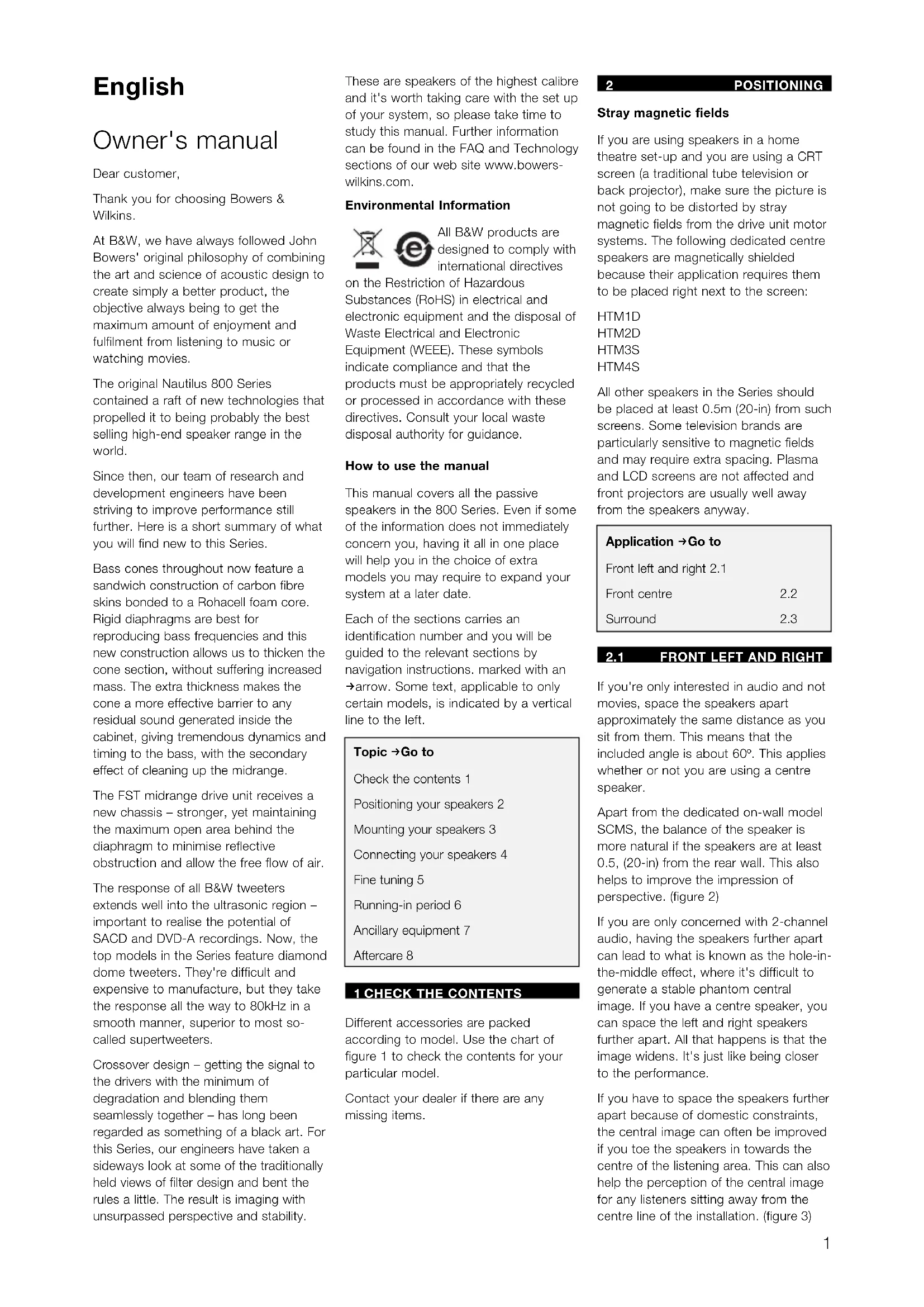
800D
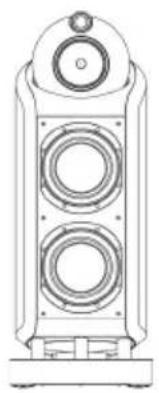
801D
| Technical features | Free-mounted diamond dome tweeterKevlar® brand fibre cone FST™ midrangeRohacell® cone bassNautilus™ headMatrix™ cabinetFlowport* | Free-mounted diamond dome tweeterKevlar® brand fibre cone FST™ midrangeRohacell® cone bassNautilus™ headMatrix™ cabinetFlowport* |
| Description | 3-way vented-box system | 3-way vented-box system |
| Drive units | 1x ø25mm (1 in) diamond dome high-frequency1x ø150mm (6 in) woven Kevlar® cone FST™ midrange2x ø250mm (10 in) Rohacell® cone bass | 1x ø25mm (1 in) diamond dome high-frequency1x ø150mm (6 in) woven Kevlar® cone FST™ midrange1x ø380mm (15 in) Rohacell® cone bass |
| Frequency range | -6dB at 25Hz and 33kHz | -6dB at 23Hz and 33kHz |
| Frequency response | 32Hz - 28kHz ±3dB on reference axis | 32Hz - 28kHz ±3dB on reference axis |
| Dispersion | Within 2dB of reference responseHorizontal: over 60° arcVertical: over 10° arc | Within 2dB of reference responseHorizontal: over 60° arcVertical: over 10° arc |
| Sensitivity | 90dB spl (2.83V, 1m) | 90dB spl (2.83V, 1m) |
| Harmonic distortion | 2nd and 3rd harmonics (90dB, 1m)<1% 45Hz - 100kHz<0.5% 80Hz - 100kHz | 2nd and 3rd harmonics (90dB, 1m)<1% 40Hz - 100kHz<0.5% 50Hz - 100kHz |
| Nominal impedance | 8Ω (minimum 3.1Ω) | 8Ω (minimum 3.5Ω) |
| Crossover frequency | 350Hz, 4kHz | 350Hz, 4kHz |
| Recommended amplifier power | 50W - 1000W into 8Ω on unclipped programme | 50W - 1000W into 8Ω on unclipped programme |
| Max. recommended cable impedance | 0.1Ω | 0.1Ω |
| Dimensions | Height: 1180mm (46.5 in) (not including feet)Width: 450mm (17.7 in)Depth: 645mm (25.4 in) | Height: 1192mm (46.9 in) (not including feet)Width: 506mm (19.9 in)Depth: 682mm (26.9 in) |
| Net Weight | 125kg (275 lb) | 118kg (260 lb) |
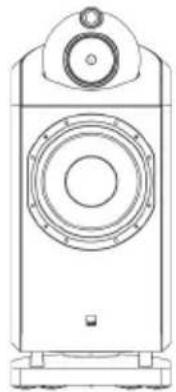
802D
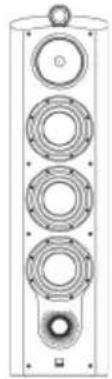
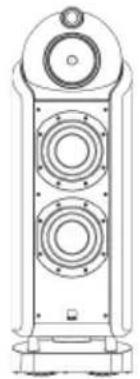
803D
Free-mounted diamond dome tweeter
Kevlar® brand fibre cone FST™ midrange
Rohacell® cone bass
Nautilus™ head
Matrix™ cabinet
Flowport™
3-way vented-box system
1x 25mm (1 in) diamond dome high-frequency
1x 150mm (6 in) woven Kevlar cone FST midrange
2x 200mm (8 in) Rohacell cone bass
-6dB at 27Hz and 33kHz
34Hz - 28kHz ±3dB on reference axis
Within 2dB of reference response Horizontal: over 60^ arc Vertical:over 10^ arc
90dBspl (2.83V,1m)
2nd and 3rd harmonics (90dB, 1m)
<1% 40Hz - 100kHz
<0.5% 70Hz - 100kHz
8Ω (minimum 3.5Ω)
350Hz, 4kHz
50W - 500W into 8Ω on unclipped programme
0.1Ω
Height: 1135mm (44.7in) (not including feet)
Width: 368mm (14.5in)
Depth: 563mm (22.2in)
80kg (176 lb)
Free-mounted diamond dome tweeter
Kevlar® brand fibre cone FST™ midrange
Rohacell® cone bass
Matrix™ cabinet
Flowport™
3-way vented-box system
1x 25mm (1 in) diamond dome high-frequency
1x 150mm (6 in) woven Kevlar cone FST midrange
3x 180mm (7 in) Rohacell cone bass
-6dB at 28Hz and 33kHz
35Hz - 28kHz ±3dB on reference axis
Within 2dB of reference response Horizontal: over 60^ arc Vertical: over 10^ arc
90dBspl (2.83V,1m)
2nd and 3rd harmonics (90dB, 1m)
<1% 50Hz - 100kHz
<0.5% 90Hz - 100kHz
8Ω (minimum 3.0Ω)
350Hz, 4kHz
50W - 500W into 8Ω on unclipped programme
0.1Ω
Height: 1164mm (45.8 in) (not including feet)
Width: 306mm (12 in)
Depth: 457mm (18 in)
45kg (98 lb)
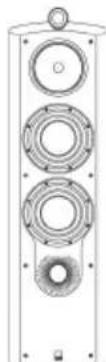
803S
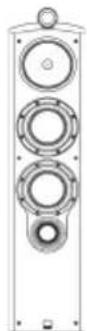
804S
Technical features Free-mounted aluminium dome tweeter Kevlar® brand fibre cone FST™ midrange Rohacell® cone bass Matrix™ cabinet Flowport™
Description 3-way vented-box system
Drive units 1x 25mm (1 in) aluminium dome high-frequency 1x 0150mm (6 in) woven Kevlar cone FST midrange 2x 0180mm (7 in) Rohacell cone bass
Frequency range -6dB at 28Hz and 50kHz
Frequency response 35Hz - 22kHz ±3dB on reference axis
Dispersion Within 2dB of reference response Horizontal: over 60^ arc Vertical: over 10^ arc
Sensitivity 90dB spl (2.83V, 1m)
Harmonic distortion 2nd and 3rd harmonics (90dB, 1m)
<1% 70Hz - 22kHz
<0.5% 80Hz - 20kHz
Nominal impedance 8Ω (minimum 3.0Ω)
Crossover frequency 350Hz, 4kHz
Recommended 50W - 250W into 8 on unclipped programme amplifier power
Max. recommended 0.1Ω cable impedance
Dimensions Height: 1063mm (41.9 in) (not including feet) Width: 291mm (11.5 in) Depth: 433mm (17 in)
Net Weight 41kg (90 lb)
Free-mounted aluminium dome tweeter
Kevlar® brand fibre cone FST™ midrange
Rohacell® cone bass
Matrix™ cabinet
Flowport™
3-way vented-box system
1x 025mm (1 in) aluminium dome high-frequency
1x 0150mm (6 in) woven Kevlar cone FST midrange
2x 0165mm (6.5 in) Rohacell cone bass
-6dB at 30Hz and 50kHz
38Hz - 22kHz ±3dB on reference axis
Within 2dB of reference response Horizontal: over 60^ arc Vertical: over 10^ arc
90dBspl (2.83V,1m)
2nd and 3rd harmonics (90dB, 1m)
<1% 90Hz - 22kHz
<0.5% 120Hz - 20kHz
8Ω (minimum 3.0Ω)
350Hz, 4kHz
50W - 200W into 8 on unclipped programme
0.1Ω
Height: 1020mm (40.2 in) (not including feet)
Width: 238mm (9.4 in)
Depth: 351mm (13.8 in)
28kg (62 lb)
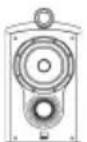
805S
Free-mounted aluminium dome tweeter
Kevlar® brand fibre cone bass / midrange
MatrixTM cabinet
FlowportTM
2-way vented-box system
1x 025mm (1 in) aluminium dome high-frequency
1x 0165mm (6.5 in) woven Kevlar® cone bass / midrange
-6dB at 42Hz and 50kHz
49Hz - 22kHz ±3dB on reference axis
Within 2dB of reference response
Horizontal: over 60^ arc
Vertical: over 10^ arc
88dBspl (2.83V,1m)
2nd and 3rd harmonics (90dB, 1m)
<1% 100Hz - 22kHz
<0.5% 150Hz - 20kHz
8Ω (minimum 3.7Ω)
4kHz
50W - 120W into 8 on unclipped programme
0.1Ω
Height: 418mm (16.5 in)
Width: 238mm (9.4 in)
Depth: 351mm (13.8 in)
11.5kg (26 lb)
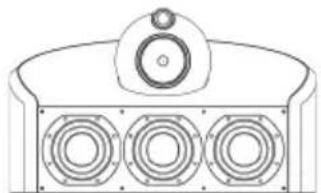
HTM1D
Technical features Free-mounted diamond dome tweeter
Kevlar® brand fibre cone FST™ midrange
Rohacelli cone bass
Nautilus head
Matrix ^14 cabinet
Flowport
Magnetic shielding
Description 3-way vented-box system
Drive units 1x 25mm (1 in) diamond dome high-frequency
1x 150mm (6 in) woven Kevlar cone FST midrange
3x 200mm (8 in) Rohacell cone bass
Frequency range -6dB at 32Hz and 33kHz
Frequency response 38Hz - 28kHz ±3dB on reference axis
Dispersion Within 2dB of reference response
Horizontal: over 60^ arc
Vertical: over 10^ arc
Sensitivity 90dB sp1 (2.83V, 1m)
Harmonic distortion 2nd and 3rd harmonics (90dB, 1m)
<1% 55Hz - 100kHz
<0.5% 100Hz - 100kHz
Nominal impedance 8Ω (minimum 3.7Ω)
Crossover frequency 350Hz, 4kHz
Recommended 50W - 500W into 8 on unclipped programme amplifier power
Max. recommended 0.1Ω
cable impedance
Dimensions Height: 585mm (23 in) (not including feet)
Width: 974mm (38.3 in)
Depth: 580mm (22.8 in)
Net Weight 93kg (205 lb)
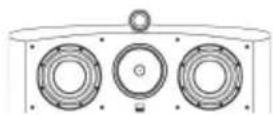
HTM2D
Free-mounted diamond dome tweeter
Kevlar® brand fibre cone FST™ midrange
Rohacell cone bass
Matrixcabinet
Flowport
Magnetic shielding
3-way vented-box system
1x 025mm (1 in) diamond dome high-frequency
1x 0150mm (6 in) woven Kevlar cone FST™ midrange
2x o180mm (7 in) Rohacell cone bass
-6dB at 35Hz and 33kHz
41Hz - 28kHz ±3dB on reference axis
Within 2dB of reference response
Horizontal: over 60^ arc
Vertical: over 10^ arc
90dB sp1 (2.83V, 1m)
2nd and 3rd harmonics (90dB, 1m)
<1% 80Hz - 100kHz
<0.5% 100Hz - 100kHz
8Ω (minimum 3.1Ω)
350Hz, 4kHz
50W - 300W into 8 on unclipped programme
0.1Ω
Height: 329mm (13 in)
Width: 841mm (33.1 in)
Depth: 387mm (15.2 in)
31kg (68 lb)
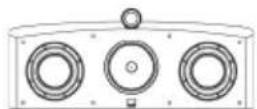
HTM3S
Free-mounted aluminium dome tweeter
Kevlar brand fibre cone FST midrange
Rohacell cone bass
Matrixcabinet
Magnetic shielding
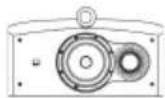
HTM4S
Free-mounted aluminium dome tweeter
Kevlar® brand fibre cone bass / midrange
Matrix"cabinet
Flowport
Magnetic shielding
3-way closed-box system
1x 25mm (1 in) aluminium dome high-frequency
1x 0150mm (6 in) woven Kevlar cone FST midrange
2x 0165mm (6.5 in) Rohacell cone bass
-6dB at 35Hz and 50kHz
42Hz - 22kHz ±3dB on reference axis
Within 2dB of reference response
Horizontal: over 60^ arc
Vertical: over 10^ arc
90dB sp1 (2.83V, 1m)
2nd and 3rd harmonics (90dB, 1m)
<1% 100Hz - 22kH
<0.5% 120Hz - 20kHz
8Ω (minimum 3.2Ω)
350Hz, 4kHz
50W - 250W into 8 on unclipped programme
0.1Ω
Height: 320mm (12.6 in)
Width: 783mm (30.8 in)
Depth: 316mm (12.4 in)
28kg (62 lb)
2-way vented-box system
1x 025mm (1 in) aluminium dome high-frequency
1x 0165mm (6.5 in) woven Kevlar cone bass / midrange
-6dB at 42Hz and 50kHz
49Hz - 22kHz ±3dB on reference axis
Within 2dB of reference response
Horizontal: over 60^ arc
Vertical: over 10^ arc
88dBspl(2.83V,1m)
2nd and 3rd harmonics (90dB, 1m)
<1% 100Hz - 22kHz
<0.5% 150Hz -20kHz
8Ω (minimum 2.6Ω)
4kHz
50W - 120W into 8Ω on unclipped programme
0.1Ω
Height: 279mm (11 in)
Width: 486mm (19.1 in)
Depth: 287mm (11.3 in)
12.5kg (27 lb)
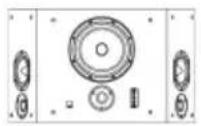
DS8S
Technical features Tube-loaded aluminium dome tweeter
Kevlar® brand fibre cone bass / midrange
Matrix "cabinet"
Bracket for on-wall mounting included
Description 2-way closed-box selectable dipole / monopole surround system
Drive units 3x 25mm (1 in) aluminium dome high-frequency 2x 0100mm (4 in) woven Kevlar cone midrange 1x 0180mm (7 in) woven Kevlar cone bass / midrange
Frequency range -6dB at 45Hz and 50kHz (monopole mode) -6dB at 45Hz and 18kHz (dipole mode)
Frequency response 60Hz - 22kHz ±3dB on reference axis (monopole mode) 60Hz - 15kHz ±3dB power averaged over front hemisphere (dipole mode)
Dispersion Monopole mode: within 2dB of reference response Horizontal: over 40^ arc Vertical: over 10^ arc Dipole mode: horizontal figure of eight Effective null zone ± 30^ (250Hz - 15kHz)
Sensitivity 89dB spl (2.83V, 1m)
Harmonic distortion 2nd and 3rd harmonics (90dB, 1m)
<1%120Hz - 22kHz
<0.5% 150Hz - 20kHz
Nominal impedance 8 (minimum 4.4Ω)
Crossover frequency 4kHz (monopole mode) 250Hz & 4kHz (dipole mode)
Recommended 25W - 120W into 8 on unclipped programme amplifier power
Max. recommended 0.1Ω cable impedance
Dimensions Height: 360mm (14.2 in)
Width: 622mm (24.5 in)
Depth: 205mm (8.1 in)
Net Weight 15kg (33 lb)
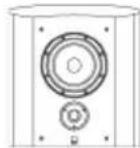
SCMS
Tube-loaded aluminium dome weeter
Kevlar brand fibre cone bass / midrange
Matrix cabinet
Flowport
Adjustable bracket for on-wall mounting included
2-way vented-box system
1x 025mm (1 in) aluminium dome high-frequency
1x 0165mm (6.5 in) woven Kevlar cone bass / midrange
-6dB at 48Hz and 50kHz
60Hz - 22kHz ±3dB on reference axis
Within 2dB of reference response Horizontal: over 60^ arc Vertical: over 10^ arc
88dBspl (2.83V,1m)
2nd and 3rd harmonics (90dB, 1m)
<1% 100Hz - 22kHz
<0.5% 150Hz - 20kHz
8Ω (minimum 4.7Ω)
4kHz
50W - 120W into 8 on unclipped programme
0.1Ω
Height: 399mm (15.7 in)
Width: 373mm (14.7 in)
Depth: 219mm (8.6 in) not including wall bracket
8.5kg (19 lb)
Bowers & Wilkins
B&W Group Ltd
Dale Road
Worthing West Sussex
BN11 2BH England
T+44(0)1903221800
F +44 (0) 1903 221 801
info@bwgroup.com
www.bowers-wilkins.com
B&W Group (UK Sales)
T+441903221500
Euksales@bwgroup.com
B&W Group North America
T+19786642870
E marketing@bwgroupusa.com
B&W Group Asia Ltd
T+85228699916
E info@bwgroup.hk
Copyright © B&W Group Ltd. E&OE
Rohacell is a registered trademark of Rohm GmbH
Kevlar is a registered trademark of DuPont.
Nautilus is a trademark of B&W Group Ltd.
Printed in England.

Diamond At Work