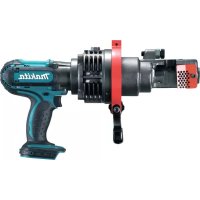
DSC191Z - Slicer MAKITA - Free user manual and instructions
Find the device manual for free DSC191Z MAKITA in PDF.


User questions about DSC191Z MAKITA
0 question about this device. Answer the ones you know or ask your own.
Ask a new question about this device
Download the instructions for your Slicer in PDF format for free! Find your manual DSC191Z - MAKITA and take your electronic device back in hand. On this page are published all the documents necessary for the use of your device. DSC191Z by MAKITA.
USER MANUAL DSC191Z MAKITA
ENGLISH (Original instructions)
Explanation of general view
-
Red indicator
-
Protector
-
Blade B (Thicker Blade)
-
Button
-
Hold Bolt
-
Bolt (Longer)
-
Battery cartridge
-
Rebar
-
Bolt (Shorter)
-
Indicator lamps
-
Blades
-
Washer
-
Check button
-
More than 200 mm
-
Bar Holder
-
Switch Lock
-
Air Hole
-
Cutter Rod
-
Switch trigger
-
Hex Wrench
-
Blade A on Bar Holder
-
Side A
-
Return Valve
-
Blade B on Cutter Rod
-
Side B
-
Blade A (Thicker Blade)
-
Spare Blades
SPECIFICATIONS
| Model DSC191 | |
| Max. Cutting Capacity (Dia.mm) | 20 mm |
| Grade 40 - Grade 60 | |
| Grade 40: Tensile Strength 490 N/mm² 70,000 PSI | |
| Grade 60: Tensile Strength 620 N/mm² 90,000 PSI | |
| Cutting Speed 6.5 seconds | |
| Overall length 412 mm | |
| Net weight 11.1 - 11.2 kg | |
| Rated voltage D.C. 18V |
- Due to our continuing program of research and development, the specifications herein are subject to change without notice.
- Specifications may differ from country to country.
- The weight may differ depending on the attachment(s), including the battery cartridge. The lightest and heaviest combination, according to EPTA-Procedure 01/2014, are shown in the table.
Applicable battery cartridge and charger
| Battery cartridge BL1830B / BL1840B / BL1850B / BL1860B | |
| Charger DC18RC / DC18RD / DC18RE / DC18SD / DC18SE / DC18SF / DC18SH | |
- Some of the battery cartridges and chargers listed above may not be available depending on your region of residence.
WARNING:
- Only use the battery cartridges and chargers listed above. Use of any other battery cartridges and chargers may cause injury and/or fire.
Symbols
The following show the symbols used for the equipment. Be sure that you understand their meaning before use.


.... Read instruction manual.

Flying debris and loud noise hazards. Wear ear and eye protection.

Moving blade. Keep hands clear while machine is operating. Turn power off before servicing.

Ni-MH Li-ion
Only for EU countries
Due to the presence of hazardous components in the equipment, waste electrical and electronic equipment, accumulators and batteries may have a negative impact on the environment and human health.
Do not dispose of electrical and electronic appliances or batteries with household waste! In accordance with the European Directive on waste electrical and electronic equipment and on accumulators and batteries and waste accumulators and batteries, as well as their adaptation to national law, waste electrical equipment, batteries and accumulators should be stored separately and delivered to a separate collection point for municipal waste, operating in accordance with the regulations on environmental protection. This is indicated by the symbol of the crossed-out wheeled bin placed on the equipment.
Intended use
The tool is intended for cutting rebar.
Noise
The typical A-weighted noise level determined according to EN62841-2-8:
Sound pressure level (LpA): 80.5 dB(A)
Sound power level (LWA) : 90.1 dB(A)
Uncertainty (K): 3 dB(A)
NOTE:
- The declared noise emission value(s) has been measured in accordance with a standard test method and may be used for comparing one tool with another.
- The declared noise emission value(s) may also be used in a preliminary assessment of exposure.
WARNING:
Wear ear protection.
- The noise emission during actual use of the power tool can differ from the declared value(s) depending on the ways in which the tool is used especially what kind of workpiece is processed.
- Be sure to identify safety measures to protect the operator that are based on an estimation of exposure in the actual conditions of use (taking account of all parts of the operating cycle such as the times when the tool is switched off and when it is running idle in addition to the trigger time).
Vibration
The vibration total value (tri-axial vector sum) determined according to EN62841-2-8:
Work mode: cutting rebar
Vibration emission (a_h): 2.5 m/s^2 or less
Uncertainty (K): 1.5 m/s^2
NOTE:
- The declared vibration total value(s) has been measured in accordance with a standard test method and may be used for comparing one tool with another.
- The declared vibration total value(s) may also be used in a preliminary assessment of exposure.
WARNING:
- The vibration emission during actual use of the power tool can differ from the declared value(s) depending on the ways in which the tool is used especially what kind of workpiece is processed.
- Be sure to identify safety measures to protect the operator that are based on an estimation of exposure in the actual conditions of use (taking account of all parts of the operating cycle such as the times when the tool is switched off and when it is running idle in addition to the trigger time).
EC Declaration of Conformity
For European countries only
The EC declaration of conformity is included as Annex A to this instruction manual.
General Power Tool SafetyWarnings
WARNING: Read all safety warnings, instructions, illustrations and specifications provided with this power tool. Failure to follow all instructions listed below may result in electric shock, fire and/or serious injury.
Save all warnings and instructions for future reference.
The term "power tool" in the warnings refers to your mains-operated (corded) power tool or battery-operated (cordless) power tool.
Work area safety
- Keep work area clean and well lit. Cluttered or dark areas invite accidents.
- Do not operate power tools in explosive atmospheres, such as in the presence of flammable liquids, gases or dust. Power tools create sparks which may ignite the dust or fumes.
- Keep children and bystanders away while operating a power tool. Distractions can cause you to lose control.
Electrical safety
- Power tool plugs must match the outlet. Never modify the plug in any way. Do not use any adapter plugs with earthed (grounded) power tools. Unmodified plugs and matching outlets will reduce risk of electric shock.
- Avoid body contact with earthed or grounded surfaces, such as pipes, radiators, ranges and refrigerators. There is an increased risk of electric shock if your body is earthed or grounded.
- Do not expose power tools to rain or wet conditions. Water entering a power tool will increase the risk of electric shock.
- Do not abuse the cord. Never use the cord for carrying, pulling or unplugging the power tool. Keep cord away from heat, oil, sharp edges or moving parts. Damaged or entangled cords increase the risk of electric shock.
- When operating a power tool outdoors, use an extension cord suitable for outdoor use. Use of a cord suitable for outdoor use reduces the risk of electric shock.
- If operating a power tool in a damp location is unavoidable, use a residual current device (RCD) protected supply. Use of an RCD reduces the risk of electric shock.
- Power tools can produce electromagnetic fields (EMF) that are not harmful to the user. However, users of pacemakers and other similar medical devices should contact the maker of their device and/or doctor for advice before operating this power tool.
Personal safety
- Stay alert, watch what you are doing and use common sense when operating a power tool. Do not use a power tool while you are tired or under the influence of drugs, alcohol or medication. A moment of inattention while operating power tools may result in serious personal injury.
- Use personal protective equipment. Always wear eye protection. Protective equipment such as a dust mask, non-skid safety shoes, hard hat or hearing protection used for appropriate conditions will reduce personal injuries.
- Prevent unintentional starting. Ensure the switch is in the off-position before connecting to power source and/or battery pack, picking up or carrying the tool. Carrying power tools with your finger on the switch or energising power tools that have the switch on invites accidents.
- Remove any adjusting key or wrench before turning the power tool on. A wrench or a key left attached to a rotating part of the power tool may result in personal injury.
- Do not overreach. Keep proper footing and balance at all times. This enables better control of the power tool in unexpected situations.
- Dress properly. Do not wear loose clothing or jewellery. Keep your hair and clothing away from moving parts. Loose clothes, jewellery or long hair can be caught in moving parts.
-
If devices are provided for the connection of dust extraction and collection facilities, ensure these are connected and properly used. Use of dust collection can reduce dust-related hazards.
-
Do not let familiarity gained from frequent use of tools allow you to become complacent and ignore tool safety principles. A careless action can cause severe injury within a fraction of a second.
- Always wear protective goggles to protect your eyes from injury when using power tools. The goggles must comply with ANSI Z87.1 in the USA, EN 166 in Europe, or AS/NZS 1336 in Australia/ New Zealand. In Australia/New Zealand, it is legally required to wear a face shield to protect your face, too.
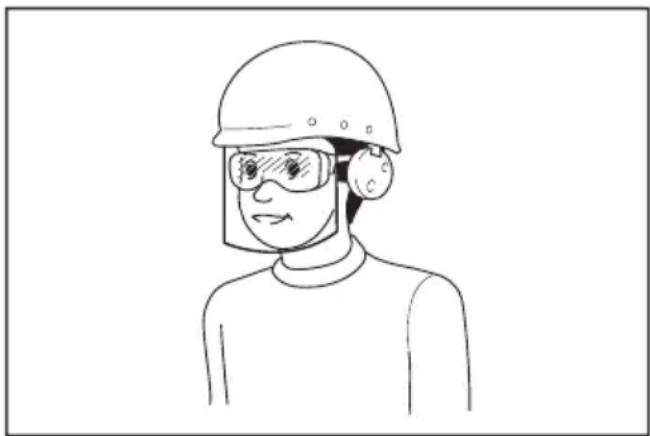
It is an employer's responsibility to enforce the use of appropriate safety protective equipments by the tool operators and by other persons in the immediate working area.
Power tool use and care
- Do not force the power tool. Use the correct power tool for your application. The correct power tool will do the job better and safer at the rate for which it was designed.
- Do not use the power tool if the switch does not turn it on and off. Any power tool that cannot be controlled with the switch is dangerous and must be repaired.
- Disconnect the plug from the power source and/or remove the battery pack, if detachable, from the power tool before making any adjustments, changing accessories, or storing power tools. Such preventive safety measures reduce the risk of starting the power tool accidentally.
- Store idle power tools out of the reach of children and do not allow persons unfamiliar with the power tool or these instructions to operate the power tool. Power tools are dangerous in the hands of untrained users.
- Maintain power tools and accessories. Check for misalignment or binding of moving parts, breakage of parts and any other condition that may affect the power tool's operation. If damaged, have the power tool repaired before use. Many accidents are caused by poorly maintained power tools.
-
Keep cutting tools sharp and clean. Properly maintained cutting tools with sharp cutting edges are less likely to bind and are easier to control.
-
Use the power tool, accessories and tool bits etc. in accordance with these instructions, taking into account the working conditions and the work to be performed. Use of the power tool for operations different from those intended could result in a hazardous situation.
- Keep handles and grasping surfaces dry, clean and free from oil and grease. Slippery handles and grasping surfaces do not allow for safe handling and control of the tool in unexpected situations.
- When using the tool, do not wear cloth work gloves which may be entangled. The entanglement of cloth work gloves in the moving parts may result in personal injury.
Battery tool use and care
- Recharge only with the charger specified by the manufacturer. A charger that is suitable for one type of battery pack may create a risk of fire when used with another battery pack.
- Use power tools only with specifically designated battery packs. Use of any other battery packs may create a risk of injury and fire.
- When battery pack is not in use, keep it away from other metal objects, like paper clips, coins, keys, nails, screws or other small metal objects, that can make a connection from one terminal to another. Shorting the battery terminals together may cause burns or a fire.
- Under abusive conditions, liquid may be ejected from the battery; avoid contact. If contact accidentally occurs, flush with water. If liquid contacts eyes, additionally seek medical help. Liquid ejected from the battery may cause irritation or burns.
- Do not use a battery pack or tool that is damaged or modified. Damaged or modified batteries may exhibit unpredictable behaviour resulting in fire, explosion or risk of injury.
- Do not expose a battery pack or tool to fire or excessive temperature. Exposure to fire or temperature above 130^ may cause explosion.
- Follow all charging instructions and do not charge the battery pack or tool outside the temperature range specified in the instructions. Charging improperly or at temperatures outside the specified range may damage the battery and increase the risk of fire.
Service
- Have your power tool serviced by a qualified repair person using only identical replacement parts. This will ensure that the safety of the power tool is maintained.
- Never service damaged battery packs. Service of battery packs should only be performed by the manufacturer or authorized service providers.
- Follow instruction for lubricating and changing accessories.
CORDLESS STEEL ROD CUTTER SAFETY WARNINGS
- Hold the tool securely while it is in use. If the tool is not held securely, you may be injured.
- Keep your hands and face away from the moving parts. They may cause an injury.
- Release the Switch trigger immediately to stop operation when the tool is out of order or makes an abnormal sound during use. Have it inspected and repaired by an authorized service center. Failure to do so may result in damage or injury.
- If you drop or strike the tool, check carefully that the body is not damaged, cracked, or deformed. Any such damage could cause injury.
- This tool is an electro-hydraulic tool. The oil reservoir was filled before delivery. Do not add oil unless the tool operates abnormally.
- Metal cutting blades have sharp edges. Handle them carefully to avoid being cut.
- Damaged, deformed or cracked blades may cause serious accidents as well as impair operation. Replace with new genuine blades immediately.
SAVE THESE INSTRUCTIONS.
WARNING:
DO NOT let comfort or familiarity with product (gained from repeated use) replace strict adherence to safety rules for the subject product. MISUSE or failure to follow the safety rules stated in this instruction manual may cause serious personal injury.
IMPORTANT SAFETY INSTRUCTIONS FOR BATTERY CARTRIDGE
- Before using battery cartridge, read all instructions and cautionary markings on (1) battery charger, (2) battery, and (3) product using battery.
- Do not disassemble or tamper the battery cartridge. It may result in a fire, excessive heat, or explosion.
- If operating time has become excessively shorter, stop operating immediately. It may result in a risk of overheating, possible burns and even an explosion.
- If electrolyte gets into your eyes, rinse them out with clear water and seek medical attention right away. It may result in loss of your eyesight.
- Do not short the battery cartridge:
(1) Do not touch the terminals with any conductive material.
(2) Avoid storing battery cartridge in a container with other metal objects such as nails, coins, etc.
(3) Do not expose battery cartridge to water or rain.
A battery short can cause a large current flow, overheating, possible burns and even a breakdown.
- Do not store and use the tool and battery cartridge in locations where the temperature may reach or exceed 50^ (122°F).
- Do not incinerate the battery cartridge even if it is severely damaged or is completely worn out. The battery cartridge can explode in a fire.
- Do not nail, cut, crush, throw, drop the battery cartridge, or hit against a hard object to the battery cartridge. Such conduct may result in a fire, excessive heat, or explosion.
- Do not use a damaged battery.
- The contained lithium-ion batteries are subject to the Dangerous Goods Legislation requirements. For commercial transports e.g. by third parties, forwarding agents, special requirement on packaging and labeling must be observed. For preparation of the item being shipped, consulting an expert for hazardous material is required. Please also observe possibly more detailed national regulations. Tape or mask off open contacts and pack up the battery in such a manner that it cannot move around in the packaging.
- When disposing the battery cartridge, remove it from the tool and dispose of it in a safe place. Follow your local regulations relating to disposal of battery.
- Use the batteries only with the products specified by Makita. Installing the batteries to non-compliant products may result in a fire, excessive heat, explosion, or leak of electrolyte.
- If the tool is not used for a long period of time, the battery must be removed from the tool.
- During and after use, the battery cartridge may take on heat which can cause burns or low temperature burns. Pay attention to the handling of hot battery cartridges.
- Do not touch the terminal of the tool immediately after use as it may get hot enough to cause burns.
- Do not allow chips, dust, or soil stuck into the terminals, holes, and grooves of the battery cartridge. It may result in poor performance or breakdown of the tool or battery cartridge.
- Unless the tool supports the use near high-voltage electrical power lines, do not use the battery cartridge near a high-voltage electrical power lines. It may result in a malfunction or breakdown of the tool or battery cartridge.
- Keep the battery away from children.
SAVE THESE INSTRUCTIONS.
CAUTION:
- Only use genuine Makita batteries. Use of non-genuine Makita batteries, or batteries that have been altered, may result in the battery bursting causing fires, personal injury and damage. It will also void the Makita warranty for the Makita tool and charger.
Tips for maintaining maximum battery life
- Charge the battery cartridge before completely discharged. Always stop tool operation and charge the battery cartridge when you notice less tool power.
- Never recharge a fully charged battery cartridge. Overcharging shortens the battery service life.
- Charge the battery cartridge with room temperature at 10^ - 40^ (50°F - 104°F). Let a hot battery cartridge cool down before charging it.
- When not using the battery cartridge, remove it from the tool or the charger.
- Charge the battery cartridge if you do not use it for a long period (more than six months).
FUNCTIONAL DESCRIPTION
CAUTION:
- Always be sure that the tool is switched off and the battery cartridge is removed before adjusting or checking function on the tool.
Installing or removing battery cartridge (Fig.1)
CAUTION:
- Always switch off the tool before installing or removing of the battery cartridge.
- Hold the tool and the battery cartridge firmly when installing or removing battery cartridge. Failure to hold the tool and the battery cartridge firmly may cause them to slip off your hands and result in damage to the tool and battery cartridge and a personal injury.
To remove the battery cartridge, slide it from the tool while sliding the button on the front of the cartridge.
To install the battery cartridge, align the tongue on the battery cartridge with the groove in the housing and slip it into place. Insert it all the way until it locks in place with a little click. If you can see the red indicator on the upper side of the button, it is not locked completely.
CAUTION:
- Always install the battery cartridge fully until the red indicator cannot be seen. If not, it may accidentally fall out of the tool, causing injury to you or someone around you.
- Do not install the battery cartridge forcibly. If the cartridge does not slide in easily, it is not being inserted correctly.
Tool / battery protection system
The tool is equipped with a tool/battery protection system. This system automatically cuts off the power to extend tool and battery life. The tool will automatically stop during operation if the tool or battery is placed under one of the following conditions:
Overload protection
This protection works when the tool is operated in a manner that causes it to draw an abnormally high current. In this situation, turn the tool off and stop the application that caused the tool to become overloaded. Then turn the tool on to restart.
Overheat protection
This protection works when the tool or battery is overheated. In this situation, let the tool and battery cool before turning the tool on again.
Overdischarge protection
This protection works when the remaining battery capacity gets low. In this situation, remove the battery from the tool and charge the battery.
Indicating the remaining battery capacity
(Fig. 2)
Only for battery cartridges with the indicator
Press the check button on the battery cartridge to indicate the remaining battery capacity. The indicator lamps light up for a few seconds.
| Indicator lamps | Remaining capacity | ||
| Lighted Off | Blinking | ||
| 75% to 100% | |||
| 50% to 75% | |||
| 25% to 50% | |||
| 0% to 25% | |||
| Charge the battery. | |||
| The battery may have malfunctioned. | |||
NOTE:
- Depending on the conditions of use and the ambient temperature, the indication may differ slightly from the actual capacity.
OPERATING PROCEDURE
Read, understand and follow all safety instructions and operating procedures. If you do not understand the instructions, or if conditions are not correct for proper operation, do not operate this tool. Consult your supervisor or other responsible person.
WARNING:
- Before the Battery is inserted into the tool, pull and release the switch trigger to ensure that it returns when released.
The motor is on when the switch trigger is pulled and off when the switch trigger is released.
Switch Lock Operation (Fig. 3)
- Push in the Switch Lock on side A. The Switch is unlocked and the Trigger can be operated.
- Push in the Switch Lock on side B. The Switch is locked and the Trigger cannot be operated.
CAUTION:
- The switch trigger should be locked at all times when not in use.
WARNING:
- Before operation, confirm that the position of the operator, relative to the tool, and the surrounding area is safe for operation. Put on safety glasses and wear protective clothing.
- Refer to the tool specifications in this manual and do not cut rebar of size or hardness that exceeds the cutting capacity of the tool.
- Do not cut material other than rebar. Please ask the manufacturer if you want to cut other materials.
WARNING:
- Replace damaged (chipped, broken, cracked) or deformed blades immediately. The blade will not cut true and may fracture or break causing serious personal injury.
Cutting Procedure
WARNING
- Never use the tool without the protector in place. Failure to do so can cause serious personal injury. (Fig. 4)
- Position the rebar to be cut between the blades. (Fig. 5) Adjust the Hold Bolt according to the diameter of the rebar to be cut so that the rebar is at 90 degrees to the blades. The Hold Bolt supports the rebar and keeps it perpendicular to the blades when cutting. (Fig. 6)
WARNING
- When cutting rebar, adjust the Hold Bolt according to the diameter of the rebar to be cut so that the rebar is at 90 degrees to the blades. Without this adjustment, the cut piece may fly off and cause serious injury to the operator or bystanders. Never fail to check the position of the operator relative to the tool and confirm the safety of the operator and surrounding area.
- Position the rebar to be cut so that it is fully between the blades. (Fig. 7)
WARNING
- If the rebar to be cut is not positioned fully between the blades, the blades will be damaged; the rebar will be ejected violently and may cause serious personal injury.
WARNING
- Do not cut rebar when the piece to be cut off is less than 200mm in length. Cutting shorter length may cause the rebar to fly off during cut and may result in serious personal injury. (Fig. 8)
WARNING
- Do not cut rebar when it is not properly supported by the Hold Bolt. When cutting, hold the rebar on the Hold Bolt side. (Fig. 9) If not, the cut piece may fly off and cause serious injury to the operator or bystanders.
- Push in the Switch Lock on Side A. The switch is unlocked and the trigger can be operated.
-
Press the switch trigger to start cutting operation. The Cutter Rod will move forward to cut the rebar. Keep the Switch depressed until the Cutter Rod stops at the end of its stroke.
-
Release the switch trigger when the cut is completed and the Cutter Rod has reached the end of its stroke. The Cutter Rod will then return automatically to its starting position. The Cutter Rod will not return if the stroke is not completed. Similarly the Cutter Rod will not be able to move forward again until after it returns completely to its starting position. Press the switch to start the next cut, only after the Cutter Rod completely returns to its starting position and stops.

WARNING
- When cutting rebar of a high tensile strength the cut piece may fly off and cause serious injury to the operator. Wear safety glasses and confirm that the surrounding area is safe before starting operation. (Fig. 10)

WARNING
- Keep your hands and face away from the blades, the moving parts and the cutting area, during operation. Remove the Battery from the tool immediately after use.
NOTE:
- Keep the air hole in the end of the Bar Holder clear of dirt and debris. The air hole controls the internal pressure and should not be obstructed. (Fig. 11)
Rotating Function of Motor (Fig. 12)
The Motor Body can be rotated through 360 degrees, in either direction, during operation. This feature is particularly useful when working in awkward or narrow areas as it allows the operator to position the tool in the best position for easy operation.
Return Valve Operation (Fig. 13)
The function of the Return Valve is to allow the Cutter Rod to return to the starting position if it is unable complete a cut or becomes jammed. This will release the oil pressure and allow the Cutter Rod to return. Retighten the Return Valve once the Cutter Rod is fully returned and before starting the next operation.
BLADES REPLACEMENT PROCEDURE
If the cutting edges of the blades are chipped, cracked, deformed, or damaged in any way, their cutting ability will be reduced. Cutting under such conditions may cause further damage and result in personal injury. The blades should be replaced as a set immediately if any damage is found.
WARNING
-
When replacing the blades, ensure that the Battery is removed from the tool to prevent accidental operation. Ensure that Blade A, on the Bar Holder and Blade B, on the Cutter Rod are fitted in their correct respective positions. (Fig. 14)
-
Undo the bolts and the washers that hold Blade A and Blade B.
- Remove dirt and clean the surfaces where the new blades are to be fitted.
- Fit Blade A to the Bar Holder and Blade B to the Cutter Rod. Replace bolts and washers and tighten firmly.
WARNING
- The bolts that hold Blade A and Blade B should be tightened regularly. If the bolts become loose the Blades may be damaged and may cause personal injury.
Type of spare blade and detachment
(Fig. 15)
Securing bolts should be firmly tightened.
Confirm periodically that the blade is tightened properly.
Spareblade size
- Use this table to identify the correct blades for your model.
| Model A (Fitted to Bar | Holder) B (Fitted to Cutter Rod) | |
| DSC191 (ø3 -ø20) 28 × 20 × 11.5 mm (Bolt Size 6 mm) 26 × 20 × 10 mm (Bolt Size 5 mm) | ||
NOTE:
- Use only genuine Makita blades.
ADDING OIL
This cordless rebar cutter is electro-hydraulic. When shipped from the factory, it was filled with oil. Do not attempt to add oil as long as the tool performs well. Over a period of time the oil level will gradually go down. Eventually this will cause a noticeable dropping off in performance. When this happens add oil as follows.
- Place some rebar between the blades and pull the switch trigger.
-
Release the switch trigger just before the cut is completed to stop the tool.
-
Remove the Battery from the tool, so that the Blades cannot be moved accidentally.
-
Remove the Bolt (SB10x15) which caps the oil filler hole. Add the oil, being careful not to allow any oil to spill into the motor.
- Replace the Bolt (SB10x15) and tighten securely.
- Reinsert the Battery into the tool and complete the cutting operation.
- Repeat the above procedure several times until the oil level remains correct.

CAUTION
- Only pure hydraulic oil as recommended by Makita & Company Ltd., should be used in this tool. Recommended oils include the Makita supplied hydraulic oil, Super Hyrando #46 (JX Nippon Oil & Energy Corp.); Shell Tellus Plus #46 (U.S. Shell); or equivalent spec anti-wear hydraulic oil, ISO Viscosity Grade 46. Do not use other oils as these may cause damage to the seals and other internal machine parts.
TROUBLE SHOOTING

WARNING:
- Remove battery before working on machine.
| PROBLEM CAUSE | SOLUTION | |
| Cutter Rod will not extend. | Insufficient oil Top up oil. (Refer to "Adding Oil") | |
| Cutter Rod has not returned completely due to build up of debris between Cutter Rod and Bar Holder. | Manually push back Cutter Rod. Remove debris and clean | |
| Cutter Rod has not returned completely due to damage to the Cutter Rod. | Replace Cutter Rod. | |
| Cutter Rod has not returned completely due to loose or damaged Blades. | Tighten Blade bolts. Replace Blades | |
| Cutter Rod has not returned completely due to weak Return spring. | Replace Return spring. | |
| Insufficient power to cut rebar. | Insufficient oil. Top up oil. (Refer to "Adding Oil") | |
| Return Valve not properly seated or seating damaged. | Clean tip of Return Valve and Seating. Remove any scratched from seating. | |
| Return Valve, damaged. Replace. | ||
| Incorrect clearance between Cylinder and Piston. | Replace Piston (Note: different size pistons available) | |
| Check Valve, not properly seated or seating damaged. | Clean Check Valve and seating. Replace. | |
| Urethane packing, damaged or broken. Replace. | ||
| Oil leaks. Oil leveller Bladder | er, damaged or broken. Replace. | |
| Cutter Rod/ Bar Holder, O-Ring damaged; Rod/Bar Holder, surface scratched or grooved. | Replace Back-Up Ring and O-ring. Replace Cutter Rod/Bar Holder | |
| Cylinder/Bar Holder, O-Ring damaged Replace | O-ring. | |
| Cylinder/Pump Case, Gasket damaged. Replace liner B. | ||
| Bar Cutter/Cylinder/Pump Case, flange bolts loose. | Tighten bolts. | |
| Motor not moving. Motor slow or erratic. | Voltage incorrect. Charge Battery. | |
| Battery at end of working life. Replace Battery. | ||
| DC Motor damaged by over-heating. | Replace DC Motor. | |
| DC Motor bearings or gear damaged or broken. | Replace bearings or gear. | |
NOTE:
- The internal components of the pump and piston area have very close tolerances and are sensitive to damage from dust, dirt, contamination of the hydraulic fluid or improper handling. The disassembly of the pump housing requires special tools and training, and should only be attempted by qualified repair personnel that have been properly trained and have the right tools. The improper servicing of electrical components can lead to conditions that could cause serious injury. The pump, piston components and all electrical parts should be serviced only by authorized repair shop, dealer or distributor.
MAINTENANCE

CAUTION:
- Always be sure that the tool is switched off and the battery cartridge is removed before attempting to perform inspection or maintenance.
- Never use gasoline, benzine, thinner, alcohol or the like. Discoloration, deformation or cracks may result. To maintain product SAFETY and RELIABILITY, repairs, carbon brush inspection and replacement, any other maintenance or adjustment should be performed by Makita Authorized or Factory Service Centers, always using Makita replacement parts.
OPTIONAL ACCESSORIES

CAUTION:
- These accessories or attachments are recommended for use with your Makita tool specified in this manual. The use of any other accessories or attachments might present a risk of injury to persons. Only use accessory or attachment for its stated purpose.
If you need any assistance for more details regarding these accessories, ask your local Makita Service Center. - Makita genuine battery and charger
NOTE:
- Some items in the list may be included in the tool package as standard accessories. They may differ from country to country.
FRANÇAIS (Instructions originales)
Descriptif général
OPTIONELE ACCESSOIRES
ALETOP:
Móvo yia tis xwpe ts EE
Aoyw TnC TAPouoiaC Twv EtnikivUWv
OuotaiKwV eepw OTOV EOnlioo, o
aTobntoc nEeKtpiKoc KAI NekkptovikoC
EoTIAIOc,OI OoOOWeUTc KAI OI
PTATApieC mTOpEVA exouv apvntIKn
ETIbpaon OT PeipalAAov KAI Tnv
avtheta IVyEA.
Mnv aToppiTTETc Tc NAEKTPIKc KAI
NAEKTPOVIKc OoKEUc n MTatapiec Ma
e Ta oikiaKa atoppmuata!
Sigmava e Tnv EupwTaikn Odyia yia
Tov aTIOBAnTo NAEKPTIKO KAI NAEKTPovIKo
EgOTIAO KoYia Touc OoosWpeutc KAI
MTATAPIEc KAI Touc aTIOBAnTOUC
OoawpeUTc KAI MTATAPIEc, KaOwCs KAI
Tnv TTPOaAPouyH Touc OTNV EoVIKn
VooaTeia, O aTIOBAnTOc NAEKPTIkoc
EoTIAOc, OI MTATAPIEc KAI OI
OoawpeUTc 0a TpETTEi va
aTtoNkeuovTai EExwpiota KAI VA
TnpaDiobovTai OE ExwpiToOnmeio
ouAloync Yia DnOtiKa aTIOBAnTa, To
Otio AeiTupyei SuWvva Te Touc
kavovioouc Yia Tnv TTPOtaia Tou
TepiBaAovToC.
AutouTIOBDEIKVUEtai aTO to OuMuOTo Tou
diaypaumevou TPOXOPoPou KdoU TOn
Bpioketai avaptnuevo ETTAVW OTov
EgOTIAO.
Ppooipzoeyn xpno
To epyaiao autopooipietai ia kontni epyaos oniaou.
OópuβoS
To ouvntc staouevo ttnedobopou A exk Kaotopoiouwva e to npotuTO EN62841-2-8:
E30nachocbBMeCTe BbINHHeHHpa6oT
- Pa6ooye MecTo DOJXHO 6bITb YnCTbIM n XopoOo OCBeueHHbIM. 3axIaMJIeHne n IIOXoe OCBeueHne MOryT CTAb PnUHON HeCHaCTHBIX CnyaEB.
2.He noJb3yItec bJeKtpOnHCTpyMeHTOM BO B3pbIOoNacHOaTMocOpepe,HanpIMepB InpCyTCTBnJIeKo BOCnJaMeHryUoxxCg XndKoCTe,ra3OB HIN NblIN.Ppi pa6Ote 3JeKtpOnHCTpyMeHTa BO3HnKaOT NCKpbI,KOTOpbIE MOrYT pInBecTI K BOCnJaMeHHeHIO PbIN NII rA3OB. - Пи pa6ote c 3neKtpOHcTpymeHtOM He donyckaIte DeTei Hn NocToPOHHx K MeCTy BbINOJIHeHn pa6ot. He OTbIeKaIteCb BO BpeMЯ pa60tby, TAK KAK 3TO npuBeDET K IOTEpe KOHTpOJIa NaI 3neKtpOHcTpymeHtOM.
3neKtpo6e30nachOCTb
- BnIka 3neKtpOnHcTpymeHTa DoJxHa COOTBeTCTBOBaTb CeTeBOI po3eTke. 3anpeuaeTcB BHOCHTb KaKHe-Im60 N3MeHEnR B KOHCTpyKuHOBnIK.ДЯ 3neKtpOnHcTpymeHTa C 3a3EmJeHnEM 3anpeuaetcNcNoJIb3OBAr b nepeXoDHnKn. Po3ETKN BnIKN, He nOdBepraBUnEeCn3MeHEnR M, CHnKaIOT pNCK nopaxHnI 3neKtpUeCKM TOKOM.
-
36eRanTe KOHTaKaTayactKOB TeNa C 3a3eMHeHHbIMN NOBepXHOCTaMn, TaKIMN KaK Tpy6bl,paHaTopbl,6aTapen OTOnJIeHn I XOJIOINbHNKn. Pn KoHTaKeTe Tena C 3a3eMHeHHbIMN IpEaMeTaMn yBeIyUHBAeTCpNCK NopaxKeHn 3JIeKTPuYeCKIM TOKOM.
3.He noDBepraTe 3neKtpOnHcTpyment BO3dEChTBIO DOxJa HNN Bnarn. IonaDaHne BoDbI B 3JNEKtpOnHcTpyment NOBbIaET PnCK NopaxKeHn EJIeKtpnuecknM TOKOM. -
AkkypaTHO o6paaaTecb co shyPOM nHTAHn. 3anpeaaetcnaCNOJb3OBaTb wHyp nHTAHn dnn nepeHOckn, nepMeueHHn nn H3BneHn BnKn n3 po3eKn. PacnonaraTe uHyp Ha pacCToHnN OT hCTOuHHKOB TeNla, MaCna, ocTpBX KpaEB N DBNXxCra DeTaNen. NobpeXdEHhie nIIN 3anyTAHHbIe ceTeBbIe uHpybl yBeJIuHBAOT pNCK npaXeHHN 3JIeKTpUYeCKM TOKOM.
- Пи Испльбзовань снелктуонстурмента Ве НOMEшени Исплььшуte удпнштел, норхогшдгл STNХ сал. Спспьзоване COOTВETCTBYHоцюшура снжkaet рпсК поарженя ЗлЕКТПУECHКМ TOKOM.
- Ecnn 3JektpoHnCTpymeHT npxOuNTc8 KcNpyaTHPOBaTb B cbIpOM MeCTe, nCNoJIb3yIte IHHIO 3JektpoHnTaHn, KOtOpA 3aunueHa yCTpoiCTBOM, cpa6aTbIBaHOUM OT ocTaTOUHorO ToKa (RCD). NcNoIb3ObaHne RCD chnkaet pck nopaxKeHn 3JekTPOTOKOM.
- 3NeKtpoHCTpyMeHT MoKeT Co3daBaTb 3NeKtpomarHnTHbIe NoJIa (EMF), KOTOpbIe He npedctabJIOT ONaCHOCTn IЯ NOJIb3OBATeJIa. OdHako nOJIb3OBATeJIaM C KApDInocTmUyIaTOpAMN I dpyrIMn aHaNoRnHbIMn MeuIcHckIMn ycTpoiCTBAMn CneJyET o6paTntbcra K npoIN3BOIDNTENIO yCTpOJCTBa n/IIIN BpaYu nepeI hauJOM 3KcnPnyatauIN INCHpyMeHTa.
JinHai6e3oNaCHOCTb
1.Пи Использовани 3лкроннстумента 6удte 6dnteHLbHbI, cneinte 3a TeM, YTO Bbl Deenaete,и руковodctByuTeCb 3dpaBbIM Cmblcnom.He noJIb3yInTecb 3лкроннстументом,ecnBbl yctaIIH HaxODNTecb NOД BO3deNCTBHeM HapKOTIKOB, aIkoTOLI NII JekapCTBeHHbIX npenapaTOB.ДжЕ МнHOBEHHAЯ HeBHIMATEIbHOCt b Пи Использовани 3лкроннстумента можETnpINBecTN K cepbe3HOn TpaBMe.
2. NcnoJb3yIte HnDnBnDyanalbHbIe CpeICTBa 3aunTbI. Bcerda naheBaIte 3aunTHbIe OOK. TaKne CpeIcTBa HnDnBnDyalbHOJ 3aunTbI, KaK MaCKa OT nbIN, 3aunTHaJe HeCKOJIb3aJaaO6yBb, KACKa HNI HayuHNK, NcNoJIb3yeMble B COOTBeTCTByIOUx yCNOBnX, I03BOJIaOT CHN3NTb PnCK NOnyuHeHr TpaBMbl.
3.He donyckaIte clyaHoro 3anyka. Ipexde yem noDCOEHNHTb HNCTpymeHT K NCTOCHNY NHTAHNn/nnn akKymyJrTOPOH6aTapee, NOHNMaTb nn npehocntb HNCTpyMeHT, y6eNTecb, YTO nepeKIOUoateNB HAXODNTCB B BbIKIOUcEHHom noloxhen. IpehoCKa 3NEKTPoINHCTpyMeHTa C naJIbCeM Ha BbIKIOUaTeNe INI NODaY a NITAHNHa IHCTpyMeHT C BKNIOUeHHbIM BbIKIOUaTeENe M OXET npNBecTI KHECCACTHOMy CnyaHO.
4. Перед Вклочецн EmektpoMHCTpyMeHTa CHMNTe C Hero BCE perynpoBOHbIe HNCTpyMeHTbI IraeyHbIe KNoU. RaeyHbIи nII nperynpoBOHyI KNoU, OCTaBUnsIc 3aKpeJIeHHbIM Ha BpauOuSeIcR DeTaII, MoKet npVBecTn K TpaBMe.
- Пи Кснлуatauyn yctpoNCTBa He TAHNTecb. Bcerda coxpanyte yctoynBOe noLoXeHne npaBHOBeCne.3To nO3BOJNT lyUwe ynpaBnTb 3JIeKTPoINHCTpyMeHTOM B HEnpeDnDEHHbIX CnTyauNX.
- OndeBaIeTcB COOTBeTCTByOuIM o6pa3OM. He HadeBaIe CBo6oHyO odExdy nIy yKpaWeHnna. Baun BOnocbI ODeJda DOnXHbI Bcerda HaxoINTbcra Ha paCtToaHnO t DBxKyUnxCer deTaJe. CBo6oHaN aDeJda, yKpaWeHn nIi dInHHbIe BOnocbI MOyT nonactb B DvNxUxneCe r DeTaJIy uCTpoIcTBa.
- Ecnn 3neKtpoHnCtpymENT o60pyoBaH cnCTeMoYydaJeHn n C6opa nblIn, y6eIITecb, YTO OHaNOdkNIOUeHa n NcNoJIb3yeTc8 COOTBETCTByOuImO6pa3OM. IcnoJIb3OBAHHe nbIeNc6OpHnKa CNHXaET BepoA rTHOCtB BO3HNKHOBEHn PnCKOB, CBraHHbIX C nbIbIO.
8.He nepeoueHbAitc BcOn BO3MOxHOCTn HnepeHe6peraTe npabunamu TexHNKn 6e3onachocTn,daKe ecnn Bbl qacto pa6oTaTe c HNCTpyMeHTOM. He6peXHoe o6paueHne C INHCTpyMeHTOM MOKeT CTaTb npuHHoI cepbe3HOITpaBMBI 3a DOJI N CEkyHdbI.
9.BoBpeMa pa6oTbI c3JIeKtpOnHcTpymeHTOM BcerdaHaedeBaIte 3aunTHbIe OuyKn.OUYn DOJXHB1 COOTBeTCTBOBaTb ANSI Z87.1 dny CUSA,EN 166 dny EbpOnbl,nn AS/NZS 1336 dny ABcTaPannn HOBoN 3eJaHnn.B ABcTaPannn HOBoN 3eJaHnn onepaTop TaKxe 6oJ3aH Hocntb 3aunTHyIO macky.
OTBeTcBeHHocTb 3a HcNoJIb3OBAHne CpeIcTB 3aunTbI OepaTopamN I pyrUm nepcoHaIOM B6n3n pa6oey 30HbI BO3JaaraetcHa pa6oToDaTeJ.
3Kcnnyataunn no6cnykBaHne 3JIeKTPoHHCTpymEHTa
- He npnlaraTe n3nnuHx ycHnK 3NeKTPoHnCTpyMeHTy. NcNoJIb3yIe NHCtpymeHT, COOTBeTCTByIOUm BblONHReMoB Bam pa6ote. IpaBnIbHO IOIo6paHHbIyNKeKTPoHnCTpyMeHT IO3BOJNT BblOJNHtB pa6oty lyuwe n 6e3OnacHee c IpnO3BOJNTeJIbHOCTbIO, Ha KOTopyO OH paccHTaH.
- He noJIb3yIteCb 3JIeKtpOnHCTpyMeHTOM C HEnCnPaBHBIM BbIKNIOUaTeJEM. IIO6oI 3JIeKtpOnHCTpyMeHT C HEnCnPaBHBIM BbIKNIOHaTeJEM ONaceH IOJIKeH 6bITb OTpeMOHTnpOBaH.
3.перд bblnoHHeHemperyInpoBok, cmeHoi npHaJnxHoTeHn XpaHHeHem 3NeKtpOnHcTpymeHTa Bcerda OTKnIOuHaIte erO ot nCTOuHnKa NITAHN H/INnOT aKKymyJIaTOpa HnCHMaIte aKKymyJIaTOp,ecnH OH ABJIeTCbEMHbIM.TaKne npBeHeHTNBhIe Mepbl npdeocToPOxHOCTn CHIXKaIOT pNCK CnyauHOrO BKJIIOUHeHnA 3NeKtpOnHcTpymeHTa.
4. XpaHnTe 3JekTPOINHCTpyMeHTbI B MecTaX, HeIOCTyINHbIX dIa DeTeN, H He IO3BOJIaTe INuCaM, He 3HaKOMbIM c pa6OToi TAKoRO IHcTpymeHTa NII H ne npOHTaBWM daHHbIe IHcTpyKcN, NOIb3OBaTbcr Nm. 3JekTPOINHCTpyMeHT onaceH B pyKax HEONbITbIX nOLb3OBaTeJIe.
5. Пдеркьане злкгонсгимп ДОПОЛНТeьньп epннаджнocnв HaДлесkaшс coctOHH.N.Y6eHNTecb B COOCHOCTN,OTCYTCTBnDEΦopMauД BnKyuXcraY3NoB,NOLOMOK KaKx-III60 DeTaNe HnDpyRnx DEΦeKTOB,KOTOpbIe MOryT NOBnTbHa pa6Oty 3лкгонсгимп.Ecnn INHCTpymeHT NOBpeJdeH,OTpeMOHTnpUte ero nepei nCNoB3OBaHneM.Bolbwoe YnCno HeCuaCThblx CnyuaeB npOnCxOJT n3-3a nNoXoro yxoJa 3a 3лкгонсгимtOM.
6. Pexyun HNCTpymEn BCerda DOJXeH 6bITb OCTpbIM N YnCTbIM.CootBETCTByIOUee o6paueHne Cpexuim NHCTpymEHTo, IMEOUIM OCTpBie pexuine KpOMKn, DeJaet eO MeHee NOBepKeHHbIM DeOpMaUNM, YTO No3BOJAE TnyIe ynpabTb IM.
7. Исплььтугелу Te 3лжтюнсчрмent, npинадлжноCTn, npисноблении и наcadки B COOTBeTCTBnC DaHHbIMN HhCTpyKuzmaN I B ZeLAX, Ддя KOTopbIX OH npedha3HaueH, yuHTbIBaR npN 3tOM yCNoBnI N Bd BblINOJIHReMoJ pa60tbl. Исплььзованe 3лжтюнсчрм enta He no Ha3NaYeHIO MOKeT npINBeCTn K Bo3HnKHOBEHIO onaCHO CNTyaUIn.
8. RykoTkn HnctpymEnTa n CneuaJIbHbIe N3OInpoBaHHbIe NOBepXHOCTn BceIa DOJXHbI 6bITb cyxIMn uNCTbIMn I He CoedePkaTb CJeIOB MacJa nn Cma3Kn. CkOJIb3Kne pyKOaTKn I CneuaJIbHbIe NOBepXHOCTn IppeIaTCTByIOT CoJIIODeHIO peKOMeHdaIu No TEXHnke 6e3oNaChOCn B 3KCTpeHHbIX CNTyauIax.
9. Пи ИСПОЛБЗОВАнИ NHСТРУМЕТа He HаДeВaIte pa6Oчп epuATKN, TkaHb KOTOpbIX NHCTPUMeHT moXeT 3aTЯнTuBt. 3aTЯнBaHnE TkaHn pa6Oчnx nepuAtOK B DBNkUxueCЯactn NHCTPUMeHTa MoXeT npINBeCTN K TpaBMe.
3Kcnnyataunn no6cnyXnBaHne 3NeKtpounHcTpymeHTa,pa6oTaUoero Ha aKKymyIaTOpax
- 3apjkaTe aKKymyIaTO pToBko 3apJHbIM yCTPOcTBOM, yKa3aHHbIM n3rOToBHTeJIem. 3apJHOe ycTpoiCTBO, noXoJaUee dNn ODHOrTo Tnna aKKymyIaTOpOB, MOKeT npNBecTn K Noxkapu npEero NCNoJb30BaHm CdpYrM aKKymyIaTOpHBIM 6JOKOM.
-
Испόньзу nté злелктуонстуремт TOько C yka3aHHbIMN aKKyMnyTOpHbIMN 6LOkamn. IcnoIb3OBAHne dpyrnx aKKyMnyTOpHbIX 6LOKOB MOXET npVBecTN K TpaBME nIIN NOxApY.
-
Korda aKKymyIaTOPHbI 6nOK He nCnoJIb3yeTcR, xpaHInTe eRO OTdeJIbHO OT MeTaJIINueCKHX npEIMeTOB, TaKnx KaK cKpeKN, MOHeTbI, KInOuN, rBO3dN, WypynbI NnDpyrNe He6oJIbShne MeTaJIINueCKNE npEIMeTbI, KOtOpBie MOryT npNBecTn K 3aKopaUHbAHIO KOHTAKTOB aKKymyIaTOPHoro 6noka MeJx co6oN. KopOTkoe 3AmbKaHne MeJx KoHTaKTAMn aKKymyIaTOPHoro 6noka MoKeT npNBecTn K OKOram NnNoKapy.
4.ПиНeнравиьHomOBpaueHnN3 aKymyIaTOPHO6Ioka MoKeT NOTeYb XmIDKOCTb. 36eraIte KOHTAKTa c Hei.Bcnyae KOHTAKTa c KoxeI npOMOte MeCTo KOHTa O6MbHbIM KOINuYeCTBOM BODbl.Bcnyae nonadHnB rna3a 6paTntecbK BpaCy. XmIDKOCTb N3 aKKMyJrTOpa MOKeT Bbl3BaTb pa3dpaxKeHne INN OXOrn.
5.He nCnoB3yIte NOBpeXdeHHbIe IIN MoNΦnUPOBaHHbIe NHCtpymeHTbI aKKymJrTOPHbIe 6nOKn. NOBpeXdeHHbIe IIN MoNΦnUPOBaHHbIe AKKMyJIrTopbI MOrY pa6oTaTb HeKOppeKTHO, YTO MOKeT pNBeCTN K NoXapy, B3pBiBy IIN TpaBMnPOBaHHIO. - He noDBepraTe aKcymyIaTophBn 6nok nnn HNCTpyMeHT BO3deNCTBnO ORHn Nn BbICOKoT TemnepaTybl. Bo3dNCTBnE OTHn Nn TemnepaTybl Bblue 130 ^ C MoKeT npNBecTu K B3pBly.
- CnedyTe Bcem HNCTpyKUIM No 3apRKe U He 3apJkaTe aKKyMylTOpHbI 6lOk IInn HNCTpyMeHT npr TempepaTyphbIX ycNoBnx, BbIXoJaux 3a npedeJIb dHaana3OHa, yKa3aHHoro B NHCtpKyUn. 3apJa HeHaJNeKaUnm o6pa3Om IIn npri TempepaTybIX ycNoBnx, BbIXoJaux 3a npedeJIb yKa3aHHoro dHaana3OHa, MOKeT npuBeCTn K NOBpeXdeHIO 6atapeIN NOBbcITb pNCK IOXapa.
CepBnChoe 06cIyKuBaHne
- CepBnchoe obcnyxHBaHne 3JektpOHCTpymeHTa DOJXHO npOBoNTbCra TOnbKO KBaJIHΦNcHPOBaHHbIM CNEuHaJIHCTOM NO peMOHTy NToBko CNCNoJIb3OBAHHeM NDeHTNuHbIX 3aNaChbIX YacTei. 3TO N03BOJIT oBeceNeuTb 6e3ONaCHOCTb 3JektpOHCTpymeHTa.
- 3anpeaetc06cnyXnBaT nobpeKdHHbIe aKKymyTopHbIe 6IOKn. O6cnyXnBaHne aKKMyJrTopHbIX 6IOKOB DOJKeH OcyIeCTBJIrTOJbKO IPOIN3BOIDTeJIb INI aBTOpN3OBAHHbIE NOCTABUKN yCnyr.
- CnEpyTe HNcTpkyuMaM No cMa3Ke N 3aMeHe npHaadNeXHoCTeI.
MEPbI INPEIOCTOPOXHOCTN
IPN ICSIOJIb3OBAHIN
AKKUMYJATOPHBIX
TIDRAPJIINueCKNX HOXHNU
-
Пи ИСпОЛьЗОВАИ NИСHTPyМЕNTа КрENKOdePЖnte erO Bpykax.EcIN INHCTpyMENTПNOXOyepKINBaEТС,MOKHO NOJYuHTb TpaBMy.
2.Держnte pyknилноHa 6e3oNaChompacCTOHHNOT DBNkyuXxCaTcTe.NBnKyuNeecyactnMOrTy npNBecTu K TpaBMe. -
HemeJeHNo OTNcyTne Kypok nepeKluOaTeIe, YTO6bIO OCTaHOBnTB pa6OTy, ecIN INCTpyMeHT HeNCpBaEH IIN N3dAeT Heo6bUHyBle 3ByKn BO BpeMpa6OtBI. IpeJaTe erO dIra OCMOTpa n peMOHTA BYONHOMOeHHbI CEHTP 06cLyKBAHn. HecobIoJeHHe eTOrO yka3AHn MOKeT npNBecTI K NOBpeKDeHHIO IIN TpaBME.
- Ecni nHcTpymeHT ynai nn noIyynu yap, TuaTeNbHO npOBepbTe, YTO Kopnyc He noIyyni NOBpeXdHn, He NMeet TpeunHn DeΦopMnpoBaHHbIX yuctKOB. IIO6oe TaKoe NOBpeXdHne MOKeT CTaTB pNHyHO TpaBMbl.
5.ДаHHbI INHCTpymeHT YBnETCa 3JIeKTpOrnDpaBnueckm IpePeO TnPaBkoN c 3aBOda-N3rOToBnTeJpe3epByap JnMa MacJa 6bln 3aONHeH MacNoM.He DoJIbBaIte MaCNo,ecn HhCTpymeHT pa6oTaet HopMaIbHo. - Hoxn IJIpe3Km MeTJIa IMeHOT OcTpBie KpOMKn. O6paauIteCb C HMMIOCTOpOxHO, YTO6bl N36eKaTb nope3OB.
- NOBpeXeHHeIe, DeOpMnpoBaHHbIe IIN noTpeckaBUnecra HOxN MOrTy npNBecTu K TAgKeIbIM TpaBMam I Cka3aTbcra Ha KaueCTBe pa6oTbI. HeMeIeHHO 3aMeHITe TaKne HOxN HOBbIMOpUNHaJIbHbIMHOxAMN.
COXPAHNTE DAHHYIO NHCTPYKUNIO.
PENEYIPEXDEHNE:
HE donyckaTe He6peXHoro o6paueHnC daHHbIM
H3deJIeM (Bbl3BaHHbIM eRO MHOROKpATHbIM
HCnoIb3OBAHnEM) n cTporo co6nOdaNe npabnla
TexnKn 6e3OnacHocCTn. HEPPABNJbHOE
NCIOJIb3OBAHNE n Hec6nOJeHne npabn
TexnKn 6e3OnacHocCTn, npNBedeHHbIX B hactoJeu
NHcTpyKuIN No 3KcnNyaTaun, MoKeT npNBecTN K
TJAKeJIbIM TpaBMam.
BAKHBIE INPABUNA TEXHNI B3OPACHOCTNДЯ PABOTbIC AKKUMYJTOPHBIM BLOKOM
1.пердиноьзоваимеakymyIaTOphoro6Ioka npoHTaTe BCE nHcTpkyuNn npedynpeKdaIOUne HaIINcHa (1)3apAnHom yCTpoiCTBe, (2)akmyIaTOphOM 6JIOKe n (3) nHcTpymente,pa6OtaIoUeM ot akymyIaTOphoro6JIOka.
2. He pa36npaIte 6nok akKymyIaTopa n He MeHnTeero KOHcTpkyuIO. 3TO MOKeT npNBecTu K NOkApy, neperpeBy nnn B3pBlv.
3. EcnBpeMa pa60bI aKkymyIaTOpHOrO 6Joka 3HaHTeNbHO cokpaTHIOcB, HeMeIeHHo npekpatnte pa60Ty. B npOTnBHom cnUyae, MoKet BO3HNKHyTB neperpeB 6JOKa, YTO npNBEdet K OXORAM n DaKe K B3pBlBy.
4. B clyuae nonadaHna 3JeKtpOnIta B rna3a npomOte Hx O6HbHbIM KOnuYeCTBOM YnCToB OdbI N HeMeJleHHO 6paTntEc b K BpaCy. 3To MOKeT npNBecTn K Notepe 3peHnA.
- He 3ambikaite KOHTaKTbI aKKyMyJrTOphoro 6noka meKdy co6o:
(1) He npHKacaiTecb K KOHTaKTam KaKIMN-JIN60 TOKOpBOdAaUMN IpEaMeTAMN.
(2) He xpaHnTe aKKyMyJrToPbIi 6Jok B KOHTeHepBMeCTe C dpyrMM MeTaJIInueCKmM IpeDMeTaM, TaKIMN KaK rBO3dN, MOHeTbI N.
(3) He donyckaite nonadaHna Ha aKymyIaTOPbI 6JOK BOdbl INN DOxJa. 3ambikaHne KOHTaKTOB aKKymyJIaTOpHoro 6JIOka MExdy cO6oM MoKET npNBECTn K Bo3HNKHOBeHHIO 60nbWOrO ToKa, nepepeBy, BO3MOXHbIM OXORAM n daKe noJOMke 6JIOka.
- He xpaHnTe n He nCnoB3yIe nHcTpymeHT n aKKymyIaTOPbI bIOK B MeCTax, rKe TeMnepaTpya MoXeT DOCTnRaTb IJI NpeBbIaTa b 50°C (122°F).
7.He 6pocai Te aKKymyIaTOPbHb 6JOK B OROHb, daxe ecn OH cunbHO NOBpeKdE Hnn noNHOCTbIO BblweJ n3 cTpor. AKKymyIaTOPbHb 6JOK MOKe TB3OpBaTbcNOD DeiCTBEm OTHA. - 3anpeheHO B6nBaTb rBO3n B 6JOK aKKymyIaTopa, pe3aTb, IOMaTb, 6pocatb, poHrtb 6JOK aKKymyIaTopa nn yIapraTb erO TBepdbIM npedMeTOM. 3To MoKet npINBeCTN K NOkApy, neperpeBy nIIN B3pbBy.
9.He nCnoJIb3yIte nobpeXeHHbI aKKymJYrTOpHbI 6JOk.
10.BxoJnue B KOMNJIeKT NITIN-NOHbIe
aKKyMnTOpbI DOJXHbI 3KcNlYaTnpoBaTbcB CooTBETCTBn C Tpe6OBaHnA M
3aKHOaTeJIbCTBa O6 OnaChbIX TObapax.
PnKOMMepeckO TpaHCnOpTnpOBKe, HApnIpemep,
TpBeBc TcPOHOuN 3KcNeDITOpOM, Heo6XoIMo
HaHeCTNa Ha yNAKOBY CneUaNBbIE
npedynpeKdEHHa N MapKnipOBky.
B npocce cnoTROBkY uCtpoiCTBa K OTnpaBKe
68a3aTeNbHO npOKOHcyNbTnpyItecb Co
cneuaNtCTOM NO ONaCHbIM MaTepnaIam. TaIOke
co6NoJaTe MeCTHBie Tpe6OBaHn I HopMbI. OHn
MOrTy 6bIb CTpOKe.
3akpoTe IIN 3aKpeNiTe pa3OMKHyTbIe KOHTaKTbI N
yNAkyTe aKKyMnTOp TaK, YTObI OH He
nepemeunCn No yNAKOBE.
11.ДЯуTNIN3aUN6NOKaakKMyJrTOpaH3BNEKeNTeeroI3 HnCTpyMeHTa N yTININ3npyTe 6e3OnacHBIMcNoCobom.BbInONHnTe Tpe6OBAHNMeCTHO3aKHOdaTeNbCTBaNo yTININ3aUNaNNaKKymJrTOpHOro 6Noka.
12.ИспоььунTe aKKMyJЯTOpblToIbko c npOdyKcnei, yka3aHNoi Makita.YcTaHOBka aKKMyJIrTOpOB Ha npOdyKcNIO, He COOTBeTCTByIOUyIO Tpe6oBaHnM, MoXeT pINBecTNI K NOxApY, NepeRpeBy, B3pbIBy nIyIyTeUKe 3JIeKTpOJINTa. - EcIn nHCTpyMeHTom He 6ydyT NOb3ObaTbcB TeueHne dIINTeJbHoro nepNoDa BpeMeH, n3BJIeKeITe aKKymyJrTOp n3 nHCTpyMeHTa.
14.BoBpemnocneHcnoJIb3OBAHn6JOK aKKymIaTopaMOKeTHaRpeBaTbc8,HTO MoKeT CTaTbpuHNoOxOROBnn Hn3KOTemnpaTpHbIX OXOROB.ByDte octopoxHbI npnO6paueHHn C rOpAum 6JIOkOM aKKymIaTopa.
15.He npnkaacTecb K KOHTaTAM HHCtpymeHa cpa3y NocJe NCNOJb3OBAHn, NOCKoJIbky OHN MOrTy 6blTb DOCTaTOH0 ROPaUMn, YTO6bl Bbl3BaTb OXoMn.
16. He donyckaIte, yTo6bI o6nOMKn, nbIb nIIN 3emJ npHnnpaJI K KOHTaKTam, OTBepCTnAM n na3am Ha 6Noke aKKymyIaTopa. 3TO MOKeT npIBeCTN K CHIXeHNIO 3KcIIpyaTuOHHbIX napameTpOB, NOIOMKe INHCTpyMeHTa IIN 6Noka aKKymyIaTopa.
17. Ecnn INHCTpymEnr He paccuTah Ha
NcNoJIb3OBaHHe B6JIINB bICOKOBoNTbIX JINHH
JNeKTPonepeDa, He NcNoIb3yIe 6IoK
aKKMyJrTopa B6JIINB bICOKOBoNTbIX JINHH
JNeKTPonepeDa, 3TO MOKeT npNBecTn K
HeNCnPabHocTn, IONOMKe INHCTpymEHTa JINN 6JIOKa
aKKMyJrTopa.
18. XpaHnTe aKKymyIaTOp B HeIoCTynHom IJIaTei MeCTe.
COXPAHNTE DAHHbIE NHCTPYKcIIN.
BHIMAHHE:
IcnoJb3yIte ToIbko QnnpMeHbIe aKKymJrTopHbIe 6atapEn Makita. IcNoJIb3OBAHne aKKymJrTopHbIX 6atapei, He npOn3BeJeHHbIX Makita, nII 6atapei, KOtOpBie 6blnn NpOBepHyTBI MOINKauJAM, MoKeT npNBecTI K B3pyBy aKKymJrTopa, NoKApY, TpaBMam IN NobpeXdEHIO mMyUeCTBa. 3To TAKKe aBtOMaTNUeCKN aHNyInpuyET rapaHTnIO Makita Ha IHCTpymeHT N 3apJdHoe yctpoIcTBo Makita.
CoBeTbI no o6ecneueHnMoKcHMaJIbHOro cPoka cJyX6bIaKKymyIaTopa
- 3apjkaTe 6NoK aKKymyIaTOPOB nepe ero noHOn pa3pIko. O6a3aTeIbHo npeKpaTnTe pa6Ory c HcTpymeHTOM u3apJnte 6NoK aKKymyIaTOPOB, ecN Bbl 3aMeTHIN CHHXKeHne MOUHOCTn INcTpymeHTa.
- HnKOrda He noD3apJkaTe NoJIHOCTbIO 3apJKeHHbI 6NoK aKKyMylrTopOB.Ipe3apJkA cokpaaet cpoK cnKy6bl aKKyMylrTopa.
- 3apjaKaTe 6nok aKKymyIaTOPOB npN KOMHaTHoI TeMnepaType B 10 - 40 ^ C (50 - 104 F). Ipeed 3apJkoI ropqero 6noka aKKymyIaTOPOB daIte eMy oCTbITb.
- EcIn 6Iok akKymyIaTOpa He nCNoIb3yeTcra, n3BnKeNITe erO n3 nHCTpyMeHTa nIN 3apJdHoro yCTpOuCTBa.
- 3apnnte noHNO-NTneBBa kkymyJrTOpHbI 6nok,ecnn Bbl He 6yTe NOB3OBaTbcn HCTpyMeHTOM dNITeBHOe BpeM (6OJee WecTm MecraueB).
ОПИСАНЕ
ФУHKЦИОнЮВАнЯ
BHIMAHHE:
-Перед Вьллгенем рergyнровки пл поверкп pa60tocno6hoCTи nHcTpymeHT o68a3ateIbHo y6eNTecb,чTO nHcTpymeHT bblKIOueH n KapTpIaX aKKyMylrTopHoi 6atapen cHrt.
YcTaHOBka Hn ChTne KapTpua KaKymyIaTOPHO 6aTapen (pnc.1)
BHIMAHHE:
-Перед установков Или сягеля Картуджаakkyмлгтогьатаренобаятельно ВьклочаиTeHHTpymEHT.
- Ppnu yctaHOBKe n cHrTmN KApTpnuJka
akKymyIaTOPHO6aTapen HaJeXHo yDepeXnBaIte
HHCTpyMeHT n KapTpnuJx AkKymyIaTOPHO
6aTapen. Ecnn HcTpyMeHT n KapTpnuJx
akKymyIaTOPHO6aTapen IIOxo yDepXnBaOTc, OHN
MOry TB BbICKOJIb3HyTb N3 pyK n npNBecTu K
NoBpeXdEHIo IHCTpyMeHTa N KapTpnuJx
akKymyIaTOPHO6aTapen n TpaBme.
UTo6bI CHaTb KApTpNIX akKymJyTOpHoi 6BaTapeu BbIDBnHbTe eO I3 IHCTpymeHTa, OJHObpemEHNO CdBnra KhONky Ha nepeDHeY qactn KaTpNIXka.
YTo6bI yctaHOBnTB KapTpNdxAkkymyJrTopHoH 6aTapei, COBMeCTIe Ra3bUOK KapTpNdxa AKKymyJrTopHO8 6aTapei C na3oM B Kopnyce N 3aDbHbTe KapTpNdx Ha MeCTO. BCTabBe KapTpNdx Do erO fKcauNN Co UeukOM. EcNI HA BepxHe NOBepxHocTN KHOKN BvJeH INDkaTOP KpaCHOrO UBeTa, KapTpNdx He 3aΦNKcnpoBaH NOJIHOCTbIO.
BHIMAHHE:
- 063aTeIbHO NOHOCbU yCTaHAbNBAuTE KApTpIaJX aKKMyIaTOpHoi 6aTapei, YTO6bl INdNkAToP KpaCHOrO cBETA He 6bl BnDeH. B IpOTnBHom Cnyae OH MoKet CNYaHOB bInactb N3 INHCTpyMeHTa N pINBeCTN K TpaBMe.
He npinaraite cnny npn ycTaHOBKe KaptpnJaakymyTopHO 6aTapei. Ecnn Kaptpnk He3aBnraetcnpmHeHHem He3HaHTeHOrO yCnnna, OH 6bl BCTabNeH enpabnbo.
CnCTema 3aunTbI INHcTpymeHTa/ aKKymyJTopa
Ha HnctpymeHTe npedyCMOTpeHa cnCTema 3auntbI
HnctpymeHTa/akkymyJrTopa. OHa aBTOMatNueCKn
OTKIOUaET NITaHne IJI npOJIeHnIcPOKa cIyXbI
HnCTpymeHTa n akkymyJrTopa. HnCTpymeHT
abTOMATNueCKn OTKIOUHTcB yka3aHHbIX daJeE
Clyuayx, BInraIOUxN Ha pa6Otu caMOrO INCTpymeHTa NIN
akkymyJrTopa.
3aunra oT neperpy3kn
3Ta 3aunTa cpa6aTbIbAet B CInyae CInuKOM BvICOKO rnoTpe6nHr ToKa INHCTpyMeHTOM B TeKyUeM peXnme 3KnIyatauN. B ATOM CInyae BBIKIOHHTe INHCTpyMeHT n npekpatnte pa60Ty, n3-3a KOTopoI pOn3oJna neperpy3ka INHCTpyMeHTa. 3aTeM BkIIOHHTe INHCTpyMeHT dnnnepe3anycka.
3aunTa o npeperpeBa
3Ta 3aunTa cpa6aTbIbAe T B Cnyae nepepeBa HnCTpyMeHTa nIN aKKyMyJrTopa. B 3Tom Cnyae daITe HHCTpyMeHTy nAKkMyJrTopy OCTbITb NepeD NOBTOpHbIM BKJIIOUcHHeM.
3aunTa oT nepepa3pAdkn
3Ta 3aunTa cpa6aTbIbaeT, KOnda ypoBeHb 3apraDa aKKymJrTopa CTAHOBNTcH3KIM. B 3Toi cnTuacnN n3BJeKeTe aKKymJrTop n3 INCHTpMeHTa n 3apdnte erO.
HnkaunocraBwerooc3apda aKKymyIaTopa(pnc.2)
Tolbko dny 6nokoe akymyjamopa c uhdukamopom Haxmnte KhoNky npoBepKn Ha aKcyMnyaTopHom 6noke nIpyoBepKn 3apya. INHdkaTopbI 3aroprTcna HneckoJIbKO CeKyHd.
Kypok napekIIOUaTeJn DOJIKeH 6bITb BcERda 3a6NOKuPoBaH,ecn OH He NcNoB3yeTc.
ANPDEUYPEXKDEHNE:
- Ipeedpa60Toy6eHntecb,yTO nOLOKeHne onepaTopo OTHOCHTBHO IHCTpyMeHTa N OKpyKaIOUa 3OHa 6e3ONaChbI DnI npOBedeHnra pa60T. HocTe 3aunThbIe OcKn I 3aunTHyIO odexdy.
O3HaKOMbTeCb C TexHnueckmM XapaKTePncTnKaMn, npBBeDeHHbIMN B HactoJIeE INHCTpyKcIu, N He nCNoJIb3yIte INHCTpyMeHT dIpe3Kn apMaTyphbIX cTepxKHei, pa3Mep IIN TBePdoCTb KOTOpbIX npBbIwaeT BO3MOxHOCTNu HNCTpyMeHTa.
He nCnoNb3yIte HnCTpyMeHT dIpe3Kn MaTePnaIOB, OTnHbIX OApMaTyPhbIX CTePKeHne. EcIn HnCTpyMeHT npEiNoJaeraTcR HCnOJIb3OBAt bIpe3Kn DpyrIX MaTePnaIOB, o6paTntecb K npOn3BOJnteJIIO.
ANPDEUYPPEKDEHNE:
HemeJeHHo 3aMeHnTe NOBpeXeHHbIe (cNoMaHHbIe, CO cKoJAMN, TpeUHaMn) nIIN DeΦopMnPoBaHHbIe HOxN. HoX He 6yIeT pe3aTb N MOKeT TpeCHyTb IIN CNoMaTbCra I npNBecTn K TaeJeON TpaBMe.
Popraok pe3kn
ANPEyPExEHH
3anpeaaetcnaonb30BaTb HNCTpyMeH 6e3 yctahOBnEHORo 3aunTHoro npncnocobHeHHecOJIIOHe 3TOrO yka3aHnMoKet npnbEcTn K TaeJbIM TpaBMam. (pnc.4)
- YctaHOBInTe apMaTyPhbI CTepeXeHb IJIpe3Km MeJMy HOxAMn. (pnc.5) OtperyNpyIte FIKCnpyUoIIN 6OJT B COOTBEcTBeHn C dIaMeTpOM apMaTypbI TaKIM O6pa3OM, YTO6bl apMaTyhB i CTepeXeHb HAXOINICr NOD yILOM 90 rpaDycOB K HOxAM. FIKCnpyUoIIN 6OJT CnyKNT onOpoi DnA apMaTypbI uYedPknBaet ee nepneHdukyIrpHo HOxAM npi pe3Ke. (pnc.6)
ANPENEYNPEXDEHNE
- Pn pe3ke apMaTypbI OTpeYlnpyuTe fNkCnpUoHn 60JIT B COOTBETCTBn C DnAmETpOM apMaTypbI TAKIM 6bpa3OM, YTO6bl apMaTyphHbI CTepKeHb HaxOHNcra NOD yTlOM 90 rpaDycob K HOxAM. Be3 TakoI peryLInpoBKN OTpe3aEma Yactb MOKeT OTCKOHTb IN npNBecTN K TjXKeNoi TpaBme OepaTopa INn Dpynx IINu. O63aTeNbHO npOBepnTE noLoXeHne onepaTopa OTHocNTbHo IHCTpyMeHTa INy6eINTecb, YTO B OTCyTCTBn ONaCHOCTn DJIr OepaTopa IN OKpyKaIOSe 3OHbl.
- YcTaHOBnTe pa3pe3aembl apMaTypHbI CTepKeHb TAK, YTO6bI OH NOJIHoCTbIO HAXOДnCЯ MEXdY HOXAMN. (Pnc. 7)
ANPEyPExEHH
- Ecni pa3pe3aembny apMaTyPhBcTepKeHb He HaxoNTcra NOnHOCTbIO MExdy HOXaMn, HOXn IOnyuaT NOBpeKdEHHa, apMaTyPhBc TepKeHb BblTeNT C 60JIbShoN cKOpocTbIO N MoXeT npINBeCTn K TJaKeJIoN TpaBMe.
PENEYNPEXDEHNE
He orpe3aIte apMaTyHbI cTepeXeHb, ecn dInHa oTpe3aEmoJ yactu coCTabNraET MeHee 200 MM. PpO tpe3aHm apMaTyHOrO cTePxHr MeHbUe dInHbI OH MOKET OTCKOHTb I npNBecTu K TjXeJoTpaBMe (pnc.8).
PENEyPEXDEHNE
He pa3pe3aIte apMaTpy, ecnФИКСИРУОПМ 6OJIr He obecneuBaet dЯ Hee HaNEXKaUyIO onopy. Ipr pe3ke DePKeNTe apMaTypHbI cTePKeHb CO CTOpOHbIФИKCSIpyUoJero 6OJIrA.(pnc.9)B npOTuBHOM cnyae OTpe3aEMa YAcTb MoKcET OTOCKOHTb IN pINBEcTN K TAgKeNo TpaBMe ONEpaTopa UNI DpyRnx NlUc.
3. NpeeBnHbTe nepeKlOuataIb B cToPOHy A. NpeekLIOUaTeIb BBICBO6OxJaETCra, I KypOK MoXHO NCNoJIb3OBaTb.
4. Haxmte Kypok nepeknoaTeT, yTo6bHaayatb onepaHIO OTpe3aHn. TtOK HOxHnC 6ydet nepemueaTcBnpeed, YTo6bOTpe3aTb apMaTyPhbI cTePKeHb. YdepkuBaHTe nepeKNoaTeNb B HaxaTOM COCToHn Do Tex nop, noka tOK HOxHnC OCTaHOBNTcB KOnCe CBOero XOda.
5. Otnyctnte kypok nepekniouateJn no 3aBepseHnO tpe3AHnI N doCTnxKeHn I TOKOM HOxHnI KOHcA eRO xOJa. Nocne 3TOrO ITOK HOxHnI ABTomatueckn BepHeTcB Ero HauanbHoe NOXKeHne. IToK HOxHnI He BepHeTcB HauanbHoe NOXKeHne, ecn erO xoJ He 6bl 3aBepSeH. AhanorNHO, ITOK HOxHnI He CMOxKET DnurTaBCR BnepeD, noka OH nonHOCTbO He BepHeTcB HauanbHoe NOXKeHne. Haxmaite nepeKniouateJIb dIra 3anyCka cIeMyUoJero cIKNa OTpe3AHnI ToIbKO Nocne IONHOrO BO3BpaueHnI ITOKa HOxHnI B Ero HauanbHoe NOXKeHne.
PENEYNPEXDEHNE
- PnO Tpe3aHn apMaTyPhoro CTePxHn 3 MaTePnaJa c 60nbHm npedeHOM npoUHocTn npn pactXeHn OTpe3aemar qacb MoKeT OTCKOHb N pInBecTN K TAgKeNo TpaBMe OepaTopa. Nepeh Hauanom pa6ot HaDeHbTe 3aunTHbIe OcKn n y6eDntEc b 6e3onacHOCTn 30bI npOBeHn pa6ot. (pnc.10)
NPEUYNPEKDEHNE
B npoccepe3aHnI depKnte pyKn I nIIO Ha 6e3oNacHom pacctOAnHn OT HOKe, DBXkyuxxCy qacte n obnactn pe3aHn. N3BneKaIte aKKymJrTOpHyIO 6aTaapeIO n3 INHCTpyMeHTa HENOCpeDCTBeHHO NocJe NCNOlb3OBAHn INHCTpyMeHTa.
ПРИМЕЧАНО:
He donyckaite nona daHnrgraM y Mycopa B BeHTnIaIOHOHoe OTBepCTne Ha Topue depXaTeTnA cTePxHn. BeHTnIaIOHOHoe OTBepCTne nCNoIb3yeTcA DnA KOHTpOra BHyTpEHHero DaBNeHn I DOJXHO OCTaBaTbcr OTKpbITbIM. (pnc. 11)
Функци NOBOPOta DBnraTeTЯ (pnc. 12)
BoBpempa6oTbI KOpNc DnurateJMy MoXHO
NoBopauHbAtb Ha yOrn Do 360 B obOnx HnPaBneHnax.
3Ta FyHKmra Ooc6eHNO yO6Ha npn pa6ote B
HeYDo6hBix N TpydHNOOCtynbIX MecTx, NOCKoJbKy OHa
No3BONrEt OepaTopy Bbl6paTb Hn6oJee NoDxoJaee
noJoxEHe nIHCTpyMeHTa.
Pa6ota o6paTHoro kJanaHa (pnc. 13)
O6paTHbI KJIaHAn npedHa3HaueH dIy o6ecneueHn B03BpTa 7tOKa HOxHnC B HauJaBHOe NIOJoxHe B cIyuae HeBO3MOXHOCTN 3aBepuHn Oepaun OTpe3AHn IIN 3aeDahn. KJIaHc 6pcabBaet DaJIeHnE Macna I NO3BOJare TtOKy HOxHnC BepHyTbcr. Pocne nONHO Bo3BpTa 7tOKa HOxHnC B HauJaBHOe NIOJoxHe nepeh NaJom CneDyUoSei Oepaun NOBTOpHO 3aTAHnte 6paTHbI KJIaHn.
ПОРЯДOK 3AMEHы HOЖЕN
EcnHa pexyux Kpomkax HOxey IMeOTcckObl, TpeunHbI, deOpmaun nnIOBpeXdeHnY, Xx peKyuza Cnooc6hoctb cHxaetc. Pe3aHne B TaKnx ycNoBnx MOxET npBecTN K daJIbHeNIM IOBpeXdeHnM I TpaBMe. Pn o6hApUxHen NIOb6bIX NOBpeXdeHn HOxey HEmeJeHHo 3aMeHInTe BeCb KOMnJIeKT HOxKe.
PENEYNPEXDEHNE
- Pn3aMeHe HoKeI 63aTeJIbHO N3BNEKeNTe aKKMyJrTopHyIO 6aTapeIO I3 INHCTpyMeHTa, YTo6bl npedOTbPaTITcIyauHoe BKNHOeHne.
Y6eIntecb, YTO HOK A Ha IepkaTeJe CtepXHn HOK B HA WToke HOXHNu yCTaHOBJIeHbI Ha CBOI MecTa. (pnc. 14)
- OTBepHnTe 60NTbI KpeJIneHnHOxKa A n HOxKa B n CHIMnTe 7a86bl.
- YdaJInte rpa3b n OCHNTe NOBepxHOCTN B MecTAX yCTaHOBKN HOKei.
- YcTaHOBnTe HOX A Ha DePkaTeNb CtePxHn, a HOX B —Ha IToK HOxHnU. YcTaHOBnTe 6oNTbI n Iaai6bl MecTO InpOuHO 3aTAHnTe 6oNTbl.
A NPEUYNPEKDEHNE
Kpenexhble 60ntbI Heo6xOIMO npouHO 3aTnBaTb.
PepnoDnueckn npoBepaTe, yTO HOxN npaBnJbHO 3aTaNyTbI.
Pa3mepb3aTnacbHxHOKei
-1cnoJb3yIte 3Ty Ta6nuy IJn ONpeJeHn Tnna HOKe, COOTBETCTByKUeero MoEIN HNCTpyMeHTa.
- PpeD BbIOnHeHnEM pa60 Na yCtpoiCTBe n3BNeKeNTe AKKyMJIaTOpHyIO 6aTaapeIO.
3-11-8, Sumiyoshi-cho,
Anjo, Aichi 446-8502 Japan