EasyManual
W 1000125 - Sander METABO - Free user manual and instructions
Find the device manual for free W 1000125 METABO in PDF.



User questions about W 1000125 METABO
0 question about this device. Answer the ones you know or ask your own.
Ask a new question about this device
Download the instructions for your Sander in PDF format for free! Find your manual W 1000125 - METABO and take your electronic device back in hand. On this page are published all the documents necessary for the use of your device. W 1000125 by METABO.
USER MANUAL W 1000125 METABO
(Director Innovation, Research and Development)
*4) Metabowerke GmbH - Metabo-Allee 1 - 72622 Nuertingen, Germany


(M 14) 6.30706


(M14)316047600
Original instructions
1. Conformity Declaration
We, being solely responsible: Hereby declare that these angle grinders, identified by type and serial number 1 ), meet all relevant requirements of directives 2 and standards 3 . technical documents for 4 - see Page 3.
2. Specified Use
The angle grinders, when fitted with original Metabo accessories, are suitable for grinding, sanding, separating and wire brushing metal, concrete, stone and similar materials without the use of water.
The user bears sole responsibility for damage caused by improper use.
Generally accepted accident prevention regulations and the enclosed safety information must be observed.
3. General Safety Instructions

For your own protection and for the protection of your electrical tool, pay attention to all parts of the text that are marked with this symbol!

WARNING - Reading the operating instructions will reduce the risk of injury.

WARNING Read all safety warnings and instructions. Failure to follow all safety warn-and instructions may result in electric shock, nd/or serious injury.
Keep all safety instructions and information for future reference. Pass on your electrical tool only together with these documents.
4. Special Safety Instructions
4.1 SafetyWarnings Common for Grinding, Sanding, Wire Brushing or Abrasive Cutting-Off Operations:
Use
a) This power tool is intended to function as a grinder, sander, wire brush or cut-off tool. Read all safety warnings, instructions, illustrations and specifications provided with this power tool. Failure to follow all instructions listed below may result in electric shock, fire and/or serious injury.
b) Operations such as polishing are not recommended to be performed with this power tool. Operations for which the power tool was not designed may create a hazard and cause personal injury.
c) Do not use accessories which are not specifically designed and recommended by the tool manufacturer. Just because the accessory
can be attached to your power tool, it does not assure safe operation.
d) The rated speed of the accessory must be at least equal to the maximum speed marked on the power tool. Accessories running faster than their rated speed can break and fly apart.
e) The outside diameter and the thickness of your accessory must be within the capacity rating of your power tool. Incorrectly sized accessories cannot be adequately guarded or controlled.
f) The arbour size of wheels, flanges, backing pads or any other accessory must properly fit the spindle of the power tool. Accessories with arbour holes that do not match the mounting hardware of the power tool will run out of balance, vibrate excessively and may cause loss of control.
g) Do not use a damaged accessory. Before each use inspect the accessory such as abrasive wheels for chips and cracks, backing pad for cracks, tear or excess wear, wire brush for loose or cracked wires. If power tool or accessory is dropped, inspect for damage or install an undamaged accessory. After inspecting and installing an accessory, position yourself and bystanders away from the plane of the rotating accessory and run the power tool at maximum no-load speed for one minute. Damaged accessories will normally break apart during this test time.
h) Wear personal protective equipment. Depending on application, use face shield, safety goggles or safety glasses. As appropriate, wear dust mask, hearing protectors, gloves and a workshop apron capable of stopping small abrasive or workpiece fragments. The eye protection must be capable of stopping flying debris generated by various operations. The dust mask or respirator must be capable of filtrating particles generated by your operation. Prolonged exposure to high intensity noise may cause hearing loss.
i) Keep bystanders a safe distance away from work area. Anyone entering the work area must wear personal protective equipment. Fragments of workpiece or of a broken accessory may fly away and cause injury beyond immediate area of operation.
j) Hold power tool by insulated gripping surfaces only, when performing an operation where the cutting accessory may contact hidden wiring or its own cord. Cutting accessory contacting a "live" wire may make exposed metal parts of the power tool "live" and shock the operator.
k) Position the cord clear of the spinning accessory. If you lose control, the cord may be cut or snagged and your hand or arm may be pulled into the spinning accessory.
I) Never lay the power tool down until the accessory has come to a complete stop. The
spinning accessory may grasp the surface and pull the power tool out of your control.
m) Do not run the power tool while carrying it at your side. Accidental contact with the spinning accessory could snag your clothing, pulling the accessory into your body.
n) Regularly clean the power tool's air vents. The motor's fan will draw the dust inside the housing and excessive accumulation of powdered metal may cause electrical hazards.
o) Do not operate the power tool near flammable materials. Sparks could ignite these materials.
p) Do not use accessories that require liquid coolants. Using water or other liquid coolants may result in electrocution or shock.
4.2 Kickback and RelatedWarnings:
Kickback is a sudden reaction to a pinched or snagged rotating wheel, backing pad, brush or any other accessory. Pinching or snagging causes rapid stalling of the rotating accessory which in turn causes the uncontrolled power tool to be forced in the direction opposite of the accessory's rotation at the point of the binding.
For example, if an abrasive wheel is snagged or pinched by the workpiece, the edge of the wheel that is entering into the pinch point can dig into the surface of the material causing the wheel to climb out or kick out. The wheel may either jump toward or away from the operator, depending on direction of the wheel's movement at the point of pinching. Abrasive wheels may also break under these conditions.
Kickback is the result of power tool misuse and/or incorrect operating procedures or conditions and can be avoided by taking proper precautions as given below.
a) Maintain a firm grip on the power tool and position your body and arm to allow you to resist kickback forces. Always use auxiliary handle, if provided, for maximum control over kickback or torque reaction during start-up.
The operator can control torque reactions or kickback forces, if proper precautions are taken.
b) Never place your hand near the rotating accessory. Accessory may kickback over your hand.
c) Do not position your body in the area where power tool will move if kickback occurs.
Kickback will propel the tool in direction opposite to the wheel's movement at the point of snagging.
d) Use special care when working corners, sharp edges etc. Avoid bouncing and snagging the accessory. Corners, sharp edges or bouncing have a tendency to snag the rotating accessory and cause loss of control or kickback.
e) Do not attach a saw chain woodcarving blade or toothed saw blade. Such blades create frequent kickback and loss of control.
4.3 SafetyWarnings Specific for Grinding and Cutting-Off Operations:
a) Use only wheel types that are recommended for your power tool and the specific guard designed for the selected wheel. Wheels for which the power tool was not designed cannot be adequately guarded and are unsafe.
b) The guard must be securely attached to the power tool and positioned for maximum safety, so the least amount of wheel is exposed towards the operator. The guard helps to protect the operator from broken fragments, accidental contact with the wheel and sparks that could ignite clothing.
c) Wheels must be used only for recommended applications. For example: do not grind with the side of cut-off wheel. Abrasive cut-off wheels are intended for peripheral grinding, side forces applied to these wheels may cause them to shatter.
d) Always use undamaged wheel flanges that are of correct size and shape for your selected wheel. Proper wheel flanges support the wheel thus reducing the possibility of wheel breakage. Flanges for cut-off wheels may be different from grinding wheel flanges.
e) Do not use worn down wheels from larger power tools. Wheels intended for larger power tools are not suitable for the higher speed of a smaller tool and may burst.
4.4 Additional SafetyWarnings Specific for Abrasive Cutting-Off Operations:
a) Do not "jam" the cut-off wheel or apply excessive pressure. Do not attempt to make an excessive depth of cut. Overstressing the wheel increases the loading and susceptibility to twisting or binding of the wheel in the cut and the possibility of kickback or wheel breakage.
b) Do not position your body in line with and behind the rotating wheel. When the wheel, at the point of operation, is moving away from your body, the possible kickback may propel the spinning wheel and the power tool directly at you.
c) When wheel is binding or when interrupting a cut for any reason, switch off the power tool and hold the power tool motionless until the wheel comes to a complete stop. Never attempt to remove the cut-off wheel from the cut while the wheel is in motion otherwise kickback may occur. Investigate and take corrective action to eliminate the cause of wheel binding.
d) Do not restart the cutting operation in the workpiece. Let the wheel reach full speed and carefully reenter the cut. The wheel may bind, walk up or kickback if the power tool is restarted in the workpiece.
e) Support panels or any oversized workpiece to minimize the risk of wheel pinching and kickback. Large workpieces tend to sag under their own weight. Supports must be placed under the workpiece near the line of cut and near the edge of the workpiece on both sides of the wheel.
f) Use extra caution when making a "pocket cut" into existing walls or other blind areas. The
ENGLISHen
protruding wheel may cut gas or water pipes, electrical wiring or objects that can cause kickback.
4.5 SafetyWarnings Specific for Sanding Operations:
a) Do not use excessively oversized sanding disc paper. Follow manufacturers recommendations when selecting sanding paper. Larger sanding paper extending beyond the sanding pad presents a laceration hazard and may cause snagging, tearing of the disc or kickback.
4.6 SafetyWarnings Specific for Wire Brushing Operations:
a) Be aware that wire bristles are thrown by the brush even during ordinary operation. Do not overstress the wires by applying excessive load to the brush. The wire bristles can easily penetrate light clothing and/or skin.
b) If the use of a guard is recommended for wire brushing, do not allow any interference of the wire wheel or brush with the guard. Wire wheel or brush may expand in diameter due to work load and centrifugal forces.
4.7 Additional Safety Instructions

WARNING - Always wear protective goggles.
Use elastic cushioning layers if they have been supplied with the abrasive and if required.
Observe the specifications of the tool or accessory manufacturer! Protect the discs from grease or impacts!
Grinding wheels must be stored and handled with care in accordance with the manufacturer's instructions.
Never use parting grinder discs for roughing work! Do not apply pressure to the side of parting grinder discs.
The workpiece must lay flat and be secured against slipping, e.g. using clamps. Large workpieces must be sufficiently supported.
If accessories with threaded inserts are used, the end of the spindle may not touch the base of the hole on the grinding tool. Make sure that the thread in the accessory is long enough to accommodate the full length of the spindle. The thread in the accessory must match the thread on the spindle. See page 3 and chapter 14. Technical Specifications for more information on the spindle length and thread.
During machining, of metals in
particular, conductive dust can form
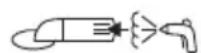
deposits inside the machine. This can lead to the transfer of electrical energy onto the machine housing. This can mean a temporary danger of electric shocks. This is why it is necessary when the machine is running to blow compressed air through the rear ventilation slots of the machine regularly, frequently and thoroughly. Here, the machine must be held firmly.
We recommend using a stationary extractor system and connecting a residual current circuit-breaker (FI) upstream. When the angle grinder is shut down via the FI circuit-breaker, it must be checked and cleaned. See chapter 9. Cleaning for more information on cleaning the motor.
Dust from material such as paint containing lead, some wood species, minerals and metal may be harmful. Contact with or inhalation of the dust may cause allergic reactions and/or respiratory diseases to the operator or bystanders.
Certain kinds of dust are classified as carcinogenic such as oak and beech dust especially in conjunction with additives for wood conditioning (chromate, wood preservative). Material containing asbestos must only be treated by specialists.
- Where the use of a dust extraction device is possible it shall be used.
- The work place must be well ventilated.
- The use of a dust mask of filter class P2 is recommended.
Follow national requirements for the materials you want to work with.
Materials that generate dusts or vapours that may be harmful to health (e.g. asbestos) must not be processed.
When working in dusty conditions, ensure that ventilation openings are not blocked. If it becomes necessary to remove dust, first disconnect the power tool from the mains supply (use non-metallic objects) and avoid damaging internal components.
Damaged, eccentric or vibrating tools must not be used.
Avoid damage to gas or water pipes, electrical cables and loadbearing walls (static).
Connect a FI circuit-breaker with max. release current (30 mA) upstream when using the machine outdoors!
Pull the plug out of the socket before any making adjustments, converting or servicing the machine.
A damaged or cracked additional handle must be replaced. Never operate a machine with a defective additional handle.
A damaged or cracked safety guard must be replaced. Never operate a machine with a defective safety guard.
This power tool is not suitable for polishing work. Improper use of the machine will void the warranty! The motor may overheat and damage the electric power tool. We recommend using our angle polisher for polishing work.
5. Overview
See page 2.
1 Clip to tighten/release the (tool-free) clamping nut manually *
2 Clamping nut (tool-free) *
3 S u p p o r t f l a n g e
4 Spindle
5 Spindle locking button
6 S I i dn/olfhswgtch
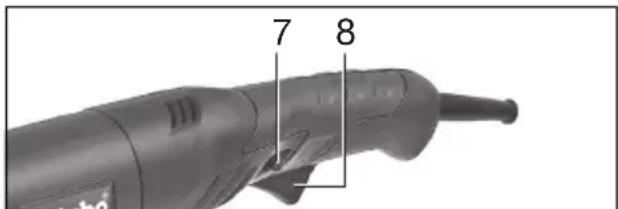
7 Lock (to prevent the machine from being switched on unintentionally, or for continuous operation) *
8 Trigger ( for switching on and off) *
9 Additional handle
10 Safety cover
11 Clamping nut
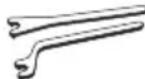
12 2-hole spanner
13 Clamping screw
* depending on equipment/not in scope of delivery
6. Commissioning
Before plugging in, check to see that the rated mains voltage and mains frequency, as stated on the rating label, match your power supply.
6.1 Attaching the additional handle
Always work with the additional handle attached (9)! Attach the additional handle on the left or right of the machine and secure.
6.2 Install safety guard
For safety reasons, always use the safety guard provided for the respective wheel! See also chapter 11.
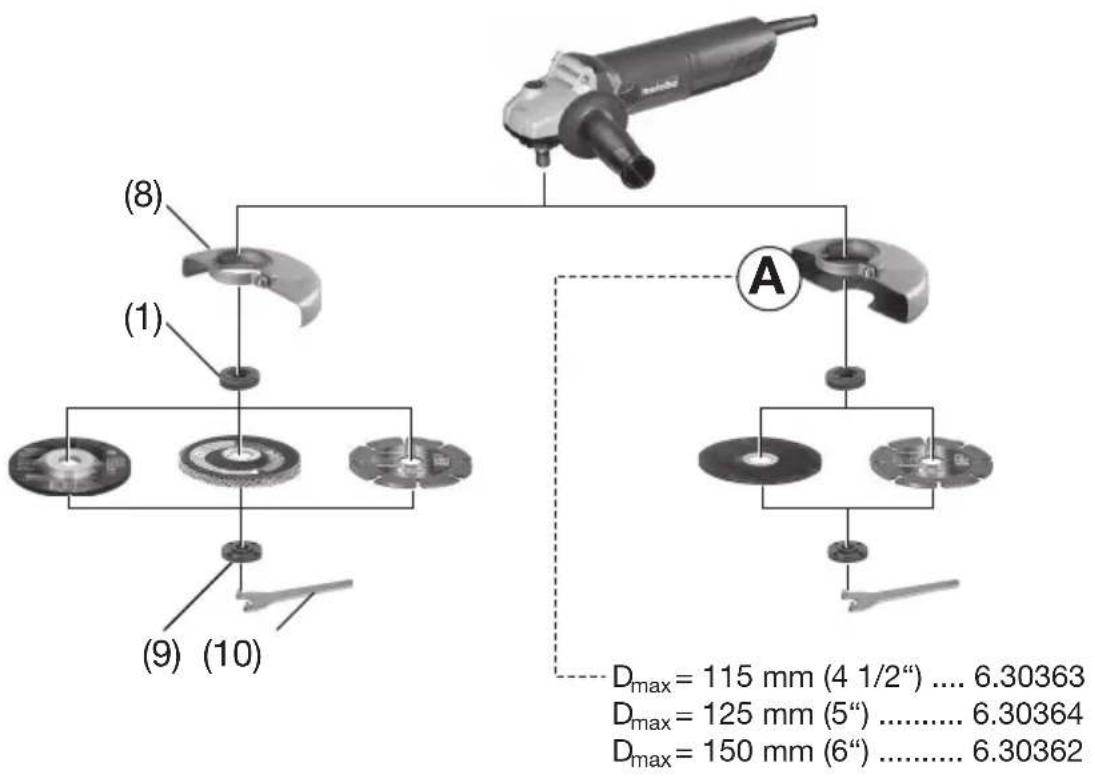
Safety guard for grinding
Designed for work with roughing wheels, flap sanding pads, diamond cut-off wheels.
See page 2, illustration C.
- Slacken the screw (13). Place the safety guard (10) in the position indicated.
- Turn the safety guard until the closed section is facing the operator.
- Tighten the screw (13), ensuring that the anti-twist device engages in the slots.
- Make sure that the guard is seated securely: you should not be able to turn the safety guard.
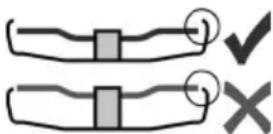
Use only accessories that are covered by at least 3.4mm by the safety guard.
7. Attaching the grinding wheel
Disconnect the mains plug before changing any accessories. The machine must be switched off and the spindle at a standstill.
For reasons of safety, attach the parting guard before performing parting work (see chapter 11. Accessories).
7.1 Locking the spindle
- Press in the spindle locking button (5) and turn the spindle (4) by hand until the spindle locking button engages.
7.2 Placing the grinding wheel in position
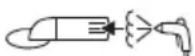
See page 2, illustration A.
- Place the supporting flange (3) on the spindle (see illustration above). The flange should not turn on the spindle when properly attached.
- Place the grinding wheel on the support flange (3) (see illustration above). The grinding wheel must lay flat on the supporting flange. The metal flange on the parting grinder disc must lay flat on the support flange.
Note: The support flange (3) is secured to prevent it from falling off. To remove: use some force if necessary.
7.3 Securing/releasing the (tool-free) clamping nut (depending on features)
Only tighten the (tool-free) clamping nut (2) manually.
For the machine to operate, the clip (1) must always lie flat on clamping nut (2).
To secure the (tool-free) clamping nut (2):
Do not use the (tool-free) clamping nut if the accessory has a clamping shank thicker than 6 mm! In this case, use the clamping nut (11) with 2-hole spanner (12).
- Lock the spindle (see chapter 7.1).
- Flip up the clip (1) on the clamping nut.
- Fit the clamping nut (2) on the spindle (4). See illustration on page 2.
- (1) Tighten the clamping nut on the clip manually in a clockwise direction.
- Flip down the clip (1) again.
To release the (tool-free) clamping nut (2): - Lock the spindle (see chapter 7.1).
- Flip up the clip (1) on the clamping nut.
- Unscrew the clamping nut (2), turning it anticlockwise manually.
Note: If the clamping nut is very tightly secured (2), you can also use a 2-hole spanner to unscrew it.
7.4 Securing/releasing the clamping nut (depending on features)
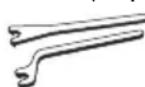
Securing the clamping nut (11):
The 2 sides of the clamping nut are different. Screw the clamping nut onto the spindle as follows:
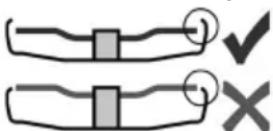
See page 2, illustration B.
-A) For thin grinding wheels:
The edge of the clamping nut (11) faces upwards so that the thin grinding wheel can be attached securely.
B) For thick grinding wheels:
The edge of the clamping nut (11) faces downwards so that the clamping nut can be attached securely to the spindle.
- Lock the spindle. Turn the clamping nut (11) clockwise using the 2-hole spanner (12) to secure.
Releasing the clamping nut:
- Lock the spindle (see chapter 7.1). Turn the clamping nut (11) anticlockwise using the 2-hole spanner (12) to unscrew.
8. Use
8.1 Switching On and Off
Always guide the machine with both hands.
Switch on first, then guide the accessory towards the workpiece.
The machine must not be allowed to draw in additional dust and shavings. When switching the machine on and off, keep it away from dust deposits. After switching off the machine, only place it down when the motor has come to a standstill.
Avoid inadvertent starts: always switch the tool off when the plug is removed from the mains socket or if there has been a power cut.
In continuous operation, the machine continues running if it is forced out of your hands. Therefore, always hold the machine with both hands using the handles provided, stand in a safe position and concentrate.
Machines with slide switch:
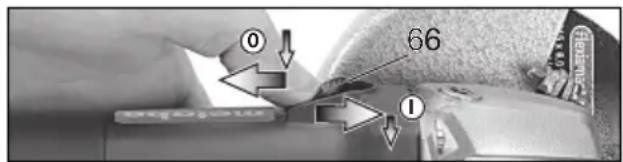
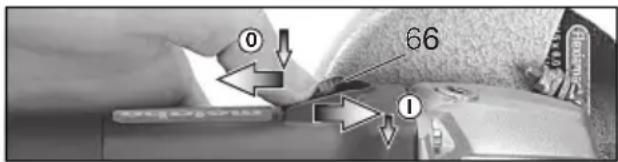
Switching on: Push the slide switch (6) forward. For continuous activation, now tilt downwards until it engages.
Switching off: Press the rear end of the slide switch (6) and release.
Machines with Paddle Switch (with dead man function):
Switching the angle grinder ON just for a moment:
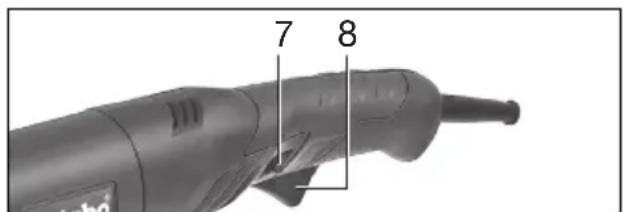
Switching on: Press in the lock (7) and then press the trigger switch (8). Let go of the lock (7). Switching off: Release the trigger switch (8).
Continuous operation (depends on machine features):
Switching on: Press in the lock (7) and hold in place. Press and hold the trigger switch (8). The machine is now switched on. Now press in the lock (7) a second time to lock the trigger switch (8) in position (continuous operation). Switching off: Press and release the trigger switch (8).
8.2 Working instructions Grinding:
Press down the machine evenly on the surface and move back and forth so that the surface of the workpiece does not become too hot. Roughing: position the machine at an angle of 30^ - 40^ for the best working results.
Separating:
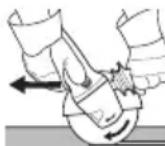
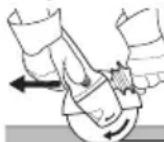
Always work against the run of the disc (see illustration). Otherwise there is the danger of the machine kicking back from the cut out of control. Guide the machine evenly at a speed
suitable for the material being processed. Do not tilt, apply excessive force or sway from side to side.
Sanding:
Press down the machine evenly on the surface and move back and forth so that the surface of the workpiece does not become too hot.
Wire brushing:
Press down the machine evenly.
9. Cleaning
Motor cleaning: blow compressed air through the rear ventilation slots of the machine regularly, frequently and thoroughly. Here, the machine must be held firmly.
10. Troubleshooting (WE 1450)
Restart protection: The machine does not start. The restart protection is active. If the mains plug is inserted with the machine switched on, or if the current supply is restored following an interruption, the machine does not start up. Switch the machine off and on again.
11. Accessories
Use only genuine Metabo accessories. See page 4. Use only accessories which fulfil the requirements and specifications listed in these operating instructions.
A Safety guard for cut-off grinding
Designed for work with cut-off wheels, diamond cut-off wheels.
Install as described under "Safety guard for grinding" (chapter 6.2).
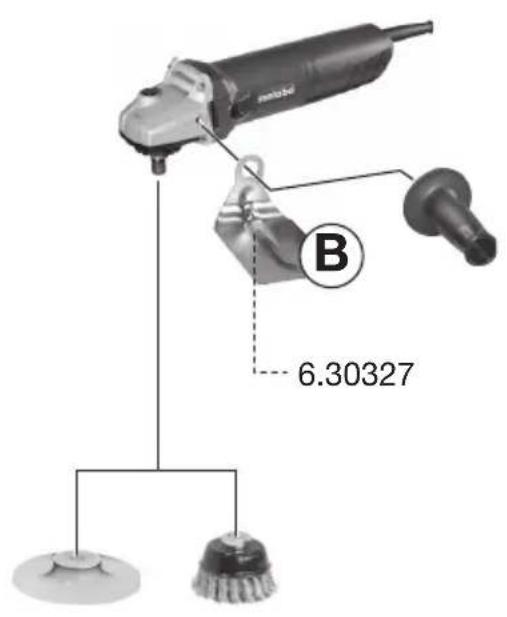
B Hand guard for sanding and wire brushing operations
Designed for work with support plates, sanding pads, wire brushes.
Install hand guard under the additional side-mounted handle.
C Adjusting nut (11)
D Clamping nut (tool-free) (2)
For a complete range of accessories, see www.metabo.com or the accessories catalogue.
12. Repairs

Repairs to electrical tools must be carried out by qualified electricians ONLY!
Contact your local Metabo representative if you have Metabo power tools requiring repairs. For addresses see www.metabo.com.
You can download a list of spare parts from www.metabo.com.
13. Environmental Protection
The sanding dust generated may contain hazardous materials: do not dispose of with the household waste, but at a special collection point for hazardous waste.
Observe national regulations on environmentally compatible disposal and on the recycling of disused machines, packaging and accessories.

Only for EU countries: Never dispose of power tools in your household waste! In accordance with European Guideline 2002/
96/EC on used electronic and electric equipment and its implementation in national legal systems, used power tools must be collected separately and handed in for environmentally compatible recycling.
14. Technical Specifications
Explanation of details on page 3. Subject to changes serving technical progress.
D_ =max.diameter of accessory tmax,1 =max.permitted thickness of clamping shank on accessory when using clamping nut (11)
t_max,3 = max permitted thickness of accessory
M = S p i n d I e t h r a d
I=Length of the grinding spindle n = Rated speed (maximum speed)
P1 =Nominal power input
P2 =Power output
m = Weight without mains cable
Measured values determined in conformity with EN 60745.
Machine in protection class II
Alternating current
The technical specifications quoted are subject to tolerances (in compliance with the relevant valid standards).

Emission values
These values make it possible to assess the emissions from the power tool and to compare different power tools. Depending on the operating conditions, the condition of the power tool or the accessories, the actual load may be higher or lower. For assessment purposes, please allow for breaks and periods when the load is lower. Based on the adjusted estimates, arrange protective measures for the user e.g. organisational measures.
Vibration total value (vector sum of three directions) determined in accordance with EN 60745:
a_h,AG = Vibration emission value (surface grinding)
ah,DS =Vibration emission value (disc sanding)
K_h,AG/DS = Uncertainty(vibration)
Typical A-effective perceived sound levels:
LDA =Sound pressure level
P1 =Puissance absorbée
Dra at spannmattern (11):
Spannmattern har 2 olica sidor. Skruva pa spannmattern pa spindeln sa har:
Se sid. 2, bild B.
A) Pà tunna slipskivor:
3aunTHbIKoKxCnyKNTIIN3aunTbIOpepaTopa OT OCKOJIKOB IN ClyuAHIHO CoPnKOCHOBEHnC a6pa3nHBHm HNCTpyMeHTOM, a TaKHe OT NCKp, OT KOTOpbIX MOKeT 3aRopeTBcODeHHda.
B) A6pa3NBhIe MaTePnAbl pa3peWaeTcra
HcNoIb3OBaTb TOnbHO IJpeKOMeHDoBAHHbIX
BnIOB pa6OT. HanpImep: HNkorDa He
IpoBOAnTe WlnΦOBAHne BoKOBoi
NOBepXHOCTbIO OTpe3HOrO Kpyra. OTpE3HbIe
KpyrnpedHa3HaueHbI dJIra CHyTnMaTePnAla
KpOMKn Kpyra. BOKOBoe CInIOBE BO3dEiCTBHe
Ha OTpe3HO Knpyr MoKeT pa3pyuHTb erO.
r) Bcerda nCnoJb3yIte NcnpaBHyI 3aHMHoH ΦlaHeu, erO pa3Mep IΦOpMa DOnHHbI COOTBeTCTBOBaTb Bbl6paHHOMy a6pa3HBHOMy Kpyry.ФlaHeu npedctabIeT co60I onOpY dIra abpa3HBHOro Kpyra I TaKIM o6pa3OM CHNJaET ONaCHOCTb erO pa3lOMa.ФlaHcI dJIra OTpe3HBIX KpyROB MOrYt OTnUaTbcI rO TΦlaHcE BdJIpyrNX a6pa3HBbIX KpyROB.
d) He nCnoJb3yIte a6pa3nBHbIe Kpyr co CneJaAMn H3HOca OT 3JeKtpOnHCTpyMeHTa 6OJIbWeRo pa3Mepa. A6pa3nBHbIe Kpyr dIra 3JeKtpOnHCTpyMeHTa 6OJIbWeRo pa3Mepa He paccuHTaHbI Ha NOBbIeHHHyIO YacToTy BpaUeHNr 3JeKtpOnHCTpyMeHTa MeHbWeRo pa3Mepa N MoTy pa3JOMMTbcR.
4.4 Донлнельные ocobie yka3aHnno TeXHHe 6e3onacHOCTn dIra a6pa3HBHO pe3HN:
a) N36eayTe 3aHnMa OTpe3HOrO Kpyra nnCnIshKOM 60JIbWOrO daBHeNna npHHMa. He BblOnHnYe CnIshHom rIyboHne pa3pe3bl. Perepy3ka OTpe3HOrO Kpyra npBODnT K erOpEnapJxHeHIO NKpeKeocam nn6LOKnPobHe n TEM CambIM K BO3MOHnO OTdAue nnNoLomKe a6pa3NBHO MaTePnAna.
6) He cToIe B 3OHe Do n 3a BpaauoHmCn OTpe3HbIM Kpyrom. EcnBbI NaHcTe DnHraTb OTpe3HO Knpyr C O6pa6aTaBaEMOn DeTaJIbIO OT ce6r,TO pN BO3MOxHO NOTdAye 3JeKtPOINCTpymEn T BpaauoHmCn DNCHOM 6yDet OT6poWeH npAmo Ha Bac.
B) Bcnyae 3aHnma oTpe3Horo kpyra Hn npn nepepbBe B pa6ote OTHIOUHTe HNCTpyMeHT nnoepHNTE erO B pyHe DO NOHNOCTaHOBN BpaauoJeroCg Kpyra. HnHorda He nbTaIaTeCb
BbITaUHTb DBNHcyuNcRA OTpE3HO Knpyr N3 npOnnla, TaK KaK 3TO MoKeT Bbl3BaTb OTdauy. OnpeJeInte n yctpaHnTe npHuHy 3aKnHnBaHHra.
r) He BkIIOUaIte 3JIeKHTPOINHCTpyMeHT, ecn OH haxoINTcB O6pa6aTbIBaEMo JTeaII. ChauJa DaIte OTpe3HOMy Kpyr Hy6paTb NOHyO YaCTOTy BpaIeHHa, TOnbHO NocJe 3TOO OCTOpOHNo IpoDOLHaIe pe3Ky. B IPOITHBOM Clyuae Kpyr MOKeT 3aKInHtB, OH MOKeT OTCHOUYbN3 O6pa6aTbIBaEMo JTeaII INBbI3BaTb OTdauy.
Д) Дя снжehн риса OTдчи В pe3yЛьтATE 3aKlnHnBaHЯ OTpe3HOrO kpyra npn 06pa6OTHE ПИNT И 3aROTOBOK 6OJIbwoRo pa3Mepa noDbEdnte noD Hx Onopy.
3arotOBKn 60nbIoro pa3Mepa MoryT nporHytbcn. NODeNCTBnEM CO6CTBeHHORo BEca. NOD 3arotOBKy CJIeDyET NODBeCTN ONOpblc DByX CTOpOH, a IMeHNO B6JIn3n pe3a n KpOMKn.
e)БyIbTe OcO6eHHO OCTOpOHbI npn Bblpe3aHHN HnB CcyIecTBYIOuNX CTehAX IJIH DpyrHX He npocMaTpPbAeMbIX 3OHax.
IorpykaembI OTe3HO Knpy MoKet Bbl3BaTb OTdau npn pa3pe3aHHra30- IN BOOOnpOBoBOB, 3JIeKTpnuecknx npOBoOB ININHbIX 06BeKTOB.
4.5 Oco6bIe yHa3aHnNo TeXnHe 6e3oNaChOCTn DJIa WInΦOBaHnC HcNoJIb3OBAHHem HaJdaUHO6ymarN:
a) He nCnoJb3yIte IJIHΦOBAJIbHbIe JNCTbl CnIshKOM 6oJIbWOrO pa3Mepa, npHepeHHBaIteCb 3aJaHHbIX 3HaueHn pa3MepOB JNCTOB. IJIHΦOBAJIbHbIe JNCTbl, BbICTynaIOUne 3a KpaTapeJOK, MOrY T CTaTb npuHOn TpaBM, pa3OpBaTbcR, a TaKHe npNBecTN K 3aHNMy NII K OTdaYe.
4.6 Oco6bIe yHa3aHnI NO TEXHNHe 6e3oNaChOCTn IJIpa60TbIC HapdoUeTHaMn:
a) Имейтевидау,чToи3 Kapdoшета
Выпадают Ксочн ПрOBOLOKИnp
ОьчHOДЗСПУATAцИ. He neperpykaTe
РpoBOLOKHy n3JIuShe BbICOHIM daBJIeHHe
PpHHMa. OTлеТAOUJIe KcOчК INрOBOLOKI
MOrTy JERKO pPoHnKHHyTb ChB03b TOHkyO ODeJdY
N/IIIN KOJy.
6) EcIn peHOMeHDoBOHaNo npImeHHeNe 3aunTHoro KOxHyxa, He DonyChaIte COnpNKoCHOBeHHa3aunTHoro H KapdoUeTHN. DnAmEtTapeJIbTaBIX NauSeuHbIX UTeOK MoKeT yBeJIuHbA TbCB NaD Bo3DeiCTBnEM DaBLeHHa PrnKIMa n CEHTPO6eHHbIX CnI.
4.7 DoONHHTeJbHbIe yKa3aHnNo TExHnKe 6e3OnaCHOCTN:

PNEyPENPEKHEHNE-Bcerda Hocnte 3aHTbIe OUK.
B cnyuayx, Tpe6yUoInx npMmeHnna 3JaCTnHybIX npomExkyTOOHbIX 3JIeMeHToB, HcNoJIb3yInTe npOKlaIaKn, NOCTabJIaReMbIe BmecTe C IHCTpyMeHTOM.
Co6IIOdaIe yka3aHnI IN3ROTOBHTeJI CMeHHbIX IHCTpyMeHTOB NII npHaJNeXHOCTeI! BepeRITe KpyrN OT yIapOB I KOHTaKTa C Xnpamn I CMA3KaMn!
XpaHnTb H npHMeHrTa 6pa3NBHbIe KpyrH Heo6xOdIMo aKHypATHO H B COOTBETCTBUN C PpeDnncAHnMn pOn3BONDTeJI.
HnkOrda He nCnOlb3yIte OTpE3HbIe KpyrN dIa IINΦOBaJIbHbIX pa60! OTpE3HbIe KpyrN HeJIb3A NOBBepratb 6OKOBOMy daBJIeHHIO.
O6pa6aTbIbAeMyo DeTaJIb HyKHO npOHyO 3aKpeNITb I 3aΦHKcnpOBaTb OT CdBnra, HAnpImep, C NOMOuHIO 3aXHMhIx npncnoc6JIeHn. KpyHbIe 3arOTOBn DOJIKNbI NMeTb DOCTaTOHyIO ONopy.
EcIn hCNoB3yOTc pa6OuH nHCTpyMeHTbIC pe3b60BOB BCTaBKO, KOHeU WnHHDeJI He MoKET KacaTBC OCHOBAHNA OTBepCTnI
WnHnHCTpyMeHTa. CJeDyEt o6paatb
BHIMAHNE Ha To, YTO6bI pe3b6a pa6oYero
IHCTpyMeHTa IMeJa DOCTaOHTHy DnHy dI
PnHema DnHbI WnHHDeJI. Pe3b6a pa6oYero
IHCTpyMeHTa DoJXHa COBnAdaTb c pe3b6o
WnHHDeJI. DnHa WnHHDeJI n pe3b6a WnHHDeJI
CM. Ha CTp. 3 n B rIabe 14. TexHnueckne
XapaKTepnCTnIK.
PnO6pa6OTKe MaTepeHaIOB, BOCo6eHHoCTN MetaIIOB, BHyTpN
3JIeKTPoHCTpyMeHTa MoKeT HaKaIINBaTbC8 TOKOpPOBQJAApaNbIb. 3TO MoKeT npNBecTn K 3JIeKTPnueCKOMy pa3pAHy ha Kopnyc. IIO 3ToI npuHHe MoKeT BO3HKnHyTb ONaCHOCTb NopaHexHHaJIeKTPnueCKHM TOkOM. IooTOMy Heo6XODIMo peYJARpHO (N DOCTaTOUHO qACTO) TuaTeMbHO pOdyBaTb pa60TaHouH INHCTpyMeHT CxHaTbIM BO3dYXOMYepe3ero 3aDnHe BEHTnIIaHOnHbIE uEJI. Ppi 3Tom DePKeHrTe erO Kpenko.
KOMpanaHnpeKomeHnyETNCNoJIb3OBAtBCTaunOHapHyU yCTaHOBVJyJaJeHnIbIINI npEdbapHTeJIbHO BVJIIOuATb aBTOMaT 3auntbI OT ToKa yTeKN (FI). B Clyae OTKIOUeHnYrLOBOW IINΦMaunHbI aBTOMaTOM 3auntbI FI HNCTpyMeHT CJeDyET nPoBepNTb N OChNTb. YnCTka DBnraTeJIa CM. rIaby 9. OOnCTka.
Пьль, ВОЗнkaюцая пи образOTke MaTeрnaIOB, COdeржаux CBnHeц, HeKOTOpbIX BnIOBДрЕВECINHы, MInHepaIOB И МeТАЛIOB, MOЖETп徳ставлгсOB co6Oй ONaCHOCTb ДЯ 3ДОРБь.Вдьхане чаNTц,Takой nbIи nIи KOHTaKT C HeM MoЖeT CTaTb ПpruHOnI NOЯВLEнЯ aJIleprNuecKxpeakuzn N/ИлN 3a6OJIeBaHni DblxATElbHbIXpyTei.
HeKOTOpbIe BnDbI nbIIN (HaNPmEp nbIb, BO3HnKaIOUaI npI o6pa6Ote dy6a nn 6yka) CHTaOTc KaHcePOReHHbIMN,OCo6EHNO B KOMbHauCIn C DOONIHNTeBbIMN MaTePnaJAMN, NCNoJIb3yeMbIMN DIA O6pa6OTKn DpeBeCnHbI (COJIb XpOMOBOn KNCJIoTbI, CpeDCTBa 3aUNTbI dpeBeCnHbI).O6pa6OTKa MaTePnaJOB C COdepKaHHeM ac6ecTa DoJIKHb BBINOJIHrTbcra TOLbKO CneuAJIncTaMn.
- IIO BO3MOXHOCTN HcNoJIb3yIte NOpXOJaUHn NblneOTcAcBIAuOuN annapaT.
-06ecneyTe xopooyu BeHTnlaqno pa6oey 3OHbl.
- PeKOMeHnyetcH HocHTb peCnnpaTOp c ΦIbTpom Klaacca P2.
Co6JIIOJaTe DeIeCTByIOUne HaaIOHOJIbHbIe npednncAHn no 06pa6OTke MaTePnaNoB.
He donyckaetc o6pa60tKa MaTePnaIIOB, BbIeJIaIOUx ONaChbIe IJIa 3DOpOBbI NJIb NJI npbl, (B YactHOCTN, ac6ecTa).
CleIte 3a Tem, yTo6bI By cNoBnax
3aIbIeHHOCTn pa60TaII BCE BeHTnJIauHOHhIe OTBepCTn. Pn Heo6xOJIMOCtN OChCTn
IHCTpyMeHTa OT nbIIN OTKIOUHTe erO OT CETn I
CleIte 3a Tem, yTo6bI npn OOnCTke He
IpON30WlIO NOBpeJdeHn BHyTpeHHIX DeTalei (ICNOJIb3yIte HEmTaJInuEcKHe IppeMeTbl).
He donyckaeTc npimHeHne NOBpeXdeHHbIX, DeΦOpMnPOBaHHbIX INI Bn6pnpUoNx pa6OuNX IHCTpyMeHTOB.
He donyuchai Te noBpeKdEHN ra30- nIN BOJOpPOBOIDOB, IHHN 3JIeKTPoNTaHnI IN HeCyUxN CTeH.
Pn HcnoJb3OBAHn IHCTpyMeHTa Ha OTKpbITOM BO3dyxpeBapNTeJbHO BKNIOHTe aBTOMaT 3aunTbI F C MaKc. TOKOM OTKIOUeHn (30 MA)!
До npobeDEHЯ KaKnx-Либо HacTpoEK,пеошацEHЯ ИИnpa6OT NO TeXHuecKOMy 06ClyKINBaHIO BbIHMaITe CeTeByIO BnIKy I3 po3eTKN.
IobpeKdEHHyU HnH NoTpeckAByHOc
DOnOJIHTeJIbHyIO pyKOaTHy CJeIyET 3aMeHHTb.
He IcNoJIb3yIte HNCTpyMeHT C DeΦeKTHOJ
DOnOJIHTeJIbHOJ pyKOaTKoI.
NobpeKdeneHbI HnN NOtpeckabWmncr 3aunTHbI INOHkUx CJeDyET 3aMeHntb. He nCNoJIb3yIte INHCTpyMeHT C DeΦeKTHbIM 3aUHTbIM KOHXOM.
6.2 YctaHOBNTb3aHTbI KOKyX

Ioo6paKeHnRm 6e3oNaCHOCTn HcNoJIb-3yTe TOJbKO TaKOH 3aUHTbIK KOxY,
KOTOpBn npEynCMOTpeH dNcOoTBeTCTByIOUeRo a6pa3nBHO rHcTpyMeHTa! Cm. TaKHe rNaBy 11. PpHaJdLeKHoCTn!
3aunTHbIKoKHyXdIaIINΦOBAHNA
PpeHa3Hauen dny pa6oT c WlnΦObaIbHbIMN KpyramN, IaMeIbHbIMN TapeIbHaTbIMN WlnΦOBAIbHbIMN KpyramN, aIma3HbIMN OTpe3HbIMN KpyramN.
CM. cTp. 2, pncyHOK C.
- Ocna6bTe BnHT (13). YcTaHOBnTE 3aunTHbI KOKx (10) B nOKa3aHHOM NOJOKeHN.
-ПовернITEЗаштейньй кокух таим образим, утосы erо закрытая сона облал obpaцehа К Bam.
-3aTAHHTe BnHT (13); npH 3tOM 3aHTa OT npOBOPaHbAHn DOJIKHa BOITN B 3aueIeHne C nazamn. - PpOBepbTe HaedKHOCTb yCTaHOBKn 3aHTbIKoKHy X He DJIKeH NOBOpaHBaTbCra.
IcnoJb3yIe ToIbKO Te pa6oue HNCTpyMeHTbl, KOtOpBle BbICTyNaOTn3-NOd 3aunTHoro KOKyxa He 6oJIee, Yem Ha 3,4 MM.
7. YctaHOBHa a6pa3HBHOro Kpyra

Ipeep npoBeeHem Bcex pa60T no
pehaKe BbHmMaTe BnIHy n3 pO3eTKn.
HCTpyMeHTdoJIkeH HAXOINTbC B BbIKIOueHHOM COCToHnI UINHdIeJIb DoJIKeH 6bITb HENODBHXHBIM.

Ipa6oT COTpe3HbIMN Kpyramn BueJx 6e30NaCHOCTN HcNoB3yIte CneuaNbHbie
3aunTHbIe KOxynn OTope3HOrO Kpyra (cm. rJaby 11. PnHaJeKHOCTn).
7.1Фнкацяшнндя
- Haxmnte KhoNky (5) cToOpa uHHneJn npOBopauBaTe uHHndelb (4) pyKoI Do Tex
nop, noka He noyBCTByeTe, yTO KHONka CTonopa BOWla B 3aueIeHne.
7.2 YctaHOBka a6pa3NBHoro kpyra
CM. cTp. 2, pncyHOK A.
- YcTaHOBnTe NODepKINBaIOUmI ΦlaHeu (3) Ha UINHdJIb (CM. pncyHKN Bblue).ΦlaHeu yCTaHOBJIeH npaBnJbHO,ecIn OH He npOBopauNaEeHa UINHdeJe.
- YcTaHOBInTe a6pa3nVBbI Kpyr Ha NOdepKINBaIOUm IaHeu (3) (CM. pncyHKN Bblwe).
A6pa3nBbI Kpyr DOJIKeH paBHOMepHO npneratb K fAnu. MeTaNueckn fAneuc KpyroB dIa a6pa3NBHO OTe3aHnI DOJIKeH npneratb K NOdEepKINBaIOUcEmy fIaNu.
Yka3aHHe: B ueJx npeDoTbpaueHnB03MOKHO
noTeprn PndepKnBaUoUsn FnaHeu (3)
3akpeIeH. ChrTne: npn Heo6XoDMocTH
CHIMITE FNaHeu, npnIOKnOB OnpedeJeHHoe
ycuJIne.

HaBnHcNBAHHe/OTBnHcNBAHne 3aXHMHOraHKn (6e3 KIOUa) (B) 3aBNCMOCHTO KOMJIeKTAuIN)

3aKHMHyIO raHky (6e3 KIIOUa) (2) 3aTAYBaIte TOJIbKO OT pyKN!

Bo Bpempa6oTbI dyHka (1)doJIHHa BCerda PnloTHO npnleraTb K 3aJHMHO raKe (2).
HabHHuBaHHe 3aKHMnRraKn (6e3 KluOy) (2):

EcnToIunHa pa6oerynHcTpymeHTaB dnaana3OHe 3aKIma npeBbIwaet 6 MM,
HcnoIb3OBAHHe 3aXHMHO raKn (6e3 KIOUa) 3anpeueHo! B aTOM clyuae HcnoIb3yIte raKy (11) C dBvXHTnTOBbIM KIOUOM (12).
- 3akpennte shnHdeIb (cm. rnaBy 7.1).
-OTKnHbTe dyKHy (1) 3aKHMHO raIKN BBepx. - YctaHOBNTe 3aKHMHyIO raKy (2) Ha IINHdJIb (4). Cm. pncyHOK Ha c. 2.
- C nOMOu bIO dyKHN (1) 3aTaNHTe 3aKHMHyIO raHky OT pyHn B HApPaBHeHn No YacOBOn CTpeJIke.
-OTKINHbTe dyKky (1) BHN3.
OTBnHnBaHne 3aKHMHOraKn (6e3 KJIIOHa) (2): - 3akpennte uHHndelb (cm. rnaBy 7.1).
-OTKINbTe dyKky (1) 3aJHMHOI raIKN BBepx.
-OTBepHnTe 3aKHMHyO rAky (2) B HAppaBHeHH npOTNB YacOBO CTrpeKN BpyHyIO.
Yka3aHHe:ДЯOTBnHcNBAHnTуRO 3aTAYTOI 3aKHMHOraIKN(2)MOKHO NcNoJIb3OBAtB DByXHTnΦTOBbI KJIQU.

HabHHyBaHHe/OTBHHyBaHHe
3aHHMHoIraHn(B3aBNCIMOCTNOT KOMJIeKTAuIN)
Kpenenne 3aXMMHn raKn (11):
2 CTOPOHbI 3aKHMHOI raIKN OTJNUaHTcIpyrOT dpyra. HAKpyTITe 3aKHMHyIO raIKy Ha IINHdJIb KaK yKa3aHO daJe:
CM. ctp. 2, pucyhoB.
-A)ДлЯTOHHx a6pa3nHBbIX HpyroB:
Onophoe Kobluo 3axmmHraKn (11)
6paueHO BBePx, IJIa TORO, YTO6bI HaJeXHo 3aKaTb a6pa3NBbI Kpyr.
B)ДЯТОЛСТБIXa6pa3NBbIXKpyROB:
OnopHoe KOJIbO 3aKIMHOI RAIKN (11) O6paueHO BHN3,ДЯ TOrO, YTO6bl HaDeJHKHO 3aKpeINrB 3aKIMHyIO raIKy.
-3aФИнСИРУTe шINHДeЛь.3aTЯНITE 3aЖИМHyI OraIky (11) c NOMOцьIO DByXuTnФTOBOrO KJIIOUa (12) no YacOBoi CTpeJIke.
OTBHHyBaHHe 3aHHMHOIraHKN:
- 3aKpennTe WnHdJIb (CM. rIaby 7.1).
OTBnHTnte 3aKIMHyo raHy (11)c nOMOuBIO DByXHTNΦTOBOrO KJIIOy (12) npOTNB YacOBOn CTpeJKN.
8.Зкплуataцnia
8.1 BkIIOueHHe/ByIKIOueHHe

HCTpyMeHT Heo6xOIMO Bcerda DepeKaTb 06eIMn pykamn.

IOnBOAnTe HNCTpyMeHT K 3aROTOBKe TOJIbHO BO BHJIOUeHHOM COCTOARHN.

Clente 3a Tem, YTo6bI HcTpyMeHT He BTAIBaII N3JIINHIOI NbIb I ONIIKN. PnO OeyHIn N BbIKIOUeyHN DePKeHTE erO Ibwe OT CKONNBWeicra Nbln. He KlaInte CpyMeHT Do NOLHO OCTaHOBKn DBNrTaTeJ.

He donyckaTe HenpeHaMepeHHoro nycKa: Bcerda BbIKIOuAte HHCTpyMeHT, cInn Ka 6bla BbIHyTa n3 po3eTKn INn ecIn 130weJc6oB N pOJaYe TOka.

Ipn HnpepbHbON pa6Ote HHCTpyMeHT npoJOnJaet pa6OtaTb,daKe ecN OH BeTc n3 pyKn. IooTOMy BcerDa Kpenko KNTe HHCTpyMeHT dByMry pKaAMN 3a pyKoRTKN, HNTe yCTOuHBOE NIOJOKeHHe N UeHTpnpyTe BCE BHImaHne Ha OJIHReMoPa6Ote.
3NeKtpoHcTpymeHtbl c nepeKnIOuateJeM:
BknHueHne: npeDnHbTe nepeKIOuataIb (6) BnpeI. IJIa HnpepBIBHO paObTbI HaKMITE nepeKIOUaTeIb BHN3 DO fHKcaun.
BbIKIIOUeHHe:HaKMHTe Ha 3aIHN KOHeu nepeKIIIOuAteTn (6), a 3aTeM OTNyCTnTe.
3JIeHTpOHnHCTpyMeHTbI C npedoxpaHHTeNbHbIM BbIKIOuHaTeJeM (c yHNKneH 6e3ONaCHO OCTaHOBa):
KpaTHOBpeMeHHoe BKHIOueHne:
BkIIOueHHe: ChauaHaJHMnTe 6loKnpaTop (7), 3aTeM — HaJHMHO npeKeKIOuHaTeJIb (8). OTnycTnte 6loKnpaTop (7).
BbIKJIIOUeHHe:OTnycTnTe HaKIMHOI nepeKIIIOuHaTeJIb (8).
HenpepbBbI peKm pa60tbl (B 3aBnCmOCTN OT KOMnleHTaun):
BkIIOUeHHe:HaKMnTe n ydepKnBaIte 6JOKnpaTOp (7) HaKaTbIM. HaKMnTe n ydePKNBaIte HaKIMHOI nepeKIOuataJIb (8).3JeKTponHCTpyMeHT BKHIOueH. Tepeb HaKMnTe 6JOKnpaTOp (7) eue pa3, YTObbl 3a6JIOKnPOBaTb HaKIMHOI nepeKIOUaTeJIb (8) (HenpepbIBhI peKIM pa6Otbl).
BbIKIOUeHHe:HaKMITE nOTnyCTnTe HaKIMHOI nepeKIOUaTeJIb (8).
8.2 Yha3aHnno 3KcIpyatau
山nfoBaHne:
PnHKMaIte HNCTpyMeHCT CymepeHHbIM ycIIHEM npepBnraTe ero no NOBepxHOCTu B3aN IN BnepeD, YTO6bIO NOBepxHOCTb 6pa6aTbIBaEMOJ DeTaJIH He nepeperpeBaJacb.
O6dnpoohoe wlnfoBaHne: dIynoyuHnXopoWero pe3yNbTaTa pa6oTaIte CycTahOBouHbIM yrIOM 30^ - 40^
A6pa3NBHOe OTpe3aHHe:
Pn a6pa3NBOM OTpe3aHnB Ccerda pa6oTaIe BO BCTpeyHOM HappaBHeHH (CM. pncyHok). Haue HHCTpyMeHT MOKeT HeOxNdaHHO
BbICKOHTb n3 npoNla. Pa6oTaIte c
yMepeHHo, COOTBcTCTByIOUeI
6bpaBaEMOMy MaTePnaJy noaJe. He nepeKaunBaIte, He HaKImaIte, He packaUnBaIte.
IJIHIOBAHHe C HcNoJIb3OBAHHem HaJdaUHO 6ymaru:
PnKMaIte HNCTpyMeH T C yMepeHHbIM ycIIInEM n nepeBnraTe ero no NOBepxHOCTu B3aN IN Bnepei,HTO6bl NOBepxHOCTb 6pa6aTbIBaEMoI DeTaJIH He nepePerBaJacb.
Pa60tbc hapdoeTHaMn:
UmepeHNO npnKmMaIte NHCTpyMeNT.
9.Чистова
Ynctka DnurataJIa:peRyIpaHNO (IOCTaTOUHO yacto) n TuaTeJIbHo npOdyBaIte HNCTpyMeHT CkHaTbIM BO3dYxOM Yepe3 3aDHe
BeHTnJIaCIOHHbIe ⅢeJI. PpN 3TOM depKHTe erO KpeNko.
10. YcTpaHenne HencnpaBHOCTeN (WE 1450)
3aunTa OT NOBTOPO NcKa: 3JeKTPoHnCTpyMeHT He pa6Otae. Cpa6OtaJa 3aunTa OT NOBTOPO NcKa. EcIn npi BKNIOUeHHOM INCTpyMeHTe CeTeBa BUNka BCTaBLIETCBA P03eTHy IIN BOCCTaHOBNIaCb
PYCCHNru
IOna4a 3JIeKTPoNtAHnI NOcIe C6O, INHCTpyMeHT He 3aNyckaeTc. BbIKIOUHTe N CHOBA BKIOUHTe INHCTpyMeHT.
11. Прпнадлжности
IcnoJIb3yIe ToJIbHO opnHaJIbHbIe npHaJdJIeK-HocTn Metabo.Cm.c.4.
IcnoJb3yIte ToblKo Te npHaJdJeHHOCTN, KOTOpBle OTBeuAOT Tpe6ObaHnM nnapaMeTpam, IpeueHCJIeHHbIM B DaHHOM pyKOBOdCTBE NO 3KcNlyaTaun.
A 3aunTHbI KOHyx IJIa a6pa3NBHO pe3HH
PpeHa3HaueH nnpa6oTbICOTpe3HbIMN Kpyramn, aIma3HbIMN OTpe3HbIMN Kpyramn.
YcTaHOBka aHaIoruHna OnncAHIO B pa3deJe
3aunthbikokxynlaunfoabaHna" (rna6.2).
B 3aunTHna CHo6a Jnla WJInΦOBaTeJIc HAnDaHNo 6yMaRo, pa60t c KapdoetKamn
PpeHa3NaueHaIy pa60T c onopHOn TapeKo, WInΦOBaJIbHOu TapeKo, KApDoUeTKamN.
3aunTHa cKo6a dIy yCTaHOBKn nOd 6OKOByIO DOnOHnTeBHyIO pyKoRTKy.
C 3aKHMHa rAHa (11)
D 3aHHMaHa raHka (6e3 KJIIOuA) (2)
IoiHbI accOPTmEHT npHaJTeJHKoCTe CMOTpIte Ha caIte www.metabo.com IIN B KaTALore npHaJTeJHKoCTe.
12. PemoHT
K peMOHTy əJIeKtpOHnHCTpyMeHTa DOnyCKaIOTCa TOJbKO KBaIINΦNcIpOBaHHbIE CneuaJIInCTbl-3JIeKTPnK!
AДPEC CM. Ha caIte www.metabo.com.
Cnncn 3anaChbix yacte moKHO cKaaTaHa caIte www.metabo.com.
13. 3auntata okpyhaioe cpebl
YTNIN3aUIO UINFOBAJBHOIN BbINOJHnTe OTDeJIbHOOTbTOBbIX OTXODOB HA COOTBETCTByIOSeI NLOUAdKe IJa CNeOToXoOB,T.K.BcoCTBaNbIMMOryTHaXoNTbcARBeDHBieBeuectBa.
BbInHnIe HaunOHaIbHbIe npaBnla yTnIN-3aunn npepea6OTKn OTCJyKHNBWeRo 3JeKTPoNHCtpymEnTa, ynaKOBnN nPnHaIeXHocTe.

ToIbko DnIaCTpaH EC: He BbIbpaCbIBaIte 3JIeKtponHcTpymEt BmecTe C6bITOBbIMN OTXoJam! CorlaCHO dIpeKtBBe 2002/96/
EG 06 ytnin3aun CTapbix 3eKtponpnpobu IN 3eKtpoHHoro 06opydOBAHIN COOTBETCTBYIOUM HauNHOaJIbHbIM HopMaM 6bIBWne B yIOTpe6leHN 3eKtponpnpobIn 3eKtpoHHCTpyMeHTbI NOJLeKaT pa3deJbHOyTNIN3aun C cJeBIO IN NocJeDyUOeN 3KOJIOrnueckn 6e3OnaCHO nepepa60TK.
14. Texnuechne xapaKTepncTHKN
IorcheHnK daHbIM Ha c. 3. OcTaBJIem 3a co6oI npaBO Ha TEXHueCKHe N3MeHeHn.
Dmax =MaKc.Диametp pa6oyero INHCTpyMeHTa tmax,1 =MaKc.ДOnyCTmMa TOnuHa pa6oyero INHCTpyMeHTa BДиana3OHe 3aJIMa npn NCNoIb3OBAHN 3aJIMHOJ raKn (11)
t_max,3 = .ДоустMuЯТолиña pa6чeroИНСТPyMeHTe
M pe3b6a wHnHdela I = dInHa WnHdela
n =yactotaBpaueHnXoIOCTORO XoDa (MaKc.yactotaBpaueHn)
P1 =HOMINHaBHaNOTpe6JReMaMOUHOCTb
P2 =BbIXOHaRA MOLHOCTB
m =Macca6e3ceTeBOrKa6eJra
Pe3yIbTaTbI n3MepeHn noJyueHb B COOTBeTCTBn CO cTaHapTom EN 60745.
3NeKtpoHcTpymeHT KlaCca 3aunTbI II
Nepemehhbi TOK
Ha yka3aHHbIe TexHnueckne xapaKTepcntHKn pacnpocTpaHJOTc DOnyCKN, npdeYCMOTpeHHbIE DeiCTByIOUIMN CTaHdApTaMn.
3haeHnIyMaN Bn6paun
3HTn 3HaueHnI NO3BOJIOUcEHNBaTb N CpaBHBaTb Wm IN BV6paCNUO, CO3DaBAeMbIe npi pa6oTe pa3NHybIX 3JIeKTPOnHCTPymeHTOB. B 3aBNCIMOCtN OT YcIOBNI 3KcNlyaTaCNI, COCTOHN 3JIeKTPOnHCTPymeHTA INI pa6OuNX (CMeHHbIX) INCTPymeHTOB fAKTNuechKa HArpy3Ha MOKeT 6bITb BblSe ININ HNKe. PnI ONpeDeJIeHN INpImepHO rpoBH YAma IN BV6paCNUYHTbBaIn Te NepepbIBb I PA6OTE IN 4a3bl pa60TbI C NOHNJKeHHoN (WyMOBO) Harpy3KO. OnpedeJIte Nepeueh OpraHHzauONHbIX MEP IO 3aunTe POJIb3OBATeJIc C yYeTOM Tex ININ INHbIX 3HaueHNI Wyma IN BV6paCNU.
CymMapHoe 3NaueHHe Bn6paunn (BeKTopHa Cymma TpEx HaPaBLeHn) paCCHTbIbAeTcR B COOTBeTCTBn CO CTaHApTOM EN 60745:
ah,AG =3MnCCNOHHOe 3HaueHne Bn6paun (WNIΦOBaHne NOBepxHOCTN)
ah,DS =3MnCCNOHHOe 3NaueHne Bn6paun (WlnΦOBaHne CO WlnΦOBAJbHBIM TapeIkamn)
Kh,AG/DS = Ko3ΦΦnUeHT nOprpeuHocTn (Bn6paun)
YpOBeHbIyMaNoMeToyA:
LDA =ypOBeHb 3ByKOBOr DaBHeHHA
LWA =yPOBHeB 3ByKOBO MOUHOCTH
KpA, KwA= KOaΦnUneHT nOprpeHocTn
HaedeBaIte 3auntHbIe HayuHHK!

HΦopmaζηДЯ NOhynatela:
Ceptnuikat COOTBETCTBNA:
No TC BY/112 02.01.003 04832, cpoK DeiCTBnC 19.06.2014 no 20.01.2019 r., BblaH peCybHKaHcKIM yHHTapHbIM npeDnprTHeM «BeIopycckn rocydapCTBeHHbN IHCTnTyT MeTpOJorN»; Pecny6bKa BeIapycb, 220053, r. MnHcK, CtapOBnJIeHcKn TpaKT, 93; TeI.: +375172335501; aTTeCTaTakKnpeDiNTaUH: BY/112 003.02 ot 15.10.1999.
CTpHa n3roTOBJIeHn: HtTa
ПОНЗВОДИТЕЛБ: "Metabowerke GmbH", Metaboallee 1, D-72622 Nuertingen, Германя
3aBOD-n3rTOBNTeJIb:
"Metabo Powertools (China) Co. Ltd."
Bldg. 7, 3585 San Lu Road,
Pujiang Industrial Park, Min Hang District, Kita
HmnpTeB Pocnn:
OOO"MeTa6o EBa3n
Poccn,127273,MockBa
yI. Bepe3OBAa aIIe, 5 a, cTp 7, oΦnc 106
TeI.: +7 495 980 78 41
Data npOn3BOcTbA 3aunnphiBoHa B 10-3NaHOM cepuHOM HOMepe INCTpyMeHTa, yKa3aHHOM Ha erO uNJIbDNke. 1 aUΦpa o6o3NaHaet rOd, HAnpImep «4» o6o3NaHaeT, UTO n3DeIne npOn3BeDEHO B 2014 roy. 2 n 3 aUΦpbI o6o3NaHApOT HOMep Mecaa B rOdy npOn3BOcTBA, HAnpImep «05» - MaJ
FapaHTnHbI cpoK:1 roD c DaTbI npOdaHn
CpOK cIyK6bl HNCTpyMeHTa: 5 JeT C daTbI n3rTOBJIeHn