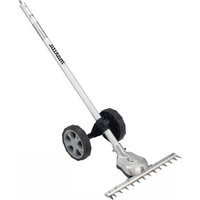
MAKITA 1993397 - Multifunction tool

1993397 - Multifunction tool MAKITA - Free user manual and instructions

Find the device manual for free 1993397 MAKITA in PDF.

📄 136 pages English EN Download 💬 AI Question 10 questions ⚙️ Specs
Notice MAKITA 1993397 - page 2
Pick your language and provide your email: we'll send you a specifically translated version.
Product Type Multi-function power tool attachment (brush broom/squeegee broom)
Brand Makita
Model Reference 1993397 (models BR400MP and SW400MP)
Brush Broom Model BR400MP
Squeegee Broom Model SW400MP
Dimensions (BR400MP) 1,145 × 600 × 362 mm (length × width × height)
Dimensions (SW400MP) 1,159 × 600 × 362 mm
Net Weight (BR400MP) 6.3 kg
Net Weight (SW400MP) 7.2 kg
Brush Width 600 mm
Brush Outer Diameter 250 mm
Squeegee Roller Width 590 mm
Squeegee Roller Outer Diameter 265 mm
Approved Power Units DUX60, DUX18, UX01G (cordless), EX2650LH (petrol)
Power Source Depends on power unit (battery or petrol)
Main Uses Sweeping floors and paths (BR400MP); removing wet materials and water (SW400MP)
Usage Commercial
Required Protective Equipment Safety helmet, safety glasses, anti-noise headband, sturdy non-slip shoes, gloves, long trousers, long sleeves
Routine Maintenance Clean with water, lubricate gear case and drive axle every 25 hours, visual inspection before each use
Spare Parts Use only genuine Makita parts
After-Sales Service Makita authorized service center
Compliance Standards 2006/42/EC, EN 60335-1, EN 60335-2-72
Lubrication Interval Every 25 operating hours

Frequently Asked Questions - 1993397 MAKITA

Which power units is this attachment compatible with?
The attachment is approved for DUX60, DUX18, UX01G (cordless) and EX2650LH (petrol) power units. Never use with an unapproved unit.
What are the dimensions and weight of the BR400MP brush broom?
The BR400MP model measures 1,145 × 600 × 362 mm and weighs 6.3 kg. The brush width is 600 mm and its outer diameter is 250 mm.
How do I lubricate the gear case?
Use 30 ml of Makita SG No.0 grease every 25 hours of operation. Remove the bolt near the lubrication mark, apply the grease, then tighten the bolts.
What protective equipment should I wear?
Wear a safety helmet, safety glasses, an anti-noise headband, gloves, long trousers, a long-sleeved shirt and sturdy non-slip shoes.
Can I use the attachment with an unapproved power unit?
No, this can cause serious injury. Use only the units listed in the manual.
How do I clean the attachment?
Wash with water using a nylon brush. Do not pour water onto the power tool or the end of the hose.
What should I do if the brushes or rollers do not rotate?
Stop the motor immediately. Check the connection between the tool and the attachment, remove any foreign objects, and if the problem persists, contact a Makita authorized service center.
What is the difference between the BR400MP and SW400MP models?
The BR400MP is a brush broom for sweeping floors and paths. The SW400MP is a squeegee broom for removing wet materials and water from solid surfaces.
How often should I inspect the attachment?
Perform a visual inspection before each use. Lubricate every 25 hours of operation.
Where can I find spare parts?
Use only genuine Makita spare parts. Contact your authorized dealer or a Makita after-sales service center.

User questions about 1993397 MAKITA

0 question about this device. Answer the ones you know or ask your own.

Ask a new question about this device

The email remains private: it is only used to notify you if someone responds to your question.

No questions yet. Be the first to ask one.

Download the instructions for your Multifunction tool in PDF format for free! Find your manual 1993397 - MAKITA and take your electronic device back in hand. On this page are published all the documents necessary for the use of your device. 1993397 by MAKITA.

USER MANUAL 1993397 MAKITA

natural_image Technical line drawing of two different types of mopers or grilles, shown from different angles (no text or symbols present)

SPECIFICATIONS

Model: BR400MP
Dimensions: length x width x height (with brushes) 1,145 mm x 600mm x 362 mm
Net weight 6.3 kg
Brush width 600 mm
Outer diameter of the brush 250 mm
Model: SW400MP
Dimensions: length x width x height (with sweep drums) 1,159 mm x 600 mm x 362 mm
Net weight 7.2 kg
Sweep drum width 590 mm
Outer diameter of the sweep drum 265 mm

- Due to our continuing program of research and development, the specifications herein are subject to change without notice.

• Specifications may differ from country to country.

Approved power unit

This attachment is approved to use only with the following power unit(s):

  • DUX60, DUX18, UX01G Cordless Multi Function Power Head
    • EX2650LH Multi Function Power Head

⚠ WARNING: Never use the attachment with non-approved power unit. Non-approved combination may cause serious injury.

Symbols

The following symbols are used on the attachment and this instruction manual. Understand these definitions.

MAKITA 1993397 - Symbols - 1Take Particular care and attention!
MAKITA 1993397 - Symbols - 2Read instruction manual.
MAKITA 1993397 - Symbols - 3Wear protective helmet, eye and ear protection!
MAKITA 1993397 - Symbols - 4Wear sturdy boots with nonslip soles. Steeltoed safety boots are recommended!
MAKITA 1993397 - Symbols - 5Keep bystanders at least 5 m (17 ft) away.
MAKITA 1993397 - Symbols - 6The brushes or sweep drums rotate in the direction of the arrow.
MAKITA 1993397 - Symbols - 7When attaching the brushes or sweep drums, make sure that the gear case is facing upward.

Intended use

BR400MP

This attachment is designed for only the purpose of sweeping ground and paths in conjunction with an approved power unit. Never use the attachment for other purposes. Abusing the attachment may cause serious injury. This attachment is intended for commercial use.

SW400MP

This attachment is designed for only the purpose of clearing wet materials, such as leaves, dirt, and removing water from solid surfaces in conjunction with an approved power unit. Never use the attachment for other purposes. Abusing the attachment may cause serious injury. This attachment is intended for commercial use.

Declarations of Conformity

For European countries only

We as the manufacturers: Makita Europe N.V., Business address: Jan-Baptist Vinkstraat 2 3070 Kortenberg BELGIUM. Authorize Kazuhisa Makino for the compilation of the technical file and declare under our sole responsibility that the product(s); Designation: Power Brush Attachment / Power Sweep Attachment. Designation of Type(s): BR400MP / SW400MP. Fulfills all the relevant provisions of 2006/42/EC and are manufactured in accordance with the following Harmonised Standards: EN 60335-1:2012+A11:2014+A13:2017+A1:2019+A14:2019+A2:2019+A15:2021, EN 60335-2-72:2012. Place and date of declaration: Kortenberg, Belgium. 1. 8. 2023 Responsible person: Kazuhisa Makino, Director - Makita Europe N.V.
MAKITA 1993397 - For European countries only - 1

Declaration of Conformity (For UK)

For UK only

We as the manufacturers: Makita Europe N.V., Business address: Jan-Baptist Vinkstraat 2 3070 Kortenberg BELGIUM. Authorize Kazuhisa Makino for the compilation of the technical file and declare under our sole responsibility that the product(s); Designation: Power Brush Attachment / Power Sweep Attachment. Designation of Type(s): BR400MP / SW400MP.

Fulfills all the relevant provisions of S.I. 2008/1597 (as amended) and are manufactured in accordance with the following Designated Standards: EN 60335-1:2012+A11:2014+A13:2017+A1:2019+A14:2019+A2:2019+A15:2021, EN 60335-2-72:2012.

Place and date of declaration: Kortenberg, Belgium. 1. 8. 2023

Responsible person: Kazuhisa Makino, Director - Makita Europe N.V.

Importer: Makita (UK) Limited, Michigan Drive, Tongwell, Milton Keynes, Buckinghamshire, MK15 8JD, UK
MAKITA 1993397 - For UK only - 1

SAFETY WARNINGS

Power brush / power sweep safety warnings

WARNING: Read all safety warnings, instructions, illustrations and specifications provided with this machine as well as the instruction manual of the power unit before using. Failure to follow all instructions listed below may result in fire and/or serious injury to the operator and/or bystanders.

Save all warnings and instructions for future reference.

The term “power brush / power sweep” and “machine” in the warnings and precautions refer to the combination of the attachment and the power unit. The term “motor” in the warnings and precautions refers to the engine or electric motor of the power unit.

General safety

  1. First-time or inexperienced operator should ask the dealer for training in all operation of the machine. Never allow children, persons with reduced physical, sensory or mental capabilities or lack of experience and knowledge or people unfamiliar with the instructions to use the machine. Children should be supervised to ensure that they do not play with the machine.
  2. It is recommended only to lend the machine to people who have proven to be experienced. Always hand over the instruction manual.

  3. Stay alert, watch what you are doing and use common sense when operating the machine. Do not use the machine while you are tired, ill, or under the influence of drugs, alcohol or medication. A moment of inattention while operating the machine may result in serious personal injury.

  4. Avoid using the machine in bad weather conditions especially when there is a risk of lightning.

  5. Follow your national and local regulation for use of outdoor power machines.

  6. Never attempt to modify the machine.

  7. Keep in mind that the operator or user is responsible for accidents or hazards occurring to other people or their property.

Work area safety

WARNING: Keep the power brush / power sweep away from electric lines and communication cables. Touching or approaching high-voltage lines with power brush / power sweep can result in death or serious injury. Watch power lines and electrical fences around the work area before starting operation.

  1. Operate the machine under good visibility and daylight conditions only. Do not operate the machine in darkness or fog.
  2. Start and operate the engine only outdoors in a well ventilated area. Operation in a confined or poorly ventilated area can result in death due to suffocation or carbon monoxide poisoning.
  3. Before operation, examine the work area for wire fences, stones, or other solid objects. They can damage the brushes or sweep drums.
  4. During operation, never stand on an unstable or slippery surface or a steep slope. During the cold season, beware of ice and snow and always ensure secure footing.
  5. Avoid working close to fences, stumps or root of trees. They can damage the brushes or sweep drums.
  6. Avoid working close to buildings, cars and other properties. Stones and debris hit by the power brush / power sweep may damage them.
  7. Cleaning the synthetic floor may generate static electricity, and there is a risk of electric shock or accidents.

Personal protective equipment

  1. Always wear heavy, long pants, sturdy boots, gloves, and a long-sleeve shirt. Do not wear loose clothing, jewelry, short pants, sandals, or go barefoot. Secure hair so it is above shoulder level.

  2. Always wear protective goggles to protect your eyes from injury when using the machine. The goggles must comply with ANSI Z87.1 in the USA, EN 166 in Europe, or AS/NZS 1336 in Australia/New Zealand. In Australia/New Zealand, it is legally required to wear a face shield to protect your face, too.
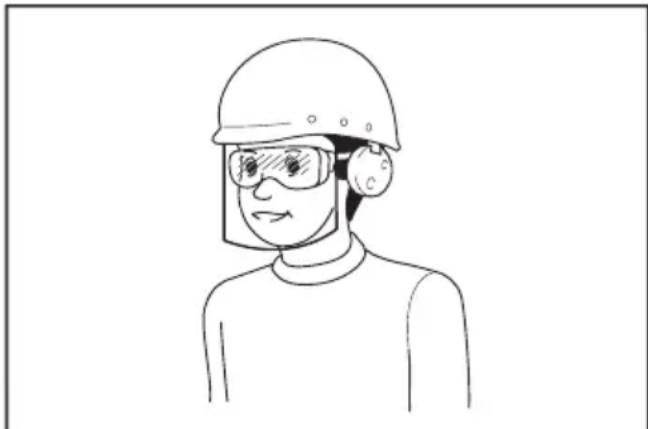
MAKITA 1993397 - Personal protective equipment - 1

natural_image Line drawing of a person wearing a helmet and safety goggles (no text or symbols)

It is an employer's responsibility to enforce the use of appropriate safety protective equipments by the tool operators and by other persons in the immediate working area.

  1. Wear ear protection, such as ear muffs. Exposure to noise can cause hearing loss.
  2. Always wear sturdy shoes with a non-slip sole. This protects your feet against injuries and ensures a good footing.
  3. Wear a dust mask as necessary.

Refueling

  1. Stop the engine before refueling. Keep away from open flames and sparks. Never smoke during refueling. Otherwise fire and/or explosion may result.
  2. Refuel outdoors. Refueling in a closed room can cause explosion of fuel vapor.
  3. Avoid contact with fuel or engine oil. Do not inhale fuel vapor. If fuel or oil spills, wipe it off of the machine and/or ground immediately. If fuel spills on your clothes, change it immediately to prevent it from catching fire.
  4. After refueling, carefully tighten the fuel tank cap and check for fuel leak. Move at least 3 m (10 feet) away from the fueling source and site before starting engine.
  5. Only transport and store fuel in approved containers. Keep children away from the stored fuel.

Starting up the power brush / power sweep

  1. Before assembling or adjusting the machine, switch off the motor and remove the spark plug cap or the battery cartridge.
  2. Before handling the brushes or sweep drums, wear protective gloves.
  3. Wear the personal protective equipments before starting the motor.
  4. Before starting the motor, inspect the machine for damages, loose screws/nuts or improper assembly. Check all control levers and switches for easy action. Clean and dry the handles.
  5. Never attempt to start the motor if the machine is damaged or not fully assembled with proper guards, plates, or other safety protective devices. Otherwise serious injury may result.

  6. Before starting the motor, carefully check that the brushes or sweep drums are not touching your body and other objects. Starting the motor with the brushes or sweep drums contacting with foreign object can cause serious accident.

  7. Before starting the motor, make sure that there is no person or animal in the work area.
  8. Adjust the shoulder harness and hand grip to suit the operator's body size.
  9. Replace the brushes or sweep drums if they are cracked, bent, or damaged. Damaged brushes or sweep drums may shatter during operation and cause serious injury.
  10. Start and operate the machine only outdoors in a well ventilated area. Operation in a confined or poorly ventilated area can result in death due to suffocation or carbon monoxide poisoning.
  11. When starting the engine, place the machine on firm ground and then maintain good balance and secure footing.
  12. When pulling the starter knob of the engine, hold the power unit firmly against the ground by your left hand. Never step on the drive shaft of the power unit.
  13. If the brushes or sweep drums rotate at idle, stop the engine and adjust the idle speed down. Otherwise unintentional contact with moving brushes or sweep drums may result in serious injury.
  14. Stop the motor immediately if you notice any trouble.
  15. Follow the instruction manual of the power unit for starting the motor.

Transportation

  1. Stop the motor during transportation. Otherwise unintentional start-up may cause injury.
  2. Ensure safe position of the machine during car transportation to avoid fuel leakage.
  3. Lift the entire machine from the ground when carrying the machine. Dragging the machine causes fuel tank damage and fuel leakage, resulting in fire.
  4. When transporting the equipment, carry it in a horizontal position by holding the shaft. Keep the hot muffler away from your body.

Operation

  1. During operation, keep bystanders or animals at least 5 m (17 ft) away from the power brush / power sweep. Stop the motor as soon as someone approaches.
  2. In the event of an emergency, switch off the motor immediately.
  3. If you feel any unusual condition (e.g. noise, vibration) during operation, switch off the motor. Do not use the machine until the cause is recognized and solved.
  4. With the engine running only at idle, attach the shoulder harness.
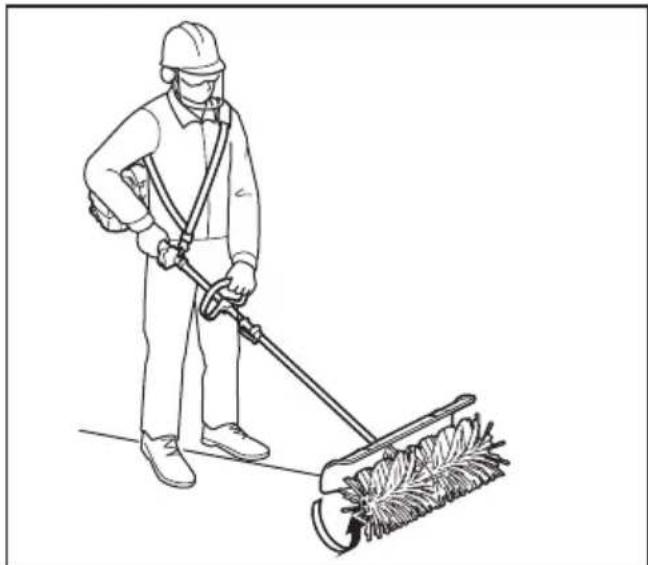
  5. During operation, use the shoulder harness. Keep the machine on your right side firmly.
MAKITA 1993397 - Operation - 1

natural_image Line drawing of a worker sweeping a broom with a hose (no text or symbols)
  1. Hold the front handle with the left hand and the rear grip with the right hand, no matter you are right-hander or left-hander. Wrap your fingers and thumbs around the handles.

  2. Never attempt to operate the machine with one hand. Loss of control may result in serious or fatal injury. To reduce the risk of injuries, keep your hands and feet away from the brushes or sweep drums.

  3. When operating, do not raise the brushes or sweep drums above waist height.

  4. The brushes or sweep drums continue to move for a short period after releasing the throttle trigger or switching off the motor. Don't rush to contact the brushes or sweep drums.

  5. Do not overreach. Keep proper footing and balance at all times. Watch for hidden obstacles such as tree stumps, roots and ditches to avoid stumbling.

  6. Use extreme caution when reversing the brush or sweep drum rotation or pulling the machine toward you. If the power unit has reverse rotation function, do not use it more than necessary. When operated in reverse rotation, the power brush / power sweep will pull you if the brushes or sweep drums are on the ground.

  7. Do not overload the machine capacity by attempting to push too hard at too fast a rate. The machine will do better work when used with proper load and there is less likelihood of a risk of injury.

  8. Do not accelerate the motor with the brushes or sweep drums blocked. It increases the load and will damage the machine.

  9. If the machine gets heavy impact or fall, check the condition before continuing work. Check the fuel system for fuel leakage and the controls and safety devices for malfunction. If there is any damage or doubt, ask our authorized service center for the inspection and repair.

  10. Do not touch the gear case. The gear case becomes hot during operation.

  11. Take a rest to prevent loss of control caused by fatigue. We recommend to take a 10 to 20-minute rest every hour.

  12. When you leave the machine, even if it is a short time, always switch off the engine or remove the battery cartridge. The machine unattended with the engine running may be used by unauthorized person and cause serious accident.

  13. Follow the instruction manual of the power unit for proper use of the control lever and switch.

  14. During or after operation, do not put the hot machine onto dry grass or combustible materials.
  15. If the brushes or sweep drums catch foreign objects, switch off the motor and remove the spark plug cap or battery cartridge, and then remove the obstructions.
  16. Keep your hands and feet clear of the brushes or sweep drums. Contacting the brushes or sweep drums can result in serious injury. When handling the brushes or sweep drums, stop the motor and remove the spark plug cap or battery cartridge.
  17. Check the brushes or sweep drums frequently during operation for cracks or damages.
  18. Always switch off the engine or remove the battery cartridge when removing debris or foreign objects from the brushes or sweep drums.
  19. Refer to the instruction manual of the power unit for how to start and control the machine.

Vibration

Exposing to excessive vibration injures blood vessels or nervous system of the operator and causes the following symptoms in the fingers, hands or wrists:

"Falling asleep" (numbness), tingling, pain, stabbing sensation, alteration of skin color or of the skin. If any of these symptoms occur, see a physician.

To reduce the risk of "white finger disease", keep your hands warm during operation and well maintain the machine and accessories.

Maintenance

  1. Before doing any maintenance or repair work or cleaning the machine, always switch off the motor and remove the spark plug cap or the battery cartridge. Wait until the motor gets cold.
  2. To reduce the risk of fire, never service the equipment in the vicinity of fire.
  3. Always wear protective gloves when handling the brushes or sweep drums.
  4. Always clean dust and dirt off the equipment. Never use gasoline, benzine, thinner, alcohol or the like for the purpose. Discoloration, deformation or cracks of the plastic components may result.
  5. After each use, tighten all screws and nuts, except for the carburetor adjustment screws.
  6. Replace the brushes or sweep drums if they are damaged.
  7. Do not attempt any maintenance or repair not described in this booklet or the instruction manual of the power unit. Ask our authorized service center for such work.
  8. Follow instructions for lubricating and changing accessories.
  9. Always use the genuine spare parts and accessories only. Using parts or accessories supplied by a third party may result in the equipment breakdown, property damage and/or serious injury.
  10. Request our authorized service center to inspect and maintain the machine at regular interval.

Storage

  1. Before storing the machine, perform full cleaning and maintenance. Remove the spark plug cap or the battery cartridge. Drain the fuel after the engine gets cold.
  2. Store the equipment in a dry and high or locked location out of reach of children.
  3. Do not prop the equipment against something, such as a wall. Otherwise it may fall suddenly and cause an injury.

First Aid

  1. In case of accident make sure that a first-aid box is available in the vicinity of the operations. Immediately replace any item taken from the first aid box.
  2. When asking for help, give the following information:

— Place of accident
— What happened
— Number of injured persons
— Kind of injuries
— Your name

SAVE THESE INSTRUCTIONS.

WARNING: Use of this product can create dust containing chemicals which may cause respiratory or other illnesses. Some examples of these chemicals are compounds found in pesticides, insecticides, fertilizers and herbicides. Your risk from these exposures varies, depending on how often you do this type of work. To reduce your exposure to these chemicals: work in a well ventilated area, and work with approved safety equipment, such as those dust masks that are specially designed to filter out microscopic particles.

PARTS DESCRIPTION

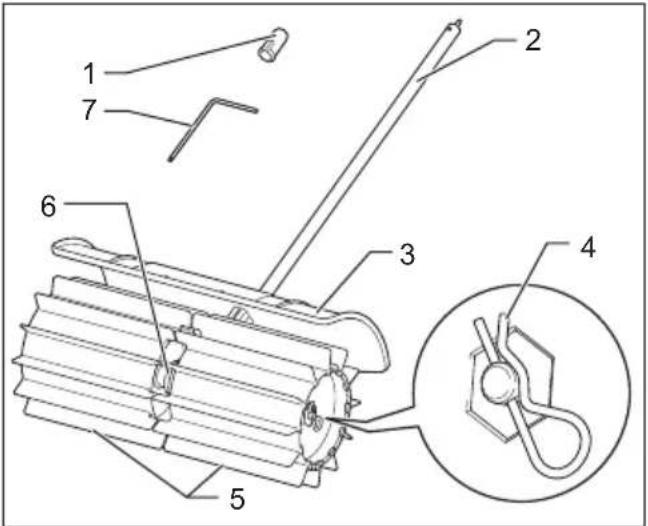
Power brush attachment

MAKITA 1993397 - Power brush attachment - 1

text_image Technical diagram of a mechanical device with numbered components and an inset view showing a clamping tool.

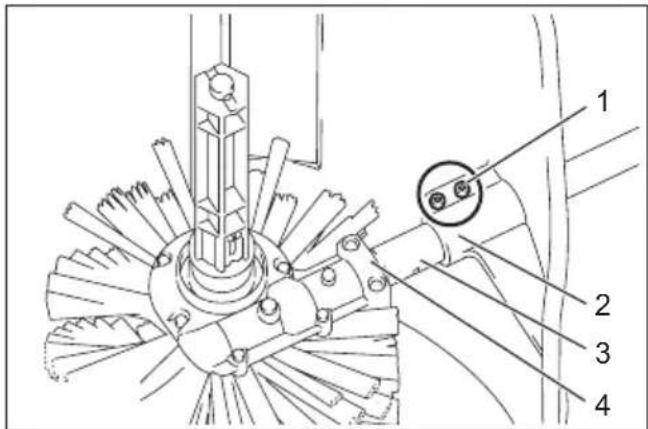
▶ 1. Cap 2. Pipe 3. Protector 4. Clip 5. Brush 6. Gear case 7. Hexalobular wrench

Power sweep attachment
MAKITA 1993397 - Power sweep attachment - 1

text_image Technical diagram of a mechanical device with numbered components and an inset view showing a clamping mechanism.

▶ 1. Cap 2. Pipe 3. Protector 4. Clip 5. Sweep drum 6. Gear case 7. Hexalobular wrench

ASSEMBLY

WARNING: Before assembling or adjusting the equipment, switch off the motor or engine and remove the spark plug cap or battery cartridge. Otherwise the brushes, drums, or other parts may move and result in serious injury.
WARNING: When assembling or adjusting the equipment, always put it down. Assembling or adjusting the equipment in an upright position may result in serious injury.
WARNING: Follow the warnings and precautions in the chapter "SAFETY WARNINGS" and the instruction manual of the power unit.

Assembling the attachment

  1. Remove the clip from the brush or sweep drum on the left side of the brush unit or sweep drum unit, and then remove the brush or sweep drum.

MAKITA 1993397 - Assembling the attachment - 1

text_image Technical diagram showing two views of a mechanical component with labeled parts 1 and 2, including a tool and assembly details.

▶ 1. Brush 2. Clip

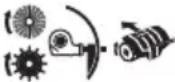
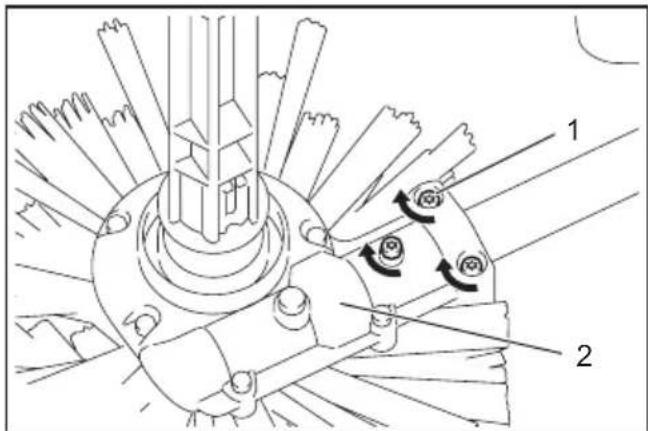
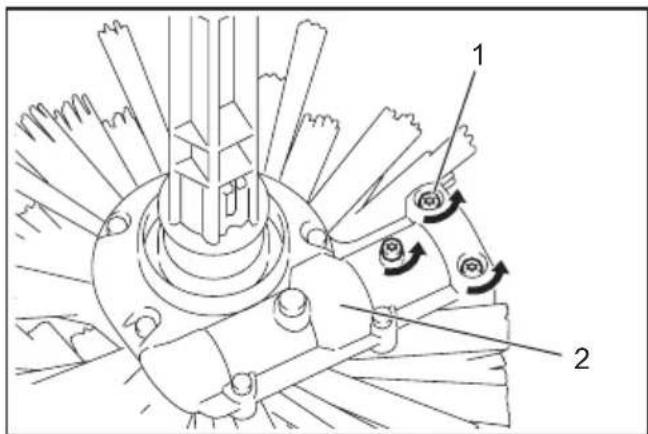
  1. Loosen 3 screws on the gear case.

MAKITA 1993397 - Assembling the attachment - 2

text_image Technical diagram of a mechanical component with labeled parts 1 and 2, showing rotational motion arrows.

▶ 1. Screw 2. Gear case

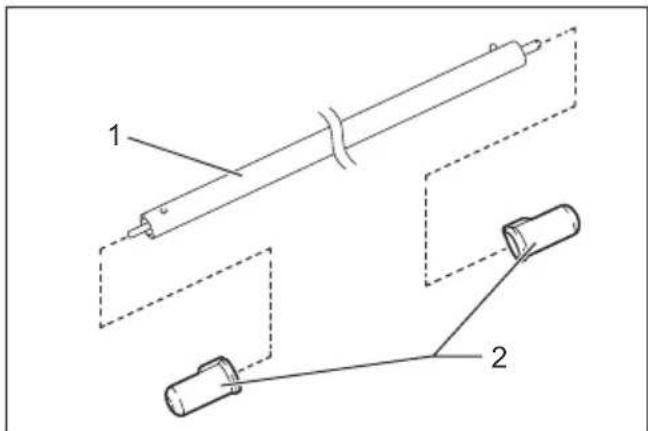
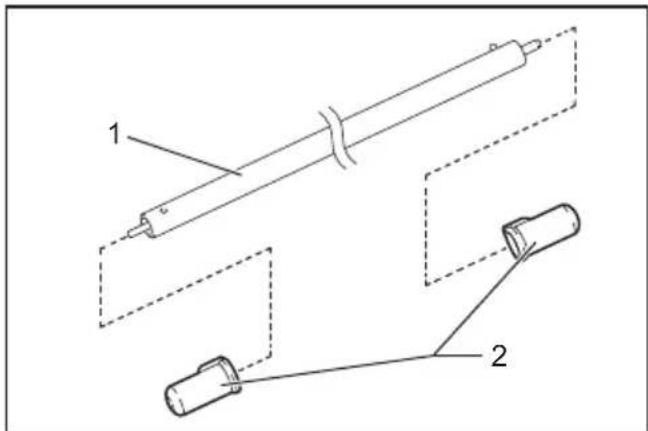
  1. Remove 2 caps from both ends of the pipe.
MAKITA 1993397 - Assembling the attachment - 3

text_image Technical diagram showing two labeled components (1 and 2) of a mechanical assembly with dashed outlines indicating parts of each.

▶ 1. Pipe 2. Cap

NOTICE: Do not dispose of the caps since the cap is necessary for storing the attachment.

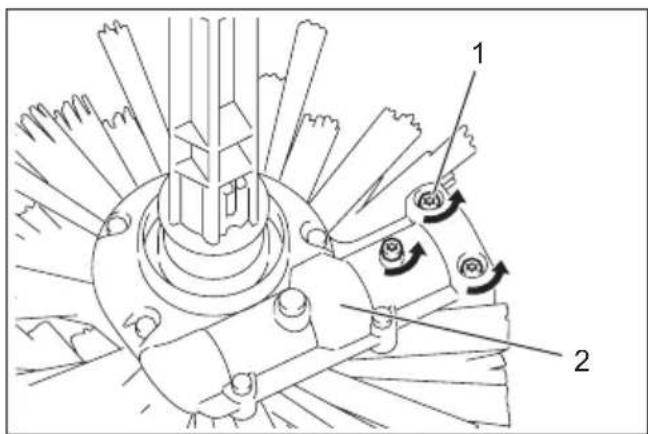
  1. Attach the protector and the sleeve to the pipe.
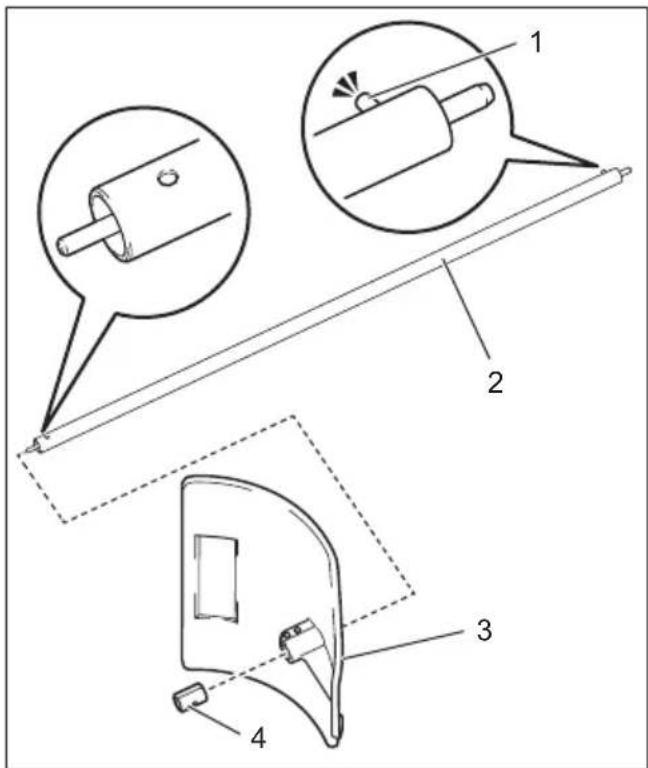
MAKITA 1993397 - Assembling the attachment - 4

text_image Technical diagram showing four labeled components of a mechanical or electrical component, including pin, lever, and housing parts.

▶ 1. Pin 2. Pipe 3. Protector 4. Sleeve

NOTICE: Be sure to insert the end of the pipe without the pin into the protector and the sleeve.

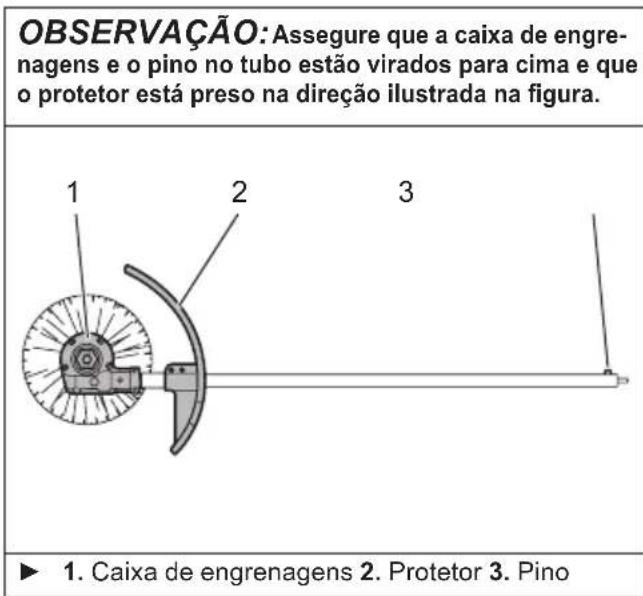
  1. Make sure that the gear case and the pin on the pipe are facing up, and then insert the pipe into the gear case.
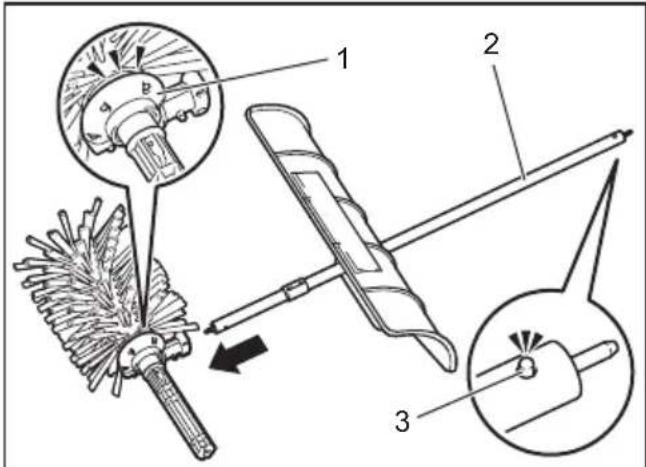
MAKITA 1993397 - Assembling the attachment - 5

text_image Technical diagram of a mop with labeled parts and directional arrows indicating motion or assembly.

▶ 1. Gear case 2. Pipe 3. Pin

NOTICE: Make sure that the gear case and the pin on the pipe are facing up, and the protector is attached in the direction shown in the figure.
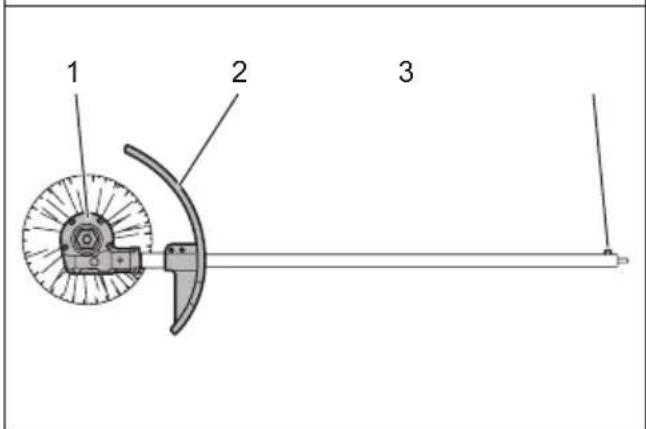
MAKITA 1993397 - Assembling the attachment - 6

text_image 1 2 3

▶ 1. Gear case 2. Protector 3. Pin

  1. Align the screw hole on the pipe with the hole on the gear case by rotating the pipe.
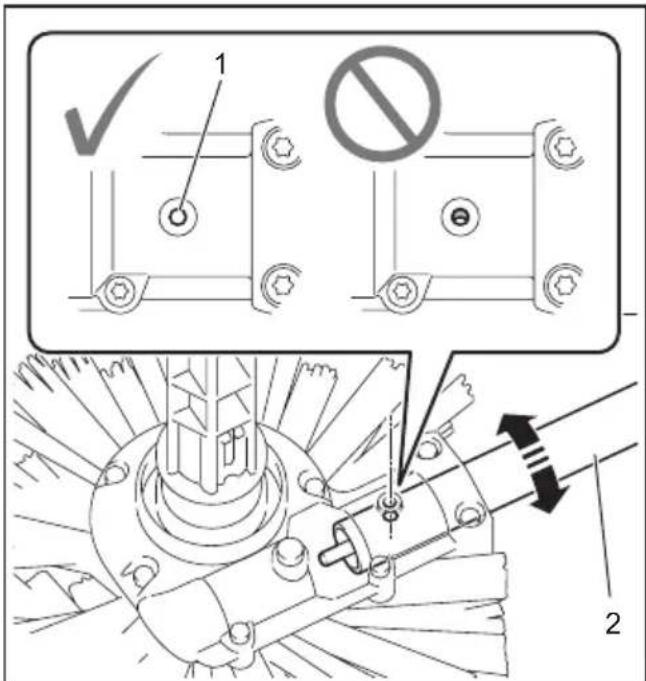
MAKITA 1993397 - Assembling the attachment - 7

text_image Technical diagram showing mechanical assembly with checkmark and prohibition symbol, including numbered parts and directional arrows

▶ 1. Hole 2. Pipe

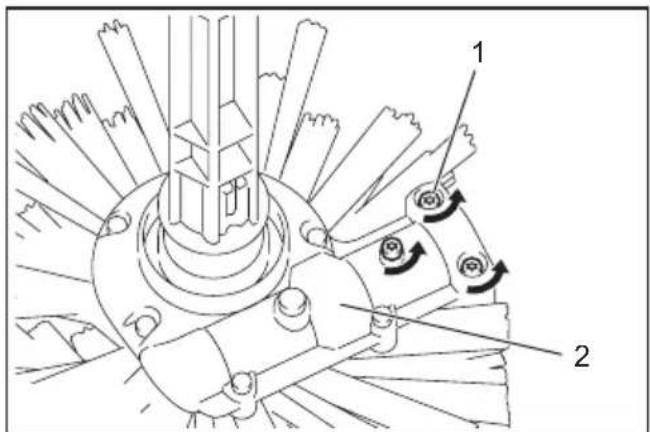
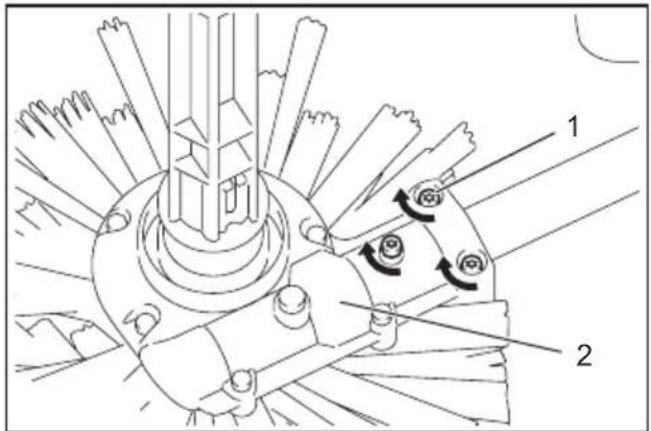
  1. Tighten 3 screws on the gear case.

MAKITA 1993397 - Assembling the attachment - 8

text_image Technical diagram of a mechanical component with labeled parts 1 and 2, showing rotational arrows and gear-like features.

▶ 1. Screw 2. Gear case

  1. Tighten 2 screws on the protector.

MAKITA 1993397 - Assembling the attachment - 9

text_image Technical diagram of a mechanical component with numbered parts labeled 1 to 4

▶ 1. Screw 2. Protector 3. Sleeve 4. Gear case

NOTICE: Make sure that there is no gap between the gear case and the sleeve, and the sleeve and the protector.

  1. Attach the brush or sweep drum to the brush unit or sweep drum unit, and then attach the clip to the brush or sweep drum.

NOTICE: When attaching the brushes, be sure to attach them with the Makita logo facing outside.

NOTICE: When attaching the sweep drums, be sure to attach them in the direction shown in the figure, so that the sweep drums and the gear case mesh with each other.
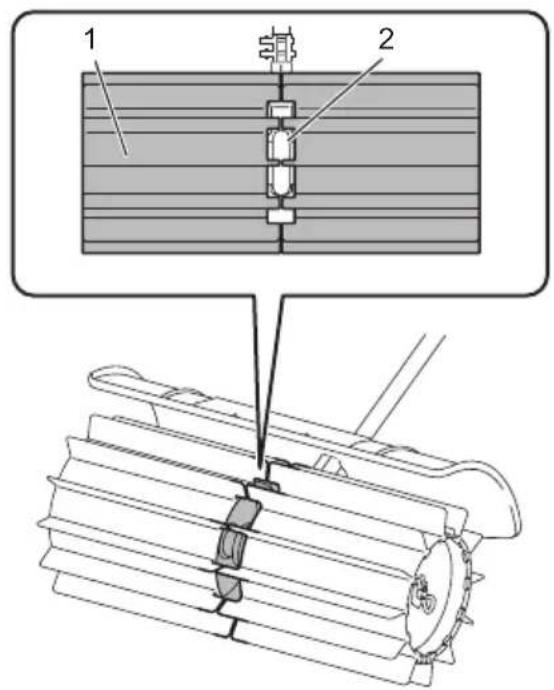
MAKITA 1993397 - Assembling the attachment - 10

text_image Technical diagram showing mechanical assembly with labeled components and cross-sectional view

▶ 1. Sweep drum 2. Gear case

Mounting the attachment pipe

⚠️CAUTION: Always check that the attachment pipe is secured after installation. Improper installation may cause the attachment falling off from the power unit and cause personal injury.

Mount the attachment pipe to the power unit.

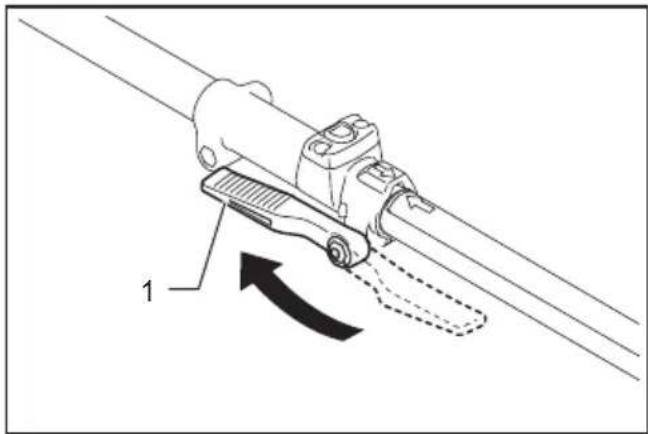
  1. Turn the lever toward the attachment.

MAKITA 1993397 - Mounting the attachment pipe - 1

natural_image Technical diagram of a mechanical device with labeled component '1' and directional arrow (no text or symbols beyond label)

▶ 1. Lever

  1. Align the pin with the arrow mark. Insert the attachment pipe until the release button pops up. Make sure that the position line is on the tip of the arrow mark.
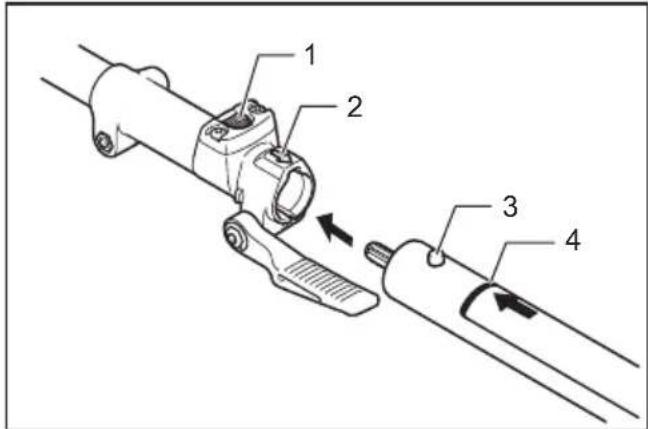
MAKITA 1993397 - Mounting the attachment pipe - 2

text_image Technical diagram of a mechanical device with numbered components and directional arrows indicating movement or assembly.

▶ 1. Release button 2. Arrow mark 3. Pin 4. Position line

  1. Turn the lever toward the power unit.

MAKITA 1993397 - Mounting the attachment pipe - 3

natural_image Mechanical assembly diagram showing a lever mechanism with motion arrows (no text or symbols)
  1. Lever

Make sure that the surface of the lever is parallel to the pipe.

NOTICE: Do not tighten the lever without the attachment pipe inserted. Otherwise the lever may tighten the entrance of the drive shaft too much and damage it.

To remove the pipe, turn the lever toward the attachment and pull the pipe out while pressing down the release button.
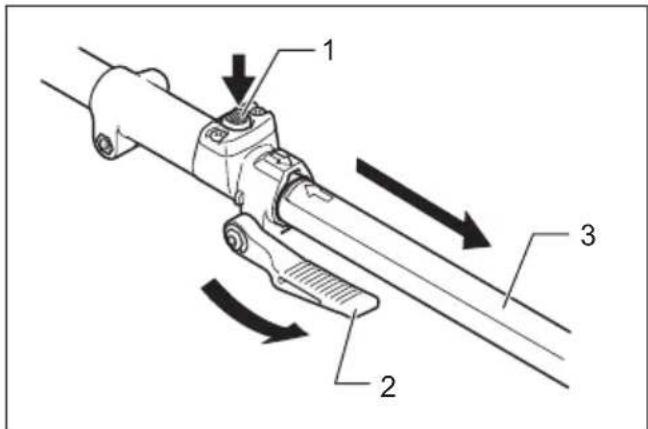
MAKITA 1993397 - Mounting the attachment pipe - 4

text_image Technical diagram of a mechanical device with labeled parts and directional arrows indicating motion or flow.

▶ 1. Release button 2. Lever 3. Pipe

OPERATION

WARNING: Follow the warnings and precautions in the chapter "SAFETY WARNINGS" and the instruction manual of the power unit.
WARNING: Adjust the hanger position and shoulder harness to your comfortable position before operating.
WARNING: Wear dust mask and well ventilate the work area. Some material contains chemicals which may be toxic. Take caution to prevent dust inhalation and skin contact.
CAUTION: Before operation, remove hard and/or long objects such as stones, cans, and ropes from the working area. They may damage the brushes or sweep drums or hinder the rotation of the brushes or sweep drums.

If the surface to be cleaned is dry, spray it with water to reduce the dust. Hold the power brush / power sweep at a shallow angle, and push the power brush / power sweep at walking speed.
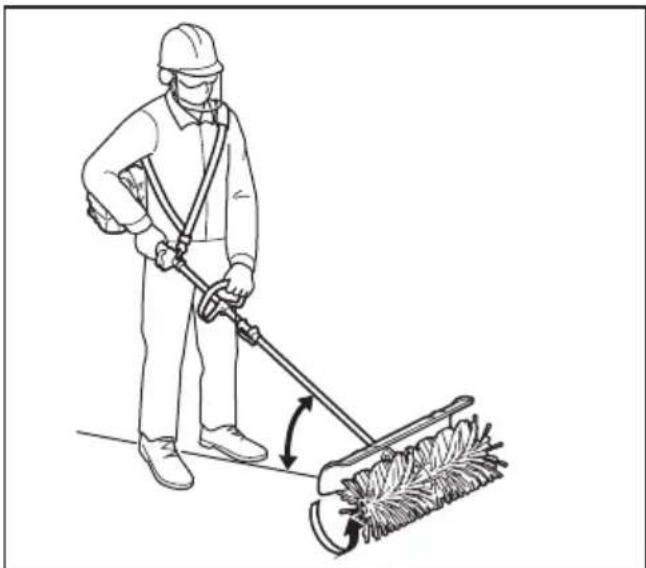
MAKITA 1993397 - OPERATION - 1

natural_image Line drawing of a worker sweeping a broom with a directional arrow indicating motion (no text or symbols)

⚠️CAUTION: The steeper the angle becomes, the more difficult it is to control the power brush / power sweep, and the more likely you are pushed back by the power brush / power sweep.

MAINTENANCE

WARNING: Before inspecting or maintaining the equipment, switch off the motor and remove the spark plug cap or battery cartridge. Otherwise the brush, sweep drum, or other parts may move and result in serious injury.
WARNING: When inspecting or maintaining the equipment, always put it down. Assembling or adjusting the equipment in an upright position may result in serious injury.
WARNING: Follow the warnings and precautions in the chapter "SAFETY WARNINGS" and the instruction manual of the power unit.

NOTICE: Never use gasoline, benzine, thinner, alcohol or the like. Discoloration, deformation or cracks may result.

To maintain product SAFETY and RELIABILITY, repairs, any other maintenance or adjustment should be performed by Makita Authorized or Factory Service Centers, always using Makita replacement parts.

Cleaning the attachment

The attachment can be washed with water. Use a nylon brush or the similar to wash off dirt.

MAKITA 1993397 - Cleaning the attachment - 1

text_image Diagram illustrating three steps of cleaning a mop, showing removal and anti-smoking actions with labeled diagrams.

▶ 1. Power unit 2. Pipe end 3. Gear case

NOTICE: Do not pour water over the power unit and pipe end. It may cause a malfunction of the attachment.

For ease of cleaning, you can remove the brush or sweep drum from the brush unit or sweep drum unit. Refer to the instructions for replacing the brushes or sweep drums in this manual.

Overall inspection

  • Tighten loose bolts, nuts and screws.
  • Check for damaged parts, brushes, or sweep drums. Ask our authorized service center to replace them if necessary.

Inspecting the brushes, sweep drums, and protector

Check and clean the brushes, sweep drums, and protector daily. If they are worn, bent and cracked, replace them.

Replacing the brushes or sweep drums

  1. Remove the clips from the brushes or sweep drums, and then remove the brushes or sweep drums.
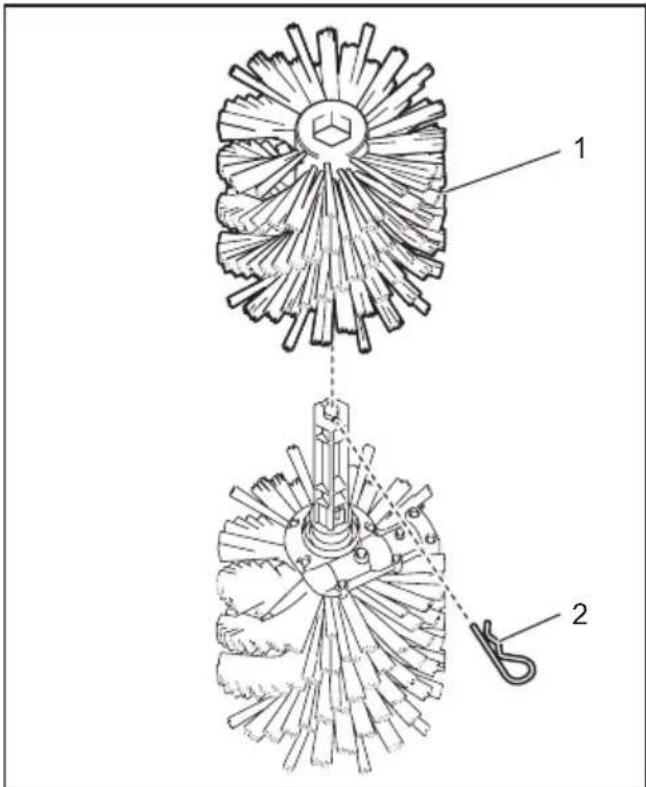
MAKITA 1993397 - Replacing the brushes or sweep drums - 1

text_image Technical diagram showing two views of a mechanical component with labeled parts 1 and 2, including a tool and assembly.

▶ 1. Brush 2. Clip

  1. Attach the brushes or sweep drums to the brush unit or sweep drum unit, and then attach the clips.

NOTICE: When attaching the brushes, be sure to attach them with the Makita logo facing outside.

NOTICE: When attaching the sweep drums, be sure to attach them in the direction shown in the figure, so that the sweep drums and the gear case mesh with each other.
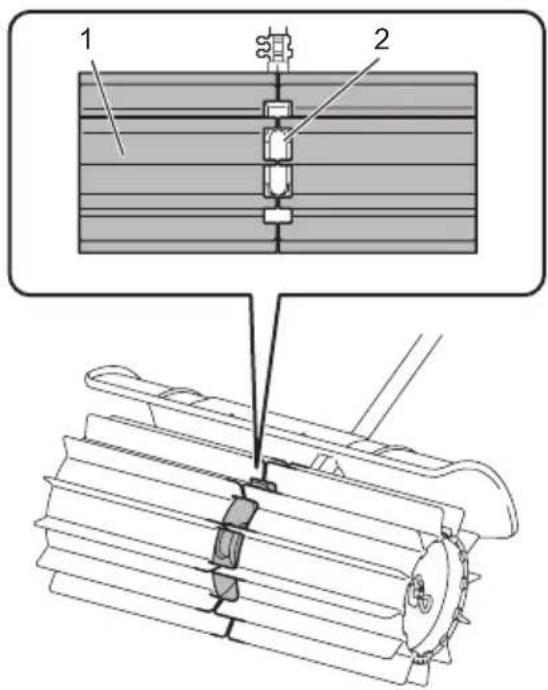
MAKITA 1993397 - Replacing the brushes or sweep drums - 2

text_image Technical diagram showing mechanical assembly with labeled components and cross-sectional view

▶ 1. Sweep drum 2. Gear case

Lubricating moving parts

NOTICE: Follow the instruction of the frequency and amount of grease supplied. Otherwise insufficient lubrication may damage moving parts.

Gear case:

⚠️ CAUTION: Do not apply grease when the gear case is hot. Hot gear case can cause burn injury.

Fill approx. 30 ml of grease (Makita grease SG No.0) through the grease port evenly every 25 hours of operation.

With the supplied hexalobular wrench, remove the bolt near the lubrication marking on the gear case. Loosen the bolt on the other side so that the air in the gear case can be released when applying the grease.

After applying the grease, be sure to tighten the bolts.
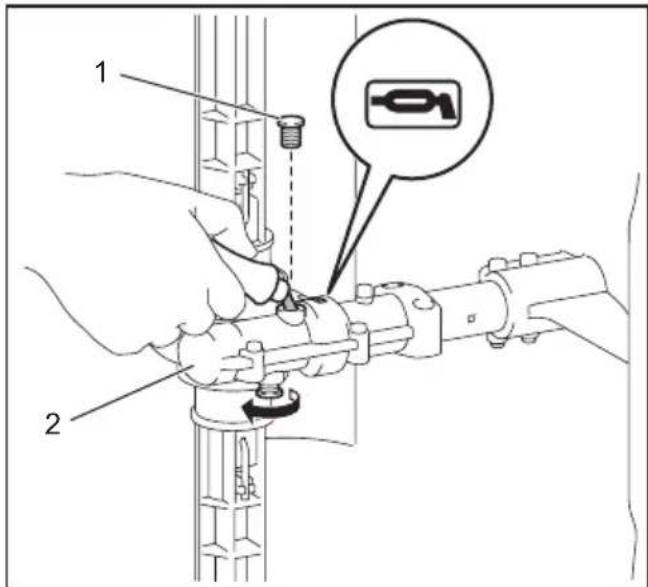
MAKITA 1993397 - Gear case: - 1

text_image Technical diagram showing a hand adjusting a pipe fitting with labeled parts and a warning symbol

▶ 1. Bolt 2. Gear case

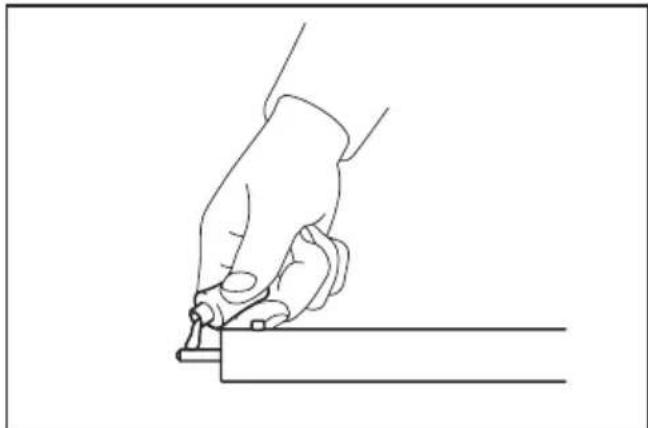
Drive axle:

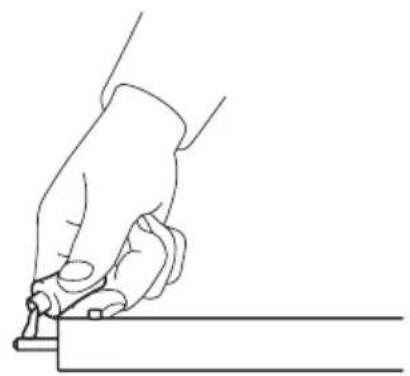
Apply grease (Makita grease SG No.0) every 25 hours of operation.
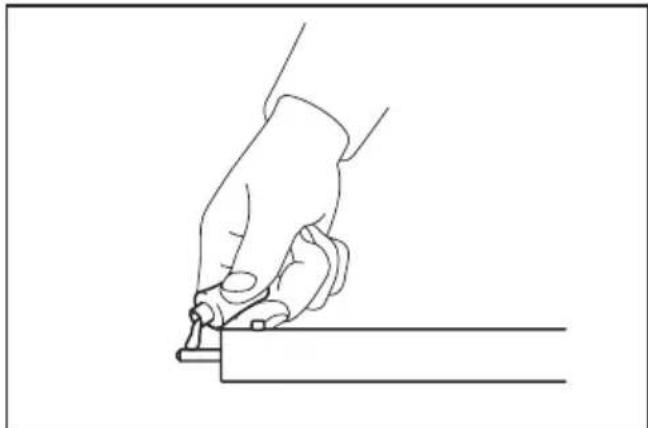
MAKITA 1993397 - Drive axle: - 1

natural_image Line drawing of a hand holding a tool, poised to write on a surface (no text or symbols)

NOTE: Genuine Makita grease may be purchased from your local Makita dealer.

Storage

WARNING: Follow the warnings and precautions in the chapter "SAFETY WARNINGS" and the instruction manual of the power unit.

When storing the attachment separated from the power unit, put the cap onto the end of the shaft.
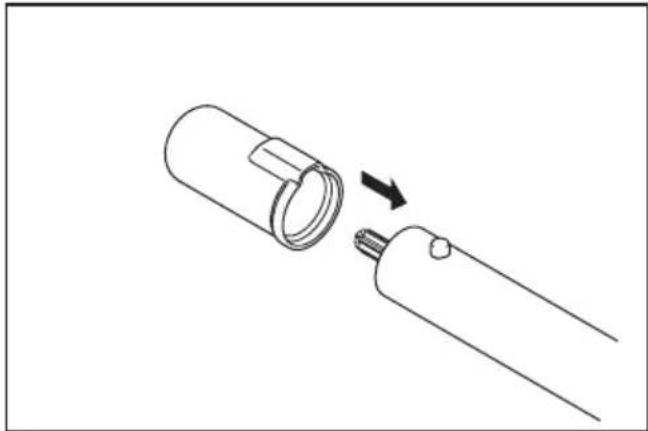
MAKITA 1993397 - Storage - 1

natural_image Diagram of a cylindrical device with a bulb inserted into a plug, showing a change in the tip (no text or symbols present)

Interval of inspection and maintenance

Operating hour BeforeOperationDaily (10h) 25h
Whole unit Visually inspect for damaged parts[25VZ]--
All fixing screws and nuts Tighten[7H50]--
Brushes, sweep drums, and protectorClean and visually inspect for damaged parts-MAKITA 1993397 - Storage - 2-
Gear case Supply grease --MAKITA 1993397 - Storage - 3
Drive axle Supply grease --MAKITA 1993397 - Storage - 4
Power unit Refer to the instruction manual of the power unit

TROUBLESHOOTING

Before asking for repairs, conduct your own inspection first. If you find a problem that is not explained in the manual, do not attempt to dismantle the machine. Instead, ask Makita Authorized Service Centers, always using Makita replacement parts for repairs.

State of abnormality Probable cause(malfunction) Remedy
Motor or engine does not start. - Refer to the instruction manual of the power unit.
Motor or engine stops soon. - Refer to the instruction manual of the power unit.
Motor or engine speed does not increase.- Refer to the instruction manual of the power unit.
Brushes or sweep drums do not rotate.⇒ Stop the motor or engine immediately.The pipes of the power unit and the attachment are not connected properly.Connect the pipes in the correct way.
Brushes or sweep drums caught a foreign matter.Remove the foreign matter.
Abnormal drive system Contact an authorized service center for repairs.
Power unit vibrates abnormally.⇒ Stop the motor or engine immediately.Brushes or sweep drums are bent or broken.Replace the brushes or sweep drums.
Loose attachment of the brushes or sweep drumsAttach the clips for the brushes or sweep drums securely.
Irregular attachment of the brushes or sweep drumsInstall the brushes or sweep drums in the correct way.
Abnormal drive system Contact an authorized service center for repairs.
Brushes or sweep drums continue to rotate even if the switch trigger/lever is released.⇒ Stop the motor or engine immediately.The power unit does not work properly.Adjust the idle speed if the power unit is engine-operated. Contact an authorized service center for repairs.

SPÉCIFICATIONS

natural_image Line drawing of a person wearing a helmet and safety goggles (no text or symbols)
natural_image Line drawing of a worker sweeping a broom with a hose (no text or symbols)
text_image Technical diagram of a cleaning or cleaning device with numbered components and a magnified inset showing internal structure.
text_image Technical diagram of a mechanical device with numbered components and an inset view showing a clamping mechanism.
text_image Technical diagram showing two views of a mechanical component with labeled parts 1 and 2, including a tool and assembly details.

▶ 1. Brosse 2. Attache

text_image Technical diagram of a mechanical component with labeled parts 1 and 2, showing rotational flow indicators.
text_image Technical diagram showing two labeled components (1 and 2) of a mechanical assembly with dashed outlines indicating parts of each.

▶ 1. Tuyau 2. Capuchon

text_image Technical diagram showing exploded view of a mechanical component with numbered parts and magnified views
text_image Technical diagram of a mop with labeled parts and directional arrows indicating motion or assembly.
text_image Technical diagram showing mechanical assembly with checkmark and prohibition symbol, plus directional arrows indicating movement or force.

▶ 1. Trou 2. Tuyau

text_image Technical diagram of a mechanical assembly with labeled parts 1 and 2, showing gear-like components and rotational motion arrows.
text_image Technical diagram of a mechanical component with numbered parts labeled 1 to 4
text_image Technical diagram showing mechanical assembly with labeled components and a close-up of the internal structure.
natural_image Diagram of a mechanical device with a lever and adjustment arrow, no text or symbols present
text_image Technical diagram of a mechanical device with numbered components and directional arrows indicating movement or assembly.
natural_image Mechanical assembly diagram showing a lever mechanism with motion arrows (no text or symbols)
  1. Levier
text_image Technical diagram of a mechanical device with labeled parts and directional arrows indicating motion or flow.
natural_image Line drawing of a worker sweeping a broom with a pulley (no text or symbols)
text_image Diagram illustrating three steps of cleaning a mop, showing removal and anti-smoking actions with labeled diagrams.
text_image Technical diagram showing two views of a mechanical component with labeled parts 1 and 2, including a tool for cutting or assembly.

▶ 1. Brosse 2. Attache

text_image Technical diagram showing mechanical assembly with labeled components and cross-sectional view
text_image Technical diagram showing a hand adjusting a pipe fitting with labeled parts and a warning symbol
natural_image Line drawing of a hand holding a tool, poised to write on a surface (no text or symbols)
natural_image Diagram of a cylindrical device with a plug inserted into a shaft, showing a change in the shaft's tip (no text or symbols present)
natural_image Line drawing of a person wearing a helmet and safety goggles (no text or symbols)
natural_image Line drawing of a worker in protective gear using a broom to clean or brush (no text or symbols)
text_image Technical diagram of a cleaning or cleaning device with numbered components and an inset close-up view.
text_image Technical diagram of a mechanical device with numbered components and an inset view showing a clamping mechanism.
text_image Technical diagram showing two mechanical components with labeled parts, including a numbered assembly and a tool.

▶ 1. Bürste 2. Klammer

text_image Technical diagram of a mechanical component with labeled parts 1 and 2, showing rotational motion arrows.
text_image Technical diagram showing two mechanical components labeled 1 and 2, with dashed outlines indicating assembly or assembly steps.

▶ 1. Rohr 2. Kappe

text_image Technical diagram showing exploded view of a mechanical component with numbered parts and magnified views

▶ 1. Stift 2. Rohr 3. Schutzhaube 4. Hülse

text_image Technical diagram of a mop with labeled parts and directional arrows indicating motion or assembly
text_image Technical diagram showing mechanical assembly with checkmark and prohibition symbol, labeled parts 1 and 2
text_image Technical diagram of a mechanical component with labeled parts 1 and 2, showing rotational flow indicators.
text_image Technical diagram of a mechanical component with numbered parts labeled 1 to 4
text_image Technical diagram showing mechanical assembly with labeled components and a close-up view of the internal gear mechanism.
natural_image Technical line drawing of a mechanical device with a lever and adjustment arrow (no text or symbols)

▶ 1. Hebel

text_image Technical diagram of a mechanical assembly with numbered components and directional arrows indicating movement or assembly.
natural_image Mechanical device with lever mechanism and directional arrow (no text or symbols)

▶ 1. Hebel

text_image Technical diagram of a mechanical device with labeled parts and directional arrows indicating motion or flow.
natural_image Line drawing of a worker in protective gear using a manual sweep or power tool (no text or symbols)
text_image Diagram illustrating a robotic arm tool with three labeled steps and prohibition symbols indicating no movement or disassembly.
text_image Technical diagram showing two views of a mechanical component with labeled parts 1 and 2, including a tool and assembly.
text_image Technical diagram showing mechanical assembly with labeled components and a close-up of the internal structure.
text_image Technical diagram showing hands installing a pipe fitting with labeled components and a warning symbol
natural_image Line drawing of a hand holding a tool, poised to write on a surface (no text or symbols present)
natural_image Diagram of a cylindrical device with a separate cylindrical component and an arrow indicating transformation (no text or symbols)
natural_image Line drawing of a person wearing a helmet and safety goggles (no text or symbols)
natural_image Line drawing of a worker in protective gear using a manual sweep or power tool (no text or symbols)
text_image Technical diagram of a mechanical device with numbered components and an inset view showing a clamping mechanism.
text_image Technical diagram showing two views of a mechanical component with labeled parts 1 and 2, including a tool for cutting or assembly.

▶ 1. Spazzolone rotativo 2. Copiglia elastica

text_image Technical diagram of a mechanical component with labeled parts 1 and 2, showing rotational motion arrows.
text_image Technical diagram showing two labeled components (1 and 2) of a mechanical assembly with dashed outlines indicating parts of each.
text_image Technical diagram showing exploded view of a mechanical component with numbered parts and magnified views
text_image Technical diagram of a mop with labeled parts and directional arrows indicating motion or assembly.
text_image Technical diagram showing mechanical assembly with checkmark and prohibition symbol, including numbered parts and directional arrows.
text_image Technical diagram of a mechanical component with labeled parts 1 and 2, showing rotational arrows indicating motion or movement.
text_image Technical diagram of a mechanical component with numbered parts labeled 1 to 4
text_image Technical diagram showing mechanical assembly with labeled components and a close-up of the internal structure.
natural_image Technical line drawing of a mechanical tool with a lever and adjustment arrow (no text or symbols)

▶ 1. Leva

text_image Technical diagram of a mechanical device with numbered components and directional arrows indicating movement or assembly.
natural_image Mechanical device with lever mechanism and directional arrow (no text or symbols)

▶ 1. Leva

text_image Technical diagram of a mechanical device with labeled parts and directional arrows indicating motion or flow.
natural_image Line drawing of a worker in protective gear using a manual sweep or broom (no text or symbols)
text_image Diagram illustrating three steps of a robotic manipulation or cleaning procedure, labeled 1, 2, and 3 with no symbols indicating prohibition.
text_image Technical diagram showing two views of a mechanical component with labeled parts 1 and 2

▶ 1. Spazzolone rotativo 2. Copiglia elastica

text_image Technical diagram showing mechanical assembly with labeled components and a close-up of the internal structure.
text_image Technical diagram showing hands installing a pipe fitting with labeled components and a warning symbol
natural_image Line drawing of a hand holding a tool, poised to write on a surface (no text or symbols present)
natural_image Diagram of a mechanical component being inserted into a cylindrical housing, showing a curved arrow indicating direction (no text or symbols present)

VEILIGHEIDSWAAR- SCHUWINGEN

natural_image Line drawing of a person wearing a hard hat and safety goggles (no text or symbols)
natural_image Line drawing of a worker sweeping a broom with a hose (no text or symbols)
text_image Technical diagram of a cleaning or cleaning device with numbered components and an inset close-up view
  1. Dop 2. Pijp 3. Beschermkap 4. Klem 5. Borstel 6. Tandwielhuis 7. Torxsleutel

Vegerhulpstuk

MAKITA 1993397 - Vegerhulpstuk - 1

text_image Technical diagram of a mechanical device with numbered components and an inset view showing a hook mechanism.
  1. Dop 2. Pijp 3. Beschermkap 4. Klem 5. Veegtrommel 6. Tandwielhuis 7. Torxsleutel

MONTAGE

text_image Technical diagram showing two mechanical components with labeled parts, including a numbered assembly and a tool.

▶ 1. Borstel 2. Klem

text_image Technical diagram of a mechanical component with labeled parts 1 and 2, showing rotational motion indicators.

▶ 1. Schroef 2. Tandwielhuis

text_image Technical diagram of a mechanical assembly with labeled parts 1 and 2, showing internal components and dashed-line outlines.

▶ 1. Pijp 2. Dop

text_image Technical diagram showing exploded view of a mechanical component with numbered parts and magnified views

▶ 1. Pen 2. Pijp 3. Beschermkap 4. Bus

text_image Technical diagram of a mop with labeled parts and directional arrows indicating motion or assembly.

▶ 1. Tandwielhuis 2. Pijp 3. Pen

text_image Technical diagram showing mechanical assembly with checkmark and prohibition symbol, plus directional arrows indicating movement or force.

▶ 1. Gat 2. Pijp

text_image Technical diagram of a mechanical assembly with labeled parts 1 and 2, showing gear-like components and rotational motion indicators.

▶ 1. Schroef 2. Tandwielhuis

text_image Technical diagram of a mechanical component with numbered parts labeled 1 to 4
  1. Schroef 2. Beschermkap 3. Bus 4. Tandwielhuis
text_image Technical diagram showing mechanical assembly with labeled components and a close-up of the internal structure.

▶ 1. Veegtrommel 2. Tandwielhuis

natural_image Diagram of a mechanical device with a lever and adjustment arrow, no text or symbols present

▶ 1. Hendel

text_image Technical diagram of a mechanical device with numbered components and directional arrows indicating movement or assembly.
natural_image Technical diagram of a mechanical clamp or lever mechanism with labeled component '1' and directional arrow (no text or symbols beyond label)
  1. Hendel
text_image Technical diagram of a mechanical device with labeled parts and directional arrows indicating motion or flow.

▶ 1. Ontgrendelknop 2. Hendel 3. Pijp

BEDIENING

natural_image Line drawing of a worker sweeping a broom with a directional arrow indicating motion (no text or symbols)
text_image Diagram illustrating three steps of a robotic manipulation or cleaning procedure, with labeled diagrams and prohibition symbols.
text_image Technical diagram of a mechanical component with labeled parts 1 and 2, showing exploded and assembled views.

▶ 1. Borstel 2. Klem

text_image Technical diagram showing mechanical assembly with labeled components and a close-up view of the internal gear mechanism.

▶ 1. Veegtrommel 2. Tandwielhuis

text_image Technical diagram showing a hand adjusting a pipe fitting with labeled parts and a warning symbol

▶ 1. Bout 2. Tandwielhuis

Aandrijfas:

natural_image Line drawing of a hand holding a tool, poised to write on a surface (no text or symbols present)
natural_image Diagram of a cylindrical device with a separate internal component and an arrow indicating process (no text or symbols)

Persona responsible: Kazuhisa Makino, Director - Makita Europe N.V.
MAKITA 1993397 - Aandrijfas: - 1

natural_image Line drawing of a person wearing a hard hat and safety goggles (no text or symbols)
natural_image Line drawing of a worker sweeping a broom with a hose (no text or symbols)
text_image Technical diagram of a cleaning or cleaning device with numbered components and an inset view showing a clip.
  1. Tapa 2. Tubo 3. Protector 4. Clip 5. Cepillo 6. Caja de engranajes 7. Llave hexalobular
text_image Technical diagram of a mechanical device with numbered components and an inset view showing a clip mechanism.

▶ 1. Tapa 2. Tubo 3. Protector 4. Clip 5. Tambor barredor 6. Caja de engranajes 7. Llave hexalobular

MONTAJE

text_image Technical diagram showing two views of a mechanical component with labeled parts 1 and 2, including a tool and assembly.
text_image Technical diagram of a mechanical component with labeled parts 1 and 2, showing internal blades and motion indicators.

▶ 1. Tornillo 2. Caja de engranajes

text_image Technical diagram of a mechanical assembly with labeled parts 1 and 2, showing components like a rod and two cylindrical components.

▶ 1. Tubo 2. Tapa

text_image Technical diagram showing four labeled components of a mechanical or electrical component with magnified views and annotations.

▶ 1. Pasador 2. Tubo 3. Protector 4. Manguito

text_image Technical diagram of a mop with labeled parts including handle, blade, and handle mechanism
text_image Technical diagram showing mechanical assembly with checkmark and prohibition symbol, plus mechanical component diagram with directional arrows

▶ 1. Orificio 2. Tubo

text_image Technical diagram of a mechanical assembly with labeled parts 1 and 2, showing gear-like components and rotational motion indicators.

▶ 1. Tornillo 2. Caja de engranajes

text_image Technical diagram of a mechanical component with numbered parts labeled 1 to 4
  1. Tornillo 2. Protector 3. Manguito 4. Caja de engranajes
text_image Technical diagram showing mechanical assembly with labeled components and a close-up view of the internal structure.

▶ 1. Tambor barredor 2. Caja de engranajes

natural_image Diagram of a mechanical device with a lever and adjustment arrow, no text or symbols present
text_image Technical diagram of a mechanical device with numbered components and directional arrows indicating movement or assembly.
natural_image Mechanical device with lever mechanism and directional arrow (no text or symbols)
  1. Palanca
text_image Technical diagram of a mechanical device with labeled parts and directional arrows indicating motion or flow.
natural_image Line drawing of a worker sweeping a broom with a pulley (no text or symbols)
text_image Diagram illustrating three steps of cleaning a mop, showing removal and anti-smoking actions with labeled diagrams.
text_image Technical diagram of a mechanical component with labeled parts 1 and 2, showing exploded and assembled views.
text_image Technical diagram showing mechanical assembly with labeled components and a close-up view of the internal structure.

▶ 1. Tambor barredor 2. Caja de engranajes

text_image Technical diagram showing a hand adjusting a pipe fitting with labeled parts and a warning symbol

▶ 1. Perno 2. Caja de engranajes

Eje propulsor:

natural_image Line drawing of a hand holding a tool, poised to write on a surface (no text or symbols present)
natural_image Diagram of a cylindrical device with a plug inserted into a cylindrical body, showing a change in the arrow (no text or symbols present)
natural_image Line drawing of a person wearing a hard hat and safety goggles (no text or symbols)
natural_image Line drawing of a worker in protective gear using a broom to clean or brush (no text or symbols)
text_image Technical diagram of a cleaning or cleaning device with numbered components and a magnified inset showing a clip.

▶ 1. Tampa 2. Tubo 3. Protetor 4. Clipe 5. Escova 6. Caixa de engrenagens 7. Chave hexalobular

text_image Technical diagram of a mechanical device with numbered components and an inset view showing a clamp mechanism.

▶ 1. Tampa 2. Tubo 3. Protetor 4. Clipe 5. Cilindro de varrer 6. Caixa de engrenagens 7. Chave hexalobular

MONTAGEM

text_image Technical diagram showing two views of a mechanical component with labeled parts 1 and 2, including a tool for scale.
text_image Technical diagram of a mechanical assembly with labeled parts 1 and 2, showing gear-like components and rotational motion indicators.
text_image Technical diagram showing two mechanical components labeled 1 and 2, with dashed outlines indicating assembly or assembly details.

▶ 1. Tubo 2. Tampa

text_image Technical diagram showing exploded view of a mechanical component with numbered parts and magnified views

▶ 1. Pino 2. Tubo 3. Protetor 4. Manga

text_image Technical diagram of a mop with labeled parts and directional arrows indicating motion or assembly
  1. Caixa de engrenagens 2. Tubo 3. Pino

MAKITA 1993397 - MONTAGEM - 1

text_image Technical diagram showing mechanical assembly with checkmark and prohibition symbol, including numbered parts and directional arrows.
text_image Technical diagram of a mechanical component with labeled parts 1 and 2, showing rotational flow indicators.
text_image Technical diagram of a mechanical component with numbered parts labeled 1 to 4, showing internal blades and a magnified inset detail.
  1. Parafuso 2. Protetor 3. Manga 4. Caixa de engrenagens
text_image Technical diagram showing mechanical assembly with labeled components and a close-up of the internal structure.

▶ 1. Cilindro de varrer 2. Caixa de engrenagens

natural_image Mechanical device diagram showing a lever mechanism with motion arrows (no text or symbols)
text_image Technical diagram of a mechanical device with numbered components and directional arrows indicating movement or assembly.
natural_image Mechanical device with lever mechanism and directional arrow (no text or symbols)
  1. Alavanca
text_image Technical diagram of a mechanical device with labeled parts and directional arrows indicating motion or flow.
natural_image Line drawing of a worker sweeping a broom with a directional arrow indicating motion (no text or symbols)
text_image Diagram illustrating three steps to remove a tool, showing removal of a skull and cleaning the brush with no symbols.
text_image Technical diagram showing two views of a mechanical component with labeled parts 1 and 2, including a tool and assembly details.
text_image Technical diagram showing mechanical assembly with labeled components and a close-up of the internal structure.

▶ 1. Cilindro de varrer 2. Caixa de engrenagens

text_image Technical diagram showing a hand adjusting a pipe fitting with labeled parts and a warning symbol
natural_image Line drawing of a hand holding a tool, poised to write on a surface (no text or symbols present)
natural_image Diagram of a cylindrical device with a separate cylindrical component and an arrow indicating process (no text or symbols)
natural_image Line drawing of a person wearing a hard hat and safety goggles (no text or symbols)
natural_image Line drawing of a worker in safety gear using a manual sweep or power tool (no text or symbols)
text_image Technical diagram of a mechanical device with numbered components and a magnified inset showing internal structure.
text_image Technical diagram of a mechanical device with numbered components and an inset view showing a clamping mechanism.
text_image Technical diagram showing two mechanical components with labeled parts, including a top view and a side view with a tool.
  1. Børste 2. Klemme

  2. Løsn 3 skruer på gearhuset.

MAKITA 1993397 - MONTAGEM - 2

text_image Technical diagram of a mechanical assembly with labeled parts 1 and 2, showing gear-like components and rotational motion indicators.

▶ 1. Skrue 2. Gearhus

text_image Technical diagram showing two labeled components (1 and 2) of a mechanical assembly with dashed outlines indicating parts of each.
  1. Rør 2. Hætte
text_image Technical diagram showing exploded view of a mechanical component with numbered parts and magnified views
text_image Technical diagram of a mop with labeled parts including a rack, handle, and lever mechanism
text_image Technical diagram showing mechanical assembly with checkmark and prohibition symbol, including numbered parts and directional arrows.
  1. Hul 2. Rør

  2. Stram 3 skruer på gearhuset.

MAKITA 1993397 - MONTAGEM - 3

text_image Technical diagram of a mechanical component with labeled parts 1 and 2, showing gear teeth and rotational motion arrows.

▶ 1. Skrue 2. Gearhus

text_image Technical diagram of a mechanical component with numbered parts labeled 1 to 4
text_image Technical diagram showing mechanical assembly with labeled components and a close-up of the internal structure.

▶ 1. Fejetromle 2. Gearhus

natural_image Diagram of a mechanical device with a lever and adjustment arrow, no text or symbols present
text_image Technical diagram of a mechanical device with numbered components and directional arrows indicating movement or assembly.
natural_image Mechanical device with lever mechanism and directional arrow (no text or symbols)
  1. Håndtag
text_image Technical diagram of a mechanical device with labeled parts and directional arrows indicating motion or flow.
natural_image Line drawing of a worker sweeping a broom with a handover, showing motion direction (no text or symbols)
text_image Diagram illustrating three steps of a robotic manipulator tool, showing disassembly and reassembly with labeled components.
text_image Technical diagram showing two views of a mechanical component with labeled parts 1 and 2, including a tool.
text_image Technical diagram showing mechanical assembly with labeled components and a close-up of the internal structure.

▶ 1. Fejetromle 2. Gearhus

text_image Technical diagram showing a hand operating a pipe fitting with labeled parts and a warning symbol

▶ 1. Bolt 2. Gearhus

Drevaksel:

Tilfør fedtstof (Makita fedtstof SG No.0) for hver 25 timers drift.
MAKITA 1993397 - Drevaksel: - 1

natural_image Line drawing of a hand holding a tool, poised to write on a surface (no text or symbols present)
natural_image Diagram of a cylindrical device with a separate internal component and an arrow indicating process (no text or symbols)

Interval for inspektion og vedligeholdelse

natural_image Line drawing of a person wearing a helmet and safety goggles (no text or symbols)
natural_image Line drawing of a worker in protective gear using a broom push (no text or symbols)
text_image Technical diagram of a mechanical device with numbered components and an inset view showing a clamp mechanism.
text_image Technical diagram of a mechanical device with numbered components and an inset view showing a clamping mechanism.
text_image Technical diagram showing two views of a mechanical component with labeled parts 1 and 2, including a tool for scale.
text_image Technical diagram of a mechanical component with labeled parts 1 and 2, showing rotational flow indicators.
text_image Technical diagram showing two labeled components (1 and 2) of a mechanical assembly with dashed outlines indicating parts of each.
  1. Σωλήνας 2. Καπάκι
text_image Technical diagram showing exploded view of a mechanical component with numbered parts and magnified views
text_image Technical diagram of a cleaning or cleaning tool with labeled parts including a brush, magnified views, and adjustment knobs.
text_image Technical diagram showing mechanical assembly with checkmark and prohibition symbol, including numbered parts and directional arrows

▶ 1. Οπή 2. Σωλήνας

text_image Technical diagram of a mechanical component with labeled parts 1 and 2, showing rotational motion arrows.
text_image Technical diagram of a mechanical component with numbered parts labeled 1 to 4
  1. Bída 2. Prostatetikó 3. Xitwivio 4. Kiβwtio obovtwtów troxwv
text_image Technical diagram showing mechanical assembly with labeled components and a close-up view of the internal structure.
natural_image Diagram of a mechanical device with a lever and adjustment arrow, no text or symbols present
text_image Technical diagram of a mechanical device with numbered components and directional arrows indicating movement or assembly.
natural_image Mechanical device with lever mechanism and directional arrow (no text or symbols)
  1. Μοχλός
text_image Technical diagram of a mechanical device with labeled parts and directional arrows indicating motion or flow.
natural_image Line drawing of a worker using a broom to clean or brush the brush (no text or symbols)
text_image Diagram illustrating a manual tool application with labeled steps and prohibition symbols for cleaning or disassembly.
text_image Technical diagram showing two mechanical components with labeled parts, including a top view and a side view with a tool.
text_image Technical diagram showing mechanical assembly with labeled components and a close-up of the internal structure.
natural_image Diagram of a cylindrical device with a separate cylindrical component and an arrow indicating process (no text or symbols)

MAKITA 1993397 - Drevaksel: - 2

natural_image Line drawing of a hand holding a tool, poised to write on a surface (no text or symbols present)
natural_image Line drawing of a person wearing a helmet and safety goggles (no text or symbols)
natural_image Line drawing of a worker sweeping a broom with a hose (no text or symbols)
text_image Technical diagram of a mechanical device with numbered components and a magnified inset showing a clamping mechanism.
text_image Technical diagram of a mechanical device with numbered components and an inset view showing a clamping mechanism.
text_image Technical diagram of a mechanical component with labeled parts 1 and 2, showing exploded and assembled views.

▶ 1. Fırça 2. Firkete

text_image Technical diagram of a mechanical device with labeled parts 1 and 2, showing rotational components and directional arrows.
text_image Technical diagram showing two labeled components (1 and 2) of a mechanical assembly with dashed outlines indicating parts of each.
  1. Boru 2. Başlık
text_image Technical diagram showing four labeled components of a mechanical or electrical component, including pin, lever, and housing parts.
  1. Pim 2. Boru 3. Koruyucu 4. Manşon
text_image Technical diagram of a mop with labeled parts and directional arrows indicating motion or assembly
text_image Technical diagram showing mechanical assembly with checkmark and prohibition symbol, including numbered parts and directional arrows.

▶ 1. Delik 2. Boru

text_image Technical diagram of a mechanical component with labeled parts 1 and 2, showing rotational arrows and gear-like features.
text_image Technical diagram of a mechanical component with numbered parts labeled 1 to 4, showing internal blades and a magnified inset detail.
text_image Technical diagram showing mechanical assembly with labeled components and a close-up view of the internal structure.
natural_image Diagram of a mechanical device with a lever and adjustment arrow, no text or symbols present
text_image Technical diagram of a mechanical device with numbered components and directional arrows indicating movement or assembly.
natural_image Mechanical assembly diagram showing a lever mechanism with motion arrows (no text or symbols)
  1. Mandal
text_image Technical diagram of a mechanical device with labeled parts and directional arrows indicating motion or flow.
natural_image Line drawing of a worker sweeping a broom with a handover, showing motion direction (no text or symbols)
text_image Diagram illustrating three steps of a hair cleaning or cleaning procedure, labeled 1, 2, and 3 with no symbols indicating prohibition.
text_image Technical diagram showing two views of a mechanical component with labeled parts 1 and 2, including a tool for cutting or assembly.

▶ 1. Fırça 2. Firkete

text_image Technical diagram showing mechanical assembly with labeled components and a close-up of the internal structure.
text_image Technical diagram showing a hand adjusting a pipe fitting with labeled parts and a warning symbol
natural_image Line drawing of a hand holding a tool, poised to write on a surface (no text or symbols present)
natural_image Diagram of a cylindrical device with a bulb inserted into a plug, showing a change in the tip (no text or symbols present)
natural_image Line drawing of a person wearing a helmet and safety goggles (no text or symbols)
natural_image Line drawing of a worker in protective gear using a broom to clean or brush (no text or symbols)
text_image Technical diagram of a mechanical device with numbered components and an inset view showing a clamp mechanism.
text_image Technical diagram of a mechanical device with numbered components and an inset view showing a hook mechanism.
text_image Technical diagram showing two views of a mechanical component with labeled parts 1 and 2, including a tool.

▶ 1. 研光刷 2. 固定夾

  1. 鬷開齒輪箱上的 3 顆螺絲。

MAKITA 1993397 - Drevaksel: - 3

text_image Technical diagram of a mechanical component with labeled parts 1 and 2, showing rotational motion arrows.

▶ 1. 螺絲 2. 齒輪箱

  1. 取下外管兩端的 2 個蓋子。

MAKITA 1993397 - Drevaksel: - 4

text_image Technical diagram showing two labeled components (1 and 2) of a mechanical assembly with dashed outlines indicating parts of each.

▶ 1. 外管 2. 蓋子

text_image Technical diagram showing four labeled components of a mechanical or electrical component, including pin, lever, and housing parts.
text_image Technical diagram of a mop with labeled parts and directional arrows indicating motion or assembly.
text_image Technical diagram showing mechanical assembly with checkmark and prohibition symbol, including numbered parts and directional arrows.

▶ 1. 開孔 2. 外管

  1. 鎖緊齒輪箱上的 3 顆螺絲。

MAKITA 1993397 - Drevaksel: - 5

text_image Technical diagram of a mechanical component with labeled parts 1 and 2, showing rotational flow indicators.

▶ 1. 螺絲 2. 齒輪箱

  1. 鎖緊安全保護裝置上的 2 顆螺絲。

MAKITA 1993397 - Drevaksel: - 6

text_image Technical diagram of a mechanical component with numbered parts labeled 1 to 4
text_image Technical diagram showing mechanical assembly with labeled components and a close-up of the internal gear mechanism.

▶ 1. 掃除刀筒 2. 齒輪箱

安裝連接管

natural_image Diagram of a mechanical device with a lever and adjustment arrow, no text or symbols present

▶ 1. 固定桿

text_image Technical diagram of a mechanical device with numbered components and directional arrows indicating movement or assembly.
natural_image Mechanical device with lever mechanism and directional arrow (no text or symbols)

▶ 1. 固定桿

確認固定桿表面與連接管平行。

text_image Technical diagram of a mechanical device with labeled parts and directional arrows indicating motion or flow.
natural_image Line drawing of a worker sweeping a broom with a directional arrow indicating motion (no text or symbols)
text_image Diagram illustrating three steps of a cleaning or anti-smoking procedure with labeled diagrams and prohibition symbols
text_image Technical diagram showing two views of a mechanical component with labeled parts 1 and 2, including a tool for cutting or assembly.

▶ 1. 研光刷 2. 固定夾

text_image Technical diagram showing mechanical assembly with labeled components and a close-up view of the internal structure.

▶ 1. 掃除刀筒 2. 齒輪箱

潤滑移動部件

text_image Technical diagram showing a hand adjusting a pipe fitting with labeled parts and a warning symbol

▶ 1. 螺栓 2. 齒輪箱

驅動軸:

natural_image Line drawing of a hand holding a tool, poised to write on a blank sheet (no text or symbols present)
natural_image Diagram of a cylindrical device with a plug inserted into a cylindrical housing, showing a change in the internal structure (no text or symbols present)

檢查和保養間隔

Manual assistant
Powered by Anthropic
Waiting for your message
Product information

Brand : MAKITA

Model : 1993397

Category : Multifunction tool