KS 9765 - Fridge SEVERIN - Free user manual and instructions
Find the device manual for free KS 9765 SEVERIN in PDF.



User questions about KS 9765 SEVERIN
0 question about this device. Answer the ones you know or ask your own.
Ask a new question about this device
Download the instructions for your Fridge in PDF format for free! Find your manual KS 9765 - SEVERIN and take your electronic device back in hand. On this page are published all the documents necessary for the use of your device. KS 9765 by SEVERIN.
USER MANUAL KS 9765 SEVERIN
Before using the appliance, the user must read the following instructions carefully.
Connection to the mains supply
The appliance should only be connected to an earthed socket installed in accordance with the regulations. Make sure that the supply voltage corresponds with the voltage marked on the rating label. This product complies with all binding CE labelling directives.
- Do not operate this unit by means of a transformer or, together with other electrical appliances, by means of an extension cable.
- To prevent noise vibration, ensure that the power cord does not touch any part of the rear of the unit (e.g. the heat-exchanger).
General information
This appliance is a compressor refrigerator with two separate cooling facilities, designed for short-term storage of food in the refrigerator cabinet and long-term storage in the freezer.
The unit is rated as climate category 'N' (normal) and designed for domestic use. It complies with all relevant norms for domestic refrigeration appliances.
Important safety instructions
-
To prevent the risk of personal injury or damage to the freezer, the unit must only be transported while in its original packaging. For unpacking and installation, two people are needed.
-
The cooling circuit in this appliance contains the refrigerant isobutane (R600a), a natural gas with a high level of environmental compatibility, which is nevertheless flammable. Ensure, therefore, that none of the components of the refrigerant circuit become damaged during transport and installation of the appliance. If damage to the cooling circuit does occur, do not switch on or connect the appliance to the mains power. In the case that
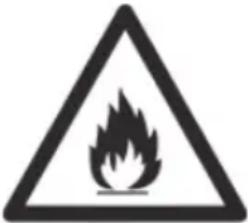
there is an open fire or any other sources of ignition in the vicinity of the refrigerant gas, make sure it is removed immediately from this area and that the room is then thoroughly ventilated.
- Warning: Do not damage the cooling circuit. Any escaping refrigerant causes damage to the eyes; there is also a danger of the gas igniting.
- Warning: Keep ventilation openings, in the appliance enclosure or in the built-in structure, clear of obstruction. Sufficient ventilation must be ensured at all times.
- Warning: Do not use any external device (e.g.; heaters or heating fans) to accelerate de-frosting; follow only the methods recommended in this manual.
The ice removed from the unit during de-frosting is not suitable for human consumption. - Warning: Do not operate any electrical appliances (e.g. ice makers) inside the freezer's food storage compartment that are not specifically permitted in these instructions.
- Before it is connected to the mains power, the unit must be thoroughly checked for transport damage, including its power cord.
- The power cord should be regularly examined for any signs of damage. In the event of such damage being found, the appliance must no longer be used.
- To avoid the risk of fire, do not place any thermo-electric appliances on top of the unit. Do not place any liquid containers on top of the unit, to avoid any leaking or escaping liquid damaging
the electrical insulation.
- Only food commonly used in domestic households should be stored in the unit.
- Alcoholic substances may be stored only in properly sealed containers and in an upright positions.
- To avoid the risk of food poisoning, do not consume food after its storage time has expired. Thawed foods must not be frozen a second time.
- Do not lean or put undue weight on the shelves, compartments, door etc.
- Protect the inside of the freezer at all times from open flames and any other sources of ignition.
- Do not store any glass bottles containing carbonated or other freezable liquids in the unit - such bottles may burst during the freezing process.
Remove the plug from the wall socket
in case of any malfunction, -
before de-frosting, -
during cleaning. -
- This appliance is not intended for use by any persons (including children) with reduced physical, sensory or mental capabilities, or lacking experience and knowledge, unless they have been given supervision or instruction concerning the use of the appliance by a person responsible for their safety.
Children should be supervised to ensure that they do not play with the appliance. - In order to comply with safety regulations and to avoid hazards, any repairs or modifications to this unit must be carried out by our authorised service personnel, including the replacement of the power cord.
We reserve the right to introduce technical modifications. - If the unit is not used for an extended period of time, we recommend keeping the door open.
- If the unit is sold, handed over to a third party or disposed of at a suitable recycling facility, attention must be drawn to the presence of the insulation agent 'Cyclopenthane' as well as to the refrigerant R 600 a.
Familiarisation
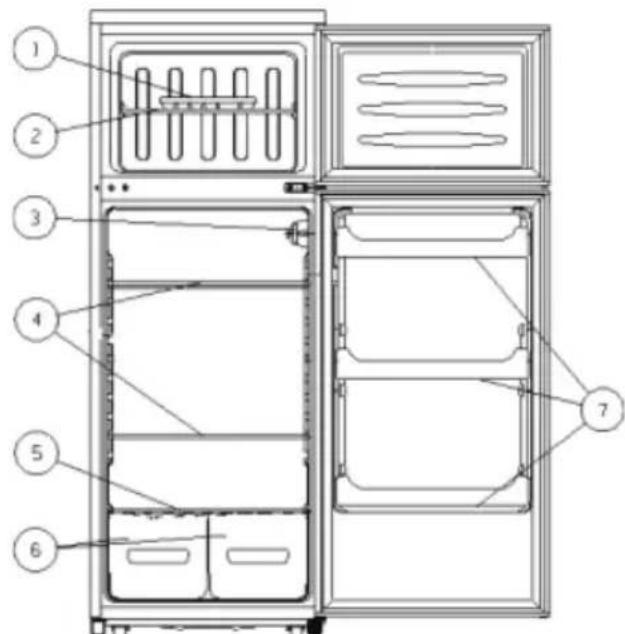
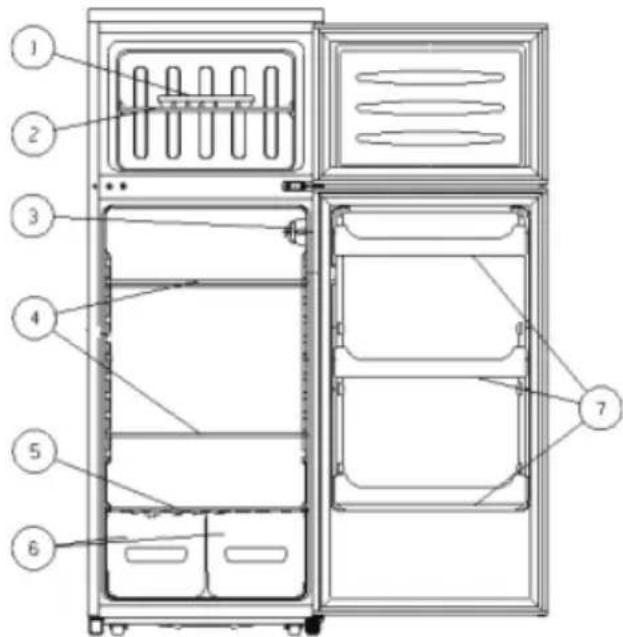
The unit consists of two parts, the freezer cabinet and the refrigerator cabinet.
- Ice cube maker
- Storage rack
- Temperature control and interior lighting
- Storage shelves (height-adjustable)
- Storage shelf
- Fruit/vegetable storage compartments
- Door storage areas
Before using for the first time
- Remove any exterior and interior packaging materials completely, including the adhesive strips.
- Caution: Keep any packaging materials well away from children, as there is a risk of suffocation.
- For positioning, we recommend that you tilt the unit slightly backwards. In this way, the
transport rollers can be used to move it to its intended place of installation.
Please ensure proper disposal of all packaging materials.
- Before it is connected to the mains, the unit must be thoroughly checked for transport damage, including its power cord.
- Clean the unit according to the instructions given in the De-frosting and cleaning section below.
Installation
The appliance should be set up in a well-ventilated, dry room. It should be operated in an ambient temperature of 16 to 32^ and a relative humidity of max. 70% . Do not expose the appliance to direct sunlight, and do not position it next to any heat sources (radiators, cookers etc).
The rear and the sides should have a minimum clearance of 10cm from the wall. -
The unit must not be installed inside a cabinet, nor directly below a hanging cupboard, shelf or similar object.
Ensure that the door can swing open to an angle of 160^ .
In the case of uneven floors, the adjustable feet on the unit can be used to compensate and ensure optimum stability. The unit should be installed at a slight angle in such a way that it leans to the rear: this will ensure that the door will close automatically and cannot be left open by mistake. Ensure, however, that both front feet are set to the same height.
Ventilation
The heated air around the rear of the unit must be able to circulate freely. Therefore, ensure that the air circulation behind the unit is not obstructed.
Reversible door
The design provides for the door to be reversed, i.e. for right-hinged (default installation) to become left-hinged.
Before reversing the door, place the unit on its rear. However, ensure that it is resting on a soft, smooth surface to prevent damage to the capillary tubes.
Caution: Before reversing the door, switch off the unit and disconnect it from the mains.
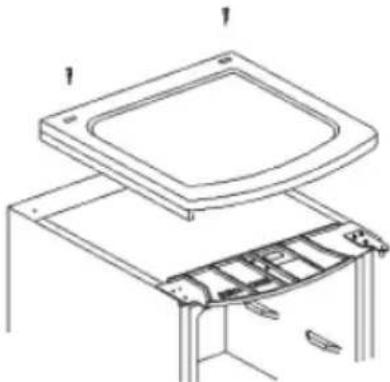
- Remove the screw covers.
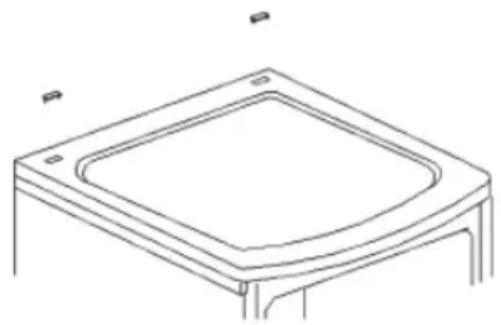
- Take out the screws and remove the entire top cover.
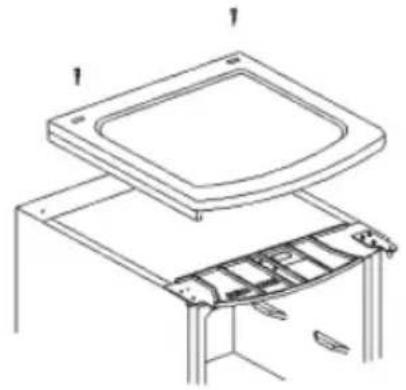
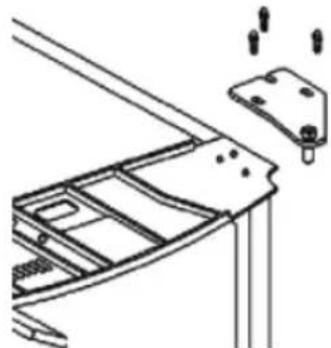
- Take off the upper hinge by removing the 3 screws. Take off the upper door and place it on a soft surface to protect it from scratches.
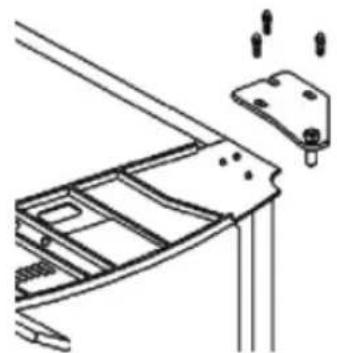
- Pull out the two bolts which hold the centre hinge in position. Take off the lower door and place it also on a soft surface to protect it from scratches.
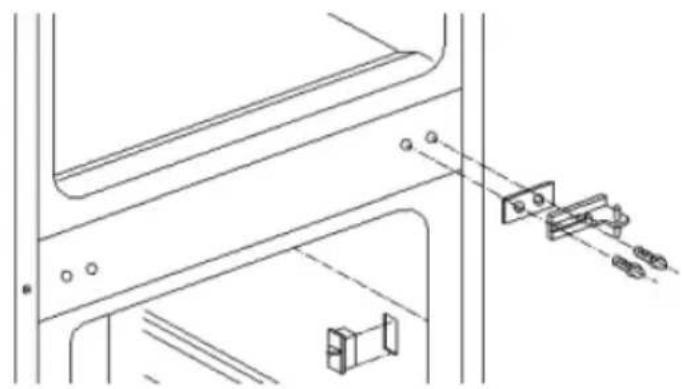
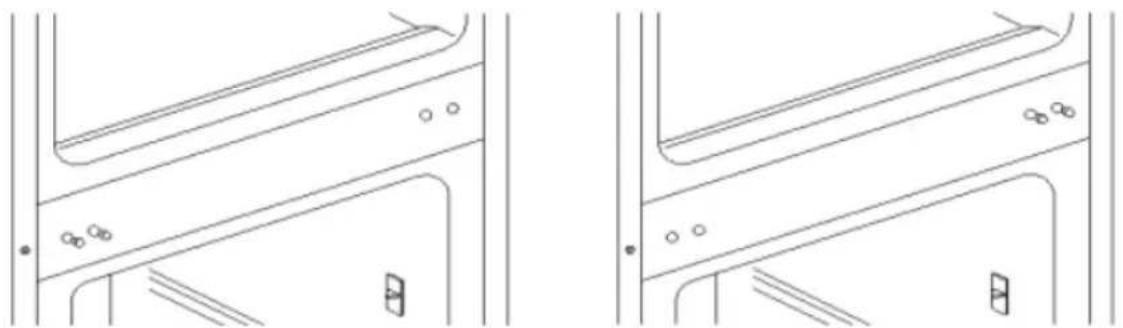
- Remove both of the blind covers for the hinge mounting holes on the left, and replace them in the corresponding places on the right.
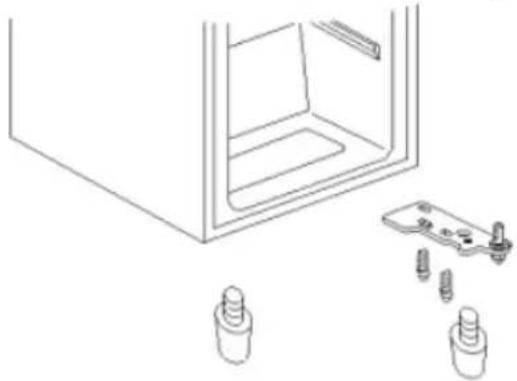
- Remove both adjustable feet and the screws holding the lower hinge.
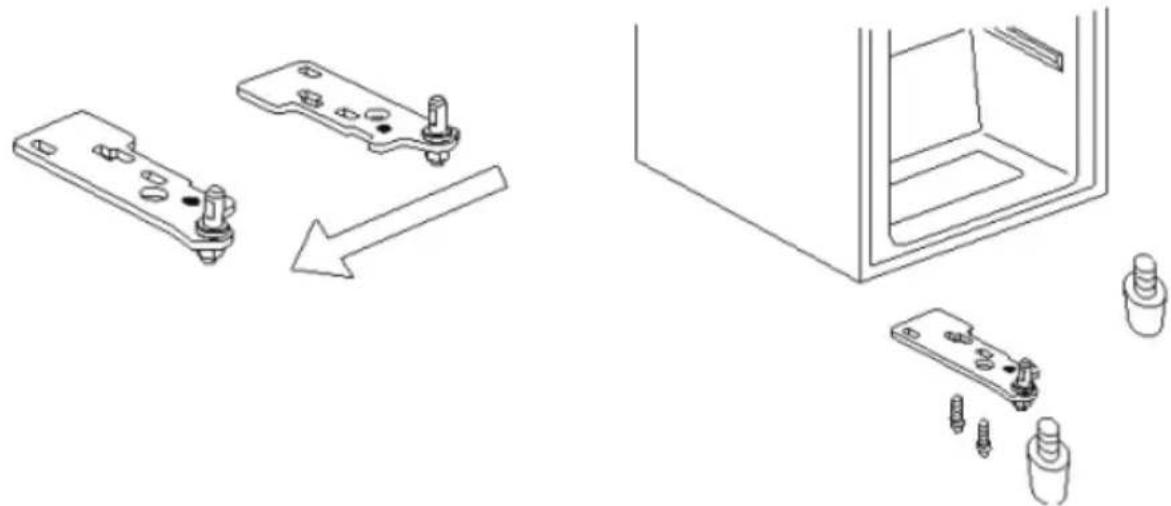
- Remove the lower hinge and turn it round through 180^ . Unscrew the hinge pin and mount it on the opposite side of the hinge. Now fit the lower hinge on the left-hand side. Replace the two adjustable feet. Fit the door of the freezer cabinet on to the lower hinge pin.
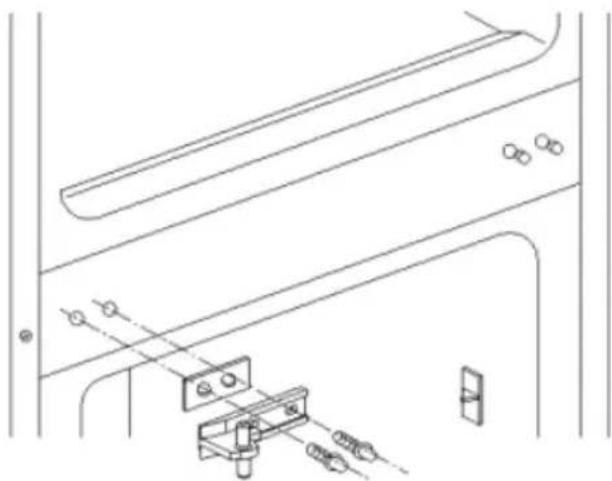
- Turn the centre hinge round through 180^ . Place the hinge pin into the corresponding opening in the door of the freezer cabinet and secure it by fitting the centre hinge to the unit. Mount the door of the refrigerator cabinet onto the centre hinge on the unit.
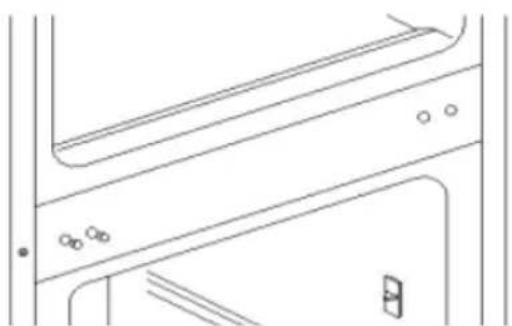
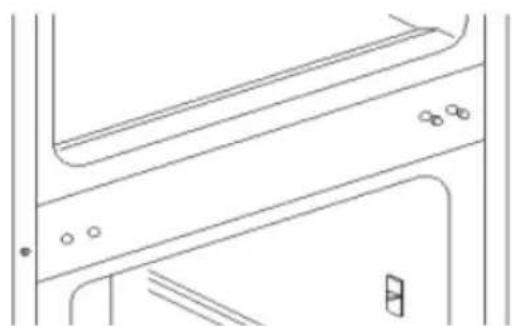
- Remove the screws from the left-hand upper section and replace them on the opposite (ie the right-hand) side of the unit. Take off the plastic corner piece from the left and replace it on the right.
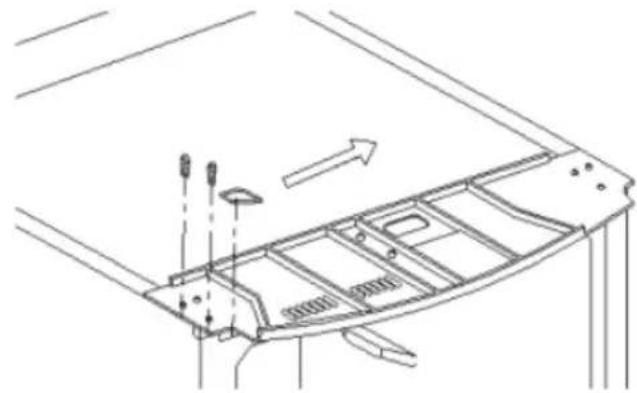
- Turn the upper hinge round through 180^ . Remove the pin and replace it on the opposite side of the hinge.
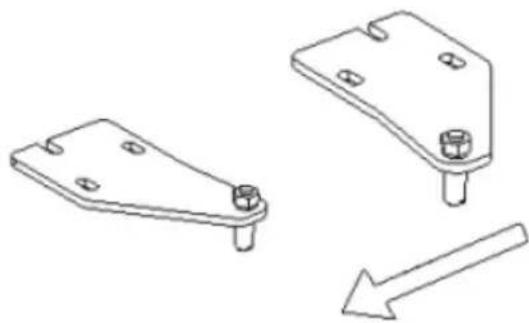
- Place the hinge pin into the corresponding opening in the door and secure it by fitting the upper hinge to the unit.
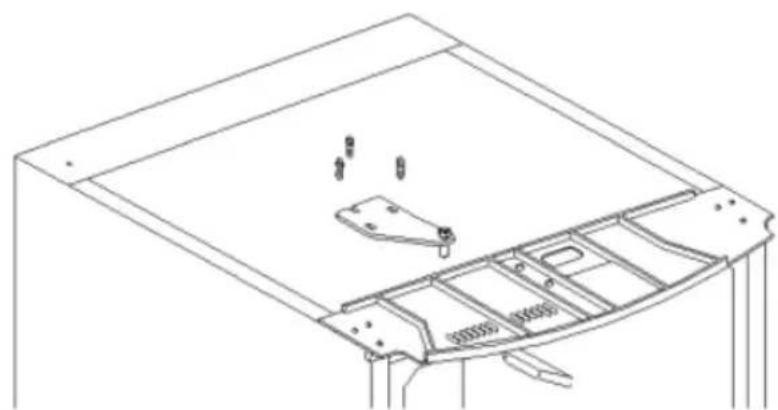
- Replace the top cover and insert and tighten the screws. Finally, replace the two screw covers.

Warning
Once the unit has been put back in its upright position, it must not be connected to the mains for at least two hours.
Controls and interior lighting
The unit is activated by connecting it to the mains. It is only switched off completely when the plug is removed from the wall socket.
In position '0', the cooling function is switched off, though the appliance is still connected to the mains.
The temperature in the refrigerator cabinet can be adjusted by using the temperature control. We recommend setting the control initially to position 3. After a certain time, the actual temperature should then be checked with a thermometer, and adjustments made if necessary. Turning the temperature control clockwise will decrease the temperature, while turning it anti-clockwise will increase it.
Changing the interior light bulb
Switch off the unit by disconnecting it from the mains. -
Use a suitable screwdriver to remove the screw from the lamp cover. -
Slide the cover a little to the rear and take it off. -
Replace the defective bulb with a new one (max. 15 W, socket type E 14). -
Slide the cover back into position and replace the screw.
Reconnect the unit to the mains. -
Deep-freezing and storing food
- With an operating temperature of -18^ and below, the freezer compartments can be used to store frozen or pre-frozen food for several months, to make ice cubes and to freeze fresh food.
- Fresh (i.e. non-frozen) or warm food must not come into contact with already frozen food; this prevents frozen food from becoming partially thawed.
- Prior to freezing, fresh food (e.g. meat, fish, minced meat) should be divided into smaller portions suitable for use after thawing).
- When storing pre-frozen food, strict attention should be paid to the manufacturer's information provided on the packaging. If no such information is to be found, however, a storage period of 3 months from the date of purchase must not be exceeded.
- When buying frozen food, verify that the food is properly frozen, and that the packaging does not show any sign of damage.
- To maintain the quality of deep-frozen food, it should only be transported in suitable containers and then placed inside the freezer without delay.
Carefully check the packaging when buying frozen food: if the packaging shows signs of - moisture, has bubbled up or is bulging, it indicates that the food may not have been stored properly and has spoilt.
- The storage times for frozen foods largely depend on the ambient temperature, the temperature control setting, the type of food and the time between shop and freezer, but mainly also on how often the freezer door is opened and how long it remains open. Always follow the instructions given on the food packaging, and do not exceed the specified maximum shelf life.
- Suitable packaging materials for frozen food are transparent (i.e. non-coloured) plastic foil, bags or aluminium foil. The packaging materials should be well aired before use and then checked for air-tightness before freezing the food. We strongly recommend that you label every item stored
in the freezer with all relevant information such as type of food, freezing date and use-by date. Do not put food inside the freezer compartments unless it has been properly packed.
The time required to freeze food may be shortened by dividing it into smaller portions.
- Do not attempt to deep-freeze carbonated beverages, warm food or any kind of bottled liquids.
- Frozen food can be defrosted in the refrigerator. This way, the food is defrosted at a slower rate, retaining its taste. Furthermore, the frozen food helps to keep the temperature inside the refrigerator at its intended level.
Use-by dates for frozen food are specified (in months) in the table below. Do not exceed these storage times. Always observe the information provided by the manufacturer of the product in question.
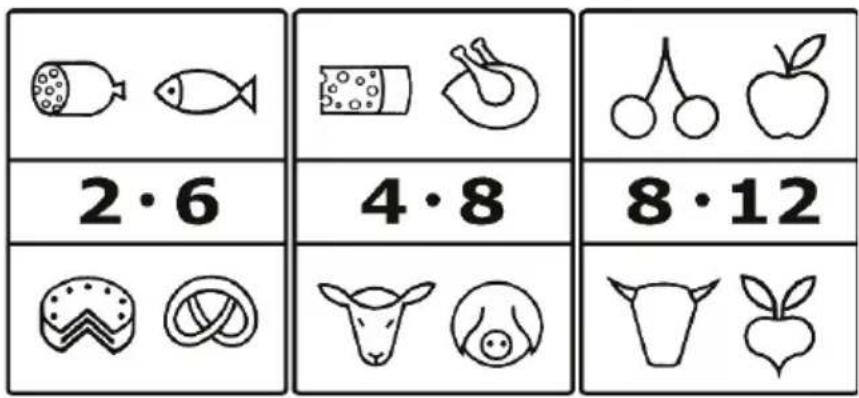
- The storage time will decrease if the internal temperature has increased, e.g. as a result of a malfunction.
Refrigeration cabinet
The temperature inside the refrigerator depends mainly on the ambient temperature, the temperature control setting and the amount of food stored.
- Initially, the temperature control should be set to position 4. If the cooling effect is too strong, lower it to position 1-3; if it is insufficient, raise it to 4-8.
If you notice frost on the rear wall, the most likely cause is that the door has been left open for too long, or that warm food has been placed inside the refrigerator or that the temperature control has been set too high.
Liquid or strong-smelling food, or food which is likely to absorb strong odours (e.g. cheese, fish, butter), should be stored separately or in hermetically sealed containers. Do not store bananas inside the fridge, as they are sensitive to cold. - Warm food should be left to cool down to room temperature before being placed in the refrigerator.
- Because of the way the air circulates, the different areas of the refrigerator cabinet are affected differently.
The coldest area is around the rear wall and in the lower part of the cabinet, and is most suitable for storing delicate food such as fish, cooked or fresh meats or cold-cuts.
The warmer area is around the door and in the higher part of the cabinet, and is suitable for storing cheese, butter and similar items. In this way, the cheese will keep its flavour, and the butter will remain spreadable.
- Always ensure that the door is properly closed and that the seal is not obstructed by food stored inside the cabinet or door.
Making ice cubes
A special ice-cube tray is provided for making ice cubes. Fill the tray 3/4 full with drinking water and place it in the freezer compartment. The ice cubes are easier to remove from the tray if the tray is left standing at room temperature for 5 minutes.
De-frosting and cleaning
- Caution: Always remove the plug from the wall socket before cleaning or defrosting the unit.
- Always keep the interior surfaces as well as all plastic parts free of fatty or acid substances, sauces etc. However, should any of those parts become unintentionally contaminated, they should be cleaned immediately with warm, soapy water or a mild detergent. Wipe all parts thoroughly dry afterwards.
The door seals should be frequently cleaned. - - The condenser of the unit should be cleaned at least once a year using a soft brush, electrostatic cleaning cloths or a vacuum cleaner. The build-up of dust will otherwise cause an increase in energy consumption.
- All accessory parts may be cleaned using warm, soapy water. Do not put them in a dish-washer.
- Remark: Do not use grainy cleaning materials or any acid, alcohol or spirit-based cleaning agents. We do not recommend the use of coarse cloths or sponges. Do not use any electrical appliances, such as steam cleaners, for de-frosting or cleaning.
Refrigerator cabinet
The refrigerator de-frosts automatically during operation. Any ice accumulating at the rear of the cabinet will melt during the periods when the compressor is not active. The melt-water runs through the drain channel and is collected in the evaporation tray from where it is absorbed into the air.
- To enable the melt-water to drain freely, always ensure that the channel and discharge opening in the cabinet are free of any blockage. The drain channel should be frequently cleaned.
- To prevent any unpleasant odour, the cabinet and shelves should be cleaned at least once a month using warm water and, if necessary, a mild detergent. Always disconnect the unit from the mains before cleaning.
Take care not to remove or damage the rating plate inside the cabinet during cleaning.
Freezer cabinet
To prevent the build-up of ice exceeding a thickness of 5mm , the freezer cabinet should be de-frosted at least twice a year. Proceed as follows:
- Remove the plug from the wall socket to disconnect the unit from the mains power.
- Remove all food from the freezer, place it into a plastic container, add pre-frozen freezer-packs and cover the container to keep the inside temperature down.
- Leave the door open.
Warning: Do not use any external device or other means (e.g. heaters or heating fans) to accelerate de-frosting.
After de-frosting, the freezer cabinet should be thoroughly cleaned using warm water and, if necessary, a mild detergent. Wipe thoroughly dry and air afterwards before using again.
Trouble-shooting
Certain typical sounds can be heard when the appliance is switched on. These sounds are:
- caused by the electrical motor within the compressor assembly; during compressor start-up the sound level will be slightly higher for a limited period of time.
- caused by the cooling agent flowing through the circuit. -
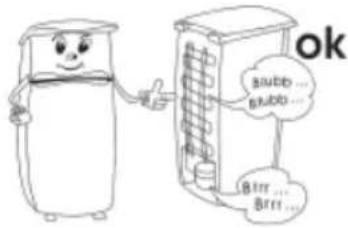
The following table lists the possible malfunctions, their probable causes and solutions. In the event of operational problems, check first whether a solution can be found using this table. If the problem persists, disconnect the appliance from the mains power and contact our Customer Service Department.
| Problem Possible cause and solution | |
| The appliance is connected to the mains, but does not operate. | The wall socket has no power, or there are contact problems. Check the wall socket and the plug. |
| Abnormal noise can be heard during operation. | Either the unit has been improperly set up (e.g. on an uneven floor) or there is contact between the rear-mounted cooling circuit and the power cord, the wall or other object or surface. Verify that all installation instructions in this manual have been correctly complied with. |
| Water is collecting on the bottom of the unit. | The melt-water drain system is blocked. Remove the blockage and clean the system. |
Transporting the unit
The unit must be transported only in its vertical position.
Do not tilt it to more than 45^ . During transport, ensure that the unit is properly secured and protected against shock, vibration and shifting.
Disposal

This appliance has been manufactured from recyclable materials. After removing the plug from the wall socket, the unit should be rendered unusable by cutting off the power cord before being disposed of through special waste collection points in accordance with local
regulations. The refrigerant and the chemical agent in the insulation foam must be disposed of through a competent agency. Take special care not to damage the cooling circuit before the unit is handed over for competent disposal.
Guarantee
This product is guaranteed against defects in materials and workmanship for a period of two years from the date of purchase. Under this guarantee the manufacturer undertakes to repair or replace any parts found to be defective, providing the product is returned to one of our authorised service centres. This guarantee is only valid if the appliance has been used in accordance with the instructions, and provided that it has not been modified, repaired or interfered with by any unauthorised person, or damaged through misuse.
This guarantee naturally does not cover wear and tear, nor breakables such as glass and ceramic items, bulbs etc. This guarantee does not affect your statutory rights, nor any legal rights you may have as a consumer under applicable national legislation governing the purchase of goods. If the product fails to operate and needs to be returned, pack it carefully, enclosing your name and address
and the reason for return. If within the guarantee period, please also provide the guarantee card and proof of purchase.
Information needed by the Customer Service
Should repairs to the appliance become necessary, please contact our Customer Service, providing a detailed fault description and quoting the model number KS ... on the rating plate of the appliance (see picture). This information will help us to handle your request efficiently.
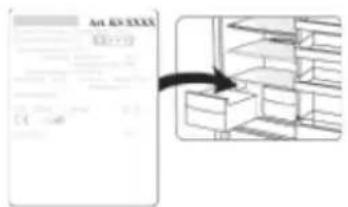
In case of any malfunction or other problem, please contact our Customer Services Department. The address can be found in the appendix to this manual.
Technical specifications
| Model no. KS 9765 | |
| Type of appliance Fridge/Freezer | |
| Energy efficiency classification in compliance with directive 94/2 EC A+ | |
| Energy consumption : kWh/24 h kWh/year | 0.61 223 |
| The actual consumption depends on the pattern of use and the location of the appliance | |
| Total gross volume, (litres) 215 | |
| Usable refrigerator capacity (litres) 170 | |
| Usable freezer capacity (litres) 45 | |
| Climate classification N | |
| Ambient temperature range, °C 16 - 32 | |
| *** | |
| Safe storage time in case of malfunction, h 12 | |
| Freezing capacity, kg/24h 3 | |
| Freezing temperature, °C -18 | |
| Dimensions (mm) 1445 x 550 x 570 | |
| Weight (kg) | 51 |
| Electrical specifications | See rating plate |
| Insulation foam | Cyclopenthane |
| Noise emission | 40 dB(A) |
Chère Cliente, Cher Client,
-
IIepeI pa3MopajkNbaHnEm,
-
IpeepNcTkoN.
-Даньиэлкгрпбop He npedha3HaueH nIЯ nCIOJIb3OBaHn6e3 npncmOTpa Iuamn (BkIIOyAЯ DeTe) c orpaHnueHHbIMn Φn3NueCKnMn, ceHCOPHbIMn IIN yMCTBeHHbIMn CIOco6HOCTaMn, a TaKKe IINaAMn, He O6laIaIOUIMN IOCTaTOUHbIM OIIbITOM N yMeHNem, IOKa IInIO, OTbeuaOuiee 3a nx 6e3OanacHoctb, He O6yHT nx O6paIeHNIO c IaHHbIM 3IeKgPpH6Opom.
He octabTnIe ITei 6e3 npuCmToPa, TTO6bIOHn He HauaIIu rpaTb c 3JIeKTpOPIpu6Opom.
B coOTBeTcBnC Tpe6oBaHnMa IpaBnI TexHnKn 6e3OanacHocTn N IJIa NCKIIOyeHn BO3MOJHO TpaBMaTH3Ma IIO6o peMOHT 3TOr OyCTPOINCTBa IIN BHeceHne I3MeHeHn B eRO KOHCTpyKIIIO, BKIOUaI IN 3aMeHy IIHypa IIITaHnI, IOJIKeH IIpoN3BOIDtbcr HaIM aBTOpN3OBaHHbIM CepBnCHbIM IIepCOHaIOM.
MblocTabIaem3aco6oIpaBO BHOCHTb N3MeHeHnB KOHCTpyKIIIO I3JeJIa.
EcnXoIOJIbHnK He 6yIeT NcIOJIb3OBaTbcra B TeueHne IInTeJIbHOro IIepNOJa BpeMeHN, Mbl peKOMeHJyEm OCTaBHTb IBepu OTKpbITOn.
- Пи побадже Илп поедачесангоги Третьс CTOPОЕ Илп ри erо пебачь в COOTBeTCTByOuIyO opraHn3aIINO IлЯ певра6OTKN yTuIN3aIIN Heo6xOДМо O6paNTb BHMaHne Ha HAIpyIOIero areHTa - «IInkIoIeHTaHa», a taKke xlaJaReHTa R600a.
YcpoNCTBO
AIIIpaT COCTOHT I3 IByX YactTei, MOpO3NlBHOJ KaMepbl XOIOINlBHOJ KaMepbl.
- IOTOK IIJIII INIIOROTOBIIeHNI Ky6NKOB IIbJa
- PenuTeTuTaI IouKa
- PeryIaTOp TeMIIepaTypbI IN BHyTppeHHee OCBeIeHHe
4.ПОДКИДЯхангЯ ПОДУKTOB (peRyIINpyeMbIe IO BBICOTE)
5.ПолkaДЯХpaHEnIpyKTOB - OTdJIeHnI xpaHeHHy pkyKTOB n OBOIeN
7.ДВернЯ ПОЛКа
IpeepBbIM BKIOUeHHeM
IIOHOCbIO ydaIITe BHeIHHe N BHyTpeHHne yHaKOBOuHbI MaTePnaJIbI, BKJIouaI N KJIeIKyIO - IeHTy.
- IpeynpeKJeHne. IepKnte yIaKOBOuHbIe MaTePnAJIbIB HeIOCTyIHOM IJIa IeTeN MeCTe, TAK KAK OH N IpeIcTaBIAOT OIIaCHOCTb YUIIIBJ.
IIa o6JIeHn yCTaHOBKn Mbl peKOMeHJyEM BaM cJIeTKa HaKIOHHTb aIIIapat Ha3aI. B 3TOM - IIOJOKeHH IIa IIpeMeIeHn aIIIapaTa K HUxHOMy MeCTy YcTAHOBKn MOxHO NcIOJIb3OBaTb TpaHCIOPTnPOBOOHbIe POIKN.
06ecIeYbTe,IOXaJIyIcTa,IpaBnIbHyU yTINImaIuHO yNaKOBOUYHbIX MaTePnaIOB.-
IpeB KIOUeHnEM XOIOINbHnKa B CeTb ERO HxKHO TIIaTeIbHO IPOBepNTb Ha HAnuHe BO3MOXHBIX IOBpeKJeHn BO BpeM TpaHCIOPTNPOBKn, BKIOuaN IIHyp IITAHn.
BbMOte XoIOJIbHbK B COOTBeTCTBnC yKa3aHnMaN, IaHHbIMn HnKe B pa3JePa3mopaxubahue u uucmka.
YcTaHOBka
XoIOINbHnK IOJKeH 6bITb yCTaHOBHe B cyXoI KOMHaTe C xOPOIIeBcHTNJIuIe. OH IOJIkeH pa6oTaTb IIpu OKpykaIOUeI TeMIIepaType ot 16 IIO 32 ^ C n IIpN OTHOCTeBHOn BlaXHOCTn He 60JIee 70%. He IIOIBepraIte XoIOINbHnK BO3JeICTBnIO IIpMaOro COJIHeuHO r CBeta n He yCTaHaBnBaIte erO B6NI3n IIO6bIX NCTOCHNKOB TEIIa (paINaTOPOB, KXYOHbIX IINT n T. I.).
3aHnH 6OKOBbIE CTeHKXoIOINbHNKa IOJKNbI OTCTOHTb OT CTeHbI He MeHee Yem Ha 10 cm.
He yctaHaBnBaIte aIInapaT B IIkaΦy IIN HeNocpeCTBeHHO IOJ HaBeCHbIM KYXOHbIM IIkaΦOM, IONKO IIN IIOIO6HbIM IpeIMeTOM.
IpoBepTe,TO IBePua MoKet CBO6oJHO OTKpbBaTbcn Ha 160°.
B cIyuae, ecII IIOI HEPOBHbI, IIIA KOMIIIEHCaIIIN N O6ecIIueHn IOTIMaIBHOYCTOuHBOCTN MOKHO NCIOJIb3OBaTb HOKKN XOIOJINJBHnKa. XOIOJINBJHnK IOJKeH 6bITb YCTaHOBJIeH IOI He6OJIbIIMM yIOM: TaK, YTO6bl OH HAJIIOHeH Ha3aI: B 3TOM cIyuae IBePua 6yJeT 3aKpbIBaTbcA ABtOMaTHueckn I ee HeJIb3A 6yJeT OCTaBHTb OTKpbIToI PO OIINo6Ke. KpOME 3Toro y6eIInTeCb, YTO 06e IIpeIHHne HOKKN yCTaHOBJIeHbI Ha OINHaKOBoB Blicote.
BeHTnlaa
HarpeBb BO3yX DOJIxH CBO6OHO UINPKUINPOBaT BIOJIb 3aIHeN CTeHN XoIOJINbHNka. IJIa 3TOrO cIeIyET y6eINTbcra B 6ecPiPeIaTCTBeHHO INPKUIN BO3yXa 3a XOIOJINbHNKOM.
IpepeHaBeHnBaemA IBePua
KoHCTpyKIIy XOIOJIbHNka IIO3BOJIeT IpeHaBeIINBaTb IBePcY, To eCTb ee MOJHO IpeHaBeCITb c IIpaBbIX IIeTeJIb (3aBOJcKa yCTaHOBKa) Ha IeBbIe.
Ipei IpeHaBeHbAHem IBepBbI IOCTaBBTe XoIOJIbHnK Ha 3aIHIOcTeHKy. OHaKO Ipei 3Tm y6eINTecb, YTO OH cTOUT Ha MmIKo POBHO IOBepXHOCTN, YTO6bI He IOBpeINt b KaIIIIpHbIe Tpy6Kn.
BHHMaHHe! IIpeKJIe Yem IIpNCTUHTb K IIpeHaBeIINBaHNIO IBePcIb, BbIKIOHTe XoIoIINbHnK n OTcoEIMHITe erO ot cetn.
- CHIMMTE KpbiiIKBnHTOB.

- BbBnHTte BNHTbI n CHMnTe BepXHIOU KpbHkY XoIoJnlbHnKa.
- CHIMITE BepxHIOI IeTIO, OTKpyTIB 3 BnHTa. CHIMITE BepxHIOI IBePuy I IOJIOJNTE ee Ha MrgkyIO IOBepxHOCTb, YTO6bl 3aIINITb OT IapaiHH.
- BbHbTe o6a BnHTa, KOtOpBte yIepKnBaIOT IeHTpaJIbHyIO IeTIIIO. CHIMITE HIXHIO IO Bepeu I TaKKe IIOJoxNTE ee Ha MArKyIO IOBepXHOCTb, YTO6bI 3aIITNTb OT IapaiHH.
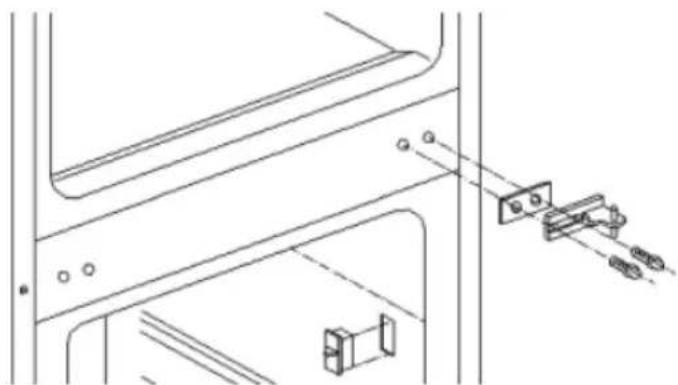
- CHIMITE o6e ngxne KpbHKn c MOHTaXhBix OTBepCTn NeTn N IpepcTaBBte Hx Ha COOTBeTcTBYIOIIne MeCtHa IIpaBOI CTOpOHe XOIOINbHNka.
- CHIMITE o6e perynpyembe HOKKN BnHTb KpeIIeHn HIXKHe IIeTIN.
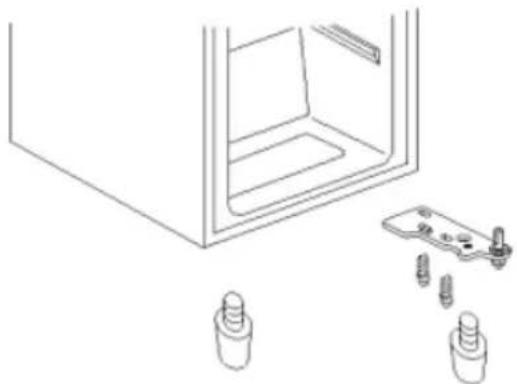
- CHIMITE HIXKHOIIO IeTIO N pa3BepHInTe ee Ha 180°. BbIBHTITE cTepeHb IeTIN N yCTaHOBTe erO HA IIPOITBOIOIOJXHyIO CTOpOHy IeTIN. IocIe 3TOrO YcTAHOBTe HIXKHOIO IeTINo Ha IeBYIO CTOpOHy aIIIapata. YcTAHOBTe Ha MeTo O6e peryInpyeMbIe HOKKN. YcTAHOBTe IBepy MOpO3HbHOI KaMepbHa cTepeKeHb HIXKHeIeTIIN.
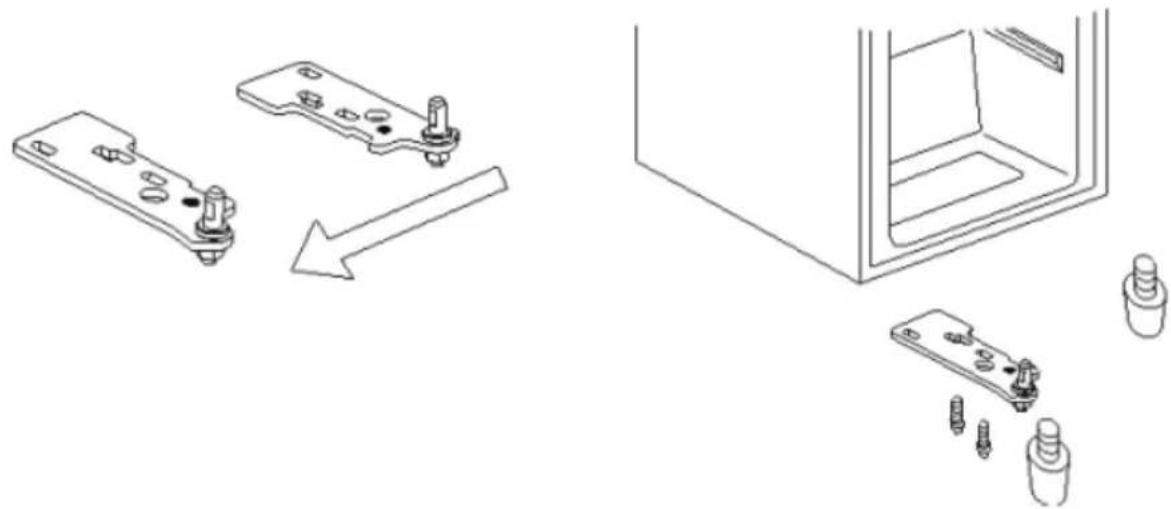
- Pa3BepHnTe IeHTpaJIbHyIO IeTIIHO Ha 180°. BcTaBBte cTepeKHe b IeTIN B COOTBeTCTBYIOIe ee OTBepCTne B IBePte MOpO3NIIbHO KAmepbI N 3aΦNKcnpyIe ee, yCTaHOBN H a XoIOJINbHNK IeHTpaJIbHyIO IeTIIIO. YcTaHOBnTe IeBepuY XoIOJINbHO KAmepbI Ha IeHTpaJIbHyIO IeTIIIO aIIIapata.
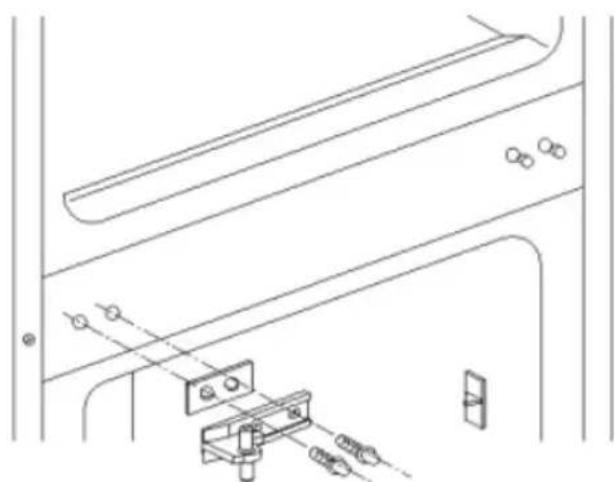
- BbHbTe BnHTbI n3 IeBOB BepXHei ceKuIM N yCTaHOBITE IX Ha IIpoTbBOIOJIOxHO (To eCTb Ha npaBO) cTOpOHe aIIapata.
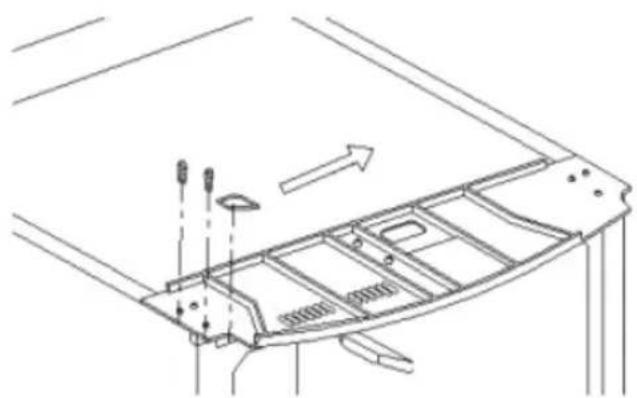
- Pa3BepHnTe BepXHIOI IO neTIO Ha 180°. BbIHbTe cTepeKHe b yCTaHOBnTe erO Ha neTIO C IpoTNBOIOJIOJHOI CTOpOHbI.
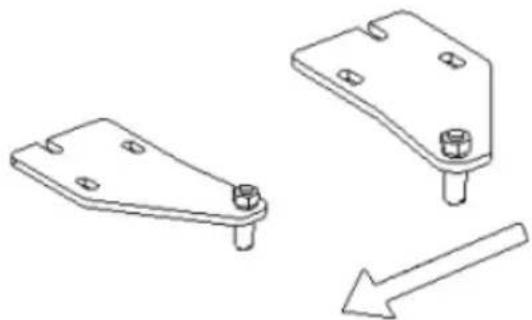
- BCTaBbTe cTepKeHb IeTIN B COOTBeTcTBYIOJIe e OTBepCTne B IBePue N 3aΦHKcnpyIe ee, yCTaHOBnB Ha XoJIoNIIbHNK IeHTpaJIbHyIO IeTIIO
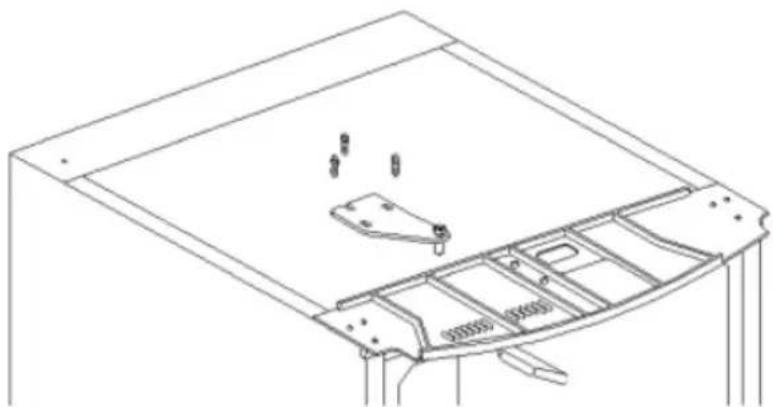
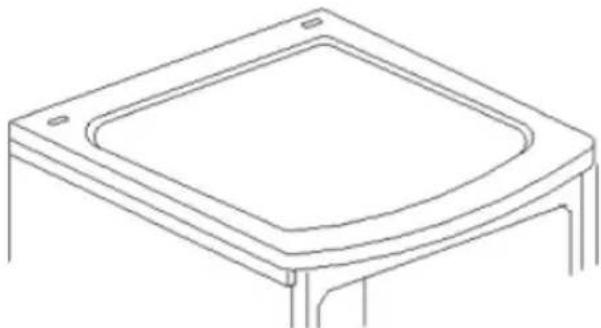
- YcTaHOBnTe Ha MeCTO BepxHIO KpbIHKy, BcTaBBte N 3aTaNTE BnHTbI. Iocne 3TOYcTaHOBnTe 6paTHo 06e KpbIIKN BnHTOB.
Ipeynpekdenie!
IocJIe 6bTHOrO IIpNBcEHHaIIapAaB B BePTnKaJIbHoe IIOJOKeHHe He BKJIHOaYte erO B cETb paHee, Yem Ype3 IBa Yaca.
Oprhbly npabHeHHn BHyTppeHHH NoDCBeTka
AIIIapat HaunHaet pa6oTaB IIpN IIOKJIIOUeHm eO K cETn. IIOHOCTbO OH OTKJIIOuaTcR ToIbKO Iocne N3BLeueHn CeTeBOI BUNKn n3 p03eTKn.
IIpn yctaHOBKe pyuKn B IIOIOKeHne '0' yHKnna OXIAJKeHnO TKNIOHaeTc, OHaKO aIINapat BCE eIe OCTaeTc HOKIOHoyEHbIM K cETN.
Tempepatya B xoioiHbHO Kamepe perynpyeTc pykoepyIaTopa Tempeatpy. Mbi peKOMeHJyem cHauJa yCTAHOBnB pyky B IOIOKeHne 3. IIO nCTeueHN HeKOtOpO BpEmHo MOxHO IIPOBepNTb TeKYUTo TEMpepatyp np NiHOMOn TepMometpa N ecnn Heo6xoIIMO,
otperynilpoBaTbe ee. Ipn noBopote pyuKN peryIaTopa TeMnepaTypbI NO yacOBo CTpeJIke TemnepaTypa IOHnJkaeTcA, a IIprnIOBOPote IpiOTNB YACOBO CTpeIKN - IOBbIIaEeTcA.
3aMeHa lamnoku bHymppeHnezo ocbeuehenu
BbIKIOUHTe XOIOIINbHnK,OTCOEINHBeroOT cETN.-
BbIBHTTe BnHT KpeIIeHn KpbIuKn IaMIOUKn IOxOJaIeI dIa 3TOrO OTBePTKOJ. -
CdBnHbTe KpbIHKy HEMHOrHa3aI IN CHMNTe ee. -
3aMeHnTe HeNCpPaBHyIO IaMIOUky HOBOI (MOIHCtBIO He 6OJee 15 Bt, TNI IOKoJIe E 14).
YcTaHOBNTe KpbIiKy Ha MeTo I 3aBnHTnte BnHT KpeIIeHna. -
POncoeHnHTe XoIOuINbHNK cETn. -
3aMopaxmbaHne HxpaHeHne IpoDyKTOB
IIpn pa6oey temnepaType -18^ n HnKe OTeJIeHnM OPO3HbHO Kamepb MoKHO -NCIOJIb3OBaTb IJIA XpaHeHn 3aMOpOKeHHbIX IINI IIpeJBapNTeJIbHO 3aMOpOKeHHbIX IIPOJyKTOB B TeUeHne HeCKOJIbKHX MeCAIeB, IJIA IIpNIrTOBJIeHnKy6IKOB IbDa N IJIA 3aMOPaKUNBaHn CBeJNX IIpoJyKTOB.
CBeKHe (To ecTb He 3aMOpOKeHHbIe) NII TeIIbIe IpoIyKTbI He IoiJXHbI COIIpHKacTaBcA cyKe - 3aMOpOKeHHbIMN IIpoIyKTaM; 3TO IIpeIOxpaHnEe 3aMOpOKeHHbIe IpoIyKTbI OT YactNUHOro pa3MopaxuBaHn.
Ipeπ 3aMopaxnBaHne CBeKne IpoJyKtby (To eCTb Mxco, pbl6a, MxchOn φapⅢ) ΠOJIKNbI - 6bITb pa3deneHb Ha MeJkne IopuH, IprIgOJhble IJIY NcIOJb3OBAHn Iocne OTaNBHa.
IprxpaHeHHn IpeBapHTeHbHO 3aMOpOjKeHHbIX IpoDyKTOB ocO6oe BHHMaHne cIeJyET - o6paTntb Ha yKa3aHnna IpoN3BOUInTeJI, HaxOJaIInceHa yIIaKOBke. EcIi TaKoi INΦopMaunn Ha yIIaKOBKe HeT, BpeMxPaHeHHn IpoDyKTOB IocIe IaTbI IX IOKYIN He IOnJXHO IIpeBBHAtb 3 MecaIeB.
Ipi npkyiKe 3aMOpOjKeHHbIX npOyKTOB cIeIyET IPOBepNTb, YTO npOyKToB 3aMOpOjKeHbI -HaJIeJkaIIM M o6pa3OM n yTO Ha yIIaKOBKe HET HNKaIKX cIeIOB IIOBpeJdeHn.
YTO6bI COxpaHnTb KaueCTBO Iy60Ko3aMOpOxeHHbIX IpOdyKTOB, INX CneIyET NepeBO3HTb - TOJIbKO B CIIeINaJIbHbIX KOHTeHepax, a 3aTeM HeMeIJIeHNO NOMEaTb B MOpO3NlBHyIO KaMepy.
TtataeIbHO npOBepaTe yIaNKOBY pRn NOKyNke 3aMOpOKeHHbIX IPOyKTOB:ecHn Ha yIaNKOBE - MeIOCTc CteBbI BlaRn, OHa IIy3bIPNTcN INN BCIIyHeHa, 3TO CBUdTeJIbCTByeT O TOM, YTO IPOyKTbMOrIN HeIIpaBUNbHO XpaHHTbcN 6blIN NcIIOPYeHbI.
CpOKn XpaHEnn 3aMOpOKeHHbIX PPOyKTOB B 60JIbIIIOI CTeIeHN 3aBNCrT OT OkpyKaIOIIeien -TeMIIEpaTpybl,OT yCTaBKN TeMIIEpaTpybl,OT TINIIa IPOyKTOB IN BpeMeHN,KOTOPOE IPOIIIO OT IOKyIKN IPOyKTOB IO IX IOMeIIeHN B MOpO3NlBHyIO KaMepY,HO IIAABHbIM O6pa3OM TaKKe OT TORO,KAc YAcTo OTKpbIBaIacb IBepua MOpO3NlBHOJ KaMepbI N KaK JIoTIo OHa OCTaBaJIacb OTKpbITOn. BcerTa cIeIyIte yKa3aHnIaM Ha yPaKOBKe IPOyKTA N He IpeBbIaIte MaKcImMaJIbHbI CpOK TOIDHOCTN, YKa3aHHbI Ha yPaKOBKe.
YIIaKOBOuHbIe MaTePnAJIbI, IIpIroIHbIe IJIa 3aMOpOKeHHbIX IIpoDyKTOB, IOJIxHbI 6bITb N3 - IIpo3paUHO (TO eCTb, He ICBtHO) IIaCTNkoBOJ OJIbI INI NaKeTob IIN IIN 3 aIIOHMHeBOJ OJIbI. IpeE3aMopaxNBaHNem IIpoDyKTOB yIIaKOBOUHbIE MaTePnaJIbI Heo6XoDNMO TIIaTeJIbHO IIPOBeTpHTb, a 3aTEM IIPOBepNTb, He IIPONYcKaIOT IIN OHN BO3dYX. Mbl HAcToTaeJIbHO peKOMeHdYEM Bam HaHocHTb 3TNKeTKy Ha KaXdbI II POdyKT, XpaHraIiNcB MOp03NJbHO J Kamepe, cyka3aHNem TAKOI Heo6XoDNMO IHΦOpMaIIN KAK TII, IaTa 3aMopaxKBaHnI n cPoK rOJHoCTN IIPOyKTA. He KlaIIne IIINeBBe IIpoDyKTBIB OTJeIeHnM MOp03NJbHO KAmepbI 6e3 HaJIeKaIeYIIaKOBKn.
BpeM 3aMOpO3KN MOxHc oKpaTHTb, pa3IeINB 3aMopaxNBAeMbIe IpoIyKTbI Ha He6oJIbIIHe - IopuH.
He IIbIaITeScb IOIbEpratb Ipy60Ko3amOpO3Ke ra3nPoBaHHBie HAnITKN, TeIIbIe IpOyKTbI
IINIO6bIE KINIOKCTN B 6yTBIKaX.
3aMopOxHeHHbI IPOyKbIMoJHO pa3MOpO3HTB XOIOJIbHOJ KaMepe. IIpN TaKOM cNooc6e - IPOyKbI pa3MOpAkaIBaOTcMaJeHHee, CcoXpaHeHem CBOero BKyca. Kpome TOrO, 3aMopOxHeHHbI IPOyKbTI IOMORAOT IOJIepKbATb HxKbI yPoBeHb TeMIIepaTpybI B XOIOJIbHOJ KaMepe.
CpOKI rOIOHocTH 3aMOpOKeHHbIX IPOyKTOB yKa3aHbI (B Mecraax) B HIXeIPNBBeHeHOI Ta6IIue. He IIpeBbIaIte 3TN cPOKI XpaHeHn. Bcerla O6paIaIte BHNMaHne Ha IHΦOpMaIIIO IPOIN3BOINTEJI PPOyKTA IN CO6IIoJaIte erO peKOMeHdaIIuN.
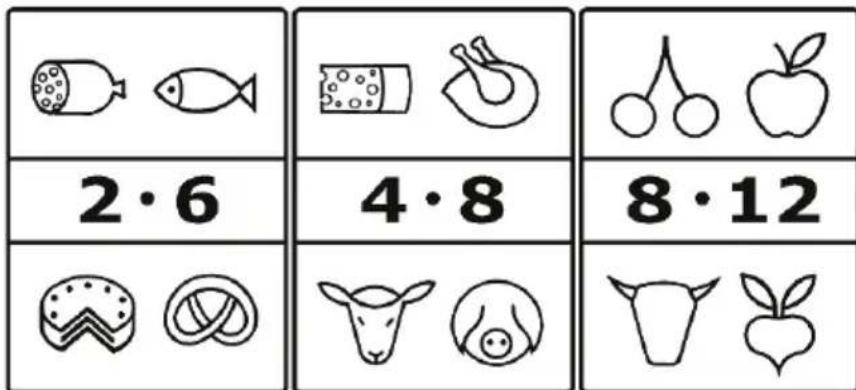
Korla TeMIIepaTpa B MOpO3NlBHO Kamepe IOBbIIaETcR, HApPmEp, Pn HeIOJaKe, cPOK - XpaHeHn yMeHbIIaIOTcR.
XoIoduIbnaJkamepa
TeMIIepaTpy BHyTpN XOIOJIINbHOJ KAMEpbI 3aBnCHT B OCHOBHOM OT OKpyKaIOIeI TeMIIepaTpybI, IIOJOKeHnPyuKn peYrJrTopa TeMIIepaTpybI N KOJIInueCTBa 3aIOJOKeHHbIX IIPOyKTOB.
Bhaaane cneyetycTaHOHTb pyky peryIaTopa TeMnepaTypb IB noIOKeHne 4. Ecn OxnaKdaIOoee neCTBne CnIIKOM cnIbHoe, eRO HxKHO IOHN3NTb, IpeBeJa pyKy B IIOJKeHne 1-3, a ecnn OHO HeIOCTaTOUHO, eRO HxKHO IOBBICHTb, IpeBeJa pyKy B IIOJOKeHne 4-8.
EcnBb3aMeTnHn HHe Ha 3aJHe cTeHKe, TO npuHHO TTO RBAIEcra, ckopee Bcero, To, YTO DBepua ocTaBaIacb OTKpyToCINIKOM IOIO HO Hn B XOIOJIbHyo KaMepy 6blna IIOJOKeHa TeIIaA INIIa INYCTaBkA TeIMpeaTypbI 6bla CINIKOM BbICOKoI.
KnIKoCTN, IpOyKTbI c CnIbHbIM 3aIaxOM IIN IpOyKTbI, IMeIOIIne CBOIcTB OIOIIouaTb CnIbHbIe 3aIaxn (HaIIpIMep, cbip, pb6a, CInBouHoe MacIo), Heo6XoIMo XpaHITb OTJeIbHO B repMeTNueckn 3aKpbItOn tape. He xpaHTe B XoIOJIbHnKe 6aHaHbI, IOTOMy YTO OHN YYBCBTBtJIbHbIK XOIOJy.
- IIpeKJcIe Yem IIOIOXHTb B XOIOIINbHnK TeIIbIe IPOyKTbI, IX cIeIyET OXlaIaNTb IO KOMHaTHoI TeMIIepaTpybl.
Pa3IINHbIe 30HbI XOIOJINbHOJ KaMepbl OXIAJauOTcI IO-pa3HOMy I3-3a OCObEHOCTeI INPKUJIIMN BO3dYxa B XOIOJINbHNKe.
Cama 0xlaKdaemah 3OHa HaxoHTc y 3aHHe CTeHKn B HnKHe Yactn KaMepb n Han6oJIee
IpiroHa IJI XpaHeHH JaIKKaTHbIX PpOyKTOB, TaKnx KaK pb6a, IIpiTOBJIeHHoe nIN
cbIpoe Mco NIM MChBle 3aKyCKN.
CamaTnHa 30Ha HaxoNTcY IBePbI N B BepxHe YacTN KaMepbI HaNoBJeepnroHa nXpaHEnH, HApnPmEp, Cbipa, CInBOuHOrO Macla N pyTnx IIOObHbIX IpOjyKToB. PpN eTOM cbipCOxpaHHT CBOI apOMaT, a MacIO OCTaHETc CIIOco6HbIM K Hama3bIBaHNIO.
Bcerda npOBepaTe, YTO IBePua IIOTHO 3aKpbTa, a RepMeTNUHOCb 3aKpbITn He HApYIIHeHa
IPOyKTaMn, IOMeHbIMN B KaMepy NIN BDbepu.
IIpuroToBJIeHne Ky6NKOB IIbIa
XOIOIINbHnK yKOMIIeKTOBaH cIeIaJIbHbIM IOTKOM IIЯ IIpIroTOBHeHnK Ky6NKOB IIba. HAnIOHNTE IOTOK Ha 3/4 IINTbeBOI BOIDI INIOCTaBBte erO B MOpO3NlBHyIO KaMepy. Ky6KN Ibda N3BIEKaIOTcR N3 IOTKa IerYe, ecIn OCTaBNTb erO Ha 5 MNHyT IIpr KOMHaTHoI TeMIIpepaType.
Pa3MopaJXnBaHne N YnCTKa
- BHHMaHHe! BcerIa BbIHMaIte IITeIceJIbHyIO BnIKy n3 po3eTKI nepeI YnCTKOJ mII pa3MopaxKBAHNem aIInapata.
BcerIa cIeIITe 3a Tem, YTO6bHa BHyTpeHHe IIOBepXHOCTN, a TaKKe Ha BCEx IIaCTNKOBbIX - YaCTIa XOJIIOIIIBHnka He 6blIO CIEIOB Jnpa IIN KNCIOHTbIX IIIIIEBbIX IPOyKTOB, COYCOB N T. II. BmecTe C Tem, B cIyuae cIyauHoro 3aIrp3HeHnA 3TNX YAcTeN IX cIeIyET HemeIeHHo BBIMbITb TeIIIOI MblbHO BOIO INM MRAKIM MOIOUM cpeICTBOM. IocIe 3tOrO BCE qactN HJxHO BbITEpeTB Hacyxo.
-ⅡBepHbIe yIIIOHTHeHnIcIeIyET IepNoIInueckn OUYIaTb.-
Icnapntb xoIOINbHnka HxKHO OuHuaTb He peKe Ondoro pa3a B rOi IIpiN IOMOHN MArKOJ - ⅢeTKN, 3JIeKTPOCTaTNuecknx caIfoetOK NII IN IIbIecoca. B IIpoTINBHom cIyueae OTIOKeHne cIIOI IN pINBeTe K IOBbIIeHNO pacXoJa 3JIeKTPO3Heprnn.
- Bce IIpuHaJIeJXHOCTN HUJXHO MbITb B TeIIOI MblbHOBJe. He KlaIaIte Ix B IOCyIOMOeHHyo MaIIHHy.
-Прмочи. He nCIOJIb3yIte a6pa3INBHbIe YnCTaIIne MaTePnAJIbI, a TaKKe KNCIOTHbIe IIN cInpTOcoJepKaIhne YnCTaIIne CpeIcTBA. Mbl TaKKe He peKOMeHdYem Bam IIOJIb3OBAbChr rpy6bIMn TkaHMyNII rY6KaMn. He nCIOJIb3yIte IIN pa3MopaxHBaHnI NII YnCTKN 3JIeKTPOIIpN6Opbl, TaKHe, KaK, HAnpIMep, NapOuNCTKn.
XoIodouIbnaI kamepa
Bo Bpempa60bXoIOJIbHaJa KaMepa pa3MopaxNBaeTcA ABTomatNueckn. HHei, 6pa3yIOIINcH Ha 3aIHei cTeHKe KaMepbI, 6yJeT OTaIBaTb B IepNoBt OTKIOUeHn KOMIIpeccopa. TaIaI BoJa cTeKaet IO IpEHaJHO Tpy6Ke n cKaJIINBaETcB NcIapNTeJBHom IOIIOHe, OTKya OHa a6cop6HpyETcBA3dYxOM.
Kuressaare: Toomas Teder FIE, Pikk 1B,
tel:45 55 978
Kaina: Ilmar Pauk Elektroonika FIE, Mae2S,
tel:4636379,5187444
Espana
Severin Electrodom. Espana S.L.
Plaza de la Almazara Portal 4, 1^ E.
45200 ILLESCAS(Toledo)
Tel: 925 513405
Fax: 925 54 19 40
eMail: severin@severin.es
http://www.severin.es
France
SEVERIN France Sarl
4,rue de Thal
B.P.38
67211 Obernai Cedex
Tél. 03 88 47 62 08
Fax 0388476209
Greece
BERSON
C. Sarafi dis Bros. S.A.
Agamemnonos 47
176 75 Kallithea, Athens
Tel.: 0030-210 9478700
Philippos Business Center
Agias Anastasias & Laertou, Pilea
Service Post of Thermi
570 01 Thessaloniki, Greece
Tel.: 0030-2310954020
Iran
IRAN-SEVERIN KISH CO. LTD.
No.668,7th.Floor
Bahar Tower
Ave. South Bahar
TEHRAN-IRAN
Tel.:009821-77616767
Fax:009821-77616534
Info@iranseverin.com
www.iranseverin.com
Israel
Eatay Agencies
109 Herzel St.
Haifa
Phone: 050-5358648
Email: service@severin.co.il
Italia
via Dino Col 52r-54r-56r,
I-16149 Genova
Green Number:800240279
Tel.: 010/6451102-010418609
Fax: 010/6425009
e-mail: videoelettronica@panet.it
Jordan
F.A.Kettaneh
P.O.Box 485
Amman, 11118, Jordan
Tel: 00962-6-4398642
e-mail: app@kettaneh.com.jo
Korea
Jung Shin Electronics co., Ltd.
501, Megaventuretower 77-9
Moonrae-Dong 3ga,
Yongdeungpo-Gu
Seoul, Korea
Tel: +82-22-637 3245~7
Fax:+82-22-6373244
Service Hotline: 080-001-0190
Latvia
SERVO Ltd.
Mr. Janis Pivovarenoks
Tel: +371 7279892
seryo@apollo.ly
Lebanon
Khoury Home
7th Floor, Cité Dora 3 Building, Dora
P.O.Box 70611
Antelias, Lebanon
Telephone 01 244200,Fax 01 253535
eMail: info@khouryhome.com
Internet: www.khouryhome.com
Luxembourg
Ser-Tec
Ruedu Chateaud'Eua
3364 Leudelange
Tel.: 00352-379494402
Fax 00352-379494400
Macedonia
KONCAR servis
Bul. Partizanski odredi br. 105
1000 Skopje
Makedonija
Tel: +389 (2) 365-578
Fax: +389 (2) 365 621
e-mail: koncarservis@mt.net.mk
Magyarorszag
TFK Elektronik Kft.
Gyar u.2
H-2040 Budaors
Tel.: (+36) 23444266
Fax: (+36) 23444267
Nederland
HAS b.v.
Stedenbaan 8
NL-5121 DP Rijen
Tel: 0161-22 00 00
Fax: 0161-29 00 50
Norway
Lokken Trading AS
Serbia and Montenegro
tel: +381-21-524-638
tel: +381-21-553-594
fax:+381-21-522-096
Slowak Republic
PREMT.s.r.o.
Skladova 1
917 01 Tmaya
Tel: 033/544 7177
Finland
Oy Harry Marcell Ab
Rässitie 6, PL 63
01511 Vantaa
Puh 0207 599 860
Fax 0207 599 803
Svenska
Rakspecialisten HS
Mollevangsgatan 34
214 20 Malmö
Fax: 040/6 11 03 35
Slovenia
SEVTIS d.o.o.
Smartinska 130
1000 Ljubljana
Tel:0038615421927
Fax:0038615421926
Stand: 07.2009 (Special)