
SCE7640 - Rechargeable Battery PHILIPS - Free user manual and instructions
Find the device manual for free SCE7640 PHILIPS in PDF.

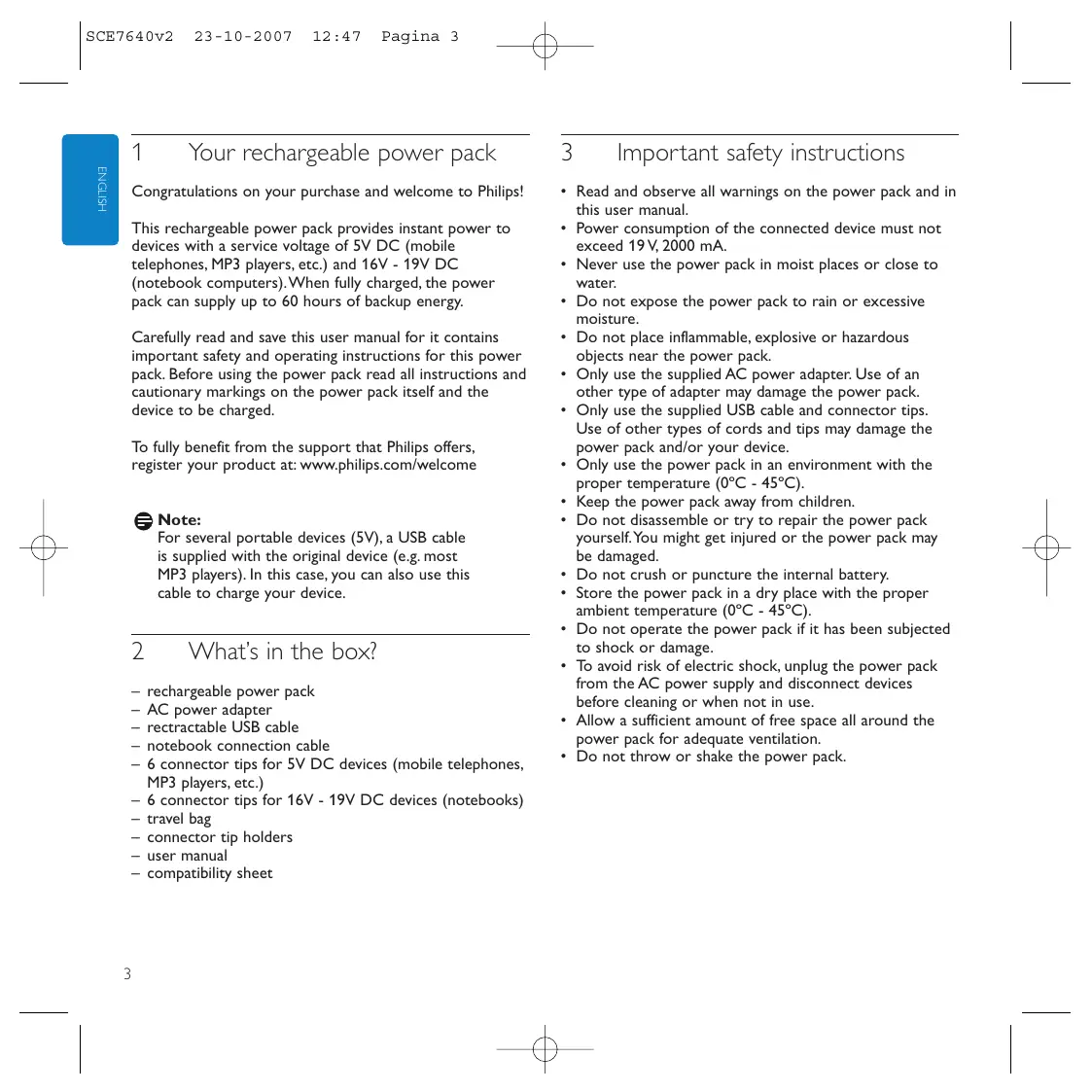


| Brand | Philips |
| Model | SCE7640 |
| Product type | Rechargeable battery (portable power supply) |
| Input voltage | 19 V DC (via mains adapter) |
| Output voltage | 5 V DC (USB port) and 16-19 V DC (laptop connector) |
| Maximum output current | 5.6 V DC: 350 mA max; 16-19 V DC: 2000 mA max |
| Battery type | Lithium polymer |
| Battery capacity | 2000 mAh |
| Charging time | 2.5 to 4 hours |
| Typical battery life | Up to 60 hours of backup power (depending on device) |
| Dimensions (H x W x D) | 120 x 81 x 25 mm |
| Weight | 282 g |
| Charge indicator | 4 LEDs indicating battery level |
| Main features | Charging 5 V devices (smartphones, MP3 players) and 16-19 V devices (laptops); short-circuit protection |
| Included accessories | Mains adapter, retractable USB cable, laptop cable, 12 connector tips, carry case, manual |
| Operating temperature | 0°C to 45°C |
| Storage temperature | 0°C to 45°C, dry place |
| Cleaning and maintenance | Clean with a soft, lint-free cloth; recharge every 3 months if not in use |
| Safety instructions | Do not expose to water, do not disassemble, use only the included accessories, avoid extreme temperatures |
| Warranty | Refer to the manual or Philips website |
Frequently Asked Questions - SCE7640 PHILIPS
User questions about SCE7640 PHILIPS
0 question about this device. Answer the ones you know or ask your own.
Ask a new question about this device
Download the instructions for your Rechargeable Battery in PDF format for free! Find your manual SCE7640 - PHILIPS and take your electronic device back in hand. On this page are published all the documents necessary for the use of your device. SCE7640 by PHILIPS.
USER MANUAL SCE7640 PHILIPS
Register your product and get support at www.philips.com/welcome
SCE7640
EN rechargeable power pack 3
FR bloc d'alimentation rechargeable 6
ES fuente de alimentación recargable 9
DE wiederaufladbarer Akkupack 12
NL oplaadbaar energiepakket 15
IT sistema di alimentazione ricaricabile 18
PT dispositivo de alimentação recarregável 21
GR επαναφορτιζόμενο power pack 24
TU edilebilir güç paketi 27
DK genopladelige batteripakke 30
SV laddningsbara strömpaket 33
FI ladattava laturi 36
PL akumulatorowy zestaw zasilający 39
CZ dobíjecí napájecí pack 42
SK nabíjateľná napájacia súprava 45
HU újratölthető áramforrás 48
RU аккумуляторный блок 51
natural_image
Exterior view of a modern electronic device with a black screen and LED indicator (no visible text or symbols)PHILIPS
natural_image
Illustration of a Philips power adapter connected to a USB device (no text or symbols visible)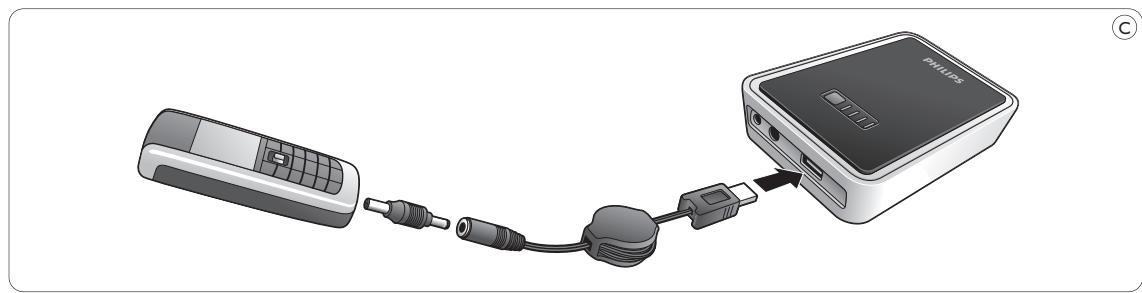
natural_image
Illustration of a mobile phone connected to an Apple device via cable (no text or symbols visible)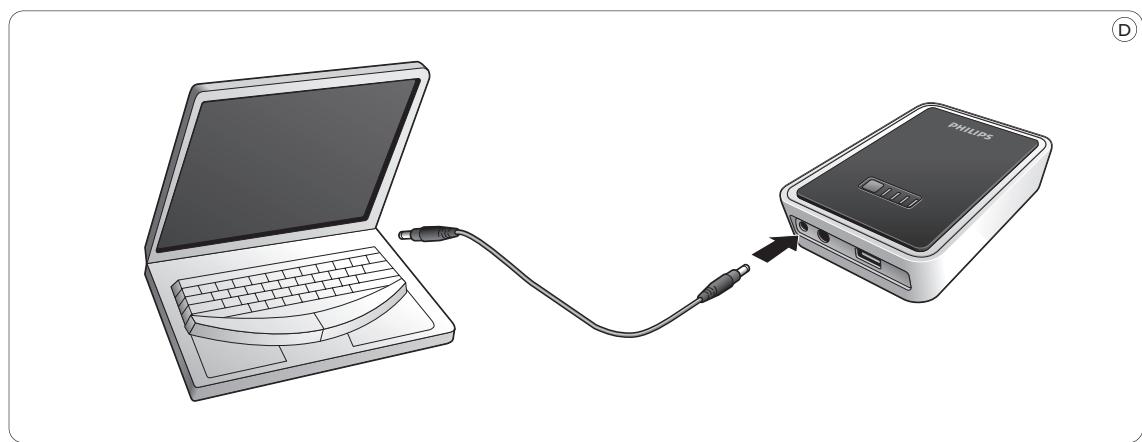
natural_image
Illustration of a laptop connected to a Philips electronic device via cable (no text or symbols on the devices)1 Your rechargeable power pack
Congratulations on your purchase and welcome to Philips!
This rechargeable power pack provides instant power to devices with a service voltage of 5V DC (mobile telephones, MP3 players, etc.) and 16V - 19V DC (notebook computers). When fully charged, the power pack can supply up to 60 hours of backup energy.
Carefully read and save this user manual for it contains important safety and operating instructions for this power pack. Before using the power pack read all instructions and cautionary markings on the power pack itself and the device to be charged.
To fully benefit from the support that Philips offers, register your product at: www.philips.com/welcome

Note:
For several portable devices (5V), a USB cable is supplied with the original device (e.g. most MP3 players). In this case, you can also use this cable to charge your device.
2 What's in the box?
– rechargeable power pack
- AC power adapter
- retractable USB cable
– notebook connection cable
- 6 connector tips for 5V DC devices (mobile telephones, MP3 players, etc.)
- 6 connector tips for 16V - 19V DC devices (notebooks)
- travel bag
- connector tip holders
- user manual
- compatibility sheet
3 Important safety instructions
- Read and observe all warnings on the power pack and in this user manual.
- Power consumption of the connected device must not exceed 19 V, 2000 mA.
- Never use the power pack in moist places or close to water.
- Do not expose the power pack to rain or excessive moisture.
- Do not place inflammable, explosive or hazardous objects near the power pack.
- Only use the supplied AC power adapter. Use of an other type of adapter may damage the power pack.
- Only use the supplied USB cable and connector tips. Use of other types of cords and tips may damage the power pack and/or your device.
- Only use the power pack in an environment with the proper temperature (0°C - 45°C).
- Keep the power pack away from children.
- Do not disassemble or try to repair the power pack yourself. You might get injured or the power pack may be damaged.
- Do not crush or puncture the internal battery.
- Store the power pack in a dry place with the proper ambient temperature (0°C - 45°C).
- Do not operate the power pack if it has been subjected to shock or damage.
- To avoid risk of electric shock, unplug the power pack from the AC power supply and disconnect devices before cleaning or when not in use.
- Allow a sufficient amount of free space all around the power pack for adequate ventilation.
- Do not throw or shake the power pack.
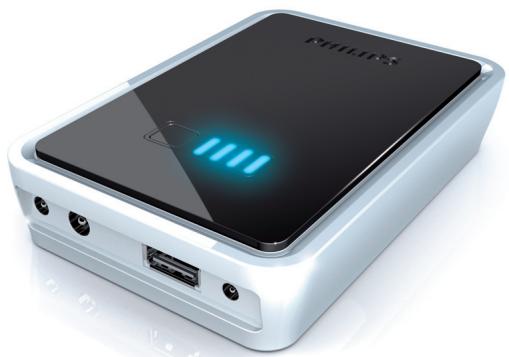
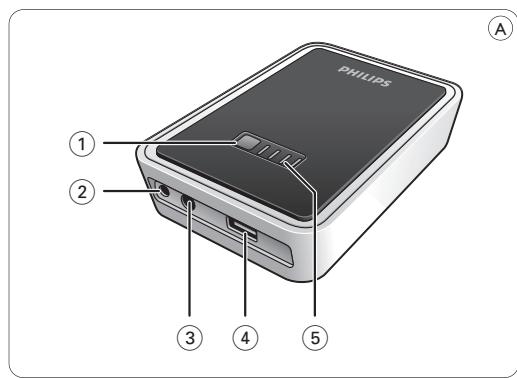
4 Functional overview (fig. A)
① Battery check button
Activates the power indicator.
② OUTPUT 16V DC-19V DC
Connects to a notebook computer.
③ INPUT 19V DC
Connects to the mains supply.
④ USB port
Connects to 5V DC devices (mobile telephones, MP3 players, etc.).
⑤ Power indicator
Indicates the battery status.
5 Operation
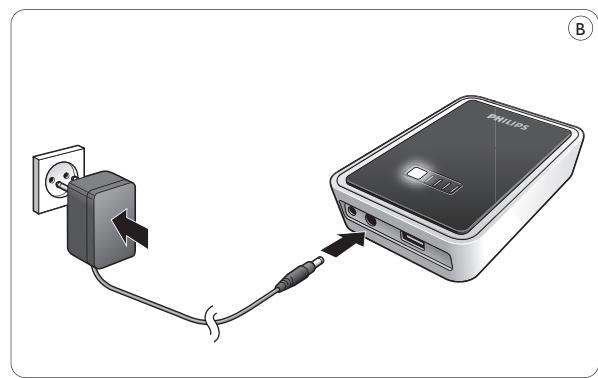
Charging the power pack (fig. B)
1 Press the battery check button (1).
One, two or three LEDs light up in the power indicator (5), indicating the current battery status. If all four LEDs light up, the battery is fully charged.
2 Connect one power cord plug to the AC power adapter.
3 Connect the adapter plug to the INPUT 19V DC jack (3) of the power pack.
4 Connect the power plug of the power cord to a wall outlet.
The power indicator LEDs (5) will flash one after another, indicating that the battery is being charged.
When all LEDs light continuously the battery is fully charged.
5 Disconnect the battery pack from the AC power adapter and disconnect the AC power adapter from the wall outlet.
Charging devices - preparation
1 Check the maximum input voltage (V DC) of the device you wish to connect. For this see the user manual that came with the device.
2 Make sure the device does not consume more current (mA) than 2000 mA.
3 Check what connector tip is required for your device. See the compatibility sheet for the proper tip for your device.
Charging 5V devices (fig. C)
1 Insert the plug of the USB cable into the USB port (4).
2 Connect the connector tip to the USB cable.
3 Insert the connector tip into the power supply jack of the device.
The device will now derive it's power from the power pack.
If the device has a charging indicator, it will indicate that the device is being charged.
Tip:
For several portable devices (5V), a USB connection cable is supplied with the original device (e.g. most MP3 players). In this case, you can also use this cable to charge your device.
Charging a notebook computer (fig. D)
1 Insert the notebook connection cable into the OUTPUT 16V DC-19V DC jack (2) of the power pack.
2 Connect the connector tip to the notebook connection cable.
3 Insert the connector tip into the power supply jack of the notebook computer.
The notebook computer will now derive it's power from the power pack.
The notebook will indicate that it is being charged.
6 Technical specifications
- Battery type: Lithium polymer
• Rated input: 19V DC, max. 3200 mA - Rated output: 5.6V DC, max. 350 mA
16-19V DC, max. 2000 mA
• Battery capacity: 2000 mAh
• Recharging time: 2.5 - 4 hours - Operating temperature: 0^ - 45^
• Size: 120 x 81 x 25 mm (h x w x d) - Weight: 282 g
7 Troubleshooting
Problem
— Possible cause
- Solution
The power pack does not charge connected device
- Voltage of device does not correspond with that of power pack.
• Refer to the user manual that came with the device. - Improper connection between device and power pack.
- Check that connection cord is properly inserted into both device and power pack.
– Damaged connection cable or connector tip.
- Replace connection cable or connector tip.
- Wrong connector tip used.
- Check connector tip and replace if necessary.
– Non supplied USB connection cable/connector tip used.
- Replace with supplied USB connection cable/connector tip.
– Battery power of power pack too low.
- Charge power pack.
– Problems with electrical circuit of power pack.
• Take the power pack to your local distributor.
- Short circuit occurred in the power pack and the power pack protection function switched off the power pack.
- Charge power pack.
– Problems with electrical circuit of power pack.
• Take the power pack to your local distributor.
Power pack runs out of power quickly
– Power pack not fully charged before using.
• Fully charge power pack before using.
- Supplied AC power adapter was not used for charging power pack.
- Only use supplied AC power adapter for charging power pack.
Power pack cannot be charged
- Improper connection between power pack and wall outlet.
- Check that power cord is properly inserted into both wall outlet and AC power adapter.
- Check that adapter plug is properly inserted into the INPUT 19V DC Jack of the power pack.
– Problems with the electrical circuit of the power pack.
• Take the power pack to your local distributor.
8 Maintenance
- Recharge the power pack every three months when it is not being used for a long period of time.
- Use a soft, lint-free cloth to clean the power pack exterior. Do not use harsh chemicals, cleaning solvents or strong detergents.
- When any problems occur with the power pack or the accessories, take the adapter and accessories to your local distributor.
9 Need help?
Online help: www.philips.com/welcome
For interactive help and frequently asked questions.
Ajuda on-line: www.philips.com/support
EN Information to the consumer
Disposal of your old product
Your product is designed and manufactured with high quality materials and components, which can be recycled and reused.
natural_image
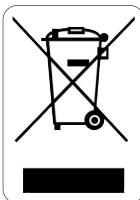
Symbol of a trash bin crossed with a diagonal line, no text or numbers presentWhen this crossed-out wheeled bin symbol is attached to a product it means the product is covered by the European Directive 2002/96/EC.
Please inform yourself about the local separate collection system for electrical and electronic products.
Please act according to your local rules and do not dispose of your old products with your normal household waste. The correct disposal of your old product will help prevent potential negative consequences for the environment and human health.
natural_image
Symbol of a trash bin crossed with a diagonal line, no text or numbers presentnatural_image
Symbol of a trash bin crossed with no text or numbers, representing waste sorting or disposal (no text present)natural_image
Symbol of a trash bin crossed with no text or numbers, representing waste sorting or disposal (no text present)natural_image
Symbol of a trash bin crossed out by two crossed lines, with no text or numbers present.natural_image
Symbol of a trash bin crossed out by two crossed lines, with no text or labels present.natural_image
Symbol of a trash bin crossed with a diagonal line, no text or numbers presentnatural_image
Symbol of a trash bin crossed with no visible text or labelsnatural_image
Symbol of a trash bin crossed out by two crossed lines, with no text or numbers present.natural_image
Symbol of a trash bin crossed out by two crossed lines, with no text or numbers present.natural_image
Symbol of a trash bin crossed out by two crossed lines, with no text or labels present.natural_image
Symbol of a trash bin crossed out by two crossed lines, with no text or numbers present.natural_image
Symbol of a trash bin crossed out by two crossed lines, with no text or numbers present.natural_image
Symbol of a trash bin crossed out by two diagonal lines, with no text or numbers present.natural_image
Symbol of a trash bin crossed out by two crossed lines, with no text or numbers present.natural_image
Symbol of a trash bin crossed out by two diagonal lines, with no text or numbers present.All rights reserved. Reproduction in whole or in part is prohibited without the prior written consent of the copyright owner. The information presented in this document does not form part of any quotation or contract, is believed to be accurate and reliable and may be changed without notice. No liability will be accepted by the publisher for any consequence of its use. Publication there of does not convey nor imply any license under patent- or other industrial or intellectual property rights.
Oktober 2007
www.philips.com
Printed in China
FC CE

N'MW/RM/4307
- Your rechargeable power pack
- Note:
- What's in the box?
- Important safety instructions
- Functional overview (fig. A)
- Operation
- Charging the power pack (fig. B)
- Charging devices - preparation
- Charging 5V devices (fig. C)
- Tip:
- Charging a notebook computer (fig. D)
- Technical specifications
- Troubleshooting
- Problem
- The power pack does not charge connected device
- Power pack runs out of power quickly
- Power pack cannot be charged
- Maintenance
- Need help?
- Online help: www.philips.com/welcome
- Ajuda on-line: www.philips.com/support
- EN Information to the consumer
- Disposal of your old product
Brand : PHILIPS
Model : SCE7640
Category : Rechargeable Battery