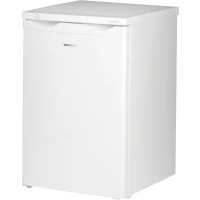
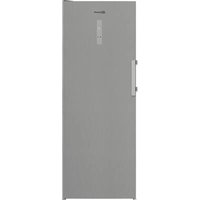
GK 1883 A2+ - Freezer BAUKNECHT - Free user manual and instructions
Find the device manual for free GK 1883 A2+ BAUKNECHT in PDF.



| Product Type | Freezer |
| Brand | Bauknecht |
| Model | GK 1883 A2+ |
| Power Supply | 230 V~ (50 Hz) |
| Refrigerant | R134a (HFC) or R600a (HC) according to rating plate |
| Climate Class | SN, N, ST, T (ambient temperature from 10°C to 43°C) |
| Defrost Type | Manual |
| Main Functions | Storage of frozen food, freezing of fresh food, ice cube production |
| Controls | Rotary thermostat from MIN to MAX |
| Supplied Accessories | Removable bins, ice tray |
| Installation | 50 mm clearance above, 25 mm on sides; reversible door |
| Maintenance and Cleaning | Defrost 1 to 2 times per year; interior cleaning with warm water and neutral detergent; cleaning of rear condenser |
| Safety | Do not place flammable substances; do not use electrical appliances inside; do not consume ice cubes immediately |
| Spare Parts and Repairability | Specific interior lamp (not suitable for domestic lighting); repairs by authorized after-sales service |
| General Information | Compliant with European directives; CFC-free; hermetically sealed fluorinated greenhouse gas |
Frequently Asked Questions - GK 1883 A2+ BAUKNECHT
User questions about GK 1883 A2+ BAUKNECHT
0 question about this device. Answer the ones you know or ask your own.
Ask a new question about this device
Download the instructions for your Freezer in PDF format for free! Find your manual GK 1883 A2+ - BAUKNECHT and take your electronic device back in hand. On this page are published all the documents necessary for the use of your device. GK 1883 A2+ by BAUKNECHT.
USER MANUAL GK 1883 A2+ BAUKNECHT
Instructions for use
Mode d'emploi
Gebruiksaaanwijzing
- This appliance is intended to be used in household and similar applications such as - staff kitchen areas in shops, offices and other working environments;
- farm houses and by clients in hotels, motels and other residential type environments;
- bed and breakfast type environments.
To ensure best use of your appliance, carefully read the operating instructions which contain a description of the product and useful advice. Keep these instructions for future reference.
- After unpacking the appliance, make sure it is not damaged and that the door closes properly. Any damage must be reported to the dealer within 24 hours of delivery of the appliance.
- Wait at least two hours before switching the appliance on, to ensure that the refrigerant circuit is fully efficient.
- Installation and the electrical connection must be carried out by a qualified technician according to the manufacturer's instructions and in compliance with the local safety regulations.
- Clean the inside of the appliance before using it.
SAFEGUARDING THE ENVIRONMENT
I. Packing
The packing material is 100% recyclable and bears the recycling symbol for disposal, comply with the local regulations. Keep the packing materials (plastic bags, polystyrene parts, etc.) out of the reach of children, as they are a potential source of danger.
2. Scrapping/Disposal
The appliance is manufactured using recyclable material.
This appliance is marked in compliance with European Directive 2002/96/EC on Waste Electrical and Electronic Equipment (WEEE). By ensuring the correct disposal of this appliance, you can help prevent potentially negative consequences for the environment and the health of persons.
The symbol on the appliance, or on the accompanying documents, indicates that this appliance should not be treated as domestic waste but must be taken to a special collection centre for the recycling of electrical and electronic equipment. When scrapping the appliance, make it unusable by cutting off the power cable and removing the doors and shelves so that children cannot easily climb inside and become trapped.
Scrap the appliance in compliance with local regulations on waste disposal, taking it to a special collection centre; do not leave the appliance unattended even for a few days, since it is a potential source of danger for children.
For further information on the treatment, recovery and recycling of this product, contact your competent local office, the household waste collection service or the shop where you purchased the appliance.
Information:
This appliance does not contain CFCs. The refrigerant circuit contains R134a (HFC) or R600a (HC) (see the rating plate inside the appliance). Appliances with Isobutane (R600a): isobutane is a natural gas without environmental impact, but is flammable. Therefore, make sure the refrigerant circuit pipes are not damaged.
This product may contain Fluorinated Greenhouse Gases covered by the Kyoto Protocol; the refrigerant gas is inside a hermetically sealed system.
Refrigerant gas: R134a has a Global Warming Potential of (GWP) I 300.
Declaration of conformity C E
This appliance has been designed for preserving food and is manufactured in compliance with Regulation (CE) No. 1935/2004.
- This appliance has been designed, manufactured and marketed in compliance with:
- safety objectives of the "Low Voltage" Directive 2006/95/CE (which replaces 73/23/CEE and subsequent amendments);
- the protection requirements of Directive "EMC" 2004/108/EC.
Electrical safety of the appliance can only be guaranteed if it is correctly connected to an approved earthing system.
PRECAUTIONS AND GENERAL RECOMMENDATIONS
INSTALLATION
- The appliance must be handled and installed by two or more persons.
- Be careful not to damage the floors (e.g. parquet) when moving the appliance.
During installation, make sure the appliance does not damage the power cable.
Make sure the appliance is not near a heat source. - To guarantee adequate ventilation, leave a space on both sides and above the appliance and follow the installation instructions.
- Keep the appliance ventilation openings free.
- Do not damage the appliance refrigerant circuit pipes.
Install and level the appliance on a floor strong enough to take its weight and in a place suitable for its size and use. - Install the appliance in a dry and well-ventilated place. The appliance is arranged for operation in places where the temperature comes within the following ranges, according to the climatic class given on the rating plate. The appliance may not work properly if it is left for a long time at a temperature outside the specified range.
| Climatic Class | Amb. T. (°C) | Amb. T. (°F) |
| SN From 10 to 32 From 50 to 90 | ||
| N From 16 to 32 From 61 to 90 | ||
| ST From 16 to 38 From 61 to 100 | ||
| T From 16 to 43 From 61 to 110 | ||
- Make sure the voltage specified on the rating plate corresponds to that of your home.
- Do not use single/multi adapters or extension cords.
- For the water connection, use the pipe supplied with the new appliance; do not reuse that of the previous appliance.
- Power cable modification or replacement must only be carried out by qualified personnel or by After-sales Service.
- It must be possible to disconnect the appliance from the power supply by unplugging it or by means of a mains two-pole switch installed upstream of the socket.
SAFETY
- Do not store explosive substances such as aerosol cans with a flammable propellant in this appliance.
- Do not store or use petrol, flammable liquids or gas in the vicinity of this or other electrical appliances. The fumes can cause fires or explosions.
- Do not use mechanical, electric or chemical means other than those recommended by the Manufacturer to speed up the defrost process.
- Do not use or place electrical devices inside the appliance compartments if they are not of the type expressly authorised by the Manufacturer.
- This appliance is not intended for use by persons (including children) with reduced physical, sensory or mental capabilities, or lack of experience and knowledge, unless they have been given supervision or instruction concerning use of the appliance by a person responsible for their safety.
- To avoid the risk of children becoming trapped and suffocating, do not allow them to play or hide inside the appliance.
- Do not swallow the contents (non-toxic) of the ice packs (in some models).
- Do not eat ice cubes or ice lollies immediately after taking them out of the freezer since they may cause cold burns.
USE
- Before carrying out any maintenance or cleaning operation, unplug the appliance or disconnect it from the power supply.
- All appliances equipped with an automatic icemaker and water dispenser must be connected to a water supply that only delivers drinking water (with mains water pressure of between 0.17 and 0.81 Mpa (1.7 and 8.1 bar)). Automatic ice-makers and/or water dispensers not directly connected to the water supply must be filled with drinking water only.
- Use the refrigerator compartment only for storing fresh food and the freezer compartment only for storing frozen food, freezing fresh food and making ice cubes.
- Do not store glass containers with liquids in the freezer compartment since they may break.
- Avoid storing unwrapped food in direct contact with internal surfaces of the refrigerator or freezer compartments.
The bulb used inside the appliance is specifically designed for domestic appliances and is not suitable for general room lighting within the home (EC Regulation 244/2009).
The Manufacturer declines any liability if the above advice and precautions are not respected.
HOW TO USE THE FREEZER
The freezer can be used for storing already frozen food and for freezing fresh food.
Switching on the freezer for the first time
- There is no need to set the freezer temperature on the thermostat because the appliance is already factory set.
- Plug in the appliance.
- Only place food in the freezer 2 hours after switching on.
Adjusting temperature
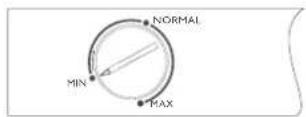
From MIN to MAX: make the internal temperature colder.
Thermostat setting indicator:
MIN - for storing food for short periods;
NORMAL - for storing food for longer periods;
MAX - for storing food for long periods.
Note:
Ambient air temperature, the frequency of door opening and the position of the appliance can affect the freezer internal temperature.
Take these factors into consideration when setting the thermostat knob.
Freezing
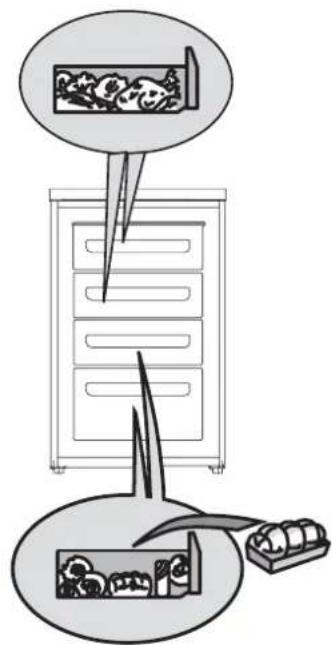
Place the amount of fresh food indicated on the rating plate in the middle compartment. Take care not to place the food directly in contact with food already frozen.
It is advisable to maintain the thermostat position used in normal operation.
Important:
When freezing only small amounts of food, the food can be placed in any compartment, with the exception of the bottom drawer.
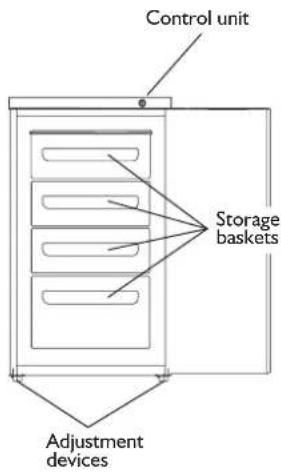
Control unit
Advice for freezing and storing fresh food.
- Before freezing, wrap and seal fresh food in: aluminium foil, transparent film, waterproof plastic bags, polyethylene containers with lids or freezer containers suitable for the food being frozen.
- Food must be fresh and of prime quality.
If possible, fresh vegetables and fruit should be frozen immediately after being picked, to preserve the nutritional substances, structure, consistency, colour and flavour.
Note:
Always leave hot food to cool before placing in the freezer.
- Consume fully or partially thawed foods immediately. Do not refreeze unless the thawed food is used to prepare a ready meal. Once cooked, the thawed food can be refrozen.
Important:
The table opposite gives the recommended storage times for frozen fresh foods.
Classification of frozen foods
Put the frozen products in the freezer and classify them.
It is advisable to indicate the storage date on the packs, to ensure their use before the expiry dates.
Advice for storing deep-frozen food
When purchasing deep-frozen food products:
- Make sure the packaging is not damaged, otherwise the food can deteriorate. If the package is swollen or has damp patches, it has not been stored in optimum conditions and may have started to thaw.
Purchase frozen food last and use thermal bags to carry it. - Place frozen foods in the freezer as soon as you get home.
- Do not refreeze partially thawed food products; consume them within 24 hours.
- Avoid or reduce temperature variations to a minimum. Respect the expiry date on the pack.
- Always follow the instructions given on the pack for storing frozen foods.
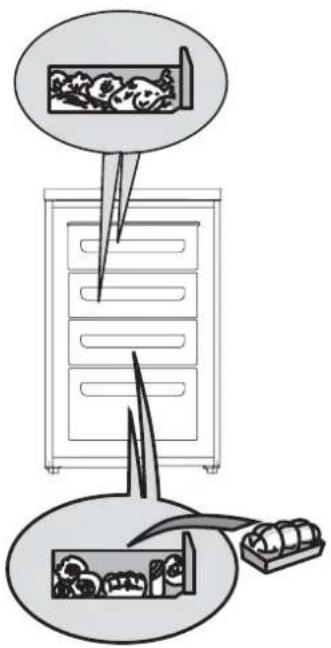
MONTHS FOOD
| 1-3 | ||
| 4-7 | ||
| 8-12 |
Removing the drawers
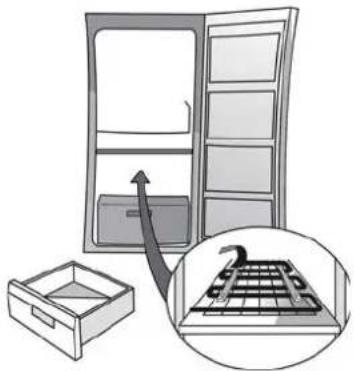
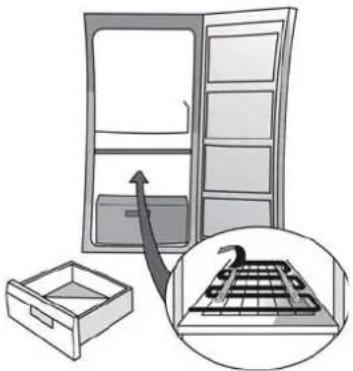
- Pull out the drawers as far as they go, then lift slightly and remove.
Note:
The drawers can be removed in order to obtain more space. Make sure that the load does not exceed the limit (if present) indicated on the side walls of the appliance.
Making ice cubes
- Fill the ice cube tray 2/3 full and place it in the special freezer compartment.
- Do not use sharp or pointed instruments to detach the tray if it is stuck to the bottom of the freezer.
- Bend the ice tray slightly to remove the cubes.
Note:
The freezer door will not re-open easily immediately after closing. Wait a few minutes before opening again in order to allow for compensation of the vacuum created.
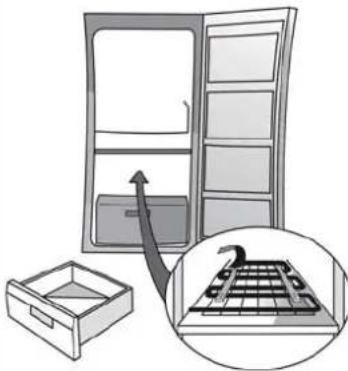
Fig.1
DEFROSTING AND CLEANING THE FREEZER
Before any cleaning or maintenance operation, always unplug the appliance or disconnect it from the power supply.
Defrost the freezer once or twice a year, or when the frost on the refrigeration grills is excessive.
It is perfectly normal for frost to form on the grills. The amount of frost and the speed at which it accumulates depend on room conditions how often the door is opened, and tends to accumulate more on the upper grills.
It is advisable to defrost the freezer when it is nearly empty.
- Open the door and remove all food products, wrapping them close together in newspaper and place in a very cool place or in a portable cooler.
- Leave the freezer door open to allow the frost to melt.
- Clean the inside of the freezer with a sponge soaked in lukewarm water and/or neutral detergent. Do not use abrasive substances.
- Rinse and dry thoroughly.
- Put the food back into the freezer.
- Close the freezer door.
- Plug in the appliance.
- Switch the freezer on.
CLEANING AND MAINTENANCE
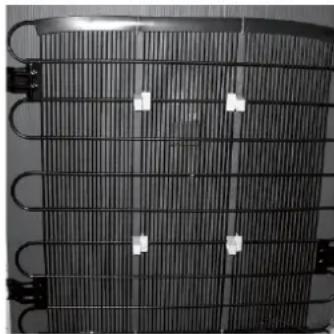
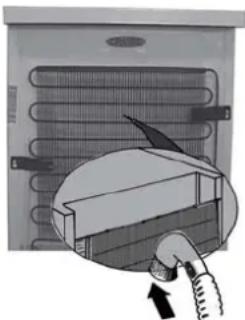
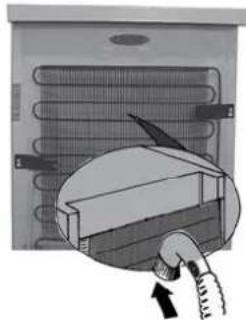
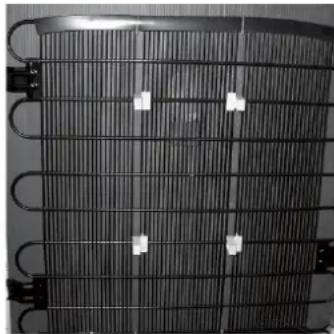
Periodically clean the condenser at the back of the appliance with a vacuum cleaner or brush.
For long vacations
- Empty the freezer.
- Disconnect the freezer from the power supply.
- Defrost and clean the inside.
- Leave the door open to prevent the formation of unpleasant odours and to eliminate the moisture inside.
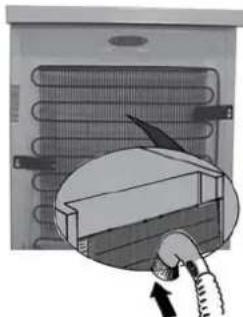
TROUBLESHOOTING GUIDE
I. The appliance does not work.
Is there a power failure?
Is the main switch turned on?
- Are the household electrical system protection devices efficient?
Is the thermostat correctly set?
Was the appliance switched on correctly?
2. Excessive frost build-up.
Is the defrost water drain correctly positioned?
- Was the door properly shut?
AFTER-SALES SERVICE
Before contacting the After-Sales Service:
- See if you can solve the problems on your own (see "Troubleshooting guide").
- Switch the appliance on again to see if the problem has been eliminated. If it has not, disconnect the appliance again and repeat the operation after one hour.
- If the problem persists, contact the After-Sales Service.
Notes:
- If the front edge of the appliance is hot, this is not a defect but prevents the formation of condensate.
Gurgling and hissing noises due to expansion in the refrigerant circuit are normal.
Specify:
the type of fault,
the model,
the Service number (the number after the word SERVICE on the rating plate inside the appliance),
- your full address,
- your telephone number and area code.
INSTALLATION
-
Install the freezer away from heat sources. Installation in a hot place, direct exposure to sunlight or placing it near a heat source (radiators, cookers) will increase energy consumption and should therefore be avoided.
-
If this is not possible, the following minimum distances must be respected:
-
30 cm from coal or oil stoves;
- 3cm from electric and/or gas cookers.
Install in a dry and well-ventilated place.
- Clean the inside (see "Defrosting and cleaning the freezer").
- Fit the accessories supplied.
- Fit the spacers (Fig. 1, 2, or 3, depending on the model)
Electrical connection
- Electrical connections must be made in compliance with local regulations.
- Data regarding voltage and electrical absorption are specified on the rating plate inside the appliance.
- Earthing of the appliance is compulsory by law. The Manufacturer declines any liability for injury to persons and animals or damage due to noncompliance with the above regulations.
- If the plug and socket are not of the same type, have the socket replaced by a qualified technician.
- Do not use extension leads or multi-adapters.
Electrical disconnection
It must be possible to electrically disconnect the appliance by unplugging it or by means of a double-pole switch installed upstream of the socket.
Door reversibility
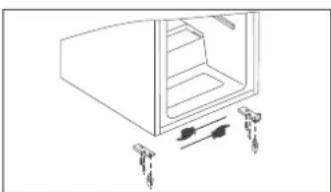
If required, door opening can be reversed from right to left (depending on how it is supplied).
Caution! When reversing the door opening, the appliance must not be connected to the power supply. The appliance must be previously unplugged.
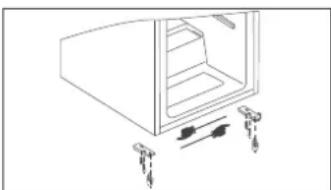
Tilt the appliance backwards a little and prop it in a secure position.
Undo the door hinge screws and remove the hinge pin bracket.
Open the door slightly and lower it.
Undo the top pin and screw it in place on the opposite side. Insert the door on the top hinge and close it.
Tighten the hinge pin bracket in place on the opposite side using the screws.
Installation requirements
To ensure correct appliance operation, it must not be exposed to temperatures below 16^ or above 32^ .
It is advisable to avoid the following places: kitchens without ventilation, outside rooms, greenhouses, garages. In order to operate correctly, the appliance must be installed:
in a dry place.
Away from direct sunlight.
Away from extreme temperatures (away from cookers or other heat sources).
When full, the appliance will be heavy, and therefore it must be placed on a strong and solid floor.
Ventilation requirements
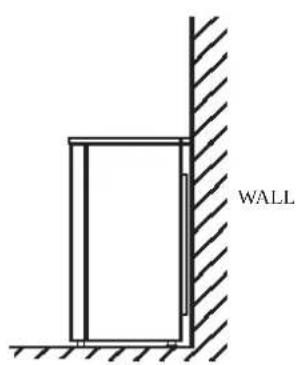
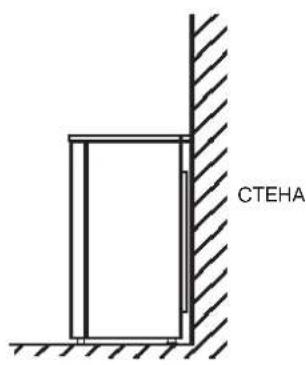
Carefully push the freezer in place, until reaching the appropriate distance from the wall.
When in place, a space of 50mm above the appliance must be maintained.
If the space is not available above the appliance, leave a space of 25mm on both sides.
Make sure the appliance does not squash the power cable.
The parts that can become hot must not be exposed. When possible, the back part of the appliance must be close to the wall, leaving the required space for ventilation.
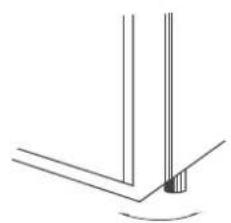
Levelling
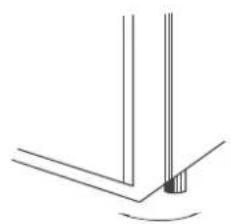
The appliance must be level; to eliminate rocking:
make sure the appliance is vertical and that both adjustment devices are in close contact with the floor, so that the compartment is level.
Adjust the level by unscrewing the appropriate adjustment device, located at the front (use fingers or a screwdriver).
The appliance is heavy. Pay attention when moving it.
- For specific details please refer to the rating plate located on the back of the freezer. The specifications are subject to change without notice.
Note:
If reversing of door opening is carried out by the After-sales Service the work is not covered by the warranty.
TOP REMOVALE
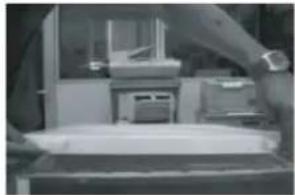
REFRIGERATION TABLE TOP 54 CM
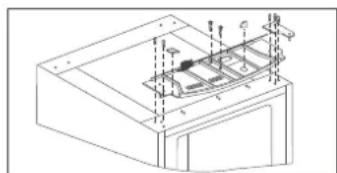
HOW TO REMOVE THE TOP BEFORE TO PLACE THE APPLIANCE IN BUILT IN POSITION
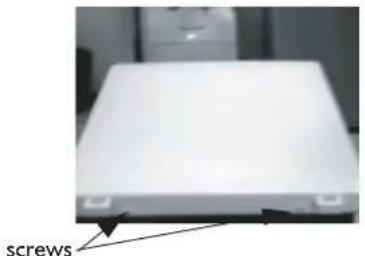
Operation n°I
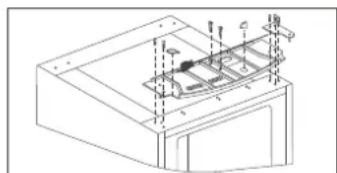
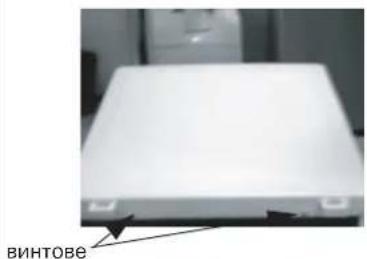
To dismount the 2 screws on the back side of the product
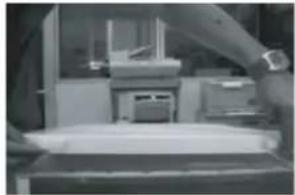
Operation n°2
To lift up from rear the top, and remove it from front fixation
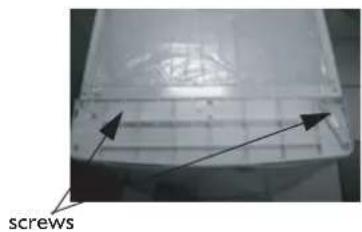
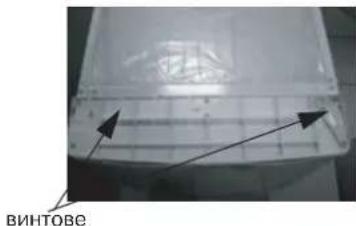
Operation n°3
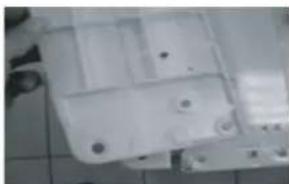
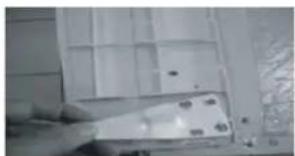
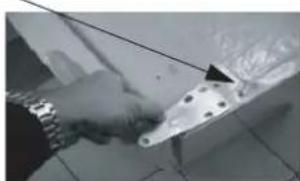
To dismount the 10 screws on the front plastic frame and metal hinge
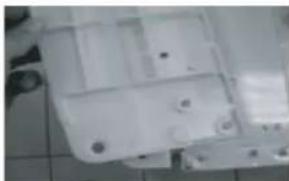
Operation n°4
To move out the hinge and the plastic frame
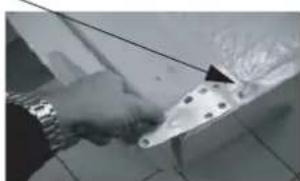
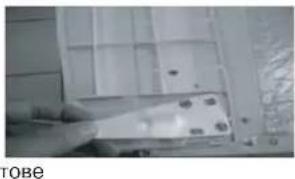
Operation n°5
To replace and to refit the metallic hinge with 2 screws
screws
ELECTRICAL CONNECTION
1) For Great Britain only
Warning - this appliance must be earthed
Fuse replacement
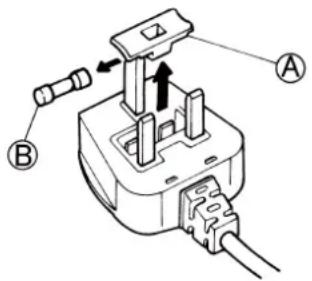
If the mains lead of this appliance is fitted with a BS 1363A 13amp fused plug, to change a fuse in this type of plug use an A.S.T.A. approved fuse to BS 1362 type and proceed as follows:
- Remove the fuse cover (A) and fuse (B).
2.Fit replacement 13A fuse into fuse cover.
3.Refit both into plug.
Important:
The fuse cover must be refitted when changing a fuse and if the fuse cover is lost the plug must not be used until a correct replacement is fitted.
Correct replacement are identified by the colour insert or the colour embossed in words on the base of the plug.
Replacement fuse covers are available from your local electrical store.
2) For the Republic of Ireland only
The information given in respect of Great Britain will frequently apply, but a third type of plug and socket is also used, the 2-pin, side earth type.
3) Socket outlet / plug (valid for both countries)
If the fitted plug is not suitable for your socket outlet, please contact Whirlpool Service for further instruction. Please do not attempt to change plug yourself. This procedure needs to be carried out by a qualified Whirlpool technician in compliance with the manufactures instructions and current standard safety regulations.
AVANT D'UTILISER L'APPAREIL
GUIDA RICERCA GUASTI
IPIN XPHESIMONOIHSETE TO IPOION
H ouokun nou ayopaoare ayamxgeyia va xpoumonoinee qikai naiokat:
-OTICNEPIOEXKOUVAcXOWVEPYADAC, kataoTnmuTswkunypaΦeW
-0ta aypoktnmuata
Aattnoeis yia tvy ekataoTaon
Tia va eaaopaaizetai n owtn aeitoupyia, n ouokneun dEv TpETeIvaekTIeTai eOepuokpaiec katwTwv 16 ^ C n avw Twv 32 ^ C
SUVIATaT a aTOPOUovT a kOLOBcE cOeic: KOUiva XwpiEgAepioo, EwTEPIKos Xwpoc, Eepokntio, Ykapaz. Tia va aeIToupyei Owta n ouokeun TpETe i va eivai EykateOTnEvn:
Σεστεγνοχωρο.
MaKpia aTo TnV aEon nIaKn aKtivoBoiA.
MaKpia aTIO akpaIEc 0eepuokpaoies (aakpi aTO eotiec n aAee Tnyec 0eptoTnTaC).
Otau evai ymuatn ngoukeun exei meyalo bapoc kai ouvewtus npentie va eivai totoeetneyn o taepo kai avthetakiok dantofo.
Aattnoeic aepioou
INNAN APPARATEN ANVÄNDS
m = 311
RENGJØRING OG VEDLIKEHOLD
Temperaturregulating
IOnpeJeHnA DOnyctmBix CpOKOB XpaHeHH CBExNX 3AmOpoxeHHbIX npOdyKTOB o6paTntEc b KaTabInue, npNBedeHHO prdOM.
KnaccnΦkaun 3amopoxeHHbIX npOdyKTOB
IIOXnTe 3AmOpoxKeHHBte npOdyKtB B MOp03nHbHKnHaNNnTe IN Ha3BaHHe H yNaKOBke.
PekomEnyety TaKke yka3aTb Ha ynaKOBKe DaTy 3aKnAdKn Ha xpaHHeNn IJr OeCneHEn CBOEBpeMeHHOrO INcNoB3oBaHn npOdykTa B NnUy.
Cobetbno xpaheHIO 3amopoxKeHHbIX npOdyKTOB
B MOMENT npno6peTeHnA 3aMOpOKeHHbIX pOdyKTOB y6eNTecb B CNeDyIOUcE:
YnakOBKa NnN nakET He nobpeXeHbI, TaK KaK 3TO MoKET BbIBaTb NOPy npOyKaT. Ecnn nakET B3dYt, NnHa HEM BnHbBnAaXhBe NTHA, 3TO O3Haayet, 4TO OH XpaHnCnE H B ONTMaJIbHbX yCNOBxN, NTO YKe MOR HaatbCR npOce CC p3MopaxNBaHn.
IokynaTe 3amOpoxeHHbI npOyKbI B nocJeHIO OuepeBn IIN nepeBO3Kn NcNoJb3yIte TepMOCymKn.
Cpa3y Je NO B03BpaueHn DOMOHNOMEuaTe 3aMOPoKeHHbIe npOdykTbIB MOpO3NtBHK.
He IIOBepraTe YAcTmHNO pa3MOpOKeHHBe IpOyKtBi NOBTOPHOMY 3aMopaxnBaHnIO, a nCNoIb3yJrTe INx B TeueHne 24 qacob.
HeOnyckaTepepanaoTEmnepaTpynCBOnteK MmHmMy.Co6IIOaTe DaTy nCTeEHnCpoka XpaHEnHyaKa3aHHyoHaYnAKOBKe.
Bcerda npindepkuaBaTecb yka3aHn No xpaHeHHo 3amopoxeHHbIX npOdyKTOB, npBeDeHHbIX Ha nx yynaKOBke.
MECRAI IPOyKTbI
| 1-3 | ||
| 4-7 | ||
| 8-12 |
N3BLeueHnE RnKOB
-NotaHTe Taunn Hapyky do ynopa, cnerka npINOHNMTte N BbHbTe NX.
PpmeaHne:
IJIa co3aHn6oBbEero 06bema BHytpn KaMepb MoKHO BBHyTb n3 Hee RnKn.
Cneinte 3a Tem, TTo6bI BEc 3aRpyKeHHbIX npOyKTOB He npBeBbIaMakcImaJIbHO DOnyCTmMyIO BEmnHy (ecIn TaKOBa NMeETc), yKa3aHHyIO Ha 6OKOBix CTeHKax npi6opa.
Bbipap60ka ky6koB Jbda
HANOHNHTe BaHHOcKy IJIbHa Ha 2/3 emKOCTn BOOnI n NOCTaBbTe ee B COOTBeTcTBYIOoee OTdEHeHne dIra 3amopaxNBAHn.
Bcnyae ecn BaHHoKa npMep3aET KO dHy MOp03nIbHnka, He nOlb3yTeCb dIe ee OTdJIeHn 3aoCTpeHHbIMn IIN peKyuUIMn PpeDMetAmN.
- YTO6bI O6JIeHTb OTdJeHHe Ky6nKOB Jbda OT BaHHO4KN, CJIeRk CoHNTe ee.
Pnmeuahne:
NOBTOPHO OTKpbTb DBepuy MOp03NJbHnKa cpa3y Xe NOCNE TORO, KAK OHa 6bJa 3aKpbTa, HeBO3MOxHO.
CneNyET NOOxDAtb DBe Nn TpN MNHyTb, YTO6bl npOn30UHa KOMpeHcAunr O6pa3OBaBweroCg pa3peXeHN.
Pnc.1
PA3MOPAXKIBAHNE IN YBOPKA MOPO3nJIbHNKA
Ipeed BbInonHeHnem KaKx;Jn6o onepaun no 06cnyXnBaHHIO nn y6OpKe BbIHbTe BNky n3 po3eTKn nn BbIKIOHTe 3JeKTPnueckoe nHTaHne.
PekomeHdyetcpa3MopaxnBaTbMopo3nBnK 1nn2pa3aBroNnBcnyaeobpa3OBAHn Ha oxJaauoqux peweTKax n36bIToHOrO KOJIueCTBa HHe.
06pa3OBaHne Ibda Ha peweTkax CnCTembl OXnaJdeHnRABJeTcHOPMaJIbHbIM RAJIeHNEM. KoInueeCTBO IN CKOpOCTb erO HAKONJIeHn 3aBNCAT OT YcIOBNI OKpyKaIOUeI CpeDbI N OT KOJInueeCTBa OTKpbIBAHNI DBepCbI.
CoBeTye m npOn3BODnTB pa3MopaxNBAHne npu MNHMmaJIbHOM 3aNaCe npOdyKTOB.
- OTKpoIte IeBepu N BbHbTe BCE npOdykTbI, 3aBepHnTe IN B ra3etHyO bymary n NOJoxNTE pIoTHo Dpyr K dpyR B npOxJaHOM MecTe nn B TepMOCymKy.
OCTaBbTe DBepy MOp03nIbHnKa OTKpbITOn dIg oBeCneueHn TaHnIbDa.
BbIMOnTe BHyTpEHIOU qAcTb MOp3NlBnHaKa r6Ko, CMOeHHoB TEnIIO BOe N/INB pactBope HeITpAlbHoro MOIOero CpeCTBa. He NOJIb3yInTEcb abpa3NBbIMN BeIecCTBaMn.
CnoIocHnTe kamepy MOpO3nIbHnKa YNCToN BOOn n Hacyxo BbITpNTe.
-Полжnte npOdykTbI. - 3akpoIte IdBepu MOpO3nJIbHnKa.
BHOBB BCTaBBte BNIKy B p03eTKy.
BKNIOHTeMOP03NJbHNK.
ЧИСТКА И YXОД
NepnoDnueckn OuHuaIte NbIeCocOM NIN UeTKoKOHDeHCATOP,paCIOJIOXeHHbIC3aDHeNCTOpOHBnp60pa.
Pn dInTeBHom OTCyTCTBm
- BbIbTe BCE npOdyKtbl 3 MOp03nJIbHnKa.
- OTKJIIOHTe npnbop ot 3neKtpocetn.
- BbIOnHnTe pa3MopaxNBAHne N BbIMOnTe KaMepy n3HyTpN.
OCTaBbTe DBepb OTKpbIToN dI npedynpegxdeHn NOBLeHn HnepnTHbIX 3anaxOB IN BnaJxHOCTn BHyTp npi6opa.
PYKOBODCTBO NO NONCKY HENCPABHOCTEIN
1. Пибор Наразов.
- ECTb JIN HanpXeHne B cTeN?
BkIIOueHnnIgABHbmy6HbNk?
-Праиьнлбо Лп работаOT npe哆хранHTeNBHbIe yCTpoiCTBa CnCTeMbI 3JIeKTPoCHa6xHeHЯ y BacДома?
-HaxoDITcJIN TepMOCTaB INpaBnIbHOM NIOJOKeHN?
-Праьиьно ЛIN OCUшЕТВЕн BBOД npибopa Вэкплуataцию?
2. 4pe3MepHoe o6pa3ObaHne Ibda.
N3BaXDaHe Ha YekMeXKeTaTata
-NTerIeTe YekMeJxKetata HABbH Do ynp, IeKO rINOBnIHETe NnN3BaIeTe.
3a6eJekka:
3a da ce noIyHn NO-ROJMaO6em,MOKe Da ce n3BaJaT YekMeJxKetata.
CneTe 3apeHTo KOINueCTBO Da He npeBnWaba MAKcIMaJIHNTe CTOHOCHTN, aKO TaKINBa Ca NOCOeHN Ha CTpaHInHNTe CTEHN Ha ypeDa.
Ponyuabahe Ha ky6yeta nei
HantbnHeTe fopMnKata 3a neC B0da do 2/3 nI noCTabeBOTDeJIeHHeTO, npEHa3NaHeHO 3a 3aMPa3BaHe.
AkoΦopMnKata 3aJIeHHe HaIbHOTo HaΦpN3epa, He n3NoJ3BaIte OCTpu NII pExEuN PpeDMETn 3a OTJenBaeHTo N.
-3a da yneCHNTe n3BaKaDaHTo Ha neDeHnTe Ky6yTa oT φoPMnKATA, JekO rOrbHeTe.
3a6eJexka:
NOBTOPHOTO OTBAPRHe Ha BpaTata Ha 0pU3epa BeHara Cne3aTbaprHTo Nue 6bDe TpydNo.
N3aKaIte DBe-TPM MNHyTN, 3a DaTe Bb3MOXHOCT 3a KOMnEHCnPaHe Ha Oba3yBaIOTo Ce HAIraHe.
Φur.1
O6E3CKPEXKABAHE I NOUNCBAHE HA ΦPN3EPA
PpeHn da n3BbPwHte KaKbATO n da 6nlo onepaunno 06cIyXbaHe n NOChCTBaHe, n3BaTe eCnCeJa OT KOtAKTa nn H3KnIOUeTe ypea ot enektpueeckata Mpeka.
PnpenOpBvAME 06e3ckpeXabaHe Ha pnn3epa 1 Hn2 nTbH BToHnHa Tn KOrAto CkpeXbT Bbpx Cy tTeHtue DoCTHRne PneKoMEpHa De6JIHa.
06pa3ybaHTo Ha cKpek Bbpx OxnaIteHNHe peweTKe HOpMaJIHO RAJIeHne. KoJIueCTBOTO 6bp3nHaTa Ha HATpyNBaHe Ha cKpek Bapnpa B 3aBACMOCT OT OKOIHTe YcIOBn N YeCTOTATA Ha OTBAPHE Ha BpataTa, KATO CKpeX ce HATpyNBa NOBeYe Bbpx No;BNCOKO pa3NOJoxHnte peweTKn.
Ppenopbya ce 06e3ckpekabahe da ce n3Bbpwa, KOrato 3anacnte ca MHHMaJIH.
- OTBOPeBbPATAHnI3BaTe BcNKn XpaHn, KaTO rN ONaKOBaTE BBB BECTNHk n rN OCTaBNTe DOnpeHN eHa DO dpyra Ha Bb3MoXHO Hau-CTyDeHO MRCTO HIN BxNaDnHnHa YHaHTA.
- Octabete BpataHa 4pu3epa OTBopeHa, 3a da N03BOUNTE paTOnraHEno Ha Jeda.
PnHCTETe BbTpeuHOCCTa Cb56, HAnoEHa Bpa3TbOp Ha xJaKa BOa N/nu HeyTpaeHmRnHepenapat. He nIIOJ3BauTe a6pa3BHN BeueCTBa.
BHHMaTeJIHO n3nJaKHeTe u n3CyUWeTe. - NocTabete xpaHnte.
- 3atbopete BpaTata Ha φpntepa.
BkIOUeTe Uencena B KOHTaKaTa.
BkIIOye pnp3epa.
ПОЧECTBAHE И OБСЛУЖBAHE
IpeNoIOHO nooCTBaIte c npaxOcMykaHa nn YeTka KOHEn3aTopa (paMaTopa), KoTo ce HAmnpa Ha 3aHaTa CTpHa Ha ypeHa.
Pnp npoobjxntenHOTcbCTBn
- N3npa3HeTe φpn3epa.
- 13KJIIOHcTe OpH3epa OT eIeKTPnHeCKaT aMpexa.
- 06e3ckpekete n noHcTete BbTpewHOCTTa.
3a da n36erHete o6pa3yBaHTo Ha HnnpnTHMn3MN I Da OTcPahNte BnArata, OCTabeTe BpataHa ypeDa OTbOpeHa.
OTCTPAHЯBAHE HA HEN3ПРABHOCTN
1. YpeBt n3o6uO He pa60Tu.
He en cnprn eektpnuecknTOK?
BkIIOHJnE rAIBNHTpeKbCBA?
B u3npaBHOCT Jn ca npedna3nteJNTe Ha eJeKTPoHCTaJaCnraTa Ha KJINUeTO?
TepMOCTaTbT B npabNHO NOJIOXeHne Jn e?
-Праин Ho JI e n3BbpeHo BKJIIOuBaHETO?
2. Ipekomepho Hatpynbahe Ha ckpek.
-Праин Ho JI e BbPHaTа Ha MЯСТо Tpb6uKata 3a n3TuHae Ha BoDAta?
-Bpaata npabuHno nI ce 3aTbapra?
CEPBn3 3A IODPbJxKA
Ppei da ce 06bpeTe KbM CepBn3a 3a noDpBkka:
- YBepTe Ce, Ye He E Bb3MOxHO Da OTCTpaHnTE HEn3npaBHOCTTa CaMn (BX. "OTCTpaHraBaHe Ha HEn3npaBHOCTn").
2.BKIOUeTe OTHOBO ypeJa,3a Da npOBepnTe dAn HEn3npABHOCCTTa He e npEOJlHa.AKO pe3yIITbTe OTpuateJeH,NKIOUeTe ypeDa OTHOBO n CneI eINH Yac NOBTOpe T onepaunra.
3.Ako pezyttaTbOTHOBOeOTpuataJeH, 0aadeceB Cepn3a 3a noDpBXka.
3a6eJekn:
- Ako npedHaTa CTeHa Ha XlaaHInKa e TOnla, TOBa He e DeΦeKT, a NpeoTbpaTBA o6pa3yBaHeTo Ha KOHN3aun.
-Блбукauи 3Byu n uym OT n3n3aHe Ha Bb3dyn NO BpeMe Ha XnaDnHnru Kbl Tpr6Ba da ce cHTaT 3a HopMaJIHN.
Cb06eTe:
TnnaHa Hen3npaBHOCT,
MOdena,
CepBn3HnH HOMep (HOMepa Cnei Dymata SERVICE Ha TaBeJkata C daHH N BbTpE B ypeDa),
-ntbHnnaCn aDpec,
TelefoHHnCn HOMep N KOd 3a MekdyprpaDCKo 36npaHe.
SERVICE
0000 000 00000
NHCTAJINPAHE
- INHCTaIINpaIteФpI3epaIaJIeUOTn3TOuHNuIHa TOnJIInHa. INCTaIINpaHETo B ToJIa CpeDa, n3laIarHeTo HauNapeKTHa CJbHueBa CBETJInHa IIN pa3nOlaIarHeTo Ha yPeDA B 6nI3OcTdo n3TOuHNu HA ToJIInHa (kanOpnpEepn,neyn) yBelenuaba Notpe6NeHneto Ha eJeKTPoeHeprnnn Tpr6Ba da Ce n36raBa.
Bcnya,ye TOBa He e Bb3MOxHO,CnA3BaTe CNEHNTe MNHMaHH pa3CTOHHN:
30 CM OT NeKn 3a BbIInuHa HaΦTa;
3 cm OT eIektpnueckn n/nnra30bni neKn. - Pocabete ro ha MRCTo, Koeto e cyxo n dope npoBeTpBO.
-Почисте Вьтpeшонта (ВЖ. "Обeзckржаван и почstван Н Фпиэра"). - NocTaBete npedBnDHeHte npHaJdJeXHOCTN.
- NocTabePe pa3daneuHTeNTe (fHr. 1, 2 nnn 3 B 3aBNCMOCT OT MOdeJa)
Cbbp3BaHe B eJekTpnuEcKaTa MpeXa
Cbp3BaHETO KbM EJIeKtpueCKaT MaPexKa TpOBA Da Ce M3BbPbWA B cbOTBeTCTBne C MEcTHNTe HOpMN.
JaHHnTe NO OTHoUeHHe HA HAppeXeHneTo N MoUHOCTTa HA NOTpe6bHeHc Ca DaJeHn Ha TaBeJIkTaC DAHHN, NoCTaBeHa Btpe Bypeda.
3a3emBaHTo Ha ypeDa e 3aIbJXnTeHNO nO 3aKOH. Ipnou3BODInTeTnH He Hocn HnKaKBa OTROBOPHOCT npn EBEHTyAINn HapaHbaHHnn Nn UeTN Ha Xopa, JNBOTHn Nn npedMeTu, npOn3TEKn OT HeCnA3BaHTo Ha Yka3AHnTe NO;rope HopMN.
Ako 电 He o T NOxOJTuT,TOI TpOBA da 3aMeHEn OT KBAJIINuPAnTEXHnK.
He n3noJ3BaIte yDbJIxNtEn nn pa3KIOHnTei.
PpeKbcBaHe Ha eJekTp03axpaHbHaHeTo
N3KJIIOHbAHeTo Ha ypeDa OT ENEKtpnueckKaTa MPexa CTaba NIN Ype3 N3BaXdaHe Ha UeNCeNa OT KOHTaKTa, INI Ype3 DBynoIIOceH PpeKbCBAu, pa3NoIOxeH NaKOHTaTa.
06pbuaneHaBpataTa
Ako NHCTanaJraTRO N3NCKBa,CTpaHata Ha OTBapRe HA BpTaTA MoKe Da Ce ObE He OJrCha HA JIbRa (B 3aBNCIMOCT OT TOBA,KAK e DOCTABeHa).
BhImaHne! Ppe3 BpeMe Ha onepaunraHa
Oobpuahe Ha cTpaHata Ha OTbaprHe Ha BpaTaTa,
ypebHT He Tpr6Ba Da 6bJe BKIOUeH B
EeKeTpueckata MpeXaXpaHbaun
Ka6en Tpr6Ba Da 6bJe n3BaJeH OT KOHTaKTA npedn TOBa.
JIeKo HAKNoHete UpeDa Ha3aI N rO noDnpeTe B CTa6uINHO NOIOXKeHne.
Pa3BnHTete BnHTOBete Ha nAHTata Ha BpataHa demoHTnpaTe CKObata Ha uΦTa Ha naHTata.
Jeko OTBopTe Bpata n R CbaIe.
Pa3BnHTe TROPNIIuΦT ITO 3aBnHTe Ha MRCTo HAOTCPeUHATA CTpaHa.
3aKaaye BpaTata Ha rOpHnI uNFT n 3aTBopete. 3aBnHTete OOKHnatHO uNΦTa Ha naHTata Ha MRCTO Ha OTcpeuHaTcTpaHa, KATO N3NO3BaTe BnTHOBETe.
N3nCKBaHna 3a nHCTaJnpaHe
3a da rapaHTnpate npabINHTo fHyHKUHOHPaHe Ha ypea, He Tp8Ba Da ro n3laRatte Ha TemnepaTpyn, noHNCN OT 16°C nn No-BnCOKn OT 32°C.
PpenopbYBa ce da n36rBate cneHnTe MeCTa Ha pa3noIarAhe: KxHg 6e3 BeHTnlaun, Ha OTKpNTO, napHK, rapax. 3a npabuHIO fHyKcNOHnpaHe ypeBt Tpr6Ba da 6bJe IHCTaIIPAH: B cyxa aTMocΦepa.
JaIeOT MRCTO, Iprko OOrpBaHO OT CJIbHueBn JbUH.
JaIeOT EKCTpeMaHn TEMpepaTpyn (JaIeOT neKn
JIN DpyrN N3TOOHnHa TOnnHa).
Korato e nbIeH, ypeBcT CTaBa TeXbK n, CneIOBaTeJIHO, Tp6Ba Da 6bIe pa3nOJoxeH BbpxycoINHeu ycToUHNBNOI.
N3nCKBaHnKbM BEHTnJaCnTa
BHHMaTeJIHO HAcTaHete PpI3epa Ha MrcTo,doKato IOCTnHrHe NOxOJaTO pa3cTOrHHe O T CteHtE. Korato e Ha MrcTo, Tpr6Ba Da ce octaBn pa3cTOrHHe OT 50 MM HAd ypeDa.
Ako Bbpxy ypeJa Hma NoXoJrO MRCTo, TpR6Ba Da OCTaBtpe pa3ctoHne OT 25 MM N OT DBeTe CtpaHn. YBepete Ce, Ye ypeBt He e npTnCHan 3axpaHbaun KaBcJ.
Yactte, Konto ce HarpBaT, He Tp6Ba da 6bDat 3IOXeHn Ha oInp. Korato e B3MOxHO, 3aHaTa Yact Ha ypeDa Tp6Ba Da e B 6m3OCT Do CTeHata, KaTo Ce OCTAbn NocOeyHTo pa3CTOAHne 3a BEHTnlaUy.
HnBeIupaHe
YpeBbT TpR6Ba Da e B XOpN3OHTaJIHO NIOJOKeHHe: 3a Da OTCTpaHnTe TpENTeHnTa:
yBepTe Ce,Ye ypeBt E 3actaHan BepTnKaJHo N nDbete YcTpoiCTBa 3a peryInpaHe Ca B DnpeKTHO CbnpKOCHOBeHne C NOda, No TaKbB HauHH, Ye OTdJeHHeTo E B HNBenpaHO NOJOKeHne.
PerynpaTe HbBEnpHaHTo, KaTo pa3BnHTnTe CbOTBeTHo yCTPOIcTBO a3 peYnpaHe, pa3NoJoxeHo Ha npedHaTa cTpHa (n3noJ3BaIte npbCT nnn OTBePTKn).
YepeBt e TeXbK. Pn npemecBaHeto OsbpHete HEO6xOIMOTO BHIMAHNE.
*3a KOHKpeTHN NOIpO6HocTN NOrIeHHeTe Ha Ta6JIkata C DaHHn, pa3NoJoxKeHa Ha 3aJHata CTeHa Ha pU3epa. DAnHHte NoJnxKat Ha npOMra Ha 6e3 IpEiN3BecTne.
3a6eJexka:
Ako nckate 06pbuaheTo Ha BpaTne Ha ypeDa da 6bnde n3BbpseHo ot CepBn3a 3a noDpBXKa, Ta3N yclya He ce cHTa 3a rapaHcnoHna.
ПОДВИЖЕН ПЛOT
ONOPENILOT HA XJADINHUKA 54 CM
KAK CE CBAJIA IJIOJB T PPEIN NOCTABRHE HA YPDA B MRCTO 3A BTRPAKAHE
Onepa#n No 1
CbaIe 2-Ta BnHTa OT 3aHata CteHa Ha ypeHa
Onepaun No 2
IobHnHte nIOTA 0T 3aHaTa CtpaHa Iro n3BaTe OT npEHNHe TOcK Ha 3akpenBaHe
Onepaun No 3
CbaIe 10-Te BnHTa Ha npedHaTa nactMacoba pAMKa I MetaJIHATA NaHTA
Onepaun No 4
N3baTe naHTata nnaactMacobata paMaKa
Onepaun No 5
IpeMeCTe mOHTnpaTe OTHOBo MetaJIHaTa paMka C2BnHTa
AINTE DE A FOLOSI APARATUL
- SAFEGUARDING THE ENVIRONMENT
- Packing
- Scrapping/Disposal
- Information:
- Declaration of conformity C E
- PRECAUTIONS AND GENERAL RECOMMENDATIONS
- INSTALLATION
- SAFETY
- USE
- HOW TO USE THE FREEZER
- Switching on the freezer for the first time
- Adjusting temperature
- Note:
- Freezing
- Important:
- Advice for freezing and storing fresh food.
- Classification of frozen foods
- Advice for storing deep-frozen food
- Removing the drawers
- Making ice cubes
- DEFROSTING AND CLEANING THE FREEZER
- CLEANING AND MAINTENANCE
- For long vacations
- TROUBLESHOOTING GUIDE
- The appliance does not work.
- Excessive frost build-up.
- AFTER-SALES SERVICE
- Before contacting the After-Sales Service:
- Notes:
- Specify:
- Electrical connection
- Electrical disconnection
- Door reversibility
- Installation requirements
- Ventilation requirements
- Levelling
- TOP REMOVALE
- REFRIGERATION TABLE TOP 54 CM
- Operation n°I
- Operation n°2
- Operation n°3
- Operation n°4
- Operation n°5
- 1) For Great Britain only
- Warning - this appliance must be earthed
- Fuse replacement
- 2) For the Republic of Ireland only
- 3) Socket outlet / plug (valid for both countries)
- AVANT D'UTILISER L'APPAREIL
- GUIDA RICERCA GUASTI
- IPIN XPHESIMONOIHSETE TO IPOION
- Aattnoeis yia tvy ekataoTaon
- Aattnoeic aepioou
- INNAN APPARATEN ANVÄNDS
- m = 311
- RENGJØRING OG VEDLIKEHOLD
- Temperaturregulating
- IOnpeJeHnA DOnyctmBix CpOKOB XpaHeHH CBExNX 3AmOpoxeHHbIX npOdyKTOB o6paTntEc b KaTabInue, npNBedeHHO prdOM.
- KnaccnΦkaun 3amopoxeHHbIX npOdyKTOB
- Cobetbno xpaheHIO 3amopoxKeHHbIX npOdyKTOB
- N3BLeueHnE RnKOB
- PpmeaHne:
- Bbipap60ka ky6koB Jbda
- Pnmeuahne:
- PA3MOPAXKIBAHNE IN YBOPKA MOPO3nJIbHNKA
- ЧИСТКА И YXОД
- Pn dInTeBHom OTCyTCTBm
- PYKOBODCTBO NO NONCKY HENCPABHOCTEIN
- Пибор Наразов.
- 4pe3MepHoe o6pa3ObaHne Ibda.
- N3BaXDaHe Ha YekMeXKeTaTata
- 3a6eJekka:
- Ponyuabahe Ha ky6yeta nei
- 3a6eJexka:
- O6E3CKPEXKABAHE I NOUNCBAHE HA ΦPN3EPA
- ПОЧECTBAHE И OБСЛУЖBAHE
- Pnp npoobjxntenHOTcbCTBn
- OTCTPAHЯBAHE HA HEN3ПРABHOCTN
- YpeBt n3o6uO He pa60Tu.
- Ipekomepho Hatpynbahe Ha ckpek.
- CEPBn3 3A IODPbJxKA
- Ppei da ce 06bpeTe KbM CepBn3a 3a noDpBkka:
- 3a6eJekn:
- Cb06eTe:
- SERVICE
- NHCTAJINPAHE
- Cbbp3BaHe B eJekTpnuEcKaTa MpeXa
- PpeKbcBaHe Ha eJekTp03axpaHbHaHeTo
- 06pbuaneHaBpataTa
- N3nCKBaHna 3a nHCTaJnpaHe
- N3nCKBaHnKbM BEHTnJaCnTa
- HnBeIupaHe
- ПОДВИЖЕН ПЛOT
- ONOPENILOT HA XJADINHUKA 54 CM
- Onepa#n No 1
- Onepaun No 2
- Onepaun No 3
- Onepaun No 4
- Onepaun No 5
- AINTE DE A FOLOSI APARATUL
Brand : BAUKNECHT
Model : GK 1883 A2+
Category : Freezer