4190DB - Electric saw MAKITA - Free user manual and instructions
Find the device manual for free 4190DB MAKITA in PDF.


| Product Type | Cordless Electric Saw |
| Brand | Makita |
| Model | 4190DB |
| Blade Diameter | 80 mm |
| Max. Cutting Depth (90°) | 0 - 18 mm |
| Max. Cutting Depth (45°) | 0 - 16 mm |
| No-load Speed | 1,000 min⁻¹ |
| Overall Length | 313 mm |
| Net Weight | 1.9 kg |
| Rated Voltage | 9.6 V DC |
| Battery Type | Rechargeable Makita 9033 (2.0 Ah, 8 cells) |
| Charging Time | Approx. 100 minutes |
| Charging Temperature Range | 10 °C - 40 °C |
| Water Tank Capacity | Integrated, for cooling |
| Depth Adjustment | Via hex screw (A) |
| Bevel Adjustment | 0° - 45° (bevel cut) |
| Safety Device | Safety button + trigger |
| Supplied Accessories | Diamond blade, flange, hex key, support collar |
| Maintenance | Brush off debris after use; repairs by Makita authorized service center |
| Warranty | According to local legislation; damage from wear/overload excluded |
Frequently Asked Questions - 4190DB MAKITA
User questions about 4190DB MAKITA
0 question about this device. Answer the ones you know or ask your own.
Ask a new question about this device
Download the instructions for your Electric saw in PDF format for free! Find your manual 4190DB - MAKITA and take your electronic device back in hand. On this page are published all the documents necessary for the use of your device. 4190DB by MAKITA.
USER MANUAL 4190DB MAKITA
1
2
3
4
5
6
7
8
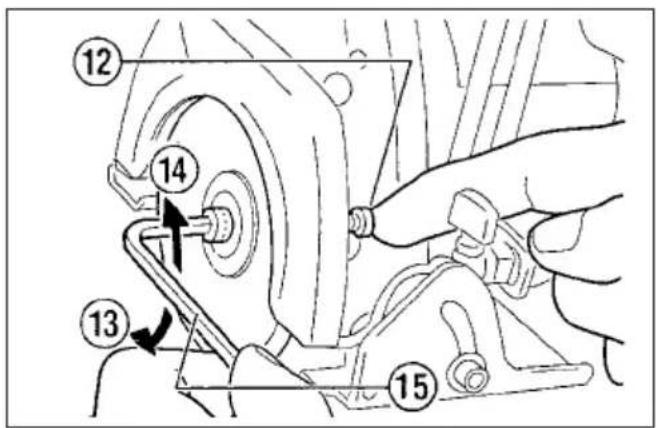
9
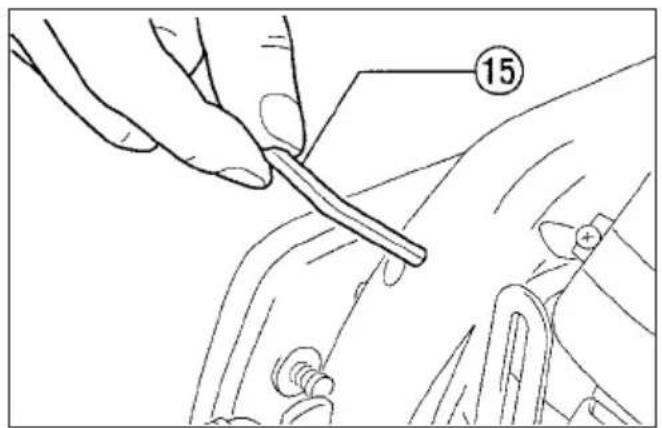
10
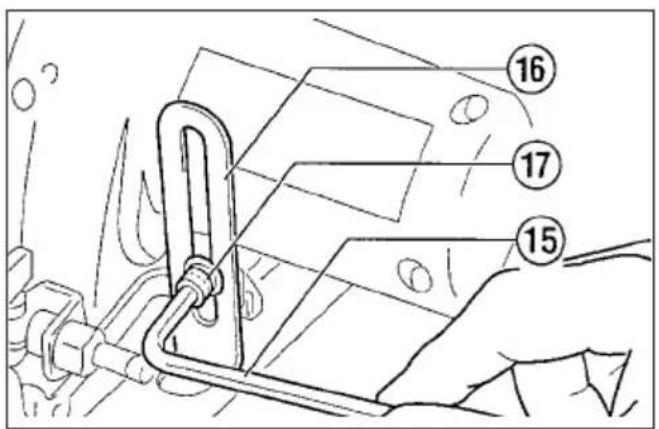
11 12
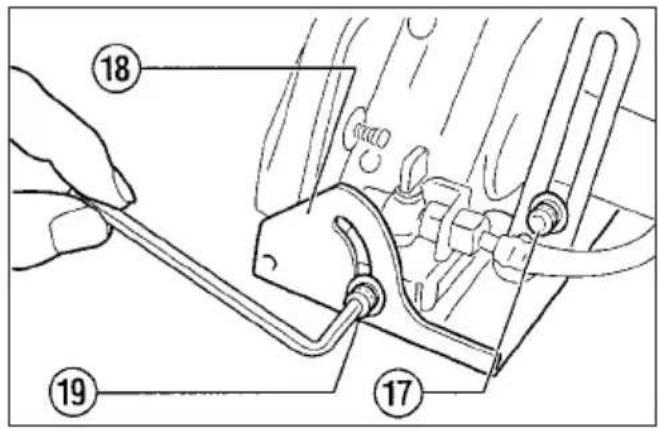
13 14
15
16
ENGLISH
Explanation of general view
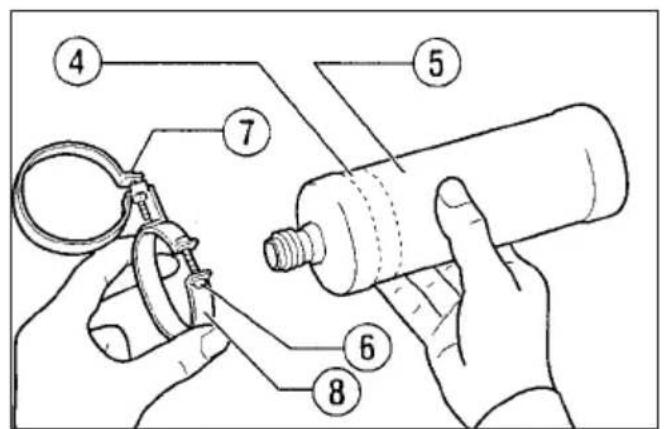
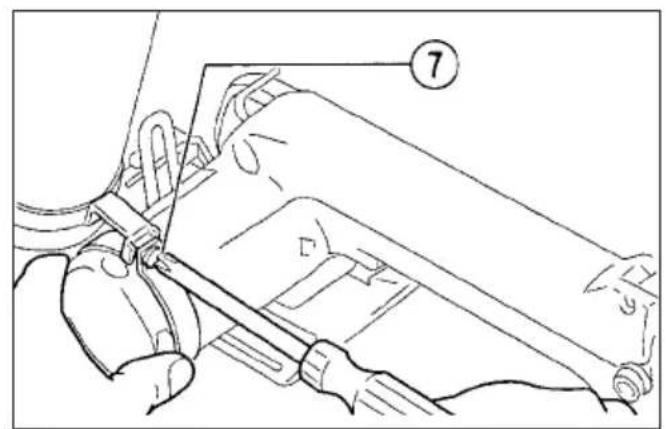
| 1 Set plate2 Battery cartridge3 Charging light4 Tank holder installing portion5 Tank6 Screw (A)7 Screw (B)8 Tank holder9 Diamond wheel | 10 Bolt11 Flange12 Blade stopper pin13 Tighten14 Loosen15 Hex wrench16 Depth guide17 Bolt (A)18 Bevel scale plate | 19 Bolt (B)20 Blade case21 Base22 For straight cuts23 For 45° bevel cuts24 Lock-off lever25 Switch trigger26 Cap |
SPECIFICATIONS
Model 4190D 4190DB
| Wheel diameter | 80 mm 80 mm |
| Cutting depth | |
| 90° | 0 - 18 mm 0 -18 mm |
| 45° | 0 - 16 mm 0 - 16 mm |
| No load speed (mih) | 1,000 1,000 |
| Overall length | 313 mm 313 mm |
| Net weight | 1.9 kg 1.9 kg |
| Rated voltage | D.C. 9.6 V D.C. 9.6 V |
- Due to our continuing program of research and development, the specifications herein are subject to change without notice.
- Note: Specifications may differ from country to country.
Safety hints
For your own safety, please refer to the enclosed safety instructions.
IMPORTANT SAFETY INSTRUCTIONS FOR CHARGER & BATTERY CARTRIDGE
- SAVE THESE INSTRUCTIONS — This manual contains important safety and operating instructions for battery charger.
- Before using battery charger, read all instructions and cautionary markings on (1) battery charger, (2) battery, and (3) product using battery.
- CAUTION — To reduce risk of injury, charge only MAKITA type rechargeable batteries. Other types of batteries may burst causing personal injury and damage.
- Do not expose charger to rain or snow.
- Use of an attachment not recommended or sold by the battery charger manufacturer may result in a risk of fire, electric shock, or injury to persons.
- To reduce risk of damage to electric plug and cord, pull by plug rather than cord when disconnecting charger.
- Make sure cord is located so that it will not be stepped on, tripped over, or otherwise subjected to damage or stress.
-
Do not operate charger with damaged cord or plug — replace them immediately.
-
Do not operate charger if it has received a sharp blow, been dropped, or otherwise damaged in any way; take it to a qualified serviceman.
- Do not disassemble charger or battery cartridge; take it to a qualified serviceman when service or repair is required. Incorrect reassembly may result in a risk of electric shock or fire.
- To reduce risk of electric shock, unplug charger from outlet before attempting any maintenance or cleaning. Turning off controls will not reduce this risk.
ADDITIONAL SAFETY RULES FOR CHARGER & BATTERY CARTRIDGE
- Do not charge battery cartridge when temperature is BELOW 10° C ( 50° F) or ABOVE 40° C ( 104° F).
- Do not attempt to use a step-up transformer, an engine generator or DC power receptacle.
- Do not allow anything to cover or clog the charger vents.
- Always cover the battery terminals with the battery cover when the battery cartridge is not used.
Do not short the battery cartridge:
(1) Do not touch the terminals with any conductive material.
(2) Avoid storing battery cartridge in a container with other metal objects such as nails, coins, etc.
(3) Do not expose battery cartridge to water or rain.
A battery short can cause a large current flow, overheating, possible burns and even a breakdown.
- Do not store the machine and battery cartridge charging in locations where the temperature may reach or exceed 50°C (122°F). For 4190D
- Do not incinerate the battery cartridge even if 1 it is severely damaged or is completely worn out. The battery cartridge can explode in a fire.
- Be careful not to drop, shake or strike battery.
- Do not charge inside a box or container of any kind. The battery must be placed in a well ventilated area during charging. 3.
ADDITIONAL SAFETY RULES FOR MACHINE
- Be aware that this is always in an operating condition, because it does not have to be plugged into an electrical outlet.
- Check the wheel carefully for cracks or damage before operation. Replace cracked or damaged wheel immediately.
- Use only flanges specified for this machine.
- Be careful not to damage the spindle, flanges (especially the installing surface) or bolt. Damage to these parts could result in wheel break age.
- Hold the machine firmly.
- Keep hands away from rotating parts.
- Make sure the wheel is not contacting the workpiece before the switch is turned on.
- Wait until the wheel attains full speed before cutting.
- Stop operation immediately if you notice anything abnormal.
- Do not attempt to lock the trigger in the "O position.
- Never attempt to cut with the machine held upside down in a vise. This can lead to serious accidents, because it is extremely dangerous. (Fig. 1)
- Before setting the machine down after completing a cut, be sure that the wheel has com to a complete stop.
SAVE THESE INSTRUCTIONS.
OPERATING INSTRUCTIONS
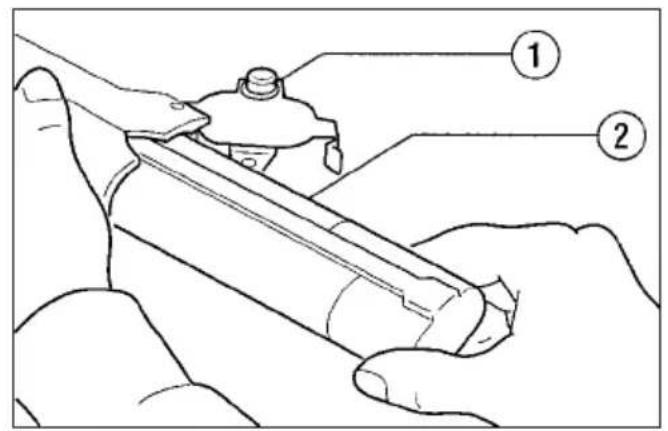
Installing or removing battery cartridge (Fig. 2)
• Always switch off the machine before insertion or removal of the battery cartridge.
• To remove the battery cartridge, pull out the set plate on the machine and grasp both sides of the cartridge while withdrawing it from the machine.
- To insert the battery cartridge, align the tongue on the battery cartridge with the groove in the housing and slip it into place. Snap the set plate back into place. Be sure to close the set plate fully before using the machine.
- Do not use force when inserting the battery cartridge. If the cartridge does not slide in easily, it is not being inserted correctly.
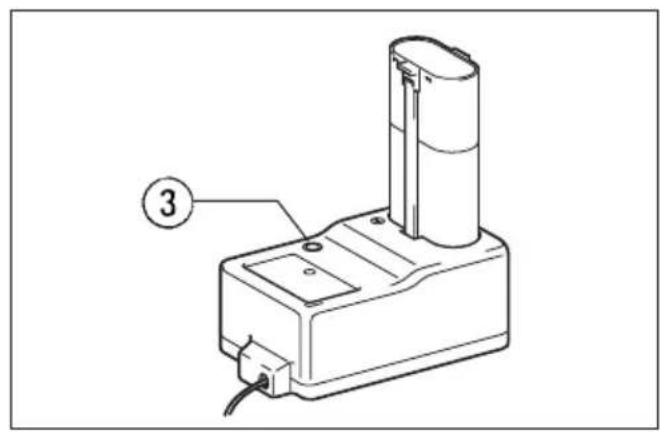
For 4190D (Fig. 3)
- Plug the battery charger into your power source.
- Insert the battery cartridge so that the plus and minus terminals on the battery cartridge are on the same sides as their respective markings on the battery charger. Insert the cartridge fully into the port so that it rests on the charger port floor.
- When the battery cartridge is inserted, the charging light color will flash in red color and charging will begin.
- When charging is completed, the charging light goes out. The charging time is as follows: Battery 7000, 7100, 7120, 9000, 9100, 9100A, 9120: approx. 60 minutes.
- If you leave the battery cartridge in the charger after the charging cycle is complete, the charger will switch into its "trickle charge (maintenance charge)" mode.
- After charging, remove the battery cartridge from the charger and unplug the charger from the power source.
| Battery type | Capacity (mAh) | Number of cells |
| 9000 1,300 8 | ||
CAUTION:
- The battery charger is for charging Makita battery cartridge. Never use it for other purposes or for other manufacturer's batteries.
- When you charge a new battery cartridge or a battery cartridge which has not been used for a long period of time, it may not accept a full charge. This is a normal condition and does not indicate a problem. You can recharge the battery cartridge fully after discharging it completely and recharging a couple of times.
- When you charge a battery cartridge from a just-operated machine or a battery cartridge which has been left in a location exposed to direct sunlight or heat for a long time, let it cool off. Then re-insert it and try to charge it once more.
- When you charge a new battery cartridge or a battery cartridge which has not been used for a long period, sometimes the charging light will go out soon. If this occurs, remove the battery cartridge and re-insert it. If the charging light goes out within one minute even after repeating this procedure a couple of times, the battery cartridge is dead. Replace it with a new one.
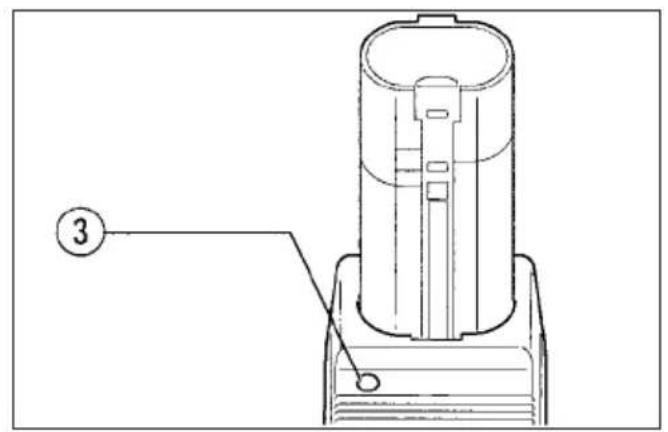
For 4190DB (Fig. 4)
Plug the battery charger into your power source. Insert the battery cartridge so that the plus and terminals on the battery cartridge are on the sar
sides as their respective markings on the battery charger. Insert the cartridge fully into the port so it rests on the charger port floor.
When the battery cartridge is inserted, the charging light will come on and charging will begin. The charging light will keep lighting up steadily during charge
When charging is completed, the charging light goes out. The charging time is approx. 100 minutes.
After charging, unplug the charger from the power source.
| Battery type | Capacity (mAh) | Number of cells |
| 9033 2,200 | 8 |
CAUTION:
- If you charge a battery cartridge from a just-operated machine or a battery cartridge which ha
been left in a location exposed to direct sunlight press the blade stopper pin and insert it through the a long time, the charging light may flash in red circle in the wheel so that the wheel cannot revolve. If this occurs, wait for a while. Charging will begin Use the hex wrench to tighten the bolt securely.
after the battery cartridge cools.
- Any of the following conditions indicates damage the charger and/or battery cartridge. Ask your Makita Authorized or Factory Service Center to check them.
1) The charging light does not light up or flash (re) when the battery is inserted in the charger port.
2) Charging is not completed at even more than three hours after red light comes ON at start charging.
Trickle charge (Maintenance charge)
If you leave the battery cartridge in the charger to prevent spontaneous discharging after full charge, the charger will switch into its “trickle charge (main tenance charge)” mode and keep the battery cartridge fresh and fully charged.
Tips for maintaining maximum battery life
- Charge the battery cartridge before completely discharged.
Always stop machine operation and charge the battery cartridge when you notice less machine power.
-
Never recharge a fully charged battery cartridge. Overcharging shortens the battery service life.
-
Charge the battery cartridge with room temperature at 10° C – 40° C ( 50° F – 104° F).
Let a hot battery cartridge cool down before charging it.
Installing water supply
Attach the tank holder on the tank. The tank holder should be attached around the portion shown with dotted line. Tighten the screw (A) to the extent that tank can still turn within the tank holder. (Fig. 5)
Attach the tank holder onto the motor housing.
Tighten the screw (B) securely. (Fig. 6)
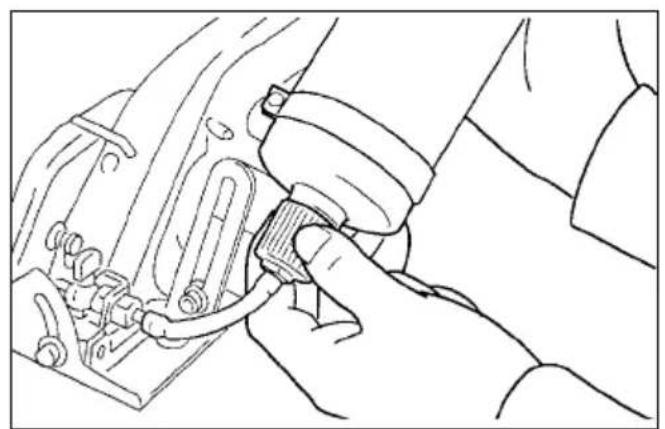
Connect the cap on the end of the polyvinyl tube to the mouth of the tank. Turn the tank clockwise when making the connection. Then tighten the screw (A) securely to secure the tank. (Fig. 7)
CAUTION:
that you find the polyvinyl tube is bent like a "V" or has been strained excessively after installing the water
supply, loosen the screw (B) and adjust the position of the tank to alleviate the bent, pinched or strained condition.
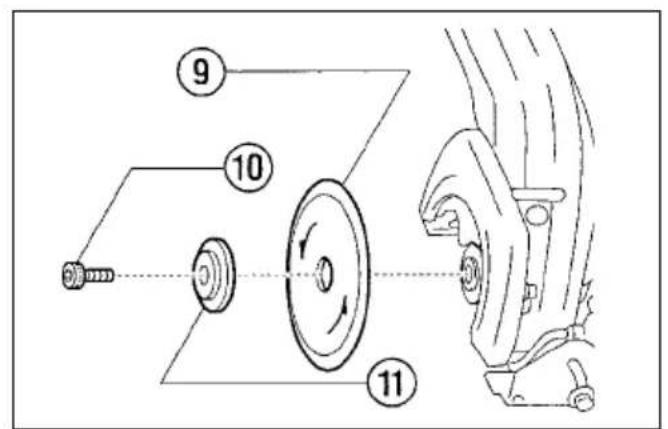
Installing or removing diamond wheel (Fig. 8 & 9)
Important:
Always be sure that the machine is switched off and the battery cartridge is removed before installing or removing the wheel.
To install the wheel, first loosen the bolt with the hex wrench and remove the bolt and the flange. Then mount the wheel, the flange and the bolt. The wheel should be mounted with the Makita name on the
sflange side.
Press the blade stopper pin and insert it through the blade in the wheel so that the wheel cannot revolve. In Use the hex wrench to tighten the bolt securely.
To remove the wheel, follow the installation procedure to in reverse.
CAUTION:
- When installing the wheel, be sure to tighten the bolt
re&securely.
• Use only the Makita hex wrench to install or remove the wheel.
0 Hex wrench storage (Fig. 10)
When not in use, the hex wrench can be conveniently stored.
Adjusting depth of cut (Fig. 11)
Loosen the bolt (A) on the depth guide with the hex-wrench and move the base up or down. At the desired depth of cut, secure the base by tightening the bolt (A).
Bevel cutting (Fig. 12)
Loosen the bolt (A) on the depth guide and the bolt (B) on the bevel scale plate with the hex wrench. Set for the desired angle (0 - 45°) by tilting accordingly, then tighten the bolts (A) and (B) securely.
CAUTION:
After adjusting depth of cut and bevel cutting angle, be sure to tighten the bolts (A) and (B) securely.
Sighting (Fig. 13)
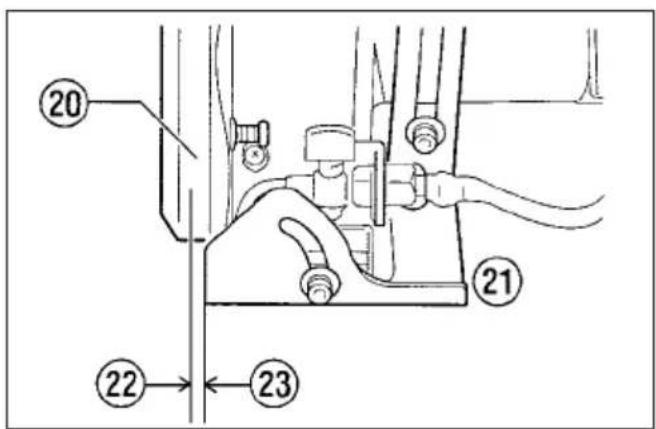
For straight cuts, align the edge of the base with your cutting line on the workpiece. For 45° bevel cuts, align the notch in the front of the base with it.
CAUTION:
When making bevel cuts, view the cutting line on the workpiece through the window in the blade case in order to cut more accurately. If you have difficulty seeing it because of the water tank, adjust the position of the tank by tilting it backward slightly.
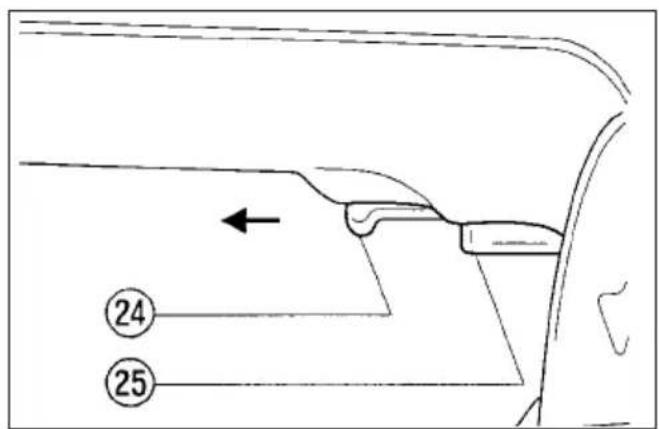
Switch action (Fig. 14)
CAUTION:
Before inserting the battery cartridge into the machine, always check to see that the switch trigger actuates properly and returns to the "OFF" position when released.
To prevent the trigger from being accidentally pulled a lock-off lever is provided.
To start the machine, slide the lock-off lever in the direction of the arrow and pull the trigger. Release trigger to stop.
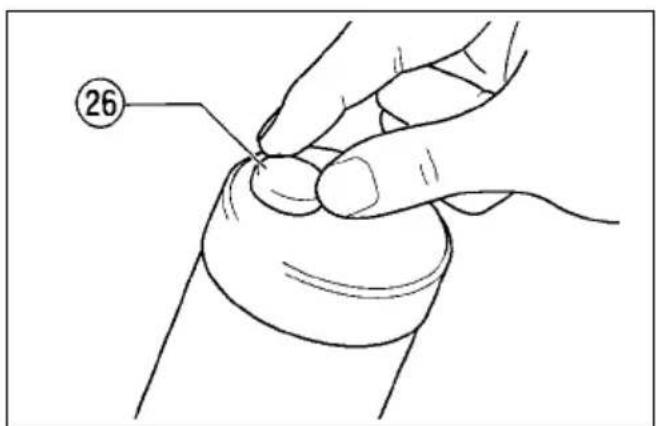
Water supply (Fig. 15)
Remove the cap on the tank and fill through the hole.
Recap the tank. Be sure that the water cock is turn off when filling the tank with water.
CAUTION:
When filling the tank with water, be careful not to the machine get wet.
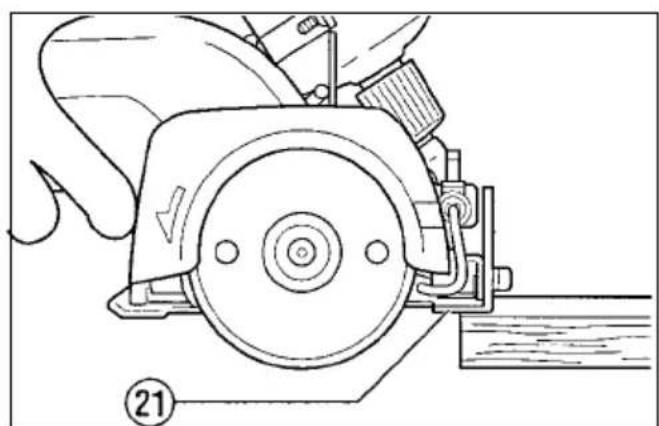
Operation (Fig. 16)
Hold the machine firmly. Set the base plate on the CAUTION:
workpiece to be cut without the wheel making any Always be sure that the machine is switched off and contact. Then turn the machine on and wait until the battery cartridge is removed before carrying out wheel attains full speed. Feed water to the wheel by any work on the machine.
adjusting the water cock to obtain a gentle flow of water. Move the machine forward over the workpiec
surface, keeping it flat and advancing smoothly until the cutting is completed. Keep your cutting line straight and your speed of advance uniform.
For fine, clean cuts, cut slowly. (When cutting glass plate 5 mm thick, cut at about 250 mm/min. When cutting tile 10 mm thick, cut at about 300 mm/min.)
Also slow down as you complete a cut to avoid breaking or cracking the workpiece being cut.
CAUTION:
- Be sure to hold the workpiece firmly down on a stable bench or table during operation.
- Do not twist or force the machine in the cut, or motor may be overloaded or the workpiece may break.
- Do not use the machine with the wheel in an upward or sideways position.
- When cutting glass plate, it is recommended to attach a rubber plate (optional accessory) on the base of the machine to prevent the workpiece surface from being scratched.
- The wheel for Model 4190D/DB is a wet-type wheel for glass and tile applications. Be sure to feed water to the wheel during operation.
- If the cutting action of the wheel begins to diminish, dress the cutting edge of the wheel using an old discarded coarse grit bench grinder wheel or concrete block. Dress by pressing lightly on the outer edge of the wheel.
Cutting performance
The following reference table indicates the approximate cutting capacity from a single battery charge.
| Work-piece | Thickness | Cutting length (90°) | |
| 4190D | 4190DB | ||
| Glass | 3 m m | 5 m | 8 m |
| 5 m m | 2 m | 3 m | |
| the Ceramic tile | 5 m m | 4 m | 6 m |
| 10 mm | 3.5 m | 5.5 m | |
CAUTION:
He the machine is operated continuously until the battery cartridge has discharged, allow the machine to rest for 15 minutes before proceeding with a fresh battery.
MAINTENANCE
cAfter use
IBrush off accumulation of dust on the base.
To maintain product safety and reliability, repairs, maintenance or adjustment should be carried out by a Makita Authorized Service Center.
GUARANTEE
We guarantee Makita machines in accordance with statutory/country-specific regulations. Damage attributable to normal wear and tear, overload or improper handling will be excluded from the guarantee. In case of complaint, please send the machine, undismantled, with the enclosed GUARANTEE CERTIFICATE, to your dealer or the Makita Service Center.
FRANÇAIS
Descriptif
EC-DECLARATION OF CONFORMITY
The undersigned, Yasuhiko Kanzaki, authorized by Makita Corporation, 3-11-8 Sumiyoshi-Cho, Anjo, Aichi, 446 Japan declares that this product
(Serial No.: series production)
manufactured by Makita Corporation in Japan is in compliance with the following standards or standardized documents,
EN50260, EN55014
in accordance with Council Directives, 89/336/EEC and 98/37/EC.
ITALIANO
DÉCLARATION DE CONFORMITÉ CE
Michigan Drive, Tongwell, Milton Keynes, Bucks MK15 8JD, U.K.
PORTUGUÊS
EU-DEKLARATION OM KONFORMITET
Michigan Drive, Tongwell, Milton Keynes, Bucks MK15 8JD, U.K.
ENGLISH
EC-DECLARATION OF CONFORMITY
The undersigned, Yasuhiko Kanzaki, authorized by Da Hong Transformer Factory, First building, First Row, Stock Investment Co. Factory Building First industry Zone, Ban Tian, Pu Ji Town, Long Gang Qu Shenzhen, Guangdong, China declares that this product (Serial No.: series production) manufactured by Da Hong Transformer Factory in China is in compliance with the following standards or standardized documents,
in accordance with Council Directives, 73/23/EEC and 89/336/EEC.
*from 1st Jan. 2001
FRANÇAISE
DÉCLARATION DE CONFORMITÉ CE
Je soussigné, Yasuhiko Kanzaki, mandaté par Da Hong Transformer Factory, First building, First Row, Stock Investment Co. Factory Building First industry Zone, Ban Tian, Pu Ji Town, Long Gang Qu Shenzhen, Guangdong, China, déclare que ce produit
Michigan Drive, Tongwell, Milton Keynes,
Bucks MK15 8JD, U.K.
PORTUGUÊS
EU-DEKLARATION OM KONFORMITET
Undertegnede, Yasuhiko Kanzaki, med fuldmagt fra Da Hong Transformer Factory, First building, First Row, Stock Investment Co. Factory Building First industry Zone, Ban Tian, Pu Ji Town, Long Gang Qu Shenzhen, Guangdong, China, erklærer hermed, at dette produkt (Løbenummer: serieproduktion)
Michigan Drive, Tongwell, Milton Keynes,
Bucks MK15 8JD, U.K.
ENGLISH
Noise And Vibration Of Model 4190D
The typical A-weighted sound pressure level is 78 dB (A).
The noise level under working may exceed 85 dB (A).
- Wear ear protection. -
The typical weighted root mean square acceleration value is not more than 2.5 m/s 4 .
FRANÇAISE
- SAFETY HINTS
- IMPORTANT SAFETY INSTRUCTIONS FOR CHARGER & BATTERY CARTRIDGE
- ADDITIONAL SAFETY RULES FOR CHARGER & BATTERY CARTRIDGE
- ADDITIONAL SAFETY RULES FOR MACHINE
- SAVE THESE INSTRUCTIONS
- OPERATING INSTRUCTIONS
- INSTALLING OR REMOVING BATTERY CARTRIDGE (FIG. 2)
- FOR 4190D (FIG. 3)
- CAUTION
- FOR 4190DB (FIG. 4)
- TRICKLE CHARGE (MAINTENANCE CHARGE)
- TIPS FOR MAINTAINING MAXIMUM BATTERY LIFE
- INSTALLING WATER SUPPLY
- INSTALLING OR REMOVING DIAMOND WHEEL (FIG. 8 & 9)
- IMPORTANT
- 0 HEX WRENCH STORAGE (FIG. 10)
- ADJUSTING DEPTH OF CUT (FIG. 11)
- BEVEL CUTTING (FIG. 12)
- SIGHTING (FIG. 13)
- SWITCH ACTION (FIG. 14)
- WATER SUPPLY (FIG. 15)
- OPERATION (FIG. 16)
- CUTTING PERFORMANCE
- MAINTENANCE
- CAFTER USE
- GUARANTEE
- FRANÇAIS
- DESCRIPTIF
- EC-DECLARATION OF CONFORMITY
- ITALIANO
- DÉCLARATION DE CONFORMITÉ CE
- PORTUGUÊS
- EU-DEKLARATION OM KONFORMITET
- ENGLISH
- FRANÇAISE
- NOISE AND VIBRATION OF MODEL 4190D
Brand : MAKITA
Model : 4190DB
Category : Electric saw