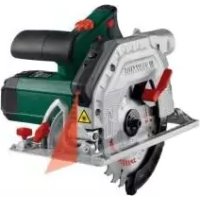
PHKS 1350 C2 - Electric saw PARKSIDE - Free user manual and instructions
Find the device manual for free PHKS 1350 C2 PARKSIDE in PDF.


Frequently Asked Questions - PHKS 1350 C2 PARKSIDE
User questions about PHKS 1350 C2 PARKSIDE
0 question about this device. Answer the ones you know or ask your own.
Ask a new question about this device
Download the instructions for your Electric saw in PDF format for free! Find your manual PHKS 1350 C2 - PARKSIDE and take your electronic device back in hand. On this page are published all the documents necessary for the use of your device. PHKS 1350 C2 by PARKSIDE.
USER MANUAL PHKS 1350 C2 PARKSIDE
HANDKREISSÄGE / CIRCULAR SAW / SCIE CIRCULAIRE PHKS 1350 C2
DE AT CH
HANDKREISSÄGE
Translation of the original instructions
NL BE
HANDCIRKELZAAG
Before reading, unfold the page containing the illustrations and familiarise yourself with all functions of the device.
FR BE
GB/IE Translation of the original instructions Page 15
KOMPERNASS HANDELS GMBH
BURGSTRASSE 21
44867 BOCHUM
DEUTSCHLAND
www.kompernass.com
General Power Tool SafetyWarnings 17
1.Work area safety 17
2. Electrical safety 18
3. Personal safety 18
4. Power tool use and care 19
5. Service 19
Device-specific safety instructions for circular saws 19
Safety information for circular saw blades 21
Original accessories/additional equipment 23
Before use 23
Check that the blade guard is functioning correctly 23
Initial operation 23
Fitting/changing the saw blade 23
Mounting/setting the guide fence 24
Connecting the sawdust extraction appliance 24
Operation 24
Switching on and off 24
Setting the cutting angle 24
Setting the cutting depth 24
Working with the circular saw 24
Switching the laser on and off 25
Set rotational speed 25
Tips and tricks 25
Maintenance and Cleaning 25
Disposal 26
Disposing of the batteries 26
Kompernass Handels GmbH warranty 26
Service 27
Importer 27
Translation of the original Conformity Declaration 28
CIRCULAR SAW PHKS 1350 C2
Introduction
Congratulations on the purchase of your new appliance. You have selected a high-quality product. The operating instructions are part of this product. They contain important information about safety, use and disposal. Before using the product, familiarise yourself with all operating and safety instructions. Use this product only as described and only for the specified areas of application. Please also pass these operating instructions on to any future owner(s).
Proper use
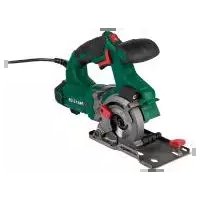
This circular saw (hereinafter "appliance") is designed for longitudinal, cross and metre cuts in firmly supported solid wood, chipboard, plastics and lightweight construction materials. Any other uses of or modifications to the device are deemed to be improper usage and may result in serious physical injury. Not for commercial use.
Features
Safety lock-out
ON/OFF switch
3 Cutting depth scale
4 Allen key SW 6
Locking screw
6 Base plate
Guide fence slot
8 Wing screw for guide fence slot
Wing screw for cutting angle preselector
Cutting angle scale
Spindle lock
12 Auxiliary handle
13 ON/OFF switch laser
14 Laser discharge opening
15 Guide fence
16 Clamping flange
17 Clamping screw/plain washer
18 Blade guard
19 Release lever for the blade guard
20 Sawblade
Chip ejector
Vacuum adapter for dust extraction
Rotational speed preselector adjusting wheel
24 Battery compartment cover
Package contents
1 circular saw
1 guide fence
1 vacuum adapter for dust extraction
1 Allen key SW 6
2 saw blades
2 batteries (Best before date 15/06/2023)
1 operating instructions
Technical details
Nominal power input 1350 W
Rated voltage 230V ,50Hz
(Alternating current)
Idle speed n 2.200-4.700 rpm
Saw blades

1 × 0.190 ~mm × 2.5 ~mm
× 20mm , 24 teeth
1 × 0.190 ~mm × 2.5 ~mm
× 20mm ,48 teeth
Max. cutting depth at 0^

wood/plastic 65mm
at 45^
wood/plastic 44 mm
Protection class II/ (Douglas shielded)
Noise and vibration data
Noise measurement determined in accordance with EN 62841. The A-rated noise level of the tool is typically:
Noise emission value
| Sound pressure level L | PA= 93 dB(A) |
| Uncertainty | KPA= 3 dB |
| Sound power level L | WA= 104 dB(A) |
| Uncertainty | KW= 3 dB |

Wear ear protection!
Vibration emission value
| Cutting wood a | h,W= 3.7 m/s2 |
| Uncertainty | K |
NOTE
The vibration emission values and the noise emission values given in these instructions have been measured in accordance with a standardised test procedure and can be used for comparison of the power tool with another tool.
The specified total vibration values and the noise emission values can also be used to make a provisional load estimate.

WARNING!
Depending on the manner in which the power tool is being used, and in particular the kind of workpiece that is being worked, the vibration and noise emission values can deviate from the values given in these instructions during actual use of the power tool.
Try to keep the load as low as possible. Measures to reduce the vibration load are, e.g. wearing gloves and limiting the working time. Wherein all states of operation must be included (e.g. times when the power tool is switched off and times where the power tool is switched on but running without load).

General Power Tool SafetyWarnings

WARNING!
Read all safety warnings, instructions, illustrations and specifications provided with this power tool. Failure to follow all instructions listed below may result in electric shock, fire and/or serious injury.
Save all warnings and instructions for future reference.
The term "power tool" in the warnings refers to your mains-operated (corded) power tool or battery-operated (cordless) power tool.
1. Work area safety
a) Keep work area clean and well lit. Cluttered or dark areas invite accidents.
b) Do not operate power tools in explosive atmospheres, such as in the presence of flammable liquids, gases or dust. Power tools create sparks which may ignite the dust or fumes.
c) Keep children and bystanders away while operating a power tool. Distractions can cause you to lose control.
2. Electrical safety
a) Power tool plugs must match the outlet. Never modify the plug in any way. Do not use any adapter plugs with earthed (grounded) power tools. Unmodified plugs and matching outlets will reduce risk of electric shock.
b) Avoid body contact with earthed or ground- ed surfaces, such as pipes, radiators, ranges and refrigerators. There is an increased risk of electric shock if your body is earthed or grounded.
c) Do not expose power tools to rain or wet conditions. Water entering a power tool will increase the risk of electric shock.
d) Do not abuse the cord. Never use the cord for carrying, pulling or unplugging the power tool. Keep cord away from heat, oil, sharp edges or moving parts. Damaged or entangled cords increase the risk of electric shock.
e) When operating a power tool outdoors, use an extension cord suitable for outdoor use. Use of a cord suitable for outdoor use reduces the risk of electric shock.
f) If operating a power tool in a damp location is unavoidable, use a residual current device (RCD) protected supply. Use of an RCD reduces the risk of electric shock.
3. Personal safety
a) Stay alert, watch what you are doing and use common sense when operating a power tool. Do not use a power tool while you are tired or under the influence of drugs, alcohol or medication. A moment of inattention while operating power tools may result in serious personal injury.
b) Use personal protective equipment. Always wear eye protection. Protective equipment such as a dust mask, non-skid safety shoes, hard hat or hearing protection used for appropriate conditions will reduce personal injuries.
c) Prevent unintentional starting. Ensure the switch is in the off-position before connecting to power source and/or battery pack, picking up or carrying the tool. Carrying power tools with your finger on the switch or energising power tools that have the switch on invites accidents.
d) Remove any adjusting key or wrench before turning the power tool on. A wrench or a key left attached to a rotating part of the power tool may result in personal injury.
e) Do not overreach. Keep proper footing and balance at all times. This enables better control of the power tool in unexpected situations.
f) Dress properly. Do not wear loose clothing or jewellery. Keep your hair and clothing away from moving parts. Loose clothes, jewellery or long hair can be caught in moving parts.
g) If devices are provided for the connection of dust extraction and collection facilities, ensure these are connected and properly used. Use of dust collection can reduce dust-related hazards.
h) Do not let familiarity gained from frequent use of tools allow you to become complacent and ignore tool safety principles. A careless action can cause severe injury within a fraction of a second.
4. Power tool use and care
a) Do not force the power tool. Use the correct power tool for your application. The correct power tool will do the job better and safer at the rate for which it was designed.
b) Do not use the power tool if the switch does not turn it on and off. Any power tool that cannot be controlled with the switch is dangerous and must be repaired.
c) Disconnect the plug from the power source and/or remove the battery pack, if detachable, from the power tool before making any adjustments, changing accessories, or storing power tools. Such preventive safety measures reduce the risk of starting the power tool accidentally.
d) Store idle power tools out of the reach of children and do not allow persons unfamiliar with the power tool or these instructions to operate the power tool. Power tools are dangerous in the hands of untrained users.
e) Maintain power tools and accessories. Check for misalignment or binding of moving parts, breakage of parts and any other condition that may affect the power tool's operation. If damaged, have the power tool repaired before use. Many accidents are caused by poorly maintained power tools.
f) Keep cutting tools sharp and clean. Properly maintained cutting tools with sharp cutting edges are less likely to bind and are easier to control.
g) Use the power tool, accessories and tool bits etc. in accordance with these instructions, taking into account the working conditions and the work to be performed. Use of the power tool for operations different from those intended could result in a hazardous situation.
h) Keep handles and grasping surfaces dry, clean and free from oil and grease. Slippery handles and grasping surfaces do not allow for safe handling and control of the tool in unexpected situations.
5. Service
a) Have your power tool serviced by a qualified repair person using only identical replacement parts. This will ensure that the safety of the power tool is maintained.
Device-specific safety instructions for circular saws
Safety instructions for all saws Cutting procedures
a) DANGER: Keep hands away from cutting area and the blade. Keep your second hand on auxiliary handle, or motor housing. If both hands are holding the saw, they cannot be cut by the blade.
b) Do not reach underneath the workpiece. The guard cannot protect you from the blade below the workpiece.
c) Adjust the cutting depth to the thickness of the workpiece. Less than a full tooth of the blade teeth should be visible below the workpiece.
d) Never hold piece being cut in your hands or across your leg. Secure the workpiece to a stable platform. It is important to support the work properly to minimize body exposure, blade binding, or loss of control.
e] Hold the power tool by insulated gripping surfaces only, when performing an operation where the cutting tool may contact hidden wiring or its own cord. Contact with a "live" wire will also make exposed metal parts of the power tool "live" and could give the operator an electric shock.
f) When ripping, always use a rip fence or straight edge guide. This improves the accuracy of cut and reduces the chance of blade binding.
g) Always use blades with correct size and shape (diamond versus round) of arbour holes. Blades that do not match the mounting hardware of the saw will run eccentrically, causing loss of control.
h) Never use damaged or incorrect blade washers or bolt. The blade washers and bolt were specially designed for your saw, for optimum performance and safety of operation.
Further safety instructions for all saws Kickback causes and related warnings
- kickback is a sudden reaction to a pinched, bound or misaligned saw blade, causing an uncontrolled saw to lift up and out of the workpiece toward the operator;
- when the blade is pinched or bound tightly by the kerf closing down, the blade stalls and the motor reaction drives the unit rapidly back toward the operator;
- if the blade becomes twisted or misaligned in the cut, the teeth at the back edge of the blade can dig into the top surface of the wood causing the blade to climb out of the kerf and jump back toward the operator.
Kickback is the result of saw misuse and/or incorrect operating procedures or conditions and can be avoided by taking proper precautions as given below.
a) Maintain a firm grip with both hands on the saw and position your arms to resist kickback forces. Position your body to either side of the blade, but not in line with the blade. Kickback could cause the saw to jump backwards, but kickback forces can be controlled by the operator, if proper precautions are taken.
b) When blade is binding, or when interrupting a cut for any reason, release the trigger and hold the saw motionless in the material until the blade comes to a complete stop. Never attempt to remove the saw from the work or pull the saw backward while the blade is in motion or kickback may occur. Investigate and take corrective actions to eliminate the cause of blade binding.
c) When restarting a saw in the workpiece, centre the saw blade in the kerf and check that saw teeth are not engaged into the material. If saw blade is binding, it may walk up or kickback from the workpiece as the saw is restarted.
d) Support large panels to minimise the risk of blade pinching and kickback. Large panels tend to sag under their own weight. Supports must be placed under the panel on both sides, near the line of cut and near the edge of the panel.
e) Do not use dull or damaged blades. Unsharpened or improperly set blades produce narrow kerf causing excessive friction, blade binding and kickback.
f) Blade depth and bevel adjusting locking levers must be tight and secure before making cut. If blade adjustment shifts while cutting, it may cause binding and kickback.
g) Use extra caution when sawing into existing walls or other blind areas. The protruding blade may cut objects that can cause kickback.
Lower guard function
a) Check lower guard for proper closing before each use. Do not operate the saw if lower guard does not move freely and close instantly. Never clamp or tie the lower guard into the open position. If saw is accidentally dropped, lower guard may be bent. Raise the lower guard with the retracting handle and make sure it moves freely and does not touch the blade or any other part, in all angles and depths of cut.
b) Check the operation of the lower guard spring. If the guard and the spring are not operating properly, they must be serviced before use. Lower guard may operate snug- gishly due to damaged parts, gummy deposits, or a build-up of debris.
Lower guard may be retracted manually only for special cuts such as "plunge cuts" and "compound cuts". Raise lower guard by retracting handle and as soon as blade enters the material, the lower guard must be released. For all other sawing, the lower guard should operate automatically.
d) Always observe that the lower guard is covering the blade before placing saw down on bench or floor. An unprotected, coasting blade will cause the saw to walk backwards, cutting whatever is in its path. Be aware of the time it takes for the blade to stop after switch is released.
Supplementary notes
Do not use any grinding discs.
Use only saw blade with diameters corresponding to the label on the saw.
When sawing wood or other materials which may create dusts that are hazardous to health, always connect a suitable, certified vacuum extractor device.
Wear a dust mask when sawing wood.
Use only the recommended saw blades.
Always wear ear protectors.
Do not allow the teeth of the saw blade to overheat.
When sawing plastic, avoid melting the plastic.
Always use the correct saw blade for the material being worked.
Use only saw blades with a speed marking which corresponds to or is higher than the speed specified for the power tool.
Saw blades intended for use on wood or similar materials must comply with EN 847-1.
Safety information for circular saw blades

Wear protective gloves!

Wear respiratory protection!

Wear protective glasses!

Wear hearing protection!

WARNING!
Protect yourself from laser radiation!
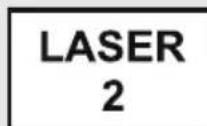


P max.: <1 mW·λ·650 nm·EN 60825-1:2014
This appliance contains a Class 2 laser.
NEVER direct the laser beam at people or animals.
NEVER look directly into the laser beam. The laser beam can cause serious eye damage.
Do NOT direct the laser beam at strongly reflective material. Reflected laser beams are also dangerous.
Any adjustment intended to increase the intensity of the laser beam is forbidden. There is a risk of personal injury!
No liability will be accepted for damage resulting from manipulation of the laser equipment or from disregarding these safety instructions.
Caution if other than the controls or adjustments specified here or other procedures are carried out, this may lead to dangerous exposure to radiation.
NOTE
If the device is not used according to the manufacturer's operating instructions, the protection provided may be impaired.

DANGER!
Mishandling the batteries can cause fires, explosions, leakages or other hazards!
- Do not throw the batteries into a fire and do not subject them to high temperatures.
Do not open, deform or short-circuit batteries, since this can lead to chemical leakage. - Do not attempt to recharge batteries. Do not charge batteries unless they are explicitly labelled as "rechargeable". There is a risk of explosion!
- Check the condition of the batteries at regular intervals. Leaking chemicals can cause permanent damage to the device. Take particular care when handling damaged or leaking batteries. Risk of chemical burns! Wear protective gloves.
Chemicals which leak from a battery can cause skin irritation. In the event of contact with the skin, rinse with copious amounts of water. If the chemicals come into contact with your eyes, rinse thoroughly with water, do not rub and consult a doctor immediately. - Keep batteries out of the reach of children. Children might put batteries into their mouth and swallow them. If a battery has been swallowed, seek medical assistance IMMEDIATELY.
Do not mix different types of batteries.
Always insert the batteries the right way round (observe correct polarity) otherwise there is a danger that they could explode.
If you do not intend to use the device for a long time, remove the batteries.
Changing the batteries
Open the cover of the battery compartment with a suitable Philips screwdriver.
Remove the spent batteries.
Insert two new 1.5 V alkaline button cells (type AG 13/LR 44, e.g. GPA 76) observing the correct polarity and screw the battery compartment cover firmly closed.
CAUTION!
If operating and adjustment equipment is used or procedures other than those specified here are carried out, this may result in hazardous radiation exposure.
Original accessories/additional equipment
Only use the accessories and additional equipment that are specified in the operating instructions and are compatible with the appliance.
Before use
Check that the blade guard is functioningcorrectly
WARNING! RISK OF INJURY!
Switch off the appliance and pull out the power plug before starting any work on the appliance.
Make sure that all moving parts of the blade guard 18 move freely without jamming and all devices designed to cover the saw blade are working correctly.
Activate the blade guard only using the release lever for the blade guard 19
Pull the release lever for the blade guard all the way back.
When you let go of the release lever for the blade guard 19, the blade guard must move freely back to its starting position.
Initial operation
The PHKS 1350 C2 circular saw has Intelligent Power Control. This automatic power delivery system ensures that for a particular speed range the power output remains constant when working on harder and more resistant materials.
Fitting/changing the saw blade
NOTE
All blades used should conform to EN 847-1.
Use only saw blade with diameters corresponding to the label on the saw.
Always pull out the plug from the mains before changing the saw blade 20!
- Set the cutting depth (using the locking screw to the minimum position, 0mm
- Swing the blade guard back using the release lever and put the device down.
- Press the spindle lock button until it engages and use the Allen key to release the clampingscrew/washer. Now remove the clamping screw/washer and the clamping flange (see also Fig. A).
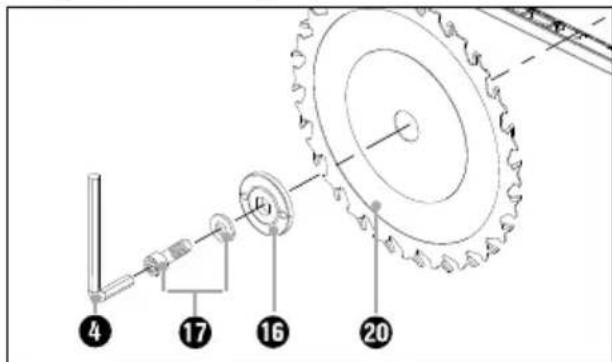
Fig. A: Changing the saw blade
- Remove saw blade20
- Fitting a saw blade is carried out in the reverse order.
- Press the spindle lock button until it engages and use the Allen key to tighten the clamping screw/washer
WARNING!
The arrow on the saw blade must correspond to the arrow showing the direction of rotation (running direction shown on the device).
Ensure that the saw blade is suitable for the rotational speed of the tool.
Mounting/setting the guide fence
Loosen the wing screw and insert the guide fence into the guide fence slot.
Set the desired cut width with the help of the scale on the guide fence 15 and the marking arrow in the base plate 6 see also Fig.B).
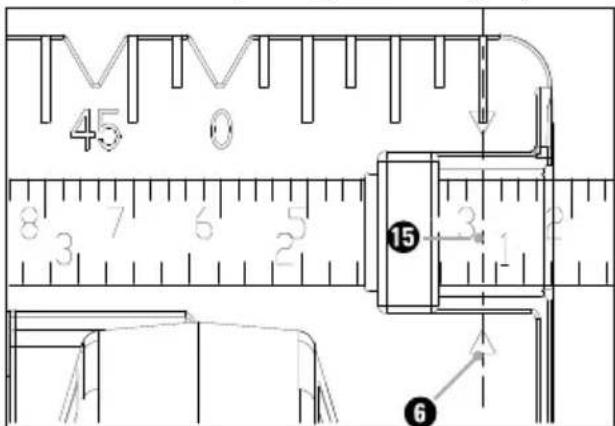
Fig. B: Cutting width 3 cm
Retighten the wing screw.
Connecting the sawdust extraction appliance
Attach the adapter for dust extraction to the chip ejector 21.
Connect an approved dust and chip extraction device.
Operation
Switching on and off
Switching on
Push the safety lock-out to the left or right and keep it pressed.
Press the ON/OFF switch. Once the saw is running you can release the safety lock-out 1
Switching off
Release the ON/OFF switch 2
Setting the cutting angle
You can select the cutting angle with the help of the cutting angle scale 10.
Release the wing screw on the cutting angle preselector, set the desired angle on the cutting angle scale and then re-tighten the wing screw.
Setting the cutting depth
NOTE
We generally recommend setting the cutting depth to approx. 3mm more than the thickness of the material. This ensures that you achieve a clean cut.
Release the locking screw, set the desired cutting depth on the cutting depth scale and then re-tighten the locking screw.
Working with the circular saw
- Switch on the device - as described in "Switching on and off" - and then place it with the front edge of the base plate on the material.
- Align the machine using the guide fence by using a marked line.
- Hold the machine in both hands using the handles and saw by exerting an even pressure.
Switching the laser on and off
Switching on
Press the ON/OFF switch laser.13
Switching off
Press the ON/OFF switch Iase13.
NOTE
If the batteries are spent, replace them with two new 1.5V alkaline button cells (type AG 13/LR 44, e.g. GPA 76).
Set rotational speed
Turn the adjusting wheel to the desired rotational speed (arrow marking ) 1 = lowest rotational speed/ 6= highest rotational speed):
Use the following suggested settings or set the rotational speed on the adjusting wheel 23 as required.
| Material | Rotational speed setting |
| Cross cuts & longitudinal cuts in hard and soft wood (solid wood) | 6 |
| Chipboard, fibre board 6 | |
| Core board, plywood 6 | |
| Coated and veneered boards 6 | |
| PVC sheets 3 - 5 | |
| Acrylic glass sheets, perspex 2 - 4 | |
| Aluminium plate 4 - 6 | |
| Aluminium profile 4 - 6 | |
| Plaster board 1 - 2 | |
| Stone wool board 1 - 2 | |
| Cement-bonded particle board 1 - 2 |
Tips and tricks
Avoid damaging the cutting edge of sensitive materials, e.g. coated chipboards or doors, by sticking masking tape along the cutting line. Another benefit of this is that it is easier to mark a line on the tape than on a shiny surface. An even more effective method of protecting the cutting edges is to clamp a thin piece of wood along the cutting line (this wood is also sawn).
Maintenance and Cleaning

WARNING! RISK OF INJURY! Switch the appliance off and remove the power plug before starting any work.
The appliance must always be kept clean, dry and free from oil or grease.
To clean the casing, use a soft dry cloth.
The blade guard must always move freely and close automatically. Therefore, keep the area around the blade guard clean at all times. Remove dust and chips by blowing them out with compressed air or with a brush.

WARNING!
If the connecting cable needs to be replaced, this must be carried out by the manufacturer or his representative in order to avoid safety hazards.
Disposal

The packaging is made from environmentally friendly material and can be disposed of at your local recycling plant.
Do not dispose of power tools in your normal domestic waste!
European Directive 2012/19/EU requires that wornout power tools are
collected separately and fed into an environmentally compatible recycling process.
Your local community or municipal authorities can provide information on how to dispose of the worn-out appliance.

Dispose of the packaging in an environmentally friendly manner.
Note the labelling on the packaging and separate the packaging material
components for disposal if necessary. The packaging material is labelled with abbreviations (a) and numbers (b) with the following meanings:
1-7: plastics, 20-22: paper and cardboard, 80-98: composites.

Your local community or municipal authorities can provide information on how to dispose of the worn-out product.

The product is recyclable, subject to extended producer responsibility and is collected separately.
Disposing of the batteries
Batteries must be recycled in accordance with Directive 2006/66/EC and must not be disposed of with household refuse. Battery users are obliged
by law to take all rechargeable and single-use batteries to a collection point operated by a public authority or a retailer. The purpose of this obligation is to ensure that batteries are disposed of in an environmentally congruent manner. Only dispose of batteries when they are fully discharged. Batteries must be removed from the device prior to disposal.
This appliance has a 3-year warranty valid from the date of purchase. If this product has any faults, you, the buyer, have certain statutory rights. Your statutory rights are not restricted in any way by the warranty described below.
Warranty conditions
The warranty period starts on the date of purchase. Please keep your receipt in a safe place. This will be required as proof of purchase.
If any material or manufacturing fault occurs within three years of the date of purchase of the product, we will either repair or replace the product for you or refund the purchase price (at our discretion).
This warranty service requires that you present the defective appliance and the proof of purchase (receipt) within the three-year warranty period, along with a brief written description of the fault and of when it occurred.
If the defect is covered by the warranty, your product will either be repaired or replaced by us. The repair or replacement of a product does not signify the beginning of a new warranty period.
Warranty period and statutory claims for defects
The warranty period is not prolonged by repairs effected under the warranty. This also applies to replaced and repaired components. Any damage and defects present at the time of purchase must be reported immediately after unpacking. Repairs carried out after expiry of the warranty period shall be subject to a fee.
Scope of the warranty
This appliance has been manufactured in accordance with strict quality guidelines and inspected meticulously prior to delivery.
The warranty covers material faults or production faults. The warranty does not extend to product parts subject to normal wear and tear or to fragile parts which could be considered as consumable parts such as switches, batteries or parts made of glass.
The warranty does not apply if the product has been damaged, improperly used or improperly maintained. The directions in the operating instructions for the product regarding proper use of the product are to be strictly followed. Uses and actions that are discouraged in the operating instructions or which are warned against must be avoided.
This product is intended solely for private use and not for commercial purposes. The warranty shall be deemed void in cases of misuse or improper handling, use of force and modifications / repairs which have not been carried out by one of our authorised Service centres.
The warranty period does not apply to
Normal reduction of the battery capacity over time
Commercial use of the product
Damage to or alteration of the product by the customer
Non-compliance with safety and maintenance instructions, operating errors
Damage caused by natural hazards
Warranty claim procedure
To ensure quick processing of your case, please observe the following instructions:
Please have the till receipt and the item number (e.g. IAN 12345) available as proof of purchase.
You will find the item number on the type plate on the product, an engraving on the product, on the front page of the operating instructions (below left) or on the sticker on the rear or bottom of the product.
If functional or other defects occur, please contact the service department listed either by telephone or by e-mail.
You can return a defective product to us free of charge to the service address that will be provided to you. Ensure that you enclose the proof of purchase (till receipt) and information about what the defect is and when it occurred.
You can download these instructions along with many other manuals, product videos and installation software at www.lidl-service.com.
This QR code will take you directly to
the Lidl service page (www.lidl-service.com) where you can open your operating instructions by entering the item number (IAN) 123456.
Service
GB Service Great Britain
Tel.: 0800 404 7657
E-Mail: kompernass@lidl.co.uk
IE Service Ireland
Tel.: 1890 930 034
(0,08 EUR/Min., (peak))
(0,06 EUR/Min., (off peak))
E-Mail: kompernass@lidl.ie
IAN339963_1910
Importer
Please note that the following address is not the service address. Please use the service address provided in the operating instructions.
KOMPERNASS HANDELS GMBH
BURGSTRASSE 21
44867 BOCHUM
GERMANY
www.kompernass.com
Translation of the original Conformity Declaration
We, KOMPERNASS HANDELS GMBH, Custodian of Documents: Mr. Semi Uguzlu, BURGSTR. 21, 44867 BOCHUM, DEUTSCHLAND, hereby declare that this product complies with the following standards, normative documents and the EC directives:
Machinery Directive
(2006/42/EC)
EMC (Electromagnetic Compatibility)
(2014/30/EU)
RoHS Directive
(2011/65/EU)*
- The manufacturer is solely responsible for the issuance of this conformity declaration. The object of the declaration described above complies with the requirements of the Directive 2011/65/EU of the European Parliament and Council of 8 June 2011 on the restriction of the use of certain hazardous substances in electrical and electronic equipment.
Applied harmonised standards:
EN 62841-1: 2015
EN 62841-2-5: 2014
EN 55014-1:2017
EN 55014-2: 2015
EN 61000-3-2: 2014
EN 61000-3-3:2013/A1:2019
EN 60825-1: 2014
EN 50581:2012
Type designation of machine: Circular saw PHKS 1350 C2
Year of manufacture: 11 - 2019
Serial number: IAN 339963_1910
Bochum, 20/01/2020
CE
Semi Uguzlu
- Quality Manager -
Subject to technical changes in the course of further developments.
Table des matieres
Introduction 30
(Courant alternative)
Vitesse de rotation a
vide
2,200-4,700 trs/min
Lames de scie 1 × 0.190 ~mm × 2.5 ~mm

× 20mm , 24 dents
190 mm × 2,5 mm
× 20mm ,48 dents
II (Double blinding)
Chere cliente, cher client,
Chere cliente, cher client,
KOMPERNASS HANDELS GMBH
BURGSTRASSE 21
44867 BOCHUM
ALLEMAGNE
www.kompernass.com
Directive Machines (2006/42/CE)
Directive RoHS (2011/65/EU)
Semi Uguzlu - Responsible qualite -
WAARSCHUWING! LETSELGEVAAR!
KOMPERNASS HANDELS GMBH
BURGSTRASSE 21
44867 BOCHUM
DUITSLAND
www.kompernass.com
KOMPERNASS HANDELS GMBH
BURGSTRASSE 21
44867 BOCHUM
NIEMCY
www.kompernass.com
KOMPERNASS HANDELS GMBH
BURGSTRASSE 21
44867 BOCHUM
NEMECKO
www.kompernass.com
KOMPERNASS HANDELS GMBH
BURGSTRASSE 21
44867 BOCHUM
GERMANY
www.kompernass.com