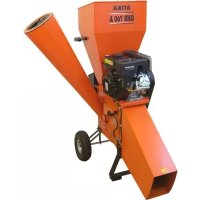
GHB 760 A - Mechanical chipper ATIKA - Free user manual and instructions
Find the device manual for free GHB 760 A ATIKA in PDF.



| Product type | Gasoline garden shredder (mechanical chipper) |
| Brand | ATIKA |
| Model | GHB 760 A |
| Engine | 4-stroke gasoline, power 4.0 kW |
| Max engine speed | 3600 min⁻¹ |
| Max grinding speed | 2000 min⁻¹ |
| Displacement | 212 cm³ |
| Max branch diameter (main hopper) | 10 mm |
| Max branch diameter (side hopper) | 76 mm |
| Weight | 84.5 kg |
| Fuel tank capacity | 3.0 L |
| Oil tank capacity | 0.6 L |
| Recommended oil type | SAE 10W-30, SF classification or higher |
| Sound pressure level LPA | 96 dB(A) |
| Guaranteed sound power level | 110 dB(A) |
| Cutting system | Knives and beaters |
| Number of hoppers | 2 (main and side) |
| Emergency stop | Yes, via ignition switch and fuel tap |
| Spare parts available | Yes, knife (385619), belt (385616), air filter (359538), spark plug (359539), etc. |
| Warranty | CE conformity, separate warranty conditions |
Frequently Asked Questions - GHB 760 A ATIKA
User questions about GHB 760 A ATIKA
0 question about this device. Answer the ones you know or ask your own.
Ask a new question about this device
Download the instructions for your Mechanical chipper in PDF format for free! Find your manual GHB 760 A - ATIKA and take your electronic device back in hand. On this page are published all the documents necessary for the use of your device. GHB 760 A by ATIKA.
USER MANUAL GHB 760 A ATIKA
natural_image
Black-and-white photo of a ATIKA GHB 760 A agricultural machine in a leafy orchard (no visible text or symbols on the device body)Original instructions

Page 12
⚠️ You may not start to operate the machine until you have read these operating manual, observed all the instructions given and completely and properly assembled the machine!
Bosch WR 7 DC; NGK VPR 6 ES; Champion RN 9 YC; Oregon OLR 15 YC
Zündfunke prüfen
natural_image
Three black-and-white illustrations: eraser, screwdriver, and porous block (no text or symbols)Keep the instructions in a safe place for future use.
Contents
EC Declaration of Conformity 12
| Extent of delivery 12 |
| Description of device / Spare parts 12 |
Operating times 13
| Symbols | |
| – Machine | 13 |
| – Operating manual | 13 |
Normal intended use 14
| Residual risks 14 |
| Safety instructions 14 |
Assembly
| Before the first start-up 16 |
| Fuelling | 16 |
| - Oil | 16 |
| — Oil capacity | 16 |
| — Oil filling | 16 |
| — Oil level checking | 16 |
| — Petrol | 16 |
| - Storing fuel (petrol) | 16 |
| — | Fuelling the garden shredder | 16 |
| Start-up | 16 |
| – Before starting the engine | 17 |
| - Starting the engine | 17 |
| - | Stopping the engine | 17 |
Working with the garden shredder 17
| — What can I shred? | 17 |
| - What kind of material can be shredded with the filling hopper and how to feed it? | 17 |
| - What kind of material can be shredded with the filling hopper and how to feed it? | 17 |
| — Special tips on shredding | 17 |
Maintenance and Care 18
| - Maintenance | 18 |
| – Tensioning the V-belt | 18 |
| - Replacing the V-belt | 18 |
| - Turning / replacing the knives | 18 |
| - Replacing the counter knife | 18 |
| - Turning / replacing the beaters | 18 |
| - | Cleaning / replacing the air filter | 18 |
| - Checking / replacing the spark plug | 19 |
| - Checking the ignition spark | 19 |
| — Silencer / exhaust outlet | 19 |
| — Oil change | 19 |
| — Machine blocked | 19 |
| - Care | 20 |
Maintenance schedule 20
| Dislocation / Transport 20 |
Storage / Long-term storage 20
| Technical data 21 |
| Operational faults 21 |
| Guarantee | 22 |
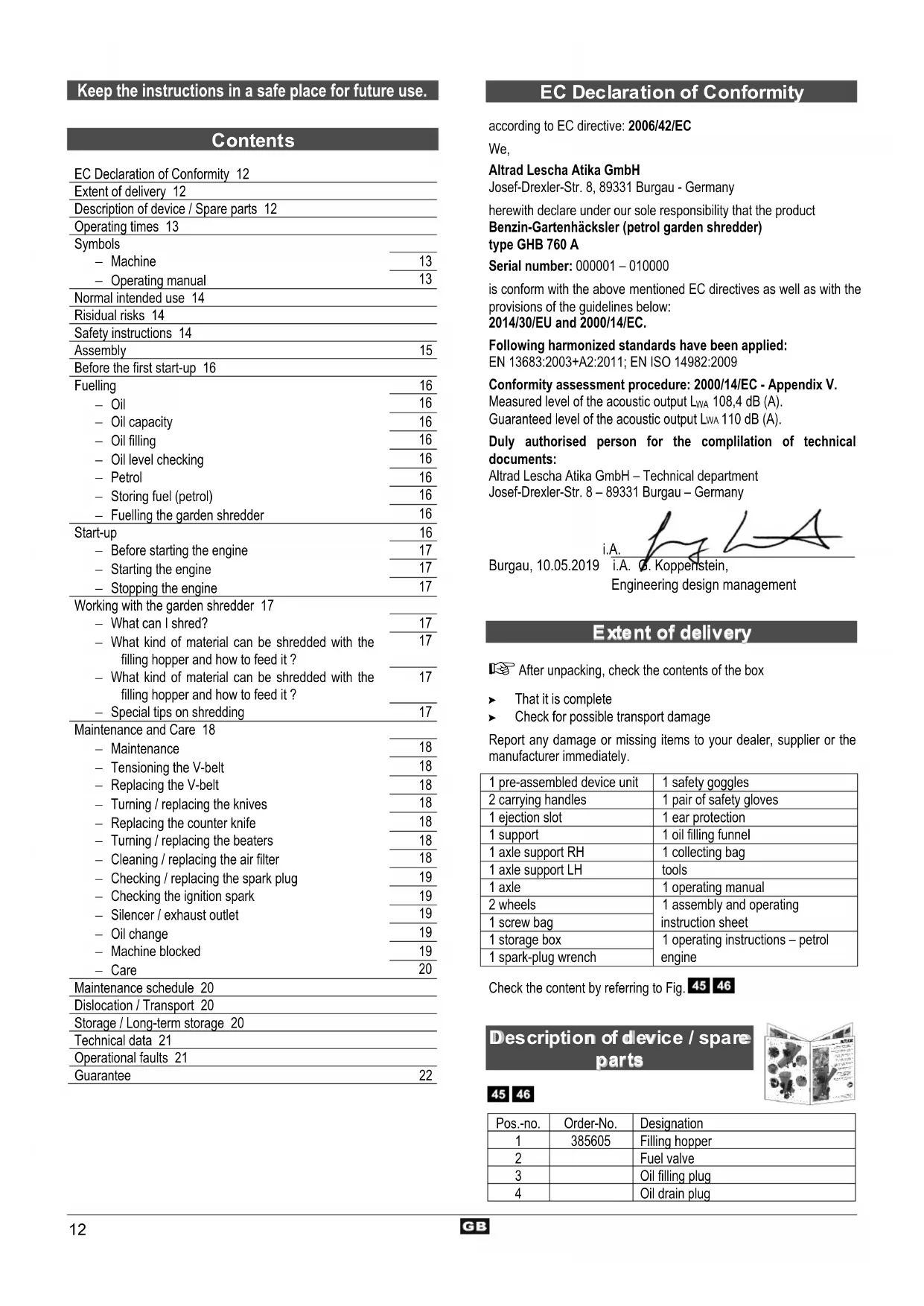
EC Declaration of Conformity
according to EC directive: 2006/42/EC
We,
Altrad Lescha Atika GmbH
Josef-Drexler-Str. 8, 89331 Burgau - Germany
herewith declare under our sole responsibility that the product
Benzin-Gartenhäcksler (petrol garden shredder)
type GHB 760 A
Serial number: 000001 - 010000
is conform with the above mentioned EC directives as well as with the provisions of the guidelines below:
2014/30/EU and 2000/14/EC.
Following harmonized standards have been applied:
EN 13683:2003+A2:2011; EN ISO 14982:2009
Conformity assessment procedure: 2000/14/EC - Appendix V.
Measured level of the acoustic output L_WA 108,4 dB (A).
Guaranteed level of the acoustic output LWA 110 dB (A).
Duly authorised person for the compilation of technical documents:
Altrad Lescha Atika GmbH – Technical department
Josef-Drexler-Str. 8 – 89331 Burgau – Germany
Burgau, 10.05.2019
Engineering design management
Extent of delivery
After unpacking, check the contents of the box
▶ That it is complete
▶ Check for possible transport damage
Report any damage or missing items to your dealer, supplier or the manufacturer immediately.
| 1 pre-assembled device unit | 1 safety goggles |
| 2 carrying handles | 1 pair of safety gloves |
| 1 ejection slot | 1 ear protection |
| 1 support | 1 oil filling funnel |
| 1 axle support RH | 1 collecting bag |
| 1 axle support LH | tools |
| 1 axle | 1 operating manual |
| 2 wheels | 1 assembly and operating instruction sheet |
| 1 screw bag | |
| 1 storage box | 1 operating instructions – petrol engine |
| 1 spark-plug wrench |
Check the content by referring to Fig. 45 46
Description of device / spare parts
45 46
| Pos.-no. | Order-No. | Designation | |
| 1 | 385605 | Filling hopper | |
| 2 | Fuel valve | ||
| 3 | Oil filling plug | ||
| 4 | Oil drain plug | ||
| Pos.-no. | Order-No. | Designation | |
| 6 | 385655 | Ejection | screen |
| 7 | 375654 | Ejection | slot |
| 8 | Carrying | handle | |
| 9 | 385611 | Storage | box |
| 10 | 385612 | Axle | |
| 11 | 385613 | Wheel | |
| 12 | 385656 | Support | |
| 13 | Drive | pulley | |
| 14 | 385616 | V-belt | |
| 15 | Engine | pulley | |
| 16 | 385651 | Belt | cover |
| 17 | 385619 | Knife | |
| 18 | 385620 | Counter | knife |
| 19 | Hinged | cover | |
| 20 Air filter cover | |||
| 21 359538 Air filter cpl. | |||
| 21A | Foam | filter | |
| 21B | Paper | filter | |
| 22 Cranking rope handle | |||
| 23 | Cranking | rope | |
| 24 | Throttle | lever | |
| 25 | choke | lever. | |
| 26 | 359539 | Spark | plug |
| 27 Spark plug connector | |||
| 28 | 359535 | Tank | cap |
| 29 359536 Fuel inlet filter | |||
| 30 | Ignition | switch | |
| 31 | 385622 | Side | hopper |
| 32 | Seal | ||
| 33 Air filter mounting plate | |||
| 34 385623 Spring cotter pin | |||
| 35 | 385624 | Bolt | |
| 36 Spark plug socket spanner | |||
| 37 385625 Axle support LH | |||
| 38 385625 Axle support RH | |||
| 39 | 385626 | Distance | sleeve |
| 40 | 385627 | Wheel | cap |
| 41 Silencer / exhaust outlet | |||
| 42 385628 Splash guard (filling hopper) | |||
| 43 385631 Splash guard (side hopper) | |||
| 44 385602 Safety label 1 | |||
| 45 385603 Safety label 2 | |||
| 46 382316 Safety label 3 | |||
| 47 385604 Safety label 4 | |||
| 48 | 385663 | Petrol | engine |
| 49 | Covering (safety cut-off) | ||
| 50 | Safety cut-off | ||
Ordering spare parts:
-
available from the manufacturer or dealer
– orders must quote the following informations: -
colour of device
• spare parts no. / designation - quantity required
• garden shredder type/ model
Example:
orange, 385654 / Ejection slot, 1, GHB 760 A
Operating times
Before initiating the device please observe the provisions pertaining to corresponding laws (regional provisions) for the noise control.
Symbols machine
 | Carefully read operator's manual and the safety instructions before starting the machine and observe the instructions when operating. |
 | Stop the engine and disconnect the spark plug connector before performing cleaning, maintenance or repair work. |
 | Danger - objects may be thrown out at high speed when engine is running - keep bystanders, pets and domestic animals out of the danger area. |
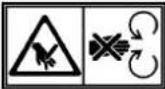 | Danger - rotating blades.Keep hands and feet out of openings while machine is running. |
 | Risk of carbon monoxide poisoning.Do not start or operate the engine in closed rooms even if doors and windows are open. |
 | Warning of hot surfaces.Danger of burning!Do not touch hot engine parts. Such parts may remain hot for a short time even after the machine has been stopped. |
 | Wear eye and ear protection! |
 | Wear protective gloves! |
 | Protect against humidity! |
 | Do not reach into the filling hopper. |
 | Do not remove or modify any protection or safety devices. |
 | Petrol and oil are a fire hazard and can explode. Smoking and open fire and smoke are prohibited. |
 | Fuel valve closed (OFF).Fuel valve opened (ON). |
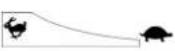 | MIN. speed MAX. speed |
 | Choke position |
 | Engine switched off (OFF)Engine started (ON) |
 | This product complies with European regulations specifically applicable to it. |
Symbols operating manual

Threatened hazard or hazardous situation. Not observing this instruction can lead to injuries or cause damage to property.

Important information on proper handling. Not observing this instruction can lead to faults.

User information. This information helps you to use all the functions optimally.

Assembly, operation and servicing. Here you are explained exactly what to do.
1
2
3
Please refer to the attached assembly and operating instruction sheet for references to figure numbers in the text.
Normal intended use
The normal intended use includes the shredding of
- branches of any kind
⇒ filling hopper: up to 10 mm diameter (depending on wood species and freshness)
⇒ side hopper: up to 76 mm diameter (depending on wood species and freshness)
- wilted, moist garden refuse that has already been stored for several days, alternating with branches
Shredding of glass, metal, plastic parts, plastic bags, stones, fabric cut-offs, roots with soil, waste without solid consistency (e.g. kitchen scraps) is explicitly excluded.
Metallic parts (nails etc.) and other foreign objects have unconditionally to be removed from the material to be shredded.
Never start the product in closed rooms or poorly ventilated areas risk of carbon monoxide poisoning.
The machine may not be used in a potentially explosive environment or be exposed to rain.
The intended usage also includes compliance with the operating, servicing and repair conditions prescribed by the manufacturer and following the safety instructions included in the instructions.
Any other use is deemed not to be intended use. The manufacturer is not liable for any type of damage resulting from this: the user bears the sole risk.
Unauthorised modifications on the garden shredder exclude a liability of the manufacturer for damages of any kind resulting from it.
Only persons who are familiarised with the device and informed about possible risks are allowed to prepare, operate and service this device. Repair works may only be carried out by us or by a customer service agent nominated by us.
Residual risks

Even if used properly, residual risks can exist even if the want safety regulations are complied with due to the design mined by the intended purpose.
Residual risks can be minimised if the "Safety instructions" and the "Normal intended use" as well as the whole of the operating instructions are observed.
Observing these instructions, and taking proper care, will reduce the risk of personal injury or damage to the equipment.
- Risk of injuries when protective devices which are secured so that they can only be removed with a tool are removed while the machine runs.
- Risk of injury to the fingers and hands, if your hand grasps through an opening and reaches the blade unit.
- Risk of injury to the fingers and hands, when carrying out assembly work and cleaning on the blade unit.
- Injury by the chopped material spinning away near the hopper.
- Electric shock when touching the spark plug connector while the engine runs.
■ Burning when touching hot parts.
■ Carbon monoxide poisoning when using the device in closed or poorly ventilated rooms. - Impairment of hearing when working on the machine for longer periods of time without ear protection.
In addition, in spite of all the precautionary measures taken, non-obvious residual risks can still exist.
Safety instructions

Before starting this device, read and keep to the following ice. Also observe the preventive regulations of your professional association and the safety provisions applicable in the respective entry, in order to protect yourself and others from possible injury.

Pass the safety instructions on to all persons who work with the machine.

The operating instructions of the engine are part of the machine and must be passed on to any person working with the machine.

Keep these safety instructions in a safe place.

Repair works on the safety cut out must be carried out by the manufacturer or by companies appointed by the manufacturer respectively.
- Make yourself familiar with the equipment before using it, by reading and understanding the operating instructions.
- Do not use the machine for unsuitable purposes (see 'Normal intended use' and 'Working with the garden shredder').
- Provide a safe standing position and keep at any time the balance. Do not lean forward. When placing material into the shredder, always stand on the same level as the machine.
- Be attentive. Be careful what you do. Behave sensibly when working. Do not use the device when you are tired or under the influence of drugs, alcohol or medicaments. One moment of carelessness when using the device can result in serious injuries.
- Wear protective goggles, gloves and noise protection while working with the machine.
■ Wear suitable work clothes:
— do not wear loose-fitting clothes
- slip-proof shoes
- Within his area of work the operator is responsible for third parties.
- The machine must not be operated by children or young people under 16 years of age.
- Keep children away form machine.
- Never operate the machine if other persons are in the immediate vicinity.
■ Never leave the device unattended.
- Keep your workplace in an orderly condition! Untidiness can result in accidents.
- Choose a working position alongside the equipment or behind it. Never stand near the ejection opening.
■ Never reach into the filling or ejection opening.
- Keep your face and body away from the filling opening.
- Do not overload the machine! You work better and safer in the given performance range.
- Be sure to operate the product with sharp knives or beaters - this will reduce the risk of kickbacks.
- Only operate the machine with complete and correctly attached safety equipment and do not alter anything on the machine that could impair the safety.
- Only start shredding when the petrol engine has reached its max. speed.
- Do not alter the revolution speed of the engine, since this controls the safe maximum operating speed, and protects the engine and all rotating parts against damage due to excess speed.
- Do not operate without the funnel.
- Do not modify the device or parts of the device respectively.
- Close machine properly before enabling engine.
- Do not wash down device with water.
■ Take into consideration environmental influences:
- Do not use the device in moist or wet ambience.
- Do not leave the machine standing in the rain or use when raining.
- Do only work with sufficient visibility conditions. Provide for good illumination.
- To prevent danger of injury to fingers during assembly or cleaning operations wear protecting gloves.
- Stop the machine and remove the spark plug connector when
- maintenance and cleaning
- eliminating faults
- carrying out repair works
- transport and storage
-
changing the blades
– leaving the garden shredder (even in case of short-term interruptions) -
If the machine's filling hopper or ejection slot is blocked stop the engine, disconnect the spark plug connector and wait until the tools are stationary before removing residual material from the filling hopper or ejection slot.
-
Check the machine for possible damage:
-
Before further use of the machine the safety devices must be checked carefully for their proper and intended function.
- Check whether movable parts function perfectly and do not stick or whether parts are damaged. All parts must be correctly installed and fulfil all conditions to ensure perfect operation of the machine.
- Damaged guards and parts must be properly repaired or exchanged by a recognized, specialist workshop; insofar as nothing else is stated in the instructions for use.
-
Damaged or illegible safety labels should be replaced immediately.
-
Store unused equipment in a dry, locked place out of the reach of children.
- Do not allow any tool key to be plugged in!
Before switching on, check always that wrenches and adjusting tools are removed.
- Do not repair the device unless you are qualified for such kind of work.

Do not carry out repair operations on the machine other than those described in section "Maintenance" but contact the manufacturer or authorized customer service centres.

Local regulations – especially regarding protective measures – must be observed.

Use only original spare parts. Accidents can arise for the user through the use of other spare parts. The manufacturer is not liable for any damage or injury resulting from such action.
Safe handling with fuels

Fuels and fuel vapours are inflammable and may cause serious injury on the skin or when inhaled. Therefore be careful and provide sufficient ventilation when handling with fuels.
- Stop the engine and allow the garden shredder to cool down before fuelling it.
- Do not smoke and avoid open flames when fuelling.
■ Wear gloves when fuelling. - Do not fuel in closed rooms (risk of explosion).
- Avoid spilling of fuel or oil. Clean the garden shredder immediately when you have spilled fuel or oil. Change your clothes immediately when you have spilled fuel or oil on them.
■ Make sure that no fuel can come into the soil. - Carefully close the tank cap after fuelling and check that it does not get loose during operation.
- Check that there is no leakage on the tank cap and fuel lines. If there are leaks this device may not be started.
- Only transport and store fuels in containers approved and identified for this.
- Keep children away from fuels.
- Do not handle and store fuels close to combustible and highly inflammable materials as well as sparks and open flames.
- Go away at least three metres from the fuelling place to start the device.
Assembly

Two persons are required for assembly.
1 Close the side hopper using the four nuts M8.
2 Mount the carrying handles.
You will need: 4 pcs tallow-drop screw M8x35, 4 pcs self-locking hexagon nut, 12 pcs washer A8.4 - ∅ 16, 4 pcs washer A8.4 - ∅ 24.
3 Install the support (12).
At first, install one screw M8x16 together with washer A8.4 and lock washer A8 each on the left and right side.
Tighten the screws only hand-tight.
4 Fold up the support.
Then, secure the support with another screw together with washer and lock washer.
Tighten all screws.
5 The second person tilts the garden shredder towards himself.
Guide the screws M8x205 through the axle support RH (38) and then through the device.
Position the distance sleeves (39) and guide the screws through them.
6 Then place on the axle support LH (37).
Secure the screws with washer A8.4, lock washer A8 and hexagon nut M8.
Tighten the hexagon nuts only hand-tight.
7 Guide the axle (10) through the axle support.
8 Put the wheels (11) on the axle.
9 Secure the wheels using the lock washer A5 and the wheel cap (40).
10 Remove the both screws.
11 Mount the storage box (9) and fasten it with the screws previously removed.
12 Install the ejection slot (7).
Secure the ejection slot at first on one side on top and bottom using screws M6x12.
Tighten the screws only hand-tight.
Secure the ejection slot then on the other side.
Tighten all screws.
Before the first start-up
The motor of the garden shredder is supplied without petrol and oil in it.
Fuel the garden shredder as described under "Fuelling".
Fuelling

Oil
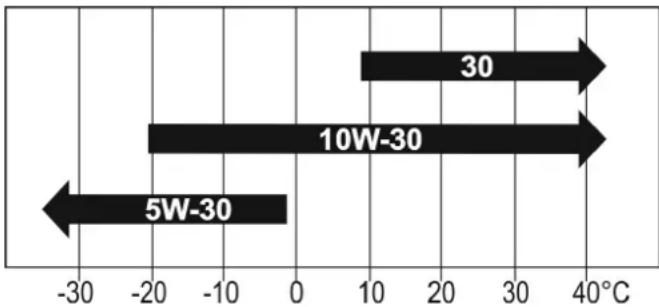
Use a high-grade oil (SAE 10W-30) with classification "SF" or higher.
⇒ Together with the recommended oil no other specific additives are needed.
→ Do not mix the oil with petrol.
bar
| Range | Value | |---|---| | 5W-30 | -20 | | 10W-30 | -15 | | 30 | 40 |When using SAE 30 oil at temperatures under 10°C it is hard to start the engine and the cylinder bore may be damaged due to insufficient lubrication.
Oil capacity: 0.6 l
Oil filling
- 13 Remove the oil filling plug (3).
- 14 Slowly pour oil into the hole.
- Tighten the oil filling plug.
- Wipe off oil residues/spilling.
Oil level checking
To check the oil level the unit must
— rest on level ground
- be switched off.
- 13 Remove the oil filling plug (3).
- Wipe the oil off the dipstick.
- Insert the oil filling plug again into the opening (do not tighten)
- Pull the oil filling plug out again.
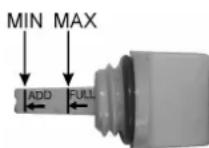
- Check the oil level on the dipstick.
- The oil level must lie between MIN and MAX.
- Replenish the same type of oil if the level is too low (MIN or less).
Petrol

Utmost care is required when handling fuel. Do not smoke. Keep away open flames (risk of explosion).
i Clean fresh non-leaded petrol having an octane number of 85 as a minimum.
Do not fill in leaded, old or dirty gasoline, diesel, oil-gasoline mixture or other fuels not approved.
Do not use petrol having a smaller octance number than 85 ROZ. This may result in severe engine damage.
⇒ The use of unleaded petrol is recommended for environment protection reasons.
Storing fuel (petrol)
Fuels have only a limited shelf-life, they are subject to ageing. Outdated fuels and fuel mixtures may result in starting problems. Therefore, store only that quantity of fuel which you can use within a month.
⇒ Only store fuels in containers approved and identified for this. Keep fuel containers in a dry and safe area.
⇒ Make sure that fuel containers are kept out of the reach for children.
Fuelling the garden shredder

- Stop the engine and allow it to cool down.
- Wear protective gloves.
- Avoid eye and skin contact.
-
Strictly follow the instructions under "Safe handling with fuels".
-
Only fuel the garden shredder outdoors or in sufficiently ventilated rooms.
- Clean the area around the filler neck. Contamination in the tank may result in malfunction.
- 15 Carefully open the tank cap (28) to allow possible overpressure to relax.
- 15 Carefully pour fuel into the filler neck until is is approx. 4 cm below the neck's edge to allow the fuel space for expansion.
- If contaminated, clean the fuel filling filter (29).
- Close the tank cap. Check that the tank cap is tight.
- Clean the tank cap and the area around it.
- Check the tank and the fuel lines for leaks.
- Before starting the engine take the machine and go away at least three metres from the fuelling place.
Start-up
- Check that the machine is completely and correctly assembled.
- To avoid toppling, place the shredder on a firm horizontal surface.
- Do not place the equipment on ground which is paved or surfaced with gravel.
- The machine should only be operated in the open. Always maintain a safe distance (at least 2 m) from walls or other fixed objects.
■ Before each use, check - there are no damages at the machine
- all screws are tight.
Before starting the engine
i Check the oil and fuel level (refill if required).
Cold start of the engine
- 16 Put the choke lever (25) to the position closed.
- 16 Put the throttle (24) approx. 1/3 toward the position →
- 16 Put the fuel valve (2) → to the position →ON.
- 17 Put the ignition switch (30) to the position → ON
- 18 Grasp and slowly pull the cranking rope handle (22) until you feel a resistance.
- 18 Pull the cranking rope (23) quickly and then guide it back slowly.
Do not fully pull out the cranking rope and do not allow that the rope handle strikes against the engine.
- 19 Put the choke lever (25) → to the position ② → open as soon as the engine has started.
- 19 Put the throttle (24) slowly toward the position →
Warm start of the engine
- 19 Put the choke lever (25) to the position ← ② → open.
- 16 Put the throttle (24) approx. 1/3 toward the position →
- 16 Put the fuel valve (2) → to the position → ON.
- 17 Put the ignition switch (30) to the position → ON
- 18 Grasp and slowly pull the cranking rope handle (22) until you feel a resistance.
- 18 Pull the cranking rope (23) quickly and then guide it back slowly.
Do not fully pull out the cranking rope and do not allow that the rope handle strikes against the engine.
- 19 Put the throttle (24) slowly toward the position →
Stopping the engine
- 20 Put the throttle lever (24) to the position → ↗.
- 21 Put the ignition switch (30) to the position → OFF.
- 20 Put the fuel valve (2) → to the position → OFF.
Do NOT put the choke lever (25) to the position 1 → closed to stop the engine. This may result in backfire or engine damages.
Stopping the engine in an EMERGENCY
21 Put the ignition switch (30) to the position → OFF.
Working with the garden shredder


Do not forget!
- Choose a working position alongside the equipment or behind it. Never stand near the ejection opening.
- Longer material that is protruding from the device could spring back when it is drawn in by the blades! Observe safety distance!
■ Never reach into the filling or ejection opening. -
Keep your face and body away from the filling opening.
-
Never place hands, other parts of the body or clothing into the filler funnel, ejection channel or in the vicinity of other moving parts.
- Check that no chopped residues are in the filling hopper before switching on the equipment.
- Only start shredding when the petrol engine has reached its max. speed.
- Do not tip or tilt the machine when the engine is running.
- When filling, be careful that no pieces of metal, stones, bottles or other objects unintended for processing, enter the filling hopper.
- Immediately switch off the equipment and allow it to come to a stop, if foreign objects enter the filling hopper or if the equipment starts to make unusual noises or vibrates. Carry out the following checks:
– pull off the spark plug connector,
– inspect for damage,
– replace or repair damaged parts,
— check the equipment and tighten loose parts.
⚠️ You must not repair the equipment yourself if you are unauthorized to do so.
What can I shred?
Yes:
- organic household and garden waste e. g. hedge and tree cuttings, bushes, perennial herb, dead flowers
No:
- glass, metal, plastic, plastic bags, stones, cloth, roots with soil, food left-overs, fish or meat.
What kind of material can be shredded with the filling hopper (1) and how to feed it?
➢ Shrub parts, leaves, organic waste and thin branches can be chopped.
Thin and long shrub parts and branches are dragged in rapidly. Release the material quickly.
➢ Process material which contains a lot of water and tends to sticking alternately with woody material to prevent the device from getting blocked.
Do not feed too much material at the same time into the filling hopper to prevent the cutting tool from getting blocked.
Use a wooden rod to feed hardly accessible material to the cutting tool.
What kind of material can be shredded with the side hopper (31) and how to feed it?
➢ Thicker branches must be fed through the side hopper.
Make sure to feed the branches slowly to avoid the cutting tool from getting overloaded or blocked.
Special tips on shredding:
➢ Branches, twigs and wood should be broken down immediately after they have been cut.
- Material of this kinds gets very hard when it is dry, and the maximum allowed branch diameter to be processed has to be reduced.
Remove any side shoots from branches with a large number of twigs.
➢ Feed branches with larger diameter slowly.
Do not allow the shredded material to pile up too high in the area of the ejection opening. This can lead to shredded material blocking the ejection channel, and backing up to the filler opening.
Clean out the filler opening and ejection channel thoroughly if the machine becomes blocked. Before doing this, stop the engine and disconnect the spark plug connector.
Please do not exceed the maximum branch diameter specified (cutting fresh wood) for your appliance (∅ see "Technical data"). Depending on the wood's nature and freshness the maximum branch diameter the machine can process may be smaller.
The blades largely pull the material into the machine by themselves.
Immediately stop the engine when the cutting unit is blocked to prevent the engine overloading. Eliminate the fault before restarting the engine.
Maintenance and Care

Before each maintenance and cleaning work
- Stop the engine.
- Wait until the cutting device does not longer move.
- Remove the spark plug connector.

Do not carry out maintenance work close to open flames. Risk of fire.

Wear protective gloves in order to avoid injury to the hands.
For maintaining and cleaning, removed security devices must unconditionally be mounted properly and proved again.
Use only original parts. Other parts can result in unexpected damages and injuries.
Be sure to have removed any tools from the machine after completion of service work.
Maintenance and repair work other than those described in this chapter is only allowed to be carried out by service staff.
Necessary repair works or maintenance have to be carried out before using the machine.
Maintenance
To guarantee a long and reliable usage of the product carry out the following maintenance works regularly.
Check the device for obvious defects such as
– loose fastening elements.
- worn out or damaged parts especially V-belts, blades and beaters.
– leaks from the fuel tank cap or fuel lines.
— correct assembly and faultless covers and protective devices.
Tensioning the V-belt
Check the V-belt's tension on a regular basis as a loose V-belt reduces the engine's speed.
The V-belt tension is correct if it can be pressed down by approx. 10mm.
-
22 23 check the V-belt (14) tension you have to remove the belt cover (16).
-
24 Check the V-belt tension.
-
25 For retensioning loosen the four screws on the engine.
- Move the engine so that you can press down the V-belt by 10mm.
- 24 Make sure that the drive pulley (13) and the engine pulley (15) are in true alignment.
- Retighten the screws on the engine.
- Re-mount the belt cover.
Replacing the V-belt
⚠️ Replace damaged or too long V-belts without delay.
- 22 remove the belt cover (16).
- 25 Loosen the four screws on the engine.
- Move the engine so that the V-belt can be removed without any problems.
- Place a new V-belt.
- 24 Tension the V-belt by moving the engine so that you can press down the V-belt by 10mm.
- 24 Make sure that the drive pulley (13) and the engine pulley (15) are in true alignment.
- Retighten the screws on the engine.
- Re-mount the belt cover.
Turning / replacing the knives
Identification of dull knives:
⇒ The shredding noise indicates sluggish working.
⇒ The V-belt slips although it is tensioned.
→ Heavily decrease of working speed.
- 26 Turn up the covering (49).
- 27 Loosen the screw and open the hinged cover (19).
- 31 Turn the knife plate so that the knife (17) is visible through the opening.
- 28 Loosen at first the self-locking nuts.
Use the ring wrench to loosen the nuts. - 28 Remove then the screws.
- Turn or replace the knife.
- Mount the knife with the screws and the self-locking nuts and tighten them firmly.
- Close the hinged cover.
- Turn the covering down again.
Replacing the counter knife
- 29 Remove the four nuts on the side hopper (31).
- 30 Remove the four nuts on the counter knife (18).
- Install a new counter knife.
- Retighten the four nuts to close the side hopper.
Turning / replacing the beaters
If the shredding performance decreases, the beaters have to be turned or replaced.
This maintenance work is only allowed to be done by our customer service.
Cleaning / replacing the air filter (21)
Clean the air filter from dust and dirt on a regular basis to prevent
- starting problems,
— loss of output,
— too high fuel consumption.
Clean the air filter every 50 operating hours, or more frequently in dusty environments (every 10 hours).
- 31 Unscrew only the machine knob nut and remove the cover (20).
- 32 Unscrew the wing nut and remove the air filter (21).
- 33 Remove the foam filter (21A) from the paper filter (21B).
- Inspect both air filter elements. Replace the elements if damaged.
- Clean the filter elements if they are re-used.
Paper filter: To remove the dirt, tap the filter several times against a hard surface. You can also blow the filter clean with compressed air (not over 2.07 bar).
Foam filter: Wash the air filter in warm soap water. Rinse well. Squeeze the filter in a dry and clean cloth. Allow the filter to dry well. Dip the filter into engine oil and then squeeze it in a dry and clean cloth to remove surplus oil. The engine smokes if the foam contains too much excess oil.
- 34 Clean the air filter mounting plate (33) and seal (32) with a wet rag. Make sure that no dirt enters the air line to the carburetor.
- Place the foam filter on the paper filter. Install the complete air filter again. Tighten the wings nuts. Pay attention that the seal (32) is installed under the air filter.
- Clean the cover with a wet rag.
- Re-mount the cover.
Never operate the machine without air filter. Dust and dirt can enter the engine and cause damages to the machine.
Replace the air filter on a regular basis.
i Damaged air filters must be replaced without delay.
Checking / replacing the spark plug

Do not touch the spark plug or the spark plug connector while the engine is running. High voltage!
Risk of burning on the hot engine. Wear protective gloves.
Check the spark plug and the spark gap on a regular basis.
For this proceed as follows:
- Allow the engine to cool down.
- 35 Pull the spark plug connector (27) from the spark plug.
- 36 Remove the spark plug (26) using the supplied spark plug wrench (36).
- Clean the spark plug when it is contaminated.
- 37 The electrode gap must be 0.7 - 0.8 mm.
- Carefully screw in the spark plug by hand to prevent damage to the thread.
- Now tighten the spark plug with the spark plug wrench.
Used spark plug: 1/8 – 1/4 turn
New spark plug: 1/2 turn
i A loose spark plug may overheat and damage the engine.
Tightening the spark plug too firmly may damage the thread in the cylinder head.
- Put the spark plug connector back in place.
Replace the spark plug:
— every 100 hours or each season (whichever case comes first)
— when the insulating body is damaged,
— when the electrodes show excessive erosion,
— when the electrodes show excessive dirt or oil.
Use the following spark plug type: F7RTC
Alternative spark plugs:
Bosch WR 7 DC; NGK VPR 6 ES; Champion RN 9 YC;
Oregon OLR 15 YC
Checking the ignition spark
- Allow the engine to cool down.
- 35 Pull the spark plug connector (27) from the spark plug (26).
- 36 Remove the spark plug (26) using the supplied spark plug socket spanner (36).
- Firmly connect the spark plug connector.
- Adjust the engine as described in "Cold start of the engine" (section 1-4).
- Use an insulated pair of tongs to press the spark plug against the engine body (away from the spark plug hole).
- Firmly pull the cranking rope on the cranking handle.
i A spark between the electrodes is a sign of proper functioning.
Silencer / exhaust outlet
46 Check the silencer regularly.
Clean the exhaust outlet (41) on a regular basis.
Do not clean the silencer when the engine is hot. Danger of burning!
Oil change
Change the oil as long as the engine is still warm. Warm oil drains quickly and completely.
The oil must be changed after the first 5 operating hours. Then, only every 100 operating hours or once in a season.
i Two persons are required.
- 38 crew the oil drain plug (4).
- 38 Unscrew the oil filling plug (3).
- 39 First person:
Hold a container with a capacity of at least 0.6 litres below the oil drain plug.
39 Second person:
Tilt the garden shredder to allow the oil to flow out.
- Thoroughly clean the area around the oil outlet.
- Retighten the oil drain plug.
- Slowly pour 0.6 litres of new oil (for oil type see "Fuelling") into the hole.
- Tighten the oil filling plug.
- Wipe off oil residues/spilling
i Please refer to the "Engine Operating Instructions" for more information on the engine.
Machine blocked
Sticked material within the machine reduces the machine's performance.
How to remove blockings?
- 40 Remove the spring cotter pin (34).
- 41 Pull out the pin (35).
- 42 Remove the screw (A).
- 43 Turn up the covering (49).
- 43 Open the hinged cover (19).
- 43 Push the ejection screen (6) towards the ejection slot.
- 44 Remove the ejection screen.
- Remove all contamination from the machine.
- Re-install the ejection screen.
Care
Clean the machine thoroughly after each application so that the faultless function is kept. To maintain their efficiency and a long life, observe the following:
- Keep vent slits clean and free from obstructions.
— Check the locking screws (tighten where necessary).
– Clean the device after shredding.
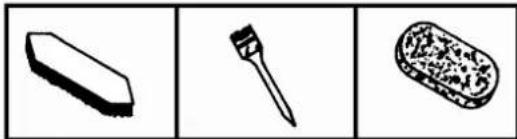
To clean your product only use a warm moist cloth and a soft brush.
Never use cleaning agents or solvents. Otherwise the device may be damaged irreversibly. Plastic parts may be corroded by chemicals.
natural_image
Three black-and-white illustrations: a rectangular eraser, a pen tip, and a textured oval object (no text or symbols)— Do not clean the machine with running water or high-pressure cleaners.
- After each operation treat bare metal parts with an environment-compatible biodegradable spray oil to protect them against corrosion.
Maintenance schedule
| Maintenance work | Before each use | After each use | After the first 5 hours | Every 25 hours | Every 50 hours | Every 100 hours | If required | Each season |
| Check fuel and oil level | ■ | |||||||
| Oil change | ■ | ■ | ■ | |||||
| Change fuel | ■ | |||||||
| Clean fuel filling filter | ■ | |||||||
| Change fuel filling filter | ■ | |||||||
| Cleaning the air filter | ■ | |||||||
| Replace air filter | ■ | |||||||
| Check the spark plug and the spark plug connector | ■ | ■ | ||||||
| Replace the spark plug | ■ | |||||||
| Check the machine | ■ | |||||||
| Clean the machine | ■ | |||||||
| Check the V-belt | ■ | |||||||
| Check the knives | ■ | |||||||
| Replace the knives | ■ |
Dislocation / Transport
Before each change to another work place
→ Stop the engine, disconnect the spark plug connector and close the fuel valve.
Before each transport:
→ Stop the engine, disconnect the spark plug connector, close the fuel valve and allow the engine to cool down.
→ Drain the fuel tank to prevent fuel spilling.
→ Secure the machine within or on the vehicle against getting out of place.
i Transport the garden shredder only upright.
Storage / Long-term storage
- Keep unused machines in a dry and closed area out of the reach of children. Do not store them close to a cooker, oven or hot-water apparatus with permanent flame or other spark-generating devices.
- Allow the engine to cool down before storing the machine.
- Prior to a longer period of storage carry out the following to extend the machine's service life and ensure an easy operating:
→ thoroughly clean the device
⇒ treat all movable parts with an environmentally friendly oil
i Never use any grease!
⇒ Empty the fuel tank completely.
i Always drain the tank in the open or in sufficiently ventilated rooms.
i Dispose of remaining fuel in an environmentally compatible manner.
→ Operate the engine until the carburettor is empty.
→ Change the oil.
→ Remove the spark plug connector.
→ Remove the spark plug. Then fill a little amount of engine oil (approx. 5-10 ml) into the cylinder. Slowly pull out the cranking rope handle to distribute the oil. Re-mount the spark plug.
Before any use of the device you have to remove and clean the spark plug.
→ ⓘ Please refer to the "Engine Operating Instructions" for more information on storing the engine.
→ Check the machine for perfect condition to ensure a safe use of it after a longer period of storage.
Technical data
| Type GHB 760 A | |
| Year of construction see last page | |
| Engine 4-stroke petrol | |
| Engine rating 4.0 kW | |
| max. engine speed no | 3600 -1 |
| Max. cutting speed 2000 min | -1 |
| Cubic capacity 212 cm3 | |
| Sound pressure level LPA | 96 dB (A) |
| measured sound power level LWA 108.4 dB (A) | |
| guaranteed sound power level LPA 110 dB (A) | |
| Max. branch diameter(only for freshly cut wood) | Filling hopper: ∅ 10 mmSide hopper: ∅ 76 mm |
| Weight | 84.5 |
| Fuel: Petrol (unleaded) | |
| Fuel tank capacity: 3.0 l | |
| Oil: Classification SF or better | |
| Oil tank capacity: 0.6 l | |
Operational faults
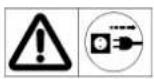
Before each fault elimination:
- switch off device
— Wait for standstill of the garden shredder. - Remove the spark plug connector.
Fault Possible cause Remedy
| Engine does not start. | Engine cold. Choke lever set to “Position 2” | Set choke lever to “Position 1” |
| Throttle lever put to 🎨. | Put throttle lever to 🎨. | |
| Ignition switch put to OFF. | Put ignition switch to ON. | |
| Fuel valve put to 🎨OFF. | Put fuel valve to 🎨ON. | |
| No fuel supply | Check the fuel quantity | |
| Fuel old or contaminated. | Drain the fuel into a container outdoors. Fill the tank with fresh and clean fuel. | |
| Fault in the fuel line | Check the fuel line for kinks or damages | |
| Spark plug connector not placed on. | Place on the spark plug connector. | |
| No ignition spark. | a) Clean or replace the spark plug.b) Check the ignition cable.c) Fault cannot be eliminated? Get the manufacturer or authorised service staff to check the ignition system. | |
| Engine flooded. | Screw off, clean and dry the spark plug. Then pull the cranking rope several times and reinstall the spark plug. | |
| Carburettor defective | Contact the manufacturer or the responsible customer service respectively. | |
| Engine defective. | Replace the engine. | |
| Safety cut-off (50) tripped. | Turn the covering (49) down. | |
| Internal fault. | Contact the manufacturer or the responsible customer service respectively. |
Fault Possible cause Remedy
| Engine is sputtering.(runs erratically) | Choke lever set to “← Position 1” | Set choke lever to “← Position 2” |
| Spark plug connector not firmly placed on. Firmly place on the spark plug connector. | ||
| Vent in the tank cap blocked. Clean the tank cap and the vent. | ||
| Fuel old or contaminated. | Drain the fuel into a container outdoors. Fill the tank with fresh and clean fuel. | |
| Incorrect carburetor adjustment. Have the caburetor adjusted correctly. | ||
| Decreasing engine power. | Machine overloaded. a) Reduce material feeding.b) Do not exceed the max. branch diameter. | |
| Machine is blocked. Thoroughly clean inside the machine. | ||
| Air filter contaminated. | Clean or replace filter elements | |
| Internal fault. Contact the manufacturer or the responsible customer service respectively. | ||
| Cutting performance decreases. | Knife edges became blunt. Turn the knife or replace it with a new set of knives. | |
| Beaters worn. Replace the beaters. | ||
| V-belt slipping. Tension the V-belt. | ||
| Branches are not automatically drawn in into the side hopper. | Knife edges became blunt. Exchange knives. | |
| Unusual noise or vibrations. | Screws, nuts or other parts loosened. | Tighten the parts.If the parts can not be tightened or noises remain:Contact the manufacturer or the responsible customer service respectively |
Guarantee
Please observe the enclosed terms of guarantee.
bar
| Range | Value | |---|---| | 5W-30 | -20 | | 10W-30 | -15 | | 30 | 10 | The chart displays a single bar with two labeled segments: '5W-30' on the left and '10W-30' and '30' on the right, both extending from 0 to 40°C. The x-axis is labeled '°C' ranging from -30 to 40°C.Bosch WR 7 DC; NGK VPR 6 ES; Champion RN 9 YC;
Oregon OLR 15 YC
natural_image
Three black-and-white illustrations: a rectangular block, a pen, and a textured rectangular block (no text or symbols)Bosch WR 7 DC; NGK VPR 6 ES; Champion RN 9 YC;
Oregon OLR 15 YC
Zkouška jiskry
natural_image
Three black-and-white illustrations: a rectangular eraser, a pen, and a textured oval object (no text or symbols)bar
| Range | Value | |---|---| | 5W-30 | -20 | | 10W-30 | -10 | | 30 | 10 | The chart displays a single bar with two labeled segments: '5W-30' on the left and '10W-30' on the right, both extending beyond 40°C. The values for the bars are explicitly labeled as '30'.Bosch WR 7 DC; NGK VPR 6 ES; Champion RN 9 YC;
Oregon OLR 15 YC
Verificar chispa de encendido
natural_image
Three black-and-white illustrations: a rectangular eraser, a pen-like tool, and a textured rectangular object (no text or symbols)natural_image
Three black-and-white illustrations: a rectangular block, a pen, and a textured rectangular block (no text or symbols)Alternative tennplugger:
Bosch WR 7 DC; NGK VPR 6 ES; Champion RN 9 YC;
Oregon OLR 15 YC
Kontrollere tenningsgnist
natural_image
Three black-and-white illustrations: a rectangular block, a pen-like tool, and a textured rectangular object (no text or symbols)Bosch WR 7 DC; NGK VPR 6 ES; Champion RN 9 YC;
Oregon OLR 15 YC
Ontstekingsvonk controleren
natural_image
Three black-and-white illustrations: eraser, pen, and porous block (no text or symbols)Bosch WR 7 DC; NGK VPR 6 ES; Champion RN 9 YC; Oregon OLR 15 YC
Skúška iskry
natural_image
Three black-and-white illustrations: a rectangular eraser, a pen, and a textured oval (no text or symbols)Year of construction
N
Byggeår
F
natural_image
Black-and-white close-up of a plant with leaves and stems, showing signs of disease or damage (no text or symbols visible)

- Zündfunke prüfen
- Keep the instructions in a safe place for future use.
- Contents
- EC Declaration of Conformity
- Extent of delivery
- Description of device / spare parts
- Ordering spare parts:
- Example:
- Operating times
- Symbols operating manual
- Normal intended use
- Residual risks
- Safety instructions
- Safe handling with fuels
- Assembly
- Install the ejection slot (7).
- Before the first start-up
- Fuelling
- Oil
- Oil capacity: 0.6 l
- Oil filling
- Oil level checking
- Petrol
- Storing fuel (petrol)
- Fuelling the garden shredder
- Start-up
- Before starting the engine
- Cold start of the engine
- Warm start of the engine
- Stopping the engine
- Stopping the engine in an EMERGENCY
- Working with the garden shredder
- Do not forget!
- What can I shred?
- Yes:
- No:
- What kind of material can be shredded with the filling hopper (1) and how to feed it?
- What kind of material can be shredded with the side hopper (31) and how to feed it?
- Special tips on shredding:
- Maintenance and Care
- Before each maintenance and cleaning work
- Maintenance
- Tensioning the V-belt
- Replacing the V-belt
- ⚠️ Replace damaged or too long V-belts without delay.
- Turning / replacing the knives
- Replacing the counter knife
- Turning / replacing the beaters
- Cleaning / replacing the air filter (21)
- Checking / replacing the spark plug
- For this proceed as follows:
- Replace the spark plug:
- Use the following spark plug type: F7RTC
- Checking the ignition spark
- Silencer / exhaust outlet
- Oil change
- Machine blocked
- Care
- Dislocation / Transport
- Storage / Long-term storage
- Operational faults
- Before each fault elimination:
- Guarantee
- Zkouška jiskry
- Verificar chispa de encendido
- Alternative tennplugger:
- Kontrollere tenningsgnist
- Ontstekingsvonk controleren
- Skúška iskry
Brand : ATIKA
Model : GHB 760 A
Category : Mechanical chipper