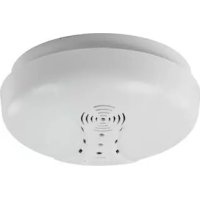
SECCA10 - Smoke detector NEDIS - Free user manual and instructions
Find the device manual for free SECCA10 NEDIS in PDF.



| Product type | Carbon monoxide detector |
| Brand | Nedis |
| Model | SECCA10 |
| Power supply | 9 V DC battery |
| Battery type | Alkaline or carbon zinc 9 V |
| Sensitivity | 50 ppm (60-90 min), 100 ppm (10-40 min), 300 ppm (<3 min) |
| Alarm sound level | 85 dB |
| LED indicator | Green (normal), Red (alarm), Yellow (sensor end of life) |
| Sensor lifespan | 6 years |
| Standard | EN50291 |
| Standby consumption | <50 µA |
| Alarm consumption | <50 mA |
| Operating temperature | 4.4 °C to 37.8 °C |
| Dimensions (diameter x height) | 10 cm x 4 cm |
| Weight (with battery) | Approximately 150 g |
| Mounting | Ceiling or wall (at least 150 mm from ceiling) |
| Test function | Test button (hold for 5 s) |
| Silence function | Test button to temporarily stop alarm |
| Alarm memory | Red LED flashes 3 times every 30 s after recall |
| Low battery indication | Beep every 30 s + green LED flashes |
| Maintenance | Weekly test, monthly cleaning with dry cloth |
| Warranty | 2 years (standard) |
Frequently Asked Questions - SECCA10 NEDIS
User questions about SECCA10 NEDIS
0 question about this device. Answer the ones you know or ask your own.
Ask a new question about this device
Download the instructions for your Smoke detector in PDF format for free! Find your manual SECCA10 - NEDIS and take your electronic device back in hand. On this page are published all the documents necessary for the use of your device. SECCA10 by NEDIS.
USER MANUAL SECCA10 NEDIS
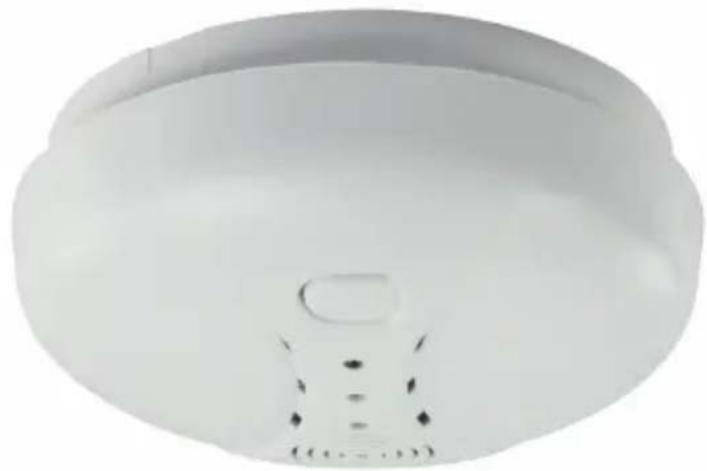
SEC-CA10
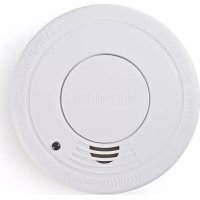
natural_image
White ceiling-mounted air conditioner unit with ventilation slots and a circular vent (no text or symbols visible)MANUAL (p. 2)
CARBON MONOXIDE DETECTOR
MODE D'EMPLOI (p. 10)
DÉTECTEUR D'OXYDE DE CARBONE
MANUALE (p. 18)
RILEVATORE DI MONOSSIDO DI CARBONIO
HASZNÁLATI ÚTMUTATÓ (o. 26.)
SZÉN-MONOXID RIASZTÓ
WYKRYWACZ TLENKU WĘGLA
ANLEITUNG (S. 5)
KOHLENMONOXID-DETEKTOR
MANUAL DE USO (p. 22)
DETECTOR DE MONÓXIDO DE CARBONO
KÄYTTÖOHJE (s. 30)
HÄKÄKAASUN TUNNISTIN
Carbon Monoxide (CO) is a colourless and tasteless gas which inhibits the blood's capacity to carry oxygen, and can be fatal when inhaled. CO is released by burning fuels: gas, oil, wood, charcoal, coke, coal and petrol. Dangers arise when fuel-burning appliances malfunction, are improperly installed, or not ventilated correctly.
Possible sources of CO include:
- Furnaces
• Gas range/stoves - Water heaters
- Portable fuel burning heaters
- Fireplaces
• Wood-burning stoves - Blocked chimneys or flues
Excessive spillage or reverse venting of fuel-burning appliances caused by wind direction and/or velocity.
TESTING YOUR CO ALARM
Due to the loudness (85 decibels) of the alarm, always stand at arm's length away from the unit when testing. After installation, the unit's electronics can be tested by pressing the "Test" button and holding for 5 seconds. A series of beeps will indicate that the unit is operational and the red LED will flash.
It is recommended that the unit is tested weekly. If at any time it does not perform as described, firstly verify that the power is correctly connected and that the battery does not need replacing, then clean any dust and other built-up material off the unit. If it still does not operate correctly, contact the supplier of the alarm.
GENERAL MAINTENANCE OF DETECTOR
To keep your CO detector in good working order, please follow these simple steps:
- verify the unit's alarm and LED light operation by pushing the test button once a week
- remove dust and dirt from the detector cover once a month using a dry cloth
END OF SENSOR LIFE
The unit must be replaced if there is a fault with the sensor or when the sensor "end of life" warning is given (the yellow LED will flash).
SPECIFICATIONS
Power supply: 9 V DC battery
Sensitivity levels: 50 ppm between 60 and 90 minutes
100 ppm between 10 and 40 minutes
300 ppm within 3 minutes
Standby current: <50 uA
Alarm current: <50 mA
Alarm: Loud 85 decibel audible alarm and flashing red LED indicator
Sensor life: 6 Years
EU Standard: EN50291


REMARKS:
WHEN HOUSEHOLD CLEANING SUPPLIES OR SIMILAR CONTAMINANTS ARE USED, THE AREA MUST BE WELL VENTILATED.
THE FOLLOWING SUBSTANCES CAN AFFECT THE CO SENSOR AND MAY CAUSE FALSE ALARMS AND DAMAGE TO THE SENSOR:
METHANE, PROPANE, ISO-BUTANE, ISO-PROPANOL, ETHYL ACETATE, HYDROGEN SULFIDE DIOXIDES, AND ALCOHOL BASED PRODUCTS, PAINTS, THINNERS, SOLVENTS, ADHESIVES, HAIR SPRAY, AFTER SHAVE, PERFUME AND OTHER CLEANING AGENTS.
USING THE DETECTOR
The unit will emit a “beep” sound and the red LED will flash once as a power up. The unit will start to detect CO within 90 seconds of the batteries being installed.
Normal conditions: If there is no CO present, the green power LED will flash once every 30 seconds.
Alarm conditions: If the unit detects CO the alarm pattern will sound (3 short beeps) and the red LED will flash for as long the CO remains at a dangerous level.
Silence function: If required, the audible alarm can be silenced by pressing the "Test" button. The detector will re-activate after 30 seconds if CO remains present.
End of battery life: When the battery is run down, the unit will "beep" once every 30 seconds. The green LED will continue to flash every 30 seconds.
Alarm memory feature: If you leave the property for a long period and in your absence the alarm has activated, the unit will memorize the activation. On returning to the property press the "Test" button for several seconds, the red LED will flash 3 times every 30 seconds if the alarm has activated in your absence. The property should be immediately ventilated and the cause of the alarm investigated and rectified. Pressing the "Test" button again will return the unit to normal operation.
End of sensor life: When the sensor comes to the end of its life, the yellow LED will flash continuously and the alarm will sound.
WHAT TO DO IF THE ALARM SOUNDS
If the alarm sounds:
- Immediately open windows and doors to ventilate the property
- Call the Emergency Services
- If possible, turn off and stop using any fuelled appliances
- Evacuate the property
- Do not re-enter the property until the cause of CO has been detected and isolated, and the detector has returned to normal operation
- Seek medical assistance for anyone suffering from, or suspected to be suffering from the effects of carbon monoxide poisoning
- Do not use fuelled appliances until they have been assessed and cleared by a competent professional
CO SAFETY TIPS
- Have any heating systems, vents, chimneys and flues inspected annually by a competent professional
- Always install appliances according to the manufacturer's instructions and adhere to local building regulations
- Most appliances should be installed by a professional and inspected after installation. Regularly examine vents, chimneys and flues for improper connections, rust/stains and cracks


- Verify the colour of the flame on pilot lights and burners is blue. A yellow or orange flame is a sign that the fuel is not burning completely
- Teach everyone what the detector alerts are and how to respond to them
SYMPTOMS OF CO POISONING
Initial carbon monoxide poisoning symptoms are similar to the flu with no fever; these can include dizziness, severe headaches, nausea, vomiting and disorientation.
Everyone is susceptible but experts agree that unborn babies, pregnant women, senior citizens and people with heart or respiratory problems are especially vulnerable.
If symptoms of carbon monoxide poisoning are experienced, seek medical attention immediately. CO poisoning can be determined by a carboxyhaemoglobin test.
The following symptoms are related to CARBON MONOXIDE POISONING and should be discussed with ALL members of the household / organization:
- Mild exposure: Slight headache, nausea, vomiting, fatigue (often described as "flu-like" symptoms).
- Medium exposure: Severe throbbing headache, drowsiness, confusion, fast heart rate.
- Extreme exposure: Unconsciousness, convulsions, cardio respiratory failure, death.
The above levels of exposure relate to healthy adults. Levels can differ for those at high risk.
Exposure to high levels of carbon monoxide can be fatal or cause permanent damage and disabilities. Many cases of reported carbon monoxide poisoning indicate that whilst victims are aware they are not well, they become so disoriented they are unable to save themselves by either exiting the building, or calling for assistance. Young children and household pets may be the first affected. Familiarisation with the effects of each level is important.
RECOMMENDED INSTALLATION LOCATIONS
Important: This alarm is designed to be ceiling mounted.
For maximum protection it is suggested that an alarm is installed in all rooms containing a fuel burning appliance and on each level of a multilevel property, including finished attics and basements.
For alarms located in the same room as a fuel burning appliance, it should be:
- On the ceiling at least 300mm from any device, or if located on a wall, as high as possible (above doors and windows), but not within 150mm of the ceiling.
- Between 1m and 3m horizontally from the appliance.
If there is only one alarm available for domestic use, ensure it is placed in the hallway outside the main sleeping area(s). Verify that the alarm can be heard in all sleeping areas.
WHERE NOT TO INSTALL
Do NOT install the alarm in the following areas:
- Garages, kitchens, boiler cupboards or bathrooms
• Excessively dusty, dirty or greasy areas - Where drapes or other objects can block the detector
- In the peaks of vaulted ceilings, "A" frame ceilings or gabled roofs
• Within 300mm of fluorescent lights - Next to doors and windows that open to the outside
- Areas where the temperature is below 4.4^ or above 37.8^
MOUNTING INSTRUCTIONS
- Remove the mounting bracket from the back of the unit by twisting the unit and connect the battery to activate the alarm.


- After selecting a suitable location for the alarm, drill two 5.0mm holes in the ceiling or wall using the mounting bracket as a guide and insert the plastic plugs (provided).
- Attach the mounting bracket to the ceiling or wall using the screws provided.
- Align the activated alarm to the mounting bracket and twist to secure.
BATTERY REPLACEMENT
Your alarm is sealed and the cover is designed not to be removed. To replace the battery, remove the detector from the mounting bracket, and replace with a good quality 9 V DC alkaline or carbon battery.
Once the battery has been replaced, reinstall and test the alarm. This can be done by pressing the "Test" button and checking if the green LED is flashing once every 30 seconds.
DISCLAIMER
This detector is designed to detect and alert the user to the presence of carbon monoxide from ANY source of combustion. It is NOT designed to detect any other gas.
The detector requires power to operate, and will only indicate the presence of carbon monoxide at the sensor. Carbon monoxide may be present in other areas.
The detector may not protect people who are especially vulnerable to carbon monoxide poisoning; pregnant women, unborn babies, senior citizens and people with heart or respiratory problems. Please seek medical advice if in doubt.
The alarm is not a substitute for smoke or heat alarms, and is not a substitute for regularly servicing fuel burning appliances, chimneys and flues.
Warranty:
No guarantee or liability can be accepted for any changes and modifications of the product or damage caused due to incorrect use of this product.
General:
Designs and specifications are subject to change without notice.
All logos brands and product names are trademarks or registered trademarks of their respective holders and are hereby recognized as such.
Keep this manual and packaging for future reference.
Attention:
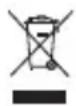
This product is marked with this symbol. It means that used electrical and electronic products should not be mixed with general household waste. There is a separate collections system for these products.
DEUTSCH
ALLGEMEINE INFORMATIONEN ZU KOHLENMONOXID
WAT TE DOEN ALS HET ALARM KLINKT
MINNE EI SAA ASENTAA
TESTING AV DIN CO-ALARM
GENERELT VEDLIKEHOLD AV DETEKTOREN
EN61000/2001, EN50291/2001, Reach- and RoHS-declaration


EU Directive(s) / EG-Richtlinie(n) / Directive(s) EU / EU richtlijn(en) / Direttiva(e) EU / Directiva(s) UE / EU direktívák / EU Toimintaohje(et) / Eu Direktiv(en) / Směrnice EU / Directiva(e) UE / Oðnýia(ες) της EE / EU direktiv(er) / EU-direktiv(ene): / dyrektywy UE: 2004/108/EC
's-Hertogenbosch, 28-4-2011
Mr. / Hr. / M. / Dhr. / Sig. / Sr. D. / Úr / Mr. / Herr. / Pan / Di. / K. /
Hr. / Herr: Randolf Richardson
Chief Operating Officer / Geschäftsführer / Chef des operations / Operationeel Directeur / Responsabile Operativo / Director de Operaciones / Üzemviteli Igazgató / Käyttöpäällikkö / Driftschef / Provozní ředitel / Director principal / Γενικός Διευθυντής Επιχειρήσεων / Chief Operating Officer / Administrerende Driftsdirektør / dyrektor operacyjny Copyright ©


- TESTING YOUR CO ALARM
- GENERAL MAINTENANCE OF DETECTOR
- END OF SENSOR LIFE
- SPECIFICATIONS
- REMARKS:
- USING THE DETECTOR
- WHAT TO DO IF THE ALARM SOUNDS
- CO SAFETY TIPS
- SYMPTOMS OF CO POISONING
- RECOMMENDED INSTALLATION LOCATIONS
- WHERE NOT TO INSTALL
- MOUNTING INSTRUCTIONS
- BATTERY REPLACEMENT
- DISCLAIMER
- Warranty:
- General:
- Attention:
- DEUTSCH
- ALLGEMEINE INFORMATIONEN ZU KOHLENMONOXID
- WAT TE DOEN ALS HET ALARM KLINKT
- MINNE EI SAA ASENTAA
- TESTING AV DIN CO-ALARM
- GENERELT VEDLIKEHOLD AV DETEKTOREN
Brand : NEDIS
Model : SECCA10
Category : Smoke detector