
OW 210 130 - Bread maker MOULINEX - Free user manual and instructions
Find the device manual for free OW 210 130 MOULINEX in PDF.
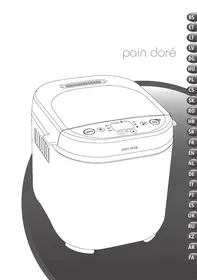



| Product type | Bread machine |
| Brand | Moulinex |
| Model | OW 210 130 |
| Number of programs | 12 (Basic bread, French, Sweet, Quick, Whole wheat, Gluten-free, Rye, Bake only, Dough, Cake, Porridge, Jam) |
| Maximum bread capacity | 1000 g (indicative weight) |
| Weight options | 500 g, 750 g, 1000 g |
| Browning levels | Light, medium, dark |
| Delay timer | Up to 15 hours (not available for programs 4, 8, 9, 10, 11, 12) |
| Keep warm | 1 hour after baking |
| Included accessories | Baking pan, kneading paddle, measuring cup, double spoon (coffee/soup), hook to remove paddle |
| Display | Time and program display |
| Cleaning | Baking pan and kneading paddle washable by hand in warm soapy water. Not dishwasher safe. |
| Maintenance | Do not immerse the body or lid. Use a soft damp cloth without abrasive products. |
| Safety | Automatic stop at end of cycle, overheat protection (E01) and low temperature protection (E00) |
| Repairability | Spare parts available through authorized service (baking pan, kneading paddle) |
| Noise level | 66 dB(A) |
Frequently Asked Questions - OW 210 130 MOULINEX
User questions about OW 210 130 MOULINEX
0 question about this device. Answer the ones you know or ask your own.
Ask a new question about this device
Download the instructions for your Bread maker in PDF format for free! Find your manual OW 210 130 - MOULINEX and take your electronic device back in hand. On this page are published all the documents necessary for the use of your device. OW 210 130 by MOULINEX.
USER MANUAL OW 210 130 MOULINEX
DELAYED START PROGRAM
To ensure that the food is ready at the desired time, the appliance can be programmed up to 15 hours in advance. This program cannot be used for programs 4, 8, 9, 10, 11, and 12.
This step can be performed after a program, crust color, and weight have been selected. The program time is displayed. Calculate the time difference between the moment you start the program and the time you want the food to be ready. The appliance automatically includes the duration of the program cycle. To set the delayed start, press the ♣ button, and the ♣ symbol will appear on the display with the default time (15:00). To set the time, press the ♣ button. It lights up. Press ♣ to start the delayed start program.
If you want to change the time setting, press and hold the button until a sound signal is heard. The default time is displayed. Start the operation again.
Flour: You can prepare bread at home. There are different types of flour: small cubes from compressed yeast, active dry yeast, which must be rehydrated, or instant dry yeast. Flour is sold in supermarkets (the ones with leavening agents for bread), but you can also buy fresh flour from your bakery. The flour must be mixed directly in the machine's pan together with the other ingredients. Before that, make sure to sift the flour to remove any lumps.
Use the recommended quantities (see the full table of equivalents).
Equivalent quantities/measurements between dry yeast and compressed yeast: Dry yeast (g) 1 1.5 2 2.5 3 3.5 4 4.5 5 Compressed yeast (g) 9 13 18 22 25 31 36 40 45
Flour: The use of flour type T55 is recommended unless otherwise specified in the recipe. When using a mixture of special flours for bread, rolls, or soft bread, do not exceed a total of 750 g of dough (flour + water).
Depending on the quality of the flour, the result of the bread baking may vary.
- Keep the flour in an airtight container, because flour reacts to environmental conditions (humidity). Add gluten, bran, wheat germ, or rye flour to the bread dough, and it will be more fluffy and less crumbly. - The coarser the flour, the more it is based on whole grains, such as those that contain parts of the outer layers of the whole grain (T55), the denser the dough will be, and the bread will be denser. You can also find ready-to-use bread mixes in the market. Follow the manufacturer's instructions for using these mixes.
Gluten-free flour: Using large quantities of one type of gluten-free flour to make bread is not recommended for the gluten-free bread program. There are many types of flour that do not contain gluten. The most common are rice flour, corn flour (regardless of whether it is whole grain), potato flour, chestnut flour, buckwheat flour, millet flour, and sorghum flour.
For gluten-free bread, it is important to maintain the freshness of the bread and to avoid using additives that are not used in bread and to compose substances.
Substances for gluten-free bread: to achieve the desired consistency and to maintain the freshness of the bread, you can add a little xanthan gum or guar gum to the dough.
Ready-to-use gluten-free mixes: they make the preparation of gluten-free bread easier, but as a raw material they contain ingredients that cannot guarantee that the final product will be gluten-free - if they are not stored and handled properly.
Different brands of ready-to-use gluten-free mixes do not lead to the same result.
Sugar: Do not use sugar on an empty stomach. Sugar improves the taste, gives a good flavor to the bread and improves the color of the crust.
Salt: Regulates the activity of the yeast and gives flavor to the bread.
It should not be in contact with the yeast before the preparation of the dough.
It also improves the structure of the dough.
Water: Water hydrates and activates the yeast. It also hydrates the ingredients in the dough and allows the bread to form. Water can be replaced entirely or partially by milk or other liquids.
Use liquids at room temperature, except for gluten-free breads that require the use of warm water (approximately 35°C).
Oil: Oils make the bread softer. It also preserves it better in quality and longer. Too much oil can delay the rising of the dough. If you use oil, add it to the liquid ingredients or to the dough. Do not add melted oil. Prevent the oil from coming into contact with the yeast, as the oil can hinder the hydration of the yeast.
Eggs: They improve the color of the bread and contribute to the quality formation of the crumb. If you use them, adjust the amount of liquid accordingly. Beat the eggs and add the necessary liquid until you get the amount of liquid indicated in the recipe.
Recipes are designed for a medium loaf of 50 g, if the loaves are larger add a little more flour, if the loaves are smaller add a little less flour.
Milk: Milk has a positive effect on the formation of a more regular crumb and a more attractive appearance of the bread. You can use fresh milk or powdered milk. If you use powdered milk, add the amount of water that is previously calculated for milk. The total volume should be equal to the volume indicated in the recipe.
CLEANING AND MAINTENANCE
- Pack the yeast and the ingredients to cool naturally.
- Replace the ingredients with the ones specified in the recipe. If the ingredients are left in the pan, remove them for 5 to 10 minutes.
- Rinse the other components with a damp cloth. Dry them carefully.
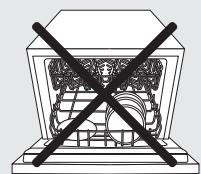
- Absolutely no part may be placed in the dishwasher.
- Do not use abrasive cleaners, scouring pads, or alcohol. Use a soft, damp cloth.
- Never immerse the appliance in water or any other liquid.
TROUBLESHOOTING GUIDE TO HELP YOU SOLVE YOUR PROBLEMS
| He pol'yabate очakbanite pezylatni? Таим tabluya ице в пооче. | Хлбьт се повдига празално MHOrO | Хлбьт спада сnéд повдиган- ETO праз- лно MHOrO | Хлбьт се повдига dóctaMbHо | Корате сe dóctaMbHо Злathа | СtrpanITE сa kaфяBN, ho хлбьт сe намынho Изпechen | СtrpanITE и врха сaВ бразно |
| Бутоль't e натиChat no В徕м на песене. | ● | |||||
| He dostatabucho бразно. | ● | |||||
| Прекално MHOrO bразно. | ● | ● | ||||
| He dostatabucho MЯ. | ● | |||||
| Прекално MHOrO МЯ. | ● | ● | ||||
| He dostatabucho Вoda. | ● | ● | ||||
| Прекално MHOrO Вoda. | ● | ● | ||||
| He dostatabucho Зхар. | ● | |||||
| Лобно качебто на бразно. | ● | ● | ||||
| Греши пponорця наб сьставкіte (npezakално MHOrO). | ● | |||||
| ВODATA e ТВьрде roteца. | ● | |||||
| ВODATA e ТВьрде стеда. | ● | |||||
| Греши пPORРама. | ● | ● |
TROUBLESHOOTING GUIDE FOR TECHNICAL PROBLEMS
| ПОНБЛЕМИ | ПРИЧИН - REШЕНИЯ |
| ГреблOTO за бърkanе e Заседно в tabа特产. | • Octabete го ду снысни рпedi ду ro изваши. • Ha ekponа се извекда и с Bretи EO1, уреьт издана звухов сигнал: уреьт e ТВьрде рорец, Изчakайte 1 чад мени ду сикьл. • Ha ekponа се извекда и с Bretи EO0, уреьт издана звухов сигнал: уреьт e ТВьрдe Stуden. Изчakайte дokato дочине саль температура. • Ha ekponа се извекда и с Bretи HHH по ССЕУ уреьт издана звухов сигнал: неиз招商引资. Машината лpopбва ду сьдe осклужера от otopицаран пэрcoнал. • Бли eПрогамиран OTLOжен CTAPТ. |
| С这样的话 нащиму нота, поportы с вкlioочва нама месен. | • Tabata He eПравино постaven. • ГреоблOTO за месен Лисва по He e moNTирано поразилно. В два сльуна пооченье рove, спөрете уреда рьчно, урздьлro нащима насыюна. Стaramштete OTHOBо рүcentа差别 NaчалOTO. |
| С这样的话 оложения стар,хлбът не Втасва дочаьho илни по He ce случва. | • 3a6rabilni Stд Дд нащиме сnode Прогамиранeto наПрогамата за OTLOжен CTAPТ. • Маята e Имала Контакт сы солты И/пли ВODATA. • Лисва ргблOTO за месен. • Няков OT сьставкITE сдд нащими ИЗВьн tabа特产: разкачete уреда OT zaxpaнванeto, OCTabete го да се oxлади, с Vide ТОВа поисて с Влажна гьба и бe зочпосташи пэрappatri. • 3aOTOBKATA e пелая: кolyчестOTO на излл�ванITE сьставки e Тьрдe Много, ocobeshо т教职工; Следытpe pronomорцinate дадени в pecentтata. |
| Миршие на изторгало. | • Няков OT сьставкITE сдд нащими ИЗВьн tabа特产: разkaчete уреда OT zaxpaнванeto, OCTabete го да се oxлади, с Vide ТОВа поисて с Влажна гьба и be зочпосташи пэрappatri. • 3aOTOBKATA e пелая: кolyчестOTO на излл�ванITE сьставки e Тьрдe Много, ocobeshо т教职工; Следытpe pronomорцinate дадени в pecentтata. |
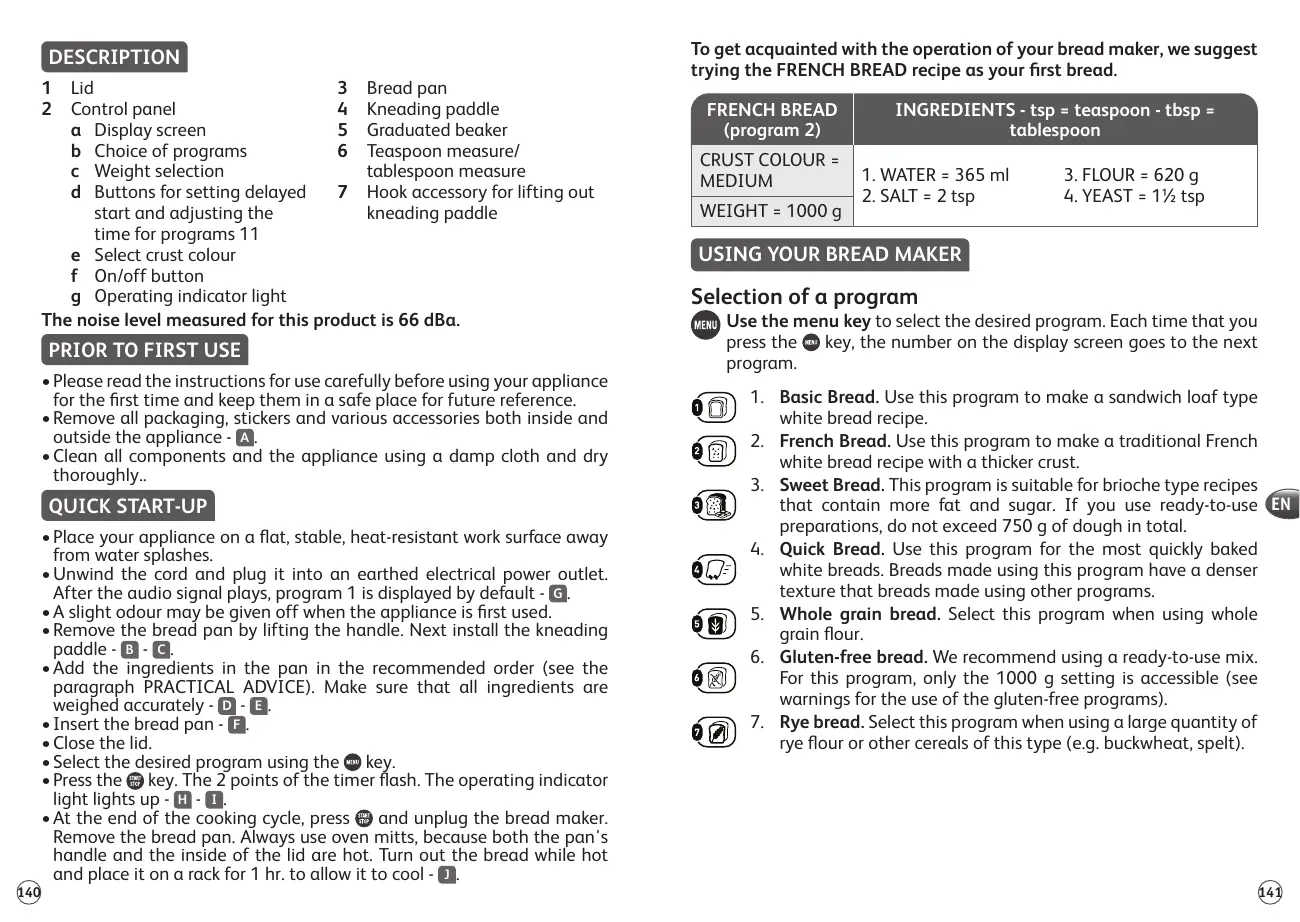
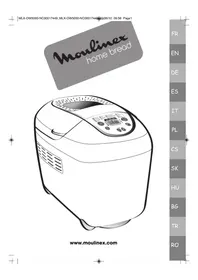
DESCRIPTION
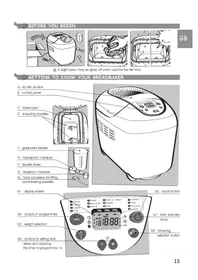
1 Lid
2 Control panel
a Display screen b Choice of programs c Weight selection d Buttons for setting delayed start and adjusting the time for programs e Select crust colour f On/off button g Operating indicator light
3 Bread pan 4 Kneading paddle 5 Graduated beaker 6 Teaspoon measure/ tablespoon measure 7 Hook accessory for lifting out kneading paddle
The noise level measured for this product is 66 dBa.
PRIOR TO FIRST USE
- Please read the instructions for use carefully before using your appliance for the first time and keep them in a safe place for future reference.
- Remove all packaging, stickers and various accessories both inside and outside the appliance - A.
- Clean all components and the appliance using a damp cloth and dry thoroughly.
QUICK START-UP
- Place your appliance on a flat, stable, heat-resistant work surface away from water splashes.
- Unwind the cord and plug it into an earthed electrical power outlet. After the audio signal plays, program 1 is displayed by default - 6.
- A slight odour may be given off when the appliance is first used.
- Remove the bread pan by lifting the handle. Next install the kneading paddle - B - C.
- Add the ingredients in the pan in the recommended order (see the paragraph PRACTICAL ADVICE). Make sure that all ingredients are weighed accurately - D - E.
- Insert the bread pan - F.
- Close the lid.
- Select the desired program using the key.
- Press the key. The 2 points of the timer flash. The operating indicator light lights up - H - I.
- At the end of the cooking cycle, press and unplug the bread maker. Remove the bread pan. Always use oven mitts, because both the pan's handle and the inside of the lid are hot. Turn out the bread while hot and place it on a rack for 1 hr. to allow it to cool -
To get acquainted with the operation of your bread maker, we suggest trying the FRENCH BREAD recipe as your first bread.
| FRENCH BREAD (program 2) | INGREDIENTS - tsp = teaspoon - tbsp = tablespoon | |
| CRUST COLOUR = MEDIUM | 1. WATER = 365 ml | 3. FLOUR = 620 g |
| 2. SALT = 2 tsp | 4. YEAST = 1½ tsp | |
| WEIGHT = 1000 g | ||
USING YOUR BREAD MAKER
Selection of a program

Use the menu key to select the desired program. Each time that you press the key, the number on the display screen goes to the next program.

- Basic Bread. Use this program to make a sandwich loaf type white bread recipe.

- French Bread. Use this program to make a traditional French white bread recipe with a thicker crust.

- Sweet Bread. This program is suitable for brioche type recipes that contain more fat and sugar. If you use ready-to-use preparations, do not exceed 750 g of dough in total.

- Quick Bread. Use this program for the most quickly baked white breads. Breads made using this program have a denser texture than breads made using other programs.

- Whole grain bread. Select this program when using whole grain flour.

- Gluten-free bread. We recommend using a ready-to-use mix. For this program, only the 1000 g setting is accessible (see warnings for the use of the gluten-free programs).

- Rye bread. Select this program when using a large quantity of rye flour or other cereals of this type (e.g. buckwheat, spelt).

- Cooking only. Use this program to cook for 10 to 70 min. It can be selected on its own and be used:
a) after completion of the Leavened Dough program, b) to reheat or crisp the surface of already cooked breads that have cooled, c) to finish cooking in the event of a prolonged power outage during a bread cycle.

- Leavened Dough. Use this program to make recipes for pizza dough, bread dough and waffle dough. This program does not cook food.

- Cake. Use this program to make cakes using baking powder. Only the 1000 g setting is accessible for this program.

- Porridge. Use this program to make porridge and rice pudding recipes.

- Jam. Use this program to make home-made jams. When using programs 11 and 12, be careful of steam jets and the release of hot air when opening the lid.
Selecting the bread weight
Press the key to set the weight selected - 500 g, 750 g or 1000 g. The indicator light lights up opposite the selected setting. The weight is provided for information purposes only. For some programs, it is not possible to select the weight. Please refer to the cycle chart at the end of the instruction manual.
Selecting the crust colour
Three choices are available: light / medium / dark. If you wish to modify the default setting, press the key until the indicator light lights up opposite the selected setting. For some programs, it is not possible to select the crust colour. Please refer to the cycle chart at the end of the instruction manual.
Start/Stop
Press the key to turn on the appliance. The countdown starts. To stop the program or cancel the programmed delayed start, press the key for 3 seconds.
The cycle chart (see the end of the instruction manual) indicates the breakdown of the various steps, according to the selected program. An indicator light indicates which step is currently under way.
1. Kneading

Use this program to form the structure of the dough and its ability to rise properly.
During this cycle, you may add ingredients: dried fruits, olives, etc. An audio signal indicates when to do so.
Please refer to the cycle chart (see the end of the instruction manual) and to the "extra" column. This column indicates the time that will be displayed on your appliance's screen when the audio signal is emitted.
2. Rest
Allows the dough to expand to improve the quality of the kneading.
3. Rise
Time during which the yeast works to leaven the bread and develop its aroma.
4. Cooking
Transforms the dough into a loaf and ensures the desired crust colour and crispness level.
5. Keep warm
Keeps the bread warm for 1 hour after cooking. It is nonetheless recommended to turn out the bread once cooking is done.
The display screen continues to display "0:00" during the hour-long "Keep warm" cycle. At the end of the cycle, the appliance stops automatically after producing several audio signals.
DELAYED START PROGRAM
You may program the appliance to ensure that your preparation is ready at the time of your choice, up to 15 hrs. in advance. The delayed start program is not available for programs 4, 8, 9, 10, 11 and 12.
This step occurs after having selected the program, the crust colour and the weight. The program time is displayed. Calculate the time difference between the moment you start the programme and the time at which you want your recipe to be ready. The machine automatically includes the programme cycle duration. To access the delayed start, press the button and the image will appear on the display as well as the default time (15:00). To set the time, press the button. The lights up. Press to launch the delayed start program.
If you make a mistake or wish to modify the time setting, hold down the key until it emits an audio signal. The default time is displayed. Start the operation again.
Some ingredients are perishable. Don't use the delayed start program for recipes containing: raw milk, eggs, yoghurt, cheese, fresh fruit.
PRACTICAL ADVICE
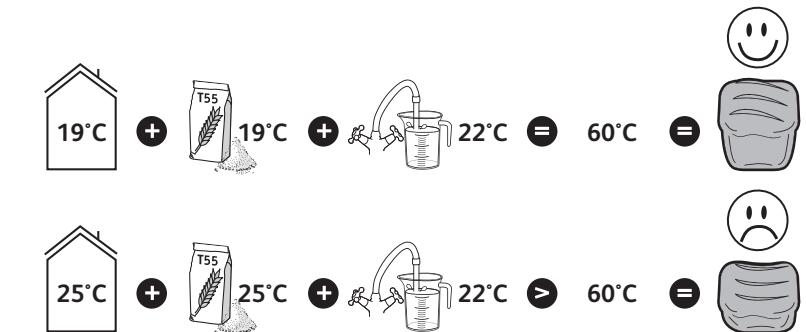
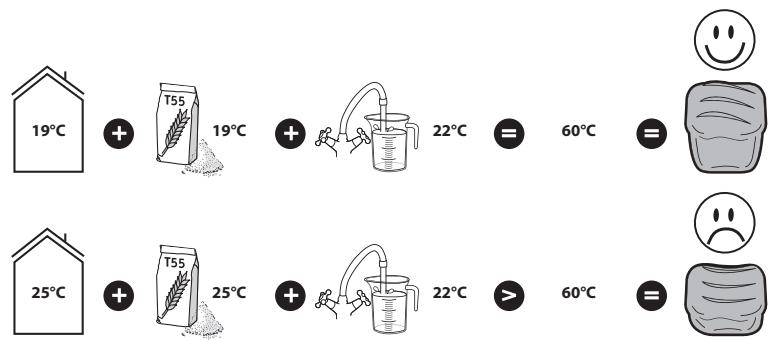
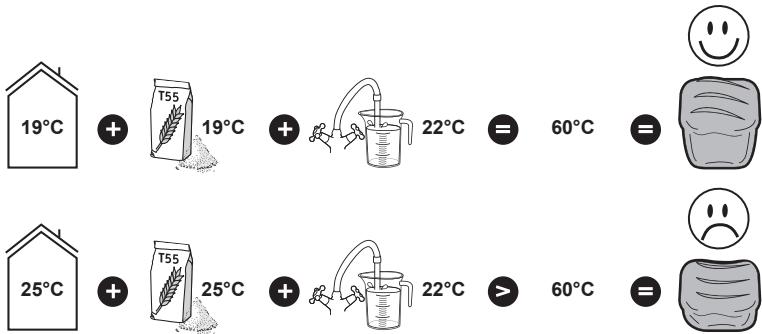
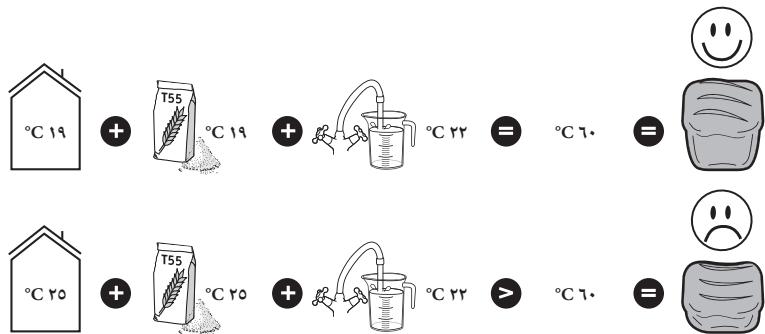
- All ingredients used must be at room temperature (unless otherwise indicated), and must be weighed accurately. Measure the liquids using the graduated cup provided. Use the spoon provided to measure tablespoons on one side and teaspoons on the other. Inaccurate measurements will yield bad results. Bread preparation is very sensitive to temperature and humidity conditions. During hot weather, it is recommended to use cooler liquids than usual. Likewise, during cold weather, it may be necessary to warm the water or milk (never exceed 35°C ).
- Use ingredients prior to their best-before date and keep them in a cool, dry place.
- The flour must be weighed accurately using a kitchen scale. Use active dry baker's yeast (in pouches).
- Avoid opening the lid during use (unless otherwise indicated).
- Follow the exact order of the ingredients and the quantities indicated in the recipes. First the liquids, and then the solids. The yeast must not come into contact with the liquids or with the salt. Too much yeast weakens the dough structure, which will rise a lot and will subsequently sag during cooking.
General order to follow:
-Liquids (softened butter, oil, eggs, water, milk) -Salt -Sugar -First half of the flour - Powdered milk - Specific solid ingredients Second half of the flour - Yeast
- During a power outage under 7 minutes, the machine will save its status and will resume its operation once the power comes online.
- If you wish to have one bread cycle directly follow another, wait for approximately 1 hr. between both cycles to allow the machine to cool and prevent any potential impact on bread making.
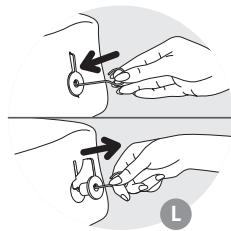
- When turning out your bread, the kneading paddle may remain stuck inside it. In this case, use the hook to gently remove it. To do so, insert the hook in the kneading paddle's shaft, and then lift to remove it.
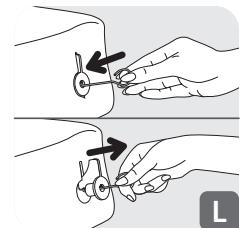
Warnings for the use of gluten-free programs
- Blends of flour types must be sifted with the yeast to prevent lumps.
- When the program is launched, it is necessary to assist the kneading process: scrape down any unmixed ingredients on the sides towards the centre of the pan using a non-metallic spatula.
- Gluten-free bread cannot rise as much as a traditional bread. It will be of a denser consistency and lighter colour than normal bread.
- All premix brands do not yield the same results: the recipes may have to be adjusted. It is therefore recommended to conduct some tests (see example below).
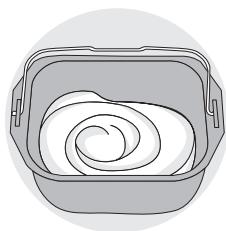
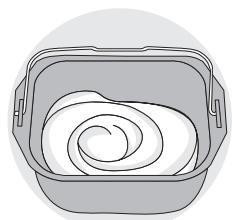
Example: adjust the quantity of liquid.
Too liquid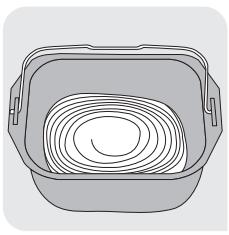
OK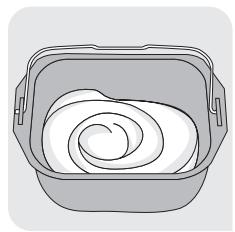
Too dry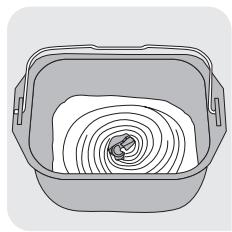
Exception: cake batter must remain quite liquid.
INFORMATION ON THE INGREDIENTS
Yeast: Bread is made using baker's yeast. This type of yeast is sold in several forms: small cubes of compressed yeast, active dry yeast to be rehydrated or instant dry yeast. Yeast is sold in supermarkets (bakery or fresh foods departments), but you can also buy compressed yeast from your baker.
The yeast must be directly incorporated in your machine's pan with the other ingredients. Nonetheless consider thoroughly crumbling the compressed yeast between your fingers to facilitate its dispersion.
Follow the recommended amounts (see the equivalences chart below).
Quantity/weight equivalences between dry yeast and compressed yeast:
Dry yeast (in tsp) 1 1.5 2 2.5 3 3.5 4 4.5 5
Compressed yeast (ing) 9 13 18 22 25 31 36 40 45
Flours: Using T55 flour is recommended, unless otherwise indicated in the recipes. When using mixes of special flour types for bread, brioche or milk bread, do not exceed 750g of dough in total (flour + water).
Depending on the quality of the flour, the bread making results may also vary.
- Keep flour in a hermetically sealed container, since flour reacts to fluctuations in climate conditions (humidity). Adding oats, bran, wheat germ, rye or whole grains to the bread dough, will produce a bread that is denser and less fluffy.
- The more a flour is based on whole grains, that is, containing a part of the outer layers of a wheat grain (T>55), the less the dough will rise and the denser the bread will be.
- You will also find commercially available ready-to-use preparations for breads. Please refer to the manufacturer's recommendations for the use of these preparations.
Gluten-free flour: Using large quantities of these flour types to make bread calls for the use of the gluten-free bread program. There is a large number of flour types that do not contain any gluten. The best known are buckwheat flour, rice flour (either white or whole grain), quinoa flour, corn flour, chestnut flour, millet flour and sorghum flour.
For gluten-free breads, in order to try to recreate the elasticity of gluten, it is essential to mix several types of non bread making flours and to add thickening agents.
Thickening agents for gluten-free breads: To obtain a proper consistency and to attempt to imitate the elasticity of gluten, you may add some xanthan gum and/or guar gum to your preparations.
Ready-to-use gluten-free preparations: They make it easier to make gluten-free bread since they contain thickeners and have the advantage of being completely guaranteed to be gluten-free — some are also organic.
All brands of ready-to-use gluten-free preparations do not yield the same results.
Sugar: Don't use sugar lumps. Sugar feeds the yeast, gives a good flavour to the bread and improves the crust colour.
Salt: It regulates the activity of the yeast and gives flavour to bread.
It must not come into contact with the yeast prior to the start of the preparation.
It also improve the structure of the dough.
Water: Water rehydrates and activates the yeast. It also hydrates the flour's starch and enables the loaf to be formed. Water may be replaced, in whole or in part, by milk or other liquids. Use liquids at room temperature, except for gluten-free breads, which require the use of warm water (approximately 35°C ).
Fats and oils: Fats make the bread fluffier. It will also keep better and longer. Too much fat slows the rise of the dough. If you use butter, crumble it into small pieces or soften it. Do not incorporate melted butter. Prevent the fat from coming into contact with the yeast, since the fat could prevent the yeast from rehydrating.
Eggs: They improve the bread's colour and favour good development of the loaf. If you use eggs, reduce the quantity of liquid accordingly. Break the egg and add the necessary liquid until you obtain the quantity of liquid indicated in the recipe.
The recipes have been designed for a medium-sized egg of 50g , if the eggs are larger, add some flour; if the eggs are smaller, add a little less flour.
Milk: Milk has an emulsifying effect that leads to the creation of more regular cells, and therefore an attractive loaf appearance. You may use fresh milk or powdered milk. If you use powdered milk, add the quantity of water initially reserved for milk: the total volume must be equal to the volume indicated in the recipe.
CLEANING AND MAINTENANCE
- Unplug the appliance and wait for it to cool down completely.
- Wash the pan and the kneading paddle using hot soapy water. If the kneading paddle stays in the pan, soak it for 5 to 10 min.
- Clean the body of the appliance with a damp cloth sponge. Dry thoroughly.
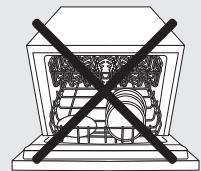
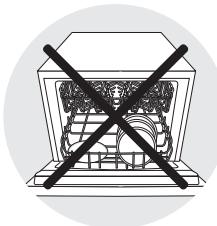
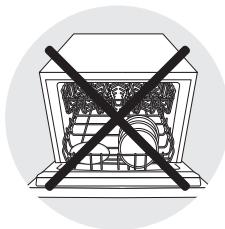
- The appliance and removable parts are unsuitable for dishwasher use.
- Don't use any household cleanser, abrasive pads or alcohol. Use a soft, damp cloth.
- Never submerge the appliance's body or the lid in water or any other liquid.
TROUBLESHOOTING GUIDE TO IMPROVE YOUR RECIPES
| Not getting the expected results? This table will help you. | Bread rises too much | Bread falls after rising too much | Bread does not rise enough | Crust not golden enough | Sides brown but bread not fully cooked | Top and sides floury |
| The button was pressed during baking. | ● | |||||
| Not enough flour. | ● | |||||
| Too much flour. | ● | ● | ||||
| Not enough yeast. | ● | |||||
| Too much yeast. | ● | ● | ||||
| Not enough water. | ● | ● | ||||
| Too much water. | ● | ● | ||||
| Not enough sugar. | ● | |||||
| Poor quality flour. | ● | ● | ||||
| Wrong proportions of ingredients (too much). | ● | |||||
| Water too hot. | ● | |||||
| Water too cold. | ● | |||||
| Wrong programme. | ● | ● |
TECHNICAL TROUBLESHOOTING GUIDE
| PROBLEMS | CAUSES - SOLUTIONS |
| The kneading paddle is stuck in the pan. | • Let it soak before removing it. |
| After pressing on Ⓞ, nothing happens. | • EO1 is displayed and flashes on the screen, the appliance beeps: the appliance is too hot. Wait 1 hour between 2 cycles. • EOO is displayed and flashes on the screen, the appliance beeps: the appliance is too cold. Wait for it to reach room temperature. • HHH or EEE is displayed and flashes on the screen, the appliance beeps: malfunction. The machine must be serviced by authorised personnel. • A delayed start has been programmed. |
| After pressing on Ⓞ, the motor is on but no kneading takes place. | • The pan has not been correctly inserted. • Kneading paddle missing or not installed properly. In the two cases cited above, stop the appliance manually with a long press on the Ⓞ button. Start the recipe again from the beginning. |
| After a delayed start, the bread has not risen enough or nothing happens. | • You forgot to press on Ⓞ after programming the delayed start programme. • The yeast has come into contact with salt and/or water. • Kneading paddle missing. |
| Burnt smell. | • Some of the ingredients have fallen outside the pan: unplug the appliance, let it cool down, then clean the inside with a damp sponge and without any cleaning product. • The preparation has overflowed: the quantity of ingredients used is too great, notably liquid. Follow the proportions given in the recipe. |
DESCRIPTION
1 Lid
3 Baking pan
2 Control panel
4 Kneading paddle
a Display
5 Measuring cup
6 teaspoons/tablespoons
c Weight selection
Press the button to set the weight to 500, 750, or 1000 g. The indicator light will turn on opposite the selected value. The weight is shown for informational purposes only. Some programs do not
require weight selection. See the table of cycles in the operating instructions.
Selecting the degree of crushing
Possible crushing levels: light/medium/strong. If you want to change the default setting, press the button until the indicator light turns on opposite the selected value. Some programs do not require selecting the degree of crushing. See the table of cycles in the operating instructions.
Switching on
Press the button to switch on the appliance. The operating time is displayed. To stop the program or to start the program from the beginning, press and hold the button for 3 seconds.
OPERATION
The table of cycles (see operating instructions) describes all stages of the preparation process depending on the selected program. The indicator light shows the current stage.
1. Filling
Allows you to form the correct dough texture and, accordingly, ensures good adhesion to the ingredients.
During the double kneading process, you can add various ingredients: dried fruits, nuts, etc. An audible signal indicates when your intervention is needed.
See the table of cycles (see operating instructions) and the column "Additional". This column shows what will appear on the display after the audible signal.
2. Kneading
Use the dough immediately after the specified characteristics are achieved.
3. Proofing
During proofing, the dough is allowed to rise and acquire its characteristic aroma.
4. Baking
The dough is transformed into bread, ensuring its softness and crispiness of the crust.
5. Keep Warm
Keeps the bread warm for up to 1 hour after baking. In any case, we recommend removing the bread from the pan after baking is complete.
During the next hour in Keep Warm mode, the display shows 0:00. At the end of the keep warm cycle, a few beeps sound automatically.
DELAYED START
You can program the appliance with a delayed start (up to 15 hours) to have fresh product at the desired time. Programs 4, 8, 9, 10, 11, and 12 do not have a delayed start option.
The cycle begins after selecting the program, crust color, and weight. The program duration is shown on the display. Calculate the time interval between the moment you start the program and when you want the preparation to be finished. The appliance automatically maintains the program duration. To switch to delayed start, press the button. The program appears on the screen and the time is displayed as the default (15 hours 00 min). To set the time, press the indicator. Press to start the program with delayed start.
If you made a mistake or want to change the time setting, press and hold the button until the beep sounds. The display shows the default time. Repeat the operation.
Recipes for gluten-free bread. Do not use the delayed start program for recipes based on fresh milk, yogurt, sourdough, or fresh fruits.
PRACTICAL TIPS
- All ingredients should be at room temperature (unless otherwise specified) and accurately measured. Measure with the measuring cup from the set. Use a full measuring cup to measure the specified volume in cups or tablespoons. Incorrect measuring can result in poor quality products. Bread dough is sensitive to temperature and humidity. In case of high temperature, it is better to add cooler liquids and ingredients than usual. Similarly, in lower temperatures, it is better to heat water or milk (but not above 35°C).
- Use the ingredients in the order specified and keep them in a dry, cool place.
- It is important to pay attention to the exact weights. Use dry active yeast packets.
- Do not open the lid during baking (unless otherwise specified).
- Follow the exact sequence of adding ingredients and their quantities as specified in the recipe. Add liquid ingredients first, then dry ones. The yeast should not come into contact with salt or sugar. The amount of yeast makes the bread structure more substantial: the dough rises very high, and then it strongly falls during baking.
General sequence, if necessary to form:
- Liquid ingredients (preferably olive oil, butter, egg, water, milk) - Salt - Sugar - First half of flour - Dry milk - Other dry ingredients - Second half of flour - Yeast
- During a short power outage (up to 7 minutes), the device maintains the exact mode and continues working after power is restored. 7. If you want to start a second bread baking cycle, you need to wait 1 hour between cycles to allow the device to cool down. Improper handling may adversely affect the quality of the second loaf of bread.
- When removing the bread from the mold, the kneading blade may remain in the loaf. In this case, use the hook to remove it. To do this, insert the hook into the kneading blade and pull it towards you.
Preliminary before using programs for gluten-free tests
- To avoid the formation of lumps, it is necessary to thoroughly sift
the flour with the yeast.
After starting the program, it is necessary to ensure better mixing: push the ingredients from the walls of the mold towards the center using a non-metallic spatula. - Gluten-free bread does not rise like regular bread. It has a denser structure and a more moist crumb compared to regular bread. - The final result may vary depending on the brand of ready-made mixture: possibly, you will need to slightly change the recipe. Therefore, we recommend starting with a test baking (see example below).
Example: adjust the amount of liquid.
Liquid amount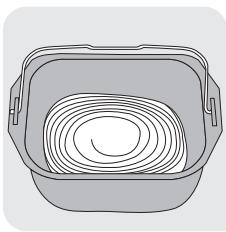
Normal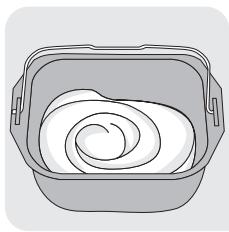
Screws: the screws must be tightened by hand.
INSTRUCTIONS FOR TROUBLESHOOTING
Scale calibration
To calibrate the scale, press and hold the CAL button for 3 seconds. The scale will display 500g, then 750g, then 1000g. Follow the on-screen indicators. For calibration, use a standard weight. If the calibration fails, check the battery.
Zero adjustment
With no load on the scale, press and hold the ZERO button until the display shows zero. If the zero adjustment fails, check the battery.
Weighing and tare
To weigh an item, place it on the scale. The weight will be displayed. To use the tare function, press the TARE button with the container on the scale, then add the item to be weighed.
BATTERY REPLACEMENT
When the battery indicator (low battery symbol) appears on the display, replace the batteries. Open the battery compartment on the bottom of the scale and insert new batteries, observing the correct polarity.
1. Battery installation

Install the batteries as shown in the diagram.
If the scale is not used for a long time, remove the batteries to prevent leakage. If leakage occurs, clean the battery compartment.
Check the battery compartment and clean it if necessary. If the scale still does not work, contact the manufacturer.
2. NiH KaHdbIpy
Kambyipdbin nih KaHdbipy wih epineitin yaBt.
3. AaBity

AusbitKbI acepiHekmbip KTeepin, nici wbiKkaHa 6epiJeTih yaKbIT.
4. Nicipiy
Kambip 6eIke niinih anbIn, KaKeTTi KbI3apTy XeHe KbITbIpnay dpepeXecine caikec nicei.
5. Kblnydla caKray 155
PicKeHHEN KeiH, HAI 1 carf 6oBbl Kblbl 6oBbIn TpyaIbI. DereHMeH, NcKeHHEN KeiH, HANdb 6ipEn Tycipren dypbc.
Bip cafatka cozbntbH 日 cakTay> Ke3eHi 6ab5bIHda 3KpaHda 0.00 Kepcetinlin Tpya bepedi. Byn ke3en 6itKeHde, KpybIbIb 6ipHewe dblbIcbIK cnHann Bepin, AbotamTtby Tpyde eweiD.
KEIN KOCY BAFDAPJAMACbI
15 cafat He odaa 3 aykbit 6ypbih TamaKtBih 3ep 6oNaTbH yaKbTbH TaDan KOHa f 60ana. BekwiTipinre Icke Kocy 6aFapnAmacbi 4,8,9,10,11 XeHe 12 6aFapnamnapbl yuih KonjxetIMcH.
Byn kadan baFapnamahbl, kbI3apTy aepexecin Xhe caJmaKtbl TaHaFaHAn H KeIH bIbAbl. BaFapnamahbl yakblkepcetinei. C13 faDapnamahbl bactaTbH cTe neH peuentin3 daBH 60ybl Kepek yakbl apacblHa yakbl aibpMaBlbHbH ecntteH3. Maunha baFapnama y3aKtblbH abOMaTTb Tpye KocabH. Keiikripinre Ice Kocyfa KaTbHacy yuih Tuymecih bacbH3. DncPneJe KeckHI, coBHMeH bipre eDenki yaBHT (15:00) Kepcetinei. YakblbOphaty uih TuymeCih bacbH3. XaHaAb. KeHH Kocy faFapnamacbl h icke Kocy yuih TepneCih bacbH3.
YaKbTTb KATE TaHdAn KoIcAHy3 HEme Ce KaE e3reptkH3 KeNce, Dbl6bICTBK CnHAn 1bIKKaHw, nepneCin 6acBIn TpyBHy3. ODenki YaBt KepcTeJnei. BacBHaN BaCTaHbI3.
By3bIbn KeTeiH a3bIK-TyIikTepe 6ap. 1uKi cyT, XMyblptKa, Iorypt, ipimuiK, Xemic-KeKocBilfah peuentinep ysiH keiH Kocy baFapnamacblj
ПАДAJБI KEHECTEP
- The tongue and throat may become dry (if the body is dehydrated). Dryness can be detected by signs. If the tongue is dry, it may be necessary to give water. If the body is overheated, the tongue may become dry. When the body temperature is high, it is necessary to give water. If the tongue is very dry, it may be necessary to give water. If the body is very hot, it may be necessary to give water. If the body temperature is above 35°C, it may be necessary to give water.
- The tongue and throat should be kept clean and dry, and stored in a dry place.
- It is necessary to give water with a spoon. The dry powder (in the package) should be poured out.
- Remove the cap of the tube and pour out the contents (if necessary, open the tube). 5. The tongue and throat should be cleaned with a damp cloth and then dried. Give water and other liquids. If the tongue is dry,
or if the body is hot, it is necessary to give water. If the body is very hot, it may be necessary to cool the body by removing excess clothing.
To clean the tongue and throat:
- Dry foods (such as biscuits, dry bread, crackers, water, milk) - Salt - Sugar - One sign of heat - Hot milk - Clean tongue and throat - Second sign of heat - Powder
6. The electric kettle should be turned off after 7 minutes, and then the switch should be turned off. 7. After taking the first dose, wait 1 hour before taking the second dose, to allow the medicine to take effect. 8. Do not leave the medicine in a hot place. It should be kept in a cool, dry place.
For this reason, the medicine should be kept in a cool, dry place, away from heat.
Dense or thick liquids should be given with a spoon.
To prevent choking, it is necessary to give the liquid slowly with a spoon. After giving the liquid, check the mouth for any remaining food. - Do not give thick or sticky liquids. If the patient is unconscious, do not give anything by mouth. The patient should be turned on their side. If the patient vomits, turn the head to the side to prevent choking.
Note: Give liquids slowly.
Hot water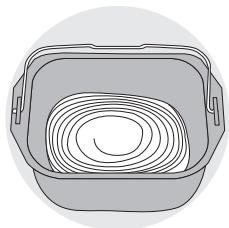
Correct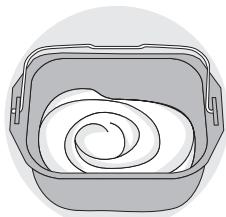
Hot water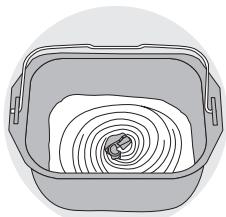
EpeKwEniK: 6aJIiTp/KeKCTepHIN KambIpy KaIdmriJe cybIK 6oNybl KepeK.
A3bIK-TYJIIKTEP TYPAJIbI AKNAPAT
AusbTkbl: Han aphaib aubitkbimen daibihdanaDb. Ohdaa uabtkbihbMbaHadayneprebp010aDb: cbfBifraH aafBih KeceKtep, cyBnItbIaTbH bencEndi Kprak aubtkbjXHe ne3dk Kprak aubtkbj. Aubtkbj DkyKeHDe catbJaDb (Haybaixhada Hemece a3bik-TyniD dykehiDe), bipak haybauBldan cbfBIFraH aubtkbj Anca da 0anaDb. Aubtktkblb Baca b3aik-TyliKTEPMebipre bipden KpyBilfnbH niwiHine cany Kepek. Bipkeni Tapanybi yuiH, cbfBIFraH aubtktbHb KOImEH yritin canFaH dybc.
Mennep TaanTapbH caKaTaHb3 (TeMeHderi cAnbIcTbIpMa KeCTeHi KapaHb3).
KypraK XaHe CbIfBnraH aWbIMKbMNeUepi MeH cAnMarbHbIH cNbICMbipMacbl:
| Kyprakawbimkbl(w.k.) | 1 | 1,5 | 2 | 2,5 | 3 | 3,5 | 4 | 4,5 | 5 |
| CbifblraHawbimkbl(a) | 9 | 13 | 18 | 22 | 25 | 31 | 36 | 40 | 45 |
YH:Peuentide 6ackaawa Kepcetinmece,6nain yHbIH KondaHraH dypbc 6oanaBt. Tokaa (6pnoob) Hemece 6acka da HAn TpynePi niciPyre apHanrA rynIyHap Kocnacbi NaananaHaHa, KaMbpDIn Xannbl CanmaBf (yH + cy) 750 rpAmhaacnafbHXKeH
YHHbIH canacbHa 6aIbnbICTbl ncken HnH da epkanaB oJala.
Kopwaah optara (bInralfbnBik) 6aIaNbICTb kacneTepi e3repi typaTbHbTkTaH, YNbIaby aTeNtIH KOHTeHepDe caKTAFAH dypbc. KaMbpFra cybl, Ke6ek, 6naiy EckHH, KApabDnA hEmec6 oyTIN dAndepdi Kocbln Xibepce, HAnhbl TbFlb3dbfbl apTbn, ynnlndek BoImaJb - YHbIn KpyAmBnAaBf6 ByTIN dAnHepe MOnIepi HerypBIM KcN 60ncA, FHN 6dai dHepinH cbPTKb KaBbIFH HerypBIM Ke6ipek KamTbica (T>55), Kambip a3bpak KetepeiIN, Tbyf3DbIfbAp tya Tycedl. - DykeHe caTbIaNtBn daBn KAmbipbl naDanaHfyda 60anaBb. Ohdai KaMbipbl naDanaHaHaDa, Kybpflb EhDipyuicin HKeHecepHn Haapfa anbHb3.
TnIOTehci3 yH: Hah nicipy uWih Myndai yH Tpyneipi Kenten naJdaNHaFaHda, nIIOTECHi3 Hah Nicipy 6aIapamacBIn KOndai Kepek. TnIOTEHiK XOK YHdpabH ayanay Tnpnic biObaIbI. OnapabH en xhi KezdeCetIHepi: KapakymbIK yHbI, KpyiWyHbI (aK hemec 6ytIN dHdi), kInHOA yHbI, xxyTrepiYHbI, TaunbH yHbI, TaBP yHbI, bAn xyTrepiYHbI.
TnIOTehci HAH NICIPREHHe, TnIOTeH BepeTiH mInrIiwiTki KaMTamacb3 ety yuH eP Typni YHapbl apanaactbIpBn, KOIOHaNbIpBfB u Kocy kaxet.
TIOHTeHcIHaHFa aPbHraH KOHOHaHbIbPrbIbIaTp: KOHCINCTeHuNcB1 dybIc 6oIybl KHe IIOTe HnIIiIiTiRiH 6epy UsiH, KaMbIprFa KCAHTan KHe/HemeCryap ShaIbpyH KocSyfaObaJa.
DaihIn rHnToHeC3 kAmbipnap: KypambHa KOHOAnHbIprBbIuTp KcObIaTbIHbIKTAH XKe He rIOTeH JOK EKEHHe cEHmDi 60a anAteblbIKbTan (KeibepyEnepiHne TeK TaBn3aTTap KOnJaDaHbIFraH), MyHdAn KaMbIpRda naDanaHaHran eTe bHFaHbI.
Даын rttteci3 kambipnap ap typi bonatbHbIKtaH, nickeHde de apkanaa WbIfabl.
KANT: KaHT KeceKTePIH caImaHbI3. KaHTTah aUbITKbI eCIn, HAnHHbIH dAmi JkaKcapaIbI, CbIPbI Kbl3apbln niceJI.
Ty3: AushbTkblhBb6eIceHdInirih petten, haHa fa dAm bepezi.
Kamby npnyiH andbIHd aTy3 aWbITkbIfa Tmeyi KepeK.
HaHHbH KypbJIbIMbH XaKcapTaIbI.
Cy: AushikbHb cyanahdbipin, 6encehdipei. CohIme bipre yHa da kpaXmaIbbl 6bnCenHepin, KambipDnB 6bnKe niiHih anyiba Kaafdian xacaibi. Cybl ToIbIKaTne Hemece XapTbJnA cyTtnE Hemece baca cybIKbKnene AnMaCTbIpYfa BonaIb. CykbKTBkTAP 6bnMe TemnepatypacIHda 6onybl KepeK, TRe ItoHe3i Han yWIn fHa h XbIb cy (wamamEn 35°C ) kaxet.
Mainap: Maihan hah yinnindek bona dbi. Y3afbipak caKaTanaDbi. Mai Tbim Ken 60nca, KaMbip 6aay Keptepinei. Capbi Maidbi KeceKtepre Typan Hemece JxMCapTbn cany kepek. Epiitin canImarAH xH. AusbTkblhB cyNaHybHa Keepri KeNTipeTihdkTeh, Mai aBbITkbfa tikenei TImeYi kepek.
Kymbtpka:HaHbH TycIH XeHE NcIH KAKcapTadbl, KaMbpH IbH KaHbIpabbl. KymbtpkCa ranHaJa, CyBbTkBk MmIupepi Aa3Tu Kepek. XymbtpKaHbJ Kapbl, peueTIte KepcetTirHeh Menueppe XETKHeJIe, CyBbTkBk KocblHb3.
Peuenteip 50 r optawa Kymbiptkana paphra, oan yken bocna, yndi Kebipeke KocbHb3, oan hkiIb cOnca, yhdIa3bpak calbHb3.
Cyt: CytTIn 3MynbraunnBk acepi 6ap, coNdbkTAn TpyaKbI kacywanaPkebipek ty3inn, BokKeHH Typi jakcapa TycedI. CybIK Hemece yTAK CYKocyra 6oJadI. YHTAK CY KOnDaHblnca, TiCiTc cy MmUepiIN KocbHb3: XaJIbblMeIe peuTeTIke KpcetirTreHMeh 6bpIe60bnbl KepeK.
TA3AJAY XOHE KYTIM
KypblfblbTOK Ke3iHeH axbipaTbIn, TOnbIK cybifaHla KyTiHi3. bICTbKcbHbIcymeNIIiHiJxHe apanaactbIpaTbIH kaiakTbI Jybl3. Kaan Tabada KaIca, 5-10 MInHT Xi6ITIN KOIBHbI3. Backa 6eniktepiH DbIMKbI ry6kamen Ta3aNaHbI3. KaKcblan KeTIPiH3. - Ewkaenirih bIdbc JyfbMaunHa fanyfa 60nmaNbI (K). TpymbIcTBk XHMn, KblprBll XeKEnepdi XeHene CnPiPTTI naanadhya 60nMaNbIb. KymcaK, DblmKblN y6BepeKeNeh cypti3. KypbInfbHbH e3i Hemece KaKaNpaBHy cyFa Manyra 60MaJdbI.
AKAYIbIKTAPDbI XOIO HYCKAYIbIFbl
| Кутken нэтухе алынган жж. na? Мына кесе сizre Көмek ушin берлген. | Нан Тым Каты Көтepinedi | Нан коты Көтepinir- Буннен кени Тусin кетedi | Нан Дурьс Көтepin- Мeйdi | Сырты Дурьс Кызар- Мaйды | Бүлржakт彬 Коньлран- Ганымен iwi Дурьс nicпeйdi | Бүлріmen Жогары Жаç Бетtersпide Унkanады |
| Пис Жатдан, Ту IMechi Оасыган. | ● | |||||
| Чы a3. | ● | |||||
| Чы кeн. | ● | ● | ||||
| Ашытсысы a3. | ● | |||||
| Ашытсысы Кeн. | ● | ● | ||||
| Сы a3. | ● | ● | ||||
| Сы Кeн. | ● | ● | ||||
| КаHTы a3. | ● | |||||
| Yнын саласы нашар. | ● | ● | ||||
| Косылган Затарын .apakakсынасы Дурьс emec (Tыm кeн). | ● | |||||
| Сы Тым ыICTыk. | ● | |||||
| Сы Тыm сувik. | ● | |||||
| Багдагпама дурьс тандаимаган. | ● | ● |
TEXHINKAJIbIK AKAYIbIKTAPdbI XOIO HYCKAYIbIFbl
J 1 J 1 J 1 J 1 J 1 J 1 J 1 J 1 J 1 J 1 J 1 J 1 J 1 J 1 J 1 J 1 J 1 J 1 J 1 J 1 J 1 J 1 J 1 J 1 J 1 J 1 J 1 J 1 J 1 J 1 J 1 J 1 J 1 J 1 J
aagol
50 50 50 abla 15 Lio 100000000000000000000000000000000000000000000000000000000000 aagolg aal gaaal gau gau gau gau gau gau gau gau gau gau gau gau gau gau gau gau gau gau gau gau gau gau gau gau gau gau gau gau gau gau gau gau gau gau gau gau gau gau gau gau gau gau gau gau gau gau gau
aJg
Therefore, {a} {3} = {a} {1} + 3 = {70}
(T > 55) all g uo jn a aaiuul lalal n gge g yguyd ayLaluay
A. If ξ = μ, β = γ, ξ = μ, β = γ
Aaiab Aull Uoogd!g ggy. jolgio 1 pluoll oal yaoa L a
C. O2 reacts with acid to form salt H2S
Jusw wulby jowll gial oio inabll egj ioo xS UaLs pduu: inigll jno Jull inabll
Lai.
ab. aJJJ ab. gSsJ J ab. (aLaSsI ygall jjgl jyll Jl) JJy
.ajsslljill jobg jlgjll jab .sll
gai 100 100 100 100 100 100 100 100
.1aayyduu yduo aoyou 00 0000
yessss
Jus s. 1s. 1s. 1s. 1s. 1s. 1s. 1s. 1s. 1s. 1s. 1s. 1s. 1s. 1s. 1s. 1s. 1s. 1s. 1s. 1s. 1s. 1s. 1s.
Jlll jll lalld, dddol 0jg d g llglalpdl. g s 1111111111111111111111
(aagia 100
AR
jglgll gkss slll lal 1s ggs rgrs gals
.
gog Lijl eUu. CLaogll Uau ygrrall no uyny d: gttll nn aay aayll Laloll
.(olill)
jglgwl aS b:JtJbI JwJgJc
2
1-2yJgLdLdLdRggsLgLJyLq
Jgll jolll gwiall joll aag iaii aglloe jai joiil jia jiej
δx,yS aaaa= tbsp- δx,y aaaa= tsp- ä......
( 2,ρ , ,ω ,n)
ab ≥ 70 · = jab - r
j ll = r 0 = c0 - 1
tsp1,0o
tsp = →
- ω · z = 0
1j 1…=j
| اللهory | اللهory |
| .اللهory | .اللهory |
| .اللهory | .اللهory |
| .اللهory | .اللهory |
| .اللهory | .اللهory |
| .اللهory | .اللهory |
| .اللهory | .اللهory |
| .اللهory | .اللهory |
| .اللهory | .اللهory |
| .اللهory | .اللهory .اللهory |
| .اللهory | .اللهory |
| .اللهory | .اللهory |
| .اللهory | .اللهory |
| .اللهory | .اللهory |
| .اللهory | .اللهory |
| .اللهory | .اللهory |
| .اللهory | .اللهory |
| .اللهory | .اللهORY |
| .اللهory | .اللهORY |
| .الPHAQUE | .الPHAQUE |
| .الPHAQUE | .الPHAQUE |
| .الPHAQUE | .الPHAQUE |
| .الPHAQUE | .الPHAQUE |
| .الPHAQUE | .الPHAQUE |
| .الPHAQUE | .الPHAQUE |
| .الPHAQUE | .الPHAQUE |
| .الPHAQUE | .الPHAQUE |
| .الPHAQUE | .الPHAQUE |
| . . . . . . . . . . . . . . . . . . . . . . . . . . . . . . . . . . . . . . . . . . . . . . . . . . . . . . . . . . . . . . . . . . . . . . . . . . . . . . . . . . . . . . . . . . . . . . . . . . . . 、 . . . . . . . . . . . . . . . . . . . . . . . . . . . . . . . . . . . . . . . . . . . . . . . . . . . . . . . . . . . . . . . . . . . . . . . . . . . . . . . . . . . . . . . . . . . . . . . . . . . ? . . . . . . . . . . . . . . . . . . . . . . . . . . . . . . . . . . . . . . . . . . . . . . . . . . . . . . . . . . . . . . . . . . . . . . . . . . . . . . . . . . . . . . . . . . . . . . . . . . . •. • • • • • • • • • • • • • • • • • • • • • • • • • • • • • • • • • • • • • • • • • • • • • • • • • • • |
0 0 5 ÷ 0 0 5 = 0. 5 0 -
2 jda _ i ju _ i gog -
y a o u -
430g 120g jj 7j j b
__SUPPIMER__
1
Therefore, 2g - 1 ~ 2g - 3
15 L 15
129.84 120110.84 120110.84
L 3 15
o o

∴ 1200 - 5 > 0
.100

oljw1.2

jwJg.3


θ = 2 7 - r
tsp 1, Δ = _ 2 ω_ 2 - F
j 1/2 0 0 0 4 5 0 = 0. 1 - 1
tsp Y = S _ δ - Y
I _ 2 w _ 2 si = diw _ 2 Sij
pj 5 1 ... = jj 5
| INTERNATIONAL GUARantee: COUNTRY LIST SMALL HOUSEHOLD APPLIANCES | |||||||
| ARGENTINA | 0800-122-2732 | EGYPT | 16622 | SLOVENIJA SLOVENIA | 02 234 94 90 | MALAYSIA | 603 7802 3000 |
| JUUBUSULV ARMENIA | 010 55-76-07 | EESTI ESTONIA | 668 1286 | ELLADA GREECE | 2106371251 | MEXICO | (01800) 112 8325 |
| AUSTRALIA | 1300307824 | SUOMI FINLAND | 9 8946 150 | 鲁雅 HONG KONG | 8130 8998 | MOLDOVA | 22 929249 |
| ÖSTERREICH AUSTRIA | 01 890 3476 | FRANCE Continationale + Guadeloupe, Martingale, Réunion, St-Martin | 09 74 50 47 74 | MAGYARDSZÁG HUNGARY | 06 1 801 8434 | NEDERLAND The Netherlands | 0318 58 24 24 |
| JOHN BAHRAIN | 17716666 | DEUTCHLAND GERMANY | 0212 387 400 | INDONESIA | +62 21 5793 7007 | NEW ZEALAND | 0800 700 711 |
| SENIAPYC BELARUS | 017 2239290 | SINH OMAN | 24703471 | ITALIA ITALY | 1 99 207 354 | NORGE NORWAY | 22 96 39 30 |
| BELGIQUE BELGIIE BELGIUM | 070 23 31 59 | POLSKA POLAND | 801 300 420 koszt jak za polaczenia klokne | 日本 JAPAN | 0570-07772 | SOUTH AFRICA | www.tefal.co.za |
| BOSNA I HERCEGOVINA | Info-linja za potsroša 033 551 220 | PORTUGAL | 808 284 735 | SRA JORDAN | 5665505 | ESPaña SPAIN | 902 31 24 00 |
| BRASIL BRAZIL | 11 2915-4400 | JAK QATAR | 44485555 | KAZAKCTAH KAZAKHSTAN | 727 378 39 39 | SVERIGE SWEDEN | 08 629 25 00 |
| Белогарma BULGARIA | 0700 10 330 | REPUBLIC OF IRELAND | 01 677 4003 | 한국어 KOREA | 080-733-7878 | SUISS CHWEIZ SWITZERLAND | 044 837 18 40 |
| CANADA | 1-800-418-3235 | ROMANIA | 0 21 316 87 84 | Калл KUWAIT | 180777 Ext. 2104 | Чинай THAILAND | 02 769 7477 |
| CHILE | 02 2 884 46 06 | POCCIAM RUSSIA | 495 213 32 30 | LATVIJ LATVIA | 6 616 3403 | TURKIYE TURKEY | 444 40 50 |
| COLOMBIA | 018000520022 | swiss SAUDI ARABIA | 920023701 | الله LEBANON | 4414727 | الإستعمال UAE | 8002272 |
| HRVATSKA CROATIA | 01 30 15 294 | SRBILJA SERBIA | 060 0 732 000 | LIETUVA LITHUANIA | 5 214 0057 | Украли UKRAINE | 044 300 13 04 |
| ČESKA REPUBLIKA CZECH REPUBLIC | 731 010 111 | SINGAPORE | 6550 8900 | LUXEMBOURG | 0032 70 23 31 59 | UNITED KINGDOM | 0345 602 1454 |
| DANMARK DENMARK | 44 66 31 55 | SLOvensKO SLOVAKIA | 232 199 930 | MAKEDONJIA MACEDONIA | (02) 20 50 319 | U.S.A. | 800-395-8325 |
| VENEZUELA | 0800-7268724 | VIETNAM | 08 38645830 | 26/06/2017 | |||
Date of purchase / Date d'achat / Fecha de compra / Kösbsdat / Ostopäviä / Kjopsdat / Inkopsdatum / Ostukupäviä / Pirkumataums / Isijjimo data / Data zakupu / Datum izročće blaga / Datum kupovine / Vásárlás datuma / Achiztejiéi / Dara na szkyvnbae / Dara npodzajy / Üdvaunphn op. / Dara npodzajn / Cetmáhlárnykh / 购入日 / Žúváh / / Našilješer / Daуг'mu kynbnuye: Product reference / Référence produit / Référence del produit / Référencenumen / Tuotemenum / Artiklennummer / Produktrefereis / Toote vietnummer / Produktatastacus numurs / Gamino numerais / Référencejproduktu / Oznaka proizvoda / Tip aparata / Keszülik tipusa / Cod produzur / Moden / Modjei / UtrnqI / Modja / Yarici / 製品リフロー番号 / ネギラーナリ / トogue営むさつpanoBodOg: Retailer name and address / Nom et adresse du revendeur / Nombre d'irection del minorista / Forhandler navn & adresse / Jalleenmyjän nimi ja osorte / Forhandler navn og adresse / Afterfalsjärens namn och adresse / Muitja kauplus ja aadres / Veikala nosaukums un adresse / Parduotuës pavadinmas ir adresses / Nazwa i adress pradaway / Nazwi i adresa prodajong mjessta / Nazwi in naslu trogvine / Forgalmazne nece ie cime / Nume i adesa vanzilatoru / Tbrkönok ošće / Hǎna ra āpèn probadan / Ḥučúljuñluyuŋpùjulu lululmui hʊhç. / Hǎnbaune i āpèn probadan / Caryushuñn anatya men mecen-jaká/ 贩売店名、住所/ Ṭaɪdər ëðiðiðiðiðiðiðiðiðiðiðiðiðiðiðiðiðiðiðiðiðiðiðiðiðiðiðiðiðiðiðiðiðiðiðiðiðiðiðiðiðiðiðiðiðiðiðiðiðiðiði Distributer stamp / Cachet / Sello del distributer / Forador stempel / Jalleenmyjän leima / Forador stempel / Aterforsjärren stampel / Tempel / Zhmogs ,Anderpaudas / Piezec sprzedawy / Pecat distributer / Pecat trgovine / Foralmazó pecsejé / Stampla vändzitorului / Næur ha lybrkovský objekt / Nærkratny postrážu / btp/, hcp/. / Cruanyanbary moni / Befev店印/ ɑtnečněvůváčová / ɑstnoješováčová / Čežernováčováčová
BS p. 4 - 12 ET p. 13 - 21 LT p. 22 - 30 LV p. 31 - 39 BG p. 40 - 51 HU p. 52 - 62 PL p. 63 - 74 CS p. 75 - 85 SK p. 86 - 96 RO p. 97 - 108 HR p. 109 - 119 SR p. 120 - 130 FR p.131 - 139 EN p. 140 - 150 p. 151 - 161 DE p. 162 - 173 p. 174 - 182 PT p.183 - 191 ES p. 192 - 202 UK p.203 - 215 RU p.216 - 224 KZ p.225 - 233 AR p.234 - 242 FA p.243 - 251
- DELAYED START PROGRAM
- CLEANING AND MAINTENANCE
- DESCRIPTION
- PRIOR TO FIRST USE
- QUICK START-UP
- USING YOUR BREAD MAKER
- SELECTION OF A PROGRAM
- SELECTING THE BREAD WEIGHT
- SELECTING THE CRUST COLOUR
- START/STOP
- KNEADING
- REST
- RISE
- COOKING
- KEEP WARM
- PRACTICAL ADVICE
- GENERAL ORDER TO FOLLOW
- WARNINGS FOR THE USE OF GLUTEN-FREE PROGRAMS
- INFORMATION ON THE INGREDIENTS
- TECHNICAL TROUBLESHOOTING GUIDE
- SELECTING THE DEGREE OF CRUSHING
- SWITCHING ON
- OPERATION
- FILLING
- PROOFING
- BAKING
- DELAYED START
- PRACTICAL TIPS
- GENERAL SEQUENCE, IF NECESSARY TO FORM
- PRELIMINARY BEFORE USING PROGRAMS FOR GLUTEN-FREE TESTS
- INSTRUCTIONS FOR TROUBLESHOOTING
- SCALE CALIBRATION
- ZERO ADJUSTMENT
- WEIGHING AND TARE
- BATTERY REPLACEMENT
- BATTERY INSTALLATION
- NIH KAHDBIPY
- AABITY
- NICIPIY
- KBLNYDLA CAKRAY
- KEIN KOCY BAFDAPJAMACBI
- ПАДAJБI KEHECTEP
- DENSE OR THICK LIQUIDS SHOULD BE GIVEN WITH A SPOON
- A3BIK-TYJIIKTEP TYPAJIBI AKNAPAT
- TA3AJAY XOHE KYTIM
- AJG
Brand : MOULINEX
Model : OW 210 130
Category : Bread maker