
OW5004 - Bread maker MOULINEX - Free user manual and instructions
Find the device manual for free OW5004 MOULINEX in PDF.



| Product type | Bread machine |
| Brand | Moulinex |
| Model | OW5004 |
| Dimensions (L x W x H) | 32 x 25 x 35 cm |
| Weight | 6 kg |
| Power supply | 230 V, 650 W |
| Maximum dough capacity | 1500 g |
| Selectable bread weight | 750 g, 1000 g, 1500 g |
| Number of programs | 14 automatic programs |
| Main programs | Basic bread, French, whole wheat, sweet, rapid, gluten-free, salt-free, omega-3 rich, damper, cake, jam, yeast dough, non-yeast dough, bake only |
| Crust color setting | 3 levels: light, medium, dark |
| Delay timer | Up to 15 hours |
| Keep warm | Up to 1 hour after baking |
| Ingredient addition function | Audible signal during kneading |
| Bowl material | Non-stick |
| Viewing window | Yes, with indicator light |
| Maintenance and cleaning | Bowl and kneading blades washable in hot water; body cleaned with a damp cloth |
| Safety | Power outage protection (7 min), automatic shut-off, lid lock |
| Spare parts | Bowl, kneading blades, measuring cups, removal hook |
| Noise level | 55 dBA |
| General information | Instructions available in multiple languages; household use only |
Frequently Asked Questions - OW5004 MOULINEX
User questions about OW5004 MOULINEX
0 question about this device. Answer the ones you know or ask your own.
Ask a new question about this device
Download the instructions for your Bread maker in PDF format for free! Find your manual OW5004 - MOULINEX and take your electronic device back in hand. On this page are published all the documents necessary for the use of your device. OW5004 by MOULINEX.
USER MANUAL OW5004 MOULINEX
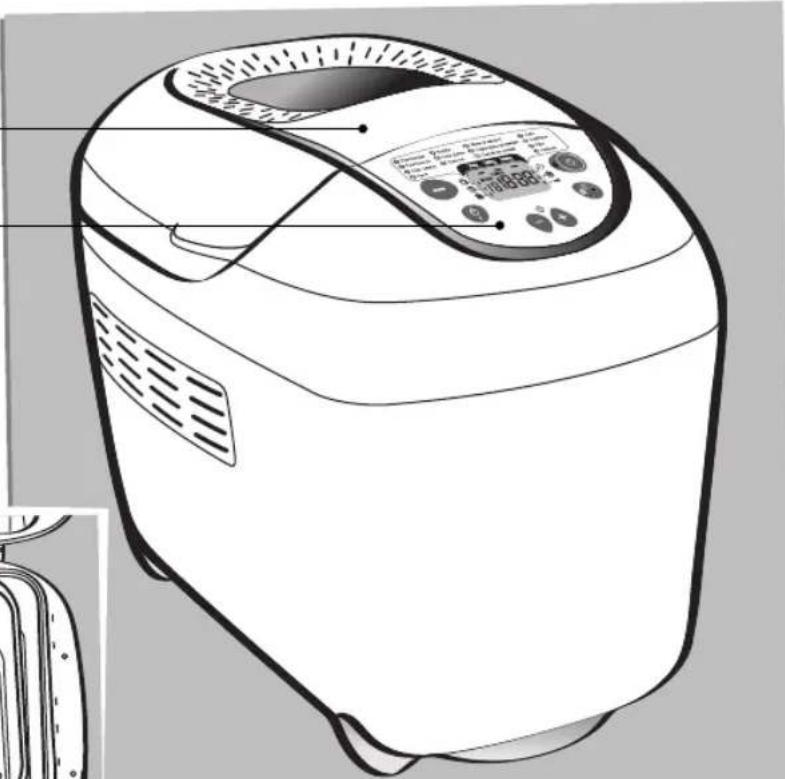
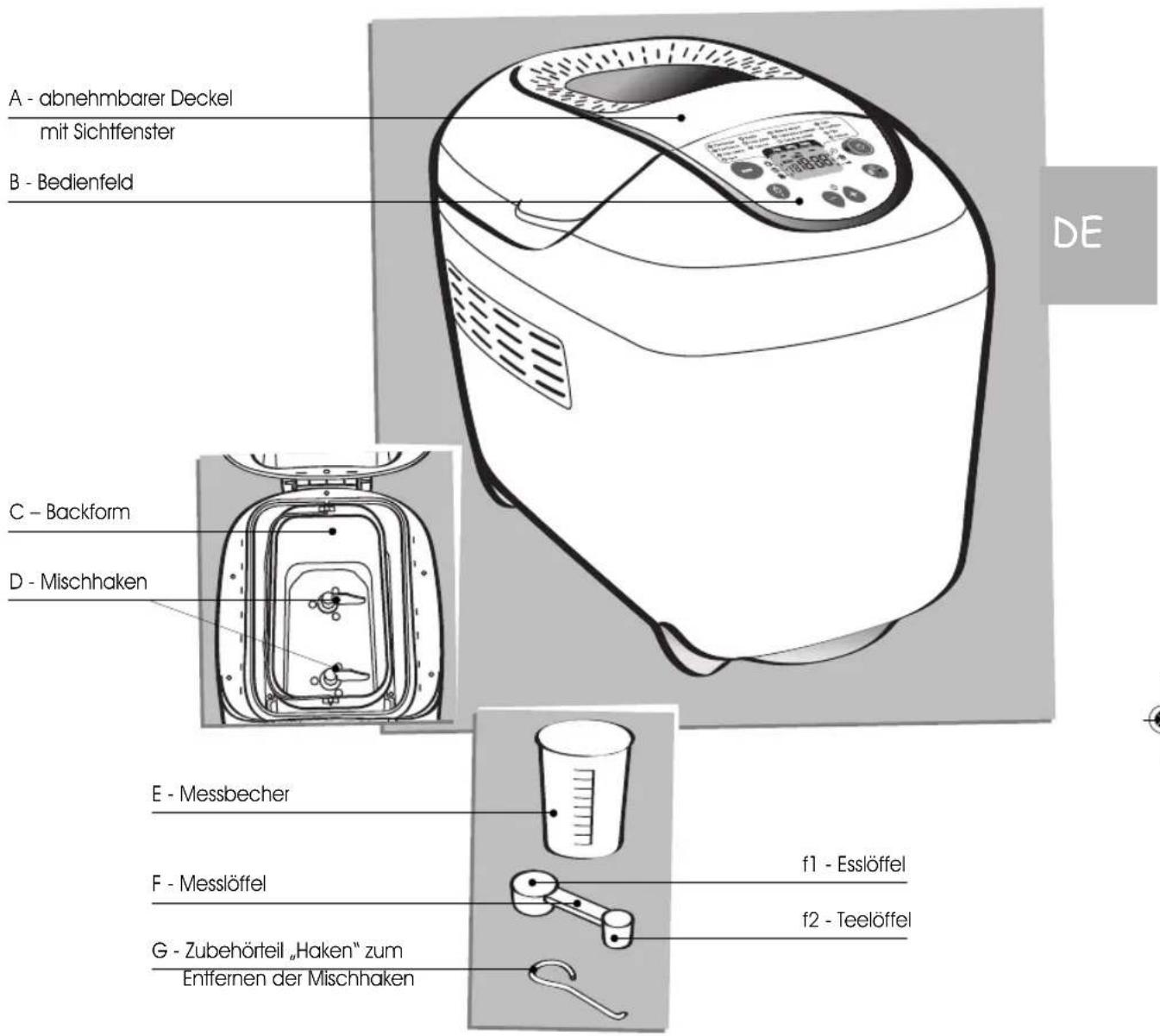
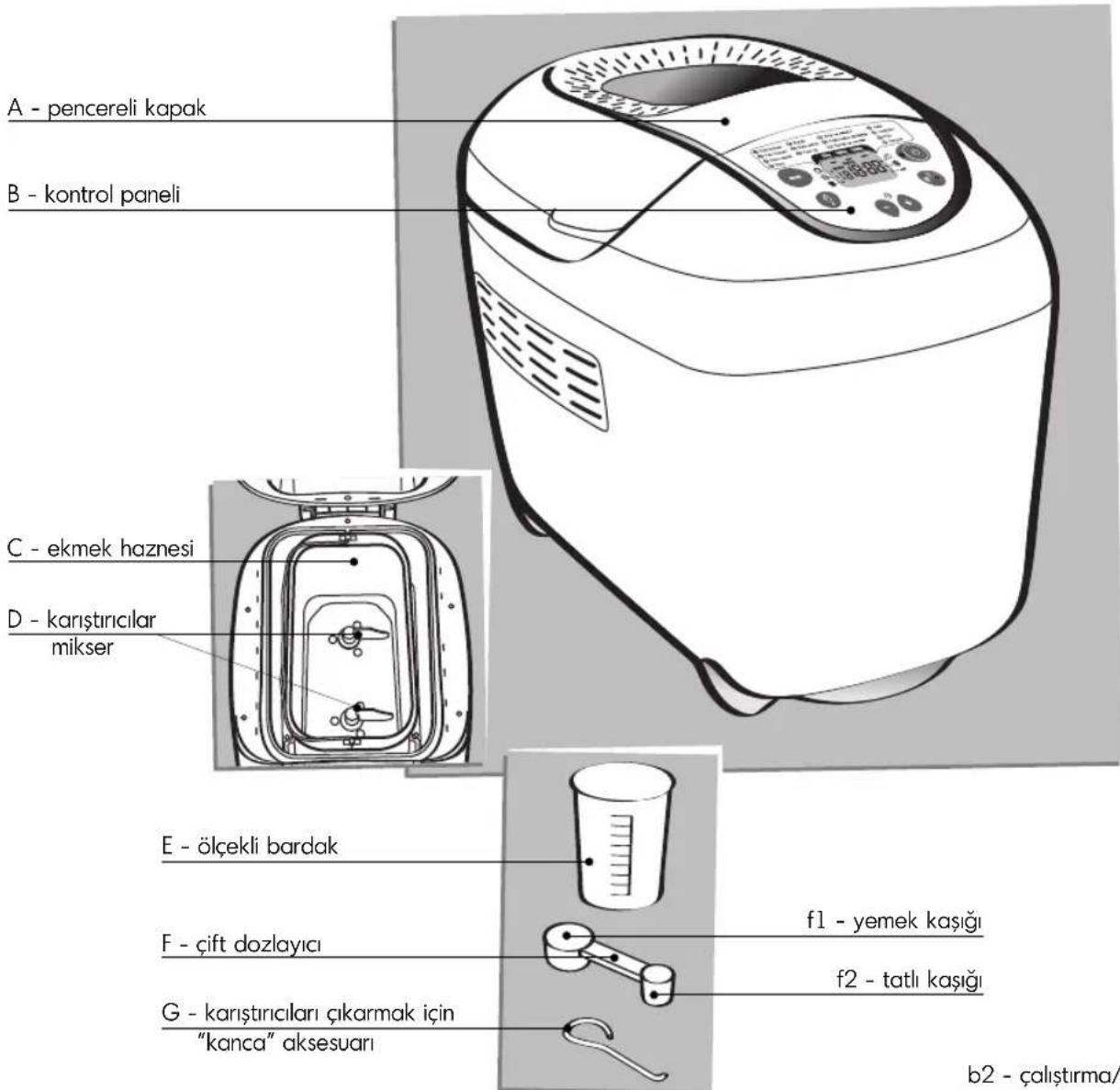
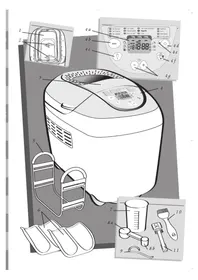
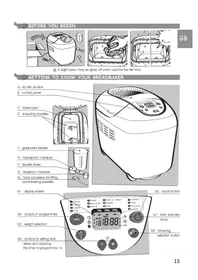
A - lid with window B - control panel
C - bread pan D - kneading paddles
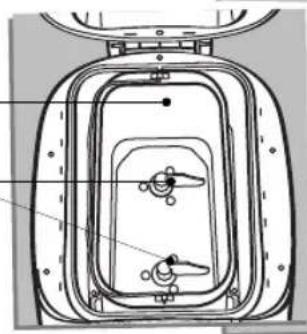
E - graduated beaker F - double doser G - hook accessory for lifting out kneading paddles
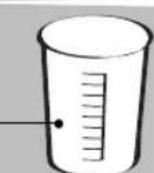
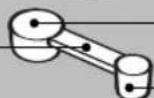
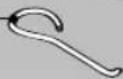
f1 - tablespoon measure f2 - teaspoon measure
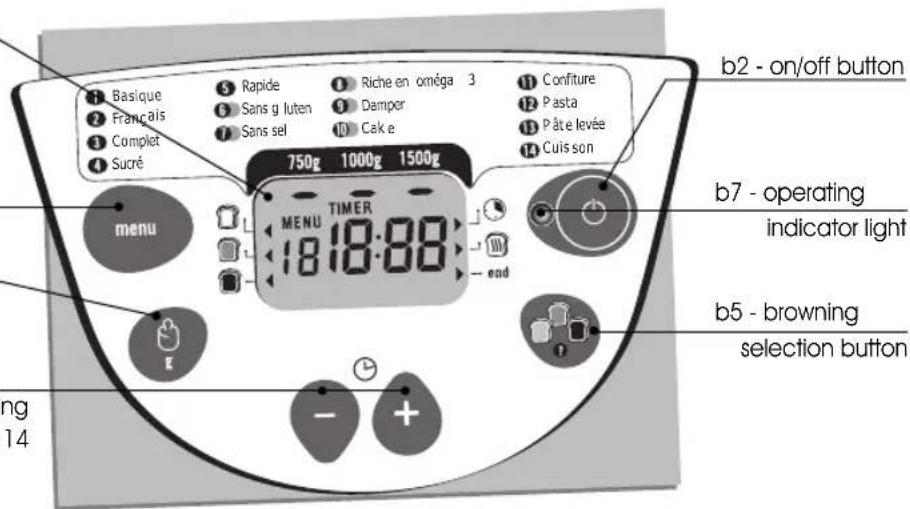
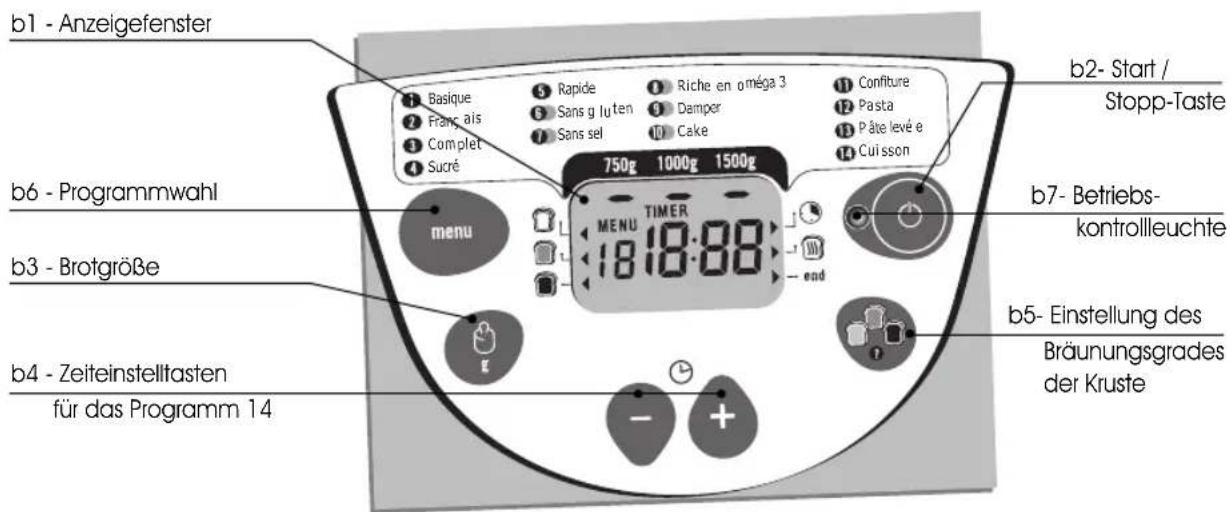
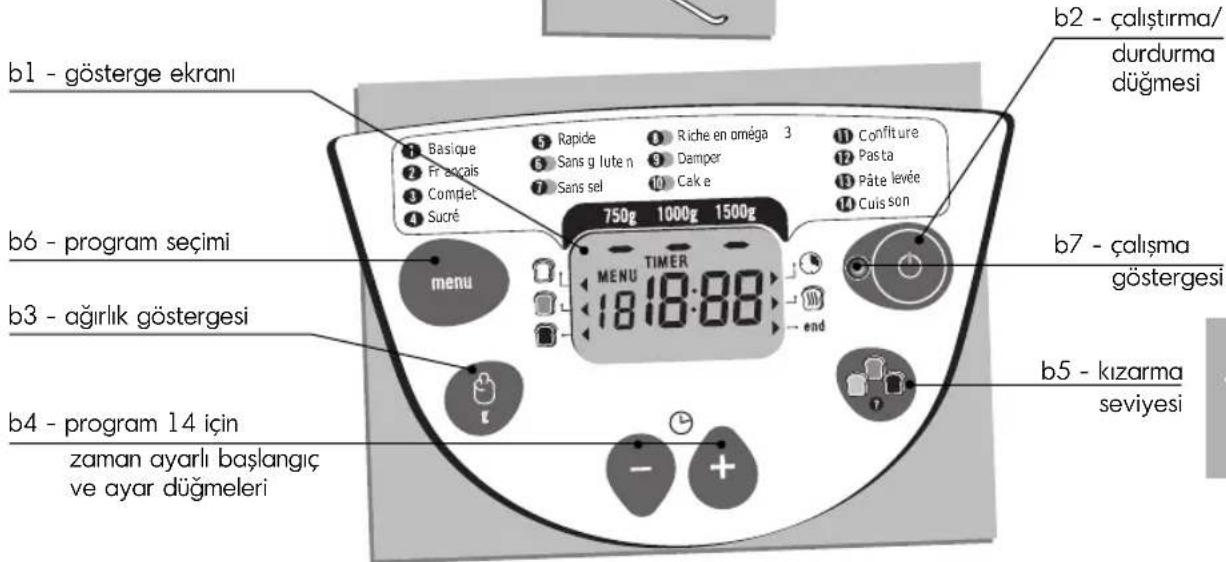
b1 - display screen
b6 - choice of programmes b3 - weight selection b4 - buttons for setting
delayed start and adjusting the time for programme 14
SAFETY RECOMMENDATIONS
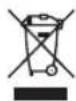
LET'S HELP TO PROTECT THE ENVIRONMENT!
1 Your appliance contains many materials that can be reused or recycled. Take it to a collection point so it can be processed.
- Carefully read the instructions before using your appliance for the first time: the manufacturer does not accept responsibility for use that does not comply with the instructions.
- For your safety, this product conforms to all applicable standards and regulations (Low Voltage Directive, Electromagnetic Compatibility, Food Compliant Materials, Environment, ...).
- This appliance is not intended to be operated by means of an external timer or separate remote-control system.
- This appliance is not intended for use by persons (including children) with reduced physical, sensory or mental capabilities, or lack of experience and knowledge, unless they have been given supervision or instruction concerning use of the appliance by an adult responsible for their safety. Children should be supervised to ensure that they do not play with the appliance.
- Use the appliance on a stable work surface away from water splashes and under no circumstances in a cubby-hole in a built-in kitchen. Make sure that the power it uses corresponds to your electrical supply system. Any error in connection will cancel the guarantee.
- It is compulsory to connect your appliance to a socket with an earth. Failure to respect this requirement can cause electric shock and possibly lead to serious injury. It is essential for your safety for the earth connection to correspond to the standards for electrical installation applicable in your country. If your installation does not have an outlet connected to earth, it is essential that before making any connection, you have a certified organisation intervene to bring your electrical installation into conformance. This product has been designed for domestic use only. Any commercial use, inappropriate use or failure to comply with the instructions, the manufacturer accepts no responsibility and the guarantee will not apply. This appliance is intended for domestic household use only. It is not intended to be used in the following applications, and the guarantee will not apply for: - staff kitchen areas in shops, offices and other working environments; - farm houses; - by clients in hotels, motels and other residential type environments; - bed and breakfast type environments.
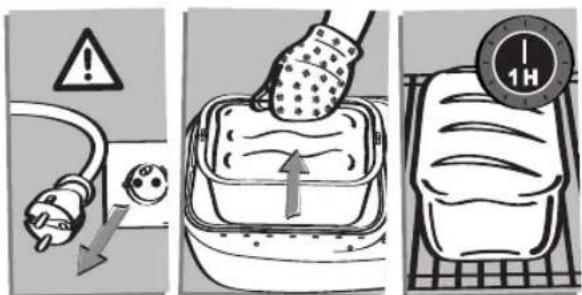
- Unplug the appliance when you have finished using it and when you want to clean it.
- Do not use the appliance if:
- the supply cord is defective or damaged,
- the appliance has fallen to the floor and shows visible signs of damage or does not function correctly. In either case, the appliance must be sent to the nearest approved service centre to eliminate any risk. See the guarantee documents.
- If the power supply cord is damaged, it must be replaced by the manufacturer or its service agent or
a similarly qualified person in order to avoid a hazard. - All interventions other than cleaning and everyday maintenance by the customer must be performed by an authorised service centre. - Do not immerse the appliance, power cord or plug in water or any other liquid. - Do not leave the power cord hanging within reach of children. The power cord must never be close to or in contact with the hot parts of your appliance, near a source of heat or over a sharp corner. - Do not move the appliance when in use. - Do not touch the viewing window during and just after operation. The window can reach a high temperature. - Do not pull on the supply cord to unplug the appliance. Only use an extension cord that is in good condition, has an earthed socket and is suitably rated. - Do not place the appliance on other appliances. - Do not use the appliance as a source of heating. Do not use the appliance to cook any other food than breads and jams. - Do not place paper, card or plastic in the appliance and place nothing on it. - Should any part of the appliance catch fire, do not attempt to extinguish it with water. Unplug the appliance. Smother flames with a damp cloth. - For your safety, only use accessories and spare parts designed for your appliance. - All appliances undergo strict quality control. Practical usage tests are performed on randomly selected appliances, which would explain any slight traces of use. - At the end of the programme, always use oven gloves to handle the pan or hot parts of the appliance. The appliance gets very hot during use. - Never obstruct the air vents. - Be very careful, steam can be released when you open the lid at the end of or during the programme. - When using programme No. 11 (jam, computes) watch out for steam and hot spattering when opening the lid. - Do not exceed the quantities indicated in the recipes. - Do not exceed a total of 1500 g of dough. - Do not exceed a total of 900 g of flour and 13 g of yeast. The measured noise level of this product is 55 dBA.
INTRODUCTION
TIPS FOR MAKING GOOD BREAD
- Please read these instructions carefully: the method for making bread with this appliance is not the same as for hand-made bread.
- All ingredients used must be at room temperature (unless otherwise indicated) and must be weighed exactly. Measure liquids with the graduated beaker supplied. Use the double doser supplied to measure teaspoons on one side and tablespoons on the other. All spoon measures are level and not heaped. Incorrect measurements give bad results.
- For successful bread making using the correct ingredients is critical. Use ingredients before their use-by date and keep them in a cool, dry place.
- It is important to measure the quantity of flour precisely. That is why you should weigh out flour using a kitchen scale. Use packets of flaked dried yeast (sold in the UK as Easy Bake or Fast Action Yeast). Unless otherwise indicated in the recipe, do not use baking powder. Once a
packet of yeast has been opened, it should be sealed, stored in a cool place and used within 48 hours.
- To avoid spoiling the proving of the dough, we advise that all ingredients should be put in the bread pan at the start and that you should avoid opening the lid during use (unless otherwise indicated). Carefully follow the order of ingredients and quantities indicated in the recipes. First the liquids, then the solids. Yeast should not come into contact with liquids, sugar or salt.
GENERAL ORDER TO BE FOLLOWED:
Liquids (butter, oil, eggs, water, milk) Salt
Sugar
Flour, first half
Powdered milk
Specific solid ingredients
Flour, second half
Yeast
BEFORE YOU USE YOUR APPLIANCE FOR THE FIRST TIME
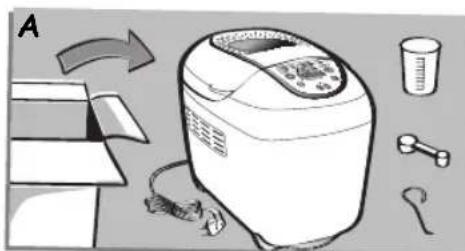
- Remove the accessories and any stickers either inside or on the outside of the appliance - A.
- Clean all of the parts and the appliance itself using a damp cloth.
USING YOUR APPLIANCE
Fully unwind the power cord and plug it into an earthed socket.
- A slight odour may be given off when used for the first time.
CLEANING AND MAINTENANCE
- Unplug the appliance.
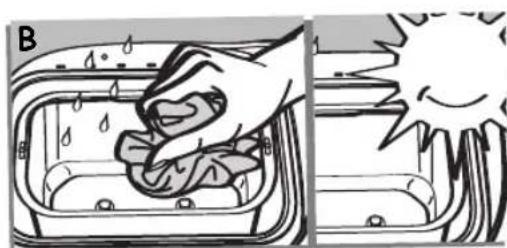
- Clean all the parts, the appliance itself and the inside of the pan with a damp cloth. Dry thoroughly - B.
- Wash the pan and kneading paddles in hot soapy water. If the kneading paddles remain stuck in the pan let it soak for 5 to 10 min.
- If necessary, remove the cover to clean it in hot water.
- Do not wash any part in a dishwasher.
- Do not use household cleaning products, scouring pads or alcohol. Use a soft, damp cloth.
- Never immerse the body of the appliance or the lid.
QUICK-START
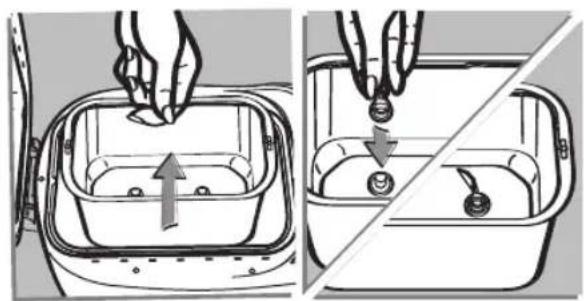
Lift out the bread pan by lifting the handle and pulling forwards and backwards to unclip the two sides, one by one.
Fit the kneading paddles.

Put the ingredients in the pan in exactly the order recommended.
Make sure that all ingredients are weighed with precision.
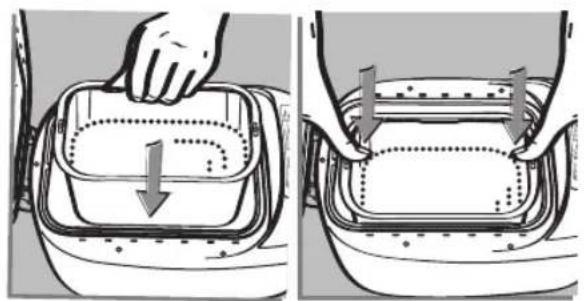
Place the bread pan in the breadmaker. Replace the bread trough and press on one side then the other to engage the mixer drives and clip it in on both sides.
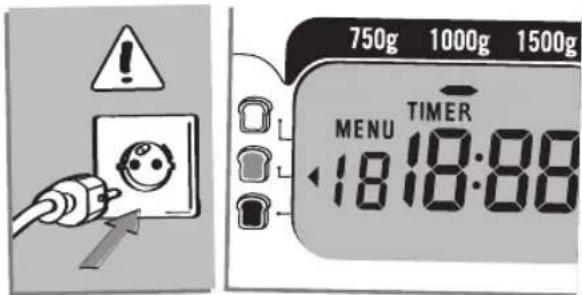
Close the lid. Plug in the bread maker. After you hear the beep, programme 1 settings are displayed by default, i.e. 1000g , medium browning.

Press the button.
The indicator light will come on.
The timer colon flashes, and the timer will count down. The operating indicator lights up.
The cycle will start.
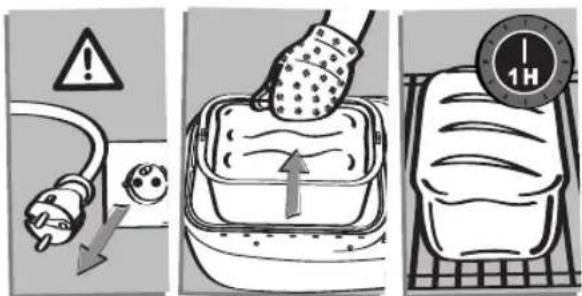
Unplug the breadmaker at the end of the cooking or warming cycle. Lift the bread pan out of the breadmaker by pulling on the handle. Always use oven gloves as the pan handle is hot, as is the inside of the lid. Turn out the hot bread and place it on a rack for at least 1 hour to cool.
To get to know your breadmaker, we suggest trying the BASIC BREAD recipe for your first loaf.
| BASIC WHITE BREAD (programme 1) | INGREDIENTS tsp > teaspoon - tbsp > tablespoon |
| BROWNING = MEDIUM - OIL = 2 tbsp | - POWDERED MILK = 2.5 tbsp |
| WEIGHT = 1000 g | - WATER = 325 ml - WHITE BREAD FLOUR = 600 g |
| - SALT = 2 tsp - YEAST = 1,5 tsp | |
| TIME = 3:20 | - SUGAR = 2 tbsp |
A default setting is displayed for each programme. You will therefore have to select the desired settings manually.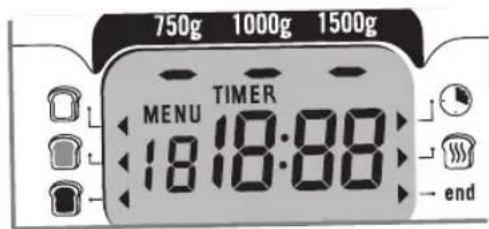
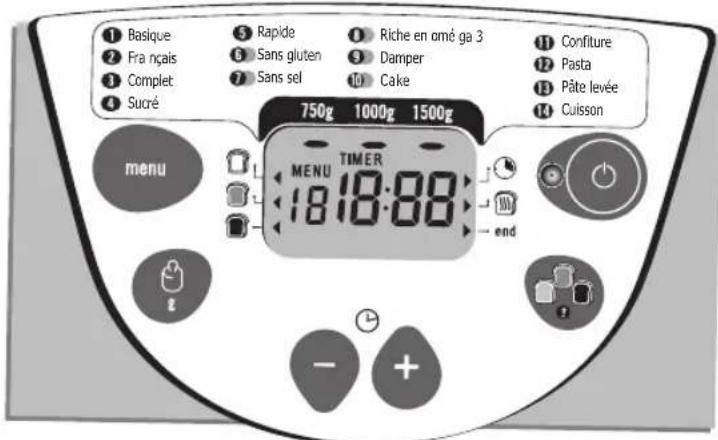
SELECTING A PROGRAMME
Choosing a programme triggers a series of steps which are carried out automatically one after another.

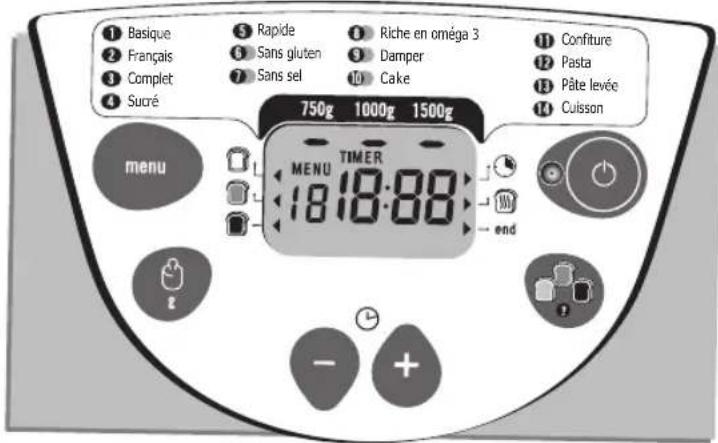
The MENU button enables you to choose a certain number of different programmes. The time corresponding to the programme is displayed. Every time you press the button, the number on the display panel switches to the next programme from 1-14
1 > basic white bread
5 > fast bread
9 > damper
13 > leavened dough
2 > French bread
6 > gluten-free bread
10 > cake
(pizza for example)
3 > whole wheat bread
7 > salt-free bread
11 > jams and compotes
14 > cooking only
4 > sweet bread
8 > bread rich in omega 3
12 > pasta
- The Basic white Bread programme is used to make most bread recipes using white wheat flour.
- The French Bread programme corresponds to a traditional French crusty white bread recipe.
- Whole wheat Programme is used to make whole wheat bread using whole wheat flour.
- The Sweet Bread programme is for recipes containing more sugar and fat such as brioches and milk breads. If you are using special flour blends for brioche or rolls, do not exceed 1 kg of dough in total.
- The Fast Bread programme is specifically for the FAST bread recipe. The weight and browning settings are not available in this programme.
- Gluten-free bread is to be made exclusively from gluten-free ready-made mixes. It is suitable for persons with celiac disease, making them intolerant of the gluten present in many cereals (wheat, rye, barley, oats, Kamut, spelt wheat etc.). Refer to the specific recommendations on the packet. The trough must always be thoroughly cleaned to avoid any risk of contamination with other flours. In the case of a strictly gluten-free diet, take care that the yeast used is also gluten-free. The consistency of gluten-free
flours does not yield an ideal dough. The dough sticks to the sides and must be scraped down with a flexible plastic spatula during kneading. Gluten-free bread will be of a denser consistency and paler than normal bread.
- Bread is one of greatest contributors to our daily salt intake. Reducing salt consumption can help reduce the risks of cardio-vascular problems.
- This bread is rich in omega 3 fatty acids, thanks to a complete and nutritionally balanced recipe. Omega 3 fatty acids contribute to the proper function of the cardiovascular system.
- The damper is based on a traditional Australian recipe, cooked on hot stones. It produces a compact, slightly brioche-like bread.
- Can be used to make pastries and cakes with baking powder.
- The Jams programme automatically cooks jams and compotes (stewed fruits) in the pan.
- Programme 12 only kneads. It is for unleavened pasta, like noodles for example.
- The Leavened Dough programme does not bake. It is a kneading and rising programme for all leavened doughs such as pizza dough, rolls, sweet buns.
- The cooking programme is limited to 10 to 70 min. only, adjustable in steps of 10 min, with light medium or dark browning.
It can be selected alone and used:
a) with the Leavened Dough programme, b) to reheat cooked and cooled breads or to make them crusty, c) to finish cooking in case of a prolonged electricity cut during a bread baking cycle.
The breadmaker should not be left unattended when using programme 14.
To interrupt the cycle before it is finished, the programme can be stopped manually by holding down the button ①
SELECTING THE WEIGHT OF THE BREAD
The bread weight is set by default at 1000 g. This weight is shown for informational purposes. See the recipes for more details. Programmes 5, 9, 11, 12, 13, 14 do not have weight settings. Press the button to set the chosen product - 750 g, 1000 g or 1500 g. The indicator light against the selected setting comes on. Attention: certain recipes cannot be used to make a 750-g loaf. Refer to the recipe book.
SELECTING THE COLOUR OF THE CRUST (BROWNING)
By default, the colour of the crust is set at MEDIUM. Programmes 5, 9, 11 do not have a colour setting. Three choices are possible: LIGHT/MEDIUM/DARK. If you want to change the default setting, press the button until the indicator light facing the desired setting comes on.
START/STOP
Press the button to switch the appliance on. The countdown begins.
To stop the programme or to cancel delayed programming, hold down on the button for 5 seconds.
CYCLES
On pages 22-23 is a table showing the steps in the various cycles according to the chosen programme.
KNEADING
For forming the dough's structure so that it can rise better.
>>REST
Allows the dough to rest to improve kneading quality.
RISING
Time during which the yeast works to let the bread rise and to develop its aroma.
BAKING
Transforms the dough into bread and gives it a golden, crusty crust.
WARMING
Keeps the bread warm after baking. It is recommended that the bread should be turned out promptly after baking, however.
KNEADING: the dough is in the 1st or 2nd kneading cycle or in a stirring period between rising cycles. During this cycle, and for programmes 1, 2, 3, 4, 6, 7, 8, 9, 10 you can add ingredients: dried fruit or nuts, olives, bacon pieces, etc.
A beep indicates when you can intervene. See the summary table for preparation times (page 22-23) and the "extra" column.
This column indicates the time that will be displayed on your appliance's screen when the beep sounds. For more precise information on how long before the beep sounds, subtract the "extra" column time from the total baking time.
For example: "extra" = 2:51 and "total time" = 3:13, the ingredients can be added after 22 min.
Rising: the dough is in the 1st, 2nd or 3rd rising cycle.
BAKING: the bread is in the final baking cycle. The word "end" lights to indicate the end of the cycle.
WARMING: for programmes 1, 2, 3, 4, 5, 6, 7, 8, 9, 10, you can leave your preparation in the appliance. A one-hour warming cycle automatically follows baking. The indicator lights.
The display remains at 0:00 for one hour of warming. The appliance beeps at regular intervals. At the end of the cycle, it stops automatically after 3 beeps. To stop the warming programme, unplug the appliance.
DELAYED START PROGRAMME
You can program the appliance to start up to 15 hours in advance to have your preparation ready at the time you want. This function cannot be used on programmes 5, 6, 9, 10, 11, 12, 13, 14.
This step comes after selecting the programme, browning level and weight. The programme time is displayed. Calculate the time difference between the moment when you start the programme and the time at which you want your preparation to be ready.
The machine automatically includes the duration of the programme cycles.
Using the and buffers, display the calculated time (up and down).
Short presses change the time by intervals of 10 min
- a short beep. Holding the button down gives continuous scrolling of 10-min intervals.
For example, it is 8 pm and you want your bread to be ready for 7 am the next morning. Programme
11:00 using the and buttons. Press the button. A beep is emitted. The facing indicator light
switches on and the timer colon blinks. The countdown begins. The ON light switches on.
If you make a mistake or want to change the time setting, hold down the button until it makes a beep. The default time is displayed. Start the operation again.
With the delayed start programme do not use recipes which contain fresh milk, eggs, soured cream, yoghurt, cheese or fresh fruit as they could spoil or stale overnight.
PRACTICAL ADVICE
If there is a power cut: if, during the cycle, the programme is interrupted by a power cut or mishandling, the machine has a 7-min protection time during which the settings are saved. The cycle starts again where it stopped. Beyond that time, the settings are lost.
If you plan to run a second programme bake a second loaf, open the lid and wait 1 hour before beginning the second preparation.
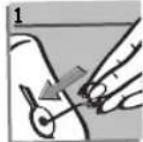
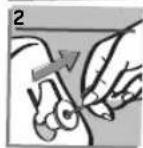
To turn out your loaf of bread: it may happen that the kneading paddies remain stuck in the loaf when it is turned out. In this case, use the hook accessory
as follows:
Once the loaf is turned out, lay it on its side while still hot and hold it down with one hand, wearing an oven glove. With the other hand, insert the hook in the axis of the kneading paddle (drawing 1), pull gently to release the kneading paddle (drawing 2), repeat for the second kneading paddle. Turn the loaf upright and stand on a grid to cool.
INGREDIENTS
FATS AND OILS: fats make the bread softer and tastier. It also stores better and longer. Too much fat slows down rising. If you use butter, cut it into tiny pieces so that it is distributed evenly throughout the preparation, or soften it. You can substitute 15g butter for 1 tablespoon of oil. Do not add hot butter. Keep the fat from coming into contact with the yeast, as fat can prevent yeast from rehydrating. Do not use low fat spreads or butter substitutes.
Eggs: eggs make the dough richer, improve the colour of the bread and encourage the development of the soft, white part. If you use eggs, reduce the quantity of liquid you use proportionally. Break the egg and top up with the liquid until you reach the quantity of liquid indicated in the recipe. Recipes are designed for one 50 g size egg; if your eggs are bigger, add a little flour; if they are smaller, use less flour.
Milk: recipes use either fresh or powdered milk. If using powdered milk, add the quantity of water stated in the recipe. It enhances the flavour and improves the keeping qualities of the bread. For recipes using fresh milk, you can substitute some of it with water but the total volume must equal the quantity stated in the recipe. Semi-skimmed or skimmed milk is best to avoid bread having a close texture. Milk also has an emulsifying effect which evens out its airiness, giving the soft, white part a better aspect.
WATER: water rehydrates and activates the yeast. It also hydrates the starch in the flour and helps the soft, white part to form. Water can be totally or partially replaced with milk or other liquids. Use liquids at room temperature.
FLOUR: the weight of the flour varies significantly
depending on the type of flour used. Depending on the quality of the flour, baking results may also vary. Keep flour in a hermetically sealed container, as flour reacts to fluctuations in atmospheric conditions, absorbing moisture or losing it. Use "strong flour", "bread flour" or "baker's flour" rather than standard flour. Adding oats, bran, wheat germ, rye or whole grains to the bread dough will give a smaller, heavier loaf of bread.
Using T55 flour is recommended unless otherwise specified in the recipe. Our recipes are optimised for the use of standard T55 flour. If you are using special flour blends for bread, brioche or rolls, do not exceed 1 kg of dough in total.
Sifting the flour also affects the results: the more whole the flour (i.e., the more of the wheat's outer envelope it contains), the less the dough will rise and the denser the bread. You can also find ready-to-use bread preparations on the market. Follow the manufacturer's instructions when using these preparations. Usually, the choice of the programme will depend on the preparation used. For example: Wholemeal bread - Programme 3.
SUGAR: use white sugar, brown sugar or honey. Do not use unrefined sugar or lumps. Sugar acts as food for the yeast, gives the bread its good taste and improves browning of the crust. Artificial sweeteners cannot be substituted for sugar as the yeast will not react with them.
SALT: salt gives taste to food and regulates the yeast's activity. It should not come into contact with the yeast. Thanks to salt, the dough is firm, compact and does not rise too quickly. It also improves the structure of the dough. Use ordinary table salt. Do not use coarse salt or salt substitutes.
YEAST: baker's yeast exists in several forms: fresh in
small cubes, dried and active to be rehydrated or dried and instant. Fresh yeast is sold in supermarkets (bakery or fresh produce departments), but you can also buy fresh yeast from your local baker's. In its fresh or instant dried form, yeast should be added directly to the baking pan of your breadmaker with the other ingredients. Remember to crumble the fresh yeast with your fingers to make it dissolve more easily. Only active dried yeast (in small granules) must be mixed with a little tepid water before use. Choose a temperature close to 37°C; less and it will not rise as well, more will make it lose its rising power. Keep to the stated amounts and remember to multiply the quantities if you use fresh yeast (see equivalents chart below).
Equivalents in quantity/weight between dried yeast and fresh yeast:
Dried yeast (in tsp.)
ADDITIONS (OLIVES, BACON PIECES, ETC.): you can add a personal touch to your recipes by adding whatever ingredients you want, taking care:
to add following the beep for additional ingredients, especially those that are fragile such as dried fruit, to add the most solid grains (such as linseed or sesame) at the start of the kneading process to facilitate use of the machine (delayed starting, for example), to thoroughly drain moist ingredients (olives), to lightly flour fatty ingredients for better blending, not to add too large a quantity of additional ingredients, especially cheese, fresh fruit and fresh vegetables, as they can affect the development of the dough. to finely chop nuts as they can cut through the loaf structure and reduce the cooked height.
PRACTICAL ADVICE
Bread preparation is very sensitive to temperature and humidity conditions. In case of high heat, use liquids that are cooler than usual. Likewise, if it is cold, it may be necessary to warm up the water or milk (never exceeding 35°C). Any liquid used should be tepid, about 20 to 25°C (except for Super Fast Bread which should be 35 to 40°C max.).
It can also sometimes be useful to check the state of the dough during the second kneading: it should form an even ball which comes away easily from the walls of the pan.
> if not all of the flour has been blended into the dough, add a little more water,
if the dough is too wet and sticks to the sides, you may need to add a little flour.
Such corrections should be undertaken very gradually (no more than 1 tablespoon at a time) and wait to see if there is an improvement before continuing.
A common error is to think that adding more yeast will make the bread rise more. Too much yeast makes the structure of the bread more fragile and it will rise a lot and then fall while baking. You can determine the state of the dough just before baking by touching it lightly with your fingertips: the dough should be slightly resistant and the fingerprint should disappear little by little.
| PROG. | BROWN WEIGHT | TIME | T1° | KNEADING | REST 2 | KNEADING | RISING | KNEADING | RISING | 3° | KNEADING | RISING | 3° | COOKING | EXTRA | REF | NOT |
| 6 | 750 | 215 | 1 | 750 | 215 | 1 | 750 | 215 | 1 | 750 | 215 | 1 | 750 | 215 | 1 | 750 | 215 |
| 1 | 1000 | 220 | 0.05 x | 0.10 x | 0.15 x | 0.25 x | 0.22 x | 0.40 x | 0.45 x | 0.40 x | 0.40 x | 0.40 x | 0.40 x | 0.40 x | 0.40 x | 0.40 x | |
| 2 | 1500 | 225 | 0.05 x | 0.10 x | 0.15 x | 0.22 x | 0.40 x | 0.45 x | 0.40 x | 0.40 x | 0.40 x | 0.40 x | 0.40 x | 0.40 x | 0.40 x | 0.40 x | |
| 3 | 1500 | 225 | 0.05 x | 0.10 x | 0.15 x | 0.22 x | 0.40 x | 0.45 x | 0.40 x | 0.40 x | 0.40 x | 0.40 x | 0.40 x | 0.40 x | 0.40 x | 0.40 x |
| PROG. | BROWN WEIGHT TOTAL | TIME (°) | KNEADING | REST 2 | KNEADING | RISING | KNEADING | RISING | KNEADING | RISING | KNEADING | EXTRA | KEEP (mm) | ||
| 1 | 750 | 337 | 0.00500 | 0.00500 | 0.00500 | 0.00500 | 0.00500 | 0.00500 | 0.00500 | 0.00500 | 1105 | 317 | 100 | ||
| 1 | 1500 | 342 | 2 | 1500 | 342 | 2 | 1500 | 342 | 1115 | 327 | 100 | ||||
| 3 | 1500 | 347 | 1 | 1500 | 347 | 1 | 1500 | 347 | 1115 | 327 | 100 | ||||
| 3 | 1500 | 347 | 1 | 1500 | 347 | 1 | 1500 | 347 | 1115 | 327 | 100 | ||||
| 3 | 1500 | 347 | 1 | 1500 | 347 | 1 | 1500 | 0.00500 | 1105 | 322 | 100 | ||||
| 3 | 1500 | 347 | 1 | 1500 | 347 | 1 | 1500 | 0.00500 | 1115 | 327 | 100 | ||||
| 3 | 1500 | 347 | 1 | 1500 | 347 | 1 | 1500 | 0.00500 | 1115 | 327 | 100 | ||||
| 3 | 1500 | 347 | 1 | 1500 | 347 | 1 | 1500 | 0.005 | 1115 | 327 | 100 | ||||
| 3 | 1500 | 347 | 1 | 1500 | 347 | 1 | 1500 | 0.005 | 1115 | 327 | 100 | ||||
| 3 | 1500 | 347 | 1 | 1500 | 347 | 1 | 150 | 0.005 | 1115 | 327 | 100 | ||||
| 3 | 1500 | 347 | 1 | 1500 | 347 | 1 | 150 | 0.005 | 1115 | 327 | 100 | ||||
| 3 | 1500 | 347 | 1 | 1500 | 347 | ||||||||||
| 3 | 1500 | 347 | 1 | 1500 | 347 | ||||||||||
| 3 | 1500 | 347 | 1 | 1500 | 347 | ||||||||||
| 3 | 1500 | 347 | 1 | 1500 | 347 | no | |||||||||
| 3 | 1500 | 347 | 1 | 1500 | 347 | ||||||||||
| 3 | 1500 | 347 | 1 | 1500 | 347 | ||||||||||
| 3 | 1500 | 347 | 1 | 1500 | 347 | ||||||||||
| 3 | 1500 | 347 | 1 | 1500 | 347 | ||||||||||
| 3 | 1500 | 347 | 1 | 1500 | 347 | ||||||||||
| 3 | 1500 | 347 | 1 | 1500 | 355 | 1.00 | |||||||||
| 3 | 1500 | 347 | 1 | 1500 | 355 | 1.00 | |||||||||
| 3 | 1500 | 347 | 1 | 1500 | 355 | 1.00 | |||||||||
| 3 | 1500 | 347 | 2 | 1500 | 1.30 | ||||||||||
| 3 | 1500 | 347 | 2 | 1500 | 1.30 | ||||||||||
| 3 | 1500 | 347 | 2 | 1500 | 1.30 | ||||||||||
| 3 | 1500 | 347 | 2 | 1500 | |||||||||||
| 3 | 1500 | 347 | 2 | 1500 | |||||||||||
| 3 | 1500 | 347 | 2 | 1500 | |||||||||||
| 3 | 1500 | 347 | 2 | 1500 | no | ||||||||||
| 3 | 1500 | 347 | 2 | 1500 | |||||||||||
| 3 | 1500 | 347 | 2 | 1500 | |||||||||||
| 3 | 1500 | 347 | 2 | 1500 | |||||||||||
| 3 | |||||||||||||||
| 3 | |||||||||||||||
| 3 | |||||||||||||||
| 3 | |||||||||||||||
| 3 | |||||||||||||||
| 3 | 1.05 | 1.15 | 1.00 | ||||||||||||
| 3 | 1.15 | 1.20 | 1.00 | ||||||||||||
| 3 | 1.15 | 1.25 | 1.00 | ||||||||||||
| 3 | 1.15 | 1.25 | 1.00 | ||||||||||||
| 3 | 1.15 | 1.25 | 1.00 | ||||||||||||
| 3 | 1.15 | 1.25 | 1.00 | ||||||||||||
| 3 | |||||||||||||||
| 3 | |||||||||||||||
| 3 | |||||||||||||||
| 3 | |||||||||||||||
| 3 | |||||||||||||||
| 3 | |||||||||||||||
| 3 | 1.15 | 1.15 | 1.00 | ||||||||||||
| 3 | 1.15 | 1.20 | 1.00 | ||||||||||||
| 3 | 1.15 | 1.25 | 1.00 | ||||||||||||
| 3 | |||||||||||||||
| 3 | |||||||||||||||
| 3 | |||||||||||||||
| 3 | |||||||||||||||
| 3 | |||||||||||||||
| 3 | |||||||||||||||
Note: for programmes 1 to 10 inclusive, total time does not include the keep hot time.
TROUBLESHOOTING GUIDE
Not getting the expected results? This table will help you.
| Pain trop levé | Pain affaisse après avoir trop levé | Pain pas assez levé | Croute pas assez dorée | Côtés bruns mais pain pas assez cuit | Côtés et dessus enfarinés | |
| The button was pressed during baking | ● | |||||
| Not enough flour | ● | |||||
| Too much flour | ● | ● | ||||
| Not enough yeast | ● | |||||
| Too much yeast | ● | ● | ||||
| Not enough water | ● | ● | ||||
| Too much water | ● | ● | ||||
| Not enough sugar | ● | |||||
| Poor quality flour | ● | ● | ||||
| Wrong proportions of ingredients (too much) | ● | |||||
| Water too hot | ● | |||||
| Water too cold | ● | |||||
| Wrong programme | ● | ● |
TECHNICAL TROUBLESHOOTING GUIDE
| PROBLEMS SOLUTIONS | |
| The kneading paddies remains stuck in the bread trough | • Let it soak before removing it. |
| The kneading paddies remains stuck in the loaf | • Lightly oil the kneading paddies before mixing the ingredients in the bread pan or use the accessory to turn out the loaf (page 20) |
| After pressing on Ⓞnothing happens | • The machine is too hot. Wait 1 hour between 2 cycles. • A delayed start has been programmed. |
| After pressing on Ⓞ, the motor is on but no kneading takes place | • The pan has not been correctly inserted. • Kneading paddies missing or not installed property. |
| After a delayed start, the bread has not risen enough or nothing happens | • You forgot to press on Ⓞafter programming. • The yeast has come into contact with salt and/or water. • Kneading paddies missing. |
| Burnt smell | • Some of the ingredients have fallen outside the pan: let the machine cool down and clean the inside of the machine with a damp sponge and without any cleaning product. • The preparation has overflowed: the quantity of ingredients used is too great, notably liquid. Follow the proportions given in the recipe. |
Fresh yeast (in g)
9 13 18 22 25 31 36 40 45
Before using the bread machine, read the instructions carefully. The machine must be placed on a flat surface. Use only the recommended ingredients, both the dough and the baking pan. Remove the bread while it is hot, and let it cool on a rack for about 1 hour.
To familiarize yourself with the bread machine, we suggest you start with the basic bread recipe as a first step.
| ОCHOВHA PELLETTA 3A XЛЯБ (прогама 1) | ПОНДУKTITЕ 4..л. > чени льжунka - с..л. > сухна льжунca |
| ИЗПИЧАЕ HA KОПИЧКATA = СРЕДно | - OЛЮ = 2 с..л. - МЛЯKO HA ПРAX = 2,5 с..л. |
| - ВОДА = 325 м..l - БРАШANO = 600 r | |
| - COЛ = 2 с..л. - МАя = 1,5 с..л. | |
| ТEGЛо = 1000 r | |
| ВРЕМЕ = 3:20 | - 3AXAP = 2 с..л. |
OPERATING INSTRUCTIONS FOR THE BREAD MACHINE
Each program has a preset setting. First, you must select the desired option.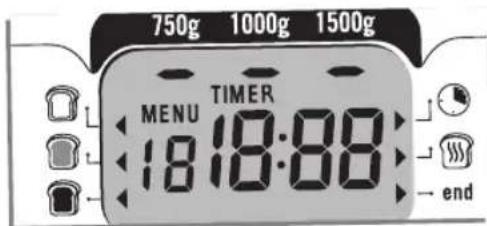
PROGRAM SELECTION
The program selection is done step by step - the options appear automatically one by one.
MENU
The MENU button allows you to select different programs. The time displayed corresponds to the program. With each press of the button, the display shows the next program (from 1 to 14):
1> Basic bread recipe
5> Rye bread
9> Gluten-free bread
12 > sweet bread
2>French bread
6>Gluten-free bread
10>Kefir
13>Dough with yeast
3>Whole grain bread
7>Salt-free bread
11>Confectionery
14>Self-raising flour
4>Spelled bread
8>Bread, enriched with Omega-3
Place the dough in a greased tray, leaving space from the walls with a plastic spatula. The gluten-free bread is soft and light, unlike the ordinary one.
1. The program for basic bread recipes allows you to prepare new bread recipes with wheat flour.
2. With the French bread program, you can make traditional French bread.
- The whole grain bread program is suitable when using whole grain flour.
4. The program for sweet bread is intended for recipes with more sugar. If you use ready-made dough for rolls or soft bread, the dough does not need to be kneaded.
- The program for rye bread is used with a recipe for rye bread. In this program you cannot set a crust and the degree of baking is not corrected.
6. Gluten-free bread is prepared from a gluten-free mixture. It is suitable for people with gluten intolerance (celiac disease), as well as for other groups (diabetics, vegans, rice, oats, kamut, spelled). Follow the specific instructions on the packaging. The device must be cleaned periodically to avoid contamination from other flours. If you strictly follow the gluten-free diet, you can be sure that the bread you make is gluten-free. The consistency of gluten-free flours does not allow for optimal mixing.
- Bread is a food that, if consumed in excessive amounts, can contribute to a high daily salt intake. When salt consumption is high, the risk of cardiovascular disease increases.
- This bread is rich in fiber and Omega-3 fatty acids, thanks to a balanced and wholesome recipe from the manufacturer. The fiber and Omega-3 fatty acids contribute to the good condition of the cardiovascular system.
- Traditional Australian bread is baked on hot stones. With this recipe, the bread is soft and fluffy.
10. ALLOWS THE PREPARATION OF GLUTEN-FREE PRODUCTS FOR PEOPLE WITH CHEMICAL ALLERGIES.
- The program for confit automatically prepares confit in a water bath.
12. In program 12, the dough is kneaded. It is suitable for dough without leavening. Example: flatbread.
13. The program for dough does not require baking. It is intended for kneading and leavening various types of dough. Example: pizza dough.
14. The program for baking gives you two options for choosing the crust of the bread.
Baking time is 10 to 70 minutes, with the timer set for 10 minutes for light, medium, or dark crust. You can choose it yourself or use:
a) In combination with the dough program with leavening, b) to bake or reheat a ready-made crusty bread, c) to increase the baking effect by prolonging the power supply during bread preparation.
Korato 3aadaTe nporpama 14, MaunHaTa 3a Xn He Tp6Ba Da ce octab8 6e3 Hau3Op no BpeMe pa6ota.
3aДапгбсе Te UKBla npeДи пркювHeTo My, cnpete pbyHo nporpamata, kato HATNCheTe npoDbJxHtEnHO 6yToHa ①.
TerIto Ha xIa6e fIa6pUHcO 3aIaDeHO Ha 1000 r. rpaMaKbTe cAmo 3a INHOpMaUa. 3a NOBeue aCHOta BIXTe peuENTte. Iporpam5,9,11,12, 13,14 HmAt OUZnA 3a npOMHa HA rpaMaKa. HaTnCHete 6yToHa 3a Da n36peTe rpaMaX OT 750 r,1000 r nn 1500 r.IpeN36paHaTa ONuN CBEBa INDkATOp.BHMaHne:HraKo peuENTn He no3BOJRAbT pInrOTBHe Ha XJIbC terNo 750 r. BIXTe KHNrata CpeCNTte.
N36OP HA KOPNUKA (N3ПИЧАС)
Φa6pnuH0 3aJaDeHaTa onu e CPEHO u3neHe a6opnuKa. IporpaMn 5,9,11 HMaT onu 3a u3bOp Hα KOpnuKa. VMaTe Tpu OOnu: JIEKO/CPEHO/CUNHO u3neHe Ka KOpnuKa. Ako XeJaeTe Da npomEnTe φa6pnuHaTa HAcTpouKa, HaTNCHeTe 6yToH DOKA TO CBeTHE INHdNKA TOPbT nped XeJeaHaTa onu.
BKJIIOYBAHE/N3KJIIOYBAHE
HaTNCHe6yToHa ①,3a Da BKNIOHTe MaunHata. 3anOuBa 06paTHo OTbPOraBaHe.3a Da cnpTe npOrpaMaTa nn 3a da aHylnpate 3aJaAeHN HactpoKn,3aDpbXte 6yToHa ①3a5ceKynn.
PABOTEH LUKbJI
Ha ta6nucata Ha ctp. 110-111 moKeTe da BnDIne pa3nHIne zukn Ha cbOTBeTHa nporpama.
MeceHe >HouHBka
Cnomara Daba OoOpMaHET Bb3MOxHOCT Ha OHa TECTOTO Da CE TECTOTO OTNyCHE 3a I06pToMу NOKaYeCTBeHo BTacBaHe. MECHe.
BTacBaHe
Bpemeto,3aKoETO MaTa 3aNoOyBa Da DeiCTBa,3aDa MOKe XJIbT Da 6yxHe N Da npnIObne apomat.
Neuhe
TecToCe n3nUa,OTrope ce OopM KOpNka, KoTO CbIO TaKa MOKe Da CTaHe n xpynKaBa.
IodbpxKaHe Ha TOnnHaTa
3ana3Ba Xla6a TonbI CneI n3nUaHe. Bbnpeki ToBa e npenopBcHTeHNo da n3BaAnTe Xla6a BeHaRa CLeI N3nUaHETo My.
Meche: TcTOTO E B NpBbN IIN BTOPII Kbl Ha MeceHe IIN E B IpOuec Ha pa36bpKbaH MExdy Dba cIKbIa HbTAcBaH. Po BpeMe Ha TO3n cIKbl I npn nporpaMn 1,2,3,4,6,7,8,9,10 mATE Bb3MOXHOCT Da Do6abAte PPOdYKTn: CyweHn PLOIOBE, MacInHn, NapeHua 6ekOH n T.H. 3ByKOBNrT CnHaJI BN yKa3Ba KOra ToCHo Da rN Do6abNTe. BxKTe Ta6nUata (Ha cTp. 110-111), KbDeTo Ca dAdeHn BpeMeHaTa 3a npriOTBHe, IN KOLOHaTc OCTaBAuO BpeMe". B Ta3n KOLOHa e Yka3aHO BpeMeTo, KoETo ige Ce n3nIe Ha dncnJe Ha MaunHATA npn pno3ByuBaHep Ha 3ByKOBNr CnHaJI. 3a da pa36epete Kora ToCHo ige CyyeTe CnHaJI, DoCTaTuHO e OT ObIoTO BpeMe 3a NeeHe Da n3BaAnTE BpeMeTo, DaJeHO B KOLOHaTc OCTaBAuO BpeMe". PpIMep: OCTaBAuO BpeMe" = 2:51 n o6uo BpeMe" = 3:13, KoETo 3NaH, ye CbCTABKITe MoRt Da ce Do6abRT cIed 22 MNHyTn.
BtacBaHe: TcTeTToE B nIbPbN, BToPn IJI N TpeTn IuKbJ Ha BTacBaHe.
Neuehe: xIa6bT eB nOcJIeHnI uKbI Ha neueHe. Korato uKbIbT npNKIOuN, npEiN "END" (kpaI) CBETBa INDnKATOP.
NoDbpxaHe Ha TonnHaTa: npn nporpaM 1,2,3,4,5,6,7,8,9,10 MoXeTe Da ocTabte XJ6a B MaunHata. Cnei PnKIOUbaHe Ha neeHeTo aBTOMaTHHO ce 3aJeCTBa UIKbI Ha NoDlbPxAHe HA TonLIHaT B IpOdbJIkeHHe Ha eINH qac. OTnped CBETBa INDKaTOP TaMepbT OCTaba Ha 0:00 3a nepNOda Ha NOdIbPxKaHe Ha TonnHaTa. MaunHata nepNOduH Oe N3DaBA CNrHaI. B KpA Ha TO3n nepNO MaunHata aBTOMaTHHO CNIPA cIeT PnKpaTeH 3ByKO BcRHaI.
OTJIOXEHCTAPT
Moxete da nporpamnpate MaunHaTa da npnroT xna 3a onpepehen OT Bac yac,do 15 yaca npedbapntno. Pporpamata c otloxhen CTapt Moxe da ce n3non3Ba 3a nporpamnte 5,6,9,10, 12,13,14.
Ta3n HAcTpoKa ce 3aDaBa cIeN 360pa Ha npOrpamata,CTeIeHTa Ha 3nNuHa He KaOpHkaTa n rpaMaXa. N3n3a npObJnxTeJIHoCTTa Ha npOrpamata. IpecmETHe BpeMeTo MExdy BKIOuBaHcTO Ha npOrpamata u Yaca, B KOITo XeJaete XIA6Bt Da e roTOB. MaunHata ABTomATnUHO BKIOuBA npOdbJnxTeJIHoCTTa Ha pa6OTnTE UKIn. C NOMOuTa Ha 6yToHn +N 3aJaTe BpeMeTo (+- Harope, a -- HADOny). BcraKO KpaTKo HAtnCKaHe HAcTpoBa TaImepa npe3 10 MNHyTN +KpaTBK CnHAn.
Pn Dblro Hatackane Hactponkata npoBnaKabApne3 10 MNHT. PnpMep: cera e 20:00 yacbT nHeCKate XJ6bT da e roTOB 3a 7:00 yaca Ha
FneBaaata cytpn. 3aJaTe 11 yaca c nomoTa Ha 6yToHn + n - .HaTncHeTe 6yToHa ①. CyBaTe 3ByKOB CnHnA. N3JIn3a HnDnKaTOpBt <n DBeTe OcKn Ha TaIeMa Pa 3aNoCbAT Da Mrrat. 3aNoCBA 0bPaTHO OT6pOraBaHe. CBETBa HnDnKaTOpBt 3a 3aJeCTBaHe. Ako CTe C6bpKaJIH HeIO IIN NCKaTe Da npOMeHrte Yaca, 3aDpbXTe 6yToHa ①. IDOKato 4yeTe 3ByKOB CnHnA. N3JIn3a Fap6pNHO 3aJaDeHOTo BpeMe. NobTOpeTe npOeDypata. HkON CbCTaBKn Ca MaIOpTaHH. He n3NoJ3BaJte nporpaMaTa C OTINOKeH CTapt nppeCNTN, BKIOUbaUN CNeHNTE CbCTaBKn: PpRCHO MIAKO, RaUca, KICENO MIAKO, CIPHe, ppeCHN PNODOBE.
INPAKTNUHNCbBETN
If the program is interrupted due to a power failure or other error, the machine will automatically resume the program after 7 minutes. The program continues from where it stopped. After this period, the settings are lost.
If you want to run two programs one after the other, wait 1 hour before starting the second one.
To remove the bread: It is possible that the kneading paddles remain in the bread. In this case, you can use the "hook" accessory as follows:
After removing the bread, place it upside down on a flat surface and hold it with your hand.
Using the household hook,
insert the hook into the shaft of the kneading paddle (Fig. 1), carefully pull out the kneading paddle (Fig. 2), remove the kneading paddle in this way, then turn the bread over and let it cool on a wire rack.
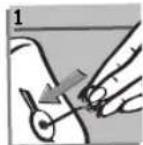
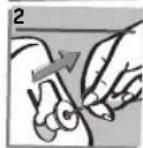
INGREDIENTS
Milk: Whole milk makes the bread softer and more aromatic. It will keep its taste for a longer time. Skimmed milk delays the rising. If you use milk, heat it to a lukewarm temperature to distribute it evenly in the mixture, or let it cool. Do not pour hot milk over the yeast. The milk must be in contact with the yeast, because it can damage the yeast and prevent the bread from rising.
Flour: The flour affects the dough, giving it the shape of the bread and improving the consistency of the soft part of the bread. When you add flour, adjust the amount according to the humidity. Follow the recipe and add the amount of flour indicated in the recipe. The recipe is designed for flour type 550, and if the flour is wholemeal, add a little more; if it is all-purpose, you need to add a little less.
Soft: You can use fresh soft yeast or dry yeast. If you use fresh yeast, add the indicated amount. If you use dry yeast, you may need to add water: the amount of water must be adjusted according to the recipe. The soft yeast helps the dough to mix smoothly, resulting in a more even "crumb" and a wonderful middle part of the bread.
Water: Water moistens and activates the yeast. It moistens the dough and allows the formation of the soft part of the bread. Water can be partially or completely replaced with milk or other liquids. They must be at room temperature.
Flour: The quality of the flour largely depends on its type. Depending on the quality of the flour, you may get different results after baking. Store the flour in
a tightly closed container, because it reacts to changes in conditions and absorbs or loses moisture. Use standard bread flour. If you add oat flour, rye, wheat germ, or whole grain flour to the bread dough, you will get a denser and smaller loaf.
The yeast is added to the standard flour directly, so that it can be mixed, unless the recipe specifies a better dissolution. Only the active dry yeast is different. The recipe requires the use of yeast (for small quantities) to be mixed with regular flour T55. In case of using fresh yeast, dissolve it in water before use. Use special bread flour, yeast, and a temperature close to 37° but not higher, otherwise the bread will be dense. The total amount of dough should not increase much, and at higher temperatures it may exceed 1000 g. The temperature of the yeast and the loss of energy for
Results: The more wholemeal the flour is (i.e., containing parts of the bran and the germ of the grain), the weaker the dough will be, and the bread will be denser. In the traditional mix, you can also knead the dough. Follow the manufacturer's instructions for use. The choice of program depends on the products used. Example: Wholemeal bread - Program 3.
Sugar: Use brown sugar or cane sugar or honey. Do not use powdered sugar or sugar cubes. Sugar feeds the yeast, gives a pleasant taste to the bread, and improves the browning of the crust.
Salt: Adds flavor to the food and regulates the action of the yeast. It should not come into contact with the yeast. Thanks to the salt, the dough is firm, compact, and does not rise too quickly. Salt also improves the consistency of the dough.
Yeast: The yeast is available in several forms: fresh yeast cubes, dry and active for rehydration, or dry and instant. It can be
added directly to the flour. The fresh yeast is sold in the supermarket (in the dairy or fresh products section), but you can also buy it from the nearby bakery. Regardless of the format, it must be placed directly in the baking pan of the bread maker together with the products. Do not forget to crumble the fresh yeast with your fingers, so that it can dissolve better. Only the active dry yeast (for small quantities) must be mixed with a little cold water before use. Choose
a temperature close to 37° but not higher, otherwise the yeast will not grow well, and at a higher temperature the yeast will lose energy for growth. Add the specified amount and remember to account for the yeast's form (see the equivalents below).
Equivalents in quantity/grams/volume between dry yeast, fresh yeast, and liquid yeast:
Dry yeast 4.1.
11,522,53 3,544,55
Fresh yeast
9 13 18 22 25 31 36 40 45
Additions (olives, dried tomatoes, etc.): You can diversify the recipes with optional ingredients as desired, paying attention to the following:
Remove the kneading paddle before adding the ingredients, at the most convenient time. You can place harder seeds (such as sunflower seeds or sesame) at the beginning of the kneading for better distribution (for example, when the start is delayed). Drain well moist products (olives), if you add them to the flour, grease the ingredients for better mixing. Do not add too large a quantity, otherwise the dough may not rise as it should.
PRACTICAL TIPS
The dough is strongly affected by temperature and humidity. At higher temperatures, it is preferable to use cold water from the tap. If it is cold, you may need to add warm water (but not above 35°C).
It is also good to check the dough during kneading: it should form an elastic dough that separates well from the sides of the bowl.
If it remains unkneaded, a little water should be added; otherwise, a little flour should be added.
You should add very small quantities (not
more than 1 tablespoon at a time) and check if there is improvement before adding more.
A common mistake is to add too much flour, and then the dough becomes too stiff.
In fact, if you add too much flour, the structure of the dough becomes unstable; it will be too stiff, but it will collapse during baking. You can test the dough just before baking by pressing it lightly with your fingertips: the dough should feel springy, and the imprint from your fingers should gradually disappear.
| IPOTPA NA | KONVINDA KONVINDA | TAPARAL TAPARAL | TAPARAL TAPARAL | TAPARAL TAPARAL | TAPARAL TAPARAL | TAPARAL TAPARAL | TAPARAL TAPARAL | TAPARAL TAPARAL | TAPARAL TAPARAL | TAPARAL TAPARAL | TAPARAL TAPARAL | TAPARAL TAPARALE | TAPARAL TAPARAL | TAPARAL TAPARAL | TAPARAL TAPARAL | TAPARAL TAPARAL | TAPARAL TAPARAL | TAPARAL TAPARAL | TAPARAL TAPARAL | TAPARAL TAPARAL | TAPARAL TAPARAL | TAPARAL TAPARALL | |
| 5 | -100 | 1.20 | x | 0.13 | x | 0.22 | 0.45 | He 1.00 | |||||||||||||||
| 1 | 750 | 2.15 | x | 0.13 | x | 0.22 | 0.45 | He 1.00 | |||||||||||||||
| 1 | 1000 | 2.20 | x | 0.13 | x | 0.22 | 0.45 | He 1.00 | |||||||||||||||
| 2 | 750 | 2.15 | x | 0.13 | x | 0.22 | 0.45 | He 1.00 | |||||||||||||||
| 1 | 1000 | 2.20 | x | 0.13 | x | 0.22 | 0.45 | He 1.00 | |||||||||||||||
| 2 | 750 | 2.15 | x | 0.13 | x | 0.22 | 0.45 | He 1.00 | |||||||||||||||
| 1 | 1000 | 2.20 | x | 0.13 | x | 0.22 | 0.45 | He 1.00 | |||||||||||||||
| 2 | 750 | 2.15 | x | 0.13 | x | 0.22 | 0.10 | 1.00 | 1.00 | 1.00 | 1.00 | 1.00 | 1.00 | 1.00 | 1.00 | 1.00 | 1.00 | 1.00 | |||||
| 1 | 1000 | 2.20 | x | 0.13 | x | 0.22 | 0.10 | 1.00 | 1.00 | 1.00 | 1.00 | 1.00 | 1.00 | 1.00 | 1.00 | 1.00 | 1.00 | 1.00 | |||||
| 2 | 750 | 2.15 | x | 0.13 | x | 0.22 | 0.10 | 1.00 | 1.00 | 1.00 | 1.00 | 1.00 | 1.00 | 1.00 | 1.00 | 1.00 | 1.00 | 1.00 | |||||
| 1000 | 2.20 | x | 0.13 | x | 0.22 | 0.45 | He 1.00 | ||||||||||||||||
| 1000 | 2.20 | x | 0.13 | x | 0.22 | 0.45 | He 1.00 | ||||||||||||||||
| 1000 | 2.20 | x | 0.13 | x | 0.22 | 0.45 | He 1.00 |
| ПOTР MA | ИЗПУЧЕ HA КОПИKHATA | ТРAMENT (%) | ПБСВ MECEHE | ПОЛНИКA | ВTOPO MECEHE | ПБСВ BTAÇBAH | TPETO MECEHE | ВTOPO BTAÇBAH | ЧEBРTO MECEHE | TPETO BTAÇBAH | ПЕЧЕ OCTÁBAZO | ПОДПРЖА HA TОПЛМ- HATA (%) | ||
| 7 | 1 | 750 1000 1500 | 3:37 3:42 3:47 | 0:05:00 | 0:05:00 | 15:00 1:05 | 0:00 0:02 | 0:00 30:00 | x 0:30:00 | 1:05 1:10 1:15 | 3:17 3:22 3:27 | 1:00 1:00 1:00 | ||
| 2 | 750 1000 1500 | 3:37 3:42 3:47 | 1:05 1:10 1:15 | 3:17 3:22 3:27 | 1:00 1:00 1:00 | |||||||||
| 3 | 750 1000 1500 | 3:37 3:42 3:47 | 1:05 1:10 1:15 | 3:17 3:22 3:27 | 1:00 1:00 1:00 | |||||||||
| 8 | 1 | 750 1000 1500 | 3:45 3:50 3:55 | 0:05:00 | 0:05:00 | 18:00 1:10 | 0:00 0:02 | 0:00 x x 1:00 | 0:00 | 1:05 1:10 1:15 | 3:22 3:27 3:32 | 1:00 1:00 1:00 | ||
| 2 | 750 1000 1500 | 3:45 3:50 3:55 | 1:05 1:10 1:15 | 3:22 3:27 3:32 | 1:00 1:00 1:00 | |||||||||
| 3 | 750 1000 1500 | 3:45 3:50 3:55 | 1:05 1:10 1:15 | 3:22 3:27 3:32 | 1:00 1:00 1:00 | |||||||||
| 9 | -100 | 1:00 | xxxxxx | 10:00 0:42 | 0:55 1:00 | |||||||||
| 10 | 1 | 750 1000 1500 | 1:20 1:25 1:30 | 0:10:00 | x 0:05:00 | xxxx | 1:05 1:10 1:15 | 1:15 1:20 1:25 | 1:00 1:00 1:00 | |||||
| 2 | 750 1000 1500 | 1:20 1:25 1:30 | 1:05 1:10 1:15 | 1:15 1:20 1:25 | 1:00 1:00 1:00 | |||||||||
| 3 | 750 1000 1500 | 1:20 1:25 1:30 | 1:05 1:10 1:15 | 1:15 1:20 1:25 | 1:00 1:00 1:00 | |||||||||
| 11 | -- 1:05 | 05 x 0 | 05:00 x x | x x 0:10:00 | 0:50 - He | |||||||||
| 12 | -- 0: | 15 0:03 | 00 0:12:00 | 0xxxx | x x - He | |||||||||
| 13 | -- 1:25 | 05 0:05 | 00 0:05:00 | 0:15:00 | xxxx 1:00:00 x - He | |||||||||
| 14 | 1 | - | 0:10 праз 10 Mнутɪn | 0:10 праз 10 Mнутɪn | - | He | ||||||||
| 2 | ||||||||||||||
| 3 |
Note: In the area of preheating, the time for holding the temperature is not included in the program from 1 to 10 inclusive.
TROUBLESHOOTING GUIDE
Not getting the expected result? This table will help you find your way.
TROUBLESHOOTING GUIDE FOR TECHNICAL PROBLEMS
| ПОНБЛЕМ NЕСЕНЯ | |
| БырkanкITE ca octanahlв в сбда • Нашchete я и сLEMTOВа я n3baDeTe. | |
| БырkanкITE ca octanahlв в xляба | • Имаджete лесьрkanкITE C Ma3HnHa, педи да поставITE прорuktite в сбда, пли Изпалзовite писставкata 3a Ваде на xляб (ст. 108) |
| Нишио не сtabа ① след като наочене | • Машината e пекалени ropeца. Изчakaite 1 час мени 2 работни укьla. • Зададане e OTLOXEN CTAPT. |
| Натскатe Двигател Заробтва, HO машината небанчы ду мechи | • ПовдожногТ сбде He e NOCTABEN DOKра. • He cte NOCTAVINи Бырkanкata пли сteЯ NOCTAVIN IOSO. |
| При задане OTLOXEN CTAPT хлябът.net e BTACAL NOCTATbUHNO пли Нишио.net сtabа | • 3abrabinii cte Ду rat SCETE Sched 3aДаванeto Na prorpaMaTa. • Маят e BIAZILA B KOHTAKT c6c COITa N/пли C BODaTа. • He cte NOCTAVIN bbyрkankata. |
| Мирinasma на ИЗгоряло | •Част OT рожктite ca se ИЗспали OT сьда: OCTABete Машината ду ИЗСТИЕ И NOUCHETe OTBьтpe C BIAJна Кьрпа Бezи поствацпpenapat. • ТостOTO ce e pa3cnilano: пекалени rolяmo КOLичесТВО рожкт, най-вechе TeuHocT. СпазьайуDEДОЗРовкATA в peceNTITE. |
TABLE
SAFETY INSTRUCTIONS
First, protect the environment!
8 > bread rich in omega 3
9 > damper
12 > pasta
(Australian network)
13 yeast dough
10 > cakes
14 > baking only

- SAFETY RECOMMENDATIONS
- LET'S HELP TO PROTECT THE ENVIRONMENT
- INTRODUCTION
- TIPS FOR MAKING GOOD BREAD
- GENERAL ORDER TO BE FOLLOWED
- BEFORE YOU USE YOUR APPLIANCE FOR THE FIRST TIME
- USING YOUR APPLIANCE
- CLEANING AND MAINTENANCE
- QUICK-START
- SELECTING A PROGRAMME
- THE BREADMAKER SHOULD NOT BE LEFT UNATTENDED WHEN USING PROGRAMME
- SELECTING THE WEIGHT OF THE BREAD
- SELECTING THE COLOUR OF THE CRUST (BROWNING)
- START/STOP
- CYCLES
- KNEADING
- REST
- RISING
- BAKING
- WARMING
- DELAYED START PROGRAMME
- PRACTICAL ADVICE
- INGREDIENTS
- TROUBLESHOOTING GUIDE
- TECHNICAL TROUBLESHOOTING GUIDE
- OPERATING INSTRUCTIONS FOR THE BREAD MACHINE
- PROGRAM SELECTION
- MENU
- THE PROGRAM FOR BAKING GIVES YOU TWO OPTIONS FOR CHOOSING THE CRUST OF THE BREAD
- KORATO 3AADATE NPORPAMA 14, MAUNHATA 3A XN HE TP6BA DA CE OCTAB8 6E3 HAU3OP NO BPEME PA6OTA
- N36OP HA KOPNUKA (N3ПИЧАС)
- BKJIIOYBAHE/N3KJIIOYBAHE
- PABOTEH LUKBJI
- MECEHE >HOUHBKA
- BTACBAHE
- NEUHE
- IODBPXKAHE HA TONNHATA
- OTJIOXEHCTAPT
- INPAKTNUHNCBBETN
- PRACTICAL TIPS
- TROUBLESHOOTING GUIDE FOR TECHNICAL PROBLEMS
- TABLE
- SAFETY INSTRUCTIONS
- FIRST, PROTECT THE ENVIRONMENT
Brand : MOULINEX
Model : OW5004
Category : Bread maker