USER MANUAL CHEF XL KPL9000S KENWOOD
Congratulations on buying a Kenwood. With such a wide range of attachments available, it is more than just a mixer. It is a state-of-the-art Kitchen Machine. We hope you will enjoy it.
Robust. Reliable. Versatile. Kenwood.
Safety
- Read these instructions carefully and retain for future reference.
- Remove all packaging and any labels.
- If the cord is damaged it must, for safety reasons, be replaced by KENWOOD or an authorised KENWOOD repairer.
- Switch off and unplug before fitting or removing tools/ attachments, after use and before cleaning.
- Keep your fingers away from moving parts and fitted attachments.
- Never leave the Kitchen Machine unattended when it is operating.
- Never use a damaged appliance. Get it checked or repaired: see 'service and customer care' section.
- Never operate the Kitchen Machine with the head in the raised position.
- Never let the cord hang down where a child could grab it.
- Never let the power unit, cord or plug get wet.
- Never use an unauthorised attachment or more than one attachment at once.
- Never exceed the quantities stated in the maximum capacity chart.
-
When using an attachment, read and follow the safety instructions that are supplied with it.
-
Take care when lifting this appliance as it is heavy. Ensure the head is correctly latched in the down position and that the bowl, tools, outlet covers and cord are secure before lifting.
- Take care when removing bowl tools after extended use as they may get hot.
- Children should be supervised to ensure that they do not play with the appliance.
- Do not move or raise the mixer head with an attachment fitted as the Kitchen Machine could become unstable.
- Do not operate your appliance near the edge of a work surface.
- Appliances can be used by persons with reduced physical, sensory or mental capabilities or lack of experience and knowledge if they have been given supervision or instruction concerning use of the appliance in a safe way and if they understand the hazards involved.
- Misuse of your appliance can result in injury.
- This appliance shall not be used by children. Keep the appliance and its cord out of reach of children.
- The maximum rating is based on the attachment that draws the greatest load. Other attachments may draw less power.
- Important – The finger guard on the machine is fitted during manufacture and no attempt should be made to remove it.
- Only use the appliance for its intended domestic use. Kenwood will not accept any liability if the appliance is subject to improper use, or failure to comply with these instructions.
Before plugging in
- Make sure your electricity supply is the same as the one shown on the underside of your machine.
- This appliance conforms to EC Regulation 1935/2004 on materials and articles intended to come into contact with food.
Before using for the first time
- Wash the parts: see 'care and cleaning' section.
Know your Kitchen Machine
Key
Attachment outlets
① high-speed outlet
② slow-speed outlet
③ bowl tool socket
Mixer
(4) high speed outlet cover
⑤ mixer head
⑥ speed and pulse control
⑦ power unit
⑧ start button (green)
stop button(red)
head release lever
⑪ finger guard
⑫ bowl seating pad
⑬ bowl
14 slow speed outlet cover
15 K-beater
16 whisk
⑦ dough hook
⑱ spatula
19 spanner
Optional attachments
There are a range of optional attachments available to use with your Kitchen Machine. See the attachment leaflet included in your pack or visit www.kenwoodworld.com to see the full range and how to buy an attachment not included in your pack.
Note: Slow Speed outlet attachments
The slow speed outlet on your Kitchen Machine model features the Twist Connection System. It is designed to accept Twist Connection System attachments. When purchasing new attachments for the slow speed outlet you should check compatibility with your Kitchen Machine. All Twist Connection System attachments can be identified by the product code which starts with KAX and also by the Twist logo which is visible on packaging. For more information visit www.kenwoodworld.com/twist. If you own attachments featuring the Bar Connection System you will need to use the KAT002ME adaptor to connect these to the Twist Connection System on your Kitchen Machine. For more information visit www.kenwoodworld.com/twist.
K-beater
For making cakes, biscuits, pastry, icing, fillings, éclairs and mashed potato.
Dough Hook
For yeast mixtures only.
Whisk
For eggs, cream, batters, fatless sponges, meringues, cheeses, mousses, soufflés. Do not use the whisk for heavy mixtures (e.g. creaming fat and sugar) - you could damage it.
1 Turn the head lift lever anti-clockwise ① and raise the mixer head until it locks ②. Ensure the bowl seating pad ⑫ is correctly fitted with the ⑧ symbol uppermost.
2 Fit the bowl on the base, press down and turn clockwise 3 to secure in position.
3 Place the required tool into the socket. Then push up 4 and turn 5 the tool to lock into position.
Note: If the K-beater or Whisk are not picking up ingredients from the bottom of the bowl refer to the "Tool Adjustment" section.
4 Lift the mixer head slightly then turn the head-lift lever anti-clockwise and lower the mixer head until it locks.
5 Select a speed.
6 To start the mixer press the green button. To stop the mixer press the red button.
7 Release the tool by turning clockwise to unlock from the tool socket and then remove.
Hints
- To fully incorporate the ingredients stop mixing and scrape down the bowl with the spatula frequently.
- For best results when whisking use eggs at room temperature.
- Before whisking egg whites, make sure there is no grease or egg yolk on the whisk or bowl.
- Use cold ingredients for pastry unless your recipe says otherwise.
Points for bread making Important
- Never exceed the maximum capacities stated - you may overload the machine.
- If you hear the machine labouring, switch off, remove half the dough and do each half separately.
- The ingredients mix best if you put the liquid in first.
Yeast
- Dried yeast (the type that needs reconstituting): pour the warm water into the bowl. Then add the yeast and the sugar and leave to stand for about 10 minutes until frothy.
- Fresh yeast: crumble into the flour.
- Other types of yeast: follow t manufacturer's instructions.
- Put the dough into a greased polythene bag or a bowl covered with a tea towel. Then leave somewhere warm until doubled in size.
Important
Ensure that no bowl tools are fitted or stored in the bowl when using other outlets.
- Eggs sizes used = medium sized (Weight 53 - 63g)
| Recommended capacities | Min Qty. | Max Qty. |
| Shortcrust pastry | Flour weight | 340g/12oz | 910g/2lb |
| Bread dough(stiff yeasted) | Flour weight | 350g/12oz | 1.5kg/3lb 5oz |
| Total weight | 550g/1lb 3oz | 2.4kg/5lb 5oz |
| Soft yeasted dough(enriched with butter and eggs) | Flour weight | 250g/9oz | 2.6kg/5lb 12oz |
| Total weight | 480g/1lb 1oz | 5kg/11lb |
| Fruit cake mix(Creaming fat and sugar method) | Total weight | 900g/1lb 15oz(3 Egg mix) | 4.55kg/10lb(15 Egg mix) |
| Egg whites | NumberWeight | 1(35g) | 16(605g) |
| Whipping cream | | 125ml | 2 litres |
| Tool | Recipe/Process | Recommended Speed |
| K-beater | Creaming butter/margarine and sugar | Start on ‘Min’ and gradually increase to ‘Max’ |
| Beating eggs into cake mixes | ‘4’ to ‘Max’ |
| Folding in flour, fruit etc | ‘Min’ to ‘1’ |
| All In one cake mixes | Start on ‘Min’ and gradually increase to ‘Max’ |
| Pastry & Biscuits – rubbing fat into flour | ‘Min’ to ‘2’ |
| Royal Icing | ‘Min’ to ‘1’ |
| Mashed Potatoes | Start on ‘Min’ and gradually increase to ‘Max’ |
| Whisk | Egg Whites | Gradually increase to ‘Max’ |
| Fatless sponges |
| Cream | Gradually increase to ‘4-6’ |
| Dough Hook | For Yeasted dough mixes | ‘Min’ speed for 45 - 60 secs.
Then increase to speed ‘1’ |
| Re-knead on speed ‘1’ |
K-beater & Whisk
The tools are set to the correct height for the bowl supplied in the factory and should not require adjustment.
However, if you wish to adjust the tool use the spanner provided.
Then follow the instructions below:
1 Unplug the appliance.
2 Raise the mixer head and insert the whisk or beater.
3 Lower the mixer head. If the clearance needs to be adjusted, raise the mixer head and remove the tool. Ideally the whisk and K-beater should be almost touching the bottom of the bowl ⑥.
4 Using the spanner provided loosen the nut sufficiently to allow adjustment of the shaft ⑦. To lower the tool closer to the bottom of the bowl, turn the shaft anticlockwise. To raise the tool away from the bottom of the bowl turn the shaft clockwise.
5 Re-tighten the nut.
6 Fit the tool to the mixer and lower the mixer head. (Check its position see points above).
7 Repeat the above steps as necessary until the tool is set correctly. Once this is achieved tighten the nut securely.
Care & Cleaning
- Always switch off and unplug before cleaning.
- A little grease may appear at the slow speed outlet ② when you first use it. This is normal - just wipe it off.
Power Unit, Outlet Covers and Finger Guard
- Wipe with a damp cloth, then dry.
- Never use abrasives or immerse in water.
Bowl
- Wash by hand, then dry thoroughly or wash in the dishwasher.
- Never use a wire brush, steel wool or bleach to clean your stainless steel bowl. Use vinegar to remove limescale.
- Keep away from heat (cooker tops, ovens, microwaves).
- Wash by hand, then dry thoroughly or wash in the dishwasher.
recipe
chilli marinade
300g cold clear runny honey (refrigerated overnight)
1 chilli (whole)
20g (1 tsp) crunchy peanut butter. Seasoning
1 Place all the ingredients into the mini chopper/mill.
2 Fit the attachment to the Kitchen Machine and allow the ingredients to settle around the blade.
3 Switch to pulse for 4 seconds.
4 Use as required.
Service and Customer Care
- If you experience any problems with the operation of your appliance, before requesting assistance refer to the "troubleshooting guide" section in the manual or visit www.kenwoodworld.com.
- Please note that your product is covered by a warranty, which complies with all legal provisions concerning any existing warranty and consumer rights in the country where the product was purchased.
- If your Kenwood product malfunctions or you find any defects, please send it or bring it to an authorised KENWOOD Service Centre. To find up to date details of your nearest authorised KENWOOD Service centre visit www.kenwoodworld.com or the website specific to your Country.
- Designed and engineered by Kenwood in the UK.
Made in China.
Service and Customer Care
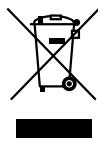
At the end of its working life, the product must not be disposed of as urban waste. It must be taken to a special local authority differentiated waste collection centre or to a dealer providing this service.
Disposing of a household appliance separately avoids possible negative consequences for the environment and health deriving from inappropriate disposal and enables the constituent materials to be recovered to obtain significant savings in energy and resources. As a reminder of the need to dispose of household appliances separately, the product is marked with a crossed-out wheeled dustbin.
Troubleshooting guide
| Problem | Cause | Solution |
| The whisk or K-beater knocks against the bottom of the bowl or not reaching the ingredients in the bottom of the bowl. | Tool at the wrong height and needs adjusting. | Adjust the height using a suitable spanner – see “Tool Adjustment” section. |
| Slow speed attachment cannot be fitted. | Check your attachment is compatible for use with your model. Twist connection system required (Model KAX)TWIST | Attachment must have the KAX twist connection system TWIST to fit the outlet.
If you own attachments featuring the Bar Connection System (BASE) you will need to use the KAT002ME adaptor to connect these to the Twist Connection System on your Kitchen Machine.
For more information visit www.kenwoodworld.com/twist. |
| The Kitchen Machine stops during operation. | Overload protection or overheat system activated. Maximum capacity exceeded. | Unplug and check for obstruction or overloading.
If the machine will not operate, remove some of the ingredients to reduce the load and restart.
If this still does not resolve the problem, unplug and allow to stand for 15 minutes. Plug in and reselect the speed.
If the machine does not restart following the above procedure contact “customer care” for further advice. |
- Lávelo a mano y, a continuación,SEO,SEO,SEO,SEO,SEO,SEO,SEO,SEO,SEO,SEO,SEO,SEO,SEO,SEO,SEO,SEO,SEO,SEO,SEO,SEO,SEO,SEO,SEO,SEO,SEO,SEO,SEO,SEO,SEO,SEO,SEO,SEO,SEO,SEO,SEO,SEO,SEO,SEO,SEO,SEO,SEO,SEO,SEO,SEO,SEO,SEO,SEO,SEO,SEO,SEO, SEO, SEO, SEO, SEO, SEO, SEO, SEO, SEO, SEO, SEO, SEO, SEO, SEO, SEO, SEO, SEO, SEO, SEO, SEO, SEO, SEO, SEO, SEO, SEO, SEO, SEO, SEO, SEO, SEO
- No utilise nunca un cepillo metálico, un estropajo de aluminio ni lejía para limpar su bol de acero inoxidable. Use vinagre para eliminar las incrustaciones de cal.
- Manténgalo alejado del calor (parte superior de la cucina, hornos, microondas).
Utensilios
- Lávelo a mano y, a continuación,SEO,SEO,SEO,SEO,SEO,SEO,SEO,SEO,SEO,SEO,SEO,SEO,SEO,SEO,SEO,SEO,SEO,SEO,SEO,SEO,SEO,SEO,SEO,SEO,SEO,SEO,SEO,SEO,SEO,SEO,SEO,SEO,SEO,SEO,SEO,SEO,SEO,SEO,SEO,SEO,SEO,SEO,SEO,SEO,SEO,SEO,SEO,SEO,SEO,SEO, SEO, SEO, SEO, SEO, SEO, SEO, SEO, SEO, SEO, SEO, SEO, SEO, SEO, SEO, SEO, SEO, SEO, SEO, SEO, SEO, SEO, SEO, SEO, SEO, SEO, SEO, SEO, SEO
receta
adobo de chile
c_1 = - 12
y = 2 2x + 2 2x
Jzjzll Jzjjzjj 4K 4g jy 4g 4g 4g 4g 4g 4g 4g 4g 4g 4g 4g 4g 4g 4g 4g 4g 4g 4g 4g 4g 4g 4g 4g 4g 4g 4g 4g 4g 4g 4g 4g 4g 4g 4g
jla lla jlaa yla a 1j g jaball y
aaalgl y laaall aagilall k alk co qalg
gll alp gll g ll gll gll gll
JL JALI JL KENWOOD 10000000000000000000000000000000000000000000000000000000000000000000000000000000000000000000000000000
.111 111 Kenwood 111
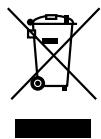
Jooaiaai aaiiaai gaoalaagleaae iiaaii iiaaiiaai iiaaiiaai iiaaiiaai (WEEE)
yall yabg (yagall) aalll s
1 199
aixill aib, uiaa aaba.
gajglalhwlglgalplaswj
.slaJl
aJbWJ
j11 1
jLbXlaJLc
gall glll lolololololol
sclgl auii iic jaiil slgogj
Jall Jll Jll no ginaa
aJJI aJIJIJI JJI JJI GOJIXI
(.g≤[L]
#
JUwCg JUuOoJUuOo
jLbJdJI Lc
AaLgKj
C
gj gai jai jai bai jai
Jolio Jilu jilu jilu jilu
1gJfEJIbIbIJI JIJI JnPjI Ic
Jgjolbl jll Cieo
aJlll lalol j
1
gJyIJIaIaIcS JgIaJIaIJ
.
Caii aallll 15! bll l,
J 1
LJI K aaiLeI / 1
6 sLgJgLa
alolall 1j jll bll lclaoi
7 1234567890
aolil 5s1olal g jnjjg pcc n o s
sio plssw ic ailll
auiuuii
1 1
e 1
2 1
J ① 1
y 100
gale 1
8 acLwJjLacOJj JgJgJwX
1
Jgolal
LgLaI 5 LgA1g 4 LcXg
g^ ( x) = - 1xg( x)
$$
\ldots \left. \right.\left. \right.\left. \right.\left. \right.\left. \right.\left. \right.\left. \right.\left. \right.\left. \right.\left. \right.\left. \right.\left. \right.\left. \right.\left. \right.\left. \right.\left. \right.\left. \right.\left. \right.\left. \right.\left. \right.\left. \right.\left. \right.\left.\left.\left.\left.\left.\left.\left.\left.\left.\left.\left.\left. 1 0 0 0 0 0 0 0 0 0 0 0 0 0 0 0 0 0 0 0 0 0 0 0 0 0 0 0 0 0 0 0 0 0 0 0 0 0 0 0 0 0 0 0 0 0 0 0 0 0 0 1 1 1 1 1 1 1 1 1 1 1 1 1 1 1 1 1 1 1 1 1 1 1 1 1 1 1 1 1 1 1 1 1 1 1 1 1 1 1 1 1 1 1 1 1 1 1 1 1 1 2 \right]\right]\right]\right]\right]\right]\right]\right]\right]\right]\right]\right]
$$
$$
\left. \int_ {0} ^ {1} \frac {d x}{x - 1} \right| _ {0} ^ {1} \cdot \int_ {1} ^ {2} \frac {d y}{y - 1}
$$
$$
\therefore J _ {i} b _ {j} ^ {i} \cup_ {j} g _ {i} ^ {i} \cup_ {i} c _ {j} ^ {j}
$$
$$
\dot {s} \dot {s} \dot {s} \dot {s} \dot {s} \dot {s} \dot {s} \dot {s} \dot {s} \dot {s} \dot {s} \dot {s} \dot {s} \dot {s} \dot {s} \dot {s} \dot {s} \dot {s} \dot {s} \dot {s} \dot {s}
$$
$$
\therefore j _ {i} ^ {j} \text {J a} \text {L} \text {a} \text {i} \text {i} \text {i} \text {i} \text {i} \text {i} \text {i} \text {i} \text {i} \text {i} \text {i} \text {i} \text {i} \text {i} \text {i}
$$
$$
. d i f f l j! d i f f l g l o w b e y b e c a u s e g e n e r a l l l i t i e f g e n e r a l l g a g g a g g a g g a g g a g g a g g a g g a g g a g g a g g a g g a g g a g g a g g a
$$
$$
\begin{array}{l} \text {i s i n t e r n a l} \ \text {i s i n t e r n a l} \ \text {i s i n t e r n a l} \ \text {i s i n t e r n a l} \ \text {i s i n t e r n a l} \ \text {i s i n t e r n a l} \ \text {i s i n t e r n a l} \ \text {i s i n t e n t i o n} \end{array}
$$
$$
\mu \text {s c} \left. \frac {\partial f}{\partial x} \right| _ {x = 0} \text {s c} \left. \frac {\partial f}{\partial y} \right| _ {y = 0} \text {s c} \left. \frac {\partial f}{\partial z} \right| _ {z = 0} \text {s c} \left. \frac {\partial f}{\partial w} \right| _ {w = 0}
$$
$$
\therefore \delta_ {2 9} \leq \delta_ {1 1 1} \dots \delta_ {1 2 2} \dots \delta_ {1 2 3} \dots \delta_ {1 2 4}
$$
$$
\begin{array}{c} \text {a r a l l j g j j p l s i s t i n w l j o} \ \text {j g j j} \end{array}
$$
$$
\begin{array}{l} \text {g a m m a l e} _ {1}: \text {L a w i t h} \text {c o n n e c t i o n} \text {J I s j k 2 1} \text {L a w i t h} \ \text {“ a b i l i t y} \text {L a w i t h} \text {a l i g g i n} \text {J I S J I ” p a r a l l e} \end{array}
$$
$$
j _ {i} j _ {j} j _ {j} j _ {j} j _ {j} j _ {j} j _ {j} j _ {j} j _ {j} j _ {j} j _ {j} j _ {j} j _ {j} j _ {j} j _ {j} j _ {j} j _ {j} j _ {j} j _ {j} j _ {j} j _ {j} j _ {i}
$$
$$
\leq 1
$$
$$
\int_ {0} ^ {\infty} \frac {1}{x} d x = \int_ {0} ^ {\infty} \frac {1}{x ^ {2}} d x = \int_ {0} ^ {\infty} \frac {1}{x ^ {3}} d x = \int_ {0} ^ {\infty} \frac {1}{x ^ {4}} d x = \dots
$$
$$
\therefore \mathrm {j} \text {g a l l} \mathrm {j} \text {g a l l} \mathrm {j} \text {g a l l} \mathrm {j} \text {g a l l} \mathrm {j} \text {g a l l} \mathrm {j} \text {g a l l}
$$
$$
\begin{array}{l} \text {i} _ {\text {i}} ^ {\text {i}} \text {i} _ {\text {i}} ^ {\text {i}} \text {i} _ {\text {i}} ^ {\text {i}} \text {i} _ {\text {i}} ^ {\text {i}} \text {i} _ {\text {i}} ^ {\text {i}} \text {i} _ {\text {i}} ^ {\text {i}} \text {i} _ {\text {i}} ^ {\text {(i)}} \text {i} _ {\text {i}} ^ {\text {(i)}} \text {i} _ {\text {i}} ^ {\text {(i)}} \text {i} _ {\text {i}} ^ {\text {(i)}} \text {i} _ {\text {i}} ^ {\text {(i)}} \text {i} _ {\text {i}} ^ {\text {(i)}} \text {i} _ {\text {i}} ^ {\text{(i)}} \text {i} _ {\text {i}} ^ {\text {(i)}} \text {i} _ {\text {i}} ^ {\text {(i)}} \text {i} _ {\text {i}} ^ {\text {(i)}} \text {i} _ {\text {i}} ^ {\text {(i)}} \text {i} _ {\text {i}} ^ {\text {(i)}} \text {i} _ {\text {i}} ^ {- 1} \ \text {o} _ {\text {o}} ^ {\text {(o)}} \text {o} _ {\text {o}} ^ {\text {(o)}} \text {o} _ {\text {o}} ^ {\text {(o)}} \text {o} _ {\text {o}} ^ {\text {(o)}} \text {o} _ {\text {o}} ^ {\text {(o)}} \text {o} _ {\text {o}} ^ {\text {(o)}} \text {o} _ {\text {o}} ^ {\text{(o)}} \text {o} _ {\text {o}} ^ {\text {(o)}} \text {o} _ {\text {o}} ^ {- 1} \ \text {a l l p l a l l g a l l i a l l 2 0 0 4 / 1 9 3 5} \end{array}
$$
$$
\therefore a b \neq 1
$$
J_0 L_0 + L ÷ h_0
Kenwood
jLgA Llilal jL .Rggl JLaLJL JLx J.kenwood Cui sLiLai Ic Liq
Ji jgiiaacgjnoaegygrcLolKio cbojgeo.BoIeI sIuHao Jx
aoluiwJyioiwig
Kenwood 2110. gioio Aioio LioicXl iio
a
LJglll gllll
a < 0 > y
Lao 1g Lg
J 1
.KENWOOD KENWOOD
/1J 1 J 1 J 1 J 1 J 1 J 1 J 1 J 1 J 1 J 1
a. bii1i a2b2 c. d. loll
Lg
1
J 1
1
Lc0gfoolJgoc
A
Jg 1 g
.
1
gaaal Jgds
a 100000000000000000000000000000000000000000000
J 1 J 1
111111 111111 111111 111111 111111
[\therefore \left{ {1,2,3,4,5,6}\right} \leq x]

HEAD OFFICE: Kenwood Limited, 1-3 Kenwood Business Park, New Lane, Havant, Hampshire PO9 2NH
kenwoodworld.com