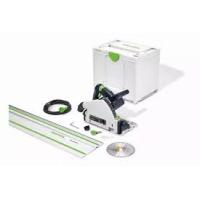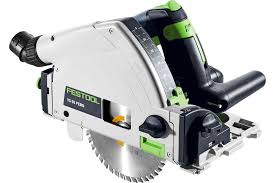
TS 55 EBQ - Plunge saw FESTOOL - Free user manual and instructions
Find the device manual for free TS 55 EBQ FESTOOL in PDF.



User questions about TS 55 EBQ FESTOOL
0 question about this device. Answer the ones you know or ask your own.
Ask a new question about this device
Download the instructions for your Plunge saw in PDF format for free! Find your manual TS 55 EBQ - FESTOOL and take your electronic device back in hand. On this page are published all the documents necessary for the use of your device. TS 55 EBQ by FESTOOL.
USER MANUAL TS 55 EBQ FESTOOL
The specified illustrations can be found at the beginning of the operating instructions.
Symbols


Warning of general danger
Manual, read the instructions.
Wear ear protection!
Wear protective goggles.
1 Use for intended purpose
These machines are intended to be used for sawing wood, wood-like materials, plaster and cement-bonded fibre materials, and plastics. With the special saw blades for aluminium offered by Festool, these machines can also be used for sawing aluminium.
Only saw blades with the following specifications must be used: saw blade diameter of 160 ~mm ; cutting width of 2.4 ~mm to 2.6 ~mm ; toolholder diameter of 20 ~mm ; blade core thickness of max. 1.8 ~mm ; suitable for speeds of up to 9500 rpm.
Do not use any abrasive wheel.
Festool electric power tools should only be installed in work benches specially designed by Festool. The electric power tool may become unsafe and cause serious accident if installed in benches from other manufacturers or self-manufactured work benches.

The user is liable for damage and injury resulting from incorrect usage!
2

Safety instructions
General safety rules
WARNING! Read all safety warnings and all instructions. Failure to follow the warn-
ings and instructions may result in electric shock, fire and/or serious injury.
Save all warnings and instructions for future reference.
The term „power tool“ in the warnings refers to your mains-operated (corded) power tool or battery-operated (cordless) power tool.
2.2 Tool-specific safety rules
1) Cutting procedures
a) DANGER: Keep hands away from cutting area and the blade. Keep your second hand on auxiliary handle, or motor housing. If both hands are holding the saw, they cannot be cut by the blade.
b] Do not reach underneath the workpiece. The guard cannot protect you from the blade below the workpiece.
c) Adjust the cutting depth to the thickness of the workpiece. Less than a full tooth of the blade teeth should be visible below the workpiece.
d) Never hold piece being cut in your hands or across your leg. Secure the workpiece to a stable platform. It is important to support the work properly to minimize body exposure, blade binding, or loss of control.
e) Hold power tool by insulated gripping surfaces when performing an operation where the cutting tool may contact hidden wiring or its own cord. Contact with a „live“ wire will also make exposed metal parts of the power tool „live“ and shock the operator.
f) When ripping always use a rip fence or straight edge guide. This improves the accuracy of cut and reduces the chance of blade binding.
g) Always use blades with correct size and shape (diamond versus round) of arbour holes. Blades that do not match the mounting hardware of the saw will run eccentrically, causing loss of control.
h) Never use damaged or incorrect blade washers or bolt. The blade washers and bolt where
specially designed for your saw, for optimum performance and safety of operation.
i) Wear suitable protection such as
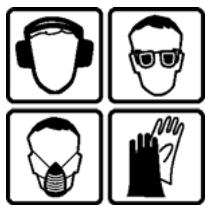
ear protection, safety goggles, a dust mask for work which generates dust, and protective gloves when working with raw materials and when changing tools.
2) Kickback causes and relates warnings
- kickback is a sudden reaction to a pinched, bound or misaligned saw blade, causing an uncontrolled saw to lift up and out of the workpiece toward the operator;
- when the blade is pinched or bound tightly by the kerf closing down, the blade stalls and the motor reaction drives the unit rapidly back toward the operator;
- if the blade becomes twisted or misaligned in the cut, the teeth at the back edge of the blade can dig into the top surface of the wood causing the blade to climb out of the kerf and jump back toward the operator.
Kickback is result of saw misuse and/or incorrect operating procedures or conditions and can be avoided by taking proper precautions as given below.
a) Maintain a firm grip with both hands on the saw and position your arms to resist kickback forces. Position your body to either side of the blade, but not in line with the blade. Kickback could cause the saw to jump backwards, but kickback forces can be controlled by the operator, if proper precautions are taken.
b) When blade is binding, or when interrupting a cut for any reason, release the trigger and hold the saw motionless in the material until the blade comes to a complete stop. Never attempt to remove the saw from the work or pull the saw backward while the blade is in motion or kickback may occur. Investigate and take corrective actions to eliminate the cause of blade binding.
c) When restarting a saw in the workpiece, centre the saw blade in the kerf and check that saw teeth are not engaged into the material. If saw blade is binding, it may walk up or kickback from the workpiece as the saw is restarted.
d) Support large panels to minimise the risk of blade pinching and kickback. Large panels tend to sag under their own weight. Supports must be placed under the panel on both sides, near the line of cut and near the edge of the panel.
e) Do not use dull or damaged blades. Unsharpened or improperly set blades produces narrow kerf causing expressive friction, blade binding and kickback.
f) Blade depth and bevel adjusting locking levers must be tight and secure before making cut. If blade adjustment shifts while cutting, it may cause binding and kickback.
g] Use extra caution when making a "plunge cut" into existing walls or other blind areas. The protruding blade may cut objects that can cause kickback.
3) Guard function
a) Check guard for proper closing before each use. Do not operate the saw if guard does not move freely and enclose the blade instantly. Never clamp or tie the guard so that the blade is exposed. If saw is accidentally dropped, guard may be bent. Check to make sure that guard moves freely and does not touch the blade or any other part, in all angles and depths of cut.
b) Check the operation and condition of the guard return spring. If the guard and the spring are not operation properly, they must be serviced before use. Guard may operate negligibly due to damaged parts, gummy deposits, or a build-up of debris.
c) Assure that the base plate of the saw will not shift while performing the "plunge cut" when the blade bevel setting is not at 90^ . Blade shifting sideways will cause binding and likely kick back.
d) Always observe that the guard is covering the blade before placing saw down on bench or floor. An unprotected, coasting blade will cause the saw to walk backwards, cutting whatever is in its path. Be aware of the time it takes for the blade to stop after switch is released.
4) Riving knife function
a) Use the appropriate saw blade for the riving knife. For the riving knife to work, it must be thicker than the body of the blade but thinner than the tooth set of the blade.
b) Adjust the riving knife as described in this instruction manual. Incorrect spacing, positioning and alignment can make the riving knife ineffective in preventing kickback.
c) Always use the riving knife, even when "plunge cutting". The riving knife is being pressed upwards during plunge cutting and springs back automatically into the kerf after plunge cutting when you move the saw forward.
d) For the riving knife to work, it must be engaged
in the workpiece. The riving knife is ineffective in preventing kickback during short cuts.
e] Do not operate the saw if riving knife is bent.
Even a light interference can slow the closing rate of a guard.
2.3 Noise and vibration information
Typical values established in compliance with EN 60745:
| Sound-pressure level/ Sound-power level | |
| TS 55 EBQ/TS 55 EQ | 95/106 dB(A) |
| TS 55 Q | 96/107 dB(A) |
| Measuring uncertainty allowance | K = 3 dB |

Wear ear protection.
Overall vibration levels (vector sum for three directions) measured in accordance with EN 60745:
Vibration emission level (3 directions)
| Sawing wood | ah< 2,5 m/s2 |
| Sawing metal | ah< 2,5 m/s2 |
| Uncertainty | K = 1,5 m/s2 |
The emission values specified (vibration, noise) were measured in accordance with the test conditions stipulated in EN 60745 and are intended for machine comparisons. They are also used for making preliminary estimates regarding vibration and noise loads during operation.
The emission values specified refer to the main applications for which the power tool is used. If the electric power tool is used for other applications, with other tools or is not maintained sufficiently prior to operation, however, the vibration and noise load may be higher when the tool is used. Take into account any machine idling times and downtimes to estimate these values more accurately for a specified time period. This may significantly reduce the load during the machine operating period.
3

Power supply and start-up
The mains voltage must correspond to the specification on the rating plate.
Always switch the machine off before connecting or disconnecting the mains lead!
See Fig. 2 for connection and disconnection of the power cable.
The switch [1-8] is for switching on/off (push = ON, release = OFF).
The switch can only be activated after the switch lock [1-9] has been pushed up.
Activating the switch lock simultaneously locks the plunging equipment and the sawing unit can
be moved down against the spring force. This causes the saw blade to emerge from the protective cover.
When the machine is lifted, the sawing unit springs back into the starting position.

Only guide the machine against the workpiece when it is switched on.

Check the installation fixture prior to use and do not use the machine if the fixture does not function correctly.
4
Machine settings

Always pull the plug out of the socket before making settings.
4.1
Electronics

The TS 55 EBQ/TS 55 EQ features full-wave electronics with the following properties:
Smooth start-up
The smooth start-up ensures the machine starts up jolt-free.
Speed adjustment
You can regulate the speed steplessly between 2000 and 5200 rpm using the adjusting wheel [1-6]. This enables you to optimise the cutting speed to suit the material (see table 1).
Constant speed
The pre-selected speed remains constant whether the machine is in operation or in neutral position.
Temperature cut-out
To prevent overheating, the safety electronics switches the machine off when it reaches a critical motor temperature. Let the machine cool down for approx. 3-5 minutes before using it again. The machine requires less time to cool down if it is running, i.e. in neutral position.
Current limiting
Current limiting prevents permissibly high current consumption under extreme overload. This can lead to a decrease in the motor speed. The motor immediately restarts after the load is removed.
Brake (only TS 55 EBQ)
After switching-off the tool, the saw blade is electronically brought to a standstill in 1.5 - 2 seconds.
4.2 Cutting depth
The cutting depth can be set at 0 - 55 mm:
- Press the cutting depth stop [2-3] and move it to the desired cutting depth (the values specified on the scale [2-1] apply to 0^ cuts without guide rail),
- Release the cutting depth stop (the cutting depth
stop notches along in 1 mm-steps).
The sawing unit can now be pressed down to the set cutting depth.
A grub screw (M4x8 to M4x12) can be screwed into the hole [2-2] on the cutting depth stop. By turning the grub screw, the cutting depth can be set even more exactly ( ± 0.1 mm).
4.3 Cutting angle
The sawing unit can be swivelled between 0^ and 45^ :
- Loosen rotary knobs [2-4, 2-6],
- Swivel sawing unit to the desired cutting angle [2-5],
- Retighten rotary knobs.
Note: both end positions (0° and 45°) are set at the factory and can be readjusted by the aftersales service team.
4.4 Changing the saw blade
- Before changing the saw blade, set the machine to the 0^ position.
- Move lever [3-2] as far as it will go,
- Push switch lock [3-1] up and push sawing unit down until it locks into place,
- Loosen screw [3-4] with Allen key [3-3],
- Remove saw blade,
- Clean flange [3-8, 3-10],
- Insert new saw blade.

The direction of rotation of the saw blade [3-9] and the machine [3-7] must be the same.
- Insert outer flange [3-10] such that the locking pins engage into the notches on the inner flange [3-8].
- Tighten screw [3-4],
- Put lever [3-2] back.
4.5 Setting the spacer wedge
- Move lever [3-2] as far as it will go,
- Push switch lock [3-1] up and push sawing unit down until it locks into place,
- Loosen screw [3-6] with Allen key [3-3],
- Set spacer wedge [3-5] as shown in diagram 3,
- Tighten screw [3-6],
- Put lever [3-2] back.
4.6 Dust extraction

Always connect the machine to a dust extractor.
A Festool dust extractor with an extractor hose diameter of 36 ~mm or 27 ~mm (36 mm recommended
due to the reduced risk of clogging) can be connected to the rotating extractor connector [4-1]
4.7 Mounting the splinterguard
The splinterguard (accessories) significantly improves the quality of the cutting edge of the sawn workpiece on the upper side for 0^ cuts.
- Attach splinterguard [5-1] onto the protective cover,
- Place machine onto the workpiece or the guide rail,
- Press splinterguard down until it sits on the workpiece and tighten it with the rotary knob [5-2].
- Saw splinterguard in (machine to maximum cutting depth and speed range 6)
5 Working with the machine

Always secure the workpiece in such a manner that it cannot move while being sawed.

The machine must always be held with both hands by the designated handles [1- 1, 1-7].

Always push the machine forwards [1-2], never pull the machine backwards towards you.

Adapt the fast-feed speed to prevent the cutters on the saw blade from overheating and prevent plastic materials from melting during cutting.
5.1 Sawing along a scribe mark
The cutting indicator [4-3] displays the cutting line for 0^ and 45^ cuts (without guide rail).
5.2 Sawing sections
Place the machine with the front part of the saw table on the workpiece, switch the machine on, press it down onto the set cutting depth and push it forward in the cutting direction.
5.3 Sawing cut outs (plunge cuts)
In order to avoid kickbacks, the following instructions absolutely must be observed when plunge cutting:
- The machine must always be placed with the rear edge of the saw table against a fixed stop.
When working with a guide rail, the machine must be positioned against the kickback stop [1-4], which is clamped on the guide rail. - The machine must always be held securely with both hands and only plunged slowly.
Procedure:
Place the machine onto the workpiece and position it against a stop (kickback stop), switch the machine on, slowly press it down onto the set cutting depth and push it forward in the cutting direction. The markings [4-2] display the absolute front and the absolute rear cutting points of the saw blade (dia. 160mm ) at maximum cutting depth and using the guide rail.
5.4 Sawing aluminium

When sawing aluminium, the following measures must be taken for safety reasons:
- Pre-connect a residual current circuitbreaker.
- Connect the machine to a suitable dust extractor.
- Clean the machine regularly of dust deposits in the motor housing and in the protective cover.

Wear protective goggles.
- Aluminium must only be sawed with the special saw blades from Festool designed for this purpose.
When sawing panels, they must be lubricated with petroleum, thin-walled profiles (up to 3mm ) can be sawed without lubrication.
5.5 Plaster and cement-bonded fibre boards
Due to the high build-up of dust, using a cover (accessories) that is mounted on the side of the protective cover is recommended.
6 Accessories
The order numbers of the accessories listed below can be found in the Festool catalogue or on the Internet under "www.festool.com".
6.1 Parallel stop, table widener
A parallel stop can be used for section widths up to 180~mm . The parallel stop can also be used as a table widener.
6.2 Side-mounted cover, false joints
The cover that can be mounted on the side of the protective cover improves the effect of dust extraction for 0^ cuts. Simultaneously, the cover can be used as a false joint stop for false joint widths from 18 mm onwards.
6.3 Guide system
The guide rails, which are available in different lengths, allow for precise, clean cuts and simultaneously protect the workpiece surface against damage.
In conjunction with the extensive range of accessories, exact angled cuts, litre cuts and fitting work can be completed with the guide system. The option of securing using G-clamps [4-4] ensures a firm hold and safe working.
The guide clearance of the saw table on the guide rails can be set with the two setting jaws [1-3].
The guide rails are equipped with a splinterguard [1-5], which has to be cut to size before the first use:
- Set the speed of the machine to level 6,
- Place the machine on the rear end of the guide rail,
- Switch the machine on, press it down to the set cutting depth and cut the splinterguard along the full length without interruption.
The edge of the splinterguard now corresponds exactly to the cutting edge.
6.4 Multifunction table
The multifunction table MFT/3 makes clamping the workpiece easy and allows you to saw large and small workpieces safely and precisely using the guide system. Its many fields of application make economical and ergonomically convenient work possible.
6.5 Saw blades, other accessories
In order to be able to saw different materials quickly and cleanly, Festool offers saw blades that are specially designed for your machine.
The order numbers for these and for other accessories that allow you to use your Festool portable circular saw effectively and in many ways, can be found in the Festool catalogue or on the Internet under "www.festool.com".
7 Maintenance and care

Always remove the plug from the mains supply socket before carrying out any work on the machine!

Any maintenance or repair work requiring the motor housing to be opened may only be carried out by an authorised service workshop.
Always keep the machine and the ventilation slots clean.
The tool is fitted with special motor brushes with
an automatic cut-out. When the brushes become worn the power supply is shut off automatically and the tool comes to a standstill.
8 Disposal
Do not throw the power tool in your household waste! Dispose of machines, accessories and packaging at an environmentally-responsible recycling centre. Observe the valid national regulations.
EU only: European Directive 2002/96/EC stipulate that used electric power tools must be collected separately and disposed of at an environmentally responsible recycling centre.
9 Warranty
For our tools, we give warranty for material and production defects in accordance with the locally applicable legal provisions, but in any case for at least 12 months. Within the EU member states, the warranty period is 24 months (verification through invoice or delivery note). Damage caused by, in particular, natural wear, overloading, incorrect handling, or damage caused by the operator, or damage caused through use of the equipment contrary that specified in the Operating Instructions, or damage which was known at the time of purchase, is not covered by the warranty. Furthermore, dam
age caused by the use of non- original accessories and consumable materials (e.g. sanding pads) is also excluded. Complaints can only be recognised if the tool is returned while still assembled to the supplier or an authorised Festool Customer Service workshop. Keep the Operating Instructions, Safety Instructions, Spare Parts List and purchase receipt in a safe place. Otherwise the respective, current warranty conditions of the manufacturer shall apply.
Note
Due to continuous research and development work, we reserve the right to make changes to the technical content of this documentation.
REACH for Festool products, their accessories and consumables
REACH is a European Chemical Directive that came into effect in 2007. As "downstream users" and product manufacturers, we are aware of our duty to provide our customers with information. We have set up the following website to keep you updated with all the latest news and provide you with information on all the materials used in our existing products: www.festool.com/reach
Table 1: Cutting appropriate to the material - with the right speed
| Material | Speed range | |
| Solid wood (hard, soft) Chipboards and hard fibre boards Laminated wood, blockboards, veneered and coated boards | 6 3-6 6 | |
| Plastics, fibre-reinforced plastics, paper and fabric Acrylic glass | 3-5 4-5 | |
| Plaster and cement-bonded fibre boards | 1-3 | |
| Aluminium panels and profiles up to 15 mm | 4-6 | |
Scie circulaire
Varning for allman risk!

Takm o6pa30M,OTdaua - pe3yIbTaT He npabNtBHO 6paueHnC nIIOJ. Ee moXHo n36exKaTb, co6Iou- da Mepbl pedeOcTOPOxHocTN, OINscaHHbIe HnXe.
3) ΦυHKζηa3aζιNTHOrO KoKxyHa
a)Держinte плу кренио obemn rykamn, руkn yctahOBNTe B NOLOXKeHne,В KOTOPOM MOxHOB BbldeprKaTb BO3MOxKHyO OTdauy.CToIte Bcerda c6OKy OT pNlBHorO dNcKa,pacnoJaRaTb npn pa- 60Te pNlBhBi DNCK B LInHIO C TeLOM 3anpeua- etc.Пи OTdauye znpkyJrpHaayплna noDaetcЯ Ha3aI,ODHaKO pONb3OBaTeJIb MoKET cnpaBHTbcr C OTdauey,prINHAB COOTBeTCTByUoIne MEPbl.
b) EcIn pNlBbI dNCK 3aKlnHnlo nJI INJleHne npekpaueHo nO dpyHM npuynHaM, OTNyCTnte BbIKIOUaTeIb I He BbIHMaIte NJIy n3 6pabatbIbAemO JeTAln, POKa pNlBbI dNCK pONHOCTbIO He OCTaHOBNTcR. BbIHMaTb NJIy n3 DeTAln, Do TOrO KaK pNlBbI dNCK pONHOCTbIO OCTaHOBNIc3aPeeuaTcR: BO3MOXHa OTda4a. HainTe npuynHy 3aklinHBaHnra pNlBHOrO nCka i COOTBEcTByUoIzM O6pa3OM yCTpaHnTe ee.
c) EcIn Tpe6yeTcB KJIIOuHTb NJLy, KOrga NINbHbI DNCK HaxOOnTcB O6pa6aTbIBaEMoN DeTaJI, OTeHTpnpyTe NINbHbI DNCK B paCnJIeN y6eINTecb, qTO 3y6bY NINbI He 3aCTPJIbN B6pa6aTbIBaEMoN DeTaN. EcIn NINbHbI DNCK 3aKJIHNIO, OH MOKeT BvICKOHTb I3 O6pa6aTbIBaEMoN DeTaN NIN Bbl3BaTb OTdauy, ecIn PONb3OBaTeJIb CHOBA BKJIIOUHT NINy.
d]Bo n36eXaHHe oTdaU npn 3aklnHbAHn nnIbHorO dNcKa noDnnpaTe npn pa6ote 6oIb- Wne dockn. BoIbShne IocKn MOyT npOrHyTbcr eoBecOM noJb30BaTeJIЯ nnIbI. Ix cJeNyET noDnnpaTb B6Iu3n pacnla n C KpaIo.
e] NcnoIb3OBAtB TynbIe I NOBpeXdeHHbIe NJIbHbIe DnCKN 3anpeucaetc. NcnoJIb3OBAHne TynbIX NIIbHbIX DNCKOB IN HeBepHOe HApPaBLeHne 3y-6beB npi pa6oTe MoKeT npINBeCTn (B pe3yJIbTaTe CInIJKOM y3KOrO paCnla) K NOBblSeHHOMy TpeHIO, 3aKlHIHVAHNI O NIIbHOr O nCKa I K OTdaue.
f) Пелег Началом пленья затунITE ВИNTы ретулировки угла и Г lyбины пленья. 3- MeHEHHe HAcTpoeK BO BpeM pa60тbl может NOВLEch 3a co6oJ 3aklnHbAHne пльHorO ДИСКА И OTДЧУ.
g] BybTe Oc06eHNO BHNMaTeJbHbI npN BblOnHeHH „Bpe3HO rHHeHNA B CTeHbI T.D. Pn nOprpyKeHn pNlbHbI dNcK MoKeT HaToJI-KHyTbcra Ha cKpbITbIe oBeKTbI, B pe3yJbTaTe Yero BO3MOxHa OTdaHa.
a) Пера Кадын сплььогаимубintecь ВTo,чTO 3auntbIй KOKyx ИспраВно 3akpbiBa-etc.ПOLTb3OBaTbcЯ плои 3anpeuaetc,ecn 3auntbIй KOKyx DBnraeTcС 3atpydHeHneM
HJX He 3aKpbBaetc. 3aPepaetc fHK- CnpoBaTb NJI 3axmAtb 3auntHbIK KOxy; B nPoTHBHom cIyae NJIbHbIM DCCK OCTaHETcR OTKpbITbIM. Pn naDeHnn NJIbI 3aunTHbIK KOxy MoKet DeOpMnpoBaTbcr. Y6eINTecb B TOM, yTO KOxy DBNraetc CBO6OHO H KacaETcN NJIbHOrO DNCKa NJI npyRnx y3IOB NJIbl Prn IIO6bIX 3NaueHnX yrla n rIy6uHbI pe3AHn.
b]Проверы Te Функционповане ружнbl 3a- uHTHOKOKyxA.В clyuae, ecn npyxHna n 3aunTHbI KOKyxФункционHyOT HeucnpaBHo, HNCTpyMeHT cLeyeT OTpeMoHTnPOBaTb. HeucnpaBHbIe y3JIbI, KJIeKne hacLoEHHЯ nIIcKoINBsa CTpykKa CHJKAOT 3ΦΦeKTNBHOCTb pa60Tb 3aunTHOTo KOKyxA.
c) Пи Вылолнен «Врзно Го порпла» He по пямьlm улом Фнксриte опорны пл'tу плbl ot 6okoboro смшени.Смшени пл'tы B6OK может пивец К зakлинваню пльного диска и BO3нКHOBEHIO OTдач.
d) He klaaIte nIy Ha Bepctak nIi Ha noI, ecI 3aunTHbI KOxyx He 3aKpbBaET NJIbHbI dNcK. Iprn OTCyTCTBn 3auntHO rO Koxyxa Bpaauoicra nnbHbI dNcK dBnaeT nIy B HaprabHeHn, o6pAthOM hApabHeHIO nIleHn, n pexket Bce Ha CBOem npTN. PpIMTe BO BHNMaHne 6bICTpoJeCTBVe nIbl.
UpoBHeb 7yMa/3ByKOBaMoIIOHcTb
TS55EBQ/TS55EQ 95/106nB(A)
TS 55Q 96/107B(A)
NcnoJb3OBAbT 3aUHTHbIe HayuHnKn!
06uŋ Ko3ΦnIeHT KOJIe6aHn (cymma BeKTopoB Tpex HaIpaBJIeHn) paCCHTbIBaeTcB B COOTBeTCTBn c EN 60745:
Ko3ΦΦnμηENT 3Mnccnn KoJIe6aHn (3-ochbl)
Bcerda ykpenIyTe o6pa6aTbIBaemyo DeTaJIb TaK, UTo6bI OHa He DnBraIacb npu o6pa6oTke.

Bcerda depxknte MaunHy dBym pykamn 3a npedHa3HaueHHbIe dIy 3ToIgpyKn [1- 1,1-7].

Bcerda nepemeaTe MaunHy Bpepe [1-2], Hn B koem cnyae He BeDnte MaunHy B o6paTHOM HnPaBLeHn K ce6e.

IyTtM n3MeHEnn cKOpocTn noDaun n3-6eRaIte nepeRpeBa peJxuX KpOMOK nnJIbHO rNcTpymEnTa, a TaKxe OnJaBLeHn rNlactnKa npn o6pa6OTke pOnImepHoTo MaTePnAna.
5.3 I3roToBLeHne npoHnloB (rny6okne npo-nbl)
UTo6bI n36exkaTb oTdaun, npn n3roTOBneHn rny- 60kX npoPiNoOB o6aTeJbHo cO6JIouJaTe cJeDyIOuIe yKa3aHn:
Ipeed Naayalom JIO6bIX pa6OT Ha MaunHKe BceRa BbIHMaIte WTeNcEIn b n3 pO3eTKN.

Bce pa60bl no 06cnykubahnIO npemOnTy, KOToPbIe Tpe6yeT OTKpbIBaHnI KOpnyca DBrIaTeJIa, MOryT IpoN3BOIDtbcra ToJbKO aBToPn3OBaHHo MaCTepCKo CepBnCHo CnyX6bl.
Для obecneueHЯЦркулачи B03dUxа OTBepCTna Для oxlaжденя B KOpnyce DBnIraTeЯ Bcerda ДоЛЖнbl 6blTb OTKpbITbIMn UnCTbIMn.
Maushnka oshaeta cAmooTKIouaIOuIMnsc yroIbHbIMn ⅢeTkamn. Iprnx n3HOce npoICXoI NT aBTOMaTnueckoe BblKJIoueHne TOKa N Maushnka OCTaHaBnBaETcra.
8 yTnIIN3aun
He BbI6paCbIBaIte 3JIeKTpOINHCTpyMeHTbI BMeCTe C 6bITOBbIMN OTXoAMn! OBeCpeBtE 6e3OpachyIO JnIg OKpyKaIOUSeI cpeDbI yTNIIN3aUIO INHCTpyMeHTa, OChactKN I yNaKOBKn. Co6JIIOJaTe DeIcTBYIOUne HaUNOHJbHbIe IHCTpyKcUIn.
ToIbko DnE EC: corglaacHo EByponeeckoJnpeKtTbe 2002/96/EG oTcIyXNBuNe CBoi cPoK 3JeKTpOnHCTpyMeHTbI DOJIxHbI yTnIn3nPoBaTbcra OTdJIbHO HAnpaBnTbcra Ha 3KOJIoRnHyU yTnIn3aCnIO.
9 TapaHTNIA
Дя haux np60OB mbl npedocablernrpaHTIO, paccnoctpahanyocnHa deeKbI MaTePnAJa n npOn3BOndBa, corlacho 3aKoHOdaTeNbHbIM npedncAHm, DeiCTByUOsmB KOHKpeTHoN cTpaHe. MnImalhbi cpoK deicTBnra rapaHTn 12 mecaeb.ДЯ cTpan-yuactnue EC cpoK deiCTBnra rapaHTn coCTabJeT 24 mecaa (prnppejBvhenu yeKa nn HaKnaDho).Fapantna He paCnpocTaHareTcHa nobpexdeHn, noJyueHHbIe B pe3yIbTaTe eCTeCTBeHHoro n3HoCa/ncNoIb3OBAHn, neperpy3Kn, HeNaIlexaSeero nCnoIb3OBAHn, nobpexdeHn IO BVHe noIb3OBAteJIY IINI
пи IncnoIb3OBAHnB BOppeKn RykoBoIcTBy no 3KcIIyatau, n6o n3BeCThBi e Ha MOMeHT NOKyn (yuEHKa ToBaPa). NckJIIOuaeTcra TAKKe yUep6, Bbl3BaHHbI NcNoIb3OBAHHeM HeOpNrHaJIbHOJ OChactKN i pacXoIbHbIX MaTePnaIaOB (HaNPmEp, IJIINΦOBaJIbHbIX TapeJIoK).
IpeTeH3nnpINHMaOTcT0JIbKO B TOM Cnyuae, ecIn np6Op IocTaBLeH K NoCTaBUnky nIn aBTOpN3OBAHHbI cepBnCHbI ueHTp fIpMbI Festool B Hepa3o6paHHom BVde. CoxpanyIte PykoBoJCTBO no 3KcPlyaTaun, INCTpykUnn PO TexHnke 6e3OnacHocTHn IOBaHPbI yek. BoctaJbHom DeiCTBOBaTb COflaCHO COOTBeTCTByUOnm ycNoBnM ppeIOCTaBJIeHnraPapHTn N3rOToBnTeJIa.
PpimmeaHne
BcBraCnOCToHbIMN NCCJIeOBAHnA MNI HOBblMn TexHnueckmnpa3pa60TkamnΦnpMa ocTablaet
3a co6oB npaBO Ha BVHeCHe N3MeHeHn B TexHN-ueCKne XapaKTePncTnKN.
REACH pour n3deLNI Festool, nx ochTkn npacXoHNbIX MaTePnaIIOB
C 2007 roda dinpekTbBa REACHЯВЯETcpeIaMeHToM NO XIMnueckm BeIeCTBam, DeIcTByIOUIm HaTeppntopnn Bce EBpObl. BbICTynapBpoJIuN«PnBLeKaemOro yuaCTHnKa» 3TOrO peIaMeHTa, Mbl, KaK npOn3BOIDNTeIN u3DeJIn, pRnHMaem Ha Ce68O63aTeJIbCTBO npeIoCTabJIaTb COOTBeTCTByIOUyUHΦOpMaunu HauINM KJIeHTAM. YTO6bl DEpXaTbBac B Kypse NocJIeDNHX Co6blTn I ppeIoCTabJIaTbHΦOpMaunu O BeIeCTBax, KOToPbIE BKJIouYeHbIBCNOCOK BblIeYIpOMaHrTOpeIaMeHTa N KOTOpbIEMOrT INcNoJIb3OBaTbcra B HaJnx N3deJIuNx, MblCOZdALn CpeZnaJIbHbI Be6-caIT: www.festool.com/reach
Ta6nla 1: Pe3Ka B 3aBnCHMOCTH OT MaTePnAna - C HaNJIeKauSe CKOpOCTbIO