
GC 130 WIG - Welding machine GUDE - Free user manual and instructions
Find the device manual for free GC 130 WIG GUDE in PDF.


| Product type | TIG / MMA Welding Machine |
| Brand | Güde |
| Model | GC 130 WIG |
| Supply voltage | 230 V ~ 50 Hz |
| TIG welding current | 10 - 130 A |
| MMA welding current | 10 - 100 A |
| Duty cycle | 20% at 130 A / 60% at 60 A |
| Power consumption | 3.5 kVA |
| TIG electrode diameter | 1.0 - 2.4 mm |
| Thermal protection | Yes with automatic shutdown |
| Cooling | Forced fan |
| Dimensions (L x W x H) | 350 x 150 x 250 mm |
| Weight | 8 kg |
| TIG function | Yes, DC welding |
| MMA function | Yes |
| Current adjustment | Continuous via potentiometer |
| Gas type | Pure argon |
| Torch connector | Euro 17-25 |
| Protection rating | IP21 |
| Protection class | I |
| Operating temperature | -10°C to +40°C |
| Noise level | < 70 dB(A) |
| Maintenance | Clean ventilation slots, check cables |
| Safety | Overload protection, thermostat |
| Spare parts | TIG torch, electrode holder, ground cable, nozzles |
Frequently Asked Questions - GC 130 WIG GUDE
User questions about GC 130 WIG GUDE
0 question about this device. Answer the ones you know or ask your own.
Ask a new question about this device
Download the instructions for your Welding machine in PDF format for free! Find your manual GC 130 WIG - GUDE and take your electronic device back in hand. On this page are published all the documents necessary for the use of your device. GC 130 WIG by GUDE.
USER MANUAL GC 130 WIG GUDE
natural_image
Icon of an open book inside a black circle (no text or symbols)Deutsch
D
-
Translation of original operating instructions
INVERTER
Français
F
EC-DECLARATION OF CONFORMITY

natural_image
Product photo of welding torches including a blue welding torch, black welding torch, and various cable types (no visible text or labels)36
42
53


natural_image
Close-up of four electronic components: a mechanical arm, a tool, a battery, and a screwdriver (no text or symbols visible)
natural_image
Product photo of a medical or laboratory device with a black tool, two white components, and a separate gray rectangle (no text or symbols visible)
natural_image
Close-up of a medical or laboratory device with a black tool and a white connector, labeled '5 6' in the corner (no other text or symbols visible)
natural_image
Close-up of a black mechanical device with a white connector and a small inset image (no text or symbols visible)Einleitung
ED MMA: 115 A\~20%/84 A\~60%/20 A\~100%
ED WIG: 130 A\~20%/84 A\~60%/65 A\~100%
Isolationsklasse:
Schutzart: IP21S
To enjoy your new appliance as long as possible, please read carefully the Operating Instructions and the attached safety instructions before using it. Further, we recommend keeping the Operating Instructions to recall the product features in the future.
Within the continuous product development, we reserve the right to make technical changes to improve it.
Translation of original operating instructions
Appliance description - pic. 1
- Overheating indicator
- Welding current control button
- Operating light
- Anode
- WIG gas fixture; WIG hose bundle
- Cathode
- On/Off
- Gas fixture
- Fuse
- Slag hammer with brush
- Welding shield
- WIG hose bundle
- Welding cable with earthing clamp
- Welding cable with electrode holder
Supply includes
Take the appliance out of the transport package and check it whether there are the following parts:
1 piece GC 130 WIG inverter
1 piece WIG hose bundle
1 piece Welding cable with earthing clamp
1 piece Welding cable with electrode holder
1 piece Slag hammer with brush
1 piece Welding shield
6 pcs Ceramic nozzles (1 piece assembled)
1 piece Tungsten needle
3 pcs Collets
1 piece Current nozzle
2 pcs Covers (long/short)
1 piece User Guide
Please contact your dealer if any parts are missing or are damaged.
Technical specifications
Voltage: 230 V \~ 50 Hz
Max. system output: 4.8 kVA
Min. protection: 16 A inertial
Idle voltage: 81 V
Electrode thickness: MMA1.6-3.2 mm/WIG1.6-2.4 mm
Recommended
material thickness: MMA 1.2-10 mm/WIG 0.7-4 mm
Max. welding current: MMA 115 A/WIG 130 A
Regulated area: MMA 20-115 A/WIG 20-130 A
ED MMA: 115 A\~20%/84 A\~60%/20 A
\~100%
ED WIG: 130 A\~20%/84 A\~60%/65 A
\~100%
Insulation class: H
Protection type: IP21S
Inverter weight: 9.8 kg
Accessory equipment
weight: 6.2 kg
General safety instructions

Basic safety preventive instructions must be followed when using electric tools to prevent any risk of fire,
electric shock and injury of persons, including the following:
Please read and follow all these instructions before putting the appliance into operation.
Keep these safety instructions for future reference!
Safe work
Keep the place of your work clean!
Any mess in the place of your work may result in injuries.
Consider the environment influences
Do not expose the appliance to rain.
Do not use the appliance in a moist or wet environment.
Provide adequate lighting.
Do not use the appliance near flammable liquids or gases.
Protect yourself against electric shock!
Prevent any physical contact with grounded items.
Keep other persons in a safe distance!
Do not let other persons, especially children, touch the appliance and the cable. Keep them in a sufficient distance from the place of your work.
Store the appliance properly!
Appliances not being used must be kept in a dry and locked place, inaccessible to children.
Do not overload the appliance!
Work within the specified power range.
Use the right appliance!
Do not use an appliance with a low output for heavy works.
Do not use the appliance for purposes for which it has not been designed.
Wear appropriate working clothing!
Do not wear wide clothing or jewels as they could get caught in the moving parts.
Shoes with an anti-slip sole are recommended for outdoor works.
Wear a hairnet if you have long hair.
Use protective equipment!
Wear protective glasses at all times.
Use a breathing mask for any dusty work.
Do not use the cable for purposes for which it has not been designed!
Do not use the cable to pull the plug out of socket, protect it against excess temperatures and sharp edges.
Secure the processed material!
To secure the processed material, use fixtures or a vice. By this, the material will be secured better than using your hand.
Avoid any abnormal body posture!
Provide stability to keep balance at all times.
Take care of your appliance!
Keep the appliance sharp and clean – it will work better and safer.
Follow the servicing regulations and tool replacement instructions.
At regular intervals, check the appliance cable and have it replaced by an authorised professional if damaged.
At regular intervals, check the extension cables and replace them if damaged. Keep the handles dry, with no oil and grease.
Unplug the appliance!
When the appliance is not being used and before any servicing.
Do not let any tools inserted in the appliance!
Check whether all wrenches and adjustment tools are removed every time the appliance is to be switched on.
Prevent any unintentional switch-on!
Make sure the switch is in the "Off" position when plugging the appliance.
Extension cable for outdoor use:
Approved extension cables with appropriate marking to be used outdoors only.
Be careful!
Pay attention to what you are doing. Work reasonably. Do not use the appliance when you are tired.
Check whether the appliance is not damaged!
Before any further use of the appliance, it is necessary to carefully check the protective equipment and any slightly damaged parts whether still working properly.
Check whether the moving parts are working properly and are not seized or damaged.
All parts must be installed properly and meet all conditions to make sure perfect working of the appliance is guaranteed.
Any damaged protective equipment and parts must be repaired or replaced in an authorised workshop, unless otherwise provided in the Operating Instructions.
Have any damaged switch replaced in a service workshop. Do not use appliances where the switch cannot be turned on and off.
WARNING!
Using any other extensions and accessory equipment may represent a risk of injury for you.
Have your appliance repaired by an electrician only!
This appliance meets the applicable safety provisions. Any repairs may only be executed by an electrician, using original spare parts, otherwise, the user could face a risk of injury.
Appliance-specific safety instructions

Protection against burns:

Sparks, slag, hot metal and radiation may represent a risk to your eyes and skin when arc welding. The closer the user or any other person gets to the place of welding, the higher the risk the user or any other person faces. Adequate protective clothing and protective equipment must necessarily be worn by both the user and all other persons working near the place of welding. Protective gloves (particularly designed for

welding) and headgear are also necessary. Protective glasses are absolutely necessary and must be worn to make sure eyes of the user are protected against radiation, flying sparks and hot metal.

Protection against fire:
As hot metal, sparks and slag are produced when arc welding, preventive measures for the protection against fire and/or explosion
must be taken. Appropriate extinguishers must be available in the immediate vicinity of the place of welding. All combustible materials must be removed from near the welding place. Minimum distance is 10 metres (35 feet). Never weld empty containers that included poison or explosive materials. Such containers must be cleaned thoroughly before welding.
Never weld if there are high concentrations of dust, highly combustible gases and combustible vapours of liquids (e.g. petrol) in the atmosphere/air. When welding, it is necessary to make sure the welded parts are cooled down before grasping them or coming into contact with combustible materials.

Poison combustion products:
It is necessary to take appropriate preventive measures so that the welder or other persons around are not exposed to
poison combustion products that may be produced when welding. Some chlorinated solvents decompose when exposed to ultraviolet radiation and produce phosgene gas. Treat these solvents carefully to prevent any contact
with the welded parts. Containers with these solvents and/or other degreasers must be removed from near the place of welding. When welding on painted metals containing lead, cadmium, zinc, silver and beryllium, harmful concentrations of poison combustion products may be produced. Adequate exhaust fans must be available or the user must wear special equipment providing fresh air supply - a breathing apparatus or a helmet with air supply. Do not weld metals painted with materials producing poison combustion products, unless: The painting was removed before welding. The place of welding is adequately ventilated.
The welder is fitted with a breathing apparatus with fresh air supply.

Radiation:
Ultraviolet radiation produced in welding may be harmful to eyes and burn the skin.
Therefore, it is absolutely necessary to wear
protective clothing and a helmet. Contact lens must not be worn as high temperatures may cause them to stick to the cornea. The shield used in welding must be fitted with safety glasses (at least DIN 10) that must be immediately replaced when broken or damaged. The electric arc may be harmful to eyes and is dangerous up to a distance of 15 metres (50 feet). Never look at the arc when your eyes are not protected.

Electric shock:
Any electric shock may be fatal and therefore you must never touch any conductive cable and/or its part.
Wearing insulated gloves and clothing provides insulation of the welded part and the ground. Pieces of clothing – e.g. gloves, shoes, headgears and outwear - must always be dry. Working in damp or wet conditions must be avoided. Welded parts must not be touched, held in hand. As soon as you feel even a very weak electric shock, welding must be immediately interrupted. You must not continue in your work until the cause of the problem is identified and the problem is removed by qualified staff. Frequent inspection of the main power cables for any damage and cracking of the cable sheath and immediate replacement of the damaged cables is very important. Connection between the feeder cable and main cable must be interrupted before replacing any cable and removing the appliance cover. Never use the appliance without covers. All damaged parts must always be replaced with original spare parts only. Never change or connect for a short time the circuit breaker. Make sure that the power supply is fitted with a powerful grounded plug. Make sure the welding table is grounded properly. Any servicing may only be performed by qualified staff. Please be sure to realise the high risk represented by dangerous voltage produced when working with the appliance.

Artificial pacemaker:
Persons using an electronic appliance for supporting life (e.g. artificial pacemaker) must consult their doctor before being
present near arc, cutting, burning or spot welders to make sure magnetic fields in connection with high electric currents cannot affect their devices.
Marking
Product safety:
| CE | |
| Product corresponds to applicable EU standards |
Prohibitions:
 |  | |
| No pulling the cable! Not to be used when raining! | ||
 | ||
| Not for persons with artificial pacemaker! | ||
Warning:
 |  | ||
| Warning/Caution! | Warning:  | dangerous | |
 |  | ||
| Warning against radioactive materials and ionising radiation! | Warning against poison gases! | ||
 | |||
| Warning against risk of burn as a result of high temperatures. | |||
Commands:
 |  | |||
| Please read the Operating Instructions before any servicing | Wear protective glasses | |||
 | ||||
| Use safety gloves | ||||
Environment protection:
 |  | ||||
| Dispose waste professionally so as not harm the environment. | Packing cardboard material may be delivered to collecting centres for recycling. | ||||
| [HTOY] |  | ||||
| Any defective and/or disposed electric or electronic devices must be delivered to respective collection centres. | Interseroh-Recycling | ||||
Package:
 | |
| Protect against moisture Fragile This side up |
Technical specifications:
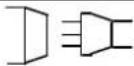
 |  | |
| Connection - frequency | Minimum protection | |
 | 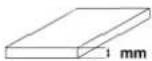 | |
| Regulated area | Recommended material thickness | |
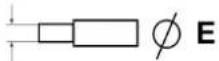 |  | |
| Electrode thickness | Weight | |
 | [6x4C] | |
| Can be used in working conditions with increased risk of electric shock | Single-phase alternating current supply and rated power symbol | |
| [z83K] |  | |
| WIG welding technology | Shielded metal arc welding with wrapped bar electrode | |
Explanation of symbols:
| EN 60974-1/A3:2005 | European welding standard |
| Serial No. | Must be given for all questions |
| MMA | Wrapped electrode welding |
| WIG | WIG welding in protective atmosphere |
| U_0 | Idle voltage |
| U_2 Welding voltage | |
| X | Relative time of activation.Relation between the time of loading/total working time. This applies to the working time cycle of 10 minutes.A relative time of activation of 60% for example means that 6 minutes of loading must be followed by 4 minutes of idle run. |
| I Welding current | |
| U | Secondary voltage with welding current 12 |
| U1 | Nominal input voltage (alternating current; tolerance ± 10%) |
| I_1max Maximum nominal input current | |
| I_eff Maximum effective input current | |
| 1~50/60Hz | 60Hz single-phase voltage 50 or 60 Hz |
| I1 | Absorbed current at corresponding welding current 12. Divide the I1 value with 1.6 for power supply for WIG welding. |
| IP21S Metal frame protection class | |
| S Suitable for works in high-risk areas | |
The appliance meets the EN 60974-10, class A requirements. That means it can only be used for industrial purposes. In unfavourable conditions, the appliance can cause electromagnetic disturbance.
Unpacking and installation
Unpack the appliance and check it thoroughly for any damage during transport. Any claim for damages caused by transport must be lodged by the purchaser with the transporter.
After unpacking the appliance, put it to a well-ventilated place, with no dust if possible. In doing so, make sure the air inlet next to cooling slots is not obstructed.
Warning: It is absolutely important that the air inlet is not limited around the appliance as this could result in appliance overloading and subsequent damage of the internal parts.
At least 200 mm of free and unrestricted space must be around the appliance.
Do not put any filters or covers before the air intake slots as the warranty would not apply in such a case.
Note: If the appliance is carried on shoulders, it is necessary to make sure the air inlet slots are not blocked
Operation
The appliance must be installed by experienced staff. All connections must meet applicable regulations and be in full accordance with safety regulations (CENELECHD 427)
Space requirements
Before installing and putting the appliance into operation, the user must consider the potential electromagnetic interference in the environment.
The following must be considered:
a) Other feeder, control, signal and telephone cables above, below and near the welder:
b) Radio appliances, television sets and receivers;
c) Computers and other control devices;
d) Safety and monitoring devices;
e) Health of the present persons, e.g. artificial pacemakers, hearing aids, etc.
f) Measuring instruments used for calibration purposes;
g) Protection of other devices around the welder. They must be compatible. Moreover, additional protective and preventive measures may be necessary;
h) Time of day when welding or other works are to be performed.
The size of the area considered depends on the building structure and other activities taking place at the same time; however, they may be extended to neighbouring buildings.
Reduction of emissions
Main source of power
The welder must be connected in accordance with the manufacturer details on the main source of power. If there is any failure, it may be necessary to take additional preventive measures, e.g. fitting a filter to the main source of power. Electrical feeder cables of firmly installed welders must be protected by an insulation tube along the entire cable. Welding cables must be as short as possible.
Before using this source of power it is necessary to read carefully the CENELEC standards HD 407 and HD 433. The insulation cables, electrode holder clamps, plugs and sockets must be checked and it needs to be made sure the length and cross section of the welding cables correspond to the selected current:
Within a cable length of 5 m: minimum cross section of 16 mm ^4
Cable length of 5-20 m: minimum cross section of 25 mm²
Cable length of 20-30 m: minimum cross section of 35 mm²
Welding with sheathed electrodes
The welder is suitable for all types of electrodes and cellulose electrodes (AWS 6010). Use the electrode holder clamps without the protruding retaining screws, meeting the applicable safety standard.
- Make sure the main switch in the back is in the "0" position or more precisely that the main feeder cable is not plugged. - Connect the welding cables with their polarity being in accordance with the electrode manufacturer details. The electrical circuit must not be intentionally put into indirect contact with the protective cable, with an exception being on the welded piece. If grounding on the workpiece is intentionally provided using a protective cable, the connection must be as short as possible.
- The protective cable cross section must be at least as big as the overhead cable of the welding current. Both cables must be connected to the workpiece in the same place. Use the grounding terminal on the appliance or near the appliance.
- All safety measures must be taken in a way to prevent any stray current. Check whether the system voltage corresponds to the input voltage of the appliance.
- Connection of the main feeder cable: The capacity of the circuit breaker or fuses in the main feeder cable should exceed or be equal to the appliance-absorbed current I1. The absorbed current I1 needs to be determined by reading the technical specifications on the appliance based on the nominal input voltage U1. All extension cables must have a cross section corresponding to the absorbed current I1. Activate the current supply on the main switch on the back of the appliance.
WARNING:
ELECTRIC SHOCK MAY BE FATAL.
DO NOT TOUCH THE CONDUCTIVE PARTS!
DO NOT TOUCH THE WELDING OUTPUT
CONNECTIONS IF
THE APPLIANCE IS ON!
NEVER TOUCH THE WELDER OR ELECTRODE AND
GROUNDING TERMINAL AT THE SAME TIME!
Select the current based on the electrode diameter, welding position and welded connection. After welding, it is necessary to make sure to turn the main switch on and remove the electrode from the electrode holder.
WIG welding
An appropriate source of gas must be available before starting your work.
Fe p steel p ArCO2
V2A P stainless steel P ArCO2
Connect the appliance as follows:
- Connect your gas bottle with the gas fitting to the appliance (pic. 1/8) using the gas hose (not included) and secure them with the hose clip.
- Connect the WIG hose bundle plug to the appropriate "Dinse bayonet connector" on the inverter (pic. 1/6) and screw on the WIG hose bundle gas hose (pic. 1/5).
Caution: In WIG welding, the grounding cable is the anode and the WIG hose bundle is the cathode.
- Now insert the grounding cable in the appropriate socket (anode).
- Sharpen the tungsten needle vertically to the grinding wheel and insert it in the spring collet. The app. 5 mm tungsten needle should protrude in the front from the ceramic nozzle. (see pic. 3-6)
- Now open the gas valve on the burner (app. 1/4 of the turn) and switch the appliance to WIG (if available)
- Ignition: Now put the edge of the ceramic nozzle vertically to the material and tilt the needle evenly to the material so that an electric arc is formed.
Pic. 2 Gas hose with adapter
| Welding | Welding by needling | Welding by pulling |
| The type of welding that is more suitable should be decided after welding a test piece. |  | |
| Penetration | Smaller | Bigger |
| Penetration width | Bigger | Smaller |
| Welding seam | Flatter | Higher |
| Weld defect | Bigger | Smaller |
Warranty
A warranty period of 12 months applies to commercial use and 24 months apply to private use and commences on the day of purchase of the device.
Warranty applies exclusively to failures due to defective material or workmanship. An original sale slip with indication of date of sale must be presented in case of claiming for the warranty rights.
Warranty does not cover unprofessional use such as device overload, violent use, damage caused by third party or foreign materials, failure to comply with operations and assembly manual, and normal wear and tear.
Residual risks and protective measures
Direct electric contact
A defective cable or plug may lead to life-threatening electric shock.
Have any defective cables or plugs replaced only by a professional. Use the appliance only on a connection with a safety switch against stray current (RCD).
Indirect electric contact
Inadequate local lighting
Inadequate lighting represents a high safety risk.
Provide adequate lighting for any work with the appliance.
Thermal protection – protection in case of overheating and failures of the main source of current
Due to the intervention of the system voltage and overheating inspection device
(thermostat on cooling bodies), the source of current is off.
Behaviour in case of emergency
Provide necessary first aid treatment corresponding to the injury nature and seek qualified medical help as soon as possible. Protect the injured person from other injuries and calm him/her down.
In case of accident, first aid kit must always be available in the place of your work in accordance with DIN 13164. Material taken out of the first aid kit needs to be supplemented right away.
If help is needed, please provide the following details:
- Place of accident
- Accident nature
- Number of injured persons
- Injury type
Disposal
The disposal instructions are based on icons placed on the appliance or its package. The description of the meanings can be found in the "Marking" section.
Transport package disposal
The package protects the appliance against damage during transport. Packing materials are usually chosen depending on their environmental friendliness and disposal method and can therefore be recycled. Returning the package to material circulation saves raw materials and reduces waste disposal costs. Parts of packages (e.g. foils, styropor®) can be dangerous to children. Risk of suffocation! Keep parts of packages away from children and dispose them as soon as possible.
Operator requirements
The operator must carefully read the Operating Instructions before using the appliance.
Qualification
No special qualification is necessary for using the appliance apart from detailed instruction by an expert.
Minimum age
The appliance may only be operated by persons over 16 years of age. An exception includes youngsters operating the appliance within their professional education to achieve necessary skills under trainer's supervision.
Training
Using the appliance only requires appropriate instructions by a professional or reading the Operating Instructions. No special training necessary.
Maintenance
Do you have any technical questions? A claim? Do you need spare parts or the Operating Instructions?
You will be helped quickly and without needless bureaucracy at our webpage www.guede.com in the Services part. Please help us be able to assist you. To identify your appliance when claimed, we need to know its serial No., order No, and year of production. All these details can be found on the type label. Enter the details below for future reference.
Serial No.
Order No.
Year of production:
Tel. +49 (0) 79 04 / 700-360
Fax: +49 (0) 79 04 / 700-51999
Email: support@ts.guede.com
Introduction
ED MMA: 115 A\~20%/84 A\~60%/
20
ED WIG: 130 A\~20%/84 A\~60%/
65 A\~100%
ED MMA: 115 A\~20%/84 A\~60%/20 A\~100%
ED WIG: 130 A\~20%/84 A\~60%/65 A\~100%
Izolační třída: H
Typ ochrany: IP21S
ED MMA: 115A\~20%/84 A\~60%/20 A\~100%
ED WIG: 130A\~20 %/84 A\~60 %/65 A\~100 %
ED MMA: 115 A\~20%/84 A\~60%/20 A\~100%
ED WIG: 130 A\~20%/84 A\~60%/65 A\~100%
Isolatieklasse: H
Beveiligingsaard: IP21S
ED MMA: 115 A\~20%/84 A\~60%/
20 A\~100%
ED WIG: 130 A\~20%/84 A\~60%/
65 A\~100%
Classe d'isolamento: H
ED MMA: 115 A\~20%/84 A\~60%/20 A\~100%
ED WIG: 130 A\~20%/84 A\~60%/65 A\~100%
ED MMA: 115 A\~20%/84 A\~60%/20
ED WIG: 130 A\~20%/84 A\~60%/
65
Razred izolacije: H
ED MMA: 115 A\~20%/84 A\~60%/
20
ED WIG: 130 A\~20%/84 A\~60%/
65
Klasa izolacije: H
Tip zaštite od prekostruje: IP21S
Težina invertora: 9,8 kg
Težina opreme: 6,2 kg
ED MMA: 115 A\~20%/84 A\~60%/20 A\~100%
ED WIG: 130 A\~20%/84 A\~60%/65 A\~100%
Klasa izolacije: H
Plinsko crijevo s adapterom
| ZavarivanjeNajprikladniju todu zavarivanja odaberite poslije zavarivanja probnog komada | Ubodno zavarivanje | Zavarivanje povlačenjem |
 | ||
| Zavareni spoj | Manji | Veći |
| Širina vara | Veći | Manji |
| Izrada gusjenica | Pljosnatiji | Viši |
| Mana vara | Veći | Manji |
Garancija
Garancija važi 12 mjeseci u slučaju industrijske upotraebe, a 24 mjeseca za potrošača; počinje važiti na dan prodaje uređaja.
Garancija se odnosi samo na nedostatke, koji su nastali zbog kvarnog materijala ili prilikom proizvodnje. Neophodno je, da se u slučaju reklamacije dopremi i račun ili faktura, koja mora biti potpisana od strane prodavca i obilježena datumom i pečatom prodavaonice.
U okvir garancije ne spadaju kvarovi, koji bi nastali putem nepravilne uporabe kao npr.: preopterećenje uređaja, rukovanje silom odnosno zbog štetnog kontakta sa drugim predmetima.
Contact electric direct
Contact electric indirect
ED MMA: 115 A\~20%/84 A\~60%/
20
ED WIG: 130 A\~20%/84 A\~60%/
65 A\~100%
Клас на изолация: Н
Тип защита: IP21S
Тегло на инвертора: 9,8 кг
Тегло на
EC-DECLARATION OF CONFORMITY
We, hereby declare the conception and construction of the below mentioned appliances correspond - at the type of construction being launched - to appropriate basic safety and hygienic requirements of EC Directives. In case of any change to the appliance not discussed with us the Declaration expires.
DECLARATION CE DE CONFORMITE
PROHLASENI O SHODE EU




- Einleitung
- Appliance description - pic. 1
- Supply includes
- Technical specifications
- General safety instructions
- Safe work
- Extension cable for outdoor use:
- Be careful!
- Check whether the appliance is not damaged!
- WARNING!
- Have your appliance repaired by an electrician only!
- Appliance-specific safety instructions
- Protection against burns:
- Protection against fire:
- Poison combustion products:
- Radiation:
- Electric shock:
- Artificial pacemaker:
- Marking
- Unpacking and installation
- Operation
- Space requirements
- The following must be considered:
- Reduction of emissions
- Main source of power
- Welding with sheathed electrodes
- WARNING:
- WIG welding
- Connect the appliance as follows:
- Caution: In WIG welding, the grounding cable is the anode and the WIG hose bundle is the cathode.
- Warranty
- Residual risks and protective measures
- Direct electric contact
- Indirect electric contact
- Thermal protection – protection in case of overheating and failures of the main source of current
- Behaviour in case of emergency
- If help is needed, please provide the following details:
- Disposal
- Transport package disposal
- Operator requirements
- Qualification
- Minimum age
- Training
- Maintenance
- Serial No.
- Introduction
- Garancija
- Contact electric direct
- Contact electric indirect
- EC-DECLARATION OF CONFORMITY
- DECLARATION CE DE CONFORMITE
- PROHLASENI O SHODE EU
Brand : GUDE
Model : GC 130 WIG
Category : Welding machine