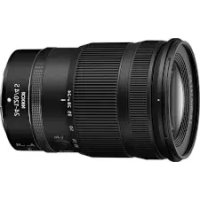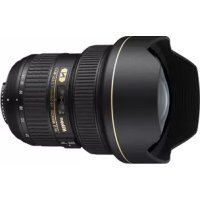
AF-S DX 10-24MM F3.5-4.5G ED - Camera lens NIKON - Free user manual and instructions
Find the device manual for free AF-S DX 10-24MM F3.5-4.5G ED NIKON in PDF.


| Product type | NIKKOR DX AF-S G-type zoom lens |
| Mount | Nikon bayonet mount (DX format) |
| Focal length | 10-24 mm |
| Maximum aperture | f/3,5-4,5 |
| Optical construction | 14 elements in 9 groups (3 aspherical, 2 ED) |
| Angle of view | 109° - 61° |
| Focusing | Autofocus with SWM motor (silent), manual with priority (M/A) |
| Minimum focusing distance | 0,24 m (AF) / 0,22 m (MF) |
| Number of diaphragm blades | 7 (circular) |
| Aperture range | f/3,5 to f/22 (10 mm), f/4,5 to f/29 (24 mm) |
| Filter diameter | 77 mm |
| Dimensions (diameter × length) | Approx. 82,5 mm × 87 mm |
| Weight | Approx. 460 g |
| Supplied accessories | Front cap LC-77, rear cap LF-1, lens hood HB-23, case CL-1118 |
| Maintenance and cleaning | Blower, brush, soft cloth slightly moistened with ethyl alcohol; avoid organic solvents |
| Safety | Do not look at the sun through the lens; do not use in presence of flammable gases; keep out of reach of children |
Frequently Asked Questions - AF-S DX 10-24MM F3.5-4.5G ED NIKON
User questions about AF-S DX 10-24MM F3.5-4.5G ED NIKON
0 question about this device. Answer the ones you know or ask your own.
Ask a new question about this device
Download the instructions for your Camera lens in PDF format for free! Find your manual AF-S DX 10-24MM F3.5-4.5G ED - NIKON and take your electronic device back in hand. On this page are published all the documents necessary for the use of your device. AF-S DX 10-24MM F3.5-4.5G ED by NIKON.
USER MANUAL AF-S DX 10-24MM F3.5-4.5G ED NIKON
Touching the internal parts of the camera or lens could result in injury. Repairs should be performed only by qualified technicians. Should the camera or lens break open as the result of a fall or other accident, take the product to a Nikon-authorized service representative for inspection after unplugging the product and/or removing the battery.
Turn off immediately in the event of malfunction
Should you notice smoke or an unusual smell coming from the camera or lens, remove the battery immediately, taking care to avoid burns. Continued operation could result in injury.
After removing or disconnecting the power source, take the product to a Nikon-authorized service representative for inspection.
Do not use the camera or lens in the presence of flammable gas
Operating electronic equipment in the presence of flammable gas could result in an explosion or fire.
Do not look at the sun through the lens or viewfinder
Viewing the sun or other strong light sources through the lens or viewfinder could cause permanent visual impairment.
Keep out of reach of children
Particular care should be taken to prevent infants from putting the batteries or other small parts into their mouths.
Observe the following precautions when handling the camera and lens
- Keep the camera and lens unit dry. Failure to do so could result in fire or electric shock.
- Do not handle or touch the camera or lens unit with wet hands. Failure to do so could result in electric shock.
- When shooting with back-lighting, do not point the lens at the sun or allow sunlight to pass directly down the lens as this may cause the camera to overheat and possibly cause a fire.
- When the lens will not be used for an extended period of time, attach both front and rear lens caps and store the lens away from direct sunlight. Failure to do so could result in a fire, as the lens may focus sunlight onto a flammable object.
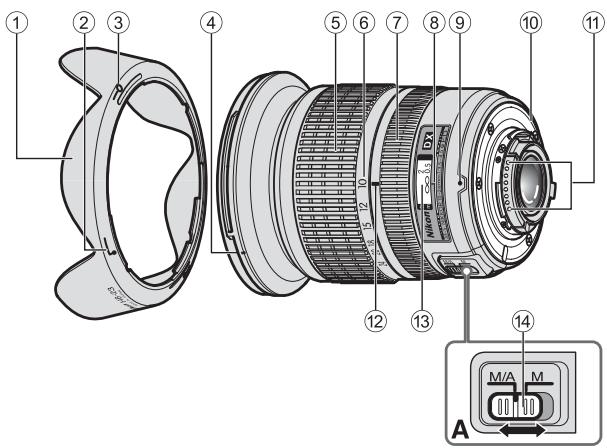
■ Nomenclature
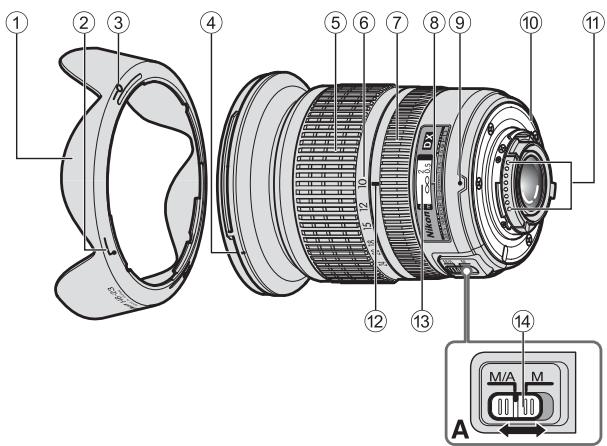
① Lens hood (P. 14)
(2) Lens hood attachment index (P. 14)
③ Lens hood setting index (P. 14)
④ Lens hood mounting index (P. 14)
⑤ Zoom ring (P. 12)
⑥ Focal length scale (P. 12)
⑦ Focus ring (P. 13)
⑧ Distance index line
⑨ Mounting index
Lens mount rubber gasket (P. 15)
CPU contacts (P. 15)
12 Focal length index
13 Distance scale
14 Focus mode switch (P. 13)
():referencepage
Thank you for purchasing the AF-S DX NIKKOR 10-24mm f/3.5-4.5G ED lens. DX NIKKOR lenses are specially designed for use with Nikon digital-SLR (Nikon DX-format) cameras, such as the D300 and D90. When mounted on Nikon DX-format cameras, the lens picture angle is equivalent to approximately 1.5 × the focal length in 35mm format. Before using this lens, please read these instructions and refer to your camera's User's Manual.
Major features
- This lens employs a Silent Wave Motor to drive the focusing mechanism, making autofocusing smooth, silent and almost instantaneous. The focus mode switch (14) is provided for simple selection of autofocus (A) or manual focus (M) operation.
- More accurate exposure control is possible when this is mounted on a Nikon camera with 3D color matrix metering capability, because subject distance information is transferred from the lens to the camera.
- Superior optical performance and rendering characteristics are maximized with the use of three aspherical lens elements and two extra-low dispersion (ED) glass elements, which ensure correction of chromatic aberration. In addition, the rounded aperture produces soft and pleasing blur characteristics in portions of pictures that are out-of-focus.
Focusing, zooming, and depth of field
Before focusing, rotate the zoom ring ⑤ to adjust the focal length until the desired composition is framed. If your camera has a depth-of-field preview (stop-down) button or lever, depth of field can be previewed through the camera viewfinder.
- This lens is equipped with the Internal Focusing (IF) system. As the shooting distance decreases, the focal length also decreases.
- The distance scale does not indicate the precise distance between the subject and the camera. Values are approximate and should be used only as a general guide. When shooting distant landscapes, depth of field may influence operation so that the camera may focus at a position that is closer than infinity.
Setting the aperture
Use the camera to adjust the aperture setting.
Variable maximum apertures
Zooming the lens from 10mm to 24mm decreases the maximum aperture by 23 stop.
However, there is no need to adjust the aperture setting to achieve correct exposures because the camera automatically compensates for this variable.
Focusing (Fig. A)
Set your camera's focus mode selector according to the chart below:
| Camera focus mode | Lens' focus mode switch | |
| M/A | M | |
| AF (A/S/C) | Autofocus with manual override | Manual focus (Focus assist is available.) |
| MF | Manual focus (Focus assist is available.) | |
For more information on camera focus modes, refer to your camera's User's Manual.
Autofocus with manual override (M/A mode)
1 Set the lens focus mode switch 14 to M/A.
2 Autofocus is enabled, but autofocus operation can be overridden by rotating the separate focus ring ⑦ while pressing the shutter-release button halfway, or by pressing the AF-ON button on the camera body of cameras so equipped.
Press the shutter-release button halfway or the AF-ON button once again to cancel manual focus and resume autofocus.
Getting good results with autofocus
Refer to "Notes on using wide- or super wide-angle AF NIKKOR lenses" (P. 17).
The built-in flash and vignetting
- The built-in flash cannot be used over distances of less than 0.6m (2.0 ft.).
- To prevent vignetting, do not use the lens hood.
- Vignetting is the darkening of the corners around the image that occurs when the light emitted by the flash is obstructed by the lens hood, or lens barrel, depending on the focal length or shooting distance.
| Digital-SLR cameras | Supported focal length/Shooting distance |
| D700 | • 18mm/No restriction |
| D300/D200/D100 | • 18mm/1.5 m (4.9 ft.) or greater• 20mm/1 m (3.3 ft.) or greater• 24mm/No restriction |
| D90/D80/D50 | • 20mm/2.5 m (8.2 ft.) or greater• 24mm/1 m (3.3 ft.) or greater |
| D70-series | • 24mm/1 m (3.3 ft.) or greater |
| D60 | • 24mm/1.5 m (4.9 ft.) or greater |
| D40-series | • 24mm/2.5 m (8.2 ft.) or greater |
Built-in flash on the D100 has an angle of coverage suited to focal lengths of 20mm and greater. Vignetting occurs at a focal length of 18mm.
Using the lens hood Attaching the hood
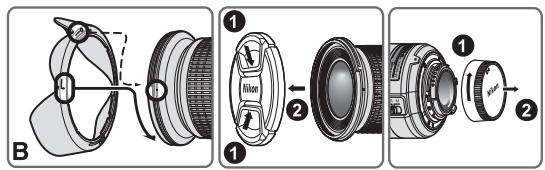
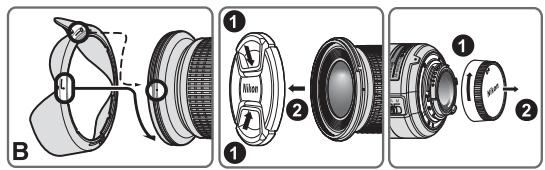
Align the lens hood attachment index ( , either of two indexes) ② on the hood with the lens hood mounting index ④ on the lens, and turn the hood counterclockwise (as viewed when holding the camera with the lens facing away from you) until it clicks into place (Fig. B).
- Be sure that the lens hood mounting index is aligned with the lens hood setting index (-o) ③.
- If the lens hood is not correctly attached, vignetting may occur.
- To facilitate attachment or removal of the hood, hold it by the base (near the lens hood attachment index) rather than its outer edge.
- To store the lens hood, attach it in the reverse position.
Detaching the hood
Hold the lens hood by the base (near the lens hood attachment index) and turn clockwise, as viewed when holding the camera with the lens facing away from you, to detach.
Lens care
- Be careful not to allow the CPU contacts (1) to become dirty or damaged.
- If the lens mount rubber gasket 10 is damaged, be sure to visit the nearest Nikon-authorized service representative for repair.
- Clean lens surfaces with a blower brush. To remove dirt and smudges, use a soft, clean cotton cloth or lens tissue moistened with ethanol (alcohol) or lens cleaner. Wipe in a circular motion from the center to the outer edge, taking care not to leave traces or touch other parts of the lens.
- Never use organic solvent such as thinner or benzene to clean the lens, as this could cause damage, result in a fire, or cause health problems.
- NC filters are available to protect the front lens element. The lens hood also helps to protect the front of the lens.
- When storing the lens in its flexible lens pouch, attach both the front and rear lens caps.
-
When the lens is mounted on a camera, do not pick up or hold the camera and lens by the lens hood.
-
When the lens will not be used for an extended period of time, store it in a cool, dry place to prevent mold and rust. Be sure to store the lens away from direct sunlight or chemicals such as camphor or naphthalene.
-
Do not get water on the lens or drop it in water as this will cause it to rust and malfunction.
- Reinforced plastic is used for certain parts of the lens. To avoid damage, never leave the lens in an excessively hot place.
Standard accessories
- 77mm snap-on Front Lens Cap LC-77
Rear Lens Cap LF-1
Bayonet Hood HB-23 - Flexible Lens Pouch CL-1118
■ Optional accessory
- 77mm screw-on filters
Specifications
Type of lens: G-type AF-S DX Zoom-NIKKOR lens with built-in CPU and Nikon bayonet mount (specially designed for use with Nikon digital-SLR—Nikon DX-format—cameras)
Focal length: 10mm-24mm
Maximum f/3.5-4.5 aperture:
Lens 14 elements in 9 groups construction: (3 aspherical lens and 2 ED lens elements)
Picture angle: 109^ - 61^
Focal length 10, 12, 15, 18, 20, 24mm scale:
Distance Output to camera
Zoom control: Manually via separate zoom ring
Focusing: Nikon Internal Focusing (IF) system, autofocus using a Silent Wave Motor, manually via separate focus ring
Shooting Graduated in meters and feet from distance scale: 0.24 m (0.8 ft.) to infinity ()
Closest focusing 0.24 m (0.8 ft.) at all zoom settings distance: with autofocus 0.22 m (0.72 ft.) at all zoom settings with manual focus
No. of diaphragm 7 pcs. (rounded) blades:
Diaphragm: Fully automatic
Aperture range: f/3.5 to f/22 (at 10mm), f/4.5 to f/29 (at 24mm)
Exposure Via full-aperture method measurement:
Attachment size: 77mm (P = 0.75mm)
Dimensions: Approximately 82.5mm (dia.) × 87 mm (extension from the camera's lens-mounting flange)
Weight: Approximately 460g (16.2 oz)
Specifications and designs are subject to change without notice or obligation on the part of the manufacturer.
Notes on using wide- or super wide-angle AF NIKKOR lenses
In the following situations, autofocus may not perform as expected when shooting with wide- or super wide-angle AF NIKKOR lenses.
A person standing in front of a distant background
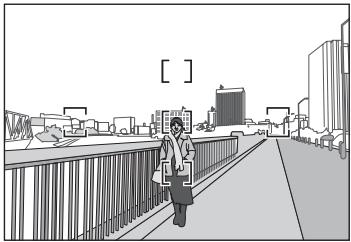
D A field filled with flowers
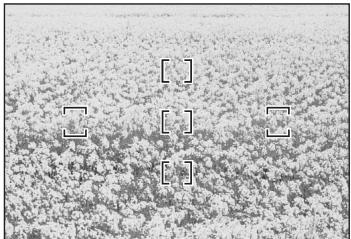
- When the main subject in the focus brackets is relatively small
When a person standing in front of a distant background is positioned within the focus brackets, as shown in Fig. C, the background may be in focus, while the subject is out of focus.
- When the main subject is a finely patterned subject or scene
When the subject is finely patterned or of low contrast, such as a field filled with flowers, as shown in Fig. D, focus may be difficult to acquire using autofocus.
Responses to these types of situations
(1) Focus on a different subject located at the same distance from the camera, apply focus lock, recompose, and shoot.
(2) Set the camera's focus mode to manual focus and focus manually on the subject.
Refer to "Getting Good Results with Autofocus" in the camera's User's Manual.
ACHTUNG
Keinesfalls zerlegen.
Échelle des 10, 12, 15, 18, 20, 24mm facales:
10, 12, 15, 18, 20, 24mm
Forvara utom rackhall for barn
10, 12, 15, 18, 20, 24mm
Avstandsinformation:
Visasikamerahuset
Zoomkontroll:
Manuell med separat zoomring
Fokusering:
Nikon-system for innerfokusering (IF), autofokus med en fokuserande Silent Wave-motor, manuellt med separat fokursing
Avstandsskala:
Anges i meter fran 0,24 m till oandliget ()
Minsta
He pa36npaunTe foToKamepy
Прикосовенке BВHтейним сдостягамотокамрьиnp обектахпс Клочуеництабраитон dokhenpnosbntbcstolkOBKANIFINPPOBahmI cneuaJIncstam.Всчуанорбдема корпуca fotokampeь nnpobektba В рezynbta napenia npdyoro ponocseCTBNAOTKIOJUte cTeBOEi 6IOK pNTAHINu n/nu n3BNeKeT 6aTaTeO uDcSTabTe N3IDeЯ nIpoBepKn B aBTOPI3OBaHbNCEpBNCbI ueHrP Nikon.
B cnyae HeNCnPabHocTn HemeDneHHo BbIKIOHTe foToKaMepy
PnIPOBJIeHmIbMaIINHeO6bUHOrO3aNaXa,IXC0xJUeToI3
OTOKAMEbIuNOb6BeTbMBA,HEMeIeHNo I3bNeKneIe 6batapei,
CTapAcbI HeIOyCTNTbOxOGRo. PIOIoJIeJeHne paObOtIc
ycTpoIcTBOM MojET pInBecTe K IOJIyeHnIO TpaBM.
PiocSe I3BVeJeHnBbATepaERI NtOKnIOeHnIE NcTOHnKa
IIITAHNIA DOCTABBe TE3dEneIe InpOBePK B6nKJaiShn
ABTOPI3OBaHNb CEpBNCbI YeHTp KOMnAHnN Nikon.
He noIb3yIeTcB foToKamepoI nIOn o6BeKTHOBm npn HauNvN B BO3dyXe JeRKOBCPiJaMeHJeUxxCra3OB
Pa6Ota C 3eNkTPOHNBIM O6OpyDObaHmE M pI INaIuINB VBO3dyXe IerKOBOCPnIAMEHAnxCRA3OB MOKeT pIINBcCTN K B3bByI INI NOKApY.
He cmotpnte ha coJIHcpe uepe3 06bekTnB nIIN BIDONCKaTeIb
ECNI CMOTPetb AONCHUE INN DpyrNIE NCTOCHINIK RPOKOFCBeta Upe3 ObekTIN INN BUNDOCKaTeB, TO 3TO MOKeTBJBb3at HeOB6PATTMOE YXUdHEnHe 3ePNH.
XpaHNTe B HeNoCTyNHom DnIaTeTMeCTe
PIMMTE Oc6be MebpI pnpEOCTOPPOXHOTCOI BO I36EJAHNE nonaIbIbIbIbIbIbIbIbIbIbIbIbIbIbIbIbIbIbIbIbIbIbIbIbIbIbIbIbIbIbIbIbIbIbIbIbIbIbIbIbIbIbIbIbIb
Co6IIOaIte CneJeUOuIe MePbI PpeIOctOpOKHocTn BO BpEm 3KcIIpyataun FOToKApMebpI NObEKeTINBa
He npnyckaTe NoIapnauB NObl Ha FOtOKaMEpy n ObbEKnB. HecobJIOeHneI TOrO Tpe6oBaHnMoKet npivBeCn KNojApy nn NopapKeHHN 3NeKTpUcECKM TOKOM.
He PnkracaiTecb K ToTOKAMe HIN O6bKtINy MOKpbIMnypKaMn.HecO6JIIOHEne 3TOrO Tpe6oBaHnA MOJET pNIBECTN K nopArjEHNIO 3NeKTPIueckmTOKOM.
-Пи CBemke C 3aДнИМ OCBseHEnM He HApBaJIrTe
ОБькTIV И В сОЛпс,а TAKKE He ДОпУСКТЕ РОТадИЯ
СоЛнECHHOrO CBETA B OБькTIV,ТAK KАТОМOTJ
РИВЕЦИ Кперреву ФOTOKaMeРи IEE BOrTOpAHNIO.
ECNIIOBbKTHB He 6ydt NcIOnb3ObTaBcB TceHHe NdITeHbHOrBOBpeMeHn, pIrkpeniTe nepeHIOU n 3aHIOU KpbuNk OBeKtINBa H e OCTabJIte OBeKtINB NOJ pMABmIO COJIHeuHbIMn LyuMaH. HecObIoJeHne 3TORO YCJIOBIA MOKeT PnIBeCTNu K BO3rOpaHIO, NocKoJIbky OBbKTHMBoMeKT CpOKYcInPoBaT bCOJIHeuHbIe LyuHa Na KAKOM-JNo BoIeKOBOCPiAmEHaIOUcEMc npdeMeTe.
KOMNOHeHTbl
① BileHda (ctp. 54)
② MeTka KpenneHn6NeHdbI (Ctp. 54)
③ MeTka Φικαζινιν 6JIeHДы (CTp. 54)
④ YctaHOBOUHЯ MEtKa 6JIeHdBi (CTp.54)
⑤ Kolbó 0уМировань (Стp. 52)
⑥ ⅢkaIa foKycHOro paCCToHnIa (CTp.52)
⑦ Φόκυςρούθουης κόλυο (ctp. 53)
⑧Деленипасстония
⑨ YctaHOBOUHAR METka
10 Pe3nHObBi yNIOTHNTeNb KpeIeHnO6BeKtNaBc (ctp. 55)
11 Pa3bEmbl npouecccopa (CTp. 55)
⑫ Mětka φokychoro pácctɔrHn
⑬ Šūkāna pačćǒrǎn
14 Пеклочаел ржимов Фокс neuropовки (стр. 53)
OCHOBHbIe BO3MOXHOCTM
-Даньов obbeKTHB nCOnNoIb3yeT 6ecUWMHb BONHOBО npBod Silent Wave Motor dny npabJeHHaMmOM FOKYCUPOBKN,уTO deAeT npOeCC aTOFOKcUPOBKn pIaBHBIM,6ecUWMHbIM n npakTNUeCKM MTHOBeHHbIM. IpeKJIouateJIb peKIMOB FOKcUPOBKn 14) nCnOJIb3yETcJd yDIOHOro nepeKInOeHHa MEXdY abTomatueckM (A) u puHbIM (M) peKImaMn FOKcUPOBKn.
-Писпосьовимаобektима с сфотокамерим Nikon
cФункшиевуздцеторого Матричero замара
obecneчимаразсблесошгий КОТрюль КСПОЗИЦИ,
ТAKКАДнны о pacstotоним do obekta pepedaioTcS C
обektimba на сфotokamepy.
- BlaOJapn IcNoIb3oBaHnIO Tpem acFepnueckm
IIN3AM nDyBM 3eNEMeHTAM CO CBEPXHN3K0I INCpEpcneI
(ED), KOTOpBle o6ecneuBAIoT KOPpeKUIO
xPOMaTNUeCKoAbeppauu, yUyUaioTcR
IpeBOcXoNDbIe ONTIueckne XapakTePNCtIKN i
BO3MOXHOCTNIpepaDu. KpOmeTORO, CkpyIeHHaI
DnaΦpMaMo IocceNuBaET 60lee KpAcNBbIE MHRKNe i
HeCHbIe OePeTaHnI Tex ChAteN CHMkA, KOTOpBle
HaxOJaTcB HBe fokyca.
ФokycnpoBka,3yMMnpOBaHne n rny6nHa pe3ko n3o6paxaemoro npoctpaHCTBa
Ipeep fokycnpoBko nOBepHnTe KOJIbTO 3yMMnpoBaHHN ⑤ dna HacptpOKNfOKyCHOrO paCtOHN, POKa He 6ydet OoctnHTyTa Tpe6yMaem KOMNOHOBka KaJaPa. Ecnf fotokaMepa o6OpyDObaHa KHONKO ININ pblYarom npedBaPnteHBO rnoPCMOTpa rJy6nHb pe3K0 n3o6pakaMeoro IpocTpaHCTBa TO rJy6nHy pe3K0 n3o6pakaMeoro IpocTpaHCTBa MOnHO nPoBeRtpbYepe3 BUNOcKaTeB fOtOKaMepl.
- 3TOT obBeKTNB o6OpyDobAH cIcTeMoB BVHTpeHHeN eKocuPobKN (IF). IIO Mepe yMeHbWeHnPa pacCTOHN BcEMKn TAKKe yMeHbWaeTcFOkyCHOe pacCTOHNHe.
- Shkana pacctoHnHa He OTPaKaEt ToHOrO pacCToHnHa MeJy 06BeKToM I FOToKAmepoI.3HaeHnI npNbN3nTeNbHbE IN XcNeDyET NcNObTbOBaTb TOnbKO dNo 6ooero pykoBocdTa, PpI cBmEke ydaJIeHHbx ne3aKeJ 3NaHeueHne rnybHbpe 3eKIO n3oBpaKaemoro npoctpaHCTBa MoKeT NobInraTb Ha paBoTy FOToKApmbI TaKIM 6op3oM, UTO OHa CfOkyCpUyeTc H a 6OJIee 6In3KnO6BeKt, a He Ha 6eCKOHeuHOCTb.
YctaHObKa dnaΦparMbI
Ha foToKaMepe MoKHO HaCTpOnTb npaMaTePbI nHaΦpaTmbl.
IImMeHeHne 3NaYeHnMaKcMambHoJ dHaΦparMbI
ПиузУММИРОВAHIN OБьЕКТИВС 10MMdo24MM MaKcMmaJIbHЯДиФaPmaMyEmMbIaEТСЯHa?3eDINHIIbI。 OДнakoПриЗTom HeTpe6ByETcpeRyIINpOBAbIпapAmTePbI dNafpaPmblДЯ DOCTUKeHЯпаBnHOBJЭКСЮЗИцИ, TAK KaKФOTOKaMepa BblIJIHЯET ABTomATUHeCKYIO KOMTEHCaIQU 3TOIпepeMeHHOH.
ΦokycnupOBka (pnc.A)
UCTAHOBITe ceneKTop peKIMa oKOpCnOBKn KaMepbI B COOTBETCTBM C HNKeIPnBEJHNO Tabiue.
CtanhapThbIe npHnAdJeXHoCTN
-Переднaya Крblшka объektва LC-77 даметром 77mm
- 3aɪnɪə 3aɪntɪhə Kpɪsɪka oʊbɛktɪba LF-1
-Блелда сбайонтум креллелем HB-23
MЯrkni yexonДяообъektiva CL-1118
DOnonHnteIbHa npuHaJIeXHoCTb
BvHnHuBaIOuNecAfNbTpblDnaMeTpom77MM
TexHnueckne xapaKTepeNtKN
Tun obektniba:
ObbeKTHB C nepemehHbIM fokychblm
pacCTOnHM AF-S DX NIKKORTnna G
CO BCTPOeHHbIMMNKPoPiOpeccopom
n baiNeHTHO onpABNO Niko
(pa3pa6oTaHa cneuAnbHo nJa
ncNIOb3OBaHnC uNfpoBBMn
Φotokamepam Nikon SLR φopmata
Nikon DX)
Φokychoe pacCTOJHHe:
10MM-24MM
MaKcImaMbHaJa DaΦparMa:
f/3,5-4,5
Ontnuecka cxema:
14 3nementobB9rpynnax (3acpemuueckneIinH3bl2n2 3nementaED)
YrOI 3peHnA:
109°-61°
山kanaΦokychoro paCCTOHHNIA:
10, 12, 15, 18, 20, 24MM
HΦopMaIaOpaCtOAHIN:
IpeepaetcBfoToKaMepy
UnpabJIeHne 3yMMnpoBaHnEM:
PuyHoe C nOMOoJIbCneIaJIbHOrO KOJIbCa 3yMMnPOBaHIN
Фokycupobka:
CnCTema BHytpenHHe OKycNPOBKn (IF) Nikon, abTofoKycNPOBKa c
ncNoIb3OBAHmE 6eUHMHO
BOJIHOBO rnpIBoJa, puHaJ OKycNPOBKa C NOMOuBIO TOdJIbHOrO
KOLBa z oKycNPOBKn
山kana
f/3,5-f/22 (npu 10mm), f/4,5-f/29
DnaΦpaRmbi:
(πρι 24MM)
3amep
MeTOOM C NOJIHOCTbIO OTKpbITOn dHaqparMoI
3KcNo3nHn:
77MM (P = 0,75MM)
YCTaHOBOUHbI
pa3Mep:
Pa3Mepbl:
Schaal 10, 12, 15, 18, 20, 24mm
brandpuntsaftstand:
10, 12, 15, 18, 20, 24mm
Informace o vzdalenosti:
10, 12, 15, 18, 20, 24mm
Información o vzdialenosti:
Prenos do fotoparatu
Ovládanie
transfokátora:
10, 12, 15, 18, 20, 24mm
丛R
卡露
吾主:
緖電の応応を通過的状態。
主谓 不谓:
77mm(P = 0.75mm)
No reproduction in any form of this manual, in whole or in part (except for brief quotation in critical articles or reviews), may be made without written authorization from NIKON CORPORATION.