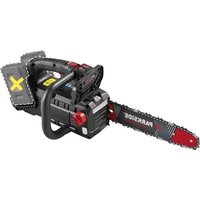
PPAKS 40-Li B2 - Cordless chainsaw PARKSIDE - Free user manual and instructions
Find the device manual for free PPAKS 40-Li B2 PARKSIDE in PDF.


User questions about PPAKS 40-Li B2 PARKSIDE
0 question about this device. Answer the ones you know or ask your own.
Ask a new question about this device
Download the instructions for your Cordless chainsaw in PDF format for free! Find your manual PPAKS 40-Li B2 - PARKSIDE and take your electronic device back in hand. On this page are published all the documents necessary for the use of your device. PPAKS 40-Li B2 by PARKSIDE.
USER MANUAL PPAKS 40-Li B2 PARKSIDE
natural_image
Black-and-white photo of a Parkside chainsaw with visible branding and cross symbol (no text or symbols on the device itself)Akku-Baumpflegesäge / Cordless pruning saw / Tronçonneuse d'élagage sans fil PPAKS 40-Li B2
DE AT CH BE
Akku-Baumpflegesäge
Cordless pruning saw
Translation of the original instructions
NL BE
Before reading, unfold the page containing the illustrations and familiarise yourself with all functions of the device.
FR BE
Service-Center....26
Importeur.... 26
Motorstrom I ....16 A
natural_image
Two diagrams showing mechanical components: (a) a gear-like structure with motion arrows, and (b) a tool interacting with a surface (no text or symbols)Scope of delivery/accessories....29
Overview.... 29
Description of functions....29
Technical data....30
Safety information....31
Meaning of the safety information...... 31
Pictograms and symbols.... 31
General Power Tool Safety Warnings....32
General Chain Saw Safety Warnings.....34
Additional safety instructions for chainsaws for tree care....35
Causes and Operator Prevention of Kickback.... 35
Residual risks....36
Preparation....36
Safety devices....36
Checking the battery charge level...... 36
Charging.... 36
Charging the battery.... 37
Operation.... 37
Before use....37
Inserting and removing the battery......39
Switching on and off....39
Overload indication....39
Changing the chain speed....39
Limbing work.... 39
Working in the tree with rope climbing technique.... 40
Cleaning, maintenance and storage..... 41
Cleaning....41
Maintenance.... 42
Storage.... 45
Transport....45
Troubleshooting...... 45
Disposal/environmental protection......46
Dispose of batteries in an environmentally friendly manner....46
Service.... 46
Guarantee.... 46
Repair service.... 47
Service Centre 48
Importer.... 48
Spare parts and accessories.... 48
Translation of the original EU declaration of conformity.... 49
Exploded view.... 267
WARNING! This chainsaw is for use by trained tree service operators only. Use without proper training can result in severe injuries.
Introduction
Congratulations on purchasing your new cordless pruning saw (hereinafter referred to as product or device).
You have chosen a high-quality device. This device was quality-tested and subjected to a final inspection during production, therefore ensuring proper functioning of your device. In some cases, residual amounts of lubricants may be present on or in the device. This is not a flaw or a defect and is no cause for concern.

The instruction manual forms part of this device. It contains important information on safety, use and disposal. Read the instruction manual carefully. Familiarise yourself with the controls and how to use the device
correctly. Use the device only as described and for the stated fields of application. Store the instruction manual carefully and ensure that all documents are handed over in the event that the device is passed on to another user.
Proper use
⚠ WARNING! This chainsaw is only intended for users trained in tree care. Use without proper training can lead to serious injuries.
This device is only intended for the following use:
- Tree care, such as thinning out trees and cutting up trees when a chainsaw with a long handle distance cannot be used.
Only use this pruning saw if you cannot use a chainsaw with a long handle distance. The risk of injury is many times higher.
The device is not intended for any other types of application. This typically includes cutting masonry, plastic, stone, metal, food or wood containing foreign objects (e.g. nails or screws).
The device is intended for use by adults.
Children under the age of 16 may not use the device, except under supervision.
The chainsaw may only be used by one person. The user must wear appropriate personal protective equipment (PPE). The chainsaw must be held with the right hand on the rear handgrip and the left hand on the front handgrip.
Before using the device, the user must read and understand all information and instructions in the instruction manual.
Any other use that is not expressly permitted in this instruction manual may pose a serious hazard to the user and result in damage to the device. The operator or user of the machine is responsible for any accidents or personal injury and/or material damage to third parties or their property. The machine is intended to be used by do-it-yourselfers. It was not designed for heavy commercial use. The warranty is void in the case of commercial use. The manufacturer is not liable for damage caused by improper use or incorrect operation.
The device is part of the X 20 V TEAM series and can be operated with batteries of the X 20 V TEAM series. Batteries of the X 20 V TEAM series may only be charged using chargers of the X 20 V TEAM series.
Scope of delivery/accessories
Unpack the device and check that everything is present.
Dispose of the packaging material properly.
- Cordless pruning saw
- Blade bar (pre-assembled)
- Saw chain (pre-assembled)
- Chain guard
- Oil bottle (180 ml Organic saw chain oil)
• Original instructions
Batteries and charger are not included in delivery.
Overview
The illustrations for the device can be found on the front and back fold-out page.
1 Rear handle
2 On/Off switch
3 Switch lock
4 Chain brake lever/Front hand protection
5 Blade bar
6 Saw chain
7 Wing screw
8 Rotary wheel
9 Sprocket cover
10 Battery holder
11 Front handle
12 Tank cover
13 Oil level indicator
14 Chain catch
15 Fastening eyelet
16 Battery release
17 Battery
18 Button (Charge level indicator)
19 Charge level indicator
20 Charger
21 Oil bottle
22 Chain guard
Fig. A
23 Oil passage
24 Blade guide
25 Holder (Wing screw)
26 Sprocket
27 Clamping plate
28 Clamping screw
29 Lug (Sprocket cover)
Fig. C
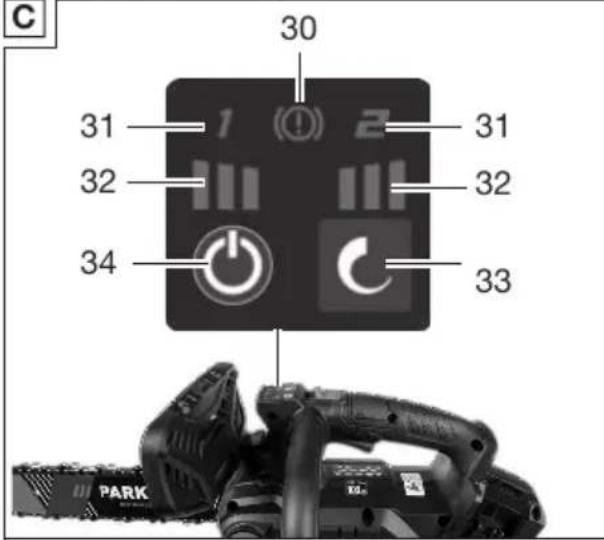
30 Indicator
31 Chain speed indicator
32 Charge level indicator (Device)
33 Button (Chain speed)
34 On/off button
Description of functions
This pruning saw is a special chainsaw with a limited mass that can be used by a trained operator to prune and dismantle the crowns of standing trees. The handles are close to-
gether to make it easier to work in confined spaces.
The circulating saw chain is guided over a blade bar (guide rail). The tool has a quick-stop chain brake. An automatic oil system ensures continuous chain lubrication. The tool also features a 2-in-1 rotary wheel for chain tension. The tool is provided with various protective devices to protect the user. The tool can be coupled with the Parkside app.
Please refer to the descriptions below for information on how the operating elements work.
Technical data
Cordless pruning saw .....PPAKS 40-Li B2
Engine voltage U ....40 V = ; (2x 20 V)
Engine current I 16 A
Chain speed v_0 13 m/s
Chain speed v_max .....16 m/s
Weight (without blade bar, chain, encasing, oil and batteries) 2.10 kg
Tank capacity 190 cm ^3 (0.19 l)
Blade bar ......M1431246-1041TL (Trilink)
- Blade bar type ....12"
- Blade bar length ....35.0 cm (350 mm)
- Cutting length ....28.5 cm (285 mm)
Saw chain ....CL14346TL (Trilink)
- Chain pitch 9.525 mm ( ^3/8 ")
- Number of driving elements ....46
- Drive link thickness ....1.1 mm (0.043")
Chain sprocket pitch 9.525 mm (3/8")
-Number of teeth (chain sprocket) 7
Temperature .... max. 50 °C
- Operation 4 - 50 °C
- Storage 15 - 25 °C
Sound pressure level ( L_pA ) 92.6 dB; K_pA=3 dB
Sound power level ( L_WA )
- Guaranteed ....100 dB
- Measured 97.8 dB; K_WA =2.73 dB
Vibration ( a_h )
- Front handle ....4.37 m/s ^2 ; K=1.5 m/s ^2
- Rear handle ....3.72 m/s ^2 ; K=1.5 m/s ^2
Type of battery .....Li-Ion
PARKSIDE Performance Smart battery
Smart PAPS 204 A1/Smart PAPS 208 A1
- Operating frequency/Frequency band 2400 - 2483.5 MHz
- transmitted power .... ≤ 20 dBm
Levels of noise and vibration were determined according to the standards and regulations in the declaration of conformity.
The specified total vibration value was determined according to the following standard: ISO 22867:2021
The specified noise emission values were determined in accordance with the following standard: ISO 22868:2021
The values have been determined according to a standardised test procedure and can be used to compare one tool with another.
The specified total vibration value and the stated specified noise emission value can also be used for a provisional assessment of the load.
WARNING! The vibration and noise emissions may deviate from the specified values during actual use of the device, depending on how the device is being used. Safety measures for the protection of the operator are to be determined that are based on an estimate of the actual vibration load under the real operating conditions (for this, all parts of the operating cycle are to be taken into account, for example, times in which the device is turned off, and those during which it is turned on but running without a load).
X 20 V TEAM
The device is part of the X 20 V TEAM series and can be operated with batteries of the X 20 V TEAM series. Batteries of the X 20 V TEAM series may only be charged using chargers of the X 20 V TEAM series.
We recommend that you operate this appliance with the following batteries only: PAP 20 A1, PAP 20 A3, PAP 20 B1, PAP 20 B3, Smart PAPS 204 A1, Smart PAPS 208 A1
Use of the device with the following batteries is prohibited: Smart PAPS 2012 A1
We recommend charging these batteries with the following chargers: PLG 20 A3, PLG 20 A4, PLG 20 C1, PLG 20 C2, PLG 20 C3, PDSLG 20 A1, PDSLG 20 B1 PLG 201 A1, Smart PLGS 2012 A1
Rechargeable battery and charger technical data: See separate manual.
Safety information
This section deals with the basic safety instructions for using the device.
⚠ WARNING! Injury and property damage due to improper handling of battery. Observe the safety information and notes on charging and proper use as shown in the instruction manual for your battery and charger from the series X 20 V TEAM. A detailed description of the charging process and further information can be found in these separate operating instructions.
WARNING! A chainsaw is a dangerous piece of equipment that can cause serious or even fatal injuries if used incorrectly or carelessly. Therefore, for your safety and the safety of others, always observe the following safety instructions and ask an expert for advice if you are unsure.
Meaning of the safety information
⚠ DANGER! If you do not observe this safety instruction, an accident will occur. The result of which is severe bodily injury or death.
⚠ WARNING! If you do not observe this safety instruction, an accident may occur. The result of which is likely severe bodily injury or death.
CAUTION! If you do not observe this safety instruction, an accident will occur. The result of which is likely minor or moderate bodily injury.
NOTICE! If you do not observe this safety instruction, an accident will occur. The result of which is possible damage to property.
Pictograms and symbols
Symbols on the device
WARNING! This chainsaw is for use by trained tree service operators only. Use without proper training can result in severe injuries.

Attention!

Read the instruction manual

Use hearing protection

Use eye protection

Use head protection

Use protective gloves

Wear safety shoes with firm soles!

Wear clothing with cut resistant inserts!

Attention! Kickback - be aware that you may experience kickback while working with the machine.

Never work with only one hand!

Always work with both hands!

Use of the device in the rain or a damp environment is prohibited.

Guaranteed sound power level L_WA in dB(A)

Chain brake activated

Chain brake deactivated

Saw chain oil
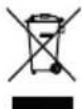
Waste electrical and electronic equipment (WEEE) must not be disposed of with domestic waste.
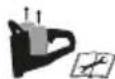
Remove the batteries before maintenance work!

Blade bar type

Chain brake

Note: Release chain brake before starting

Chain speed indicator

Setting the chain speed levels

On/off button

Charge level indicator
Graphical symbol on chain brake lever

Chain brake activated

Chain brake deactivated
Graphical symbol beneath sprocket cover
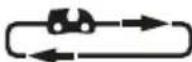
Direction of travel of saw chain
Graphical symbol on sprocket cover
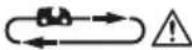
Direction of travel of saw chain
Symbols on the rotary wheel
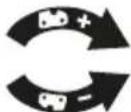
Tensioning the saw chain
Relaxing the saw chain
Graphical symbol on the wing screw (sprocket cover)
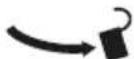
OPEN
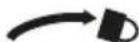
CLOSE
Graphical symbol on blade bar

Blade bar type

Groove width

Chain pitch

Number of driving elements
Symbol on the oil bottle

Keep out of reach of children
General Power Tool Safety Warnings
WARNING! Read all safety warnings, instructions, illustrations and specifications provided with this power tool. Failure to follow all instructions listed below may
result in electric shock, fire and/or serious injury. Save all warnings and instructions for future reference.
The term "power tool" in the warnings refers to your mains-operated (corded) power tool or battery-operated (cordless) power tool.
- WORK AREA SAFETY
a) Keep work area clean and well lit. Cluttered or dark areas invite accidents.
b) Do not operate power tools in explosive atmospheres, such as in the presence of flammable liquids, gases or dust. Power tools create sparks which may ignite the dust or fumes.
c) Keep children and bystanders away while operating a power tool. Distractions can cause you to lose control.
- ELECTRICAL SAFETY
a) Power tool plugs must match the outlet. Never modify the plug in any way. Do not use any adapter plugs with earthed (grounded) power tools. Unmodified plugs and matching outlets will reduce risk of electric shock.
b) Avoid body contact with earthed or grounded surfaces, such as pipes, radiators, ranges and refrigerators. There is an increased risk of electric shock if your body is earthed or grounded.
c) Do not expose power tools to rain or wet conditions. Water entering a power tool will increase the risk of electric shock.
d) Do not abuse the cord. Never use the cord for carrying, pulling or unplugging the power tool. Keep cord away from heat, oil, sharp edges or moving parts. Damaged or entangled cords increase the risk of electric shock.
e) When operating a power tool outdoors, use an extension cord suitable for outdoor use. Use of a cord suitable for outdoor use reduces the risk of electric shock.
f) If operating a power tool in a damp location is unavoidable, use a residual current device (RCD) protected supply. Use of an RCD reduces the risk of electric shock.
- PERSONAL SAFETY
a) Stay alert, watch what you are doing and use common sense when operating a power tool. Do not use a power
tool while you are tired or under the influence of drugs, alcohol or medication. A moment of inattention while operating power tools may result in serious personal injury.
b) Use personal protective equipment. Always wear eye protection. Protective equipment such as a dust mask, non-skid safety shoes, hard hat or hearing protection used for appropriate conditions will reduce personal injuries.
c) Prevent unintentional starting. Ensure the switch is in the off-position before connecting to power source and/or battery pack, picking up or carrying the tool. Carrying power tools with your finger on the switch or energising power tools that have the switch on invites accidents.
d) Remove any adjusting key or wrench before turning the power tool on. A wrench or a key left attached to a rotating part of the power tool may result in personal injury.
e) Do not overreach. Keep proper footing and balance at all times. This enables better control of the power tool in unexpected situations.
f) Dress properly. Do not wear loose clothing or jewellery. Keep your hair and clothing away from moving parts. Loose clothes, jewellery or long hair can be caught in moving parts.
g) If devices are provided for the connection of dust extraction and collection facilities, ensure these are connected and properly used. Use of dust collection can reduce dust-related hazards.
h) Do not let familiarity gained from frequent use of tools allow you to become complacent and ignore tool safety principles. A careless action can cause severe injury within a fraction of a second.
4. POWER TOOL USE AND CARE
a) Do not force the power tool. Use the correct power tool for your application. The correct power tool will do the job better and safer at the rate for which it was designed.
b) Do not use the power tool if the switch does not turn it on and off. Any power tool that cannot be controlled with the
switch is dangerous and must be repaired.
c) Disconnect the plug from the power source and/or remove the battery pack, if detachable, from the power tool before making any adjustments, changing accessories, or storing power tools. Such preventive safety measures reduce the risk of starting the power tool accidentally.
d) Store idle power tools out of the reach of children and do not allow persons unfamiliar with the power tool or these instructions to operate the power tool. Power tools are dangerous in the hands of untrained users.
e) Maintain power tools and accessories. Check for misalignment or binding of moving parts, breakage of parts and any other condition that may affect the power tool's operation. If damaged, have the power tool repaired before use. Many accidents are caused by poorly maintained power tools.
f) Keep cutting tools sharp and clean. Properly maintained cutting tools with sharp cutting edges are less likely to bind and are easier to control.
g) Use the power tool, accessories and tool bits etc. in accordance with these instructions, taking into account the working conditions and the work to be performed. Use of the power tool for operations different from those intended could result in a hazardous situation.
h) Keep handles and grasping surfaces dry, clean and free from oil and grease. Slippery handles and grasping surfaces do not allow for safe handling and control of the tool in unexpected situations.
5. BATTERY TOOL USE AND CARE
a) Recharge only with the charger specified by the manufacturer. A charger that is suitable for one type of battery pack may create a risk of fire when used with another battery pack.
b) Use power tools only with specifically designated battery packs. Use of any other battery packs may create a risk of injury and fire.
c) When battery pack is not in use, keep it away from other metal objects, like
paper clips, coins, keys, nails, screws or other small metal objects, that can make a connection from one terminal to another. Shorting the battery terminals together may cause burns or a fire.
d) Under abusive conditions, liquid may be ejected from the battery; avoid contact. If contact accidentally occurs, flush with water. If liquid contacts eyes, additionally seek medical help. Liquid ejected from the battery may cause irritation or burns.
e) Do not use a battery pack or tool that is damaged or modified. Damaged or modified batteries may exhibit unpredictable behaviour resulting in fire, explosion or risk of injury.
f) Do not expose a battery pack or tool to fire or excessive temperature. Exposure to fire or temperature above 130 °C may cause explosion.
g) Follow all charging instructions and do not charge the battery pack or tool outside the temperature range specified in the instructions. Charging improperly or at temperatures outside the specified range may damage the battery and increase the risk of fire.
6. SERVICE
a) Have your power tool serviced by a qualified repair person using only identical replacement parts. This will ensure that the safety of the power tool is maintained.
b) Never service damaged battery packs. Service of battery packs should only be performed by the manufacturer or authorized service providers.
General Chain Saw Safety Warnings
- Keep all parts of the body away from the saw chain when the chain saw is operating. Before you start the chain saw, make sure the saw chain is not contacting anything. A moment of inattention while operating chain saws may cause entanglement of your clothing or body with the saw chain.
- Always hold the chain saw with your right hand on the rear handle and your left hand on the front handle. Holding the chain saw with a reversed hand configuration increases the risk of personal injury and should never be done.
- Hold the chain saw by insulated gripping surfaces only, because the saw chain may contact hidden wiring. Saw chains contacting a "live" wire may make exposed metal parts of the chain saw "live" and could give the operator an electric shock.
- Wear eye protection. Further protective equipment for hearing, head, hands, legs and feet is recommended. Adequate protective equipment will reduce personal injury from flying debris or accidental contact with the saw chain.
- Do not operate a chain saw in a tree, on a ladder, from a rooftop, or any unstable support. Operation of a chain saw in this manner could result in serious personal injury.
- Always keep proper footing and operate the chain saw only when standing on fixed, secure and level surface. Slippery or unstable surfaces may cause a loss of balance or control of the chain saw.
- When cutting a limb that is under tension be alert for spring back. When the tension in the wood fibres is released the spring loaded limb may strike the operator and/or throw the chain saw out of control.
- Use extreme caution when cutting brush and saplings. The slender material may catch the saw chain and be whipped toward you or pull you off balance.
- Carry the chain saw by the front handle with the chain saw switched off and away from your body. When transporting or storing the chain saw, always fit the guide bar cover. Proper handling of the chain saw will reduce the likelihood of accidental contact with the moving saw chain.
- Follow instructions for lubricating, chain tensioning and changing the bar and chain. Improperly tensioned or lubricated chain may either break or increase the chance for kickback.
- Cut wood only. Do not use chain saw for purposes not intended. For example: do not use chain saw for cutting metal, plastic, masonry or non-wood building materials. Use of the chain saw for operations different than intended could result in a hazardous situation.
- This chain saw is not intended for tree felling. Use of the chain saw for operations different than intended could result in serious injury to the operator or bystanders.
- Follow all instructions when clearing jammed material, storing or servicing the chain saw. Make sure the switch is off and the battery pack is removed. Unexpected actuation of the chain saw while clearing jammed material or servicing may result in serious personal injury.
Additional safety instructions for chainsaws for tree care
⚠ WARNING! This tool is a very dangerous tool if you are not careful or use the tool improperly. This tool can cause serious injury to the operator or other persons. It is therefore of the utmost importance that these operating instructions are carefully read and understood.
General Information
- The information in these operating instructions is in no way a substitute for professional expertise and experience. If you are not sure how to operate the tool, contact a person with specialist knowledge and experience.
- Only use a chainsaw for tree care if you have the necessary training. In particular, do not work in trees without training. The risk of serious injury is very high.
- Do not use a chainsaw for tree care for work that you can also do with a chainsaw with a rear handle. In the event of a kickback, you can control a chainsaw with a rear handle better than a chainsaw for pruning.
Preparation
- There is an increased risk of loss of control with this tool. Persons carrying out tree care work with this tool must have completed appropriate training in pruning and working techniques beforehand. The operator must be equipped with safety equipment such as a lifting platform, ropes and safety harnesses.
Operation
- Prolonged use of the tool can lead to blood circulation disorders in the hands caused by vibration (Raynaud's syndrome).
If you notice any unusual impairment, stop work immediately and consult a doctor.
- Always apply the chain brake before starting the engine and release the throttle lock immediately after starting the engine. Make sure that the engine speed has returned to idle before the chain brake is released.
- Only use the throttle lock when starting the engine.
⚠ WARNING! Insert a throttle lock before using the tool.
Causes and Operator Prevention of Kickback
natural_image
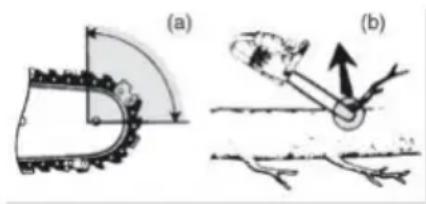
Two technical diagrams showing mechanical components and a robotic arm, labeled (a) and (b), with no readable text or symbols.- Kickback may occur when the nose or tip of the guide bar touches an object, or when the wood closes in and pinches the saw chain in the cut (Fig. b).
- Tip contact in some cases may cause a sudden reverse reaction, kicking the guide bar up and back towards the operator (Fig. a).
- Pinching the saw chain along the top of the guide bar may push the guide bar rapidly back towards the operator.
- Either of these reactions may cause you to lose control of the saw which could result in serious personal injury. Do not rely exclusively upon the safety devices built into your saw. As a chain saw user, you should take several steps to keep your cutting jobs free from accident or injury.
Kickback is the result of chain saw misuse and/or incorrect operating procedures or conditions and can be avoided by taking proper precautions as given below:
- Maintain a firm grip, with thumbs and fingers encircling the chain saw handles, with both hands on the saw and position your body and arm to allow you to resist kickback forces. Kickback forces can be controlled by the op-
erator, if proper precautions are taken. Do not let go of the chain saw.
- Do not overreach and do not cut above shoulder height. This helps prevent unintended tip contact and enables better control of the chain saw in unexpected situations.
- Only use replacement guide bars and saw chains specified by the manufacturer. Incorrect replacement guide bars and saw chains may cause chain breakage and/or kickback.
- Follow the manufacturer's sharpening and maintenance instructions for the saw chain. Decreasing the depth gauge height can lead to increased kickback.
Residual risks
There will always be residual risks even if you operate this device according to the instructions. The following hazards may occur in connection with the type and design of this device:
- Hearing damage if suitable ear protection is not worn.
- Health injuries resulting from the effect of hand/arm vibration in the event that the tool is used over a longer period of time or is not used and maintained properly.
- Cutting injuries
WARNING! Danger due to electromagnetic field generated while the tool is in operation. Under certain circumstances, this field may negatively affect active or passive medical implants. In order to reduce the danger of serious or fatal injuries, we recommend that individuals who wear medical implants should consult their doctor and the manufacturer of the implant before operating the tool.
Preparation
⚠ WARNING! Risk of injury due to unintentional start-up. Only insert the batteries into the tool once the tool is fully prepared for use.
Safety devices
The following safety devices are provided to protect the user and the device:
On/Off switch (2) with immediate chain stop
- The device switches off immediately once the on/off switch is released.
Switch lock (3)
- The switch lock must be unlocked in order to switch on the device.
Chain brake lever/front hand protection (4)
- The saw chain does not run when the chain brake is locked into place.
- Stops the saw chain immediately in the event of a kickback.
- Lever can also be operated manually.
- Protects the operator's left hand if it slips off the front handle.
Saw chain (6) with low kickback
- Helps to absorb kickbacks thanks to specially developed safety devices.
Chain catch (14)
- Increases stability when making vertical cuts.
- Makes sawing easier.
Checking the battery charge level
LEDs Meaning
red, orange, green Battery charged red, orange Battery partially charged
red Battery needs to be charged
- Press the button (18) next to the charge level indicator button (19) on the battery (17).
The LEDs of the charge level indicator show how much charge remains in the battery. - Charge the battery (17) when only the red LED on the charge level indicator (19) is illuminated.
Charging
WARNING! Injury and property damage due to improper handling of battery. Observe the safety information and notes on charging and proper use as shown in the instruction manual for your battery and charger from the series X 20 V TEAM. A detailed description of the charging process and further information can be found in these separate oper-
ating instructions. ⚠ WARNING! Risk of injury caused by leaking electrolyte solution! Do not expose the battery to extreme conditions such as heat and shocks. In case of contact with eyes or skin, rinse the affected
sites with water or a neutralising agent and seek medical attention.
⚠ WARNING! Risk of injury from electric shock! Only charge batteries in dry rooms. The external surface of the battery must be clean and dry before being connected to the charger.
- Charge the batteries before using them for the first time.
- Always comply with the latest safety information, as well as the regulations and information relating to environmental protection.
Charging the battery
See also the charger instruction manual.
Notes
- If warm, allow the battery to cool before charging.
- Do not expose the battery to direct sunlight or temperatures max. 50 °C for long periods of time. In particular, avoid placing the product on radiators or storing it in vehicles parked in the sun.
Procedure
- If necessary, remove the battery (17) from the cordless tool.
- Slide the battery into the charging slot of the charger (20).
- Plug the charger into an outlet.
- Once charging is complete, disconnect the charger from the mains supply.
- Pull the battery charging slot out.
Control LEDs on the charger (20)
| green red Meaning | |
| lights up — | Battery is fully chargedstand-by (No battery inserted) |
| — lights up Battery is charging | |
| — flashes Battery is overheated | |
| flashes flashes Battery is defective | |
Operation
Before use
⚠ WARNING! Risk of injury! Always wear protective gloves, safety goggles, ear muffs, a hard hat and cut-resistant work clothing when working with the tool.
⚠️ CAUTION! Dust may be generated when sawing dry wood. Wear a suitable dust mask.
Carry out the following steps before operating the chainsaw:
• Tensioning the saw chain, p. 37
- Pouring in chain oil, p. 38
• Charge and insert both batteries
- Checking the chain brake, p. 38
- Checking chain lubrication, p. 38
NOTICE! Check the tool for damage after dropping it on the floor or other impacts. The tool may only be started when it is in a safe operating condition.
Tensioning the saw chain
NOTICE! Do not re-tension or change the saw chain when it is hot because it shrinks slightly once it has cooled down. If this is not observed it can lead to damage on the guide rail or the engine because the saw chain is now too taut on the blade bar.
Regularly tightening the saw chain provides safety for the user and reduces and/or prevents wear and chain damage. We recommend that the user check the chain tension before starting work and at intervals of approx. 10 minutes and correct it if necessary. The saw chain warms up when working with the saw and thus expands slightly. These “expansions” can be expected especially from newer saw chains.
Chain tension and chain lubrication have a significant impact on the service life of the saw chain. The chain tension of a new saw chain must be readjusted after a maximum of 5 cuts.
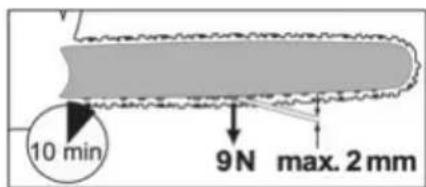
The saw chain is properly tensioned when it does not hang from the underside of the blade bar and cannot be moved around by a gloved hand. When pulling on the saw chain with 9 N (approx. 1 kg) of force, the saw chain and blade bar should not be separated by a distance of more than 2 mm.
⚠️ CAUTION! Risk of injury due to unintentional start-up. Switch off the tool. Remove the batteries from the tool.
Checking the chain tension
Pull the saw chain (6) upwards at the top of the blade bar (5).
- Saw chain can hardly be pulled upwards: The chain tension is too high. Relax the saw chain.
- The saw chain can be pulled up so far that the driving elements are not fully visible: The chain tension is correct.
- The saw chain can be pulled up so far that the driving elements are fully visible: The chain tension is too low. Tension the saw chain.
Procedure
-
Deactivate the chain brake: Pull the chain brake lever (4) back towards the front handle (11).
You can only refit the sprocket cover (9) when the chain brake band has been released. -
Loosen the wing screw (7) ⬇.
-
Tension the saw chain: Turn the rotary wheel for chain tension (8) ⬇.
Relax the saw chain: Turn the rotary wheel for chain tension (8) ⭕.
- Tighten the wing screw (7).
The chain tension of a new saw chain must be readjusted after a maximum of 5 cuts.
Checking the chain brake
NOTICE! The saw chain does not rotate when the chain brake is locked into place.
Procedure
- Place the chainsaw on a firm, level surface. It must not touch any objects.
- Operate the chain brake lever (4).
- Hold the tool firmly with both hands, with your right hand on the rear grip (1) and your left hand on the front grip (11). Your thumb and fingers must tightly clasp the grips.
- Switch on the tool. The indicator (30) for the inserted chain brake flashes. The chain brake functions.
- Release the on/off switch (2).
⚠ WARNING! Risk of injury from the trailing saw chain. Do not use the chainsaw if the chain brake does not work properly. Contact the service centre.
Checking chain lubrication
NOTICE! If the chainsaw is used with too little oil, the cutting performance and lifespan of the saw chain will decrease as the saw chain will become blunt more quickly. You can recognise insufficient oil by the smoke development or discolouration of the blade bar. Make sure that there is always oil flowing onto the chain.
Notes
- Before starting work, check the oil level.
- You can check the chain lubrication at any time during operation.
Procedure
-
While the saw chain is running: Hold the chainsaw above clear ground. Observe the trace of oil. The chainsaw must not touch the ground!
-
Significant trace of oil: The chainsaw is working properly.
- Slight trace of oil: Check chain lubrication, adjust oil flow
- No trace of oil: Fill with chain oil, check chain lubrication, clean oil passage
Pouring in chain oil
⚠ WARNING! Risk of fire! Always turn off the device and let the engine cool down before filling with chain oil.
NOTICE! If the chainsaw is used with too little oil, the cutting performance and lifespan of the saw chain will decrease as the saw chain will become blunt more quickly. You can recognise insufficient oil by the smoke development or discolouration of the blade bar. Make sure that there is always oil flowing onto the chain.
The oil flows to the blade bar (5) as soon as the chain starts running.
- Check the oil level regularly and top up with oil if the level is low. Tank capacity: 190 cm^3 (0.19 l)
- Use bio chain oil containing additives to reduce friction and wear. Alternatively, use chain lubricating oil with a low proportion of adhesion additives.
- Empty the oil tank if it will not be used for a prolonged period of time (6–8 weeks).
Procedure
-
Place the tool on its side with the fuel cap (12) facing upwards.
-
Unscrew the fuel cap (12).
-
Pour the bio chain oil into the tank.
- Wipe away any spilt oil.
- Screw the fuel cap (12) on.
Inserting and removing the battery
⚠ WARNING! Risk of injury due to unintentional start-up. Only insert the batteries into the tool once the tool is fully prepared for use.
NOTICE! Risk of damage! An incorrect battery can damage the tool and battery.
Inserting the batteries
- Push the two batteries (17) along the guide into the battery holder (10). You will hear the batteries click into place.
Removing the batteries
- Press and hold the battery release (16) on the battery (17).
- Pull the batteries out of the battery holder (10).
Switching on and off
Requirements
- The blade bar (5), saw chain (6) and sprocket cover (9) are correctly fitted.
- Sufficient chain oil in the tank. Top up with chain oil if necessary (Pouring in chain oil, p. 38).
- Batteries are fully charged.
- The tool may only be used with two batteries of the X 20 V Team series from Parkside.
Procedure
- If necessary, insert the batteries (17) into the tool.
- Release the chain brake by pushing the chain brake lever (4) against the front handle (11).
- Hold the chainsaw firmly with both hands, with your right hand on the rear handle (1) and your left hand on the front handle (11). Your thumb and fingers must tightly clasp the grips.
- Before starting, make sure that the chain-saw is not touching any objects.
- To activate the tool, first press the on/off button (34).
NOTICE! The tool is in standby mode for approx. 5 minutes and must then be re-activated.
- To switch on, press the switch lock (3) with your right thumb and then press the on/off switch (2). The chainsaw runs at maximum speed. Release the switch lock (3) again.
- Release the on/off switch (2) to switch off the chainsaw. Continuous switching is not possible.
Overload indication
In case of overload, the red and yellow LEDs of the charge level indicator (32) flash.
Procedure
- The charge level indicator (32) lights up during operation. The charge level of the battery is indicated by illumination of the corresponding LEDs on the charge level indicator (32).
Red, orange and green → Batteries charged
Red and orange → Batteries partially charged
Red → Batteries need to be charged
- Charge the batteries (17) when only the red LED on the charge level indicator on the tool (32) is illuminated.
Changing the chain speed
(Fig. C)
Pressing the button for chain speed selection (33) lets you switch between chain speeds 13 and 16 m/s.
The chain speed indicator (31) shows you the chain speed at which the tool is currently operating by illuminating levels 1 or 2.
Level 1: 13 m/s Level 2: 16 m/s
Limbing work
⚠ WARNING! Risk of injury! If the saw chain is jammed, do not try to pull the chainsaw out by force. Switch off the engine and use a lever arm or wedge to release the chainsaw.
- Ensure that you are standing firmly and securely when delimbing.
-
Remove dirt, stones, loose bark, nails, clips and wires from the tree.
-
The saw chain must not touch the ground or any object while sawing through the material or thereafter.
- Do not saw with the rail tip.
- Please observe the precautionary measures to protect against kickback (Causes and Operator Prevention of Kickback, p. 35)
- If possible, support the pruning saw with the claw stop (14) when delimbing.
- Make sure that the chainsaw can swing through at the end of the cut due to its own weight. The chainsaw will no longer be supported in the cut. Counteract this accordingly.
- Always switch off the chainsaw engine before moving from tree to tree.
Limbing work in sections
Shorten long or thick branches before making the final separating cut. This prevents the saw chain from jamming.
Working in the tree with rope climbing technique
This section describes working methods to reduce the risk of injury when using chain-saws for tree care when working at height using rope climbing techniques. It can serve as a basis for instructions and training documents, but is no substitute for proper training. The recommendations in this appendix are just one example of best practice.
Stricter national or other regulations may apply.
This section explains
- general information to be observed before using a tree care chainsaw for work at height with rope climbing technology,
- how to prepare a tree care chainsaw for use with rope climbing technology and
- how to use a pruning chainsaw to prune and cut up trees, including safe working posture for two-handed use, how to start the chainsaw, how to cut with the chainsaw and how to free a jammed chainsaw.
This section does not deal with control techniques for cut branches and twigs or the points on safe use already covered.
General recommendations
- The operator of a pruning saw working at height with rope climbing technology should never work alone. A worker on the ground who is trained in appropriate
emergency procedures should be present to assist.
- The operator should be trained in safe climbing and working positions and have appropriate equipment such as harness, ropes, harnesses, carabiners and other equipment to ensure a safe working position for themselves and the chainsaw.
Preparing the chainsaw for use
- The chainsaw should be checked, started and switched off again by the worker on the ground before it is passed to the operator in the tree.
- The chainsaw requires a suitable sling for attachment to the operator's climbing harness (Fig. B.①).
- The sling must be attached to the retaining eyelet on the rear of the chain-saw.
- Suitable snap hooks must be provided to attach the chainsaw indirectly (i.e. via the sling) and directly (i.e. to the retaining eye on the chainsaw) to the climbing harness.
- Before passing the chainsaw on to the operator, ensure that it is securely fastened.
- Before removing the chainsaw from the climbing equipment, make sure that it is attached to the climbing harness.
- Attaching the chainsaw directly to the climbing harness reduces the risk of damage to the equipment when moving in the tree. However, make sure that the chainsaw is always switched off.
- The chainsaw should only be attached to the recommended attachment points of the climbing harness, which are located in the centre (front or back) or on the sides. The chainsaw should ideally be fixed at the centre back to keep it away from the climbing ropes and to keep the weight central to the operator's spine (Fig. B.②).
- When moving the chainsaw from one lifting eye to another, the operator must ensure that it is secured in the new position before releasing it from the previous lifting eye.
Using the pruning saw in the tree
- The chain brake should always be applied before a running chainsaw is lowered from the tree.
- The user should ensure that the chainsaw batteries are fully charged before making critical cuts.
- Accident analysis
An analysis of accidents involving these chainsaws during tree care work shows that the main cause is improper one-handed operation of the chainsaw. In the vast majority of accidents, the operator does not adopt a safe working position that allows him to hold both handles of the chainsaw. The following leads to an increased risk of injury:
- The chainsaw is not held firmly during kickback.
- The chainsaw gets out of control and tends to come into contact with the climbing ropes and the body (especially the left hand and left arm).
- Due to the unsafe working position, control is lost and contact with the chainsaw occurs (unexpected movement during operation of the chainsaw).
- Safe working position for working with both hands
To ensure that the chainsaw can be held with both hands, the operator should generally aim for a safe working position in order to work with the chainsaw as follows:
• horizontal cuts at hip height
• vertical cuts at the level of the solar plexus
- If the user is working near vertical logs with low lateral forces, a secure stand may be sufficient for a safe working position. If the user moves away from the trunk, measures must be taken to neutralise or compensate for the increasing lateral forces. For example, the main rope can be routed via an additional anchor point or the climbing harness can be connected to an additional anchor point using an adjustable sling (Fig. B.③).
- A foot sling made from a webbing sling can be helpful in achieving a secure footing in the working position (Fig. B.④).
Freeing a trapped chainsaw
Procedure for freeing a trapped chainsaw:
- Switch off the chainsaw and attach it securely to the tree trunk towards the cut or use an additional rope.
- Pull the chainsaw out of the cutting notch while lifting the branch if necessary.
- If necessary, free the jammed chainsaw with a handsaw or a second chainsaw at least 30 cm away from the jammed chainsaw.
Regardless of whether a hand saw or chainsaw is used to free the trapped chainsaw, the necessary cuts should be made between the trapped chainsaw and the branch tips so that the chainsaw is not carried away by the severed piece and further complicates the situation.
Cleaning, maintenance and storage
⚠ WARNING! Risk of injury due to unintentional start-up. Protect yourself when performing maintenance or cleaning work. Switch off the device and remove the battery (17).
You should have any repair and maintenance work that is not described in these instructions carried out by our Service Centre. Only use original replacement parts.
CAUTION! Please be aware that the chainsaw may leak oil after use if it is stored on its side or head. This is a normal occurrence and is caused by the ventilation opening on the top edge of the tank which is a necessary component; this is not grounds for complaint. Since every chainsaw is inspected and tested using oil during manufacture, a small amount of oil may remain in the tank after emptying, which may slightly dirty the housing during transport. Please clean the housing with a cloth.
Cleaning
⚠ WARNING! Electric shock! Never spray down the device with water.
⚠ WARNING! Risk of injury! Always switch off the motor and let it cool down, then remove the batteries before any cleaning work.
CAUTION! Cutting injuries! Wear cut-resistant gloves when working with the saw chain or with the blade bar.
NOTICE! Risk of damage. Chemical substances may attack the plastic parts of the machine. Do not use any cleaning agents or solvents.
Clean the machine thoroughly. This will extend the life of the machine and prevent accidents.
Cleaning after every use
- Keep the handles free of petrol, oil or grease. If necessary, clean the handles with a damp cloth washed in soapy water.
- Clean the saw chain. Do not use any liquids to clean the saw chain. Lightly oil the saw chain with chain oil after cleaning.
- For cleaning, also remove the sprocket cover (9) so that this area can also be cleaned.
- Clean the blade bar (5)
- Clean the ventilation slits and the surface of the machine with a paintbrush or dry cloth.
- Clean the oil passage (23) to ensure fault-free, automatic oiling of the saw chain during operation. Use a brush or a cloth to help remove residues from the oil passage.
Maintenance
Service intervals
Carefully perform the maintenance tasks listed in the following table on a regular basis. Regular servicing of your device will extend its life. Additionally, you will achieve optimum cutting performance and prevent accidents.
| Machine part Action Before | each use | After 10 hours of use | After each use | |
| Chain brake components | Visual inspection, replace as needed | √ | ||
| Sprocket (26) Visual inspection, replace as needed | √ | |||
| Saw chain (6) Check saw chain, oil, reg-rind or replace if necessary | √ | |||
| Saw chain (6) Clean and oil the saw chain √ | ||||
| Blade bar (5) Servicing the blade bar, p. 43 √ √ | ||||
| Blade bar (5) Turning the blade bar, p. 44 √ | ||||
| Automatic oil system | Check, clean oil pas-sage if necessary | √ | ||
Mounting the saw chain and blade bar
CAUTION! Cutting injuries! Wear cut-resistant gloves when working with the saw chain or with the blade bar.
Procedure
- Switch off the tool and remove the batteries (17) from the tool.
- Place the device on a level surface.
- Deactivate the chain brake: Pull the chain brake lever (4) back towards the front handle (11).
You can only refit the sprocket cover (9) when the chain brake band has been released.
- Turn the wing screw (7) and rotary wheel for chain tensioner (8) ⬇ to loosen the chain tension and remove the sprocket cover (9).
-
Remove the sprocket cover (9).
-
Push the blade bar (5) towards the chain sprocket (26).
You can remove the saw chain (6) and blade bar (5).
Changing the saw chain and blade bar
Prior to changing the saw chain, the groove of the guide rail must be cleaned of dirt because dirt deposits available can cause the saw chain to break out of the rail. The deposits can also absorb the chain oil. So the consequence would be that the chain oil would not or only a small part of it would reach the underside of the rail and the lubrication would be reduced.
⚠ WARNING! Risk of injury! The use of unauthorised combinations of blade bar and saw chain can lead to an increased risk of kickback.
Requirements
- Mounting the saw chain and blade bar, p. 42
Permitted cutting equipment
- Blade bar M1431246-1041TL (Trilink)
- Saw chain CL14346TL (Trilink)
Procedure
-
Replace the blade bar (5)/ the saw chain (6).
-
Fit the blade bar (5) and saw chain (6) as described under Installing the saw chain and blade bar, p. 43 beschrieben.
Installing the saw chain and blade bar
CAUTION! Risk of injury due to unintentional start-up. Switch off the machine. Remove the batteries from the tool.
Procedure
-
Switch off the tool and remove the batteries (17) from the tool.
-
Place the device on a level surface.
-
Deactivate the chain brake: Pull the chain brake lever (4) back towards the front handle (11).
You can only refit the sprocket cover (9) when the chain brake band has been released.
- Spread out the saw chain (6) in a loop so that the cutting edges are aligned in a clockwise direction. Use the symbol below the sprocket (26) as a guide for aligning the saw chain (6).
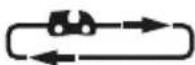
Direction of travel by saw chain
-
Place the blade bar (5) on the blade guide (24) and slide it onto the chain sprocket (26).
-
Thread the saw chain (6) over the chain sprocket (26).
-
Place the saw chain (6) on the top of the blade bar (5) in the blade bar groove. Start at the chain sprocket (26). It is normal for the saw chain (6) to sag.
-
Pull the blade bar (5) forwards to tension the saw chain (6).
-
Put the sprocket cover (9) back in position. To do this, first insert the lug (29) on the sprocket cover into the holder
provided on the tool. Ensure that the wing screw (7) engages in the holder (25). Check that the nose of the clamping plate (27) is seated in the holder of the clamping screw (28).
-
Tighten the wing nut (7) slightly. It should still be possible to turn the rotary wheel for chain tension (8).
-
Tension the saw chain: Turn the rotary wheel for chain tension (8) ⬇.
-
Tighten the wing nut (7) ⬇.
CAUTION! The chainsaw can be re-oiled. Please be aware that the chainsaw will regrease after use and may leak oil if it is stored on its side or upside down. This is a normal occurrence and is caused by the ventilation opening on the top edge of the tank which is a necessary component; this is not grounds for complaint. Since every chainsaw is inspected and tested using oil during manufacture, a small amount of oil may remain in the tank after emptying, which may slightly dirty the housing during transport. Please clean the housing with a cloth.
Running in a new saw chain
The tensioning force of a new saw chain decreases after some time. You must therefore retighten the saw chain after the first 5 cuts or after 10 minutes of sawing at the latest (Tensioning the saw chain, p. 37).
⚠ WARNING! Risk of injury! Never attach a new saw chain to a worn chain sprocket or to a damaged or worn blade bar. The saw chain could jump off or break.
Adjusting the chain tension
Adjusting the chain tension is described in section Tensioning the saw chain, p. 37.
Servicing the blade bar
⚠ WARNING! Cutting injuries! Wear cut-resistant gloves when working with the saw chain or with the blade bar.
Tools and aids required
- Flat file
Procedure
-
Mounting the saw chain and blade bar, p. 42
-
Check the blade bar (5) for wear.
-
Remove burrs and straighten the guide surfaces with a flat file.
-
Clean the oil passage (23) to ensure fault-free, automatic oiling of the saw chain during operation.
- Installing the saw chain and blade bar, p. 43
NOTICE! When in an optimal condition, the oil passages will automatically spray the saw chain with a little oil a few seconds after starting the chainsaw.
Changing the chain catch
- Mounting the saw chain and blade bar, p. 42
- Loosen and remove the screws on the chain catch (14).
- Replace the chain catch (14).
- Tighten the screws on the chain catch (14).
- Installing the saw chain and blade bar, p. 43
Turning the blade bar
CAUTION! Cutting injuries! Wear cut-resistant gloves when working with the saw chain or with the blade bar.
Notes
- The blade bar (5) needs to be reversed regularly after a working time of about 10 hours in order to ensure even wear.
Procedure
- Mounting the saw chain and blade bar, p. 42
- Turn the blade bar along its horizontal axis.
When doing so, pay attention to the correct rotation direction of the saw chain - Installing the saw chain and blade bar, p. 43
Sharpening the cutting teeth
CAUTION! Risk of injury! An incorrectly sharpened saw chain increases the danger of kickback! Use cut-resistant gloves when working with the saw chain or with the blade bar.
A sharp saw chain ensures optimum cutting performance. It effortlessly eats through the wood and leaves behind large, long wood chips. A saw chain is dull when you have to push the cutting equipment through the wood and the wood chips are very small. With a very blunt saw chain, no chips are produced, only wood dust.
Special tools are required for sharpening the saw chain to ensure that the chain is sharpened at the correct angle and to the correct depth. For inexperienced chain-saw users, we recommend having the saw chain sharpened by an expert or a specialist workshop. If you are confident that you can sharpen the chain, proceed according to the instructions for your saw chain sharpener (e.g. PARKSIDE PSG 85 B2).
- The sawing parts of the saw chain are the cutting links, which consist of a cutting tooth and a depth gauge lug. The height distance between these two determines the sharpening depth.
- The saw chain is worn and must be replaced with a new saw chain when only approx. 4 mm of the cutting tooth is left.
- The following values must be taken into account when sharpening the cutting teeth:
• Sharpening angle (25°)
- Front angle (10°)
• Sharpening depth (0,6 mm)
• Round file diameter (4,8 mm (3/16"))
⚠ WARNING! Risk of accident! Deviations from the dimensions of the cutting edge geometry can lead to an increased tendency of kickback by the machine.
Tools and aids required
- Round file
- Flat file
Procedure
- Switch off the tool and remove the batteries.
- Ensure that the saw chain is tightly tensioned to enable correct sharpening.
- Only sharpen from the inside out. Guide the round file from the inside of the cutting tooth to the outside. Lift off the file when you pull it back.
- Sharpen the teeth on one side first. Then turn the saw chain over and sharpen the teeth on the other side.
- Check the length of the cutting links. After sharpening, all the cutting links must have the same length and width.
-
After every third sharpening, check the sharpening depth (depth gauge) and re-file the height using a flat file. The depth gauge should be set back by approx. 0,6 mm from the cutting tooth.
-
After resetting, round off the depth gauge slightly towards the front.
Storage
- Remove the rechargeable batteries.
- Clean and maintain the tool prior to storage.
- Attach the chain guard (22).
- Empty the oil tank prior to longer periods of non-use. Dispose of waste oil environmentally correctly (Disposal/environmental protection, p. 46). There may still be oil residues within hoses and in the tool that could leak out during storage. Place the tool on a suitable base/oil pan for storage.
- Store the tool in a dry and dustproof location and out of reach of children.
Devices with battery:
- The storage temperature for the battery and device is between 15 °C and
25 °C. Avoid extreme cold or heat during storage to ensure the battery output is not adversely affected.
- Remove the battery from the device before storage over a longer period (see separate operating instructions for battery and charger).
Transport
- Switch off the tool each time before transport, engage the chain brake and remove the batteries.
- Cover the blade bar and saw chain with the chain guard (22) when you transport the tool.
- Short distances at the place of work: Carry the tool by the front handle (11) with the blade bar pointing backwards.
- Secure the tool against tipping over during transport (including in vehicles) to prevent injury, damage or loss of fuel.
Troubleshooting
The following table will assist you in fixing faults:
| Problem Possible cause Error | correction | |
| Device does not start | Batteries (17) empty or not inserted | Check battery charge level, repair by a qualified electrician if necessary |
| On/Off switch (2) is broken | contact the service centre. | |
| Defective motor | ||
| Poor cutting performance | Saw chain (6) incorrectly fitted | Installing the saw chain and blade bar, p. 43 |
| Saw chain (6) blunt • Sharpening | the cutting teeth, p. 44• Running in a new saw chain, p. 43 | |
| Insufficient chain tension Tensioning the saw chain, p. 37 | ||
| Device has difficulties running, saw chain jumps off | Insufficient chain tension Tensioning the saw chain, p. 37 | |
| Saw chain gets hot, smoke development when sawing, discolouration of the rail | Not enough chain oil • Checking | the oil level and oil automation• contact the service centre. |
Disposal/environmental protection
Empty the oil tank carefully.
Do not dispose of used oil residues in the sewage system or down the drain. Dispose of waste oil in an environmentally friendly way – take them to your local recycling centre.
Remove the battery from the device and recycle the device, battery, accessories and packaging in an environmentally-friendly manner.
Waste electrical and electronic equipment (WEEE) must not be disposed of with domestic waste.
The symbol of the crossed-out wheeled bin means that this product must not be disposed of as unsorted municipal waste at the end of its useful life.
Directive 2012/19/EU on waste electrical and electronic equipment:
Consumers are legally obliged to recycle electrical and electronic equipment in an environmentally sound manner at the end of its life. In this way, environmentally friendly and resource-saving recycling is ensured. Depending on the implementation in national law, you may have the following options:
- Return to a shop,
- Hand over to an official collection point,
- Return to the manufacturer/distributor.
This does not affect accessories enclosed with the old devices or tools without any electrical components.
Dispose of batteries in an environmentally friendly manner
Do not throw batteries into domestic waste, fire (risk of explosion) or water. Damaged batteries can harm the environment and your health if poisonous fumes or liquids escape.
You are obliged to dispose of defective or used batteries in an environmentally friendly manner.
- Do not open the batteries and avoid mechanical damage. There is a risk of a short circuit and vapours may leak out, causing irritation to the respiratory tract.
-
For safety reasons, batteries should be discharged before disposal.
-
Tape the poles to prevent short circuits.
- Dispose of rechargeable batteries via a retailer or collection point.
- Damaged batteries
Handle externally damaged batteries with particular care!
- Do not touch damaged batteries with your bare hands.
- If you cannot tape the poles, place the batteries individually in a plastic bag.
- Place damaged batteries individually in a non-flammable, sealable container that can still be filled with sand.
• Take damaged batteries to a collection point with specialised personnel.
Service
Guarantee
Dear Customer,
This product is provided with a 5 year guarantee from the date of purchase. In case of defects, you have statutory rights against the seller of the product. These statutory rights are not restricted by our guarantee presented below.
Terms of Guarantee
The guarantee period begins on the date of purchase. Please retain the original receipt. This document is required as proof of purchase. If a material or manufacturing defect occurs within five years of the date of purchase of this product, we will repair or replace – at our choice – the product for you free of charge. This guarantee requires the defective product and proof of purchase to be presented within the five-year period with a brief written description of what constitutes the defect and when it occurred.
If the defect is covered by our guarantee, you will receive either the repaired product or a new product. No new guarantee period begins on repair or replacement of the product.
Guarantee Period and Statutory Claims for Defects
The guarantee period is not extended by the guarantee service. This also applies for replaced or repaired parts. Any damages and defects already present at the time of purchase must be reported immediately after unpacking. Repairs arising after expiry of the guarantee period are chargeable.
Guarantee Cover
The product has been carefully produced in accordance with strict quality guidelines and conscientiously checked prior to delivery.
The guarantee applies for all material and manufacturing defects. This guarantee does not extend to cover product parts that are subject to normal wear and may therefore be considered as wearing parts (e.g. Saw chain) or to cover damage to breakable parts.
This guarantee shall be invalid if the product has been damaged, used incorrectly or not maintained. Precise adherence to all of the instructions specified in the operating manual is required for proper use of the product. Intended uses and actions against which the operating manual advises or warns must be categorically avoided.
The product is designed only for private and not commercial use. The guarantee will be invalidated in case of misuse or improper handling, use of force, or interventions not undertaken by our authorised service branch.
Processing in Case of Guarantee
To ensure efficient handling of your query, please follow the directions below:
- Please have the receipt and product number (IAN 495710_2504) ready as proof of purchase for all enquiries.
- Please refer for the product number to the type plate on the product, an engraving on the product, the title page of the operating instructions (bottom left) or the sticker on the back or underside of the product.
- Should functional errors or other defects occur, please initially contact the service centre specified below by telephone or use the contact form available on parkside-diy.com in the category Service.
- After consultation with our customer service, a product recorded as defective can be sent postage paid to the service address communicated to you, with the proof of purchase (receipt) and specification of what constitutes the defect and when it occurred. In order to avoid acceptance problems and additional costs, please be sure to use only the address communicated to you. Ensure that the consignment is not sent carriage forward or by bulky goods, express or other spe
cial freight. Please send the appliance inc. all accessories supplied at the time of purchase and ensure adequate, safe transport packaging.

You can view and download these and many other manuals on parkside-diy.com. This QR code will take you directly to parkside-diy.com. Select your country and search for the operating instructions via the search mask. You can open your operating instructions by entering the article number (IAN) 495710_2504.
Repair service
For repairs that are not covered by warranty, contact the service centre. They will gladly create a cost estimate for you.
• We can only work on devices which are sent in properly packed and with postage paid.
Note: Please send your device cleaned and with an indication of the defect to the address named for the service centre.
- The following are not accepted: devices sent in without prepaid postage, sent as bulky goods, sent as an Express shipment, or devices sent as any other form of special freight.
• We will dispose of defective devices you ship to us free of charge.
Service Centre

Service Great Britain
Tel.: 0800 051 8970
Contact form on
parkside-diy.com
IAN 495710_2504

Service Malta
Tel.: 800 65168
Contact form on
parkside-diy.com
IAN 495710_2504
Importer
Please note that the address below is not a service address. Contact the service centre named above first.
Spare parts and accessories
You can get spare parts and accessories from www.grizzlytools.shop. If you have any problems with your order, contact us via our online shop. If you have any other questions, contact: Service Centre, p. 48
| Pos. nr. Name Order No. | |
| 5 Blade bar 91120161 | |
| 6 Saw chain 91120162 | |
| 9 Sprocket cover 91120414 | |
| 14 Chain catch 91120160 | |
| 22 Chain guard 91120163 |
Translation of the original EU declaration of conformity
Product: Cordless pruning saw
Model: PPAKS 40-Li B2
Serial number: 000001-054500
The object of the declaration described above is in conformity with the relevant Union harmonisation legislation:
2006/42/EC • 2014/30/EU • 2000/14/EC & 2005/88/EC • 2011/65/EU & (EU) 2015/863 Product with battery Smart PAPS 204 A1/Smart PAPS 208 A1/ Smart PAPS 2012 A1: 2014/53/EU (instead of 2014/30/EU)
The object of the declaration described above is in conformity with Directive 2011/65/EU of the European Parliament and of the Council of 8 June 2011 on the restriction of the use of certain hazardous substances in electrical and electronic equipment.
To ensure conformity, the following harmonised standards and national standards and regulations have been applied:
EN 62841-1:2015/A11:2022, Clause 18.8 • EN ISO 12100:2010
EN IEC 55014-1:2021 • EN IEC 55014-2:2021 • EN IEC 63000:2018
EN 62841-4-1:2020, Clause 18.8 • EK9-BE-97(V2):2020
Product with battery Smart PAPS 204 A1/Smart PAPS 208 A1/Smart PAPS 2012 A1:
EN 301 489-1 V2.2.3:2019 • EN 301 489-17 V3.3.1:2024
EN 300 328 V2.2.2:2019 • EN 50663:2017
In accordance with the Directive 2000/14/EC relating to noise emission, the following is confirmed: Sound power level (LWA)
- Measured: 97.8 dB;
- Guaranteed: 100 dB
Followed conformity assessment procedure according to 2000/14/EC, Annex VI.
EC type-examination certificate
• Number: M6A 036607 2322 Rev. 00
- Notified body: TÜV SÜD Product Service GmbH • NB: 0123 • Ridlerstraße 65 • 80339 München • Germany
This declaration of conformity is issued under the sole responsibility of the manufacturer:


Authorised representative of documentation
Sommaire
Introduction...... 50
Service-Center....75
Importateur.... 75
Pas des pignons .....9,525 mm (3/8")
-Nombre de dents (pignon) 7
natural_image
Two diagrams showing mechanical components: (a) a cam or wheel with motion arrows, and (b) a tool interacting with a surface (no text or symbols)• Retirez les batteries.
PDF ONLINE parkside-diy.com
Indicator overbelasting.... 89
Service-Center....98
Importeur.... 99
- Zwaardlengte .... 35,0 cm (350 mm)
natural_image
Two diagrams showing mechanical components: (a) a curved track with motion arrows, and (b) a lever mechanism with force arrows (no text or symbols)knippert knippert accu defect
Bedrijf
Voor het bedrijf
Indicator overbelasting
Service-Center....123
Importador.... 123
natural_image
Two diagrams showing a mechanical component (a) and a robotic arm (b), both without any text or symbols.Service-Center....147
Importatore.... 147
Ricambi e accessori.... 147
Service-Center....169
Dovozce....169
natural_image
Two diagrams showing mechanical components: (a) a gear-like structure with motion arrows, and (b) a tool interacting with a surface (no text or symbols)– Delenie refaze .....9,525 mm (3/8")
natural_image
Two technical diagrams showing mechanical components and a tool interacting with a surface (no text or symbols present)natural_image
Two technical diagrams showing mechanical components and a tool interacting with a surface (no text or symbols present)Service-Center....240
Importer.... 241
natural_image
Two diagrams showing mechanical components: (a) a curved mechanical part with motion arrows, and (b) a lever mechanism with upward force (no text or symbols)PDF ONLINE parkside-diy.com
• Numer: M6A 036607 2322 Rev. 00
Service-Center....263
Importør...... 263
natural_image
Two diagrams showing a mechanical component (a) and a lever mechanism (b), both without any text or symbols.natural_image
Line drawing of a person in full gear holding a safety harness, standing near a pole (no text or symbols)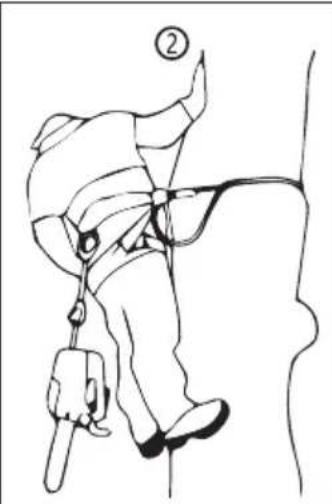
natural_image
Line drawing of a climber climbing a rope, no text or symbols present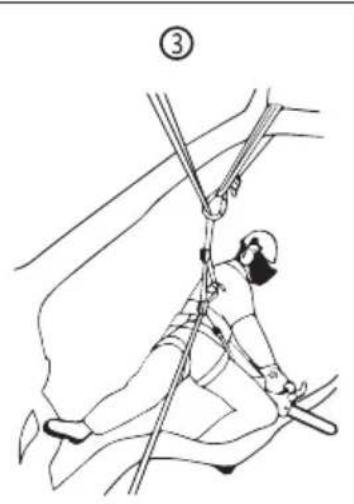
natural_image
Illustration of a person climbing ropes with a gear, no text or symbols present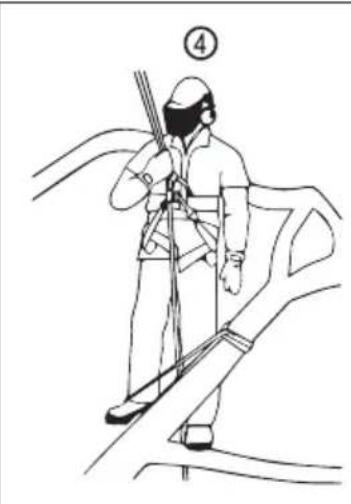
natural_image
Line drawing of a person in protective gear holding a pole, standing on a slope (no text or symbols)C
Explosionszeichnung • Exploded view • Vue éclatée • Vista esplosa • Vista explosionada • Explosietekening • Eksploderet tegning • Robbantott ábra • Widok rozłożony • Rozložený pohled • Rozložený pohlád
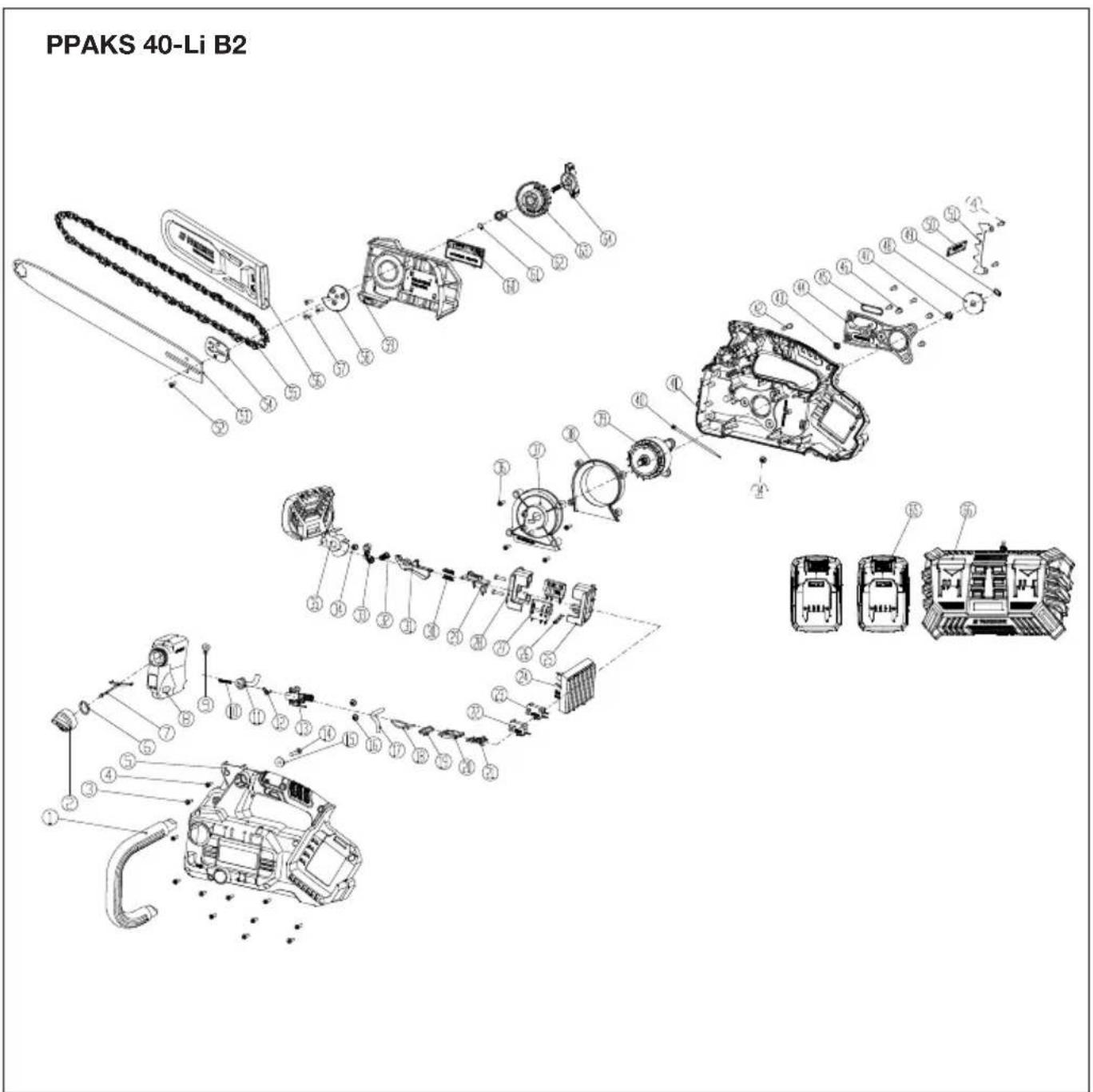
informativ • informative • informatif • informatief • informativo • informatív • informacyjny • informační • informatívny
IAN 495710_2504
8=