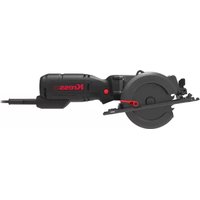
KUV12P - Saw KRESS - Free user manual and instructions
Find the device manual for free KUV12P KRESS in PDF.



| Product type | Circular saw |
| Brand | Kress |
| Model | KUV12P |
| Rated voltage | 230-240 V ~ 50 Hz |
| Power consumption | 710 W |
| No-load speed | 3700 rpm |
| Blade diameter (wood) | 120 mm (24 carbide teeth) |
| Blade diameter (metal) | 115 mm (60 HSS teeth) |
| Abrasive disc diameter | 115 mm (60 grit) |
| Cutting depth at 90° | 46 mm |
| Cutting depth at 45° | 30 mm |
| Weight | 2.3 kg |
| Double insulation | Yes |
| Sound pressure level | 77.3 dB(A) |
| Sound power level | 88.3 dB(A) |
| Vibrations (wood) | 6.82 m/s² (uncertainty K=1.5 m/s²) |
| Vibrations (metal) | 5.63 m/s² (uncertainty K=1.5 m/s²) |
| Maximum cutting capacity (wood) | 46 mm |
| Maximum cutting capacity (aluminium) | 2.5 mm |
| Included accessories | 24T carbide blade, 60T HSS blade, abrasive disc, parallel guide, vacuum adapter, wrench |
| Safety | Lower guard with swing protection, spindle lock, safety switch |
| Maintenance | Clean ventilation slots, keep blades sharp, store in a dry place |
| Repairability | Identical spare parts, repair by qualified professional |
| Standards | CE, EN 62841-1, EN 62841-2-5, EN 55014-1, EN 55014-2 |
Frequently Asked Questions - KUV12P KRESS
User questions about KUV12P KRESS
0 question about this device. Answer the ones you know or ask your own.
Ask a new question about this device
Download the instructions for your Saw in PDF format for free! Find your manual KUV12P - KRESS and take your electronic device back in hand. On this page are published all the documents necessary for the use of your device. KUV12P by KRESS.
USER MANUAL KUV12P KRESS
WARNING Read all safety warnings, instructions, illustrations and
specifications provided with this power tool.
Failure to follow all instructions listed below may result in electric shock, fire and/or serious injury.
Save all warnings and instructions for future reference.
The term "power tool" in the warnings refers to your mains-operated (corded) power tool or battery-operated (cordless) power tool.
1) WORK AREA SAFETY
a) Keep work area clean and well lit. Cluttered or dark areas invite accidents.
b) Do not operate power tools in explosive atmospheres, such as in the presence of flammable liquids, gases or dust. Power tools create sparks which may ignite the dust or fumes.
c) Keep children and bystanders away while operating a power tool. Distractions can cause you to lose control.
2) ELECTRICAL SAFETY
a) Power tool plugs must match the outlet. Never modify the plug in any way. Do not use any adapter plugs with earthed (grounded) power tools. Unmodified plugs and matching outlets will reduce risk of electric shock.
b) Avoid body contact with earthed or grounded surfaces, such as pipes, radiators, ranges and refrigerators. There is an increased risk of electric shock if your body is earthed or grounded.
c) Do not expose power tools to rain or wet conditions. Water entering a power tool will increase the risk of electric shock.
d) Do not abuse the cord. Never use the cord for carrying, pulling or unplugging the power tool. Keep cord away from heat, oil, sharp edges or moving parts. Damaged or entangled cords increase the risk of electric shock.
e) When operating a power tool outdoors, use an extension cord suitable for outdoor use. Use of a cord suitable for outdoor use reduces the risk of electric shock.
f) If operating a power tool in a damp location is unavoidable, use a residual current device (RCD) protected supply. Use of an RCD reduces the risk of electric shock.
3) PERSONAL SAFETY
a) Stay alert, watch what you are doing and use common sense when operating a power tool. Do not use a power tool while you are tired or under the influence of drugs, alcohol or medication. A moment of inattention while operating power tools may result in serious personal injury.
b) Use personal protective equipment. Always wear eye protection. Protective equipment such
as dust mask, non-skid safety shoes, hard hat, or hearing protection used for appropriate conditions will reduce personal injuries.
c) Prevent unintentional starting. Ensure the switch is in the off-position before connecting to power source and/or battery pack, picking up or carrying the tool.
Carrying power tools with your finger on the switch or energising power tools that have the switch on invites accidents.
d) Remove any adjusting key or wrench before turning the power tool on. A wrench or a key left attached to a rotating part of the power tool may result in personal injury.
e) Do not overreach. Keep proper footing and balance at all times. This enables better control of the power tool in unexpected situations.
f) Dress properly. Do not wear loose clothing or jewellery. Keep your hair and clothing away from moving parts. Loose clothes, jewellery or long hair can be caught in moving parts.
g) If devices are provided for the connection of dust extraction and collection facilities, ensure these are connected and properly used. Use of dust collection can reduce dust-related hazards.
h) Do not let familiarity gained from frequent use of tools allow you to become complacent and ignore tool safety principles. A careless action can cause severe injury within a fraction of a second.
4) POWER TOOL USE AND CARE
a) Do not force the power tool. Use the correct power tool for your application. The correct power tool will do the job better and safer at the rate for which it was designed.
b) Do not use the power tool if the switch does not turn it on and off. Any power tool that cannot be controlled with the switch is dangerous and must be repaired.
c) Disconnect the plug from the power source and/or remove the battery pack, if detachable, from the power tool before making any adjustments, changing accessories, or storing power tools. Such preventive safety measures reduce the risk of starting the power tool accidentally.
d) Store idle power tools out of the reach of children and do not allow persons unfamiliar with the power tool or these instructions to operate the power tool. Power tools are dangerous in the hands of untrained users.
e) Maintain power tools and accessories. Check for misalignment or binding of moving parts, breakage of parts and any other condition that may affect the power tool's operation. If damaged, have the power tool repaired before use. Many accidents are caused by poorly maintained power tools.
f) Keep cutting tools sharp and clean. Properly maintained cutting tools with sharp cutting edges are less likely to bind and are easier to control.
g) Use the power tool, accessories and tool bits etc. in accordance with these instructions, taking into account the working conditions and the work to be
performed. Use of the power tool for operations different from those intended could result in a hazardous situation.
h) Keep handles and grasping surfaces dry, clean and free from oil and grease. Slippery handles and grasping surfaces do not allow for safe handling and control of the tool in unexpected situations.
5) SERVICE
a) Have your power tool serviced by a qualified repair person using only identical replacement parts. This will ensure that the safety of the power tool is maintained.
SAFETY WARNINGS FOR ALL SAWS
Cutting procedures
a) DANGER: Keep hands away from cutting area and the blade. If both hands are holding the saw, they cannot be cut by the blade.
b) Do not reach underneath the workpiece. The guard cannot protect you from the blade below the workpiece.
c) Adjust the cutting depth to the thickness of the workpiece. Less than a full tooth of the blade teeth should be visible below the workpiece.
d) Never hold piece being cut in your hands or across your leg. Secure the workpiece to a stable platform. It is important to support the work properly to minimize body exposure, blade binding, or loss of control.
e) Hold the power tool by insulated gripping surfaces only, when performing an operation where the cutting tool may contact hidden wiring or its own cord. Contact with a "live" wire will also make exposed metal parts of the power tool "live" and could give the operator an electric shock.
f) When ripping always use a rip fence or straight edge guide. This improves the accuracy of cut and reduces the chance of blade binding.
g) Always use blades with correct size and shape (diamond versus round) of arbor holes. Blades that do not match the mounting hardware of the saw will run eccentrically, causing loss of control.
h) Never use damaged or incorrect blade washers or bolt. The blade washers and bolt were specially designed for your saw, for optimum performance and safety of operation.
FURTHER SAFETY INSTRUCTIONS FOR ALL SAWS
Kickback causes and related warnings
- kickback is a sudden reaction to a pinched, jammed or misaligned saw blade, causing an uncontrolled saw to lift up and out of the workpiece toward the operator;
- when the blade is pinched or jammed tightly by the kerf closing down, the blade stalls and the motor
reaction drives the unit rapidly back toward the operator;
- if the blade becomes twisted or misaligned in the cut, the teeth at the back edge of the blade can dig into the top surface of the wood causing the blade to climb out of the kerf and jump back toward the operator.
Kickback is the result of saw misuse and/or incorrect operating procedures or conditions and can be avoided by taking proper precautions as given below.
a) Maintain a firm grip on the saw and position your arms to resist kickback forces. Position your body to either side of the blade, but not in line with the blade. Kickback could cause the saw to jump backwards, but kickback forces can be controlled by the operator, if proper precautions are taken.
b) When blade is binding, or when interrupting a cut for any reason, release the trigger and hold the saw motionless in the material until the blade comes to a complete stop. Never attempt to remove the saw from the work or pull the saw backward while the blade is in motion or kickback may occur. Investigate and take corrective actions to eliminate the cause of blade binding.
c) When restarting a saw in the workpiece, center the saw blade in the kerf and check that saw teeth are not engaged into the material. If saw blade is binding, it may walk up or kickback from the workpiece as the saw is restarted.
d) Support large panels to minimize the risk of blade pinching and kickback. Large panels tend to sag under their own weight. Supports must be placed under the panel on both sides, near the line of cut and near the edge of the panel.
e) Do not use dull or damaged blades. Unsharpened or improperly set blades produce narrow kerf causing excessive friction, blade binding and kickback.
f) Blade depth and bevel adjusting locking levers must be tight and secure before making cut. If blade adjustment shifts while cutting, it may cause binding and kickback.
g) Use extra caution when sawing into existing walls or other blind areas. The protruding blade may cut objects that can cause kickback.
SAFETY INSTRUCTIONS FOR CIRCULAR SAW WITH INNER PENDULUM GUARD
Lower Guard Function
a) Check lower guard for proper closing before each use. Do not operate the saw if lower guard does not move freely and close instantly. Never clamp or tie the lower guard into the open position. If saw is accidentally dropped, lower guard may be bent. Raise the lower guard with the retracting handle and make sure it moves freely and does not touch the blade or any other part, in all angles and depths of cut.
b) Check the operation of the lower guard spring. If the guard and the spring are not operating properly, they must be serviced before use. Lower guard may operate sluggishly
due to damaged parts, gummy deposits, or a buildup of debris.
c) The lower guard may be retracted manually only for special cuts such as "plunge cuts" and "compound cuts." Raise lower guard by retracting handle and as soon as blade enters the material, the lower guard must be released. For all other sawing, the lower guard should operate automatically.
d) Always observe that the lower guard is covering the blade before placing saw down on bench or floor. An unprotected, coasting blade will cause the saw to walk backwards, cutting whatever is in its path. Be aware of the time it takes for the blade to stop after switch is released.
ADDITIONAL SAFETY RULES FOR YOUR CUTTING-OFF MACHINES
a) The guard provided with the tool must be securely attached to the power tool and positioned for maximum safety, so the least amount of wheel is exposed towards the operator. Position yourself and bystanders away from the plane of the rotating wheel. The guard helps to protect operator from broken wheel fragments and accidental contact with wheel.
b) Use only bonded reinforced or diamond cutoff wheels for your power tool. Just because an accessory can be attached to your power tool, it does not assure safe operation.
c) The rated speed of the accessory must be at least equal to the maximum speed marked on the power tool. Accessories running faster than their rated speed can break and fly apart.
d) Wheels must be used only for recommended applications. For example: do not grind with the side of cut-off wheel. Abrasive cut-off wheels are intended for peripheral grinding, side forces applied to these wheels may cause them to shatter.
e) Always use undamaged wheel flanges that are of correct diameter for your selected wheel. Proper wheel flanges support the wheel thus reducing the possibility of wheel breakage.
f) Do not use worn down reinforced wheels from larger power tools. Wheels intended for a larger power tool are not suitable for the higher speed of a smaller tool and may burst.
g) The outside diameter and the thickness of your accessory must be within the capacity rating of your power tool. Incorrectly sized accessories cannot be adequately guarded or controlled.
h) The arbour size of wheels and flanges must properly fit the spindle of the power tool. Wheels and flanges with arbour holes that do not match the mounting hardware of the power tool will run out of balance, vibrate excessively and may cause loss of control.
i) Do not use damaged wheels. Before each use, inspect the wheels for chips and cracks. If power tool or wheel is dropped, inspect for damage or install an undamaged wheel. After inspecting and installing the wheel, position yourself
and bystanders away from the plane of the rotating wheel and run the power tool at maximum no load speed for one minute. Damaged wheels will normally break apart during this test time.
j) Wear personal protective equipment. Depending on application, use face shield, safety goggles or safety glasses. As appropriate, wear dust mask, hearing protectors, gloves and shop apron capable of stopping small abrasive or workpiece fragments. The eye protection must be capable of stopping flying debris generated by various operations. The dust mask or respirator must be capable of filtrating particles generated by your operation. Prolonged exposure to high intensity noise may cause hearing loss.
k) Keep bystanders a safe distance away from work area. Anyone entering the work area must wear personal protective equipment. Fragments of workpiece or of a broken wheel may fly away and cause injury beyond immediate area of operation.
I) Hold the power tool by insulated gripping surfaces only, when performing an operation where the cutting accessory may contact hidden wiring or its own cord. Cutting accessory contacting a "live" wire may make exposed metal parts of the power tool "live" and could give the operator an electric shock.
m) Position the cord clear of the spinning accessory. If you lose control, the cord may be cut or snagged and your hand or arm may be pulled into the spinning wheel.
n) Never lay the power tool down until the accessory has come to a complete stop. The spinning wheel may grab the surface and pull the power tool out of your control.
o) Do not run the power tool while carrying it at your side. Accidental contact with the spinning accessory could snag your clothing, pulling the accessory into your body.
p) Regularly clean the power tool's air vents. The motor's fan will draw the dust inside the housing and excessive accumulation of powdered metal may cause electrical hazards.
q) Do not operate the power tool near flammable materials. Sparks could ignite these materials.
r) Do not use accessories that require liquid coolants. Using water or other liquid coolants may result in electrocution or shock.
KICKBACK AND RELATED WARNINGS
Kickback is a sudden reaction to a pinched or snagged rotating wheel. Pinching or snagging causes rapid stalling of the rotating wheel which in turn causes the uncontrolled power tool to be forced in the direction opposite of the wheel's rotation at the point of the binding.
For example, if an abrasive wheel is snagged or pinched by the workpiece, the edge of the wheel that is entering into the pinch point can dig into the surface of the material causing the wheel to climb out or kick out. The wheel may either jump toward or away from
the operator, depending on direction of the wheel's movement at the point of pinching. Abrasive wheels may also break under these conditions.
Kickback is the result of power tool misuse and/or incorrect operating procedures or conditions and can be avoided by taking proper precautions as given below.
a) Maintain a firm grip on the power tool and position your body and arm to allow you to resist kickback forces. Always use auxiliary handle, if provided, for maximum control over kickback or torque reaction during start-up. The operator can control torque reactions or kickback forces, if proper precautions are taken.
b) Never place your hand near the rotating accessory. Accessory may kickback over your hand.
c) Do not position your body in line with the rotating wheel. Kickback will propel the tool in direction opposite to the wheel's movement at the point of snagging.
d) Use special care when working Corners, sharp edges etc. Avoid bouncing and snagging the accessory. Corners, sharp edges or bouncing have a tendency to snag the rotating accessory and cause loss of control or kickback.
e) Do not attach a saw chain, woodcarving blade, segmented diamond wheel with a peripheral gap greater than 10mm or toothed saw blade. Such blades create frequent kickback and loss of control.
f) Do not "jam" the wheel or apply excessive pressure. Do not attempt to make an excessive depth of cut. Overstressing the wheel increases the loading and susceptibility to twisting or binding of the wheel in the cut and the possibility of kickback or wheel breakage.
g) When wheel is binding or when interrupting a cut for any reason, switch off the power tool and hold the power tool motionless until the wheel Comes to a complete stop. Never attempt to remove the wheel from the cut while the wheel is in motion otherwise kickback may occur. Investigate and take corrective action to eliminate the cause of wheel binding.
h) Do not restart the cutting operation in the workpiece. Let the wheel reach full speed and carefully re-enter the cut. The wheel may bind, walk up or kickback if the power tool is restarted in the workpiece.
i) Support panels or any oversized workpiece to minimize the risk of wheel pinching and kickback. Large workpieces tend to sag under their own weight. Supports must be placed under the workpiece near the line of cut and near the edge of the workpiece on both sides of the wheel.
j) Use extra caution when making a "pocket cut" into existing walls or other blind areas. The protruding wheel may cut gas or water pipes, electrical wiring or objects that can cause kickback.
ADDITIONAL SAFETY RULES:
- Always wear a dust mask.
ADDITIONAL SAFETY RULES FOR YOUR CIRCULAR SAW
- Use only saw blades recommended by the manufacturer, which conform to EN 847-1, if intended for wood and analogous materials.
- Do not use any abrasive wheels.
- Use only blade diameter(s) in accordance with the markings.
- Identify the correct saw blade to be used for the material to be cut.
- Use only saw blades that are marked with a speed equal or higher than the speed marked on the tool.
SYMBOLS
| To reduce the risk of injury, user must read instruction manual | |
| Double insulation | |
| Warning | |
| Wear ear protection | |
| Wear eye protection | |
| Wear dust mask | |
| Waste electrical products must not be disposed of with household waste. Please recycle where facilities exist. Check with your local authorities or retailer for recycling advice. | |
| Before any work on the machine itself, pull the mains plug from the socket outlet. | |
| Wear protective gloves | |
| Wood | |
| Metal | |
| Aluminium | |
| Incorrect | |
| Correct | |
| Lock | |
| Unlock | |
| Abrasive cutting disc | |
| HSS blade | |
| TCT blade |
COMPONENT LIST
| 1. | LOCK OFF BUTTON |
| 2. | SOFT GRIP HANDLE |
| 3. | HEX KEY |
| 4. | ON/OFF SWITCH |
| 5. | SPINDLE LOCK BUTTON |
| 6. | LOWER BLADE GUARD |
| 7. | LOWER GUARD LEVER |
| 8. | FIXED UPPER GUARD |
| 9. | DUST EXTRACTION OUTLET |
| 10. | VACUUM ADAPTER |
| 11. | DEPTH ADJUSTMENT LEVER |
| 12. | BASE PLATE |
| 13. | SAW BLADE (SEE FIG. A) |
| 14. | INNER FLANGE (SEE FIG. A) |
| 15. | BLADE BOLT (SEE FIG. A) |
| 16. | PARALLEL GUIDE |
| 17. | PARALLEL GUIDE CLAMPING FIXTURE |
| 18. BEVEL ADJUSTMENT LEVER |
| 19. OUTER FLANGE (SEE FIG. A) |
| 20. BLADE ALIGNMENT INDICATOR |
Not all the accessories illustrated or described are included in standard delivery.
TECHNICAL DATA
| Type KUV12P (V12P-designation of machinery, representative of Saw) | |
| Voltage 230 - 240V ~ 50Hz | |
| Rated power 710W | |
| No load (rated) speed 3700/min | |
| Blade size | |
| TCT blade | 120mmx1.2mmx9.5mmx24T |
| HSS blade | 115mmx1.2mmx9.5mmx60T |
| Abrasive cutting disc | 115mmx1.6mmx9.5mmx60G |
| Cutting capacity | |
| Cutting Depth at 90° | 46mm |
| Cutting Depth at 45° | 30mm |
| Arbor Size 9.5mm | |
| Recommended maximum material thickness | |
| Wood | 46mm |
| Aluminum | 2.5mm |
| PVC pipe (diameter) | 46mm |
| Tile | 12mm |
| Sheet steel | 0.5mm |
| Protection class | ☐/II |
| Bare tool weight 2.3kg | |
| Spindle thread size | M6 |
| Saw blade thickness | |
| TCT blade | 0.8mm |
| HSS blade | 0.65mm |
| Abrasive cutting disc | 1mm |
NOISE INFORMATION
| A weighted sound pressure L | pA=77.3 dB (A) |
| A weighted sound power L | wA=88.3dB(A) |
| KpA & KWA | 3.0dB(A) |
| Wear ear protection. | |
VIBRATION INFORMATION (CUTTING WOOD/ CUTTING MENTAL)
Vibration total values (triax vector sum) determined according to EN 62841:
| Vibration emission value: | Cutting wood: \( {\mathrm{a}}_{\mathrm{h},\mathrm{W}} = {6.82}\mathrm{\;m}/{\mathrm{s}}^{2} \) |
| Uncertainty \( \mathrm{K} = {1.5}\mathrm{\;m}/{\mathrm{s}}^{2} \) | |
| Cutting metal: \( {\mathrm{a}}_{\mathrm{h},\mathrm{M}} = {5.63}\mathrm{\;m}/{\mathrm{s}}^{2} \) | |
| Uncertainty \( \mathrm{K} = {1.5}\mathrm{\;m}/{\mathrm{s}}^{2} \) |
The declared vibration total value and the declared noise emission value have been measured in accordance with a standard test method and may be used for comparing one tool with another.
The declared vibration total value and the declared noise emission value may also be used in a preliminary assessment of exposure.

WARNING: The vibration and noise emissions during actual use of the power tool can differ from
the declared value depending on the ways in which the tool is used especially what kind of workpiece is processed dependant on the following examples and other variations on how the tool is used:
How the tool is used and the materials being cut or drilled. The tool being in good condition and well maintained.
The use of the correct accessory for the tool and ensuring it is sharp and in good condition.
The tightness of the grip on the handles and if any anti vibration and noise accessories are used.
And the tool is being used as intended by its design and these instructions.
This tool may cause hand-arm vibration syndrome if its use is not adequately managed.

WARNING: To be accurate, an estimation of exposure level in the actual conditions of use
should also take account of all parts of the operating cycle such as the times when the tool is switched off and when it is running idle but not actually doing the job. This may significantly reduce the exposure level over the total working period.
Helping to minimise your vibration and noise exposure risk. Always use sharp chisels, drills and blades.
Maintain this tool in accordance with these instructions and keep well lubricated (where appropriate).
If the tool is to be used regularly then invest in anti vibration and noise accessories.
Plan your work schedule to spread any high vibration tool use across a number of days.
VIBRATION INFORMATION (CUTTING TILE)
Vibration total values (triax vector sum) determined according to EN 60745:
| Vibration emission value: | Cutting tile: \( {\mathrm{a}}_{\mathrm{h}} = {6.91}\mathrm{\;m}/{\mathrm{s}}^{2} \) |
| Uncertainty \( \mathrm{K} = {1.5}\mathrm{\;m}/{\mathrm{s}}^{2} \) |
The declared vibration total value may be used for comparing one tool with another, and may also be used in a preliminary assessment of exposure.

WARNING: The vibration emission value during an actual use of the power tool can differ from the rated value depending on the ways in which the tool is used dependant on the following examples and other reasons on how the tool is used:
How the tool is used and the materials being cut or drilled.
The tool being in good condition and well maintained The use the correct accessory for the tool and ensuring it is sharp and in good condition.
The tightness of the grip on the handles and if any anti vibration accessories are used.
And the tool is being used as intended by its design and these instructions.
This tool may cause hand-arm vibration syndrome if its use is not adequately managed

WARNING: To be accurate, an estimation of exposure level in the actual conditions of use
should also take account of all parts of the operating cycle such as the times when the tool is switched off and when it is running idle but not actually doing the job. This may significantly reduce the exposure level over the total working period.
Helping to minimise your vibration exposure risk.
ALWAYS use sharp chisels, drills and blades
Maintain this tool in accordance with these instructions and keep well lubricated (where appropriate)
If the tool is to be used regularly then invest in anti vibration accessories.
Plan your work schedule to spread any high vibration tool use across a number of days.
ACCESSIONS
| TCT Blade: 24T for wood (KA8383) 1 | |
| HSS Blade: 60T for thin sheet steel and aluminum, PVC pipe, plastic (KA8382) | 1 |
| Abrasive cutting Disc: 60G for concrete, marble, tile, cement backerboard (KA8381) | 1 |
| Parallel Guide 1 | |
| Vacuum Adaptor 1 | |
| Hex Key 1 |
We recommend that you purchase your accessories listed in the above list from the same store that sold you the tool. Refer to the accessory packaging for further details. Store personnel can assist you and offer advice.
OPERATING
INSTRUCTIONS

NOTE: Before using the tool, read the instruction book carefully.
INTENDED USE
The tool is intended for ripping and cross-cutting wood and other materials in straight cutting lines, while resting firmly on the work piece.
ASSEMBLY AND OPERATION
| Action Figure | |
| Saw Blade Assembly and Removing | See Fig. A |
| Safety On/Off Switch NOTE: Keep the dust adapter connected to dust collecting device when using the tool. | See Fig. B |
| Cross and Rip Cutting See Fig. C1, C2 | |
| Parallel Guide See Fig. D1, D2 | |
| Cutting Depth Adjusting See Fig.E1,E2 | |
| Cutting Angle Adjusting See Fig. F | |
| Pocket Cutting See Fig. G1,G2 | |
| Sawdust Removal See Fig. H | |
WORKING HINTS FOR YOUR TOOL
If your power tool becomes too hot, please run your circular saw no load for 2-3 minutes to cool the motor. Avoid prolonged usage at very low speeds. Protect saw blades against impact and shock. Cutting with extreme force can significantly reduces the performance capability of the tool and reduces the service life of the saw blade. Sawing performance and cutting quality depend essentially on the condition and the tooth count of the saw blade. Therefore, use only sharp saw blades that are suited for the material
being cut.
Choice of blades: 24 teeth for general work, approx. 40 teeth for finer cuts, more than 40 teeth for very fine cuts into delicate surfaces, diamond for tile, cement board, etc.
Only use saw blades recommended.
MAINTAIN TOOLS WITH CARE
Remove the plug from the socket before carrying out any adjustment, servicing or maintenance.
Keep tools sharp and clean for better and safer performance. Follow instructions for lubricating and changing accessories. Inspect tool cords periodically and if damaged, have repaired by authorized service facility. Your power tool requires no additional lubrication or maintenance. There are no user serviceable parts in your power tool. Never use water or chemical cleaners to clean your power tool. Wipe clean with a dry cloth. Always store your power tool in a dry place. Keep the motor ventilation slots clean. Keep all working controls free of dust.
If the supply cord is damaged, it must be replaced by the manufacturer, its service agent or similarly qualified persons in order to avoid a hazard.
Periodically clear dust and chips from guard and base to ensure proper performance.
ENVIRONMENTAL PROTECTION
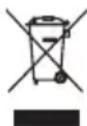
Waste electrical products must not be disposed of with household waste. Please recycle where facilities exist. Check with your local authorities or retailer for recycling advice.
TROUBLE SHOOTING
| Symptom Possible | Causes Possible Solution | |
| Tool will not start when operating the on/off switch. | Power cord not plugged in. Power cord is broken. Carbon brush has worn down | Check to make sure power cord is connected well into a working outlet. Unplug the power cord. Replace it using a qualified maintenance person. Replace the carbon brush using a qualified maintenance person. |
| Cutting depth is less than that is set. | Sawdust accumulated at the rear of the base. | Shake out sawdust. Consider connecting a vacuum for dust collection. |
| Blade spins or slips | Blade is not tightly engaged with the spindle. | Remove the blade, and reassemble it as described in INSTALL/CHANGE THE BLADE section. |
| Blade will not cut a straight line. | Blade is dull. Blade is not mounted properly. Saw is not being guided properly. | Mount a new, sharp blade on the saw. Check that blade is properly mounted. Use a parallel guide. |
| Blade kicks back when beginning a cut | Blade is not spinning fast enough | Allow the saw blade to reach full speed prior to beginning a cut in the material. |
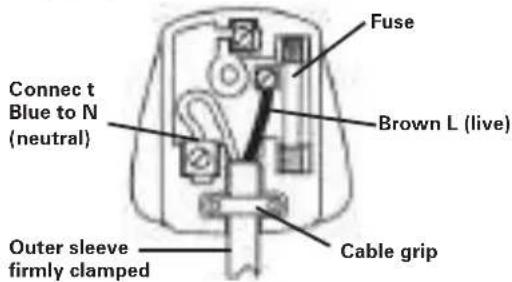
PLUG REPLACEMENT (ONLY FOR REWIRABLE PLUG OF UK & IRELAND)
If you need to replace the fitted plug then follow the instructions below.
IMPORTANT
The wires in the mains lead are colored in accordance with the following code:
Blue = Neutral Brown = Live
As the colors of the wires in the mains lead of this appliance may not correspond with the colored markings identifying the terminals in your plug, proceed as follows. The wire which is colored blue must be connected to the terminal which is marked with N. The wire which is colored brown must be connected to the terminal which is marked with L.
Warning!
Never connect live or neutral wires to the earth terminal of the plug. Only fit an approved BS1363/A plug and the correct rated current fuse which is used in the plug.
Note: If a moulded plug is fitted and has to be removed take great care in disposing of the plug and severed cable, it must be destroyed to prevent engaging into a socket.
DECLARATION OF CONFORMITY
We,
Positec Germany GmbH
Postfach 32 02 16, 50796 Cologne, Germany
Declare that the product
Description WORX Electric Circular Saw
Type KUV12P (V12P-designation of machinery, representative of Saw)
Function Cutting various materials with a rotating toothed blade
Complies with the following Directives:
2006/42/EC, 2014/30/EU, 2011/65/
EU&(EU)2015/863
Standards conform to
EN 62841-1, EN 62841-2-5, EN 55014-1,
EN 55014-2, EN IEC 61000-3-2, EN 61000-3-3
EN 60745-1, EN 60745-2-22
Name Marcel Filz
Address Positec Germany GmbH
Postfach 32 02 16, 50796 Cologne, Germany

2022/09/07
Allen Ding
Deputy Chief Engineer, Testing & Certification
Positec Technology (China) Co., Ltd
18, Dongwang Road, Suzhou Industrial
Park, Jiangsu 215123, P. R. China
18, Dongwang Road, Suzhou Industrial
Park, Jiangsu 215123, P. R. China
NOTICE ORIGINALE SÉCURITÉ DU PRODUIT AVERTISSEMENTS DE SÉCURITÉ GENÉRAUX POUR L'OUTIL
INFORMATIONS RELATIVES AU BRUIT
18, Dongwang Road, Suzhou Industrial
Park, Jiangsu 215123, P. R. China
ISTRUZIONI ORIGINALI SICUREZZA DEL PRODOTTO AVVISI GENERALI PER LA SICUREZZA DEGLI UTENSILI A MOTORE
18, Dongwang Road, Suzhou Industrial
Park, Jiangsu 215123, P. R. China
18, Dongwang Road, Suzhou Industrial
Park, Jiangsu 215123, P. R. China
MANUAL ORIGINAL SEGURANÇA DO PRODUCTO AVISOS GERAIS DE SEGURANÇA DE FERRAMENTAS ELECTRICAS
Nós, Positec Germany GmbH
Postfach 32 02 16, 50796 Cologne, Germany
18, Dongwang Road, Suzhou Industrial
Park, Jiangsu 215123, P. R. China
OORSPRONKELIJKE GEBRUIKSAANWIJZING PRODUCTVEILIGHEID ALGEMENE VEILIGHEIDSWAARSCHUWINGEN VOOR VERMOGENSMACHINE

TIPS VOOR HET WERKEN MET UW APPARAAT
18, Dongwang Road, Suzhou Industrial
Park, Jiangsu 215123, P. R. China
OBUHNE IPEIOCTEPEXJENI NO TEXHNIKE BE3OJACHOCTb IPOyKTA BE3OJACHOCTN IPN PABOTE C 3JEKTPOHHCTPYMEHTOM
BHIMAHNE IpouTHe Bce npedynpeXeHn, HNCTpyKcnn, nIIOCTpaun N cneunФkaun no TeHNke 6e3onacHOCTn, npnaeraembe K daHHOMy 3NeKTponHCTpyMeHTy. HeBbINOJIHeHne BCex HNKeepnbEdeHbIX INCHETpyKcun IN peKoMeHdaun MOKeT pInBeCTN K nopaxeHIO 3NeKTpUeCKM TOKOM, IOxapay U/UNCepBe3HbIM TpaBMam.
COXPAHNTE BCE INHCTPYKUNN IN PPEIOCTEPEXHEHNAJDAJIbHEIWERO NCNOJIb3OBAHNA.
TepMH "3JektpOHCTpyMeH" B npdeynpeKdEHNX OTHOCNTcK BaWemy 3JektpOHCTpyMeHTy C nITaHHeM OT cETn (WHyp) INN K 3JektpOHCTpyMeHTy C 6aTaapeHbIM nITaHHeM (6ecnpoBOHOH).
1) B30NACHOCTb PABOYEN 3OHbl
2) 3JIeKTPo6E3OJNACHOCTb
a) Depxte pa6oyu 30Hy uHcToH N Xopwo ocBeueHHo. 3arpomoxdeHHbIe IIN 3aTeMHHeHHbe 30HbI npedpacnonaraT K Hechacthblm Cnyaam.
b) He nCnoJIb3yIte 3JNEKTPoHnHCTpyMeHTbl BO B3pbIBOONaCHbIX CpeaX, HApnpMEp, B npHCyTCTBn JERKOBOcPNaMeHraUxxCg KndKOcTei, Ra3OB NIN nbIJN. 3JNEKTPoHnHCTpyMeHTbl CO3daHOT NCKpbI, KOtOpbie MOrYT BOCPNaMeHHTb NIIb NIN napbl.
c)ДерхиTe DeTeH n npoxoxnx B ctopoH BO BpeMpa60tbi C 3JIeKtpOnHCTpyMeHTOM. OTBNeKaIOUneФaKTopbI MOrYT npuBecTu Knotepe KOHTpOJa HAd INHCTpyMeHTOM.
a) BnIKc c 3JIeKtpOHcTpymEntom dONXHbI COOTBcTcBOBaTb po3eTke. HkOrda He n3MeHnTe wTenceIb KaKM-n6o 06pa3Om. 3anpeucaetc HcnoJb3OBaTb IIO6bIe nepexOHNKc 3a3eMJeHHbIMN 3JIeKTPOHcTpymEntamH.He MOINΦUncPobAHhIe BnIKN i COOTBeTcTByIOUne pO3eTK yMeHbIaOT pUCK NopaxEHHa 3JIeKTPueckm TOKOM.
b) 36eAte KOtakTa TeJa C 3a3emHbIMN NOBepxHOCTMn, TaKMM KAK Tpy6bl, paHaTOpbl, NHTbl N XoNoIbHKn. CyueCTByET NOBIIeHHbI pNCK npopaxHeHna 3JIeKtpuYeCKm TOKOM, ecJIN BaJe TENo 3a3emJeHo.
c) He noDBepraTe 3JIeKTPoHHCTpyMeHT BO3DeHCTBnIO DOxJa Hnn BnaXHoCTn.Boa,nonaDaIoUaB 3JIeKTPoHHCTpyMeHT,NOBbICHT pNCK nopaxKeHn3JIeKTPnuYeCKM TOKOM.
d) 3anpeaaetc npimHeTb Whyp He no Ha3naueHIO. HkOrda He nCnoJb3ynte Whyp dI nepeHockn, BbITraBaan nn OTcoedHHN 3NeKTponHCTpyMeHa. Depxnte shHyp BdAIN OT tenla, Macna, OCTpbix KpaEB NII DnKxUxxCraCTei. NobpeJeHHbie NII 3anyTaHHble WHypbI NOBbIaOT pCK nopaxKeHNA 3NeKTpuYeCKM TOKOM.
e) Pn pa6ote c 3JektpoHcTpymeHTOM Ha OTKpbITOM BO3dyXe NcNoJIb3yIte YdINHHTeJb, PpeHa3HaueHHbI dJa NCIOJIb3OBAHnHa OTKpbITOM BO3dyXe. NcNoJIb3OBAHnE shHpya, nOxOJaUero IJr NcNOJIb3OBAHnHa OTKpbITOM BO3dyXe, CHNkaET pNCK NopaxEHnA 3JekTpHcEckm TOKOM.
f) Ecnn pa6ota 3JektpOnHCTpyMeHTa BO BnaXHom MecTe HEn36exKHa, NcnoJIb3yIte yCTPOINCTBO 3auNTHOro OTKIOUeHn. NcnoJIb3ObaHne Y3O cHnkaet pNCK IopaxHeHn 3JekTpUeCKM TOKOM
3) JIINHAR B630NACHOCTb
a) Bydte BHNMaTeJIbHbI, cneIte 3a TEM, yTO Bbl DeJaTe, n NOJb3yIteCb 3dpabBIM CmblcIOM npn pa6ote c 3NeKtpOnHCTpyMeHTom. He nCnoJIb3yIte 3NeKtpOnHCTpyMeHT BO Bpem YcTaNocTH IIN NOD BO3DeIcTBHeM HApKOTNKOB, aIKOROJI INN MeDnKAMeHTOB. HeBHNMaTeJIbHOCTb npn pa6ote 3NeKtpOnHCTpyMeHTa MOKeT npuBeCTN K cepbe3HO TpaBME.
b) Ncnonb3yIte cpeCTBa HnHmBnDyaJbHoJ 3aunTbI. Bcerda HaedeBaIte 3aunTHIe ouKn. 3aunTHoe o6opyoDaHne, TakoE KaK nbJe3aunTHaMaCKa, HeCKoJIb3raaJ3aunTHaR 06yBb, KACKn IIN 3aunTA cnyxa, INCOnb3yeMbIe DnA COOTBeTCTByUOxuX yCNOBn, YMeHbIaT pNCK BO3HnKHOBEHn TpaBMbl.
c)Ппeдотьрашенин Нпр徝намеphpenHOro 3anycka.перд поключенem K nctочнky nHTaHHN I / nI N 6aTapeHOMy 6noky y6eHntecb,чTo nepeKlIOUaTeJIb HaxODNTcB NOLOXKeHNN "BbIKLIOUeHO". ПерEOHoc 3JIeKTPoINHCTpymeHTOB c naIbceM Ha BbIKLIOUaTeJIe nIII 3apJdKa BkIIOUeHHbIX 3JIeKTPoINHCTpymeHTOB pIbOДNT K HechacTHbIM cnlyaam.
d) Nepei BkIIOUeHHeM 3JIeKTPoHHCTpyMeHTa y6ePnte IIO6bIe NOCTOPOHHNE raeHbIe KJIIOu. KIOU, npIKpeIIeHHbI K BpaJauOJeCraCTN 3JIeKTPoHHCTpyMeHTa, MoKeT CTaTB npINHOI TpaBMbl.
e) He haknohntecb. NoctoHHo coxpaHnTe paBHObecne. 3TO IO3BOJnE ITyUWe KOHTpOINPOBaTb 3JIeKTPOnHCTpyMeH T HeOKeIaHHbIX CNTyaCnX.
f) OdeBaIteCb DoJXHbIM 6pa30m. He HadeBaIte Cbo6oHyIO odexky nIyKpaWeHH. DePxHTe BOLocbl, odexky n nepuATKn Bdann OT DnNkUxxCraCTeN. Cbo6oHaia Odekda, IOBENHPbIE N3dEJIIN IINI DIIHHbIe BOLOcbl MOrT 6bITb 3aueJIpeHbl DnNkUxIMNC RACTMNI.
g) EcIn yctpoiCTBa o6OpydoBaHbI coeHNHeHnEM dJa ydaJeHHaNbJN H
noKIOUeHn KOnJIeKTOPOB, y6eIHTecb, UTo TaKoe 0bOpyOBoHne noKIOUeHo HcNoJb3yEtca DOnXHBIM 6pa3OM.
NcnoB30BaHne nbIeynabnBaTeNe MoXeT yMeHbUnTb ONaCHOCTb, CBA3aHHyO C nbIbIO.
h) He dymaHTe, qTo 3HaHHe HnCTpyMeHTa N Yactoe erO hCNoJb3OBaHne OCBo6oKdaet OT OCTOpOXHOCTN BHNMaTeIbHOCTN npu O6paueHm c Hm. HeocTOPOXHOe DeiCTBne MOKeT pINBeCTN K cepE3HBIM TpaBMam B DoJIHO CekyHdbI.
4)ИСПОЛБОВАНЕ
3NEKTPOHCTPYMEHTA N YXOD 3AHM
a) 3anpeuetaetc n36bItoHoo 3arpykaTb 3neKTPoHHCTpymeHT. NcnoIb3yIte NOxOJaun 3neKTPoHHCTpymeHT dna Bawen pa60tbl. PpaBnIbHO noIO6paHHbI 3neKTPoHHCTpymeHT cdeJaet pa60Tu, dIra KOTopoOH 6bl pa3pa60TaH, lyUwe n 6eOnacHee.
b) He nCnoJb3yIte 3JIeKTPoHnHCTpyMeHT, ecnn BbIKNIOaTeJb He pa6Otaet. IIO60 JIeKTPoHnHCTpyMeHT, KOtOpBn HE MOKeT ynpabNtbcra c NOMOuIbNopeKJIIOHaTeJra, ONaCeH n DOJIkeh 6bITb OTpEmOHnIPOBaH.
c) Npeq BbINOpHeHEm IIO6bIX peryInpOBOK, 3ameHoi npHaJnxHocTei Hn XpaHeHem 3JIeKTPoHNCTpyMeHTa OTcoEHNHTe WTeKePOT NCTOuHnKa NHTaHnN / nHn aKKymyIaTPOH 6atapen OT 3JIeKTPoHNCTpyMeHTa. TaKne npdeynpeDITeNbHbIe Mepbl 6e3OnaCHOctn UMeHbAOT PNCK CnyauHoro 3anycka 3JIeKTPoHNCTpyMeHTa.
d) XpaHnTe 3NeKtpOnHCTpymeHtbl B HeIOcTynHom dIaIeTeMecTe H He N03BOJnTe IucaM, He3HaKOMbIM C 3NeKtpOnHCTpymeHtOM HIN C 3ToHnCTpykUnei, pa6OtaB C Hm. IHCTpymeHtbl OnaChbl B pykax Heo6yHeHHbx INJb3OBaTeJIeN.
e) 06cnyxnbaiTe 3NeKtpOHnHCTpyMeHTbl. PpOBepbTe HecooOCHocT bDINXyUHXcA cactei, nonomky detanei N IIObIe dpyrHe COCTOHHN, KOtOpBie MoryT NOBnHbHa pa6Oty 3NeKtpOHnHCTpyMeHTa. B cnyae nobpeJdeHN OTPeMOHTnpuyTe 3NeKtpOHnHCTpyMeHT nepei NCNOJIb3OBAHm. MHOne HeCuaCThBiE CNYaH CBra3aHbI c INOXIM o6cnykBaHm EJIeKtpOHnHCTpyMeHTOB.
f) PndepkNBAte 3aToky u HnctOty pexyux HHCTpyMeHTOB. IpaBnIbHO 6cIiyxNBAeMbIe pexyue INHCTpyMeHTbl C OCTpbIMN pexyuMM KpOMKaM N erYe KOHTPOINPOBaTb, IN CHIXKaETC BepoAHTHOCTb IX DeΦopMaun.
g) NcnoIb3yIte 3neKtpoHCTpyMeHT, npHaJleXHOCTn n T. d. B COOTBeTCTBnC 3TMMn HCHTpkyKUaMn, C yueTom ycNoBn BblONHReMoPa6Otbl. NcnoIb3OBaHHe 3neKtpoHCTpyMeHTa dJa onepaun, OTJIuHaUHXxC8 OT pEHa3HaueHHoro NCNOJB3OBaHn, MoKeT pInBeCTn K ONaCHO cnTyauu.
h) CJIeInte, yTo6bI pyuKn n NobepxHocTn 3axBaTa cyXmMn, YNCTbIMN OT Macna N KInpa. CKoJIb3Kne pyuKn n NobepxHocTn 3axBaTa He No3BOJnAOT Be3OJaNacHO oBpaUaTbcra C INHCTpyMeHTOM I KOHTpONIpOBaTb eR O B HEnpeDbUdEHHbIX CNTyaCunx.
5) OBCJYKINBAHNE
a) 06cnykBaIe CBoH NHCtpMeHT ToIbKO c NOMOuBIO KBAHnΦNpOBAHHO CneuaHnCTa No peMOHTy, HcNoJIb3yA TOIbKO IeHTnHbIe 3anachIe YactH. 3To o6ecneuT nOpdePkaHne 6eOnacHocTn 3JIeKTPoHnCTpyMeHTa.
HCTPYKUNI OBE3OJACHOCTNДJI BCEXПЛ
Ppabnla npoBeHnpe3Kn
a) ACHOCTb:Дерхитpe pykn noJaIbIe ot yuactka pacnna npexyuero dmcka. Ecn n o6e pykn ydepxmbaOT nIpy, OHI He MOryT nonactb noI pekuynn DNCK.
b) He nomeuate yactn tena noD o6pa6aTbIbAeMbI npedMe. 3aunTHoe npncno6neHHe MoKeT 3auntBt BAC OT pexkyero ndka noD o6pa6aTbIbAeMbIM npedMetom.
c) Perynpyte rny6nHy cnHla no ToIunHe 06pa6atbIbAemoro npedMeTa. O6pa6aTbIBaEMbIM ppeDMeTOM DOJIKHo 6bITb BUNHO MeHbIe NONHBIX 3y6OuB peKyuJero DNCKa.
d) HnkOrda He depKnte pa3pe3aEmbl npedMet B pykax nHa KaIeHe. 3akpenite 6bpa6aTb1Baembl npedMet Ha yctoynboi nnatfOpme. BaXHO oecneuHTb npaBnIbHyO ONopy dJaPa6tbi, YTO6bl CBeCTN K MInHMMy Bo3deIcTBNe Ha TeNo, 3aeDaHne pexkyueo DnCKa NII NOTepIO KOHTpOJI.
e) YdepkBaIte 3JeKtpOnHCTpymEn TOJbKO 3a N3OJInpOBaHHIe NOBepXHOCTN 3axBaT, KOrDa BblONHReTe ONEpaUIO, npN KOtOpO pExkyuIN HCTpymEn MOKeT KOChyTBcR cKpbIToN PPOBOkN HnCBOero Co6CTBeHNHO shypa nHTAHN. KOHTAKT C npOBODM IOd HAnpJxKeHNEM npIBeDeT K TOMy, YTO MeTaJIInueCKNe YACTN 3JeKtpOnHCTpyMeNTa TaKke 6yDyt npOBODTb TOK, yTO MoKeT CTaTb pNUnHOYdapa 3JeKTPOTOKOM onepaTopa.
f) Pn npoJbHno pe3Ke Bcerda nCnoJb3yIte HnpaBIAOuyIO pIaHky IJIu Wab6NoN npAOM KpOMKn. 3To oBeCneHT TOUHOCTb pe3a N yMeHbIHT BO3MOXHOCTb 3aeJaHnpeKyuIero DnCKa.
g) Bcerda nCloJb3yIte peKyuIe duCKn HxKnHoro pa3Mepa n cOpMbI ueHTpOBOr OTBepTna (anMa3HbIMnck npOTNB KpyrIoro dNcKa). PekuIe DNCK, KOToPbIE He COOTBeTCTByIOT KpeNexKHOMy o6OpyDobAHIO NIIbI, 6dyT pa6oTaB He6baHaHCnpOBaHHO, YTO npINBeTe Knotpe KoHTpON.
h)HnKOrJa He nCnoJb3yIte NOBpeXeHHbIe nn HEnoXdOaJne wa6blnn 60T pexyero dNcKa. Wai6bln 60nt pexuyero nCKa 6bln cneuabHo pa3pa6oTaHbI dna oBeCneHeHn ONTMaJIbHO npOn3BOInTeNbHOCTn Bauei nbln 6e3onacHOCTn EKnlyatauN.
6bpa6aTaBbIaEcTc, B 3aBnCmOCTN OT CNeDyUOuNX npIMePoB uDpyuNX BapnaHTOB NcNOJb3ObaHn HNCTpyMeHTa:
Kac nCnoB3yeTcra HnCTpyMeHT N KaKe MaTePnaJIbIpeKyTcra IIN CBePJIaTcra.
IcnoJIb3OBAHHe INHCTpyMeHTA B INCnPaBHOM COCToHHN.
IcnoB3ObaHne npabnblHO aKceccyapa dna
INCTpymEnTa N oBecnueHne erO OCTpoTbI N XopoUero COCTOHHN.
IIOHTHOCT 3axBaTHa pykoTkax n,ecnncnoJb3yOTcakne-Jn6o akceccyapbl npOTNBn6paunu uyma.
NcnoB3ObaHne IHCTpyMeHTa cOrnaCHO eRnpoeKtnpOBaHNIO dAnHHbIM IHCTpyKLJyM.
DaHHbI IHCTpyMeHT MoXeT Bbl3BaTb CnHdPOM Bn6paun pyK,ecnN NOJb3OBaTbCnM HnPaBnIbHo.
BHUMAHNE: EcIn 6bItb ToHbIM, OceHka ypOBHRA BO3DeiCTBnB B peaIbHbIX ycIOBnX
NcnoB3OBaHn DOJXHa TaKKe YuHTbIBaTb BCE aactn pa6oery OIKNa, TaKne KaK BpemK, KOrJa NHCTpyMeHT BblIOueH N KOrDa OH pa6OtaeT BXOIOCTyIO, HO 0aKTUeCKn He BbINOJIHReT pa6Oty. 3TO MOxET 3HaUNTeJIbHO CHIN3NTb yPOBeHb BO3DeIcTBnB TteHHe BCero pa6oery nepNoDA.
POMoraiTe MHHIMM3NPOBaTb pNCK BnBpaCm n UyMa. Bcerda nCnOJb3yIte ocTpbie 3y6nna, CBePna n Ne3Bn
IopndepxNBaTe DaHHbInHCTpyMeHT B COOTBETCTBnC daHHbIMN INCTpyKUJAMN N TuaTeJIbHO Cma3bBAnte erO (npn Heo6xoDnMoCTn).
Ecnn INHcTpymENT 6yDenT NcNoIb3OBaTbcpeYyIaPHO, npno6peTnte aHTNBn6paCIOHHbIe N WymoBbIe akceccyapbl.
3aannnpynte rpaqnk pa60tbl, yto6bl pa36ntb IIO6oe nCNOJIb3OBAHne INCTpyMeHTa C BbICOKOB N6pauneHa HECKOJIbKO dHei.
HHΦOPMAÇNЯ O B涅БРAZN (PE3KA ПЛNTК)
CymMapHbIe 3NaueHnBn6paun (TpexkOMnoHeHTHaB BeKTopHa CymMa), onpeJeHHbIe corlacho EN60745:
| Измерώная вибацnia | Pe¾а плітк: aₙ = 6.91m/s² |
| Погршноctь K = 1.5m/s² |
3aBHeHoe 6huee 3HaueHne Bn6paun MoKeT NcNoIb30BaTbcA dIg CpaBHeHn IHCTpyMeHTOB Mekdy cOboi, a TaKke IJnI ppeDbapntbHOI OceHKN BO3DeIcTBnI.

PPEOCTEPEXEHNE:3NaueHne Bn6paunnpfKaTtueckOMNcNoJIb3OBaHIN
3JIeKtpOHCTpyMeHTa MoKet OTIIuHaTbC8OT
3aBJIeHHOrO 3HaueHnB 3aBUNMOCTN OT TORO, KAK INHCTpymENT NcNoIb3yeTcR:
KaK nCnOblb3yETcHnCTpyMeHT, n KaKne MaTePnaJIbI NOBvepraIOTCpe3Ke ININ CBepJeHIO.
XopoOoee COCTOHaHne INHCTpyMeHTa n erO xopoOoee 06cIyKmBaHne.
IcnoB3OBAHne npabunbHoro akceccyapa dJa
HNCTPyMeHTa N obecneueHne erO ocTpoTb N XopoWero COCTOHHJ.
KpeIOCTb yIepxHaHnry pyKoTOK nNcNoJIb3OBAHne aHTNB6paCIOHOHbIX akCECCyapOB.
NcnoB3yeTcJn INHCTpyMeHT B COOTBeTCTBNN C eO npedHa3HaueHHeM N 3TNIM INHCTpyKUINM.
3TOT HNCTpyMeHT MOXeT Bbl3BaTb TpeMop pyk npn erO HenpaBnIbHom NcNoJb3OBaHHN.

PNEOCTEPEXHEHNE:YTo6bI 6bITb TOUHOH,
OueHka yPOBnBa BO3DeICTBnBa BpeaIbHbIX YCNOBnX NcONb3OBaHN DaJnxHa TaKKe YHTbIBaTb BCE YaCTn pa6oeryo zHKna, TaKne KaK Bpemr, KOrda INHCTpyMeHT BbIKIOUeyn KOrda OH pa6oTaET Ha XOIOCTOM XOyU H E BbINONHReT pa6Oty. 3TO MOxET 3HaHTeJIbHO CHN3NTb yPOBeHb BO3DeICTBnR 3a BECb pa6oHn nepnoiD.
POMORAET MHNHMn3NPOBaTb pUCK BO3HnKHOBeHnA TpeMopa pyk.
BCEΓДA nCnoJIb3yIte ocTpblcpe3zbl, cBepla n peKyuIe DNCKN.
O6cnykuaTe 3TOT HnCTpyMeH T B COOTBeTCTBn C 3TUMn INCTpyKUmaMn N XopoIo Cma3bBaIe Te (Pn HEO6XoIMMOCTn)
Pn perynapHOM nCnoB3ObaHm INhCTpyMeHTa - npno6peTnte aHTNB6paunHOHHbIe akceccyapbl.
Плану Te Baw pa6oyn rpaФNK TaK, YTo6bl
pacnpedeHbNCNoJIb3OBAHne INHCTpyMeHTa C HnboJbWe Bn6paueNe Ha HeckoJIbKO dHei.
AKCECCYAPbl
OHNdoJXHb6bItbIOCTaBHeBbMeCThBi MecHTbI YeHTpyTNIN3aCmN DnnaHaNDexKauei
pepepa0k. O6paNTecb K MeCThBIM opraHAM ynpaBneHn IIN npoabuy 3a peKOMeHdaunmN NO yTUN3aun.
BbIaJIeHne N UcTpaHEHne HEnCpABHOCTeN
18, Dongwang Road, Suzhou Industrial
Park, Jiangsu 215123, P. R. China
INSTRUKCJA ORYGINALNA BEZPIECZENSTWO PRODUKTU OGOLNE OSTRZEJEZNIA DOTYCZACE BEZPIECZENSTWA PODCZAS PRACY Z ELEKTRONARZEDZIAMI

INFORMACJE DOTYCZACE DRGAN (CIECIE PLZYTKI CERAMICZNE)
18, Dongwang Road, Suzhou Industrial
Park, Jiangsu 215123, P. R. China
ORIGINAL BRUGSANVISNING PRODUKTSIKKERHED GENERELLE SIKKERHEDSINSTRUKSER FOR EL-VAERKTØJ
18, Dongwang Road, Suzhou Industrial
Park, Jiangsu 215123, P. R. China
BRUKSANVISNING I ORIGINAL PRODUKTSÄKERHET GENERELLA SÄKERHETSVARNINGAR FÖR ELVERKTYG
ARBETSTIPPS FÖR DIT VERKTYG
18, Dongwang Road, Suzhou Industrial
Park, Jiangsu 215123, P. R. China
Kress


- SAFETY WARNINGS FOR ALL SAWS
- Cutting procedures
- FURTHER SAFETY INSTRUCTIONS FOR ALL SAWS
- Kickback causes and related warnings
- SAFETY INSTRUCTIONS FOR CIRCULAR SAW WITH INNER PENDULUM GUARD
- Lower Guard Function
- ADDITIONAL SAFETY RULES FOR YOUR CUTTING-OFF MACHINES
- KICKBACK AND RELATED WARNINGS
- ADDITIONAL SAFETY RULES:
- ADDITIONAL SAFETY RULES FOR YOUR CIRCULAR SAW
- SYMBOLS
- VIBRATION INFORMATION (CUTTING WOOD/ CUTTING MENTAL)
- This tool may cause hand-arm vibration syndrome if its use is not adequately managed.
- VIBRATION INFORMATION (CUTTING TILE)
- This tool may cause hand-arm vibration syndrome if its use is not adequately managed
- ACCESSIONS
- OPERATING
- INSTRUCTIONS
- INTENDED USE
- WORKING HINTS FOR YOUR TOOL
- MAINTAIN TOOLS WITH CARE
- ENVIRONMENTAL PROTECTION
- PLUG REPLACEMENT (ONLY FOR REWIRABLE PLUG OF UK & IRELAND)
- IMPORTANT
- Blue = Neutral Brown = Live
- Warning!
- DECLARATION OF CONFORMITY
- NOTICE ORIGINALE SÉCURITÉ DU PRODUIT AVERTISSEMENTS DE SÉCURITÉ GENÉRAUX POUR L'OUTIL
- ISTRUZIONI ORIGINALI SICUREZZA DEL PRODOTTO AVVISI GENERALI PER LA SICUREZZA DEGLI UTENSILI A MOTORE
- MANUAL ORIGINAL SEGURANÇA DO PRODUCTO AVISOS GERAIS DE SEGURANÇA DE FERRAMENTAS ELECTRICAS
- OORSPRONKELIJKE GEBRUIKSAANWIJZING PRODUCTVEILIGHEID ALGEMENE VEILIGHEIDSWAARSCHUWINGEN VOOR VERMOGENSMACHINE
- TIPS VOOR HET WERKEN MET UW APPARAAT
- OBUHNE IPEIOCTEPEXJENI NO TEXHNIKE BE3OJACHOCTb IPOyKTA BE3OJACHOCTN IPN PABOTE C 3JEKTPOHHCTPYMEHTOM
- COXPAHNTE BCE INHCTPYKUNN IN PPEIOCTEPEXHEHNAJDAJIbHEIWERO NCNOJIb3OBAHNA.
- 1) B30NACHOCTb PABOYEN 3OHbl
- 2) 3JIeKTPo6E3OJNACHOCTb
- 3) JIINHAR B630NACHOCTb
- 4)ИСПОЛБОВАНЕ
- 3NEKTPOHCTPYMEHTA N YXOD 3AHM
- 5) OBCJYKINBAHNE
- HCTPYKUNI OBE3OJACHOCTNДJI BCEXПЛ
- Ppabnla npoBeHnpe3Kn
- DaHHbI IHCTpyMeHT MoXeT Bbl3BaTb CnHdPOM Bn6paun pyK,ecnN NOJb3OBaTbCnM HnPaBnIbHo.
- BHUMAHNE: EcIn 6bItb ToHbIM, OceHka ypOBHRA BO3DeiCTBnB B peaIbHbIX ycIOBnX
- HHΦOPMAÇNЯ O B涅БРAZN (PE3KA ПЛNTК)
- PPEOCTEPEXEHNE:3NaueHne Bn6paunnpfKaTtueckOMNcNoJIb3OBaHIN
- 3TOT HNCTpyMeHT MOXeT Bbl3BaTb TpeMop pyk npn erO HenpaBnIbHom NcNoJb3OBaHHN.
- PNEOCTEPEXHEHNE:YTo6bI 6bITb TOUHOH,
- AKCECCYAPbl
- BbIaJIeHne N UcTpaHEHne HEnCpABHOCTeN
- INSTRUKCJA ORYGINALNA BEZPIECZENSTWO PRODUKTU OGOLNE OSTRZEJEZNIA DOTYCZACE BEZPIECZENSTWA PODCZAS PRACY Z ELEKTRONARZEDZIAMI
- INFORMACJE DOTYCZACE DRGAN (CIECIE PLZYTKI CERAMICZNE)
- ORIGINAL BRUGSANVISNING PRODUKTSIKKERHED GENERELLE SIKKERHEDSINSTRUKSER FOR EL-VAERKTØJ
- BRUKSANVISNING I ORIGINAL PRODUKTSÄKERHET GENERELLA SÄKERHETSVARNINGAR FÖR ELVERKTYG
- ARBETSTIPPS FÖR DIT VERKTYG
- Kress
Brand : KRESS
Model : KUV12P
Category : Saw