PowerConnect 3524 - Switch DELL - Free user manual and instructions
Find the device manual for free PowerConnect 3524 DELL in PDF.



| Product Type | Managed network switch |
| Dimensions (W x D x H) | 44 x 44 x 4.4 cm (17.3 x 17.3 x 1.75 inches) |
| Weight | Approximately 3.5 kg (7.7 lb) |
| Power supply | 100-240 V AC, 50-60 Hz |
| Power consumption | 30 W (max) |
| Ports | 24 10/100 RJ-45 ports, 2 combo 10/100/1000 ports (G3, G4) |
| Console port | 1 RS-232 DB-9 port (DTE) |
| Stacking | Up to 8 units per stack (stack ID 1-8) |
| Management | CLI via console, SNMP, initial configuration wizard |
| VLAN | Supports VLANs (default VLAN 1) |
| Operating temperature | 0 °C to 45 °C (32 °F to 113 °F) |
| Operating humidity | 10% to 90% non-condensing |
| Mounting | Rack mount (19 inches), on flat surface or wall mount |
| Box contents | Unit, power cord, RS-232 console cable, rubber feet, mounting kit, documentation CD |
| LED indicators | Power, link/activity, speed, stack ID, master indicators |
Frequently Asked Questions - PowerConnect 3524 DELL
User questions about PowerConnect 3524 DELL
0 question about this device. Answer the ones you know or ask your own.
Ask a new question about this device
Download the instructions for your Switch in PDF format for free! Find your manual PowerConnect 3524 - DELL and take your electronic device back in hand. On this page are published all the documents necessary for the use of your device. PowerConnect 3524 by DELL.
USER MANUAL PowerConnect 3524 DELL
Notes, Notices, and Cautions

NOTE: A NOTE indicates important information that helps to make better use of the device.

NOTICE: A NOTICE indicates either potential damage to hardware or loss of data and gives information how to avoid the problem.

CAUTION: A CAUTION indicates a potential for property damage, personal injury, or death.
Information in this document is subject to change without notice. ©2007 Dell Inc. All rights reserved.
Reproduction in any manner whatsoever without the written permission of Dell Inc. is strictly forbidden.
Trademarks used in this text: Dell, Dell OpenManage, PowerEdge, the DELL logo, Inspiron, Dell Precision, Dimension, OptiPlex, PowerConnect, PowerApp, PowerVault, Axiim, DellNet, and Latitude are trademarks of Dell Inc. Microsoft and Windows are either trademarks or registered trademarks of Microsoft Corporation in the United States and/or other countries.
Other trademarks and trade names may be used in this document to refer to either the entities claiming the marks and names or their products. Dell Inc. disclaims any proprietary interest in trademarks and trade names other than its own.
Models 3524, 3524P, 3548, 3548P
Contents
1 Installation
Overview 5
Site Preparation 5
Unpacking 6
Package Contents. 6
Unpacking the Device 6
Mounting the Device. 6
6
7
8
Connecting to a Terminal. 9
2 Stacking
Overview 11
Stacking PowerConnect 3500 Series Switches 11
Unit ID Selection Process 14
3 Starting and Configuring the Device
Connecting to the Device 15
Connecting the Terminal to the Device 15
Booting the Switch. 17
Initial Configuration. 17
Installation
Overview
This document provides basic information on installing and running the PowerConnect 3500 series switches. For more information, see the Dell™ PowerConnect™ 3500 Series User's Guide, which is available on your Documentation CD, or check the Dell Support website at support.dell.com for the latest updates on documentation and software.
Site Preparation
PowerConnect 3500 scrics devices can be mounted in a standard 48.26-cm (19-inch) equipment rack, placed on a tabletop or mounted on a wall. Before installing the unit, verify that the chosen location for installation meets the following site requirements:
Power - The unit is installed near an easily accessible 100-240 VAC, 50 - 60Hz outlet.
- General — The Redundant Power Supply (RPS) is correctly installed by checking that the LEDs on the front panel are illuminated. Extended Power Supply (EPS) is correctly installed by checking that the LEDs on the front panel (For PoE models) are illuminated.
- LEDs on the front panel (For PoE models) are illuminated.
- Clearance — There is adequate frontal clearance for operator access. Allow clearance for cabling, power connections, and ventilation.
- Cabling—The cabling is routed to avoid sources of electrical noise such as radio transmitters, broadcast amplifiers, power lines, and fluorescent lighting fixtures.
- Ambient Requirements—The ambient unit operating temperature range is 0 to 45^ (32 to 113^ ) at a relative humidity of 10% to 90% , non-condensing.
Unpacking
Package Contents
While unpacking the device, ensure that the following items are included:
Devicec/Switch
- AC power cable
- RS-232 crossover cable
- Self-adhesive rubber pads
- Rack-mount kit for rack installation or wall mounting kit
- Documentation CD
Product Information Guide
Unpacking the Device

NOTE: Before unpacking the device, inspect the package and immediately report any evidence of damage.
1 Place the box on a clean flat surface.
2 Open the box or remove the box top.
3 Carefully remove the device from the box and place it on a secure and clean surface.
4 Remove all packing material.
5 Inspect the device and accessories for damage. Report any damage immediately.
Mounting the Device
The following mounting instructions apply to the PowerConnect 3500 Sries switches. The Consolc port is on the back panel. The power connectors are positioned on the back panel. Connecting a Redundant Power Supply (RPS) or Extended Power Supply (EPS) is optional, but recommended. The RPS or EPS connector is on the back panel of the devices.
Installing in a Rack

CAUTION: Read the safety information in the Product information Guide as well as the safety information for other devices that connect to or support the switch.

CAUTION: Disconnect all cables from the unit before mounting the device in a rack or cabinet.

CAUTION: When mounting multiple devices into a rack, mount the devices from the bottom up.
1 Place the supplied rack-mounting bracket on one side of the device, ensuring that the mounting holes on the device line up to the mounting holes on the rack-mounting bracket.
The following figure illustrates where to mount the brackets.
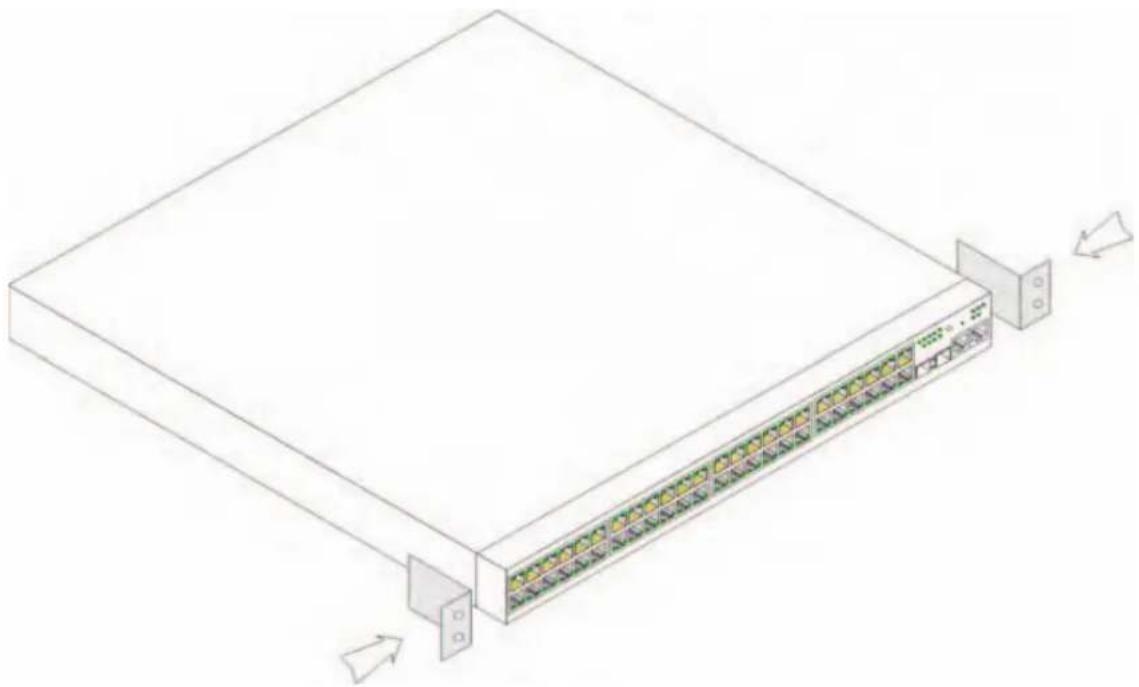
Figure 1-1. Bracket Installation for Rack Mounting
2 Insert the supplied screws into the rack-mounting holes and tighten with a screwdriver.
3 Repeat the process for the rack-mounting bracket on the other side of the device.
4 Insert the unit into the 48.26-cm (19-inch) rack, ensuring that the rack-mounting holes on the device line up to the mounting holes on the rack.
5 Secure the unit to the rack with the rack screws (not provided). Fasten the lower pair of screws before the upper pair of screws. Ensure that the ventilation holes are not obstructed.
Installing on a Flat Surface
Install the device on a flat surface if it is not installed on a rack. The surface must be able to support the weight of the device and the device cables.
1 Attach the self-adhesive rubber pads on each marked location on the bottom of the chassis.
2 Set the device on a flat surface, leaving 5.08cm (2 inches) on each side and 12.7cm (5 inches) at the back.
3 Ensure that the device has proper ventilation.
Installing on a Wall
To mount the switch on a wall:
1 Ensure that the mounting location meets the following requirements:
- The surface of the wall must be capable of supporting the switch.
- Allow at least 5.1cm (2 inches) space on the sides for proper ventilation and 12.7cm (5 inches) at the back for power cable clearance.
- The location must not be exposed to direct sunlight.
- The location must be at least 2 feet away from any heating vents, and no area-heating vent should point towards the unit.
- The location must be ventilated to prevent heat buildup.
- Do not locate the switch near any data or electrical cabling.
The power cable must be able to reach an outlet.
2 Use the supplied screws to attach a mounting bracket to each side of the switch (see the following figure).

Figure 1-2. Bracket Installation for Wall Mounting
Connecting to a Terminal
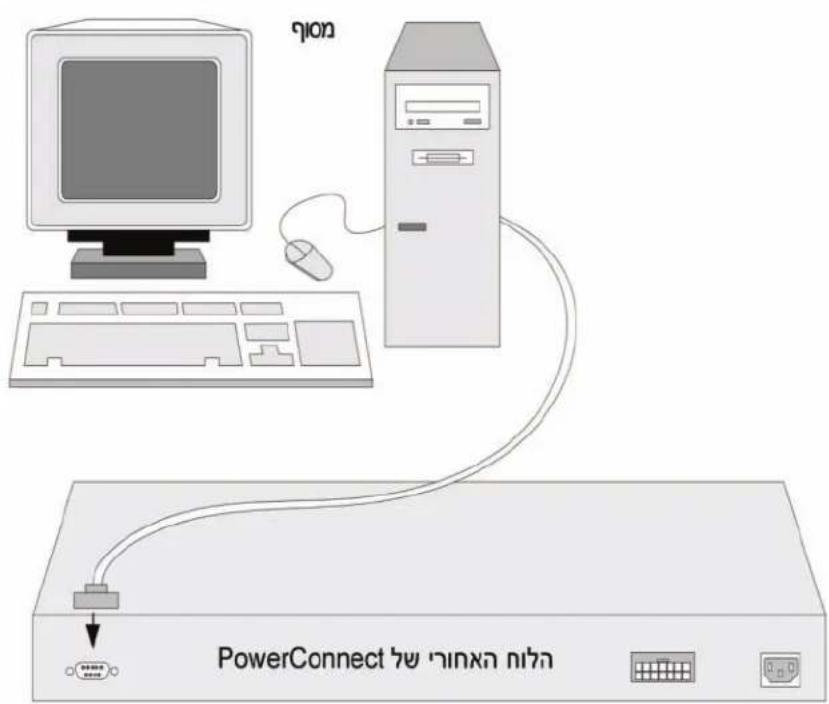
1 Connect an RS-232 crossover cable to the ASCII terminal or the serial connector of a desktop system running terminal emulation software.
2 Connect the female DB-9 connector at the other end of the cable to the device serial port connector.

NOTE: Do not connect the power cable to a grounded AC outlet at this time. You have to connect the device to a power source in the steps detailed in Starting and Configuring the Device section.
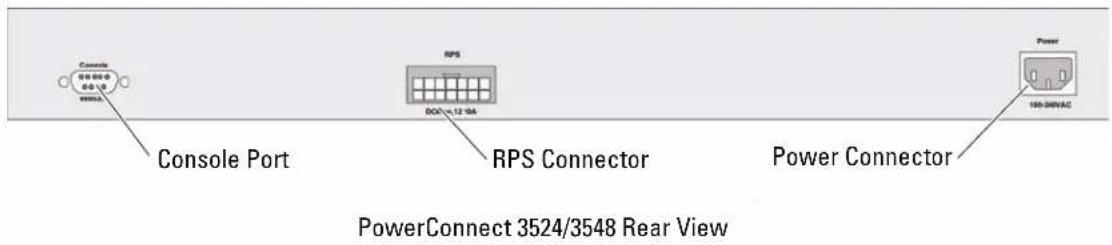
Figure 1-3. Back-Panel Power Connector

Stacking
Overview
Each device can operate as a stand-alone device or can be a member in a stack. Up to eight devices are supported per stack.
All stacks must have a Master unit, and may have a Master Backup unit, with any other devices connected to the stack as Members.
Stacking PowerConnect 3500 Series Switches
Each PowerConnect 3500 series stack contains a single Master unit, and may have a Master Backup unit, while the remaining units are considered stacking Members.
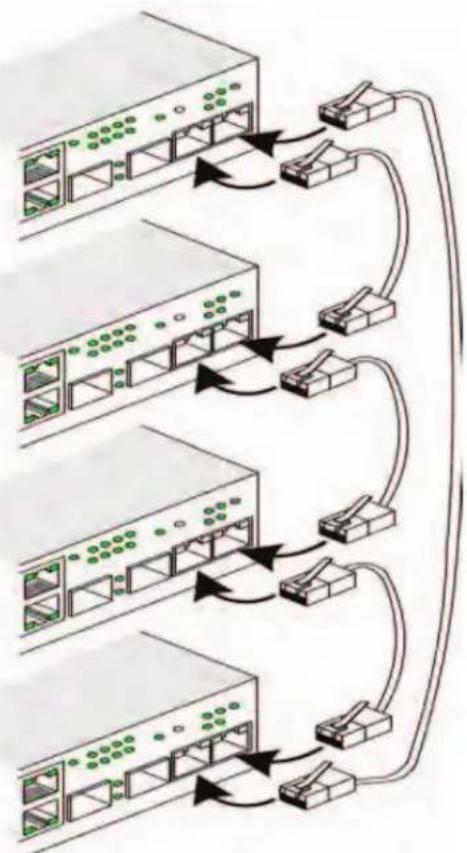
PowerConnect 3500 series switches use the RJ-45 Gigabit Ethernet ports (G3 and G4) for stacking. This enables added stacking capabilities to the devices without adding additional device accessories.
- To stack the devices together, insert a standard Category 5 cable into port G3 in the device at the top of the stack and into port G4 of the device immediately below it.
- Repeat this process until all devices are connected.
- Connect port G3 of the device at the bottom of stack to the port G4 of the device at the top of the stack.

Figure 2-1. Stacking Cable Diagram
For more information on stacking, see the Dell PowerConnect 3500 Series User's Guide on the Documentation CD.
You can perform the stack unit identification on the device front-panel using the Stack ID button.
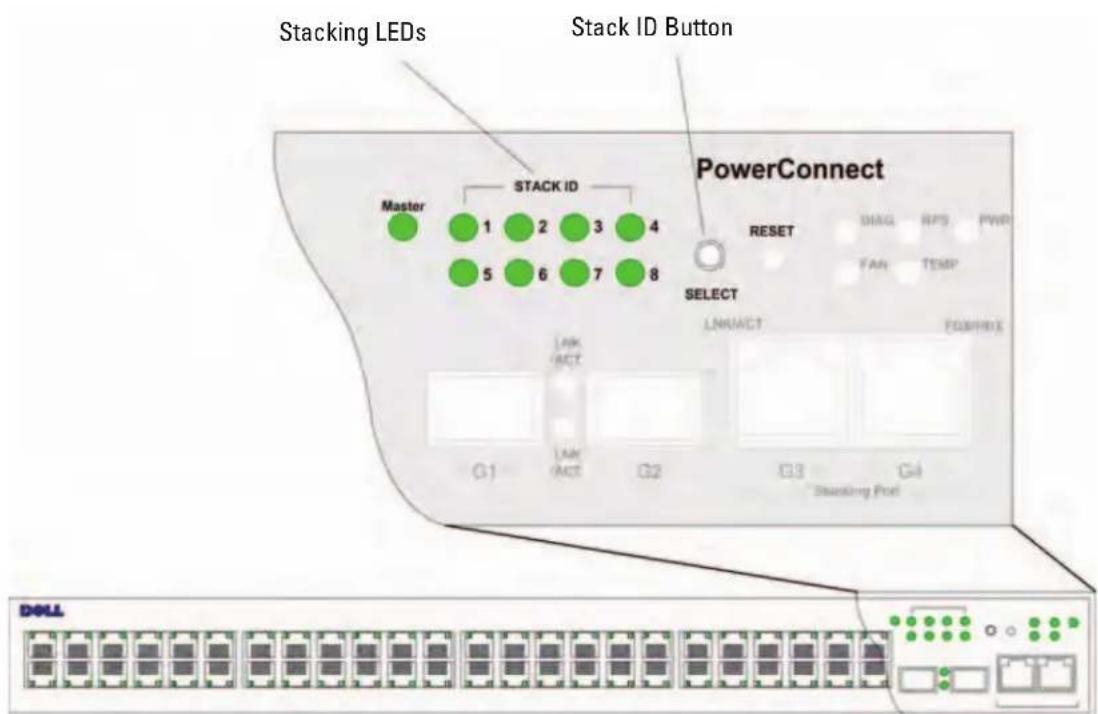
Figure 2-2. Stacking Configuration and Identification Panel
Each stack device has a unique identifying unit ID that defines the unit's position and function in the stack. If the device is a stand-alone unit, the Stack LED is not illuminated. The default setting is stand-alone.
You can manually configure the unit ID using the Stack ID button. The unit ID is indicated by the Stack ID LEDs. Unit ID 1 and 2 are reserved for the Master and Backup Master unit, and unit ID 3 to 8 are for Member units.
Unit ID Selection Process
The unit ID selection process is as follows:
1 Power up the device - To power up the device perform the following tasks:
a Ensure that the stand-alone/Master device Console port is connected to a VT100 terminal device or VT100 terminal emulator via the RS-232 crossover cable.
bLocate an AC power receptacle.
C Destructive the AC power receptacle.
d Connect the device to the AC receptacle.
e Activate the AC power receptacle.
f Confirm that the device is connected and operating correctly by examining the LEDs on the front panel.
When powering up, the configured LED number (corresponding to the previously saved unit ID) begins to flash. The LED flashes for 15 seconds. During this period, you can select a specific Stack ID by pressing the Stack ID button until the appropriate Stack ID LED is illuminated.
2 Selection process - To advance the stacking ID LED number, continue pressing the Stack ID button. When LED 8 is flashing, pressing the Stack ID button results in the device being configured as a standalone. Pressing the Stack ID button again advances the Stack ID to 1. Unit 1 and Unit 2 are master-enabled units; refer to the User Guide for information about the master-selection process.
3 End selection process - The unit ID selection process is completed when the 15-second selection period expires. The Stack ID button becomes unresponsive and the unit ID is set to the LED ID flashing at the end of the period.
NOTE: Perform these steps one unit at a time until all stack members are powered up and their Stack IDs are selected. Performing the steps one unit at a time allows sufficient time to select the Stack ID for each unit. However, the entire stack should be cabled as per the "Stacking Cable Diagram" before powering up the devices.
Starting and Configuring the Device
After completing all external connections, connect a terminal to the device to configure the device. Performing the additional advanced functions are described in the Dell PowerConnect 3500 Series User's Guide on the Documentation CD.
NOTE: Before proceeding further, read the release notes for this product. You can download the release notes from the Dell Support website at support.dell.com.
NOTE: We recommend that you obtain the most recent revision of the user documentation from the Dell Support website at support.dell.com.
Connecting to the Device
To configure the device, the device must be connected to a console, but if the device is part of a stack, only one device called the Master unit in the whole stack needs to be connected to a terminal. You can identify the Master unit by the illuminated Master LED on the front panel of the switch. Because the stack operates as a single device, only the Master unit is configured.
Connecting the Terminal to the Device
The device provides a Console port that enables a connection to a terminal desktop system running terminal emulation software for monitoring and configuring the device. The Console port connector is a male DB-9 connector, implemented as a data terminal equipment (DTE) connector.
To use the Console port, the following is required:
- VT100-compatible terminal or a desktop or portable system with a serial port and running VT100 terminal emulation software
- An RS-232 crossover cable with a female DB-9 connector for the Console port and the appropriate connector for the terminal
To connect a terminal to the device Console port, perform the following tasks:
1 Connect the supplied RS-232 crossover cable to the terminal running VT100 terminal emulation software.
2 Ensure that the terminal emulation software is set as follows:
a Select the appropriate serial port (serial port 1 or serial port 2) to connect to the console.
b Set the data rate to 9600 baud.
c Set the data format to 8 data bits, 1 stop bit, and no parity.
d Set flow control to none.
e Under Properties, select VT100 for Emulation mode.
f Select Terminal keys for Function, Arrow, and Ctrl keys. Ensure that the setting is for Terminal keys (not Windows keys).

NOTICE: When using HyperTerminal with Microsoft® Windows® 2000, Windows XP, or Windows Vista, ensure that you have the latest Service Pack installed. With Windows 2000 Service Pack 2, the arrow keys function properly in HyperTerminal's VT100 emulation. Go to www.microsoft.com for information on Windows 2000, Windows XP, or Windows Vista service packs.
3 Connect the female connector of the RS-232 crossover cable directly to the device Console port on the Master unit/stand-alone device, and tighten the captive retaining screws. The PowerConnect 3500 Series Console port is on the rear panel.

Figure 3-1. Connecting to PowerConnect 3500 series Console Port

NOTE: You can connect a console to the Console port on any unit in the stack, but stack management is performed only from the stack master (unit ID 1 or 2).
Booting the Switch
When the power is turned on with the local terminal already connected, the switch goes through power-on self-test (POST). POST runs every time the device is started and checks hardware components to determine if the device is operational before completely booting. If the system detects a critical problem, the program flow stops. If POST passes successfully, a valid executable image is loaded into RAM. POST messages are displayed on the terminal and indicate test success or failure.
The boot process runs approximately 90 seconds.
Initial Configuration

NOTE: Before proceeding, read the release notes for this product. You can download the release notes from the Dell Support website at support.dell.com.

NOTE: The initial configuration uses the following assumptions:
The PowerConnect device was never configured before and is in the same state as when you received it.
The PowerConnect device booted successfully.
- The console connection is established and the console prompt is displayed on the screen of a VT100 terminal device.
The initial device configuration is through the Console port. After the initial configuration, you can manage the device either from the already connected Console port or remotely through an interface defined during the initial configuration.
The system prompts you to use the Set-up wizard when the device boots up for the first time or if the configuration file is empty because the device is not configured. The Setup Wizard provides guidance through the initial device configuration, and gets the device up and running as quickly as possible.

NOTE: Obtain the following information from your network administrator before configuring the device:
SNMP Community String and SNMP Management System IP address (optional).
-Username and Password.
- The IP address to be assigned to the VLAN 1 interface through which the device is to be managed (by default, every external and internal port is a member of the VLAN 1)
The IP subnet mask for the network
- The default gateway (next hop router) IP address for configuring the default route.
The Setup Wizard guides you through the initial switch configuration, and gets the system up and running as quickly as possible. You can skip using the setup wizard and configure the switch manually through the device CLI mode. Consult the PowerConnect 3500 Series User's Guide for assistance in configuring the device using CLI.
The Setup Wizard configures the following fields.
SNMP Community String and SNMP Management System IP address (optional)
-Username and Password
Device IP address
- IP subnet mask
- Default Gateway IP address
The Setup Wizard displays the following information:
Welcome to Dell Easy Setup Wizard
The Setup Wizard guides you through the initial switch configuration, and gets you up and running easily and quickly. You can also skip the setup wizard, and enter CLI mode to manually configure the switch if you prefer. You can exit the setup wizard any time by entering CNTRL + Z . The system will prompt you with a default answer. By pressing Enter, you accept the default value.
Would you like to skip the setup wizard? [Y/N] N
If you enter[Y], the Set-up wizard exits. If you do not respond within 60 seconds, the Set-up wizard automatically exits and the CLI console prompt appears.
If you enter [N], the Set-up wizard provides interactive guidance through the initial device configuration.

NOTE: You can exit the setup wizard at any time by entering [CNTRL+Z].

NOTE: If you do not respond to any prompt within 60 seconds, the Set-up wizard automatically exits. And, none of your changes are saved.
Wizard Step 1
The following information displays:
The system is not setup for SNMP management by default. To manage the switch using SNMP (required for Dell Network Manager) you can:
- Setup the initial SNMP version 2 account now.
- Return later and setup the SNMP version account. (For more information on setting up a SNMP version 2 account, see the user documentation). Would you like to setup the SNMP management interface now? [Y/N] Y
Enter [N] to skip to Step 2.
Enter [Y] to continue the Set-up wizard. The following information displays:
To setup the SNMP management account you must specify the management system IP address and the "community string" or password that the particular management system uses to access the switch. The wizard automatically assigns the highest access level [Privilege Level 15] to this account. You can use Dell Network Manager or other management interfaces to change this setting later, and to add additional management system later. For more information on adding management systems, see the user documentation.
To add a management station:
Please enter the SNMP community string to be used: [MYSETUPWIZARD] >> Dell Network Manager
Please enter the IP address of the Management System (A.B.C.D) or wildcard (0.0.0.0) to manage from any Management Station, for example 192.168.1.10. Press Enter.
Wizard Step 2
The following information displays:
Now we need to setup your initial privilege (Level 15) user account. This account is used to login to the CLI and Web interface. You may setup other accounts and change privilege levels later. For more information on setting up user accounts and changing privilege levels, see the user documentation.
To setup a user account:
Please enter the user name:
Please enter the user password:
Please reenter the user password:
Enter the Following:
- User name, for example "admin"
- Password and password confirmation.
NOTE: The system prompts you if the first and second password entries are not identical.
Press Enter.
Wizard Step 3
The following information displays:
Next, an IP address is setup. The IP address is defined on the default VLAN (VLAN #1), of which all ports are members. This is the IP address you use to access the CLI, Web interface, or SNMP interface for the switch.
To setup an IP address:
Please enter the IP address of the device (A.B.C.D):
Please enter the IP subnet mask (A.B.C.D or /nn):
Enter the IP address and IP subnet mask, for example 192.168.1.100 as the IP address and 255.255.255.0 as the IP subnet mask.
Precss Enter.
Wizard Step 4
The following information displays:
Finally, setup the default gateway. Please enter the IP address of the gateway from which this network is reachable (e.g. 192.168.1.1):
Enter the default gateway.
Press Enter. The following is displayed (as per the example parameters described):
This is the configuration information that has been collected: SNMP Interface = "Dell Network Manager"@192.168.1.10
User Account setup = admin
Password = ***
Management IP address = 192.168.1.100 255.255.255.0
Default Gateway = 192.168.1.1
Wizard Step 5
The following information displays:
If the information is correct, please select (Y) to save the configuration, and copy to the start-up configuration file. If the information is incorrect, select (N) to discard configuration and restart the wizard: [Y/N]
Enter [N] to skip to restart the wizard.
Enter [Y] to complete the Set-up wizard. The following is displayed:
Thank you for using Dell Easy Setup Wizard. You will now enter CLI mode.
Wizard Step 6
The CLI prompt displays. Consult the PowerConnect 3500 Series User's Guide for more information.
Dell™PowerConnect™35xx系统
使用入门指南
注、注意和警告
The Setup Wizard guides you through the initial switch configuration, and gets you up and running easily and quickly. You can also skip the setup wizard, and enter CLI mode to manually configure the switch if you prefer. You can exit the setup wizard any time by entering CNTRL + Z . The system will prompt you with a default answer.
Would you like to skip the setup wizard? [Y/N] N(是否跳过安装向导?[Y/N]N)
Now we need to setup your initial privilege (Level 15) user account. This account is used to login to the CLI and Web interface. You may setup other accounts and change privilege levels later. For more information on setting up user accounts and changing privilege levels, see the user documentation.(现在,需要设置初始权限[级别15]用帐。该帐用于登录到 CLI 界面及Web界面。稍后,可以设置其它帐并更改权限级别。关设置用帐和更改权限级别的详情,请参阅用说明文件。)
有 To setup a user account: (要设置用帐:)
Please enter the user name:(请输入用名:)
Please enter the user password: (请输入密码:)
Please reenter the user password:(请重新输用密码:)
输入以下内容:
Finally, setup the default gateway. Please enter the IP address of the gateway from which this network is reachable (e.g. 192.168.1.1):(最后,设置默认网关。请输入通过它可访问网络的网关 IP 地址 [例如,192.168.1.1]:)
输入默认网关。
This is the configuration information that has been collected:(以下是已收集的配置信息:)
SNMP Interface = "Dell Network Manager"@192.168.1.10 (SNMP 界面 = "Dell Network Manager"@192.168.1.10)
User Account setup = admin(用帐设置 = admin)
Password = *** * (密码 = *** *)
Management IP address = 192.168.1.100 255.255.255.0
Instalace na zed. 50
Pripojenik terminalu 51
2 Stohování
Uvod 53
Stohovani switchu PowerConnect 3500 Series. 53
Welcome to Dell Easy Setup Wizard
The Setup Wizard guides you through the initial switch configuration, and gets you up and running easily and quickly. You can also skip the setup wizard, and enter CLI mode to manually configure the switch if you prefer. You can exit the setup wizard any time by entering CNTRL + Z . The system will prompt you with a default answer.
By pressing Enter, you accept the default value.
Would you like to skip the setup wizard? [Y/N] N
The system is not setup for SNMP management by default. To manage the switch using SNMP (required for Dell Network Manager) you can:
- Setup the initial SNMP version 2 account now.
- Return later and setup the SNMP version account. (For more information on setting up a SNMP version 2 account, see the user documentation).
Would you like to setup the SNMP management interface now? [Y/N] Y
To setup the SNMP management account you must specify the management system IP address and the "community string" or password that the particular management system uses to access the switch. The wizard automatically assigns the highest access level [Privilege Level 15] to this account. You can use Dell Network Manager or other management interfaces to change this setting later, and to add additional management system later. For more information on adding management systems, see the user documentation.
To add a management station:
Please enter the SNMP community string to be used:[MYSETUPWIZARD] >> Dell Network Manager
Now we need to setup your initial privilege (Level 15) user account. This account is used to login to the CLI and Web interface. You may setup other accounts and change privilege levels later. For more information on setting up user accounts and changing privilege levels, see the user documentation.
To setup a user account:
Please enter the user name:
Please enter the user password:
Please reenter the user password:
Next, an IP address is setup. The IP address is defined on the default VLAN (VLAN #1), of which all ports are members. This is the IP address you use to access the CLI, Web interface, or SNMP interface for the switch.
To setup an IP address:
Please enter the IP address of the device (A.B.C.D):
Please enter the IP subnet mask (A.B.C.D or /nn):
Finally, setup the default gateway. Please enter the IP address of the gateway from which this network is reachable (e.g. 192.168.1.1):
This is the configuration information that has been collected:
SNMP Interface = "Dell Network Manager"@192.168.1.10
User Account setup = admin
Password = *** ****
Management IP address = 192.168.1.100 255.255.255.0
Default Gateway = 192.168.1.1
Prüvodce - krok 5
If the information is correct, please select (Y) to save the configuration, and copy to the start-up configuration file. If the information is incorrect, select (N) to discard configuration and restart the wizard: [Y/N]
Thank you for using Dell Easy Setup Wizard. You will now enter CLI mode.
Prüvodce - krok 6
Welcome to Dell Easy Setup Wizard
The Setup Wizard guides you through the initial switch configuration, and gets you up and running easily and quickly. You can also skip the setup wizard, and enter CLI mode to manually configure the switch if you prefer. You can exit the setup wizard any time by entering Ctrl + Z . The system will prompt you with a default answer. By pressing Enter, you accept the default value.
Would you like to skip the setup wizard? [Y/N] N
The system is not setup for SNMP management by default. To manage the switch using SNMP (required for Dell Network Manager) you can:
- Setup the initial SNMP version 2 account now.
- Return later and setup the SNMP version account. (For more information on setting up a SNMP version 2 account, see the user documentation).
Would you like to setup the SNMP management interface now? [Y/N] Y
To setup the SNMP management account you must specify the management system IP address and the "community string" or password that the particular management system uses to access the switch. The wizard automatically assigns the highest access level [Privilege Level 15] to this account. You can use Dell Network Manager or other management interfaces to change this setting later, and to add additional management system later. For more information on adding management systems, see the user documentation.
To add a management station:
Please enter the SNMP community string to be used: [MYSETUPWIZARD] >> Dell Network Manager
Now we need to setup your initial privilege (Level 15) user account. This account is used to login to the CLI and Web interface. You may setup other accounts and change privilege levels later. For more information on setting up user accounts and changing privilege levels, see the user documentation.
To setup a user account:
Please enter the user name:
Please enter the user password:
Please reenter the user password:
Next, an IP address is setup. The IP address is defined on the default VLAN (VLAN #1), of which all ports are members. This is the IP address you use to access the CLI, Web interface, or SNMP interface for the switch.
To setup an IP address:
Please enter the IP address of the device (A.B.C.D):
Please enter the IP subnet mask (A.B.C.D or /nn):
Finally, setup the default gateway. Please enter the IP address of the gateway from which this network is reachable (e.g. 192.168.1.1):
This is the configuration information that has been collected:
SNMP Interface = "Dell Network Manager"@192.168.1.10
User Account setup = admin
Password = **
Management IP address = 192.168.1.100 255.255.255.0
Default Gateway = 192.168.1.1
Assistant - Étape 5
If the information is correct, please select (Y) to save the configuration, and copy to the start-up configuration file.
If the information is incorrect, select (N) to discard configuration and restart the wizard: [Y/N]
Thank you for using Dell Easy Setup Wizard. You will now enter CLI mode.
Assistant - Étape 6
Welcome to Dell Easy Setup Wizard
The Setup Wizard guides you through the initial switch configuration, and gets you up and running easily and quickly. You can also skip the setup wizard, and enter CLI mode to manually configure the switch if you prefer. You can exit the setup wizard any time by entering CNTRL + Z . The system will prompt you with a default answer.
By pressing Enter, you accept the default value.
Would you like to skip the setup wizard? [Y/N] N
The system is not setup for SNMP management by default. To manage the switch using SNMP (required for Dell Network Manager) you can:
- Setup the initial SNMP version 2 account now.
- Return later and setup the SNMP version account. (For more information on setting up a SNMP version 2 account, see the user documentation).
Would you like to setup the SNMP management interface now? [Y/N] Y
To setup the SNMP management account you must specify the management system IP address and the "community string" or password that the particular management system uses to access the switch. The wizard automatically assigns the highest access level [Privilege Level 15] to this account. You can use Dell Network Manager or other management interfaces to change this setting later, and to add additional management system later. For more information on adding management systems, see the user documentation.
To add a management station:
Please enter the SNMP community string to be used: [MYSETUPWIZARD] >> Dell Network Manager
Now we need to setup your initial privilege (Level 15) user account. This account is used to login to the CLI and Web interface. You may setup other accounts and change privilege levels later. For more information on setting up user accounts and changing privilege levels, see the user documentation.
To setup a user account:
Please enter the user name:
Please enter the user password:
Please reenter the user password:
Next, an IP address is setup. The IP address is defined on the default VLAN (VLAN #1), of which all ports are members. This is the IP address you use to access the CLI, Web interface, or SNMP interface for the switch.
To setup an IP address:
Please enter the IP address of the device (A.B.C.D):
Please enter the IP subnet mask (A.B.C.D or /nn):
Finally, setup the default gateway. Please enter the IP address of the gateway from which this network is reachable (e.g. 192.168.1.1):
This is the configuration information that has been collected: SNMP Interface = "Dell Network Manager"@192.168.1.10
User Account setup = admin
Password = ***
Management IP address = 192.168.1.100 255.255.255.0
Default Gateway = 192.168.1.1
If the information is correct, please select (Y) to save the configuration, and copy to the start-up configuration file. If the information is incorrect, select (N) to discard configuration and restart the wizard: [Y/N]
Thank you for using Dell Easy Setup Wizard. You will now enter CLI mode.
MovTeA 3524,3524P,3548,3548P
περιεχόμενα
1 Eykataaon
Eπισκόπηση 113
Ipoetoiuaia totoeTeiOns 113
Avoiya ouoKEuaoiac 114
Iepiexóμεva ouokεuaαiaç 114
Avoiya ouokekuaiaac ncs ouokekunc 114
ToTOnoTeTnOn TnS OuaKeuNc 114
EykaTaoTaoon paqi. 115
Eykaataon 0E ETTeBn ETIipavia 116
Eykataaon oToixo. 116
Welcome to Dell Easy Setup Wizard
The Setup Wizard guides you through the initial switch configuration, and gets you up and running easily and quickly. You can also skip the setup wizard, and enter CLI mode to manually configure the switch if you prefer. You can exit the setup wizard any time by entering CNTRL + Z . The system will prompt you with a default answer. By pressing Enter, you accept the default value.
Would you like to skip the setup wizard? [Y/N] N
The system is not setup for SNMP management by default. To manage the switch using SNMP (required for Dell Network Manager) you can:
- Setup the initial SNMP version 2 account now.
- Return later and setup the SNMP version account. (For more information on setting up a SNMP version 2 account, see the user documentation). Would you like to setup the SNMP management interface now? [Y/N] Y
IIaNktpoLoynoe [N] (Ox), yia va uetaeite sto bna 2.
To setup the SNMP management account you must specify the management system IP address and the "community string" or password that the particular management system uses to access the switch. The wizard automatically assigns the highest access level [Privilege Level 15] to this account. You can use Dell Network Manager or other management interfaces to change this setting later, and to add additional management system later. For more information on adding management systems, see the user documentation.
To add a management station:
Please enter the SNMP community string to be used: [MYSETUPWIZARD] >> Dell Network Manager
IIaikpoaoynote n dioovon IP too ootmaotg diaxepionc (A.B.C.D) n xaaktnpa aanaavetp (0.0.0.0) ia diaxepion aio oioiovndnoe staofo diaxepionc, ia npadaeiua, 192.168.1.10. Iueote toaiktpo Enter.
Bnμa 2 tou oδnyou
Euavicovtai oakoloo0e5 Pnpoopopiec:
Now we need to setup your initial privilege (Level 15) user account. This account is used to login to the CLI and Web interface. You may setup other accounts and change privilege levels later. For more information on setting up user accounts and changing privilege levels, see the user documentation.
To setup a user account:
Please enter the user name:
Please enter the user password:
Please reenter the user password:
Next, an IP address is setup. The IP address is defined on the default VLAN (VLAN #1), of which all ports are members. This is the IP address you use to access the CLI, Web interface, or SNMP interface for the switch.
To setup an IP address:
Please enter the IP address of the device (A.B.C.D):
Please enter the IP subnet mask (A.B.C.D or /nn):
IIaikpooynoe Tn dovon IP Kai Tn maoka devtepobovos dktoov IP, ia npadayu 192.168.1.100 oC diuvon IP Kai 255.255.255.0 oMaoka devtepobovotc dktoov IP.
Pi#oTe to p o Enter.
Bnμa 4 tou oδnyóu
Euavicovtaoiakolov0eπpnpopipε:
Finally, setup the default gateway. Please enter the IP address of the gateway from which this network is reachable (e.g. 192.168.1.1):
IIaKtpoaynoTe nynpoenlaeyevn nua.
Iieote to niktpo Enter. Eupaviogovta ta akolovtheta (oupawva u c npapaeptpvoc tov npapadiymuotos nou npipypaepetai):
This is the configuration information that has been collected: SNMP Interface = "Dell Network Manager"@192.168.1.10
User Account setup = admin
Password = ***
Management IP address = 192.168.1.100 255.255.255.0
Default Gateway = 192.168.1.1
Bnμα 5 tou oδnyou
Euavicovtai oakokao0eεπλnpopopieε:
If the information is correct, please select (Y) to save the configuration, and copy to the start-up configuration file. If the information is incorrect, select (N) to discard configuration and restart the wizard: [Y/N]
IIaNktpoaoynote [N] (Ox), ia va yivai eavekivn0n to o odnyou.
IIaKtpooynoe [Y] (Nai), yia v a oAoknpoWei o odnyoc EykaTaoan. Emuaviovta ta akolov:
Thank you for using Dell Easy Setup Wizard. You will now enter CLI mode.
Bnμα 6 tou oδnyou
Euaviceta n evtoa n CLI. vouovvotite tv Ooyno Xpno ts ovotnauov ng opas PowerConnect 3500 yia npopopiec.
Welcome to Dell Easy Setup Wizard
The Setup Wizard guides you through the initial switch configuration, and gets you up and running easily and quickly. You can also skip the setup wizard, and enter CLI mode to manually configure the switch if you prefer. You can exit the setup wizard any time by entering CNTRL + Z . The system will prompt you with a default answer. By pressing Enter, you accept the default value.
Would you like to skip the setup wizard? [Y/N] N
The system is not setup for SNMP management by default. To manage the switch using SNMP (required for Dell Network Manager) you can:
- Setup the initial SNMP version 2 account now.
- Return later and setup the SNMP version account. (For more information on setting up a SNMP version 2 account, see the user documentation). Would you like to setup the SNMP management interface now? [Y/N] Y
省略到手顺2進もは、
To setup the SNMP management account you must specify the management system IP address and the "community string" or password that the particular management system uses to access the switch. The wizard automatically assigns the highest access level [Privilege Level 15] to this account. You can use Dell Network Manager or other management interfaces to change this setting later, and to add additional management system later. For more information on adding management systems, see the user documentation.
To add a management station:
Please enter the SNMP community string to be used: [MYSETUPWIZARD] >> Dell Network Manager
Now we need to setup your initial privilege (Level 15) user account. This account is used to login to the CLI and Web interface. You may setup other accounts and change privilege levels later. For more information on setting up user accounts and changing privilege levels, see the user documentation.
To setup a user account:
Please enter the user name:
Please enter the user password:
Please reenter the user password:
以下の入力を進行。
Next, an IP address is setup. The IP address is defined on the default VLAN (VLAN #1), of which all ports are members. This is the IP address you use to access the CLI, Web interface, or SNMP interface for the switch.
To setup an IP address:
Please enter the IP address of the device (A.B.C.D):
Please enter the IP subnet mask (A.B.C.D or /nn):
Finally, setup the default gateway. Please enter the IP address of the gateway from which this network is reachable (e.g. 192.168.1.1):
徳才ルトダートウエイを入力お願い。
This is the configuration information that has been collected: SNMP Interface = "Dell Network Manager"@192.168.1.10
User Account setup = admin
Password = ***
Management IP address = 192.168.1.100 255.255.255.0
Default Gateway = 192.168.1.1
ウイサイド手順5
以下の情報が表示いたします。
If the information is correct, please select (Y) to save the configuration, and copy to the start-up configuration file. If the information is incorrect, select (N) to discard configuration and restart the wizard: [Y/N]
Thank you for using Dell Easy Setup Wizard. You will now enter CLI mode.
ウイサイド手順6
The Setup Wizard guides you through the initial switch configuration, and gets you up and running easily and quickly. You can also skip the setup wizard, and enter CLI mode to manually configure the switch if you prefer. You can exit the setup wizard any time by entering CNTRL + Z . The system will prompt you with a default answer.
By pressing Enter, you accept the default value.
Would you like to skip the setup wizard? [Y/N] N
[Y] 論以弱哉,半哉,半哉,半哉,半哉,半哉,半哉,半哉,半哉,半哉,半哉,半哉,半哉,半哉,半哉,半哉,半哉,半哉,半哉,半哉,半哉,半哉,半哉,半哉,半哉,半哉,半哉,半哉,半哉,半哉,半哉,半哉,半哉,半哉,半
The system is not setup for SNMP management by default. To manage the switch using SNMP (required for Dell Network Manager) you can:
- Setup the initial SNMP version 2 account now.
- Return later and setup the SNMP version account. (For more information on setting up a SNMP version 2 account, see the user documentation).
Would you like to setup the SNMP management interface now? [Y/N] Y
To setup the SNMP management account you must specify the management system IP address and the "community string" or password that the particular management system uses to access the switch. The wizard automatically assigns the highest access level [Privilege Level 15] to this account. You can use Dell Network Manager or other management interfaces to change this setting later, and to add additional management system later. For more information on adding management systems, see the user documentation.
To add a management station:
Please enter the SNMP community string to be used:[MYSETUPWIZARD] >> Dell Network Manager
KanrIs STeIeIeNeparH KAnrI SiStBnDf IP 1A.B.C.D) 0.0.0.0)
马佰社 十国2
dou和gao电电电电电电电电电电电电电电电电电电电电电电电电电电电电电电电电电电电电电电电电电电电电电电电电电电电电电电
Now we need to setup your initial privilege (Level 15) user account. This account is used to login to the CLI and Web interface. You may setup other accounts and change privilege levels later. For more information on setting up user accounts and changing privilege levels, see the user documentation.
To setup a user account:
Please enter the user name:
Please enter the user password:
Please reenter the user password:
D. D
- 求-求-求(即:"admin")
- 嘉皇及中皇
T:首反和双反法自
Enter 言 普言
马佰森 单记3
taq和g在电时之亚
Next, an IP address is setup. The IP address is defined on the default VLAN (VLAN #1), of which all ports are members. This is the IP address you use to access the CLI, Web interface, or SNMP interface for the switch.
To setup an IP address:
Please enter the IP address of the device (A.B.C.D):
Please enter the IP subnet mask (A.B.C.D or /nn):
Finally, setup the default gateway. Please enter the IP address of the gateway from which this network is reachable (e.g. 192.168.1.1):
其本国之德为
This is the configuration information that has been collected: SNMP Interface = "Dell Network Manager"@192.168.1.10
User Account setup = admin
Password = ***
Management IP address = 192.168.1.100 255.255.255.0
Default Gateway = 192.168.1.1
马佰社
dou和gai
If the information is correct, please select (Y) to save the configuration, and copy to the start-up configuration file. If the information is incorrect, select (N) to discard configuration and restart the wizard: [Y/N]
Thank you for using Dell Easy Setup Wizard. You will now enter CLI mode.
马佰社
CLI 连接互连网的连接。
Systemy Dell™
PowerConnect™ 35xx
1 I n s t a l a c j a
Przeglad 179
Welcome to Dell Easy Setup Wizard
The Setup Wizard guides you through the initial switch configuration, and gets you up and running easily and quickly. You can also skip the setup wizard, and enter CLI mode to manually configure the switch if you prefer. You can exit the setup wizard any time by entering CNTRL + Z . The system will prompt you with a default answer. By pressing Enter, you accept the default value.
Would you like to skip the setup wizard? [Y/N] N
The system is not setup for SNMP management by default. To manage the switch using SNMP (required for Dell Network Manager) you can:
- Setup the initial SNMP version 2 account now.
- Return later and setup the SNMP version account. (For more information on setting up a SNMP version 2 account, see the user documentation).
Would you like to setup the SNMP management interface now? [Y/N] Y
To setup the SNMP management account you must specify the management system IP address and the "community string" or password that the particular management system uses to access the switch. The wizard automatically assigns the highest access level [Privilege Level 15] to this account. You can use Dell Network Manager or other management interfaces to change this setting later, and to add additional management system later. For more information on adding management systems, see the user documentation.
To add a management station:
Please enter the SNMP community string to be used:[MYSETUPWIZARD] >> Dell Network Manager
Now we need to setup your initial privilege (Level 15) user account. This account is used to login to the CLI and Web interface. You may setup other accounts and change privilege levels later. For more information on setting up user accounts and changing privilege levels, see the user documentation.
To setup a user account:
Please enter the user name:
Please enter the user password:
Please reenter the user password:
Next, an IP address is setup. The IP address is defined on the default VLAN (VLAN #1), of which all ports are members. This is the IP address you use to access the CLI, Web interface, or SNMP interface for the switch.
To setup an IP address:
Please enter the IP address of the device (A.B.C.D):
Please enter the IP subnet mask (A.B.C.D or /nn):
Finally, setup the default gateway. Please enter the IP address of the gateway from which this network is reachable (e.g. 192.168.1.1):
This is the configuration information that has been collected: SNMP Interface = "Dell Network Manager"@192.168.1.10
User Account setup = admin
Password = ***
Management IP address = 192.168.1.100 255.255.255.0
Default Gateway = 192.168.1.1
Krok 5. kreatora
If the information is correct, please select (Y) to save the configuration, and copy to the start-up configuration file. If the information is incorrect, select (N) to discard configuration and restart the wizard: [Y/N]
Nacijsnij [N],aby uruchomic kreatora ponownie.
Thank you for using Dell Easy Setup Wizard. You will now enter CLI mode.
Krok 6. kreatora
Welcome to Dell Easy Setup Wizard
The Setup Wizard guides you through the initial switch configuration, and gets you up and running easily and quickly. You can also skip the setup wizard, and enter CLI mode to manually configure the switch if you prefer. You can exit the setup wizard any time by entering [CNTRL+Z]. The system will prompt you with a default answer. By pressing Enter, you accept the default value.
Would you like to skip the setup wizard? [Y/N] N)
The system is not setup for SNMP management by default. To manage the switch using SNMP (required for Dell Network Manager) you can:
- Setup the initial SNMP version 2 account now.
- Return later and setup the SNMP version account. (For more information on setting up a SNMP version 2 account, see the user documentation). Would you like to setup the SNMP management interface now? [Y/N] Y
Pulse [N] para ir al paso 2.
To setup the SNMP management account you must specify the management system IP address and the "community string" or password that the particular management system uses to access the switch. The wizard automatically assigns the highest access level [Privilege Level 15] to this account. You can use Dell Network Manager or other management interfaces to change this setting later, and to add additional management system later. For more information on adding management systems, see the user documentation.
To add a management station:
Please enter the SNMP community string to be used: [MYSETUPWIZARD] >> Dell Network Manager
Now we need to setup your initial privilege (Level 15) user account. This account is used to login to the CLI and Web interface. You may setup other accounts and change privilege levels later. For more information on setting up user accounts and changing privilege levels, see the user documentation.
To setup a user account:
Please enter the user name:
Please enter the user password:
Please reenter the user password:
Next, an IP address is setup. The IP address is defined on the default VLAN (VLAN #1), of which all ports are members. This is the IP address you use to access the CLI, Web interface, or SNMP interface for the switch.
To setup an IP address:
Please enter the IP address of the device (A.B.C.D):
Please enter the IP subnet mask (A.B.C.D or /nn):
Finally, setup the default gateway. Please enter the IP address of the gateway from which this network is reachable (e.g. 192.168.1.1):
This is the configuration information that has been collected: SNMP Interface = "Dell Network Manager"@192.168.1.10
User Account setup = admin
Password = ***
Management IP address = 192.168.1.100 255.255.255.0
Default Gateway = 192.168.1.1
If the information is correct, please select (Y) to save the configuration, and copy to the start-up configuration file. If the information is incorrect, select (N) to discard configuration and restart the wizard: [Y/N]
Thank you for using Dell Easy Setup Wizard. You will now enter CLI mode.
Management IP address = 192.168.1.100 255.255.255.0
Default Gateway = 192.168.1.1
)1908n7n7nn
(192.168.1.10 = "Dell Network Manager" = SNMP Runn
admin = wnnwn 11wpi n77n
********** = nno
192.168.1.100 255.255.255.0 = IP-n nnn
192.168.1.1 = 77nn n77n w
yux 5 tyx
:NIN
If the information is correct, please select (Y) to save the configuration, and copy to the start-up configuration file. If the information is incorrect, select (N) to discard configuration and restart the wizard: [Y/N]
nnn nnnnnnnnnnnn [Y] n, [n nn] (N] , .wnn .
nN n nn nn nn [N] [n]
:nnn nn nnn nnn nn [Y] [2]
Thank you for using Dell Easy Setup Wizard. You will now enter CLI mode.
.(CLI yynn nn np .Dell nynnnnnnnnnnnnnnnnn
yux 6 tyx
Next, an IP address is setup. The IP address is defined on the default VLAN (VLAN #1), of which all ports are members. This is the IP address you use to access the CLI, Web interface, or SNMP interface for the switch.
To setup an IP address:
Please enter the IP address of the device (A.B.C.D):
Please enter the IP subnet mask (A.B.C.D or /nn):
VLAN- n VLAN IP nip .IP nni nnnn nnnn nnnn
'wnnnn IP-n nnnn 1. 'ninn' nnnn nn nnnn [VLAN #1]
.anns SNMP ponn nnnn nn nnnn,CLI nnnn nn nnnn:IP nnnn nn nnnn:(A.B.C.D) npnnn nn IP-n nn nnnn nn nnnn :(/nn n A.B.C.D) IP-n nn nnnn nn nn nn
255.255.255.0-IP-n nnnn 192.168.1.100 nnn,IPnv nn nn nn IP-n nn nn
IP vynn
.Enter vpn
Tuy4qunn
NINYIN
Finally, setup the default gateway. Please enter the IP address of the gateway from which this network is reachable (e.g. 192.168.1.1):
1innnwnipnnpnnn nnnnnnnnnnnn nn,
y
: (nnnnn nn nnnnn nn nn nn .Enter vpn
This is the configuration information that has been collected: SNMP Interface = "Dell Network Manager" = 192.168.1.10
User Account setup = admin
Dell Network << :wɪn'ʊ nɒw'ɪ nʌ w S N M P ɪ wɪ n'ɒp n i nɪ n n n n n n n n (MYSETUPWIZARD) Manager
nnnnnnnnn (0.0.0.0) 1111111111111111111111111
.Enter vpn .192.168.1.10
un 2 ty
:NNN
Now we need to setup your initial privilege (Level 15) user account. This account is used to login to the CLI and Web interface. You may setup other accounts and change privilege levels later. For more information on setting up user accounts and changing privilege levels, see the user documentation.
To setup a user account:
Please enter the user name:
Please enter the user password:
Please reenter the user password:
112wn.[15nn]nwn nn nnnnnnnnnnnnnnnnnnnnnnnnnnnnnnnnnnnnnnnnnnnnnnnnnnnnnnnnnnnnnnnnnnnnnnnnnnnnnnnnnnnnnnnnnnnnnnnnnnnnnnnnnnnnnnnnnnnnnnnnnnnnnnnnnnn
:wnnnn 17wT T'2n?
wnwn nn
nnu 1n
nnoo 1u
:DIN DIN NIN
"admin" ,
.
n nn nnnnnnnnnnnnnnnnnnnnnnnnnnnnnnnnnnnnnnnnnnnnnnnnnnnnnnnnnnnnnnnnnnnnnnnnnnnnnnnnnnnnnnnnnnnnnnnnnnnnnnn

. Enter vPn
NINYIN
The system is not setup for SNMP management by default. To manage the switch using SNMP (required for Dell Network Manager) you can:
- Setup the initial SNMP version 2 account now.
- Return later and setup the SNMP version account. (For more information on setting up a SNMP version 2 account, see the user documentation).
Would you like to setup the SNMP management interface now? [Y/N] Y yannn nn ynnn .yinn n nnSNMP nn nn nn nn nn nn :nn (Dell nn Network Manager nn nn) SNMP nnynnn . nnnn 2 nn SNMP nn nn nn
127 qun 17n n?)SNMP noT 110nn n 111111111111111111111111111111111111111
.2 17 [N]
:nnn nn n nn [Y]
To setup the SNMP management account you must specify the management system IP address and the "community string" or password that the particular management system uses to access the switch. The wizard automatically assigns the highest access level [Privilege Level 15] to this account. You can use Dell Network Manager or other management interfaces to change this setting later, and to add additional management system later. For more information on adding management systems, see the user documentation.
To add a management station:
Please enter the SNMP community string to be used:[MYSETUPWIZARD] >> Dell Network Manager
nwn IP-n nnnn nnSNMP nnnn [1wnn nnnn] nnnn nn nnnn nn nnnn nn nnnn nn nnnn nn nnnn nn nnnn nn nnnn nn nnnn nn nnnn nn nnnn nn nnnn nn nnnn nn nnnn nn nnnn nn nnnn nn nnnn nn nnnn nn nnnn nn nnnn nn nnnn nn nnnn nn nnnn nn nnnn nn nnnn nn nnnn nnnn nn nnnn nn nnnn nn nnnn nn nnnn nn nnnn nn nnnn nn nnnn nn nnnn nn nnnn nn nnnn nn nnnn nn nnnn nn nnnn nn nnnn nn nnnn nn nnnn nn nnnn nn nnnn nn nnnn nn nnnn nn nnnn nn nnnn nn nnnn nn nnnn
.0nnn nn nn nn nn nn nn nn nn
(wn)SNMP Management System SNMP Community String IP
n#
ipnnn b IP nnn
IPwwnn nn
ipipipipipipipipipipipipipipipipipipipipipipipipipipipipipipipipipipipipipipipipipipipipipipipipipipipipipipipipipipipipipipipipipipipipipipipipipipipipipipipipipipipipipipipipipipipipipipipipipipip
:OIN OON NNNN
Welcome to Dell Easy Setup Wizard
The Setup Wizard guides you through the initial switch configuration, and gets you up and running easily and quickly. You can also skip the setup wizard, and enter CLI mode to manually configure the switch if you prefer. You can exit the setup wizard any time by entering CNTRL + Z . The system will prompt you with a default answer. By pressing Enter, you accept the default value.
Would you like to skip the setup wizard? [Y/N] N
n nn nnn nnn nnn nnn nnn .Dell w nn nn nn nn nn nn nnn nnn nnn nnn nnn nnn nnn nnn nnn nnn nnn nnn nnn nnn nnn nnn nnn nnn nnn nnn nnn nnn nnn nnn nnn nnn nnn nnn nnn nnn nnn nnn nnn nnn nnn nnn nnn nnn nnn nnn nnn nnn nnn nnn nnn nnn nnn nnn nnn nnn nann nn nn nn nn nn nn nn nn nn nn nn nn nn nn nn nn nn nn nn nn nn nn nn nn nn nn nn nn nn nn nn nn nn nn nn nn nn nn nn nn nn nn nn nn nn nn nn nn nn nn nn nn nn nn nn nn nn nn nn nn nn nn nn nn nn nn nn nn nn nn nn nn nn nn nn nn nn nn nn nn nn nn nn nn nn nn nn nn nn nn nn nn.
[7]?nnpnn nwn 11
n nn nnn nnn nnn nn nnn nnn nnn nnn nnn nnn nnn nnn nnn nnn nnn nnn nnn nnn nnn nnn nnn nnn nnn nnn nnn nnn nnn nnn nnn nnn nnn nnn nnn nnn nnn nnn nnn nnn nnn nnn nnn nnn nnn nnn nnn nnn nnn nnn nnn nnn nnn nnn nnn nnn nann nn nn nn nn nn nn nn nn nn nn nn nn nn nn nn nn nn nn nn nn nn nn nn nn nn nn nn nn nn nn nn nn nn nn nn nn nn nn nn nn nn nn nn nn nn nn nn nn nn nn nn nn nn nn nn nn nn nn nn nn nn nn nn nn nn nn nn nn nn nn nn nn nn nn nn nn nn nn nn nn nn nn nn nn nn nn
n nn nnnnnnnnnnnnnnnnnnnnnnnnnnnnnnnnnnnnnnnnnnnnnnnnnnnnnnnnnnnnnnnnnnnnnnnnnnnnnnnnnnnnnnnnnnnnnnnnnnnnnnnnnnnnnnn
[CNTRL+Z]y npn T- y npnn nynn nn nynn:ny
TNX, 107 1001101111111111111111111111111111111
y
nnn nnx yix
POST (POST) npnnn nn npnnn nnnn, nnnn nn nnnn nn nnnn nn nnnn nn nnnn nn nnnn nn nnnn nn nnnn nn nnnn nn nnnn nn nnnn nn nnnn nn nnnn nn nnnn nn nnnn nn nnnn nn nnnn nn nnnn nn nnnn nn nnnn nn nnnn nn nnnn nn nnnn nn nnnn nn nnnn nn nnnn
. npTan
90-7ynnn
nnnnnny
Dell 7n nn nnn nn nn nn nn nn nn nn nn nn nn nn nn nn nn nn nn nn nn nn nn nn nn nn nn nn nn nn nn nn nn nn nn nn nn nn nn nn nn nn nn nn nn nn nn nn nn nn nn nn nn nn nn nn nn nn nn nn nn nn nn nn nn nn nn nn nn nn nn nn
- support.dell.com
ninnnnnnnnnnnnnnnnnnnnnnnnnnnn
.
PowerConnect
VT100 qion nn y tonn by nxin qionnn nnnn qionnn n
n npnn nn nnnn nn nnnn npnn .nnnn nn nnnn nn nnnn nnnn nnnn nnnn nnnn nnnn nnnn nnnn nnnn nnnn nnnn nnnn nnnn nnnn nnnn nnnn nnnn nnnn nnnn nnnn nnnn nnnn nnnn nnnn nnnn nnnn nnnn nnnn nnnn nnnn nnnn nnnn nnnn nnnn nn
n nn n nn n nn nn nn nn nn nn nn nn nn nn nn nn nn nn nn nn nn nn nn nn nn nn nn nn nn nn nn nn nn nn nn nn nn nn nn nn nn nn nn nn nn nn nn nn nn nn nn nn nn nn nn nn nn nn nn nn nn nn nn nn nn nn nn nn nn nn nn nn nn nn nn nn nn nn nn nn nn nn nn nn nn nn nn nn
.
n nn nn nn nn nn nn nn nn nn nn nn nn nn nn nn nn nn nn nn nn nn nn nn nn nn nn nn nn nn nn nn nn nn nn nn nn nn nn nn nn nn nn nn nn nn nn nn nn nn nn nn nn nn nn nn nn nn nn nn nn nn nn nn nn nn nn nn nn nn nn nn nn nn nn nn nn nn nn nn nn nn nn nn nn
. (N)SNMP Management System SNMP Community String IP
.
n nnnnnnnnnnnnnnnnnnnnnnnnnnnnnnnnnnnnnnnnnnnnnnnnnnnnnnnnnnnnnnnnnnnnnnnnnnnnnnnnnnnnnnnnnnnnnnnnnnnnnnnnnnnnnnnnnnnnnnnnnnnnnnnnnnnnnnnnnnn
(VLAN 1 wnn w nnn
nnpipipnnnnnnnnnnnn
n nn nnnn nn (nn hop) nn nn nn nn IP nnnn
n nn nnnnnnnnnnnnnnnnnnnnnnnnnnnnnnnnnnnnnnnnnnnnnnnnnnnnnnnnnnnnnnnnnnnnnnnnnnnnnnnnnnnnnnnnnnnnnnnnnnnnnnnnnnnnnnnnnnnnnnnnnnnnnnnnnnnnnnnnnnnnnnnnnnnnnnnnnnnnnnnnnnnnnnnnnn nn nn nn nn nn nn nn nn nn nn nn nn nn nn nn nn nn nn nn nn nn nn nn nn nn nn nn nn nn nn nn nn nn nn nn nn nn nn nn nn nn nn nn nn nn nn nn nn nn nn nn nn nn nn nn nn nn nn nn nn nn nn nn nn nn nn nn nn nn nn nn nn nn nn nn nn nn nn nn nn nn nn nn nn nn nn nn nn nn nn nn nn nn nn nn nn nn nn nn nn nrnne nannn nannn nannn nannn nannn nannn nannn nannn nannn nannn nannn nannn nannn nannn nannn nannn nannn nannn nannn nannn nannn nannn nannn nannn nannn nannn nannn nannn nannn nannn nannn nannn nannn nannn
nNnNnNn 8-0nnnnnnn
PowerConnect 3500 by quon nnnnn .3-1
nynnnnnnnnnnnnnnnnnnnnnnnnnnnnnnnnnnnnnnnnnnnnnnnnnnnnnnnnnnnnnnnnnnnnnnnnnnnnnnnnnnnnnnnnnnnnnnnnnnnnnnnnn
(2)1nnn

yyn
nDell PowerConnect 3500 n
nynnnn nn nwn, nnnn nn nnnn nn nnnn nnnn nnnn nnnn nnnn nnnn nnnn nnnn nnnn nnnn nnnn nnnn nnnn nnnn nnnn nnnn nnnn nnnn nnnn nnnn nnnn nnnn nnnn nnnn nnnn nnnn nnnn nnnn nnnn nnnn nnnn nnnn nnnn nnnn nn
DB-9 npn rs-232
n nn nnn nn nn nn nn nn nn nn nn nn nn nn nn nn nn nn nn nn nn nn nn nn nn nn nn nn nn nn nn nn nn nn nn nn nn nn nn nn nn nn nn nn nn nn nn nn nn nn nn nn nn nn nn nn nn nn nn nn nn nn nn nn nn nn nn nn nn nn nn nn nn nn nn nn nn nn nn nn
VT100 1
2
(2nN1nN
.9600- 1
n nn nnnn
T
:nnn nn nyn nn y, npnn nn ny 1
nVTT00 nnnn nn nnnn nn nnnn nn nnnn
RS-232 100VT100
AC bwn ywn
ACbwnnynynnnn
ACBNNyypnnnnn
ACbnnn npyynnyn
Pn nnnnnnnnnnnnnnnnnnnnnnnnnnnnnnnnnnnnnnnnnnnnnnnnnnnnnnnnnnnnnnnnnnnnn
nnn nn nnnn (n nn nn nn nn nn nn nn nn nn nn nn nn nn nn nn nn nn nn nn nn nn nn nn nn nn nn nn nn nn nn nn nn nn nn nn nn nn nn nn nn nn nn nn nn nn nn nn nn nn nn nn nn nn nn nn nn nn nn nn nn nn nn nn nn nn nn
Nnnn nn nnnnnnnnnnn
8 nwnn nn nnnn nn nn nn nn nn nn nn nn nn nn nn nn nn nn nn nn nn nn nn nn nn nn nn nn nn nn nn nn nn nn nn nn nn nn nn nn nn nn nn nn nn nn nn nn nn nn nn nn nn nn nn nn nn nn nn nn nn nn nn nn nn nn nn nn nn nn nn nn nn nn nn nn nn nn nn nn nn nn nn nn nn nn nn nn nn
15 11 11 11 11 11 11 11 11 11 11 11 11
n 8 3 n nn nnn nnn nnn nnn nnn nnn nnn nnn nnn nnn nnn nnn nnn nnn nnn nnn nnn nnn nnn nnn nnn nnn nnn nnn nnn nnn nnn nnn nnn nnn nnn nnn nnn nnn nnn nnn nnn nnn
Dell y PowerConnect 3500 nnyy,nyn nn
(1) Stack ID 1234567890123456789012345678901234567890123456789012345678901234567890123456789012345678901234567890123456789
y
PowerConnect 3500 nton
PowerConnect 3500 yy
G4-1 G3) RJ-45 Gigabit Ethernet PowerConnect 3500
n nn nnn nnn nnn nnn nnn nnn nnn nnn nnn nnn nnn
1
1NNN (YIN 5) 12.7-0TTNN TNN 508 NNN NNN
obin nnn bap npnnnNT 3
RS-
·nny np
NNN NINN NINN NINN NINN NINN NINN
y 1
nss nnnnnnnnnnnnnnnnnnnnnnnnnnnnnnnnnnnnnnnnnnnnnnnnnnnnnnnnnnnnnnnnnnnnnnnnnnnnnnnnnnnnnnnnnnnnnnnnnnnnnnnnnnnnn
3548P,3548,3524P,3524n
A01 mnn
FG745 p7n 19on
2007 noos
PowerConnect™ 35xx nvn
DellTM
nynnn
Dell™ PowerConnect™ 35xx Sistemleri
Baslangıç Kilavuzu
Printed on recycled paper.