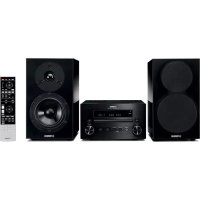
MCR550 - Audio System YAMAHA - Free user manual and instructions
Find the device manual for free MCR550 YAMAHA in PDF.



| Product type | Audio system |
| Brand | YAMAHA |
| Model | MCR550 |
| Dimensions (W × H × D) | 215 × 125 × 309 mm |
| Weight | 4.8 kg |
| Power supply | 230 V AC, 50 Hz |
| Power consumption | 80 W |
| Standby power consumption | 0.5 W or less |
| Maximum output power | 32 W + 32 W (6 Ω, 1 kHz, 10% THD) |
| FM tuning range | 87.50 to 108.00 MHz |
| Supported audio formats | CD, CD-R/RW, MP3, WMA, iPod (5th generation, classic, nano, touch) |
| Inputs | AUX1 (RCA), AUX2 (3.5 mm stereo mini jack), iPod dock, USB port |
| Outputs | Headphones (PHONES) |
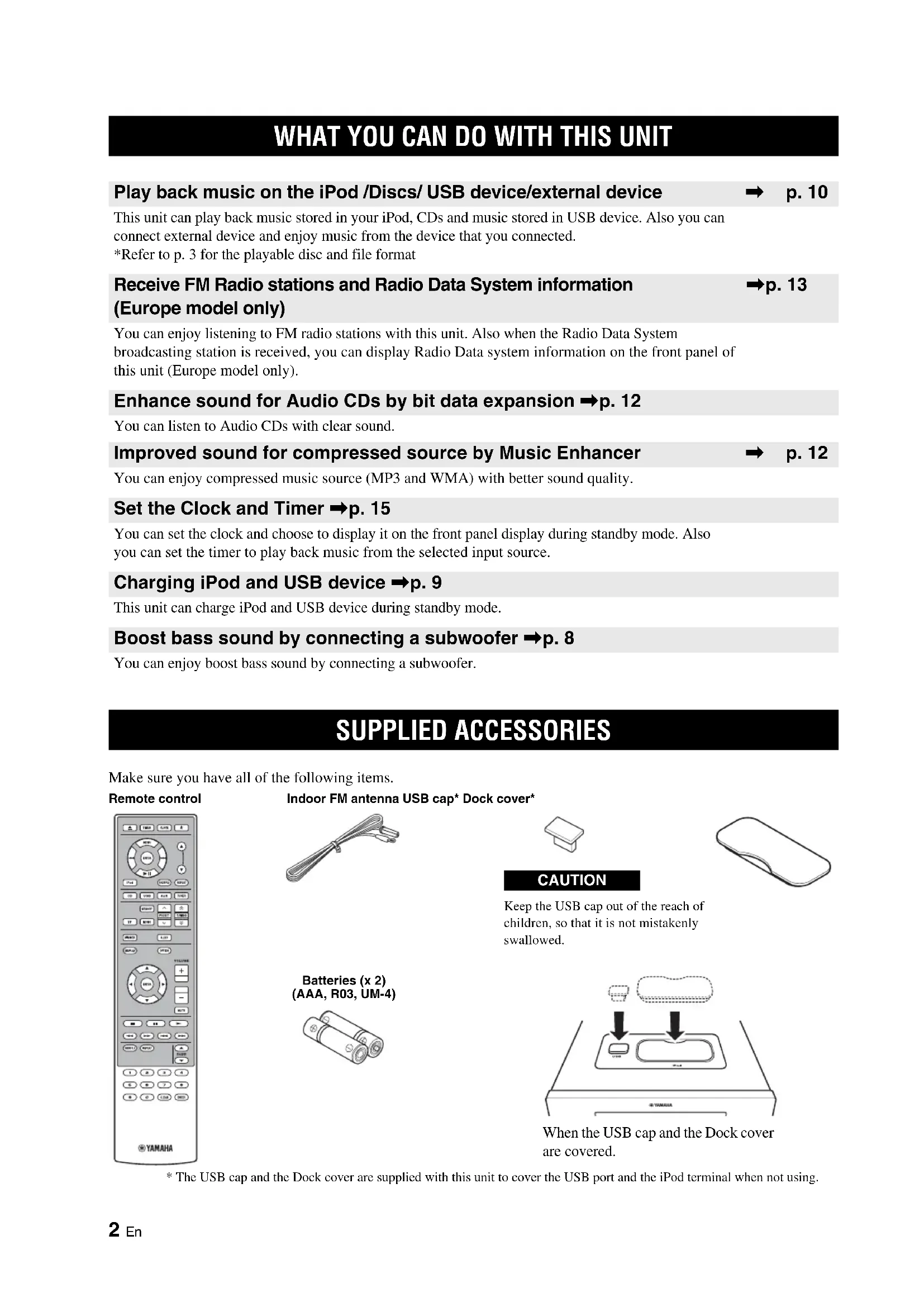
| Included accessories | Remote control, indoor FM antenna, USB cover, dock cover |
| Main features | Random play, repeat, auto tuning, 30 station presets, timer, sleep timer, information display |
| Maintenance and cleaning | Use a dry and clean cloth, do not use chemical solvents |
| Safety | Do not expose to rain or humidity, do not open the casing, use the specified voltage |
| Spare parts and repairability | Entrust repairs to a qualified technician, contact your Yamaha dealer or after-sales service |
Frequently Asked Questions - MCR550 YAMAHA
User questions about MCR550 YAMAHA
0 question about this device. Answer the ones you know or ask your own.
Ask a new question about this device
Download the instructions for your Audio System in PDF format for free! Find your manual MCR550 - YAMAHA and take your electronic device back in hand. On this page are published all the documents necessary for the use of your device. MCR550 by YAMAHA.
USER MANUAL MCR550 YAMAHA
micro component system
PIANOCRAFT
OWNER'S MANUAL
MODE D'EMPLOI
BEDIENUNGSANLEITUNG
BRUKSANVISNING
VAROITUS
If the socket outlets in the home are not suitable for the plug supplied with this appliance, it should be cut off and an appropriate 3 pin plug fitted. For details, refer to the instructions described below.
Note
The plug severed from the mains lead must be destroyed, as a plug with bared flexible cord is hazardous if engaged in a live socket outlet.
■Special Instructions for U.K. Model
IMPORTANT
THE WIRES IN MAINS LEAD ARE COLOURED IN ACCORDANCE WITH THE FOLLOWING CODE:
Blue: NEUTRAL
Brown: LIVE
As the colours of the wires in the mains lead of this apparatus may not correspond with the coloured markings identifying the terminals in your plug, proceed as follows: The wire which is coloured BLUE must be connected to the terminal which is marked with the letter N or coloured BLACK. The wire which is coloured BROWN must be connected to the terminal which is marked with the letter L or coloured RED.
Make sure that neither core is connected to the earth terminal of the three pin plug.
CAUTION: READ THIS BEFORE OPERATING YOUR UNIT.
1 To assure the finest performance, please read this manual carefully. Keep it in a safe place for future reference.
2 Install this sound system in a well ventilated, cool, dry, clean place - away from direct sunlight, heat sources, vibration, dust, moisture, and/or cold. For proper ventilation, allow the following minimum clearances around CRX-550.
Top: 20 cm (8 in)
Rear: 10 cm (4 in)
Sides: 10 cm (4 in)
3 Locate this unit away from other electrical appliances, motors, or transformers to avoid humming sounds.
4 Do not expose this unit to sudden temperature changes from cold to hot, and do not locate this unit in an environment with high humidity (i.e. a room with a humidifier) to prevent condensation inside this unit, which may cause an electrical shock, fire, damage to this unit, and/or personal injury.
5 Avoid installing this unit where foreign object may fall onto this unit and/or this unit may be exposed to liquid dripping or splashing. On the top of this unit, do not place:
- Other components, as they may cause damage and/or discoloration on the surface of this unit.
– Burning objects (i.e. candles), as they may cause fire, damage to this unit, and/or personal injury.
- Containers with liquid in them, as they may fall and liquid may cause electrical shock to the user and/or damage to this unit.
6 Do not cover this unit with a newspaper, tablecloth, curtain, etc. in order not to obstruct heat radiation. If the temperature inside this unit rises, it may cause fire, damage to this unit, and/or personal injury.
7 Do not plug in this unit to a wall outlet until all connections are complete.
8 Do not operate this unit upside-down. It may overheat, possibly causing damage.
9 Do not use force on switches, knobs and/or cords.
10 When disconnecting the power cable from the wall outlet, grasp the plug; do not pull the cable.
11 Do not clean this unit with chemical solvents; this might damage the finish. Use a clean, dry cloth.
12 Only voltage specified on this unit must be used. Using this unit with a higher voltage than specified is dangerous and may cause fire, damage to this unit, and/or personal injury. Yamaha will not be held responsible for any damage resulting from use of this unit with a voltage other than specified.
13 To prevent damage by lightning, keep the power cable and outdoor antennas disconnected from a wall outlet or this unit during a lightning storm.
14 Do not attempt to modify or fix this unit. Contact qualified Yamaha service personnel when any service is needed. The cabinet should never be opened for any reasons.
15 When not planning to use this unit for long periods of time (i.e. vacation), disconnect the AC power plug from the wall outlet.
16 Be sure to read the “TROUBLESHOOTING” section on common operating errors before concluding that this unit is faulty.
17 Before moving this unit, press to set this unit to the standby mode, and disconnect the AC power plug from the wall outlet.
18 Condensation will form when the surrounding temperature changes suddenly. Disconnect the power cable from the outlet, then leave this unit alone.
19 When using this unit for a long time, this unit may become warm. Turn the power off, then leave this unit alone for cooling.
20 Install this unit near the AC outlet and where the AC power plug can be reached easily.
21 The batteries shall not be exposed to excessive heat such as sunshine, fire or the like.
22 Excessive sound pressure from earphones and headphones can cause hearing loss.
This unit is not disconnected from the AC power source as long as it is connected to the wall outlet, even if this unit itself is turned off by ⬆This state is called the standby mode. In this state, this unit is designed to consume a very small quantity of power.
WARNING
TO REDUCE THE RISK OF FIRE OR ELECTRIC SHOCK, DO NOT EXPOSE THIS UNIT TO RAIN OR MOISTURE.
LASER SAFETY
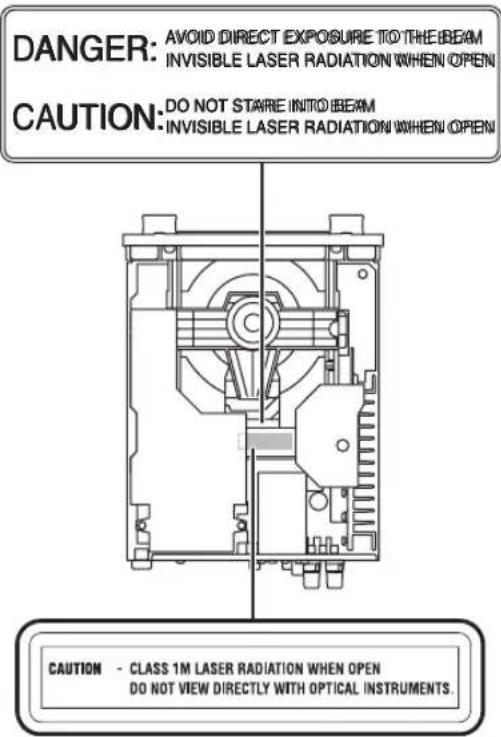
This unit employs a laser. Due to possible eye injury, only a qualified service person should remove the cover or attempt to service this device.
DANGER
This unit emits visible laser radiation when open. Avoid direct eye exposure to beam. When this unit is plugged into the wall outlet, do not place your eyes close to the opening of the disc tray and other openings to look into inside.
The laser component in this product is capable of emitting radiation exceeding the limit for Class 1.
LASER
Type Semiconductor laser GaAs/GaAlAs
Wave length 780 nm
Output Power 10 mW
WARNING
DO NOT TOUCH THIS UNIT WHEN IT IS USED CONTINUOUSLY AT HIGH VOLUME BECAUSE THE BOTTOM OF THIS UNIT MAY BECOME HOT. IT MAY LEAD TO INJURIES SUCH AS BURNS, ETC.
CONTENTS
PREPARATION
WHAT YOU CAN DO WITH THIS UNIT ...... 2
SUPPLIED ACCESSORIES 2
PLAYABLE DISCS AND FILE FORMAT...... 3
REMOTE CONTROL 4
Installing the batteries in the remote control ..... 5
Using the remote control 5
FRONT PANEL DISPLAY 6
OPERATION
FRONT PANEL AND BASIC OPERATION ..... 7
PREPARATIONS....8
Connecting speakers/external components/ antennas....8
Other connection....9
Connecting the power cable....9
LISTENING TO MUSIC.... 10
Playback operation.... 10
Operation for iPod 11
Operation for CD/USB 11
Switching the display.... 12
Playback sound.... 12
LISTENING TO FM RADIO STATIONS ..... 13
Tuning to radio stations 13
Presetting radio stations.... 13
Selecting preset radio stations (Preset tuning).... 13
Displaying Radio Data System information...... 13
Using the TP (traffic program) data service ..... 14
CLOCK AND TIMER 15
Using the clock 15
Using timer and sleep timer.... 15
USING USEFUL FUNCTIONS ...... 16
Using option menu.... 16
ADDITIONAL INFORMATION
TROUBLESHOOTING ....18
General.... 18
Radio reception.... 19
iPod....19
USB 20
Disc playback 21
Remote control 21
HANDLING COMPACT DISCS ......22
SPECIFICATIONS....22
■About this manual
- This manual describes how to operate this unit using a remote control except when it is not available. Some of these operations are also available using the front panel buttons.
- The symbol “ _E ” with page number(s) indicates the corresponding reference page(s).
- Notes contain important information about safety and operating instructions. - indicates a tip for your operation.
- This manual is printed prior to production. Design and specifications are subject to change in part as a result of improvements, etc. In case of differences between the manual and the product, the product has priority.
WHAT YOU CAN DO WITH THIS UNIT
Play back music on the iPod /Discs/ USB device/external device
→ p. 10
This unit can play back music stored in your iPod, CDs and music stored in USB device. Also you can connect external device and enjoy music from the device that you connected.
*Refer to p. 3 for the playable disc and file format
Receive FM Radio stations and Radio Data System information (Europe model only)
→p. 13
You can enjoy listening to FM radio stations with this unit. Also when the Radio Data System broadcasting station is received, you can display Radio Data system information on the front panel of this unit (Europe model only).
Enhance sound for Audio CDs by bit data expansion → p. 12
You can listen to Audio CDs with clear sound.
Improved sound for compressed source by Music Enhancer
→ p. 12
You can enjoy compressed music source (MP3 and WMA) with better sound quality.
Set the Clock and Timer → p. 15
You can set the clock and choose to display it on the front panel display during standby mode. Also you can set the timer to play back music from the selected input source.
Charging iPod and USB device → p. 9
This unit can charge iPod and USB device during standby mode.
Boost bass sound by connecting a subwoofer → p. 8
You can enjoy boost bass sound by connecting a subwoofer.
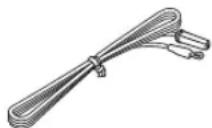
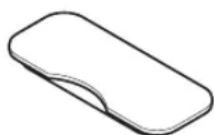
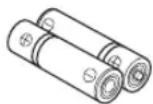
SUPPLIED ACCESSORIES
Make sure you have all of the following items.
Remote control
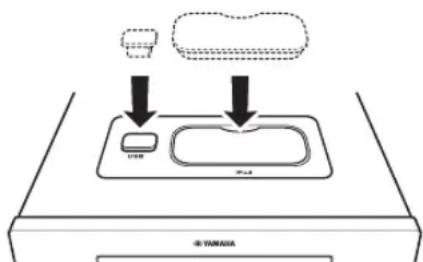
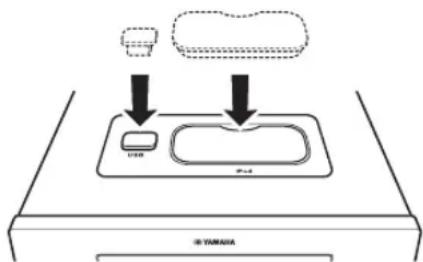
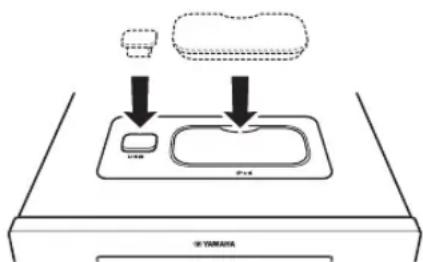
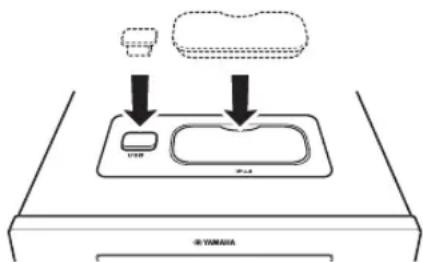
Indoor FM antenna USB cap* Dock cover*

CAUTION
Keep the USB cap out of the reach of children, so that it is not mistakenly swallowed.
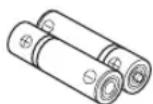
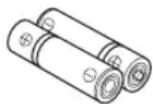
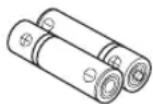
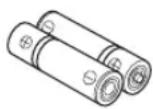
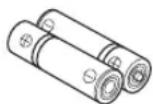
Batteries (x 2)
(AAA, R03, UM-4)
flowchart
graph TD
    A["Input"] --> B["Processing"]
    B --> C["Output"]
    D["Cloud Icon"] -.-> B
When the USB cap and the Dock cover are covered.
PLAYABLE DISCS AND FILE FORMAT
■Playable discs
Use compact discs bearing the marks below.

.... Compact discs (digital audio)

.... CD-R,CD-RW digital audio discs
- CD-R or CD-RW discs bearing one of the following phrases.
FOR CONSUMER FOR CONSUMER USE FOR MUSIC USE ONLY
- Finalized CD-R or CD-RW discs

Note
This compact disc player may not be able to play some CD-R/CD-RW discs or discs on which recording was not made correctly.



.... CD-TEXT discs
To play back an 8-cm (3 in) CD
Place it in the inner recessed area of the disc tray. Do not put a normal (12-cm) CD on top of an 8-cm (3 in) CD.
To prevent a malfunction of this unit:
- Do not use any nonstandard shaped disc (heart, etc.) available on the market because it might damage the unit.

- Do not use a disc with tape, stickers, or paste on it. If you use such a disc, the disc may get stuck in the unit, or damage to the unit may result.
Note: Do not use any lens cleaners as they may be a cause of malfunction.
■Playable MP3 and WMA files
MP3
| Format | Bitrate (kbps) | Sampling frequency (kHz) |
| MPEG 1 Audio Layer-3 | 32-320*1 | 32/44.1/48 |
| MPEG 2 Audio Layer-3, 2 | 8-160*1 | 16/22.05/24 |
*1 Variable bitrate is supported.
WMA
- Version 8
- Version 9 (Standard and variable bitrates are supported. Professional and Lossless are not supported.)
| Profile | Bitrate (kbps) | Sampling frequency (kHz) |
| High Profile | 32-320*2 | 32/44.1/48 |
| Mid Profile | 16-32 22.05 |
*2 Both constant and variable bitrates are supported.
Notes
- Playback for Data Disc starts in alphanumeric order of files.
- Playback for USB starts in order by date and time of creation.
• Copyright-protected WMA (DRM) files cannot be played back by this unit.
• The disc must be ISO 9660 compatible. - The maximum file and folder numbers are as follows.
| Data Disc | USB | |
| Maximum total number of file and folder*3 | 512 9,99 | 9 |
| Maximum folder number *3 | 255 255 | |
| Maximum file number per folder | 511 255 |
*3 The root is counted as one of the folders.
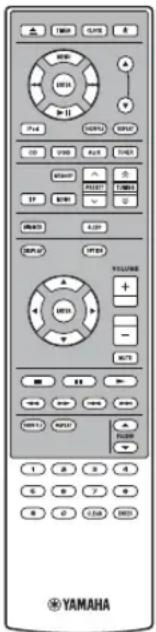
REMOTE CONTROL
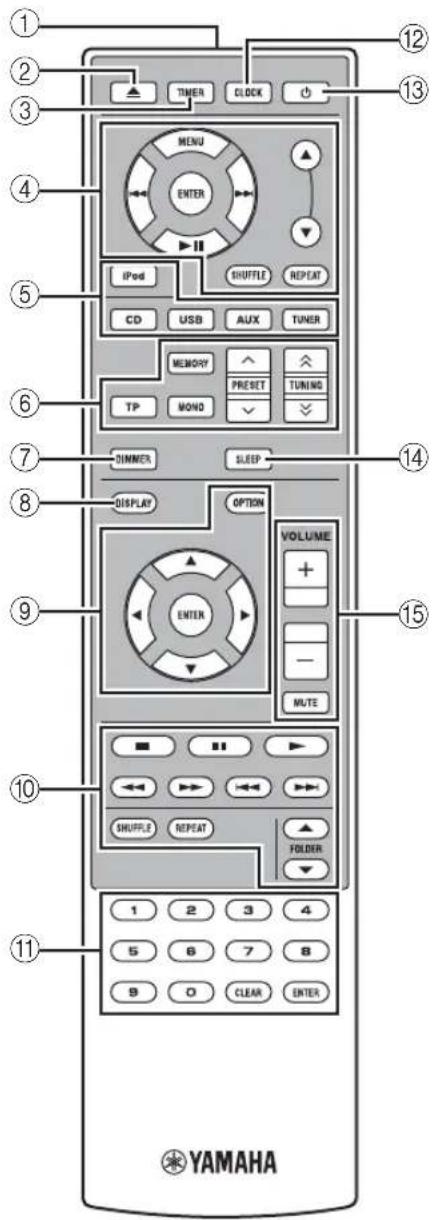
① Infrared signal transmitter (P. 5)
②: Open and close tray
③ TIMER (P. 15)
④ iPod Control buttons (P. 11)
Used to operate your iPod
▲/▼Scroll buttons
MENU: Returns to the upper level in the iPod menu
ENTER: Select group/start playback
▶▶: Skip forward/press and hold to fast forward
◀◀ : Skip backward/press and hold to fast backward
▶ III : Starts or pauses playback
SHUFFLE: Selects the shuffle play mode
REPEAT: Selects the repeat play mode
⑤ Input select buttons (P. 10, 13)
Select the input source.
⑥FM control buttons
TP: Enters TP (Traffic Program) data service receiving mode (P. 14).
MEMORY: Starts preset tuning and stores preset station (P. 13).
MONO: Sets FM Broadcasting receiving mode to monaural mode (P. 13).
PRESET ∧ / ∨: Selects preset station (P. 13).
TUNING ✗ Press to start manual tuning. Press and hold to start automatic tuning (P. 13).
⑦DIMMER
Changes brightness of the front panel. Choose brightness from normal (bright), mid dim, or dim by pressing this button repeatedly.
⑧ DISPLAY (P. 13)
Switches the information shown on the front panel.
⑨ Option control buttons (P. 16)
OPTION: Enters option menu mode.
▲/▼/◄/►/ ENTER: For selecting and confirming an item.
⑩ CD/USB control buttons (P.11)
Controls CD/USB playback
■ : Stops playback
■: Pauses playback
: Starts playback
◀◀ / ▶Rewind/fast-forward music
/▶Skips to the beginning of current track or next track
SHUFFLE: Selects the shuffle play mode
REPEAT: Selects the repeat play mode
FOLDER ▲: Skips to the first file of selected folder for an MP3 or
WMA recorded on disc/USB device.
⑪N umeric buttons (P. 11)
Input numbers.
Press ENTER to confirm the entry.
Press CLEAR to clear the entry.
⑫ CLOCK (ns P. 15)
⑬ (qh/standby)
⑭ SLEEP (P. 15)
⑮Volume control buttons
Controls the volume.
Press MUTE to turn off the sound. Press again to resume the volume.
Installing the batteries in the remote control
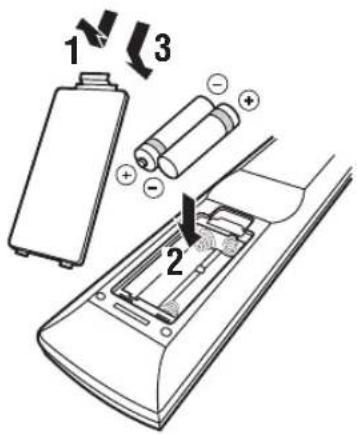
■Notes on batteries
- Change both batteries when the operation range of the remote control decreases.
- Use AAA, R03, UM-4 batteries.
- Make sure that the polarities are correct. See the illustration inside the battery compartment.
- Remove the batteries if the remote control is not to be used for an extended period of time.
- Do not use old batteries together with new ones.
- Do not use different types of batteries (such as alkaline and manganese batteries) together. Read the packaging carefully as these different types of batteries may have the same shape and color.
- If the batteries have leaked, dispose of them immediately. Avoid touching the leaked material or letting it come into contact with clothing, etc. Clean the battery compartment thoroughly before installing new batteries.
- Do not throw away batteries with general house waste; dispose of them correctly in accordance with your local regulations.
Using the remote control
The remote control transmits a directional infrared beam. Be sure to aim the remote control directly at the remote control sensor on the front panel of the unit during operation.
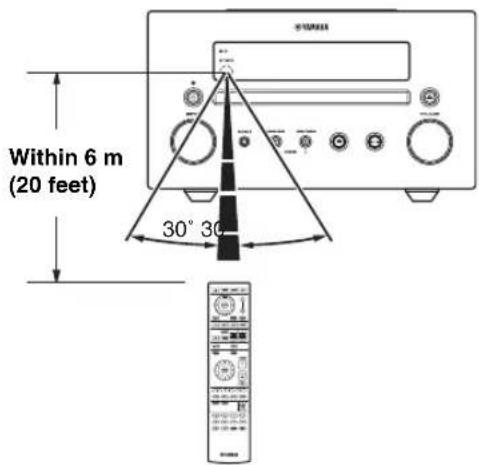
Notes
- The area between the remote control and the unit must be clear of large obstacles.
- Do not spill water or other liquids on the remote control.
- Do not drop the remote control.
- Do not leave or store the remote control in the following types of conditions:
– high humidity, such as near a bath
– high temperature, such as near a heater or a stove - extremely low temperatures
- dusty places.
- Do not expose the remote control sensor to strong lighting, in particular, an inverter type fluorescent lamp; otherwise, the remote control may not work properly. If necessary, position the system away from direct lighting.
FRONT PANEL DISPLAY
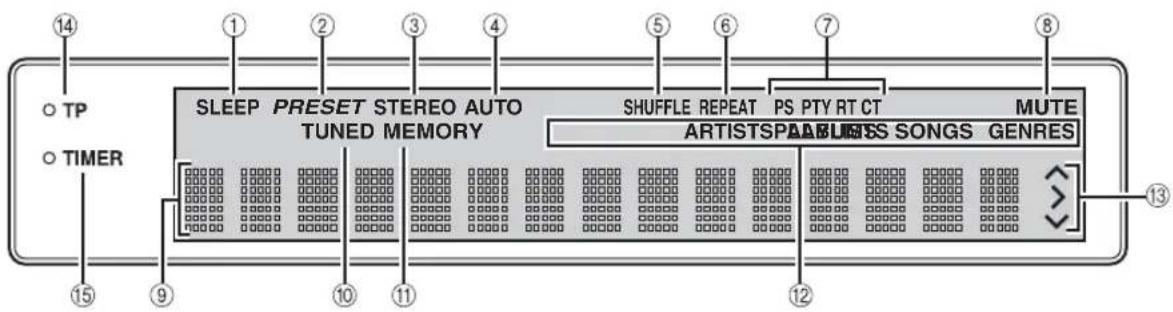
①SLEEP indicator
Lights up when the sleep timer is on (P. 15).
②PRESET indicator
Lights up when you preset radio stations (P. 13).
③STEREO indicator
Lights up when this unit is receiving a strong signal from an FM stereo broadcast.
④AUTO indicator
Lights up when this unit is in the Automatic Tuning mode (ε P. 13).
⑤SHUFFLE indicator
Lights up when you set your iPod/CD/USB to shuffle play (P. 11).
⑥REPEAT indicator
Lights up when you set your iPod/CD/USB to repeat play (P. 11, 12).
⑦Radio Data System indicators
The name of the Radio Data System data offered by the currently received Radio Data System station lights up (P. 13).
⑧MUTE indicator
Lights up when the sound is muted.
⑨Multi information display
Shows the various information such as the tuning frequency.
⑩TUNED indicator
Lights up when this unit is tuned into a station (P. 13).
⑪MEMORY indicator
Flashes when searching for a radio station by automatic preset tuning. Lights up when you preset radio stations automatically or manually (P. 13).
⑫Multi information indicator
Indicates the music information currently displayed on Multi information display (P. 12).
⑬Operation indicators
Shows operable option control buttons for a currently selected OPTION item.
⑭TP indicator
Lights up when this unit is receiving a Radio Data System station which contains the TP (traffic program) data service (P. 14).
⑮TIMER indicator
Lights up when the timer is on (P. 15).
FRONT PANEL AND BASIC OPERATION

- This unit has an automatic standby function, which will automatically switch the unit to standby mode if the unit is left turned on for 1 hour without playback or any other operation being performed. This function is not available when the source is set to FM/AUX1/AUX2.
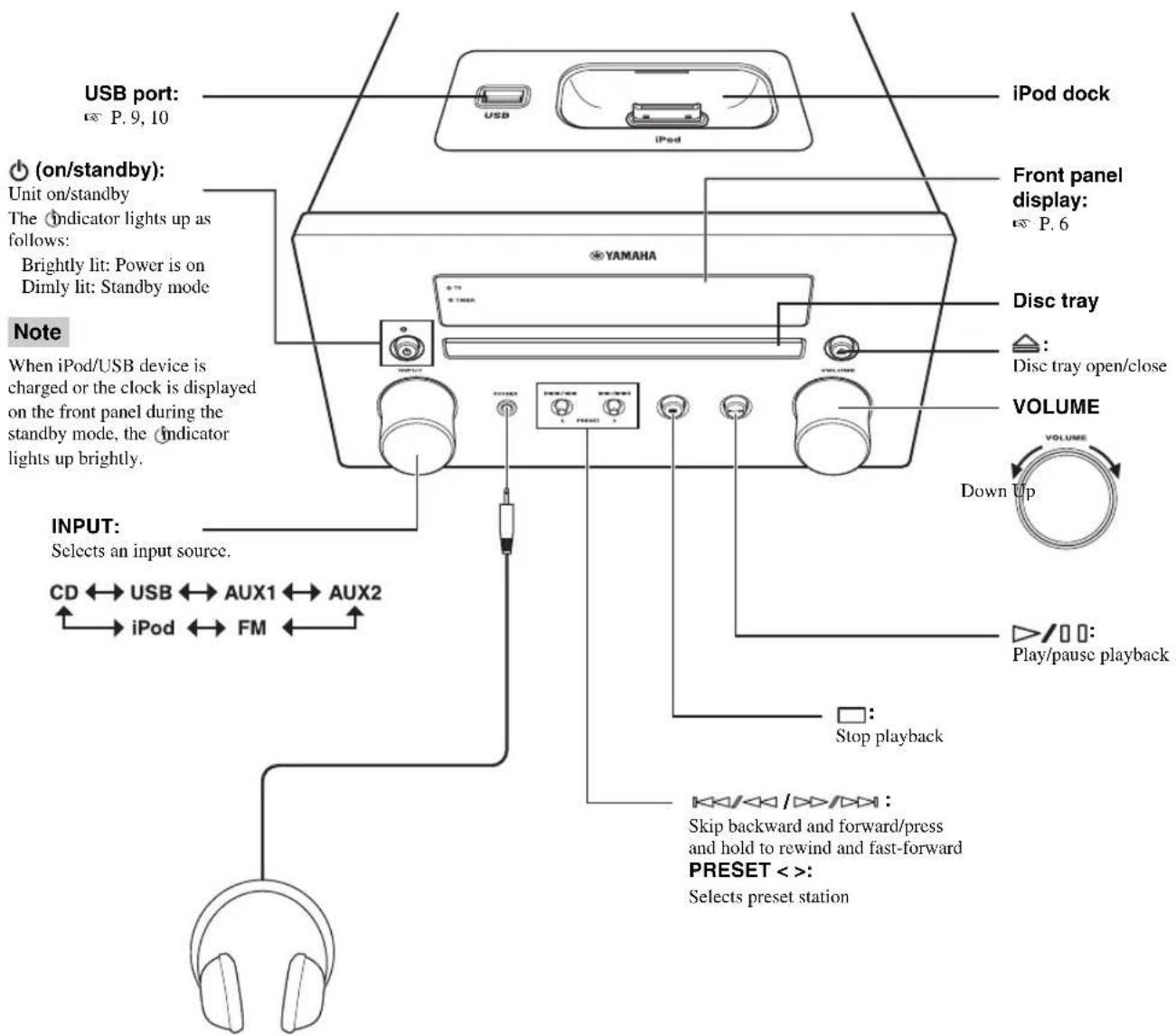
PHONES:
Connecting headphones
No sound is output from the speakers when headphones are connected.
PREPARATIONS
Connecting speakers/external components/antennas
Make sure you read the following procedure and note carefully before connecting the system. For information on the speakers (NS-BP200), refer to the owner's manual supplied with it.
Connecting the system
1 Connect the speaker terminals (L) of the unit to the speaker terminals of the left speaker and the speaker terminals (R) of the unit to the speaker terminals of the right speaker using the speaker cables supplied with the speaker set (NS-BP200).
②Connect the supplied FM antenna to the FM jack.
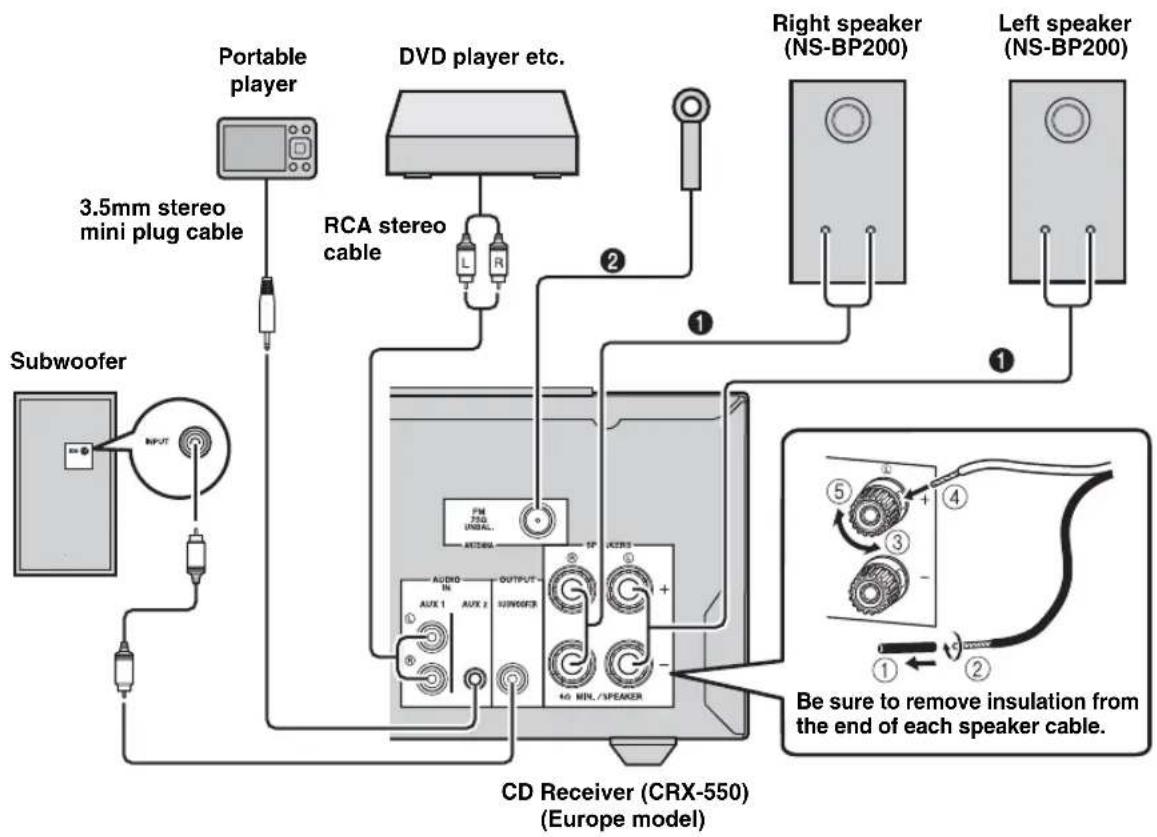
CAUTION
- Do not connect this unit or other components to the main power until all connections between components are complete.
- Do not let the bare speaker wires touch each other or any metal part of the unit. This could damage the unit and/or the speakers.
- All connections must be correct: L (left) to L, R (right) to R, “+” to “+” and “−” to “−”. If the connections are faulty, no sound will be heard from the speakers, and if the polarity of the speaker connections is incorrect, the sound will be unnatural and lack bass. Also, refer to the owner’s manual for each of your components.
Notes
- When connecting speakers other than NS-BP200, use speakers having more than 6 impedance.
- If there is a problem of weak radio wave reception in your area or you want to improve radio reception, we recommend that you use commercially available outdoor antennas. For details, consult the nearest authorized Yamaha dealer or service center.
Other connection
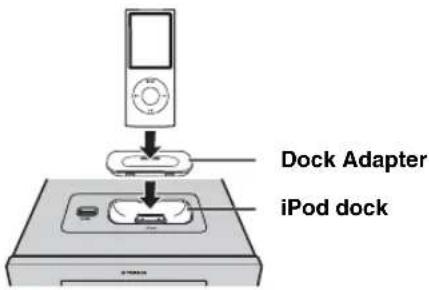
■Stationing iPod
Station or remove your iPod whenever you want.

Your iPod is automatically charged when your iPod is set in the iPod dock even if the unit is in standby mode.
Note
This unit is compatible with iPod (5th generation), iPod classic, iPod nano and iPod touch.
Notes
- To secure the connection, attach a compatible Dock Adapter supplied with the iPod or an iPod Universal Dock Adapter (sold separately), and remove the protective case covering your iPod.
- If you do not use an adapter or if the adapter is not compatible, the connection could be loose or poor, which could cause damage or malfunctions.
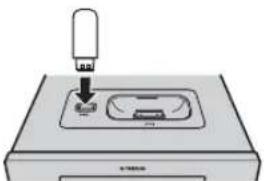
■Connecting USB
Connect or remove your USB device whenever you want.
natural_image
Diagram of a device with a plug inserted into a socket, showing internal components (no text or symbols)
USB device is automatically charged when it is connected to the unit, even if the unit is in standby mode.
Notes
- This unit supports USB mass storage class devices (e.g., flash memories or portable audio players) using FAT16 or FAT32 format.
- Do not connect devices other than USB mass storage class devices (such as USB chargers or USB hubs), PCs, card readers, an external HDD, etc.
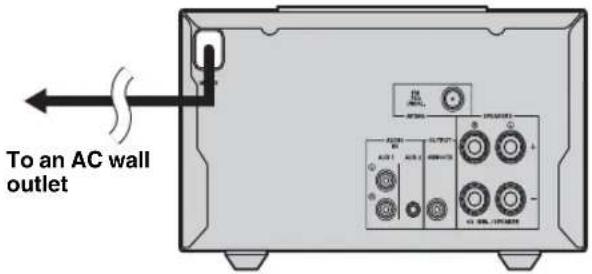
Connecting the power cable
After you made all connections, connect the power cables of this unit.
LISTENING TO MUSIC
Playback operation
Follow the procedures below to play back music.
| 1 Set the source | 2 Switch the input | 3 Select music and start playback | |
| iPod^*1 | 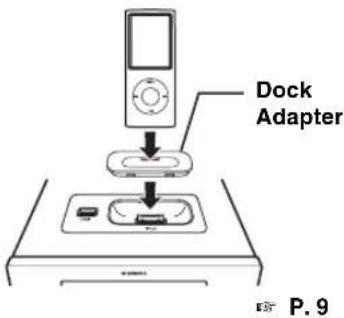 | 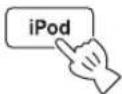 | 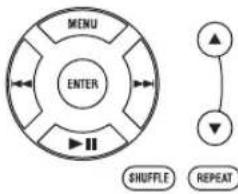 |
| CD | 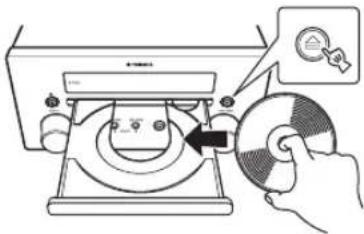 |  | 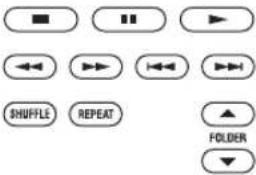 |
| USB^*2 | 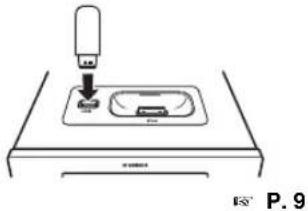 |  | |
| AUX1 AUX2 | 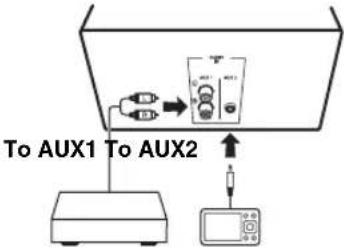 |  | For operation, refer to the instruction manuals supplied with external components such as DVD player and portable player. |
*1 Some features may not be available depending on the model or the software version of your iPod.
*2 • Some devices may not work properly even if they meet the requirements.
- Playability of and power supply to all kind of USB devices are not guaranteed.
- The reading time may exceed 30 seconds depending on the number of files/folders.
- Yamaha and suppliers accept no liability for the loss of data saved on the USB devices connected to this unit. As a precaution, it is recommended that the files are made backup copies.
Operation for iPod
Note
Some features may not be compatible depending on the model or the software version of your iPod.
■Control playback
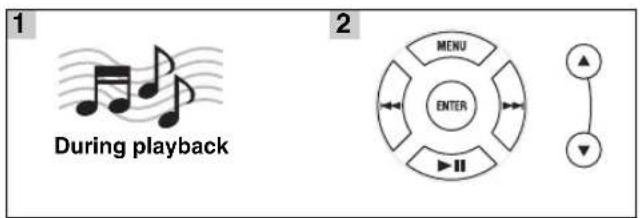
▲/▼Scroll buttons
MENU: Returns to the upper level in the iPod menu
ENTER: Select group/start playback
▶: Skip forward/press and hold to fast-forward
◀◀: Skip backward/press and hold to rewind
▶ II : Starts or pauses playback
Notes
- For iPod (5th generation) and iPod nano (1st generation), you can only operate the iPod menu using the front panel display.
iPod menu
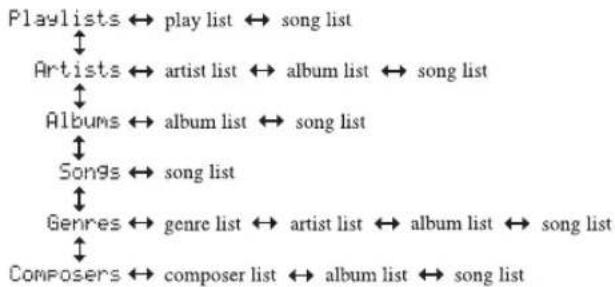
flowchart
graph TD
    A["Playlists"] --> B["play list"]
    B --> C["song list"]
    D["Artists"] --> E["artist list"]
    E --> F["album list"]
    F --> G["song list"]
    H["Albums"] --> I["album list"]
    I --> J["song list"]
    K["Songs"] --> L["song list"]
    M["Genres"] --> N["genre list"]
    N --> O["artist list"]
    O --> P["album list"]
    P --> Q["song list"]
    R["Composers"] --> S["composer list"]
    S --> T["album list"]
    T --> U["song list"]
- There are some characters that cannot be displayed in the front panel display of this unit.
■Shuffle play
You can play back in random sequence.
SHUFFLE
Press repeatedly.

*1 You cannot set ALBUMS when you use an iPod touch.
■Repeat play
You can play back repeatedly.
REPEAT
Press repeatedly.

Operation for CD/USB
■Control playback
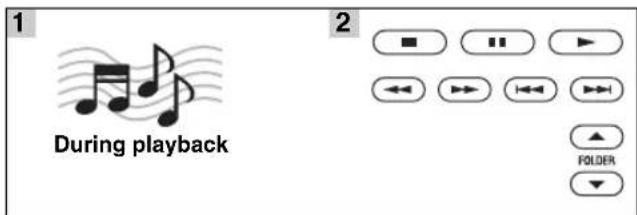
■ : Stop
■: Pause
▶ : Play
◀ : Rewind
→ : Fast forward
◀◀ : Skip backward
▶▶: Skip forward
FOLDER ▲/▼ : Skip to the first file in the previous/next folder for MP3 or WMA.*
* If you press these buttons, the folder name is displayed on the front panel display for a certain period.
[NO TEXT]
You can also use the Numeric buttons to enter the number of the song directly. To clear the entry, press CLEAR.
Notes
- Playback for Data Disc starts in alphanumeric order of files.
- Playback for USB starts in order by date and time of creation.
■Shuffle play
You can play back in random sequence.
SHUFFLE
Press repeatedly.

*2 If the audio format of the selected music source is MP3/WMA, you can also select FOLDER.
■Repeat play
You can play back repeatedly.
REPEAT
Press repeatedly.

*3 If the audio format of the selected music source is MP3/WMA, you can also select FOLDER.
Switching the display
You can switch the playback information shown on the front panel display. Some special characters may not be shown properly.
1

During playback
2

Press repeatedly.
For iPod
Song number and elapsed time (default setting)
↓
Song number and remaining time
↓
Song name
↓
Artist name
↓
Album name
↓
Back to the default setting
Note
This function is available for iPod (5th generation), iPod classic, iPod nano, and iPod touch. However, even with these models, this function may not be available depending on the software version of your iPod.
For CD/USB
Track/file number and elapsed time of the current song (default setting)
↓
Track number and remaining time of the current song ^*4
↓
Total time of the disc ^*4
↓
Remaining time of the disc ^4
↓
File name*5
↓
Track name*6
↓
Artist name ^4
↓
Album name*6
↓
Back to the default setting
*4 Only for Audio CDs
*5 Only for MP3/WMA files
*6 Only when the selected track has information
Playback sound
This unit has built-in sound program which will automatically adjusts music source to provide enjoyable sound quality.
■Bit data expansion
Bit data expansion increases CD 16-bit data to 24 bits, achieving a more natural and detailed sound.
Note
This function is only available for Audio CDs.
■Music Enhancer
Music Enhancer feature enhances the sound for compressed music by regenerating musical elements that are lost through compression.
Note
This function is not available for Audio CDs and audio input from external device connected to AUX1.
LISTENING TO FM RADIO STATIONS
Tuning to radio stations
1
2
Press TUNER. Press and hold. Automatic tuning starts.

If the signal received from the station you want to select is weak, you can also tune into radio stations manually by pressing TUNING ∧/∨ repeatedly.
Note
When receiving a stereo broadcasting station, you can switch between stereo and monaural by pressing MONO.
Presetting radio stations
You can store your favorite FM stations with the preset function.
■Automatic preset tuning
1
2


Press and hold MEMORY for more than 2 seconds in FM mode.
Start the automatic preset.
Note
When you perform the automatic preset, all stored stations are cleared and the new stations are stored.
■Manual preset tuning
1
2

Tune into a favorite radio station.
Press MEMORY.
3
4

Select the preset number you want to store to.
Complete the manual preset.

- You can preset up to 30 FM stations.
- To cancel the manual preset while choosing a preset number, press MEMORY again.
- You can delete a preset station by pressing OPTION → ▲/▼ → ENTER to select PRESET DELETE.
Selecting preset radio stations (Preset tuning)
Select the preset radio station in FM mode.
Displaying Radio Data System information
1
2
While listening

Press repeatedly.
PS (Program Service)
↓
PTY (Program Type)
↓
RT (Radio Text)
↓
CT (Clock Time)
↓
Frequency
↓
Back to the PS
Note
If the signal transmission of the Radio Data System station is too weak, this unit may not be able to receive Radio Data System information completely. In particular, RT (Radio Text) information uses a lot of bandwidth, so it may be less available compared to other types of information.
Using the TP (traffic program) data service
Use this feature to receive the TP (traffic program) data service of the Radio Data System station network.
1
2

While listening
Press TP.

- "TP Search" flashes on the front panel display and the search starts.
The TP indicator on the unit flashes during search. - When the traffic program is received, the TP indicator stays on and the search stops.
If you press TP again, the search starts again. - If the unit fails to receive the traffic program, the TP indicator turns off and “Not Found” appears on the display. The unit returns to its previous state.
• To cancel the search, press TP during search.
CLOCK AND TIMER
Using the clock
To set the clock, press and hold CLOCK or press OPTION to enter CLOCK SET of the option menu.
As for the setting, refer to “Using option menu” on page 16.
Once you set the clock, you can display the clock on the front panel display.
CLOCK
Press CLOCK.
When you press CLOCK while the power is on, the clock is displayed on the front panel display for a few seconds. When you press CLOCK during standby mode, you can select whether to display the clock on the front panel display or not.
Notes
- This unit supports 24-hour clock display.
- The clock setting will be lost if you disconnect the power cable from the wall outlet for several minutes.
Using timer and sleep timer
■Using the timer
The timer sets the unit to play back music at the time you set.
To set the timer, press and hold TIMER or press OPTION to enter TIMER SET of the option menu.
As for the setting, refer to “Using option menu” on page 16.
To use the timer, set the appropriate input source securely and set the timer in the option menu in advance (P. 17).
TIMER
Press repeatedly.
TIMER OFF: To set the timer off.
TIMER ONCE: To set the timer once.
TIMER EVERY: To set the timer everyday at the same time.
When you switch the timer set to TIMER EVERY or TIMER ONCE, the TIMER indicator lights up on the front panel display.
Notes
- The clock has to be set in advance.
- When the timer is set, the TIMER indicator lights up on the front panel display. While the power is on, the TIMER indicator flashes as the set time of the timer becomes closer.
[Symbol]
- The settings set in timer settings are retained.
■Using sleep timer
The sleep timer sets the unit to the standby mode after the specified time elapses.
SLEEP
Press repeatedly.

The SLEEP indicator lights up on the front panel display.
USING USEFUL FUNCTIONS
Using option menu
The option menu appears on the front panel display by pressing OPTION. You can set various useful functions with option menu.
| Option menu Parameter | or control range Reference page | |
| PRESET DELETE (Displays only when the input source is set to FM.) 13 | ||
| TREBLE -10 dB to +10 dB below | ||
| BASS -10 dB to +10 dB below | ||
| BALANCE L+5 - CENTER - R+5 below | ||
| AUTO CLOCK*1 | ON/OFF below | |
| CLOCK SET Hour, minute | below | |
| TIMER SET | Time (hour, minute), sound (source, track or preset number), volume, timer on (every/once)/off | 17 |
*1 This function is available only for Europe, U.K. and Australia models.
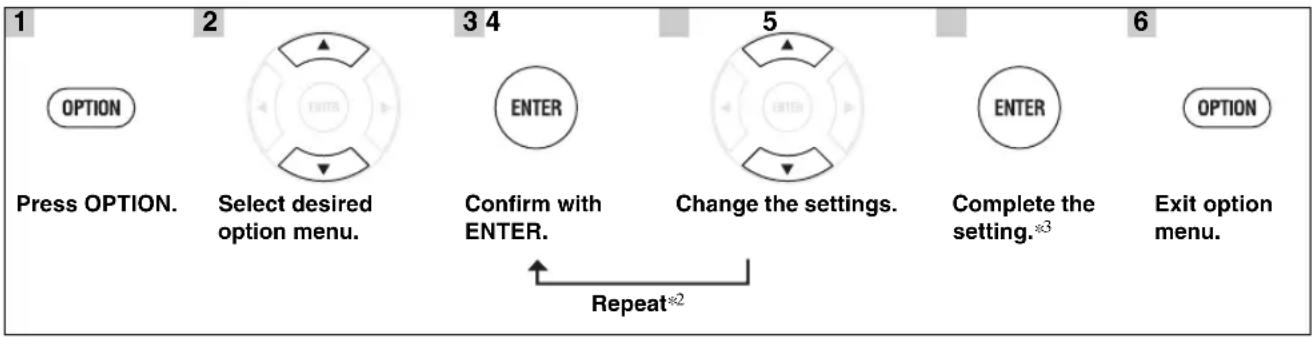
flowchart
graph LR
    A["1 OPTION"] --> B["2 Select desired option menu."]
    B --> C["3 4 ENTER"]
    C --> D["5 Change the settings."]
    D --> E["6 Complete the setting."]
    E --> F["6 OPTION"]
    style A fill:#f9f,stroke:#333
    style F fill:#f9f,stroke:#333
*2 When there are some parameters to set, repeat steps 3 and 4. You can go back to a previous parameter by pressing ◀.
*3 To set additional items, repeat steps 2 to 5.

To cancel the setting during the operation, press OPTION.
■Setting tone/balance
TREBLE*4: Adjusts the high frequency response.
BASS ^*4 : Adjusts the low frequency response.
BALANCE: Adjusts the volume level of each left and right speaker channel.
*4 Also effective when you are using headphones.
■Adjusting the clock
AUTO CLOCK: Automatic adjustment function is available for Europe, U.K. and Australia models only. To apply for this function, set AUTO CLOCK to ON.
CLOCK SET: To set hour and minute, repeat steps 3 and 4 on page 16.

- You can enter CLOCK SET directly by pressing and holding CLOCK when the unit is on.
- When setting the clock, you can also use the Numeric buttons to enter the hour and minute. To confirm the entry, press ENTER. To clear the entry, press CLEAR.
- The current time appears on the front panel display for a certain period by pressing CLOCK when the unit is on.
Note
The time setting will be lost if you disconnect the power cable from the wall outlet for several minutes.
■Setting the timer
TIMER SET: To select the following setting items, repeat steps 3 and 4 on page 16.

You can enter TIMER SET directly by pressing and holding TIMER.
Time (hour and minute)


You can use the Numeric buttons to enter the hour/minute, track/file number, preset number and volume when you are setting the timer. To confirm the entry, press ENTER. To clear the entry, press CLEAR.
Input source and track/file number or preset number
Note
If the source is not set properly, the timer sound will not be heard. Make sure that the source is set securely.
CD:
Set a track/file number.
If you set the track/file number which is not exist, the first track/file is played back automatically.
USB:
Set a file number.
If you set a file number that does not exist, the first file is played back automatically.
iPod:
When you select the iPod as a source, this unit resumes the music that you were listening to last time.
FM:
Set preset number.
By selecting “---”, the FM station you set last time is set.
Volume

The volume level can be set between “1” - “MAX” (60) and “--”*. When the timer is set while the unit is in standby mode, the volume is set at this point is used. When the timer is executed while the unit is on, the volume level remains the same as the current volume.
* If you set your volume to “_ _ _” when the timer is set while the unit is in standby mode, the volume level is set at the same level as input source.
Timer on (TIMER EVERY/TIMER ONCE)/Timer off (TIMER OFF)
Switch the timer to TIMER EVERY/TIMER ONCE/TIMER OFF. When the timer is set to TIMER EVERY or TIMER ONCE, the TIMER indicator lights up on the front panel display.

This setting is also available with TIMER (p. 15).
TROUBLESHOOTING
Refer to the table below when this unit does not function properly. If the problem you are experiencing is not listed below or if the instruction below does not help, turn off this unit, disconnect the power cable, and contact the nearest authorized Yamaha dealer or service center.
General
| Problem Cause Remedy page | |||
| This unit fails to turn on or enters the standby mode soon after the power is turned on. | The power cable is not connected or the plug is not completely inserted. | Connect the power cable firmly. | 9 |
| This unit has been exposed to a strong external electric shock (such as lightning or strong static electricity). | Set this unit to the standby mode, disconnect the power cable, plug it back in after 30 seconds and then use it normally. | — | |
| The unit does not operate properly. | |||
| No sound. No appropriate input source has been selected. | Select an appropriate input source with INPUT on the front panel (or the source buttons on the remote control). | — | |
| Speaker connections are not secure. Secure the connections. | 8 | ||
| The mute function may be on. Cancel the mute function. | 4 | ||
| The volume is turned down. Turn up the volume. | — | ||
| Signals this unit cannot reproduce are being input from a source component, such as a CD-ROM. | Play a source whose signals can be reproduced by this unit. | ||
| The power is suddenly turned off. | The sleep timer may be set. This is not malfunction. Turn on the unit and play the source again. | — | |
| The unit is left turned on for 1 hour without playback or any other operation being performed. | |||
| The clock setting has been cleared. | The power cable has been disconnected. Connect the power cable, and set the clock again. | — | |
| Sound is heard from the speaker on one side only. | Incorrect cable connections. Connect the cables properly. If the problem persists, the cables may be defective. | 8 | |
| There is noise interference from digital or radio frequency equipment. | This unit is too close to the digital or high-frequency equipment. | Move this unit farther away from such equipment. | — |
Radio reception
Problem Cause Remedy page
| FM stereo reception is noisy. | The antenna is connected improperly. Check the antenna connections. | 8 | |
| The characteristics of FM stereo broadcasts may cause this problem when the transmitter is too far away or the antenna input is poor. | Try using a high-quality directional FM antenna. | — | |
| Switch to monaural mode. | 13 | ||
| The desired station cannot be tuned into with the automatic tuning method. | The signal is too weak. Use a high-quality directional FM antenna. | — | |
| Use the manual tuning method. | |||
| The preset selecting function does not work. | The preset (memory) may have been erased. | Preset radio stations again. | 13 |
| There is distortion, and clear reception cannot be obtained even with a good FM antenna or an outdoor antenna. | Multipath reflection or other radio interference may have occurred. | Change the height, direction, or placement of the antenna. | — |
iPod
Note
In case of a transmission error without a status message appearing in the front panel of this unit, check the connection to your iPod (see page 9).
Status message Cause Remedy page
| iPod Connecting iPod Charging | This unit is in the middle of recognizing the connection with your iPod. | If the message continues to appear in the front panel display and playback does not start, connect the iPod again. | — |
| Unknown iPod | There is a problem with the signal path from your iPod to this unit. | Connect the iPod again. | 9 |
| The iPod being used is not supported by this unit. | Only iPod (5th generation), iPod classic, iPod nano, and iPod touch are supported. | — | |
| The iPod software is out of date. Update the iPod software version to the latest. | — | ||
| iPod | The play back of the iPod is finished. For example, all the songs in the selected album have finished being played back. | ||
| iPod Unplugged | Your iPod was removed from the iPod dock. | Station your iPod back in the iPod dock. | 9 |
| iPod OverCurrent | The connected iPod is not playable on this unit. The iPod is connected at an angle. | Disconnect the iPod. Change input source other than iPod and select iPod as input source again. Then connect playable iPod again. | 9 |
Problem Cause Remedy page
| No sound. The power of the unit is off. Connect the power cable correctly. | — | |
| The iPod software version has not been updated. | Download the latest iTunes software to update the iPod software version to the latest. | |
| The iPod is in the process of connecting with the unit. | Please wait for a while. | |
| Problem Cause Remedy page | |||
| No sound. | The iPod is set in the iPod dock improperly. | Remove the iPod from the unit, then set it in the iPod dock again. | 9 |
| The iPod sounds, but you cannot operate it with the unit or the remote control. | |||
| The unit cannot be operated by the remote control. | The iPod is not supported by this unit. Only iPod (5th generation), iPod classic, iPod nano, and iPod touch are supported. | 9 | |
| The iPod is not connected correctly. Connect the iPod firmly. | — | ||
| The iPod software version is out of date. Update the iPod software version to the latest. If the problem cannot be solved, even with the latest software, reset the iPod. | — | ||
| You cannot operate from the iPod. | The iPod is set in the iPod dock improperly. | Remove the iPod from the unit, then set it in the iPod dock again. | 9 |
| The playback information is not displayed on the front panel display. | The iPod you set is not compatible with the playback information display. | Only iPod (5th generation), iPod classic, iPod nano, and iPod touch are supported. | 9 |
| The iPod does not charge up. | The iPod is set in the iPod dock improperly. | Remove the iPod from the unit, then set it in the iPod dock again. | 9 |
| The iPod is not supported by this unit. Only iPod (5th generation), iPod classic, iPod nano and iPod touch are supported. | 9 | ||
USB
Note
In case of a transmission error without a status message appearing in the front panel of this unit, check the connection to the USB device (see page 9).
| Status message Cause Remedy page | |||
| USB Unplugged | The USB device is not connected firmly. | Connect the USB device again. | 9 |
| No Files | The connected USB device is not playable on this unit. | Connect playable USB device. | 9 |
| The USB device has no data. Connect an USB device with data included. | 9 | ||
| USB OverCurrent | The connected USB device is not playable on this unit. | Disconnect the USB device. Change input source other than USB and select USB as input source again. Then connect playable USB device again. | 9 |
| The USB device is connected at an angle. | |||
| Problem Cause Remedy page | |||
| MP3/WMA file in the USB device does not play. | The USB device is not recognized. Connect the USB device again. | 9 | |
| Connect an AC adapter if supplied with the device. | — | ||
| Improper USB device connections. Connect the USB device again. | 9 | ||
| The MP3 or WMA formats are not compatible with this unit. | Replace the file with a correctly recorded file playable with this unit. | 3 | |
| If the solutions above do not resolve the problem, the USB device is not playable on the unit. | Try another USB device. | — | |
Disc playback
| Problem Cause Remedy page | |||
| No sound or distorted sound | The sampling rate of an MP3 or WMA file may not be compatible with this unit. | Check the sampling rate and bit rate of an MP3 or WMA file are compatible with this unit. | 3 |
| Disc playback does not start. | You may be using a CD-R/RW that is not finalized. | Finalize the CD-R/RW. | — |
| The disc label may be upside down. Check that the disc label is facing up. | — | ||
| The disc may be defective. Try playing back another disc. If this cures the problem, the disc you want to play back is defective. | — | ||
| MP3/WMA disc may not contain sufficient music files to be played back. | Check that your MP3/WMA disc contains at least 5 MP3/WMA music files. If the number of files is small, the disc may not be recognized. | — | |
| The sampling rate of an MP3 or WMA file may not be compatible with this unit. | Check the sampling rate and bit rate of an MP3 or WMA file are compatible with this unit. | 3 | |
| Some button operations do not work. | The disc loaded into the unit may not be compatible. | Remove the disc and then check whether the unit supports the disc or not. | 3 |
| Playback does not start immediately after pressing ▷/□□ on the unit or ▶on the remote control. | The disc may be dirty. Wipe the disc clean. | — | |
| The disc loaded into the unit may not be compatible. | Use a disc supported by the unit. | 3 | |
| If the unit was moved from a cold to warm place, condensation may have formed on the disc reading lens. | Wait for an hour or two until the unit adjusts to the room temperature, and try again. | — | |
| “No Disc” appears in the display even though a disc is in the disc tray. | The disc loaded into the unit may not be compatible. | Use a disc supported by the unit. | 3 |
| The disc may be dirty. Remove the disc and then wipe the disc clean. | — | ||
| Disc is loaded upside-down. Remove the disc and then load the disc with the labeled side facing up. | — | ||
Remote control
| Problem Cause Remedy page | |||
| The remote control does not work nor function properly. | The remote control may be operated outside its operation range. | For information on the remote control operation range, refer to “Using the remote control”. | 5 |
| The remote control sensor on this unit may be exposed to direct sunlight or lighting. | Change the lighting or orientation of this unit. | — | |
| The battery may be worn out. Replace the battery with new one. | 5 | ||
| There are obstacles between the sensor of this unit and the remote control. | Remove the obstacles. | — | |
HANDLING COMPACT DISCS
• Always handle with care so that the playing surface is not scratched. Do not bend discs.
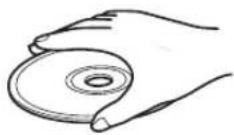
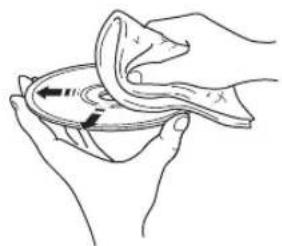
• To keep the playing surface clean, wipe with a clean, dry cloth. Do not use any type of disc cleaner, spray, or any other chemical-based liquid.
- Do not expose discs to direct sunlight, high temperature or high humidity for a long time.
- Do not wipe with a circular motion; wipe straight outward from the center.
natural_image
Line drawing of hands holding a circular object with a cloth, no text or symbols present- Use a soft-tipped pen when writing on the label side of a disc.
SPECIFICATIONS
PLAYER SECTION
iPod
- Supported iPod ..... iPod (5th generation), iPod classic, iPod nano, iPod touch
CD
• Media CD, CD-R/RW
- Audio format....Audio CD, MP3, WMA
USB
• Audio format.... MP3, WMA
AUX
- Input connector AUX1....RCA AUX2....STEREO L/R: 3.5 mm STEREO mini Jack
AMPLIFIER SECTION
• Maximum output power.... 32 W + 32 W (6 Ω 1 kHz, 10% THD)
- Input sensitivity AUX1....280 mV/47 kΩ AUX2....140 mV/47 kΩ
• Total harmonic distortion AUX1 1 kHz/10 W....0.05 %
TUNER SECTION
- Tuning range [Canada model]....87.5 to 107.9 MHz [Other models]....87.50 to 108.00 MHz
GENERAL
• Power Supply [Europe model] .....AC 230 V, 50 Hz [Canada model].....AC 120 V, 60 Hz [Asia model].....AC 220-240 V, 50/60 Hz [Taiwan model] .....AC 110-120 V, 60 Hz [Australia model] .....AC 240 V, 50 Hz [U.K. model] .....AC 230 V, 50 Hz [China model] .....AC 220 V, 50 Hz
• Power consumption.... 80 W
- Standby Power consumption *....0.5 W or less
- Dimensions (W × H × D) ....215 × 125 × 309 mm (8 1/2 × 4 7/8 × 12 1/8 in)
- Weight 4.8 kg (10.6 lbs.)
* When iPod/USB is not charged and when the clock is not displayed.
Specifications are subject to change without notice.
iPod
iPod is a trademark of Apple Inc., registered in the U.S. and other countries.
"Made for iPod" means that an electronic accessory has been designed to connect specifically to iPod and has been certified by the developer to meet Apple performance standards.
Apple is not responsible for the operation of this device or its compliance with safety and regulatory standards.
Limited Guarantee for European Economic Area (EEA) and Switzerland
Thank you for having chosen a Yamaha product. In the unlikely event that your Yamaha product needs guarantee service, please contact the dealer from whom it was purchased. If you experience any difficulty, please contact Yamaha representative office in your country. You can find full details on our website (http://www.yamaha-hifi.com/ or http://www.yamaha-uk.com/ for U.K. resident).
The product is guaranteed to be free from defects in workmanship or materials for a period of two years from the date of the original purchase. Yamaha undertakes, subject to the conditions listed below, to have the faulty product or any part(s) repaired, or replaced at Yamaha's discretion, without any charge for parts or labour. Yamaha reserves the right to replace a product with that of a similar kind and/or value and condition, where a model has been discontinued or is considered uneconomic to repair.
Conditions
- The original invoice or sales receipt (showing date of purchase, product code and dealer's name) MUST accompany the defective product, along with a statement detailing the fault. In the absence of this clear proof of purchase, Yamaha reserves the right to refuse to provide free of charge service and the product may be returned at the customer's expense.
- The product MUST have been purchased from an AUTHORISED Yamaha dealer within the European Economic Area (EEA) or Switzerland.
- The product must not have been the subject of any modifications or alterations, unless authorised in writing by Yamaha.
- The following are excluded from this guarantee:
a. Periodic maintenance and repair or replacement of parts due to normal wear and tear.
b. Damage resulting from:
(1) Repairs performed by the customer himself or by an unauthorised third party.
(2) Inadequate packaging or mishandling, when the product is in transit from the customer. Please note that it is the customer's responsibility to ensure the product is adequately packaged when returning the product for repair.
(3) Misuse, including but not limited to (a) failure to use the product for its normal purpose or in accordance with Yamaha's instructions on the proper use, maintenance and storage, and (b) installation or use of the product in a manner inconsistent with the technical or safety standards in force in the country where it is used.
(4) Accidents, lightning, water, fire, improper ventilation, battery leakage or any cause beyond Yamaha's control.
(5) Defects of the system into which this product is incorporated and/or incompatibility with third party products.
(6) Use of a product imported into the EEA and/or Switzerland, not by Yamaha, where that product does not conform to the technical or safety standards of the country of use and/or to the standard specification of a product sold by Yamaha in the EEA and/or Switzerland.
- Where the guarantee differs between the country of purchase and the country of use of the product, the guarantee of the country of use shall apply.
- Yamaha may not be held responsible for any losses or damages, whether direct, consequential or otherwise, save for the repair or replacement of the product.
- Please backup any custom settings or data, as Yamaha may not be held responsible for any alteration or loss to such settings or data.
- This guarantee does not affect the consumer's statutory rights under applicable national laws in force or the consumer's rights against the dealer arising from their sales/purchase contract.
Information for Users on Collection and Disposal of Old Equipment and Used Batteries
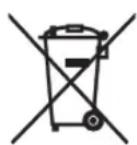

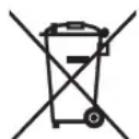
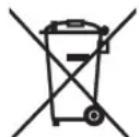
Pb
These symbols on the products, packaging, and/or accompanying documents mean that used electrical and electronic products and batteries should not be mixed with general household waste.
For proper treatment, recovery and recycling of old products and used batteries, please take them to applicable collection points, in accordance with your national legislation and the Directives 2002/96/EC and 2006/66/EC.
By disposing of these products and batteries correctly, you will help to save valuable resources and prevent any potential negative effects on human health and the environment which could otherwise arise from inappropriate waste handling.
For more information about collection and recycling of old products and batteries, please contact your local municipality, your waste disposal service or the point of sale where you purchased the items.
[Information on Disposal in other Countries outside the European Union]
These symbols are only valid in the European Union. If you wish to discard these items, please contact your local authorities or dealer and ask for the correct method of disposal.
Note for the battery symbol (bottom two symbol examples):
This symbol might be used in combination with a chemical symbol. In this case it complies with the requirement set by the Directive for the chemical involved.
ATTENTION : VEUILLEZ LIRE CE QUI SUIT AVANT D'UTILISER L'APPAREIL.
ACCESSOIRES FOURNIS.... 2
DISQUES ET FORMATS DE FICHIER
PRIS EN CHARGE.... 3
TÉLÉCOMMANDE...... 4
Piles (x 2)
(AAA, R03, UM-4)
natural_image
Diagram showing a device being processed into a device with a monitor and cable (no text or symbols visible)natural_image
Diagram of a device with a lever and a small component inside a container (no text or symbols)
natural_image
Line drawing of hands holding a circular object with an arrow indicating direction (no text or symbols)- Format audio ....CD audio, MP3, WMA
USB
- Format audio .... MP3, WMA
AUX
Hinweise
natural_image
Diagram of a device with a lever and base, showing a mechanical component (no text or symbols)
flowchart
graph TD
    A["Playlists ↔ play list ↔ song list"] --> B["Artists ↔ artist list ↔ album list ↔ song list"]
    B --> C["Albums ↔ album list ↔ song list"]
    C --> D["Songs ↔ song list"]
    D --> E["Genres ↔ genre list ↔ artist list ↔ album list ↔ song list"]
    E --> F["Composers ↔ composer list ↔ album list ↔ song list"]
natural_image
Line drawing of hands holding a circular object with a cloth, no text or symbols presentBatterier (x 2)
(AAA, R03, UM-4)
natural_image
Diagram of a device with a plug inserted into a container, showing internal components (no text or symbols)
flowchart
graph TD
    A["Playlists ↔ play list ↔ song list"] --> B["Artists ↔ artist list ↔ album list ↔ song list"]
    B --> C["Albums ↔ album list ↔ song list"]
    C --> D["Songs ↔ song list"]
    D --> E["Genres ↔ genre list ↔ artist list ↔ album list ↔ song list"]
    E --> F["Composers ↔ composer list ↔ album list ↔ song list"]
REPEAT ONE → REPEAT ALL → REPEAT OFF
natural_image
Illustration of hands holding a circular object with a cloth, no text or symbols presentBatterie (x 2)
(AAA, R03, UM-4)
natural_image
Diagram of a device with a lever and base, showing a mechanical component (no text or symbols)
flowchart
graph TD
    A["Playlists ↔ play list ↔ song list"] --> B["Artists ↔ artist list ↔ album list ↔ song list"]
    B --> C["Albums ↔ album list ↔ song list"]
    C --> D["Songs ↔ song list"]
    D --> E["Genres ↔ genre list ↔ artist list ↔ album list ↔ song list"]
    E --> F["Composers ↔ composer list ↔ album list ↔ song list"]
natural_image
Line drawing of hands holding a cloth over a circular object, no text or symbols presentPilas (x 2)
(AAA, R03, UM-4)
natural_image
Diagram of a device with a cylindrical component inserted into a slot, showing internal components (no text or symbols)
flowchart
graph TD
    A["Playlists ↔ play list ↔ song list"] --> B["Artists ↔ artist list ↔ album list ↔ song list"]
    B --> C["Albums ↔ album list ↔ song list"]
    C --> D["Songs ↔ song list"]
    D --> E["Genres ↔ genre list ↔ artist list ↔ album list ↔ song list"]
    E --> F["Composers ↔ composer list ↔ album list ↔ song list"]
natural_image
Line drawing of hands holding a circular object with a cloth, no text or symbols presentOMGAAN MET COMPACT DISCS......22
SPECIFICATIES ....22
BEDIENING
VOORPANEEL EN BASISBEDIENING...... 7
Batterijen (x 2)
(AAA, R03, UM-4)
■Opmerking over batterijen
natural_image
Diagram showing a device being processed into a device with a monitor and switch (no text or symbols visible)natural_image
Diagram of a device with a plug inserted into a socket (no text or symbols)
OMGAAN MET COMPACT DISCS
natural_image
Line drawing of hands holding a circular object with a cloth, no text or symbols presentnatural_image
Simple line drawing of a mechanical component with a downward arrow and base, no text or symbols present.
flowchart
graph TD
    A["Playlists ↔ play list ↔ song list"] --> B["Artists ↔ artist list ↔ album list ↔ song list"]
    B --> C["Albums ↔ album list ↔ song list"]
    C --> D["Songs ↔ song list"]
    D --> E["Genres ↔ genre list ↔ artist list ↔ album list ↔ song list"]
    E --> F["Composers ↔ composer list ↔ album list ↔ song list"]
REPEAT ONE → REPEAT ALL → REPEAT OFF
Работа с CD/USB
natural_image
Line drawing of hands holding a cloth or towel, no text or symbols present
- VAROITUS
- Note
- ■Special Instructions for U.K. Model
- IMPORTANT
- CAUTION: READ THIS BEFORE OPERATING YOUR UNIT.
- WARNING
- LASER SAFETY
- DANGER
- LASER
- CONTENTS
- PREPARATION
- OPERATION
- ADDITIONAL INFORMATION
- ■About this manual
- WHAT YOU CAN DO WITH THIS UNIT
- Play back music on the iPod /Discs/ USB device/external device
- Receive FM Radio stations and Radio Data System information (Europe model only)
- Enhance sound for Audio CDs by bit data expansion → p. 12
- Improved sound for compressed source by Music Enhancer
- Set the Clock and Timer → p. 15
- Charging iPod and USB device → p. 9
- Boost bass sound by connecting a subwoofer → p. 8
- SUPPLIED ACCESSORIES
- PLAYABLE DISCS AND FILE FORMAT
- ■Playable discs
- To play back an 8-cm (3 in) CD
- To prevent a malfunction of this unit:
- ■Playable MP3 and WMA files
- WMA
- Notes
- REMOTE CONTROL
- Installing the batteries in the remote control
- ■Notes on batteries
- Using the remote control
- FRONT PANEL DISPLAY
- ①SLEEP indicator
- ②PRESET indicator
- ③STEREO indicator
- ④AUTO indicator
- ⑤SHUFFLE indicator
- ⑥REPEAT indicator
- ⑦Radio Data System indicators
- ⑧MUTE indicator
- ⑨Multi information display
- ⑩TUNED indicator
- ⑪MEMORY indicator
- ⑫Multi information indicator
- ⑬Operation indicators
- ⑭TP indicator
- ⑮TIMER indicator
- FRONT PANEL AND BASIC OPERATION
- PREPARATIONS
- Connecting speakers/external components/antennas
- Connecting the system
- CAUTION
- Other connection
- ■Stationing iPod
- ■Connecting USB
- Connecting the power cable
- LISTENING TO MUSIC
- Playback operation
- Operation for iPod
- ■Control playback
- ■Shuffle play
- ■Repeat play
- Operation for CD/USB
- Switching the display
- For iPod
- For CD/USB
- Playback sound
- ■Bit data expansion
- ■Music Enhancer
- LISTENING TO FM RADIO STATIONS
- Tuning to radio stations
- Presetting radio stations
- ■Automatic preset tuning
- ■Manual preset tuning
- Selecting preset radio stations (Preset tuning)
- Displaying Radio Data System information
- Using the TP (traffic program) data service
- CLOCK AND TIMER
- Using the clock
- Using timer and sleep timer
- ■Using the timer
- ■Using sleep timer
- USING USEFUL FUNCTIONS
- Using option menu
- ■Setting tone/balance
- ■Adjusting the clock
- ■Setting the timer
- Time (hour and minute)
- Input source and track/file number or preset number
- CD:
- USB:
- iPod:
- FM:
- Volume
- Timer on (TIMER EVERY/TIMER ONCE)/Timer off (TIMER OFF)
- TROUBLESHOOTING
- Radio reception
- iPod
- USB
- HANDLING COMPACT DISCS
- SPECIFICATIONS
- PLAYER SECTION
- CD
- AUX
- AMPLIFIER SECTION
- TUNER SECTION
- GENERAL
- Limited Guarantee for European Economic Area (EEA) and Switzerland
- Conditions
- Information for Users on Collection and Disposal of Old Equipment and Used Batteries
- [Information on Disposal in other Countries outside the European Union]
- Note for the battery symbol (bottom two symbol examples):
- ATTENTION : VEUILLEZ LIRE CE QUI SUIT AVANT D'UTILISER L'APPAREIL.
- ACCESSOIRES FOURNIS.... 2
- DISQUES ET FORMATS DE FICHIER
- TÉLÉCOMMANDE...... 4
- Hinweise
- BEDIENING
- ■Opmerking over batterijen
- OMGAAN MET COMPACT DISCS
- Работа с CD/USB
Brand : YAMAHA
Model : MCR550
Category : Audio System