HG03470A - Tent Rocktrail - Free user manual and instructions
Find the device manual for free HG03470A Rocktrail in PDF.



| Product Type | Pop-up camping tent |
| Brand | Rocktrail |
| Model | HG03470A |
| Dimensions (L x H x D) | 148 x 112 x 247 cm |
| Water Column | 2000 mm |
| Material | Water-repellent polyester |
| Capacity | 2 people (estimate) |
| Use | Camping, summer weekends, fine weather |
| Setup | Pop-up: unfold by throwing the tent in the air |
| Dismantling | Fold by following the steps: grab the nodes, press the poles |
| Safety | Do not use in strong wind, do not leave children unattended, do not light fires inside |
| Maintenance | Clean with sponge and clean water, do not machine wash, dry completely before storage |
| Warranty | 3 years from date of purchase |
| After-sales service France | Tel: 0800904879, Email: owim@lidl.fr |
| After-sales service Belgium | Tel: 080071011, Email: owim@lidl.be |
Frequently Asked Questions - HG03470A Rocktrail
User questions about HG03470A Rocktrail
0 question about this device. Answer the ones you know or ask your own.
Ask a new question about this device
Download the instructions for your Tent in PDF format for free! Find your manual HG03470A - Rocktrail and take your electronic device back in hand. On this page are published all the documents necessary for the use of your device. HG03470A by Rocktrail.
USER MANUAL HG03470A Rocktrail
natural_image
Exterior view of a gray camping tent with open lid and side arm, shown in two inset views (no text or symbols)POP-UP-CAMPINGZELT 2.1 / POP-UP TENT 2.1 / TENTE POP-UP 2.1
DE AT CH
POP-UP-CAMPINGZELT2.1
Operation and safety notes
NL BE
POP-UP CAMPINGTENT 2.1
GB / IE Operation and safety notes Page 9
natural_image
Illustration of a person bending over a tent with an arrow indicating motion (no text or symbols)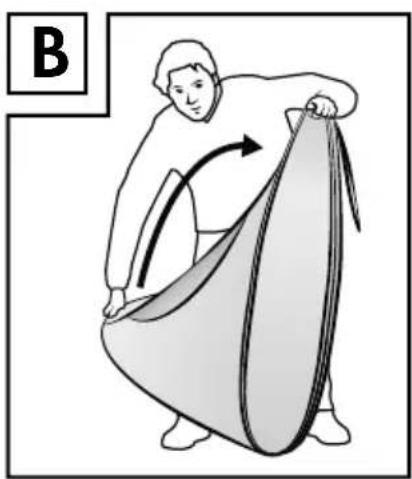
natural_image
Illustration of a person folding a large sheet with an arrow indicating rotation (no text or symbols)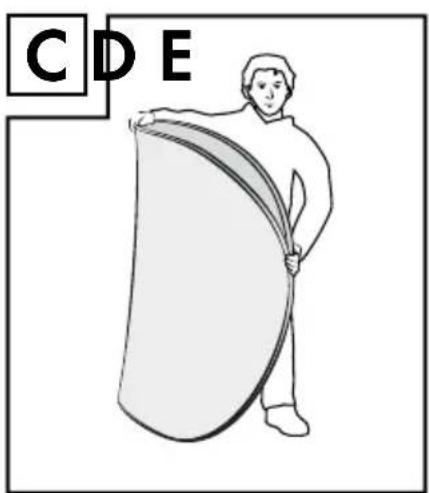
text_image
C D E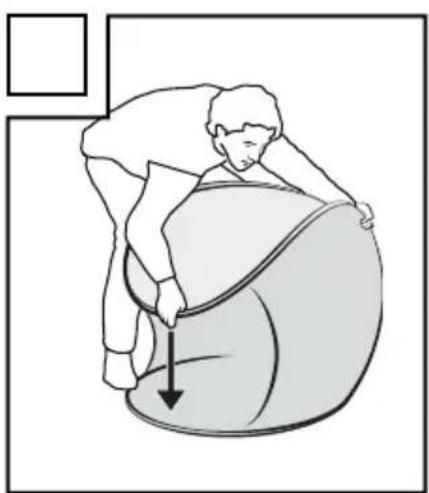
natural_image
Illustration of a person lifting a large bag with a downward arrow indicating compression (no text or symbols)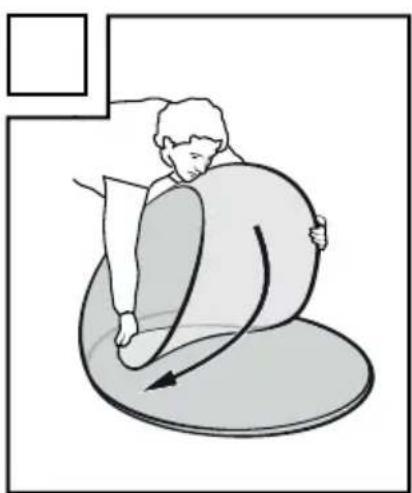
natural_image
Illustration of a person sitting on a cushion with a curved arrow indicating motion or movement (no text or symbols)DE WICHTIG, FÜR SPÄTERE BEZUGNAHME
AT
CH AUFBEWAHREN: SORGFÄLTIG LESEN!
GB IE IMPORTANT, RETAIN FOR FUTURE REFERENCE: READ CAREFULLY!
FR
BE
IMPORTANT, À CONSERVER POUR
CONSULTATION ULTÉRIEURE :
À LIRE ATTENTIVEMENT !
NL BELANGRIJK, BEWAREN VOOR LATERE
BE RAADPLEGING: ZORGVULDIG LEZEN!
PL WAŻNE, ZACHOWAĆ DO PÓŻNIEJSZE-GO UŻYTKU: UWAŻNIE PRZECZYTAĆ!
© DŮLEŽITÉ, UCHOVEJTE PRO POZDĚJŠÍ
POUŽITÍ: PEČLIVĚ SI PŘEČTĚTE!
SK DÔLEŽITÉ, USCHOVAJTE PRE PRÍPAD
POUŽITIA V BUDÚCNOSTI: DÔKLADNE
SI PREČÍTAJTE POKYNY!
ES IMPORTANTE: CONSERVAR PARA CONSULTAS POSTERIORES: LEER ATENTAMENTE.
DK VIGTIGT, SKAL OPBEVARES TIL SENERE BRUG: SKAL LÆSES OMHYGGELIGT!
Pop-up-Campingzelt 2.1
- Einleitung

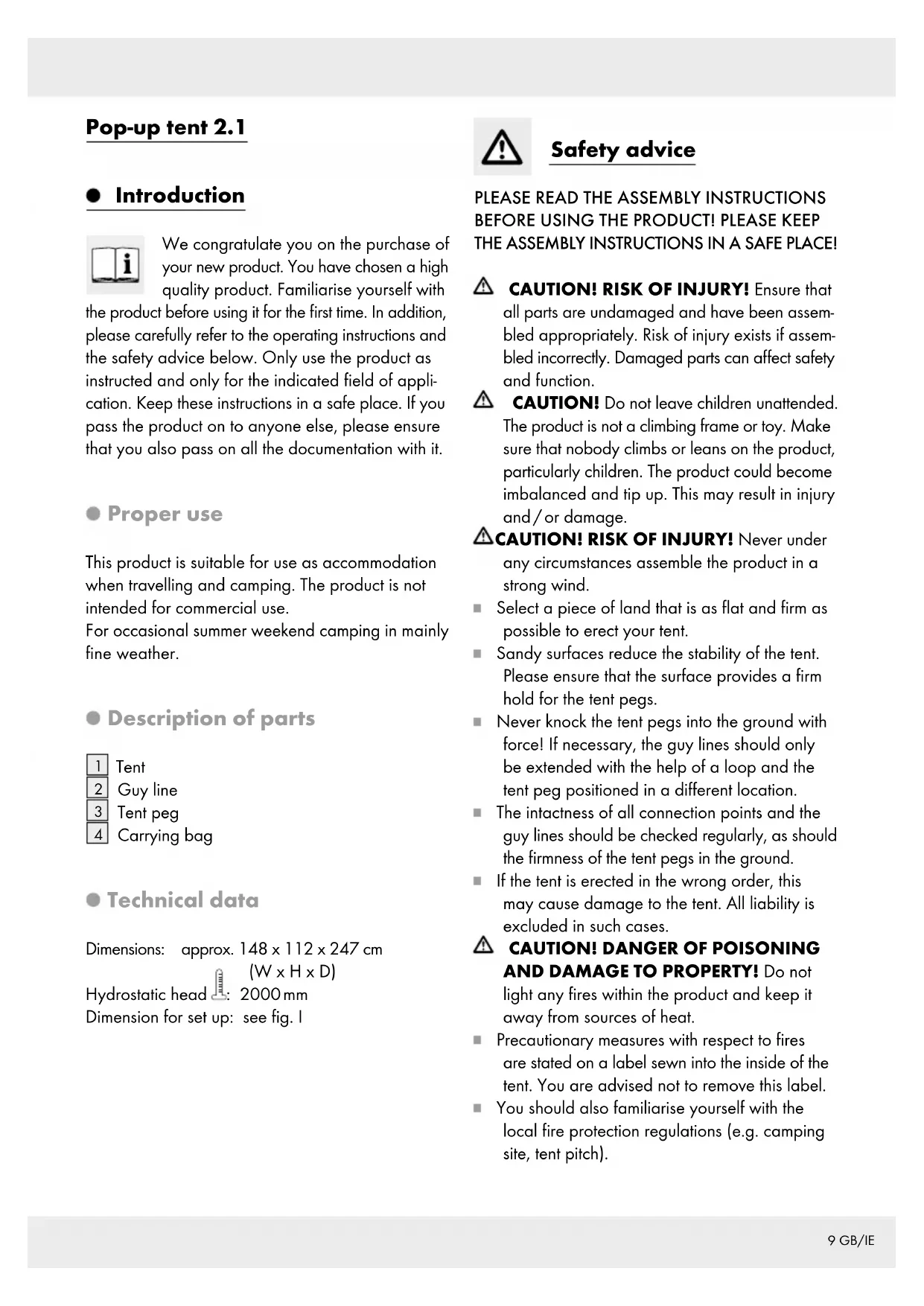
We congratulate you on the purchase of your new product. You have chosen a high quality product. Familiarise yourself with the product before using it for the first time. In addition, please carefully refer to the operating instructions and the safety advice below. Only use the product as instructed and only for the indicated field of application. Keep these instructions in a safe place. If you pass the product on to anyone else, please ensure that you also pass on all the documentation with it.
- Proper use
This product is suitable for use as accommodation when travelling and camping. The product is not intended for commercial use.
For occasional summer weekend camping in mainly fine weather.
• Description of parts
1
Tent
2
Guy line
3
Tent peg
4
Carrying bag
- Technical data
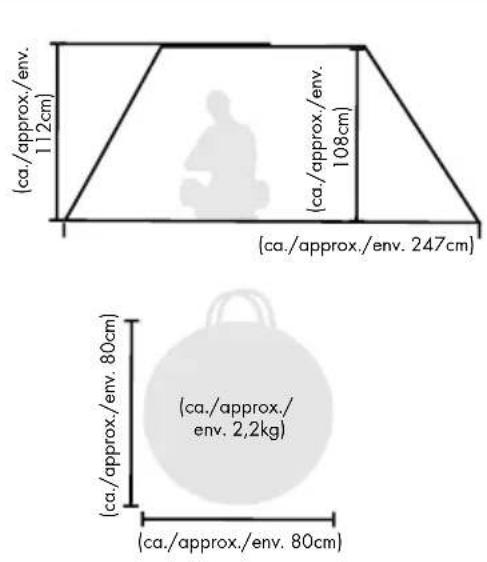
Dimensions: approx. 148 x 112 x 247 cm
(W x H x D) Hydrostatic head : 2000 mm
Dimension for set up: see fig. I

Safety advice
PLEASE READ THE ASSEMBLY INSTRUCTIONS BEFORE USING THE PRODUCT! PLEASE KEEP THE ASSEMBLY INSTRUCTIONS IN A SAFE PLACE!
CAUTION! RISK OF INJURY! Ensure that all parts are undamaged and have been assembled appropriately. Risk of injury exists if assembled incorrectly. Damaged parts can affect safety and function.
CAUTION! Do not leave children unattended. The product is not a climbing frame or toy. Make sure that nobody climbs or leans on the product, particularly children. The product could become imbalanced and tip up. This may result in injury and/or damage.
⚠️CAUTION! RISK OF INJURY! Never under any circumstances assemble the product in a strong wind.
- Select a piece of land that is as flat and firm as possible to erect your tent.
Sandy surfaces reduce the stability of the tent. Please ensure that the surface provides a firm hold for the tent pegs.
- Never knock the tent pegs into the ground with force! If necessary, the guy lines should only be extended with the help of a loop and the tent peg positioned in a different location.
The intactness of all connection points and the guy lines should be checked regularly, as should the firmness of the tent pegs in the ground.
If the tent is erected in the wrong order, this may cause damage to the tent. All liability is excluded in such cases.
CAUTION! DANGER OF POISONING AND DAMAGE TO PROPERTY! Do not light any fires within the product and keep it away from sources of heat.
■ Precautionary measures with respect to fires are stated on a label sewn into the inside of the tent. You are advised not to remove this label.
- You should also familiarise yourself with the local fire protection regulations (e.g. camping site, tent pitch).
■ Make sure ventilation openings (includes the outer door) are open all the time to avoid suffocation.
- Keep the exit free! Do not block the exit with objects.
WARNING! DANGER OF SUFFOCATION!
If the inside of the tent is not adequately ventilated, there is a risk of suffocation.
- Fire precautions
Camp safely. Follow these common sense rules:
- Do not place hot appliances near the walls, roof or curtains.
■ Always observe the safety instructions for these appliances.
■ Never allow children to play near hot appliances. - Keep exits clear. Do not block the exit with objects.
■ Make sure you know the fire precaution arrangements on the site.
Take note of the effects of the weather and climate
- When selecting the location to put up your tent, you should always consider the local situation and how this might change. Will the terrain turn into a lake if it rains? Please take into account any rising rivers and incoming tides.
- Protect the product against strong wind and storms. Place the product in a location that is protected from the wind if possible.
If a strong wind is forecast, replace the normal tent pegs with special storm pegs. You can find information about meaningful supplementary products at specialist shops.
The tent should be taken down before heavy snowfall or stormy weather.
■ Remove any snow directly from the product. Otherwise the product may collapse under the weight. -
Ensure that the tent is not too taut when it is erected, otherwise it may not be able to adapt to changing weather conditions and might be damaged.
-
Zips are wearing parts and do not fall under the guarantee conditions.
■ The polyester material of the tent consists of water-repellent material.
It is possible that during the first rainfall the tent will not be completely watertight. However, the threads of the tent will contract when exposed to water so that after a short time the tent will become watertight. - When exposed to moisture and rain, tent fabrics expand to varying degrees and make it necessary to adapt the length of the guy lines. If the material becomes taut again while drying, the guy lines have to be loosened again in good time.
- Do not use any insect spray in or on the tent.
■ Small leaks on the seams can be repaired with a seam spray and impregnation spray can be used for the tent skin.
- Assembly
Please ensure that the product is only assembled / disassembled by a competent person.
- Erecting the tent
ATTENTION: Please note that the poles are under tension and snap into the natural shape of the tent. Taking care that the release of tension does not cause any injury.
☐ Remove the rubber band and throw the product away from you into the air.
☐ Set up the tent with guy lines 2 and pegs 3 (see Fig. H).
- Dismantling the tent
☐ Please watch the tent dismantling information video by using the QR-code with a suitable appliance.
☐ Grasp the centre of the upper hoops in one hand and pull the centre points of the lower hoops up to them. Start at the rear end of the
tent so that the air can escape completely through the front entrance (see Fig. A-B).
☐ Hold the tent upright and hold all 4 hoops in one hand (see Fig. C).
☐ Push the top of the upper arch towards the ground and roll into the middle. Push the new hoops down with one hand while the other hand continues to hold the 4 hoops together (see Fig. D–E).
☐ New hoops will form as you continue to push down. Loosen the grip of the hand holding the 4 hoops together and slide all the arches into each other (see Fig. F).
☐ Arrange all the arches on top of each other and secure them with the rubber band (see Fig. G). You can now pack the tent in its bag.
- Cleaning and care
⚠CAUTION! Never wash the tent in a washing machine. Otherwise the product may lose some of its ability to keep out water.
⚠CAUTION! Never use petrol, solvent or other cleaning agents. Otherwise there is a danger of damage to the product.
Condensation can form in all synthetic tents; you should therefore air the tent as frequently as possible in order to counteract this.
For cleaning the tent and removing any stains you should only use a cleaning agent that is specifically intended for cleaning polyester tents.
☐ Remove any dirt from the tent 1 with a soft sponge and clean water.
☐ Please allow all parts to dry thoroughly before you repack the tent 1. This will prevent the formation of mould, bad odours and discolouration.
☐If the zipper sticks when being opened or closed, spray it with silicone spray.
- Disposal
The packaging is made entirely of recyclable materials, which you may dispose of at local recycling facilities.
Contact your local refuse disposal authority for more details of how to dispose of your worn-out product.
- Warranty
The product has been manufactured to strict quality guidelines and meticulously examined before delivery. In the event of product defects you have legal rights against the retailer of this product. Your legal rights are not limited in any way by our warranty detailed below.
The warranty for this product is 3 years from the date of purchase. The warranty period begins on the date of purchase. Please keep the original sales receipt in a safe location. This document is required as your proof of purchase.
Should this product show any fault in materials or manufacture within 3 years from the date of purchase, we will repair or replace it – at our choice – free of charge to you. This warranty becomes void if the product has been damaged, or used or maintained improperly.
The warranty applies to defects in material or manufacture. This warranty does not cover product parts subject to normal wear, thus possibly considered consumables (e.g. batteries) or for damage to fragile parts, e.g. switches, rechargeable batteries or glass parts.
● Warranty claim procedure
To ensure quick processing of your case, please observe the following instructions:
Please have the till receipt and the item number (IAN 384971_2107) available as proof of purchase.
You will find the item number on the rating plate, an engraving on the front page of the instructions for use (bottom left), or as a sticker on the rear or bottom of the product.
If functional or other defects occur, please contact the service department listed either by telephone or by e-mail.
You can return a defective product to us free of charge to the service address that will be provided to you. Ensure that you enclose the proof of purchase (till receipt) and information about what the defect is and when it occurred.
Service
GB Service Great Britain
Tel.: 08000569216
E-Mail: owim@lidl.co.uk
IE Service Ireland
Tel.:1800200736
E-Mail: owim@lidl.ie
Tente pop-up 2.1
- Introduction

WAARSCHUWING! VERSTIKKINGS-
Pooblaščeni serviser:
OWIM GmbH & Co. KG
Stiftsbergstraße 1
74167 Neckarsulm
NEMČIJA
natural_image
Illustration of a person performing a rope manipulation exercise on a circular object, showing two sequential steps (no text or symbols)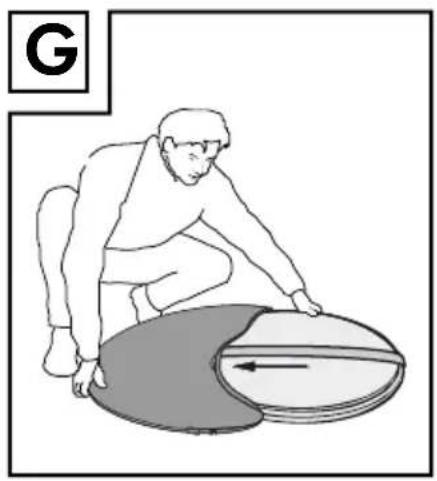
natural_image
Illustration of a person kneeling on a circular object with an arrow indicating direction (no text or symbols)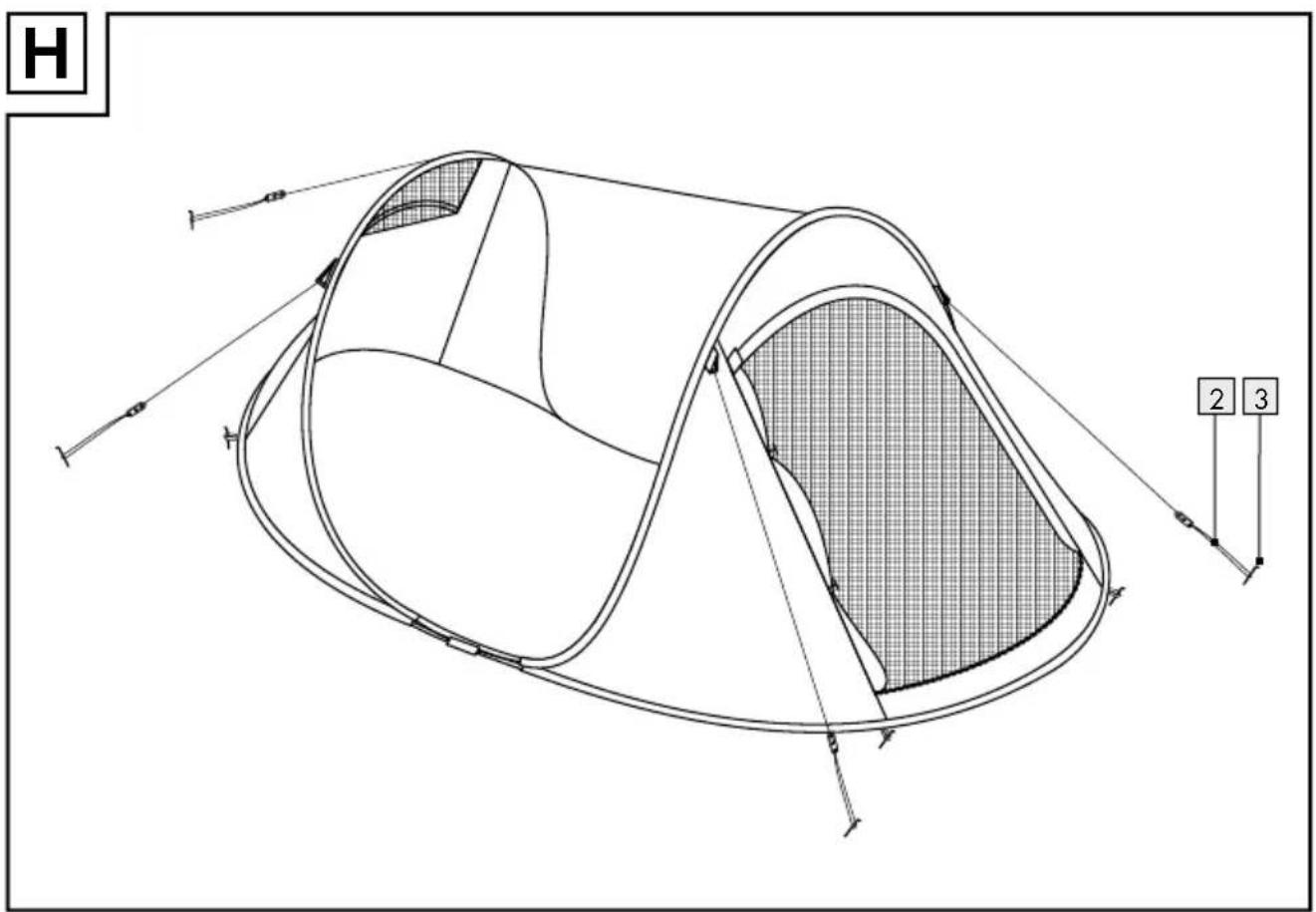
text_image
H 2 3I
text_image
(ca./approx./env. 112cm) (ca./approx./env. 108cm) (ca./approx./env. 247cm) (ca./approx./env. 80cm) (ca./approx./ env. 2,2kg) (ca./approx./env. 80cm)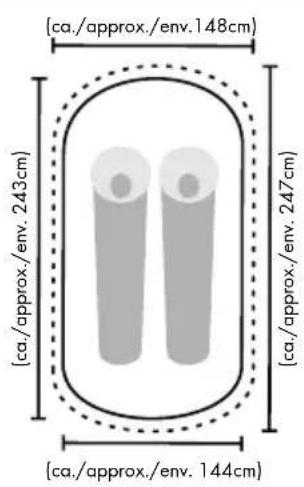
text_image
(ca./approx./env.148cm) (ca./approx./env.243cm) (ca./approx./env.247cm) (ca./approx./env.144cm)OWIM GmbH & Co. KG
Stiftsbergstraße 1
74167 Neckarsulm
GERMANY
Model-No.: HG03470A/HG03470B
Version: 03 / 2022