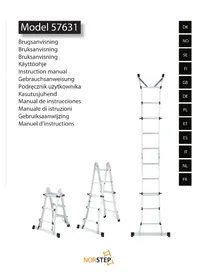
57631 - Ladder Norstep - Free user manual and instructions
Find the device manual for free 57631 Norstep in PDF.



| Product type | Multifunction articulated ladder |
| Brand | Norstep |
| Model | 57631 |
| Category | Ladder |
| Maximum load | 150 kg |
| Maximum working height (leaning ladder) | 1.88 m |
| Maximum working height (step ladder) | 0.79 m |
| Recommended inclination angle | 65-75° (ratio 1:4) |
| Material | Aluminium |
| Uses | Domestic and professional |
| Positions | Single ladder, step ladder, storage |
| Safety devices | Stabilizer bar, auto-locking hinges, non-slip feet |
| Safety standards | Compliant with EN 131 standard |
| Maximum number of persons | 1 person per side |
| Maintenance | Clean after use, regularly inspect components, oil hinges |
| Storage | Clean and dry place, protected from sunlight (thermoplastic models) |
| Repairs | Contact the manufacturer (Schou Company A/S) or retailer |
| Spare parts | Available via www.schou.com |
| Warranty | See terms at www.schou.com |
| Manufacturer | Schou Company A/S, Nordager 31, DK-6000 Kolding, Denmark |
| Country of origin | P.R.C. (China) |
Frequently Asked Questions - 57631 Norstep
User questions about 57631 Norstep
0 question about this device. Answer the ones you know or ask your own.
Ask a new question about this device
Download the instructions for your Ladder in PDF format for free! Find your manual 57631 - Norstep and take your electronic device back in hand. On this page are published all the documents necessary for the use of your device. 57631 by Norstep.
USER MANUAL 57631 Norstep
natural_image
Two aluminum ladder ladders shown in different orientations (no text or symbols visible)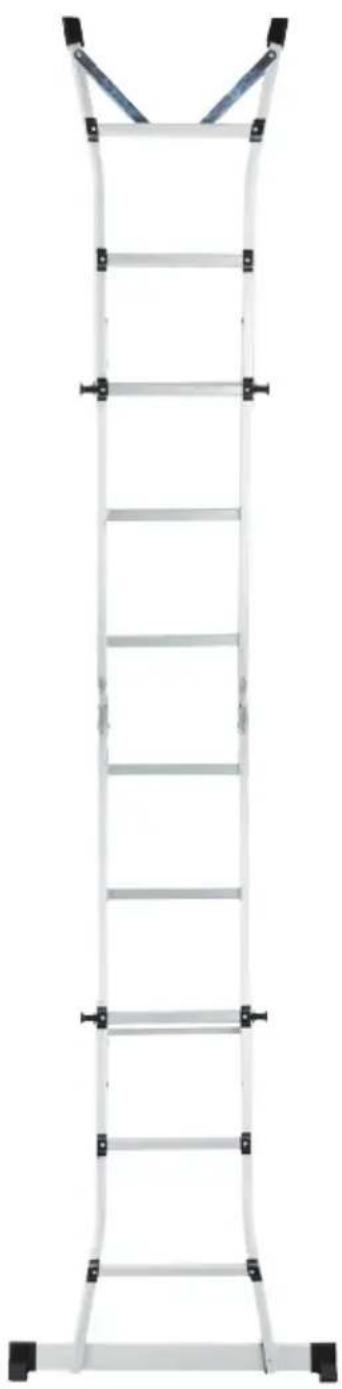
natural_image
Vertical metal ladder structure with black connectors at both ends (no text or symbols)STIGE

other
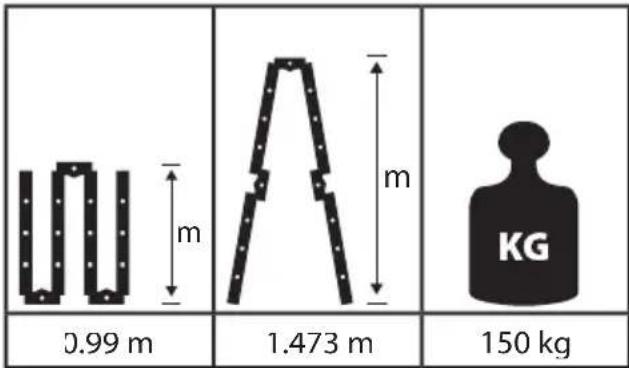
| Dimension | Value | | --------- | --------- | | Length | 0.99 m | | Height | 1.473 m | | Weight | 150 kg |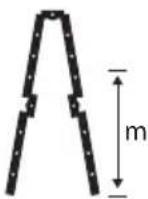
4. Yderligere advarsler for foldestige
other
| Dimension | Value | | --------- | --------- | | Width | 0.99 m | | Height | 1,473 m | | Weight | 150 kg |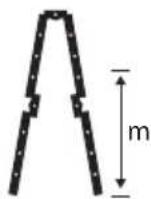
other
| Dimension | Value | | --------- | --------- | | Top Left | 0.99 m | | Top Right | 1,473 m | | Bottom Left | 0.99 m | | Bottom Right | 150 kg |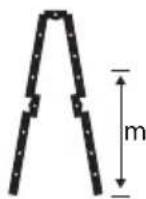
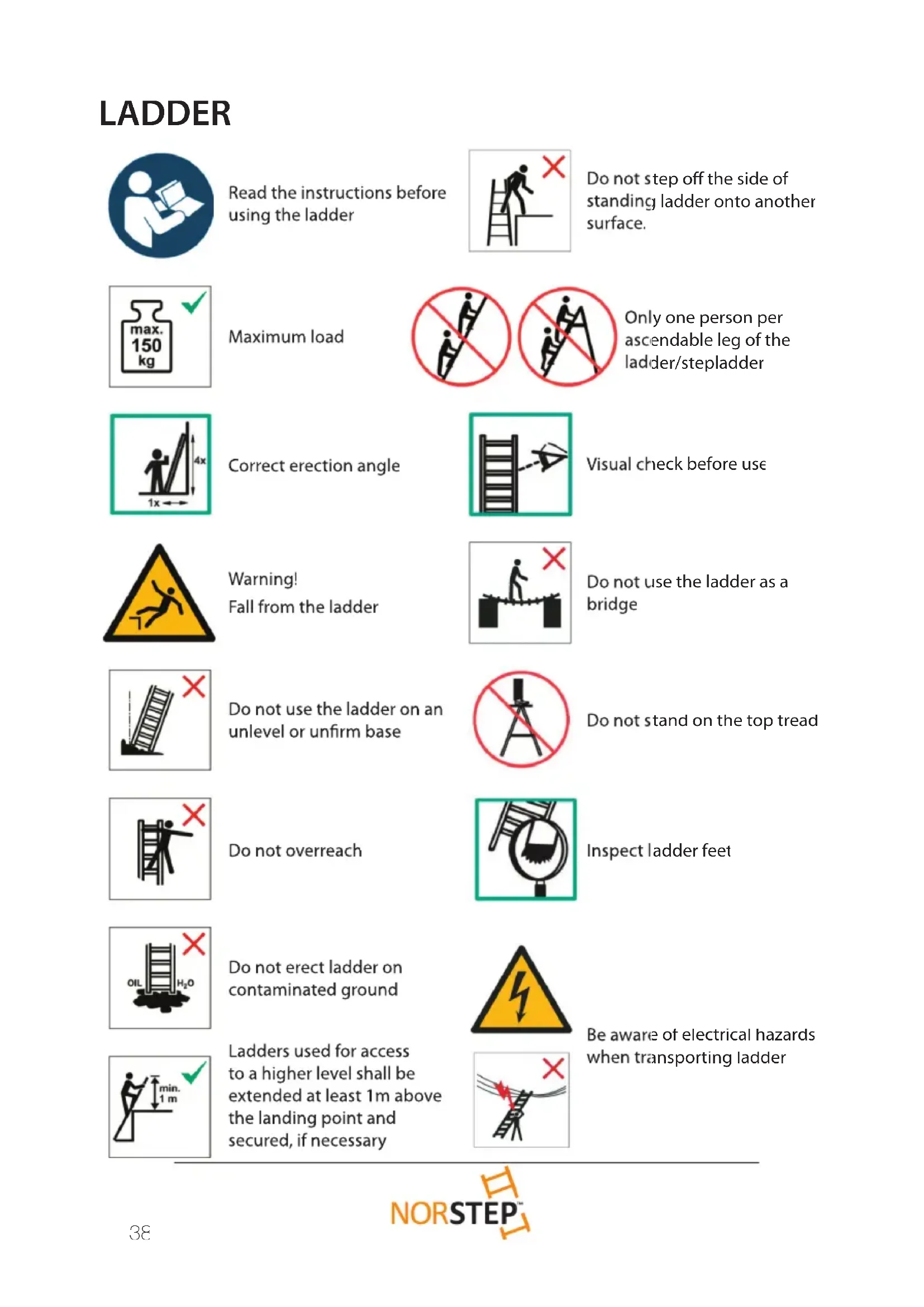
Read the instructions before using the ladder
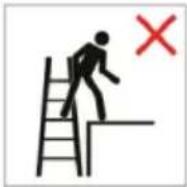
Do not step off the side of standing ladder onto another surface.
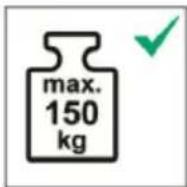
Maximum load
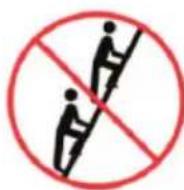
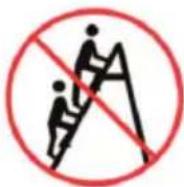
Only one person per ascendable leg of the ladder/stepladder
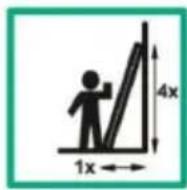
Correct erection angle
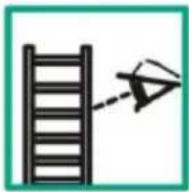
Visual check before use
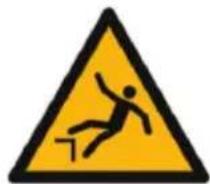
Warning! Fall from the ladder

Do not use the ladder as a bridge
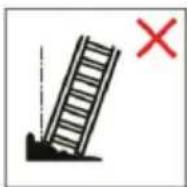
Do not use the ladder on an unlevel or unfirm base
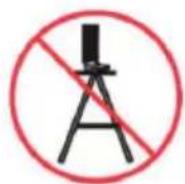
Do not stand on the top tread
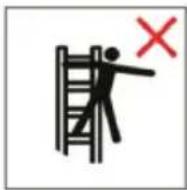
Do not overreach
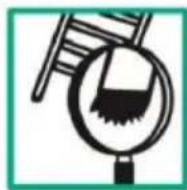
Inspect ladder feet
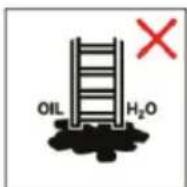
Do not erect ladder on contaminated ground
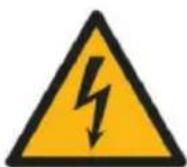
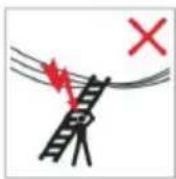
Be aware of electrical hazards when transporting ladder
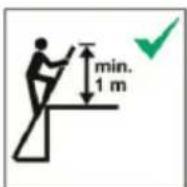
Ladders used for access to a higher level shall be extended at least 1m above the landing point and secured, if necessary
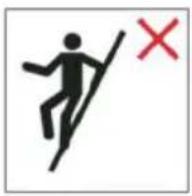
Face ladder when ascending or descending ladder

Ensure standing ladder is fully opened before use
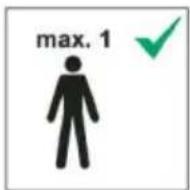
Maximum number of users on ladder
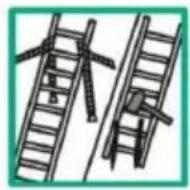
Secure top/ bottom of ladder
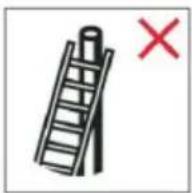
Do not lean the ladder against unsuitable surfaces
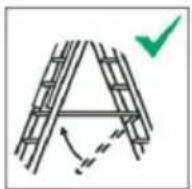
Ensure opening restraint devices are engaged

Use ladder the correct way up
Introduction
The multiple hinge-joint ladder is a multipurpose ladder that can be adjusted to different positions and heights thanks to an innovative system of hinges and locks. This versatile ladder is ideal for use in the home or workshop and handy for professionals
Install the stabilizer Bai
- Insert the stabilizer bar into the slots of the stiles.
- Pass the bolts through the legs and the stabilizer bar. Fix nuts and tighten securely.
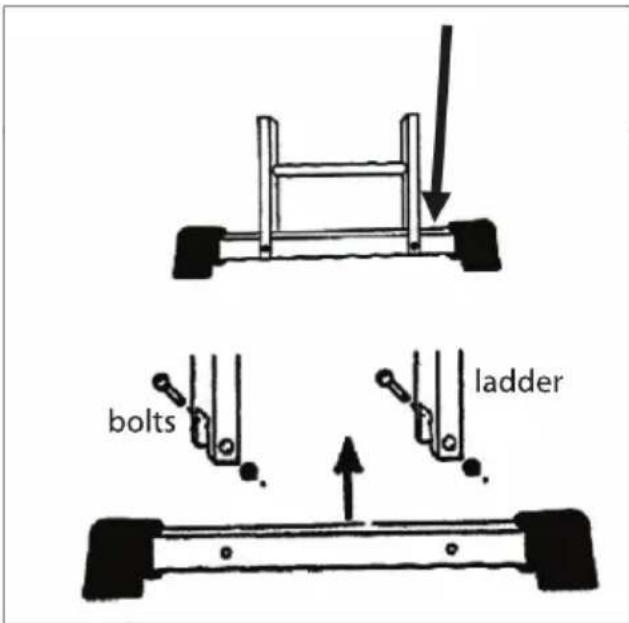
Always use the stabilizer bar
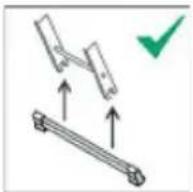
OPERATION:
Each hinge can be locked in two different positions. If the ladder is completely folded in the storage position, the lock tabs will already be in the unlocked position. So, you can go straight to step 2. To adjust the angle to the desired position, proceed as follows:
- To unlock the hinges, pull the lever on each hinge up until the lock tab is in the unlocked position.
- With the hinges unlocked, open the ladder to an angle of 180^ for use as a single ladder.
- The hinges automatically lock then the position is reached.
- To close the ladder or change from one position to another, repeat step 1 and 2
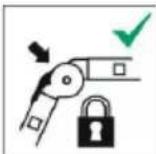
Ensure that the hinges are locked.
POSITIONS
| Position as single ladder | 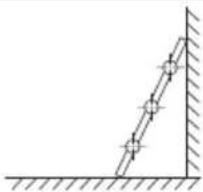 |
| Position as standing ladder | 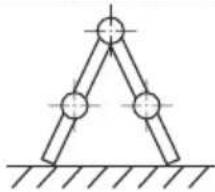 |
| Storage position | 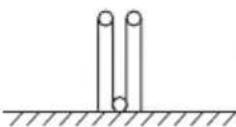 |
other
| Dimension | Value | | --------- | --------- | | Height | 0.99 m | | Width | 1.473 m | | Weight | 150 kg |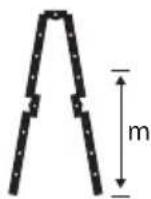
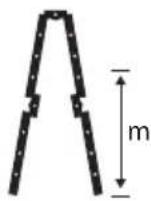
Max standing height: approx 790 mm.
Do not stand on the two top rungs of a standing ladder.
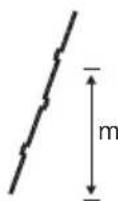
Max standing height: approx 1880 mm.
Do not stand on the three top rungs of a leaning ladder.
Professional use

1. Check before using the ladder
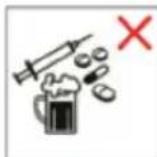
Ensure that you are fit enough to use a ladder. Certain medical conditions or medication, alcohol or drug abuse could make ladder use unsafe;
When transporting ladders on roof bars or in a truck, ensure they are suitably placed to prevent damage;
Inspect the ladder after delivery and before first use to confirm condition and operation of all parts;
Visually check the ladder at the start of each working day when the ladder is to be used;
For professional users regular periodic inspection is required;
Ensure the ladder is suitable for the task;
Do not use a damaged ladder;
Do not use the ladder if contaminated, e.g. with wet paint, mud, oil or snow;
For professional use a risk assessment shall be carried out respecting the legislation in the country of use.
Do not modify the ladder design.
2. Positioning and erecting the laddei
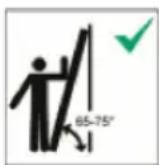
The ladder shall be erected at the correct position, such as the correct angle for a leaning ladder (65-75° angle of inclination, approximately 1:4) with the rungs or treads level and complete opening of a standing ladder;
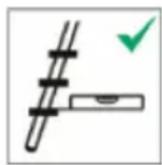
Leaning ladders with steps shall be used that the steps are in a horizontal position.
Locking devices, if fitted, shall be fully secured before use;
The ladder shall be on an even, level and unmovable base;
A leaning ladder should lean against a fl a non-fragile surface and should be secured before use, e.g. tied or use of a suitable stability device;
The ladder shall never be repositioned from above,
When positioning the ladder take into account risk of collision with the ladder e.g. from pedestrians, vehicles or doors; Secure doors (not fire exits) and windows where possible in the work area.
Warning, electricity hazard Identify any electrical risks in the work area, such as overhead lines or other exposed electrical equipment and do not use the ladder where electrical risks occur;
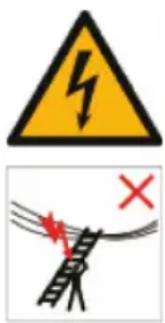
The ladder shall be stood on its feet, not the rungs or treads.
Ladders shall not be positioned on slippery surfaces (such as ice, shiny surfaces or significantly contaminated solid surfaces unless additional effective measure: are taken to prevent the ladder slipping or ensuring contaminated surfaces are sufficiently clear
Ladder shall never be moved from the top
3. Using the ladder
Do not exceed the maximum permissible load for the type of ladder;
Do not overreach; users should keep their belt buckle (navel) inside the stiles and both feet on the same step/rung throughout the task;
Do not step off a leaning ladder at a higher level without additional security, such as tying off or use of a suitable stability device
Do not use standing ladders for access to another level;
Do not stand on the top three rungs of a leaning ladder;
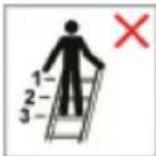
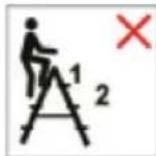
Do not stand on the top two steps/rungs of a standing ladder without a platform and hand/knee rail.
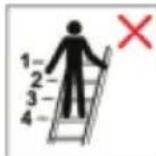
Do not stand on the top four steps/rungs of a standing ladder with an extending ladder at the top.
Ladders should only be used for light work of short duration;
Use non-conductive ladders for unavoidable live electrical work;
Do not use the ladder outside in adverse weather conditions, such as strong wind;
Take precautions against children playing on the ladder;
Secure doors (not fi re exits) and windows where possible in the work area;
Do not ascend or descend unless you are facing the ladder;
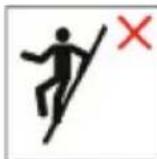
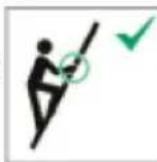
Keep a secure grip on the ladder when ascending and descending; maintain a handhold whilst working from a ladder or take additional safety precautions if you cannot.
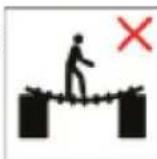
Do not use the ladder as a bridge;
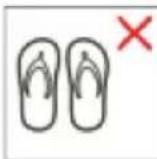
Do not wear unsuitable footwear when climbing a ladder;
Avoid excessive side loadings e.g. drilling brick and concrete;
Do not spend long periods on a ladder without regular breaks (tiredness is a risk); Leaning ladders used for access to a higher level should be extended at least 1 m above the landing point and secured, if necessary;
Do not carry equipment which is heavy or difficult to handle while using a ladder
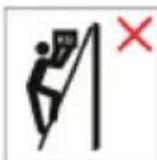
Avoid work that imposes a sideways load on ladders, such as side-on drilling through solid materials (e.g. brick or concrete)
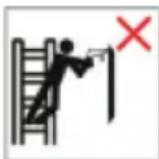
Maintain a handhold whilst working from a ladder or take additional safety precaution if you cannot;
Standing ladders shall not be used as leaning ladders unless they are designed for that purpose.
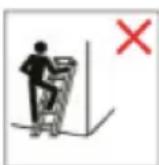
Do not move a ladder while standing on it. For outdoor use caution to the wind.
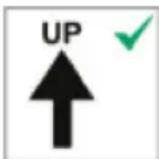
Only use the ladder in the direction as indicated, only if necessary due to design of ladder
4. Additional warning for multiple hinge-joint ladder
Single or multiple joint ladders should be unfolded /folded when lying on the ground and not its use position
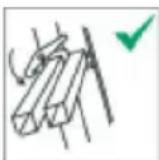
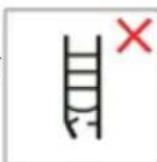
Prohibited positions: M-position, upside-down position,
Ensure that the hinges are lockec
5. Repair, maintenance and storage
Repairs and maintenance shall be carried out by a competent person and be in accordance with the producer's instruction.
For repair and replacement of parts, e.g. feet, if necessary contact the producer or distributor.
Ladders should be stored in accordance with the producer's instructions.
Ladders made of or using thermoplastic, thermosetting plastic and reinforced plastic materials should be stored out of direct sunlight.
The important considerations when storing a ladder (not in use) should include the following:
- Is the ladder stored away from areas where its condition could deteriorate more rapidly (e.g. dampness, excessive heat, or exposed to the elements)?
- Is the ladder stored in a position which helps it to remain straight (e.g. hung by the stiles on proper ladder brackets or laid on a fl at clutter free surface)
- Is the ladder stored where it cannot be damaged by vehicles, heavy objects, or contaminants?
- Is the ladder stored where it cannot cause a trip hazard or an obstruction?
- Is the ladder stored securely where it cannot be easily used for criminal purposes?
- If the ladder is permanently positioned (e.g. on scaffolding), is it secured against unauthorized climbing (e.g. by children)?
Maintaining and storing your ladde
Keep the ladder in a clean, dry place
Hold the ladder firmly when carrying it
Never store materials on your ladder
Keep your ladder clean and free from any foreign matter.
Clean the ladder after each use
Regularly check the parts and hinges of the ladder. Oil the hinges regularly but do so carefully to ensure no oil drips on the rungs or side rails.
For regular inspection, the following items shall be taken into account
- check that the stiles/legs (uprights) are not bent, bowed, twisted, dented, cracked, corroded or rotten;
- check that the stiles/legs around the fixing points for other components are in good condition;
- check that fixings (usually rivets, screws or bolts) are not missing, loose, or corroded;
- check that rungs/steps are not missing, loose, excessively worn, corroded or damaged;
- check that the hinges between front and rear sections are not damaged, loose or corroded;
- check that the locking stays horizontal, back rails and corner braces are not missing, bent, loose, corroded or damaged;
- check that the rung hooks are not missing, damaged, loose or corroded and engage properly on the rungs;
- check that guide brackets are not missing, damaged, loose or corroded and engage properly on the mating stile.
- check that rubber feet / end caps are not missing, loose, excessively worn, corroded or damaged;
- check that the entire ladder is free from contaminants (e.g. dirt, mud, paint, oil or grease).
- check that locking catches (if fitted) are not damaged or corroded and function correctly;
- check that the platform (if fi tted) has no missing parts or fi xings and is no damaged or corroded.
If any of the above checks cannot be fully satisfied, you should NOT use the ladder
Reasons for accidents
The following list of hazards and examples of their causes, which is not exhaustive, are common reasons for accidents encountered when using ladders and are the basis on which the information in this manual has been developed:
a) Loss of stability:
The following list of hazards and examples of their causes, which is not exhaustive, are common reasons for accidents encountered when using ladders and are the basis on which the information in this manual has been developed.
1) Incorrect positioning of the ladder (such as incorrect angle for leaning ladder or not fully opening a standing ladder);
2) slide outwards at the bottom (such as bottom of the ladder sliding away from the wall)
3) side slip, falling sideways and top flip for leaning ladders (such as overreaching or fragile top contact surface);
4) condition of the ladder (such as missing anti-slip feet);
5) stepping off an unsecured ladder at height
6) ground conditions (such as unstable soft ground, sloping ground, slippery surfaces or contaminated solid surfaces);
7) adverse weather conditions (such as windy conditions);
8) collision with the ladder (such as vehicle or door).
9) incorrect choice of ladder (such as too short, unsuitable task).
b) From handling:
1) Transferring the ladder to the work position
2) erecting and dismantling the ladder;
3) carrying items up the ladder.
c) Slip, trip and fall of user:
1) Inappropriate footwear;
2) contaminated rungs or steps;
3) unsafe user practices (such as climbing 2 rungs at a time, sliding down stiles)
d) Structural failure of ladder:
1) condition of the ladder (such as damaged stiles).
2) overloading the ladder;
3) Unintended use.
e) Electrical hazards:
1) Unavoidable live working (e.g. fault finding)
2) positioning ladders too close to live electrical equipment (such as overhead power lines)
3) ladders damaging electrical equipment (such as covers or protective insulation)
4) incorrect selection of type of ladder for electrical work.
Service centre
Note: Please quote the product model number in connection with all inquiries.
The model number is shown on the front of this manual and on the product rating plate.
For:
- Complaints
- Replacements parts
- Returns
- Guarantee issues
- www.schou.com
Manufactured in P.R.C
Manufacturer:
Schou Company A/S
Nordager 31
DK-6000 Kolding
All rights reserved. The content of this manual may not be reproduced, either in full or in part, in any way by electronic or mechanical means, e.g. photocopying or publication, translated or saved in an information storage and retrieval system without written permission from Schou Company A/S
LEITER

other
| Dimension | Value | | --------- | --------- | | Width | 0.99 m | | Height | 1,473 m | | Weight | 150 kg |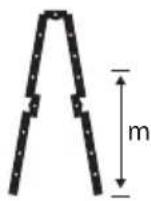
other
| Dimension | Value | | --------- | --------- | | Top Left | 0.99 m | | Top Right | 1,473 m | | Bottom Left | 150 kg | | Bottom Right | KG |