IAN 292235 - Bike accessory CRIVIT - Free user manual and instructions
Find the device manual for free IAN 292235 CRIVIT in PDF.



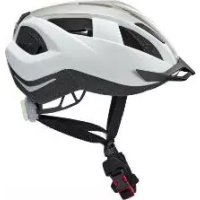
| Product type | Bicycle helmet with integrated LED taillight |
| Brand | Crivit |
| Model | IAN 292235 |
| Usage | Bicycle, skateboard, roller skates, scooter |
| Available sizes | Adjustable via occipital wheel (continuous adjustment) |
| Weight | Approx. 300 g (estimate) |
| Shell material | Polycarbonate (PC) with EPS foam |
| Adjustment system | One-hand wheel on occiput |
| Visor | Removable, fixed by pins |
| LED taillight | Model SP-09, removable, clips on the wheel |
| Power supply for light | 1 button cell CR1620 3V |
| Light modes | Steady, flashing, flow (3 modes) |
| Light control | Push button (multiple presses) |
| Safety standards | CE, GS (TÜV Rheinland), PSA 2016/425 |
| Recommended age | Adults and children from 14 years (LED light) |
| Lifespan | 5 years maximum after manufacture, replace after impact |
| Care and cleaning | Warm water and mild soap, air dry |
| Water resistance (light) | Not moisture resistant, do not use in rain |
| Storage temperature | Avoid temperatures >50°C, do not expose to direct sunlight |
| Spare parts | CR1620 battery, visor (if available) |
| Warranty | Legal conformity warranty (2 years EU) |
Frequently Asked Questions - IAN 292235 CRIVIT
User questions about IAN 292235 CRIVIT
0 question about this device. Answer the ones you know or ask your own.
Ask a new question about this device
Download the instructions for your Bike accessory in PDF format for free! Find your manual IAN 292235 - CRIVIT and take your electronic device back in hand. On this page are published all the documents necessary for the use of your device. IAN 292235 by CRIVIT.
USER MANUAL IAN 292235 CRIVIT
FAHRRADHELM SP-107/ LED-RÜCKLICH T SP-09
DE AT CH
FAHRRADHELM SP-107/LED-RUCKLIGHT SP-09
Gebrauchsanleitung
GB IE
BICYCLE HELMET SP-107/ LED REAR LIGHT SP-09
owner's manual
FR BE
CASQUE DE VÉLO SP-107/
FEU ARRIÈRE LED SP-09
Mode d'emploi
NL BE
FIETSHELM SP-107/LED-ACHTERlicht SP-09
Gebruiksaanwijzing
PL
KASK ROWEROWY
SP-107/ LAMPKA LED
SWIATŁA WSTECZNEGOSP-09
- The correct helmet position 14
- Adjusting the single-hand twisting fastener 14
- Adjusting the strap divider 14
- Adjusting the chin strap 14
- Visor 15
- Cleaning and care 15
- Disposal 15
LED - Rear light SP-09 15
Safety information 15
User information 16
- Before the first use 16
- Removal and attachment of the tail light 16
- Functions 17
- Changing the batteries 17
- Cleaning and care 17
- Disposal 17
Technical data 18
key to the symbols 18
Declaration of Conformity 19
BICYCLE HELMET SP-107
Dear Customer!
We are pleased that you have decided to purchase one of our high-quality products, which are manufactured and certified in strict adherence to the currently valid safety standards.
Familiarize yourself with this product before first use. Carefully read the operating instructions and the safety information. Use the product only as described and for the indicated purposes. Keep these instructions. If you give the product to a third party, be sure to include all the documents with it.
Safety information
- Warning! This helmet should not be used by children while climbing or doing other activities when there is a risk of strangulation/hanging if the child gets trapped with the helmet.
- Your helmet was specially designed for protection during cycling, skateboarding, roller-skating and riding a scooter. It must not be used for other types of sport or for motorcycling. This helmet is not suitable for downhill riding.
- Please note that the helmet can only provide protection if it fits correctly. Please ensure you try out a range of different sizes before buying.
- Please be aware that despite correct adjustment your helmet cannot always protect you from all injuries.
- The helmet should be checked for visible deficiencies at regular intervals.
- The helmet needs to be replaced after any hard impact, blow or deep scratch, as it thereby loses its protective function.
- The helmet must also be replaced when it no longer fits properly or no later than 5 years after the date of manufacture, even if no damage can be detected.
- Any adjustment to or removal of the original parts of the helmet can extremely impair its protective function. The helmet may not be altered in order to make additions in a way not recommended by the manufacturer.
- Clean the inner padding with lukewarm water and mild soap and then let it air dry.
- High temperatures, from as low as 60^ C, can seriously damage the helmet. Uneven helmet surfaces and the formation of small blisters are signs of such damage. Do not store behind panes of glass, e.g. in the car or close to sources of heat or warmth.
User information
1. The correct helmet position
- The helmet must always be levelly horizontal on your head (Fig. A).
- If the helmet is too far forward, it can impair your vision.
- If the helmet is too far back, your forehead is not sufficiently protected (Fig. B).
2. Adjusting the single-hand twisting fastener
The integrated size-adjusting system can be adjusted using a turning knob at the back of one's head (Fig. C):
- smaller = twist clockwise
- bigger = twist anti-clockwise
3. Adjusting the strap divider
- Open the strap divider (Fig. D).
- The strap divider must be positioned in such a way, that the straps are taut but comfortable. The strap divider must be below the ear, and the straps must not cover the ears.
- Close the strap divider (Fig. E).

An open strap divider can lead to slipping of the helmet in the event of an accident and thus to a loss of protection!!!
4. Adjusting the chin strap
- The chin strap (Fig. G.3) has been adjusted correctly if you feel slight pressure when you open your mouth. The buckle shall not be positioned on the jawbone.
- If the chin strap (Fig. G.3) is too loose it must be pulled tight using the winding (Fig. G.2) on the fastener (Fig. G.1).
- If the chin strap (Fig. G.3) is too tight it must be loosened also using the winding (Fig. G.2) on the fastener (Fig. G.1).

Please note that you must always make sure that the fastener is closed before you ride !!! (Fig. F)

Please be aware that the helmet can only protect if it fits properly. Please try out different sizes and choose the one in which the helmet fits comfortably and sits firmly upon your head.
5. Visor
- Carefully pull out the pins on the visor from the pin holes on the helmet shell to remove the visor (Fig. H).
Attention: The pin holes on the helmet can expand through excessive use. In this case, the visor may no longer be used.
6. Cleaning and care
- All chemicals, paints and stickers can seriously impair the protective effect of the helmet.
- Only clean your helmet with lukewarm water, mild soap and a soft cloth.
- After every use, leave your helmet exposed to the air in order for it to dry.
7. Disposal
- Please contact your local waste disposal company for the disposal of the helmet.
LED-REAR LIGHT SP-09
Safety information
- The LED rear light is not a substitute for the light equipment stipulated by the German standard StVZO (§ 67).
- When used correctly, the LED rear light gives better visibility. The LED backlight should not be used during rainy weather. It cannot be guaranteed to work if it gets wet.
- Please only use the LED rear light together with this cycle helmet and always put it onto the rotating wheel of the size-adjustment system.
The LED rear light is only intended for personal use. - Please make sure that, during use, the LED cannot be covered or obscured by collars, rucksacks or movements of the head.
- The LED light can under certain circumstances come loose without this being noticed, if it becomes caught on jackets, rucksacks or other objects.
- Please be aware that the battery of the LED light can fall out or become flat. Therefore, check the light regularly for proper functioning.
- The batteries must not be exposed to excessive heat such as sunshine, fire or the like. In the event that the batteries are incorrectly changed there exists the risk of
explosion. Only replace the batteries with the same or an equivalent battery type.
- Parents should ensure that their child also checks to make sure that the LED backlight is working on a regular basis.
- Warning! LED rear light not suitable for children under 14 years. There is a risk of high temperature and disassembly.
- The LED rear light is not a toy and its use by children is only permitted if they are under the supervision of adults.
- The light source of this light cannot be replaced. Once the light source has reached the end of its life, the whole light must be replaced.
- The changing of batteries must only be carried out by adults.
- If the battery leaks, avoid any contact with the skin as this can lead to skin irritation.
- Leaking batteries must be disposed of immediately.
- Do not short circuit batteries or take them apart. Do not make any modifications to the battery. Do not squeeze or deform the battery and do not drill into the battery.
- Do not continue to use the battery if it is damaged.
- Keep the batteries in the original packaging.
- Never try to recharge non-rechargeable batteries! There is a danger of explosion!
- Replace the battery only with the same or an equivalent type of battery.
- Keep new and used batteries away from children.
- Children can put small parts such as the button cell supplied in their mouths when playing and choke on them. Do not let children play with small parts.
- Seek medical advice immediately if you know or suspect that a battery has been swallowed or entered the body in any other way.
- Switch off the LED rear light after use. Remove the battery from the helmet if it will not be used for a longer period of time. Store the battery in a cool and dry place.
User information
1. Before the first use
Take the tail light off the helmet (Fig. J). Before the first use, remove the safety strips from the reverse of the LED tail light (Fig. I).
2. Removal and attachment of the tail light
- Release the LED back light from below with the help of a coin or similar (Fig. J).
-
To remove the rear light, pull the rear light out of the holder (Fig. J).
-
To attach it, the LED rear light must be re-plugged on the holder provided for this purpose.
3. Functions
The LED rear light has three different functions, each of which can be used as desired (Fig. K).
- Press x1: continuous light,
- press x2: flashing light,
- press x3: colour chaser,
- press x4: light off.
4. Changing the batteries
The LED tail light comes equipped with a CR 1620 (3V) battery.
- To replace the battery, unlock the screws at the back of the light using a small Phillips type head screwdriver.
- Subsequently, lift off the lid and the circuit board, exchange the battery and remount the circuit board and the lid. In doing so, please make sure that the polarity is correct when installing the new battery (Fig. L). The + pole points downwards when the batteries are inserted.
- Now, attach the lid again using the four screws (Fig. L).
Battery type: 1xCR1620,3V0,2W
5. Cleaning and care
The housing of the LED rear light can be cleaned with a damp cloth.
6. Disposal
Please do not dispose of flat batteries via the household waste, but instead use the collecting container intended for this purpose.

Old devices must not be disposed of with household waste!
If the product can no longer be used, every user is required by law to dispose of the device separately from household waste, e.g. at a collection point in their community/borough. This ensures that old devices are recycled properly and also avoids pollution of the environment. For this reason, electrical equipment is marked with the symbol shown here.

Batteries and rechargeable batteries must not be disposed of as household waste!
As a consumer, you are required by law to return all batteries and rechargeable batteries, regardless of whether they contain harmful substances* or not, at a collection point in your local authority / district or in retail to ensure that they can be disposed of in an environmentally friendly way.
Batteries and rechargeable batteries that are not permanently installed in the device must be removed and disposed of separately before disposal.
Please return batteries and rechargeable batteries only when discharged!
*marked with: Cd = cadmium, Hg = mercury, Pb = lead
Technical data
LED rear light
Model: SP-09
Battery: 1x CR1620, 3V =
Protection class: III
Risk group: Exempt group (the light does not pose a photobiological hazard)
key to the symbols
Declaration of conformity (see chapter „Declaration of conformity"):
CE Products marked with this symbol comply with all applicable European Community regulations Economic area.

Protection class III. The LED light is supplied with low voltage via a battery.

Expiry date

helmet weight

Date of manufacture)
The Seal of Approved Safety (GS mark) certifies that a product meets the requirements of the German Product Safety Act (ProdSG). The GS mark indicates that the safety and health of the user are not at risk if the product is used as intended and if foreseeable misuse of the marked product occurs.

Read the user manual

DC voltage
Declaration of Conformity
The EU Declaration of Conformity can be obtained from the following address:
SPEQ GmbH
Tannbachstraße 10
73635 Steinenberg
GERMANY
testing institute
TÜV Rheinland LGA Products GmbH
Tillystrasse 2
90431 Nurnberg
Germany
identification number: 0197
PSA 2016/425
The complete Declaration of Conformity can be found at www.speq.de/konformitaetserklaerung.
Casque de velo SP-107 21
Chere cliente, cher client!
FEU ARRIÈRE LED SP-09
LED ZADNÉ SVETLO SP-09
BezpečnostnéPokyny


- FAHRRADHELM SP-107/ LED-RÜCKLICH T SP-09
- LED - Rear light SP-09 15
- Technical data 18
- BICYCLE HELMET SP-107
- Dear Customer!
- Safety information
- User information
- The correct helmet position
- Adjusting the single-hand twisting fastener
- Adjusting the strap divider
- An open strap divider can lead to slipping of the helmet in the event of an accident and thus to a loss of protection!!!
- Adjusting the chin strap
- Please note that you must always make sure that the fastener is closed before you ride !!! (Fig. F)
- Please be aware that the helmet can only protect if it fits properly. Please try out different sizes and choose the one in which the helmet fits comfortably and sits firmly upon your head.
- Visor
- Cleaning and care
- Disposal
- LED-REAR LIGHT SP-09
- Before the first use
- Removal and attachment of the tail light
- Functions
- Changing the batteries
- Cleaning and care
- Disposal
- Old devices must not be disposed of with household waste!
- Batteries and rechargeable batteries must not be disposed of as household waste!
- Technical data
- key to the symbols
- Declaration of Conformity
- testing institute
- Casque de velo SP-107 21
- Chere cliente, cher client!
- FEU ARRIÈRE LED SP-09
- LED ZADNÉ SVETLO SP-09
- BezpečnostnéPokyny
Brand : CRIVIT
Model : IAN 292235
Category : Bike accessory