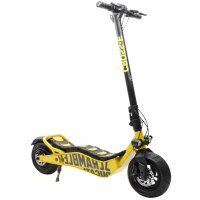
Scrambler CrossE - Scooter DUCATI - Free user manual and instructions
Find the device manual for free Scrambler CrossE DUCATI in PDF.



| Product type | Electric scooter |
| Brand | Ducati |
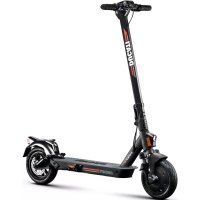
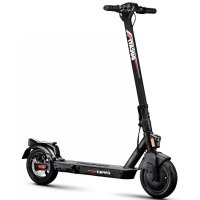
| Model | Scrambler CrossE |
| Dimensions (unfolded) | 1180 × 473 × 1212 mm |
| Dimensions (folded) | 1180 × 473 × 510 mm |
| Weight | 28 kg |
| Maximum load | 120 kg |
| Recommended age | 16 to 50 years |
| User height | 130 to 200 cm |
| Maximum speed | 25 km/h |
| Range (ECO mode) | Up to 50 km |
| Range (Comfort mode) | Up to 35 km |
| Range (Sport mode) | Up to 24 km |
| Battery | Lithium-ion 36 V / 10.4 Ah |
| Motor | 500 W brushless |
| Charging time | Approximately 6 to 7 hours |
| Charger input voltage | 100-240 V |
| Protection rating | IPX4 |
| Operating temperature | 0 to 45 °C |
| Storage temperature | 0 to 35 °C (optimal 25 °C) |
| Speed modes | ECO (6 km/h), Comfort (20 km/h), Sport (25 km/h) |
| Brakes | Adjustable cable brakes front and rear |
| Lighting | Front and rear lights with flashing brake light |
| Folding | Yes, with folding lock and closure hook |
Frequently Asked Questions - Scrambler CrossE DUCATI
User questions about Scrambler CrossE DUCATI
0 question about this device. Answer the ones you know or ask your own.
Ask a new question about this device
Download the instructions for your Scooter in PDF format for free! Find your manual Scrambler CrossE - DUCATI and take your electronic device back in hand. On this page are published all the documents necessary for the use of your device. Scrambler CrossE by DUCATI.
USER MANUAL Scrambler CrossE DUCATI
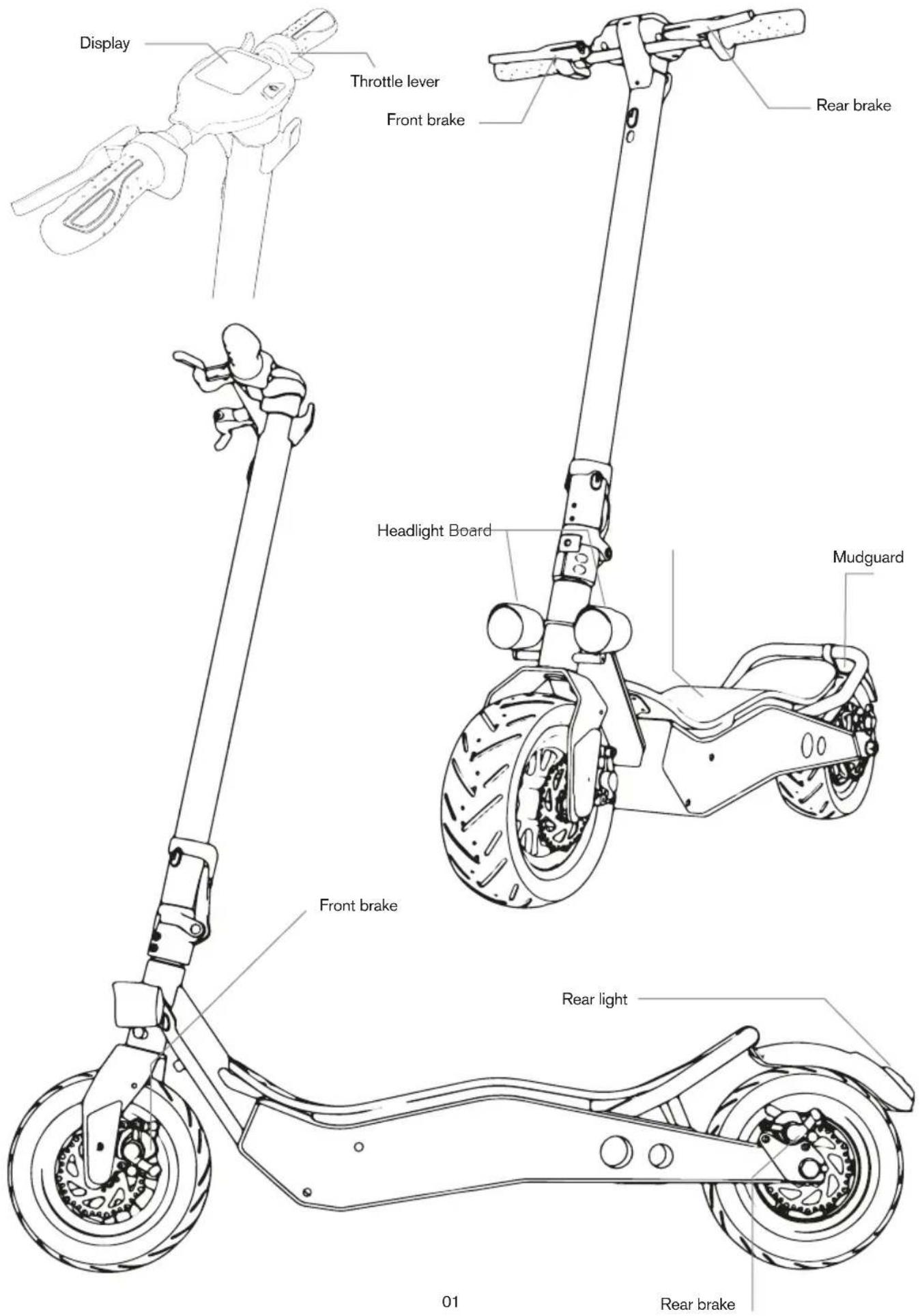
1. Parts and components
2. Safety instructions
Read these instructions thoroughly before using the appliance. Keep this instruction manual for future reference or new users.
- The company will not assume any responsibility resulting from product misuse or from not complying with traffic regulations and with this instruction manual.
- This electric scooter is not a toy. Use it with competence, attention and respect for others and yourself.
- Check local current regulations on the use of these kind of products before riding it and make sure to comply with local traffic regulations. Drive in a civilized way and pay attention to people and obstacles around in order to avoid accidents.
- Always use the recommended clothing, helmet (fastened), glasses, gloves, shoes, knee pads and elbow pads suitable for this use.
- The vehicle measures must be proportional to the user. The person riding it must be able to place both feet easily on the ground while sitting on the saddle.
- When stopping or parking the vehicle, make sure to do it on a flat and safe surface.
The maximum load allowed by the product is 120kg - It is not allowed to use the product with more than 1 person at a time.
- The misuse of the product or the non-compliance of this instruction manual can cause serious injury or even death.
- For any serious reparation not described in this manual, contact the Technical Support Service. Do not try to repair the product by yourself.
- Do not leave the battery near fire or near heat sources. Avoid using defective batteries.
- Do not sit or allow anyone to sit on the product while it is stopped.
- Do not ride the vehicle at night.
-
If the user that is going to use the product is not familiar with riding this type of vehicles, it is recommended that an adult teaches before first use:
-
Acceleration.
- Deceleration.
- Braking.
-
Basic riding principles.
-
Before each use, check the brakes, the pressure and condition of the tires and the throttle. If any unusual noise or fault is detected, do not use the product and contact the Technical Support Service.
- Any alteration of the product is not allowed, as this can change its performance or damage its structure causing injuries.
- Make sure to turn off the product before parking it.
- Do not ride the vehicle under rain, snow or wet conditions.
- Avoid the vehicle's electric parts from getting into contact with water or other liquids. Avoid riding it near rivers or lakes.
- Supervise young children to make sure that they do not play with the appliance. Close supervision is necessary when the appliance is being used by or near children.
- For information, technical support and assistance visit the website www.ducatiurbanemobility.it
DRIVING CONDUCT INSTRUCTIONS
- Do not use the phone or listen to music while riding the scooter.
- Only drive when there is enough light as to do it safely. Do not drive at night.
- Drive always holding the handlebar with both hands.
- While driving, your feet must always be comfortably and solidly placed on the board.
- Do not distract during the ride, always look ahead.
- Always ride at a speed as to allow you to stop safely.
- Start braking at enough distance from obstacles, curves and from areas where the type of floor changes. Remember to release the throttle before braking.
- Do not race other drivers.
- A minimum safety distance of 5m should be kept from other vehicles.
3. Warning

Safety measures should be taken before riding. Wear approved safety elements such as a helmet or kneecaps.
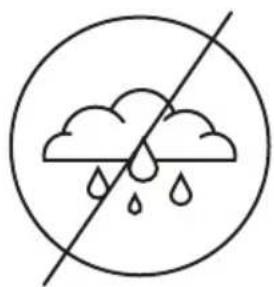
Do not use the vehicle under rain.
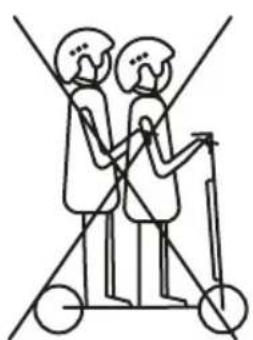
The appliance must not be used by more than one person at the same time.
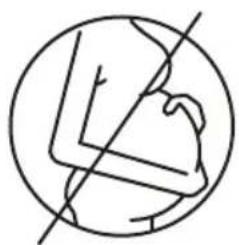
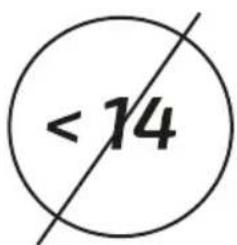
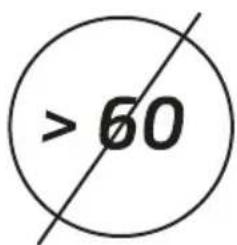
People below 14 years old, above 60 and pregnant women may not use the product.
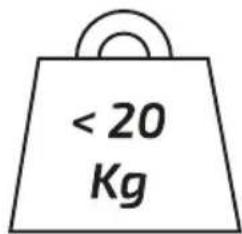
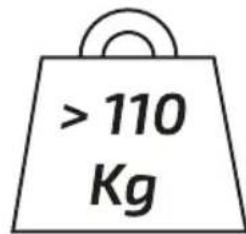
Minimum load allowed: 20kg maximum load allowed: 120kg
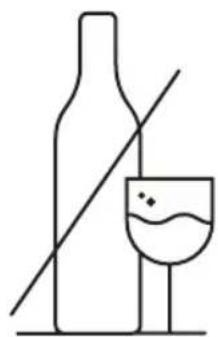
Do not ride the scooter after drinking or taking medicine.
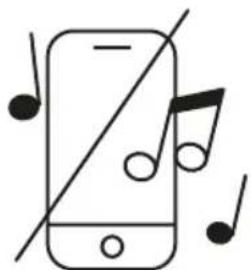
Do not use the phone or listen to music while riding the scooter.
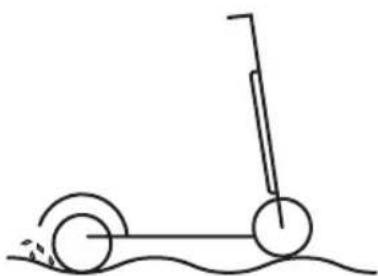
Pay special attention to the riding when the road has sandstone, ponding, mud, ice, snow, stairs or when it is wet or dark.
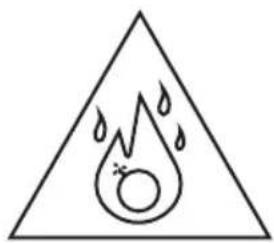
Do not use the vehicle in dangerous areas where there could be inflammable or explosive substances, liquid or dust.
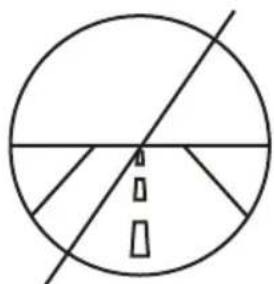
This scooter is not designed to ride on vehicle roads or highways. Check your local current legislation about where it is allowed to ride the scooter.
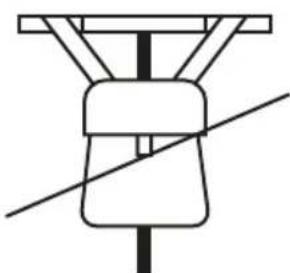
Do not place heavy objects on the handlebar.
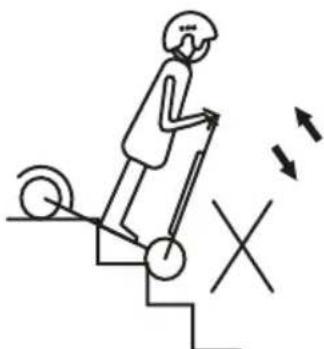
Avoid riding up and down the stairs with the scooter.
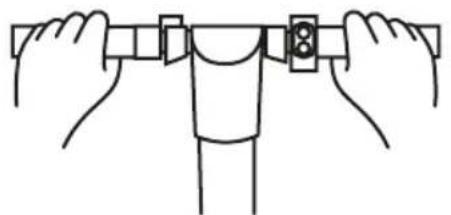
Always drive the scooter holding the handlebar with both hands.
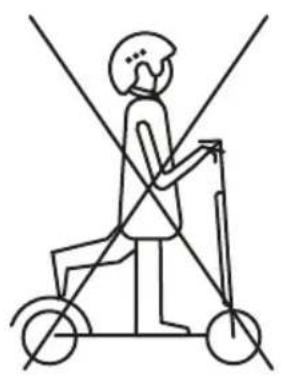
Do not use the scooter with just one foot on the footrest.
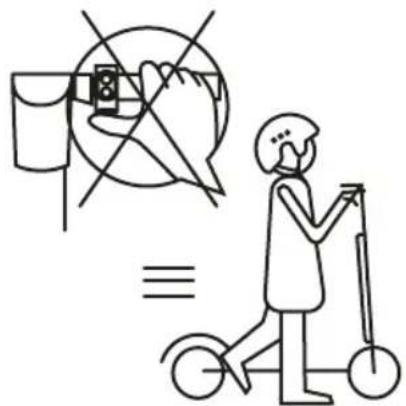
Do not activate the throttle while walking next to the scooter.
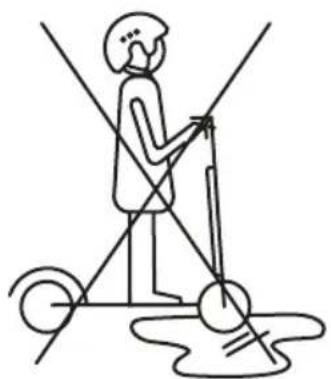
Do not ride through puddles or othern wet surfaces.
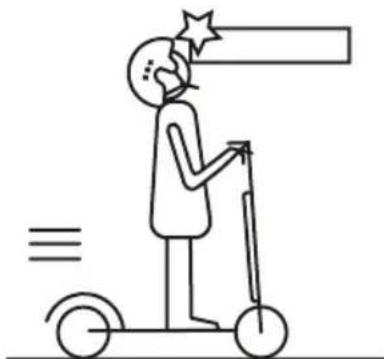
Watch your head when passing through doorways or when driving indoors.
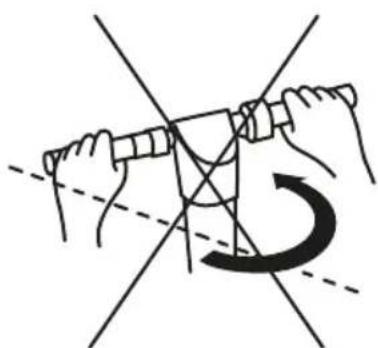
Do not turn the handlebar suddenly when riding at high speed.
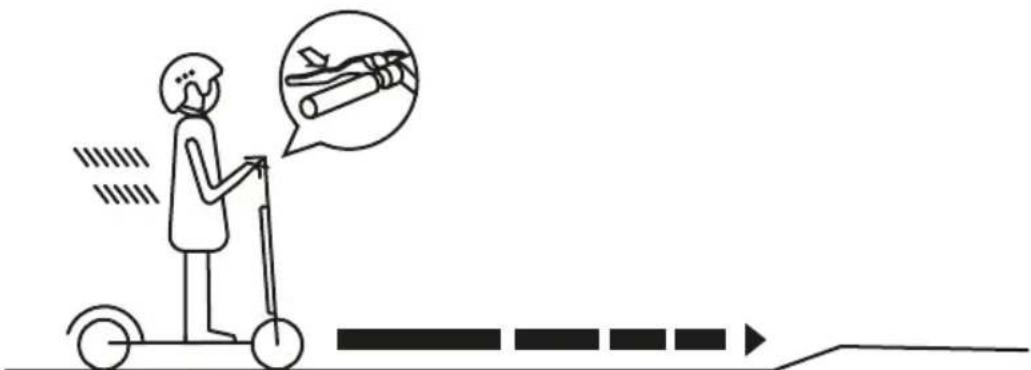
Start braking at enough distance from obstacles, curves and from areas where the type of floor changes. Remember to release the throttle before braking.
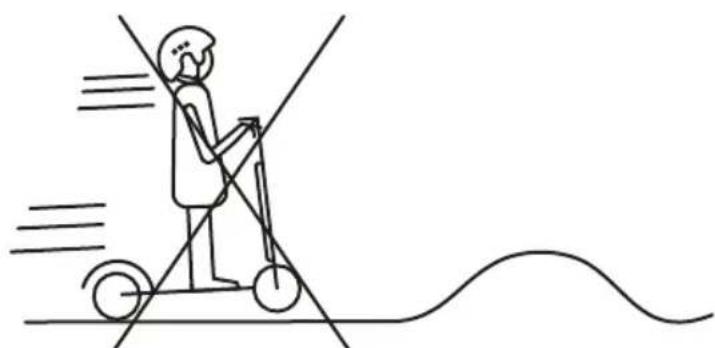
Do not ride fast on stairs, curbs or speed humps.
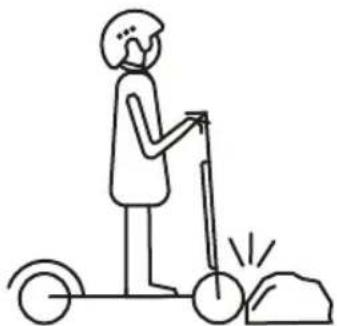
Avoid contacting obstacles with the wheels.
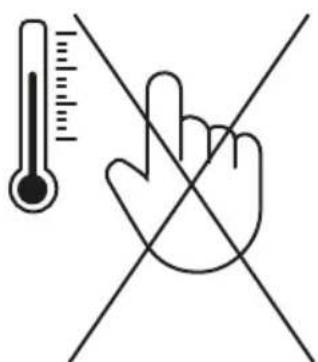
Do not touch the product's motor immediately after riding it, it could burn.
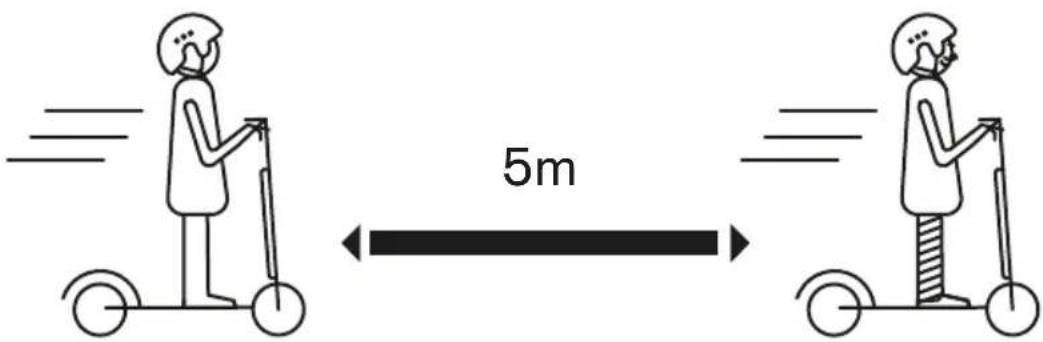
A minimum safety distance of 5m should be kept from other vehicles.
4. Product assembly and adjustment
NOTE: The vehicle is shipped folded with the handlebar disassembled.
UNFOLDING THE SCOOTER'S STEM:
- Raise the stem, place the folding tab in a close position and lower the fixing ring to hold the tab.
- Fix the brake with an M6 hex wrench.
- Paying attention to the rotation direction, tighten the handlebar.
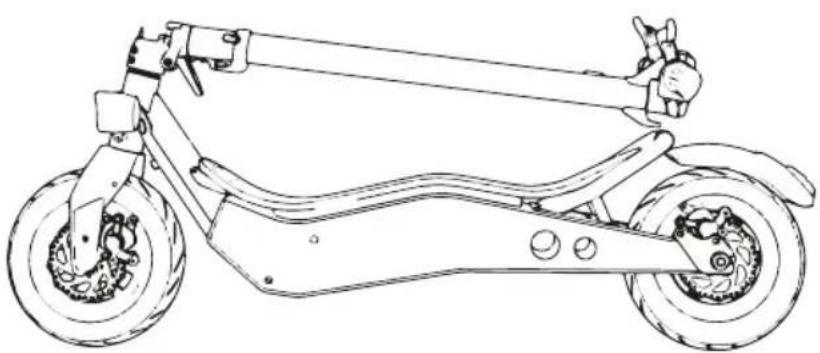
FOLDING THE SCOOTER'S STEM:
- Slide up the fixing ring to loosen it.
- Open the folding tab.
- Lower the folding tab and then the stem.
ACCESSING AND ACTIVATING THE BATTERY AND ENGINE
The battery and engine are already installed and connected. To access to any of these, lift the board. To activate the electric circuit, insert the connector.
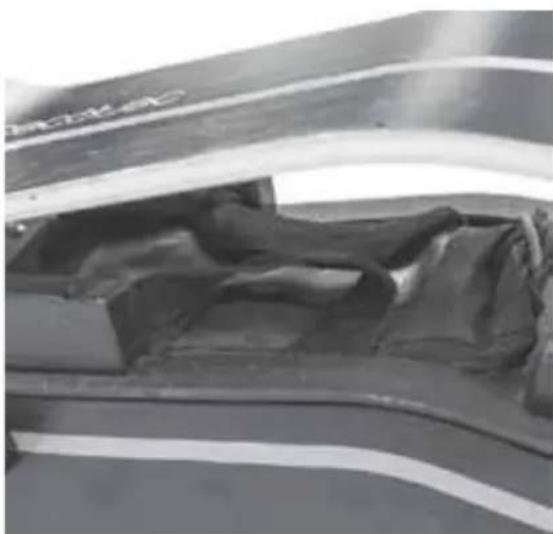
The brakes require periodic adjustment.
- The brake must be at a 5 or 6-mm distance from the handlebar grip.
- Place yourself on the vehicle to verify the distance between the handlebar grip and the brake.
- If the distance exceeds the recommended one, turn the washer on the brake (A) to adjust it.
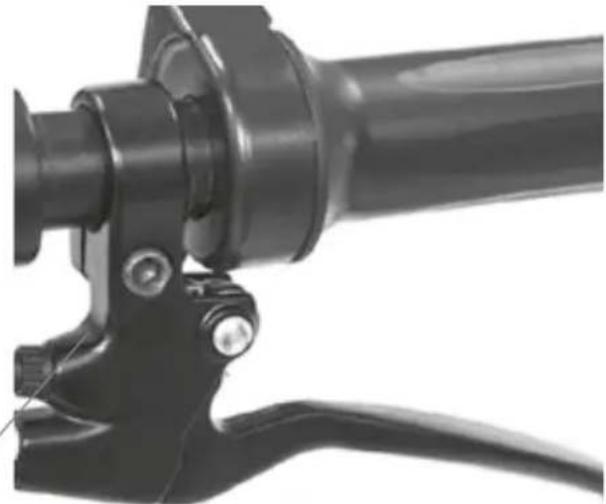
To adjust the brake cable's tension, adjust the screw (B) on the rear wheel. This will allow the wheel to spin freely when the brake is not operated and will allow the vehicle to stop immediately when it is pressed.
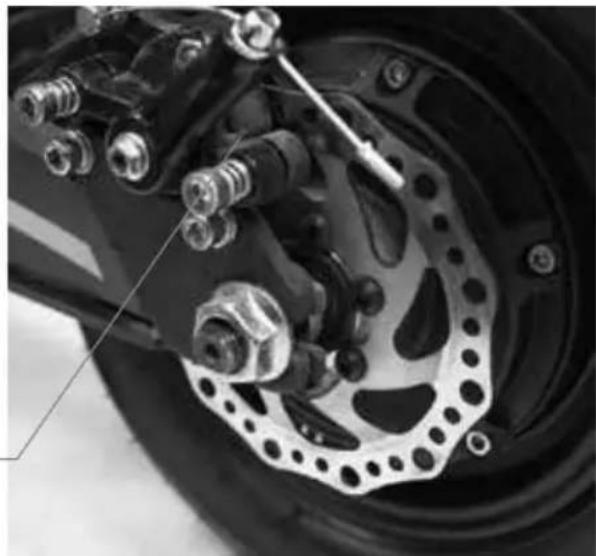
NOTE: After each adjustment, tighten the locknut.
5. Operation
PUSH BUTTONS
- Power switch: Hold down this push button for a few seconds to turn the scooter on or off.
- Throttle: Use it to start the scooter and to accelerate.
- Brake: Hold it down to stop.
- Function: Press this push button twice to adjust speed.
Select between:
- ECO mode - Eco appears on the display. (up to 6km / h )
COMFORT mode - D appears on the display. (up to 20km / h ) - SPORT mode - S+ appears on the display. (up to 25km/h)
- Headlight and rear light: Press the function button once to turn the headlight on. While the lights are on, short press the function push button once to turn them off.
NOTE: The back light will blink when using the brakes.
DISPLAY
-ODO: Total km
- TRIP: Km run since the electric scooter has been turned on
- Battery level
- Speed (Km/h)
BATTERY CHARGING
NOTE: Make sure the device is turned off.
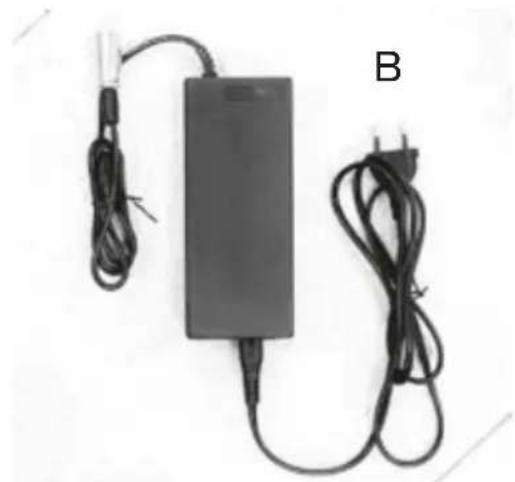
A. Open the charging port's cover located on the right side of the vehicle and insert the 3-contact power adapter's end.
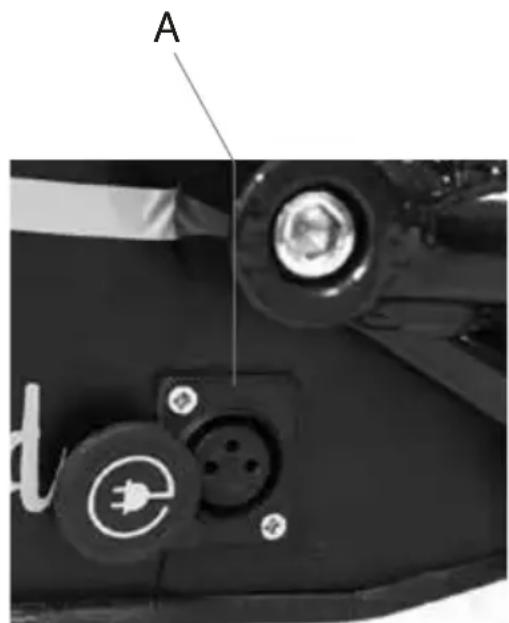
B. Connect the other power adapter's end to a wall power supply. The light indicator will turn red during charge and will turn green when fully charged.
NOTE:
The device comes already charged, but it is recommended to charge it for 6-8 hours before the first use.
- It is also recommended to charge it after each use and before storing it.
- To avoid the battery from damaging, do not allow the vehicle to fully discharge.
THROTTLE AND BRAKE CONTROL
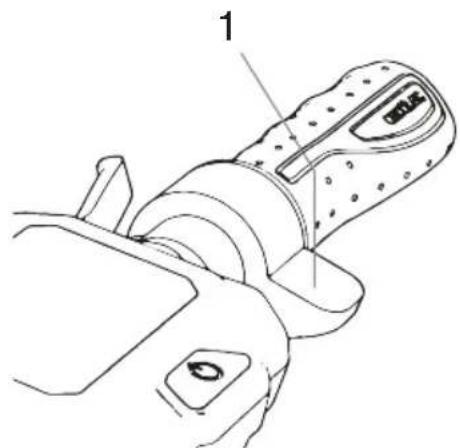
The throttle is located on the right handlebar grip.
- Press the throttle (1) towards yourself to increase speed and release to decrease it.
- Press the right or left brake of the handlebar to brake.
- The rear brake is located on the left side of the handlebar. Press it to brake with the rear wheel.
6. Cleaning and maintenance
CLEANING
- Clean the vehicle with a soft cloth, water and soap if necessary.
After cleaning, dry thoroughly any metal parts subject to corrosion, oxidation, etc. - Lubricate the pivot points on the suspension.
OVERALL MAINTENANCE
- Maintenance should always be performed by qualified personnel.
- Always use original spare parts.
- Any type of reparation must be carried out with the vehicle on the stand and turned off.
CHECKS TO BE CARRIED
- After a fall, check that the throttle grip operates correctly. To do so, try to accelerate and decelerate a few times.
- From time to time, check that the brakes operate properly. To do so, move the vehicle pushing it manually and brake suddenly to ensure they respond.
- Check all the parts of the vehicle are in place and securely assembled.
- Check the wear of the tyres and their pressure.
- Check the wear of the brakes and the throttle cables.
| ERROR CAUSE | SOLUTION | |
| The engine does not work. The battery is not connected. | Check the connectors. | |
| The battery is low. Recharge the battery. | Electrical problem. | Check all connectors. |
| The rear wheel does not rotate. Engine error. Check the engine. | ||
| The engine switches off during use. | Engine overheating. Release the throttle and wait until it cools down. | Recharge the battery. |
| After charging, the vehicle turns off. | The battery is not fully charged. | |
| Battery error The battery is old or does not work properly. | Replace the battery. | The battery is frozen. Place the battery in a warm place until it recovers its normal temperature. |
| The vehicle stops suddenly while in use. | Fuse error. Replace the fuse. | The cable is damaged. Check and repair or replace the cable. |
| The battery does not charge. Low battery. Replace the battery. | The cable is damaged. Check and repair or replace the cable. | The cable is damaged. Check and repair or replace the cable. |
| Broken battery charger. Replace the battery charger. | The cable is damaged. Check and repair or replace the cable. | |
8. Specification
| Performance index Item | Specifications | |
| Dimensions | L*W*H(mm) 1180x473x1212(mm)Fold size (mm) | 1180x473x510 (mm) |
| Vehicle weight in running order (with battery) | 28 kgProduct weight | |
| Cycling Requirements | Maximum loadApplicable age 16-50Suitable height | 120 kg130-200 cm |
| Vehicle Parameters | Full speedMax distance with one chargeMax climbing angle about 15%Applicable terrainWorking temperatureStorage temperatureIP | 25 km/hECO: up to 50km; D: 32km; S+: 28kmCement and asphalt pavement, flat clay pavement, no more than 1 cm steps, no more than 5 cm wide channel.0 - 45°C0 - 45°CIPX4 |
| Battery | Rated VoltBattery capacityCharging voltage 42V | 36V10,4 Ah |
| Motor Rated power | 500W brushless | |
| Charger | Input voltageRated output voltage 42VRated currentCharging time | 100-240V1,7Aabout 6-7h |
Treatment of the electrical or electronic device at the end of its life (applicable in all countries of the European Union and in other European systems with separate collection system)
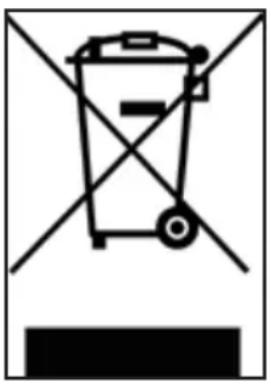
This symbol on the product or on the packaging indicates that the product should not be considered as normal household waste, but should instead be delivered to a collection point approved for the recycling of electrical and electronic equipment (WEEE).
By ensuring that this product is disposed of properly, you will help prevent potential negative consequences for the environment and health that might otherwise be caused by its improper disposal. Recycling materials helps conserve natural resources.
For more detailed information about recycling this product, please contact your local city office, your local waste disposal service or the point of sale where you purchased it.
In particular, consumers are obliged not to dispose of WEEE as municipal waste, but must participate in the separate collection of this type of waste through two modes of delivery:
- at municipal collection centers (also known as recycling depot), directly or through municipal collection services, where these are available;
- at the point of sale of new electrical and electronic equipment. Here you can deliver very small WEEE free of charge (with the longest side less than 9,84in), while larger WEEE can be delivered in 1-on-1 mode, i.e. by delivering the old product when you buy a new one with the same functions.
In case of illegal disposal of electrical or electro-nickel equipment, the sanctions provided for by the current legislation on environmental protection may be applied (valid only for Italy).
Where WEEE contains batteries or accumulators, these must be removed and subject to specific separate collection.
Treatment of spent batteries (applicable in all countries of the European Union and in other European schemes with separate collection systems)
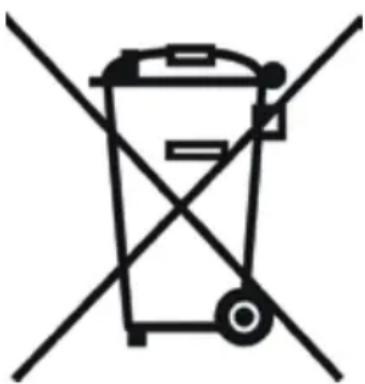
This symbol on the product or on the packaging indicates that the battery should not be considered normal household waste. On some battery types this symbol may be used in combination with a chemical symbol.
Chemical symbols for Mercury (Hg) or Lead (Pb) are added if the battery contains more than 0.0005% mercury or 0.004% lead.
By ensuring that batteries are disposed of properly, you will help prevent potential negative consequences for the environment and health that might otherwise be caused by improper disposal. Recycling materials helps conserve natural resources. In the case of products which, for safety, performance or data protection reasons, require a fixed connection to an internal battery/battery, it must only be replaced by a qualified service person.
Hand over the product at the end of its life to suitable collection points for the disposal of electrical and electronic equipment: this ensures that the battery inside the product is also treated correctly.
For more detailed information on how to dispose of the used battery or product, please contact your local municipal office, your local waste disposal service or the point of sale where you purchased it.
According to Legislative Decree 49/2014 the product is included in the EEE (electrical and electronic equipment) WEEE management (separate collection).
WARNING
Read the manual and instructions below in full before using the product.
Product name: Scrambler Ducati CROSS-E
Product type: Electric scooter
Year of production: 2020

- Note: To recharge this electric scooter use ONLY the supplied charger labelled ZH42 V1.7ALi with the following output voltage: 41.5V - 1.7A.
- Using another type of charger can damage the product or pose other potential risks.
- Never leave the product to charge unsupervised.
- The charging period of the product must not exceed four hours. Stop charging after four hours.
- The product should only be charged at temperatures between 0^ and 45^ .
- If charged at lower or higher temperatures, there is a risk that the battery will offer reduced performance, potentially resulting in damage to the product and personal injury.
- The product must be used only at temperatures between -10^ and 45^ .
- If used at lower or higher temperatures, there is a risk that the battery will offer reduced performance, potentially resulting in damage to the product and personal injury.
- Store the product at temperatures between 0^ and 35^ (the optimum storage temperature is 25^ )
- Recharge and store in a dry and open place, away from combustibles (i.e. any flammable element).
- Do not recharge in sunlight or near open flames.
- Do not recharge the product immediately after use. Allow the product to cool for an hour before charging.
- If you are away for a certain period of time, for example for holidays, and you entrust the device to a third party, leave it in a partially charged state (20-50% charge). Not fully charged.
- The product is often supplied partially charged. Leave it in this state until it is ready to be used.
C E
Declaration of conformity
Manufacturer's name: MAIWAY INDUSTRY CO., LTD.
The undersigned
Importer's name: M.T. Distribution S.r.l.
Address: Via Bargellino 10, 40012 Calderara di Reno (BO), Italy
certificates
that the design and manufacture of this product
| Product brand: | SCRAMBLER DUCATI |
| Item model number: | MW21 / Scrambler Ducati CROSS-E |
| Product type: | Electric scooter |
The product complies with the following specifications:
MD Directive: 2006/42/EC; LVD Directive: 2014/35/EU; EMC directive: 2014/30/EU
Security standard:
EN14619:2015
EN 60335-1:2012 + A11:2014/AC:2014
EN 60335-2-29:2004 + A2:2010
EN 55014-1:2017
EN 55014-2:2015
EN IEC 61000-3-2: 2019
EN 61000-3-3:2013
Name: Alessandro Summa
Position: CEO
Company: M.T. Distribution S.r.l.
Address: Via Bargellino 10, 40012 Calderara di Reno (BO), Italy
Date: 28/04/2020
Alessandro Summa
CEO
M.T. DISTRIBUTION SRU Via Bargellino, 10 b/c 40012 CALDERARA & RENO (BO)
FIOO FIO 0119840377 NORMALOGRAWEQAlFG
TIMBRO AZIENDALE
CROSS-E
MT distribution group
Imported and distributed by M.T. Distribution Calderara di Reno, Bologna www.mtdistribution.it
- Parts and components
- Safety instructions
- DRIVING CONDUCT INSTRUCTIONS
- Warning
- Product assembly and adjustment
- UNFOLDING THE SCOOTER'S STEM:
- FOLDING THE SCOOTER'S STEM:
- ACCESSING AND ACTIVATING THE BATTERY AND ENGINE
- Operation
- PUSH BUTTONS
- DISPLAY
- BATTERY CHARGING
- NOTE:
- THROTTLE AND BRAKE CONTROL
- Cleaning and maintenance
- CLEANING
- OVERALL MAINTENANCE
- CHECKS TO BE CARRIED
- Specification
- Treatment of the electrical or electronic device at the end of its life (applicable in all countries of the European Union and in other European systems with separate collection system)
- Treatment of spent batteries (applicable in all countries of the European Union and in other European schemes with separate collection systems)
- WARNING
- C E
- Declaration of conformity
- certificates
- CROSS-E
Brand : DUCATI
Model : Scrambler CrossE
Category : Scooter