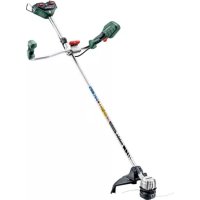
FSB 3618 LTX BL 40 - String Trimmer METABO - Free user manual and instructions
Find the device manual for free FSB 3618 LTX BL 40 METABO in PDF.



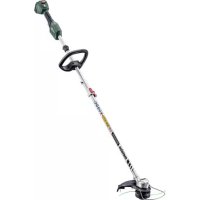
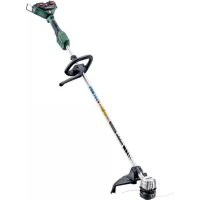
| Product type | Cordless grass trimmer |
| Brand | Metabo |
| Model | FSB 3618 LTX BL 40 |
| Power supply | Li-Ion battery 36 V (2 x 18 V) |
| Rated voltage | 36 V |
| Battery type | Li-Ion compatible with CAS (Cordless Alliance System) |
| Recommended battery capacity | 4.0 Ah to 10.0 Ah |
| Cutting line diameter | 2 mm |
| Exposed line length | 13 cm on each side |
| Weight (with smallest battery) | Approx. 4.2 kg |
| Rotation speed | Variable (speed controlled by switch) |
| Primary use | Grass cutting, brush clearing, edge trimming with blade |
| Provided accessories | Shoulder strap, protective guard, cutting head, universal wrench |
| Optional blade | 3-tooth brush blade Ø255 mm (ref. 628432000) or 4-tooth grass blade Ø254 mm (ref. 628433000) |
| Sound level | Hearing protection recommended |
| Safety | Emergency stop, switch lock, protective guard, line cutter |
| Maintenance | Clean after each use; no lubrication required |
| Storage | Dry place, out of reach of children, protective guard on blade |
| Repairability | Repairs by qualified electrician with original Metabo parts |
| Warranty | Consult your Metabo dealer |
Frequently Asked Questions - FSB 3618 LTX BL 40 METABO
User questions about FSB 3618 LTX BL 40 METABO
0 question about this device. Answer the ones you know or ask your own.
Ask a new question about this device
Download the instructions for your String Trimmer in PDF format for free! Find your manual FSB 3618 LTX BL 40 - METABO and take your electronic device back in hand. On this page are published all the documents necessary for the use of your device. FSB 3618 LTX BL 40 by METABO.
USER MANUAL FSB 3618 LTX BL 40 METABO
Original instructions
1. Declaration of Conformity
We declare and accept sole responsibility for ensuring: these cordless brush cutters identified by their type and serial number 1 ) conform to all relevant provisions of the directives 2 ) and standards 3 . Technical documentation at 6 .
2000/14/EC: Conformity assessment procedures in accordance with Annex VI
Named body *4),Guaranteed sound power level LWA(G) *5),
- see page 4.
2. Specified Conditions of Use
The cordless brush cutters are intended for mowing and trimming applications when using the line head and when using the thicket blade for mowing grass and thinning and removal of tough, matted grass, undergrowth and thorny hedges.
The cordless brush cutter must not be used for cutting and trimming of hedges, bushes and other vegetation, where the cutting level is not parallel to the surface of the underground.
Use only the recommended cutting heads and protective equipment! The use of other tools (e.g. multi-piece metal cutting tools with swivel chains and flail blades or circular saw blades) can cause serious injuries.
The cordless brush cutter is designed to be supported by the ground.
The user bears sole responsibility for any damage caused by inappropriate use.
Generally accepted accident prevention regulations and the safety instructions must be observed.
3. General Safety Information

For your own protection and for the protection of your power tool, pay attention to
all parts of the text that are marked with this symbol!

WARNING - Read the operating instructions to ce the risk of injury.

WARNING - Read all safety warnings, instructions, illustrations and specifications provided with this power tool.
Failure to follow all instructions
listed below may result in electric shock, fire and/or serious injury.
Save all warnings and instructions for future reference. Pass on your electrical tool only together with these documents.
Residual risks: Even when the device is used as intended, there could be residual risks. Observe all safety warnings and instructions.
Possible hazards:
-Injuries and material damage caused by flying parts.
- Lung damage if no suitable dust mask is worn.
-Hearing damage if no suitable hearing protection is worn.
- Health detriment, due to vibration emissions, if the machine is used over a long period of time or if it not properly guided or maintained.
4. Special safety instructions
4.1 Introduction
- Carefully read the operating instructions. Familiarise yourself with the controls and the proper use of the machine.
- D o n o t a l l o w c h i l d r e n, person: physical, sensory or mental abilities or lack of experience and/or knowledge, or persons not familiar with these instructions to use this machine. Local regulations may limit the age of the operator.
Children should be supervised to ensure that they do not play with the tool. - Do not operate the machine if persons, especially children, or pets are nearby.
- The user is responsible for injuries or material damage to other persons or their property.
- Do not modify the device.
National regulations may restrict the use of the machine.
4.2 Preparation
Always wear sturdy, non-slip shoes and long, durable trousers when operating the machine. Do not operate the machine barefoot or with open
ENGLISHen
shoes. Do not wear loose-fitting clothing or clothing with dangling strings or ribbons. Always wear face protection and protective goggles. Wear protective gloves.
- When using the blade: sturdy, non-slip shows with steel caps.
- Thoroughly check the area of use of the machine and remove all object that could be caught and ejected by the machine.
- Remove extension cables out of the range of action of the machine. Cutting accessory contacting a "live" wire may give the operator an electric shock.
- Always inspect visually before use if the blade, the fixing screw and the blade assembly are worn or damaged. Worn or damaged components must be replaced in sets to avoid imbalance. Replace damaged or illegible markings.
- Never replace the non-metalling cutting line with a metallic cutting line. Use only genuine accessories.
- When working for long periods of time wear ear protectors. High noise levels over a prolonged period of time may affect your hearing.
- Practice all work techniques. Inexperienced persons are strongly advised to seek competent advise and guidance from an experienced person before operating this machine.
4.3 Kickback
- Kickback is the sudden response to an accessory pinching or jamming while rotating (24). Pinching or snagging causes rapid stalling of the rotating blade. This in turn causes an uncontrolled machine to be forced in the opposite direction of the blade at the pinched or snagged point. Make sure that you stand safely, hold the machine firmly on both handles and avoid getting caught or blocking the blade. Also be aware of hidden obstacles that may cause the blade to jam.
4.4 Operation
- Use the machine only in daylight or good artificial light.
- Avoid using the machine on wet grass.
- Do not operate the machine in bad weather conditions, especially when there is a risk of lightning. This reduces the risk to be hit by lightning.
- Keep the ventilation openings free from foreign bodies.
- Do not use a power tool while you are tired or under the influence of drugs, alcohol or medication. A moment of inattention while operating power tools may result in serious personal injury.
- Always use the supplied carry strap/shoulder strap.
-
Avoid adverse body positions. Keep proper footing and balance at all times, especially when working on sloped ground.
-
Ensure stable footing. If you lose your balance, immediately let go of the switch (6).
Make sure you have the correct working position, take breaks and change working position. - Guide the tool only at walking pace.
- When working on slopes, always move along horizontally, never mow up and down.
- Be extremely careful when changing direction on slopes.
- Do not work on steep slopes.
- Do not mow near steep slopes, ditches or embankments.
- Watch out for holes, furrows, rocks and other hidden objects that can cause you to fall. Remove all obstacles such as stones and branches
- Always keep the cutting tool close to the ground.
- Never operate the machine with damaged protective equipment or without protective equipment (e.g. step limiter, guard, handle).
- Carefully start up the motor according to the instructions and with your feet far away from the cutting insert.
- Danger from parts moving hazardously. Do not touch moving parts. Before any contact, all parts must have come to a complete standstill and the battery pack must have been removed.
- Do not put your hands or feet anywhere near or below rotating parts.
- Switch off the motor and remove battery pack(s). Ensure that all moving parts have come to a standstill:
- if you leave the machine unattended;
- before clearing any blockages;
- before checking or cleaning the machine or before carrying out any work on the machine;
- if a foreign object has been hit or if the machine has been dropped. Check the machine for damage and have repairs carried out before putting the machine back into operation.
- when the machine starts to vibrate excessively
- If the machine starts to vibrate with unusual strength, an immediate check is required:
-checkfordamage; - replace or repair damaged parts;
- ensure that all nuts, bolts and screws are tightened.
- In the event of an accident or malfunction, switch off the machine immediately and remove the battery pack.
4.5 Maintenance and storage
- Maintain power tools and accessories. Many accidents are caused by poorly maintained power tools.
- All nuts, bolts and screws must always be tightened to ensure that the machine is in safe operating condition.
- When adjusting the machine take care not to jam your fingers between moving blades and fixed parts of the machine.
- Remove the battery packs from the machine, wait until all moving parts have come to a standstill
before making any adjustments, retrofitting, maintenance, cleaning or before storing the machine.
- When servicing the blades, please note that the blades can still move although the battery pack has been removed.
- Replace worn or damaged parts for safety reasons. Use only original spare parts and accessories.
- For storage and transport, always slide on the protective cover onto the blade.
4.6 Use and handling cordless tools
- Only recharge with the charger specified by the manufacturer. A charger that is suitable for one type of battery pack may create a risk of fire when used with another battery pack.
- Use power tools only with specifically designated battery packs. Use of any other battery packs may create a risk of injury and fire.
- When not in use, keep batteries away from paper clips, coins, keys, nails, screws or other small metal objects that could bridge the contacts. Shorting the battery terminals together may cause burns or a fire.
- Under abusive conditions, liquid may be ejected from the battery. Avoid contact. If contact accidentally occurs, flush with water. If liquid contacts eyes, additionally seek medical help. Liquid ejected from the battery may cause irritation or burns.
- Do not use a battery pack or tool that is damaged or modified. Damaged or modified batteries may exhibit unpredictable behaviour resulting in fire, explosion or risk of injury.
- Do not expose a battery pack or tool to fire or excessive temperature. Exposure to fire or temperature above 130°C (265°F) may cause explosion.
- Follow all charging instructions and do not charge the battery pack or tool outside the temperature range specified in the instructions. Charging improperly or at temperatures outside the specified range may damage the battery and increase the risk of fire.
- Avoid accidental operation. Make sure that the machine is switched off before connecting the battery and before picking up or carrying the lamp. Carrying the machine with your finger on the switch or energising machines that have the switch on invites accidents.
-
Remove battery packs from the machine...
-
...before making any adjustments, changing tools, maintenance or cleaning.
- ...if the operator moves away from the tool.
- ...prior to the removal of blockages.
- ...after touching a foreign body in order to check the tool for damage.
- ...for immediate checking, when the machine starts to vibrate excessively.

Protect battery packs from water and moisture!

Do not expose battery packs to fire!
- Do not use faulty or deformed battery packs!
- Do not open battery packs!
- Do not touch or short circuit battery pack contacts!

A slightly acidic, flammable fluid may leak from defective Li-ion battery packs!

If battery fluid leaks out and comes into contact with your skin, rinse immediately with plenty of water. If battery fluid leaks out
and comes into contact with your eyes, wash them with clean water and seek medical attention immediately!
- If the machine is defective, remove the battery pack from the machine.
Transport of li-ion battery packs:
- The shipping of li-ion battery pack is subject to laws related to the carriage of hazardous goods (UN 3480 and UN 3481). Inform yourself of the currently valid specifications when shipping li-ion battery packs. If necessary, consult your freight forwarder. Certified packaging is available from Metabo.
- Only send the battery pack if the housing is intact and no fluid is leaking. Remove the battery pack from the machine for sending. Prevent the contacts from short-circuiting (e.g. by protecting them with adhesive tape).
4.7 Icons

WARNING - General hazards!

Read the operating instructions.

Ensure that nobody gets injured by catapulted foreign bodies. Keep other people away.

Keep persons nearby and pets at a safe distance to the device.
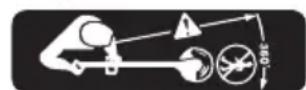
Keep other people away. Maintain a distance of at least 15m from persons
and objects.

Protect the device from water and moisture. Do not expose to rain.

Wear safety goggles.

Wear ear protectors. High noise levels over a prolonged period of time may affect your hearing.

Wear head protection if there is the risk of falling parts.
ENGLISHen

Wear non-slip foot protection.

Do not use metal saw blades.

Wear gloves.

Beware of kickback.

Beware of parts being ejected.
5. Overview
See pages 2 and 3.
1 Rod (ergonomically curved)
2 Hand Ie
3 Suspension point
4 Handl e
5 S w i t c h l o c k
6 Switch (switching on/off, setting speed)
7 FSD 36-18 LTX BL 40: step limiter (do not use as handle)
8 Arrows show the direction of rotation of the cutting tools
9 Thread cutter (WARNING! Danger of injury from the sharp edges of the blade)
10 Safety guard
11 Cutting head
12 Battery pack release button
13 Capacity indicator button *
14 Battery pack(s) *
15 Capacity and signal indicator
16 Thread (cutting line)
17 Cap (of the line head)
18 Base body (of the line head)
19 Shackle (guard)
20 Screw (to fix the guard)
21 Rod (to lock the drive shaft)
22 Drilled hole (to lock the drive shaft)
23 Drive shaft
24 Blades
25 Disc
26 Clamping cap
27 Clamping nut
28 Combination wrench
29 Thread head
30 Screws of the handle
31 Wing nut
32 Handle bar
33 Cable holder
34 Shoulder strap
35 Carabiner hook
*equipment-specific
6. Initial Operation
WARNING! Switch off the machine and remove (14) battery packs. Unintentional startup can cause serious injuries. The machine must be stationary.
WARNING! Danger of injury from sharp cutting edge on the line cutter (9) and blade
(24). Wear protective gloves.
6.1 Attaching the guard (10) (fig. B)
WARNING! Danger of injury from sharp cutting edge on the line cutter (9). Wear protective gloves.
- Hook the guard (10) into the shackle (19).
- Insert the screw (20) and firmly tighten it.
6.2 Attaching / removing the line head (29) (fig.C)
Fitting
-
Locking the drive shaft (23):
-
insert the supplied rod (21) into the drilled hole (22).
-
Turn the drive shaft (23) by hand until the rod (21) engages and the drive shaft cannot be turned anymore.
-
As shown, screw on the line head (29) in anticlockwise direction and tighten by hand.
- Release the drive shaft:
- Pull out the rod (21).
Removal
Proceed in the same way as for the attachment, however unscrew the line head in clockwise direction.
6.3 Insert cutting line (16) in line head (29) (fig.A)
- Hold tight the base body (18). Turn the cap (17) in clockwise direction until the triangular marks are opposite each other (and/or the continuous groove on the side of the print head is aligned with the triangle of the line head's cap).
- Bend the end of the line straight (so that it can be inserted more easily).
Push the line end (16) into the opening marked with an arrow and the words "LINE IN. NOTE: See fig. A: Push in exactly in the direction of the arrow (slightly slanted)!
Result: The line end emerges from the opposite opening.
- Pull out the shorter line until both lines are of equal length.
- Hold tight the base body (18). Turn the cap (17) in clockwise direction: The line is wound up in the base body. Stop when 13cm (5.1") of line still protrudes on both sides. (A line that is too long is automatically cut off by the line cutter (9)).
6.4 Fitting / removing the blade (fig. D) Fitting
-
Locking the drive shaft (23):
-
insert the supplied rod (21) into the drilled hole (22).
- Turn the drive shaft (23) by hand until the rod (21) engages and the drive shaft cannot be turned anymore.
- As show, position the blade (24), disc (25) and clamping cap (26). WARNING! Place the disc (25) in the correct position (see fig. D)! Screw on the clamping nut (27) in anti-clockwise direction and firmly tighten using the supplied combination wrench (28).
- Release the drive shaft:
- Pull out the rod (21).
Removal
Proceed in the same way as for fitting, however unscrew the clamping nut (27) with the supplied combination wrench (28) in clockwise direction.
6.5 Attaching the handle
WARNING! The distance from the handle to the lower end of the rod must be at least the value shown in fig. E/F.
FSD 36-18 LTX BL 40 (fig. E):
- Choose the right position, see chapter 7.1.
- Attach handle (2) as shown to the rod (1) and firmly tighten the screws (30).
FSB 36-18 LTX BL 40 (fig. F):
- Choose the right position, see chapter 7.1.
- Attach the handle bar (32) as shown to the rod (1). Set the desired position and angle and firmly tighten the wing screws (31).
- Press the cable into the cable holder (33) and let it engage.
6.6 Battery pack
Charge the battery pack before use.
Recharge the battery pack if performance diminishes.
Instructions on charging the battery pack can be found in the operating instructions of the Metabo charger.
In case of Li-lon battery packs with capacity and signal display (15) (equipment-specific):
- Press the button (13); the LEDs indicate the charge (15) level.
- The battery pack is almost flat and must be recharged if one LED is flashing.
Inserting and removing the battery pack
WARNING! Before removing or inserting the battery pack: Switch off the machine and wait until the motor is at a standstill.
Insertion: Slide in the battery packs (14) until they engage.
Removal:Press the battery pack release button (12) and pull out the battery packs (14).
7. Use

WARNING! Wear protective goggles during operation.
7.1 Setting the machine for the user (fig. G)
- Tighten the shoulder strap (34). Adjust the length in such a way that the carabiner hook (35) is about a hand width below the hip.
- Hook in carabiner hook from the suspension point (3).
-
Balance the machine:
-
Loosen the screw of the suspension point (3).
- Move the suspension point in such a way that the cutting head (11) rests slightly on the ground when balanced.
-
Tighten again the screw of the suspension point
-
Attach the handle in a comfortable position. See chapter 6.5.
7.2 Start the machine, modify the speed
- Firmly hold the machine with the right hand on the handle (4) and with the left hand on the handle (2). FSD 36-18 LTX BL 40: Do not hold on the step limiter (7).
- Press and keep pressed the switch lock (5).
- Press the switch (6) to start up. The speed can be changed by depressing the switch.
7.3 Stopping the machine
Release the switch (6). Hold the machine by the handles with both hands and wait until the machine has come to a complete standstill.
7.4 Mowing
Always guide the cutting head (11) close to the ground. More the cutting head (11) evenly back and forth. Walk forward slowly and carefully.
7.5 Readjust the cutting line
With the machine running, briefly tap the line head (29) onto the ground: About 3cm of line is readjusted. A line that is too long is automatically cut off by the line cutter (9).
If the lines break off directly at the line head or are too short, they must be pulled out by hand:
WARNING! Remove the battery packs (14). Unintentional startup can cause serious injuries. The machine must be stationary.
- Switch off the machine, allow the motor to come to a standstill, remove battery packs (14).
- Press and keep pressed the cap (17).
- Pull out lines by hand.
- If the cutting line is used up: see chapter 6.3.
8. Cleaning, transporting, storage

WARNING! Remove the battery packs (14). Unintentional startup can cause serious
injuries. The machine must be stationary.

WARNING! Danger of injury from sharp cutting edge on the line cutter (9) and on the
blade (24). Wear protective gloves.
8.1 Cleaning
- Clean after each use: Remove grass clippings, leaves, dirt and other deposits.
ENGLISHen
8.2 Transporting, storage
- Clean the machine before storage.
- Always keep the cutting line moist. A dry cutting line breaks off more quickly and wears out faster. E.g. remove the cutting line from the reel and store in a bowl of water.
Make sure that the machine does not have any loose or damaged parts. If necessary: - Replace damaged parts.
-Tightenthescrews. - If necessary have them repaired in a specialist workshop.
- Store the machine in a dry place.
- Ensure that children cannot get anywhere near the machine.
- FSB 36-18 LTX BL 40: For space-saving transport or storage, the handle bar (32) can be rotated by 90° after loosening the wing screw (31). Retighten the wing screw (31).
- For storage and transport, always slide on the protective cover onto the blade.
- Secure in a safe position for transport.
9. Maintenance
WARNING! Remove the battery packs (14). Unintentional startup can cause serious injuries. The machine must be stationary.
WARNING! Danger of injury from sharp cutting edge on the line cutter (9) and blade (24). Wear protective gloves.
9.1 General maintenance
- Check the machine for damaged, missing or loose parts such as screws, nuts, bolts and caps before each use.
- Check the machine before each use for damage and ageing and have it repaired in a specialist workshop immediately if necessary.
- Tighten all fasteners and caps properly.
- Clean the machine with a dry cloth. Do not use water.
- Never service damaged battery packs. Service of battery packs should only be performed by the manufacturer or authorized service providers.
9.2 Replacing cutting line
See chapter 6.3.
Order number see chapter 11.
9.3 Dull blade
WARNING! A blunt or incorrectly sharpened blade (24) increases the risk of kickback.
A blunt blade (24) can be rotated by 180° . If both sides are blunt, it is advisable to have it sharpened and balanced in a specialist workshop. Check blades regularly for damage and have them repaired in a specialist workshop immediately if necessary.
9.4 Lubrication
Lubrication is not required.
10. Troubleshooting Guide
One LED of the capacity display (15) flashes.
Battery pack empty.
- Charge the battery packs.
Machine emits a lot of noise.
Cutting line is too short.
- Readjust cutting line (see chapter 7.5)
All LEDs of the capacity and signal display (15) flash.
Overload.
- Let the machine cool down.
- Move forward more slowly.
The machine does not start.
The battery pack performance is weak.
- Charge the battery packs .
The machine vibrates heavily.
The blade (24) is not balanced or worn.
-Replace the blade (24).
The cutting line (16) is not the same length on both side.
- Readjust the cutting line. See chapter (7.5).
The machine stops during the mowing process.
Battery pack empty.
- Charge the battery packs.
There is a blockage. - Remove the battery packs (14). Check the blade (24) / the line head (29).
The operating temperature of the machine is too high.
- Let the machine cool down.
11. Accessories
Use only original Metabo or CAS (Cordless Alliance System) battery packs and accessories.
Use only accessories that fulfil the requirements and specifications listed in these operating instructions.
A Thicket blade, 3-wings, 255 mm, incl. protective cover (as spare): Order no.: 628432000
B Grass blade, 4-wings, 254 mm, incl. protective cover: Order no.: 628433000
C Cutting line 2mm (as spare): Order no.: 628430000
D Complete line head (complete housing incl. reel and cutting line, (as spare) Order no.: 628429000
E Battery packs with different capacities. Buy battery packs only with voltage suitable for your power tool.
Order no.: 625367000 4.0 Ah (LiHD)
Order no.: 625368000 5.5 Ah (LiHD)
Order no.: 625369000 8.0 Ah (LiHD)
Order no.: 625549000 10.0 Ah (LiHD) etc.
Order no.: 625591000 4.0 Ah (Li-Ion)
Order no.: 625592000 5.2 Ah (Li-Ion) etc.
F Chargers: ASC 55, ASC 145, ASC 145 Duo, etc. For a complete range of accessories, see www.metabo.com or the catalogue.
12. Repairs
Repairs to electrical tools must only be carried out by qualified electricians and only with original spare parts!
Contact your local Metabo representative if you have Metabo power tools requiring repairs. For addresses see www.metabo.com.
You can download a list of spare parts from www.metabo.com.
13. Environmental Protection
Observe national regulations on environmentally compatible disposal and on the recycling of disused machines, packaging and accessories.
Battery packs may not be disposed of with regular waste. Return faulty or used battery packs to your Metabo dealer!
Do not allow battery packs to come into contact with water!
Only for EU countries: never dispose of power tools in your household waste! According to European Directive 2012/19/EU on Waste from Electric and Electronic Equipment and implementation in national law, used power tools must be collected separately and recycled in an environmentally-friendly manner.
Discharge the battery pack in the power tool before disposal. Prevent the contacts from short-circuiting (e.g. by protecting them with adhesive tape).
14. Technical Specifications
Explanatory notes regarding the specifications on page 4.
Changes due to technological progress reserved.
U = v o I t a g e B = c u t i n g
H = max. cutting line length
Hx =cutting line diameter
no = no-load speed
m = weight (with the smallest battery pack)
Measured values determined in conformity with EN ISO 11806-1, EN 60335-1, EN 50636-2-91.
Permitted ambient temperature during operation: -20°C to 50°C (limited performance with temperatures below 0°C). Permitted ambient temperature for storage: 0°C to 30°C.
Recommended ambient temperature when charging: 0°C to 40°C
direct current
The technical specifications quoted are subject to tolerances (in compliance with relevant valid standards).
A Emission values
These values make it possible to assess the emissions from the power tool and to compare different power tools. The actual load may be higher or lower depending on operating conditions, the condition of the power tool or the accessories used. Please allow for breaks and periods when the load is lower for assessment purposes. Arrange protective measures for the user, such as organisational measures based on the adjusted estimates.
Vibration total value (vector sum of three directions):
ah = vibration emission value
Kη =uncertainty(vibration)
Typical A-weighted sound levels:
Lpa = sound-pressure level
LWA = Acoustictic power level
KOA KWA = Uncertainty
LWA(G) = Guaranteed acoustic power level as per 2000/14/EC

Wear ear protectors!
W i d t h
Notice originale
FSD 36-18 LTX BL 40 (afb. E):
Nāo explor as baterias a fogo!
ah = vibrationsemission
Kh = usikkerhed (vibration)
Slaby akumulator.
- Nă ladować akumulatory.
FSD 36-18 LTX BL 40 (E:
- Eπλεξτε τη ωστή θεοη, βλεπε κεφάλαι 7.1.
- Tonothe ntoe tn xieipolaan (2) onwoc anekovi zeta otn mnpa 1) kai ophi te duvata tic biidesc (30).
FSB 36-18 LTX BL 40 (εικ. F):
CleIte 3a Tem, YTo6bI HnKTo He NoIyUHn TpaBMy OT BbIeTaIOuX INHOpOdHBIX TeI. He donyckaiTe npnbIHHeHn Dpynx I.

ДеркнenteустояНБа6e3oNachompacCTOHHOTHaxOJIeROCByB6JIIN3nepcoHaJaNKNIBOTHbIX.
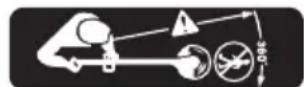
He donyckaiaTe npn6bnkeHnA npyrnx IIOdei. Co6IouaTe
pacCTOHHne MHHmym B 15 M do JIOJeN I npedmetOB.

PpIMTe Mepbl No 3aunte ycTpoiCTBa OT nonadHnBn. He noDBeprAte ero BO3DeIeCTBnIO DOJdI.

Pa60TaITe B 3aUHTbIX OUYkax.

Pa60TaIe B 3aunTHbIX HayuHnKax. Bo3deIcTBHe UyMa BBICOKOrO ypOBH MoKeT npBecTn K HapUWeHNM Cnyxa.

Pa6oTaIeB kacke,ecIn cyuEcTByeT pNck naDeHnA DeTaJIe.

Pa6oTaIe B 3aunTHOJ O6yBn Ha HeckoJIb3aIeN IOIoWBe.

He nCnoJIb3yIe MeTaJIHueCKHX NIIbHbIX DnCKOB.

Pa6oTaIeB3aunTHbIXnepuATkax.

OcToPOxHo -oTdaHa!

OcToPOKHO—BbI6paCbIBaHne DeTaJIe!
5.0630p
CM. cTp. 2 n 3.
1 Ltahra (c əprouHOMueeCKn m n3r6oM)
2PyKoTka
3ToUka noDbeca
4 PyKoRTHa
5 BloKnpaTop nepeKluOyateIa
6IpeeklIOuHaTeJIb(BKIOUeHHe/BbIKIOUeHHe, peYJINPOBka YacTObI BpaueHnI)
7 FSD 36-18 LTX BL 40: orpaHnHTeJIb WaorBOro nepemEeHnI (He nCpOJIb3yIte B KaueCTBe pyKoTkn)
8 CtpeHa yKa3bIbAet Ha HanpaBJIeHne BpaueHnpeKyuNX INHCTpyMeHTOB
9 HoK dIy OTeCkN Ieckn (PPEyUNPEXJDEHNE!OnaChocTb TpaBMPOBaHNAOCTpoKpOMKO)
10 3aunTHbI KOJyX
11 PeKyuər oJIOBka
12 KhoNka dIpa36loKnOpOBKa aKHyMylTOpHOro 6Loka
13 KhoNka HndKHaTopa emKoctn
14 AHHyMyJIaTOPbIb 6JIOK (aHHyMyJIaTOPHbIE 6JIOKn)
15 CnHaJIbHbI INHdIKaTOp EMKoCTN*
16 JIecka
17 Kollnak (TpMMepHOI rOIOBKn)
18 Kopnyc (TprnMMepHOI rOJIOBKN)
19 HeCTaHOn a3bIyOc (3aUHTbI KoxyX)
20 BnHT (Дя Креленя Заши THORO кжуха)
21 CTepeHb (IJIa 6IOKINPOBKn npNBOHO Bana)
22 OTBepCTne (IJIa 6IOKINPOBKN npNBOHORO Bana)
23 PnBODHO BAI
24 Hox
25山甲6a
26 HaKIMHOn KOJnak
273aKHMHa rKa
28 Kom6HHPOBaHHbI KJIIOU
29 Tpmmepha roJIOBka
30 BnHbI pyKoAaTHN
31 BapaKOBbI BNHT
32 Wtahra c pyKoTkamn
33Дерхателкавеля
34Плесьои ремь
35 Kapa6HH
* B 3aBnCHMOCTN OT KOMJIeKtauIN
6. BbOaB 3KcPnyatauHIO
I PEPDyPENHEHNE! BbIKIOUHTe MaunHy nN3BJIeKHTe aKKMyJITOpHBIE 6JOKn (14). Ipon3BOJbHbI 3anyCK MoKET npNBecTN K TAnKeJIbIM TpaBMam. MaunHa dOJIHHa OCTaHOBNTbcra.
I PEPYIPENHEHNE! OnaHocTb TpaBMnpoBaHHo6 octpyu KpOMky HOka IyOTceKNIeCKN (9) n peKyuero HOka (24). Pa6oTaIe B 3aunTHbIX nepuATkax.
6.1 YcTaHOBbHa 3aUHTHOro KOHyxa (10) (pnc.B)
I PEPdUYPEXKDEHNE!OnacHOCTb TpaBMnPOBaHnO6OcTpYIO KpOMKy HOHa Dn OTeCNJeCKN (9).Pa6oTaIeB 3aunTHbIX nepyATkax.
- BCTaBbTe 3aunTHbI KOxHyX (10) B JeeCTraHOJ Ra3bUOH (19).
- BkpyTnTe BnHT (20) n c cnlo 3aTAnHe.
6.2 YctaHOBb/CHrTHe TpHMMepHOI roJIOBn (29) (Pnc.C)
YCTaHOBbA
1.Блokировka npвонога валa (23):
- BCTaBbTe BXOJUH N B KOMNJIeKT NOCTaBKN CTepKeHb (21) B OTBepcTne (22).
-
BpyHyIO npOBepHnTe npINBOJHOB BaI (23) TaK, yTO6bI CTepeKeHb (21) 3aФИКСИРОВАЛСЯ, 3a6JIOKINPOBaB npINBOJHOB BaI.
-
KaK noKa3aHo Ha pncyHke, HABnHTnte TpIMMepHyIO rOIOBky (29) npOTnb YacOBOn CTpeKN I 3aTaNHTe OT pyKn.
3.ДeблOKирOBн npINBOHOrO BaJa: -ИЗВЛЕКИТе cTeРЖeHb (21).
CHRTHe
BbInHnIe Te Xe DeIcTBn, YTO n npN yCTaHOBKe, TOnbKO OTBNHnBaIe TpMMepHyIO rOJOBky No YacBOB cTpeJIke.
6.3 3anpaBha JIeCKn (16) B TpHMMepHyIO roJIOBHy (29) (pnc. A)
- YdepeKnBaIe KOpnyc (18). NObepHnTe KoJnak (17) no yacobOy cTpeJIke TaK, YTO6bl TpeYroJIbHbIe OTMeTKn HaxOdiJIncb Dpyr HanpoTnB dpyra (u/Unn CKBO3HOn Na3 Ha CTopoHc HaxIMHOr rOIOBKn HaxOdiJIncs Ha OJHOI npAmoC TpeYroJIbHnKOM Ha KOJINaKe TpIMMepHOr rOIOBKn).
- PacpmaTe KOHeu Jeckn (YTo6bI eO 6bIo Ierue BCTaBntb). BdHte KOHeu Jeckn (16) B OTBepcTne, OTMeueHHoe cTpeJHKoN u CNoBaMn «LINE IN>. YKA3AHNE.Cm.pnc.A:BdHebTe necky ToUHO
PYCCHNru
no HappaBneHnIO CTpeJIKN (HeMHoro no DnaarOHaJI)!
Pe3yIbTaT: KOHeu IeCKn BbIXoNDt N3 npOTNBONOJIOHORO OTBepCTNHaPuyKy.
- BbITaHNTe 6oJIee KOpOTKn KOHeu IeCKn HAcToJIbKO, YTO6bI Oba KOHua 6bIIN OdHOJ dInHbI.
- YdepnBauTe Kopnyc (18). NOBopauBauTe KOJIpaK (17) no yacobO B CTpeJIke: JeCKa HAmTaBIAeTcB KOpnyCe. OCTaHOBNTecb, KOrga JeCKa 6yDeT BbICTyNaTb C o6eHX CTOPOH Ha 13 cm (5,1 dIouMa). (CJINWKOM dINHHaJeCKa aBTOMaTHueCKN O6peKeTcH OHKoM dIra OTceKN JeCKN (9) npn nepbOM nCNOJb3OBAHN MaunHbl).
6.4 YcTaHOBka/CHrTne HOHa (pnc.D) YcTaHOBka
1.Блokировka npИвODногВалa(23):
- BCTaBbTe BXoJusn B KOMPJIeKT NocTaBKn CTepKeHb (21) B OTBepcTne (22).
- BpyHyIO npOBepHnTe npBODHOB BaI (23) TaK, YTO6bl CTepeKeHb (21) 3aΦNKcnpOBaICr, 3a6JOKIPOBaB npBODHOB BaI.
2. KaK nOKa3aHo Ha pncyHKe, yCTaHOBnTe HOJ (24), 7aai6y (25) n 3aXHMnOH KOllnak (26). IPEyUNPEHKDEHNE! YcTaHOBnTe 7aai6y (25) B npabInbHom NIOLOKeHN (cm. pnc. D)! 3aKpyTnte 3aKmMHyIO raIKy (27) npOTNB YacOBoN CTpeJIKN i C cnIOn 3aTAHnTE BXODAIM B KOMnJIeKT NOCTABKN KOM6HnHPOBaHHbIM KLIQUOM (28).
3.Дeблokировka npINBOHOro BaIa: -ИЗВLEКИTe CTePЖeHb (21).
CHRTHe
BbINOJIHnIe Te JHe DeIcTBnIy, YTO n npu yCTaHOBKe, TOIbKO OTBnIHnBaIte 3aKIMHyO raKy (27) C NOMOUsbIO BXODJUeRO B KOMNJIeKT NOCTaBN KOM6INHIpOBaHHOro KJIIOHa (28) no YacobO B CTpeJIke.
6.5 YcTaHOBb pyKoTkn

I PDEyIpyEHEHNE! PaCCToHne O T pyKoTKn DO KOHua WtHaHn DoJHKHO 6bITb Hc 3NaueHna, yKa3aHHoro Ha pnc. E/F.
FSD 36-18 LTX BL 40 (pnc. E):
- BbI6epnTe npaBnIbHoe nOIOxHeHne, cm. rIaBy 7.1.
- YctaHOBnTe pyKoTky (2) Ha uTaHre (1), KaK noka3aHo Ha npCyHKe, N C cnIoN 3aTaNHTe BnHTbl (30).
FSB 36-18 LTX BL 40 (pnc. F):
- BbIbePte npaBnIbHoe nOIOJKeHHe, CM. rJaBy 7.1.
- YctahOBHTe wTaHry c pyKoTkAmn (32) Ha WtAHre (1), KaN nOKa3aHO Ha pncyHke. HAcTpOHTe Heo6XoDmBle NOLOKeHne NyroIc C cnIoN 3aTaNHTe 6apawKObBn BVHT (31).
- HanaBnB, BCTaBbTe Ka6eIb B DepeHaTeIb (33), 3aФИКсИрОваВ erO.
6.6 AHHyMylrTopHbI 6JIOK
IpeepnOJIb3OBAHHeM 3apJrTe aKHyMyJIaTOpHbI 6IOK.
Pn CHNKeHnn MOuHocTn CHOBa 3aprnte aKkMyJrTophbl6loK.
Yka3aHnno 3apAKe aKKymyIaTOpHoro 6loKa CM. B pyKOBOcTBe no 3KcPiyaTaun 3apAnHO yCTpoiCTBa Metabo.
ДлгЛNTи-нОНьx aKKуMЛЯТOPьIX 6LOKOB C ИнДИКАТОРС EMKOCTN И CINHAJIbHbIM ИнДИКАТОРС (15) (В 3aBUCMHOCTи OT KOMПЛЕKTaци):
- HaKMMTe KhoNHy (13), n CBeToNDnObl (15) NOKaKHT ypoBeHb 3apra aKKyMylrTopa.
- OdH MrraOu CBeToDnOyHa3bIbaeT Ha To, YTO aKKymyIaTOPhBIO 6LOK NOHT pa3pRKeH IN Tpe6yeT 3apAkn.
YctahOBb,CHrTne aKHyMylrTopHOro 6loHa
I PEPENPEHNEI Pepe n3BneHnem Hnn yCTaHOKo aKKyMnyJrToph6IOKOB BbIKIOHTe MaunHy N DOXINTEcB OCTaHOBKn DBnraTeJI.
YCTaHOBka: BCTaBBte aHHyMyJIaTOpHbIe 6JIOKN (14)doΦHKcaUH.
I3BJeHHe:HaKMnTe KHOJKy pa36IOKInpOBKn aKKMyJITOPHOrO 6JIOKa (12) n I3BJIeKHTe aKKMyJITOPHbIe 6JIOKn (14).
7.Испольбзованne

PNEyIPEHJDEHNE!Pa6oTaIeB 3aunTHbIX OHKax.
7.1 HactpoJaMaunHbI NOJ noJIb3OBaTeJIa (pnc.G)
- 3aTaNHe Tne PteyeBoe peMeHb (34). OtperyIpyTe DInHy TaK, YTo6bl KapabHn (35) HaxOdiNc HnKe 6edpa npImepHo Ha shnpHy naDoHn.
- 3aueHnTe Kapa6nB ToUKe noDbeca (3).
-
OTo6aIaHcnpuTe MaIHHy:
-
Ocna6bTe BnHTbI B ToUKe NODBeca (3).
- Cmecntte Tochy noDbBeca TaK, YTO6bI peKyuza rOIOBka (11) B OToBaIaHcNpOBaHHOM COCToHn CJIeRka ONnpaIacb Ha 3eMJIIO.
-
3aTAHHTe BnHT B TOUKe NOdBeca.
-
YcTaHOBnTe pyKoTHy B yDObHoe nOIOKeHne. CM. rIaBy 6.5.
7.2 BkIIOUeHne MaunHbI, n3MeHeHne YactOTbI BpaueHnA
- Kpenko yndeepknaBaiTe MaunHy, depehacb npaBoi pyKo3a pyKOaTHy (4), aJeBOi 3a pyKOaTHy (2). FSD 36-18 LTX BL 40: He depKHTecb 3a orpaHnHTeIb WaorOBO npemMeueHnra (7).
- Haxmnte 6loKnpaTop nepeKIOUaTeIe (5) udepHbainTe erO B TaKOM NOLOKeHN.
- YTo6bI BkIIOUHTb MaINHy, HαKMITE Ha BbIKIOUaTeJIb (6). MeHЯ cIly HaIaBnBaHnRA, MOxH0 N3MeHrTb YaCTOTy BpaIeHNr.
7.3 OctaHObKa MaunHbI
OTnyctnte BbIKIOUaTeIb (6). YdepHnBaIte MaunHy, dedKacb ObeIMpyKaMn 3a pyKoRTKn, I DOxHNTecb ee NOJHO OCTaHOBKn.
7.4 NOKOC
Bcerda Beinte peKyuIyO roIobky (11) 6JIn3ko K 3emJIe. PaBHomepHo nepemeuaIte peKyuIyO roIobky (11) Tyda-06paTHo. Ndnte Bnepei MeJeHHo IocToPOxHNo.
7.5 PerynipoBbA nnHbI leChN
Ppna6oTaOeMaHHe KOpOTKHM
DNHHeHEm KOCHNTecb TpMMepHOI rIOBKO
(29) NOyBbl: 3TO N03BOJNT BByNCTNb Ipn6JI. 3 CM
Leckn.ClnWKOM DInHHa JeCKa ABtOMaTHueeKn
ObepeKeTc HxKOM dIa OTceHN Jleckn (9).
EcIn Iecka 6pbBaetc HEnocpeCTBeHNO y TpIMMepHoI rOIOBKn Nn CnIHKOM KOpOTKa, ee Heo6XoDIMO BbITaHyTb BpyHyIO.

PNEyPENKDEHNE!N3BLeKeTe aKymyIaTOpHbIe 6IoKn (14).
POn3BOJbHbI 3aynck MoKeT npNBcTeK TReKeJIbIM TpaBMam. MaUNHa DoJHKHa OCTaHOBNTbcr.
- BbIKIIOUHTe MaUNHy, DBNrTaTeJIb DoJHKeH OCTaHOBnTbcR, IN3BJIeKHTe aKKyMylrTOpHbIE 6JOKN (14).
- HaKMMTe Ha KOLnak (17) n ydepKnBaIte ero B 3TOM NIOLOKeHHN.
-PykoBbITAHHTeJeCKy. - Ecni Iecka n3pacxOdoBaHa, cm. rnaBy 6.3.
8. OuncTHa, TpaHcnpTnpoBHa, XpaHeHne

PENyPENKDEHNE!N3BLeKeTe aKymyIaTOpHbIe 6loKn (14).
POn3BOhBm 3aynck MoKeT npNBcTeK TReKeIbIM TpaBMam. MaunHa DoJHKHa OCTaHOBNTBcR.

IPEDyIPEJKDEHNE!OnacHoCTb TpaBMnPOBaHnO6OcTpYIOKpOMKy
ДЯ OTeCeyKn IeCKN (9) n peKxUeRo Hoxa (24).
Pa6oTaIe B 3aunTHbIX nepuATkax.
8.1 OvncTka
OuHuaTe MaunHy NocJe KaJDoRo IcNoJIb3OBAHHaY: ydaJIte OCTaTKn TpaBbl, JNCTBy, 3aIpr3HeHnI N T. n.
8.2 TpaHcnpTnpoBbxaPHeHne
-Передхраненемочеспту Машун.
Bcerda depknte necky BlaJHNO. Cyxra lecka 6bictpee n3HaunBaetc npBeTc. BblbTe necky n3 uynn n NomeCTtE B BaHHOCHy C BOdoi.
- Y6eIITecb TOM, YTO Ha MaIINHe HET OcIa6JIeHHbIX IIN NOBpeKdEHHbIX DeTaJIeN. Pn Heo6XoDmOCTn:
-3aMeHInTe NOBpeKdEHHbIe DeTaJI;
-3aTAHNTBEBnHTbl;
-образнелесьВспесиализироваHHу� MaCTepckyOДлЯ pemOHtA.
XpaHnte MaunHy B cyxom MeCTe.
- Y6eIntecb, yTo y dTei HET DoCTyna K MaunHe.
- FSB 36-18 LTX BL 40: Дя удобства Трансортуковилхашишоништану с.
pyKoTkAMn (32) MoXHo NOBepHyTb Ha 90°, OcIa6Nb 6apaWKOBbI BnHT (31). ChOba 3aTaNHe 6apaWKOBbI BnHT (31).
- Пиханени И Транспорпове BCERda
Надевaite Ha HOK 3aunTHbI KOHx.
ДяТраHCNOPTINOBKN3aKpeNITeMaSHHyBaHaDeXHOMIPOJOKeHn.
9. TexHHuechoe o6cIyHnBaHne

IPEyPENKDEHNE!N3BneKeTaeKMyJTopHbE 6IoKn (14).
PpOu3B0JIbHbI 3aIyCK MoKET npNBecTn K TReKeJIbIM TpaBMam. MaUNHa DoJHKHa OCTaHOBHTbcr.

IPEyPENKDEHNE!OnacHoCTb
TpaBMnpoBaHnO6OCTpyKpOMkyHOHa
IyOTceKNLeCKN(9)NpeKyuJero HOKa (24).
Pa6oTaYTe B3aunTHbIX nepuATkax.
9.1 06uee Texo6cnyHbAHne
- Pered KaKdbim HcNoJIb3ObaHHe m npOBepaTe MaunHy Ha IOBpeJdeHHbIe, OTCyTCTByIOUne IIN Ocna6JeHHbIe DeTaJIi, HApPIMep, BnHTbl, raIKN, 6oJIbI N KOJNauch.
- Ipeed KaJdbIM HcNoJIb3OBAHnEM npOBepRrTe MaunHy Ha npeMeT NOBpeKdEHN i CTapeHne, pRn Heo6XoDMOCtN o6paTHTecb CneuaIaI3uPobAHyIO MaCTepCKyIO dJa peMOHTa.
- HaДлжаим образимЗаTRAнITE BCE KpenJIeHnI KOLNaUKN.
OuHuaTe MaunHy cyXoN caJIeTkoH.He HcNoJIb3yIte BODy. - HnKOrIa He npoBOAnTe TexO6cLyHnBaHne NOBpeHdEHHbIX aKKyMylrTopOB.
O6cIyHnBaTb akKymJrTopbI pa3peWaeTcT OIbKO Ipon3BOJNTeJIIO NIN aBTOpN3OBaHHoC cepBnCHOH oprAHn3aun.
9.2 3aMeHaJIeCKn
CM.rnaBy6.3.
Homep 3aKa3a, cm. rnaBy 11...
9.3 3atynBwnnc HOX

PPEyIPEKDEHNE!3aTyNbUncsra nn HnpaBnblHo 3aToueHHbHn HOJ (24)
NOBbIaET ONaCHOCTb OTdauN.
3aTynBwHcH HOx (24) MoKeT npOBopauHBaTbC H a 180° .EcHn 3aTyIeHb I o6 cToPOhbl, peKOMeHNyETc npOuN3BODHTb 3aTOUHy N balaHCnpOBKy HOxA B CneuaJIIN3nPoBAHHo MaCTepCKo. PeryJrPHo OcMaTpNBaTe HOX N B Cnyae NOBpeJdEHH cpa3y ObaaJTEcb CneuaJIIN3npOBaHHyIO MaCTepChyU DIA pEMOHTA.
9.4 Cma3Ha
Cma3Ka He Tpe6yeTcA.
OdHH n3 CBETOAnoOB HnHaTopa EMKocTH (15) MrraeT.
AkkymyTopHbIe 6loKn pa3pKaHebl.
- 3apänTe aKKyMyJrTOpHbIe 6loKn.
Maunha cTala pa60TaTb ouHb rPOMHO.
JIecka cIINKOM KOpOTKaJ.
- OTPerynpyTe dInHy lecKn (cm. rnaby 7.5).
Bce cBeToNDIObI cHrHaJIbHO rHdNHaTopa emHOCTn (15) MnraIoT.
Ipeperpy3ka.
-ДаNTeMaUNHeOCTbITb.
-ДВигайТecь Впера Мделенkee.
Maunha He 3anyckaetc.
3aprdakKkyMnyTophix6JOKOBcHsKOMMaJI.
-3apndte aKKymyIaTOpHbIe 6loKn.
MaunHa cnIbHo Bn6pnpyeT.
Hok (24) He ot6aIahcnpoBaH nIIN n3HocnIcra.
- 3aMeHHTe HOH (24).
KoHcJI IeCKn (16) He OdnHaKOBbl NO dInHe C o6Enx CTOpOH.
- OTPerynpyuTe dInHy lecKn. Cm. rnaBy (7.5).
Maunha octaHOBnlaocb BO BpeM cKaunBaHn.
AkkymyTopHbie 6IOKn pa3pKeHbI.
- 3apnnte aKHyMylTopHbIe 6loKn.
Pon3oJIo 3aKJIINHbHne.
-ИЗВЕКИТе aHHyMyJIrTOpHbIe 6JIoKn (14). ПрOBeРьTe HOx (24)/TpHMMepHyIO rOJOBKy (29).
Pa6oay TempepaTypa MaHHbI CInHkOM BbICKa.
JaTeMaINHeOCTbITb.
11. Ппнадлжноctи
CneJyET nCNoJIb3OBAbT TOJIbKO opnHnHaJIbHbIe aKHyMylAToPbIe 6JIOKN I npHaJTeJHKHOCTn fInpMbI Metabo nn CAS (Cordless Alliance System).
IcnoJb3yIe ToJIbKO Te npHaJdJeKHOCTN, KOTOpBle OTBeUaHT Tpe6ObaHnM n napaMeTpam, nepeuCJIeHHbIM B DaHHOM pyKOBOdCTBe NO 3KcNlyaTaun.
A HoK TpexlonactHO, 255 MM, BKn. 3aunTHbIK KOHyX (KaK 3anYacTb): No dJa 3aKa3a: 628432000
B HoJ dIy TpaBbl, YeTbipexlonacTHoH, 254 MM, BKN. 3aunTHbIKoKHyX: No dIy 3aKa3a: 628433000
C Jecka, 2 MM (kaK 3aIpaCTb): NoДЯЗаKa3a:628430000
D TpHMMepHa rOJIOBka ceJIHKOM (noJIbHn KOpNyc, BKn. ⅢnyIIO n IeCKy), (KaK 3aIpaCTb) NdIra 3aKa3a:628429000
E AkMyIaTOPbIe 6IOH pa3NIuHOJ EMKOCTH. PnO6peTaIe ToIbKO TaKHe aKKMyIaTOPbIe 6IOK, HApRJaKeHne KOTOpbIX COOTBcTcTByET BaWEmy 3JIeHTpOHNcTpyMeHTy.
No dny 3aKa3a: 6253670004,0 A- (LiHD)
No 1n3aKa3a:6253680005,5A-4(LiHD)
No Дязakaka:6253690008,0A-(LiHD)
NoДлЯЗаказа:62554900010,0A-(LiHD)ИДР.
NoДЯЗаз:6255910004,0A·u(Li-Ion)
NoДлЯЗаказа:6255920005,2A·U(Li-Ion) nДр.
F 3apHbIe ycTpoiCTBa: ASC 55, ASC 145, ASC 145 Duo n np.
Полны accoPttmeNT npHaJNeKHOCTe CM. Ha caTte www.metabo.com ИИВ KaTalore.
12. PeMoHT
PemOH TJIeKTPoHHCTpyMeHTOBdoJKeH OcyuecTBJIaTbCra TOJIbKO
KBaIINHΦNtIPOBaHHbIMN CneLHaJIncTaMNIJIeKTPnKaMNC INCIOB3OBAHNEM TOJIbKOOpINHAnbHbIX 3aNaChbIX qAcTei!
Дя ремонта щелковпструмента Metabo обрацайтесь в ретноюльhoe праздавителов Metabo. АдPEC сM. на сaite www.metabo.com.
Cnncn 3aapanchbix yacteM MoXHo cKaaTaB C caTaN www.metabo.com.
13. 3auntata OKpyhaooste cpebl
Co6IIOdaIte HaunOHaJIbHbIe npednncAHn no 3KoIolrueckn 6e30NaChOH yTINl3aCnN I nepepa6OTke OTCnyKBWIX INHCTpyMeHTOB, ynaKOBKn n pInHaJdLeXHOcTei.
He yTnIIN3HpyNe aKKyMylTopHbIe 6JIOK N BMeCTe C 6bITOBbIMN OTXoDAMN! CdabaTe HeNCnPpaBhIe IIN OTCJyHNBUnE aKKyMylTopHbIe 6JIOK dInIepy fipMbI Metabo!
He BbIbpaBbIaIe aKHyMylrTOPHbIe 6JIOHN B BOIOEMbl.
ToIbKO dIaN cTpaH EC: He yTHIN3nPOBaTb 3JIeKTPoHNCTpymeHTbl BMeCTe C 6bITOBbIMN OTXODAM! CorIacHO eBpOEnCKoI DpeK- TInBe 2012/19/EC no OTXoAM 3JIeKTPuNEcKO r 3JIeKTPoHNO O6OpyDOBAHN I COOTBETCTByIOUIM HaUNOHbHBIM HOPMAM OTPa6OtaBUnne 3JIeKTPoHNCTpymeHTbl NODJeKaT c6Opy C ueJbIO INx NocIeDyUoSeI EKOLOrnueCkN 6e3OnaCHO nepepa6OTKn.
PpeKdE Yem BbINOJIHNtB yTnIIN3aUHO aKKMyJLTopHoro 6Ioka, pa3pRAnTe erO B 3JeKToPiHCTpyMeHTe. PpIMNTe Mepbl dN IcKIIIOUeHnRA KOpOTKOro 3aMbIKaHnRA KOHTaKTOB (HaNPmEp, H3OIpyTe KLeiKOJ JeHTOn).
14. TexHnueeChne xapaKTepeNCTnKN
POncHEnnK DaHbIM, npBVeDeHHbIM Ha cTp. 4.
OcTablaem 3a c06oI npabo Ha n3MeHeHnI, oBycIOBLeHHbIe TEXHnueckm IporpeccOM.
U = HapnpxKeHne
B 申nHa cKaunBaHnA
H = MaKc.ДиHa JIeCKn
Hx =ДиamTeTp JIeCKN
n0 = YacToTa BpaueHna 6e3 Haarpy3Hn
m = BEc (C cAmbIM JIeRKM aKHMyJIaTOpHbIM 6JOKOM)
Pe3yIbTaTbI n3MepeHn IOnJyHeHbIB COOTBeTCTBn CO CTaHdapTom EN ISO 11806-1, EN 60335-1, EN 50636-2-91.
Donyctmma TeMnepaTpa OkpyKaHoueBO3dyxa npn EKcNlyaTaun:
OT-20°C Do 50°C (orpaHnueHHa pa6oTocO6HoCTb npn TempepaType HnKe 0°C).DOnyctmMaTeMnepaTypa OkpyKaUeero BO3dyxa npn xpaHeHN:OT 0°C Do 30°C.
PekomeHnyemay TemnepaTpyKaIOUeBO3dyxa npn 3apAKe: oT 0°C do 40°C
--- IOCTOHHbI TOK
Yka3aHHbIe TexHnueckHe XapaKTepnCTnKN HMeOT DOnycN (PpeDyCMOTpeHHbIe DeiCTBvUOIMN CTaHdapTaMn).
3HaueHnnaMnccnn yMa
3Tn 3HaueHnI NO3BOJIoT OeHNBaTb N
CpaBHnBaTb 3MnCCNIO Wyma pa3JIuHbIX
3JIeKTPoHnCTpyMeHTOB. B 3aBnCmOcTH nOT
YcNoBn 3KcNlyaTaUIN, COCTOHN
3JIeKTPoHnCTpyMeHTa INN NCNoJIb3yEmbIX
pa6OuNX IHCTpyMeHTOB PhAKTNuecka Harpy3Ha
MOJET 6bITb BBIe INN HnKe. IJr OeHKn
npIMepHO rOyOBH 3MnCCn CJeDyEt YcHTbIBaTb
pepebIBb B pa6OTE IN PAs3bl C
noHNxHeHNO WymOBo Harpy3KO. OnpeDeInTe
pepeHb MEP, HapPmEp, oprAnH3aCnOHbIX
MepOpnPaTn, No 3aUInTe NOJIb30BaTeJIc C yYeToM
Tex INN INhBX 3HaueHn 3MnCCN Wyma.
06uee 3NaueHne Bn6paun (BeKTopHa CymMa Tpex HappaBHeNx):
ah =3NaueHne Bn6paun
K = KOaΦΦnueHT norgpewHocTN (Bn6paun)
TnHbI aMnHTyHO-B3BeWeHHbI yPoBeHb
LpA =ypoBHeH 3ByKOBOrO daBJIeHnIa
LwA(G) = rapaHTnpOBaHHbI ypoBeHb 3ByKOBOmOuHOCTH corlaCHO 2000/14/EG


HcnoIb3yIe cpeIcTba 3aunIbI opraHOB cnlya!
EAC
HΦopmaunДЯ nokynatela:
Ceptnokkat COOTBETCTBNA:
CtpaHa n3rOToBJeHn: Ktai
- Original instructions
- Declaration of conformity
- Specified conditions of use
- General safety information
- Special safety instructions
- 4.1 Introduction
- 4.2 Preparation
- Englishen
- 4.3 Kickback
- 4.4 Operation
- 4.5 Maintenance and storage
- 4.6 Use and handling cordless tools
- Transport of li-ion battery packs
- 4.7 Icons
- Overview
- Initial operation
- 6.1 Attaching the guard (10) (fig. b)
- 6.2 Attaching / removing the line head (29) (fig.c)
- Fitting
- Removal
- 6.3 Insert cutting line (16) in line head (29) (fig.a)
- 6.4 Fitting / removing the blade (fig. d) fitting
- 6.5 Attaching the handle
- 6.6 Battery pack
- Inserting and removing the battery pack
- Use
- 7.1 Setting the machine for the user (fig. g)
- 7.2 Start the machine, modify the speed
- 7.3 Stopping the machine
- 7.4 Mowing
- 7.5 Readjust the cutting line
- Cleaning, transporting, storage
- 8.1 Cleaning
- 8.2 Transporting, storage
- Maintenance
- 9.1 General maintenance
- 9.2 Replacing cutting line
- 9.3 Dull blade
- 9.4 Lubrication
- Troubleshooting guide
- One led of the capacity display (15) flashes
- Machine emits a lot of noise
- All leds of the capacity and signal display (15) flash
- The machine does not start
- The machine vibrates heavily
- The machine stops during the mowing process
- Accessories
- Repairs
- Environmental protection
- Technical specifications
- A emission values
- Notice originale
- Fsd 36-18 LTX bl 40 (E
- Fsb 36-18 LTX bl 40 (εικ. f)
- 5.0630p
- Bboab 3KcPnyatauHIO
- 6.1 Yctahobbha 3aUHTHOro kohyxa (10) (pnc.b)
- 6.2 Yctahobb/chrthe tphmmephoi rojiobn (29) (pnc.c)
- Yctahobba
- Chrthe
- 6.3 3anpaBha jieckn (16) B tphmmephyio rojiobhy (29) (pnc. a)
- Pycchnru
- 6.4 Yctahobka/chrtne hoha (pnc.d) yctahobka
- 6.5 Yctahobb pykotkn
- Fsd 36-18 LTX bl 40 (pnc. e)
- Fsb 36-18 LTX bl 40 (pnc. f)
- 6.6 Ahhymylrtophbi 6JIOK
- Yctahobb,chrtne akhymylrtophoro 6loHa
- 7.Испольбзованne
- 7.1 Hactpojamaunhbi noj noJIb3OBaTeJIa (pnc.g)
- 7.2 Bkiiouehne maunhbi, n3MeHeHne yactotbi bpauehna
- 7.3 Octahobka maunhbi
- 7.4 Nokoc
- 7.5 Perynipobba nnhbi lechn
- Ounctha, tpahcnptnpobha, xpahehne
- 8.1 Ovnctka
- 8.2 Tpahcnptnpobbxaphehne
- Texhhuechoe o6cIyHnBaHne
- 9.1 06uee Texo6cnyHbAHne
- 9.2 3aMeHaJIeCKn
- 9.3 3atynBwnnc hox
- 9.4 Cma3Ha
- Odhh n3 cbetoanoob hnhatopa emkocth (15) mrraet
- Maunha ctala pa60TaTb ouhb rpomho
- Bce cbetondiobi chrhajibho rhdnhatopa emhoctn (15) mnraiot
- Maunha he 3anyckaetc
- Maunha cnibho Bn6pnpyeT
- Maunha octahobnlaocb bo bpem ckaunbahn
- Ппнадлжноctи
- Pemoht
- Pemoh tjiektpohhctpymehtobdojkeh ocyuectbjiatbcra tojibko
- 3auntata okpyhaooste cpebl
- Texhnueechne xapaktepenctnkn
- 3HaueHnnaMnccnn yma
- Eac
- Hφopmaunдя nokynatela
Brand : METABO
Model : FSB 3618 LTX BL 40
Category : String Trimmer