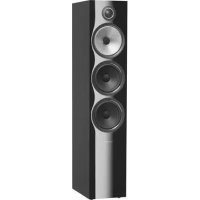
703 S2 - Speaker BOWERS & WILKINS - Free user manual and instructions
Find the device manual for free 703 S2 BOWERS & WILKINS in PDF.



| Product type | Floorstanding speaker |
| Brand | Bowers & Wilkins |
| Model | 703 S2 |
| Category | Passive loudspeaker |
| Speaker type | Bass reflex floorstanding speaker with decompression port(s) |
| Enclosure material | MDF with genuine wood veneer UV varnish |
| Connectors | Two pairs of binding posts (bi-wiring possible) |
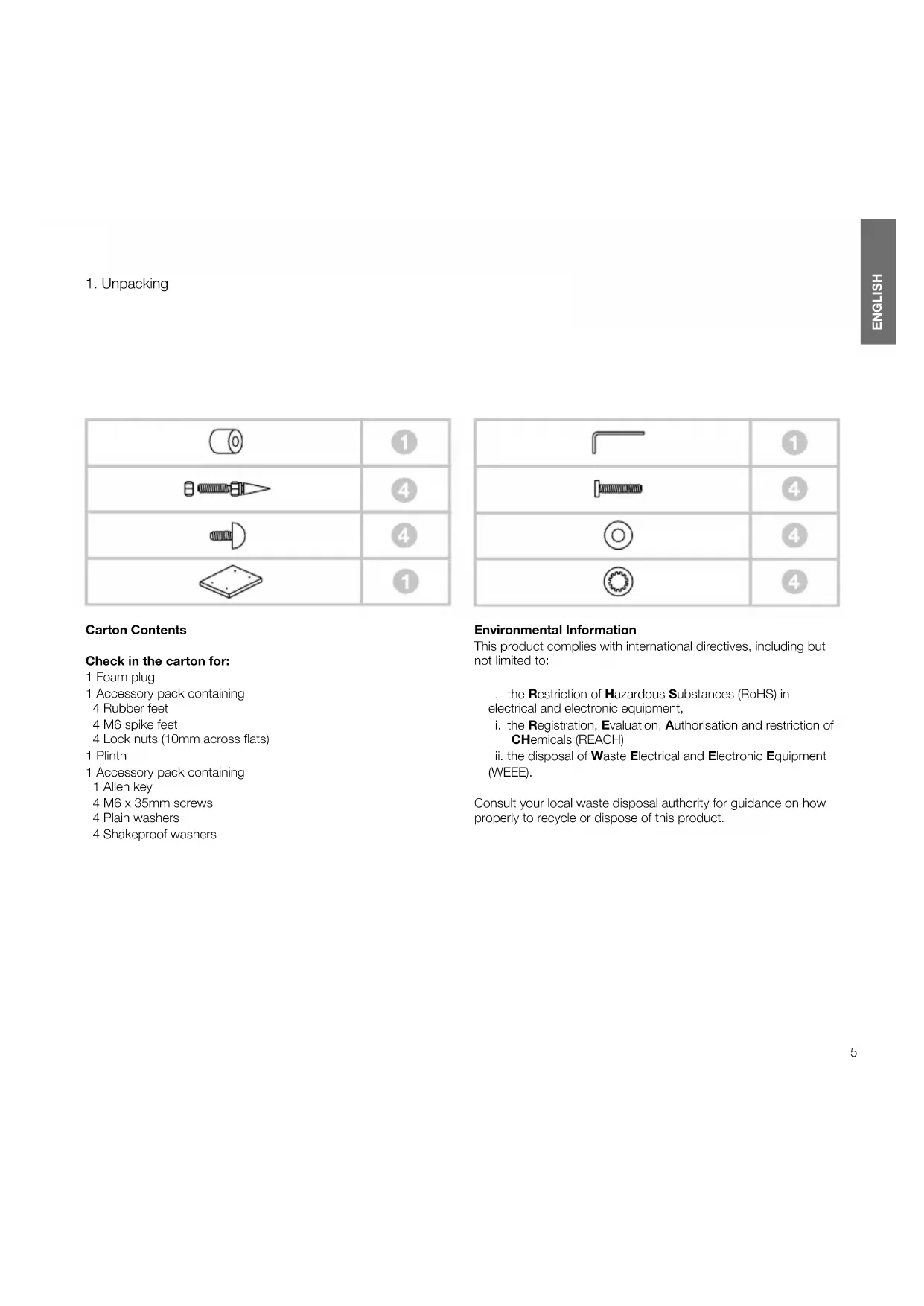
| Supplied accessories | 4 rubber feet, 4 M6 spikes, 4 lock nuts, 1 floor stand, 4 M6x35 mm screws, 4 flat washers, 4 self-locking washers, 1 Allen key, 1 foam bung (adjustable in two parts) |
| Positioning | Floorstanding; distance between speakers: 1.5 to 3 m; distance to walls: ≥ 50 cm |
| Polarity | Observe polarity (+ red, - black) |
| Bass adjustment | Foam bungs for attenuation (outer part or whole) |
| Break-in | Approximately 15 hours of normal use for mechanical components |
| Maintenance | Dust with soft cloth; clean painted surfaces with unscented soapy water; avoid contact with speakers |
| Magnetic field precautions | Distance ≥ 50 cm from CRT screens, magnetic tapes, etc. |
| Bi-wiring / Bi-amping | Possible by removing the links between binding posts |
| Base attachment | Align the base (arrow pointing forward), fasten with screws and washers, tighten with Allen key |
| Recommended use | Stereo and home theater |
| Compliance | RoHS, REACH, WEEE |
| Ports | Two decompression ports with foam bungs |
| Stability | Use spikes or rubber feet to balance on the floor |
Frequently Asked Questions - 703 S2 BOWERS & WILKINS
User questions about 703 S2 BOWERS & WILKINS
0 question about this device. Answer the ones you know or ask your own.
Ask a new question about this device
Download the instructions for your Speaker in PDF format for free! Find your manual 703 S2 - BOWERS & WILKINS and take your electronic device back in hand. On this page are published all the documents necessary for the use of your device. 703 S2 by BOWERS & WILKINS.
USER MANUAL 703 S2 BOWERS & WILKINS
Welcome and thank you for choosing Bowers & Wilkins.
Our founder, John Bowers, believed that imaginative design, innovative engineering and advanced technology were keys that could unlock the enjoyment of audio in the home. His belief is one that we continue to share and inspires every product we design.
This is a high performance product that rewards thoughtful installation, so we suggest that you take some time to read this manual before you begin. Continue on page 5
Bowers & Wilkins's hllr J John Bowers n
OoDIO的燥默樂藥土韵躁哉有中责量
通部自,
默神哉歌。
Check in the carton for:
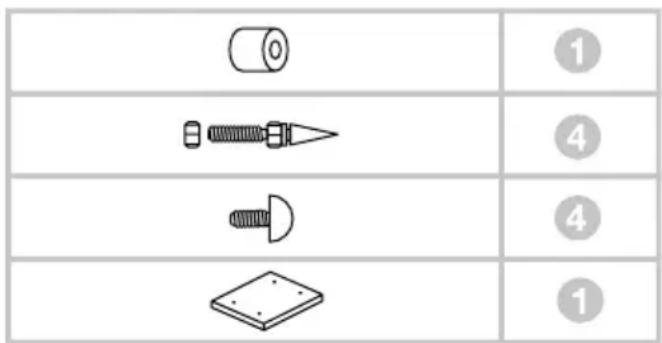
1 Foam plug
1 Accessory pack containing
4 Rubber feet
4 M6 spike feet
4 Lock nuts (10mm across flats)
1 Plinth
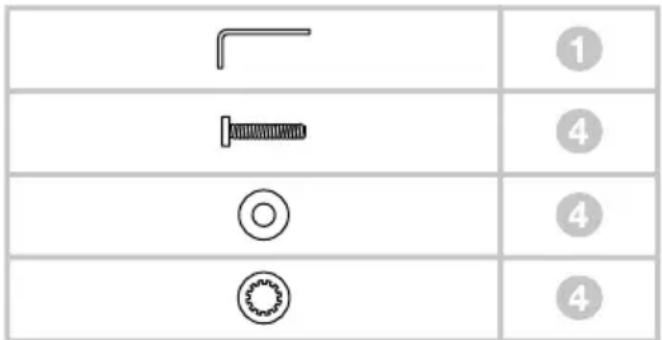
1 Accessory pack containing
1 Allen key
4 M6 x 35mm screws
4 Plain washers
4 Shakeproof washers
Environmental Information
This product complies with international directives, including but not limited to:
i. the Restriction of Hazardous Substances (RoHS) in electrical and electronic equipment,
ii. the Registration, Evaluation, Authorisation and restriction of CHEmicals (REACH)
iii. the disposal of Waste Electrical and Electronic Equipment (WEEE).
Consult your local waste disposal authority for guidance on how properly to recycle or dispose of this product.
- Positioning
Speaker Installation
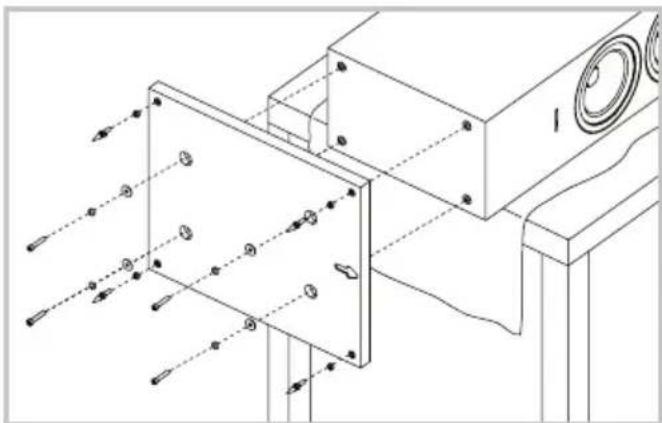
The speakers are intended to be floor mounted only. It is important to ensure that the speakers stand firmly on the floor using the spike feet supplied whenever possible. In addition, fit the plinth for proper stability.
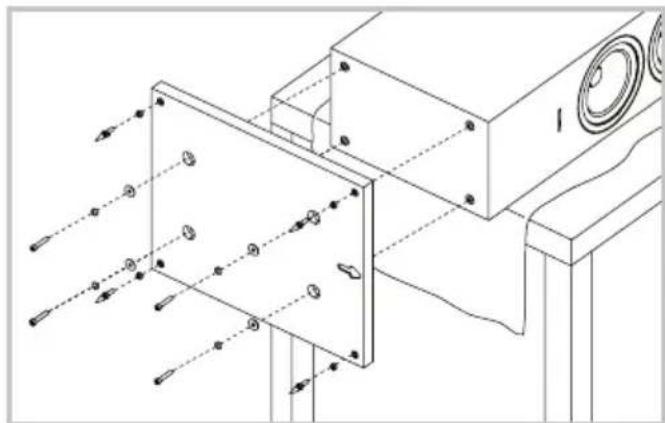
You may attach the plinth during the unpacking process, following the diagrams on the top flap of the carton. Alternatively, you may attach it after the product has been fully unpacked, by covering a suitable support such as a table with a cloth and laying the speaker on its side with the base of the cabinet overhanging the support. Align the plinth with its attachment holes in the underside of the cabinet, ensuring that the arrow on the underside of the plinth points forwards. Secure the plinth using the screws and washers supplied. Fit the shakeproof washers between the plain washers and the screw heads. Tighten the screws using the Allen key supplied.
The spike feet are designed to pierce carpet and rest on the floor surface. Initially, screw the lock nuts onto the spikes enough to leave the nuts floating just above the carpet when the spikes are resting on the floor beneath. Screw the spikes fully into the threaded inserts in the plinth. If the cabinet rocks when placed on the floor, unscrew the two spikes that do not touch the floor until the cabinet rests firmly without rocking. Finally, lock the nuts against the cabinet. It may be more convenient to fit and adjust the spike feet after speaker positioning has been optimised.
If there is no carpet and you wish to avoid scratching the floor surface, use either a protective metal disc (a coin perhaps) between the spike and the floor, or use the supplied rubber feet. Fit the rubber feet and level the cabinet in the same manner as with the spike feet.
Speaker Positioning
Adjustment of speaker position following initial installation will probably further improve the sound quality and is usually worthwhile.
In either stereo or home theatre installations, try to ensure that the immediate surroundings of each speaker are similar in acoustic character. For example, if one speaker is adjacent to bare walls while the other is adjacent to soft furnishings and curtains, both the overall sound quality and the stereo image are likely to be compromised.
Conventional Stereo Systems
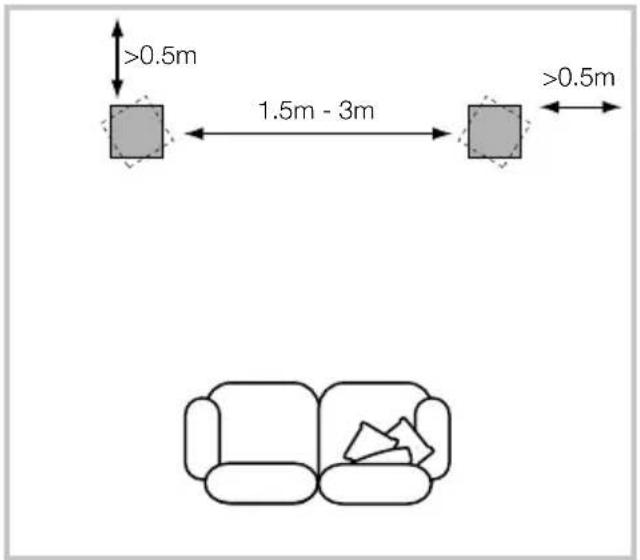
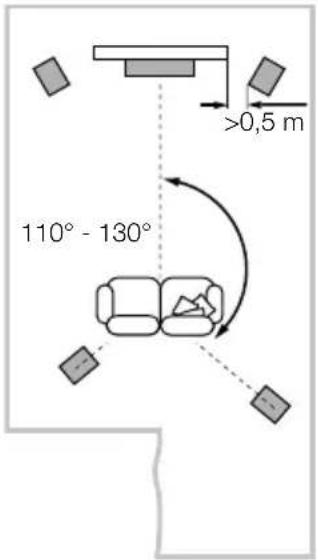
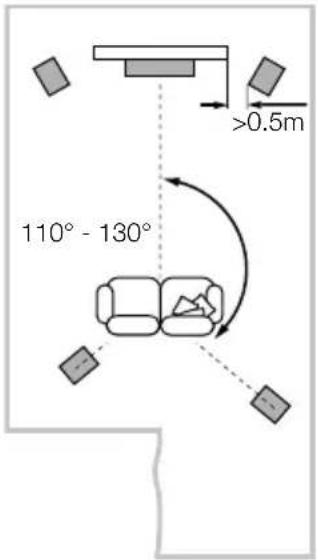
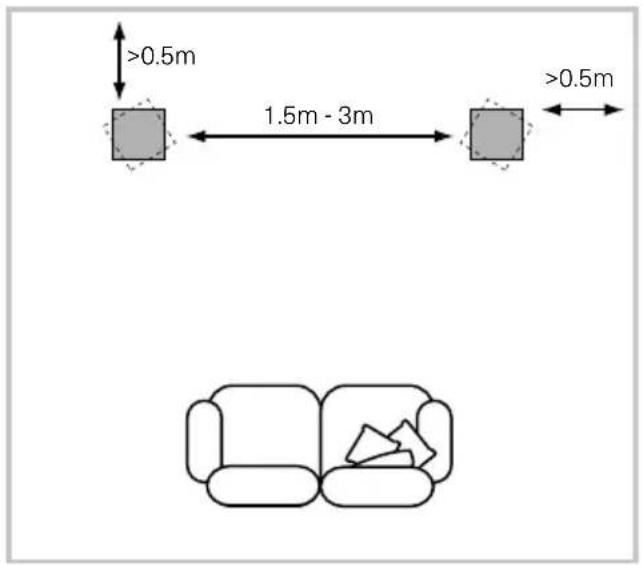
To begin with, the speakers should be positioned between 1.5m and 3m apart at two corners of an equilateral triangle completed by the listening area at the third corner. The speakers should be approximately 0.5m away from the back wall, and at least 0.5m away from any side walls (above).
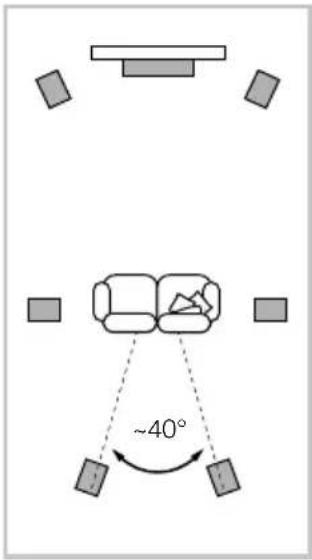
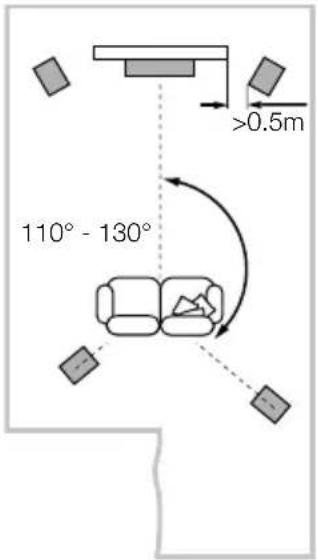
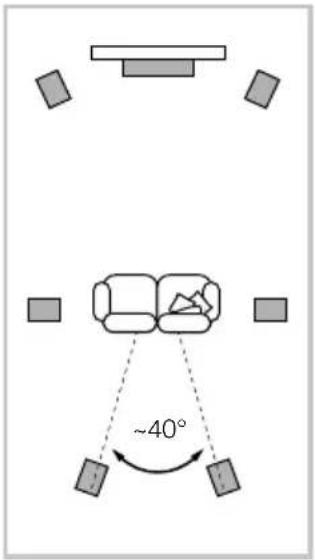
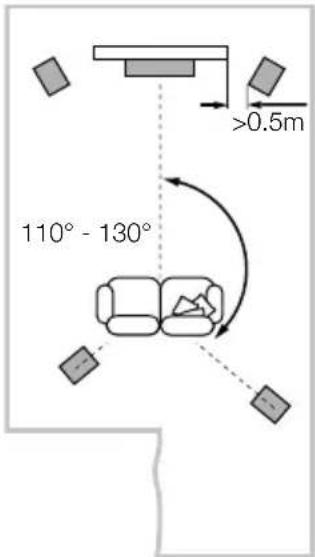
5 Channels 7 Channels
Home Theatre Systems
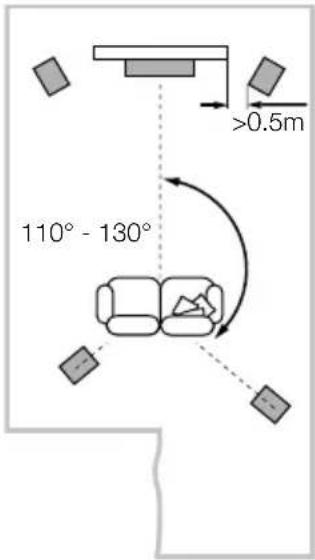
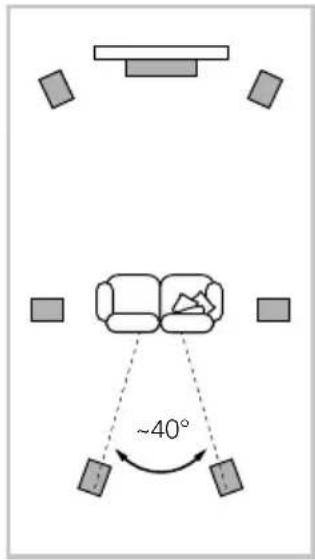
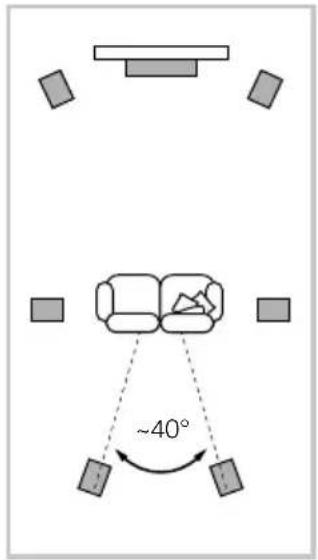
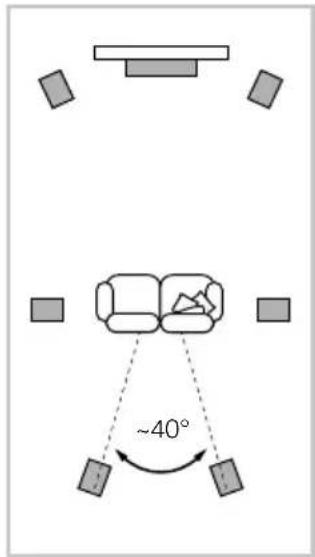
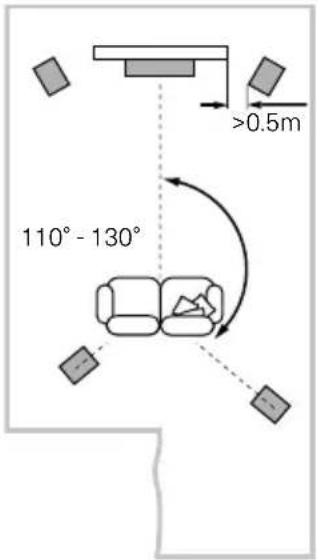
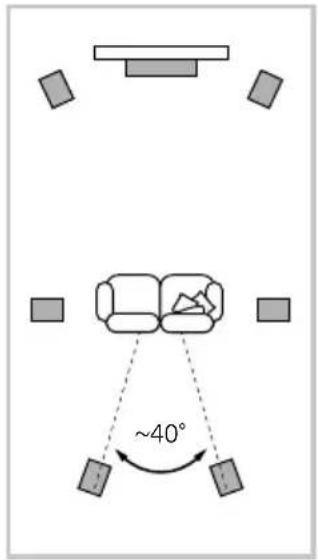
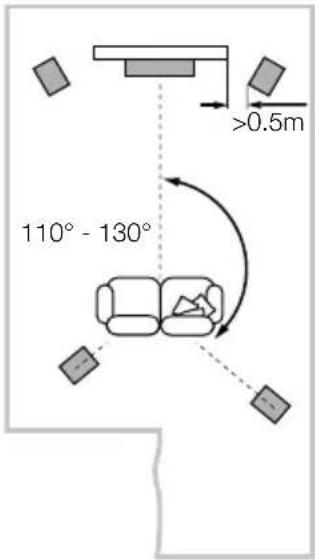
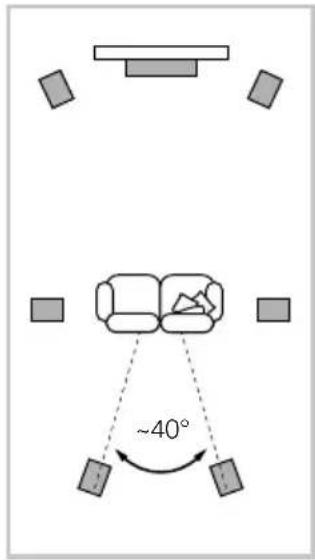
If the speakers are to be used for the front channels in a home theatre system, they should be placed closer together than for 2-channel audio, because the surround channels tend to widen the image. Positioning the speakers within approximately 0.5m of the sides of the screen will also help keep the sound image in scale with the visual image. As with conventional stereo positioning, the speakers should ideally be at least 0.5m away from any side walls. If you would prefer to place your speaker against the back wall and this location results in over emphasised bass, see the Fine Tuning section of this manual for information on using the foam plugs.
Stray magnetic fields
The speaker drive units create stray magnetic fields that extend beyond the boundaries of the cabinet. We recommend you keep magnetically sensitive articles (CRT television and computer screens, computer discs, audio and video tapes, swipe cards and the like) at least 0.5m from the speaker. LCD, OLED and plasma screens are not affected by magnetic fields.
3. Connections
All connections should be made with the audio equipment switched off.
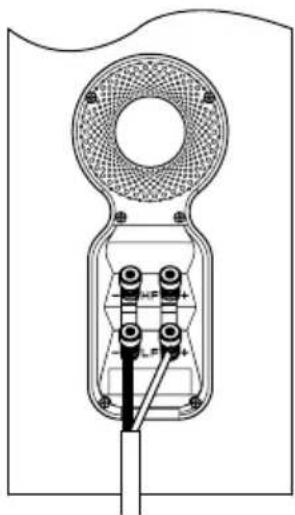
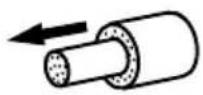
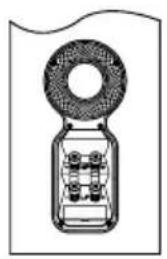
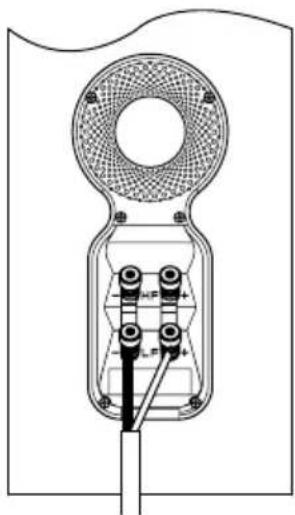
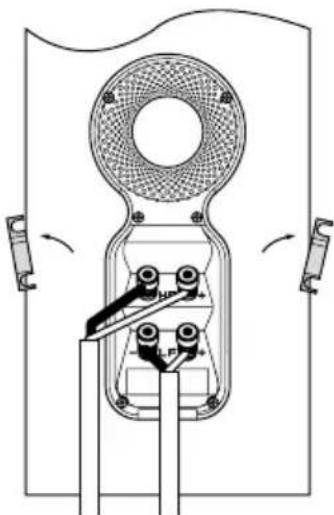
There are 2 linked pairs of terminals on the back of the speaker. For conventional connection (above left), the terminal links should remain in place (as delivered) and just one pair of terminals connected to the amplifier. For bi-wire connections or bi-amplification (above right), the terminal links should be removed and each pair of terminals connected to the amplifier or amplifiers independently. Bi-wiring can improve the resolution of low-level detail.
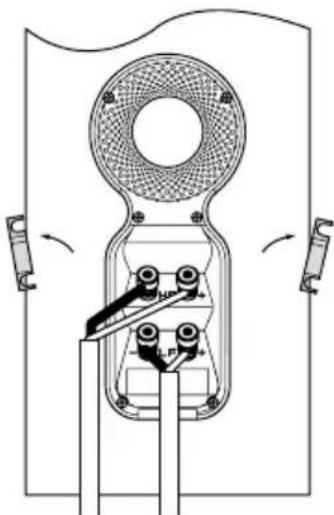
Ensure that the positive terminals on the speaker (marked + and coloured red) are connected to the positive output terminal on the amplifier and the negative terminals on the speaker (marked - and coloured black) are connected to the negative output terminal on the amplifier. Incorrect connection can result in poor imaging and loss of bass.
Ask your dealer for advice when selecting speaker cable.
4. Fine Tuning
Before fine tuning, make sure that all the connections in the installation are correct and secure.
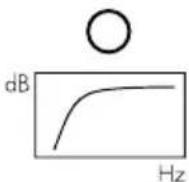
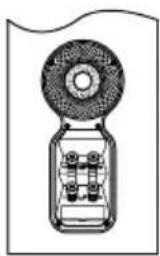
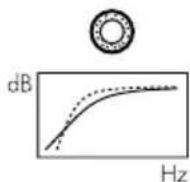
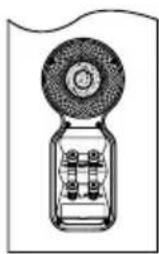
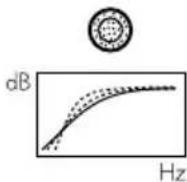
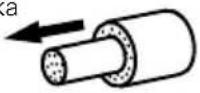
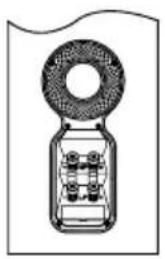
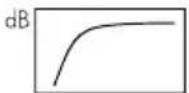
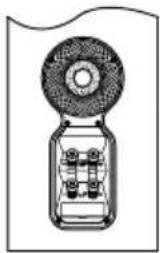
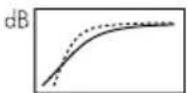
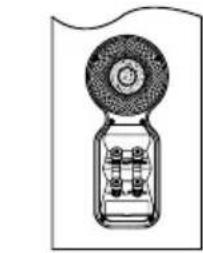
Moving the speakers further from the walls will generally reduce the volume of bass. Space behind the speakers will also help to create an aural impression of depth. Conversely, moving the speakers closer to the walls will increase the volume of bass. If you want to reduce the volume of bass without moving the speakers further from the wall, fit the foam plugs or, for less severe bass reduction, the foam rings in the port tubes (above).
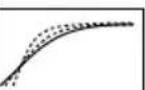
If the bass seems uneven with frequency this will most probably be a consequence of the acoustic properties of your listening room. Even small changes in the position of the speakers or listening position can have a significant effect on sonic performance, especially at low frequencies. Try moving your listening position or locating your speakers along a different wall if possible.
If no alternatives exist, you can adjust your loudspeakers' low-frequency performance using the supplied foam bungs. The bungs are a two-piece part, allowing for a degree of fine-tuning using either the outer, larger-diameter piece in isolation or the two parts together. Using solely the outer, larger-diameter foam bung will deliver less bass attenuation than the complete bung assembly.
- Running In 6. Aftercare
The performance of the speaker will change subtly during the initial listening period. If the speaker has been stored in a cold environment, the damping compounds and suspension materials of the drive units will take some time to recover their correct mechanical properties. The drive unit suspensions will also loosen up during the first hours of use. The time taken for the speaker to achieve its intended performance will vary depending on previous storage conditions and how it is used. As a guide, allow up to a week for the temperature effects to stabilise and 15 hours of average use for the mechanical parts to attain their intended design characteristics.
The cabinet surfaces will usually only require dusting. If you wish to use an aerosol or other cleaner, apply the cleaner onto the cloth, not directly onto the product and test a small area first, as some cleaning products may damage some of the surfaces. Avoid products that are abrasive, or contain acid, alkali or antibacterial agents. Marks on the paint surface may be removed with a dilute perfume-free soap solution. Remove any remaining streak marks by spraying with a proprietary glass cleaner and lightly wiping dry with a microfibre cloth. Do not use cleaning agents on the drive units and avoid touching them as damage may result.
Real wood veneers are treated with an ultra-violet resistant lacquer to minimise changes in colour over time. Nevertheless, like all natural materials, a degree of colour change is to be expected. Colour differences may be rectified by exposing all the veneer surfaces equally and evenly to sunlight until the colour is uniform. This process can take a long time, but may be accelerated by careful use of an ultra-violet lamp. Keep the speakers away from direct sources of heat such as radiators and warm air vents in order to minimise the possibility of the wood veneer cracking.
- Déballage
5 Channels 7 Channels
5 Channels 7 Channels
Heimkinosysteme
5 Channels 7 Channels
Sistemi Home Theatre
5 Channels 7 Channels
Home Theater Systemen
3TOT npOdyKT NOLHOCTbIO COOTBeTcTByeT MEXyHApOHNbIM DnpeKtNBam, BKIOUqA, HO He ORpaHnUBaBc:
i. No orpaHnueHnM nCNoB3OBAHn OAnChbIX MaTePnaIIOB (Restriction of Hazardous Substances - RoHS) B 3JIeKtpnueckOM n3JIeKtpoHOM 6OpdyobAHn,
ii. Ioo perncpaun, ouenke, aTOpn3aun n orpaHueHIO NCnoIb3OBAHnXmMnuecknx BeueCTB - Registration, Evaluation, Authorisation and restriction of CHemicals (REACH)
iii. No ytuln3aun oToxOIOB - Waste Electrical and Electronic Equipment - (WEEE).
PpokocyIbTpyItec bBaWe MeCTHOprAH3aueNe, KOTOPa 3aHmAeTCraYtUNn3aueNe OTOXoOB, NO BONPOcAM npabInbHo cdaN BaWero o6OpDobAHnB yTnlb.
- PazmeuHne
YcTaHOBKa KOHOK
KoHKn npEHa3HaueHbToIbKO dJa HaonbHOy cTaHOBKn. BaxHo BCNOy, rKe 3TO BO3MOxHbO, o6eCneHTb Ix npOHOe noLoXeHHe Ha NOy C nOMoUbIO uINOB, BXoJuxB KOMnNEKT. KpOme TOrO, yCTaHOBnte AC Ha npInraeMyIO nIITy dJa LyuWei yCTOUYBOCTN.
Bb moxete npnKpennTb onOpHyIO nIITy B xOe pacnaKOBKn, cIedy yka3aHnM pncyHkA ha BepxHe nIOCKoCTn KAPTOHHoN KOPO6Kn. Kpome TOrO, Bbl MoXete npnKpeNTb ee noCne TOrO, kak KOLOHKA 6ydt NIOHOCTbO paCnKaOBaHa, NOKpbIB NOxOAnuO NOCTABky TINa CTOna TKAHbIO N NOLOXNB Ha HrO KOLOHky 60KOM, pnpHem TaQTO6bE eOCHOBaHne CBEUBAIOCb C 3Toro CTOna. CoMBcTe NT cy C OTBcPcTnMM dJe ee KpENHEB HnxHKe YCAETN KOPNyCa, TaK TO6bI CTpeJIKA Ha HnxHKe NOBepxHOCTn NIIbTy Yka3bIbA bNEpeD. PnKpEnTe npOHO NITy C NMOUsbIO npNJraeMbIX B KomNeKeTe BoNTOB u Wai6. HadehBe ynpHbIE Wai6bMI MeJdy NIOCKmU Wai6amN rONOBkAm BOITOB. 3aTHNtE BoNTbI C NOMoubIO WectnrpaHHoro KIIOHa.
LHb paCCHTaHb Ha To, YTo6b IpOtpKHyb KOBep n OINpaTbca HnOBepxHocTb nona. Chayana HabepHnte KOHTprAkn Ha Wnbl TaK, YTo6b OctaLC He6oJIbWo3aOp HAd KOBpOM npu Wnmax, PNOHO CTOrUHX HA noJy. 3aTeM 3ABepHnte Wnbl Do yNopa B OTBepCTnC pEz6oBn B ONOPHo nIe. Ecn KOPync WaTaTcA, OBtBpeHnte Ha3ad Wnbl, KOtOpBe He KACAOCTnOla, YTo6b OH npOHH BCTaHnBa CeONOpb. HakoHeu, 3aTnHte KOHTprAKn B CTOPOHy KOPNY caNNPiNtBu. BoJe e yD6HO OTperYInPobATb BlicOTy WnIOB NocLe TOR, KAK Bbl Bbl6epete ONTMaNbHO MecTO DnK OJHOHK.
Ecni y Bac HeT KOBpa, n Bbl XOTnTE n36ExaTb lacapanH Ha NoIy, nCIOJIb3yIte 3aunTHBle MeTALINueCKne DnCKn (HaPImep, MOHeTb), BCTABJREMbIe MEXdy WUNAMN IN NOLOM, nII Jx EYCTAHOBtpe3HHOBbIE HOKKn I3 KOMNIeKTa. PpNBHTnte pe3HHOBbIe ONOpBI n BBIpOBHraTe KOPNYC ToHO TaK Xe, KaK IN B Cnyae C WUNAMN.
Bb6op MeCTa IIA KOJHOHOK
Iocne HaayalbHoi yCTaHOBKn CLeNyET NonpoBoBaT b6oee ToHOb Bb6paT MeTO dA AC, T.K. 3TO MOKeT DOONIHHTeHbHO yUyHtB KaYeCTBO 3ByaHn.
B cncTeMaX domaHero TeaTpa HnCtepeo CnCTeMax
ctapaaTebcdeIaNb Tak, TTObI bIiKHeE OKpyKeHne KaXdoI
N3 KOIOHOK 6blIO NOXOKM NO aKyCTUeCKM CBOIcTBAM.
HaPmep, eon OHa AC npMbkaet K rOJIbIM cTeHaM, a Dpyra
-K MkRKO MeBEN N UToPam, TO 3TO MoXeT OTPuCaTeNbHO
NOBNIaRb Ha 3ByuHaHne.
06bHbIe CTepeo CnCTembl
Дянача пacnooxite AC ha pacctoHnO ot 1,5do3MdpyOT dpyra B Dbyx yrIax paBHOCTOPOHHe r TpeYronbHnKa, TpeTNIyOr KOTOPORO -ETOHTP 30Hb IpocnyuWBAHN. KoONKINdoJHKbI 6bITb Ha paccTOHnIO KpaHne Mepe0,5MOT 3aJHeN bOKOBbIX CTeH (CM.pnc.Bblwe).
5 Channels 7 Channels
CnCTemblDomaHeroTeaTpa
EcIn AC nCnONb3yOToC kAk PpOnTaNbHbIe KaHaIb B DOMaUHeM teAtpe, OH DoJIxHbI CTOrTb 6nNxE dpYK dpyr, YemB 2-KaHaJIbHOM BapNAHTe, T.K. TblNOBle KaHaIb paCShnPraoT o6pa3. Pa3MeJeHne AC Ha pacCToHnn pnp6n3nteJbHO no 0.5 M OTCPoH ONaPA TaKke NmOraet cOrlaocBaT macuTab 3ByKOBoro n 3pntEhBO rO Opa3a. Ka n B cnyae o6bHuRo Ctepeo, AC DoJIxHbI b Ueane pacNoaratcb Na paCtOHRn He mehee 0.5 M OT 3aDHeN 6okobix CTen. EcIn Bbl PpeINOnHTaTe PrnDbHNYbKOLOHN K 3aDHeN CTHe, IN 3TO PPnBODt K Upeecyyp NOdUePKHybIM 6acam, o6paAaIteCb B Pa3dEn [ TOH kHaCTPOJKa ]OTORO pykoBODCTBa 3a yka3aHnMaN No nCnONb3OBAHnIO NopOIOHOBIX 3aTrNyweK.
PaccerHHoe MarHHTHOJ noJe
HnHAMNK KOHOK CO3dAOT MaHHTHOE NOne, BbIXOJaee 3a HnpdeIb. MblpeKOMeHyem depXaTb MarHHTOyCBTbNTbHbIe npdMeTb (KnHeCKoNtBie CRT-TeneBn3Opb, dncnnen, dNcKeTb, MaHHTHbIe ayDnO n BnDeokacctb, KAPTOHN T.n.) Ha pacCToHN MNHMMyM 0.5 M ot KOHOK. LCD, OLED n nnAsMeHHbe naHEn He noDBepxHe DeiCTBIO MaHHTbIX NOne.
3.Полсоeннehня
Bce noKIOHHe Hn DeJIaOTc TOnbKO npu BbIKIOUeHHOM 06OpyDobAHIN.
Ha 3aHne nane HNOHOK NMeIOTcB DBe NapbI COeINHeHHbIX KOHOOHbIX KJIeMM. PnO bUHOM CoeINHeHN (Kak BBepx CyEBA), COeINHTeBhBie PnactNbI DOJXHa OCTaBaTcBcHa MecTe (Kak B MOMENT NoCTabKn AC) N ToJbKO OHy NApy KJIeMM HeoBXoIMNo NOcOeINHTb K YcUNITeIO. IIn NpOKnIOueHn KONOHOK 6n-BaepnHrom NnN 6n-AmnnHrom (Kak BBepx Cnpaba), COeINHTeBhBie NtActNbI CnDeYET ydaNtB, N KaXdYIO npay KJIeMMe NpOcoeINHTb K YcUNITeIO (mN yCUnlntaRn) He3aBNCMO. POnkIOueHne 6n-BaepnHROM MoKet ynyuHTb pa3peWeHne DetaleM Manoro ypOBHr.
IopcoeHnHTe pHOCOBpa3bem KOHOHKc (co 3HaKOM + n OKpaewHHB B KpaCHb) K PIIIOCOBOMy BbxOdy yCUNNTen, a MmHycoB0 (co 3HaKOM - n OKpaewHHB B cepHb) - K MmHycoBOMy Ha ycNITene. HeBepHoe noKnIOueHne npuBeTe K nCKaXeHNo 3ByKOBOO o6p3a n yTpe 6acob.
PonpociteBaeweroDnepa nopekomeHdoBaTbKa6eb.
4. Tohka NaCTpoiKa
O
Hz
Hz
IpeepokohateJIbHOToHOnHaCTpoKoY6eNTecb,TO BCE noKNIOyeHO npABINbHO HAdexHO.
OToBnra KOHKn OT cTeH, Bbl, KaN npabInlo, yMeHbWaeTe ypoBeHb 6acOB. IocTaTOHoe pacCTOaHne no3aIN KOHOHK NO3BOJReT TaKxe Co3DaTb OUYueHne rIy6uHbI.
COOTBETCTBEHNO,IPNDBINHYB KOJIOHNK K CTHeAM,BByyBeINHITe DIOIIO 6acOB.EcNI Bbl XOTNTe CHIN3NTb yPOBEHB 6acOB,HE OTOBnra KONOHKn OT CTeH,BCTaBBte NopOHOHOByo 3aRnykY B NoPTΦa30HnBepToPa,NNJxE-ДЯ He TaKOrO pe3KOrO cHInKeHn- NOpOHOHOBoE KOJIbO (CM.pnc.Bblue).
EcIn INTEHCNBHOCTb 6acOB CINbHO 3aBNCNT OT cACTOTbl, 3TO MOKET 6bITb Bb3BaHO aKyCTNUeCKMN CBOICTBaMn BAwero NOMEHNE DnI pOcClyuNBAHNA. Daxe He6oLbWne I3MeHENB B paCNOJXeHN KOLOHOK Nm CnyuATeJe MOrTy CyueCTBeHNO NOBJIrTa H KaueCTBO 3ByuHNA, Oco6EHNO Ha Hn3KNx YAcTTox. NonpoobyTe CMeHNT MeCTO IpocLyuNBAHNA INIpa3MeENHeBE BaUHX KOLOHOK, HApnpMEp, yCTaHOBt b INBdo npyro CTehbl, ECIn 3TO BO3MOKHO.
EcnHETpyrnx anbTepeHaTnB,MOxHO HAcTpNb 3ByaHne KOIOHN Ka Hn3Knx YactOTax C NOMOsbIO PpNlraeMbIX NOPONHOBBx 3arNywek.3aynuoka COCToNT N3 DByX qAteN, 706bl MoXHO 6blNO Bb6paTb CTeneHb DemnphiOpBaHnI pN ToHKO HAcTpOKe -OHOH 60lbWOrO dAmEtPa C OTBePCTNe BHTpn, IN BTOPO-N3KpbBaIOUe NIOTHO 3TO OTBepCTne. Ipn yCTaHOBKe TOJbKO OHOH 3aynuKb 60lbWOrO dAmEtPa Bbl NOlyaete MeHbWee CHNXeHne ypoBHg BacOB, cem npYcTaHOBKe cpa3y DByx.
5 Channels 7 Channels
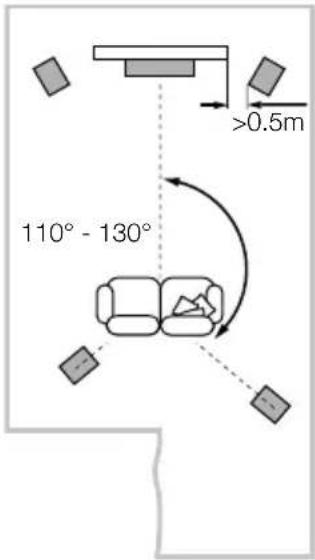
5 Channels 7 Channels
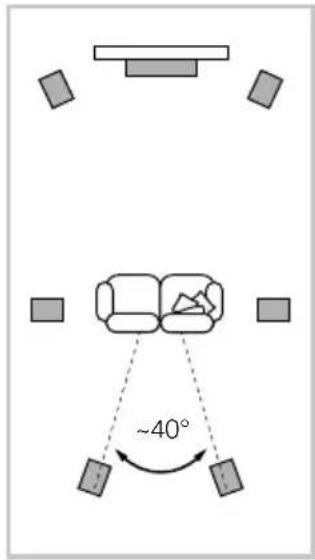
家庭影院系统
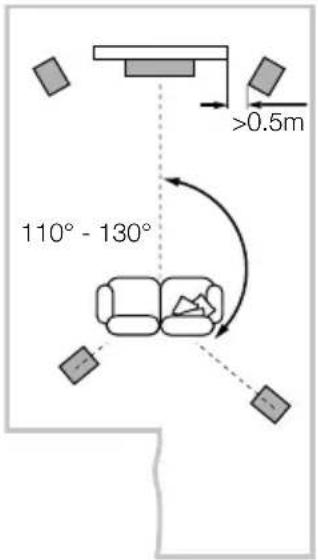
5 Channels 7 Channels
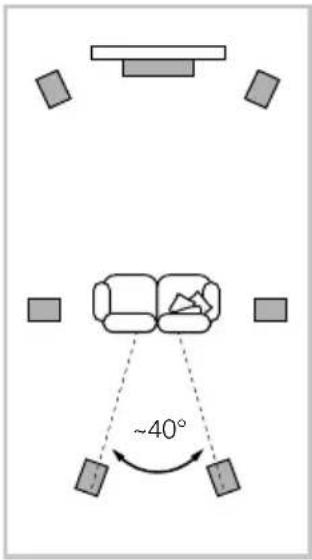
家庭影院系統
Worthing West Sussex
BN11 2BH England
T+44(0)+1803.221800
F+44(0)t903.22t80t
info@bwgroup.com
www.bowers-wilkins.com
B&W Group (UK Sales)
T+44(0)1903.221500
Eukka sales@bwgroup.com
B&W Group North America
T=19780042870
E marketing@bwgroupusa.com
B&W Group Asia Ltd
T+852347293000
Einfo@bwgroup.hk
Copyright © B&W Group Ltd. E&OE
Printed in China

- Welcome and thank you for choosing Bowers & Wilkins.
- Check in the carton for:
- Environmental Information
- Speaker Installation
- Speaker Positioning
- Conventional Stereo Systems
- Home Theatre Systems
- Stray magnetic fields
- Connections
- Fine Tuning
- Heimkinosysteme
- Sistemi Home Theatre
- Home Theater Systemen
- YcTaHOBKa KOHOK
- Bb6op MeCTa IIA KOJHOHOK
- 06bHbIe CTepeo CnCTembl
- CnCTemblDomaHeroTeaTpa
- PaccerHHoe MarHHTHOJ noJe
- 3.Полсоeннehня
- Tohka NaCTpoiKa
- 家庭影院系统
- 家庭影院系統
Brand : BOWERS & WILKINS
Model : 703 S2
Category : Speaker