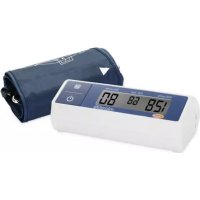
BP A9030 - Sphygmomanometer MICROLIFE - Free user manual and instructions
Find the device manual for free BP A9030 MICROLIFE in PDF.

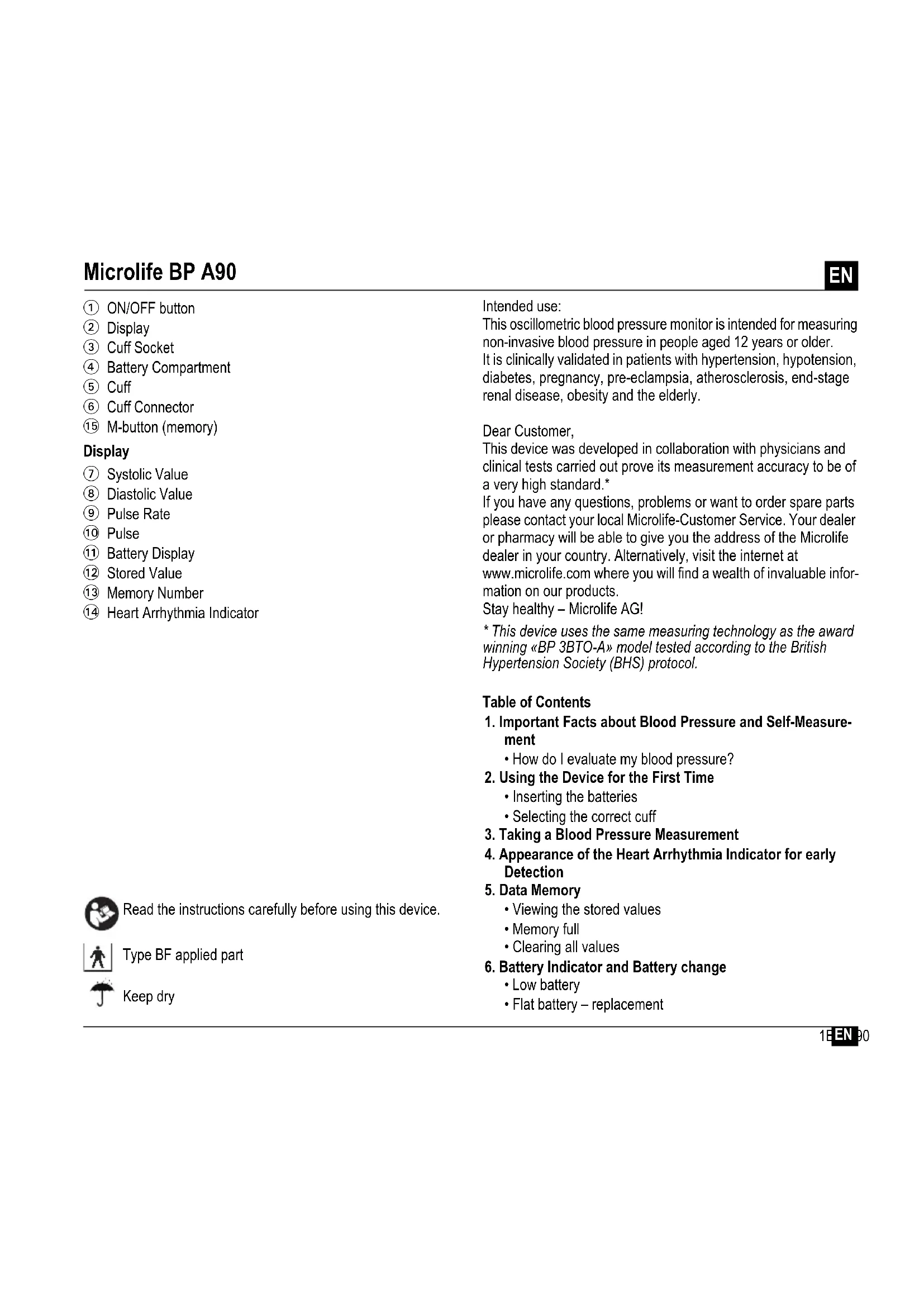


| Product type | Oscillometric blood pressure monitor |
| Brand | Microlife |
| Model | BP A9030 |
| Power supply | 4 alkaline batteries 1.5 V, AA format |
| Battery life | Approx. 920 measurements with new batteries |
| Measurement procedure | Oscillometric, compliant with Korotkoff method |
| Measurement range - pressure | 20 - 280 mmHg |
| Measurement range - pulse | 40 - 200 beats per minute |
| Displayed cuff pressure range | 0 - 299 mmHg |
| Resolution | 1 mmHg |
| Static accuracy | ± 3 mmHg |
| Pulse accuracy | ± 5 % of the reading |
| Operating conditions | 10 - 40°C, relative humidity 15 - 95 % |
| Storage conditions | -20 to +55°C, relative humidity 15 - 95 % |
| Memory | 30 results, automatic replacement of oldest |
| Arrhythmia indicator | Yes, early detection of irregular pulses |
| Available cuff sizes | S (17-22 cm), M (22-32 cm), L (32-42 cm), M-L (22-42 cm) |
| Warranty | 3 years (excluding batteries, cuff, and consumables) |
| IP class | IP20 |
| Applied part | Type BF |
| Maintenance | Clean with a soft dry cloth |
| Safety | Protect from water, extreme temperatures, shocks, and dust |
Frequently Asked Questions - BP A9030 MICROLIFE
User questions about BP A9030 MICROLIFE
0 question about this device. Answer the ones you know or ask your own.
Ask a new question about this device
Download the instructions for your Sphygmomanometer in PDF format for free! Find your manual BP A9030 - MICROLIFE and take your electronic device back in hand. On this page are published all the documents necessary for the use of your device. BP A9030 by MICROLIFE.
USER MANUAL BP A9030 MICROLIFE
B43 Wndau/Switzerland
www.microfle.com
C€0044
10
microlife
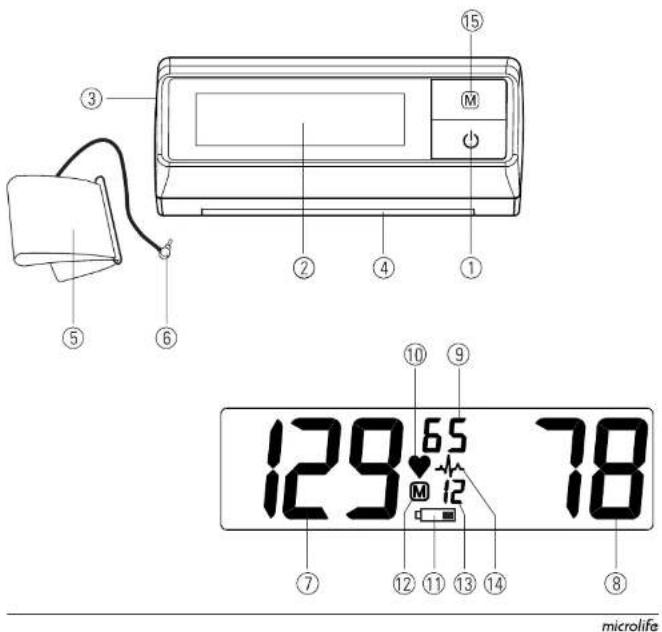
Microlife BP A90
Guarantee Card BP A90
Name of Purchaser / Nam de 'acheleur / Nombre del comprador / Nomenclde comprador / Nomenclde Klaufs / Naam Koper / An H.O. noxynatena / Imie i nazrosko nazywyc / Vassido neve / I Mme hysynsata / Numelie comparullorai / J Jimeno kupizipino / Mero zaikznia / Alcimn Ad / Ovocatunuvoju yocapot / 1/2014-03-05
Serial Number 1:Numero de series /Numero de series /Numero de series / Serien-Nr. / SerienNummer / Cephalopora hovep / Numar serlying / Sorozatzam / Cephalopora hovep / Numar de series / Vyrobni ciosi / Vyrobni ciosi / Serial Numarasi / Apuobu crepov / Apana / Jushejny
Date of Purchase / Date / dacha / Fecha de compra / Data da compra / Kaufdatum / Datum van aankoo / Data noqynn / Data zaekupu / Vaskfas datura / Data va axayyanae / Data comparari / Datum nikupu / Datum kupy / Satin Amra Tanhi / Hspouqvio cyopoc /
Specialist Dealer I. Reverendur Vender especializzato R. Reverendur autorizzato I. Fachhinder /Specialist Dealer C. Regiennaropassionni/
davap/ Przepstvidowl /Forgalmazt/CnuejaryrctpoyetpOyr / Distributior de specialità /Specializayov dealer /Specializayovny predajca / Uzman Satoi / Etfikkukuvoc ymptparovor /
microlife
Microlife BP A90
EN
① ON/OFF button
② Display
Cuff Socket
④ Battery Compartment
⑤ Cuff
Cuff Connector
15 M-button (memory)
Display
⑦ Systolic Value
⑧ Diastolic Value
Pulse Rate
10 Pulse
① Battery Display
② Stored Value
⑬ Memory Number
Heart Arrhythmia Indicator
Intended use:
This oscillometric blood pressure monitor is intended for measuring non-invasive blood pressure in people aged 12 years or older.
It is clinically validated in patients with hypertension, hypotension, diabetes, pregnancy, pre-eclampsia, atherosclerosis, end-stage renal disease, obesity and the elderly.
Dear Customer,
This device was developed in collaboration with physicians and clinical tests carried out prove its measurement accuracy to be of a very high standard.*
If you have any questions, problems or want to order spare parts please contact your local Microlife-Customer Service. Your dealer or pharmacy will be able to give you the address of the Microlife dealer in your country. Alternatively, visit the internet at www.microlife.com where you will find a wealth of invaluable information on our products.
Stay healthy - Microlife AG!
- This device uses the same measuring technology as the award winning «BP 3BTO-A» model tested according to the British Hypertension Society (BHS) protocol.
Table of Contents
- Important Facts about Blood Pressure and Self-Measurement
How do I evaluate my blood pressure?
-
Using the Device for the First Time
-
Inserting the batteries
-
Selecting the correct cuff
-
Taking a Blood Pressure Measurement
-
Appearance of the Heart Arrhythmia Indicator for early Detection
-
Data Memory
Viewing the stored values
Memory full
Clearing all values
-
Battery Indicator and Battery change
-
Low battery
- Flat battery - replacement

Read the instructions carefully before using this device.

Type BF applied part

Keep dry
- Which batteries and which procedure?
- Using rechargeable batteries
7. Error Messages
-
Safety, Care, Accuracy Test and Disposal
-
Safety and protection
Device care
Accuracy test - Disposal
9. Guarantee
- Technical Specifications Guarantee Card (see Back Cover)
1. Important Facts about Blood Pressure and Self- Measurement
- Blood pressure is the pressure of the blood flowing in the arteries generated by the pumping of the heart. Two values, the systolic (upper) value and the diastolic (lower) value, are always measured.
- The device indicates the pulse rate (the number of times the heart beats in a minute).
- Permanently high blood pressure values can damage your health and must be treated by your doctor!
- Always discuss your values with your doctor and tell him/her if you have noticed anything unusual or feel unsure. Never rely on single blood pressure readings.
- Enter your readings in the enclosed blood pressure diary. This will give your doctor a quick overview.
- There are many causes of excessively high blood pressure values. Your doctor will explain them in more detail and offer treatment where appropriate. Besides medication, relaxation techniques, weight loss and exercise can also lower your blood pressure.
- Under no circumstances should you alter the dosages of drugs or initiate a treatment without consulting your doctor.
-
Depending on physical exertion and condition, blood pressure is subject to wide fluctuations as the day progresses. You should therefore take your measurements in the same quiet conditions and when you feel relaxed! Take at least two measurements per day, one in the morning and one in the evening.
It is quite normal for two measurements taken in quick succession to produce significantly different results. -
Deviations between measurements taken by your doctor or in the pharmacy and those taken at home are quite normal, as these situations are completely different.
- Several measurements provide a much clearer picture than just one single measurement.
- Leave a small break of at least 15 seconds between two measurements.
- If you are pregnant, you should monitor your blood pressure regularly as it can change drastically during this time.
- If you suffer from an irregular heartbeat, measurements taken with this device should only be evaluated after consultation with your doctor.
The pulse display is not suitable for checking the frequency of heart pacemakers!
How do I evaluate my blood pressure?
Table for classifying blood pressure values in adults in accordance with the World Health Organisation (WHO) in 2003. Data in mmHg.
| Range Systolic Diastolic | Recommendation | |||
| 1. | blood pressure normal | < 120 | < 80 | Self-check |
| 2. | blood pressure normal | 120 - 129 80 | - 84 Self-check | |
| 3. | blood pressure slightly high | 130 - 139 85 | - 89 Consult your doctor | |
| 4. | blood pressure too high | 140 - 159 90 | - 99 Seek medical advice | |
| 5. | blood pressure far too high | 160 - 179 100 | - 109 Seek medical advice | |
| 6. | blood pressure dangerously high | ≥180 ≥110 | Urgently seek medical advice! | |
The higher value is the one that determines the evaluation.
Example: a readout value between 150/85 or 120 / 98mmHg indicates blood pressure too high
2. Using the Device for the First Time
Inserting the batteries
After you have unpacked your device, first insert the batteries. The battery compartment (4) is at the back of the device. Insert the batteries (4 × 1.5 ~V, size AA), thereby observing the indicated polarity.
Selecting the correct cuff
Microlife offers different cuff sizes. Select the cuff size to match the circumference of your upper arms (measured by close fitting in the centre of the upper arm).
| Cuff size for circumference of upper arm |
| S 17 - 22 cm (6.75 - 8.75 inches) |
| M 22 - 32 cm (8.75 - 12.5 inches) |
| L 32 - 42 cm (12.5 - 16.5 inches) |
| M - L 22 - 42 cm (8.75 - 16.5 inches) |
Pre-shaped cuffs are optionally available.
Only use Microlife cuffs.
Contact your local Microlife Service if the enclosed cuff 5 does not fit.
- Connect the cuff to the device by inserting the cuff connector ⑥ into the cuff socket ③ as far as it will go.
3. Taking a Blood Pressure Measurement
Checklist for taking a reliable measurement
- Avoid activity, eating or smoking immediately before the measurement.
- Sit down on a back-supported chair and relax for 5 minutes. Keep the feet flat on the floor and do not cross your legs.
- Always measure on the same arm (normally left)
- Remove close-fitting garments from the upper arm. To avoid constriction, shirt sleeves should not be rolled up - they do not interfere with the cuff if they are laid flat.
-
Always ensure that the correct cuff size is used (marking on the cuff).
-
Fit the cuff closely, but not too tight.
- Make sure that the cuff is positioned 2 cm above the elbow.
- The artery mark on the cuff (ca. 3 cm long bar) must lie over the artery which runs down the inner side of the arm.
Support your arm so it is relaxed. -
Ensure that the cuff is at the same height as your heart.
-
Press the ON/OFF button ① to start the measurement.
- The cuff will now pump up automatically. Relax, do not move and do not tense your arm muscles until the measurement result is displayed. Breathe normally and do not talk.
- When the correct pressure is reached, the pumping stops and the pressure falls gradually. If the required pressure was not reached, the device will automatically pump some more air into the cuff.
-
During the measurement, the heart symbol ⑩ flashes in the display and a beep sounds every time a heartbeat is detected.
-
The result, comprising the systolic ⑦ and the diastolic ⑧ blood pressure and the pulse rate ⑨ is displayed and a long beep is heard. Note also the explanations on further display symbols in this booklet.
11.When the device has finished measuring, remove the cuff. - Switch off the device. (The monitor does switch off automatically after approx. 1 min.).
You can stop the measurement at any time by pressing the ON/OFF button (e.g. if you feel uneasy or an unpleasant pressure sensation).
4. Appearance of the Heart Arrhythmia Indicator for early Detection
This symbol 14 indicates that certain pulse irregularities were detected during the measurement. In this case, the result may deviate from your normal blood pressure - repeat the measurement. In most cases, this is no cause for concern. However, if the symbol appears on a regular basis (e.g. several times a week with measurements taken daily) we advise you to tell your doctor.
Please show your doctor the following explanation:
Information for the doctor on frequent appearance of the Arrhythmia indicator
This device is an oscillometric blood pressure monitor that also analyses pulse frequency during measurement. The device is clinically tested.
The arrhythmia symbol is displayed after the measurement, if pulse irregularities occur during measurement. If the symbol appears more frequently (e.g. several times per week on measurements performed daily) we recommend the patient to seek medical advice.
This device does not replace a cardiac examination, but serves to detect pulse irregularities at an early stage.
5. Data Memory
At the end of each measurement, this device automatically stores the result.
Viewing the stored values
Press the M-button 15 briefly, when the device is switched off. The display first shows the last stored result.
Pressing the M-button again displays the previous value. Pressing the M-button repeatedly enables you to move from one stored value to another.
Memory full

When the memory has stored 30 results, the memory is full. From this point onwards, a new measured value is stored by overwriting the oldest value.
Clearing all values

All memory data are cleared when batteries are taken out of the device.
6. Battery Indicator and Battery change
Low battery
When the batteries are approximately 3 / 4 empty the battery symbol (1) will flash as soon as the device is switched on (partly filled battery displayed). Although the device will continue to measure reliably, you should obtain replacement batteries.
Flat battery - replacement
When the batteries are flat, the battery symbol (11) will flash as soon as the device is switched on (flat battery displayed). You cannot take any further measurements and must replace the batteries.
- Open the battery compartment 4 at the back of the device.
- Replace the batteries - ensure correct polarity as shown by the symbols in the compartment.
Which batteries and which procedure?

Use 4 new, long-life 1.5V size AA alkaline batteries.

Do not use batteries beyond their date of expiry.

Remove batteries if the device is not going to be used for a prolonged period.
Using rechargeable batteries
You can also operate this device using rechargeable batteries.

Only use «NiMH» type reusable batteries.

Batteries must be removed and recharged when the flat battery symbol appears. They should not remain inside the device as they may become damaged (total discharge as a result of low use of the device, even when switched off).

Always remove the rechargeable batteries if you do not intend to use the device for a week or more.

Batteries cannot be charged in the blood pressure monitor. Recharge batteries in an external charger and observe the information regarding charging, care and durability.
7. Error Messages
If an error occurs during the measurement, the measurement is interrupted and an error message, e.g. «ERR 3», is displayed.
| Error | Description | Potential cause and remedy |
| «ERR 1» | Signal too weak | The pulse signals on the cuff are too weak. Re-position the cuff and repeat the measurement.* |
| «ERR 2» | Error signal During the measurement, error signals were detected by the cuff, caused for instance by movement or muscle tension. Repeat the measurement, keeping your arm still. | |
| «ERR 3» | No pressure in the cuff | An adequate pressure cannot be generated in the cuff. A leak may have occurred. Check that the cuff is correctly connected and is not too loose. Replace the batteries if necessary. Repeat the measurement. |
| «ERR 5» | Abnormal result | The measuring signals are inaccurate and no result can therefore be displayed. Read through the checklist for performing reliable measurements and then repeat the measurement.* |
| «HI» Pulse or cuff pressure too high | The pressure in the cuff is too high (over 299 mmHg) OR the pulse is too high (over 200 beats per minute). Relax for 5 minutes and repeat the measurement.* | |
| «LO» Pulse too low | The pulse is too low (less than 40 beats per minute). Repeat the measurement.* | |
- Please immediately consult your doctor, if this or any other problem occurs repeatedly.
If you think the results are unusual, please read through the information in «Section 1.» carefully.
8. Safety, Care, Accuracy Test and Disposal

Safety and protection
- Follow instructions for use. This document provides important product operation and safety information regarding this device. Please read this document thoroughly before using the device and keep for future reference.
-
This device may only be used for the purposes described in these instructions. The manufacturer cannot be held liable for damage caused by incorrect application.
-
This device comprises sensitive components and must be treated with caution. Observe the storage and operating conditions described in the «Technical Specifications» section.
-
Protect it from:
-
water and moisture
- extreme temperatures
- impact and dropping
- contamination and dust
-
direct sunlight
-heat and cold -
The cuffs are sensitive and must be handled with care.
- Only pump up the cuff once fitted.
- Do not use this device close to strong electromagnetic fields such as mobile telephones or radio installations. Keep a minimum distance of 3.3m from such devices when using this device.
- Do not use this device if you think it is damaged or notice anything unusual.
- Never open this device.
- If the device is not going to be used for a prolonged period the batteries should be removed.
- Read the additional safety information provided within the individual sections of this instruction manual.
- The measurement results given by this device is not a diagnosis. It is not replacing the need for the consultation of a physician, especially if not matching the patient's symptoms. Do not rely on the measurement result only, always consider other potentially occurring symptoms and the patient's feedback. Calling a doctor or an ambulance is advised if needed.

Ensure that children do not use this device unsupervised; some parts are small enough to be swallowed. Be aware of the risk of strangulation in case this device is supplied with cables or tubes.
Device care
Clean the device only with a soft, dry cloth.
Accuracy test
We recommend this device is tested for accuracy every 2 years or after mechanical impact (e.g. being dropped). Please contact your local Microlife-Service to arrange the test (see foreword).
Disposal

Batteries and electronic devices must be disposed of in accordance with the locally applicable regulations, not with domestic waste.
9. Guarantee
This device is covered by a 3 year guarantee from the date of purchase. The guarantee is valid only on presentation of the guarantee card completed by the dealer (see back) confirming date of purchase or the receipt.
- Batteries, cuff and parts that become worn with use are not included.
- Opening or altering the device invalidates the guarantee.
- The guarantee does not cover damage caused by improper handling, discharged batteries, accidents or non-compliance with the operating instructions.
Please contact your local Microlife-Service (see foreword).
10. Technical Specifications
Operating conditions: 10 - 40 °C / 50 - 104 °F
15 - 95% relative maximum humidity
Storage conditions: -20 + 55 °C / -4 + 131 °F
15 - 95% relative maximum humidity
Weight: 465 g (including batteries)
Dimensions: 146 × 47 × 64 mm
Measuring procedure: oscillometric, corresponding to Korotkoff method: Phase I systolic, Phase V diastolic
Measurement range: 20 - 280 mmHg - blood pressure 40 - 200 beats per minute - pulse
Cuff pressure display
range:0-299 mmHg
Resolution: 1mmHg
Static accuracy: pressure within ± 3mmHg
Pulse accuracy: ± 5 % of the readout value
Voltage source: 4 × 1.5 ~V alkaline batteries; size AA
Battery lifetime: approx. 920 measurements (using new batteries)
IP Class: IP20
Reference to EN 1060-1/-3/-4; IEC 60601-1;
standards: IEC 60601-1-2 (EMC); IEC 60601-1-11
Expected service life: Device: 5 years or 10000 measurements Accessories: 2 years
This device complies with the requirements of the Medical Device Directive 93/42/EEC.
Technical alterations reserved.
Poids: 465 g (piles incluses)
Dimensions: 146 × 47 × 64 mm
Poi6op noxoadaee MaHkeTbI
Microlife npednaeMaHKeTb pa3hIx pa3MepOB. Bb6epnte MaHKeTy, pa3Mep KOTopoCooTBcTByET 0xbaTy BaWero nIeHa (n3MepeHHOMy npn NIOTHOM npnnerAHnN oocpeHne nIeHa).
| Размер манжetebl | Для обхва对接а пleteча |
| S | 17 - 22 сM (6,75 - 8,75 дюйков) |
| M | 22 - 32 сM (8,75 - 12,5 дюйков) |
Pn n3BneeyHn 6aTaapeek Bce pe3yIbTaTbI n3 ryeek nAMrtn CTnpaHTc.
6. ИndиKaTOp pa3pIa 6aTape n Ix 3aMeHa
BaTapei noTu pa3paXKeHbI
Ecnn 6atape nCnoIb3ObaHb npn6n3nteIbHO Ha 3 / 4 ,TO npn BKIOUcHnn npnbopa CmB0J 3JeMeHTOB NITaHna ① 6yET MIRatb (OTobpaKaetca yactnH0 3apXKeHHa 6atape).HeCMOTpHa To, UTO npnbop npoDOnKHT HAdEHXo npBOOHTb N3MepeHHa, Heo6xOIMNO NOrTOBtB HOBblc 3JeMeHTb NITaHna Ha 3aMeHy.
3aMeHa pa3pJxKeHHbIx 6aTapei
Ecn 6aTapen pa3paKeHb,TO npn BkNoeHn np6opa CmBOJ 3JeMeHToB NtAHnI ① 6yDeT MraTb (OTo6paKaaeTcpa3pa3peHHa 6aTape).DanbHeiue H3MepeHn He MOYr PpOu3BOuNTbcrdo 3aMeHb 6aTape.
- OtkpoTe oTeK 6aTapeH 4Ha HnKHeu cactn npn6opa.
- 3aMeHInTe 6bTapeN, y6eINBwncb, YTO CO6nHOeHa IIOJrphOCTb B COOTBeTcTBn C CUMBOIAMN B OTCeKe.
3nementbl nntaHnI npoecdypa 3amehbl
IokajnyiCTa,ncnojB3yIte4HOBBIEuJIOUHbIe6aTapeHa1,5BcDnITeJIbHbIMcPOKOMcIyXbIpa3MepaAA.
He nCIOJIb3yIte 6aTapeu C nCTeKJIM CPOKOM rOJHOCTN.
IocTaHbTe 6aTapeu,ecn npnbop He 6ydtncnoB3OBaTbcB TeueHne dnteJIbHO rpeNoa BpemeH.
McnoIb3ObaHne aKKyMJIrTopoB
C npb6opom MOxHo pa6oTaTb, nCNoIb3yraAkkymyIaTOpHbIe 6batapei.
NoxanyIcTa,ncnObl3yTe TOnbKO OINH TIN aKKMyIaTOpHbIX 6atapei «NiMH».
Batape Hno6xOJIMBOBHybNnepe3apnTb,ecnn NOBnEeCnMBoI 3nEMeHTOB NITaHn (pa3pXeHHa6 Batape).Onn He DoJnxbl OcTaBaTbcBHytpn Pnp6opa, NocKoIbky MoryT Bbltn n3 CToP8 (daXe B BbIKNoyeHHOM np6ope Batape npoDJIkaOT pa3pXaTbcra).
BceIa BbIHMaTe aKKMyJrTopbl,ecnHe co6npaetecb nonb3oBaTbc np6opom B TeueHne HeDenn nn 6onee!
AkkMyIaTOpbI HE Moryt 3apJkaTbc B np6ope! NOBTOPOH3apJnte AKKMyIaTOpbIBO BHeUHem 3apJHOM ycTpoiCTBe n O3HaKoMbTeCb CnHΦopMaUne IIO 3apJdKe, yxOdy n CpOKy cnyk6bl!
7. Coo6eHn8 o6 owH6kax
EcnBBO Bpemn3MpeHnnpoCxOHT Own6ka,TO npoueDpya n3MpeHnnpepbBaetcN Bbldaetc COo6ueHne 60wn6ke, Hanpnmep «ERR 3».
IpeBapuTeJIHO OOpMeHMaHWeTcHaJIWHyNo I36Op. Ⅲnon3BaTe cmo Microlife MaHWeTn!
CbpxKeTe ce c MeCTHnI ppeCTaBtEn Ha Microlife-Ycnyr, aKO npINOxKeHnT MaHWe 5 He e NOxOJa.
CbbpxkTe MaHweta KbM anapata, KaTO NOCTaBNTe KOHEKTopa 3a MaHweta B rHe3DOTO 3a MaHweta 3 KOJIKOTOMOKe NHOABbTpe.
3.ИЗмерваеHaКръвноToHaЯraHe
CnncbK C Bbnpocn, rapaHTnpaui N3BbpiBaHe Ha HadeXdHO n3MepBaHe
1.ИЗбгавайдвиженье,храене Ипи пшенье HeNOCpeДCTBEHOпрEDИЗМерВаHETO.
2. CeHHeTe Ha cTOn cObIerAnka n ce OTnycHeTe B npOdbJIxKeHne Ha 5 MInHyTu. DpbXTe KpaKaTa Cn CTbNnHa NoJa n He rN KpbCTocBaIte.
3. BInHaM nI3MePbAaTe Ha eIHa N CbUa pBka (O6nKHOBeHo IyBaTa).
4. OTCpaHete NbTHO npINenBaun dpexn ot pbkata naKbTa. 3a da n36berHeTe npNTUckaHe, He HABNBte pbkabnte CN - Te He npeeat Ha MaHweta, aKO ca TlaKn.
5. BnarnCe yBepBaIte, Ye n3noN3BaTe npaBnHna pa3MepeMaHwET (pa3MepbT Ha MaHweta e O6eJ3aH Bbpxy Hero).
- Cterthe Do6pe MaHweta, Ho He TBbpde MHOro.
- Ybepete ce, ye MaHWeTbTe nocTaBeH 2 cm Hnd NaKbT.
3HaKbT 3a apTePnra, 0603aueH Ha MaHwTa (OKOJIO 3cm nIgra nnHna) Tp6Ba da ce nocTabu Bbpxy apTepe na, KOrTO MInHaba npe3 BbTpewHata ctpaHa ha pKaata. - PoiDJIbPkaIte pKaIa cN, 3a da e OTnyChata.
-
Ybepete Ce, Ye MaHWeTbTe pa3NoJoxKeH Ha BnCOuHaTa Ha Cbpueto BN.
-
HatncheTe 6yToHa ON/OFF ①,3a da 3anoHHe n3MepBaHTo.
-
MaHWeTbCTe HAnOMnBa aBTOMaTHUHO. OTnycHeTe ce, He MbpdaIte N He HanpraIaTe MyCKyIuTe Ha pKaTa Cn, DOKaTo He Ce N3BeIe pe3yIaTbT OT N3MepBaHeto. IuaIte HopMaJIHo N He ROBOpTe.
- Korato e doCTnHaTo HxKHO To HAnraHe, nomnaHeTo cnnpa n HAnraHTo Cnada NoCTeNEHNO. Ako He e doCTnHaTo Heo6xoDnMOTO HAnraHe, anapaTbT aBtOMaTHHO BkapBa DoNbHNTeJIHO B3dYx B MaHSeTa.
- No Bpeme Ha n3MepBaHTo, INnKaTOpbT 3a nync 10 npIMRBA Ha dncnner n ce yBa eHOKpaTeH 3ByKOB cHrHaB BCEKNbT, KORAto e DonObHe a CbpdeHa npNcauia.
10.Pe3yIaTbT, CbCTOaUc ceOT CnCTOnHata 7 u nDnactOnHata 8 CTOHoc HA KpbBHOTo HAnraHe N BELINuHa Ha Nyanca 9 ce I3BeXda HA DNcPiE r CE CyBa NO-dbTbT 3ByKOB CNrHaI. Ipobepete CbIo O6RcHnTa 3a DOnbNHTeHNO I3BeX- daHe Ha DNcPiE B Ta3n 6poWpa.
11.Korato n3MepBaHeTo e npNKIOuHIO cBAJeTe MaHJeTa.
12.N3KIIHcTe anapata.(AnapaTbT ce n3KnHcBa aBTOMaTHHO cnE np6n.1 MNH).
MoXeTe Da CnpTe U3MepBaHeTo NO BCaKO BpeMe, KaTo HATnChete 6yToHa ON/OFF (Hanp. aKo ce NouyBCTBaTe HeCNrpyPHN NIN N3NITate HraKaBO HEnPRAHTHOyeUaHe).
4. Пова на ИнданkaTopa 3a paHNo yctaHOBraBaHe Ha cbpdeuHa apHTMnI
To3n CmBON 14 NOKa3Ba, Ye e DOJIOBEHa N3BecTHa HepaBHomepHoc B NyIca No BpeMe Ha N3MepBaHeto. B To3n Cnyau pe3yI-TaTbT MoKe Da ce OTKNoHOT HopMaJIHO TO KpbBHO HAnraHe - NOBTOpeTe N3MepBaHeto. B NOBeHuToTa HOpua Toba He e npuHa 3a npITeChEHe. BbIpeKn ToBa, Ako CmBOnbTc Ce NOBRApeDObHO (HaNP. HAKONKO PtNt B CeDMUcaTa PnEeJHeBHO N3MepBaHe), BN CbBetBaMe Da ce O6bPHeTe KbM Jekapr Cn. MoJr NOKaKeTe Ha Jekapr Cn CneIHO ToOBCHEHe:
HOpMaIg3aJIeKApO THOcHO YecTaTnOBaHa HnDnKaTopa 3a apuTMnI
To3n anapat e ocunlometpneH anapat 3a n3mepBaHe Ha KpbBHO HAraHe, KOITo aHaan3npa Cbso N yeCTOta H npca nOBpe Ha n3mepBaHnTa. YpeT e KInHnHIO n3nTah.CmbolT 3a apTNMa CE NOBBA CNEI n3mepBaHeto, Ako B npocca Ha n3mepBaHe CE DOJOBRT HEPABHOMePHOCTN BnyLcA.AKO CMBoJIbT CE NOBBA PO-yeCTO (HaNP. HAKOI K IbTu CeDMnHPO pN EKeDHeBHn n3MepBaHn), PpeOpbVbame Da ce NOTbpcn MeduINHCKO CbDeEChTBVE. YpeTt He 3aMeCTBa KAPDNONrHNO n3CneDbAHe, HO cnyKs 3a yctaHOBAHe Ha HepABHOMePHOCTN B hauAnHa pa3a.
5. Namet 3a daHHN
B KpaHa n3MepBaHTo, ypea aBTOMaTHUHO 3aNaMeTBA BCEKn pe3yIITa.
IperJIeH Na 3anaMeTeHNHe CTOnHOCTn
HaTncheteM-6yToHa 153a KpaTko, KOrato anapaTbTe n3KIOHeH. Ha dnCnner npBPO ce n3nncBa nocneHnra 3anameTepe3yNTaT.
HaTnCKaHeTo Ha 6yToHa M OTHO Bn NOKa3Ba NpeDmHata CTOHocT. HATnCKaHeTo Ha 6yToHa M HeKoJIKKoPaTHo BN N03BONJa da npemecTBate OT eHa 3anamTeHa CTOHOC T KbM dpyra.
Nametta nblna
Korato B nameta ce 3aunwat 30 peyntata, naemtae 3aBHeHa. OT TO3N MOMENT HaTaTBK HOBaT N3MepeHa CTOHCT Ce CbXpaHra Ba Ype3 3aNNCBaHe BbpxHa HcTapata CTOHoCT.
M3NCTBaHe Ha BCNUKn CTOHOCTHN
BcunKn daHHN OT nAmETTa ce 3tpNBat, KOrato 6aTeepnte 6bDat n3BaDeH NOT ypeHa.
BaTepeHnTe ca n3ToeHN -NoMraHa
Korato 6aTePNITE ca n3TOeHn, CMBONbT 6aTePN (11) 3anOuBa da Mira BeDHara cIeB BKNIOUBAHe Ha anapata (Ha DnCnner ce NOKa3Ba npa3Ha 6aTePN). He MoKeTe Da n3BbPbBaTe NOBeue H3MEpBaHn, Tpa6Ba da NoDMeHNTE 6aTePNTE.
- OTbopete otdeJeHneTo 3a 6aTepeHnTe 4 B 3aHaTa cTpaHa Ha anapata.
2.ПоДмHeTe 6aTePnIte - yBepTe ce, Ye cCna3eHa nOJIpHOCCTTa, KaKTo e NOKa3aHO Ha CmMBONITE B OTDeJeHneTO.
KakBn 6aTePmN KAKBa npOeDpya?
I3no3BaIte 4 HOBn, IbJIroTpainHn, 1.5 V AA aJkaHn 6aTePnn.
He n3no3BaIte 6aTeepn C n3TeKbI cpoK Ha roDHOCT.
OTcTpaHete 6aTeepnnte, ako anapaTbT Hma da ce n3noJ3Ba 3a no-dbIbI r nepNoD OT BpeMe.
N3noJ3BaHe Ha akymyIaTOpHn 6aTePm
Moxete da n3no3BaTe anapata n c akymytaOpHn 6aTePm.
Mon, n3no3BaIte camo Tn «NiMH» peuKInpyem 6aTeepn!
BatepuNTe Tp6Ba Da ce OTCTpaHbAt N 3apeKdA, aKO CE NOBn CmBOJbT Batepya (npa3Ha 6atepya)! He 6Ba da OCTaBaT BbTpE B anapaTa, Tb Kato MoKe Da ce Nobpey
(Пьлно pa3ржданe B pe3yntaT ha orpaHnueHa ynoTppe6a Ha anapata,Дори ИКORAto e IN3KInuOeH).

BnHaHOr OTCpaHraBaTe aKymyNaTopHne 6aTePm, Ako He cMaTate Da n3No13BaTe anapata 3a ceMnua uN NOBeue!

BaTePnTe HE Morat da ce 3apeXdA T BbTpe B anapata 3a KpbBHO HanaIraHe! 3apeXdaIte Te3n 6aTePnBbBbHNo 3apJHO yCTpoIcTBO n IperJIeJaIte INHOpMaunrTa OTHOcHO 3apeXdaHe, rpnKa n DblnroTpainocT!
7. CbO6eHn3a rpeWka
AkoIO BpeMe Ha N3MepBaHeTO Bb3HNIKHe rpeuKa, N3MepBaHeTO Ce npeKcba Hcbo6eHne 3a rpeuKa, HnP. [ERR 3 , ce noBBAHa DNscnIeJ.
gaii jai gai iia jia 1
111 111 111 111 111 111 111 111 111 111 111 111 111 111 111 111 111 111 111 111 111 111 111 1
Lg
J
J
J
J
J
J
J
J
J
J
J
J
J
J
J
J
J
J
J
J
J
J
J
J
J
J
J
J
J
J
J
J
J
J
J
J
J
J
J
J
J
J
J
J
J
J
J
J
J
J
J
J
J
J
J
J
J
J
J
J
J
J
J
J
J
J
J
J
J
J
J
J
J
J
J
J
J
J
J
J
J
J
J
J
J
J
J
J
J
J
J
J
J
aill bain waiy 1
A
J 1
a 1
(aley)
y j 1
Aabua ciiS 1) E jill pJg jgi g - a gala yaaal plasi
aayaaeyy aay y
(1) j = 1 小心 x^2
12
s
yj)e jiljgljgeoogalljjjai
1
1ai jj j 1
yj ①
dai jiaiie 2yjaiy 2, jai jai jai jai jai jai jai
K 1
biinall jaiiy, jaiill ayi yaiy ayaiy ayaiy ayaiy
jglal gai bai jgai
1 1
()
dill jiljai jai jai
8 ⑦
aill l 1
15 15
. 1 jil jia j 2 jil uill lioi
( 0,12,0,12) ,( 0,12,0,12) ,( 0,12,0,12)
i /j 1
ybaa yaa! 15
C = 0
jssal aaii iaii ai jiaai gaa
14
aall bia 1 jai l aagai i jai g y gai eli 1 1 1 1 1 1 1 1 1 1 1 1 1 1 1 1 1 1 1 1 1 1 1 1 1 1 1 1 1 1 1 1
Jlll
gaae
aall aal alal baiid lgl ylll 1d 1d 1d 1d 1d
- jijil jao jally cllilil .r .r .pie
| العربية | <1> | <14> | العربية FULL BARA. |
| العربية FULL BARA. | |||
| العربية FULL BARA. | |||
| العربية FULL BARA. | 99-9 | 109-15 | 1234567890 |
| العربية FULL BARA. | 1.9-1... | 119-17 | 1234567890 |
| العربية FULL BARA. | JOAN KENNETH JORDN BARA. |
- j 10/10. 123456789011234567890
(1)
gj 1 jall jieai (Jaei).
L
④
1.0AA 1
.
c
Ej jai jao jia dkiy. Ej jai jai jai aiia iai jai
(5c21 1j jil jy jy jlc uuiu uuiu jSai) jcl1 jclj buaal aiall
| العربية الحرفية | العربية الحرفية |
| \( (\lambda_{\text{العربية}} \lambda, \nu_{0} - 7, \nu_{0}) \) | \( \mu_{\text{العربية}} \) |
| \( (\lambda_{\text{العربية}} 17, 0 - \lambda, \nu_{0}) \) | \( \mu_{\text{العربية}} \) |
| \( (\lambda_{\text{العربية}} 17, 0 - 17, 0) \) | \( \mu_{\text{العربية}} \) |
| \( (\lambda_{\text{العربية}} 17, 0 - \lambda, \nu_{0}) \) | \( \mu_{\text{العربية}} \) |
all oj gao diaa all a
y
Ej j 1
J 1
J 1
J 1
J 1
J 1
J 1
J 1
J 1
J 1
J 1
J 1
J 1
J 1
J 1
J 1
J 1
J 1
J 1
J 1
J 1
J 1
J 1
J 1
J 1
J 1
J 1
Jia, 113
.ERR3
| ERR 1 | ||
| ERR 2 | ||
| ERR 3 | ||
| ERR 5 | ||
| HI | ||
| LO |
y
S ACD = S COD + S_ CDA
aagaaal jai jy ayale yjaii 1
A. = ( x,y) . 则称 是 的一条切线
jgl 10000000000000000000000000000000000000000000
aLalgl a0x

aal l aol chio jiaiial
( A,B,C) = M
jaiia jia jia jia
1
j
()
sijla
1
a_b = 0 7^
A
jglg 1 jlaalr gss oolil jla

(BF)

S OBC = S ABC + S_ BOC

jaiy 2g bgs g jdi g jgs jgs
jgl jg0jdl.
jolal jg 0
j 1 j 1 j 1 j 1 j 1 j 1 j 1 j 1 j 1 j 1 j 1 j 1 j 1 j 1 j 1 j 1 j 1 j 1 j 1 j 1 j 1 j 1 j 1 j 1 j 1 j 1 j 1 j 1 j 1 j 1 j 1 j 1 j 1 j 1 j
J 1 J 1 J 1 J 1 J 1 J 1 J 1 J 1 J 1 J 1 J 1 J 1 J 1 J 1 J 1 J 1 J 1 J 1 J 1 J 1 J 1 J 1 J 1 J 1 J 1 J 1 J 1 J 1 J 1 J 1 J 1 J 1 J 1 J 1 J
a 20 15 s as 15s jolal oolal

S ACD = S COD + S BDO - S CDO
aas
86082261 8


- Guarantee Card BP A90
- Microlife BP A90
- EN
- Display
- Table of Contents
- Error Messages
- Guarantee
- Important Facts about Blood Pressure and Self- Measurement
- How do I evaluate my blood pressure?
- Using the Device for the First Time
- Inserting the batteries
- Selecting the correct cuff
- Taking a Blood Pressure Measurement
- Checklist for taking a reliable measurement
- Appearance of the Heart Arrhythmia Indicator for early Detection
- Information for the doctor on frequent appearance of the Arrhythmia indicator
- Data Memory
- Viewing the stored values
- Memory full
- Clearing all values
- Battery Indicator and Battery change
- Low battery
- Flat battery - replacement
- Which batteries and which procedure?
- Using rechargeable batteries
- Safety, Care, Accuracy Test and Disposal
- Safety and protection
- Device care
- Accuracy test
- Disposal
- Technical Specifications
- Poi6op noxoadaee MaHkeTbI
- ИndиKaTOp pa3pIa 6aTape n Ix 3aMeHa
- BaTapei noTu pa3paXKeHbI
- 3aMeHa pa3pJxKeHHbIx 6aTapei
- 3nementbl nntaHnI npoecdypa 3amehbl
- McnoIb3ObaHne aKKyMJIrTopoB
- Coo6eHn8 o6 owH6kax
- 3.ИЗмерваеHaКръвноToHaЯraHe
- CnncbK C Bbnpocn, rapaHTnpaui N3BbpiBaHe Ha HadeXdHO n3MepBaHe
- Пова на ИнданkaTopa 3a paHNo yctaHOBraBaHe Ha cbpdeuHa apHTMnI
- HOpMaIg3aJIeKApO THOcHO YecTaTnOBaHa HnDnKaTopa 3a apuTMnI
- Namet 3a daHHN
- IperJIeH Na 3anaMeTeHNHe CTOnHOCTn
- Nametta nblna
- M3NCTBaHe Ha BCNUKn CTOHOCTHN
- BaTepeHnTe ca n3ToeHN -NoMraHa
- KakBn 6aTePmN KAKBa npOeDpya?
- N3noJ3BaHe Ha akymyIaTOpHn 6aTePm
- CbO6eHn3a rpeWka
- aill bain waiy 1
- jssal aaii iaii ai jiaai gaa
- gj 1 jall jieai (Jaei).
- jgl 10000000000000000000000000000000000000000000
- aLalgl a0x
- jaiia jia jia jia
Brand : MICROLIFE
Model : BP A9030
Category : Sphygmomanometer