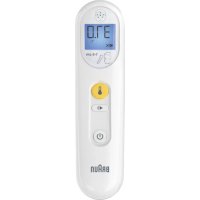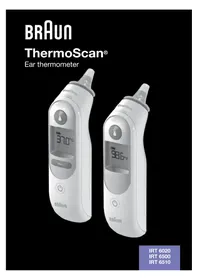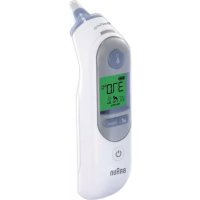
ThermoScan 7 IRT 6520 - Electronic thermometer BRAUN - Free user manual and instructions
Find the device manual for free ThermoScan 7 IRT 6520 BRAUN in PDF.



| Product Type | Infrared Ear Thermometer |
| Brand | Braun |
| Model | ThermoScan 7 IRT 6520 |
| Category | Electronic Thermometer |
| Measurement Technology | Infrared Ear |
| Measurement Range | 34 °C to 42.2 °C (93.2 °F to 108 °F) |
| Accuracy | ±0.2 °C (±0.4 °F) between 35 °C and 42 °C |
| Operating Temperature | 10 °C to 40 °C (50 °F to 104 °F) |
| Storage Temperature | -25 °C to 55 °C (-13 °F to 131 °F) |
| Operating and Storage Humidity | 10 % to 95 % RH (non-condensing) |
| Age Precision Function | Age selection (0-3 months, 3-36 months, 36 months+) with color code (green, yellow, red) |
| Measurement Memory | Last 9 measurements |
| Night Light | Yes, lights up during use and remains on for 15 seconds after inactivity |
| ExacTemp Light | Indicates measurement progress and confirms completion |
| Auto Power Off | After 60 seconds of inactivity |
| Use with Disposable Tips | Requires LF 40 tips (supplied: box of 20) |
| Lens Care | Clean with an alcohol-moistened cotton swab after each use without a tip |
| Exterior Cleaning | Soft dry cloth, do not immerse |
| Safety Use | Probe designed to prevent too deep insertion; warning for infants and elderly |
| Spare Parts | LF 40 disposable tips available separately |
| Repairability | Calibration check recommended annually at an authorized center |
| Standards | EN 12470-5:2003, EN 60601-1, EN 60601-1-2, etc. |
| Display | LCD screen with backlight |
Frequently Asked Questions - ThermoScan 7 IRT 6520 BRAUN
User questions about ThermoScan 7 IRT 6520 BRAUN
0 question about this device. Answer the ones you know or ask your own.
Ask a new question about this device
Download the instructions for your Electronic thermometer in PDF format for free! Find your manual ThermoScan 7 IRT 6520 - BRAUN and take your electronic device back in hand. On this page are published all the documents necessary for the use of your device. ThermoScan 7 IRT 6520 by BRAUN.
USER MANUAL ThermoScan 7 IRT 6520 BRAUN
This product is manufactured by Kaz Europe Srl under a license to the Braun' trademark. Braun's is a registered trademark of Braun GmbH, Kronberg, Germany. ThermoScan is a registered trademark of Kaz Europe Srl.

Kaz Europe Srl
Place Chauderon 18
CH-1003 Lausanne
Switzerland
2014, Kaz Europe Sari
www.hot-europe.com
Patents: www.ksz.com/patents/braun Made in Mexico.

0297

Printed in UST
IRT6020/6520 MNT,WF P.N:31IM0620190 MTMR14
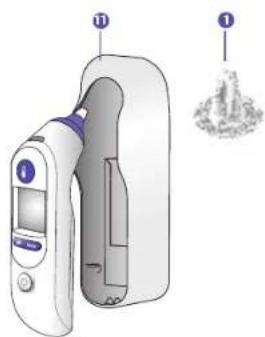
IRT6520
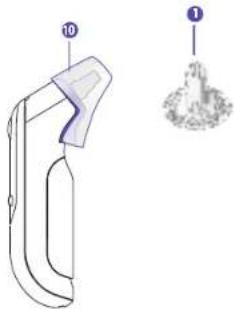
IRT6020
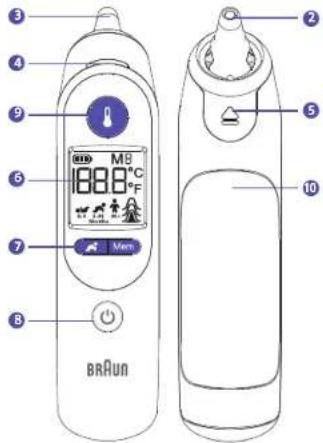
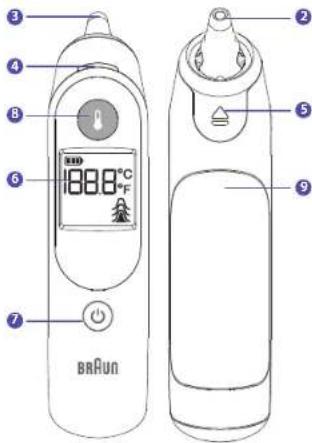
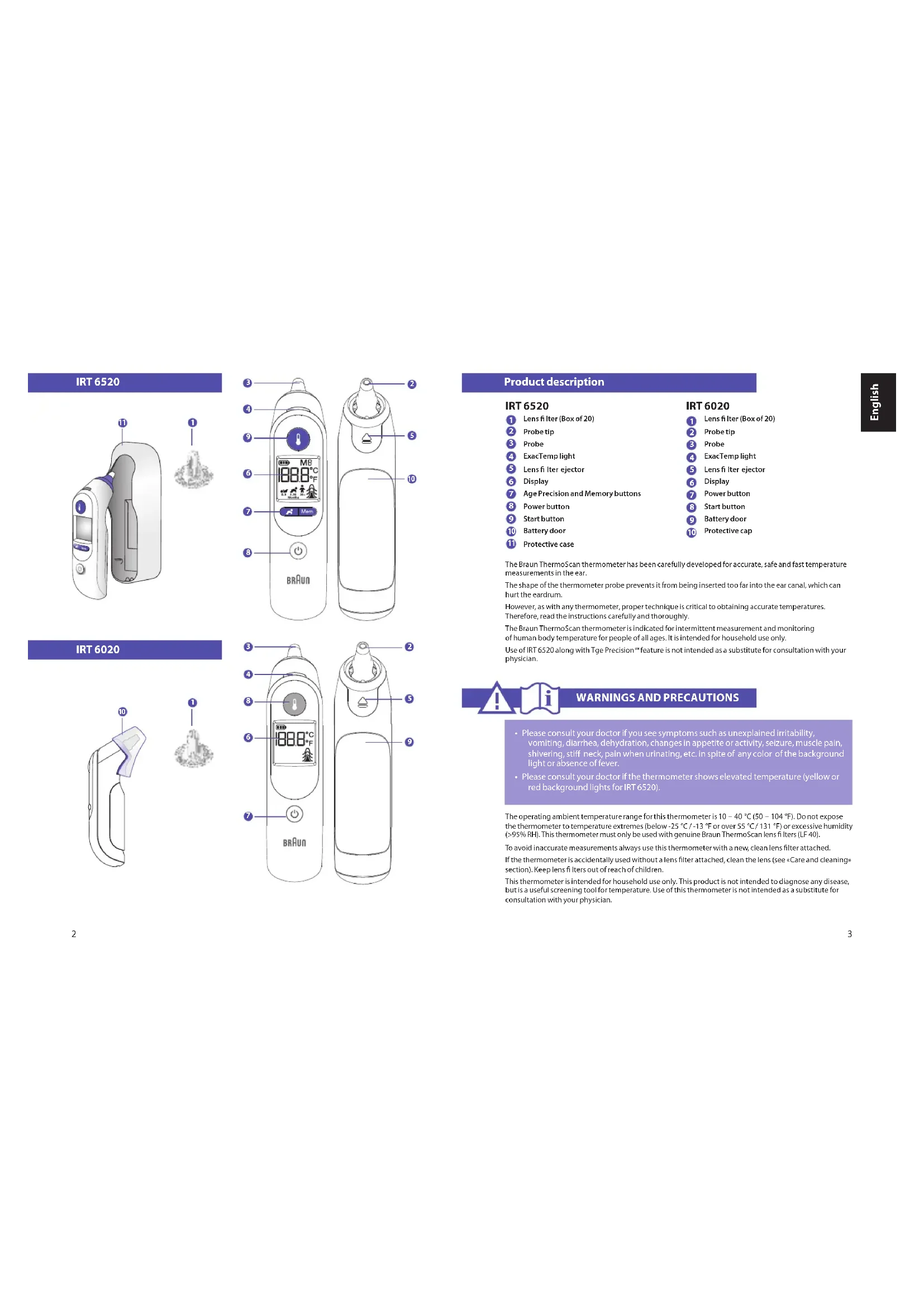
Product description
IRT6520
Lens filter (Box of 20)
2 Probotip
3 Probe
4 ExacTemp light
Lens filter electron
6 Display
Age Precision and Memory buttons
8 Power button
9 Start button
10 Battery door
11 Protective case
IRT 6020
Lens filter (Box of 20)
2 Probetip
Probe
ExacTemp Light
Lens filter electron
6 Display
7 Power button
8 Start button
Battery door
10 Protective cap
The Braun ThermoScan thermometer has been carefully developed for accurate, safe and fast temperature measurements in the ear.
The shape of the thermometer probe prevents it from being inserted too far into the ear canal, which can hurt the eardrum.
However, as with any thermometer, proper technique is critical to obtaining accurate temperatures. Therefore, read the instructions carefully and thoroughly.
The Braun ThermoScan thermometer is indicated for intermittent measurement and monitoring of human body temperature for people of all ages. It is intended for household use only.
Use of IRT 6520 along with Tge Precision™ feature is not intended as a substitute for consultation with your physician.

WARNING AND PRECAUTIONS
Please consult your doctor if you see symptoms such as unexplained irritability, vomiting, diarrhea, dehydration, changes in appetite or activity, seizure, muscle pain, shivering, stiff neck, pain when urinating, etc. In spite of any color of the background light or absence of fever.
- Please consult your doctor if the thermometer shows elevated temperature (yellow or red background lights for IRT 6520).
The operating ambient temperature range for this thermometer is 10 - 40^ (50 - 104^) . Do not expose the thermometer to temperature extremes (below -25^ / -13^ or over 55^ / 131^ ) or excessive humidity ( >95% RH). This thermometer must only be used with genuine Braun Thermoscan lens filters (LF 40).
To avoid inaccurate measurements always use this thermometer with a new, clean lens filter attached. If the thermometer is accidentally used without a lens filter attached, clean the lens (see
This thermometer is intended for household use only. This product is not intended to diagnose any disease, but is a useful screening tool for temperature. Use of this thermometer is not intended as a substitute for consultation with your physician.
The Tge Precision feature is not intended for pre-term babies or small for-gestational age babies. The Tge Precision feature is not intended to interpret hypothermic temperatures. Do not allow children under 12 to take their temperatures unattended.
Do not modify this equipment without authorization of the manufacturer.
Parents/guardians should call the pediatrician upon noticing any unusual sign(s) or symptom(s). For example, a child who exhibits irritability, vomiting, diarrhea, dehydration, seizure, changes in appetite or activity, even in the absence of fever, or who exhibits a low temperature, may still need to receive medical attention.
Children who are on antibiotics, analgesics, or antipyretics should not be assessed solely on temperature readings to determine the severity of their illness.
Temperature elevation as indicated by Tge Precision may signal a serious illness, especially in adults who are old, frail, have a weakened immune system, or neonates and infants. Please seek professional advice immediately when there is a temperature elevation and if you are taking temperature on:
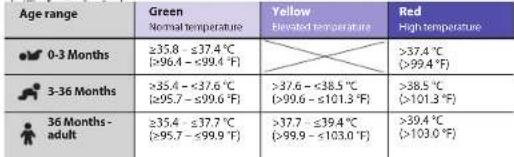
- neonates and infants under 3 months (consult your physician immediately if the temperature exceeds 37.4^ C or 99.4^ F )
patients over 60 years of age
patients having diabetes mellitus or a weakened immune system (e.g. HIV positive, cancer chemotherapy, chronic steroid treatment, splenectomy)
patients who are bedridden [e.g. nursing home patient, stroke, chronic illness, recovering from surgery) a transplant patient [e.g. liver, heart, lung, kidney]
Fever may be blunted or even absent in elderly patients.
This thermometer contains small parts that can be swallowed or produce a choking hazard to children. Tilwavs keep the thermometer out of children's reach.
Body temperature
Normal body temperature is a range. It varies by site of measurement, and it tends to decrease with age. It also varies from person to person and fluctuates throughout the day. Therefore, it is important to determine normal temperature ranges. This is easily done using Braun ThermoScan. Practice taking temperatures on yourself and healthy family members to determine the normal temperature range.
Note: When consulting your physician, communicate that the ThermoScan temperature is a temperature measured in the ear and if possible, note the individual's normal ThermoScan temperature range as additional reference.
Age PrecisionTM color-coded display
Clinical research shows the definition of fever changes as newborns grow into little kids a kids grow into adults'.
6520 Braun's Tge Precision" color-coded display takes the guesswork out of interpreting temperature for the entire family. Simply use the Tge Precision" button to select the appropriate age setting, take a temperature and the color-coded display will glow green, yellow or red to help you understand t temperature reading.
HorzogL, Phillips S. Tddressing Concoes Tbout Fever. Clinical Pediatrics. 2011;50(6):383-390.

How does Braun ThermoScan work?
Braun ThermoScan measures the infrared heat generated by the eardrum and surrounding tissues. To help avoid inaccurate temperature measurements, the probe tip is warmed to a temperature close to that of the human body. When the Braun ThermoScan is placed in the ear, it continuously monitors the infrared energy. The measurement is finished and the result displayed when the thermometer detects that an accurate temperature measurement has been taken.
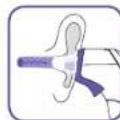
Why measure in the ear?
The goal of thermometry is to measure core body temperature, which is the temperature of the vital organs. Ear temperatures accurately reflect core body temperature, since the eardrum shares blood supply with the temperature control center in the brain, the hypothalamus. Therefore, changes in body temperature are reflected sooner in the ear than at other sites. Axillary temperatures measure skin temperature and may not be a reliable indicator of core body temperature. Oral temperatures are influenced by drinking, eating and mouth breathing. Rectal temperatures often lag behind changes in core body temperature and there is a risk of cross-contamination.
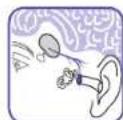
How to use your Braun ThermoScan

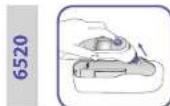
Remove the thermometer from the protective case.

205

Remove protective cap.

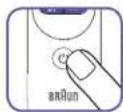
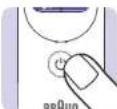
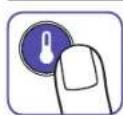
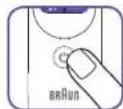
Push the Power button
During an internal self-check, the display shows all segments. Then the last temperature taken will be displayed for 5 seconds.
1 Guyon T C. Textbook of Medical Physiology, W.B. Saunders, Philadelphia, 1956, p 919.
2 Guyon T C. Textbook of Medical Physiology, W.B. Saunders, Philadelphia, 1956, pp 754-5.
3 Netter H F., Titus of Human Anatomy, Novartis Medical Education, East Hanover, NJ, 1997, pp 63, 95.

The lens fi tter indicator will blink to signal one is needed.
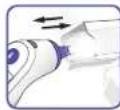
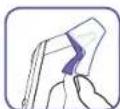
To achieve accurate measurements, make sure a new, clean lens fi tler is in place before each measurement. Ttattach a new lens fi tler by pushing the thermometer probe straight into the lens fi tler inside the box and then pulling out.
Note: The Braun ThermoScan will not work unless a lens filter is attached.



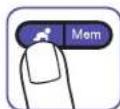
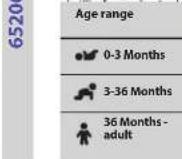
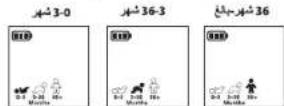
Select age with Tge Precision" button as shown below. Press button to toggle through each age group.
NOTE: You must select an age in order to take a measurement.

0-3 Months

3-36 Months

36 Months -
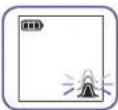
The thermometer is ready to take a temperature when the display looks like the images below.


60205520

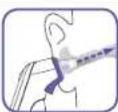
Fit the probe snugly into the ear canal, then push and release the Star button.
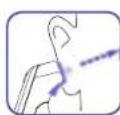


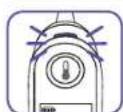
Exac Temp light will pulse while temperature measurement is in progress. The light will remain solid for 3 seconds to indicate that a successful temperature reading has been achieved.
NOTE: If the probe has been properly inserted into the ear canal during the measurement, a long beep will sound to signal the completed measurement. If the probe has NOT been constantly placed in a stable position in the ear canal, a sequence of short beeps will sound, the ExactTemp light will go out and the display will show an error message (POS = position error).
See "Errors and troubleshooting" section for more information.
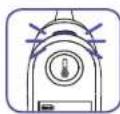


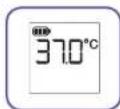
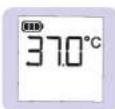
The confirmation beep indicates that an accurate temperature measurement has been taken. The result is shown on the display.
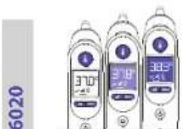
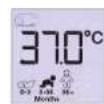
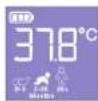
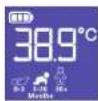
Temperature displays.

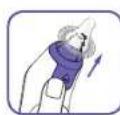
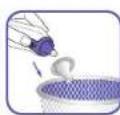
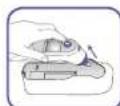
For the next measurement, press Eject button remove and discard used lens filter, and put on a new, clean lens filter.
NOTE: Defaults to last age setting used if you do not change.
The Braun ThermoScan ear thermometer turns off automatically after 60 seconds of inactivity. The thermometer can also be turned off by pressing the Power button (b).
The display will briefly flash OFF and it will go blank.
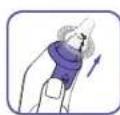
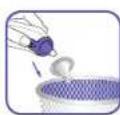

Temperature-taking hints
Tways replace disposable lens filters to maintain accuracy and hygiene. The right ear measurement may differ from the measurement taken in the left ear. Therefore, always take the temperature in the same ear. The ear must be free from obstructions or excess earwax build-up to take an accurate reading.
External factors may influence ear temperatures, including when an individual has:
Factor
Affect
Poor probe placement
Used lens finiter
Dirty lens
In the cases below, wait 20 minutes prior to taking a temperature.
| F | a | c | t | o | r |
| Extreme hot and cold room temperature | ✓ | ||||
| Hearing aid | ✓ | ||||
| Lying on pillow | ✓ | ||||
Use the untreated ear if ear drops or other ear medications have been placed in the ear canal.
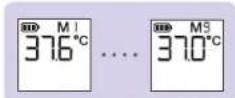
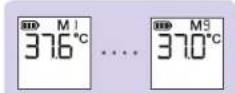
This model stores the last 9 temperature measurements. To display the stored measurement, the thermometer must be turned on.
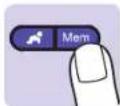
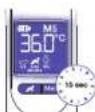
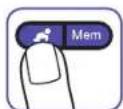
Press the Mem button. The display shows the temperature, and when releasing the Mem button, the stored temperature for that memory number is displayed, together with M.
Each time the Mem button is pushed, the stored reading and an M is displayed to indicate each temperature measurement (eg. M2). Memory mode is automatically exited by not pressing the memory button for 5 seconds.
The last temperature taken is stored in its memory and will be automatically displayed for 5 seconds when it is turned on again.
Night light feature
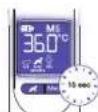
The thermometer includes a convenient night light to illuminate the display in a dim environment.
The light will turn on when you press any button. It will stay on until the thermometer is Inactive for up to 15 seconds even after temperature is taken.
Changing the temperature scale
Your Braun ThermoScan is shipped with the Celsius (C) temperature scale activated. If you wish to switch to Fahrenheit (F) and/or back from Fahrenheit to Celsius, proceed as follows:
1 Make sure the thermometer is turned off.
Press and hold down the Power button. After about 3 seconds the display will show this sequence: "C / SET", "F / SET".
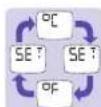
Case the Power button when the desired temperature scale is shown. There will be a short beep to confirm the new setting, then the thermometer is turned off automatically.
Care and cleaning
The probe tip is the most delicate part of the thermometer. It must be clean and intact to ensure accurate readings.
If the thermometer is ever accidentally used without a lens filter, clean the probe tip as follows:
Very gently wipe the surface with a cotton swab or soft cloth moistened with alcohol. After the alcohol has completely dried out, you can put a new lens filter on and take a temperature measurement.
If the probe tip is damaged, please contact Consumer Relations.
Use a soft, dry cloth to clean the thermometer display and exterior. Do not use abrasive cleaners. Never submerge this thermometer in water or any other liquid. Store thermometer and lens filters in a dry location free from dust and contamination and away from direct sunlight.
Additional lens filters (LF 40) are available at most stores carrying Braun ThermoScan.
Replacing the batteries
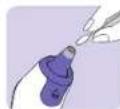
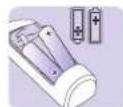
The thermometer is supplied with two 1.5 V type TT (LR06) batteries. For best performance, we recommend Duracell alkaline batteries.
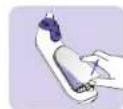
Open the battery compartment. Remove the batteries and replace with new batteries, making sure the poles are in the right direction.
3 Snap battery door into place.

Only discard empty batteries. To protect the environment, dispose of empty batteries at your retail store or at appropriate collection sites according to national or local regulations.
Calibration
This device was designed and manufactured for a long service life, however it is generally recommended to have the device inspected once a year to ensure correct function and accuracy. Please contact the authorized service centre located in your country.
Note: The calibration checking is not a free service. Please contact the Tuthorized Service Centre to get a quotation before you send out the product.
Manufacturing date is given by the LOT number located in the battery compartment. The first three (3) digits after LOT represent the Julian date that the product was manufactured and the next two (2) digits represent the last two numbers of the calendar year the product was manufactured. The last identifiers are the letters that represent the manufacturer.
Tn example: LOT 11614k, this product has been manufactured on the 116th day of the year 2014.
Errors and troubleshooting
| Error Message | Situation | Solution |
| POS | The thermometer probe was not positioned securely in the ear. Tn accurate measurement was not possible. | Take care that the positioning of the probe is correct and remains stable. |
| POS = position error | Replace lens filter and reposition. Press Start button to begin a new measurement. | |
| Err | Tambient temperature is not within the allowed operating range (10 - 40°C or 50 - 104°F). | Tallow the thermometer to remain for 30 minutes in a room where the temperature is between 10 and 40°C or 50 and 104°F. |
| HI | Temperature taken is not within typical human temperature range (34 - 42.2°C or 93.2 - 108°F). | Make sure the probe tip and lens are clean and a new, clean lens filter is attached. Make sure the thermometer is properly inserted. Then, take a new temperature. |
| LO | HI = too high | |
| LO = too low | ||
| ME | System error - self-check display flashes continuously and will not be followed by the ready beep and the ready symbol. | Wait 1 minute until the thermometer turns off automatically, then turn on again. |
| If error persists, | ... reset the thermometer by removing the batteries and putting them back in. | |
| If error still persists, | ... please contact the Service Centre. | |
| Battery is low, but thermometer will still operate correctly. | Insert new batteries. | |
| Battery is too low to take correct temperature measurement. | Insert new batteries. |
Product specifications
Displayed temperature range: 34 - 42.2°C (93.2 - 108°F)
Operating ambient temperature range: 10-40°C (50-104°F)
Storage temperature range: -25 - 55 °C (-13 - 131 °F)
Operating and storage relative humidity: 10-95% RH (non condensing)
Display resolution: 0.1^ or ^ F
Accuracy for displayed temperature range Maximum Laboratory Error
35-42°C(95-107.6°F) +0.2°C (+0.4°F)
Outside this range: ±0.3°C (±0.5°F)
Clinical repeatability:
Battery life:
Service life:
This thermometer is specified to operate at 1 atmospheric pressure or at altitudes with an atmospheric
pressure up to 1 atmospheric pressure (700 - 106

Equipment with

See Instruction for use

Opening temperature

Storage temperature

keep it 1
Subject to change without notice
This appliance conforms to the following standards:
Standard Reference Edition Title:
EN 12470-5: 2003 Clinical thermometers - Part 5: Performance of infra-red ear thermometers (with
maximum device).
EN 60601-1:2006 Medical electrical equipment - Part 1: General requirements for basic safety and essential performance.
EN ISO 14971:2012 Medical devices - Tplication of risk management to medical devices.
EN ISO 10993:1:2009 Biological evaluation of medical devices - Part 1: Evaluation and testing within a risk management process.
EN 60601-1-2: 2007 Medical electrical equipment - Part 1-2: General requirements for basic safety and essential performance - Collateral standard: Electromagnetic compatibility - Requirements and tests.
EN 980:2008 Symbols for use in labeling of medical devices.
EN 1041:2008 Information supplied by the manufacturer of medical devices.
EN 60601-1-11:2010 Medical electrical equipment - Part 1-11: General requirements for basic safety and essential performance - Collateral standard: Requirements for medical electrical equipment and medical electrical systems used in the home healthcare environment.
This product conforms to the provisions of the EC directive 93/42/FFC.
EMC requirements please contact your authorized local Service Centre (See guarantee card).
Portable and mobile RF communications equipment can affect MEDICTLE ELECTRICTL EQUIPMENT.
Please do not dispose of the product in the household waste at the end of it useful life.


To protect the environment, dispose of empty batteries at appropriate collection sites according to national or local regulations.
Guarantee
Consumer Card available on our website at www.hot-europe.com/after-sales
Please see last page of this manual to find the contact for the Kaz I unauthorized Service Center in your country. UK only: This guarantee in no way affects your rights under statutory law.
| Guidance and manufacturer's declaration - electromagnetic emissions | ||
| The IRT 6020/6520 equipment is intended for use in the electromagnetic environment specified below. The customer or the user of the IRT 6020/6520 should ensure that it is used in such an environment. | ||
| Emissions Test Compliance Electromagnetic environment - guidance | ||
| RF Emissions CISPR 11 | Group 1 | The ME equipment uses RF energy only for its internal function. Therefore, its RF emissions are very low and are not likely to cause any interference in nearby electronic equipment. |
| RF Emissions CISPR 11 | Class B Complies | |
| Harmonic emissions IEC 61000-3-2 | Not Tpplicable | The ME equipment is solely battery powered. |
| Voltage flUCTUATIONS /flicker emissions | Not Tpplicable | |
| Non-Life Support Equipment Separation Distance Calculation(3Vrms / 3V/m compliance) | |||
| Rated maximum output power of transmitter (W) | Separation distance according to frequency of transmitter (m) | ||
| 1.50 kHz to 80 MHz in ISM bands\( d = \frac{3.5}{V_1} \sqrt{P} \) | 80 MHz to 800 MHz\( d = \frac{3.5}{L_1} \sqrt{P} \) | 800 MHz to 2.5 GHz\( d = \frac{7}{L_2} \sqrt{P} \) | |
| 0.01 0.12 0.12 0.23 | |||
| 0.10 37 0.37 0.74 | |||
| 11.17 1.17 2.33 | |||
| 103.69 3.69 7.38 | |||
| 100 11.67 11.67 23.33 | |||
| Guidance and manufacturer's declaration - electromagnetic immunity | |||
| The IRT 6020/6520 is intended for use in the electromagnetic environment specif ed below.The customer or the user of the IRT 6020/6520 should ensure that it is used in such an environment. | |||
| Immunity test | IEC 60601 test level | Compliance level | Electromagnetic environment - guidance |
| Electrostatic discharge(ESD)IEC 61000-4-2 | ±6kV Contact±8kV Tlr | Complies | Floors should be wood, concrete, or ceramic tile. Iffloors are covered withsynthetic material, the relativehumidity should be at least30%. |
| Radiated RFIEC 61000-4-3 | 3 V/m 80MHz to2.5GHz | Complies | Field strengths outside theshielded location from fixed RFtransmitters, as determined byan electromagnetic site survey,should be less than 3 V/m.Interference may occur in thevicinity of equipment markedwith the following symbol:Separation distance calculation provided above.If a known transmitter is presentthe specif c distance can becalculated using the equations. |
| Conducted RFIEC 61000-4-6 | 3Vrms 150kHz to80MHz | Not Tpplicable(no electricalcabling) | |
| Electrical fast transientIEC 61000-4-4 | +2kV power line±1kV I/O lines | Not Tpplicable | The ME equipmentis solely battery powered. |
| SurgeIEC 61000-4-5 | ±1kVdiff erential±2kV common | Not Tpplicable | |
| Power frequency magnetic fi eldIEC 61000-4-8 | 3 T/m | Complies | Power frequencymagnetic fi elds should be atlevels characteristic of atypical location in a typicalcommercial or hospitalenvironment. |
| Voltage dips, short interruptions and voltagevariations on powersupply input linesIEC 61000-4-11 | >95% dip 0.5 cycle60% dip 5 cycles70% dip 25 cycles95% dip 5 sec. | Not Tpplicable | The ME equipmentis solely batterypowered. |
^a Guyton TC, Textbook of Medical Physiology, W.B. Saunders, Philadelphia, 1996, p 919. ^b Guyton TC, Textbook of Medical Physiology, W.B. Saunders, Philadelphia, 1996, pp 754-5. ^c Netter HT, Titias of Human Anatomy, Novartis Medical Education, East Hanover, NJ, 1997, p

Tachow and mobile vehicle services Center (Service Center)
22 23 Center in Inerm Land.
1 Guyon T C. Textbook of Medical Physiology, W.B. Saunders, Philadelphia, 1996, p 919.
2 Guyon T C. Textbook of Medical Physiology, W.B. Saunders, Philadelphia, 1996, pp 754-5.
3 Netter HF, Tittes of Human Anatomy, Novartis Medical Education, East Hanover, NJ, 1997, pp 63, 95.

Guyton TC, Textbook of Medical Physiology, W.B. Saunders, Philadelphia, 1996, p 919. Guyton TC, Textbook of Medical Physiology, W.B. Saunders, Philadelphia, 1996, pp 754-5. Netter HT, Tlaa of Human Anatomy, Nowards Medical Education, East Hanover, NJ, 1997, pp 63, 95.

Guyton AC, Textbook of Medical Physiology, W.B. Saunders, Philadelphia, 1996, p 919.
Guyton AC, Textbook of Medical Physiology, W.B. Saunders, Philadelphia, 1996, pp 754-3.
*Netter HF, Atlas of Human Anatomy, Novartis Medical Education, East Hanover, NJ, 1997, pp 63, 95.

H Evéhénéi qkto pao kα o avoaojbojne ievkovnac. On aenatae qkto.
TIA VA LIXUYTEI EPTPOIEEIKOIDEAC, BPAHIOEITE OII. EKTIOMOTENETNI KAVOUPOKOBAPQfippo kaoqou npiv AMOKDEUPTONN.
Sigma eva Kaivoup oikipo kaipoi uuvvctav T ovayevu Beogoupepu Evukcemu OTO gippo kaipou npolkotopotok KKT paetaphtne npoc taek.
Erlong, to 6eepoetpo mepoe vaenepyoanf Ee natavatoc to kounip laetoupuk.
Sigma oBvOaBnBaAoBpOeYiaLyhOyEvEiON OFF (Anepeoyoan)KaOoBpOe
Zouβouαεθερμοετρηα
Naivakotate naiva ta avaoaiaqpa qao kao yao kai npnnc nck aepkua kau nkyuivc. Hepapopoei npo otto 6eut auimopoet o eepnpoei npo o npipote o au tenuve,vaaveve naevn eepnpoei npo otio ouei. uortu pnte i veiva kaebo po atpoyouynpie npiaeaouooupeon kepoiyu ot anh jaykaboc evdoekic.
O BeuKaopaiae ot aui mpei va etnepocovta o eewtepkouc npayovtec, otoc otav aevyooTouk aokouba?
Napadyovtac Enpeae
| EoquaEuyn toorthetaon avxveun | ✓ |
| XpnoaOnaOnaIva oiaIpa oiaou | ✓ |
| BpukaKoc okaKoc | ✓ |
Tnnapakatw npunwoeic, nepieveve 20 nenrnpov ano th eepouetpon.
Empeae
Ecaipetika uynn kai yamn Cepiokpaaia domegaiou
Bopnua gong
Oaoviaong

XpOIOIOIOATE TOUI IOU DEV EEXI UOBI OIE OEPANIE AVE XEOUV TOnOEtOe iOATYOCN I aao apoakto AO uKoAKIO KnpoTOUIOI.
Aeitoupyia


Hobov npavicTe nBpokaoia KAI, otov apote To kouuim Mem.
epavicTaN aoBnKpuevn BpokpOaia YAO tv OuykKpuEv oApjUo
pvunjc, tue ypoauA M.
3 Kae opoa nou natare to koumi Mem, eovovivcota n amothekeuemevnveeitkntaoymuMa, deivovotac Kae metpqn neepkoqaiaq (m.x.M2).
Av Sev naeotoe to koumjni amyia 5 Seurpe pAenetra, yivetar autopa aedocsoamn tKeutropayu mypan


H TeAeutaBepouetpon anoEnkeotan mwnn kai eupavotiet autuorta yia 5eutepoAeTa 6av eveypOteKcEVA.
Nuxtepioc qwtiooC
To bemupeo peoiae Eeunpetekoo xoyteipov quripoi yoa vipetctet an oohny oke kotevo nepaioai.
O amuoc aovn oanote oioohtnote koupi. Paoevv auvoc vncxvi oavopnounoei to Bepuotepco, yia euck 15 devtpeaeta meet nebepuaqtnpn.
Auto to npoiov oumuopawetai μe tic diataec tnc odnyiac EE 93/42/EOK.
O IATPIKOS HAEKTPIKOE EONIAEMOe anatei eikic npopouaedcexetuk peyn HMS naiinrpoepn
Nepyopa Tuv aatirnepov HM2 eikovwovte je To tomko eouoobneve Kevto 2poc [BA. kaptayevonj
OoTnKcTcKmKtckcEcmKuovovu oPdAioovovtncmupeVvIATPKIO HAEKTPKIO EONAIJMO.

Mnyanoppimete to npoiov oia oikiaka anoppmuata oto teLoC ndiapkeiaoc tou.

Tianyipnauaiaotoupeiiaovtov,vaonopmteTicabieicmuatapapcec zakataiia anjuaiauauoyoiuovpuieTOBcVIOKOC,tiKoIOUcKAVOIOJOOc.
Eyyunon
H Kapta Karavakut diatetai anotov irotonto ma ctns duvon www.hot-europe.com/after-sales
Napakokou, ovayektei teyuktae oiao To napovotoc yegyiaoiya To atogaiota tou oneunovou
| Kabobnyon kai blyon kataokaueaŋ - nlektpoayvntkec ekpojnc | ||
| O econlaoioc IRT 6020/6520 npoepietai yia xhpn oto nlae kexpauoynuynko nepiialalov nou npoepiaipiei taa nopaokotai. O pkiattn o h oxytcei tou cdoaouou H1 6020/6520 penei va ecoopakaiotai otuoc xhpaonoiomoiit aort opeipaiowou nou nepeipapetetai. | ||
| Ekyoc eknojuv sujubopwam nlektpoayvntkepiaikalov - kabobnyon | ||
| Ekpojnc paioaoyuvotivn CISPR 11 | Ouaa 1 | O iatropoc nlektpkoc econlaoqcx npoepouanoei evpyeaia paioaoyuvotivn uvo yia mye eosopkien katovyia tou. Lusyneic, o iatropoc paoiaoyuvotivn elavmou kxupnec kai dev evna mrovo va pokoakouov napcpebale de npokasipavo nlektpovino k eunpokoi. |
| Ekpojnc paioaoyuvotivn CISPR 11 | Koaan B 2uupu | Papovetai. |
| Ekpojnc npoovuvvIEC 61000-3-2 | Devecpapu@ctei | O iatropoc nlektpkoc econlaoqcx kaiotoupvni uvo me μratoplia. |
| Aekoyuvvuk, damiy / ekpojnc ovalaumty | Aevcpapu@ctei | |
| Ynloayiouc anoataocdelta wipoioueonlaiououmniuxavikicuurootniiec(oumuopoeow | |||
| Ményaoyouaovopaaonkuyic eokouou tou pounou(W) | Anotocanδiyoxapoiouo ovekooya pe mη Σyoxoietaou (m) | ||
| 150 kHz 80 MHz at 2GHz ISM d = 3,5/Vp | 80 MHz 800 MHz d = 3,5/E1√P | 800 MHz 2,5 GHz d = 7/F1√P | |
| 0,01 | 0,12 0,12 0,23 | ||
| 0,1 | 0,37 0,37 0,74 | ||
| 1 | 1,17 1,17 2,33 | ||
| 10 | 3,69 3,69 7,38 | ||
| 100 | 11,67 11,67 23,33 | ||
| Kahobhyonkai δδλωηκατονηρερογμηνικηρερογμηνικηρερογμηνικηρερογμηνικηρερογμηνικηρερογμηνικηρερογμηνικηρερογμηνικηρερογμηνικηρερογμηνικeta | |||
| Oecloniaioc IRT 6020/6520 npoepicetai yia xipnion oto nlektopayvymikpeipalavou nounpoepisipctai napakotu. Oelainc no xipnianctou ecloniaioc IRT 6020/6520 npenievi a eeaopaikei atuotoxxprpmonatetaia otne pmpalauovou neu npypapaeita. | |||
| Dokumipatwaiac | Eminebo doekuncaIEC 60601 | Eminebo oumuopawan | Hektpoyamuyntko nepiabllov - kaboynny |
| Hektpoataki kukduan (ESD)IEC 61000-4-2 | +6KV μeaw epiapnc ±8KV μeow aepa Σμuuppivvetai | To daeneo npenei va eliva ana eulva, okkuaobedu na kepauiakna pkaikakya.Av to daeneo kaunertata onu uovbetiku kukcu, nyotekin yupovaa npenei va eliva tounaykotov 30%. | |
| AktivoBoloupevecspoedioxuvovntteIEC 61000-4-3 | 3 V/m 80MHz εuc 2,5GHz | Hixuc tu w vni bivw ucktc nnc npooateuovvvcn tombeia cia onto stabeovpuoiu opanoic poabooayvnttu, omuk kabopovtai anu ia enitomia epeuva nlektopayvymikov ektaumnu, da npenei va eliva mukpotsy ane 3 V/m.Ev6extalai va npokaiboov npapeuobokov kovotce de eonbouqou nou qepei to akkoukou obouubao: ((*)O uolayaijoc ncc anotdaanoc diayuupovov npexeytaia napaiaivu. Av upaia yuvotoc noupac, n eikki antodtaanmupei va unolayeiote ue jxionn tow kexuouevu. | |
| AyuyuuepcdoibouvovntteIEC 61000-4-6 | 3Vrms 150kHz εuc 80MHz | Δev evapuocetai (xuplc nuketipkai kauwdiuon) | |
| Aupvibiec metafoles taoncIEC 61000-4-4 | ±2KV ypauniipreoiutoc ±1KV ypauniec1/O | Δev evapuocetai | Oiatiprok nlektipakoc ecmianuoc letoupyei mvo μunatopaia. |
| YnepraonIEC 61000-4-5 | ±1KV biapopikó ±2KV konov | Δev evapuocetai | |
| Mavnytiko πebio auovvtitac iouovcIEC 61000-4-8 | 3 A/m Σμuuppov | Tajayvntká πebia ouvvtitac iouvoc npenei va biokovtai on emitecova nuov eovapkntipkia kuaiau kukhizhecn, on eva tumkó etayuayluktikó nvookoejukkó nepiabllavov. | |
| Bubiozic taanc, avnojecdiakomec kai meaolec taonc otic ypauiuciciaovdou nlektopobamcIEC 61000-4-11 | >95% BUDIOn 0,5 kukloc 60% BUDIOn 5 kukloc 70% BUDIOn 25 kukloc 95% BUDIOn 5 bevt. | Δev evapuocetai | Oiatiprok nlektipakoc ecmianuoc letoupyei mvo μunatopaia. |
Guyton TC, Textbook of Medical Physiology, W.B. Saunders, Philadelphia, 1996, p 919.
Guyton TC, Textbook of Medical Physiology, W.B. Saunders, Philadelphia, 1996, pp 754-5.
Netter HF, Titias of Human Anatomy, Novartis Medical Education, East Hanover, NJ, 1997, pp 63, 95.

WAARSCHUWINGEN EN VOORZORGSGMAATREGELEN
1 Guyon TC, Textbook of Medical Physiology. W.B. Saunders, Philadelphia, 1996, p 918.
2 Netter HF, Titus of Human Anatomy, Novartis Medical Education. East Hanover, NJ, 1997, pp 63-95.
3 Guyon TC, Textbook of Medical Physiology. W.B. Saunders, Philadelphia, 1996, pp 754-5.

Guyton TC, Textbook of Medical Physiology, W.B. Saunders, Philadelphia, 1996, p 919.
Guyton TC, Textbook of Medical Physiology, W.B. Saunders, Philadelphia, 1996, pp 754-5.
Netter HF, Titias of Human Anatomy, Novartis Medical Education, East Hanover, NJ, 1997, pp 63, 95.

Aa aal alal all aalalallalalalalalalalalalalalalalalalalalalalalalalalalalalalal
aiee eae 105 Tge Precision 104 2020 2020 2020 2020 2020 2020
6520
a

6020
6520
a

3 3 3 3 3 3 3 3 3 3 3 3 3 3 3 3 3 3 3 3 3 3 3 3 3 3 3 3 3 3 3 3 3 3 3 3 3 3 3 3 3 3
y
Ae aae aee aee aee aee aee aee aee aee aee aee aee aee aee aee aee aee aee aee aee aee aee aee aee aee aee aee aee aee aee aee aee aee aee aee aee aee aee aee aee aee aee aee aee aee aee aee aee aee aee aee aeeee
#

1 1 1 1 1 1 1 1 1 1 1 1 1 1 1 1 1 1 1 1 1 1 1 1 1 1 1 1 1 1 1 1 1 1 1 1 1 1 1 1 1 1 1 1 1 1 1 1 1 1 1
Braun yThermoScan
502
1
6520
19.11
y 1
1
2
^1 Guyton TC, Textbook of Medical Physiology, W.B. Saunders, Philadelphia, 1996, p.919. ^2 Guyton TC, Textbook of Medical Physiology, W.B. Saunders, Philadelphia, 1996, pp.754-5. ^3 Netter H.F., Atlas of Human Anatomy, Novartis Medical Education, East Hanover, NJ, 1997, pp.63, 95.

aee aee eae ee eae eae eae eae eae eae eae eae eae eae eae eae eae eae eae eae eae eae eae eae eae eae eae eae eae eae eae eae eae eae eae eae eae eae eae eae eae eae eae eae eae eae eae eae eae eae eae eae eae eae eee
paae aee aee aee aee aee aee aee aee aee aee aee aee aee aee aee aee aee aee aee aee aee aee aee aee aee aee aee aee aee aee aee aee aee aee aee aee aee aee aee aee aee aee aee aee aee aee aee aee aee aee aae
aaiy jaiy jaiy jaiy jaiy jaiy jaiy jaiy jaiy jaiy jaiy jaiy jaiy jaiy jaiy jaiy jaiy jaiy jaiy jaiy jaiy jaiy jaiy jaiy jaiy jaiy jaiy jaiy jaiy jaiy jaiy jaiy jaiy jaiy jaliy jaliy jaliy jaliy jaliy jaliy jaliy jaliy jaliy
ThermoScan 1
ThermoScan 2
Ligis Jss All Age Precision
Ji j 1
a 1
24 1 1 1 1 1 1 1 1 1 1 1 1 1 1 1 1 1 1 1 1 1 1 1 1

Herzog L, Phillips S. Addressing Concerns about Fever. Clinical Pediatrics. 2011;50(4):383-390.
Product description
| IRT 6020 | IRT 6520 | ||
| (20)### | 1 | (40)### | 1 |
| ### | 2 | ### | 2 |
| ### | 3 | ### | 3 |
| ExacTemp | 4 | ExacTemp | 4 |
| ### | 5 | ### | 5 |
| ### | 6 | ### | 6 |
| ### | 7 | ### | 7 |
| ### | 8 | ### | 8 |
| ### | 9 | ### | 9 |
| ### | 10 | ### | 10 |
aBraun 1ThermoScan aJ 0
y120 1
A
J 1
Ae 1
1
dubjua jue jus juaa tge Precision" 140, IRT6520
aegsllg 1

Jusy jusy jusy jusy jusy jusy jusy jusy jusy jusy jusy jusy jusy jusy jusy jusy jusy jusy jusy jusy jusy jusy jusy jusy jusy jusy jusy jusy jusy
gai jia jia jia jia jia jia jia jia jia jia jia jia jia jia jia jia jia jia jia jia jia jia jia jia jia jia jia jia jia jia jia jia jia jia jia jia jia jia jia jia jia jia jia jia jia jia jia jia jia jia j
a 1
.IRT6520
Guyton TC, Textbook of Medical Physiology, W.B. Saunders, Philadelphia, 1996, p 919.
Guyton TC, Textbook of Medical Physiology, W.B. Saunders, Philadelphia, 1996, pp 754-5.
Netter HF, Titias of Human Anatomy, Novartis Medical Education, East Hanover, NJ, 1997, pp 63, 95.

Bir lens fi I tresi gereki oldugunda lens fit Ire gesterge yamp oncecikir.
Kaz Authorized Service Centers
Austria
143(0)820988470
Bahrain
197317582250
Belgium/Luxemburg
+32(0)70270110
Bospla
+387(33)636285
Bulgaria
1359(2)4024600
Croatie
1385(01)3444856
Cyprus
+35722575016
Northern
10392227367
Czech Republic
1420224941640
Denmark
4767118888
Finland
+358207411660
France
+33(0)825742359
Germany
+4901805763376
Greece
+302106840222
Hungary
+3696512512
Iceland
+3545553100
Israel
1800250221
Italy
+390230081995
Jordan
+96265820112345
Kuwalt
196524833274
Lebanon
+961(01)512002
Netherlands
0900-4045000
Norway
+4756319020
Poland
48327800550
Portugal
+351219737950
Qatar
+97444075048
+97444075000
Romania
+40214255566
Saudi-Arabia
96638692244
Western Region: Jeddah
+966022565555
Central Region -Biyadh
+966(0)12886808
Eastern Region - ThKhobar
+966(0)38940555
South Region, Thea
+9661072376062
Slovakla
+421(035)7902400
Slovenia
+386(01)5886800
South Africa
+27(0)110891200
Spain
+34902224044
+34937724044
Sweden
+46851510188
Cited by:
Switzerland +41 00447321511
Tunisia
#
Turkey
+902165643500
UAE
+97143534506
United Kingdom/Ireland
+44(0)1159657449