BY 40 - Breast pump BEURER - Free user manual and instructions
Find the device manual for free BY 40 BEURER in PDF.


| Product type | Electric breast pump |
| Brand | Beurer |
| Model | BY 40 |
| Dimensions (L x l x H) | 168 x 100 x 53 mm |
| Weight (without batteries) | 310 g |
| Power supply | 4 AA 1.5 V batteries (included) or mains adapter 100-240 V, 6 V DC, 1 A |
| Battery life | Approx. 60 minutes at the lowest level |
| Operating modes | Stimulation (2 min) and expression (adjustable) |
| Intensity levels | Multiple adjustable levels for stimulation and expression |
| Memory function | Yes, remembers the last setting |
| Display | Screen with level indicator, timer and battery status |
| Bottle capacity | 180 ml |
| Materials in contact with milk | Silicone and BPA-free plastic (compliant with EN 14350) |
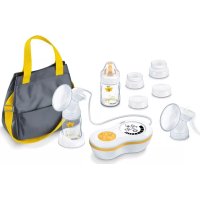
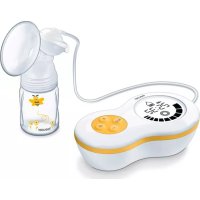
| Included accessories | Motor, silicone tube, breast shield with membrane and valve, standard size silicone cushion, bottle, cap, 2 adapters (Avent and NUK), mains adapter, 4 AA batteries |
| Spare parts available | Yes: complete breast shield, bottles, adapters, cushions, membrane, valve |
| Cleaning and sterilization | Sterilize parts in contact with milk in boiling water for 5 minutes; clean the motor with a damp cloth |
| Protection rating | IP21 |
| Safety class | Class 2 (double insulation), type BF |
| Operating conditions | +5 °C to +40 °C, 30-85% RH |
| Storage conditions | -20 °C to +60 °C, 10-95% RH |
| Warranty | 3 years |
| Intended use | Domestic use by a single user |
Frequently Asked Questions - BY 40 BEURER
User questions about BY 40 BEURER
0 question about this device. Answer the ones you know or ask your own.
Ask a new question about this device
Download the instructions for your Breast pump in PDF format for free! Find your manual BY 40 - BEURER and take your electronic device back in hand. On this page are published all the documents necessary for the use of your device. BY 40 by BEURER.
USER MANUAL BY 40 BEURER
Read these instructions for use carefully and keep them for later use, be sure to make them accessible to other users and observe the information they contain.
Table of contents
- Getting to know your device 15
- Included in delivery 16
- Signs and symbols 16
- Intended use 17
- Notes 17
- Device description 19
- Initial use 20
7.1 Assembling the breast pump 20
7.2 Cleaning and sterilising the breast pump.. 21
- Operation 22
8.1 Tips to ensure a better milk flow 22
8.2 Operating the breast pump 22
8.3 Storing the breast milk 23
8.4 Feeding with the breast milk 23
9.What if there are problems? 24
9.1 Replacement parts and wearing parts 24
10. Disposal 25
11. Technical data 25
12.Mains part 26
13.Warranty/service 26
Dear customer,
Thank you for choosing one of our products. Our name stands for high-quality, thoroughly tested products for applications in the areas of heat, gentle therapy, blood pressure/diagnosis, weight, massage, beauty, air and babycare. Read these instructions for use carefully and keep them for later use, be sure to make them accessible to other users and observe the information they contain.
With kind regards,
Your Beurer team
1. Getting to know your device
The Beurer BY 40 breast pump allows nursing mothers to express their breast milk easily and conveniently. If not enough breast milk is taken from mothers who have recently given birth, this can lead to the painful build-up of milk, which in the worst-case scenario could cause inflammation of the nipples (mastitis). This build-up of milk can be prevented through targeted expressing of breast milk using the breast pump. In addition, breast pumps help to alleviate cracked or sore nipples. You can use the integrated stimulation function to draw out flat or inverted nipples, making it easier to then pump the breast milk. The breast pump also allows you to store breast milk in the bottle, for example if you will be travelling or away from your baby for an extended period of time.
Babies who cannot be breast-fed directly for health reasons (due to a premature birth or cleft palate) can still be given breast milk by using the breast pump.
2. Included in delivery
- Breast pump (motor unit)
Silicone tube - Pump attachment with silicone membrane and silicone valve
Silicone cushion (standard size) - Bottle
- Screw plug
- 2 x adapter for Avent and NUK bottles
- Mains plug
- 4 × 1.5 VAA batteries
These instructions for use
3. Signs and symbols
The following symbols appear in these instructions for use:
| WARNING Warning instruction indicating a risk of injury or damage to health | |
| IMPORTANT Safety note indicating possible damage to the device/accessory | |
| i | Note Note on important information |
| Observe the instructions for use | |
| Application part, type BF | |
| = = = | Direct current |
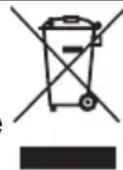
| Disposal in accordance with the Waste Electrical and Electronic Equipment EC Directive - WEEE | |
| Manufacturer | |
| Operating | Permissible operating temperature and humidity |
| Storage | Permissible storage temperature and humidity |
| IP 21 | Protected against foreign objects equal to or greater than 12.5 mm in diameter and against vertically falling drops of water. |
| Indicates that the packaging contains products that are intended to come into contact with food pursuant to Regulation (EC) No 1935/2004. | |
| SN | Serial number |
| CE 0483 | The CE labelling certifi es that the product complies with the essential requirements of Directive 93/42/EEC on medical products. |
| REF | Manufacturer's catalogue number |
| The unit is double-protected and thus corresponds to protection class 2 | |
| 21PAP | Dispose of packaging in an environmentally friendly manner |
| EAC | Certification symbol for products that are exported to the Russian Federation and members of the CIS |
4. Intendeduse
The breast pump must be used exclusively for pumping breast milk from nursing mothers. Do not use the breast pump on animals. The breast pump is only intended for domestic/private use, not for commercial use.
This device may only be used for the purpose for which it is designed and in the manner specified in the instructions for use. Improper use can be dangerous. The manufacturer is not liable for damage resulting from improper or careless use.
5. Notes
WARNING
Safety notes
- Keep packaging material away from children to avoid danger of suffocation.
- Keep small parts out of reach of children.
- Make sure that cables are not accessible to children.
- Only use the mains part plug included in delivery.
Children must not play with the device. - Cleaning and user maintenance must not be performed by children unless supervised.
- Do not pull, twist or bend the mains cable.
- Before using the breast pump for the first time, ensure that the technical specifications of the mains part plug match those of the motor unit.
- Pull the mains part plug out of the socket in the case of operational faults, before cleaning and when the device is not in use.
- The breast pump must not come into contact with hot surfaces or sharp-edged objects.
- Do not use any additional parts that are not recommended by the manufacturer or offered as accessories.
- Store these instructions for use in a safe place and make them accessible to all users.
- Make sure you include these instructions for use when handing over the device to third parties.
- You can reuse the motor unit but, for hygiene reasons, you must only use the pump set for one person. Do not share the pump set with other breastfeeding mothers.
- The milk pump must only be used on the female breast.
- Never use the breast pump if feeling drowsy or when asleep.
- Never use the breast pump in the bath or the shower.
- In the event of a fault, do not open or shake the breast pump under any circumstances. Refer to the "What if there are problems" chapter. If your problem is not described there, please contact Customer Services or your retailer.
- The pump set does not require any maintenance.
- Repairs must only be carried out by Customer Services or authorised retailers. Under no circumstances should you open or repair the breast pump yourself, as faultless functionality can no longer be guaranteed thereafter. Failure to comply will result in voiding of the warranty.
- Never submerge the breast pump in water.
- Never touch the breast pump with wet or damp hands.
- Never reach for the breast pump if it has fallen into water. Remove the mains part plug from the socket immediately if the breast pump has fallen into water.
- When using the breast pump, place it on an even and stable surface.
- Unwind the mains cable fully in order to avoid overheating.
-
Never place the breast pump or mains part plug in the microwave.
-
Remove the mains part plug from the socket when the breast pump is not in use. Do not leave the breast pump plugged in.
- If the mains cable of the breast pump is damaged, it must be disposed of.
- Never heat up breast milk in the microwave as it may be heated unevenly and could burn your child when they drink it.
- Keep the mains cable away from hot surfaces.
- This device may not be used by people with reduced physical, sensory or mental skills or a lack of experience or knowledge, provided that they are supervised or have been instructed on how to use the device safely, and are fully aware of the consequent risks of use.
- The breast pump does not need calibration.
- No modification to this equipment are allowed.

IMPORTANT
- Never moisten the breast pump with water. It is not protected against water splashes or liquids.
- Keep the breast pump away from strong electromagnetic fields, since electromagnetic interference can occur and adversely affect the functionality of the breast pump.
- Protect the breast pump and its accessories against impacts, humidity, dirt, marked temperature fluctuations and direct sunlight.
- Do not pull on the breast pump tubes.
- Do not use the mains cable to pull the mains part plug out of the socket.

IMPORTANT
Instruction for Transport of the feeding bottle
- When transporting breast milk in the bottle (e.g. when on the move or travelling), make sure that the screw plug is always screwed on tightly.
- We recommend not to store the filled bottle into suitcase, bags, etc. during transport.

WARNING
For your child's safety and health with the feeding bottle
- Always use this product with adult supervision.
- Never use feeding teats as a soother (not included in BY 40).
- Continuous and prolonged sucking of fluids will cause tooth decay (not included in BY 40).
- Always check food temperature before feeding.
- Inspect before each use and pull the feeding teat in all directions. Throw away at the first signs of damage or weakness (not included in BY 40).
- Do not leave a feeding teat in direct sunlight or heat, or leave in disinfectant ("sterilising solution") for longer than recommended, as this may weaken the teat. (not included in BY 40)
- Do not tip the teat in sweet substances as they encourage the formation of tooth decay (not included in BY 40).
- Do not use solvents or abrasive cleaning agents.
- Before first use place the parts which are in contact with milk in boiling water for 5 minutes. This is to ensure hygiene.
Clean before each use. - Make sure that the liquid inside the bottle never exceed 50^ .
WARNING
Notes on handling batteries
- If your skin or eyes come into contact with battery fluid, rinse the affected areas with water and seek medical assistance.
- Choking hazard! Small children may swallow and choke on batteries. Store the batteries out of the reach of small children.
- Observe the plus (+) and minus (-) polarity signs.
- If a battery has leaked, put on protective gloves and clean the battery compartment with a dry cloth.
- Protect batteries from excessive heat.
- Risk of explosion! Never throw batteries into a fire.
- Do not charge or short-circuit batteries.
- If the device is not to be used for a relatively long period, take the batteries out of the battery compartment.
- Use identical or equivalent battery types only.
- Always replace all batteries at the same time.
- Do not use rechargeable batteries.
- Do not disassemble, split or crush the batteries.
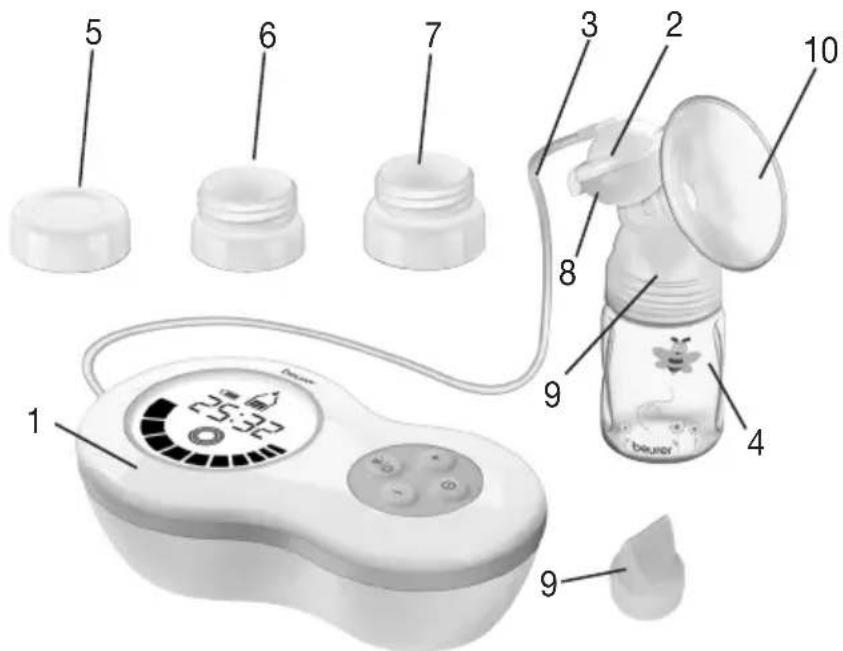
6. Devicedescription
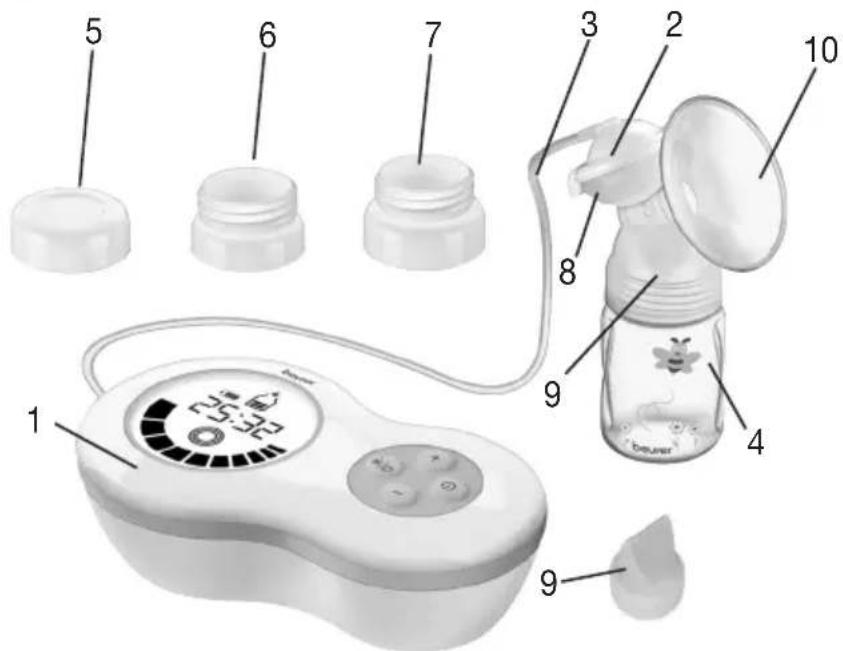
| 1. Breast pump with display 6. Adapter for NUK bottles | |
| 2. Pump attachment incl. silicone membrane and silicone valve | 7. Adapter for Avent bottles |
| 3. Silicone tube 8. Silicone membrane | |
| 4. Bottle (180ml) 9. Silicone valve | |
| 5. Screw plug for bottle 10. Silicone cushion | |
Description of display and buttons
| 1. Battery status (for operation without mains plug) | 6. + button (to increase stimulation or pumping level) |
| 2. Pumping mode (to pump breast milk) 7. ON/OFF button | 8. – button (to decrease stimulation or pumping level) |
| 3. Time display (timer for stimulation / duration of use for pumping mode) | |
| 4. Stimulation or pumping level | 9. MODE button (change between pumping and stimulation mode) |
| 5. Stimulation mode (to stimulate the nipple – no breast milk is pumped) |
7. Initial use

Note
Check that the packaging of the breast pump has not been tampered with and make sure that all components are present. Before use, ensure that there is no visible damage to the device or accessories and that all packaging material has been removed. If you have any doubts, do not use the device and contact your retailer or the specified Customer Services address.
7.1 Assembling the breast pump
Once the breast pump has been removed from the packaging, check the plastic containers for cracks to ensure that the electrical components are not exposed to liquids without protection.
| 1. Screw the pump attachment onto the bottle. Ensure the pump attachment is firmly secured so that no liquid can escape. | |
| 2. Insert the silicone tube into the pump attachment and the breast pump | |
| 3. Connect the breast pump to the mains cable and insert the mains plug into the socket. | |
| 4. If you instead choose to operate the breast pump using batteries, open the battery compartment cover on the rear side of the motor unit. Insert four AA batteries (included in delivery). Make sure that the batteries are inserted the correct way round. See the graphic in the battery compartment. Next, close the battery compartment until you can hear and feel it click into place. A single battery charge with 4 new AA batteries will last for approximately 60 minutes of operation (at the lowest setting). |
7.2 Cleaning and sterilising the breast pump

WARNING
Clean and sterilise the separate parts of the breast pump that come into direct contact with the breast milk (except for the motor unit and silicone tube) individually before the first use and before each use. Never sterilise the motor unit.
To sterilise / clean the breast pump correctly, proceed as follows:
- Unscrew the pump attachment from the bottle.
- Remove the silicone tube from the pump attachment and the motor unit.
- Seperate the pump attachment from silicon membrane and silicone valve.
- Sterilise the bottle and pump attachment (with silicone membrane and silicone valve) for five minutes in boiling water or using a steam steriliser. Do not use the breast pump until all individual parts are completely dry. Do not use any antibacterial cleaning products, since these may damage the plastic on the breast pump.
- Clean the motor unit carefully using a slightly damp cloth only. Do not use any cleaning agents or solvents. Under no circumstances should you hold the motor unit under water, as this can cause liquid to enter and damage the breast pump. If you do not intend to use the breast pump for a prolonged period of time, remove the batteries.
8. Operation
8.1 Tips to ensure a better milk flow
- Choose a location to use the pump where you can relax.
- Choose a time to use the pump when you can relax.
- Having your child nearby or looking at a picture of your child can have a positive effect on the milk flow.
- If feeding your child using one breast, use the breast pump on the other breast at the same time.
- Warmth and relaxation encourage milk flow. Use the breast pump after having a shower or bath.
- If your breasts are swollen or sore, place a warm towel on them for a few minutes. This will improve the milk flow.
- If the milk does not start to flow from your breasts immediately, try to relax and then try again a few minutes later.
- If the breast pump still does not extract any milk from your breasts after five minutes, stop using it and try again later.
- If you experience any sharp pains when using the breast pump, consult a doctor.
8.2 Operating the breast pump
| 1. Before using the breast pump, wash your hands and breasts thor-oughly. | |
| 2. Sit with your upper body lent forwards slightly. You can support your back better by using a pillow. | |
| 3. Place the breast shield with silicone cushion gently on the breast. Make sure that the nipple is completely enclosed and there are no air pockets. To ensure proper function, the breast shield must be drawn firmly onto the breast. | |
| 4. To switch on the breast pump, press the button. The breast pump will begin automatically in stimulation mode ( )and a two-minute timer will appear on the display. During these two minutes, your breast nipple will be stimulated in order to prepare it for pumping the breast milk. Use the / buttons to set the desired stimulation intensity. | 1. switch on stimulation mode 2. itensity |
| 5. After the two minutes have passed, will start to flash on the display. To begin pumping the breast milk, press the button.Use the / buttons to select a suction intensity that is comfortable for you. When the milk reaches 180 ml inside the feeding bottle, interrupt suction | 3. start pumping 4. itensity |
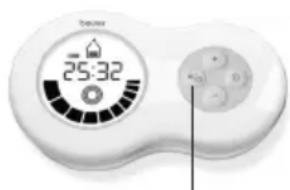
- If you want to switch back to stimulation mode, press the button. The stimulation and the two-minute timer will start from the beginning.

The breast pump has a memory function, which recalls the last programmed stimulation or pumping level when it is switched on.
-
switch back to stimulation mode
-
To switch off the breast pump, press the button.
8.3 Storing the breast milk
Expressed milk can be stored in the fridge or freezer for certain period of time.
- When storing breast milk, ensure that the breast pump and the container are disinfected before usage. Only store breast milk in disinfected containers.
- Store breast milk in the fridge or freezer immediately after expressing. Do not leave breast milk out at room temperature.
- If storing breast milk in the freezer, it is recommended that you mark the bottle with the date of expressing.

WARNING
Observe the storage periods in the following table:
| ROOM TEMPERATURE | REFRIGERATOR (approx. 3 - 5°C) | FREEZER (approx. -16°C) | |
| Recently expressed breast milk | Can be kept for 6 hours | Can be kept for 24 hours (Do not store in the fridge door, as it is not sufficiently cool there) | Can be kept for 3 months |
| Defrosted breast milk (that had been frozen) | Use immediately | 10 hours | Do not refreeze |
8.4 Feeding with the breast milk
- Prior to feeding, ensure the bottle has been disinfected before filling it with the breast milk that has been stored.
- To defrost breast milk, store it overnight in the fridge, so as to retain the nutrients. Once the breast milk is defrosted, it must be used within 24 hours. Breast milk should only be defrosted in warm water in especially urgent cases.
- If the breast milk smells unpleasant, it should be disposed of immediately.
- Never heat up breast milk in the microwave as it may be heated unevenly and could burn your child when they drink it.
- If heating up the breast milk, check its temperature before feeding it to your baby.
9. What if there are problems?
| Problem Potential solutions | |
| There is no suction from the breast pump. | ·Check all parts of the breast pump are correctly assembled. ·Check whether the pump attachment is correctly placed on the breast. |
| No breast milk is being pumped. | ·Check that the silicone tube is correctly inserted, the suction level is not set to the minimum and the breast pump is switched on. ·Ensure that there is no milk remaining in the silicone valve and obstructing the milk flow. |
| Pumping the breast milk is causing pain. | ·Try to relax and then attempt it again a few minutes later. As you use the breast pump more and more, you will find it easier to pump milk. ·Reduce the suction level using the – button. ·Consult your doctor. |
| The breast milk is leaking out underneath the silicone cushion. | ·Remove the silicone cushion and re-attach it. Ensure the silicone cushion is correctly positioned and firmly secured to the pump attachment. ·Lean your upper body forwards slightly. |
| One of the breast pump components has become altered or damaged. | ·Do not use any corrosive, gaseous cleaning agents or solvents. ·In some cases, marked fluctuations in temperature can damage the plastic on the breast pump. ·If any of the parts becomes damaged, stop using the breast pump. |
| The breast pump will not switch on. | ·Ensure that the breast pump is correctly assembled and switched on. ·Ensure that the mains part plug is correctly connected to the breast pump. |
9.1 Replacement parts and wearing parts
| Item Item number | |
| Pump attachment including silicone cushion (standard size), silicone membrane, silicone valve, silicone tube, bottle and bottle cap | 953.15 |
| Bottle with teat and bottle cap 163.719 | |
| Adapter for Avent and NUK bottles 163.720 | |
| 2 silicone cushions (small and standard) 163.721 | |
| Hand pump attachment including silicone cushion (standard size) | 163.722 |
| Bottle stand 163.723 |
10. Disposal
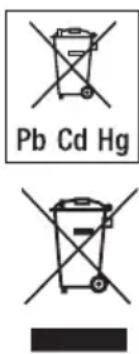
Empty, completely flat batteries must be disposed of through specially designated collection boxes, recycling points or electronics retailers. You are legally required to dispose of the batteries.
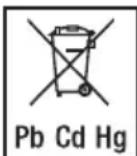
The codes below are printed on batteries containing harmful substances: Pb = Battery contains lead, Cd = Battery contains cadmium, Hg = Battery contains mercury.
For environmental reasons, do not dispose of the device in the household waste at the end of its useful life. Dispos of the device at a suitable local collection or recycling point. Dispos of the device in accordance with EC Directive - WEEE (Waste Electrical and Electronic Equipment). If you have any questions, please contact the local authorities responsible for waste disposal.
11. Technicaldata
| Model BY 40 | |
| Type BY 40 | |
| Power supply 4 x 1.5 V AA batteries (Alkaline batteries) | |
| Voltage (input) 100-240V (AC~) 50/60Hz | |
| Voltage (output) 6V (DC) | ---) 1.0 A |
| Dimensions 168 x 100 x 53 mm | |
| Weight 310 g (without batteries) | |
| Maximum suction pressure 0.35 bar | |
| Permissible operating conditions | +5°C to +40°C, 30% to 85% relative humidity (non-con-densing), 700 - 1060 hPa ambient pressure |
| Permissible storage conditions -20°C to +60°C, 10% to 95% relative humidity (non-con-densing), 700 - 1060 hPa ambient pressure | |
| Expected life 500 hours | |
| Equipment for intermittent use 30 min. ON/30 min. OFF. | |
| Useful life of accessories subject to the conditions the conditions of cleanliness and conservation | |
| Safety requirements in accordance with EN 60601-1 | |
| Child use and care articles - Drinking equipment in accordance to EN 14350 | |
| Unit for suction of breast milk | |
| Unit for medium vacuum alnd low flow | |
| Class II equipment (safety insulation) | |
| Unit suitable for use in the absence of atmosphere containing oxidising, exploding gases, nitrous oxide. | |
| BF type equipment (unit with specific grade of protection against electrical hazards) | |
| Unit suitable for use in the absence of atmospheres containing oxidising, explosive gases or ni-trous oxide. | |
The technical specifications are subject to change without notice!
Notes on electromagnetic compatibility
The device complies with the EU Medical Devices Directive 93/42/EEC, the German Medical Devices Act (Medizinproduktgesetz) and the European standard EN 60601-1-2 (in accordance with CISPR 11, IEC 61000-4-2, IEC 61000-4-3, IEC 61000-4-4, IEC 61000-4-5, IEC 61000-4-6, IEC 61000-4-11, IEC 61000-4-8) and is subject to particular precautions with regard to electromagnetic compatibility.
- The device is suitable for use in all environments listed in these instructions for use, including domestic environments.
-
The use of the device may be limited in the presence of electromagnetic disturbances. This could result in issues such as error messages or the failure of the display/device.
-
Avoid using this device directly next to other devices or stacked on top of other devices, as this could lead to faulty operation. If, however, it is necessary to use the device in the manner stated, this device as well as the other devices must be monitored to ensure they are working properly.
- The use of accessories other than those specified or provided by the manufacturer of this device can lead to an increase in electromagnetic emissions or a decrease in the device's electromagnetic immunity; this can result in faulty operation.
-
Failure to comply with the above can impair the performance of the device.
-
Mains part
| Model no. LXCP12-06 | |
| Input 100 – 240 V, 50 | 60 Hz 0.3 A max |
| Output 6 V DC, 1 A | |
| ◇-◇ | Polarity of the DC voltage connection |
| □ | Insulated/protection class 2 |
| Housing and protective covers | The housing of the mains part protects users from touching live parts or parts that could be live (for example with finger, needle, checking hook). Do not touch the patient and the output connector of the AC/DC mains part at the same time. |
13. Warranty/service
Beurer GmbH, Söflinger Straße 218, 89077 Ulm, Germany (hereinafter referred to as "Beurer") provides a warranty for this product, subject to the requirements below and to the extent described as follows.
The warranty conditions below shall not affect the seller's statutory warranty obligations which ensue from the sales agreement with the buyer.
The warranty shall apply without prejudice to any mandatory statutory provisions on liability.
Beurer guarantees the perfect functionality and completeness of this product.
The worldwide warranty period is 3 years, commencing from the purchase of the new, unused product from the seller.
The warranty only applies to products purchased by the buyer as a consumer and used exclusively for personal purposes in the context of domestic use.
German law shall apply.
During the warranty period, should this product prove to be incomplete or defective in functionality in accordance with the following provisions, Beurer shall carry out a repair or a replacement delivery free of charge, in accordance with these warranty conditions.
If the buyer wishes to make a warranty claim, they should approach their local retailer in the first instance: see the attached "International Service" list of service addresses.
The buyer will then receive further information about the processing of the warranty claim, e.g. where they can send the product and what documentation is required.
A warranty claim shall only be considered if the buyer can provide Beurer, or an authorised Beurer partner, with
- a copy of the invoice/purchase receipt, and
- the original product.
The following are explicitly excluded from this warranty:
- deterioration due to normal use or consumption of the product;
- accessories supplied with this product which are worn out or used up through proper use (e.g. batteries, rechargeable batteries, cuffs, seals, electrodes, light sources, attachments and nebuliser accessories);
- products that are used, cleaned, stored or maintained improperly and/or contrary to the provisions of the instructions for use, as well as products that have been opened, repaired or modified by the buyer or by a service centre not authorised by Beurer;
- damage that arises during transport between manufacturer and customer, or between service centre and customer;
- products purchased as seconds or as used goods;
- consequential damage arising from a fault in this product (however, in this case, claims may exist arising from product liability or other compulsory statutory liability provisions).
Repairs or an exchange in full do not extend the warranty period under any circumstances.
FRANÇAIS

Chere cliente, cher client,
PekomeHdaunI TpaHCnOpTnpOBKn 6yTbIoUKN
- EcII Bbl nepebo3nte rpydHoe MOJOKo B 6bytIIOUKe (HaNPIMep B nOe3dKe IIN NPyTeWecTBUN), CNeIITe 3a TEM, YTObbl 3aBnHnBaIOUaCRAKpbIuKa 6bytIOUcKN Bcerda OCTaBaJACb PNOTHO 3aKpyEHHOH.
- Mbl HE coBetyem pa3Meuatb 3aOpHHeHHyO 6bytIIOUky B yEmoJaHe IIN CymKe BO BpeM TpaHCnOpTIpOBKn.

ПЕДОCTEPEXKEHNE
Дя 6e3oNaChocTn BaWero pe6eHka!
- IcnoJb3ObaHne 6yTbIIOUKN DOnyCTMnO TOJIbKO NpIpcMOTpOM B3pocJIbIX.
- Пюджпгьhoe И длговременhoe cocahne xuikocte C NOMOUI COCKN (He BXODIT B KOMJIeKT noctabk BY 40) Bbl3bIbaeT Kapnec.
He nOpnlb3yIte coccy (He BxoIIT B KOMPJIeKT NOCTaBKn BY 40) Inla KopMJIeHnBaKaueCTBe NcTbIuKN. - Pered KopMJIeHnEM BceRda npOBepaTpe TemnepaTypy.
- Пара Кадынлрименem OCMOTpnte 6bytIoOky I npOBepbTe COCKy (He BXoIIT B KOMnJIeK T NOCTaBKN BY 40),notaHyB ee BO BCex HappaBneHnax.
- 3aMeHraTe COCKy npn nepBbIX npn3HaKaX NOBpeKDeHnI nII n3HOca.
He noBBepraTe cocky (He BXoJIT B KOMnJIeKT NOCTaBKU BY 40) BO3dEiCTBnIO npraMbIX COJHeHbIX Jyuei nn BBICOKO TeMnepaTypbl, He OCTaBJIaIe ee DOJbUe, Yem CNeJyET, B CpeICTBe IJRA De3INHΦeKcUN (pactBope dIra CTepuIN3aun), TAK KAK 3TO MOKeT PnIBeCTN K NOBpeJDeHNIO COCKN. - He noDBeprAte COCKy (He BXOHT B KOMNKeT NOCTaBKn BY 40) BO3dEICTBnO cIaKnx BeIecTB, TAK KaK OHI CNOCO6CTBYOT BO3HKNHOBeHIO KapneCa.
He nOpJb3yIte MOUx CpeCTB IaHTn6aKTePnaJIbHbIX OUnCTuTeJe.
Bce deTann, KOToPbIe KOHTaKTIpyIOT c rpydHbIM MOLOKOM, CTepeIN3yIte B KInIaIe BOe B TeueHne IaTN MHyT. - Pered kaxdbim npimeHnem MoTe np6op.
CneiTe 3a TeM, YTO6bI TeMnpaTpy XnKoCTN B 6yTBIOUOKe HNKOrJa He npebblana 50 ^ C
ПЕДОCTЕРЖЕΗΝΕ
06paueHne c 6aTapeiKamn
- Прп поадани кИДКОCTи n3 aKKу MyIaTopa Ha KOKу nII B rIa3a HeO6xOdmo npOMbITb COOTBeTCTByIOUm yUacTOK 6OJIbIIM KOJIuYeCTBOM BObl N OБpaTNTbcr K BpaUy.
- Onachoctb nporlaatbHaHn MeKnx Yacte! MaIeHbKne Detn Moryt nporlotnb 6aTapeKn I NOaBNTbcnMn. NToTMy 6aTapeKn Heo6xOIMo XpaHntB HHeoCTynHom dJa DeTeN MeCte!
- Obpaaute BHMaHne Ha o6o3HaueHne nolpHocn: nHOC (+) u MNHyc (-).
- Ecni 6aTapeiKa noteKla, ONUCTIe OTdJIeHne IJn 6aTapeek cyXoI caIpeTKoI, npedBapITeIbHO HaJeB 3aUHTbIe nepHaTKn.
3auiuatae 6aataepn O Tpe3mepHoro BO3deiCTBna TeIla. - OnachocTB B3pbIbA! He 6pocaIte 6aTapeKn B orOhb.
He 3apjkaIte n He 3ambikaiTe 6aTapeiKn HAKOPOTKO. - Ecnn npnbop dInntelbHoe BpeMn He nCnoJIb3yeTc, n3BneKeNte n3 Hero 6aTapeKn.
- IcnoIb3yIte 6aTapeKn TolbKO OndHOro Tnna IJn paBHOceHHbIX TINOB.
- 3aMeHraTe Bce 6aTapeKn cpa3y.
He nCloJb3yIte nepe3apXkaemble akKymyIaTOpbl! - He pa36npaIte, He OTKpbIbAIte n He pa36nBaIte 6aTapeiKn.
6.Опсанепбopa
8.1 PeKoMeHdaunn IyIyUweHn BbIeJeHn MoJOKa
- OTCaCbBaHnMoLOKa Bbl6epnte MeCTo, rIe Bbl MoXKeTe cyBCTBOBaTc6a MaKcImaJIbHO KOMΦOpTHO.
- Дя отсабианя MONOKа Bblберп Te BpeM, KOrda Bbl можete ChBCTBOBaTb ce6maKcIMaJIbHo paccna- 6JenHNo.
- PnncyTCTBne pe6eHka no6Iin3OCTn IIN B3rIaN Ha ero foToIpaΦIo yIyUaAe T bIeJeHne MoIoka.
- EcII Bbl KopMnTe pe6eHka OndHoi rpybI, nCNoJIb3yIte B TO Xe camoe Bpemr MOJOKoOTcOc dI pyroI rpydN.
- Tenzio n paccna6leHne cnocO6CTbYOT BbIeJIeHIO MONoka. NcNoIb3yIte MOLOKooTcOC nocJe npnraTna dywa nn BaHHbl.
- Ecnn rpydn onyxnn nnn BocnnaJeHbI, noepxnte HeckoJbKO MmHyT Ha rpydn TenoIoe noIOTeHnce. 3To cTmmynpyET BblJeHne MOloka.
- EcIIMMOJOKO cpa3y He NaHnHaET Teyb n3 rpydN, nonpo6yIte paCCla6ntbCra NnonbITaHTecb NOBTOPTb IONbITKy Uepe3 HeCKoJIbKO MmHyT.
- EcII B TeueHne IaT MInHyT npImeHEny MOLOKOOTCoca MOLOKO n3 rpyu TAK N He HaayAo TeUb, ppeKpaTnTe npoueDpyu N IOBTopuTe NOBtKy No3Xe.
- EcIIN pR INCIOJIb3OBAHIM MOLOKOOTcoca Bbl INCIIbITbIBaTe CINbHbIE 60JIe3HeHHbIe OUyUeHnA, IPOKOH-CyIbTInpyuTEcb C BpaUOM.
8.2 Исторынец молokOOTcoca
3n 3nKn npdynpejkaot O hauiuB 6aTapeiKaX TOKcHbIX BeueCTB: Pb = 6aTapeiKa coepknt cBnHeuC, Cd = 6aTapeiKa coepknt KaMn, Hg = 6aTapeiKa coepknt pTyTb.
B INHTepecax 3aunTbI OKpykaOSei Cpebl NO OKOHuaHn Cpoka CnyXkbI CneJyET yTNIN3N- POBaTb np6op OTdEbnHO OT 6bITOBORo Mycopa. YTNIN3aUra IOnJHa npON3BODnTBcYepe3 COOTBeCTByIOUne NyKtbl c6opa B BaWei CTpaHe. Pnp6op CneJyET yTNIN3nPoBaTb corlaCHO DInpeKTnBE EC no OTxODam 3JIeKtpnueckoro n 3JIeKTPoHnOro o6OpyIDobAHn - WEEE (Waste
Electrical and Electronic Equipment). Пи по引爆н Ворposов образаiteсь в мecтун КOMMuHaJIbHyIO слжбу, OTBeTCTBENHHyIO 3a yTININ3aCNUO OTXODOB.