BY 60 - Breast pump BEURER - Free user manual and instructions
Find the device manual for free BY 60 BEURER in PDF.


Frequently Asked Questions - BY 60 BEURER
User questions about BY 60 BEURER
0 question about this device. Answer the ones you know or ask your own.
Ask a new question about this device
Download the instructions for your Breast pump in PDF format for free! Find your manual BY 60 - BEURER and take your electronic device back in hand. On this page are published all the documents necessary for the use of your device. BY 60 by BEURER.
USER MANUAL BY 60 BEURER
Read these instructions for use carefully and keep them for later use, be sure to make them accessible to other users and observe the information they contain.
Table of contents
- Signs and symbols 16
- Getting to know your device 17
- Intended use 17
- Notes 17
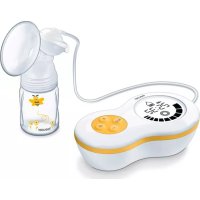
- Device description 19
- Initial use 20
6.1Assembling the breast pump 20
6.2 Cleaning and sterilising the breast pump 21
- Operation 21
7.1 Tips to ensure a better milk flow 21
7.2 Operating the breast pump 22
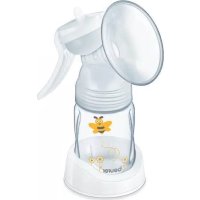
7.3 Using the manual pump 23
7.4 Storing the breast milk 23
7.5 Feeding with the breast milk 23
8.What if there are problems? 24
8.1 Replacement parts and wearing parts 24
-
Disposal 25
-
Technical data 25
11.Mains part 26
12.Warranty/service 26
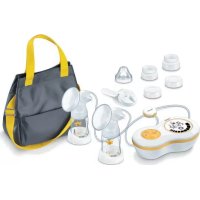
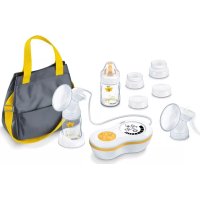
Included in delivery
- Breast pump (motor unit)
Silicone tube - Pump attachment with silicone membrane and silicone valve
- 2x silicone cushions (standard and small size)
- 2x bottles
- 2x bottle caps
Silicone teat - Bottle cap for silicone teat
- Manual pump
- Bottle holder
- 2x adapter for Avent and NUK bottles
- Carrying bag
- Mains plug
- 4x AA batteries
- These instructions for use
Dear customer,
Thank you for choosing one of our products. Our name stands for high-quality, thoroughly tested products for applications in the areas of heat, gentle therapy, blood pressure/diagnosis, weight, massage, beauty, air and babycare. Read these instructions for use carefully and keep them for later use, be sure to make them accessible to other users and observe the information they contain.
With kind regards,
Your Beurer team
1. Signs and symbols
The following symbols appear in these instructions for use:
| WARNING Warning instruction indicating a risk of injury or damage to health | |
| IMPORTANT Safety note indicating possible damage to the device/accessory | |
| Note Note on important information | |
| Observe the instructions for use | |
| Application part, type BF | |
| Direct current | |
| Disposal in accordance with the Waste Electrical and Electronic Equipment EC Direc- tive – WEEE | |
| Manufacturer | |
| Operating | Permissible operating temperature and humidity |
| Storage | Permissible storage temperature and humidity |
| IP 21 | Protected against foreign objects equal to or greater than 12.5 mm in diameter and against vertically falling drops of water. |
| Indicates that the packaging contains products that are intended to come into contact with food pursuant to Regulation (EC) No 1935/2004. | |
| SN | Serial number |
| CE 0483 | The CE labelling certifi es that the product complies with the essential requirements of Directive 93/42/EEC on medical products. |
| REF | Manufacturer's catalogue number |
| The device is double protected and corresponds to protection class 2. | |
| PAP | Disposition of packaging in an environmentally friendly manner |
2. Getting to know your device
The Beurer BY 60 breast pump set allows nursing mothers to express their breast milk easily and in the comfort of their own homes. If not enough breast milk is taken from mothers who have recently given birth, this can lead to the painful build-up of milk, which in the worst-case scenario could cause inflammation of the nipples (mastitis). This build-up of milk can be prevented through targeted expressing of breast milk using the breast pump.
In addition, breast pumps help to alleviate cracked or sore nipples. You can use the integrated stimulation function to draw out flat or inverted nipples, making it easier to then pump the breast milk. The breast pump also allows you to store breast milk in the bottle, for example if you will be travelling or away from your baby for an extended period of time.
Babies who cannot be breast-fed directly for health reasons (due to a premature birth or cleft palate) can still be given breast milk by using the breast pump.
3. Intended use
The breast pump must be used exclusively for pumping breast milk from nursing mothers. Do not use the breast pump on animals. The breast pump is only intended for domestic/private use, not for commercial use.
This device may only be used for the purpose for which it is designed and in the manner specified in the instructions for use. Improper use can be dangerous. The manufacturer is not liable for damage resulting from improper or careless use.
4. Notes
WARNING
Safety notes
- Keep packaging material away from children to avoid danger of suffocation.
- Keep small parts out of reach of children.
- Make sure that cables are not accessible to children.
- Only use the mains part plug included in delivery.
Children must not play with the device. - Cleaning and user maintenance must not be performed by children unless supervised.
- Do not pull, twist or bend the mains cable.
- Before using the breast pump for the first time, ensure that the technical specifications of the mains part plug match those of the motor unit.
- Pull the mains part plug out of the socket in the case of operational faults, before cleaning and when the device is not in use.
- The breast pump must not come into contact with hot surfaces or sharp-edged objects.
- Do not use any additional parts that are not recommended by the manufacturer or offered as accessories.
- Store these instructions for use in a safe place and make them accessible to all users.
- Make sure you include these instructions for use when handing over the device to third parties.
- You can reuse the motor unit but, for hygiene reasons, you must only use the pump set for one person. Do not share the pump set with other breastfeeding mothers.
- The milk pump must only be used on the female breast.
- Never use the breast pump if feeling drowsy or when asleep.
- Never use the breast pump in the bath or the shower.
- In the event of a fault, do not open or shake the breast pump under any circumstances. Refer to the "What if there are problems" chapter. If your problem is not described there, please contact Customer Services or your retailer.
-
The pump set does not require any maintenance.
-
Repairs must only be carried out by Customer Services or authorised retailers. Under no circumstances should you open or repair the breast pump yourself, as faultless functionality can no longer be guaranteed thereafter. Failure to comply will result in voiding of the warranty.
- Never submerge the breast pump in water.
- Never touch the breast pump with wet or damp hands.
- Never reach for the breast pump if it has fallen into water. Remove the mains part plug from the socket immediately if the breast pump has fallen into water.
- When using the breast pump, place it on an even and stable surface.
- Unwind the mains cable fully in order to avoid overheating.
- Never place the breast pump or mains part plug in the microwave.
- Remove the mains part plug from the socket when the breast pump is not in use. Do not leave the breast pump plugged in.
- If the mains cable of the breast pump is damaged, it must be disposed of.
- Never heat up breast milk in the microwave as it may be heated unevenly and could burn your child when they drink it.
- Keep the mains cable away from hot surfaces.
- This device must not be used by people with reduced physical, sensory or mental skills or a lack of experience or knowledge.
- The breast pump does not require calibration
- The breast pump and accessories must not be modified.

IMPORTANT
- Never moisten the breast pump with water. It is not protected against water splashes or liquids.
- Keep the breast pump away from strong electromagnetic fields, since electromagnetic interference can occur and adversely affect the functionality of the breast pump.
- Protect the breast pump and its accessories against impacts, humidity, dirt, marked temperature fluctuations and direct sunlight.
- Do not pull on the breast pump tubes.
- Do not use the mains cable to pull the mains part plug out of the socket.

IMPORTANT
Instructions for transporting the bottle
- When transporting breast milk in the bottle (e.g. when on the move or travelling), make sure that the bottle cap is always screwed on tightly.

WARNING
Child safety
- This device may only be used under adult supervision.
- Feeding from the teat continuously and for long periods can lead to tooth decay.
- Use the teat for feeding, not as a pacifier.
- Always check the temperature of the milk before feeding.
- Inspect the device before each use and pull the teat in all directions.
- Dispose of the teat at the first sign of damage or wear and tear.
- Do not expose the teat to direct sunlight or sources of heat and do not leave in disinfectant ("sterilising solution") for longer than recommended as this may damage the teat.
- Keep the teat away from sweet substances as these may cause tooth decay.
- Do not use any abrasives or anti-bacterial cleaning agents.
- Sterilise all parts that come into contact with the breast milk for five minutes in boiling water.
- Clean the device before each use.
- Make sure that the temperature of the liquid in the bottle never exceeds 50^ .
Notes on handling batteries
- If your skin or eyes come into contact with battery fluid, rinse the affected areas with water and seek medical assistance.
- Choking hazard! Small children may swallow and choke on batteries. Store the batteries out of the reach of small children.
- Observe the plus (+) and minus (-) polarity signs.
- If a battery has leaked, put on protective gloves and clean the battery compartment with a dry cloth.
- Protect batteries from excessive heat.
- Risk of explosion! Never throw batteries into a fire.
- Do not charge or short-circuit batteries.
- If the device is not to be used for a relatively long period, take the batteries out of the battery compartment.
- Use identical or equivalent battery types only.
- Always replace all batteries at the same time.
- Do not use rechargeable batteries.
- Do not disassemble, split or crush the batteries.
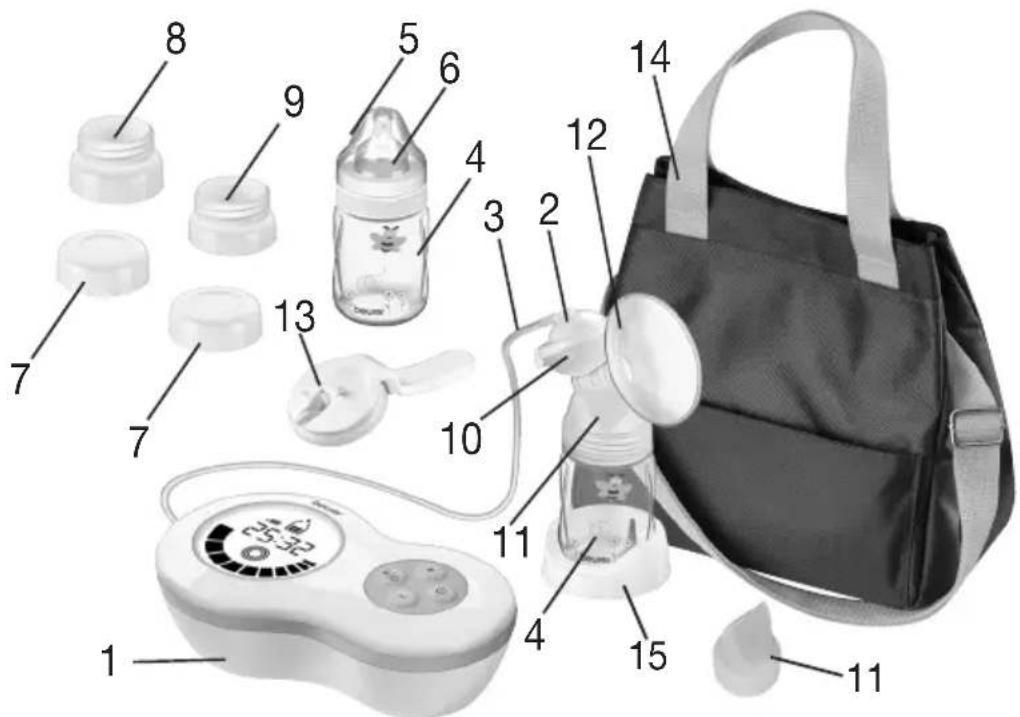
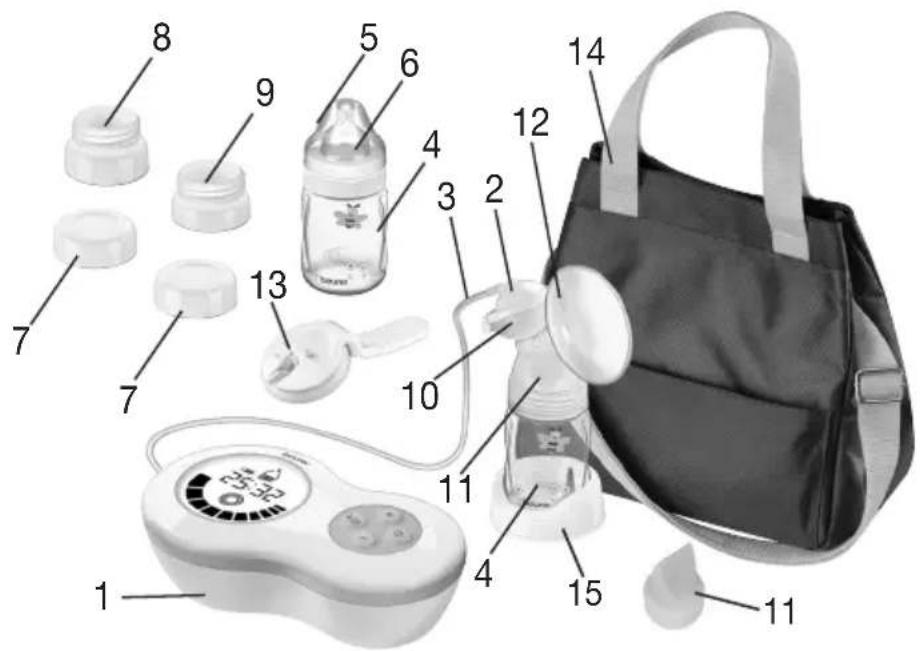
5. Device description
| 1. Breast pump with display 9. Adapter for NUK | (the breast pump can also be used with this bottle if desired) |
| 2. Pump attachment including cap with silicone membrane and silicone valve | 10. Silicone membrane |
| 3. Silicone tube 11. Silicone valve | |
| 4. Bottle (180 ml) 12. Silicone cushion (standard | and small size) |
| 5. Bottle cap for teat 13. Manual pump handle (2 | levels) |
| 6. Teat 14. Carrying bag | |
| 7. Screwed plug for bottle 15. Bottle holder | |
| 8. Adapter for Avent(the breast pump can also be used with this bottle if desired) |
Description of display and buttons
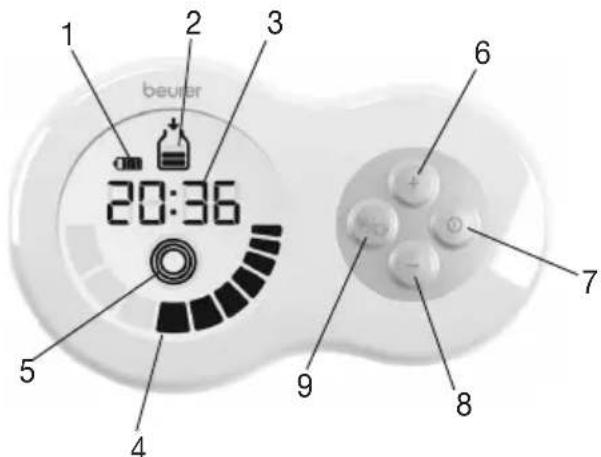
| 1. Battery status (for operation without mains plug) | 6. + button (to increase stimulation or pumping level) |
| 2. Pumping mode (to pump breast milk) 7. ON/OFF button | |
| 3. Time display (timer for stimulation / duration of use for pumping mode) | 8. - button (to decrease stimulation or pumping level) |
| 4 Stimulation or pumping level | 9 MODE button (change between pumping and stimulation mode) |
| 5 Stimulation mode (to stimulate the nipple – no breast milk is pumped) | |
6. Initial use
Note
Check that the packaging of the breast pump has not been tampered with and make sure that all components are present. Before use, ensure that there is no visible damage to the device or accessories and that all packaging material has been removed. If you have any doubts, do not use the device and contact your retailer or the specified Customer Services address.
6.1 Assembling the breast pump
Once the breast pump has been removed from the packaging, check the plastic containers for cracks to ensure that the electrical components are not exposed to liquids without protection.
| 1. Screw the pump attachment onto the bottle. Ensure the pump attachment is firmly secured so that no liquid can escape. | |
| 2.Insert the silicone tube into the pump attachment and the breast pump | |
| 3. Connect the breast pump to the mains cable and insert the mains plug into the socket. | |
| 4.If you instead choose to operate the breast pump using batteries, open the battery compartment cover on the rear side of the motor unit. Insert four AA batteries (included in delivery). Make sure that the batteries are inserted the correct way round. See the graphic in the battery compartment Next, close the battery compartment until you can hear and feel it click into place. A single battery charge with 4 new AA batteries will last for approximately 60 minutes of operation (at the lowest setting). |
6.2 Cleaning and sterilising the breast pump
WARNING
Clean and sterilise the separate parts of the breast pump that come into direct contact with the breast milk (except for the motor unit and silicone tube) individually before first use and any further use. Never sterilise the motor unit.
To sterilise the breast pump correctly, proceed as follows:
- Unscrew the pump attachment from the bottle.
- Remove the silicone tube from the pump attachment and the motor unit.
- Remove the silicone membrane and silicone valve from the pump attachment.
- Sterilise the bottle and pump attachment (with silicone membrane and silicone valve) for five minutes in boiling water or using a steam steriliser. Do not use the breast pump until all individual parts are completely dry. Do not use any antibacterial cleaning products, since these may damage the plastic on the breast pump.
- Clean the motor unit carefully using a slightly damp cloth only. Do not use any cleaning agents or solvents. Under no circumstances should you hold the motor unit under water, as this can cause liquid to enter and damage the breast pump. If you do not intend to use the breast pump for a prolonged period of time, remove the batteries.
7. Operation
7.1 Tips to ensure a better milk flow
- Choose a location to use the pump where you can relax.
- Choose a time to use the pump when you can relax.
Having your child nearby or looking at a picture of your child can have a positive effect on the milk flow. - If feeding your child using one breast, use the breast pump on the other breast at the same time.
- Warmth and relaxation encourage milk flow. Use the breast pump after having a shower or bath.
- If your breasts are swollen or sore, place a warm towel on them for a few minutes. This will improve the milk flow.
-
If the milk does not start to flow from your breasts immediately, try to relax and then try again a few minutes later.
-
If the breast pump still does not extract any milk from your breasts after five minutes, stop using it and try again later.
- If you experience any sharp pains when using the breast pump, consult a doctor.
7.2 Operating the breast pump
| 1. Before using the breast pump, wash your hands and breasts thor- ously. | |
| 2. Sit with your upper body lent forwards slightly. You can support your back better by using a pillow. | |
| 3. Place the breast shield with silicone cushion gently on the breast. Make sure that the nipple is completely enclosed and there are no air pockets. To ensure proper function, the breast shield must be drawn firmly onto the breast. | |
| 4. To switch on the breast pump, press the button. The breast pump will begin automatically in stimulation mode ( )and a two-minute timer will appear on the display. During these two min- utes, your breast nipple will be stimulated in order to prepare it for pumping the breast milk. Use the / buttons to set the desired stimulation intensity. | 1. Switch on stimulation mode 2. Intensity |
| 5. After the two minutes have passed, will start to flash on the display. To begin pumping the breast milk, press the button. Use the / buttons to select a suction intensity that is com- fortable for you. Stop using the pump once there is 180 ml of milk in the bottle. | 3. Start pumping 4. Intensity |
| 6. If you want to switch back to stimulation mode, press the but- ton. The stimulation and the two-minute timer will start from the beginning. The breast pump has a memory function, which recalls the last programmed stimulation or pumping level when it is switched on. | 5. Back to stimulation mode |
| 7. To switch off the breast pump, press the button. | |
7.3 Using the manual pump
| 1. Remove the cap with the connection to the breast pump and attach the manual pump device including the silicone membrane by pressing the silicone membrane firmly onto the pump attachment until it clicks into place. | |
| 2. Then place the breast shield with silicone cushion gently on the breast. Make sure that the nipple is completely enclosed and there are no air pockets. To ensure proper function, the breast shield must be drawn firmly onto the breast. Use the manual pump as shown in the image. | |
| 3. You can vary the pump intensity by selecting between the MIN/MAX markings that can be seen. | MAX MIN |
7.4 Storing the breast milk
Expressed milk can be stored in the fridge or freezer for a certain period of time.
- When storing breast milk, ensure that the breast pump and the bottles are disinfected before usage. Only store breast milk in disinfected containers.
- Store breast milk in the fridge or freezer immediately after expressing. Do not leave breast milk out at room temperature.
- If storing breast milk in the freezer, it is recommended that you mark the bottle with the date of expressing.

WARNING
Observe the storage periods in the following table:
| ROOM TEMPERATURE | REFRIGERATOR (approx. 3 - 5°C) | FREEZER (approx. -16°C) | |
| Recently expressed breast milk | Can be kept for 6 hours | Can be kept for 24 hours (Do not store in the fridge door, as it is not sufficiently cool there) | Can be kept for 3 months |
| Defrosted breast milk (that had been frozen) | Use immediately | 10 hours | Do not refreeze |
7.5 Feeding with the breast milk

Note
You can use the supplied bottle with the silicone teat when feeding with the breast milk. Alternatively, you can also express the breast milk with an NUK or Avent bottle before feeding (corresponding NUK / Avent adapter is included in delivery).
- Prior to feeding, ensure the bottle has been disinfected before filling it with the breast milk that has been stored.
-
To defrost breast milk, store it overnight in the fridge, so as to retain the nutrients. Once the breast milk is defrosted, it must be used within 24 hours. Breast milk should only be defrosted in warm water in especially urgent cases.
-
If the breast milk smells unpleasant, it should be disposed of immediately.
-
Never heat up breast milk in the microwave as it may be heated unevenly and could burn your child when they drink it.
-
If heating up the breast milk, check its temperature before feeding it to your baby.
-
What if there are problems?
| Problem Potential solutions | |
| There is no suction from the breast pump. | Check all parts of the breast pump are correctly assembled. Check whether the pump attachment is correctly placed on the breast. |
| No breast milk is being pumped. | Check that the silicone tube is correctly inserted, the suction level is not set to the minimum and the breast pump is switched on. Ensure that there is no milk remaining in the silicone valve and obstructing the milk flow. |
| Pumping the breast milk is causing pain. | Try to relax and then attempt it again a few minutes later. As you use the breast pump more and more, you will find it easier to pump milk. Reduce the suction level using the - button. Consult your doctor. |
| The breast milk is leaking out underneath the silicone cushion. | Remove the silicone cushion and re-attach it. Ensure the silicone cushion is correctly positioned and firmly secured to the pump attachment. Lean your upper body forwards slightly. |
| One of the breast pump components has become altered or damaged. | Do not use any corrosive, gaseous cleaning agents or solvents. In some cases, marked fluctuations in temperature can damage the plastic on the breast pump. If any of the parts becomes damaged, stop using the breast pump. |
| The breast pump will not switch on | Ensure that the breast pump is correctly assembled and switched on. Ensure that the mains part plug is correctly connected to the breast pump. |
8.1 Replacement parts and wearing parts
| Item Item number | |
| Pump attachment including silicone cushion (standard size), silicone membrane, silicone valve, silicone tube and bottle including screwed plug | 953.15 |
| Bottle with teat and bottle cap 163.719 | |
| Adapter for Avent and NUK bottles 163.720 | |
| 2 silicone cushions (small and standard) 163.721 | |
| Manual pump attachment including silicone cushion (standard size) | 163.722 |
| Bottle stand 163.723 |
9. Disposal
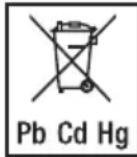
Empty, completely flat batteries must be disposed of through specially designated collection boxes, recycling points or electronics retailers. You are legally required to dispose of the batteries.
The codes below are printed on batteries containing harmful substances:
Pb = Battery contains lead,
Cd = Battery contains cadmium,
Hg = Battery contains mercury.
For environmental reasons, do not dispose of the device in the household waste at the end of its useful life. Dispose of the device at a suitable local collection or recycling point. Dispose of the device in accordance with EC Directive - WEEE (Waste Electrical and Electronic Equipment). If you have any questions, please contact the local authorities responsible for waste disposal.
10. Technical data
| Model BY 60 | |
| Type BY 40 | |
| Power supply 4 x 1.5 V AA batteries (alkaline batteries) | |
| Voltage (input) 100-240V (AC~) 50/60 Hz | |
| Voltage (output) 6V (DC) | ---) 1.0 A |
| Dimensions 168 x 100 x 53 mm | |
| Weight 310 g (without batteries) | |
| Maximum suction pressure 0.32 bar | |
| Permissible operating conditions | +5°C to +40°C, 30% to 85% relative humidity (non-con-densing), 700 - 1060 hPa ambient pressure |
| Permissible storage conditions -20°C to +60°C, 10% to 95% relative humidity (non-con-densing), 700 - 1060 hPa ambient pressure | |
| Expected running time 500 hours | |
| Interval usage 30 minutes ON / 30 minutes | OFF |
| Protection class | The device is double protected and corresponds to protec-tion class 2 ☑ |
| Electromagnetic compatibility according to EN 60601-1-2 | |
| Safety requirements according to EN 60601-1 | |
| Child use and care articles - Drinking equipment according to EN 14350 | |
| Device for expressing breast milk | |
| Device with fine vacuum and low flow | |
| Application part, type BFDevice for use in the absence of explosive or poisonous gas mixtures or nitrogen oxides (nitrous oxide) | |
Technical information is subject to change without notification to allow for updates
This unit is in line with European Standard EN 60601-1-2 and is subject to particular precautions with regard to electromagnetic compatibility (EMC). Please note that portable and mobile HF communication systems may interfere with this unit. More details can be requested from the stated Customer Services address or found at the end of the instructions for use.
11. Mains part
| Model no. LXCP12-06 | |
| Input 100 – 240 V, 50 | 60 Hz 0.3 A max |
| Output 6 V DC, 1 A | |
| ◇-◇ | Polarity of the DC voltage connection |
| □ | Insulated/protection class 2 |
| Housing and protective covers | The housing of the mains part protects users from touching live parts or parts that could be live (for example with finger, needle, checking hook). Do not touch the patient and the output connector of the AC/DC mains part at the same time. |
12. Warranty/service
In case of a claim under the warranty please contact your local dealer or the local representation which is mentioned in the list "service international".
In case of returning the unit please add a copy of your receipt and a short report of the defect.
The following warranty terms shall apply:
- The warranty period for BEURER products is either 3 years or- if longer- the country specific warranty period from date of Purchase.
In case of a warranty claim, the date of purchase has to be proven by means of the sales receipt or invoice. - Repairs (complete unit or parts of the unit) do not extend the warranty period.
- The warranty shall not be valid for damages because of
a. improper treatment, e.g. nonobservance of the user instructions.
b. repairs or tampering by the customer or unauthorised third parties.
c. transport from the manufacturer to the consumer or during transport to the service centre.
d. The warranty shall not be valid for accessories which are subject to normal wear and tear (cuff, batteries etc.). - Liability for direct or indirect consequential losses caused by the unit are excluded even if the damage to the unit is accepted as a warranty claim.
FRANÇAIS

Chere cliente, cher client,
PeKOMeHdaaunn IJra TpaHCnOpTnPOBKn 6yTbIIOUKN
- EcII Bbl nepeBo3nTe rpydHoe MOnoKo B 6yTbIIOUcKe (HaNPIMep, BO Bpemr nepee3da nIN nyTeueCTBn), CJIeIte 3a TeM, YTO6bl KpbIuKa 6yTbIIOUcKN BCERda OCTaBaJanaCb NLOTHO 3aKpyeHHoN.

ПЕДОCTEPEXKEHNE
Дя 6e3oNaChocTn BaWero pe6eHka!
- IcnoJb3ObaHne 6yTbIIOUKN IOnyCTMnO TOJIbKO IOI npICMOrPOM B3pocJIbIX.
- NocToaHHoe n npoDoJIxKteJIbHoe cocahne XnIkoCTe Ype3 COCKy npuBOOHT K Kapuecy.
He nOpJb3yIte coCKy dIe KOpMJIeHnB KaueCTBe NcyTbiUkN. - Пара Кормленив Сcertа пювера Te Temперату.
- Параддим рименем осматразаite пибор и поверiate cocky,notянве BO BCex Ha-npaBleHnax.
- 3aMeHraTe COCKy npn nepBbIX npn3HaKaX NOBpeKDeHnI nIu n3HoCa.
He noDBepraTe COCKy BO3DeICTBIO npMbIX COJIHcHbIX Lyuei NII BbICOKO TeMnepaTypbl, He OCTaBJaIe ee DoJIbWe, Yem CneJeT, B cpeIcTBe IJRA De3INHΦeKcUIN (pactBOpe IJRA CTepuIN3aUIN), TAK KaK 3TO MOKeT pINBEcTI K NOBpeXdEHNIcoCCKN.
He IOnyckaIte KOHTaKTA COCKN CO CIAkIMM BeIeCTBaMn, TaK KaH CNOCO6CTByOT BO3HNIHOBENIO Kapneca.
He nOpJIb3yIte MOUepeCTBa IIn aHTn6aKTePnaIbHbIe ONUCTITeJI.
Bce deTaN, KOToPbE KOHTaKtpyIOT C rpydHbIM MOJOKOM, CTepuIN3yIe B KINrAe BOe B TeYeHne IaTm MInHyT.
- Pered kajdbim npimeHHeM MoTe np6op.
CneiTe 3a TeM, YTO6bI TeMnpaTpy XnKoCTN B 6yTBIOUOKe HNKOrda He npeBbIa7a 50 ^ C
I PPEIOCTEPEXHEHNE
06paueHne c 6aTapeKamn
-При поадани кИДКОCTи n3 aKKyMyIaTopa Ha KOKy nII B rIa3a HeO6XoIMO npOMbITb COOTBETCTByIoun yUactOK 60JIbSiM KOINueCTBOM BObl I O6paTITbcr K BpaCy.
- OnachocTB nporIaTbIBaHnMa MeJKNx YacTei! MaJIeHbKne DeTn MOrY T nporIOTnB 6aTapeiKn I noJaBnTbcra NMI. Po3ToMy 6aTapeiKn Heo6XoDmO XpaHnTB B HeIOCTyNHom DnA DeTei MeCte!
- 06paaTe BHMMaHne Ha o6o3HaueHne nolpHocTn: nIOc (+) mMHyc (-).
- EcII 6aTapeiKa nOteKla, OUHCTIe OTdJIeHHe IJRA 6bTapeE K cyXo CAnPcTKo, npEiBapITeNbHO HaDeB 3aIHTbIe nepuATKn.
3aunuauTe 6aTapeKn OT Upe3MepHoro BO3dNCTBna TeIla.
- Onachoctb B3pbBa! He 6pocaiTe 6aTaapeKn B oroHb.
He 3apjkaTe n He 3ambikaTe 6atapeKn HaKOpOTko.
- Ecni npi6op dInTeIbHoe BpeM He nCNoJIb3yeTcR, n3BJIeKnTe n3 Hero 6aTaapeKn.
- IcnoIb3yIte 6aTapeKn TOIbKO OJHOrO TINa IIN paBHOceHHbIX TINOB.
- 3aMeHraIe BCE 6aTapeiKN cpa3y.
He nCnoIb3yIe nepe3apXaemblc aKKymlaTOpbl!
- He pa3bpaIte, He oTKpbIbAIte n He pa3bIbAIte 6aTaapeKn.
5.Описанne пибopa
IapaHTnHe paacPiPoCTpaHReTc:
Ha CJIyua yUeep6a, BbI3BaHHOrO He npBaUNbHbIM NcIOJIb3OBaHHeM
- Ha 6bICTPoU3HaUNBaUOUIeCRACTN IN NCTOUYHKNCBETA (HacaIKN, 3JIeKTPoDbl, 6aTapeIKN, a TAK Xe IaMIOUKN)
Ha depekeTbI, O KOtOpbIX NOKyNaTeJIb 3HaJI B MOMENT NOKyPIKIN
- Ha cnyuanyu co6cbTbeHHo BnHbI NOKyNaTeJra
ToBap ceTnФuInpoBaH

Cpok 3Kcnnyataunn n3JeJna: MNH. 7 roJrOda/Net
ΦnμMa-n3rOToBntJIb:
Boipep Tm6x, CoopnHep uTpacce 218, 89077-UM, EpmaHna
ΦnμMa-UMnOpTep:
B Pocnckyio Feepaunio: Ooo «Xacken, 119192, r. MockBa, MmhypnHcKn npocneKT, d. 11, Kopn. 4, nom. III, kOM. 4
B Pecny6nky Bcnapycb: 3AO «Teppitopn 3dienbWeic" www.beurer-belarus.by
Tei. +375 (29) 333-89-39
OprHn3aun, npHnMaIOUne npTeH3nn:
| ELECTROMAGNETIC COMPATIBILITY INFORMATION | |||
| Guidance and manufacturer's declaration - electromagnetic emissions | |||
| The BY 40 Breast Pump is designed to be operated in the electromagnetic environment described below. The client or user of the BY 40 Breast Pump must ensure that the product is used in such environment. | |||
| Emissions test Compliance Electromagnetic environment - guidance | |||
| RF emissionsCISPR 11 | Group 1 The BY 40 Breast Pump uses RF energy for its internal operation only.Consequently its RF emissions are very low and cause no interference of nearby electronic equipment. | ||
| RF emissionsCISPR 11 | Class B The BY 40 Breast Pump is suitable for use in all types of facilities, dome stic buildings included, and in those buildings directly connected to the low voltage public electricity supply system of domestic buildings always keeping in mind what follows: | ||
| Harmonic emissionsIEC 61000-3-2 | Class A | ||
| Voltage fluctuations/flicker emissionsIEC 61000-3-3 | Complying | Caution: This apparatus / system has to be used by health care profession- nals only. This apparatus / system could cause radio interferences or alter operation of nearby equipment. Attenuation measures could be neces-sary, such as re-orienting or re-positioning of the BY 40 Breast Pump or shielding of the current position. | |
| Guidance and manufacturer's declaration - electromagnetic immunity | |||
| The BY 40 Breast Pump is designed to be operated in the electromagnetic environment described below. The client or user of the BY 40 Breast Pump must ensure that the product is used in such environment. | |||
| Immunity testElectrostatic dischargesIEC 61000-4-2 | Test level± 6kV in contact± 8kV in air | Conformity levelI± 6kV in contact± 8kV in air | Electromagnetic environment - guidelinesFloors have to be made in wood, ce-ment, or ceramic. If fl oors are coated with synthetic materials relative humi-dity must range at least at 30%. |
| Transients / Fast electric trainsIEC 61000-4-4 | ± 2kV for power supply lines± 1kV for input/output lines | ± 2kV for power supply lines± 1kV for input/output lines | The quality of the mains voltage should be that of a typical commercial or hos-pital environment. |
| PulsesIEC 61000-4-5 | ± 1kV in differential way± 2kV in common way | ± 1kV in differential way± 2kV in common way | The quality of the mains voltage should be that of a typical commercial or hos-pital environment. |
| Voltage holes, voltage short interruptions and variations on the power supply input linesIEC 61000-4-11 | <5% U(>95% dip in U(>95% dip in U(>95% dip in U(>95% dip in U(>95% dip in U(>95% dip in U(>95% dip in U(>95% dip in U(>95% dip in U(>95% dip in U(>95% dip in U(>95% dip in U(>95% dip in U(> 70% U(>70% U(>70% U(>70% U(>70% U(>70% U(>70% U(>70% U(>70% U(>70% U(>70% U(>70% U(>70% U(>70% U(>70% U(>70% U(>70% U(>70%U(>70% U(>70% U(>70% U(>70% U(>70% U(>70% U(>70% U(>70% U(>70% U(>70% U(>70% U(>70% U(>70% U(>70% U(>70% U(>70% U(>7、 | 0% UT for 10 ms40% UT for 100 ms70% UT for 500 ms0% UT for 5 sec | The quality of the mains voltage should be that of a typical com-mercial or hospital environment. If the user of the BY 40 Breast Pump requires continuous operations even in case of power supply cutoff, it is recommended to plug the BY 40 Bre-ast Pump to a uninterruptible power supply or batteries. |
| Mains frequency ma-gnetic field (50/60 Hz)IEC 61000-4-8 | 3 A/m Non applicable Mains frequency magnetic fi edhas to be at a level typical of a commercial or hospital environment. | ||
| NOTE U(>95% dip in U(>95% dip in U(>95% dip in U(>95% dip in U(>95% dip in U(>95% dip in U(>95% dip in U(>95% dip in U(>95% dip in U(>95% dip in U(>95% dip in U(>95% dip in U(> | |||
| Immunity test | Test levelIEC 60601 | Conformity levelI± 6kV in contact± 8kV in air | Electromagnetic environment - guidelinesRF portable and mobile communication equipment should not be used closer than the separation distance calculated through the equation applicable to the transmitter frequency to any part of the BY 40 Breast Pump, Cables included. Recommended separation distances. |
| Conducted RF | 3Vrmsto 150kHz from 80MHz | 3Vrmsto 150kHz from 80MHz | d = 1.17√Pd = 4√Pda 80 MHz to 800 MHzd = 2.33√P 800 MHz to 2.5 GHzwhere P is the maximum rated Watt (W) power from the transmitter as declared by the manufacturer while d is the recommended separation distance expressed in metres (m).Field intensity produced by fixed RF transmitters, as set by electromagnetic test on site a, should be lower than the conformity level of every frequency interval. b Interferences nearby the systems signalled by the following symbol could occur: |
| IEC 61000-4-6 | |||
| Irradiated RF | 3V/mto 80MHz from 2,5GHz | 3V/mto 80MHz from 2,5GHz | |
| IEC 61000-4-3 | |||
| NOTE 1: For 80MHz and 800MHz, the highest frequency interval is applied.NOTE 2: These guidelines cannot always be applied. Electromagnetic propagation is altered by absorption and reflection of facilities, objects and people. | |||
a. For field intensity of fixed transmitters, such as the base stations for radiophones (cellular and cordless) EN and terrestrial radiophones, radio amateur equipment, AM and FM radio and TV transmitters whose presence can not be foreseen an on-site electromagnetic test should be planned. If field intensity measured where the BY 40 Breast Pump is used exceeds the RF conformity level then the BY 40 Breast Pump has to be kept under control to check for its correct operation. If anomalies are detected, additional measures can be taken such as a reorienting or repositioning of the BY 40 Breast Pump
b. Over the frequency interval of 150kHz - 80MHz field intensity has to be lower than 3V / m
| Recommended separation distances between portable or mobile radio-communication tools and the BY 40 Breast Pump | |||
| The BY 40 Breast Pump is designed to be operated in electromagnetic environments where RF irradiated disturbances are kept under control. The client or user of the BY 40 Breast Pump can favour electromagnetic interferences prevention by keeping a minimum distance between portable or mobile RF communication systems (transmitters) and the BY 40 Breast Pump as recommended, according to the maximum output power of radio-communication tools. | |||
| Rated maximum output power of transmitter W | Separation distance according to frequency of transmitter m | ||
| 150 kHz to 80 MHz1.17 √P | 80 MHz to 800 MHz4 √P | 800 MHz to 2,5 GHz2.33 √P | |
| 0,01 0.12 0.4 0.23 | |||
| 0,1 0.37 1.26 0.74 | |||
| 1 1.17 4.00 2.33 | |||
| 10 3.7 12.65 7.37 | |||
| 100 11.70 40.00 23.3 | |||
For those transmitters whose maximum rated output power is not indicated in the above list, the recommended separation distance in metres (m) can be calculated by the equation applicable to the transmitter frequency, where P is the maximum rated output of the transmitter in Watt (W) as declared by the manufacturer.
NOTE 1: For 80MHz and 800MHz, the highest frequency interval is applied.
NOTE 2: These guidelines cannot always be applied. Electromagnetic propagation is altered by absorption and reflect ion of facilities, objects and people.