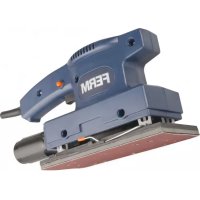
PSM1027 - Sander Ferm - Free user manual and instructions
Find the device manual for free PSM1027 Ferm in PDF.



| Product type | Finishing sander |
| Brand | Ferm |
| Model | PSM1027 |
| Mains voltage | 230 V~ |
| Frequency | 50 Hz |
| Power | 135 W |
| No-load speed | 12,000/min |
| Protection class | IP 20 |
| Weight | 1.3 kg |
| Sound pressure level (Lpa) | 73 dB(A) K=3 dB |
| Sound power level (Lwa) | 84 dB(A) K=3 dB |
| Vibration level | 12.11 m/s² K=1.5 m/s² |
| Double insulation | Yes |
| Sandpaper attachment system | Mechanical and hook-and-loop fastening |
| Dust extraction connection | Yes (adapter included) |
| Replaceable sanding pad | Yes |
| Compatible materials | Wood, metal, plastic, painted surfaces |
| Switch type | On/off with continuous lock |
| Number of pages in manual | 92 |
Frequently Asked Questions - PSM1027 Ferm
User questions about PSM1027 Ferm
0 question about this device. Answer the ones you know or ask your own.
Ask a new question about this device
Download the instructions for your Sander in PDF format for free! Find your manual PSM1027 - Ferm and take your electronic device back in hand. On this page are published all the documents necessary for the use of your device. PSM1027 by Ferm.
USER MANUAL PSM1027 Ferm
natural_image
Blue FERM electric tool with red base and power strip, no visible text or symbols on bodyPSM1027
EN Originalinstructions04
DE Übersetzung der Originalbetriebsanleitung 07
NL Vertaling van de oorspronkelijke gebruiksaanwijzing 11
FR Traduction de la notice originale 14
ES Traducción del manual original 18
PT Tradução do manual original 21
IT Traduzione delle istruzioni originali 24
SV Översättning av bruksanvisning i original 28
FI Alkuperäisten ohjeiden käännös 31
NO Oversatt fra orginal veiledning 34
DA Oversættelse af den originale brugsanvisning 37
HU Eredeti használati utasítás fordítása 40
CS Překlad původního návodu k používání 43
SK Prevod izvirnih navodil
SL Preklad pôvodného návodu na použitie 49
PL Tłumaczenie instrukcji oryginalnej 52
LT Originalios instrukcijos vertimas 55
LV Instrukciju tulkojums no originālvalodas 58
ET Algupärase kasutusjuhendi tõlge 61
RO Traducere a instructiunilor originale 64
HR Prevedeno s izvornih uputa 67
SR Prevod originalnog uputstva 70
BS Prevod originalnog uputstva 70
RU Перевод исходных инструкций 73
UK Переклад оригінальних інструкцій 77
EL Μετάφραση του πρωτοτύπου των οδηγιών χρήσης 80
BG Превод на оригиналната инструкция 84
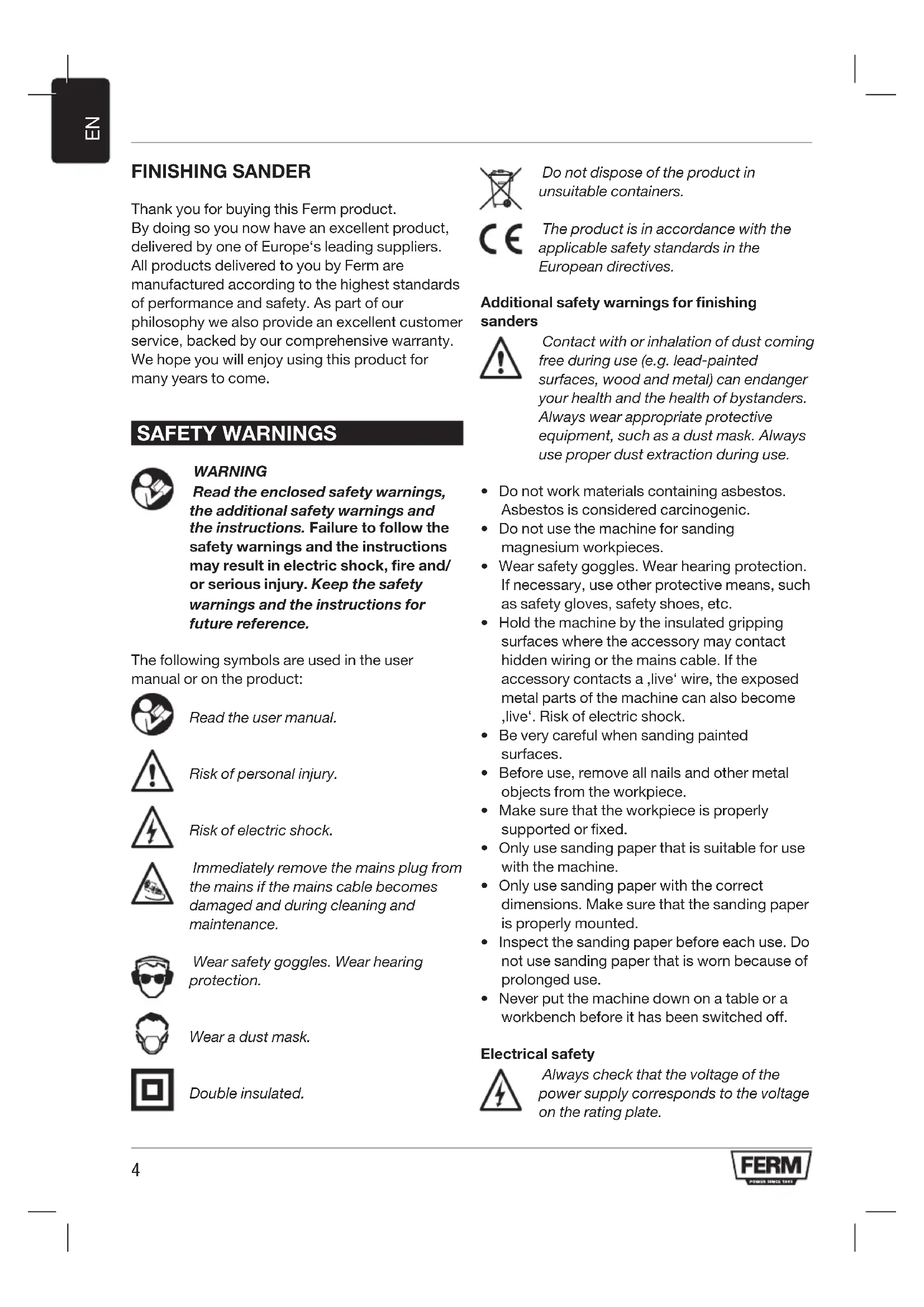
FINISHING SANDER
Thank you for buying this Ferm product.
By doing so you now have an excellent product, delivered by one of Europe's leading suppliers.
All products delivered to you by Ferm are manufactured according to the highest standards of performance and safety. As part of our philosophy we also provide an excellent customer service, backed by our comprehensive warranty. We hope you will enjoy using this product for many years to come.
SAFETY WARNINGS

WARNING
Read the enclosed safety warnings, the additional safety warnings and the instructions. Failure to follow the safety warnings and the instructions may result in electric shock, fire and/or serious injury. Keep the safety warnings and the instructions for future reference.
The following symbols are used in the user manual or on the product:

Read the user manual.

Risk of personal injury.

Risk of electric shock.

Immediately remove the mains plug from the mains if the mains cable becomes damaged and during cleaning and maintenance.

Wear safety goggles. Wear hearing protection.

Wear a dust mask.

Double insulated.

Do not dispose of the product in unsuitable containers.

The product is in accordance with the applicable safety standards in the European directives.
Additional safety warnings for finishing sanders

Contact with or inhalation of dust coming free during use (e.g. lead-painted surfaces, wood and metal) can endanger your health and the health of bystanders. Always wear appropriate protective equipment, such as a dust mask. Always use proper dust extraction during use.
- Do not work materials containing asbestos. Asbestos is considered carcinogenic.
- Do not use the machine for sanding magnesium workpieces.
- Wear safety goggles. Wear hearing protection. If necessary, use other protective means, such as safety gloves, safety shoes, etc.
- Hold the machine by the insulated gripping surfaces where the accessory may contact hidden wiring or the mains cable. If the accessory contacts a ,live' wire, the exposed metal parts of the machine can also become ,live'. Risk of electric shock.
- Be very careful when sanding painted surfaces.
- Before use, remove all nails and other metal objects from the workpiece.
- Make sure that the workpiece is properly supported or fixed.
- Only use sanding paper that is suitable for use with the machine.
- Only use sanding paper with the correct dimensions. Make sure that the sanding paper is properly mounted.
- Inspect the sanding paper before each use. Do not use sanding paper that is worn because of prolonged use.
- Never put the machine down on a table or a workbench before it has been switched off.
Electrical safety

Always check that the voltage of the power supply corresponds to the voltage on the rating plate.
- Do not use the machine if the mains cable or the mains plug is damaged.
- Only use extension cables that are suitable for the power rating of the machine with a minimum thickness of 1.5 mm ^2 . If you use a extension cable reel, always fully unroll the cable.
Mains plug replacement (UK only)
If the moulded 3-pin plug attached to the unit is damaged and needs replacing, it is important that it is correctly destroyed and replaced by an approved BS 1363/3A fused plug and that the following wiring instructions are followed.
The wires in the mains cable are coloured in accordance with the following code:
blue neutral
brown live
As the colours of the wires in the mains cable of the unit may not correspond to the coloured markings identifying the terminals in the plug, proceed as follows:
- The wire which is coloured blue must be connected to the terminal which is marked with the letter N or coloured black.
- The wire which is coloured brown must be connected to the terminal which is marked with the letter L or coloured red.
Technical data
Mains voltage 230 V\~
Mains frequency 50 Hz
Power input 135 W
No-load speed 12,000/min
Protection class IP 20
Weight 1.3 kg
NOISE AND VIBRATION
Sound pressure (Lpa) 73 dB(A) K=3dB
Acoustic power (Lwa) 84 dB(A) K=3dB
Vibration 12.11 m/s ^4 K=1.5 m/s ^2

Wear hearing protection.
Vibration level
The vibration emission level stated in this instruction manual has been measured in accordance with a standardised test given in EN 60745; it may be used to compare one tool with another and as a preliminary assessment of exposure to vibration when using the tool for the applications mentioned
- using the tool for different applications, or with different or poorly maintained accessories, may significantly increase the exposure level
- the times when the tool is switched off or when it is running but not actually doing the job, may signifi cantly reduce the exposure level
Protect yourself against the effects of vibration by maintaining the tool and its accessories, keeping your hands warm, and organizing your work patterns
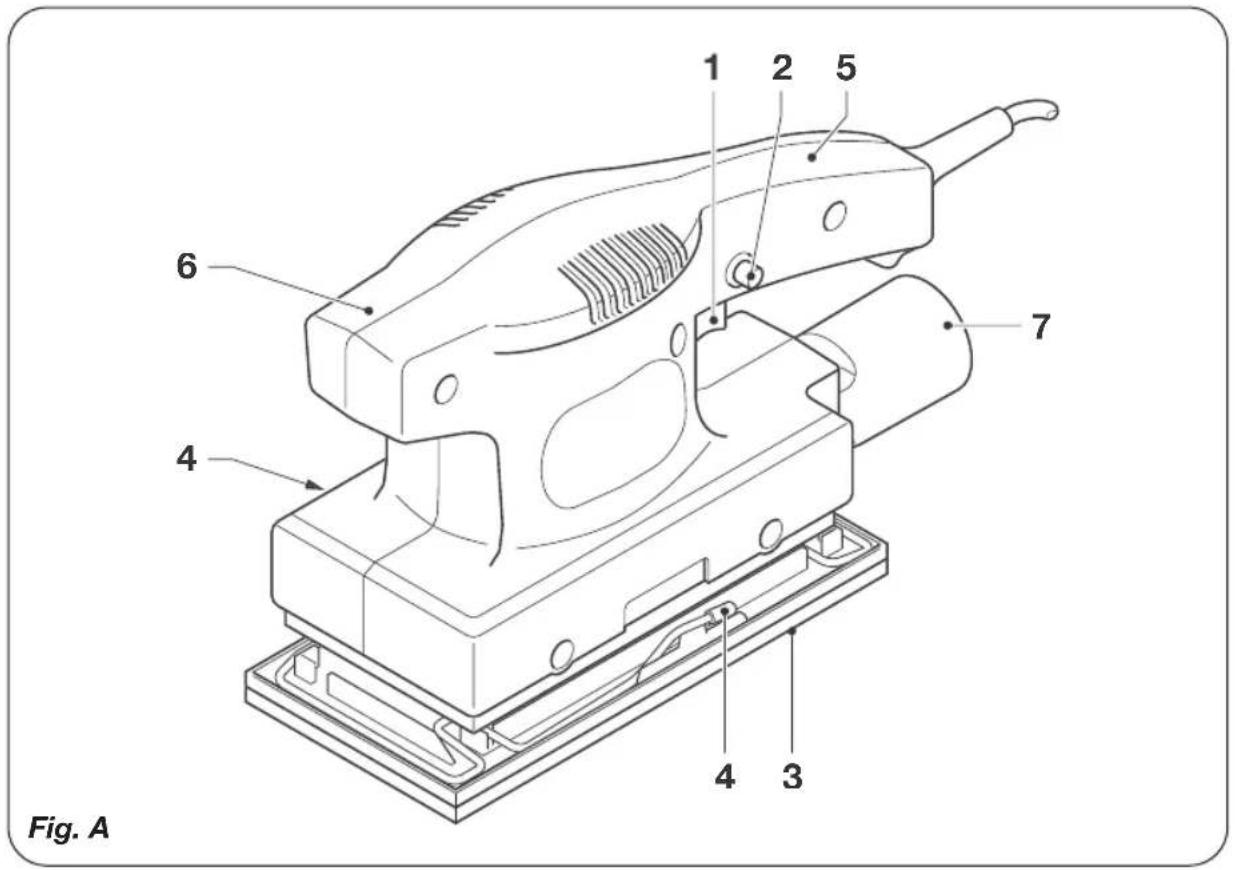
DESCRIPTION (FIG. A)
Your finishing sander has been designed for sanding wood, metal, plastics and painted surfaces.
- On/off switch
- Lock-on button
- Sanding pad
- Sanding paper clamp
- Main grip
- Auxiliary grip
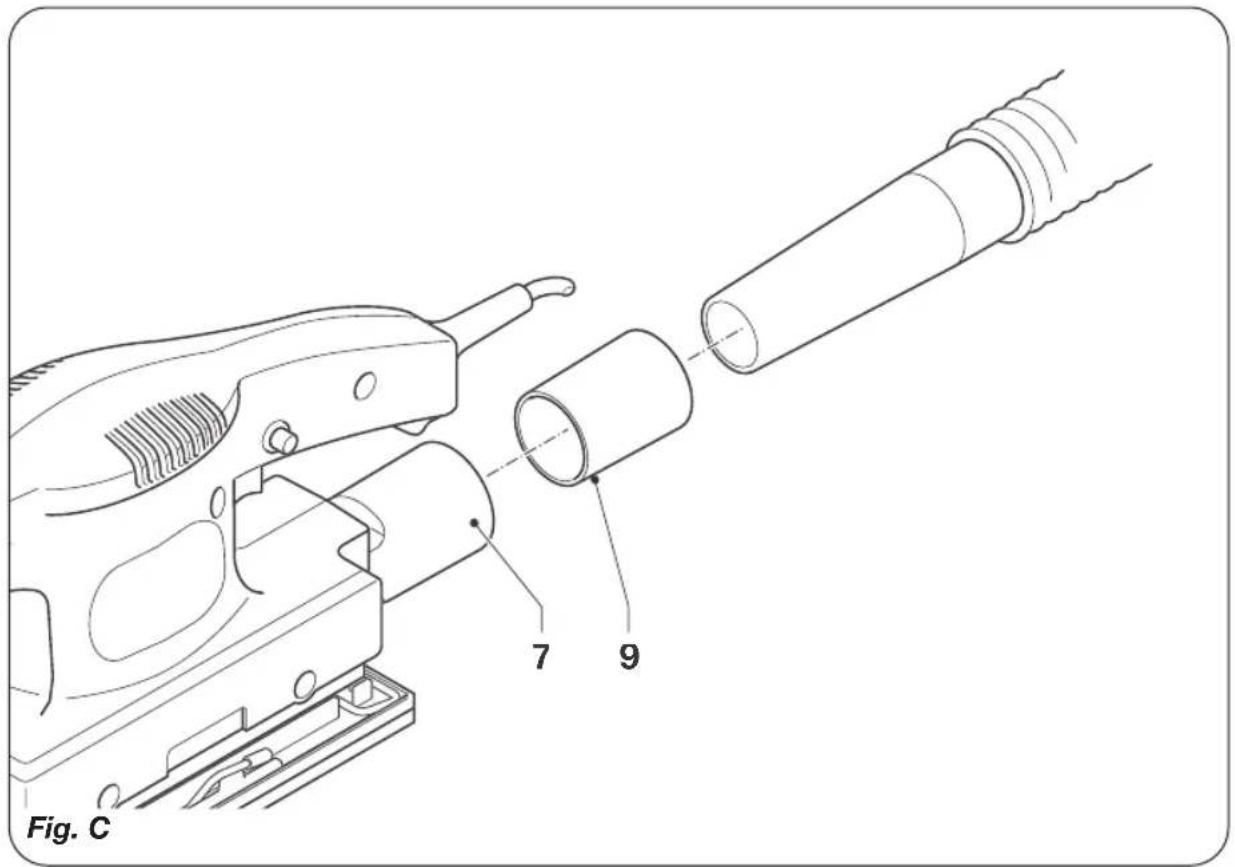
- Dust extraction connection
ASSEMBLY

Before assembly, always switch off the machine and remove the mains plug from the mains.
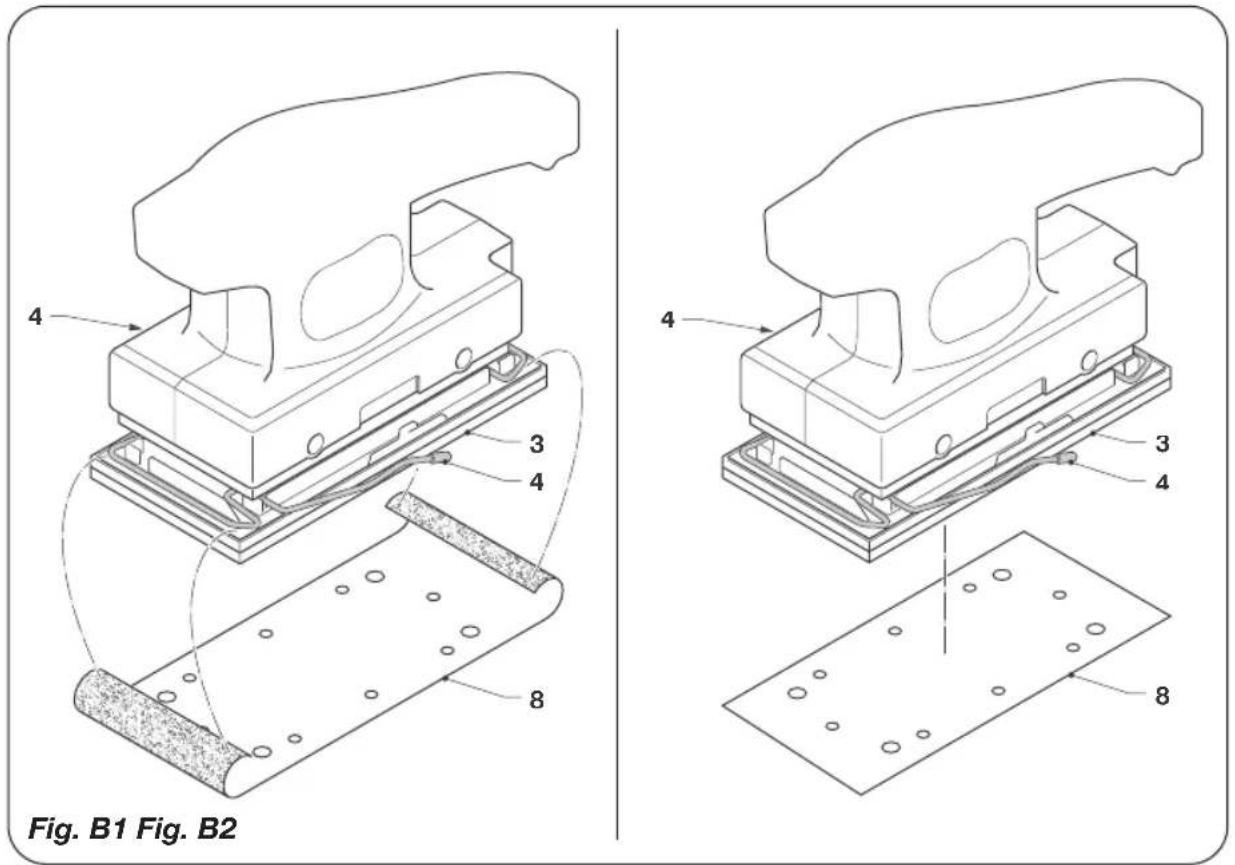
Mounting and removing the sanding paper (sanding paper clamps) (fi. B1) Mounting
- Open the sanding paper clamps (4).
- Mount sanding paper (8) with the required grain size onto the sanding pad (3). Make sure that the perforation in the sanding paper (8) corresponds with the perforation on the sanding pad (3).
- Fold the sanding paper (8) at both ends around the edges of the sanding pad (3).
- Close the sanding paper clamps (4) one by one. Make sure that the ends of the sanding paper (8) are clamped.
Removing
- Open the sanding paper clamps (4).
- Remove the sanding paper (8) from the sanding pad (3).
- Close the sanding paper clamps (4). Mounting and removing the sanding paper (hook-and-loop system) (fi. B2)
Mounting
- Mount sanding paper (8) with the required grain size onto the sanding pad (3). Make sure that the perforation in the sanding paper (8) corresponds with the perforation on the sanding pad (3).
Removing
- Remove the sanding paper (8) from the sanding pad (3).
USE
Switching on and off (fig. A)
- To switch on the machine, press the on/off switch (1).
- To switch the machine to continuous mode, keep the on/off switch (1) pressed and simultaneously press the lock-on button (2).
- To switch off continuous mode, press the on/off switch (1) again.
- To switch off the machine, release the on/off switch (1).
Dust extraction (fig. C)
- Insert the dust extraction adapter (9) into the dust extraction connection (7).
- Connect the hose of a vacuum cleaner to the dust extraction adapter (9).
Hints for optimum use
- Clamp the workpiece.
- Firmly hold the machine with both hands.
- Switch on the machine.
- Place the sanding pad with sanding paper on the workpiece.
- Slowly move the machine over the workpiece, firmly pressing the sanding pad against the workpiece.
- Do not apply too much pressure on the machine. Let the machine do the work.
- Switch off the machine and wait for the
machine to come to a complete standstill before putting the machine down.
CLEANING AND MAINTENANCE

Before cleaning and maintenance, always switch off the machine and remove the mains plug from the mains.
• Regularly clean the housing with a soft cloth.
- Keep the ventilation slots free from dust and dirt. If necessary, use a soft, moist cloth to remove dust and dirt from the ventilation slots.
- Regularly clean the sanding pad to avoid inaccuracies during use.
Replacing the sanding paper (fig. B)
- To remove the old sanding paper (8), proceed as described in the section „Mounting and removing the sanding paper“.
- To mount the new sanding paper (8), proceed as described in the section „Mounting and removing the sanding paper“.
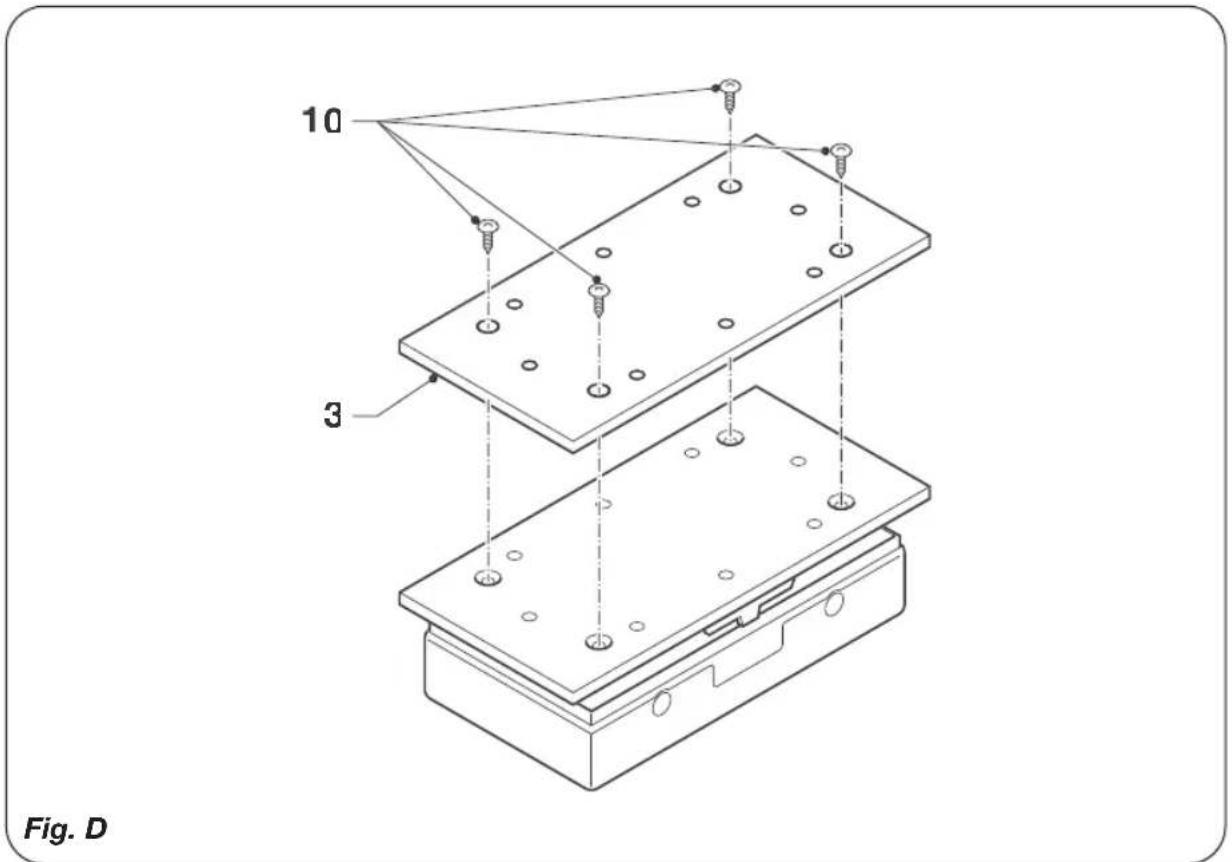
Replacing the sanding pad (fig. D)
In case of wear, the sanding pad must be replaced.
- If necessary, remove the sanding paper.
- Loosen the screws (10) from the sanding pad (3).
- Remove the old sanding pad (3).
- Mount the new sanding pad (3).
- Tighten the screws (10) to the sanding pad (3).
WARRANTY
Consult the enclosed warranty terms.
ENVIRONMENT
Disposal

The product, the accessories, and the packaging must be sorted for environmentally friendly recycling.
Only for EC countries
Do not dispose of power tools into domestic waste. According to the European Guideline 2012/19/EU for Waste Electrical and Electronic Equipment and its implementation into national right, power tools that are no longer usable must be collected separately and disposed of in an environmentally friendly way.
The product and the user manual are subject to change. Specifications can be changed without further notice.
VIBRATIONSSCHLEIFER
BESCHRIJVING (FIG. A)
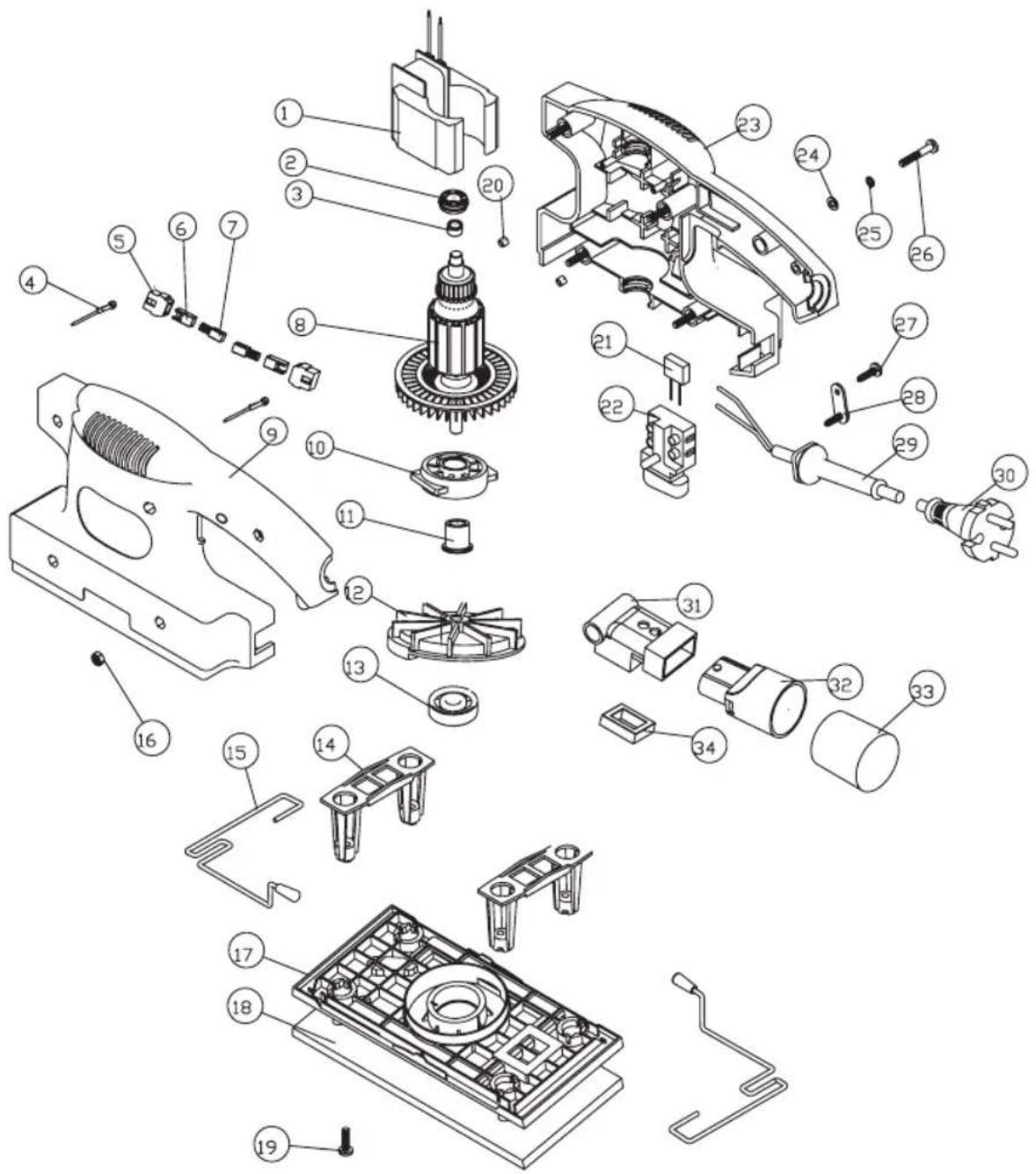
| Article no. Description | Position no. | |
| 408175 Carbon brush set (2pcs) 7 | ||
| 408269 Paper clamp 15 | ||
| 408303 Base plate + Sanding pad Velcro 17, 18 | ||
| 408302 Sanding pad VELVRO 18 | ||
| 408270 Switch 22 | ||
| 408271 Dust connection | 32 | |
Exploded view
CE
DECLARATION OF CONFORMITY PSM1027 - FINISHING SANDER
(EN) We declare under our sole responsibility that this product is in conformity with directive 2011/65/EU of the European parliament and of the council of 8 June on the restriction of the use of certain hazardous substances in electrical and electronic equipment is in conformity and accordance with the following standards and regulations:
(DE) Der Hersteller erklärt eigenverantwortlich, dass dieses Produkt der Direktive 2011/65/EU des Europäischen Parlaments und des Rats vom 8. Juni 2011 über die Einschränkung der Anwendung von bestimmten gefährlichen Stoffen in elektrischen und elektronischen Geräten entspricht, den folgenden Standards und Vorschriften entspricht:
(NL) Wij verklaren onder onze volledige verantwoordelijkheid dat dit product voldoet aan de conform Richtlijn 2011/65/EU van het Europees Parlement en de Raad van 8 juni 2011 betreffende beperking van het gebruik van bepaalde gevaartlijke stoffen in elektrische en elektronische apparatuur en in overeenstem ming is met de volgende standaarden en reguleringen:
(FR) Nous déclarons sous notre seule responsabilité que ce produit est conforme aux standards et directives suivants: est conforme à la Directive 2011/65/EU du Parlement Européen et du Conseil du 8 juin 2011 concernant la limitation d'usage de certaines substances dangereuses dans l'équipement électrique et électronique.
(ES) Declaramos bajo nuestra exclusiva responsabilidad que este producto cumple con las siguientes normas y estándares de funcionamiento: se encuentra conforme con la Directiva 2011/65/UE del Parlamento Europeo y del Consejo de 8 de junio de 2011 sobre la restricción del uso de determinadas sustancias peligrosas en los equipos eléctricos y electrónicos.
(PT) Declaramos por nossa total responsabilidade de que este produto está em conformidade e cumpre as normas e regulamentações que se seguem: está em conformidade com a Directiva 2011/65/EU do Parlamento Europeu e com o Conselho de 8 de Junho de 2011 no que respeita à restrição de utilização de determinadas substâncias perigosas existentes em equipamento eléctrico e electrónico.
(IT) Dichiariamo, sotto la nostra responsabilità, che questo prodotto è conforme alle normative e ai regolamenti seguenti: è conforme alla Direttiva 2011/65/UE del Parlamento Europeo e del Consiglio dell'8 giugno 2011 sulla limitazione dell'uso di determinate sostanze pericolose nelle apparecchiature elettriche ed elettroniche.
(SV) Vi garanterar på eget ansvar att denna produkt uppfyller och följer följande standarder och bestämmelser: uppfyller direktiv 2011/65/EU från Europelska parlamentet och EG-rådet från den 8 juni 2011 om begränsningen av användning av farliga substanser i elektrisk och elektronisk utrustning.
(FI) Vakuutamme yksinomaan omalla vastuullamme, että tämä tuote täyttää seuraavat standardit ja säädökset: täyttää Euroopan parlamentin ja neuvoston 8. kesäkuuta 2011 päivätyn direktiivin 2011/65/EU vaatimukset koskien vaarallisten aineiden käytön rajoitusta sähkö- ja elektronisissa laitteissa.
(NO) Vi erklærer under vårt eget ansvar at dette produktet er i samsvar med følgende standarder og regler: er i samsvar med EU-direktlivet 2011/65/EU fra Europa-parlamentet og Europa-rådot, pr. 8 juni 2011, om begrensning i bruken av visse farlige stoffer i elektrisk og elektronisk utstyr.
(DA) Vi erklærer under eget ansvar, at dette produkt er i overensstemmelse med følgende standarder og bestemmelser er i overensstemmelse med direktiv 2011/65/EU fra Europa-Parliamentet og Rådet af 8. juni 2011 om begrænsning af anvendelsen af visse farlige stoffer i elektrisk og elektronisk udstvr.
(HU) Felelősségünk teljes tudatában kljeientjük, hogy ez a termék teljes mértékben megfelel az alábbi szabványoknak és elígrásoknak; je v souladu se směmicí 2011/65/EU Evropského parlamentu a Rady EU ze dne 8. čarvna 2011, která se týká omezení použití určitých nebezpečných látek v elektrických a elektronických zařízeních.
(CS) Na naši vlastní zodpovědnost prohlášujeme, že je tento výrobek v souladu s následujícími standardý a normami: Je v sůlade s normou 2011/65/EÚ Európskeho parlamentu a Rady z 8. jůna 2011 týkajúcej sa obmedzenia používania určitých nebezpečných látok v elektrickom a elektronickom vybavení.
(SK) Výhlasujeme na našu výhradnů zodpovednosť, že tento výrobok je v zhode a súlade s nasledujúcimí normami a predplsmí: Je v súlade s normou 2011/65/EÚ Európskeho parlamentu a Rady z. 8. júna 2011 týkajúcej sa obmedzenia používania určitých nebezpečných látok v elektrickom a elektronickom vybavení.
(SL) S polno odgovornostjo izjavljamo, da je ta izdelek v skladu in da odgovarja naslednjim standardom terpredpisom: je v skladu z direktivo 2011/65/EU Evropskega parlamenta in Sveta z dne 8. junij 2011 o omejevanju uporabe določenih nevarnih snovi v električni in elektronski opremi.
(PL) Deklarujemy na własną odpowiedzialność, że ten produkt spełnia wymogi zawarte w następujących normach i przepisach: jest zgodny z Dyrektywą 2011/65/UE Parlamentu Europejskiego i Rady z dnia 8 czerwca 2011 r. w sprawie ograniczenia stosowania niektórych niebezpiecznych substancji w sprzecie elektrycznym i elektronicznym.
(LT) Prisiimdami visą atsakomybę deklaruojame, kad śis gaminys atitinka żemiau paminėtus standartus arba nuostatus: atitinka 2011 m. birželio 8 d. Europos Parlamento ir Tarybos direktyvą 2011/65/EB dėl tam tikrų pavojingų medžiagų naudojimo elektros ir elektroninėje jrangoje aprnbojimo.
(LV) Ir atbilstoša Eiropas Parlamenta un Padomes 2011. gada 8. jūnija Direktīvai 2011/65/ES par dažu bīstamu vielu izmantošanas ierobežošanu elektriskās un elektroniskās iekārtās.
(ET) Apgalvojam ar visu atbildību, ka šis produkts ir saskaņā un atbilst sekojošiem standartiem un nolikumiem: ir atbilstoša Eiropas Parlamenta un Padomes 2011. gada 8. jūnija Di rektīvai 2011/65/ES par dažu bīstamu vielu izmantošanas ierobežošanu elektriskās un elektroniskās iekārtās.
(RO) Declaram prin aceastla cu răspunderea deplină că produsul acesta este în conformitate cu următoarele standarde sau directive: este în conformitate cu Directiva 2011/65/UE a Parlamentului European și a Consiliului din 8 iunie 2011 cu privire la interzicerea utilizării anumitor substanțe periculoșe la echipamentele electrice și electronice.
(HR) Izjavljujemo pod vlastitom odgovornošu da je strojem ukladan sa slijedešim standardima ili standardiziranim dokumentima i u skladu sa odredbama: usklađeno s Direktivom 2011/65/EU europskog parlamenta i vijeća izdanom 8. lipnja 2011. o ograničenju korištenja određenih opasnih tvari u električnoj i elektroničkoj opremi.
(SR) Pod punom odgovornošću izjavljujemo da je usaglašen sa sledećim standardima ili normama: usaglašen sa direktivom 2011/65/EU Evropskog parlamenta i Saveta od 8. juna.2011. godine za restrikciju upotrebe određenih opasnih materija u električnoj i elektronskoj opremi.
(RU) Под свою ответственность заявляем, что данное изделие соответствует следующим стандартам и нормам: соответствует требованиям Директивы 2011/65/EU
Европейского парламента и совета от 8 июня 2011 г. по ограничению использования определенных опасных веществ в электрическом и электронном оборудовании
(UK) На свою власну відповідальність заявлясмо, що дане обладнання відповідає наступним стандартам і нормативам: задовольнає вимоги Директиви 2011/65/ЄС Європейського Парламенту та Ради від 8 червня 2011 року на обмеження використання деяких небезпечних речовин в електричному та електронному обладнанні.
(EL) Δηλώνουμε υπεύθυνα ότι το προϊόν αυτό συμφωνεί και τηρεί τους παρακάτυ κανονισμούς και πρότυπα: συμμορφώνεται με την Οδηγία 2011/65/ΕΕ του Ευρωπαϊκαι Καινοβουλίου και του Συμβουλίου της ureds Ιουνίου 2011 για τον περιορισμό της χρήσης οριομένων επικίνδυνων υσωτών σε πλεκτρικό και πλεκτρονικό εξοπλιομό
(BG) Ние декларираме на наша отговорност, четози продукт отговаря на съответствие с Директива 2011/65/ЕС на Европейския парламент и на Съвета от 8 юни 2011 г. относно ограничението на употребата на определени опасни вещества в електрическото и електронното оборудване, в съответствие следните стандарти и наредби:
EN 55014-1, EN 55014-2, EN 60745-1, EN 60745-2-4, EN 61000-3-2, EN 61000-3-3
2006/42/EC, 2014/30/EU, 2012/19/EU, 2011/65/EU
Zwolle, 01-06-2020
H.G.F Rosberg CEO FERM
FERM - Lingenstraat 6 - 8028 PM - Zwolle - The Netherlands


- PSM1027
- FINISHING SANDER
- SAFETY WARNINGS
- WARNING
- Additional safety warnings for finishing sanders
- Electrical safety
- Mains plug replacement (UK only)
- Technical data
- NOISE AND VIBRATION
- Vibration level
- DESCRIPTION (FIG. A)
- ASSEMBLY
- Mounting and removing the sanding paper (sanding paper clamps) (fi. B1) Mounting
- Removing
- Mounting
- USE
- Switching on and off (fig. A)
- Dust extraction (fig. C)
- Hints for optimum use
- CLEANING AND MAINTENANCE
- Replacing the sanding paper (fig. B)
- Replacing the sanding pad (fig. D)
- WARRANTY
- ENVIRONMENT
- Disposal
- Only for EC countries
- VIBRATIONSSCHLEIFER
- BESCHRIJVING (FIG. A)
- CE
- DECLARATION OF CONFORMITY PSM1027 - FINISHING SANDER
Brand : Ferm
Model : PSM1027
Category : Sander