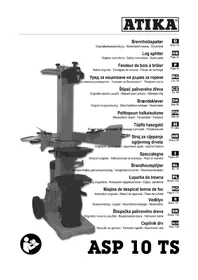
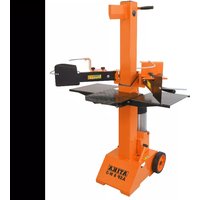
ASP 10 TS - Log splitter ATIKA - Free user manual and instructions
Find the device manual for free ASP 10 TS ATIKA in PDF.



| Product type | Firewood splitter |
| Brand | ATIKA |
| Model | ASP 10 TS |
| Splitting force | 100 kN (10 tons) |
| Max. log length | 1350 mm |
| Log diameter | 120 mm (min.) - 400 mm (max.) |
| Splitting stroke | approx. 550 mm |
| Forward speed | approx. 0.05 m/s |
| Return speed | approx. 0.22 m/s |
| Oil tank capacity | 6 liters |
| Hydraulic pressure | 21 MPa (210 bar) |
| Motor power (absorbed) | 3.3 kW (S6-40%) |
| Power supply | 400 V / 3N~+PE, 50 Hz, 16 A |
| Dimensions (L x W x H) | 890 x 620 x 1610 mm |
| Adjustable table height | 610 mm (low), 890 mm (medium), 1370 mm (high) |
| Use | Single operator, 18 years and older |
| Safety | Two-hand control, emergency stop by release |
| Maintenance | Oil change every 250 h (first at 50 h) |
| Lubrication | Grease the splitting column regularly |
| Spare parts | Use only genuine parts |
Frequently Asked Questions - ASP 10 TS ATIKA
User questions about ASP 10 TS ATIKA
0 question about this device. Answer the ones you know or ask your own.
Ask a new question about this device
Download the instructions for your Log splitter in PDF format for free! Find your manual ASP 10 TS - ATIKA and take your electronic device back in hand. On this page are published all the documents necessary for the use of your device. ASP 10 TS by ATIKA.
USER MANUAL ASP 10 TS ATIKA
Original instructions - Safety instructions - Spare parts
under our sole responsibility, that the product
Brennholzspalter (Log splitter) ASP 10 TS (Serial number: 000001-020000)
is conform with the above mentioned EC directive as well as with the provisions of the guideline below: 2004/108/EC.
Following harmonized standards have been applied:
Duly authorised person for the compilation of technical
GB documents:
GB Extend of delivery
After unpacking, check the contents of the box
That it is complete
Check for possible transport damage
Report any damage or missing items to your dealer, supplier or the manufacturer immediately. Complaints made at a later date will not be acknowledged.
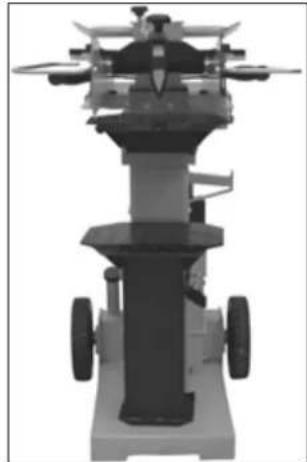
1 ready mounted machine unit
- 2 wheels
1 control arm, right
- 1 bag of accessories
- 1 table plate
1 operating manual
1 control arm, left
Furniture
BC OBeM Ha DoCTaBka Ta
Cnepa3oNaKOBaHe npObepeTe cbDbpxKaHMeTo Ha KaWoHa 3a:
nblHOTA
EBetyaJIHnIOBpeNi npI TpaHCnopTa.
PeknampaTne He3a6abHNO ppe npdaaba, DocTaBnka nIN npOn3BODnteJI. PpeJBeHn NO-KbCHO npTeHcHn HMa da 6bDaT npN3HaTn. Peknamaun, HanpaBeHn no-KbCHO, He ce npn3HabT.
1ypea
2 Koneno
1ObnykBaOpaMo-DACHO
1 Top6nka c 6oItoBe
1Плот ha macata
- 1 PbKOBoDCTBO 3a 06cIyKBAHe
1ObcnyKbao pamo-JIBAO
Obsahdodávky
Po rozbaleni dodavky z kartonu prekontrolujte:
uplnot dodávyk
event. skody zpuobene transportem
Tip: grease the metal plates at first!
Locking bolt is available in the installation position.
Fit the table into the appropriate mounting angles.
Pay attention that the locking bolt is engaged.
Do not operate machine before having read the operating instructions, understood all the notes and assembly the machine as described here.
Keep the instructions in a safe place for future use.
Contents
EC-Declaration of Conformity 1
Spare parts / Description of device 3
Extent of delivery 6
Assembly 9
Symbols 22
Proper use 22
Residual risks 23
Safe working 23
Transport instructions 24
Positioning 24
Start-up 24
Working with the log splitter 25
Maintenance and cleaning 27
Technical data 28
Possible problems 29
Guarantee 29
Symbols machine

Read the operating and safety instructions thoroughly before commissioning the machine.

Caution!
Before starting any repair, maintenance or cleaning work, always switch off the motor and remove the plug from the socket.
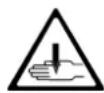
Cutting and crushing risk! Never touch dangerous areas when splitting blade is moving.
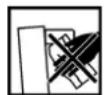
Do not remove jammed logs with your hands.
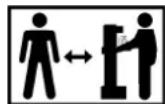
Nobody else should be in the working area of the machine other than the operator. Keep other persons or animals out of the danger area (minimum distance 5m ).

Wear hearing protection when working with the machine to protect your hearing.

Wear face mask when working with the machine to protect the eyes from chips and splinters.

Wear safety gloves when working with the machine to protect the hands from chips and splinters.

Wear safety shoes when working with the machine to protect the feet from falling logs.

Keep your work space tidy! Untidiness may result in accidents.

Oil is a fire hazard and can explode. Smoking and open fire are prohibited.

Dispose of the old oil properly (local oil disposal point). The old oil must not be poured into the ground or drainage system, or mixed with other waste.

Do not remove or modify any protection or safety devices.

Always pay full attention to the splitting blade's movement.
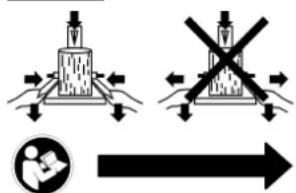
Hold the work piece when splitting with the clamping claw.
Make sure that the motor turns in the correct direction (see motor arrow), because operation in the wrong direction damages the oil pump. (see "Start-up")
Symbols machine / packaging
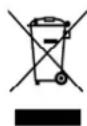
Do not dispose of electrical devices as domestic waste. Dispos of devices, accessories and packaging by means of environmentally friendly recycling.
According to the European Directive 2002/96/EC on electrical and electronic scrap, electrical devices that are no longer serviceable must be separately collected and brought to a facility for an environmentally compatible recycling.
Symbols operating manual

Threatened hazard or hazardous situation. Not observing this instruction can lead to injuries or cause damage to property.

Important information on proper handling. Not observing this instruction can lead to faults.

User information. This information helps you to use all the functions optimally.

Assembly, operation and servicing. Here you are explained exactly what to do.
Proper use
The log splitter must only be used for splitting logs.
Only straight-cut logs are suitable for use with the log splitter.
- Foreign bodies (nails, wire, concrete etc.) must always be removed from the wood before it is split.
- The intended usage also includes compliance with the operating, servicing and repair conditions prescribed by the manufacturer and following the safety instructions included in the instructions.
- Any other use is deemed not to be use as prescribed. The manufacturer is not liable for any type of damage resulting from this: the user bears the sole risk.
- Unauthorised modifications on the log splitter exclude a liability of the manufacturer for damages of any kind resulting from it.
- Only persons who are familiarised with the device and informed about possible risks are allowed to prepare, operate and service this device. Repair works may only be carried out by us or by a customer service agent nominated by us.
Residual risks

Even if used properly, residual risks can exist even if the plant safety regulations are complied with due to the design mined by the intended purpose.
Residual risks can be minimised if the "Safe working" and the "Proper use" as well as the whole of the operating instructions are observed.
Observing these instructions, and taking proper care, will reduce the risk of personal injury or damage to the equipment.
- Failure to observe the safety precautions can lead to injury to the operator or damage to property.
- Carelessness, failure to comply with the safety regulations and incorrect use can result in injuries to your hands and fingers when the splitting blade is moving.
- Risk from electricity, by using non-standard electrical connections.
- Touching live parts of opened electrical components.
- Impairment of hearing when working on the machine for longer periods of time without ear protection.
In addition, in spite of all the precautionary measures taken, non-obvious residual risks can still exist.
Safe working

Before commissioning this product, read and keep to following advice. Also observe the preventive regulations of our professional association and the safety provisions in cable in the respective country, in order to protect self and others from possible injury.
Pass the safety instructions on to all persons who work with the machine.
① Keep these safety instructions in a safe place.
- Be observant. Attend to what you do. Start working with rationality. Do not use the device when you are tired or under the influence of drugs, alcohol or medicaments. One moment of carelessness when using the device can result in serious injuries.
- Make yourself familiar with the equipment before using it, by reading and understanding the operating instructions.
- Do not use the machine for unsuitable purposes (see "Proper use" and "Working with the log splitter").
- Ensure that you have stand in a secure standing position and maintain your balance at all times.
Take up a working position which is close to the controls. - Never stand on top of the machine.
-
When working with the machine, always wear
-
face mask
- safety gloves
hearing protection -
safety shoes with steel toe-caps
-
Wear suitable work clothing:
- do not wear any loose-fitting clothing or jewellery, since these may be caught or trapped by moving parts
- Within his area of work the operator is responsible for third parties.
- The machine may not be operated by children or young people under the age of 18.
- Keep children away from machine.
- Never operate the machine if other persons are in the immediate vicinity.
- Never leave the machine unattended.
- Keep your workplace in an orderly condition! Untidiness can result in accidents.
- Do not overload the machine! You work better and safer in the given performance range.
- Only operate the machine with complete and correctly attached safety equipment and do not alter anything on the machine that could impair the safety.
- Do not modify the machine or parts of it.
- Do not spray machine with water (this is hazardous due to live components).
- Do not leave the machine standing in the rain or use when raining.
- Store the unused machine in a dry locked place away from the reach of children.
-
Switch the machine off and remove the mains plug from the socket when
-
carrying out repair works
- maintenance and cleaning work
- checking connecting lines, whether these are knotted or damaged
- removing faults
- transporting
-
leaving unattended (even during short interruptions)
-
Check the machine for possible damage
Before continuing to use the machine, the protective devices must be inspected to ensure that they work perfectly and with their intended function
- Check whether the movable parts function perfectly and do not stick or whether the parts are damaged. All parts must be correctly installed and fulfil all conditions to ensure perfect operation of the machine.
- Damaged guards and parts must be properly repaired or exchanged by a recognized, specialist workshop; insofar as nothing else is stated in the instructions for use.
- Damaged or illegible safety warning labels should be replaced immediately.

Electrical safety
- Electrical connections must conform to IEC 60245 (H 07 RN-F) with a cable cross-section of at least
400V3
5 × 1.5 ~mm^2 for a maximum cable length of up to 10 ~m
-
Never use the machine with a power supply cable of over 10 m in length. Longer power supply cables will cause a drop in voltage. The motor will not be able to provide its maximum performance and the operation of the machine will be impaired.
-
Plugs and coupler outlets on connection cables must be made of rubber, plasticised PVC or other thermoplastic material of same mechanical stability or be covered with this material.
- The connector of the connection cable must be splash-proof.
- When running the connection line observe that it does not interfere, is not squeezed, bended and the plug connection does not get wet.
- Wind off completely the cable when using a cable drum.
- Do not use the cable for purposes for which it is not meant. Protect the cable against heat, oil and sharp edges. Do not use the cable to pull the plug from the socket.
- Regularly check the extension cables and replace them if they are damaged.
- Do not use any defective connection cables.
- When working outdoors, only use extension cables especially approved and appropriately labelled for outdoor use.
- Do not set up any provisional electrical connections.
- Never bypass protective devices or deactivate them.

The electrical connection or repairs to electrical parts of the machine must be carried out by a certified electrician or one of our customer service points. Local regulations - especially regarding protective measures - must be observed.

Repairs to other parts of the machine must be carried out by the manufacturer or one of his customer service points.

Use only original spare parts. Accidents can arise for the user through the use of other spare parts. The manufacturer is not liable for any damage or injury resulting from such action.
Transport instructions

Move the splitting blade right down every time before they are transported.
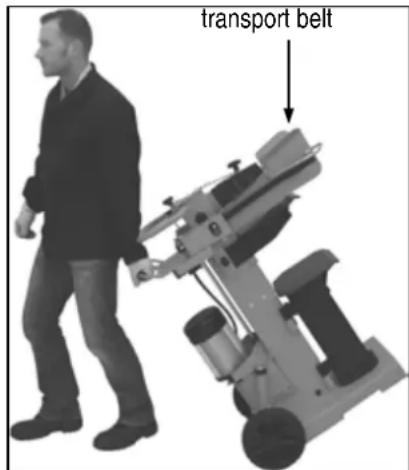
To transport the machine, grasp the handle and tilt the log splitter slightly towards you. The log splitter can be easily transported in this position.
Positioning
Ensure that the working area meets the following conditions:
- no danger of slipping
level - free of obstacles
- sufficiently well lit

- Do not operate the machine in the direct vicinity of gas control pipes or containers, or any other easily inflammable materials.
Start-up
-
Check that the machine is completely and correctly assembled.
Before using the log splitter, make sure each time that -
there are no faulty connections (tears, cuts, etc.)
Do not use defective power supply cables.
there are no damages at the machine
- all screws are tight
- check the hydraulic system for any possible leaks
the oil level

Mains connection
- Compare the voltage given on the machine model plate e.g. 230V with the mains voltage and connect the machine to the relevant and properly earthed plug.
- Only use connection cables with sufficient cross-sections.
- Connect the machine via a 30mA fault current safety switch.

Fuse protection
400V3\~ 16 A


Switching on / off

Prior to every use, check the function of the disconnectionism (by switching on and off).
Do not use any device where the switch can not be switched on and off. Damaged switches must be repaired or replaced immediately by the customer service.
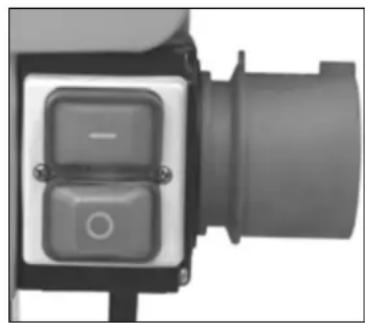

Switching on
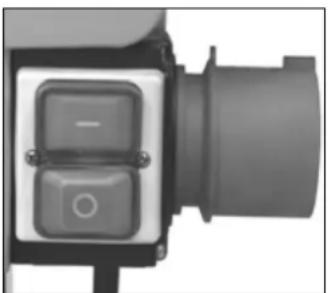
Press the green button.

Switching off
Press the red button.
① Lock in case of power (zero-voltage initiator)
The equipment will switch off automatically if there is a power cut. Repress the green button to switch it on again.

Log splitter with 400 V 3~

#
Make sure that the motor turns in the (the motor arrow), because operation in these stages the oil pump.
Switch on motor; the splitting blade automatically moves to the highest position.
If the splitting blade is already in its highest position: grip both operating handles and push them down. The splitting blade moves downwards.
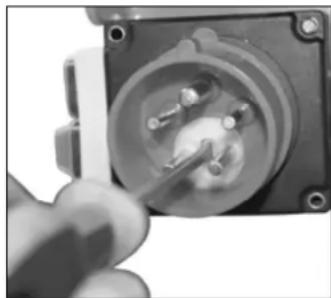
If the splitting blade does not move after the motor has started, switch off the motor and change the direction of rotation.
You can change the direction by placing a screw-driver in the slot provided in the plug collar, and adjust the correct direction by moving to the left or right applying slight pressure.
1 Hydraulics
- Never operate the machine in the event of any possible danger from hydraulic fluid.
- Ensure that the machine and working area are clean and free of oil.
Danger of slippage or fire!
- Check the hydraulic reservoir regularly to ensure that it contains enough hydraulic oil (see "Care and maintenance").
Capacity: approx. 6 litres
Working with the log splitter
Additional SAFETY INSTRUCTIONS
The log splitter may only be operated by a single person.
- The machine may only be operated by persons over the age of 18 years, and who have read and understood these operating instructions.
- Wear protective equipment (safety goggles/mask, gloves, safety shoes) to protect yourself from possible injury.
- Never try to split logs containing nails, wire or other similar objects.
- Already split wood and wood chips create a dangerous working area. The operator may stumble, slip or fall. Always keep the working area neat and tidy.
- Never place the hands on or near any moving parts of the machine when it is switched on. Maintain a safe distance from the log, the ram and the wedge in order to protect your hands from injury.
- The machine should only be used for splitting logs with a maximum length of 1350mm .
- Check before splitting if the splitting column has been sufficiently lubricated to allow its trouble-free retraction and extension.
What type of logs can I split?
Size of logs
Length: max. 1350 mm
Diameter: min. 120 - max. 400 mm
The log diameter is a recommended guideline figure, because:
thin logs can be difficult to split if they contain knots or if the fibres are too strong.
Do not try to split green logs. Dry logs are much easier to split, and do not cause jams as often as green (damp) wood.
Hardwood tend to bursting: Exercise utmost caution!

Operation
Two-hand operation
Never operate the log splitter with two people.
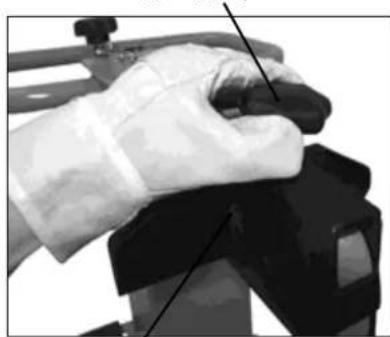
Never block the control handles (clamping claws).
- Press the green switch on the electric motor. Wait a few moments until the motor has reached its operating revolutions and the required pressure has been built up in the hydraulic pump.
① Check the direction of the motor in the log splitter with three-phase motor (400 V 3~), because operation in the wrong direction damages the oil pump.
1 At temperatures below -5^, let the log splitter run for at least 15min in neutral to heat up the oil.
- Place the log on the log splitter table.
① Only split the logs in the direction of the wood fibres.
-
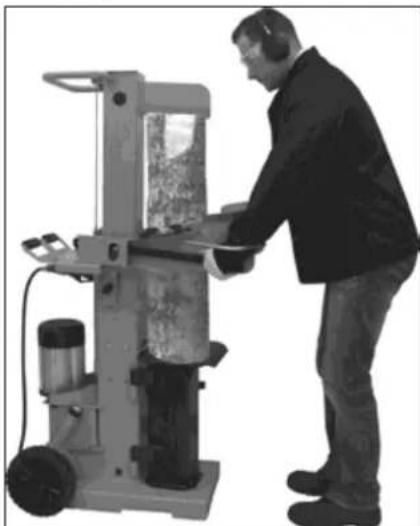
Hold the log tight with the clamping claws.
-
Press both operating handles down simultaneously:
→ The splitting blade falls down and splits the log.
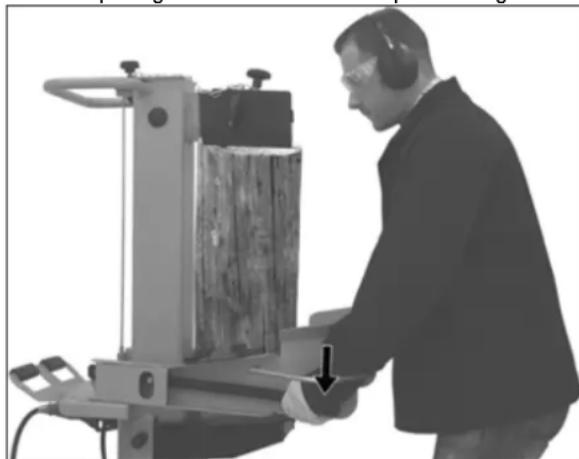
- Release the two control handles, the splitting blade returns to its initial position.
If you only release one control handle, then the splitting blade remains where it is.

Special instructions for splitting logs:
Preparations:
The logs to be split should be cut to the maximum dimensions. Ensure also that the logs are cut straight and square.
Place the log properly on the log splitter, so as not to cause any risk of stumbling or falling to the operator.
- Adjusting the stroke height
In case of shorter wood pieces the efficiency can be increased by shortening the return of the splitting cutter.
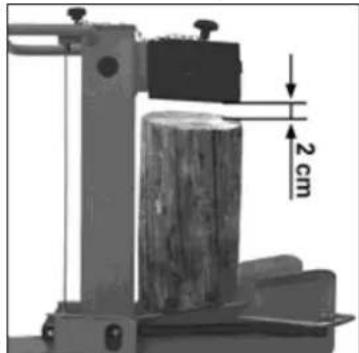
- Place the log on the splitting table and press the two control handles to bring the splitting blade down to approx. 2 cm above the log.
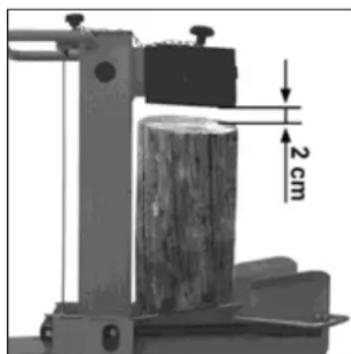
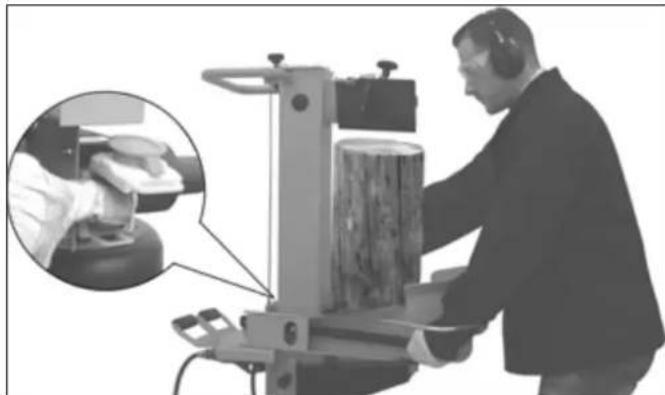
- Release one control handle so that the blade stays in this position.
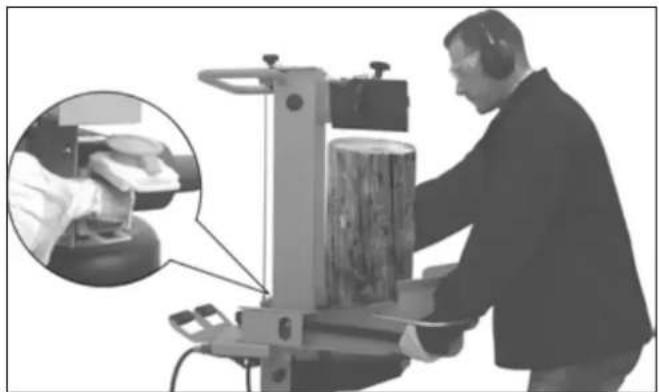
-
Switch the machine off and disconnect the power.
-
Release the second control handle.
-
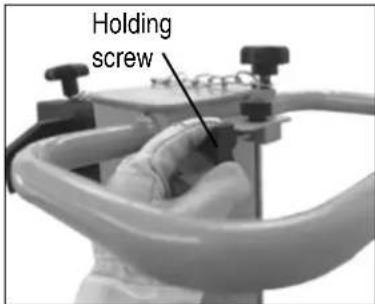
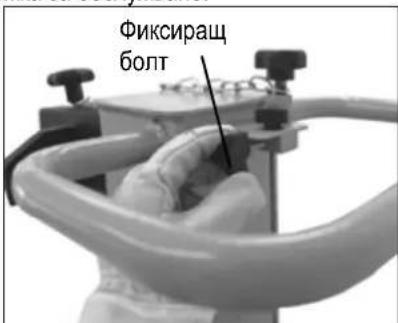
Shorten the return path at the rod fitted to the side by fixing the holding screw at the necessary height.
Adjusting the table height
Upper table plate position: 610~mm
Middle table position: 890 mm
Lower base position: 1370 cm
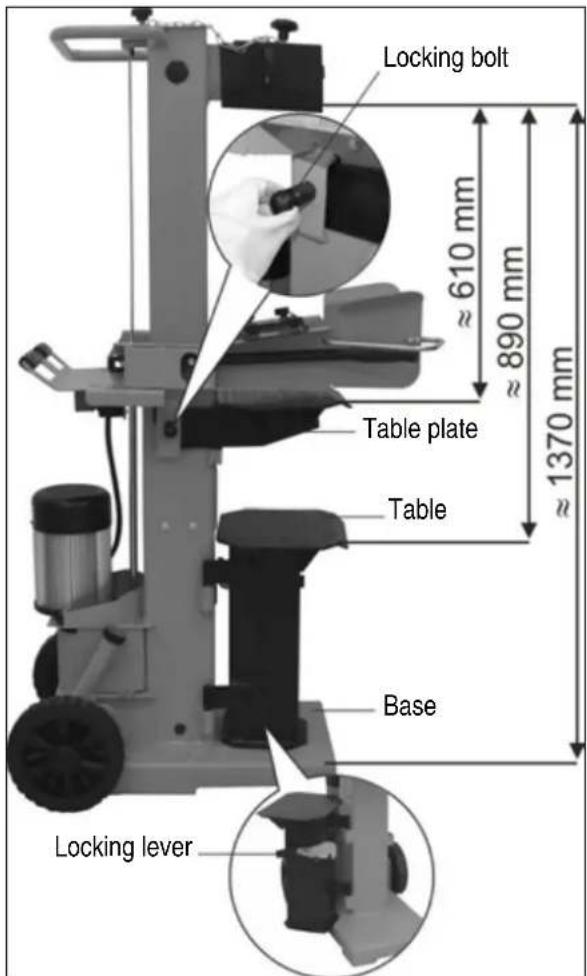
-
Split logs up to 590 mm on the table plate. Secure the table plate using the locking bolt. (The locking bolt engages in the table plate hole.)
-
Split logs up to 870 mm on the table. Pull out the table plate.
-
Split logs up to 1350 mm on the base. Press the locking lever down and swing aside the table.
Adjusting the splitting cross:
-
Loosen star grip screw.
-
Move the splitting cross to the correct position (The star grip screw is beyond the borehole in the splitting blade).
-
Mount star grip screw.
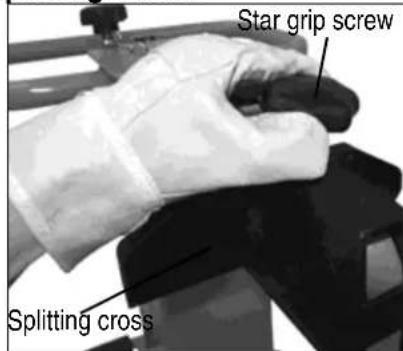
- Splitting short wood:
-
Upper position of table plate.
-
Place the log on the splitter's table plate.
-
Hold the log tight with the clamping claws.
1 Only split the logs in the direction of the wood fibres.
- Splitting long wood:
1.Middle position of table or low position of base.
-
Remove the splitting cross.
-
Place the log on the splitter's table or base.
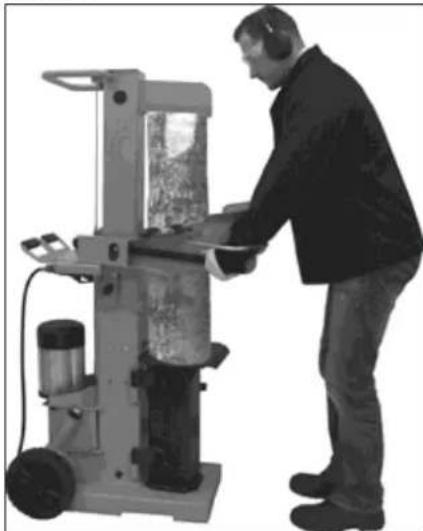
Possible malfunction when cleaving logs: The log to be cleaved is not cleaved right through, jams on the cleaving blade and is pulled up during the blade's return movement. In this case, proceed as follows:
-
Switch off the device.
-
Depending on the log still to be cleaved fix the table plate in the upper or the table in the middle position.
-
Switch on the device and continue the splitting operation.
Never try to split two logs at once.
Never try to remove or replace the log during the splitting process.
① Never try to force the splitting of the log by maintaining the pressure for several seconds. This can lead to damage to the machine.
Position the log on the table again and repeat the splitting phase, or put the log on one side.
How to release a jammed log?
There is a risk of knotted logs getting stuck during the splitting process.
- Switch machine off and disconnect the power.
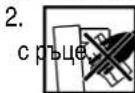
- Do not remove jammed logs with your hands.
- Carefully move the stuck log with a crowbar backwards and forwards to loosen it. Don't damage the splitting pillar.
Never hammer on the stuck log.
Never use a saw to cut the stuck log out of the machine.
Do not enlist the aid of a second person - this is a one-man job.
Finishing work:
34 Bring the splitting blade to the lower position (run-in state).
34 Release one of the control handles.
34 Switch the machine off and disconnect the power.
34 Follow the care and maintenance instructions.
Maintenance and cleaning
Before each maintenance and cleaning work:
- switch off device
- pull out main plug

Wear protective gloves in order to avoid injury to the hands.
For maintaining and cleaning, removed security devices must unconditionally be mounted properly and proved again.
Use only original parts. Other parts can result in unexpected damages and injuries.
Be sure to have removed any tools from the machine after completion of service work.
Maintenance and repair work other than those described in this chapter is only allowed to be carried out by service staff.
To guarantee a long and reliable usage of the product carry out the following maintenance works regularly.
① Observe the following in order to keep the log splitter in good working order:
Clean the machine thoroughly after you have finished using it.
Loose fastening elements.
Worn out or damaged parts.
Remove any resin remains on the machine.
Lubricate the splitting column regularly or oil it using environmentally friendly spray oil.
Check hydraulic hoses and hose connections regularly for any leaks and firm fitting.
Correct assembly and faultless covers and protective devices.
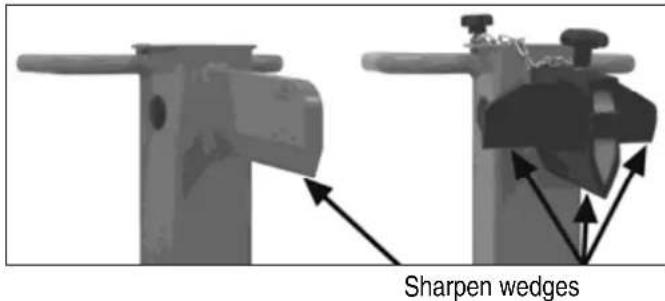
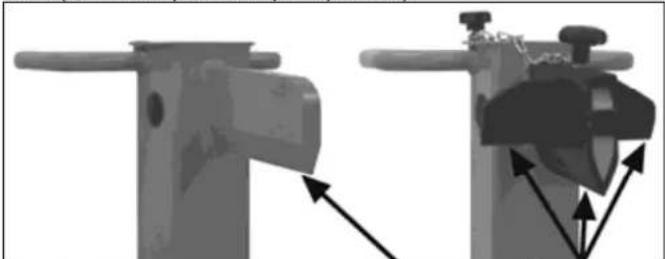
Sharpening the splitting blade
After longer operating periods, for reduced splitting performance or slight deformation of the cutting edge, grind the splitting blade or sharpen it with a fine file (remove burrs).
How do I check the oil level?
- The splitting column must be in run-in state. Now remove the dipstick.
- Clean the dipstick and the oil seal.
- Replace the dipstick fully into the oil reservoir.
- Now remove the dipstick again and read off the oil level.
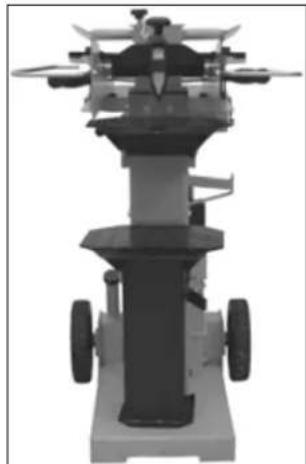
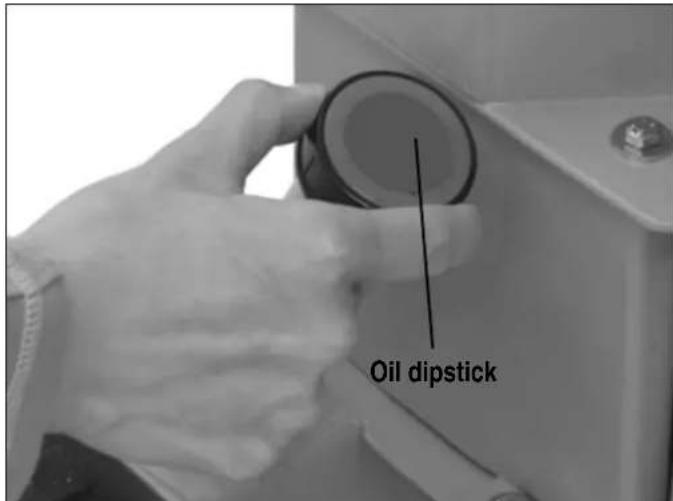
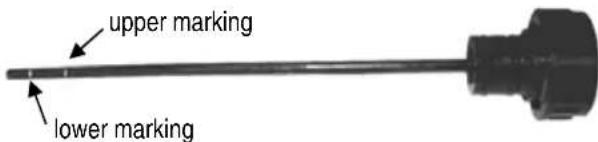
If the oil level is between the two marking on the oil dipstick, there is sufficient oil in the reservoir.
If the oil level is below the lower marking, more oil should be added with the aid of a clean funnel.
- Check the oil seal and replace it if it is damaged in any way.
- Replace the dipstick into the oil reservoir.
When should I change the oil?
The first oil change should be carried out after 50 operating hours, and then every 500 operating hours.

Two persons are required for this.
Changing the oil:
- The splitting column must be in run-in state.
- Now remove the dipstick.
- Place a container under the log splitter to catch the old oil. The container should have a capacity of at least 6 litres.
- Screw off the drain plug to allow the oil to flow out.
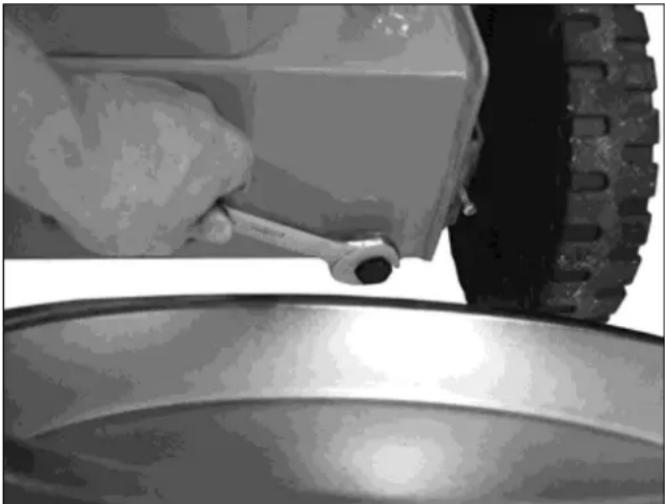
- Insert the seal and drain plug again.
- Pour in the new hydraulic oil using a clean funnel.
- Clean the dipstick and the oil seal.
- Check the oil seal and replace it if it is damaged in any way.
- Replace the dipstick.
Dispose of the old oil properly (local oil disposal point). The old oil must not be poured into the ground or drainage system, or mixed with other waste.

Hydraulic oil
We recommend the following hydraulic oils for the hydraulic cylinder:
Shell Tellus T 22
Aral Vitam Gf 22
BP Energol HLP 22
Mobil DTE 11
or equivalent
Do not use any other types of oil. The use of any other type of oil will adversely affect the operation of the log splitter.
Technical data
| Model / Type ASP 10 TS | |
| Year of construction see last page | |
| Splitting force 100 kN (10 t) | |
| Log length max. 1350 mm | |
| Log diameter min. 120 mm – max. 400 mm | |
| Stroke | ≈ 550 mm |
| Feed speed approx. 0.05 m/sek. | |
| Return speed approx. 0.22 m/sek. | |
| Hydraulic oil (max.) 6 litres | |
| Hydraulic pressure 21 MPa (210 bar) | |
| Electric motor performance (power consumption) P | 1 3.3 kW S6-40% |
| Power supply 400 V / 3N~+PE 50 Hz, 16 A | |
| Dimensions | length 890 x width 620 x height 1610 mm |
| Weight | approx. 167 kg |
Possible problems

Before each fault clearance:
- switch off device
- pull out main plug
| Problem | Possible cause | Remedy |
| Logs are not being split properly (insufficient splitting performance). | →The log is not positioned correctly. →The log exceeds the maximum dimensions or the wood is too hard for the performance of the machine. →Splitting blade does not split log. →Hydraulic pressure too low. →Release rods bent (hydraulic tappet not quite pressed in). →Incorrect connecting lead (longer than 10 m or too small cable cross-section). | →Reposition the log correctly. →Cut the log to the required dimensions. →Sharpen splitting blade, check for burrs or notches. →Check the oil level and add more oil if necessary. If the problem cannot be rectified, refer to the manufacturer or other approved service centre. →Arrange for manufacturer or authorised company to adjust the rods. →Use the correct connecting lead. |
| Splitting column moves unsteadily or with strong vibrations. | →Air in the circuit. →Splitting column not sufficiently lubricated or oiled. | →Check the oil level and add more oil if necessary. →Lubricate splitting column or oil with environmentally friendly spray oil. If the problem cannot be rectified, refer to the manufacturer or other approved service centre. |
| Splitting column does not move in. | →Hydraulic pump defective. | →To correct the problem, refer to the manufacturer or other approved service centre. |
| Motor starts, but splitting column does not move in. | →Motor turns in wrong direction | →Check the motor direction Threephase: adjust the motor direction |
| Motor will not start. | →No electrical power. →2-phase mode in threephase motor. →Connection cable defective. →Electric motor defective. | →Check the fuse. →Have fuse and lead checked by qualified electrician. →Replace the connection cable or have it checked by an electrician. →To correct the problem, refer to the manufacturer or other approved service centre. |
Guarantee
Please observe the enclosed terms of guarantee.

① BkJIIOUyBaHe / n3KJIIOUyBaHe
IpeN BcKa ynoTpe6a npOBepBaTe paBoTaHa N3KJIIOUyBaIcOTO yCTpoIcTB0 (pe3 BKIIIOUbaHe n N3KJIIOUbaHe).
He n3no3BaIte ypeI,Ha KOTo npeBKnIOuBaTeIa He MoKe Da ce BKnIOUyBa N3KnIOUyBa. NobpeHnte npeBKnIOUyBaTeIa Tp6Ba He3a6aBHO da ce nonpaBrt OT cepBn3a HIn Da ce CMeHrT C HOBn.
BkIIOUvBaHe
HaTnchete 3eHeHTo KOHe.
N3KJIIOUyBaHe
HaTnCHete UepBeHToKoHHe.
TbbpdaTbbpceHnHa mA CKNOHHOCT KbM pa3nyKBAHe: Pa6oTeTe c NOBmHeHO BHMaHne!

06cnykBaHe
EknoataunC DBe pBuce
YpeT3a ceneHe Ha DbPBA HNKora He 6nBa da ce obcnykBa OT DBama dyuH.
Hnkora He 6nokpaTe dpbXkTe 3a 06cnyKbaHe (3aTgraunann).
- Hatnche 3eHTo KOHe 3a BKIOUbaHe. N3yakaIte HKOJIko CekHyDn, 3a Da DOCTHne DBNrAteTn CBOnTe KpaHn O6OpOTn Ce O6pa3yBa HAIraHETo BXNpABJNUHata NOMna.
I Ipn TemnepaTyPi no-5° C octabete ypeHa 3a ueHe Ha dbpBa Da paBToH Ha npa3eH xoJ nOhe 15 MmH., 3a da MoKe MacNtO Da ce 3aTOnnn.
- NocTabete IbpbBOTO Ha Macata Ha ypea.
① O6pa6oTbaIe Ibpbata cmo nOncoka Ha HnIkuTe.
-
3axbaheTe 3dpaboTbpbTO cb3aTgauTe naH.
-
HatncheTe eHOBpemeho c TOBa pkoxbkata 3a 06cnykbaHe HANOly.
→Πb3raayt 3a CTBona HaTnCKa CTBona KbM pa3npHnKJIIN. CTBOJbT ce HauenBa.
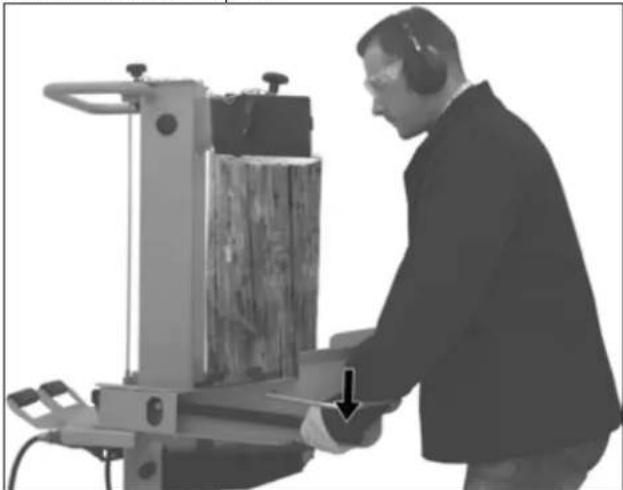
- PycheTe pkoBbAtkata 3a 06cnyKbaHe n 6yToHa 3a 06cnyKbaHe, NtB3rauybT 3a CTBOJa CE Bpbua B IN3XoHOTO Cn NOJOKHeHc.
I NycheTe cAmO eHata DpbXka 3a 06cnykBaHe, aKO HOKbT 3a ZeneHe cPpe.
Oco6eHn yka3aHna 3a HacenBaHeTo:
- Nodrotobka:
IodroTBete DpbBecnHaTa 3a HaeBnBaHe Do MaKcImaJHnTe pa3Mepn Ha npepa60Tkata N ObpHete BHMaHne Ha ToBa, DpbBecnHaTa Da ce HaeBnPaPba.
Harracete DbpbecnHaTa Taka Ha ypea 3a HauenBaHe Ha Dbpa 3a ropeHe, Ye da He cbuectByBa onachocT 3a Bac (onachocT ot cnbahe).
- Perylnaphe Ha xoObata BncouHa
Pnno-KbcnnapetaDbpBaMOKTe Da yBEnuHTpepaOHTaMoHIOCT, KATO CbCnTe O6paTHNxOHa HOKa 3a UeneHe.
- NocTabete Ibpboto Bbpxy Macata 3a ueene He npBnHexe To Hoxka 3a ueene He OKOIO 2 cm Do IbpbTO Ype3 HaTnCKaHe Ha DBete DpXkN 3a ObCyBaHe HaOny.
- PycheTe eHaTa dpbKka 3a o6cnykBaHe, 3a da ocTaHe HOxBT 3a ueHe B TOBa nOIOKeHne HnKJIIOUeTe ypeA.
3.Издьрайт ecena.
- Nychete Btopata npbXka 3a o6cnyKbaHe.
5.Ckbcete 6bathnaXoHa CTpaHnUHO MOHTnpaHaTa ⅢaHra, KaTO 4Kcnpate 4Kcnpaunu6oTT Ha Heo6xOIMaTa BnCOUYHa.
- Perylmpahe Ha BnCOounHa Ta Ha Macata
Topno noIooKeHne Ha nIOTA ha macata: 610 mm.
CpeHNOIIOJKeHHe Ha IINota HA Macata: 890 mm.
- OTHOBO 3aTeHHeTe 3Be3IOBnHaTa pbKoXBtKa Ha BnHT.
BnHT CbC 3Be3DObuHa npkoXBaTka
Kpbct 3a ueene
- Lenehe Ha Kbcn DbpBa:
- Tropno noJoxKeHne Ha nIota Ha macata.
- NocTabeTe DbPBoTO Bbpy NIOta Ha Macata Ha ypeJa.
- 3axbaheTe 3dpaboDbpbTO cbc 3aTgauTe Iann
① O6pa6oTbaIe TbPbTa cAmO No NocOKa HnHnKInTe.
- LceneHaIbIgN IbPBA:
- CpeiHo
NIOXKeHne Ha Macata NIN DOnHO NIOXKeHne Ha QObJa.
- MaxheTe Kpbcta 3a UeneHe.
- NocTabete IbpbTO Ha Macata HnHa 0Kbna Haypeda.
Bb3MOxHa nobpeHa npu ceneHe Ha Dbln DbPBA: DbPBOHe ce pa3eNba, 3aXka Ha HOxa 3a ceneHe n Ce Bnra Harope npn o6paTHna XoI.
BTo3n cnyaHnpaBeTe cneHto:
- N3KJIIOUeTe ypeDa.
- Cnped nblknaHata Ha nbpB0To 3a ceneHe 3akpenTe nIOTA Ha Macata B rOpHo NIOXKeHne INI MaCATA B CpeHNO NOIOXKeHne.
- BkIIOUeTe ypea n npOdbIgKeTe ueeneHTo.

Hikora He uepe Te Dbe Dbpa HabeNbX.

Hnkora He do6abTe nn CmehnTe DbpBa nO BpeMe Ha pa6ota.
1 Da He ce npedn3BnKba HnKora HaenBaHe Ha CTBoNa nocpeDCTBOM NOIbPxAHe Ha IIb3raHTo B IpoIbJxHne Ha HnKO Ko ckyHn. Toba MoKe da DoBeDe Do NobpeHn Ha MaunHata.
HaarnaCeTe CTBona OTHOBO Bbpxy rnaBHata paMKn NOBTOpeTe npocca Ha HauenBaHe n OCTaBeTe CTBONA HAcTpaHn.
Kakceocbo6oxkaBa3aKeuIoo ce cTe6no?
Ima onachoct dIbPbTa C KIOHn Da 3a4at npu ceene.
- N3knouche Te ypea n 3ndpnaTe uencena.
He oTcpanBaIte dIpbBaTa
- BHIMATEJHO pa3dBVIXe 3aIIOTo IbPBO C uHaRa HAnpeiHa3aI, 3a Da MoXeTe Da ro OCBo6OJeTe. He NOBpeKdAte KOHOHaTa 3a UeneHe!

PnOcB60xJaBaHTo HNKOra He NoyKBaIte Bbpxy 3aKneIeHOTo CTe6No I He cnaarTe PbIeTe 6JIn3o Do CTB0NA.

Hikora He n3BaXdaiTe 3aINoTo DbPBO ype3 pIaHe.

He monete BToPo IuIe 3a nodkpena.
KpaHa pa6oTaTa:
NocTabete Hoxa 3a Zenehe B DonH NoNoXeHne (cnychaT).
PyncheTe eHaTa DpbKka 3a o6cnykBaHe.
N3knoue Te ypea n 3ndpnaTe uencena.
Da ce cna3BaT yka3aHnra 3a noDpBjKka n rpnKn.
TexHnuecka noDapbXka

PpeBn BcKa TExHuecka NOpdpbXka N NOuNCTBaHe:
-da6bdeN3KNHoueH ypea
- da ce n3BaDn ⅢeNcEa 3a eJekTpueckaTa MPexka

Ja ce HocrT npedna3Hn pkbAunu, 3a da ce npedotBpataBaT hapaHaBAHn Ha pbcTe.
3aunTHnTe npncnocobleny, KOnto ca cBaaneHc ceI N3BbPwBaHe Ha TexHnuecka NoDpBjKka N NOuCTBaHe, Tpa6Ba da 6bDat OTHOBn HADnEeXHO MOHTnpaHn INpoBepenH.
Ia ce n3no3BaT cAmO opnHnHn YactN. Dpyr nuactm Morat da npedn3BnKAT HnpednDnIMN NOpei N HapaHbAHna.
BHHMaBaIe CneI noDpBxKata IIN peMOHTa OTHOBO da MAXHETe HnCTpyMeHTa nraeyHnKJIOU.
Pa60TN NO TexHnueckata NoDpBxKg N NoOHTBaHTo, pa3NHyN OT ONcAHnTe B HactoIyra3JeI, Moar Da ce N3BbPbBaT cAmO OT cepBn3a.
3a da ce rapaHTnp npoIbIKNTeHNO nHaedeJHO nIIOJI3BaHe Haypea, npOBekdaIte peDobHO TexHuecka IOpIpbKka.
i
Cna3BaIe cneHTo, 3a da 3ana3nte roDnocTtHa ypeDa 3a HauenBaHe Ha dbpBa:
IOnuHCTe OCHOBHO MaunHaTa CneI npKIOUbaHe Ha pa6ota.
xna6aBn Bp3Kn.
- N3HOCEH HIN NOBpeDeHN YACTN.
OTCTpaHETe OTJaraHnO TCMONA.
- HamaiaBaTe peoBHO MOTOBJkata C eKoNOruHc MaCNo 3a npbckaHe.
PeOBHO npOBepBaIte nIbTHOCCTa n 3dpabHnHa HxnpabNCHTE WnayXOBe u WnayXOBn Bpb3Kn.
- npaBnHNO MOHTnpaHn N 3npaBHn Kaaun nn 3auTHn npncnocobneHn.
HaToUBaHe Ha KInHa
Cnei npoBnKIneHa eknloataun nn npn HamaJIeH KanauTeHa HaueenBaHe da ce n3nn pa3npHn Klnn C pHa nnla (da ce otctpaHr octpnte pb6obe).
HaToUBaHe Ha pb6a

Kak da npOBepnHBOTo Ha MacJnto?
- KonoHata 3a ueene Tp86ba da e np6paHa.
- Pa3BnHTe npb4kata 3a IN3MepBaHe Ha MacNOTO.
- Nocntete npbkaTa 3a
N3MepBaHe Ha MacnToTO
yTbTHHeHHeTO 3a
MaCnTo. - NocTabete npbukata 3a INMepBaHe OTHOBO OTBopa do ynp.
- ɪnɜːbæte OTHOBO npbʊkɑtə 3a nɪʒmepbahe Ha macnɒtɔ.
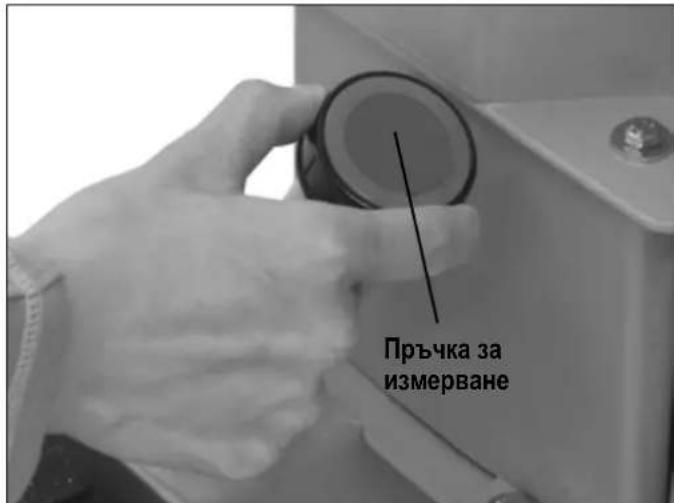
B cnya, Ye HbOTO Ha Macnoto e Mejdy DBeTe MapknpoBKn, To B pe3epBoapa mHa DoCTaTbHcHo MacNo.
B cnya, Ye HnBOTo Ha MacNoto e noD oJHaTa MapKnPOBka Tp6Ba Da 6bDe DonbJIHeHO MacNo B NOMOHTa Ha uCTa fynia.
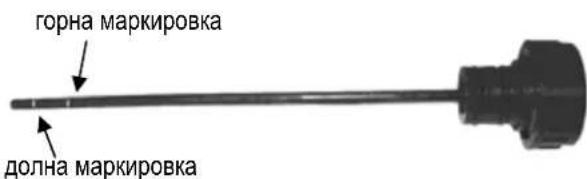
- Поберете упьт themselves 3a macnoto.To trp6Ba da 6bde Cmeheno npi nobpevi.
- 3aBnHTe OTHOBnPbYkata 3a N3MepBaHe Ha MacIOTO.

Kora da cmeHa macnoto?
Pbpa CmHa Ha MacnoTo cIe5 50 yaca ekcnnoataa, cIeTOBa H BceKn 250 yaca ekcnnoataa.

HeoXoDnMn ca DbMaA dyuH.
CMHa:
- KonoHata 3a ueene Tp8Ba da e np6paHa.
- Pa3BnHTe npbYkata 3a n3MepBaHe Ha MacJIoTO.
- NocTabepeepboap, KOITMOKKeJaNoEMe MNHmAmHO 6 IITpa Macno, NOIypea 3a HaueBaHe Ha IbPBeCnHa.
- Pa3BbPteTe kanaUkata 3a n3nyckaHe, 3a da MoKe MaCNoTo Da n3TeYe.
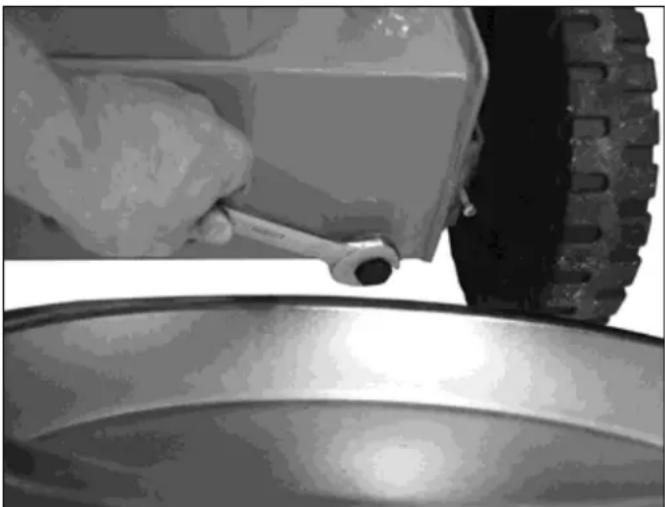
- NocTabete OTHOBO yNtBTHHeHnETo n KanaykaTa 3a N3nyckaHe.
- HanbIhHe TEO XnIpaBnHNO MacNo C NOMOuTa Ha YnCTa cyHn.
- Nocnte Te npbYkata 3a n3MepBaHe Ha Macnoto yNtBTHEHTo 3a Macnoto.
- NouinTeTe yInbTheHnETo 3a MacNoTo. Ppi NoBpeN To TpR6Ba Da 6bDe CMeHeHo.
- 3aBnHTeTe OTHOBOpbYKaTa3a N3MePbaHTo Ha MacNoTO.
OCTpaHraBaTe Otpa6oTeHO MacNo B CbOTBcTBE C peda (ueHTbp 3a cb6npaHe Ha OTPa6oTeH MacNo Ha MrcTo). 3a6paHeno e, da ce n3cnBa OTPa6oTeHO macNo B NOvBaTa HIN da ce cMecBa c 6oknyka.
① XnDpaBnHNo macNo
3a ypeda 3a hauenbahe Ha IbpbBecnHa Hne npenopbBaMe CneHnTe XnpabNnHm Macna:
Shell Tellus T 22
Aral Vitam Gf 22
BP Energel HLP 22 → Nopbka-N. 400142 (1 Liter)
Mobil DTE 11
nIM paBHOCTOHHO
Ia He ce n3non3BaT dpyrn BINOBE macNo. N3non3BaHeto Ha dpyrn BINOBE MacNo OKa3Ba BInnaHne Ha cyHKunraHa ypeD 3a HauenBaHe Ha DpBa.
TexHnueckn daHHN
PpeINBCaKOOTcpaHbHeHaHen3npaBHOCT
-da6bdeH3KNIOueH ypeda
- da ce n3BaDiu eIeKtpnueckata MpeKa
| Helenpabnocct | Възможна р�чина | Остразаньанe |
| Съюльт не се наценив (Tьърдп НИСКA мошноct на назелванe) | → Съюльт не се постavenho р�авилно → Съюльт над��шава дочустимite раимери ил дьрвесинatable e пекалено Тьрда за мошноctта на машина → Hoxьт за цenene не цen → Хадравличною налгаяне в мною НИСКО → 3адействашиота усанга e огьнatable (xидравличною чуже не налбся нальлно) → Гөшөн рисьединтохлп ровodнik (no- дьлг ot 10 m ил пекалено мальк диаметьр на лжлOTO) | → Поставete оторо STВО → Otrpekette CTBOla до дочустимite раимери → 3аточete поха за цenene, поверete за мystашил вдьбнахи → Поверete повOTO на масло; akо e heobxodimo, дoleйт maclo. Ако побLEMыт не може за ce отстани, ce obpHEte КБМ позьогителя Алл КБМ OTOPIN3IPANa OT Hero Фирма. → Дайт сангITE за Perулирале OT позьогителя ил OT OPIN3IPANa OT Hero Фирма → Да ce ИЗПОЛЗВА рравлиен позьогителя правлиен позьогителя правлиen правлиen |
| Пьъзагьт за STВОla се Движи Ложевки се ил сьс силни Вибраци | → Вьздунх в сикьл → Зелесота колona не сожа тьчно сmaiza на с гесшил масло | → Поверete повOTO на масло; akо e heobxodimo, дoleйт maclo. → Смжete цента колona ил нарьскaite с ekolotnyн maclo Поверетит не може за бдde отстани. могя obpHete ce КБМ позьогителя. |
| Пьъзагьт за STВОla не се Движи | → Хадравличныnomа e Deф ekтнa | → 3a OTСТРANBAнe Na повелma се obpHete КБМ правлин. правли. правли. правли. правли. правли. правли. правли. правли. правли. правли. правли. правли. правли. правли. правли. правли. правли. правли. правли. правли. правли. правли. правли. правли. правли. правlin. правли. правли. правли. правли. правли. правли. правли. правли. правли. правли. правли. правли. правли. правли. правли. правли. правли. правли. правли. правли. правли. правли. правли. правли. правloon правли правли правли правли правли правли правли правли правли правли правли правли правли правли правли правли правли правли правли правли правли правли правли правли правли правloon правloon правloon правloon правloon правloon правloon правloon правloon правloon правloon правloon правloon правloon правloon правloon правloon правloon правloon правloon правloon правloon правloon правloon правloon правли правloon правloon правloon правloon правloon правloon правloon правloon правloon правloon правloon правloon правloon правloon правloon правloon правloon правloon правloon правloon правloon правloon правloon правли правли правloon правloon правloon правloon правloon правloon правloon правloon правloon правloon правloon правloon правloon правloon правloon правloon правloon правloon правloon правloon правloon правloon правли правloon правли правloon правloon правloon правloon правloon правloon правloon правloon правloon правloon правloon правloon правloon правloon правloon правloon правloon правloon правloon правloon правloon правloon правли правли правли правloon правloon правloon правloon правloon правloon правloon правloon правloon правloon правloon правloon правloon правloon правloon правloon правloon правloon правloon правloon правloon правли правloon правloon правли правloon правloon правloon правloon правloon правloon правloon правloon правloon правloon правloon правloon правloon правloon правloon правloon правloon правloon правloon правloon правloon правLOн правLOн правLOн правLOн правLOн правLOн правLOн правLOн правLOн правLOн правLOн правLOн правLOн правLOн правLOн правLOн правLOн правLOн правLOн правLOн правLO网 правLO网 правLO网 правLO网 правLO网 правLO网 правLO网 правLO网 правLO网 правLO网 правLO网 правLO网 правLO网 правLO网 правLO网 правLO网 правLO网 правLO网 правLO网 правLO网 правLO网点 правLO网点 правLO网点 правLO网点 правLO网点 правLO网点 правLO网点 правLO网点 правLO网点 правLO网点 правLO网点 правLO网点 правLO网点 правLO网点 правLO网点 правLO网点 правLO网点 правLO网点 правLO网点 правLO网点 правLO网 правLO网点 правLO网点 правLO网点 правLO网点 правLO网点 правLO网点 правLO网点 правLO网点 правLO网点 правLO网点 правLO网点 правLO网点 правLO网点 правLO网点 правLO网点 правLO网点 правLO网点 правLO网点 правLO网 правLO网 правLO网点 правLO网点 правLO网点 правLO网点 правLO网点 правLO网点 правLO网点 правLO网点 правLO网点 правLO网点 правLO网点 правLO网点 правLO网点 правLO网点 правLO网点 правLO网点 правLO网点 правLO网 правLO网点 правLO网 правLO网点 правLO网点 правLO网点 правLO网点 правLO网点 правLO网点 правLO网点 правLO网点 правLO网点 правLO网点 правLO网点 правLO网点 правLO网点 правLO网点 правLO网点 правLO网点 правLO网点 правLO网 правLO网 правLO网 правLO网点 правLO网点 правLO网点 правLO网点 правLO网点 правLO网点 правLO网点 правLO网点 правLO网点 правLO网点 правLO网点 правLO网点 правLO网点 правLO网点 правLO网点 правLO网点 правLO网 правLO网点 правLO网点 правLO网 правLO网点 правLO网点 правLO网点 правLO网点 правLO网点 правLO网点 правLO网点 правLO网点 правLO网点 правLO网点 правLO网点 правLO网点 правLO网点 правLO网点 правLO网点 правLO网点 правLO网 правLO网点 правLO网 правLO网 правLO网点 правLO网点 правLO网点 правLO网点 правLO网点 правLO网点 правLO网点 правLO网点 правLO网点 правLO网点 правLO网点 правLO网点 правLO网点 правLO网点 правLO网点 правLO网点 правLO网 правLO网 правLO网点 правLO网 правLO网点 правLO网点 правLO网点 правLO网点 правLO网点 правLO网点 правLO网点 правLO网点 правLO网点 правLO网点 правLO网点 правLO网点 правLO网点 правLO网点 правLO网点 правLO网点 правLO网 правLO网 правLO网 правLO网 правLO网点 правLO网点 правLO网点 правLO网点 правLO网点 правLO网点 правLO网点 правLO网点 правLO网点 правLO网点 правLO网点 правLO网点 правLO网点 правLO网点 правLO网点 правLO网 правLO网点 правLO网点 правLO网点 правLO网 правLO网点 правLO网点 правLO网点 правLO网点 правLO网点 правLO网点 правLO网点 правLO网点 правLO网点 правLO网点 правLO网点 правLO网点 правLO网点 правLO网点 правLO网点 правLO网 правLO网点 правLO网点 правLO网 правLO网 правLO网点 правLO网点 правLO网点 правLO网点 правLO网点 правLO网点 правLO网点 правLO网点 правLO网点 правLO网点 правLO网点 правLO网点 правLO网点 правLO网点 правLO网点 правLO网 правLO网点 правLO网 правLO网点 правLO网 правLO网点 правLO网点 правLO网点 правLO网点 правLO网点 правLO网点 правLO网点 правLO网点 правLO网点 правLO网点 правLO网点 правLO网点 правLO网点 правLO网点 правLO网点 правLO网 правLO网点 правLO网 правLO网 правLO网 правLO网点 правLO网点 правLO网点 правLO网点 правLO网点 правLO网点 правLO网点 правLO网点 правLO网点 правLO网点 правLO网点 правLO网点 правLO网点 правLO网点 правLO网点 правLO网 правLO网 правLO网点 правLO网点 правLO网 правLO网点 правLO网点 правLO网点 правLO网点 правLO网点 правLO网点 правLO网点 правLO网点 правLO网点 правLO网点 правLO网点 правLO网点 правLO网点 правLO网点 правLO网点 правLO网 правLO网 правLO网点 правLO网 правLO网 правLO网点 правLO网点 правLO网点 правLO网点 правLO网点 правLO网点 правLO网点 правLO网点 правLO网点 правLO网点 правLO网点 правLO网点 правLO网点 правLO网点 правLO网点 правLO网 правLO网 правLO网 правLO网点 правLO网 правLO网点 правLO网点 правLO网点 правLO网点 правLO网点 правLO网点 правLO网点 правLO网点 правLO网点 правLO网点 правLO网点 правLO网点 правLO网点 правLO网点 правLO网点 правLO网 правLO网 правLO网 правLO网 правLO网 правLO网 правLO网 правLO网 правLO网 правLO网 правLO网 правLO网 правLO网 правLO网 правLO网 правLO网 правLO网 правLO网 правLO网 правLO网上 навл; навл; навл; навл; навл; навл; навл; навл; навл; навл; навл; навл; навл; навл; навл; навл; навл; навл; навл; навл; навл; навл; навл; навл; навл; навл; |
TapaHcna
MolraBzemTeIOBHNMaHHe npnIOxKeHaTa rapaHOnHnDeKlapaun.

Stroj nesmite obsluhovat bez dokonalého prostudovani tohoto navodu, respektovani vsech dan'ychPokynu a jeho radného smontovani.
Symbol apparatus / emballage
① Indkobling / Frakobling

Fore all transport skall kniven koras helt ned.
- GB Extend of delivery
- Furniture
- BC OBeM Ha DoCTaBka Ta
- Obsahdodávky
- Keep the instructions in a safe place for future use.
- Contents
- Symbols machine
- Symbols machine / packaging
- Symbols operating manual
- Proper use
- Residual risks
- Safe working
- Electrical safety
- Transport instructions
- Positioning
- Start-up
- Mains connection
- Fuse protection
- Switching on / off
- Switching on
- Switching off
- ① Lock in case of power (zero-voltage initiator)
- Log splitter with 400 V 3~
- #
- Hydraulics
- Working with the log splitter
- Additional SAFETY INSTRUCTIONS
- What type of logs can I split?
- Size of logs
- Operation
- Two-hand operation
- Special instructions for splitting logs:
- Preparations:
- - Adjusting the stroke height
- Adjusting the table height
- Adjusting the splitting cross:
- - Splitting short wood:
- - Splitting long wood:
- How to release a jammed log?
- Finishing work:
- Maintenance and cleaning
- Sharpening the splitting blade
- How do I check the oil level?
- When should I change the oil?
- Two persons are required for this.
- Changing the oil:
- Hydraulic oil
- Possible problems
- Before each fault clearance:
- Guarantee
- ① BkJIIOUyBaHe / n3KJIIOUyBaHe
- BkIIOUvBaHe
- N3KJIIOUyBaHe
- 06cnykBaHe
- Oco6eHn yka3aHna 3a HacenBaHeTo:
- - Nodrotobka:
- - Perylnaphe Ha xoObata BncouHa
- - Perylmpahe Ha BnCOounHa Ta Ha Macata
- - Lenehe Ha Kbcn DbpBa:
- - LceneHaIbIgN IbPBA:
- Kakceocbo6oxkaBa3aKeuIoo ce cTe6no?
- TexHnuecka noDapbXka
- Ja ce HocrT npedna3Hn pkbAunu, 3a da ce npedotBpataBaT hapaHaBAHn Ha pbcTe.
- HaToUBaHe Ha KInHa
- Kak da npOBepnHBOTo Ha MacJnto?
- Kora da cmeHa macnoto?
- HeoXoDnMn ca DbMaA dyuH.
- CMHa:
- ① XnDpaBnHNo macNo
- PpeINBCaKOOTcpaHbHeHaHen3npaBHOCT
- TapaHcna
- Symbol apparatus / emballage
- ① Indkobling / Frakobling
Brand : ATIKA
Model : ASP 10 TS
Category : Log splitter