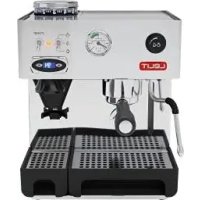
Grace PL81T - Coffee machine Lelit - Free user manual and instructions
Find the device manual for free Grace PL81T Lelit in PDF.



User questions about Grace PL81T Lelit
0 question about this device. Answer the ones you know or ask your own.
Ask a new question about this device
Download the instructions for your Coffee machine in PDF format for free! Find your manual Grace PL81T - Lelit and take your electronic device back in hand. On this page are published all the documents necessary for the use of your device. Grace PL81T by Lelit.
USER MANUAL Grace PL81T Lelit
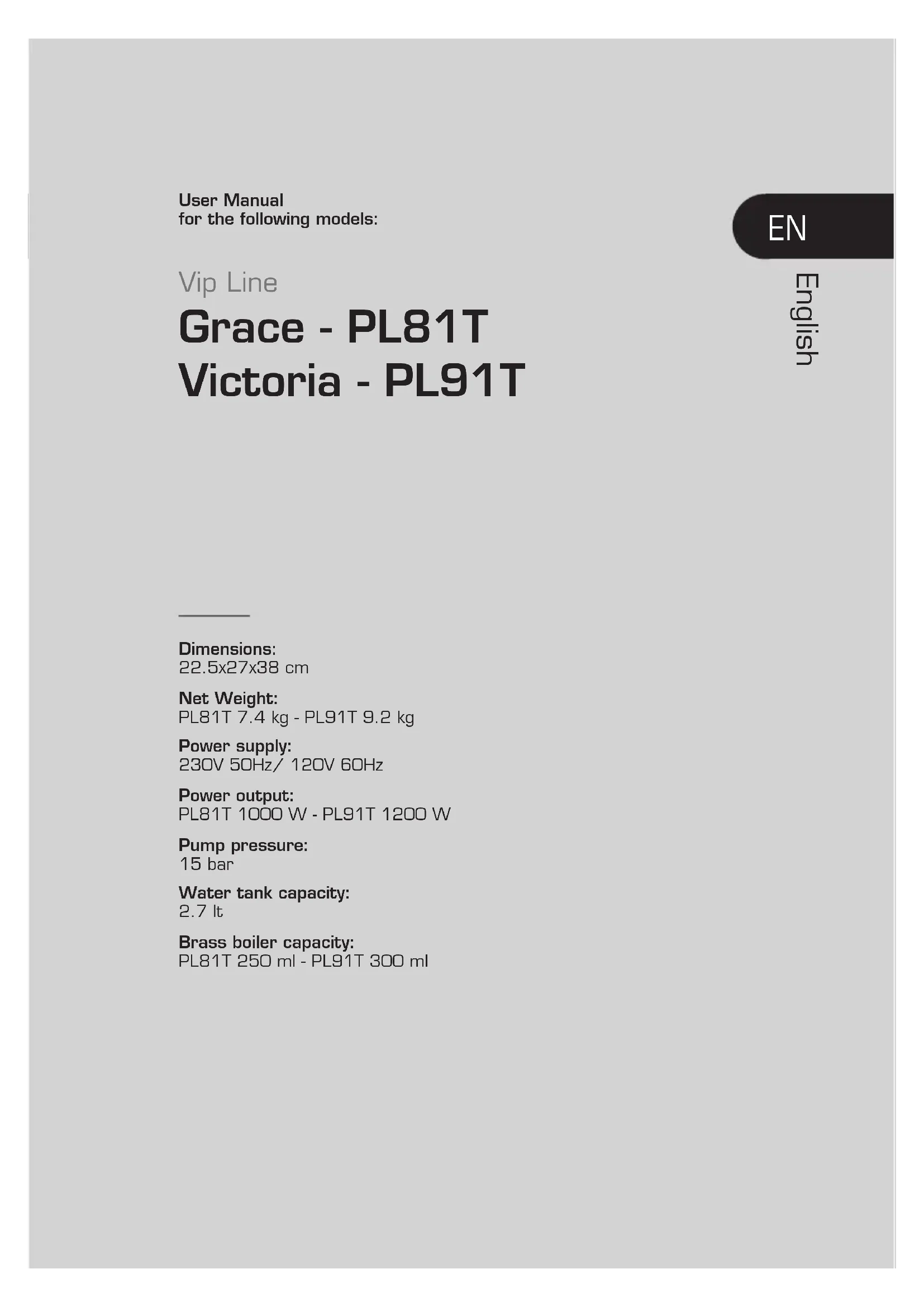
Vip line PL81T - PL91T
The espresso machines that combine quality, design and technology
Dimensions:
22.5x27x38cm
Net Weight:
PL81T 7.4 kg - PL91T 9.2 kg
Power supply:
230V 50Hz/120V 60Hz
Power output:
PL81T 1000 W - PL91T 1200 W
Pump pressure:
15 bar
Water tank capacity:
2.7 It
Brass boiler capacity:
PL81T 250 ml - PL91T 300 ml

THANK YOU FOR CHOOSING US
Careful design and choice of components are the secret of the excellent performance of all our models.
We develop our products with the technology applied only to the best professional machines. The materials used meet very high standards of quality and reliability to provide you with durable, and long-lasting products.

Write down the serial number of your product
Serial number
Purchased from Date of purchase
Index
Safety notes 4
Main specifications 9
LCC - Lelit Control Center 10
Product overview 11
Instructions for use 12
The art of Espresso coffee 18
Cleaning and maintenance 22
Solving the most common problems 24
Warranty terms 25
3
01.
Safety notes
Warnings - Please read carefully before use. This espresso machine is suitable for the preparation of 1 or 2 cups of coffee; it is equipped with a multi-directional wand for dispensing steam and hot water. The controls on the front panel have easy understandable symbols. The machine is designed for domestic use and is not suitable for continuous professional use. The noise rating of the unit does not exceed 70 dB (A). The data and images shown are subject to change without notice in order to improve the performance of the machine.
Symbols used
It is absolutely essential to observe the following warnings and symbols:

Shock hazard. Failure to comply may cause electric shock with danger to life.

Burn hazard. Failure to comply may cause severe burns.

Caution. Failure to comply may cause damage to the appliance.

Please Note. This symbol indicates important advice and information for the user.
Numbers in brackets
The numbers in brackets refer to the key provided in the description of the appliance in Chapter 04 "Product overview" and to the pictures in the Quick start guide attached.
IMPORTANT SAFEGUARDS

General warnings
This manual is an integral and essential part of the product. Please read all these warnings carefully as they provide important information on safe installation, use and maintenance. These instructions should be carefully retained for future reference.
-
This appliance can be used by children aged from 8 years and above and persons with reduced physical, sensory or mental capabilities or lack of experience and knowledge if they have been given supervision or instruction concerning use of the appliance in a safe way and understand the hazards involved. Children shall not play with the appliance. Cleaning and user maintenance shall not be made by children without supervision.
-
This appliance can be used by children aged from 8 years and above if they have been given supervision
or instruction concerning use of the appliance in a safe way and if they understand the hazards involved. Cleaning and user maintenance shall not be made by children unless they are older than 8 and supervised. Keep the appliance and its cord out of reach of children aged less than 8 years.
-
Appliances can be used by persons with reduced physical, sensory or mental capabilities or lack of experience and knowledge if they have been given supervision or instruction concerning use of the appliance in a safe way and understand the hazards involved. Children shall not play with the appliance.
-
This appliance is intended to be used in household and similar applications such as: staff kitchen areas in shops, offices and other working environments; farm houses; by clients in hotels, motels and other residential type environments; bed and breakfast type environments.
-
The appliance is only designed for making espresso coffee or hot drinks using the hot water or steam tubes and for pre-heating cups.
-
Store the packaging material (plastic bags, polystyrene, etc.) out of the reach of children.
- The appliance is only designed for making espresso coffee or hot drinks using the hot water or steam wands and for pre-heating cups.
- Any use other than that described above is improper and could be hazardous; the manufacturer accepts no liability whatsoever for any damage arising from improper use of the appliance.
- This appliance is not intended for use by persons (including children) with reduced physical, sensory or mental capabilities, or lack of experience and knowledge, unless they have been given supervision or instruction concerning use of the appliance by a person responsible for their safety.
- Children must not be allowed to play with the appliance.
- The appliance must not be left unattended or used outdoors.
-
The appliance should not be immersed in water or cleaned by spraying.
-
The appliance must not be exposed to atmospheric agents (rain, sun, ice).
- If the appliance is stored in rooms where the temperature can go below freezing, the tank and the water pipes must be emptied.
- All the packing material (plastic bags, polystyrene, etc.) should be keep out of the reach of children.
- No liability is accepted for the use of unauthorized spares and/or accessories.
- No liability is accepted for repairs not carried out by authorized service centres.
- The manufacturer accepts no liability for tampering with any of the appliance components.
In all the above cases the warranty will be void.

Essential safety warnings
As with all electrical appliances,
the risk of electric shock cannot be excluded, therefore, the following safety warnings should be carefully observed.
- To avoid spilling the connector, never pull the power cord.
- Always attach plug to appliance first, then plug cord into the wall outlet.
- To disconnect the appliance, turn any control to "off", then remove plug from wall outlet.
- In the event of any fault or malfunction, do not attempt to carry out repairs. Switch the appliance off, remove the plug and contact the Service Centre.
- In the event of damage to the plug or the power cord, do not operate the appliance, these should be replaced only and exclusively by the Service Centre.
- Unplug from outlet when not in use.
-
Before cleaning the exterior surfaces of the appliance, putting on or taking off parts, switch it off, remove the plug from the outlet and allow to cool.
-
To reduce the risk of injury do not drape cord over the counter top or table top where it can be pulled on by children or tripped over unintentionally.
- Do not let cord touch hot surfaces.
- Do not let cord hang over edge of table or counter.
- The use of accessory attachments not recommended by the appliance manufacturer may result in fire, electric shock or injury to persons.
- Do not place on or near a hot gas or electric burner, or in a heated oven.
- Before switching on, ensure that the power supply voltage corresponds to that indicated on the plate on the base of the appliance and that the power supply is properly earthed.
- Do not tamper with the appliance. Contact an authorized technician or the nearest service centre for any problem.
- Do not touch the appliance if your hands or feet are wet.
- Do not touch the plug with wet hands.
- Ensure that the electrical outlet is
always freely accessible so that the plug can be easily removed when necessary.
- When removing the plug, always hold it directly. It should never be removed by pulling on the power cord, as this can cause damage.
- To protect against fire, electric shock and injury to persons do not immerse cord, plugs in water or other liquid.
- Do not use adapters, multiple sockets or extension cords. If their use is unavoidable, use simple adapters or multiple sockets and extension cords that conform to current safety standards, taking care not to exceed the current limit marked on the simple adapter or extension cord, or the maximum capacity of the multiple socket.

Warning about burn/scald risks
This appliance produces hot water and steam; therefore the following safety warnings should be strictly observed.
- Warning: hot surfaces remain hot for a certain time also after use.
- Take care to avoid contact with water spray or jets of steam.
- When the appliance is switched on, do not touch the cup warming plate as it is hot.
- Never direct the steam or water spray towards your body.
- Be careful when touching the steam/ hot water dispensing wand (13).
- Never remove the filter holder (e) during operation.
- The parts labelled "CAUTION HOT" are very hot, so approach and operate them with maximum caution.
- Only place cups and glasses for use with the coffee machine on the cup warmer (9). Other objects should not be placed there.
- Dry the cups thoroughly before placing them on the cup warmer (9).
SAVE THESE INSTRUCTIONS
02. Main specifications
We design our machines based on our customers' needs.
We are sure that the features selected for this model will meet all your wishes, so you can make perfect tasting espresso for yourself and your guests.

LCC (Lelit Control Center)
To adjust the boiler temperature and to control constantly the perfect settings for making coffee.

Pre-brewing To moisten the coffee for a few seconds before the start of the actual brewing stage. This compacts the coffee powder and improves the flow of the espresso.

Coffee Slider
An innovative dispensing spout that can be used for both one or two cups and that allows the user to see the coffee cream on its way towards the cup.

Stainless steel
For maximum hygiene in the kitchen and easy cleaning of the appliance. A simple wipe with a sponge and your machine will shine again.

Backlit gauge
To keep an eye on the pressure in the dispensing circuit and know whether your espresso is being prepared in the right way.

Energy saving
When the machine is not used for a long time, it automatically enters the power-saving mode. This saves money for you and valuable resources for the planet.
03.
LCC - Lelit Control Center
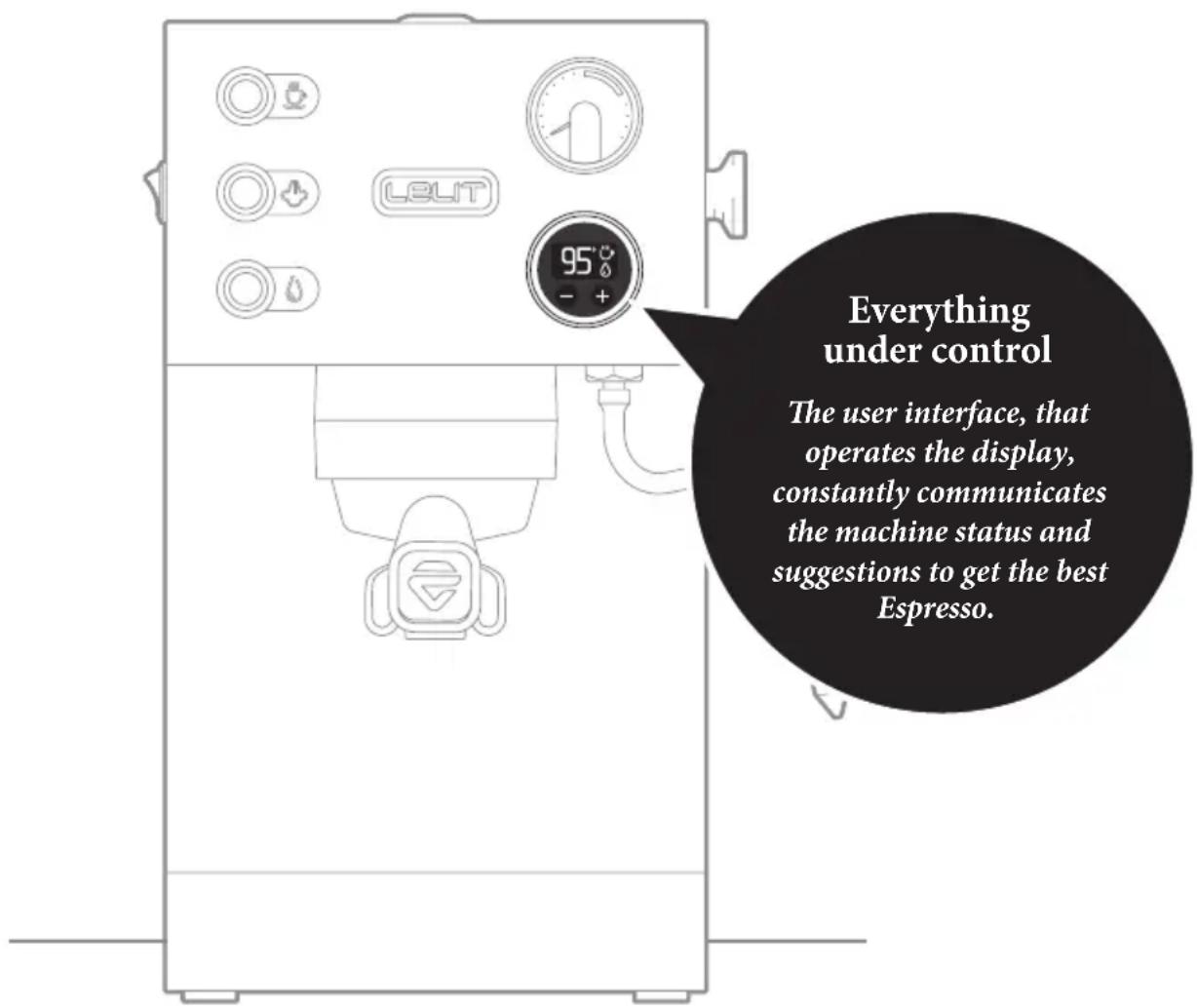
LCC (Lelit Control Center) is the brain of the new Lelit espresso machines. It has an elegant, graphic LED display of the latest generation. It controls all the functions of the machine and allows you to adjust the settings, as well as giving valuable tips on how to achieve the best results.
LCC lets you manage a number of settings in your machine:
- The temperature of the coffee and hot water dispensed
- The temperature of the steam dispensed
- The ideal time taken to dispense the coffee
- Enabling/disabling of pre-brewing function
04.
Product overview
Take your new espresso coffee machine out of the box and have a look at the various components and accessories designed for you. The numbers refer to the pictures in the Quick start guide attached.
- Water tank cover.
- On/off switch.
- Coffee switch.
- Steam switch.
- Hot water switch.
- Coffee distribution group.
- Self-cleaning cup-holding grate.
- Removable water drainage tray.
-
Wide cup warmer.
-
Backlit brew pressure gauge.
- Steam/hot water dispensing knob.
- LCC (Lelit Control Center).
- Multi-directional steam/hot water wand.
What's in the box
a. Plastic tamper
b. Coffee measuring spoon
c. Power cord
d. Blind filter
e. Filter holder with filter for 1 and 2 cups
f. Paper pod filter (only for PL81T)
05.
Instructions for use
Lelit coffee machines are not automatic. To make a good cup of coffee, you must know how to use them properly and will need a bit of practice. Follow the instructions carefully. You can also refer to the Quick start guide where you will find illustrated instructions. You'll soon be making coffee just like in the cafes, with the ideal smooth, creamy texture you prefer.

to start
Starting the machine
It is important to carefully follow these instructions the first time the machine is started, to ensure that it works properly. These instructions are only for the first time the machine is used. The instructions given in the subsequent chapters are for all further use. For subsequent uses do not consider this chapter and follow the chapter Making an Espresso.

Open the packaging
A.1 Open the packaging and place the machine on a flat surface.

Be careful. The unit weighs 7.4kg (PL81T) - 9.2kg (PL91T).

Water filling
B.1 Remove the tank from its seating (1).
B.2 Fill the tank with water at room temperature.
B.3 Replace the tank in its seating.
Caution. The tank is fitted with a device that automatically detects the presence of water. When repositioning the tank, check that the tubes are not bent and that the filter is fully inserted into the end of one of them. In case of lack of water, the LCC will show a warning signal. Follow the instructions in section B to refill the tank.

Switch on the coffee machine

Caution. Ensure the power supply voltage is the same as that indicated on the
information plate and that the supply system has an adequate circuit breaker.
C.1 Connect one end of the power cord (c) to the socket in the machine and the other (plug) into the wall socket.
C.2 Turn on the espresso machine by pressing the main on/off switch (2). The display (12) will show the Lelit logo, the three switches and the gauge will go on for a short time.

Note. ONLY for the first time that the machine is switched on, the machine will
start to fill the boiler automatically. During this operation, water will flow from the coffee distribution group for about 40 seconds and the Lelit logo will flash on the LCC display.
C.3 On the LCC display (12) you'll see the water boiler temperature flashing. This will grow until the set temperature will be reached.
C.4 Wait until the bar is fully loaded and "Ok" appears on the display. This way the machine will reach the set temperature.
C.5 After reaching the pre-set temperature, the bar will disappear. The machine will be ready for use.

Checking that the machine is working properly
Coffee
D.1 Insert the filter holder (e) without coffee firmly into the coffee distribution group (6), so as to align the handle with the padlock symbol on it.

Note. With a new machine, in order to reach this position, it is advisable to moisten
the edge of the filter with water. After a short period of use, this position will be reached regularly without excessive effort.
D.2 Press the coffee switch (3) to dispense about half a litre of water. The display (12) will show the coffee icon and a countdown from the pre-set time for the coffee dispensing.
D.3 When you've taken about half a litre of water, press the switch (3) to stop dispensing.

Note. This procedure helps filling the hydraulic circuit completely and
rinsing the circuit itself.
Hot water
D.4 Place a jug under the steam/hot water wand (13).
D.5 Press the hot water switch (5). The pump starts and the water icon appears on the display (12), accompanied by the indication to rotate the steam/hot water knob (11).
D.6 Turn the steam/hot water knob (11) counterclockwise.
D.7 As soon as water comes out of the wand (13), rotate the knob (11) clockwise to close it and press the switch (5) again to stop the function.
Steam
D.8 Point the steam/hot water wand (13) onto the cup-holding grate (7).
D.9 Press the steam switch (4). The LCC display (12) will flash, showing the water temperature in the boiler. Wait until the bar is complete, so that the machine reaches the operating temperature for steam dispensing.
D.10 When the desired temperature has been reached, the bar will disappear and the steam icon will appear, accompanied by an indication to turn the steam/ hot water knob (11). The machine is now ready for use.
D.11 Turn the steam/hot water knob (11) counterclockwise.
D.12 When steam comes out from the nozzle, turn the knob (11) clockwise to close it and press the steam dispensing switch (4) again to return the machine to its function of dispensing coffee and hot water.

to start
Making an Espresso
Thanks to the pre-set function settings, the machine is immediately ready to dispense espresso. To change the settings, please refer to "Adjusting the LCC settings" section.

Note. The machine comes with a cup warmer (9). Using warm cups enhances the noleptic qualities, the flavour and aroma of an Espresso.

Preparing the machine for making coffee
E.1 Turn on the espresso machine by pressing the main on/off switch (2). The display (12) will show the Lelit logo, the three switches and the gauge will go on for a short time.
E.2 Insert the filter holder (e) without coffee firmly into the coffee distribution group (6), so as to align the handle with the padlock symbol on it.
E.3 On the LCC display (12) you'll see the water boiler temperature flashing. This will grow until the set temperature will be reached.
E.4 Wait until the bar is fully loaded and "Ok" appears on the display. This way the machine will reach the set temperature.
E 5. After reaching the desired temperature, the bar will disappear and the machine will be ready for use.
F Distributing the coffee
F.1 Insert the selected filter into the hot filter holder (e).
F2 Pour the desired amount of ground coffee into the filter.
Note. We suggest 7g for one cup and 14g for two cups.
F3 Press the coffee with the tamper (a) and remove any coffee residues from the edge of the filter holder.
F4 Insert the filter holder (e) firmly into the coffee distribution group (6), so as to align the handle with the padlock symbol on it.
F5 Place one or two cups on the cup-holding grate (7), under the filter holder (e).
F6 Press the coffee switch (3) to start dispensing. The display (12) shows a countdown in seconds.
Note. The countdown display is only to indicate the ideal extraction time and can be modified as explained in the "Adjusting LCC settings" section.
F.7 When the countdown is over, the display will show "OK" but not stop the machine. Once the required amount has been dispensed, press the switch (3) to stop dispensing coffee.
F.8 Remove the filter holder (e), empty out the coffee grounds and clean thoroughly with a damp cloth.
Caution. The filter holder must not be removed before coffee brewing is completed.
Note. To prepare a good espresso, the coffee pump pressure gauge (10) must be in the green zone, while dispensing is in progress.

for experts
Steam and hot water
The device is equipped with a steam/hot water wand that can foam the milk to perfection, producing the creamy and compact foam that is the mark of the real cappuccino.

Preparing the coffee machine
G.1 Press the steam switch (4). The LCC display (12) will flash, showing the water temperature in the boiler. Wait until the bar is complete, so that the machine reaches the operating temperature for steam dispensing.
G.2 When the desired temperature is reached, the bar will disappear and the steam icon will appear, accompanied by an indication to turn the steam/hot water dispensing knob (11). The machine is now ready for use.

Caution. Never place your hands or other body parts under the steam/hot water d. Risk of scalding.

Steam distribution
H.1 Open the knob (11) counterclockwise with the steam / hot water wand (13) pointed at the cup-holding grate (7) and release the initial amount of water.
H.2 When steam comes out, close the knob (11), place a jug with the beverage to be foamed under the steam wand and re-open the steam/hot water knob (11).
H.3 When the desired result has been achieved, close the steam/hot water knob (11) turning it clockwise and press the steam switch (4) to turn off the steam function.

Note. The machine, thanks to its electronic controls, returns to the coffee/water
function if the steam function has not been used for a certain period.

Note. See chapter 06 "The art of Espresso coffee" for the best way to froth milk.

Caution. Clean the steam/hot water wand (13) after every use by pointing the
steam wand to the cup-holding grate and dispensing some steam. Thoroughly clean the wand (13) with a sponge or clean cloth. In the chapter "Cleaning and maintenance", you will find all the necessary advice.
Hot water distribution
1.1 Press the hot water switch (5). The pump starts and the water icon appears on the display (12), accompanied by the indication to rotate the steam/hot water knob (11).
1.2 Place a jug under the steam / hot water wand (13) and open the knob (11) counterclockwise until you reach the desired amount.
1.3 When the desired amount has been reached, close the knob (11) clockwise and press the hot water switch (5) to stop the function.
Note. The machine is equipped with an electronic control that stops the water function after a pre-determined time. To withdraw more water, repeat the "Hot water distribution" operation.

for experts
Adjusting the LCC settings
The LCC - Lelit Control Center (12) has pre-set default settings. Here you can learn how to adjust them.
J Changing the factory settings
J.1 Press the "-" button to enter settings mode, and scroll through the menu.
J.2 Press "+" to change the setting. The setting flashes.
J.3 Change its value and/or state by using the "-" and "+" buttons.
J.4 Three seconds after the last press of a button, LCC stores the data and exits from settings mode.
06. The art of Espresso coffee
Contrary to what you might think, making a perfect Espresso is not that easy. It takes experience, ability, passion and a little bit of curiosity. In this paragraph we would like to share with you some of the basic rules for making a perfect cup of Espresso.
Suggested doses: Ristretto (Strong) about 20ml -Espresso about 30ml -Lungo (Long) about 60~ml
The "5 M's"
If you want to make perfect Espressos, you should start by ensuring the five essential factors which turn a simple cup of coffee into an Espresso for connoisseurs! These are the "5 M's"; in Italian: miscela (blend), macinatura (grinding), macchina (machine), manualità (skill) and manutenzione (maintenance).
1-Miscela (Blend)
Good Espressos are always made with a good blend of coffee. An Espresso with the right taste requires a blend of two types of coffee, Arabica and Robusta. The first gives the coffee its delicate aroma and the right amount of acidity, while the second type gives it its full taste, body and cream. The quantities depend on your own taste. Try out different combinations until you find the blend you like best!
2-Macinatura (Grinding)
The grinder is a must for making good Espresso. Coffee should always be ground just before it is used so that it
preserves its taste and aroma. The Lelit grinders let you adjust the grinding level to suit the coffee blend in order to establish the correct extraction time and amount of cream.
Lelit machines are designed and built so that the water temperature can be adjusted to suit your needs. In addition, setting this variable correctly will allow you to extract from the ground coffee, not only the soluble substances that give it taste, but also the non-soluble ones that give body and flavour to your coffee.
4-Manualità (Skill)
Half of the result depends on how you use the machine. A passionate expert is an essential part of the Espresso production chain and can enhance the result to bring additional value to the final product. Passion and practice are, therefore, the secrets to learning how to use the machine. You can experiment with different blends of coffee, grinding,
pressing, water temperature and pressure, not just to make an Espresso, but to make the one that is just right for you.
Daily maintenance, scheduled maintenance and care of the machine will ensure the quality of the beverage and the durability of the product you have purchased. A clean machine says a lot about your passion for coffee making.
Coffee varieties
The choice of the blend is an essential factor for making the ideal coffee for your taste. There are a lot of different varieties of coffee blends on the market to choose from. The differences in flavour, aroma and texture depend on the quantities of the two varieties of coffee that make the blend.
Arabica
This is a sweeter and more delicate variety of coffee, with a rich aroma and cream that is very thin, dense and compact.

Arabica
It is grown between 900/2000 m Rich aroma.
Caffeine between 0.9 ~ 1.7%
Robusta
This variety is woody, bitter, full-bodied and spicy,with little aroma. Its cream is more frothy and grey.

Robusta
It is grown between 200/600 m Spicy aroma.
Caffeine between 1.8 4%
No variety of coffee can make an ideal.
Espresso on its own.
The perfect Espresso has a top layer of cream 2-3 mm thick, a nut brown to dark brown colour, with reddish tinges and light streaks, a harmonious flavour, a strong, balanced aroma and a sweet, long-lasting aftertaste.
It has a strong aroma with notes of flowers, fruits, toast and chocolate. These sensations can last just a moment or can persist for a few minutes in your mouth. The taste is round and well structured. The acid and bitter perceptions are well balanced whereas there is little or no astringency.
The ideal parameters to obtain this type of coffee are:
7± 0,5g of ground coffee.
25 seconds to brew 30ml
88 / 92^ when brewing and 80^ in the cup.
8/10 bar pressure during extraction.
Even Arabica blends often contain a small amount of Robusta, which is necessary to enhance the cream and add aroma and body to the espresso.
Blends made for coffee bars usually contain 20% Robusta but in southern Italy, where they prefer a stronger taste, the percentage can reach 40 - 50% . At the end of the day, it's just a matter of taste...Experiment until you find the blend you like best!
Cappuccinos
There's nothing better than a cappuccino to start your day. Although they are made and served everywhere, few people know how to make one properly.
Making the coffee is only part of this complex procedure. The froth often creates major problems, but thanks to the steam wand on our machine, with a few suggestions and a little practice you'll soon be making cappuccinos just like in the coffee bars!
Milk and jug
You need 100ml of milk to make a cappuccino.
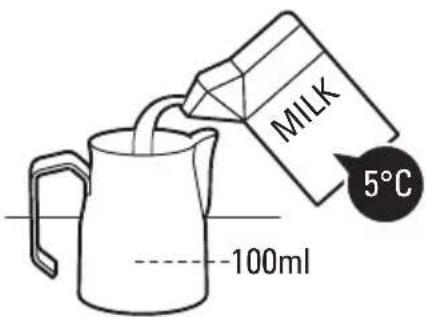
Fresh whole milk provides a smoother, creamier and tastier froth. Milk will not froth at over 65^ so cold milk from the fridge should be used to allow more time for it to froth. The best jug, on the other hand, is one made of stainless steel, provided with a spout, such as Lelit models (codes PL101 PL102-not included).
The level of milk should never exceed half the volume of the jug.
Frothing the milk
Before using the steam wand, some steam should be released for about two
seconds, as it always contains some water due to condensation.
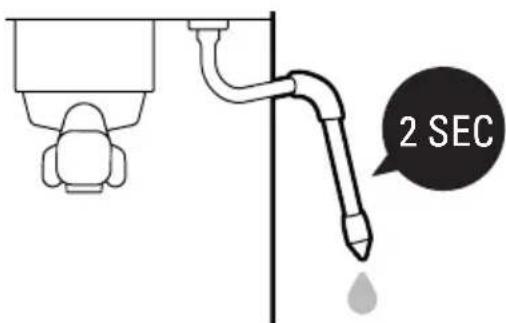
Insert the wand so that the end of the nozzle is near the side of the jug (pretend you have split the top section into four parts and insert the nozzle into one of them) and about one centimetre below the surface of the milk. Since the milk will start to expand in volume, you will have to gradually lower the jug so that the nozzle is always kept immersed at the same depth. This process is complete when the milk reaches a temperature of about 37^ , or when you can feel the warmth with your hand. You can use the thermometer too (code PL107 - not included).
Processing the milk
This phase is very important to make the cream thick, with a fine texture and a shiny surface.
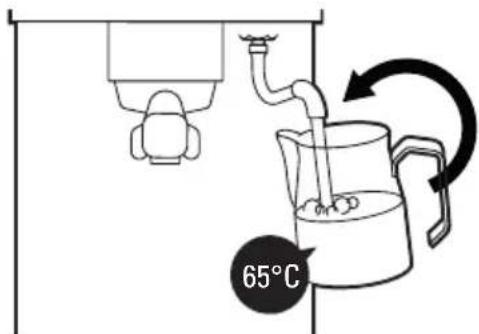
Insert the wand all the way down and tilt the jug to create a vortex. Heat the milk to the desired temperature, without exceeding 65^ . Close the steam.
Prepare the milk by first tapping the jug on the countertop to remove any air bubbles and then rotating it to keep the milk and froth well amalgamated. The final result should be a smooth, creamy surface without any bubbles.
Pouring the milk
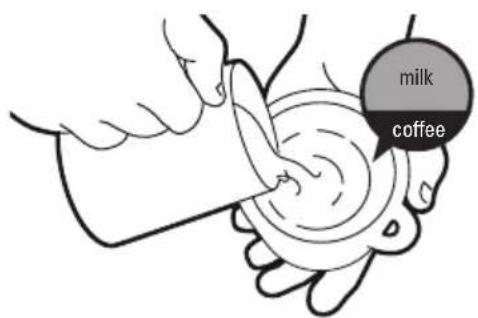
You should leave the milk to settle for a least half a minute, so we suggest you always prepare it before making the coffee. The doses for a cappuccino should be one part Espresso and two equal parts of milk and froth.
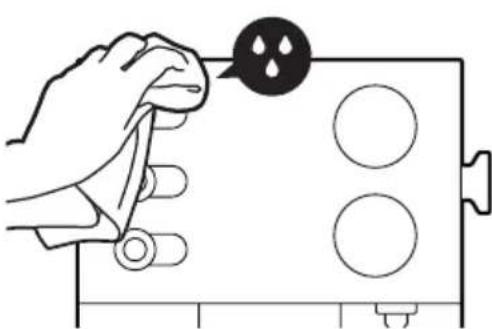
Clean the steam wand with a damp cloth.

To see the tutorial, please scan the QRCode.
07.
Cleaning and maintenance
Cleaning and maintenance of the machine are essential for the quality of the coffee and the durability of the appliance.
Cleaning
The machine must be cleaned at least once a week.
Before starting, remove the plug from the electrical outlet and allow the machine to cool.
Use a soft cloth, preferably microfiber, like the Lelit cloth (code MC972 - not included), and moisten it with plain water. Do not use abrasive detergents and do not immerse the machine in water.
For thorough maintenance, we suggest you use the Lelit brush (code PL106 - not included), which will help you clean the nozzles and the spaces between the gaskets more effectively, removing stains and coffee residues from even the smallest cracks.
Warm running water can be used to clean the removable parts of the machine. The filters and filter holder should never be washed in a dishwasher.
There is no need to clean the filters after each use, but just to ensure they are not
clogged.
However, to ensure the best performance from your machine, it is essential to thoroughly clean the steam wand and filter holder after each use.
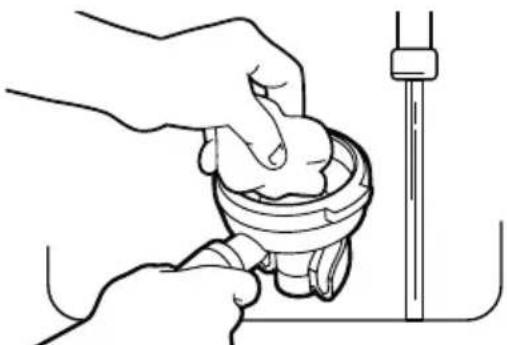
The filter holder should be cleaned to remove the greasy coffee residues that can negatively affect the taste of your espresso.
Wash the exterior part of the steam wand with a damp cloth and release a little steam to remove any milk residues from inside the tube, as these could obstruct the steam output, making it more difficult to froth milk properly.
Dscaling the machine
Use of the machine creates a natural formation of lime scale, over a time period depending on how frequently the machine is used and on the hardness of the water.
Lime scale deposits can obstruct the tubes and decrease the brewing temperature, altering the quality of the coffee and reducing
the lifetime of your machine.

To avoid the formation of limescale, which can also deposit in the internal circuits, we recommend the use of our Lelit resin filter (code MC747 - MC747PLUS - not included) to soften the water. Please insert the filter in the tank following the instructions on the packaging. The filter purifies the water from the calcium and magnesium salts which are deposited to form lime scale and affect the taste of your coffee. Remember that the filter loses its effectiveness after a certain number of gallons treated, so replace it periodically. Instructions for the use and replacement of the filter are given on the box.
To avoid any possibility of damaging the machine's components, NEVER, UNDER ANY CIRCUMSTANCES, ADD ANY DESCALING PRODUCTS TO THE WATER TANK.

Watch the tutorial to understand how the water softener filters work.
Backflushing
It is advisable to backflush the machine once a month (washing the operational parts used during brewing) using the blind filter supplied (d) and the Lelit detergent sachets (code PL103 - not included).
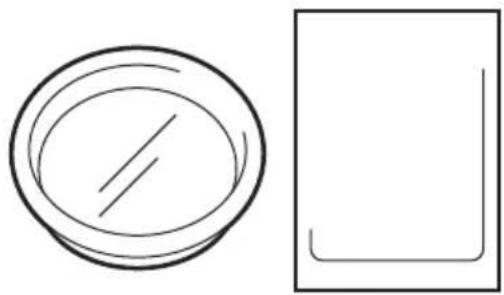
In order to backflush, follow these instructions:
a) Insert the blind filter provided into the holder.
b) Insert the filter holder (e) without coffee firmly into the coffee distribution group (6), so as to align the handle with the padlock symbol on it.
c) Keep the switch (3) pressed and press the hot water switch (5) within 2 seconds.
d) The LCC display (12) will show a flashing drop and the two switches will keep flashing until the procedure is finished.
e) When the procedure is finished, the display (12) returns to its normal status.
f) Remove the filter holder and the blind filter from it.
08.
Solving the most common problems
We recommend careful reading of this guide in order to solve the most common problems before referring to an authorised service centre.

The coffee is too cold when dispensed
| The machine has not reached its operating temperature yet. | Follow the instructions in the “Making an Espresso” paragraph. |
| The filter holder has not been heated adequately. | Follow the instructions in the paragraph “Switch on the machine.” |

The coffee is dispensed too quickly and without cream
| The grind is too coarse. Grind the coffee more finely. |
| The quantity of coffee is insufficient. Increase the amount of coffee. |
| The coffee has not been pressed enough. Press coffee more firmly. |
| The coffee used is old or unsuitable. Replace the coffee. |

The coffee is not dispensed or is only dispensed in drops
| The grind is too fine. Grind the coffee more coarsely. |
| The amount of coffee is too much. Decrease the amount of coffee. |
| The coffee has been pressed too much. Press the coffee less. |
| The distribution group is clogged. Run a backflush, see the “Cleaning and Maintenance” section. |

The LCC does not light up and the machine does not work
| The plugs of the power cable are not inserted correctly. | Insert the power cord plugs into their respective sockets correctly. |
| The power cable is damaged. Contact the service centre. | |

The machine does not dispense steam
| The hole at the end of the steam/hot water wand is obstructed. | Free the hole with the aid of a needle. |

The power is on, but the set temperature is not reached.
| The circuit breaker is interrupted. Contact the service centre. |
| The LCC is not working. Contact the service centre. |
09.
Warranty terms
Legal warranty
This product is covered by the warranty laws valid in the country where the product has been sold; specific information about the warranty terms can be given by the seller or by the importer in the country where the product has been purchased. The seller or importer is completely responsible for the product.
The importer is completely responsible also for the fulfillment of the laws in force in the country where the importer distributes the product, including the correct disposal of the product at the end of its working life.
Inside the European countries the laws in force are the national laws implementing the EC Directive 44/99/CE.
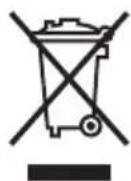
IMPORTANT INFORMATION
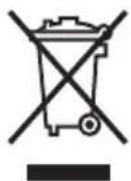
For the correct disposal of the product in accordance with EU DIRECTIVE 2002/96/EC and with Legislative Decree no. 151 of 25 July 2005. At the end of its working life, the product must not be disposed of as urban waste. It must be taken to a special authorised differential waste collection centre or to a dealer providing this service. Disposing of a household appliance separately avoids possible negative consequences for the environment and health caused by improper disposal and enables recovery of the materials it contains, with significant savings in energy and resources. The product is marked with a crossed-out wheelie bin as a reminder of the need to dispose of household appliances separately.

EC DECLARATION OF CONFORMITY
Gemme Italian Producers srl declares under its own responsibility that the product:
Coffee machine type: PL81T - PL91T
to which this declaration relates conforms to the following standards:
EN 60335/1 - EN 60335/2/15 - EN 61000/3/2 - EN 55014
pursuant to directives:
Low Voltage Directive EC 2006/95 - Directive EMC EC 2004/108
NB: This declaration is null and void should the machine be modified without our specific authorisation.
Castegnato, 01/10/2015 - Managing Director
Gemme Italian Producers srl 25045 Castegnato (Bs)

Dimensioni:
22,5x27x38 cm
Peso netto:
PL81T 7,4 kg - PL91T 9,2 kg
PL81T 1000 W - PL91T 1200 W
Pressione pompa:
15 bar
Gemme Italian Producers srl 25045 Castegnato (Bs)

Ligne Vip Grace - PL81T Victoria - PL91T
Dimensions: 22,5x27x38 cm
Poids net: PL81T 7,4 kg - PL91T 9,2 kg
Alimentation electrolyte: 230V 50Hz/ 120V 60Hz
Puissance: PL81T 1000 W - PL91T 1200 W
Directive Basse Tension CE 2006/95 - Directive CEM CE 2004/108
Gemme Italian Producers srl
25045 Castegnato (Bs)

MaBe::
22,5x27x38 cm
Nettogewicht:
PL81T 1000 W - PL91T 1200 W
Pumpendruck:
15 bar
Gemme Italian Producers srl 25045 Castegnato (Bs)

Manual
para los modelos:
Linea Vip
Grace - PL81T
Victoria - PL91T
Dimensiones:
22,5x27x38 cm
Peso neto:
PL81T 7,4 kg - PL91T 9,2 kg
PL81T 1000 W - PL91T 1200 W
Gemme Italian Producers srl 25045 Castegnato (Bs)

Linia Vip
Grace - PL81T
Victoria - PL91T
Dimensiuni:
22,5x27x38 cm
Greutate neta:
PL81T 7,4 kg - PL91T 9,2 kg
PL81T 1000 W - PL91T 1200 W
Presiune pompá:
15 bar
Capacitate rezervor apa:
2,7 lt
Doze recomandate: Ristretto (mic) circa 20ml - Espresso circa 30ml - Lungo (mare) circa 60ml
Cele „5 M”
Daca doriti sā preparati un'espresso ca la carte,trebuie sā incepei prin respectarea celorinci parametri fundamentali care fac dintr-ossimpla cafea,un espressopentreu cunoscātori!Mulle persone le numesc cele ^,5M : miscela (amestec),macinatura (rasnire),macchina (masina),manualità (dexteritate) si manutenzione (intretinere).
1-Miscela (Amestec)
Castegnato, 01/10/2015 - Director General
Gemme Italian Producers srl 25045 Castegnato (Bs)

Grace - PL81T Victoria - PL91T
Pa3Mepbl 22,5x27x38 cm
Bec Hetto PL81T 7.4 kr - PL91T 9.2 kr
NCTOCHNK NHTAHNA 230B50Γu/120B60Γu
Mouhocb PL81T 1000 Bt - PL91T 1200 Bt
IckycCTBO npiroTOBJIeHnKope 3cnpecco 186
Ynctka n yxod 190
PeueHne Han6oJee qacbIX npo6IeM 192
YcnoBra rapaHTnn 193
01.
Yka3aHnI no 6e3ONaChOCTn
BnMaTeNbHo npOHTaIe npEdupeJdeHn, npExde Yem npNCTyNTb K 3Kc- pIyatau. KoepBaPka npedHa3NaueHa dJa npiroTOBHeHn 1 nII 2 uWeK KoPe 3cnpecco, OchauSeHa MHOHaNPaBHeHNo Tpy6kO Jn BblNycka napa n IropaY BODbl. 3JeMeHTbl UnpaBHeHn Ha nepeDHe NaHeHn OTMeueHbI JeKo y3HabAeMbIMn CmBOLAMn. MaunHa npedHa3NaueHa dJa nCNOlb3OBaHn B 6bIty n He NODxOHT dJa HnepepbIBHO rpoceCCnOHaJIbHO rCNOlb3OBaHn. Uym ycTpoiCTBa He npebblaaet 70 d5 (A). DaHHbIe n npINBOHMbIe n3O6pa- XeHnMOryt 6bITb N3MeHbI 6e3 npEdbapTEbHO rVeDMlEHn B CBa3n C HnepepbIBHbIM yIyuUHeHem napameTpOB MaunHbI.
IcnoJb3yeMbIe cHMBOJIbI
OueHb BaxHo co6IoudaTb yka3aHnI n CnMBoIbI, npNBedeHHbIe HIXKe:

CKO BUNKIN HnHypa, INX DOJXHa 3aMeHrTB NCKIIOHTeJIbHO Cnyx6a TEXHNueCKo IODePJKN.
-He nCnoIb3yIte aIaITepeI, TpoHnKu I/IIu yDInHInTeJI. EcIINxNCIOB3OBaHne abCOJIHTHO Heo6xoDIMO,CJeIeT NCIOB3OBaTb TOIbKO npOCTbie IIN MHOJKeCTBeHHbIe NpeXODnKu I yDInHInTeJI, COOTBeTCTByIOUne DeIcTBvIOUm CTaHdApTaM 6e3OpacHOCTN, CJeIa 3a TeM, YTObI He pReBbIaTb BeJIuHy ToKa, yKa3aHHU Ha IPOCTOM NepExODnKe I yDInHInTeJI, IN COBOKyHyo BeJIuHy ToKa, yKa3aHHU Ho HA MHOJKeCTBeHHOM NepexODnKe.
-Перед Любов onepaцneи по очирke BHeSHnXЧаTeи yCTpoiCtBa, BblKlIOHnTe erO, BbITaIHTe BnIKy n3 po3ETKN I daIte OCTbITb.
-Дя умьшени рпсka ТраВ, He Донуckaite,Чтобишур птани CBбODно CBиcaI CO CTола,И He Do-nyckaite erO haxoxdEHHA B6n3I ropaynx NOBepxHOCTe, OCTpbIX NJI peKyuux PpeDMeTOB.

PpeDynpexKeHnO6 onaChoctn OxKOrOB
JaHoe ycmpoUcm8o npou3eOdum 2opnyo body u nap, noomomy He
obxodmo muameIbHo c6IIOdAmb npuOoMbIe Hxke yka3aHua no mexHuke 6e3onacHocmu.
- Bниманe: harpeBaemble NOBepx-HOCTN OCTaOTcR TOPaUMN B TeueHne ONpeJeHHO TepNoJa BpeMeHn NocJIe IcNoIb3OBaHnJ.
- CJIeIte 3a Tem, YTObI Ha Bac He nonapaIII 6pbI3rN BOIbI INI cTpya napa.
-При рабо te yctpoiCTBa He npika-caItec b K HarpeBaembIM NOBepxHOCTaM. - Hnkorda He HanpaBnIte Ctpyo napa nn ropyei Bodbi Ha qactn TeJa.
- Octopoxho BbINOJIHЯTe MaHInyJIaCm C Tpy6KoI dJa BbInycka npa/ ropayeBODbl (13).
- HnkOrda He ChImaTe qnIbTpOpeJxATEJIb (e) BO Bpemr BbInycka KoPe.
-Детаи,OTMeueHHbIe 3TnKeTKoI OCTOPOXHO TOPAHO》,OyeHb Tropaune,pa6ToaTb C HmN HxKHO C MaKcImaJIbHoN OCTOpOXHOCTbIO. - YctaHaBnBaIte Ha NOBepXHOCTb IЯ NOOrpeBa yAwek (9) TOnbKO uAikn, KpyKn IN CTAkaHbI IЯ pa6OtbI c KoΦeBapko. He donyckaetcyaTahOBka Dpynx npeImetob Ha NOBepxHOCTb IЯ NOOrpeBa yAwek.
- YCTaHaBnBaTb Ha NOBepXHOCTbДЯ ПОДORpeBaЧашек (9) HUxHToTЛьКо
cuyne yauken.
02.
OchOBhIe xapaKTepeNCTnKn
Mbl pa3pa6aTaBbAem Haun KoepBaApKn, nCXoJa n3 NOTpe6HocTee 3KcNpyatauHaWx KInHeTOB. Mbl yBepeHbI, YTO XapakTepnCTnKn, BbIbpaHHbIe HAMn dJr 3ToJ MoJeJI, COOTBeTCTByOT BCEM IOKeJAHm NO Co3DaHnIO NdealbHO BkyCa KoPe dJra Bac n BaWx rocte!

LCC
Дя рулрови Tempepatypbl 6олетаи HeперьIBHOrO KOHTPOnI ONTIMaJIbHbIX npamETPOB ДЯ npiroTOBJIeHnKoФe.

PpeBapuTeJIbHoe cMaunBaHne
IpeDcMaUBaHne KoFeiHoN Ta6NETKo 3a HeCKOJIbKO CekyHd Do Hauana 3KCTpaKuIN N03BOJNT NOnyuHTb LyuShn KoFe 3cnpecco.

KoPe cnaIep
HOBaTOPCKN HOCNK DO3nPOBKN, KOToPbIM MOxET 6bITb NCNoJIb3OBAH KAc DJa OdHOJ, TaK INДЯ DBYx YaWeK, N03BOJrE THa6JIIODaTb 3a 3KCTpaKUnei KoΦe Ha CBOe MpyTN K YaWKe.

HepkaBeoaa cTaIb
Дя MaKcMaJIbHOI rHneHbI Ha KxH e yO6HOro MblTbI. OCTaTOUHO IerKOro IpoTnpAHnC nOMOuHIO r6Kn N KoFeBapKa CHOba 6yDet 6IeCTeTb.

MaHometp c nOcBETKoI
YTo6bI Bcerda BnDeTb DaBneHne B KofoeHOn rpynnpe HargTeHaHn I CNeDHTb 3a npnroTOBneHnem 3cnpcecco DoJXhblm O6pa30M.

C6epekeHne 3heprn
Korda MaunHa He
HcnoJb3yeTcB TeueHne
dNTeIbHO BpeMeHN, OHa
aBTOMaTHueCKn NepexOHT B
3HeprocbeperaUoN pexIM,
He TpaTaeHHbIe INa Hac N dJa
PnaHeTbI pecypcbI.
03. LCC - ΚeHTp ynpaBneHnA Lelit
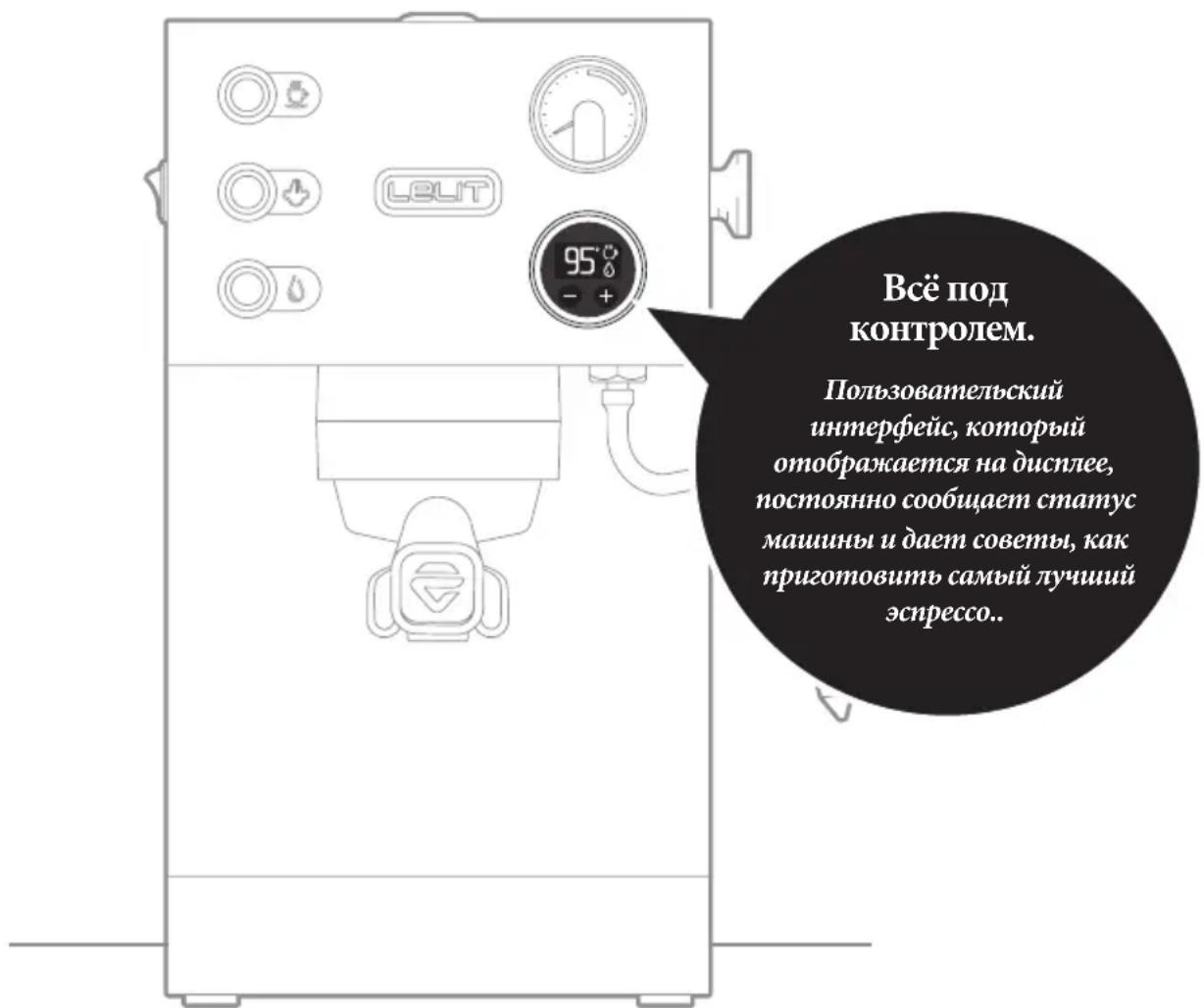
LCC (LcHtp ynpabHeHn Lelit) AByraTcMozroBbIM cHTpOM HOBbIX MaunH Lelit. OH nMeet 3neraHThI rpaqueckn ducnnne co CBeToNDamN nocneJeHr oKoJIeHn, OTObpaKaET CnCTeMy, KOTopA MoKeT He TOnbKO KOHTPOIpOBAt b cyHKuIN MaunHbI N3MeHrTb npaMeTpbl, HO n Daet ceHHbIe COBeTb IJn NOUeHn OTNIuHOro pe3yNbTaTata.
LCC no3BoJareT ynpaBnTb cneDyUoIIMn npaMeTpamN BaWei MaHnHbI:
- TempeaTpa 3aBapuBaHnKoFe n ropay BoDbI
-TemnepaTpya nI npOn3BOOCTBa npa
-ⅡealbHoeBpeMn3aBapuBaHnKaΦe
AknBaun/DeaktnBaun npedBapntelbHoro CmauBaHHa
04.
KpaTkne cBeDeHn8 o6 n3dJIIn
BbTaunTe n3 Kopo6Kn Bauy Hobyo KoepBaKpy dny 3cnpecco, yTo6bl pa306paTbcra C pa3nHbIMN KOMNoHEtAmn I npHaJdIeXHOCTaMn, Co3daHhbIMn c 3a6OToO bAc. UΦpby OTHCsTcK INIIIOCTpaUm KpaTKOrO pyKOBoIDCTBa B pInIOKeHm.
179
1.Kpbuika pe3epByapa nra BObl.
2. JIaBbIy BbIKNIOuTeJIb.
3. BknouaTeIb BbInycka KoPe.
4. BkIIOuATEteNb IOnaHn npa.
5. BknoaTeIb Bblnycka ropaye BObl.
6. pynnna Bbinycka Kofoe.
7. PeWEtKa dnyaHaWeK.
8.CbemHbI NOdoH dJa CnBa BObl.
- Bolbwa noBepxHocTb nIy noDorpeBa yawek.
- MaHometp c noDCBtKoI dIy BbInycka KoPe.
- PerynTOp BbInycka npa/ropeuB BObl.
12.LCC (LcHtp npabne Hn Lelit). - Tpy6kaДЯnapa/ropaye BOdbl.
HTo haxoIITcB Kopo6Ke
IodroTOBka KopeBaapKn 3cnpecco dny npnroTOBneHnKoPe
E.1 BkIIOHTe KoOemauHny, Haxab INaBbIi BbIKIOUaTeIb (2).Ha dncnlee (12) noRbntcI norOTIn Lelit; Tpr BkIOUaTeIa N MaHometp 6yDyT rOpetb B TeueHne KOpOTKOro BpeMeHn.
E.2 YcTaHOBnTe, npNIOxHb HeKOTOpoe ycINne, fNbTpOpeKaTeIb (e) 6e3 KoPe B rpynny (6) npIMepHo Do BbIPaBHNBaHn pyuKn C cMBOJOM 3aMka, paCNOIOKeHHbIM Ha rpynne.
E.3 Ha dincnee LCC (12) oTo6pa3ntcMiraioa TaemepaTypa B0bI B 6oJnepe. Temepatypa 6ydt TNDHMaTbc4 Do Tex nop, noka He doCTnHET 3aDaHHoT emepaTypbl.
E.4 NpOxKdnte, noka JnHna Ha dncnnee noJHoctbIO 3aRpy3NTcra, Ha dnCnnee noBnTcRA OK
MaSHINHa DOCTNIRHT 3aDaHHoI TeMnepaTpybl.
E.5 Iocne IOCTNKeHn 3aHaHHoTempeatypbl, HnHna Ha dncnnee nCye3Het mMaunHa roTOBa K NcNoB3OBaHnIO.

Bbinyck Koede
F.1 BCTaBbTe Bbl6paHbI Φnltp BΦnltpoJepKaTeJIb (e).
F2 HAnoJIHnTe ΦnIbTp Heo6xoIIMbIM KOJInueCTBOM MoIOTOrO KoPe.

IpmeHne. Pekomehdyemc72 dna ohou do3b u 142 dna dbyxdo3.
F.3 Ytpam6ynte Cmecb Koede c NOMOuBTO Temnepa (a) IN CHIMITE C KpaanbTpa OCTaTKN Koede.
F.4 YcTaHOBnTe, npInIOxNt HeKOTOpoe ycINne, fInbTpOepeKaTeIb (e) 6e3 KoPe B rpynny (6) npIMepHo Do BBipabHnBaHn pyKn C CmBOJom 3aMka, paCNOIOXeHHbIM Ha rpynnne.
F.5 NomeCTnTe Ondy nIe YauKHa peWetky Ira YauEe (7), noI d pTpoepkaTeJem (e).
F.6 Haxmte BknoateBbinycka Kope (3) nna hauana Bbixoda Kope. Dncnnei (12) noka3bBaet obaTHbI OTCyHdax.

IpmeHne. Iucnneu obpaHoo omcuema cnykum monbko dya yka3aHua
udeaibhoo bpeenu binycka u moxem 6bmb u3mehen B «U3meumnb napamempbu LCC.
F.7 No 3aBepseHIO o6paTHoro OTCHeTa DnCnnei 6yDet Noka3bIBaTb «OK», HO He 6yDet 6no-KnpoBaTb MaunHy. PnDocTNkeHn XeJaemOn NOpuH, HaxMMTe BbIKIooHaTeJIb (3) dner ocTa-HOBKn BbIXOda KoPe.
F8 CHIMITE pIbTpOepXaTeIb (e), ouNCTIte erO OT KoPeHoi ryuN I TuaTeIbHO npOTpNTe BnaxHO TkaHbIO.

BnMaHne. Punbmpodepkameh he dojkeh chummbcdo oKoHaHua bInycka Kofe.

IpnmeaHne. Ipn npusomobnue xopoue2o 3cnpecco, Bo bpeMa Bbinycka
Kofo MaHomemp daBeneu (10) doJKeH docmuamb 3eJeHo 3Obbl.

DnCneuaIINCTOB
Iap n ropya Boda
YcTpoIcTB O OCHaUeHO Tpy6KoI dIy napa/ropaueH B0dbI, KOTopA N03BOJAEr B3bNAbTaB CaMbIM COBepHHeHHbIM 6pa3OM MONOKO I NOlyuATb KpeMOO6pa3HyIO neHy, 6naOrapA KOTOPOJ MOxHDoBecTI KaNyUHDO COBepSeHCTBa.

Iodrotobka KoepeBapkn 3cnpecco
G.1 Haxmte BbiknoateIb noa npa (4).Ha dincnee LCC (12) oTo6pa3ntc mraoua TeMnepaTypa BObl B 6oJnepe. IooKdTe, noka JInHna Ha dincnee noHocTbIO 3arpy3ntc m MaunHa DoCTnraeT TemnepaTypbI, yctahOBJIeHHoI DnB bInycka npa.
G.2 Pn DoCTNKeHnn 3aHaHHoT Empeatypbl, NHHy NCye3HeT IN NOBHTc8 3HaOK npap, KOTpbI cOnpBOXdaeTcPncyHKOM nobopoTa peYJrTopa dIg BbInycka npap/ropey BODbl (11) MaunHa rTOBa K nCnONb3OBAHIO.

BhImaHne. Huko2da he nodcmaabnaime pyku uu npdyue uacmu meana nod
Hacadky dna napa/2opayeu bodbl. Onachocmb oko2oB.

Bbinyck napa
H.1 NOBepnTe peryIaTOp (11) npotuB yacobO CTpeIKN, Tpy6ky dna napa/ropaueB BObl (13), HapBaBte Ha noDOnCnBa BObl (7) n BbInyCTne He6oJbUoe KOINHeCTBO BObl.
H.2Pn BixOe npa,3akpoTe peryIaTOp (11),nomecTne pe3epByap c HAnNTKOM nlaB36uBaHnno Tpy6ky dna npa nOTkpoTe peryIaTOp npa/ropeyB0bl (11).
H.3 Ipn doctnHexeHH Tpe6yemoro pe3yIbTaT a 3akpoTe peryIaTOp dna npa/ropaeyen BObl (11) no yacobon cTpeJIke n HaxMMTe BbIKIOuateJIb BbInycka npa (4), YTO6bl OTKIOUHTb fynKuHIO npa.

IpmeHne.MaunHa umeem 3nekmpoHoe ynpabHeue,6na2odapK komopo
My, nocne onpedeneenho2o bpeMeHu HeucnoB3obAHua fynkuuu npa, oHa 603bpauaemC8 cocmoHue npou3bOcmba Kofe/60db.

IpmeHne. Cm. 2aBy 06 «Nckyccmbo Kofoe 3cnpecco», omokpbimb
dЯce6yuuu MeMoD 636ubauHMy MONoka.

BhImaHne. B konue kaKdo2o ucnoNb3ObaHn npa ouuuaame mpy6ky dA
napa/2opyaue body (13): hnpabme mpy6ky dna npa b hnpabenehu nodoha dna cnuba body u binycmmune nap, no kpaunheu mepe oduh pa3. Tuamebno npompume mpy6ky (13) c nomoubu y6ku unu ucmou mkaHu. B 2nabe «Ucmcu u yxod» bbl haui-deme BCE heo6xodumble yka3anua.
BbInyck ropeuBodbl
1.1 Haxmte BknoateIb ropey BoI (5).Hacoc BknOHTcna Ha dinCnnee (12) noBNTc3Ha-OK BOI, KOTOpBI COnpoBoXdaETcR pncyHKOM IOBOPa peryIaTopa npa/ropey BoI (11).
1.2 NomeCTHcE MKOCTb NO Tpy6ky dIy IIOaHy npa/ropeyE BObl (13) nOTKpoTe peryTOp (11) pOITNB YACOBON CTPEKN DO DOCTNKeHn Tpe6yEMORO KONNUeCTBa.
1.3 No doctnkeHH Tpe6yemoro konuueCTBa 3akpoite perynlTop (11) no yacoboi cTpeJIke, a 3aTeM haxmte BbIKIOUaTeB bblNyCKa ropye BoI (5), YTObI OCTaHOBTb cyHKUIO.
IIpIMeHHe. MauuHa ocHauEHa 3neKmpOnHbM ynpaBHeHem, Komopoe noCte onpeDeneHHo2 OBeMeHu HeucnoNtB3ObaHua fynkuuu Bobl, ocmanabnuaemc. Ia nonyeuHua dononnumenbHou Bobl nobmOpume onepauuo HanucanHyio 2naabe «BbinyckZopueu Bodl>.

IJI CNEUJIACTOB I3MeHeHHe HAcTpoE LCC
LCC - ΚeHTp ynpaBneHnla Lelit (12) npedyctaHOBHe. 3decb bbl y3Haete, KaK n3MeHntb ero HacTpoiKn.

I3MeHeHne 3aBoDcKnx npaMeTpOB
J.1 HaKMNTe KHOKNK «-», YTO6bl BOITN B HAcTPOKNI INPONCTaIte MeHIO..
J.2 Haxmte KONky 一 + 一 ,yTo6bI n3MeHnTb npaMeTp. NapaMeTp 6ydet OTO6paXaTbcra c nomOu MrraHn.
J.3 N3MeHeHne 3HaueHnN/INIIN COCTOHNc POMOsbIO «-» I «+»,
J.4 Yepe3 3 cekyHdbI nocne nocneHero haxaTn KhoNKn, LCC coxpaHIT daHHbI e N BbIeT n3 HAcTpoEk.
06.
IckycctBO npnroTOBJIeHna Kofo 3cnpecco
Bonpekn kaxyuiecnpocote, npiroTOBnTb ndealnbHbI 3cnpecco He taK JERko. 3To Tpe6yET onbIta, MaCTepcTaBa, CTPaCtN HEMHO rno hO603HaTeJIbHoCTN. B 3Tom pa3dJe Nbl XOTm noDeiHTbcrCBAM HeKOTOpbIMN OCHOHBIMN CBeDEHnA MIO npiroTOBneHN ndealbHorO KoPe.
PekomeHnyembIe Do3bl: pncptpTo - okoJIO 20 Ml, 3cnpcecco - okoJIO 30 Ml, lyHro - okoJIO 60 Ml
“5M”
EcnBbXOTHTe npnroTOBnTB KaueCTBeHHbI
3cnpceco, pnmnte K CBeDeHIO PnTb OCHOBhIX
paKTopOB, KOtOpBie NOMaIOT 3HaTOKam
PpeBaatab npocToi KoPe B 3cnpceco! Mhorne
Ha3bIAoT ux ,5M: Miscela (cmecb), Macinatura
(nom), Macchina (kopebapka), Manualita
(NoBKOCTb pyk) n Manutenzione (noDepxahne B
HCnPaBHOM COCTOHN).
1-Miscela (Cmecb)
B OCHOBE BbIaHooerocB Kyca 3cnpecco Bcerda IexnIT npeBOxCoHaHc Mecb. YTo6bl NOnyHTb CbAanHCnpOBaHHbIKBkyc 3cnpecco, cJeNyET CMeMaTb DBa BVda KoPe: apabika npobycta.
IepBbI Jaet ToHKn apomat n HeKOTOpbIKcJIb IpnBkyc, BTOPOJ daeT 6oraTbIK BYC, KOHCnCTeHnIO n peHky B yauke. Ipponopm3aBNCAT ToIbKO OT BaUero BKyca.
3KcnpmEnTpPyIe, YTO6bl HaHTu coYeTaHne, HAnboJee noDxOJaUe dIra Bac!
2-Macinatura (Iomon)
KoΦeMOJIka RAJIaTeTcHrO6XODIMbIM PaKToPOM DnI PrNROTOBHeHn XopoWero 3cnpecco. KoFe Bcerda Heo6xOdmo MoIoTB HEnocpeiCTBeHHo Nepe IpoUeDpyoI PrNROTOBHeHn, NOTOMy YTO IMeHHo B HEMONOTOM BnDe OH
coxpaHReT BeCb CBoB BKyc n apOMaT. C NOMObIO KOΦeMOJOK Lelit TaKKe MOXHO MeHrTBCTeNEHb NOMOA B COOTBeTCTBUN C Tpe6oBaHNAMN K CMecn DnI PpABnBHO CKOPoCTN 3KCTpaKmN I NeHKn.
3-Macchina espresso (KofoBapka nna 3c- npecco)
KoepeBapKn Lelit cnpoekTnpOBAHbI n npOn3-BeDeHbI TaKIM O6pa3OM, YTO TemnepaTypapeRyInpyeTcB COOTBETCTBN C BAuIMN NOtpe6HOCTMn. IMeHHo 6laOApA npABINb-Ho peRyInpOBKn 3TNX DByX NepEmHHbIX CyUecTByeT BO3MOxHOCTb 3KCTpaHnpOBaTb N3 MOJIoTo CMecn He ToJIbKO pAcTBOpMbIe BeUeCTBa, PpndaIOUne BKyc, HO TAKKe N HepaCTBOpMbIe, TO eCTb PpndaIOUne KOHCNCTeHNIO H apOMaT KoPe.
4-Manualità (JIOBkoctb pyk)
IIOOBnHa pe3yNbTaTata 3aBnCnT OT TORO, KaK NCNoB3yOTcA MHeoUneCeN HCTpyMeHtbl.
Bnlo6IeHHbI B CBOe DeIcneuaJIncT YBnaIeTCRA KIIIOueBbIM 3JIeMeHToM IPOUN3BOIDCTBEHNHOIeNoOuKN 3CINpecco, OH MOKe Tn3MeHHTbpe3yIbTaT B YAwke, PnIaB DOnONHITeNBHbIE N0Je3HbIE CBOJCTBa KOHeUHOMy IpOdyKty. TaKIM O6pa3OM, yBNeueHHoCTb IN IpaKTnka pacKpOJT CeKpeTbIK OCBOEHHIO KoPeBapKn.
3KcnpMeHTpOBaHne c pa3nUhblm CmeCMAH, NOMOLOM, TempepOBKO, TemepaTPOJ
I DaBHeHnEM BObI, NO3BOJrOIT PnroTOBNTb yHkaJIbHbI KoPe.
LCC He 3aropaetcN KoepaBapka He pa6oTaET
KoepeBapka He BbIaet nap
TAPAHNTHbIE O6a3ATEJIbCTBA
3Ta npOdyKUHa 3aUHHe rapaHTnHbIM 3akoHOM, DeIcTByUoMM B CtpaHe, Ie OHa 6bJa npOdaHa; KOHKpeTHa INOpMaunr O rapaHTmHbIX cPokax MoKeT 6bITb DaHa npOdaBcM/IMNopTePOM B CtpaHe, Ie npOdyKUHa 6bIa KynHeHa.
PpOdaBc/IMNOpTeP NOJHOCTbIO OTBeTCTBEHbI 3a 3Ty npOdyKcuIO. IMNOpTeP OTBeTCTBeHEN 3a BblONHeHne DeiCTByUOxuX 3aKOHOB B CTPaHe, rDe pacnpocTppaHreT npOdyKT, BKIOUyAra PpaBnIbHyU yTNlI3aCuIO npOdyKta N OOKHaHN ero cPoka cnYk6bl.
B eBpOeNcknx CtpaHax DeIcTByOT HaUHOHaJIbHbIe 3aKoHbI, KOtOpbIe OcyuIecTBnIOT DeTeJIbHOCTb DInpeKTnBbl 44/99/CE EC.
PPEyPPEKDEHNA
Ipnabunbnoyumu3auuu npodykma e coombemcmbu c INPEKTB0B 2002/96 / EC u 3AKOHDATEJBHBIM IEPOM No 151 om 25 uon 2005 oda. IIO okohanu cpoka ekcnnyamauu u3deneue he cledyem ymuunupobamb bme c sbimobm Mycopom. Eo neo6xodmo cdamb 8 ooun u3 cneuaun3upobahhbx uehmpo no cbopy omxodob, op2aHuzOBAHhix MecnblMu Bnaemmu uu dupeam, OKa3bibaouum nodo6hpie ycnyu. Omdenbna ymuun3auu 6bimoboo npubopa no3boJam em u36exkamb 603MOchbx Hezamubhix nocedcmbu dna okpykaoue u cpdbu u 3doopobba, RaJouuxpe3ybnmamom HenpabunbHou ymuun3auu u no3boJamem boccmahOBum mamepuanbl, u3 komobix bInonHeNo u3deneu u noynumb cepbe3hyo ekohomuo 3hepzuu u pecypcoB. B kauecmbe hanomunahan o neo6xodumocmu omdeNbho ymuun3auuu sbimoboo npubopa, na u3denu umeemc 3haok nepeuepkhymo20 konmeihepa da Mycopa.
CE
DEKJIAPAUINCOOTBETCTBNA TPEBOAHNMAEC
KomnaHua Gemme Italian Producers srl 3aBnem nod cbo10 ombemcmbenhocmb, umo u3dene:
Kohebapka muna: PL81TuPL91TK komopooumocumdaanha deknapua,coombemcbyom cnedyouuum
HOPMAM:
EN 60335/1 - EN 60335/2/15 - EN 61000/3/2 - EN 55014 cozaocho nooKeHm dupekmue:
Дуpeкмua no Hu3komy HanpЯжenu 2006/95 EC - Дуpeкмua
ЭMC EC 2004/108
Ipumueaue: Hacmoua a deknapua mepem cuy, ecu ycmpoicmbo 6bui bhechbu u3mehenu be3 haue20 nucbmenho20 pa3peuenu.
Kacmehamo, 01/10/2015 - Tenepeaibndupekmop
Gemme Italian Producers srl 25045 Castegnato (Bs)

Instruction manual code 7800015, REV 01, dated 23/03/16 - Models PL81T - PL91T
©2015 Gemme Italian Producers Srl. All Rights Reserved