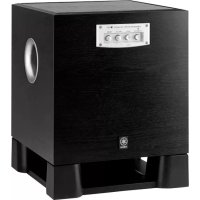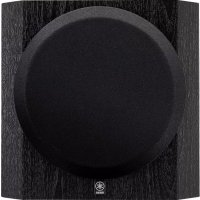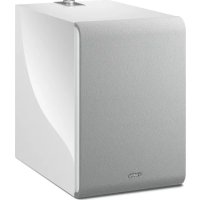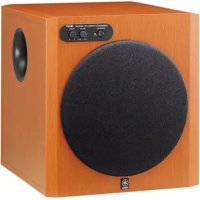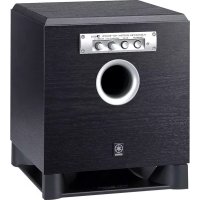
YSTSW015 - Subwoofer YAMAHA - Free user manual and instructions
Find the device manual for free YSTSW015 YAMAHA in PDF.



| Type | Active subwoofer with Advanced Yamaha Active Servo Technology and QD-Bass |
| Speaker | 16 cm (cone) with magnetic shielding |
| Amplification | 70 W at 5 Ω |
| Frequency response | 30 Hz – 200 Hz |
| Dimensions (W × H × D) | 280 mm × 325 mm × 320 mm |
| Weight | 9.2 kg |
| Power supply | 110–120 / 220–240 V AC, 50/60 Hz (depending on model) |
| Power consumption | 70 W (operation), 0.8 W (standby) |
| Auto standby mode | Yes, via AUTO STANDBY switch (OFF/LOW/HIGH) |
| B.A.S.S. selector | Music / Movie |
| HIGH CUT control | 30 – 100 Hz (adjustable) |
| VOLUME control | 0 – 10 (continuous adjustment) |
| PHASE switch | NORM (normal) / REV (reversed) |
| Input | RCA jack (L/R/MONO) for line level |
| Care and cleaning | Clean, dry cloth; do not use chemical solvents |
| Safety | 20 cm clearance around the unit; do not cover; do not expose to rain or moisture |
| General information | Manual available in multiple languages; free download in PDF format |
Frequently Asked Questions - YSTSW015 YAMAHA
User questions about YSTSW015 YAMAHA
0 question about this device. Answer the ones you know or ask your own.
Ask a new question about this device
Download the instructions for your Subwoofer in PDF format for free! Find your manual YSTSW015 - YAMAHA and take your electronic device back in hand. On this page are published all the documents necessary for the use of your device. YSTSW015 by YAMAHA.
USER MANUAL YSTSW015 YAMAHA
UNPACKING Please check to make sure all listed items are included.
If the socket outlets in the home are not suitable for the plug supplied with this appliance, it should be cut off and an appropriate 3 pin plug fitted. For details, refer to the instructions described below.
Note: The plug severed from the mains lead must be destroyed, as a plug with bared flexible cord is hazardous if engaged in a live socket outlet.
SPECIAL INSTRUCTIONS FOR U.K. MODEL
IMPORTANT:
THE WIRES IN MAINS LEAD ARE COLOURED IN ACCORDANCE WITH THE FOLLOWING CODE:
Blue: NEUTRAL
Brown: LIVE
As the colours of the wires in the mains lead of this apparatus may not correspond with the coloured markings identifying the terminals in your plug, proceed as follows: The wire which is coloured BLUE must be connected to the terminal which is marked with the letter N or coloured BLACK. The wire which is coloured BROWN must be connected to the terminal which is marked with the letter L or coloured RED. Making sure that neither core is connected to the earth terminal of the three pin plug.
CAUTION: Read this before operating your unit.
Please read the following operating precautions before use. YAMAHA will not be held responsible for any damage and/or injury caused by not following the cautions below.
- To assure the finest performance, please read this manual carefully. Keep it in a safe place for future reference.
- Install this unit in a cool, dry, clean place – away from windows, heat sources, sources of excessive vibration, dust, moisture and cold. Avoid sources of humming (transformers, motors). To prevent fire or electrical shock, do not expose this unit to rain or water.
●Never open the cabinet. If something drops into the set, contact your dealer.
●The voltage to be used must be the same as that specified on the rear panel. Using this unit with a higher voltage than specified is dangerous and may cause a fire and/or electric shock. - To reduce the risk or fire or electric shock, do not expose this unit to rain or moisture.
- Do not use force on switches, controls or connection wires. When moving the unit, first disconnect the power plug and the wires connected to other equipment. Never pull the wires themselves.
- When not planning to use this unit for a long period (i.e. vacation, etc.), disconnect the AC power plug from the wall outlet.
●To prevent lightning damage, disconnect the AC power plug when there is an electric storm.
●Since this unit has a built-in power amplifier, heat will radiate from the rear panel. Place the unit apart from the walls, allowing enough spaces above, behind and on both sides of the unit to prevent fire or damage. Furthermore, do not position with the rear panel facing down on the floor or other surfaces.
Be sure to allow spaces of at least 20 cm above, behind and on both sides of the unit.
- Do not cover the rear panel of this unit with a newspaper, a tablecloth, a curtain, etc. in order not to obstruct heat radiation. If the temperature inside the unit rises, it may cause fire, damage to the unit and/or personal injury.
- Do not place small metallic objects on this unit. Otherwise, the object may fall, possibly causing an injury.
- Do not place the following objects on this unit: Glass, china, etc.
If glass etc. falls by vibrations and breaks, it may cause personal injury.
A burning candle etc.
If the candle falls by vibrations, it may cause fire and personal injury.
A vessel with water in it
If the vessel falls by vibrations and water spills, it may cause damage to the unit, and/or you may get an electric shock.
- Do not place this unit where foreign objects such as water drips might fall. It might cause a fire, damage to this unit, and/or personal injury.
●Never place a fragile object near the YST port of this unit. If the object falls or drops by the air pressure, it may cause damage to the unit and/or personal injury.
●Never put a hand or a foreign object into the YST port located on the front of this unit. When moving this unit, do not hold the port as it might cause personal injury and/or damage to this unit.
●Never open the cabinet. It might cause an electric shock since this unit uses a high voltage. It might also cause personal injury and/or damage to this unit.
- When using a humidifier, be sure to avoid condensation inside this unit by allowing enough spaces around this unit or avoiding excess humidification. Condensation might cause a fire, damage to this unit, and/or electric shock.
●Super-bass frequencies reproduced by this unit may cause a turntable to generate a howling sound. In such a case, move this unit away from the turntable.
- This unit may be damaged if certain sounds are continuously outputted at high volume level. For example, if 20 Hz–50 Hz sine waves from a test disc, bass sounds from electronic instruments, etc. are continuously outputted, or when the stylus of a turntable touches the surface of a disc, reduce the volume level to prevent this unit from being damaged.
- If you hear distorted noise (i.e., unnatural, intermittent "rapping" or "hammering" sounds) coming from this unit, reduce the volume level. Extremely loud playing of a movie soundtrack's low frequency, bass-heavy sounds or similarly loud popular music passages can damage this speaker system.
●Vibration generated by super-bass frequencies may distort images on a TV. In such a case, move this unit away from the TV set.
- Do not attempt to clean this unit with chemical solvents as this might damage the finish. Use a clean, dry cloth.
- Be sure to read the “TROUBLESHOOTING” section regarding common operating errors before concluding that the unit is faulty.
● Install this unit near the wall outlet and where the AC power plug can be reached easily.
- Secure placement or installation is the owner's responsibility.
YAMAHA shall not be liable for any accident caused by improper placement or installation of speakers.
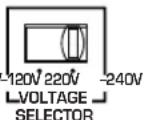
●VOLTAGE SELECTOR
(For China, Korean and General models) The voltage selector switch on the rear panel of this
unit must be set for your local main voltage BEFORE plugging this unit into the AC main supply. Voltages are 110-120/220-240 V AC, 50/60 Hz.
Standby mode
If the POWER switch is set to the ON position and the AUTO STANDBY switch is set to the HIGH or LOW position, this unit turns into the standby mode when no signal is received by this unit for 7 to 8 minutes. In this state, this unit is designed to consume a very small quantity of power.
This unit is not disconnected from the AC power source as long as it is connected to the wall outlet, even if this unit itself is turned off. In this state, this unit is designed to consume a very small quantity of power.
This unit features a magnetically shielded design, but there is still a chance that placing it too close to a TV set might impair picture color. Should this happen, move this unit away from the TV set.
CONTENTS
UNPACKING ...... Inside of Front Cover
CAUTION 1
FEATURES 2
SPECIFICATIONS 2
PLACEMENT 3
CONNECTIONS...... 4
CONTROLS AND THEIR FUNCTIONS .... 5
AUTOMATIC POWER-SWITCHING FUNCTION.... 6
ADJUSTING THE SUBWOOFER BEFORE USE 7
Frequency characteristics...... 8
ADVANCED YAMAHA ACTIVE SERVO TECHNOLOGY 9
TROUBLESHOOTING ....10
FEATURES
- This subwoofer system employs Advanced Yamaha Active Servo Technology which YAMAHA has developed for reproducing higher quality super-bass sound. (Refer to page 9 for details on Advanced Yamaha Active Servo Technology.) This super-bass sound adds a more realistic, theater-in-the-home effect to your stereo system.
-
For the effective use of the subwoofer, the subwoofer's super-bass sound should be matched to the sounds of your main speakers. You can create the best sound quality for various listening conditions by using the HIGH CUT control and the PHASE switch.
-
The Automatic power-switching function saves you the trouble of pressing the STANDBY/ON button to turn the power on or turn it to the STANDBY mode.
- You can select bass effect suitable for the source by using the B.A.S.S. button.
QD·Bass
TECHNOLOGY
QD-Bass Technology
QD-Bass (Quatre Dispersion Bass) technology uses square, pyramid-shaped reflective plates to radiate the sound in four horizontal directions.
SPECIFICATIONS
Type ...... Advanced Yamaha Active Servo Technology Magnetic shielding type
Driver 16 cm (6-1/2") cone woofer
Amplifier Output 70 W/5Ω
Frequency Response 30 Hz to 200 Hz
Power Supply
U.S.A. and Canada models ...... AC 120V, 60 Hz
U.K. and Europe models ...... AC 230V, 50 Hz
Australia model.... AC 240V, 50 Hz
China, Korean and General models AC 110-120/220-240V, 50/60 Hz
Power Consumption 70 W
Standby Power Consumption 0.8 W
Dimensions (W x H x D) ..... 280 mm x 325 mm x 320 mm (11" x 12-13/16" x 12-5/8")
Weight 9.2 kg (20 lbs. 4 oz.)
* Specifications are subject to change without notice due to product improvements.
flowchart
graph TD
    A["Square Node 1"] --> B["Arrow Right"]
    C["Square Node 2"] --> D["Arrow Left"]
    E["Square Node 3"] --> F["Arrow Up"]
    G["Square Node 4"] --> H["Arrow Down"]
(□: subwoofer, □: main speaker)
flowchart
graph TD
    A[" "] --> C[" "]
    B[" "] --> C[" "]
    C --> D[" "]
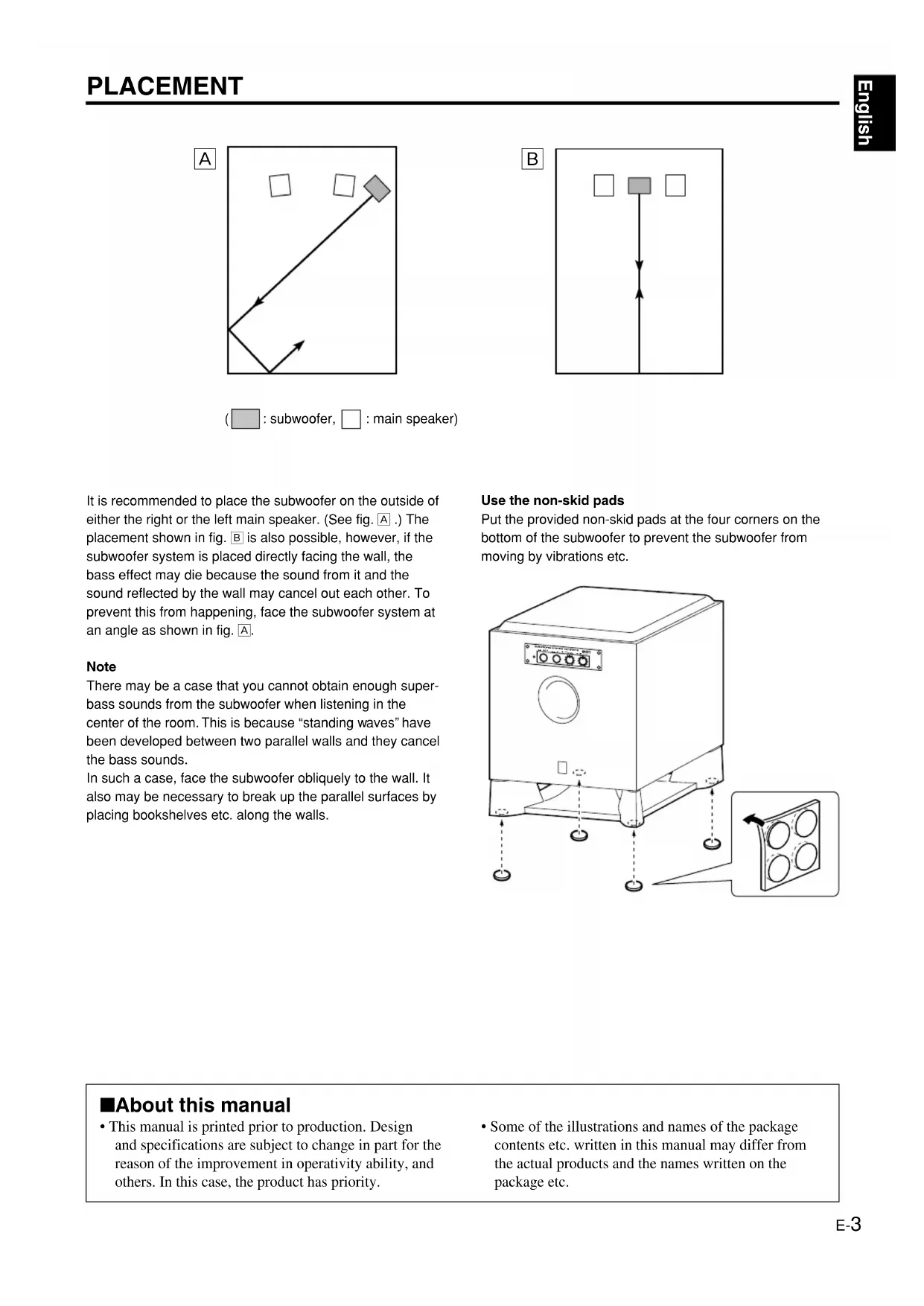
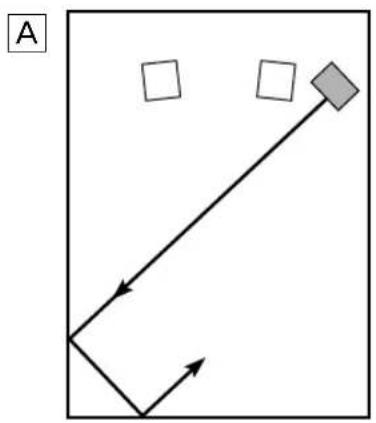
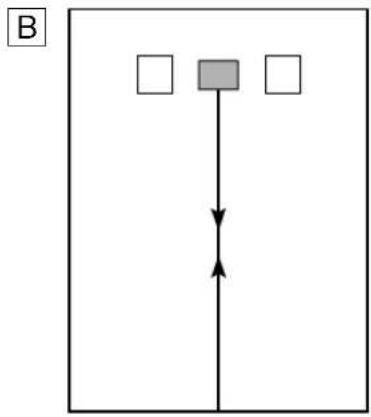
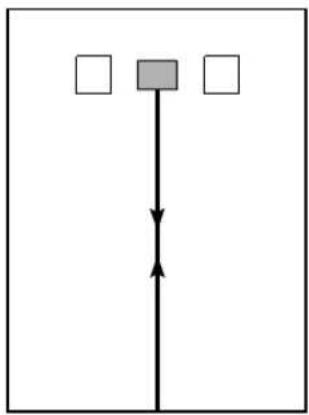
It is recommended to place the subwoofer on the outside of either the right or the left main speaker. (See fig. [A].) The placement shown in fig. B is also possible, however, if the subwoofer system is placed directly facing the wall, the bass effect may die because the sound from it and the sound reflected by the wall may cancel out each other. To prevent this from happening, face the subwoofer system at an angle as shown in fig. A.
Note
There may be a case that you cannot obtain enough superbass sounds from the subwoofer when listening in the center of the room. This is because "standing waves" have been developed between two parallel walls and they cancel the bass sounds.
In such a case, face the subwoofer obliquely to the wall. It also may be necessary to break up the parallel surfaces by placing bookshelves etc. along the walls.
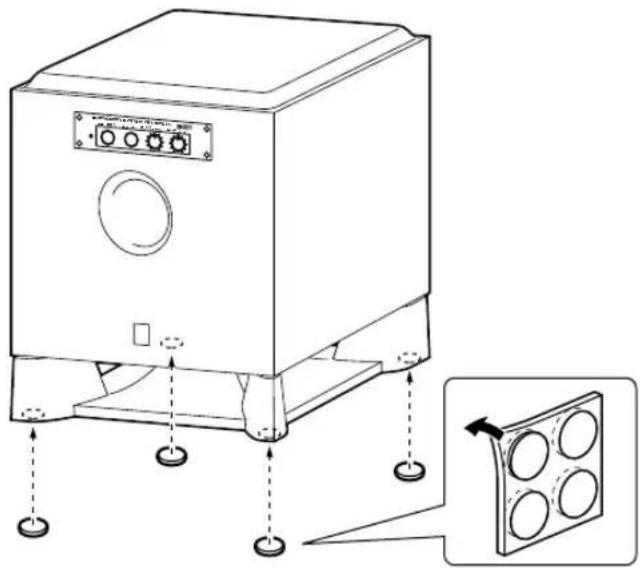
Use the non-skid pads
Put the provided non-skid pads at the four corners on the bottom of the subwoofer to prevent the subwoofer from moving by vibrations etc.
■About this manual
- This manual is printed prior to production. Design and specifications are subject to change in part for the reason of the improvement in operativity ability, and others. In this case, the product has priority.
- Some of the illustrations and names of the package contents etc. written in this manual may differ from the actual products and the names written on the package etc.
CONNECTIONS
Caution: Plug in the subwoofer and other audio/video components after all connections are completed.
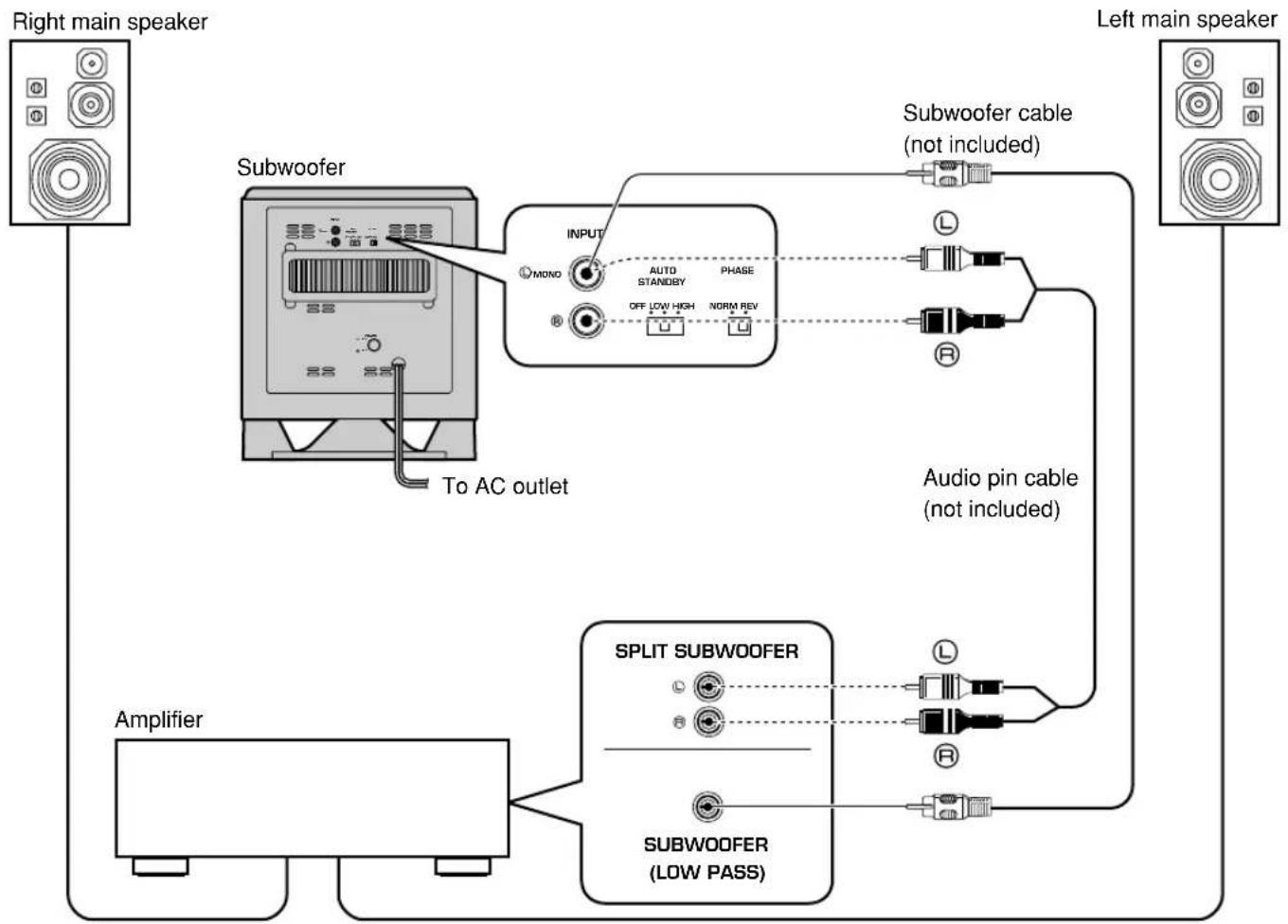
Connect the subwoofer to the line output (pin jack) terminal(s) of the amplifier.
- To connect with a YAMAHA DSP amplifier (or AV receiver), connect the SUBWOOFER (or LOW PASS etc.) terminal on the rear of the DSP amplifier (or AV receiver) to the Ⓐ/MONO INPUT terminal of the subwoofer.
- When connecting the subwoofer to the SPLIT SUBWOOFER terminals on the rear of the DSP amplifier, be sure to connect the Ⓐ/MONO INPUT terminal to the "L" side and the ® INPUT terminal to the "R" side of the SPLIT SUBWOOFER terminals.
flowchart
graph TD
    A["Right main speaker"] --> B["Subwoofer"]
    B --> C["INPUT: MONO AUTO STANDBY PHASE OFF LOW HIGH NORM REV"]
    C --> D["Subwoofer cable (not included)"]
    D --> E["L"]
    D --> F["R"]
    E --> G["Audio pin cable (not included)"]
    F --> G
    H["Left main speaker"] --> I["SPLIT SUBWOOFER"]
    I --> J["L"]
    I --> K["R"]
    I --> L["SubWOOFER (LOW PASS)"]
    L --> M["Amplifier"]
    B --> N["To AC outlet"]
Notes
- Some amplifiers have line output terminals labeled PRE OUT. When you connect the subwoofer to the PRE OUT terminals of the amplifier, make sure that the amplifier has at least two sets of PRE OUT terminals. If the amplifier has only one set of PRE OUT terminals, do not connect the subwoofer to the PRE OUT terminals.
- When connecting to a monaural line output terminal of the amplifier, connect the Ⓛ/MONO INPUT terminal.
CONTROLS AND THEIR FUNCTIONS
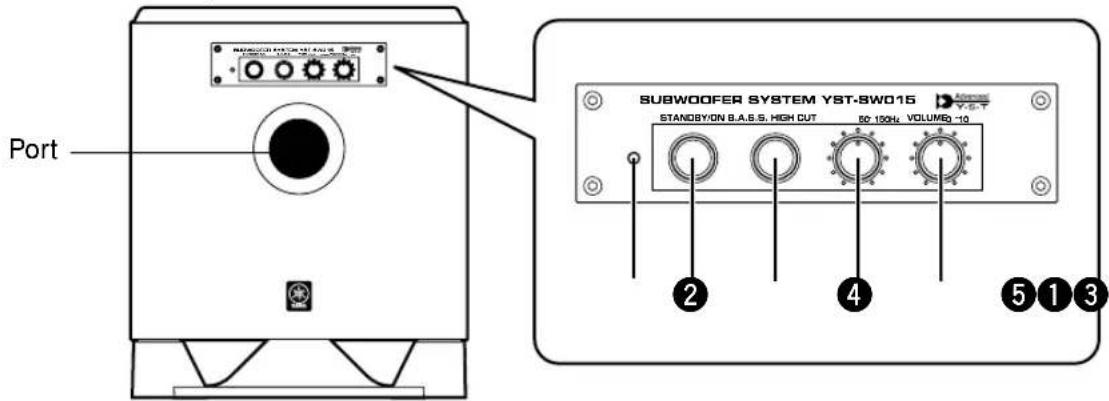
Front panel
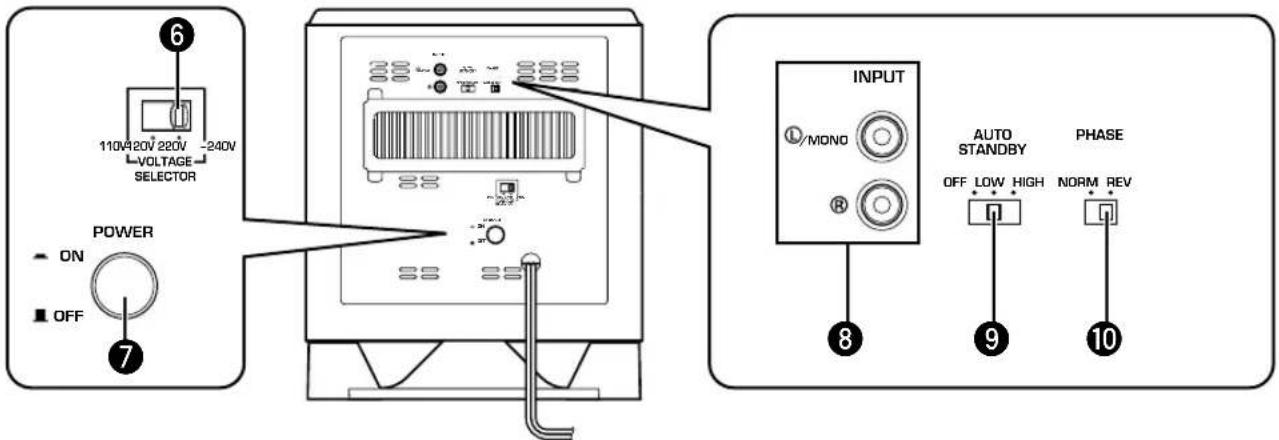
Rear panel (General model)
1 Power indicator
Lights up in green while the subwoofer is on.
Lights up in red while the subwoofer is set in the standby mode by the operation of the automatic power-switching function.
Goes off when the subwoofer is set in the standby mode.
② STANDBY/ON button
Press this button to turn on the power when the POWER (7) switch is set in the ON position. (The power indicator lights up in green.)
Press again to set the subwoofer in the standby mode. (The power indicator goes off.)
Standby mode
The subwoofer is still using a small amount of power in this mode.
③B.A.S.S. (Bass Action Selector System) button
When this button is pressed in to the MUSIC position, the bass sound in audio software is well reproduced. By pressing the button again so that it pops out at the MOVIE position, the bass sound in video software is well reproduced.


MOVIE
MUSIC
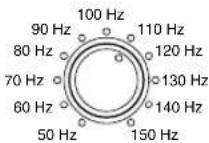
4 HIGH CUT control
Adjusts the high frequency cut off point.
Frequencies higher than the frequency selected by this control are all cut off (and no output).
* One graduation of this control represents 10 Hz.
⑤ VOLUME control
Adjusts the volume level. Turn the control clockwise to increase the volume, and counterclockwise to decrease the volume.
6 VOLTAGE SELECTOR switch
(For China, Korean and General models)
If the preset setting of the switch is incorrect, set the switch to the proper voltage range (220V-240V or 110V-120V) of your area.
Consult your dealer if you are unsure of the correct setting.
WARNING
Be sure to unplug the subwoofer before setting the VOLTAGE SELECTOR switch correctly.
7 POWER switch
Normally, set this switch to the ON position to use the subwoofer. In this state, you can turn on the subwoofer or turn the subwoofer into the standby mode by pressing the STANDBY/ON (②) button. Set this switch to the OFF position to completely cut off the subwoofer's power supply from the AC line.
8 INPUT terminals
Used to input line level signals from the amplifier. (Refer to "CONNECTIONS" for details.)
9 AUTO STANDBY (HIGH/LOW/OFF) switch
This switch is originally set to the OFF position. By setting this switch to the HIGH or LOW position, the subwoofer's automatic power-switching function operates as described below. If you do not need this function, leave this switch in the OFF position.
* Make sure to change the setting of this switch only when the subwoofer is set in the standby mode by pressing the STANDBY/ON (2) button.
10 PHASE switch
Normally this switch is to be set to the REV (reverse) position. However, according to the listening condition or your preference, there may be a case when better sound quality is obtained by setting this switch to the NORM (normal) position. Select the better position by monitoring the sound.
AUTOMATIC POWER-SWITCHING FUNCTION
If the source being played is stopped and the input signal is cut off for 7 to 8 minutes, the subwoofer automatically switches to the standby mode. (When the subwoofer switches to the standby mode by the automatic power-switching function, the power indicator lights up in red.) When you play a source again, the power of the subwoofer turns on automatically by sensing audio signals input to the subwoofer.
This function operates by sensing a certain level of low frequency input signal. Usually set the AUTO STANDBY switch to the LOW position. However, if this function does not operate smoothly, set the switch to the HIGH position. In the HIGH position, the power will turn on even with a low level of input signal. But please be aware that the subwoofer may not switch to the standby mode when there is an extremely low input signal.
* The power might turn on unexpectedly by sensing noise from other appliances. If that occurs, set the AUTO STANDBY switch to the OFF position and use the STANDBY/ON button to switch the power between on and in the standby mode manually.
* This function detects the low-frequency components below 200 Hz of the input signals (i.e., the explosion in the action movie, the sound of the bass guitar or the bass drum, etc.).
* The minutes required to switch the subwoofer to the standby mode might change by sensing noise from other appliances.
This function is available only when the power of the subwoofer is on (by pressing the STANDBY/ON button).
ADJUSTING THE SUBWOOFER BEFORE USE
Before using the subwoofer, adjust the subwoofer to obtain the optimum volume and tone balance between the subwoofer and the main speakers by following the procedures described below.
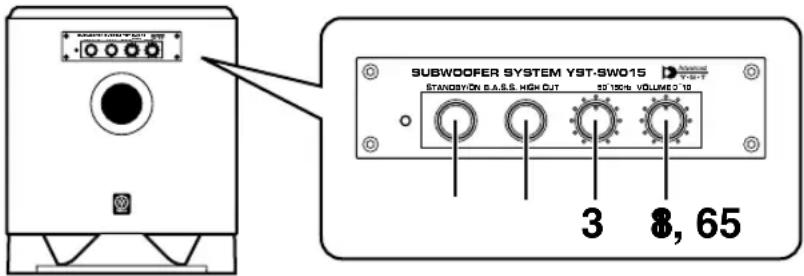
Front panel
Rear panel
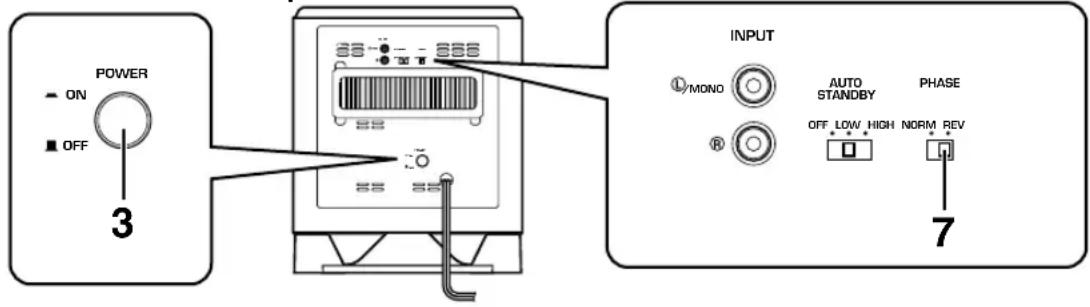
1 Set the VOLUME control to minimum (0).
2 Turn on the power of all the other components.
3 Make sure that the POWER switch is set to the ON position, then press the STANDBY/ON button to turn on the subwoofer.
* The Power indicator lights up in green.
4 Play a source containing low-frequency components and adjust the amplifier's volume control to the desired listening level.
5 Adjust the HIGH CUT control to the position where the desired response can be obtained.
Normally, set the control to the main speaker's rated minimum reproducible frequency*.
* The main speaker's rated minimum reproducible frequency can be looked up in the speakers' catalog or owner's manual.
6 Increase the volume gradually to adjust the volume balance between the subwoofer and the main speakers.
Normally, set the control to the level where you can obtain a little more bass effect than when the subwoofer is not used. If the desired response cannot be obtained, adjust the HIGH CUT control and the VOLUME control again.
7 Set the PHASE switch to the position which gives you the better bass sound.
Normally, set the switch to the REV (reverse) position. If the desired response cannot be obtained, set the switch to the NORM (normal) position.
8 Select "MOVIE" or "MUSIC" according to the played source.
MOVIE: When a movie type source is played, the low-frequency effects are enhanced to allow the listener enjoy more powerful sound. (The sound will be thicker and deeper.)
MUSIC: When an ordinary music source is played, the excessive low-frequency components are cut off to make the sound clearer. (The sound will be lighter and reproduces the melody line more clearly.)
- Once the volume balance between the subwoofer and the main speakers is adjusted, you can adjust the volume of your whole sound system by using the amplifier's volume control.
However, if you change the main speakers to others, you must make this adjustment again.
- For adjusting the VOLUME control, the HIGH CUT control and the PHASE switch, refer to “Frequency characteristics” on the next page.
Frequency characteristics
This subwoofer's frequency characteristics
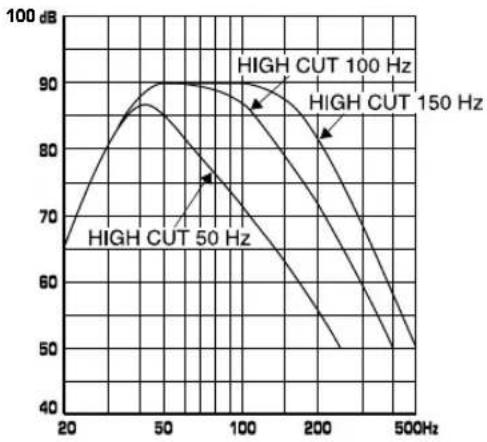
line
| Frequency | High Cut 100 Hz | High Cut 150 Hz | | --------- | --------------- | --------------- | | 50 Hz | 90 | 85 | | 100 Hz | 88 | 82 | | 200 Hz | 85 | 75 | | 500 Hz | 80 | 65 |The figures below show the optimum adjustment of each control and the frequency characteristics when this subwoofer is combined with a typical main speaker system.
EX. When combined with an 3.5" or 4" (8 cm or 10 cm) acoustic suspension, 2 way system main speakers
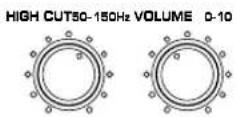
PHASE-Set to the REV (reverse) position.
B.A.S.S.-MOVIE
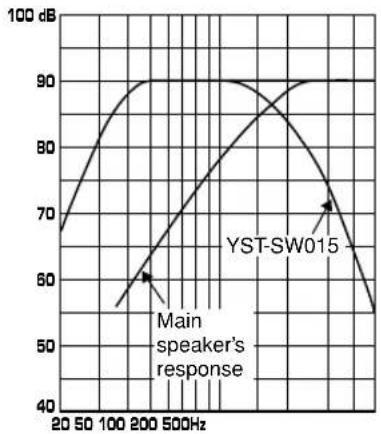
line
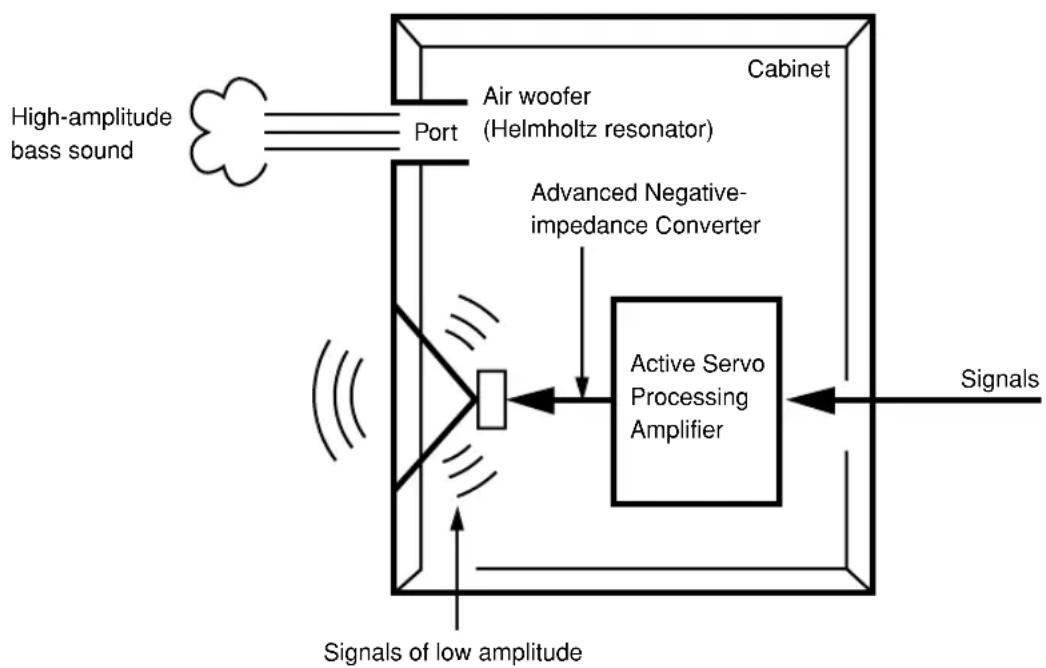
| Frequency (Hz) | Main speaker's response (dB) | YST-SW015 (dB) | | -------------- | ---------------------------- | -------------- | | 20 | 68 | - | | 50 | 75 | - | | 100 | 85 | - | | 200 | 90 | - | | 500 | 85 | - | | 1000 | 75 | - | | 2000 | 60 | - | | 5000 | 55 | - |The theory of Yamaha Active Servo Technology has been based upon two major factors, the Helmholtz resonator and negative-impedance drive. Active Servo Processing speakers reproduce the bass frequencies through an “air woofer”, which is a port or opening in the speaker’s cabinet. This opening is used instead of, and performs the functions of, a woofer in a conventionally designed speaker system. Thus, signals of low amplitude within the cabinet can, according to the Helmholtz resonance theory, be outputted from this opening as waves of great amplitude if the size of the opening and the volume of the cabinet are in the correct proportion to satisfy a certain ratio. In order to accomplish this, moreover, the amplitudes within the cabinet must be both precise and of sufficient power because these amplitudes must overcome the “load” presented by the air that exists within the cabinet.
Thus it is this problem that is resolved through the employment of a new design in which the amplifier supplies special signals. If the electrical resistance of the voice coil could be reduced to zero, the movement of the speaker unit would become linear with respect to signal voltage. To accomplish this, a special negative-impedance output-drive amplifier for subtracting output impedance of the amplifier is used.
By employing negative-impedance drive circuits, the amplifier is able to generate precise, low-amplitude, low-frequency waves with superior damping characteristics. These waves are then radiated from the cabinet opening as high-amplitude signals. The system can, therefore, by employing the negative-impedance output drive amplifier and a speaker cabinet with the Helmholtz resonator, reproduce an extremely wide range of frequencies with amazing sound quality and less distortion.
The features described above, then, are combined to be the fundamental structure of the conventional Yamaha Active Servo Technology.
Our new Active Servo Technology — Advanced Yamaha Active Servo Technology — adopted Advanced Negative Impedance Converter (ANIC) circuits, which allows the conventional negative impedance converter to dynamically vary in order to select an optimum value for speaker impedance variation. With this new ANIC circuits, Advanced Yamaha Active Servo Technology can provide more stable performance and improved sound pressure compared with the conventional Yamaha Active Servo Technology, resulting in more natural and dynamic bass reproduction.
flowchart
graph TD
    A["High-amplitude bass sound"] --> B["Port"]
    B --> C["Air woofer (Helmholtz resonator)"]
    C --> D["Advanced Negative-impedance Converter"]
    D --> E["Active Servo Processing Amplifier"]
    E --> F["Signals"]
    G["Signals of low amplitude"] --> H["Signal"]
    I["Cabinet"] --> J["Output"]
Refer to the chart below when this unit does not function properly. If the problem you are experiencing is not listed below or if the instructions given below do not help, disconnect the power cable and contact your authorized YAMAHA dealer or service center.
| Problem | Cause | What to Do |
| Power is not supplied even though the STANDBY/ON button is set to the ON position. | The power plug is not securely connected. | Connect it securely. |
| The POWER switch is set to the OFF position. | Set the POWER switch to the ON position. | |
| No sound. | The VOLUME control is set to 0. | Turn the VOLUME control to the right. |
| Speaker cables are not connected securely. | Connect them securely. | |
| Sound level is too low. | Speaker cables are not connected correctly. | Connect them correctly, that is L (left) to L, R (right) to R, “+” to “+” and “-” to “-”. |
| Setting of the PHASE switch is not proper. | Set the switch to the other position. | |
| A source sound with few bass frequencies is played. | Play a source sound with bass frequencies.Set the HIGH CUT control to a higher position. | |
| It is influenced by standing waves. | Reposition the subwoofer or break up the parallel surface by placing bookshelves etc. along the walls. | |
| The subwoofer does not turn on automatically. | The POWER switch is set to the OFF position. | Set the POWER switch to the ON position. |
| The STANDBY/ON button is set to the OFF position. | Set the STANDBY/ON button to the ON position. | |
| The AUTO STANDBY switch is set to the OFF position. | Set the AUTO STANDBY switch to the “HIGH” or “LOW” position. | |
| The level of input signal is too low. | Set the AUTO STANDBY switch to the “HIGH” position. | |
| The subwoofer does not turn into the standby mode automatically. | There is an influence of noise generated from external appliances etc. | Move the subwoofer further away from such appliances and/or reposition the connected speaker cables.Otherwise, set the AUTO STANDBY switch to the “OFF” position. |
| The AUTO STANDBY switch is set to the OFF position. | Set the AUTO STANDBY switch to the “HIGH” or “LOW” position. | |
| The subwoofer turns into the standby mode unexpectedly. | The level of input signal is too low. | Set the AUTO STANDBY switch to the “HIGH” position. |
| The subwoofer turns on unexpectedly. | There is an influence of noise generated from external appliances etc. | Move the subwoofer farther away from such appliances and/or reposition the connected speaker cables.Otherwise, set the AUTO STANDBY switch to the “OFF” position. |
flowchart
graph TD
    A["Square Node 1"] --> B["Arrow to Center"]
    C["Square Node 2"] --> D["Arrow to Center"]
    E["Square Node 3"] --> F["Arrow to Center"]
(: subwoofer, : enceintes principales)
B
flowchart
graph TD
    A[" "] --> B[" "]
    C[" "] --> B[" "]
    D[" "] --> B[" "]
natural_image
Line drawing of a washing machine with mounting feet and control panel, shown with an inset view of the front panel (no text or symbols)flowchart
graph TD
    A["Square"] --> B["Arrow to bottom"]
    C["Square"] --> D["Arrow to top"]
    E["Square"] --> F["Arrow to bottom"]
flowchart
graph TD
    A[" "] --> C
    B[" "] --> C
    C --> D
    style A fill:#fff,stroke:#000
    style B fill:#ccc,stroke:#000
    style C fill:#fff,stroke:#000
JUSTERING AV SUBWOOFER- HÖGTALAREN INNAN DEN ANVÄNDS ..... 7
Frekvenskaraktäristika....8
ADVANCED YAMAHA ACTIVE SERVO TECHNOLOGY 9
FELSÖKNING.... 10
EGENSKAPER
flowchart
graph TD
    A["Square Node 1"] --> B["Arrow to Center"]
    C["Square Node 2"] --> D["Arrow to Center"]
    E["Square Node 3"] --> F["Arrow to Center"]
flowchart
graph TD
    A[" "] --> B[" "]
    C[" "] --> B[" "]
    D[" "] --> B[" "]
JUSTERING AV SUBWOOFERHÖGTALAREN INNAN DEN ANVÄNDS
flowchart
graph TD
    A["Square Node 1"] --> B["Arrow to Center"]
    C["Square Node 2"] --> D["Arrow to Center"]
    E["Square Node 3"] --> F["Arrow to Center"]
flowchart
graph TD
    A[" "] --> C[" "]
    B[" "] --> C[" "]
    C --> D[" "]
    style A fill:#fff,stroke:#000
    style B fill:#fff,stroke:#000
    style C fill:#ccc,stroke:#000
    style D fill:#fff,stroke:#000
natural_image
Line drawing of a washing machine with mounting base and control panel, showing internal components and mounting points (no text or symbols)flowchart
graph TD
    A[" "] --> C[" "]
    B[" "] --> C[" "]
    D[" "] --> C[" "]
Driver 16 cm konus-woofer
flowchart
graph TD
    A["Square"] --> B["Arrow to bottom"]
    C["Square"] --> D["Arrow to top"]
    E["Square"] --> F["Arrow to top"]
flowchart
graph TD
    A[" "] --> C
    B[" "] --> C
    D[" "] --> C