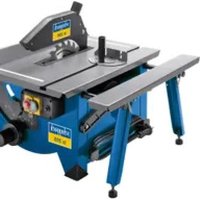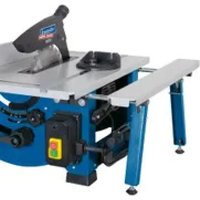
HS81 - Saw SCHEPPACH - Free user manual and instructions
Find the device manual for free HS81 SCHEPPACH in PDF.


| Product type | Table saw |
| Brand | Scheppach |
| Model | HS81 |
| Table dimensions (L x W) | 525 x 400 mm |
| Table dimensions with extension | 525 x 470 mm (max. 525 x 620 mm) |
| Working height | 270 mm |
| Weight | 14.5 kg |
| Power supply | 230-240 V / 50 Hz |
| Power consumption | 1200 W (S6 40%) |
| No-load speed | 5000 min⁻¹ |
| Saw blade diameter | 210 x 30 x 2.8 mm (24 teeth) |
| Max cutting height at 90° | 62 mm |
| Max cutting height at 45° | 43 mm |
| Dust extraction connection diameter | 36 mm |
| Sound power level (LWA) | 106.7 dB(A) |
| Sound pressure level (LPA) | 94.2 dB(A) |
| Protection class | II |
| Cutting height adjustment | Via adjustment handle |
| Blade tilt adjustment | From 0° to 45° |
| Overload protection | Yes (overload switch) |
| Maintenance | Regular cleaning, saw blade replacement |
| Safety | Protective cover, riving knife, push stick |
| Included spare parts | Cover, push stick, parallel guide, ruler, angle guide, wrenches |
Frequently Asked Questions - HS81 SCHEPPACH
User questions about HS81 SCHEPPACH
0 question about this device. Answer the ones you know or ask your own.
Ask a new question about this device
Download the instructions for your Saw in PDF format for free! Find your manual HS81 - SCHEPPACH and take your electronic device back in hand. On this page are published all the documents necessary for the use of your device. HS81 by SCHEPPACH.
USER MANUAL HS81 SCHEPPACH
Translation from the original instruction manual
FR
1 table saw
1 protective cover
1 push stick
1 longitudinal stop
1 stop bar
1 rip fence
1 saw blade key
1 flange key
1 small part
1 manual
Technical data
Dimension LxWxH 525/470/440
Working height 270
Table size 525 x 400
Table size incl. expansion 525 x 470
Table size max. incl. expansion 525 x 620
SawbladeD. 210x30x2,8mm24Z
Max. cutting depth 90^ 62 mm
Max. cutting depth 45^ 43 mm
Weight 14.5 kg
Suction connection D 36 mm
Drive
Motor V/Hz 230-240V 50 Hz
Input power. 1200 W / S6 40%
Idle speed. 5000 min
Subject to technical modifications!
NOISE CHARACTERISTIC VALUES
| Sound power level LWA according to EN ISO 3744 | 106,7 dB(A) |
| Uncertainty K 3 dB(A) | |
| Sound pressure level LpA gemäß EN ISO 11201 | 94,2 dB(A) |
| Uncertainty K 3 dB(A) |
Note: The indicated sound levels have been determined according to a standardized testing procedure and can be used to compare different power tools with each other. Furthermore, these values are suitable to evaluate the loads that sounds can cause for the user in advance.
Attention! Depending on how you will use the power tool, the actual values may deviate from the indicated values. Take measures to protect yourself from noise pollution. In this process it is important to take the complete sequence of operation into account. This also includes moments during which the power tool
operates without load and moments during which it is turned off. Suitable measures comprise amongst other things regular maintenance and service of the power tool and the insertion tools, regular breaks and the appropriate planning of the sequences of operation.
Explanation of symbols
| Wear ear protection. |
| Wear a dust mask. |
| Wear eye protection. |
| Wear protective gloves, when you work on or close to the saw blade. | |
| Protection class II | |
| We have marked the points in this manual that concern your safety with this sign. |
| Read through the manual carefully before you work on the power tool. | |
| Note the information about the direction of movement of the tool and the saw blade. |
General information
- After unpacking, check all parts for possible transportation damages. In the event of complaints, inform the supplier immediately. Any complaints made after this time will not be accepted.
- The shipment is to be checked for completeness upon receipt.
- Read through the manual carefully in order to make yourself familiar in dealing with the device before using it for the first time.
- Only use original equipment regarding accessories, as well as consumable items and spare parts. Spare parts can be obtained from your specialized dealer.
When ordering, please specify our part numbers, as well as type and construction year of the device.
NOTE:
According to the applicable product liability laws, the manufacturer of the device does not assume liability for damages to the product or damages caused by the product that occurs
due to:
- Improper handling,
Non-compliance of the operating instructions, - Repairs by third parties, not by authorized service technicians,
- Installation and replacement of non-original spare parts,
Application other than specified, - A breakdown of the electrical system that occurs due to the non-compliance of the electric regulations and VDE regulations 0100, DIN 57113 / VDE0113.
We recommend:
Read through the complete text in the operating instructions before installing and commissioning the device. The operating instructions are intended to help the user to become familiar with the machine and take advantage of its application possibilities in accordance with the recommendations. The operating instructions contain important information on how to operate the machine safely,
professionally and economically, how to avoid danger, costly repairs, reduce downtimes and how to increase reliability and service life of the machine.
In addition to the safety regulations in the operating instructions, you have to meet the applicable regulations that apply for the operation of the machine in your country. Keep the operating instructions package with the machine at all times and store it in a plastic cover to protect it from dirt and moisture. Read the instruction manual each time before operating the machine and carefully follow its information. The machine can only be operated by persons who were instructed concerning the operation of the machine and who are informed about the associated dangers. The minimum age requirement must be complied with.
We have marked the points in this manual that concern your safety with this sign
General safety information
WARNING! When using electric tools basic safety precautions should always be followed to reduce the risk of fire, electric shock and personal injury including the following. Read all these instructions before attempting to operate this product and save these instructions. Safe working
- Disorder in the working area increases the risk of accidents.
- Do not expose power tools to rain.
- Do not use power tools in a humid or wet environment.
- Ensure excellent illumination of the working area.
- Do not operate power tools where there is a possible danger of fire or explosion.
- Avoid physical contact with grounded objects. (e.g. tubes, radiators, electric stoves, cooling appliances).
- Do not let other persons, especially children, touch the power tool or the cable. Keep them away from your working area.
- Unused power tools should be kept in a dry, locked place, high and out of the reach of children.
- You will work better and safer within the indicated power range.
- Do not use inefficient power tools for heavy work.
- Do not use the power tool for any purpose other than that for which it is intended.
E.g. do not use a portable circular saw to cut tree branches or logs. - Do not wear loose clothes or jewelry; they could be caught by moving parts.
-
When working outdoors, it is recommended to wear non-slip shoes.
If you have long hair, wear a hair net. -
Wear safety glasses.
- Wear a breathing mask for dust-generating works.
- In the case that connections for dust suction and reception are available please ensure that they are connected and can be used properly.
- Do not use the cable to remove the plug from the socket. Protect the cable from heat, oil and sharp edges.
- Use clamping devices or a vice to fix the work piece. Thus it will be held more securely than in your hand.
- Ensure that you have a stable standing position and keep your balance at all times.
- Keep the cutting tool sharp and clean, in order to make it work better and safer.
- Follow the instructions regarding lubrication and tool change.
- Check the power tool's connection line regularly and in case of damage have it replaced by an acknowledged expert.
- Check the extension cables regularly and replace them when they are damaged.
- Keep the handles dry, clean and free from oil and fat.
- Be sure that the device is not in use, before maintenance and while changing tools like saw blades, drills or any kind of machine tools.
- Before turning the machine on, make sure that all keys and adjustment tools have been removed.
- Make sure that the switch is turned off when plugging the plug in the socket.
- For outdoor work, use only extension cables which are approved for this purpose.
Always pay attention and take the utmost
care when working with an electric power tool. Do not use the power tool when you are not concentrated.
- Before further using the power tool, protective devices and other parts have to be checked carefully in order to make sure that they function perfectly and properly.
- Check to see if all movable parts function properly and that they do not jam and make sure that no parts are damaged. All parts have to be mounted properly and have to comply with all conditions in order to ensure perfect operation of the power tool.
- Damaged protective devices and parts have to be repaired or replaced as intended by an acknowledged specialized workshop, if not specified otherwise in the operating instructions.
- Damaged switches have to be replaced in a customer service repair shop.
- Do not use power tools where the switch cannot easily be turned on and off.
- Using other application tools and accessories can cause a risk of personal injury.
- This electrical power tool complies with the relevant safety regulations.
- Repairs may only be carried out by an expert who uses original spare parts; otherwise the operator runs the risk of accidents.
- When the saw blade is blocked due to abnormal feed force during cutting, turn the machine off and disconnect it from power supply. Remove the work piece and ensure that the saw blade runs free. Turn the machine on and start new cutting operation with reduced feed force.
ADDITIONAL SAFETY INFORMATION
1. Safety precautions
Warning! Do not use damaged or deformed saw blades.
Replace worn out stage plates.
Use only saw blades which are recommended by the manufacturer and which correspond to EN 847-1. Warning! When replacing the saw blade, ensure that the cutting width is not
narrower and that the main blade width is not wider than the width of the splitting wedge. Make sure, that you select a saw blade that is appropriate for the material you intend to cut.
Wear appropriate, personal protective equipment such as:
-
Ear protection to reduce the risk of getting hard of hearing
-
Respiratory protection to reduce the risk of inhaling dangerous dust
- Be sure to wear gloves when working with saw blades and coarse materials Where practicable, keep saw blades in a separate container.
Connect the power tool to a dust reception facility when cutting wood. Dust release is influenced by the type of material you will work on, the importance of local deposition (acquisition or source) and the proper adjustment of covering/deflecting plate/guide.
Do not use saw blades made out of high-speed steel (HSS steel).
In times of non-use keep the push stick or the push block with the electrical power tool at all times.
2. Maintenance and repair
The noise level depends on different factors such as the quality of the saw blades, the condition of saw blade and power tool. If possible, use saw blades that were constructed for noise reduction, maintain the electrical power tool and tool adapter regularly and keep them in good condition in order to reduce the noise level.
Inform the person who is responsible for the security of the power tool immediately when you detect defects in the electrical power tool, the protection equipment or the tool.
3. Working safely
Use the push stick or a push block to pass the work piece by the saw blade safely. Do not carry out folds or grooves without using proper protective devices over the saw table. Do not use this electrical power tool to create slashes (grooves finished on the work piece itself).
Use only saw blades for which the maximum speed is lower than the maximum spindle speed of the table saw and which are suitable for the material you intend to cut. Always use the transporting means for the transport of the electrical power tool. Never use the protective devices for handling and transporting the device.
Make sure that the upper part of the saw blade is covered; e.g. by the protective device. Warning! During operation this electrical power tool produces an electromagnetic field which can influence active or passive medical implants under certain conditions. In order to avoid the risk of serious or fatal injuries, we recommend persons with medical implants to consult with their doctor and the manufacturer of the medical implant before operating the electrical power tool.
SAFETY INFORMATION FOR HANDLING SAW BLADES
- Operate insertion tools only when you know how to handle them correctly.
Always consider the maximum speed. The maximum speed indicated on the power tool may not be exceeded. Observe the speed range (if specified). - Do not use insertion tools with cracks. Immediately take ruptured insertion tools out of service; simply repairing them is not
admissible.
- Clean the clamping surfaces of dirt, fat, oil and water.
- Always handle insertion tools with care. If possible, keep them in their original packing or in a special container. Wear protective gloves in order to improve your grip and to reduce the risk of personal injuries.
- Before operating the insertion tool, ensure
that all protective devices are attached properly.
- Before operation also make sure that the insertion tool you intend to use meets the technical requirements for electrical power tools.
- Use the provided saw blade only for cutting wood and never for cutting metals.
Intended use
This electrical power tool meets the EC Machinery Directive.
- This power tool is defined as a portable electrical power tool.
- In order to transport/ reorganize the power tool, place one hand at the front and one hand at the end of the saw table and lift the power tool.
- If you do not use the provided frame, you have to fasten the power tool to a stable workbench.
- The operator of the device should always stand in front of the power tool, at the left side of the saw blade.
- The working and surrounding area of the power tool have to be free from foreign bodies in order to prevent accidents.
- It is important to keep the work pieces to be machined free from foreign bodies such as nails and screws.
- Before commissioning, the power tool has to be connected to an exhaust system with a flexible exhaust line of low flammability. The exhaust system switches on automatically when the power tool is turned on.
- When the electrical power tool is operated in enclosed rooms it has to be connected to an exhaust system. In order to remove fragments and sawdust, use a 3200 ha or 2600 ha dust removal. The flow velocity of the suction strainer has to
be 20m / s
The automatic switch-on can be obtained as an optional accessory. Type ALV 2: Order no. 7910 4010, 230-240 V/50 Hz
- When turning on the power tool, the exhaust system turns on after a start-up delay of about 2-3 seconds. Thus, the machine helps avoiding the overload of your main's fuse.
- When turning off the power tool, the exhaust system switches off automatically after 3-4 seconds.
- Thereby, the residual dust is sucked off, as required by the Ordinance on Hazardous Substances which saves power and reduces the noise level. The exhaust system runs only when the power tool is turned on.
- Do not turn on and remove the exhaust system or the dust remover when you operate the power tool.
- This electrical power tool is constructed for processing wood and wood-imitating materials only. Only original tools and accessories may be used. Insert the required saw blade (according to norm EN 847-1) depending on the cutting and wood type (solid wood, plywood or chipboards). Follow the accessory instructions in this manual.
- The power tool may only be used in technically perfect condition. Be sure to
operate the power tool according to its intended use and observe the operating instructions as well as all safety and risk information for the power tool at all times. Any cause of disorder, especially when affecting safety, operation should be immediately interrupted.
- The safety, working and maintenance requirements of the manufacturer as well as the dimensions specified in the technical data have to be complied with at all times.
- Observe all relevant accident prevention regulations as well as other generally recognized safety regulations.
- The electrical power tool may only be operated, maintained or repaired by persons who are familiar with the equipment and have been informed about the possible dangers. Unauthorized modifications to the electrical power tool void the liability of the manufacturer for damages resulting from this.
- The power tool may only be operated with the original manufacturer's accessories and original tools..
- The manufacturer does not accept any responsibility for damage resulting from improper use; therefore the operator himself carries the full risk.
Residual risks
The electrical power tool is constructed according to state of the art technology and recognized safety rules and regulations. However, residual risks might still arise during operation.
- When handling the work piece incorrectly, the rotating saw blade might cause a risk of injury for your hands and fingers.
- When holding or guiding the work piece
incorrectly (e.g. when working without the limit stop), flying work pieces can increase the risk of injury.
- Exposure to noise might increase your
health risk. During operation, the admissible noise level is exceeded. Thus, wear personal protective equipment such as ear protection at all times.
Defective saw blades can cause injuries. Check the saw blade regularly and before each use for intactness.
- Operating the power tool causes electrical hazards, never use improper electrical access lines.
- When using optional accessories, always read and observe the enclosed operating instructions carefully.
- Despite all of the precautionary measures
taken, there could be non-apparent, residual dangers.
- By observing the safety information, the information in the chapter „Intended use" and the operating instructions in general, you can reduce the residual risks.
Installation
Prepare the workplace where you intend to place the electrical power tool. Provide
enough space to ensure safe and trouble-free operation. The power tool is designed
for working in enclosed rooms and has to be installed on level and firm ground.
Equipment Fig. 1
1 Saw table
2 Protective cover
3 Push stick
4 Saw blade
5 Splitting wedge
6 Stage centre
7 Longitudinal stop
8 Main connection
9 Frame
10 On/off switch
11 Height adjustment handle
12 Angle adjusting wheel
13 Scale for the angle adjustment
14 Locking handle
15 Clamping lever for the longitudinal stop 16 Rip fence
17 Overload switch
18 Table extension
19 Fold-out support feet
20 Stop bar
Assembly
Assembly and modification work may only be performed when the mains plug is pulled out.
For packing-related reasons, the electrical power tool must be mounted by the operator. Open the box and remove the packaging and Styrofoam parts.
Remove the enclosed individual parts. Remove the power tool from the box and place it on the floor. Ensure to use a piece of cardboard as a base in order to protect the floor.
Note: The electrical power tool is heavy; thus two people should lift the device out of its packaging.
SETTING THE SPLITTER FIG.18
Important! Pull out the power plug.
- Set the blade (4) to max. cutting depth, move to 0^ position and lock in place.
-
Remove the saw blade guard.
Take out the table insert (6). -
Slacken the nut.
- Push up the splitter (5) until the gap between the saw table (1) and the upper edge of the splitter (5) is at its maximum.
- The maximum distance between the saw blade (4) and the splitter (5) is 5mm .
- Re-tighten the nut and mount the table insert (6).
ASSEMBLY PROTECTIVE COVER Fig. 2 In order to mount the protective cover (2), place it above the splitting wedge (5), so that the screw fits into the slit of the splitting wedge. Then, push the protective cover into the bottom of the opening. Screw the wing nut tight, so that the protective cover sits on the table top (1), but lifts itself, when the work piece is pushed towards the saw blade. Make sure to move the protective cover back to its idle position after you have finished cutting. Note: The protective cover (2) has to be in working position at all times in order to avoid
contact with the saw blade.
ASSEMBLY LONGITUDINAL FENCE Fig. 3 Longitudinal stop (7) on the side with the clamping claw (26) in the table (1). Longitudinal stop tighten the clamping lever (27).
ASSEMBLY RIP FENCE Fig.4 Insert the rip fence (16) into the groove on the saw bench (1). Loosen the lobe knob (24), adjust to the desired number and tighten the lobe knob again. You can use the stop bar (20) of the rip fence (7) to improve the work piece guidance by tightening the stop bar to the rip fence using 2 groove screws and 2 star grip screws.
Commissioning
Follow the safety instructions!
Important: Be sure to mount all protection and safety devices and to connect the power tool to the exhaust system before commissioning the electric power tool. Also make sure to lower the protective cover to the work piece for any process of the power tool.
Before turning on the electric power tool, all protection and safety devices have to be installed properly.
Ensure that the saw blade can move freely. Check wood that has been processed already for foreign objects (nails, screws and so on). Remove all foreign objects and connect the
power tool to a socket with a ground. Before you turn on the main switch, ensure that the saw blade is mounted properly and that the movable parts are running smoothly. Warning: If you have any doubts, let an expert assemble the power tool. It is too dangerous to work on the basis of assumptions.
ADJUSTING THE CUTTING HEIGHT Fig. 5
The saw blade has to be adjusted in such a way that the top of the highest saw tooth is slightly higher than the work piece.
The saw blade (4) can be adjusted to the intended cutting height by rotating the height adjustment handle (11. Rotating counter
clockwise enlarges the cutting height, rotating clockwise reduces the cutting height.
ADJUSTING THE ANGLE OF THE SAW BLADE Fig.6
Loosen the locking handle (14). You can adjust the saw blade (4) to the intended angle on the scale (13) by rotating the angle adjusting wheel (12). Tighten the locking handle (14) again.
SWITCH ON AND OFF
Green button = On
Red button = Off
Operating instructions
OVERLOAD PROTECTION
- This electrical power tool is provided with
an overload protection. In case that the
overload protection was initiated, proceed
as follows:
- Disconnect the power tool from the power supply.
-
Allow the power tool to cool down.
-
Check the power tool carefully for possible damages.
-
Have damages repaired before re-starting the power tool.
-
Connect the power tool to the power supply.
- Push the overload switch (17).
- Turn on the power tool as described and put it into operation.
WORKING WITH THE LONGITUDINAL STOP FIG. 8
The stop bar (20) has two different guide surfaces. Depending on the thickness of the work piece, the stop bar for thick or thin material
should be used.
Loosen both knurled screws and pull off the stop bar (29) to it. Reattach the stop bar as
required by the locating heights and tighten both knurled screws.
WORKING ON SAWING MACHINES
Cutting broad work pieces, Fig. 10
Broadness of the processed work piece: more than 120mm
Tool: circular saw blade for a longitudinal cut Process: Adjust the longitudinal stop according to the intended broadness of the work piece. Ensure safe and best possible positioning of the hands. In the case that narrow work pieces are detached during the cutting process, you perform feed in the mould area either by simply using your right hand or by a push stick. If there is danger that the work
piece jams between the circular saw blade, splitting wedge and limit stop, move the limit stop back to the centre of the saw blade or use a short auxiliary stop.
Note: In all our figures, the upper suction hood is only slightly indicated (or left out completely in individual cases) which allows a better demonstration of the processes or the equipment. The upper suction hood is necessary to perform the shown processes!
Broadness of the processed work piece: below 120mm
Tool: circular saw blade for a longitudinal cut Process: Adjust the longitudinal stop according to the intended broadness of the work piece. Move the work piece forward with both hands, use the push stick in the saw blade area and move the work piece until it passes the push stick. When working with short work pieces, use the push stick for the complete moving process.
Cutting narrow work pieces, Fig. 11
CUTTING EDGES AND BORDERS, FIG. 12
Process: Mount the longitudinal stop with low contact surface or use the auxiliary stop. Use the push stick to move the work piece forward until the end of the work piece is located in the push stick's area. Longer work pieces
can be secured against tilting towards the end of the cutting process by using a table extension.
Note: Equipment that requires a connection to parts of the power tool should be fastened with screws as screw clamps can only create temporary connections on machines.
CROSS CUTTING NARROW WORK PIECES FIG. 13
GB
Note: For cross cutting narrow work pieces we recommend you to use a buffer strip which is not included in delivery.
Tool: fine-toothed cross-section blade
Process: Adjust the buffer strip in a way that the work piece sections cannot touch the ascending part of the saw blade. Use the lateral stop unit or the cross lateral pusher to
supply work pieces.
Do not use your hands to remove scrap pieces from the work piece area.
LONGITUDINAL CUTS
Always use the longitudinal stop for performing longitudinal cuts.
The longitudinal stop (7) can be fastened on both sides of the table top (1).
Loosen the two knurled screws.
In order to use the scale, move the stop towards the saw blade and measure the dimension on the scale. Then, move the stop away from the saw blade. The dimensional
difference is identical with the cutting width. In order to guarantee a precise measurement, it is necessary to cut a test piece, to measure the work piece and to adjust the stop. Move the stop to the intended position. Fasten the two knurled screws.
Warning: The longitudinal stop has to be adjusted parallel to the saw blade. Check the alignment and ensure that the longitudinal
stop is held firmly regularly and especially during use and when it is not used for a longer period of time. If necessary, re-tighten the screw and adjust the longitudinal stop. Vibrations can cause loose screws and a relocation of the longitudinal stop.
CROSS SECTIONS
Always use the rip fence to perform angle cuts.
Note: When cutting wider or broader work pieces, additionally use the longitudinal stop which helps you to guide the work piece safely.
Move the rip fence (16) into the groove of the
table top (1).
Loosen the knob on the rip fence.
Rotate the rip fence to obtain the intended angle.
Re-tighten the knob.
that the longitudinal stop is held firmly regularly and especially during use and when it is not used for a longer period of time. If necessary, re-tighten the screw and adjust the longitudinal stop. Vibrations can cause loose screws and a relocation of the longitudinal stop.
DIAGONAL CUTS
Note: Basically, diagonal cuts are performed using the longitudinal stop (7).
Adjust the saw blade (4) to the intended
cutting angle.
Adjust the longitudinal stop (7) depending on the work piece width and height.
Make the cut according to the work piece width.
When cutting wider work pieces, you should use the table extension (18, Fig.1). Loosen the knurled screws under the table top
(1). Pull out the table extension Fold out the support feet (19, Fig.1)
Re-tighten the knurled screws.
Electrical connection
The installed electric motor is connected and ready for operation. The connection complies with the applicable VDE and DIN requirements.
The power supply provided by the customer and the applied connection cable have to comply with these requirements as well.
Defective electrical connection cables
Electrical connection cables are a likely subject to insulation damages.
Causes for that could be:
- Pressure marks that occur when connection cables are guided through windows or door gaps.
- Kinks caused by improper fastening or control of the connection cables.
- Interfaces when overrunning the connection
cable.
Insulation damages when pulling out the cable out of the wall socket.
- Cracks caused by the ageing of the insulation.
Such defective electrical connection cables may not be used anymore and can be fatal due to the possible insulation damages.
Check electrical connection cables for damages regularly. When doing so, ensure that the connection cable is not connected to the power supply. Electrical connection cables must comply with the applicable VDE and DIN requirements. Use only connection cables carrying the marking H 07 RN. It is required by law that connection cables carry the label with the type designation.
AC motor (alternating current motor)
- The power supply must be 230 Volt - 50 Hz. Extension cables must have a cross-section of 1,5mm^2 when shorter than 25m and a minimum cross-section of 25mm^2 when longer than 25m .
The power supply is protected by 16 A (slow) fuse.
Connections and repairs on the electrical equipment may only be performed by qualified electricians.
Please submit the following details on request.
- Motor manufacturer
- Type of current of the motor
- Details printed on the machine's type plate.
Send in the complete drive unit incl. switch when returning the motor.
Follow the safety instructions!
Cleansing, maintenance and repair

WARNING
Remove the plug from the wall socket when working on the electrical power tool itself (e.g. transportation, setup, conversion, cleansing and maintenance works)!

Cleansing
Let the electrical power tool cool down after each usage.
Clean the power tool with a moist cloth and a bit of soap after using it. Use a brush or scrubber for the use in difficult accessible areas.
Note: Do not use aggressive cleansing agents or solvents. These could damage the plastic and metallic components of the electrical
MAINTENANCE
Check the power tool and its accessories (e.g. tool adaptor) for wear and damages before and after each usage. If necessary replace them with new ones according to the instructions in this manual. When doing so, please
CHANGING THE SAW BLADE FIG. 14, 15
Wear gloves when working with the saw blade.
Loosen the 2 fastening screws (21) to flip the saw blade cover upwards.
Place the wring spanner (22) on the clamping nut, while holding the sidewinner key (23)
ADJUSTING THE SPLITTING WEDGE FIG.16, 17, 18
Loosen the wing nut to remove the saw blade protection (2).
Remove 8 cross-head screws and remove the stage centre (6).
Loosen the two cross-head screws.
power tool.
Clean the interior of your power tool such as the gear segment and the pinion of the slewing mechanism of all wood and splinter residues regularly
Use an appropriate blunt tool to remove possible blockages on the suction strainer that were caused by the sawdust.
respect the general technical requirements. Check the saw blade regularly. Use only sharpened, crack-free, not deformed saw blades. Use only tools that comply with the European standard EN 847-1.
against it.
Attention! Loosen the clamping nut in the running direction of the saw blade.
Take off the saw blade flange and detach the saw blade diagonally downwards.
Clean both saw blade flanges carefully before
Adjust the splitting wedge (5) in such a way that the distance to the saw blade is between 3 and 5mm and that it runs parallel to the saw blade lengthwise.
Re-tighten both screws.
WARNING
Do not try to remove blockages with your hand or fingers!
Remove especially persistent residue in inaccessible places using compressed air (max. 3 bar).
Replace a worn out stage blade immediately with a new one of the same type.
Keep the table top free of resin at all times
mounting a new saw blade.
The assembly of the saw blade is performed in reverse order.
Attention! Pay attention to the running direction of the saw blade.
The adjustment has to be checked each time after changing the saw blade.
WARNING:
There are no parts inside the electrical
power tool that may be repaired or maintained by the operator! Do not open the
electrical tool! In order to have further maintenance work performed on the tool
take it to a qualified expert!
■ REPAIR
Damages to the power tool may only be repaired by qualified electricians.
WARNING
If the main cable or its plug is da
STORAGE
Clean the electrical power tool as described in the section „Cleansing".
Store the electrical power tool and its accessories in a dark, dry, frost-free and well ventilated place out of reach from children. The ideal storage temperature is between 10 and 30^ .
TRANSPORTATION
- Before transporting, turn off the electrical power and to disconnect it from the power supply.
- Do not carry the device on the table extensions.
- Protect the power tool from impacts, shocks and strong vibrations e.g. during transport in vehicles.
- Also secure the power tool against sliding and tilting.
maged, it has to be replaced by a qualified electrician in order to avoid danger!
WARNING
Make sure that after performing
cleansing and maintenance works, all protection devices (if available) are attached properly and safely. Never use the power tool without the protective devices!
Attach the cable to the cable seat on the backside of the power tool when it is not used. Cover the power tool to protect it against dust and moisture.
Keep the operating instructions with the power tool.
NOTE: Observe these operating instructions to check the power tool for possible for wear and damage before re-using it.
Troubleshooting
| Trouble Possible cause Solution | ||
| 1. Saw blade comes lose when turning off the engine | Fastening nut is not sufficiently tightened Tighten fastening nut (right-hand thread) | |
| 2. Engine cannot be started a) B | breakdown of the main's fuse a) Check main's fuse | |
| b) Defective extension cable b) Replace extension cable | ||
| c) Defective motor or switch connection c) Have the device checked by a qualified electrician | ||
| d) Defective engine or switch d) Have the device checked by a qualified electrician | ||
| 3. Wrong direction of rotation | a) Defective capacitor | a) Have the device checked by a qualified electrician |
| b) Incorrect connection | b) Have the polarity of the wall socket replaced by qualified electrician | |
| 4. Engine does not provide power, fuse is tripped | a) Cross-section of the extension cable insufficient | a) see Electrical connection |
| b) Overload caused by a blunt saw blade | b) Replace the saw blade | |
| 5. Burn areas on the cut surface | a) Blunt saw blade | a) Sharpen or replace the saw blade |
| b) Incorrect saw blade | b) Replace the saw blade | |
Turvallinen tyoskently
PRACE SE STOLOVYMIPILAMI
Rezani sirokych obrobku Obr.10
Subject to change without notice
Documents registrar: Andreas Pecher
Günzburger Str. 69, D-89335 Ichenhausen
DE
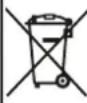
Nur fur EU-Länder.
Only for EU countries.
Do not dispose of electric tools together with household waste material! In observance of European directive 2012/19/EU on wasted electrical and electronic equipment and its implementation in accordance with national law, electric tools that have reached the end of their life must be collected separately and returned to an environmentally compatible recycling facility.
FR

Apparent defects must be notified within 8 days from the receipt of the goods. Otherwise, the buyer's rights of claim due to such defects are invalidated. We guarantee for our machines in case of proper treatment for the time of the statutory warranty period from delivery in such a way that we replace any machine part free of charge which provably becomes unusable due to faulty material or defects of fabrica
tion within such period of time. With respect to parts not manufactured by us we only warrant insofar as we are entitled to warranty claims against the upstream suppliers. The costs for the installation of the new parts shall be borne by the buyer. The cancellation of sale or the reduction of purchase price as well as any other claims for damages shall be excluded.