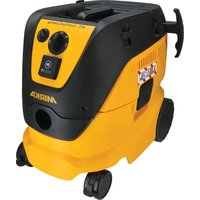
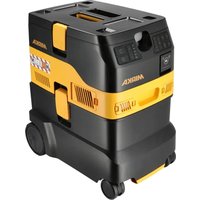
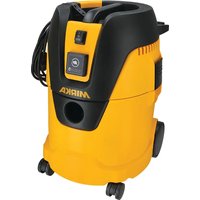
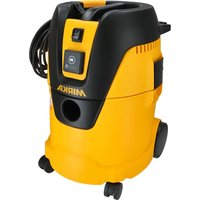
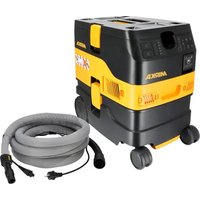
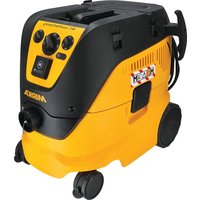
1230 L - Handheld vacuum Mirka - Free user manual and instructions
Find the device manual for free 1230 L Mirka in PDF.

 FR
FR
 BG
BG
 CS
CS
 DA
DA
 DE
DE
 EL
EL
 EN
EN
 ES
ES
 ET
ET
 FI
FI
 HU
HU
 IS
IS
 IT
IT
 JA
JA
 KO
KO
 LT
LT
 LV
LV
 MK
MK
 NL
NL
 NO
NO
 PL
PL
 PT
PT
 RO
RO
 RU
RU
 SL
SL
 SV
SV
 TR
TR
 UK
UK
 ZH
ZH
| Brand | Mirka |
| Model | 1230 L |
| Product type | Table vacuum cleaner |
| Weight | 14.5 kg |
| Supply voltage | 220-240 VAC |
| Frequency | 50-60 Hz |
| Power consumption | 1200 W |
| Max. combined load (tool socket) | 2400 W (depending on version) |
| Max. airflow | 75 l/s (270 m³/h) |
| Max. vacuum | 25 kPa (250 hPa) |
| Sound pressure level | 68 ±2 dB(A) |
| Dust class | L (LEP > 1 mg/m³) |
| Filter area | 0.5 m² |
| Protection rating (IP) | IPX4 |
| Electrical protection class | I |
| Vibration (ISO 5349) | 2.5 m/s² |
| Filter cleaning system | Push & Clean (PC) or Auto Filter Cleaning (AFC) depending on version |
| Auto-On/Off function | Yes (socket for power tool) |
| Antistatic connection | Yes |
| Liquid suction capacity | Yes (with level limiter) |
| Included accessories | Hose, adapters, hook, strap |
| Spare parts available | Filter, dust bag, disposal bag, motor filter, etc. |
Frequently Asked Questions - 1230 L Mirka
User questions about 1230 L Mirka
0 question about this device. Answer the ones you know or ask your own.
Ask a new question about this device
Download the instructions for your Handheld vacuum in PDF format for free! Find your manual 1230 L - Mirka and take your electronic device back in hand. On this page are published all the documents necessary for the use of your device. 1230 L by Mirka.
USER MANUAL 1230 L Mirka
Mirka® DustExtractor
1230L-PC&AFC
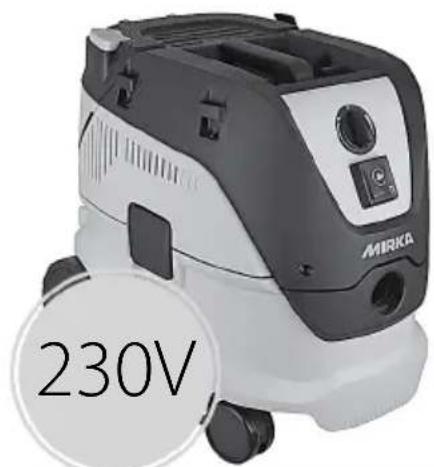
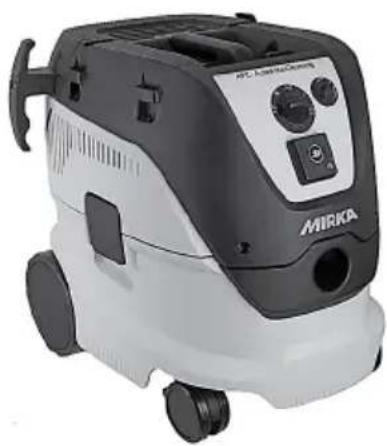
natural_image
Exterior view of a MIRKA industrial vacuum cleaner (no visible text or symbols on body)Mirka ^® DustExtractor
1230L-PC&AFC
230V
Operating instructions (original)......66en
People's Republic of China
zh 操作说明.....296
United Kingdom
Operating instructions....304UK|en
Quick reference
A
flowchart
graph TD
    A["Top-Back Blade"] --> B["↑"]
    C["Side-Back Blade"] --> D["↓"]
    style A fill:#f9f,stroke:#333
    style C fill:#f9f,stroke:#333
    style B fill:#ccf,stroke:#333
    style D fill:#ccf,stroke:#333
B
flowchart
graph TD
    A["Top panel: Surface treatment"] --> B{Condition}
    B --> C["Left panel: Airfoil"]
    B --> D["Right panel: T-shaped object"]
Push & Clean
Filter Cleaning System
AFC-AutoFilterCleaning
C
natural_image
Line drawing of a portable industrial vacuum cleaner with coiled tubing and wheels (no text or symbols)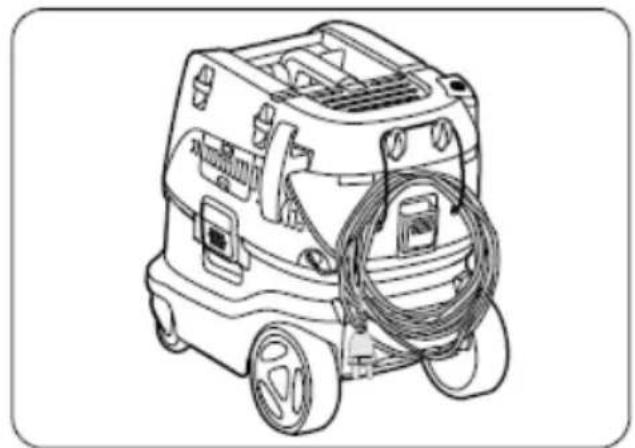
natural_image
Line drawing of a portable industrial vacuum cleaner with coiled cable (no text or symbols)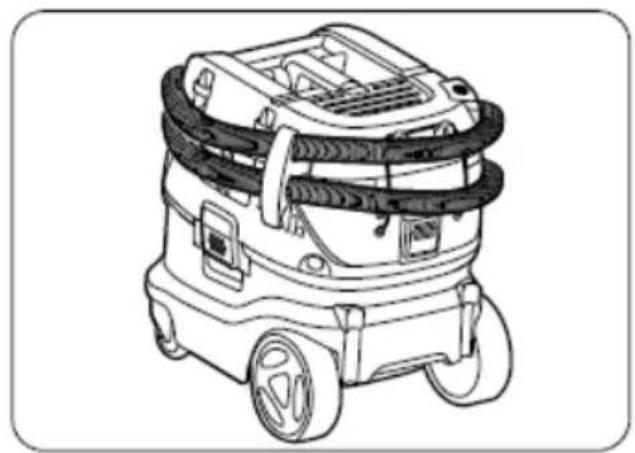
natural_image
Line drawing of a portable industrial vacuum cleaner with coiled tubing and wheels (no text or symbols)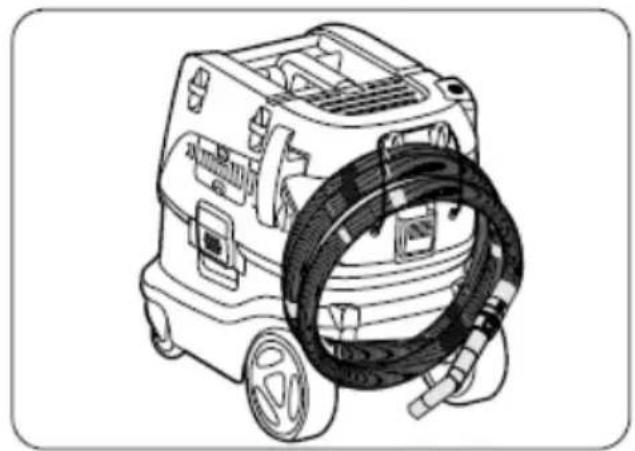
natural_image
Line drawing of a portable vacuum cleaner with coiled hose and wheels (no text or symbols)D
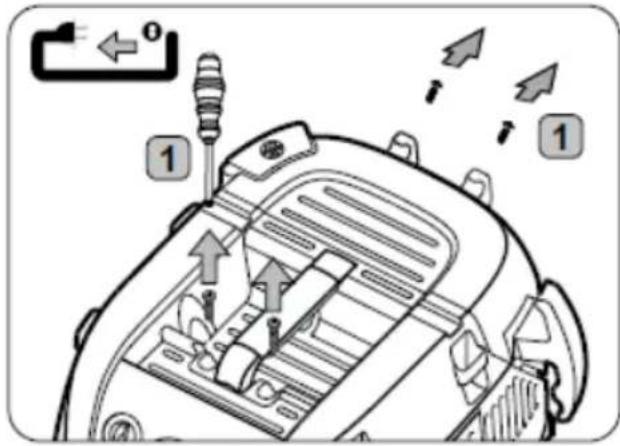
Case fastening accessory
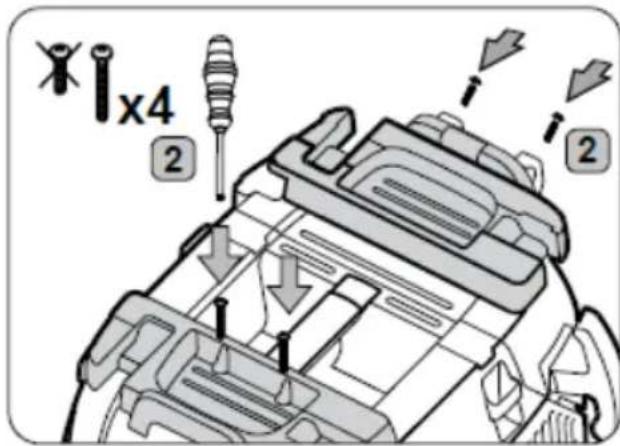
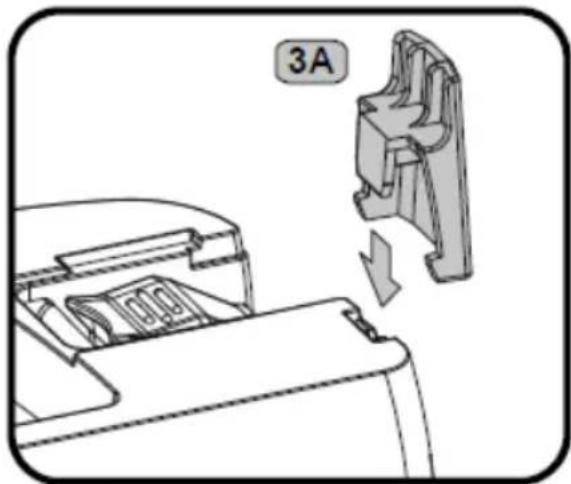
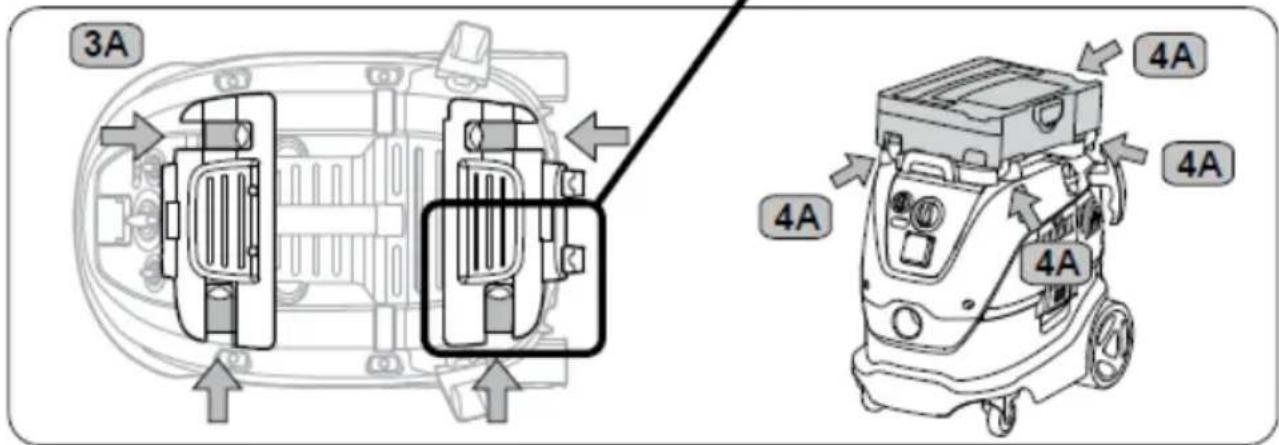
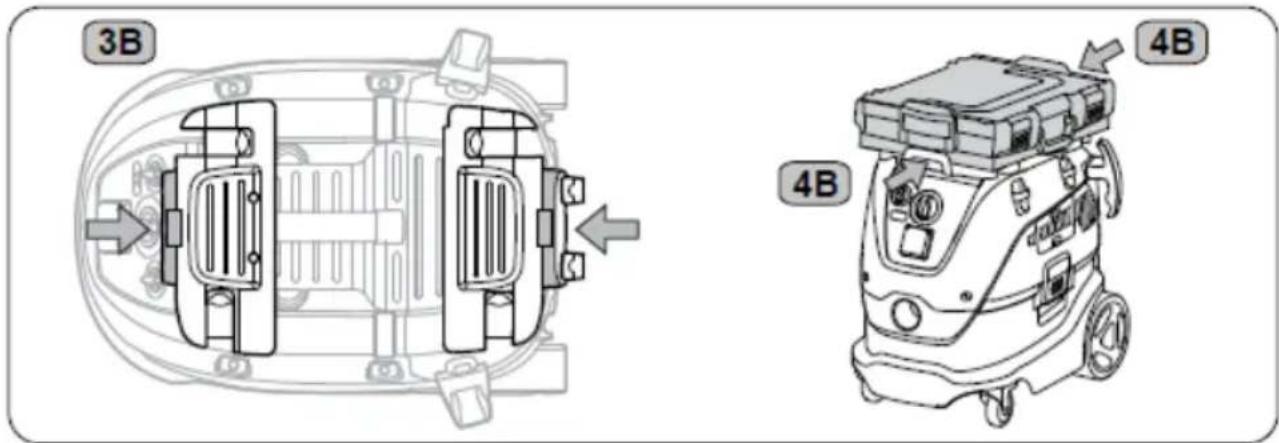
E
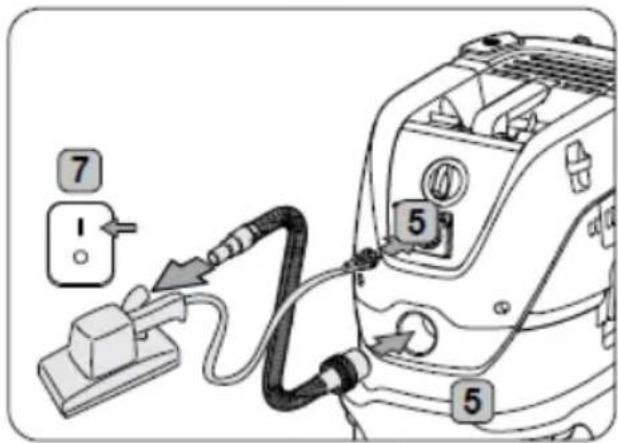
F
G
H
natural_image
Illustration of a digital camera with hands operating the screen and a device, showing no text or symbols.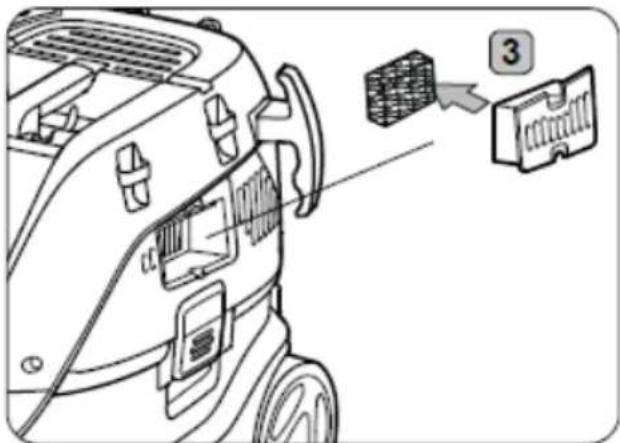

natural_image
Line drawing of a portable electronic device with labeled parts (no text or symbols present)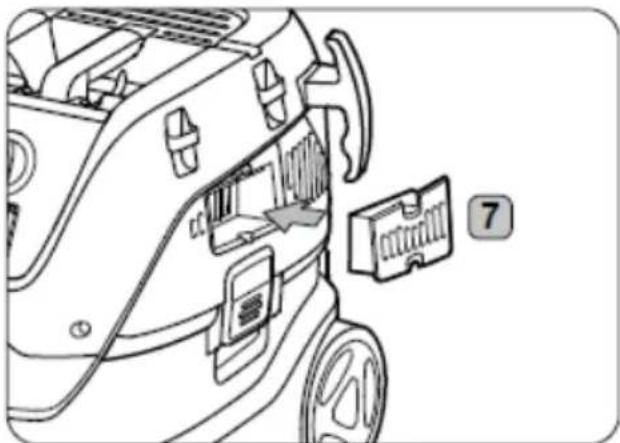
natural_image
Technical line drawing of a car interior showing internal components and a labeled component (7), no text or symbols present.|
natural_image
Illustration of a camera module with hands operating the screen and a numbered arrow indicating a step (no text or symbols present)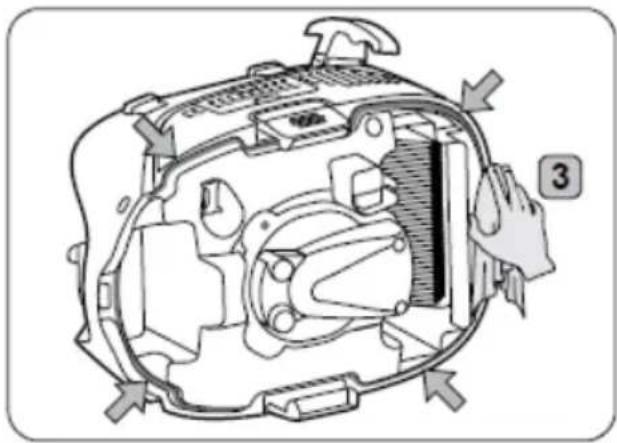
natural_image
Technical diagram of a mechanical device showing internal components and directional arrows (no text or labels)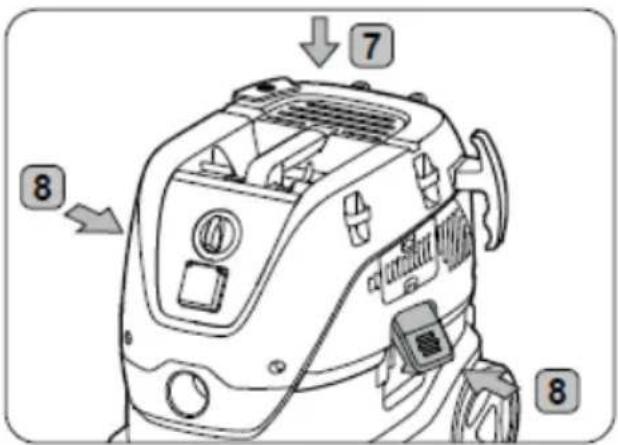
natural_image
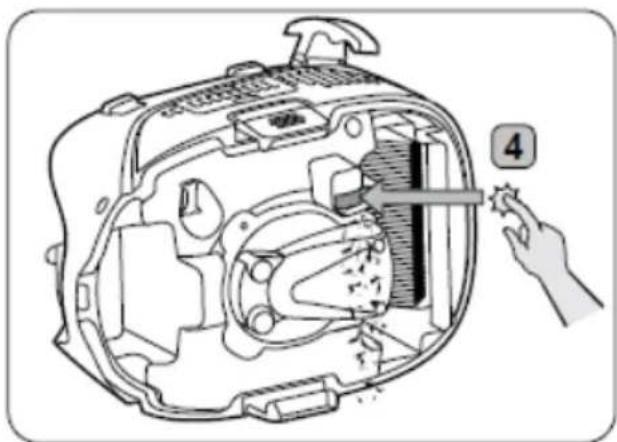
Technical diagram of a mechanical device showing internal components and a hand interacting with a knob (no text or symbols present)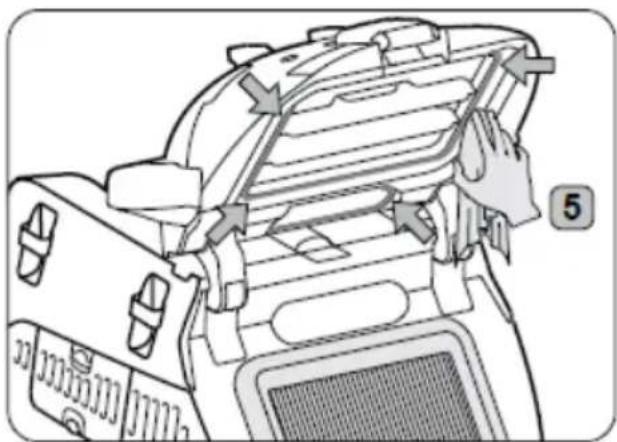
natural_image
Technical line drawing of a car interior showing structural components and airflow paths (no text or symbols)natural_image
Symbol of a trash bin with crossed lines indicating no waste or discharge (no text or labels)natural_image
Symbol of a trash bin with crossed lines indicating no waste or discharge (no text or labels)natural_image
Symbol of a trash bin with crossed lines indicating no waste or discharge, and a solid black rectangle below (no text or labels)natural_image
Symbol of a trash bin crossed with two crossed lines and a solid black rectangle below (no text or labels)natural_image
Symbol of a trash bin with crossed lines indicating no waste or discharge (no text or labels)Declaration of conformity
Mirka Ltd, 66850 Jeppo, Finland
declare under our sole responsibility that the Mirka® products (listed below and see "Technical data" table for particular model) to which this declaration relates are in conformity with the following standards or other normative documents: EN 60335-1:2012 + A13:2017, EN 60335-2-69:2012, EN 55014-1:2017 + A11:2020, EN 55014-2:2015, EN 61000-3-2:2014, EN 61000-3-3:2013, EN IEC 63000:2018 in accordance with the regulations 2006/42/EC, 2014/30/EU, 2011/65/EU + (EU) 2015/863.
Products: Mirka® Dust Extractor 1230 L - PC & AFC
Jeppo 15.02.2023
Place and date of issue
Manufacturer/Supplier
Mirka Ltd
66850 Jeppo, Finland
Tel. +358 20 760 2111
Fax +358 20 760 2290
www.mirka.comStefan Sjöberg, CFO Company
Original instructions. We reserve the right to make changes to this manual without prior notice.
Important
Read these safety and operating instructions carefully before installing, operating or maintaining this tool. Keep these instructions in a safe and accessible place. Read and comply with state and local regulations.
Required personal safety equipment
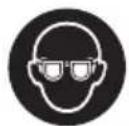
Wear safety glasses

Wear
ear protection

Wear safety gloves
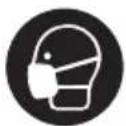
Wear
face mask
Symbols
 | Complies with EU relevant standards |
 | Complies with Australia & New Zealand RCM requirement |
 | Complies with UK relevant regulations |
 | Complies with Ukraine conformity requirements |
 | Read operator's manual |

Warning: Potential hazardous situation that may result in death or serious injury and/or property damage. Caution: Potential hazardous situation that may result in minor or moderate injury and/or property damage.
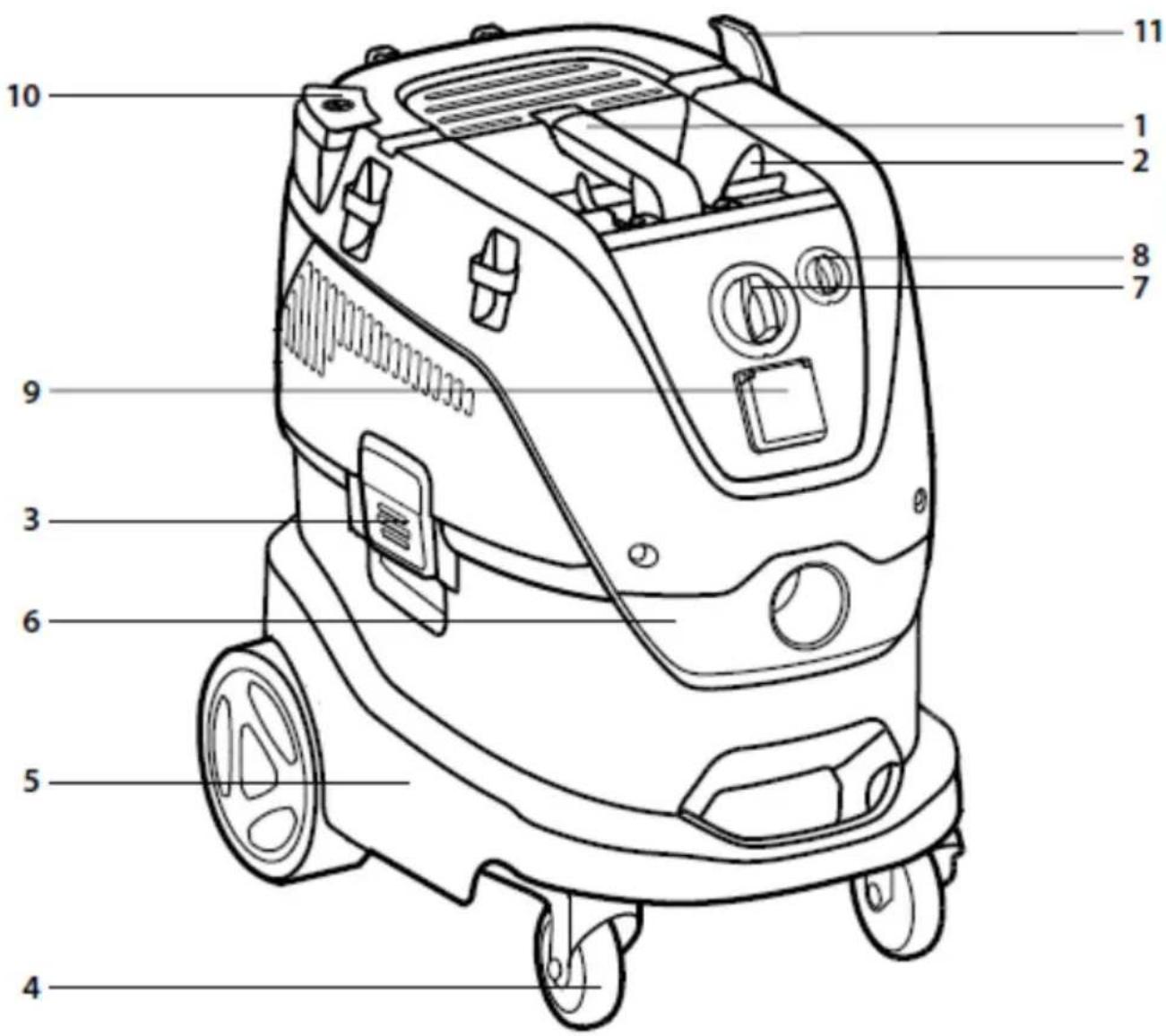
Operating Elements
Handle1
Accessory positions2
Container clamp3
Wheel4
Container5
Inlet fitting6
Switch7
Speed control8
Appliance socket9
10 Filter cleaning button (Push & Clean)
Hose hook11
The pictorial quick reference guide
The pictorial quick reference guide is designed to help you when starting up, operating and storing the unit. The guide is subdivided into four sections, which are represented by symbols:
Before starting
DO READ OPERATING INSTRUCTIONS BEFORE USE!
Control / Operation
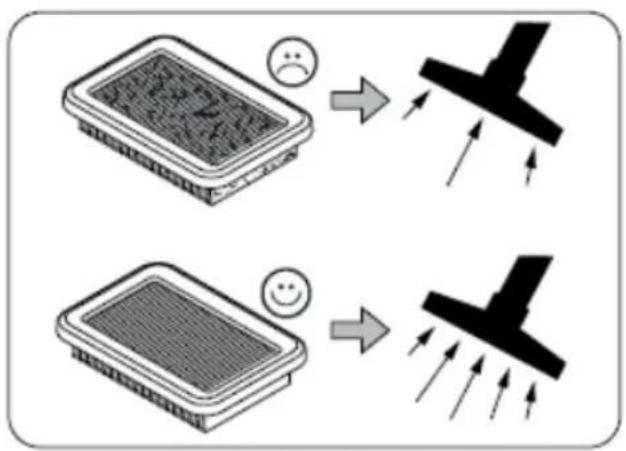
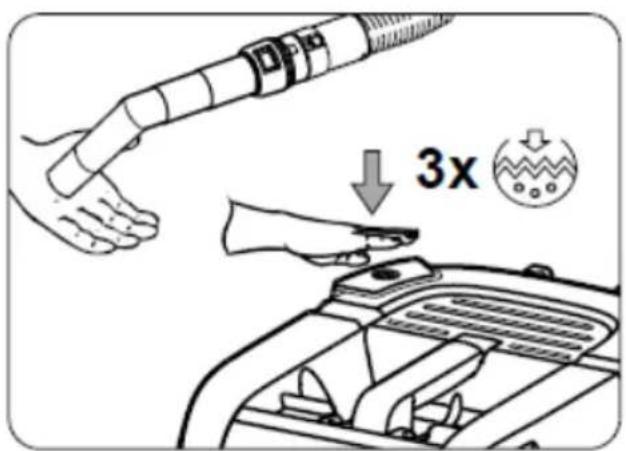
A PC - Push & Clean filter cleaning system
B AFC - Auto Filter Cleaning system
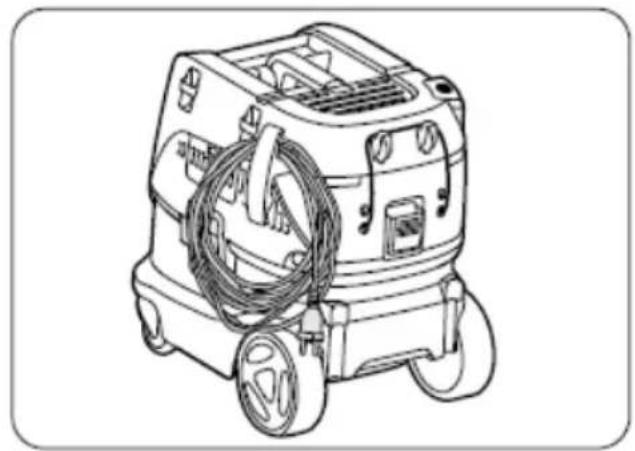
Cable and hose storageC
Case fastening accessoryD
Connecting electrical appliances
Power tool adaptionE
Maintenance
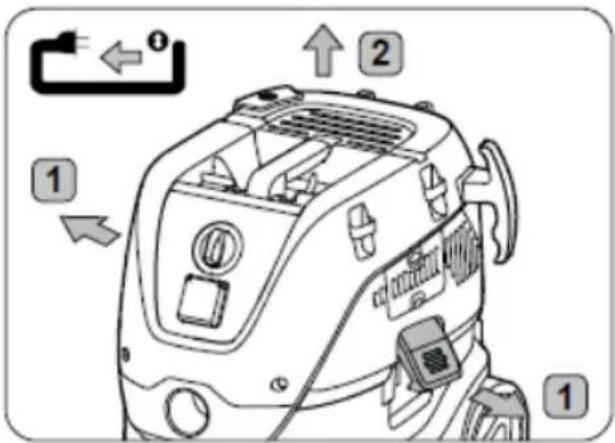
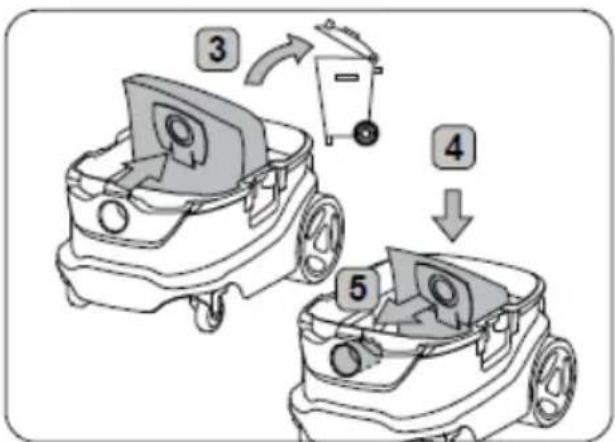
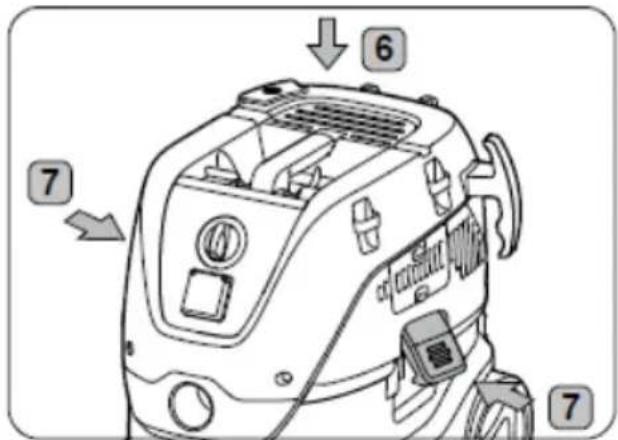
F Filter bag replacement
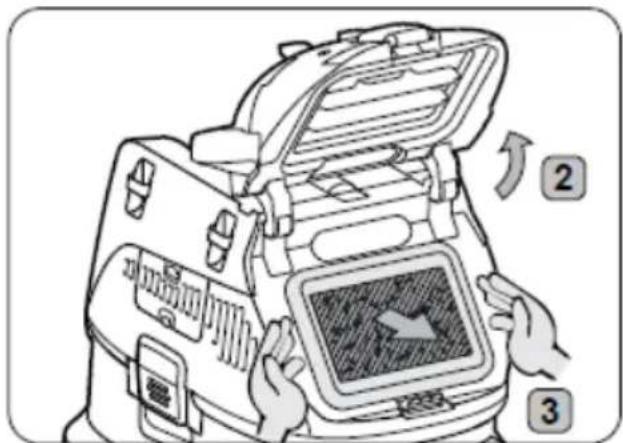
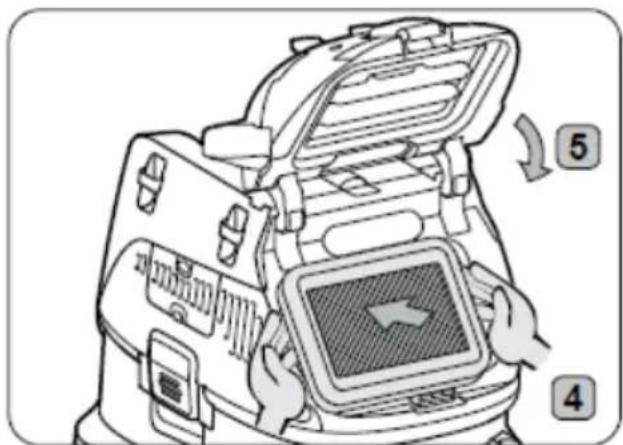
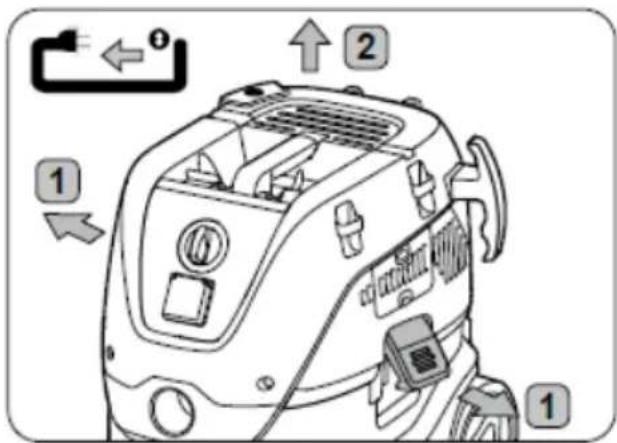
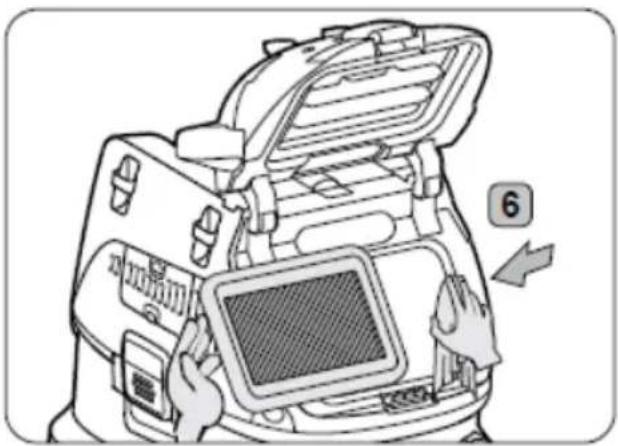
G Filter replacement
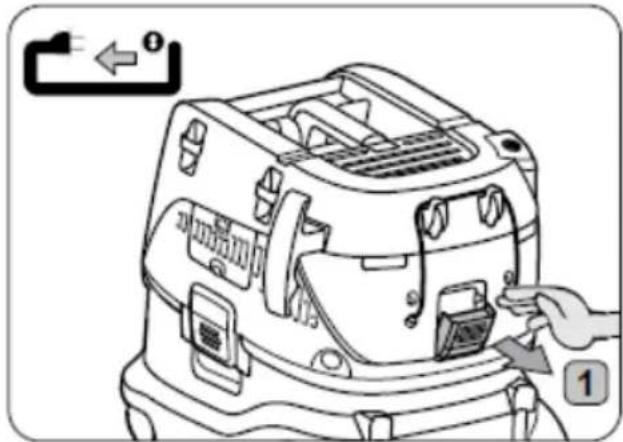
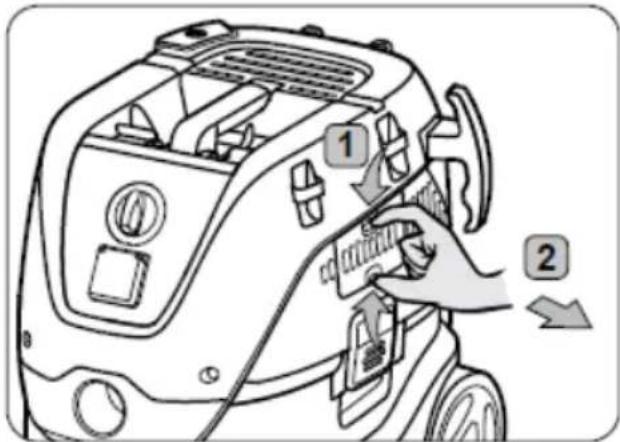
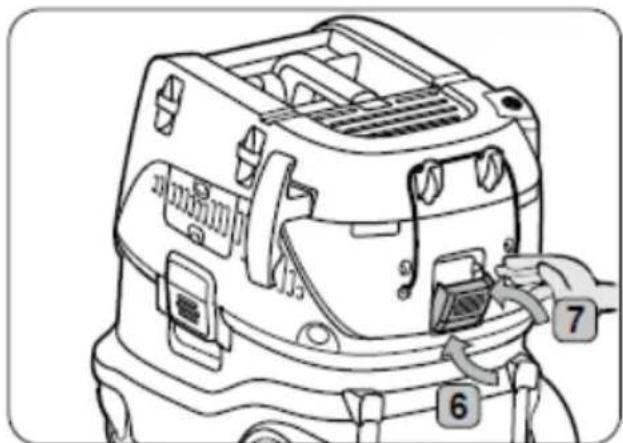
H Motor cooling filter cleaning
I Gaskets and float cleaning
General description & intended use of tool
This mobile dust extractor is designed, developed and rigorously tested to function efficiently and safely when properly maintained and used in accordance with the following instructions.
This machine is suitable for industrial use, for example at plants, construction sites and workshops. Accidents due to misuse can only be prevented by those using the machine.
READ AND FOLLOW ALL SAFETY INSTRUCTIONS.
Any other use is considered as improper use. The manufacturer accepts no liability for any damage resulting from such use. The risk for such use is borne solely by the user. Proper use also includes proper operation, servicing and repairs as specified by the manufacturer.
For Dust Class L machines the following applies:
The appliance is suitable for picking up dry, non-flammable dust and liquids, hazardous dust with OEL (Occupational Exposure Limit) values > 1 mg/m3.
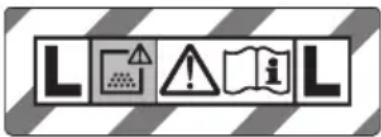
Warning label for dust class L machines
Dust Class L (IEC 60335-2-69). Dust in this class has OEL values > 1 mg/m ^3 . For machines intended for Dust Class L, the filter material has been tested. The maximum degree of permeability is 1% and there is no special requirement for disposal.
For dust extractors, ensure adequate air change rate L, when the exhaust air is returned to the room. Observe national regulations before use.
Technical data
| Dust Extractor 1230 L | PC/AFC - EU | PC/AFC - UK | AFC - CH/AU/NZ | PC - AU/NZ |
| Mains Voltage | 220 –240 VAC | 220 –240 VAC | 220 –240 VAC | 220 –240 VAC |
| Power | 1200 W | 1200 W | 1200 W | 1200 W |
| Maximum combined load for appliance sockets | 2400 W | 1750 W | 1100 W | 1100 W |
| Total mains load | 3600 W | 2950 W | 2300 W | 2300 W |
| Mains frequency | 50–60Hz | 50–60Hz | 50–60Hz | 50–60Hz |
| 10101316Fuse | ||||
| Protection grade (moist, dust) | IPX4 | IPX4 | IPX4 | IPX4 |
| Protection class (electrical) | I | I | I | I |
| Max. airflow (l/s)* | 75 l/s | 75 l/s | 75 l/s | 75 l/s |
| Max. airflow (m3/h)* | 270 m3/h | 270 m3/h | 270 m3/h | 270 m3/h |
| Max. airflow (CFM)* | 159 CFM | 159 CFM | 159 CFM | 159 CFM |
| Max. vacuum (kPa) | 25 kPa | 25 kPa | 25 kPa | 25 kPa |
| Max. vacuum (hPa) | 250 hPa | 250 hPa | 250 hPa | 250 hPa |
| Max. vacuum (in H2O) | 100 in H2O | 100 in H2O | 100 in H2O | 100 in H2O |
| Sound pressure level LPA (IEC 60335-2-69) | 68 ±2 dB(A) | 68 ±2 dB(A) | 68 ±2 dB(A) | 68 ±2 dB(A) |
| Vibration ISO 5349 ah | 2.5 m/s2 | 2.5 m/s2 | 2.5 m/s2 | 2.5 m/s2 |
| Weight | 14.5 kg (32.0 lbs) | 14.5 kg (32.0 lbs) | 14.5 kg (32.0 lbs) | 14.5 kg (32.0 lbs) |
| Filter surface area | 0.5 m2 | 0.5 m2 | 0.5 m2 | 0.5 m2 |
| Dust class | L | L | L | L |
* Measured at container. Observe applicable country-specific regulations regarding air change rate.

WARNINGS
- Do not use to pick up flammable or combustible liquids such as gasoline, or use in areas where they may be present.
- Operators shall be adequately instructed on the use of these machines
- The machine shall be disconnected from its power source during cleaning or maintenance and when replacing parts or converting the machine to another function by removing the plug from the socket-outlet.
-
Only use the socket outlet on the machine for purposes specified in the instructions.
-
To reduce the risk of fire, electric shock, or injury, please read and follow all safety instructions and caution markings before use. This machine is designed to be safe when used for cleaning functions as specified. Should damage occur to electrical or mechanical parts, the machine and/or accessory should be repaired by a competent service centre or the manufacturer before use in order to avoid further damage to the machine or physical injury to the user.
- Do not use with damaged cord or plug. To unplug, grasp the plug, not the cord. Do not handle plug or machine with wet hands. Turn off all controls before unplugging.
- Do not pull or carry by cord, use cord as a handle, close a door on cord, or pull cord around sharp edges or corners. Do not run machine over cord. Keep cord away from heated surfaces.
- Keep hair, loose clothing, fingers and all parts of the body away from openings and moving parts. Do not put any objects into openings or use with opening blocked. Keep openings free of dust, lint, hair, and anything else that could reduce the flow of air.
- Use extra care when cleaning on stairs.
- If the machine is not working properly or has been dropped, damaged, left outdoors, or dropped into water, return it to a service centre or the dealer.
- The machine may not be used as a water pump. The machine is intended for vacuuming air and water mixtures.
- Connect the machine to a properly earthed mains supply. The socket outlet and the extension cable must have an operative protective conductor
- Provide for good ventilation at the work place.
- Do not use the machine as a ladder or step ladder. The machine can tip over and become damaged.
- Outdoor use of the appliance must be limited to occasional use.
- Do not allow the supply cord to come into contact with the rotating brushes
- Do not allow the supply cord to come into contact with moving parts
- This machine is not intended for use by persons (including children) with reduced physical, sensory or mental capabilities, or lack of experience and knowledge.
• Children being supervised not to play with the appliance - This machine is intended for commercial use, for example in hotels, schools, hospitals, factories, shops, offices and rental businesses.
- Do not leave the machine when it is plugged in. Unplug from the socket when not in use and before maintenance.
- Do not use in outside areas at low temperature.
- Do not use unless filters are fitted.
- If foam or liquid escapes from the machine, switch off immediately.
Hazardous dust
Vacuuming up hazardous materials can lead to serious or even fatal injuries. The following materials must not be picked up by the machine:
• Hot materials (burning cigarettes, hot ash, etc.)
- Flammable, explosive, corrosive liquids (e.g. petrol, solvents, acids, alkalis, etc.)
- Flammable, explosive dust (e.g. magnesium or aluminium dust, etc.)
Electrical components

Danger: The upper section of the machine contains live components. Contact with live components leads to serious or even fatal injuries. Never spray water on to the upper section of the machine.

Danger: Electric shock due to faulty mains connecting lead. Touching a faulty mains connecting lead can result in serious or even fatal injuries.
- Do not damage the mains power cord (e.g. by driving over it, pulling or crushing it).
- Regularly check whether the power cord is damaged or shows signs of ageing.
- If the power cord is damaged, it must be replaced by an authorized Mirka distributor or similar qualified person in order to avoid a hazard.
- In no circumstances should the power supply cord be wrapped around fingers or any part of the operator.
In explosive or inflammable atmosphere

Caution: This machine is not suitable for use in explosive or inflammable atmospheres or where such atmospheres are likely to be produced by the presence of volatile liquid or inflammable gas or vapour.
Additional warnings
Some dust created by power sanding, sawing, grinding, drilling, and other construction activities contains chemicals known to cause cancer, birth defects or other reproductive harm.
Some examples of these chemicals are:
- Lead from lead-based paints.
- Crystalline silica from bricks and cement and other masonry products.
- Arsenic and chromium from chemically treated lumber.
Your risk from these exposures varies, depending on how often you do this type of work. To reduce your exposure to these chemicals: work in a well ventilated area, and work with approved safety equipment, such as dust masks that are specially designed to filter out microscopic particles.
Electrical
Electrical connection
- It is recommended that the machine should be connected via a residual current circuit breaker.
- Arrange the electrical parts (sockets, plugs and couplings) and lay down the extension lead so that the protection class is maintained.
- Connectors and couplings of power supply cords and extension leads must be watertight.
Extension lead
- Only use the version of extension lead specified by the manufacturer, or one of a higher quality.
- When using an extension lead, check the minimum cross-sections of the cable:
| Cable length | Cross section < 16 A | Cross section < 25 A |
| ≤ 20 m | 1,5 mm2 | 2,5 mm2 |
| 20–50 m | 2,5 mm2 | 4,0 mm2 |
Warranty
Our general conditions of business are applicable with regard to the warranty. Unauthorised modification to the appliance, the use of incorrect brushes and use of the appliance in a way other than for the intended purpose exempt the manufacturer from any liability for the resulting damage.
Control / Operation

Caution: Damage due to unsuitable mains voltage. The appliance can be damaged as a result of being connected to an unsuitable mains voltage.
- Ensure that the voltage shown on the rating plate corresponds to the voltage of the local mains power supply.
Starting and operating the machine
Check that the electrical switch is switched off (in position 0). Check that suitable filters are installed in the machine. Then connect the suction hose into the suction inlet on the machine by pushing the hose forward until it fits firmly into the inlet. When used for dust extraction together with a dust-producing tool, connect the end of the suction hose using an appropriate adapter. Connect the plug into a proper electrical outlet. Put the electrical switch into position I in order to start the motor.
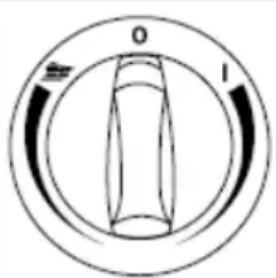
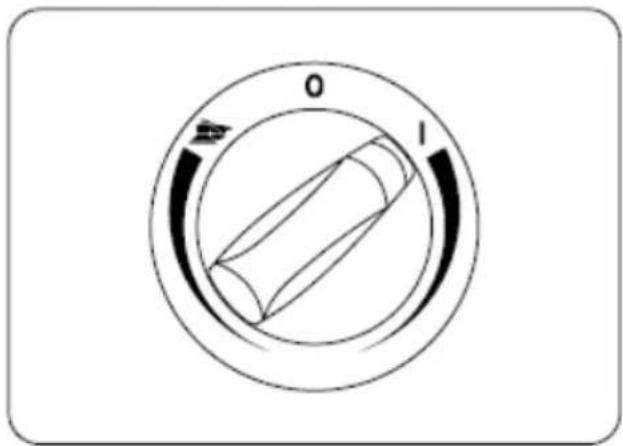
Turn to I: Activate the dust extractor.
Turn clockwise for speed control.
Turn to 0: Stop the dust extractor.
Turn to sander: Activate Auto-On/Off.
Operation - turn counter-clockwise for speed control.
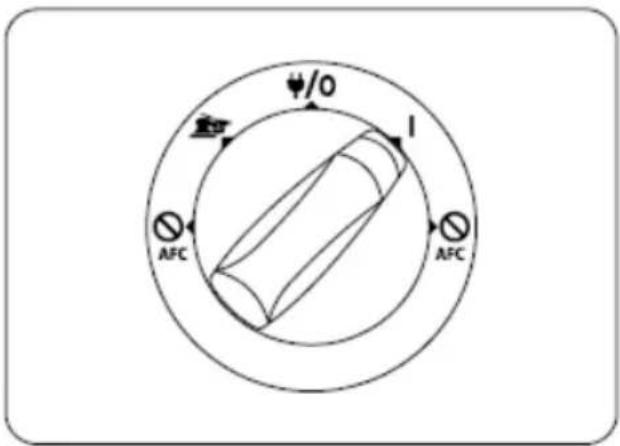
| Turn to I: Activate the dust extractor. |
| Turnto :Stopthedustextractor.Permanentpower on socket. |
| Turn to I: Activate Auto-On/Off operation. |
| Turn to I + AFC Off: Activate the dust extractor with deactivated Auto Filter Cleaning. |
| Turn to sander + Off: Activate Auto-On/Off operation with deactivated Auto Filter Cleaning. |
| Speed control operation on separate rotary knob. |
Auto-On / Off socket outlet for power tools

Caution: Appliance socket
The appliance socket is designed for electrical auxiliary equipment; see technical data for reference.
- Prior to plugging in an appliance, always switch off the machine and the appliance that is to be connected.
- Read the operating instructions for the appliance to be connected and observe the safety notes contained in these.
An earthed appliance socket is integrated in the machine. An external power tool can be connected there. The socket
features permanent power on when the switch is set to the ♦/0 position, i.e. the machine can be used as an extension cord.
Australia: The socket has a 5 Amp thermal fuse to protect the machine against overload. If the power consumption gets too high the thermal fuse activates and cuts the power to the socket outlet. The thermal fuse can be deactivated again by pressing the knob.
In position 📄, the machine can be switched on and off from the connected power tool. Dirt is picked up from the source of dust immediately. To comply with regulations, only approved dust-producing tools should be connected. The maximum power consumption of the connected electrical appliance is stated in the "Specifications" section.
Before turning the switch to position 📋, ensure that the tool connected to the appliance socket is switched off.
Push & Clean
The "PC" machine is equipped with a semiautomatic filter cleaning system, Push & Clean. The filter cleaning system must be actuated when the suction performance starts to fade. Regular use of the filter cleaning feature maintains suction performance and increases the lifetime of the filter. For instructions, see the quick reference guide.
AFC - Auto Filter Cleaning
The "AFC" machine is equipped with an automatic filter cleaning system, Auto Filter Cleaning. A frequent cleaning cycle will automatically run during operation to ensure that suction performance is always at its best.
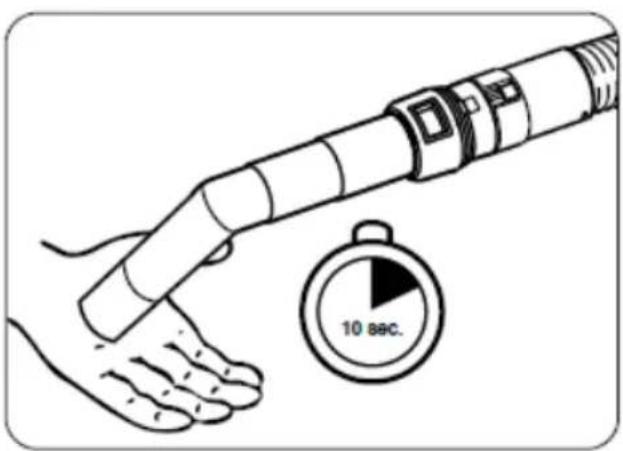
If suction performance decreases or in very dusty applications, a manual filter cleaning operation is recommended:
- Switch off the machine.
- Close the nozzles or suction hose opening with the palm of your hand.
- Turn the switch to position "I" and let the machine operate at full speed for approx. 10 seconds with the suction hose opening closed.
If suction power is still reduced take out the filter and clean it mechanically or replace the filter. For certain applications, such as wet pick-up, it is recommended to turn off the Auto Filter Cleaning system.
Antistatic connection

Caution: The machine is equipped with an antistatic system to discharge any static electricity that may develop during dust pick-up.
The antistatic system is located in the front part of the motor top and creates an earth ground connection to the inlet fitting of the container. For correct operation, the use of an electrically conductive or antistatic suction hose is recommended. When inserting the optional disposal bag make sure the antistatic connection is maintained.
Motor cooling filter
To protect the electronics and motor, the machine is equipped with a motor cooling filter. Clean the motor cooling filter regularly.
For areas with a high concentration of fine dust in the surrounding air it is recommended to equip the machine with an optional motor cooling filter PET to prevent dust from settling inside the air channels and motor. Contact your local sales representative.

Caution: If the motor cooling filter is clogged by dust the overload protection switch in the motor may be tripped. If this happens, switch off the machine, clean the motor cooling filter and allow machine to cool for approx. 5 minutes.
Wet pick-up

Caution: The machine is equipped with a water level limit system which shuts off the machine when the maximum liquid level is reached. When this occurs, switch off the machine. Disconnect the machine from the socket and empty the container. Never pick up liquids without the water level limit system and filter in place.
Picking up liquids
- Do not pick up flammable liquids.
- Before liquids are picked up, always remove the filter bag/disposal bag and check that the water level limit works properly.
- If foam appears, stop work immediately and empty the container.
- Clean the water level limiting device regularly and check for signs of damage.
- Dry the wet filter and interior parts of the liquid container before storage.
Before emptying the container, unplug the machine. Disconnect the hose from the inlet by pulling out the hose. Release the container clamps by pulling them outwards so that the motor top is released. Lift the motor top off the container. Always empty and clean the container and water level limit system after picking up liquids.
Empty by tilting the container backwards or sideways and pour the liquid into a floor drain or similar. Refit the motor top on the container. Secure the motor top with the container clamps. Sudden movements can accidentally trigger the water level limiting device. Should this happen; turn off the machine and wait for 3 seconds to reset the device.
Continue to operate the machine afterwards.
Dry pick-up

Caution: Picking up environmentally hazardous materials. Materials picked up can present a hazard to the environment.
Dispose of the dirt in accordance with legal regulations.
Unplug the machine before emptying after dry pick-up. Release the container clamps by pulling them outwards so that the motor top is released. Lift the motor top off the container.
Filter: Check the filters. To clean the filter you can shake, brush or wash it. Wait until the filter is dry before re-starting dust pick-up.
Dust bag: Check bag to ensure the fill factor. Replace dust bag if necessary. Remove the old bag. The new bag is fitted by passing the cardboard piece with the rubber membrane through the vacuum inlet. Make sure that the rubber membrane passes the raised part of the vacuum inlet.
After emptying: Close motor top on the container and secure the motor top with the container clamps. Never pick up dry material without having a filter fitted in the machine. The suction efficiency of the machine depends on the size and quality of the filter and dust bag. You should therefore only use an original filter and dust bags.
After using the machine
Unplug the machine from the socket when the machine is not in use. Wind up the cord starting from the machine. The power cord can be wound up around the motor top or the container, or hung from the hook provided, or some other fastener.
Transport
- Before transporting the machine, close all the container clamps.
- Do not tilt the machine if there are liquids in the container.
- Do not use a crane hook to lift the machine.
- Do not lift the machine by the trolley handle
Storage

Caution: Store the appliance in a dry place, protected from rain and frost. The machine must be stored indoors only.
Accessory and tool storage
For convenient transport and storage of accessories or tools, integrated rails are provided on the side of the machine, which allow fastening with straps or some other means. A flexible strap and hooks are included at the back of the machine for hanging the suction hose or mains cable. For instructions, see quick reference guide.
An optional case fastening accessory with attachment system can be installed on top of the machine for fastening of 2-point or 4-point storage cases. Unplug from the socket before installing the case fastening accessory.

Caution: Do not lift machine and case fastening accessory without ensuring that the storage case is safely installed. Note the weight and balance of the appliance in case of storage. Maximum weight of storage cases is 30 kg.
Maintenance
Regular servicing and inspection
Regular servicing and inspection of your dust extractor must be carried out by suitably qualified personnel in accordance with relevant legislation and regulations. In particular, electrical tests for earth continuity, insulation resistance, and condition of the flexible cord should be carried out frequently.
In the event of any defect, the dust extractor MUST be withdrawn from service, completely checked and repaired by an authorized service technician. At least once a year, a Mirka technician or an instructed person must perform a technical inspection including filters, air tightness and control mechanisms.
Maintenance
Remove the power cord from the mains socket before performing maintenance. Before using the dust extractor make sure that the frequency and voltage shown on the rating plate correspond with the mains voltage.
The dust extractor is designed for continuous heavy work. Depending on the number of running hours – the dust filter should be renewed. Keep the dust extractor clean with a dry cloth or a damp cloth from water.
During maintenance and cleaning, handle the dust extractor in such a manner that there is no danger to maintenance staff or other persons. In the maintenance area:
• Use filtered compulsory ventilation.
- Wear protective clothing.
- Clean the maintenance area so that no harmful substances get into the surroundings.
During maintenance and repair work all contaminated parts that cannot be cleaned satisfactorily must be:
- Packed in well-sealed bags.
- Disposed of in a manner that complies with valid regulations for such waste removal.
If the power cord is damaged, it must be replaced by the manufacturer, its service agent or similarly qualified persons in order to avoid a hazard.
For details of after sales service, contact your dealer or Mirka service representative responsible for your country. See reverse of this document.
Spare parts and accessories
| Mirka codeDescription | |
| 8999100411Filter element | |
| Fleece filter bag (5 pcs) | 8999100211 |
| Disposal bag (5 pcs) | 8999110311 |
| 8999110111Motor cooling filter | |
| Motor cooling filter PET | 8999110211 |
| 8999110411Case fastening accessory | |
| Pneumatic box 230 V | 8999101011 |
The use of non-genuine spare parts and accessories can impair the safety and/or function of the dust extractor. Only use original spare parts and accessories from Mirka. Spare parts that can affect the health and safety of the operator and/or function of the dust extractor, are specified above.

Further service
Servicing must always be performed by trained personnel. To keep the tool warranty valid and ensure optimal tool safety and function, servicing must be carried out by a Mirka authorized service centre. To locate your local Mirka authorized service centre, contact Mirka Customer Service, your Mirka dealer or go to www.mirka.com
Disposal information
DANGER
natural_image
Symbol of a trash bin with crossed lines indicating no waste or discharge, and a solid black rectangle below (no text or labels)Render redundant power tools unusable by removing the power cord.
Observe applicable country-specific regulations regarding disposal and recycling of disused machines, packaging and accessories.
EU only: Do not dispose electric power tools in house-hold waste. According to European Directives on waste electrical and electronic equipment and its implementation under national law, electric tools that have reached the end of their life must be collected separately and taken to an environmentally compatible recycling facility.
For more information regarding REACH, RoHS and our corporate social responsibility visit www.mirka.com
natural_image
Symbol of a trash bin with crossed lines and a solid rectangle below (no text or labels)natural_image
Symbol of a trash bin with crossed lines indicating no waste or discharge (no text or labels)natural_image
Symbol of a trash bin with crossed lines indicating no waste or discharge (no text or labels)natural_image
Symbol of a trash bin with crossed lines indicating no waste or restriction, and a solid black rectangle below (no text or labels)natural_image
Symbol of a trash bin with crossed lines indicating no waste or restriction, and a solid black rectangle below (no text or labels)natural_image
Symbol of a trash bin with crossed lines indicating no waste or restriction, and a solid black rectangle below (no text or labels)natural_image
Symbol of a trash bin with crossed lines indicating no waste or discharge, and a solid black rectangle below (no text or labels)natural_image
Symbol of a trash bin with crossed lines indicating no waste or restriction, and a solid black rectangle below (no text or symbols)AFC – Auto Filter Cleaning
, OEL (Occupational Exposure Limit, ) 1 mg/m3
L
L (IEC 60335-2-69).
OEL 1 mg/m3 . L
1%
가 가
L
| 220 | 240 VAC | 220 | 240 VAC | 220 | 240 VAC | 220 | 240 VAC | |
| 1200 W | 1200 W | 1200 W | 1200 W | |||||
| 2400 W | 1750 W | 1100 W | 1100 W | |||||
| 3600 W | 2950 W | 2300 W | 2300 W | |||||
| 50 60Hz | 50 60Hz | 50 60Hz | 50 60Hz | |||||
| 10101316 | ||||||||
| ( , ) | IPX4 | IPX4 | IPX4 | IPX4 | ||||
| III | ( ) | |||||||
| (l/s)* | 75 l/s | 75 l/s | 75 l/s | 75 l/s | ||||
| (m 3/h)* | 270 m3h | 270 m3h | 270 m3h | 270 m3h | ||||
| (CFM)* | 159 CFM | 159 CFM | 159 CFM | 159 CFM | ||||
| (kPa) | 25 kPa | 25 kPa | 25 kPa | 25 kPa | ||||
| (hPa) | 250 hPa | 250 hPa | 250 hPa | 250 hPa | ||||
| (in H2O) | 100 inH2O | 100 inH2O | 100 inH2O | 100 inH2O | ||||
| LPA(IEC 60335-2-69) 68 ±2 dB(A) | 68 ±2 dB(A) | 68 ±2 dB(A) | 68 ±2 dB(A) | |||||
| ISO 5349 ah | 2,5 m2s | 2,5 m2s | 2,5 m2s | 2,5 m2s | ||||
| 14,5 kg | 14,5 kg | 14,5 kg | 14,5 kg | |||||
| 0,5 m3 | 0,5 m3 | 0,5 m3 | 0,5 m3 | |||||
| L | L | L | L | |||||
가
natural_image
Symbol of a trash bin with crossed lines indicating no waste or restriction, and a solid black rectangle below (no text or labels)natural_image
Simple line drawing of a trash bin with crossed lines and a blank rectangular base (no text or symbols)Padariet nolietotos elektroinstrumentus neizmantojamus, nonemot strāvas kabeli.
natural_image
Symbol of a trash bin with crossed lines indicating no waste or discharge (no text or labels)natural_image
Symbol of a trash bin with crossed lines indicating no waste or discharge, and a solid black rectangle below (no text or labels)natural_image
Symbol of a trash bin with crossed lines indicating no waste or discharge, and a solid black rectangle below (no text or labels)natural_image
Symbol of a trash bin with crossed lines and a solid black rectangle below (no text or labels)NIEBEZPIECZEŃSTWO
AFC – Auto Filter Cleaning
natural_image
Symbol of a trash bin with crossed lines indicating no waste or restriction, and a solid black rectangle below (no text or labels)Stefan Sjöberg, Director ExecutivCompania
Producător/Furnizor
Mirka Ltd
66850 Jeppo, Finlanda
Tel.+358 20 760 2111
Fax +358 20 760 2290
www.mirka.com
natural_image
Symbol of a trash bin with crossed lines indicating no waste or restriction, and a solid black rectangle below (no text or labels)natural_image
Symbol of a trash bin with crossed lines indicating no waste or discharge (no text or labels)natural_image
Circular diagram with a central vertical bar and labeled segments (no text or symbols beyond basic labels)Preklopite na I: Vklop naprave za odsesavanje prahu.
Med hitrostmi preklapljate tako, da gumb obrnete v smeri urnega kazalca.
Preklopite na 0: Izklop naprave za odsesavanje prahu
Preklopite na brusilnik: Vklop samodejnega vklopa/izklopa.
Upravljanje-med hitrostmi preklapljate tako, da gumb obrnete v nasprotni smeri urnega kazalca.
| Preklopite na I: Vklop naprave za odsesavanje prahu. |
| Preklopite na ♦/0: Izklop naprave za odsesavanje prahu Neprekinjeno napajanje v vtičnici. |
| Preklopite na I: Vklop delovanja s samodejnim vklopom/izklopom. |
| Preklopite na I + izklopljen AFC (off): Vklop naprave za odsesavanje prahu z izklopljenim samodejnim čiščenjem filtra (AFC). |
| Preklopite na brusilnik + izklop (off): Vklop delovanja s samodejnim vklopom/izklopom z izklopljenim samodejnim čiščenjem filtra (AFC). |
| Med hitrostmi preklapljate s posebnim vrtljivim gumbom. |
natural_image
Symbol of a trash bin with crossed lines indicating no waste or restriction, and a solid black rectangle below (no text or labels)natural_image
Symbol of a trash bin with crossed lines indicating no waste or discharge, and a solid black rectangle below (no text or labels)natural_image
Symbol of a trash bin crossed with diagonal lines, no text or labels presentFARA
natural_image
Symbol of a trash bin with crossed lines indicating no waste or discharge (no text or labels)natural_image
Symbol of a trash bin with crossed lines indicating no waste or discharge, and a solid black rectangle below (no text or labels)Declaration of conformity
| Mirka Ltd, 66850 Jeppo, Finlanddeclare under our sole responsibility that the Mirka® products (listed below and see "Technical data" table for particular model) to which this declaration relates are in conformity with the following standards or other normative documents: BS EN 60335-1:2012 + A13:2017, BS EN 60335-2-69:2012, BS EN 55014-1:2017 + A11:2020, BS EN 55014-2:2015, BS EN 61000-3-2:2014, BS EN 61000-3-3:2013, BS ENIEC 63000:2018 in accordance with the regulations: Supply of Machinery (Safety) Regulations 2008, Electromagnetic Compatibility Regulations 2016, The Restriction of the Use of Certain Hazardous Substances in Electrical and Electronic Equipment Regulations 2012. | ||
| Products: Mirka® Dust Extractor 1230 L - PC & AFC | ||
| Jeppo 15.02.2023Place and date of issue |  Company Company |  Stefan Sjöberg, CEO Stefan Sjöberg, CEO |
| Manufacturer / SupplierMirka Ltd66850 Jeppo, FinlandTel. +358 20 760 2111Fax +358 20 760 2290www.mirka.com | Importer InformationMirka (UK) LtdSaxon HouseShirwell CrescentFurzton LakeMilton KeynesMK4 1GATel. +44 (0)1908 866100 |  |
This chapter is an addition to the English language chapter of the manual in order to fulfill the UKCA regulation requirements. Please refer to the English language chapter for more information about your product.
geo
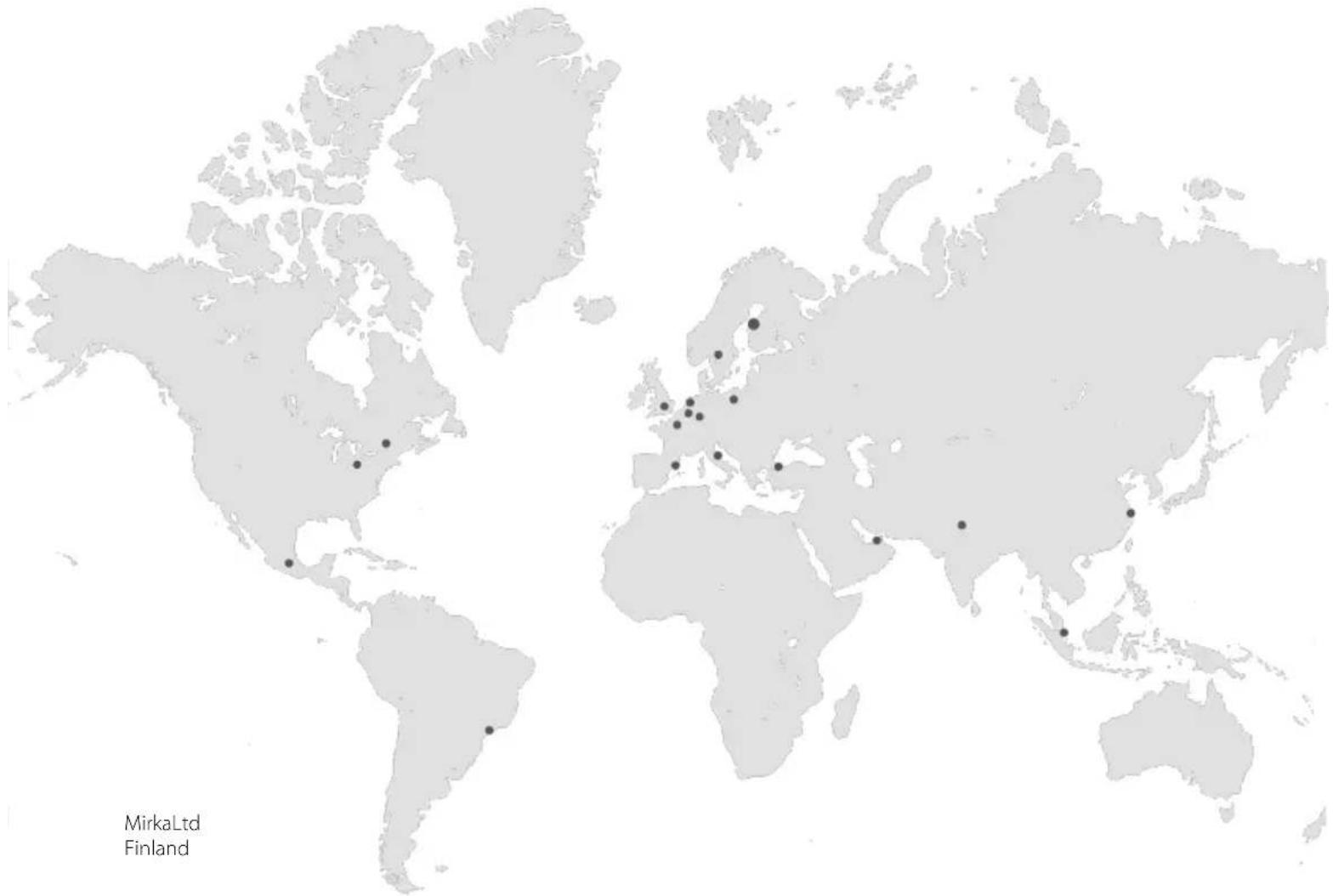
| Location | Marker | | -------- | ------ | | Central Europe | ● | | Eastern Europe | ● | | Western Europe | ● | | Northern Africa | ● | | Southern Africa | ● | | Middle East | ● | | Southeast Asia | ● | | Australia | ● | | North America | ● | | South America | ● | | Europe (not labeled) | ● | | Finland (not labeled) | ● |MirkaLtd
Finland
BrazilMirkaBrasilLtda.
BelgiumMirkaBelgiumLogisticsNV
CanadaMirkaCanadalnc.
ChinaMirkaTradingShanghaiCo.,Ltd
Finland&BalticsMirkaLtd
FranceMirkaFranceSarl
GermanyMirkaGmbH
IndiaMirkalndiaPvtLtd
ItalyMirkaltalias.r.l., CafroS.p.A.
MexicoMirkaMexicanaS.A.deC.V.
NetherlandsMirkaBeneluxB.V
PolandMirkaPolandSp.zo.o
SingaporeMirkaAsiaPacificPteLtd
SpainKWHMirkalbéricaS.A.U.
SwedenMirkaScandinaviaAB
TurkeyMirkaTurkeyZimparaLtdŞirketi
UnitedKingdomMirka(UK)Ltd
UnitedArabEmiratesMirkaMiddleEastFZCO
USAMirkaUSAInc.
Forcontactinformation,
pleasevisitwww.mirka.com
- Mirka® DustExtractor
- Mirka ® DustExtractor
- 230V
- People's Republic of China
- United Kingdom
- Quick reference
- Push & Clean
- Declaration of conformity
- Mirka Ltd, 66850 Jeppo, Finland
- Manufacturer/Supplier
- Important
- Required personal safety equipment
- Symbols
- Operating Elements
- The pictorial quick reference guide
- Before starting
- Control / Operation
- Connecting electrical appliances
- Maintenance
- General description & intended use of tool
- WARNINGS
- Hazardous dust
- Electrical components
- In explosive or inflammable atmosphere
- Additional warnings
- Electrical
- Electrical connection
- Extension lead
- Warranty
- Starting and operating the machine
- Auto-On / Off socket outlet for power tools
- Caution: Appliance socket
- AFC - Auto Filter Cleaning
- Antistatic connection
- Motor cooling filter
- Wet pick-up
- Picking up liquids
- Dry pick-up
- After using the machine
- Transport
- Storage
- Accessory and tool storage
- Regular servicing and inspection
- Further service
- Disposal information
- DANGER
- AFC – Auto Filter Cleaning
- NIEBEZPIECZEŃSTWO
- Producător/Furnizor
- FARA
Brand : Mirka
Model : 1230 L
Category : Handheld vacuum